Loading summary
Transcript420 lines
- [00:04]
Colin
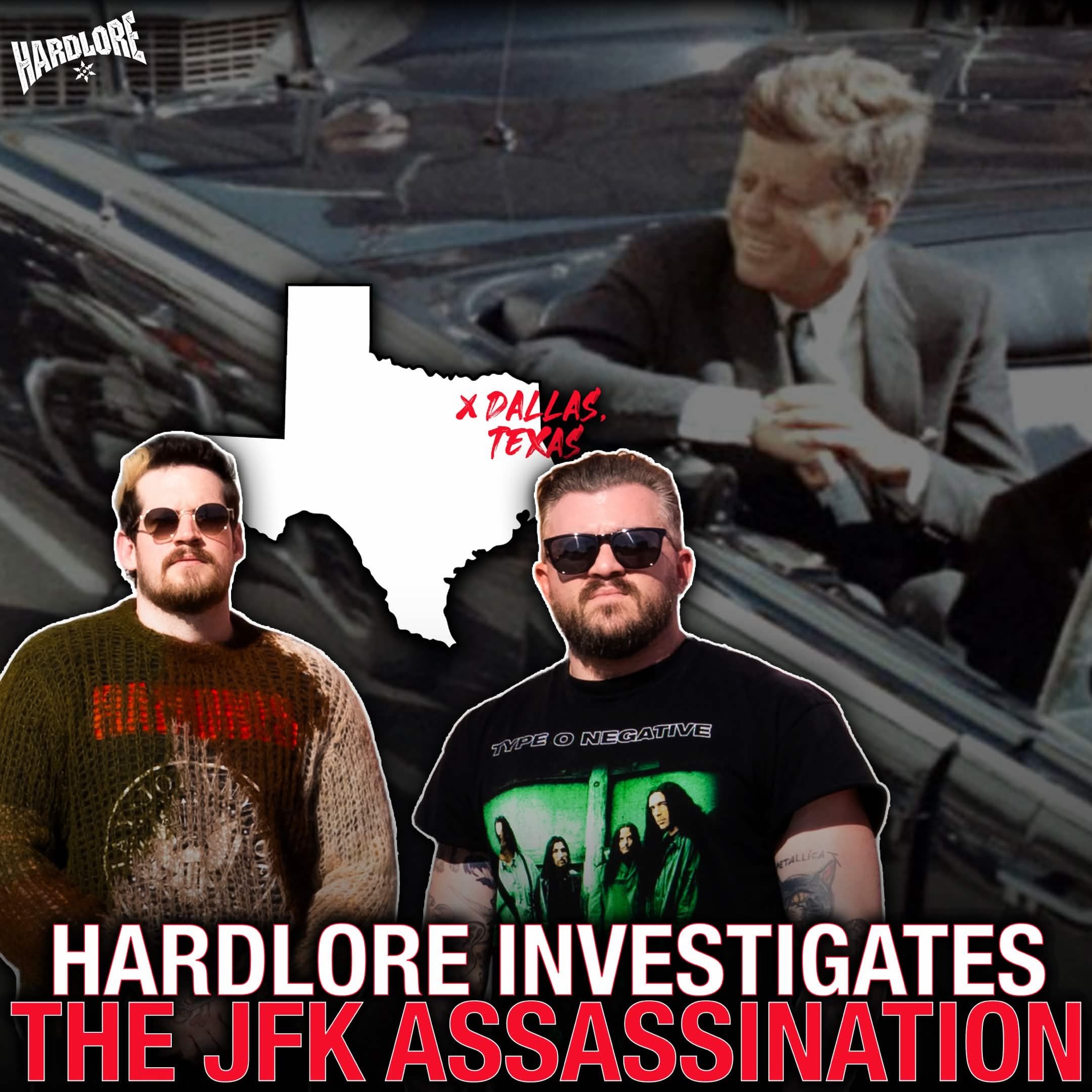
Hello, welcome. It's hard lore time. How you doing, Beau?
- [00:07]
Beau
I'm doing so good, Colin. Where are we today?
- [00:09]
Colin
We are in Dallas, Texas, which is the reason that the President is dead.
- [00:13]
Beau
That's right. Kennedy's bullet ridden body shot dead in
- [00:19]
Colin
the street right there where the X marks the spot. And we're here, as you know, fans of history as lifelong Americans, whether anybody likes it or not, to get to the bottom of this great, great mystery. Yeah, and you know, you're the resident history buff. So tell us about the assassination of John F. Kennedy.
- [00:42]
Beau
Sure, I thought you'd never ask. Been waiting for this my whole life. Masturbate me, master. Masturbate me.
- [00:49]
Steven
Resident body in the street. Right down. Arrived Kennedy shadowed head hits on three. Right down. ARR. Shine if I'm bound on Shine if I'm scared Brown Jackie Road. Texas is an average when you're huffing and dance Texas is an average man to pick up his head Texas is the reason Let the President say it's a goddamn suck Ya can't stop President
- [01:14]
Beau
full of anybody we're standing here in Dealey Plaza, named after just a business, Texas business mate. Right at one point. What we have over there is the Texas School Book Depository. It's now a museum. You can see, and I'll point to it, Steven, that not top right, but just under is the supposed sniper's nest for one Lee Harvey Oswald.
- [01:35]
Colin
Allegedly.
- [01:36]
Beau
Allegedly. Behind us here is the grassy knoll, often referred to as a location of a potential second shooter. Right. As you may know, over here we have the Dal Tec Building, which at one point was a kind of a low grade jail. And then over yonder is the records building, which is also believed to be a potential. Because you can see the clear shot straight here.
- [02:00]
Colin
Oh yeah, this is. I mean this is the spot.
- [02:02]
Beau
Triangulation of fire.
- [02:04]
Colin
Right.
- [02:04]
Beau
As they call it, the big. Oh, go ahead. And I was gonna say the last big thing is believed to be at that picket fence that my beautiful girlfriend is now walking past a direct line of sight. And we'll get some different angles from where we are, but this is basically the layout of Dealey Plaza on that fateful day, November 22, 1963.
- [02:26]
Marshall Evans
Right.
- [02:26]
Colin
A warm day, much like today in March. Now, Bo, how many shots were fired at the President?
- [02:33]
Beau
So that's of course the thing of contention according to the Warren Commission, which by the way, Earl Warren, who was the Chief justice was fired by Kennedy some years prior when he was working for the CIA as well as Warren Dulles, who was part of the Warren Commission as well. That report says three.
- [02:49]
Colin
Okay.
- [02:50]
Beau
Some people believe more. There was 212 people who were questioned about that.
- [02:54]
Marshall Evans
Right.
- [02:54]
Beau
The majority said three coming from the School Book Depository. A few more said the Deltech building, and around 70 said from the picket fence. But here's the issue with that.
- [03:05]
Colin
The trajectories just don't add up.
- [03:07]
Beau
Well, the problem is truly the bullet count. Right.
- [03:10]
Colin
Sure.
- [03:10]
Beau
So what we have is we know there was a headshot on Kennedy, famously seen in frame two, something of the famous Zapruder film. Of the Zapruder film, which was shot right there. So that's one. One missed. One hit the curb and struck a guy over there by the name of James Tague. He was standing over there. He got hit in the cheek by either actual bullet shrapnel or concrete. From the curb. Sure. The curb was actually removed, analyzed. What'd he say? What'd he say?
- [03:39]
Colin
He said, I did it.
- [03:42]
Beau
The curb was removed and was analyzed by the FBI some years later to see if they could. And it not definitive. And then that leaves one bullet to cause an entry wound into Kennedy's back out of his neck, then into Governor. Democratic Governor John Connally went in through his back, hit his rib, came out, hit his wrist, and then buried itself in his thigh. And then was then supposedly found on a gurdy in parkland about 4 miles away in almost pristine condition. That's. They say pristine. But really, what does that mean? But bullets get crazy.
- [04:15]
Colin
Yeah.
- [04:15]
Beau
Bullets don't really look like that when they hit bones. So this then becomes known as the magic bullet, single bullet theory. And that's the problem.
- [04:22]
Colin
Big problem.
- [04:23]
Beau
Therein lies the problem.
- [04:24]
Colin
But the final shot.
- [04:25]
Beau
Yes.
- [04:26]
Colin
Exploded his dome.
- [04:29]
Beau
He got domed in.
- [04:30]
Colin
In ways. He got him, for lack of a better word. Well, the first shot. Well, the second shot him. The second. The third shot. Murked him.
- [04:39]
Beau
I would. Yes. Very well. Very well. Although we don't know if one. So Tague said he believed the second shot is what got hit him. So it might have been first. Yes.
- [04:51]
Colin
The Zapruder film shows a. Near a front entry.
- [04:57]
Beau
Yeah.
- [04:58]
Colin
Which is not possible with that being the site of the alleged side of Lee Harvey Oswald.
- [05:06]
Beau
So it's tricky because his head is blown back, but shortly before it's blown back, there's a sudden he kind of. So it's weird.
- [05:15]
Colin
It's hard to say with such a. With that bullet velocity from that direction.
- [05:21]
Beau
Right. It was a Mannlicher Carcano, a World War II Italian gun, very low caliber. Very slow bullet speed. Whereas. And we'll talk about the fellow who I think may have pulled that trigger, supposedly using a much. A larger caliber, much faster weapon that simply exploded. There's also people who think that two may have hit him in the head at the same time. It's crazy.
- [05:43]
Colin
We'll never know.
- [05:44]
Beau
But we're gonna get to the bottom of the game.
- [05:45]
Colin
We're checking some stuff out.
- [05:46]
Beau
You can see someone up in that sixth floor right now. That's the window. I said fifth before. I was wrong. It's the sixth floor where that person is. That's why that window's even open, so that people can kind of get a look at it.
- [05:58]
Marshall Evans
Right?
- [05:58]
Colin
Yeah.
- [05:58]
Beau
Now, here's the big thing, Stephen. Originally, the parade route was just going there. This has all since been kind of rerouted, traffic wise. The parade was not going to swing around Houston to Elm. It was going to bypass and continue on this to go under that triple overpass, which.
- [06:16]
Colin
That's not a great.
- [06:17]
Beau
Not a great shot.
- [06:18]
Colin
And also not a great shot. It was six minutes behind schedule.
- [06:21]
Beau
I believe it was behind schedule.
- [06:23]
Colin
Which he's ready in a spot that would not be great for that, for the original route. And it's late and he would have no way of knowing that.
- [06:37]
Beau
Imagine how bad he had to pee.
- [06:38]
Colin
Oh, horrible. I mean, this was the greatest stress of his life if he was involved. So would this be the tree that he had to wait for? Because he famously mentioned having to wait until the car passed the tree to take the shot. So that would be that the. Is that the original tree?
- [06:58]
Beau
Yeah. Now, the thing is that they're Texas live oak. This happened in November. It's March at time and filming. Sure. These trees are in bloom now. It loses its leaves by that time.
- [07:09]
Colin
So it was much smaller and much easier.
- [07:11]
Beau
It's plausible. Interesting. I'm very. I tried to be as objective as possible.
- [07:15]
Colin
I like it.
- [07:15]
Beau
I don't buy the full story, but I don't necessarily think it was. There's. People think it was the driver. People think there's a storm drain over here. There was someone in the storm drain. There's all kinds of wack.
- [07:25]
Colin
People think it's the driver. Ridiculous.
- [07:27]
Beau
Ridiculous.
- [07:28]
Colin
And then Jackie, poor Jackie, reaching for. You see these images of her reaching behind. And many think she's emotionally reaching for John himself, but she's reaching to gather the scattered pieces of his skull and brains.
- [07:45]
Beau
That's right.
- [07:46]
Colin
Just to. Just to get it all back, see what can be saved.
- [07:49]
Beau
So some of the last words that were said Was the wife of Governor Connally said, well, it's something along the lines of, I have it written down. I can't remember it exactly. She said something along the lines of, well, Mr. President, surely they can't convince you that you're not loved in Dallas because Dallas was very right wing. Kennedy was very left wing at the time. He was not a well loved guy, obviously. And his last words were, no, they surely can't. Meaning he's getting a nice reception.
- [08:19]
Colin
I'm bulletproof.
- [08:19]
Beau
Yeah.
- [08:21]
Colin
Tell me about the car, because I've read some aspects of safety precautions were removed.
- [08:28]
Beau
Yeah. The bubble top. There was a bubble top a lot like the Pope mobile. There was just a protective glass that should have been over the entire limousine that would have protected them, that had been used prior to. But it was also taken off. Eisenhower will ride around with it, not on. He's a little bit more of a neutral guy. He's a war hero, than Supreme General. The other thing, too, being objective is a lot of people think the bullet theory doesn't make sense because of if we're sitting like this, the bullet's not going to do all that. Kennedy was actually raised and a little off center from Connolly. So it changes the way the billion shots. Truly, if he pulled that off. Oh, my God. Which, by the way, he was a Marine prior to all this. Oswald was a confirmed Marine. He has a whole backstory about how he had a really rough childhood. He joined the Marines, he defected to Russia.
- [09:19]
Colin
He was attempting to defect to Russia, basically, right?
- [09:21]
Beau
Basically, yeah.
- [09:22]
Colin
For several weeks before the alleged incident, he spent weeks in Mexico City with a gentleman known as El Mexicano, Gathering, going to parties, chatting with the local folks, saying things like, wouldn't it be crazy if we killed Kennedy? And attempting to get a Soviet passport and a Mexican passport.
- [09:46]
Beau
Well, he was in Russia.
- [09:48]
Colin
He wasn't. He was a confirmed defector. Returned to the States.
- [09:51]
Beau
Yeah.
- [09:52]
Colin
And was not penalized at all.
- [09:55]
Beau
However, J. Edgar Hoover, when asked about it, said, we have no way of confirming if that person actually was Lee Harvey Oswald. The voice and the images. There's a picture of him in front of the embassy in Mexico City. Doesn't look anything like him. J. Edgar Hoover said that. Which is crazy because wouldn't he say, yeah, we got him.
- [10:15]
Colin
Yeah, we got him.
- [10:15]
Beau
You know.
- [10:16]
Colin
Yeah, absolutely true.
- [10:18]
Beau
But anyway, where I was going is Lee Harvey Oswald, he had first passed his rifle test as a marksman, which is about a battle. It goes, oh, no, I'm sorry, he was a sharpshooter. That's the middle expert's the best marksman's, the lowest you can be without being kicked out. His second testing was a marksman. He scored really badly. So he wasn't necessarily a bad shot, but he was not a great shot.
- [10:41]
Colin
He's not a crack shot. He wasn't the guy. If you're gonna get one guy to do it, it wasn't him.
- [10:46]
Beau
That's the thing. Then of course, afterwards, he supposedly fled by 1233. So the shooting happened at 1230 on the dot. There used to be a clock. People noted that when Kennedy's motorcade turned, it went from 29 to 30. No, there was like a, like a old, like like a semi digital kind of clock. And it turned to 12:30 as soon as he turned the corner. By 12:33, Lee Harvey Oswald was gone. He was going to his boarding house where he was living. On his way after he stopped there, he got into a conversation with Officer J.D. tippett, shot the man three times in the chest and then shot him in the temple. He then fled and went to a theater. The Texas theater didn't pay for a
- [11:31]
Colin
ticket, which is why he was flagged down.
- [11:33]
Pazuzu/Reagan
Yeah.
- [11:34]
Beau
And then 15 cops showed up.
- [11:37]
Colin
And this is all this is around what, what was it, 4pm or 6pm
- [11:40]
Beau
when he got apprehended? It was within two hours of the shooting at like 3:30.
- [11:44]
Colin
So I. And allegedly that was 20 something minutes after news had spread in Britain with a full page spread about his whole life.
- [11:59]
Beau
Yes. And I think in the Oliver Stone movie they say New Zealand as well. New Zealand, it was English speaking countries had a profile on Lee Harvey Oswald
- [12:07]
Colin
before he was apprehended.
- [12:11]
Beau
It's ridiculous.
- [12:12]
Colin
Let's go look at some stuff around here.
- [12:13]
Beau
Let's look at some stuff. I think we probably.
- [12:15]
Colin
What would the curb be?
- [12:16]
Beau
The curb? You don't really know because they've since redone it.
- [12:21]
Colin
Okay.
- [12:21]
Beau
So it's a little tricky. There was an X.
- [12:26]
Colin
So if it was first. Oh, there's that one. Then so is that first shot.
- [12:32]
Beau
Ah boy. Now that I'm looking at it, yeah, I think you're right. I don't think I noticed that would be.
- [12:36]
Colin
Bam.
- [12:37]
Beau
The throat.
- [12:38]
Colin
Blam.
- [12:39]
Beau
Bl. Blamy.
- [12:41]
Colin
Merc.
- [12:41]
Beau
Merc. Very good, Very good. Yeah. So gm he was working at this school book depository stacking books for $1.25 an hour.
- [12:52]
Colin
Lee.
- [12:53]
Beau
Lee. And just got.
- [12:55]
Colin
He's a very familiar sight for him.
- [12:57]
Beau
Very much so.
- [12:58]
Colin
Wow. Okay.
- [12:58]
Beau
He also, on his way out stopped
- [13:00]
Colin
to have a Coke on his way out.
- [13:03]
Beau
On his way out of the building, he was spotted drinking Coca Cola.
- [13:05]
Colin
Dude, that doesn't sound like a guilty man.
- [13:07]
Beau
No, it doesn't. And the boss, I think his name was Truly. His last name was Truly. Said he wasn't out of breath. He wasn't freaking out. He was calmly walking around just like, yeah, that's crazy. We'll cross and see.
- [13:19]
Colin
I don't like it.
- [13:20]
Beau
So we're closer to the knoll now. This is called the grassy knoll.
- [13:23]
Marshall Evans
This is it.
- [13:23]
Colin
It's much smaller than you would think in person.
- [13:25]
Beau
Abraham Zapruder stood about there, up on the stairs.
- [13:32]
Marshall Evans
No.
- [13:35]
Beau
He had the only footage of this that was owned by Time Warner and was not ever released until, I think, the 80s or 90s by Geraldo Rivera.
- [13:45]
Colin
Yeah. That scumbag did one thing right.
- [13:48]
Beau
He did one thing right. He did a great job. Famously used, of course, in the Oliver Stone movie as well. That was the first time it was re shown.
- [13:56]
Colin
And the only missing footage to this day. There were multiple people spotted filming. The only missing footage to this day is the. What she's now known as Babushka Lady.
- [14:06]
Beau
The Babushka Lady.
- [14:07]
Colin
Babushka Lady's footage. Babushka Lady. If you're watching this, as opposed to all other facets of media that exist about this, hit us up. We'd love to be a part of your story, but. And then another lady has come out and said she was a time traveler using a camera that had not been invented yet.
- [14:25]
Beau
Yes, yes.
- [14:25]
Colin
And that she was there for MLK as well.
- [14:27]
Beau
Yep.
- [14:28]
Colin
So a lot of kooks attract a lot of kooks.
- [14:30]
Beau
Fabushka Lady. Some people don't think even was a woman. Think it was someone undercover.
- [14:34]
Colin
Oh, my God.
- [14:34]
Beau
There's Mary Mormon in the red coat. Very visible. She was laying right here. Laying right here after the shooting happened. People were sprinting here. Right. Think about that. People were running to check out what was going on over at this fence, which I think we probably go take a look at next.
- [14:51]
Colin
We got to look at the fence. What a monumental piece of American history. And it's so just a thing.
- [14:56]
Beau
Just like. Yeah, go check it out.
- [14:58]
Colin
It's not even a hill. It really is just an old.
- [15:00]
Beau
Yeah. Steven, let's get you into Zapruder spot. Get that shot.
- [15:08]
Steven
Bam, bam.
- [15:13]
Colin
And that's where he was when he was murked. Brains, skulls, flesh, What?
- [15:21]
Steven
You name it.
- [15:23]
Beau
Now, what else could have possibly happened? There's a guy by the name of Jimmy Files. James Earl Files.
- [15:28]
Colin
Right.
- [15:29]
Beau
He's still alive. He was a bagman for Chicago outfits, for New York outfits, Canty, all kinds of mafia type. He claims to have been right here. He claims to have basically babysat Oswald. He claims that Oswald was part of the whole thing, but didn't know that there was more going on. Sure.
- [15:48]
Colin
Which is plausible.
- [15:49]
Beau
Which is very plausible. He claims to have used what was called a Remington Fireball that had a scope. It's kind of a weird, almost sawed off shotgun looking weapon.
- [15:59]
Colin
It's just like.
- [16:00]
Beau
But it had a scope. It was a.308.
- [16:03]
Colin
We're behind defense, but we're not invisible here. We're not, you know, any kind of firearm pointed here is going to draw some attention now.
- [16:11]
Beau
But here's the thing. You right now maybe here's a picture of the Remington Fireball. It's about this big. It's not a long weapon. You don't need a long shot for that. James File was supposedly a very good shot. In one of the pictures taken. I think it was the friend of Mary Marmot. I forget her name. There's something called the badge man. Have you heard about the badge man?
- [16:31]
Colin
No, no. Tell me.
- [16:32]
Beau
The badge man is maybe people kind of envisioning what they seeing, what they want to see. In this picture, it's taken the second that Kennedy was killed. There's a silhouette and what looks like the Dallas police badge. At the time, the belief is Jimmy Files was in uniform.
- [16:49]
Colin
Okay.
- [16:49]
Beau
So yeah, he's a policeman standing right here. He's watching the shots happen. He was told, according to himself, his own, his own manuscripts, he was told he was the last line of defense because once it got past, there was a sign. There is a sign right here. But there was another sign for the Stemmons Highway. Once it got past that point, nobody could get him and he could not leave alive. Jimmy Files was the last one to pull the trigger. That's the belief. And he also said that it's possible that someone else hit him in the head at the same time.
- [17:17]
Colin
Same time. But no more than four shots were heard, right?
- [17:24]
Beau
Yeah. Three to four is the belief. But a lot of people did say that they would happen on top of each other acoustically. It's very difficult to tell. People thought they were hard. But if it's pop pa pa. Yeah.
- [17:35]
Marshall Evans
Or.
- [17:35]
Beau
But what if it's pa pa pa 2 at the same time.
- [17:39]
Colin
You never know.
- [17:40]
Beau
It could be up to three shooters, you know.
- [17:42]
Colin
And so there was also a police bike audio recording as well.
- [17:48]
Beau
Yeah.
- [17:49]
Colin
Was anything taken from that that led to anything?
- [17:53]
Beau
Not that I'm aware of. One of the only things taken from the police bikes and the car in front of Kennedy though, was that their backs had brain matter and blood on it. How would that happen with a forward shot? So it's in a weird.
- [18:08]
Colin
So that's evidence against Lee Harvey Austin?
- [18:10]
Beau
It's evidence to be. No, it's evidence for Lee Harvey Alvin. Yeah.
- [18:14]
Steven
Right.
- [18:14]
Colin
Now that's what I mean.
- [18:14]
Beau
Against him. Against. Yeah. What I think it really leads to is just that there's more than what we're told. Jimmy Files was a career bag man, a hitman. He liked to do little. What do you call it? Little signatures, little. Little calling cards.
- [18:33]
Colin
The canary.
- [18:34]
Beau
The canary he once got into almost, almost got killed himself because he wanted to find a canary to implement with a victim. And the guy who he was with was like, are you fucking crazy? It's 3am he got the canary.
- [18:43]
Colin
He did find the canary.
- [18:45]
Beau
Something he apparently was accustomed to doing is he would fire, recycle the weapon and then catch the shell as it came out. This was something he just kind of grew accustomed to doing. He would bite the shell case. Terrible idea. But then again, this is 50s and
- [18:58]
Colin
60s and also it's alleged even today that DNA evidence is all bullshit other than maybe dental marks. So that's.
- [19:05]
Beau
So he bit the shell casing and supposedly put it on the fence where it eventually fell and was found in the 70s.
- [19:11]
Colin
Just like, how is this whole thing not combed that day?
- [19:16]
Beau
It makes no sense. In the, in the years to follow, the FBI did shut down this entire square and recreate the situation, which you see pictures of that often. There's a dummy of jfk. And you. You see it fairly often, I think, just based on the stuff he knows. Cause all of his backstory before the day of, he's dealing with Oswald. There's a picture of him holding the Remington that he claims was taken by Oswald in a motel room. There's all kinds of stuff. I think I'm putting my money on James Files.
- [19:49]
Colin
You are?
- [19:50]
Beau
Yeah, I think so.
- [19:51]
Colin
Wow.
- [19:52]
Beau
I've not seen anything else that would make me go, oh, that's possible. And I think this guy, I think Oswald was implemented with.
- [19:59]
Colin
Yeah, and what are you gonna do?
- [20:00]
Beau
You know?
- [20:01]
Colin
And then it was just such an open shut, let's get this thing solved. To qualm the American people. What are you gonna do?
- [20:09]
Beau
And then, lest we forget, Kennedy was pulling out of Vietnam. He was gonna take the advisors out.
- [20:15]
Colin
He was fucking over the mob that helped him get elected.
- [20:17]
Beau
He was soft on Cuba. He was more in favor of working with the Soviets. The war machine don't want that, Jack. And they got him.
- [20:27]
Colin
What's your name, Sir?
- [20:28]
Ron Washington
Ron Washington.
- [20:29]
Beau
Ron.
- [20:30]
Ron Washington
35 years of research in the Kennedy assassination. This is my publication. I give walking, I come down, I give walking and riding tours.
- [20:39]
Beau
Perfect.
- [20:40]
Colin
You're from Dallas.
- [20:41]
Ron Washington
Born and raised in Dallas.
- [20:43]
Colin
So you've seen a lot of people come and go.
- [20:45]
Ron Washington
Yes, I have.
- [20:46]
Colin
Tell us your thoughts on the Kennedy assassination.
- [20:48]
Ron Washington
What happened? Kennedy's assassination. My thoughts. Well, my experience and what I gathered. Kennedy's assassination, man. The only somebody could get away with something like this would be the people had the authority to change things. Government, CIA, FBI. And I feel in my 35 years of research, they all had a hand.
- [21:13]
Colin
Okay. Is there. Is there somebody you think is the prime suspect here?
- [21:18]
Ron Washington
All of them together. Government, CIA, FBI, mob. Yeah, they all had a hand.
- [21:23]
Colin
What are your thoughts on Lee Harvey Osborne?
- [21:26]
Ron Washington
He was a patsy, a fall guy.
- [21:29]
Beau
But, Patrick, you think he was here that day?
- [21:31]
Marshall Evans
Huh?
- [21:31]
Beau
You think he was here that day?
- [21:32]
Ron Washington
I don't think he was. Guy in the window. But he knew what was going on. He was at work, he was. About the money.
- [21:39]
Beau
Yeah.
- [21:40]
Ron Washington
And all of this is all about the root of all evil.
- [21:44]
Colin
Money.
- [21:44]
Ron Washington
The love of money.
- [21:46]
Beau
Yes.
- [21:46]
Colin
The dollar. Oh, my God. What are your thoughts on Jimmy Files?
- [21:50]
Ron Washington
Jimmy Files. Now, that guy I've got a chance to interview and talk with him and things like that. His credibility is. I. I take seriously. But again, it's all going back to the almighty dollar. Oh, it's about the dollar.
- [22:12]
Colin
Oh, my God.
- [22:13]
Ron Washington
Why would you. If you assassinate the President of Kennedy Assassination. The President of the United States or anybody else is that matter? Why would you come out just because you have did your time? Why would you come out and tell people you did it?
- [22:29]
Colin
Where do you think the first shot was fired from?
- [22:33]
Ron Washington
The first shot?
- [22:34]
Colin
Yeah.
- [22:35]
Ron Washington
Came from behind the woody picket fence
- [22:37]
Colin
where allegedly Jimmy Files was standing.
- [22:39]
Ron Washington
Right.
- [22:40]
Colin
What about the second shot?
- [22:41]
Ron Washington
Second shot came from the second floor of the Daltex Building.
- [22:45]
Beau
The Daltex Building.
- [22:46]
Colin
So that's that. Guys, second point.
- [22:48]
Ron Washington
Kennedy was in a military crossfire, right?
- [22:51]
Marshall Evans
Yeah.
- [22:52]
Colin
How many shots?
- [22:53]
Ron Washington
Huh?
- [22:54]
Colin
How many shots do you think were fired?
- [22:55]
Ron Washington
I think there were six shooters, all shooting simultaneously. Three times. That's why you have the Umbrella Man.
- [23:03]
Colin
Yes, yes.
- [23:03]
Ron Washington
They were giving signals for them to shoot simultaneously.
- [23:07]
Marshall Evans
Wow.
- [23:07]
Colin
What do you think about the babushka lady? You met her.
- [23:10]
Ron Washington
I met her, too. You did? Yeah. But I got a chance to meet all of them.
- [23:13]
Colin
Tell Me about the babushka lady. You're the only person who's ever talked to her.
- [23:17]
Ron Washington
No, I'm not the only people.
- [23:18]
Colin
She was here.
- [23:19]
Ron Washington
Yes, she been here. Not the only person to talk to.
- [23:24]
Colin
Okay.
- [23:24]
Ron Washington
Actually, Albert Golden, a whole lot of them talk because she used to come down every anniversary. I haven't seen her in the last four or five years, so I don't know. What?
- [23:34]
Colin
Same babushka. The same one?
- [23:38]
Ron Washington
Yeah.
- [23:38]
Colin
Oh, my God.
- [23:39]
Beau
What do you think about the missing frames from the Zapruder film? You think there's anything in there?
- [23:45]
Ron Washington
Missing frames? Well, if you look at it,
- [23:50]
Beau
in
- [23:50]
Ron Washington
my opinion, and everybody's opinion is legit in my opinion, like I said, only somebody could get away with something like this would be. The people had the authority to change it, right?
- [24:03]
Beau
Time Warner. It's locked up now.
- [24:05]
Colin
What do you think? What do you hope the American people take away from the Kennedy assassination?
- [24:11]
Ron Washington
The truth will make you free.
- [24:16]
Colin
That's what my granddad said.
- [24:17]
Ron Washington
The truth will make you free. And the thing about it, if you go biblically, it says, until my people who are called by my name shall humble themselves, then shall they hear from God, the root of evil. All evil is the love of money. Thank you, guys.
- [24:40]
Beau
Hey, thank you so much, sir. Thank you.
- [24:41]
Colin
Have a great day, sir.
- [24:42]
Beau
All right, take care.
- [24:45]
Colin
Here we have the underpass where the car drove directly to Parkland Hospital, where multiple doctors would argue over who got to do the autopsy. Even though he still had a pulse for 20 minutes upon arrival, he was
- [25:02]
Beau
classified as something called morbund, which is beyond, like, probably gonna die. It's. He's dead. It's just a matter of time, but.
- [25:10]
Colin
Holy. He's got a pulse.
- [25:11]
Beau
But he's got a pulse. Yeah. So he was missing, like, a fifth of his brain? Yeah, they say that the. The throat wound was survivable. Severe, but survivable. The headshot, not so much, but, yeah, as you say, Texas state law, if there's a murder, it has to be investigated forensically. But in Texas, I believe his. His immediate secretary and then Secret Service got into a scuffle in the actual hospital to get him onto the plane to get him to D.C. there's a big difference.
- [25:44]
Colin
Not in Texas.
- [25:46]
Beau
There's a big difference, as quoted in jfk, between a state forensic investigation and a federal one when it comes to such an assassination.
- [25:55]
Colin
But many things are still misconstrued to this day, where the actual autopsy report was. Was under reported, like the actual sheet itself. And the photos were unrecognizable to the autopsy photographer. The photos officially presented upon inspection of the autopsy photographer. There's. There's some. Their thoughts were along the lines of, like, I took much more graphic, detailed photos than that. This is not my work.
- [26:27]
Beau
The idea.
- [26:28]
Pazuzu/Reagan
Yeah, they.
- [26:29]
Beau
They classified, like, the neck wound as a tracheotomy point, which is like, oh, that hole we put there for a tracheotomy to. To get him to breathe. Not an exit wound. Because now they have to explain all these weird things. There's also the fact that the limousine was left at Parkland, was eventually moved to a Ford plant here with the windshield removed because there may have been a bullet hole in it, which would be unexplainable. Now, the significance of the triple underpass is that James Tague, as we said, was standing right about here and was kind of doing one of these and got nicked right in the cheek by either concrete or actual bullet fragments from a ricochet. And of course, the ultimate irony is that two days later, maybe three days later, when Lee Harvey Oswald was shot in the basement of the Dallas police building by Jack Ruby, a known Mafio, so someone who also, we believed knew Oswald, Pryor, shot him in the stomach on his way out of the building, would then later be driven to Parkland, where he died an hour and a half later.
- [27:39]
Colin
Mass hysteria.
- [27:41]
Beau
What's your name, sir?
- [27:43]
Marshall Evans
Marshall Evans. One L My Monkey for Two L's,
- [27:46]
Colin
Author of the Reckoning, which we can't wait to check out today.
- [27:51]
Marshall Evans
Yeah, I testified before Congress. I was the consultant for Oliver Stone on the assassination scene on the movie jfk.
- [27:57]
Beau
Really?
- [27:58]
Marshall Evans
On the movie lbj? That's Woody Harrelson there playing lbj. I was the overall visual consultant on that.
- [28:03]
Colin
Wow.
- [28:04]
Beau
Sure is.
- [28:04]
Marshall Evans
And I've been in, like I say, 32 documentaries. My latest book looks like Brad Pitt, but it's me.
- [28:09]
Colin
Oh, yeah, that's you.
- [28:10]
Marshall Evans
Ask away.
- [28:12]
Colin
What are your initial thoughts when you. When you. How are you from Dallas?
- [28:16]
Marshall Evans
I was an Air Force brat until my dad retired at 12. When I was 12, and we moved just north of McKinney when there was nothing up there. And I didn't have a car Till I was 18, so kind of turned into a bookworm. And I started making phone calls to witnesses when I was 16. Nobody told me I was too young. By the time I was in my late 20s, I had networks calling me, getting ready for their special in November, you know.
- [28:39]
Colin
Sure.
- [28:41]
Beau
Now we're doing sort of a deep dive on that day. What do you think happened that day starting at, oh, 11:29 in the morning.
- [28:51]
Marshall Evans
I don't know how much good I'm going to be to you because I don't speculate or theorize them. Very evidentiary based. I have corroboration, lots of it.
- [28:57]
Colin
I think that's what we're more interested in.
- [28:59]
Marshall Evans
And most of that is speculative. He had an argument with his wife about the bubble top. She wanted it on, he wanted it off. He was anxious to get done with Dallas. It was a five city tour. Starting his campaign early and Dallas was the last one. And they were going to have this lunch and then they were going to head down to the Johnson Ranch and didn't make it. There were a lot of shots out here. You can count 11 by the holes. The governor was hit three times. The president was hit three times. A bystander was hit once in the face. I was friends with him for decades. Wow.
- [29:34]
Beau
Mr. Tag.
- [29:35]
Marshall Evans
He spoke at his funeral and then missed shots at the street, the sidewalk, the car. We got pictures of the holes. So there were bullets flying all over in that 5.6 seconds from the first shot to the last shot.
- [29:46]
Colin
So some say one shot, some say three shots, some say four. You're saying more like nine.
- [29:50]
Marshall Evans
In my life heard anybody say one or two.
- [29:52]
Colin
Okay.
- [29:54]
Beau
Not one.
- [29:54]
Colin
Wow.
- [29:57]
Marshall Evans
But the problem for the Warren Commission was they were limited to a three shot scenario.
- [30:01]
Beau
Right.
- [30:02]
Marshall Evans
Because that's the most you get from that weapon in that much time.
- [30:05]
Steven
Right.
- [30:05]
Marshall Evans
They admitted a fourth shot. They had to admit a second shooter. A conspiracy. So they were kind of stuck with it. Well, the Warren Commission was a non governmental body to begin with. It was a President's panel. They didn't have access to stuff. They were reversed by three congressional investigations in the 70s, as you know, was
- [30:23]
Beau
the Select Committee, the Church Committee, Rockefeller
- [30:26]
Marshall Evans
Commission, the House Select Committee on Assessments.
- [30:28]
Beau
House Select Committee on Assessment. Assassination. That's right.
- [30:30]
Marshall Evans
And they said shots came from both directions and at least one shot came from behind the fence over here. Obviously you can talk to any hunter. Entrance wounds make little holes, exit wounds make big holes. Plus any medical examiner will tell you that an entrance wound on a cranial shot makes a starburst in the skull. Now they cut the skin off at the autopsy for that. You can see the fracture lines where it went in.
- [30:52]
Beau
Sure.
- [30:53]
Marshall Evans
And simply blew out the back. Oh, yeah.
- [30:56]
Colin
So the exit wound is.
- [30:57]
Marshall Evans
It's always bigger. Yeah. Okay. Now this piece here flew 54ft back into the left, landed about a foot to where that light post is across the street. Right above that is a piece that Jackie grabbed Off the trunk.
- [31:09]
Beau
Right.
- [31:09]
Marshall Evans
She testified to that holding it on in the car. And this piece here flaps down. She was 31 when he took office. 34 when this happened. By 1994, her immune system was shot because she had become a chain smoking, alcoholic insomniac.
- [31:24]
Colin
Sure.
- [31:25]
Marshall Evans
And you know, she died of rare blood cancer. Always say it was the same bullet that took them both down. It just took longer to get her. Oh, well, it's very sad story. She was a beautiful lady, full of life, joy, hope. The back of the President here. The autopsy is the back of his head. Yep. Back of his neck.
- [31:45]
Beau
Yep.
- [31:45]
Marshall Evans
The exit wound here was from the throat shot. It was four times. This sight of the original entrance here before Dr. Perry took a scalpel and enlarged it to put in a tracheal tube to help his breathing. A couple inches below that is an entrance room from back there somewhere. It only went in about that far. Got caught up in the intercostal muscles. Why were they trying to help us breathe it? Wasn't he dead? No. In 1963, heartbeat's all they went by to determine life from death. And he still had a faint heartbeat. The brain stem goes down into the spine. Was undamaged. It controls the heartbeat. Kept sending the cylinder to the heart to keep pumping. So it's probably a good thing at that point. But he was pumping his own blood out. Yeah. Jack Ruby, who had a couple years before been sitting down here by Sam Gene Connor in Chicago. To be the liaison between the mob and the Dallas police. He was not a made guy. To be a made guy not only got to be Italian, you got to be Sicilian if you certain area from Italy. It was Jewish. She could never be more than what's called connected. Now, when they were transferring Oswald from the city jail to the county jail, he stepped out and pulled the trigger with his middle finger. He didn't have an index finger? Half. It was bitten off years earlier in a fight.
- [32:59]
Beau
Really?
- [32:59]
Marshall Evans
Yeah. Eighteen years later, they dug Oswald up. You're still dead. Surprise. His casket didn't look too good. Was 24 when this happened. His brother was only a couple years older. And he couldn't afford a decent box. Yeah, it rotted away. There was a carcass. They moved it to a better casket and his head fell off on the way. But anyway.
- [33:18]
Colin
Perfect.
- [33:18]
Marshall Evans
I'm still friends with Marina. I've known her since I was 19. She lives in Rockwell, suburb of Dallas. Wow.
- [33:24]
Beau
Yeah. And that's his autopsy. Do you have any Oswalds? I've never seen that.
- [33:30]
Marshall Evans
That's Oswald's autopsy. Wow.
- [33:32]
Beau
He's still bruised from where he got hit in the eye. The shiner.
- [33:36]
Marshall Evans
It was Texas.
- [33:37]
Beau
Yeah.
- [33:38]
Marshall Evans
Texas way was to beat the crap out of you, put a confession into your face, say you want to sign or you want to dance some more,
- [33:42]
Beau
get you in front of a jail.
- [33:43]
Colin
And what about. So wasn't there some kind of discrepancy with the autopsy photos where the autopsy photographer didn't recognize the photos that were released?
- [33:52]
Marshall Evans
There were three autopsy photographers that night during the autopsy. None of them knew about the other one. They came in at different times, see, so that whatever they needed for their narrative, they would have pictures of as they manipulated the head. See? And anyway.
- [34:08]
Beau
And now let me ask you one more thing. There's a picture that I don't remember if it was Mary Mormon or someone else took. Where you can see what's called the badge man, or what people believe to be the badge.
- [34:19]
Marshall Evans
There's a Polaroid. No, negative. She's still friends of mine. Slips down in Corana still alive and kicking.
- [34:26]
Beau
Do you think that's likely? That that's somebody in there? Is that the pros and the cons?
- [34:29]
Marshall Evans
I. I tend to. To believe. No.
- [34:32]
Beau
Yeah.
- [34:32]
Marshall Evans
Because of so many reasons I put in the boat.
- [34:35]
Beau
Okay. Understood. Understood.
- [34:37]
Marshall Evans
I don't jump on every little angry.
- [34:38]
Beau
Yeah, there's a lot. Yeah, there's a lot.
- [34:40]
Marshall Evans
Or do I believe the driver turned around and shot the same. His left arm never leaves over here. His right hand never leaves the steering wheel, so he would have had to have grown a third arm. Yeah, exactly.
- [34:48]
Beau
It's the other guy's hair. What people.
- [34:50]
Colin
What are your thoughts on that?
- [34:51]
Marshall Evans
Except for his forehead and the top of his head. And he used a new technology called Photoshop for his.
- [34:54]
Beau
Aha.
- [34:55]
Colin
What are your thoughts on the babushka lady?
- [34:58]
Marshall Evans
She's sick. Now, I knew her for decades, and a lot of questions about whether the lady that she thinks was her coming across is really her, because no one's got cankles the size of my thighs. And so he knows. I do believe she was here, though.
- [35:15]
Colin
And her footage is yet to be seen, Correct?
- [35:20]
Marshall Evans
Well, the. The FBI came. They. They. They took her film. We didn't have video back then.
- [35:26]
Colin
There you go.
- [35:27]
Marshall Evans
They took her film. And for years, she was petitioning them to get it back. They finally admitted that they had. Had taken it, but they didn't know what happened to it. She's got that document. Certainly they couldn't have that in the images over there, of course.
- [35:43]
Colin
Well, you say you're you know, completely evidentiary based. No. No conspiracy. Do you believe Lee Harvey Oswald could have committed this crime on his own?
- [35:51]
Marshall Evans
On his own?
- [35:51]
Ron Washington
Yeah.
- [35:52]
Marshall Evans
Let me answer this way, okay? It'll be good for the viewers. The Warren Commission Report is about that thick. And it strongly intimates that the RV Oswald and employee there for four and a half weeks had fired three shots, last one killing the President. The problem was there were 26 volumes of supporting evidence that went with that written by the same people in there. They covered their butt for posterity so they wouldn't look nuts later. And in there they say the Harvey Oswald could not have done it though, because he's on the second floor in the break room. 70 to 72 seconds after the last shot was fired when a police officer and the superintendent of the building found him there eating his lunch, which was half eaten. Before that, he was across the hallway getting changed for a dollar bill for the Coke machine. You need to understand, he sucked at shooting. Out here in your world, the word marksman means a good shot. But in the military you got marksman, sharpshooter and expert. He practiced all day long to qualify by one point. That probably gave it to him for effort. Marina said she only saw him shoot twice and he was no good. He didn't need to be. He was the patsy.
- [36:53]
Beau
And then lastly, do you put any stocker credit into Jimmy Files, James Earl Files?
- [36:57]
Marshall Evans
I know him and I discredit him in the first edition of this, okay? He finally admitted to me that that is what happened. You know, he. He went to prison attempting to kill a cop.
- [37:10]
Beau
That's right.
- [37:11]
Marshall Evans
Anyway, he was a little scrawny guy and he was worried and he had time to study the case and he thought, you know, if they think that I had something, some connection to Kennedy assassination might be.
- [37:26]
Colin
Oh, no, him. Okay.
- [37:27]
Marshall Evans
They might be hands off.
- [37:29]
Colin
Ah.
- [37:30]
Marshall Evans
And he said. I said, did it work? Yeah. Ah, so he did admit it finally. But he tried to capitalize on it when he got out of prison. He wrote a book and he's all over the Internet.
- [37:39]
Beau
But yeah, all right. Yeah, we heard. Rest in peace, Chuck. Mr. Marshall Evans, JFK. The reckoning.
- [37:49]
Marshall Evans
Yeah.
- [37:50]
Beau
Out now. Thank you, sir, so much for your time.
- [37:54]
Colin
All right, roll the whole time and just keep the camera down. How you doing? We.
- [37:58]
Beau
So I had looked up about, like, filming permissions and all that good stuff stuff before coming here. So while in the museum itself, in
- [38:06]
Ron Washington
our exhibits, you are not allowed to film any circumstances.
- [38:14]
Colin
There's something they don't want us to see. In there?
- [38:17]
Beau
Try as we might. Yeah. And we tried for five.
- [38:22]
Colin
Five hours. How you been doing for five hours out here? My God. Well, let's go see. Let's go get a good view of the buildings.
- [38:29]
Beau
Yeah, that's a great idea. We could overlook the whole plaza from the railway over there.
- [38:36]
Colin
Here we are atop the underpass next to the Parker Road Red line. I just read and God, what a vantage point here, huh?
- [38:46]
Beau
There were people who were up here who watched the whole thing happen. Isn't that amazing? There are actually. The guy in jfk, the movie who's talking to Kevin Costner up here was actually. He's the real life guy who was there. They just cast him in the movie.
- [38:58]
Colin
So the original route would have had
- [38:59]
Beau
it here, straight here, straight down this road, which from this vantage point you can tell Book depository building, Dal Tex building, the records building. It's all a little too far.
- [39:11]
Colin
Yeah. So it seems like a conscious reroute.
- [39:14]
Beau
Like, oh, what, what, what if he turned? Because then the other thing you got to consider, and they talk about this a lot, is you have to slow down to make that turn. So awkward. 130 degree turn.
- [39:22]
Colin
Sure. And also a presidential limo blockade is not gonna be an easy thing to reroute. It's very intentionally done.
- [39:32]
Beau
Like our friend said, it had to be the people in power, those who change the routes, people with the money,
- [39:38]
Colin
which is the root of all evil. You know, Hard Lore is truly all around us at all times, everywhere. It's weaved through the fabric of our society and these tragedies that define the history of our nation that we'll never know the full story about.
- [40:01]
Beau
Good view, though. It's beautiful.
- [40:02]
Colin
Yeah, it's cool.
- [40:04]
Beau
A little hot. Little hot? Yeah. You're wearing a sweater in 90 degree.
- [40:07]
Colin
It's got holes in it. Much like this story.
- [40:19]
Beau
What scares you the most about being remembered?
- [40:21]
Colin
I just think we both want to be good people.
- [40:23]
Beau
I hope my friends and family think I'm a good guy. That's it.
- [40:29]
Colin
Hello and welcome to the inaugural episode of Hard Lore Stories from Tor.
- [40:37]
Beau
Wow. I've never heard it said out loud.
- [40:40]
Colin
We got a show.
- [40:47]
Beau
And my four favorite hardcore releases right off the top of my head are Youth of Today, Break down the walls, Terror, Lowest of the low. Carry on a life less plagued Marauder Master Killer.
- [41:01]
Pazuzu/Reagan
You make me feel like I am home again Whenever I am alone show
- [41:09]
Steven
me how it's home. Yes, yes.
- [41:32]
Beau
I walked into the room and it was tragic.
- [41:35]
Colin
Well, I've been in it. I've been holding it all day. Sitting next to Andy on the plane. You want me ripping ass? Being like, yeah, my bad.
- [41:43]
Beau
I want you to treat me me how you would treat Andy.
- [41:45]
Ron Washington
Never.
- [42:00]
Pazuzu/Reagan
Far away.
- [42:03]
Beau
I knew I couldn't do this. I predicted the 60s. There's no way I'm making it.
- [42:06]
Colin
What the fuck is going on?
- [42:09]
Pazuzu/Reagan
I will always love you Whatever words I say I will always love you I will always love you.
- [42:21]
Colin
My name is Pazuzu. Some know me as Reagan. How about you?
- [42:25]
Beau
I was asked not too long ago what my drag name would be, and it just hit me. Gwen Danzig. There's no way Deocide is heavier than typo.
- [42:34]
Colin
Are you serious?
- [42:35]
Beau
Heavier?
- [42:35]
Colin
What are you saying?
- [42:36]
Beau
World coming down.
- [42:40]
Pazuzu/Reagan
You make me feel like I am free again.
- [42:46]
Steven
If there's any spirits in here.
- [42:48]
Colin
What's good?
- [42:49]
Beau
We played Budapest with I Hate God.
- [42:53]
Colin
Yeah. So Aaron and you smoked meth with them, right? Yep.
- [43:00]
Pazuzu/Reagan
However far away, I will always love you.
- [43:06]
Beau
Oh, she's figurative. Oh, figurative. Oh, she's figuring she's got a nice figure. I'm actually a fan of Little Caesars.
- [43:21]
Colin
Thank you. Let me think of a clever sign up here. Some say the hardest lore of all.
- [44:06]
Beau
Literally just watching your mouth to see what you could possibly have lined up for them.
- [44:17]
Marshall Evans
Got the train coming by.
- [44:18]
Beau
Beautiful. Beautiful.
- [44:30]
Marshall Evans
You know, hard lore.
- [44:44]
Colin
There's hard lore everywhere, really, all around us. It's in the fabric of our very society, all around the world. And these tragedies are happening every day all around us. We'll never know the real story about anything.