← HardLore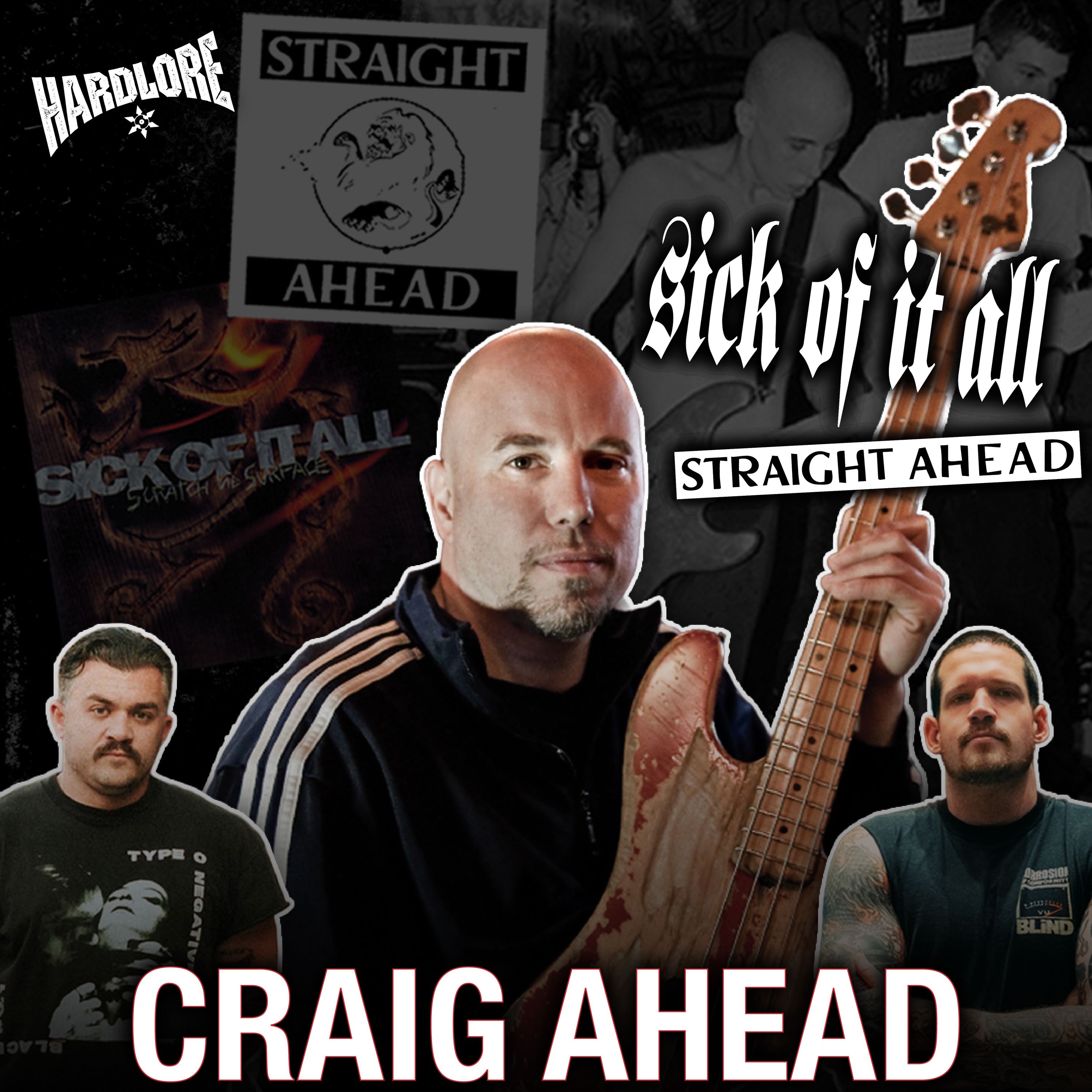
HardLore
Craig Ahead: Straight Ahead Reunion, Sick of it All Hiatus, Quitting Youth of Today, Agnostic Front
03:05:28
We're joined by one of the most iconic bass players in the history of hardcore music, Craig Setari AKA Craig Ahead of Straight Ahead and Sick of it All, and formerly of Youth of Today, Agnostic Front, Rest in Pieces and more.
Loading summary
Transcript1,227 lines
- [00:00]
Host 1
How fondly have you looked back at Straight Ahead for the last 40 years?
- [00:06]
Craig Ahead
Sometimes I would occasionally put it on, like the end of Warzone thing and it would give me goosebumps. I'd be like, wow. Like, listen to what I was doing. When I was like a little kid, I was like. I was like, no wonder everybody likes this so much. It's really good. Like from an outside perspective, I'm pretty damn happy with it.
- [00:20]
Host 1
It pops.
- [00:21]
Craig Ahead
Pops like crazy, you know?
- [00:23]
Host 1
Is there any hope in ever seeing straight ahead again?
- [00:27]
Craig Ahead
April 25, we're playing in Brooklyn at the Brooklyn Monarch as main support for Gorilla Biscuits. Yes, we've decided to play again. Feels like something we can do. It feels right. Like we rehearse. I get like, goosebumps. It's like, really fun. So I'm excited for it. You.
- [01:05]
Host 1
Hello, welcome. It's Hard Lord Time. How you doing, Bo?
- [01:09]
Host 2
I'm doing good. New Me New Year, you know.
- [01:12]
Host 1
New Me New Year. Exactly. First episode of the year and we've got a very special one. It is our honor to introduce a New York hardcore legend. There's no other way to say it. Iconic bass player. Prolific. A man whose discography spans multiple generations. And we're going to get into all of them.
- [01:37]
Host 2
Quite. Quite a resume.
- [01:38]
Host 1
Quite a resume. One of the. One of the greats. Ladies and gentlemen, Craig Ahead. First known as Craig Satari. How are you, Craig?
- [01:48]
Craig Ahead
Hey, guys, what's up? Nice intro and thanks for having me. I'm excited.
- [01:53]
Host 1
Thanks for being here. Unbelievable.
- [01:54]
Craig Ahead
I'm a fan of the show.
- [01:56]
Host 2
Oh, wow.
- [01:58]
Craig Ahead
You know, I'm a fan of the show, so I'm excited to do this one.
- [02:01]
Host 1
That means a lot. And I know that when we spoke on the phone, you said you would forgive me for Warzone beating. Sick of it all in the 80s bracket.
- [02:09]
Craig Ahead
Ah. What are you gonna do? You know, I used to go see Warzone play. Smell that Clove Cigarettes. The Pyramid Club. So, you know, I got. I got some. I got some memories and some, you know, the heartstrings go. When I think about Warzone a little bit as well. So it's okay.
- [02:25]
Host 1
Okay, so we all understand, you know.
- [02:28]
Craig Ahead
But I did fight for, you know.
- [02:29]
Host 1
If you go back and review the footage, you'll see me going, I think it should be so. But here we are. Let's dive in.
- [02:37]
Host 2
Yeah, yeah, sure, sure.
- [02:39]
Host 1
What can you do? Before you were Craig Ahead, you were Craig Satari. You were born Craig Satari. Tell me about that guy and your early life. Life before hardcore music.
- [02:51]
Craig Ahead
All right, so as A little kid. I grew up in Queens, you know, the north end of Queens, town called Bayside. Actually a nice, one of the nicest parts of Queens. I was raised by my mother and I have an older brother. We grew up in a small apartment with no money. I had an alcoholic father that left when I was very young, but came around just enough for me to see some really bad stuff as a kid. And, you know, we all say, when we talk about hardcore, we all say we're here for a reason. You know, those type of memories are probably my reason. And, you know, I was just a normal kid growing up, getting into trouble and doing the wrong thing and hanging out in the streets and, you know, running around with my friends. But I, I, my mother is very loving and my brother's a great guy. And, you know, I always had a really good, strong family unit, but no father in the house, you know.
- [03:40]
Host 2
Mm, sure.
- [03:42]
Craig Ahead
So that's pretty much my childhood bad influences. Most of the kids I grew up with, it's a cliche line, but they're dead or in jail. And I found music when I got to be a teenager, and that's what sort of pulled me out of, you know, I was never a criminal at heart. I wasn't one of those guys, you know, I was friends with a lot of these guys, but the music is really what opened my eyes to the, the world and having a better, more fulfilling life, I think it really, it.
- [04:09]
Host 2
Really usually is one of two things. It's sports or music. Sometimes both.
- [04:13]
Craig Ahead
Both. It was both for me. I like baseball a lot. When I was a kid, I played baseball. I wouldn't have been a pro baseball player, you know.
- [04:19]
Host 2
Yeah.
- [04:19]
Craig Ahead
But, you know, what can I tell you?
- [04:22]
Host 1
I actually heard that you've got some crazy baseball stories from your youth.
- [04:27]
Craig Ahead
I don't know about crazy baseball stories, but I played on a couple of championship teams as a kid. And then as an adult, I played in an adult league and we won the championship and I made some plays. I was in, like, the local PA paper for making a player, too. But there were guys in my baseball league that were like, so good. They were like, way better than me. I wasn't a standout. I was, you know, average to good player.
- [04:48]
Host 1
Where was this?
- [04:49]
Craig Ahead
This was in Bayside in Queens. I played in the Bayside Little League. It was fun.
- [04:52]
Host 2
And now, forgive me if I don't know my geography, but being from Queens, does that make you a Mets fan?
- [04:58]
Craig Ahead
Well, technically, yeah. I mean, I'm a Mets fan because I grew up kind of near Shea Stadium. But, you know, the Mets over the years haven't given that much to really. To really love, you know, it's outside of a few years, you know what I mean? But technically, I'm a match fan. Yeah.
- [05:11]
Host 2
Who was. Who was the catcher? Mike Piazza.
- [05:14]
Craig Ahead
You're talking about.
- [05:15]
Host 2
Oh, my God, I loved that guy.
- [05:17]
Craig Ahead
Yeah, he could play. He was good.
- [05:20]
Host 2
He was terrible.
- [05:21]
Craig Ahead
He couldn't throw the ball at all.
- [05:22]
Host 2
But he was tough, you know? He was tough.
- [05:25]
Craig Ahead
He was. He was good defensively and he could hit really well, but his. His throwing was horrible. He couldn't. Like, the dude couldn't hit the side of a barn from 10ft away. Like, he would throw to second base, it would go to center. You know what I mean?
- [05:37]
Host 1
I mean, look, you only got to do one thing great, right? We can't all be ohtani.
- [05:42]
Craig Ahead
I mean, listen, you know, you do what you can. You know what I mean?
- [05:46]
Host 1
Yeah, you need. The world needs our Dennis Rodmans, you know?
- [05:50]
Craig Ahead
Yeah, yeah, yeah.
- [05:51]
Host 2
Growing. I know we're not going to talk that much about baseball, but growing up, I was a Cubs fan, so we would root against the Mets, obviously, and. But my dad, who was like a big Cubs guy, he would always be like, I like Piazza, all right. Yeah, he's got hustle, you know. Yeah, it's one of those guys.
- [06:08]
Host 1
So you said music was the thing that. That got you out of a bad environment, rough environment, a rough crowd. Was it hardcore music right away?
- [06:19]
Craig Ahead
Not right away. I'd say when I was about, you know, 10 years old is when I really started digging into music. I started playing bass around 10 or 11 years old. You know, when I was a little kid, my brother would bring home some records, like, you know, Aerosmith and, you know, like, Black Sabbath. And I love that stuff. And I still do. I still love that. And I, you know, I got into that. And then my brother started going to high school, and I. He. Danny Locker was his. His, uh, classmate. They had music class together first thing in the morning. They became friends. And Big Charlie Hankins, who was the, uh, the bouncer at CBGB's, rest his soul, he would come over, too, because my brother played on the football team. My brother was like the last bench warmer on the football team, and Charlie was the star of the team. So they were friends, and Danny was the connection, because Danny was into, like, metal and punk and hardcore, and Charlie would go to CBs, so those guys came over and brought me records, and it just turned. Danny started, you know, showing me bass and all that. And it just turned into this thing from when I was, like, 10, 11 years old, where I just.
- [07:26]
Host 1
Did he give you your first bass?
- [07:28]
Craig Ahead
He did. He actually gave it to my brother. My brother was going to play bass for that band Anthrax back in, like, 1980, and because they were just starting. And they were just starting to play, and my brother didn't really care about that. You know, he wanted to, like, drink beer and pick up chicks. You know what I mean? Sure. So I would just sit home every day and play the thing. And I got good pretty fast. By the time I was 12, I was, like, in bands and stuff.
- [07:49]
Host 1
Was. Was Danny Locher somebody who was around hardcore? Yes, in its infancy to you?
- [07:54]
Craig Ahead
He was. He was. He was like, into rock and metal and hardcore and, you know, he was a fan of everything. He was like a. He was like the first crossover guy. So he turned beyond to, you know, everything from, you know, Black Sabbath to the Exploited. You know what I mean?
- [08:12]
Host 2
Oh, wow.
- [08:13]
Craig Ahead
He would give me seven inches back in the early 80s, and I, you know, I was like, let's go to a show. Let's go to show. He's like, all right, wait. Wait till you get a little older. Wait till you get a little older. You know.
- [08:21]
Host 2
Okay, before we get there, when. When you're picking up the bass, I'm just curious, are you. Because, like, really early on in your discography, you're doing. You're doing little bass runs. You're doing stuff that a lot of guys weren't necessarily doing at the time. The bass was more of, like, mimicking the guitar, you know, but you're kind of playing a little more traditionally, which I would imagine comes from some of the stuff you're finding, some of the records you're getting. Are you playing with your fingers? Are you playing with a pick? Like, how are you approaching this instrument that's new to you?
- [08:51]
Craig Ahead
The first. The first, like, I'd say from 10 to 12, I pretty much play with my fingers. I learned how to play everything with my fingers. I was a big fan of John Entrance Whistle from the who.
- [08:59]
Host 2
The Baby.
- [09:00]
Craig Ahead
Yeah. The Ox is great. So I learned all of that stuff and all early Sabbath. I was a big fan of Geezer Butler. He's kind of like one of my main influences. So I was doing that. And then when I first started playing shows with bands, I played with my fingers. But certain stuff, when I started playing more like punk and hardcore. Yeah, certain. And even some, like, heavy metal stuff when I was a little kid, Some of It had to be played with a pick. So I worked on my picking, and I got really good with the pick. So I pretty much play hardcore with a pick, but I play with my fingers as well. It just depends what I'm. What I'm playing and who I'm playing with, you know, when I jam with certain people that have nothing to do with hardcore, I'll play with my fingers a lot, you know.
- [09:37]
Host 2
That makes sense.
- [09:38]
Craig Ahead
Yeah.
- [09:38]
Host 1
Just a true basement.
- [09:40]
Craig Ahead
Yeah. I was a bass player before I was a hardcore guy. It kind of came together in a way, but I didn't start playing bass because of hardcore. I was a bass player that found hardcore.
- [09:49]
Host 1
I think you can tell in a lot of your choices in. In songwriting. I mean, we'll get there, but, like, in Straight Ahead, right off the bat.
- [09:57]
Host 2
Right off the bat, yeah.
- [09:58]
Host 1
It's the first thing you notice.
- [10:00]
Craig Ahead
Yeah. Straight Ahead was pretty unique musically. Like, it's. It goes by so fast that it's hard to really pick it apart and. But if you listen to the actual parts, some of it's just very basic, but a lot of it's, like, very musical. Yeah, it just happens so fast, and it's so, like, eclectic, I guess, is a good word for it. It's pretty eclectic stuff. Like, I listen back to it. I'm proud of it. I think to myself, this is some of the best stuff I ever wrote. It's totally, like. It's very unique. It sounds like nothing. Nothing else, really. You could hear the influences of other things, but the actual. The riffs and the way they go together. There's weird timings, and there's all kinds of, like, strange musical stuff saying how.
- [10:37]
Host 1
Much happens efficiently in so little time?
- [10:41]
Host 2
100%.
- [10:42]
Craig Ahead
Yeah. That's a good way to put it. That's. Yeah. I look back at that with a lot of pride. And the way the sound I got, like, on my first and the War Zone recording, it was just straight into the board. I was playing red. My red bass. It just. It just. It just all fell together. I was like. I kind of found my way on that recording. I feel like that was. That was like, me, you know what I mean?
- [11:01]
Host 1
In order to get there, I want to. I want to know how you met Tommy Carroll and other key bands and figures in your early life in hardcore.
- [11:13]
Craig Ahead
I went to my first hardcore show in 84. It was warm weather, so summer of 84. I don't remember the exact date, but I went to a show and I started every week. I went to shows and right away, pretty Pretty quickly. I met Tommy at a show at like a Sunday matinee. And we were talking and he was saying, hey, you know, I play in this band, this NYC Mayhem band with these other guys. And, you know, like, I kind of. It's good, but we need a new bass player and I don't really like the direction. You know, he was like, finding his way as well. So I wound up playing with him. So Tommy and I became fast friends right away. We were friends and he was cool, you know, he would give me tapes, I would listen to these new bands, he would give me. I would give him some stuff, and we would go back and forth like that. And he invited me to go watch one of the rehearsals. I did. And then shortly after, I was in the band.
- [12:06]
Host 1
So are any of the. Were any of the songs on the Violence demo written before you were in the band?
- [12:14]
Craig Ahead
All of them.
- [12:15]
Host 1
Okay, so you didn't. You were not part of that writing process?
- [12:19]
Craig Ahead
No, the really metal sounding stuff I didn't write when I came in, it was like Tommy was like, hey, I want to play hardcore. And so when I joined the band, we used some of those songs still because it was like a transitional period, but I wrote a bunch of other songs and Gordon also wrote songs that were more like the direction we were going in. So, like a lot of. So a lot of that Mayhem stuff, the. The Mayhem stuff that we would play were Straight Ahead songs. We took them for Straight Ahead and adopted them and just sort of like, we didn't really even change them, we just played them. Maybe the arrangement switched a little, but a lot of later Mayhem later, it's like six months later.
- [13:00]
Host 1
Six months later.
- [13:00]
Craig Ahead
Yeah, six months later. But six months when you're 14 or 15, 15 is a long time, you know. But a lot of that stuff was used for Straight Ahead as well.
- [13:09]
Host 1
Something so. So Tommy played drums and sang in NYC Mayhem. And the demo came out in 85.
- [13:18]
Craig Ahead
I think the one you're talking about probably came out in 84, I think.
- [13:22]
Host 1
So that's even crazier because if that came out in 84, it's got blast Beats on it. It starts with Blast beats.
- [13:30]
Craig Ahead
Yeah, we were. That band was one of the first Blast Beat bands.
- [13:34]
Host 1
Maybe the first.
- [13:35]
Craig Ahead
Maybe.
- [13:35]
Host 1
Because if it's 84, the. The. The alleged first Blast Beat in recorded history is Milk by Sod.
- [13:42]
Craig Ahead
Yeah, but they know. But they got that from Danny and from. I don't want to say from me, but they got that from me and Danny jamming in my house and recording Stuff we used to take. I had this plush bass amp and we would hang a microphone down over it and hang it in front of the speaker. And I would sit on a milk crate with a tape, a cassette thing. And we tape like a can, a beer can to it. I had a drumstick and a screwdriver with tape around it. And we would play off the cabinet and play the thing and hit the little thing as a symbol and. And he would play bass distorted through a wa. And we would switch back and forth between, you know, him drumming and singing and me doing it. We did this thing called the Crab Society. It was like a joke. And that became like something that SOD did later. And it was.
- [14:30]
Host 1
Yeah, their demo was Crab Society North. Yeah, we did 60 tracks or something.
- [14:35]
Craig Ahead
Yeah, we did that like a year before or whatever. And it was like. It was like a joke. It was for fun, you know.
- [14:41]
Host 1
But then. But so that means NYC Mayhem is the first recorded blast beat that in. In the context of punk and metal.
- [14:50]
Craig Ahead
I think so, yeah. Because, you know, the guys from Napalm Death, they always say, you're the first blast beat. Your thing was the, you know, your band, NYC Mayhem, and that early Crab Society was the first blast beat. So that's what the guys in Napalm Death say, and they're like the next blast beat, I guess.
- [15:06]
Host 1
Yeah, yeah.
- [15:07]
Host 2
Colin, when. When was like Hellhammer going, well, that was. Okay, okay.
- [15:14]
Host 1
But that would be 81 or 82. 83, because Celtic frost started in 84.
- [15:19]
Host 2
Right. So if I had a guess, I would have said Hellhammer, you know.
- [15:22]
Host 1
Right.
- [15:22]
Craig Ahead
But that's the.
- [15:23]
Host 2
That's a. You're right, you're right. That's not a blast.
- [15:25]
Host 1
Whereas Tommy's going, this is doing a.
- [15:27]
Craig Ahead
Lot of drum rolls. Yeah, a lot of drum rolls off the hi hat. And then later, straight ahead was. Was punches, you know, off the riffs. So battling with that, we were doing more like, like, almost like straight ahead.
- [15:41]
Host 1
Did the scissor constantly, which was just.
- [15:45]
Craig Ahead
Like a cymbal cues, like, like Tom stuff. Almost like, like I call them like circus beats. Sounds like. Yeah, sounds like a circus, like sped up.
- [15:55]
Host 1
So where. Where would he have gotten. Did he. Is he getting that from, like jazz?
- [16:01]
Craig Ahead
Yeah, you know, he. He. He played drums and he liked jazz when he was a little kid because his father was into jazz. So he always says to me, yeah, I had like a jazz influence, but realize it was jazz. But also he said, all right, these guys do this. I'm going to do a snare roll to make it even faster, because he wanted to play really fast when he was a kid. Like that.
- [16:19]
Host 1
Unbelievable.
- [16:19]
Host 2
That's what we call hard lore.
- [16:21]
Host 1
That's hard lore. So, NYC Mayhem coincides with the. The explosion of extreme metal.
- [16:28]
Craig Ahead
Yeah.
- [16:28]
Host 1
Four years after Slayer, or three years after Slayer, two years after Possessed, the first death metal band. A year after Celtic Frost starts, or the same year. If you're saying the demo is 84, that's insane. It is straight up proto generation one death metal.
- [16:45]
Craig Ahead
Wow. So we. We played like they played that. And then I joined. But we. Then we turned more into a hardcore band because we, you know, like, I was more into hardcore and so was Tommy, and we kind of morphed.
- [16:56]
Host 1
Okay.
- [16:56]
Craig Ahead
And that's why we eventually broke up because Gordon didn't want to play like that. So he left, and then Straight Ahead wound up forming down the Line. Okay, down the line. I mean, like, eight months later. Yeah, Straight Ahead probably formed in December of 8. Was it like. No, no.
- [17:15]
Host 1
December 85. December or something?
- [17:17]
Craig Ahead
Yeah, like December of 85 or maybe even earlier. It's hard for me to say. Mayhem was like, the end of 84 through most of 85. We played with the Psychos at Seabees on October 6th of 1985. And that might have been the last Mayhem show them, I think. I'm not sure.
- [17:34]
Host 1
And as you're doing that, you're thinking, fuck this. I just want to play hardcore.
- [17:38]
Craig Ahead
Yeah, yeah, yeah. You know, we. We played with this. It was. It was the Numbskulls, which was Richie's band before that. He called it True Blue, but then it was Underdog and they played, and then Token Entry played Mayhem played in the Psychos, played. It was like a matinee at CBs. And, you know, we were like, tommy, you know, you should. Tommy wanted to be a frontman. We wanted to be the front man. We were like, yo, having the drummer behind the drum sucks. We want to have pylons and sing along. We wanted to increase the fun factor. You know what I mean? So we, you know, Tommy came out behind the drums. So we were like, who's gonna play drums? And one day, we were sitting outside of CBs and I was telling Armand this story. I was like, yeah, Tommy wants to, you know, sing, and we're gonna change it up, and we're not sure what the name's gonna be. And Armand was like, I want to play drums. I was like, but you play guitar. Because he was a guitar player, a really good one, originally. And he was like, I want to play drums and. And I'm like, you don't play. He goes, yeah, but I always wanted to. I was like, okay, we're going to rehearse and like, you know, whatever. We're going to rehearse on Thursday, whatever the hell. We rehearsed. And we had a gig. Like first gig was like two weeks later. So he played at rehearsal like a handful of times and played the first straight ahead gig.
- [18:49]
Host 1
Holy shit.
- [18:50]
Craig Ahead
And Billy Psycho was the guy who tried out. He tried out, but we didn't take.
- [18:54]
Host 1
Him because you did Armand playing hitting stuff for the first time over Billy Psycho?
- [19:02]
Craig Ahead
Pretty much, yeah.
- [19:03]
Host 2
Yeah.
- [19:03]
Craig Ahead
You know, Billy was. Billy was more of a traditional drummer, you know what I mean? It wouldn't really work. It was too. It was so fast.
- [19:09]
Host 1
Was. Was Armand already not singing Rest in Pieces at this time?
- [19:12]
Craig Ahead
He was at that point. I think he was just playing guitar for Rest in Pieces and he switched over to guitar and vocals because originally they had a guy named Rob Calhoun, rest his Soul singing and Armon was a guitar player. I think at that point Armand was singing and playing guitar.
- [19:27]
Host 1
So Armand is just getting greedy. I gotta do it all.
- [19:31]
Craig Ahead
Yeah, he was like, you know, he was like a real. He was into it, man. He was like so into it.
- [19:36]
Host 2
I love about the stories about any bustling beginning scene is it's pick up if they're pickup games. It's like who's around? Like whoever's around, let's get him in. Before we move on too far. Craig, do you remember you mentioned going to that first CB show? Do you remember who played?
- [19:54]
Craig Ahead
Aod Adrenaline Overdose, Bedlam and. And no, no, it might have been badly. It was Eat. No, it was either Bedlam or it was Bodies and Panic. Maybe I don't remember. Might have been Bodies in Panic and this band opened up Malignant Tumor. It was like that first show maybe. And it was this guy Jimmy, he had a big scar over his eye and you know when he came out he's like, hey, you guys might know me from Hanging out in the Park. I'm Jimmy, I'm friends with Roger and those guys, blah blah blah. And they played and I liked them. They were like real simple. They had like three chord songs with Sing Along. It was like early. It was like 84 hardcore. Three chord songs like, you know like mental abuse, AOD, you know, like with these bands like. Like Malignant Tumor opening up. It was like early hardcore. The whole place smelled like close cigarettes. Early 84 Club cigarettes. Cigarettes and people either had a shaved head or A Mohawk and they all had on trench coats and Doc Martens sick. That's totally.
- [21:01]
Host 1
And you're, you're in immediate.
- [21:02]
Craig Ahead
I'm in. And the Rock Cartel shows really smells like close. You go to the Rock cartel in like 84, it just smelled like clove cigarettes. 84, 85. Everything smelled like clove cigarettes.
- [21:11]
Host 1
Now, Craig, do you hate the smell of clove cigarettes so much that you become straight edge?
- [21:17]
Craig Ahead
I don't know about that, but it definitely reminds me of like being like a scared but thrilled little kid.
- [21:23]
Host 2
Yeah, sure.
- [21:24]
Host 1
Just moshing, but being like, God, it fucking stinks.
- [21:27]
Craig Ahead
Yeah. You know, the first show, at the first show I ever went to, I went to CBs and I walk in and there's like maybe 40, 60 people there. Everyone's got the trench coats. It smells like clove cigarettes. And I walk in and I see Big Charlie Hankins. And he looks at me, he goes, kid, kid, you finally came to the show, to a show. And he grabs me and he goes, good. He's hugging me, saying hello, and he says that. He goes, yo, you see, it was in between bands. He goes, before the first band started, he goes, you see this kid? This kid's my friend. He goes, we all look out for this kid. He's a good kid. So then during that show, I was marching and he took me on his shoulders and we did chicken fights. Like old school chicken fights. And right away everybody's my friend. And you know, I became friends with Stigma. I don't know if it was that day or the next time I went, but you know, right away I was friends with everybody.
- [22:15]
Host 1
They took you, they took you under their wing.
- [22:16]
Craig Ahead
Big Charlie gave me his blessing.
- [22:18]
Host 1
I mean, opposite of Mark Porter's experience.
- [22:21]
Host 2
Yeah.
- [22:21]
Host 1
Showing up with Metal Heads, getting his ass kicked. Wow, that is really beautiful.
- [22:26]
Host 2
Yeah.
- [22:26]
Host 1
So you're 84. You're in a year later. Same. Same year you're doing NYC Mayhem. A year later, 40 years ago, straight Ahead is born.
- [22:37]
Craig Ahead
Yeah. Yeah.
- [22:39]
Host 1
And remains to this day one of the most beloved, influential and still underrated short lived hardcore bands of all time.
- [22:47]
Craig Ahead
You know, we never, we never really. It happened then and it was never really pushed again. So it was like very much that time period, you know. Go ahead. I'm sorry to interrupt.
- [22:57]
Host 1
No, no, you're. I want to hear it. You did this right here.
- [23:01]
Craig Ahead
Oh, that. Love that one.
- [23:04]
Host 1
And then you did one more record and basically called it a day. Craig, is there any hope in ever seeing straight ahead again?
- [23:17]
Craig Ahead
April 25, we're playing in Brooklyn at the Brooklyn Monarch as main support for Gorilla Biscuits. Yes, we've decided to play again. And we. We are doing that. We've rehearsed. It sounds great. Tommy totally has his act together vocally. He's been practicing for months. We've been talking about doing this for years. And we always were like. I was on tour, me and Armand were like, we don't really have time. And, you know, Tommy was busy with work, and it just. It never really worked out. And now that Lou, God bless him, you know, is. Is. Is. Is not playing right now because he's. He's recovering. We just figured, you know, if we're ever going to do it, now's the time. And Tommy's in a good place. He's a family man. And he was like. He wanted to do it so bad. He's like, I want to do this, I want to do this. We didn't close that out right. He's like, I want to do it. We got to do it. He goes, I want the opportunity to set. Set it straight so that it is right for forever. Like, in other words, we ended. We broke up. We should have kept going. We never did any. We didn't really continue in any manner. So he was really excited. I said, listen, Tommy, here's the deal. Work on the material. We'll rehearse. We'll see how it sounds. And we rehearsed, and Tommy sang every song without it, without any problem. Good timing, sounded great. We ran through the set, like, three times. He didn't. His voice didn't fail. The next day. I called him. He talked fine. He's like, when you told me there's a possibility we can do this. I've been practicing, like, multiple times per week for the past bunch of months, so he's in shape. We sounded really good. Robin Armour is the original lineup. I think it's going to be really good. It just feels like something we can do. It feels right. Like we rehearse. I get, like, goosebumps. It's, like, really fun. So I'm excited for it, you know.
- [25:18]
Host 1
For the first time since 1988. Straight ahead is back. You heard it here, and.
- [25:26]
Craig Ahead
And it's. I think it's going to be really good.
- [25:29]
Host 1
I guarantee you it's going to be really good. So it's you, Tommy, Armand and Rob.
- [25:34]
Craig Ahead
Yeah, same. Same exact group, same setup. We sound good. Like, we play those old songs way better than we used to. It sounds the same, but it's more. It's more. It sounds like, clearer. You can like hear the parts. We're not rushing through it as much. We're still playing super fast, but the backups sound clearer. You know, it's we. The sounds are nice and crisp. I think it's going to be great. I'm so excited for this. I can't wait. Beautiful.
- [26:01]
Host 1
I mean you and you and I.
- [26:02]
Craig Ahead
Wanted to say it here first with you guys because I love it because I'm a fan of the show and you guys get it.
- [26:08]
Host 1
That means the world. We love Straight Ahead. Yeah, obviously it's well documented. We got to get it on streaming now. The people need to working on that, need to have it.
- [26:18]
Craig Ahead
I was waiting till, you know, the show was announced, which is happening earlier, which happened just earlier today.
- [26:26]
Host 1
It got announced today.
- [26:30]
Craig Ahead
And so I got the streaming in the works and all kinds of stuff I'm working on. We have social media that we just set up. I set up a Facebook and an Instagram Straight ahead. Nyhc. Beautiful on both of them.
- [26:48]
Host 1
Unbelievable.
- [26:48]
Host 2
Let me ask you, this is something I was, I was wondering about. Little insider baseball for everybody out there. We knew all that coming into the show. Come on. But I was wondering.
- [26:58]
Craig Ahead
Yeah.
- [26:58]
Host 2
Today, part of, part of Straight Ahead's appeal, at least back, especially back before streaming was even a thing, was the fact that like you kind of had to know, to know about Straight Ahead. Like it was like you had to be pretty into hardcore to know about Straight Ahead or Rest in Pieces or like some of these bands that were pretty short lived but were really, really cool. And I'm just curious, are you at all like worried about. Because like, obviously you have to go to YouTube or something to, to listen to the EP, you know, like, is that, are you, are you worried about losing any of that like Mystique or the mysteriousness or anything like that?
- [27:41]
Craig Ahead
I put this off. The people all throughout the years have been asking me, put the record out. I always say, no, I want to leave it where it is. It's special. It's going to be the unsung thing, like, you know, almost, almost like, like a minor Threat, but. But less, less known. You know what I mean? Not to compare it to Minor Threat, which is like the ultimate. But you get the idea. Yeah. You know, I, I want. I was like, no, I'm just gonna leave it where it is. It's gonna be one of those rare bands that never, you know, that you had to be there and it's hard to find. But honestly, like I. This. It feels right. It never felt right. Now it feels right. You Know, it just feels like it's going to work. I know we're going to be really good. Will it be exactly the same? I. I don't think so. Because we're not little kids anymore. Yeah, but. But like, I know that I get. I'm thrilled to play that material and I can still play it with that. I still get that adrenaline rush where I feel it coming out of me. That stuff just gets me, you know, I love. I always. It's my own band that I wrote the songs, but I still love that stuff, you know.
- [28:41]
Host 1
And you've been Craig ahead for 40 years, you know.
- [28:45]
Craig Ahead
Yeah. Well, Tommy always called me Greg with a G. Still to this day. Greg. Greg. Hey, Greg. But one day and he goes, he goes arm. He goes arm and hammer on drums. And he goes. And on base. And he looked at me, he started laughing. He goes, he goes, greg ahead. And I just laughed. And it stuck ever since. Wow.
- [29:06]
Host 1
Let's get into the discography here. Straight ahead started with. Was. Was there a cassette demo before those songs were on the end? The War Zone seven.
- [29:17]
Craig Ahead
No, that's the. That's the recording of the. That's it. We did it. We did it.
- [29:20]
Host 1
I. On a seven inch comp. Every. Every other band here has got one, two. One band has four songs. They're very short. Straight ahead's got nine songs. Why seven inch comp?
- [29:34]
Craig Ahead
Why hardcore? That's why hardcore got hardcore. That's why we were like, yo, who puts out two songs? That's like, you know what rock and metal bands do. Let's put a whole bunch of stuff on. We just blasted it out. We recorded 12 songs, but we put them on, right?
- [29:50]
Host 1
Yeah, they're. 12 songs are on a cassette somewhere.
- [29:52]
Craig Ahead
12 songs were in that session. That session was three hours in a studio uptown. And it was the guy that. The guy, what's his name, that did the Bad Branch stuff later on. What the hell was his name? He did some Sick of It all stuff to a good guy. A little tiny place, little singular room behind in a little glass booth. And we just sat up and played and we, you know, the band played. Tommy actually played drums on that because Armand had just, you know.
- [30:22]
Host 1
XXX drums.
- [30:23]
Craig Ahead
That's Tommy playing. Look at the look on your face. You get it?
- [30:27]
Host 1
No credit for our total dirt.
- [30:29]
Craig Ahead
Yeah, but he didn't play on it. Tommy played on it. So Armand, you know, we looked like, ah, we'll just do it with Tommy because, you know, Armor was so fresh to drumming and three hours, 25 bucks an hour. 75 bucks. We played the songs like all pretty much in one take. We might have went over. Oh, let me do that one again. We did it. And then as soon as we were done, Tommy sang and Rob and myself, we stood on the sides, Tommy side and just yelled into the mic, the backups as we went.
- [30:56]
Host 1
So you're going Straight Edge. Straight Edge, yeah, yeah.
- [30:59]
Craig Ahead
Right next to him, yelling, a spit in his face. You know what I mean? Screaming.
- [31:03]
Host 1
We're so being a. Being an early Straight Edge band. I.
- [31:08]
Host 2
How.
- [31:09]
Host 1
How Straight Edge was this band? Did anybody in hardcore in 1986 look at straight Edge as a concept, as like this a big lifetime commitment like it is now?
- [31:19]
Craig Ahead
You know, the like, Straight Edge was like Youth of today had their 7 inch out. We loved Minor Threat and that was like Tommy's thing. Tommy would, like, uncover. He'd get really into an aspect of the scene and he'd go in all the way and then he'd find something else and he'd go into that. He wouldn't like, leave behind what he did, but he was one of those guys that like, dug in with both heels. So, you know, the straight. I was like, I don't want to call the band straight ahead. I'm not Straight Edge. Like, I would drink beer and he's like, what are you doing? And he's like, no, it'll be great, trust me. I was like, well, you know, I like, I like Straight Edge stuff. I'm cool. And then like, I, you know, within three months. I wasn't drinking beer back then, probably three weeks. So I was technically straight. I was straight. I'm Straight Edge now. So it kind of worked out, you know.
- [32:03]
Host 1
Okay, definitely. How long were you Straight Edge at the time?
- [32:07]
Craig Ahead
For a while, probably. I was, I was Straight Edge once I started becoming Straight Edge. I was Straight Edge for years until Stigma had me smoke a joint with him.
- [32:18]
Host 1
That'll get you.
- [32:19]
Host 2
He'll do it.
- [32:20]
Host 1
That'll get you.
- [32:21]
Craig Ahead
Probably got me drunk too. You know what I mean?
- [32:24]
Host 1
Who is One Step Ahead Records?
- [32:26]
Craig Ahead
That was a guy named Mike Rubin from California.
- [32:28]
Host 1
Tarzana. That's the Valley, baby.
- [32:30]
Craig Ahead
Yeah, he came. He was a friend of Tommy's, like a tape trading pen pal. He came to New York and came to our rehearsals. Tommy's like, yeah, we're gonna put out a record with him. We're gonna do a seven inch comp. And I remember he came to New York and he came to a rehearsal. We rehearsed at the old giant on 38th Street. His back were like 85 or whatever. And he came in and I met him off the train. Because I took the 7 train in from Queens or the F train, 7 to the F. So I took. Maybe, Maybe back then 38th street was probably just the. Just a 7 train, whatever, I don't remember. But I met him at the train. And we walked to the rehearsal and there was a guy, a kid, young guy, doing the shell game, you know, with the three shells. And he stopped. And the guy goes, yo, man, which one's it under? And he looked at the guy. I go, don't talk to him. And the guy looked at me and he goes, yo, man, don't speak for him. He's a grown man. Maybe we were like 15. And I go, mike. I go, mike, don't. Don't answer him. And he's like. The guy got like a little loud with me. And I was like. I was like, yo, yo, I know this, you know, I, like, the guy was trying to bait him. And I was like, yo, I know what's up? And I said, mike, just walk away. And Mike was like, that one. And he won. And the guy handed him, like, you know, five bucks. And I was like, wow. I was like, mike, he's got you now.
- [33:44]
Host 2
Walk away.
- [33:45]
Craig Ahead
I go, I go, give him the five bucks and walk away. Just give it back to him. And the guy was arguing with me and he wound up losing like a hundred bucks. And like, you know how that goes, like a minute and a half.
- [33:56]
Host 1
That's like 800 bucks now, back then.
- [33:58]
Craig Ahead
Yeah.
- [33:59]
Host 2
And I was like.
- [33:59]
Craig Ahead
He was all upset. I go, mike, man, what did I tell you? I go, don't. You don't do that. I go, but anyway, really nice guy.
- [34:05]
Host 1
Those guys are good.
- [34:06]
Craig Ahead
Fell into it. The guy was an expert, you know what I mean? Like, I was a skinny little 15 year old kid. Yeah, it was like, you know, three dudes with them giant dudes. I was like sort of like cheering you on.
- [34:17]
Host 2
Yeah, he got it. Yeah, that's.
- [34:19]
Host 1
They got me. They got me at the Berlin Wall. Bad one time.
- [34:22]
Host 2
Analog slot machines, dude.
- [34:23]
Craig Ahead
That's all it is in Germany, huh? Wow.
- [34:26]
Host 1
Oh, yeah. And he was good. And I, at the end, I was like, you're good. And he went, I am very good.
- [34:31]
Craig Ahead
You know what I remember too? I remember like when you were young, when you first. When I first started going to England, the guys would hang outside, like the strip clubs and. And they'd be like, come in, come in, have a drink. Oh, dude, I knew that. And these other bands, we would Tour with these kids. I'd be like, whatever you do, don't answer that guy. Don't engage him. Just keep walking. And one guy in a band went in, sat down, they gave him a drink, and, you know, you got to give me 800 bucks or 500 bucks, whatever. And they took him to the ATM and they, like, beat him up. And I was like, yeah, what do I tell you? Like, I was like, you. You're going to lose all your Michaels. Those. It's like giant German, like, gangster guys. They're going to be.
- [35:07]
Host 1
What are you going to do?
- [35:08]
Craig Ahead
You know what I mean? He's like a little kid. He was. I was like, what? I was like, I told you, man, don't do that.
- [35:13]
Host 1
So simultaneously with Straight. Straight Ahead is Existing. You're. You got the End. The War Zone stuff. You're writing Breakaway. Simultaneously, you're playing bass on a little band called Youth of Today. Tell me about this time of your life. You played bass on Break down the Walls.
- [35:32]
Craig Ahead
Yeah. You know what's crazy about that? Like, back then, like, from 80, from the middle of 84 to, like, 87 was, you know, whatever. A couple of short years. It seemed like a decade or two. Things happened so fast back then. Back then, a summer into the fall was like, four years is now just. It's so insane. What happened was Tommy was. Became friends with Ray. I met Purcell when. When Violent Children played Seabees. They were. They were main support for a big New York band show at CBs. And I met Purcell, and he was cool. I liked the way he marched. I was like, you got style, you.
- [36:13]
Host 1
Know, And I like that. I feel that way today about some people.
- [36:16]
Craig Ahead
And. Yeah, and he was. You know, he was. I was like, check this guy out. Like, I thought he was cool, you know? And so what happened was they became friends with Tommy as well. So they said, hey, we need a drummer. So Tommy started jamming with Youth of Today, and Gavin was going to play bass. Gavin?
- [36:33]
Host 1
Gavin Byrne.
- [36:33]
Craig Ahead
Gavin Byrne was going to play bass because he knew all those guys. He knew Purcell from upstate. Somehow. They. He lived upstate for a while. Gavin. What happened was Gavin was going to play bass. For whatever reason, Gavin didn't play bass. And Tommy said, hey, look, if I'm going to play drums, get Craig to play bass. Craig, you know, he. He knows the Seven.
- [36:51]
Host 1
Tommy is your boy.
- [36:55]
Craig Ahead
Tommy's one of the best guys in the world. People that don't know Tommy, he is one of the coolest guys ever. He. He is. So you could. Tommy could do something wrong, right? Tommy could, like, do something. You know, most people, when your friend does something and messes up and you go, yo, what'd you do? He tries to get out of it. Tommy will be like, yeah, I fucked that up. And I'll be like, why'd you do that? He'd be like, you know, back in the old days, he'd be like, well, I was drunk, you know what I mean? But he will. He'll like, mess something up and own it. Like, he. He doesn't. The guy doesn't lie. I've seen him protect people when they were wrong, but he'd say to the other people, this guy's all right. He made a mistake. He gotta let him go. Like, he's. He's your friend. Tommy's a friend. He's honest. He'll take fault when he does something wrong. Tommy's one of the most straight up honest people I've ever known. Like, he's a no type guy and he. He looks out for you. Tommy's great. I love him. That's why when I. When we were talking about this and I saw the state he was in and how enthusiastic he was and how his life is, I was like, as long as his voice, if he can sing and physically sing the songs, now is the time to do it.
- [38:03]
Host 1
I'm glad to hear he's in. He's in a good place now.
- [38:06]
Craig Ahead
So you.
- [38:07]
Host 1
He gets. Yeah, yeah, he gets you in youth of today.
- [38:10]
Craig Ahead
It's me and you for today. And so Ray writes me a letter, right? I have a letter somewhere from Ray. And he's like. It's a long, like two or three page letters saying how we can do great things together. You know, you join this band will be a one strong force. We're all on the same page. It's like a really nice letter. Yeah, he writes me like this inspirational letter. It's almost like a sermon and like by a deacon in the church or something. And I wound up playing in the band. So that's what happened. Yeah. Tried out.
- [38:39]
Host 1
How long were you in the band and did you contribute to the writing on Break down the Wall?
- [38:44]
Craig Ahead
I was in the band for probably a year. It seemed like a lot more. I think I started playing with them in like maybe March of 86, or at least that's when Ray moved to New York and we started playing shows and I played with them all through 87. We went to California. I thought it was the summer of 86, but Purcell straightened me out on that. We went in the winter of 86 into the turn of 87, or maybe right when it turned to 87, we were out in California and I played with them then and Break down the Walls had already come out. So I played with them for about a year. It was fun.
- [39:18]
Host 1
Did you write any of Break down the Walls?
- [39:20]
Craig Ahead
No, but what happened was I didn't write any of it because I already had all the material. I wrote a song. I wrote a song that was going to be on Breakdown the walls. It was called New Beginning. And originally the label was going to be called New Beginning. Instead, they went on Wishing Well.
- [39:33]
Host 2
Right.
- [39:34]
Craig Ahead
So the New Beginning thing never happened. So I wrote a song called New Beginning. We played it two or three times at shows, but we wound up dropping it. They didn't put it on the record. And so a New Beginning is a straight Ahead song because that became. It was never played live, but we had the song. And when we started playing again in 87 after they broke up, New Beginning was a straight Ahead song, but we recorded it without vocals at that point. There's like a weird demo somewhere that nobody's ever heard. And so New Beginning is one of the songs we're gonna actually play at this show.
- [40:10]
Host 2
Okay, cool.
- [40:10]
Craig Ahead
It's like a fast. It's like a fast hardcore song with a big, big breakdown. Big SSD type breakdown. Sing along. Yeah.
- [40:18]
Host 1
What more do you want?
- [40:19]
Craig Ahead
You know?
- [40:19]
Host 2
So let me ask you a couple questions. I know you said it was already prepared, but I gotta wonder with your style in Straight Ahead, the song stabbed in the back. It's got a little. It's got a little bass run in there. Did you bring that to the table or was that already written?
- [40:38]
Craig Ahead
Actually, it was already written. Ray wrote it. He wrote it kind of with the bass run. I. I tailored. Tailored it a little bit. Yeah, I put like a little tail on it. But it's basically, you know, it's basically something that Ray wrote. Ray wrote pretty much all of those songs musically.
- [40:52]
Host 2
He wrote.
- [40:52]
Craig Ahead
Oh, wow.
- [40:53]
Host 2
Wow.
- [40:53]
Craig Ahead
Ray could write. He can write. He.
- [40:55]
Host 1
Yeah, good for you.
- [40:56]
Craig Ahead
And he knows, like. He knows like some. He knows his way around an instrument a little bit. He's like, oh, that's major. That's minor. I'm like, oh, you know that. Okay.
- [41:05]
Host 2
There is a. One of my favorite. It seems real early youth today, but when we're talking, as you said, how seasons go by in the span of years, it's. It's you guys playing at Seabees and you are as skin head up as possible. I think you're xed up and you're skanking to all the parts. And it's just, like, the coolest style. It's the. It's the coolest style I can, like, connect with personally, while being the oldest version of it. Do you know? I mean, like, the first example I can pinpoint of, like, that's a guy.
- [41:44]
Host 1
Oh, that's what all my peers and I'm trying to.
- [41:46]
Host 2
That's what I'm trying to do. So I want to know what. Where are you getting that from? How are you being like, I'm gonna skank during this, what we now call youth crew part on stage.
- [41:56]
Craig Ahead
First, let me say, I love your enthusiasm. And that's why I wanted to be on the show, because you guys, like, have that little kid enthusiasm, and I have the same thing. I was like, these guys. I was like, these guys, like, we'd be playing in the sandbox. You know what I mean?
- [42:07]
Host 1
Like, it's still on the sandbox.
- [42:08]
Host 2
Hey, this episode we're gonna call spirit of YouTube, you know what I mean?
- [42:11]
Host 1
Because that's.
- [42:12]
Host 2
We have studied these.
- [42:13]
Host 1
This is the sandbox.
- [42:14]
Host 2
This is it.
- [42:15]
Craig Ahead
Yeah. You know, like, I love that. That.
- [42:17]
Host 1
That.
- [42:17]
Craig Ahead
Can't close my eyes 7 inch. And I saw them that. When they played CBs, the first time they played in New York, they opened up for, I think it was Agnostic Front. And I thought they were great. And I marched and sang along the whole show, you know, And I was, like, just excited, like. And these guys, like, they would go off on stage and I would go off on stage, and I just wanted to, like, I would get on stage even later with Sick of It all. And we first went to Europe. Like, in my mind, I was like, I'm from New York, hardcore. I'm going to show these people what this is. Like, people, they're not going to. They've never seen this. We're going to represent where we come from. It was like, pride. I was like, this is. I was like, this is New York. They're going to see what this is now.
- [42:57]
Host 1
Is that because people are like, these guys are from Connecticut. And to some extent.
- [43:03]
Craig Ahead
Well, I don't know about that. I mean, they moved to New York and they were into it. So I wasn't really thinking, like, necessarily where they were. I'm just talking in general, you know what I mean? But, yeah, that band. I was like. I was like, we're going to. We're going to come out, like, on fire. You know what I mean? Yeah. Like, you did not to necessarily impress everyone partially, but to impress ourselves, to be the. Be the hardcore band. You know what I mean?
- [43:25]
Host 1
Yeah, yeah. So did the breakdown, the walls recording process give you a perspective to which to approach Breakaway Recording Breakaway. Was it like, damn, this is what this could be. I need to take this next one.
- [43:38]
Craig Ahead
Not really. I feel like with Youth of Today, when they were in the studio, but the one record I did with them, they didn't really care too much about. They didn't really know much about recording or getting sounds in the studio. They were just like, yeah, let's just play and make a record. They weren't.
- [43:53]
Host 1
It sounds insanely good.
- [43:56]
Craig Ahead
Well, it's. It worked out well. But, like, I think with Straight Ahead, with, like, Rob and Armand and Tommy, we were more like. We understood the studio a little better. We were a little more like. I don't want to say we were more musical. We were a little more on. We. We were more players, I think.
- [44:18]
Host 2
Sure, sure.
- [44:19]
Craig Ahead
You know, we were more like players, I guess.
- [44:21]
Host 1
So. Armand quickly became good enough to record drums.
- [44:27]
Craig Ahead
The first show we played, he was pretty good. I mean, he's crazy. He used to. It was weird. But Armand's, like, a very talented guy. Armand's one of those guys that. He's a great guitar player. He plays bass really well. And, like, there are, like, two Sick of It all songs where he actually played bass. And nobody knows it on records because there were songs he wrote and we didn't. He wrote them at the last minute and he was like, you want me to show you the song? And I'd be like, just, let's not take the hour to do it. I go, you just play the bass track. You know what I mean? So he did that on, like, two songs over the course of Sick of It All, Dr.
- [44:58]
Host 1
Midnight Coming in and finishing it up.
- [45:00]
Craig Ahead
He's a guy just pops right in. He's very good at everything. So he picked up drums right away.
- [45:05]
Host 2
They drive me crazy. Good at guitar, singing, drums, podcasting, co hosting. They drive me nuts.
- [45:11]
Host 1
They're the worst.
- [45:12]
Host 2
I'm not done with YouTube today, though. Yeah, I got a couple more questions.
- [45:15]
Craig Ahead
Yeah, this guy's a drummer, but he's a guitar player, but I think of him more as a drummer. He's one of those guys. He's one of those guys.
- [45:22]
Host 2
One of those guys. Was it the Breakdown, the Wall session where Ray stopped singing and people opened the door and he was passed out?
- [45:30]
Craig Ahead
Yes, I was there when he passed out. He was jumping up and down, and I was like, why? Is this guy jumping up and down? Just sing the song. You don't have to jump up and down, down. But he was into it, you know, I was like, all right.
- [45:40]
Host 1
You can hear it in the session.
- [45:41]
Craig Ahead
Yeah, he jumps up. He's jumping up, and you can see him from the chest up, you know, because he's.
- [45:45]
Host 2
Yeah.
- [45:45]
Craig Ahead
In the booth and he's jumping. He's jumping up and down. And all of a sudden he jumps up and he doesn't come back up and he doesn't sing the rest of the song. I'm like, what's this guy doing? And he's like, got lightheaded and went down. It's great.
- [45:59]
Host 2
And now.
- [46:00]
Craig Ahead
Right? And that can't fake funny. Oh, it's funny.
- [46:02]
Host 2
My last crazy last question for you to today as people who were not involved at the time and you were in what? What? Like, because we obviously, we. We talked to Stigma, we talked to Dijon and Tom, and we. We did a small bit of our New York Hardcore episodes. The. But they were kind of like, Stigma was already around, and, like, some of these guys were already around. But you were there during a period of time that, like, a lot of us and my peers consider, like, the New York hardcore golden age. Like, the starting of all these bands and all these stories and all this. We know with youth of today specifically, we're gonna talk a lot more about all other New York hardcore with. With youth today specifically, did you feel as though this was a band because they seem, in hindsight, to be starting a movement, to be doing the youth crew, to be doing a thing. Was that a feeling that was happening at the time where you felt as though, oh, they're doing. It's more than just music. It's this vegetarianism and the straight edge thing and the youth, the symbolism.
- [47:02]
Craig Ahead
Yeah, it kind of just built slowly. It was like, you know, like, oh, I'm vegetarian. Oh, yeah? Well, let's eat. Okay. And, you know, we'd eat something vegetarian. And I'm like, hey, like, the kid from Bold would be like, I'm gonna cook. And he cooks something vegetarian. I'd be like, oh, I'm gonna make that. And I'd, like, go home and make it for my mother and brother. And he'd be like, oh, that was really good. Cook again next week. Okay. And it just took like a. It took its. Its shape, you know, Ray was very much like a. A guy always experimenting with what's next. And he was very much. People listen to him. He had, like, a cult of personality thing going On. So he had a strong personality, so he was basically the driving force behind a lot of that type of stuff, you know? And I realized it was happening, but when you're in the middle of it, you don't see it as how it looks, how it's gonna look. Yeah, there's no hindsight yet, but, yeah, that was like, a big thing, and a lot of people were for it and a lot of people were against it. A lot of the old New York heads would be like, what are you doing in that band, kid? You know, like, yeah, you're like. You know, you're like a hardcore guy. Like one of us. You're doing that. I go, listen, man, I'm not shutting the door on anything. It's great. I love it. I know the band's great, but, you know, this guy's saying this and that, and I was like, he can say what he wants. That's why we're all here. You know what I mean? Yeah, yeah. There was a push and a pull kind of. You know, there was, like, some varying things going on, you know.
- [48:23]
Host 1
So was it like the. The old heads being like these new guys coming around, setting all these rules?
- [48:28]
Craig Ahead
People weren't against them, but they were like some little. Sometimes the envelope got pushed a little too far. You know what I mean? Yeah, like. Like one time User Today played and Murphy's Law was playing, and they were like, they love Murphy's Law, but they kind of almost talk shit on Murphy's Law. And I was like, yo, you can't do that. This is my favorite band ever. I was like, I'll be up there with an ex singing about. You know what I mean? Yeah, I'll be up there with X, like, you know, watching Joe Bruno do Burnt Toast. I was like, this is the greatest band ever. And they would laugh because they were all friends. There was no, like, actual beef. But I was like, you know, like, come on now, let's not go. I'm not getting involved in that. Murphy's Law, come on. Straight Edge kids with X's, sing it along. You know, Murphy's Law, it's 100% to this day. To me, that's like the most hardcore thing that could ever happen.
- [49:19]
Host 1
And, you know, at the same time, Murphy's Laws later, they're wearing floor punch shirts later, so they're doing the same thing, you know.
- [49:25]
Host 2
And lastly, Craig. Craig ahead. Were you part of the. Of the youth crew?
- [49:32]
Craig Ahead
I was. For 86. Yeah, I was 80. And then after I quit the band. Yeah, I remember it Said on the wall at the Anthrax. Not the one. Not the little one in the little basement one, the next one, the kind of bigger one. And it said on the. In the backstage, on the wall, it said, craig ahead put an ax on his hand, but didn't take the oath.
- [49:51]
Host 2
Oh, everyone point that.
- [49:53]
Craig Ahead
Oh, look, that's like Purcell talking shit on you. And we would just laugh.
- [49:58]
Host 1
Yeah. But then. So do you quit youth today to, like, take Straight ahead more seriously?
- [50:05]
Craig Ahead
Yeah. What happened was I was playing with those guys that, you know, it was a little bit of the. How, you know, it was getting a little more closed. Like, we're like this, and this is what it is. And I was like, well, that's cool. But I. I was a little more, you know, I. It's hard to explain. Like, it felt like it was turning into, like, more of a dress code and like a way it had to be than the way it was. It had. It had a little bit of that vibe. And I went to California with those guys and we had a good time, but, you know, I didn't really fit in with them back then. I was a little younger and I was a quieter, so I felt like I wasn't really what I brought to the table. I think they appreciated it, but I had more music in me and I had a lot. I felt like, okay, this isn't really my band. And I'm the kind of guy, when I have a band, I write. I'm like, very, very involved. You know what I mean? I'm, like, musical. So I'm always doing music and doing all. You know, I'm very like, if I'm in your band, like, I'm totally involved.
- [51:10]
Host 2
Yeah.
- [51:11]
Craig Ahead
I mean, so I just said, hey, I'm going to concentrate on Straight Ahead. And I left. And I remember.
- [51:16]
Host 1
So at this. At the same time, I think Richie would leave to do the same thing with Underdog, basically.
- [51:23]
Craig Ahead
Yeah. Yeah.
- [51:24]
Host 1
What did the community think of Underdog at the time? People in bands played so many different roles.
- [51:31]
Craig Ahead
Yeah.
- [51:31]
Host 1
Do you guys. Do your peers hear Richie sing and think, yo, where did this beautiful voice come from?
- [51:38]
Craig Ahead
Well, you know, Richie. Richie's was always a good writer and a good player and wrote, you know, got a good voice. Richie's great, and his stuff is really good. Like, I remember, like, I love the Numbskulls. The Numbskulls were great. They were like a stripped down underdog. And then they. They call themselves True Blue when they first came out. The demo was originally like, the True Blue demo.
- [51:59]
Host 1
Yeah, the True Blue Song. Yeah.
- [52:01]
Craig Ahead
And then it became like Underdog. But I loved Underdog. So did everybody. Everyone was like, underdog's great, you know, but Richie was like a part of the scene, obviously. He was embedded in the scene. So, you know. But that was beautiful. Back then, people had different styles, you know, you had Murphy's Law, you had Agnostic Front. You had Sheer Terror, you know, you had your Void, and you had, you know, like. What's a band to describe? Like a light, poppy band in hardcore? Right on the tip my tongue. You had bands like Void, and then you had like, you know, a lot more light bands. And that was the beauty of it. Everyone did their own thing. So, yeah.
- [52:44]
Host 1
When you heard. What were your first thoughts when you heard Into Another?
- [52:50]
Craig Ahead
I thought it was good. And they're experimenting, you know, I feel like it danced around a lot, but I understood what they were doing. They were. They were feeling themselves out to see what they could do. It was brave.
- [53:00]
Host 2
And I was musician.
- [53:02]
Craig Ahead
I was. I was an Agnostic Front at that point. And being an Agnostic Front, we were like, locked into what we were doing. So, yeah, I was still locked into, like, straight up hardcore. But being able to do that, it's a good thing, you know, I write a bunch of material still to this day. I have tons of acoustic songs and. And stuff that's like almost like. Like pop anthems. I write all kinds of weird stuff.
- [53:28]
Host 1
You can hear that. I'm sick of it all.
- [53:30]
Craig Ahead
Yeah. I write stuff that nobody's ever heard that. That, you know, I like write acoustic songs that are just like, really, like, dreamy and soft. Like, I like to play the instrument. I'm like a musician. You know what I mean?
- [53:39]
Host 1
Sure.
- [53:39]
Craig Ahead
So, like, I get it. They're basically just saying, hey, all this stuff that I do on my own, that would never fly in hardcore. I'm going to go out and play it to the world, which is pretty fucking cool, man. You know?
- [53:51]
Host 2
Yeah.
- [53:52]
Host 1
So let's. Let's go back to straight ahead mode here. You leave you today. You're taking Straight Ahead seriously. So let's talk about the breakaway 12 inch. Tell me about memories that come to mind, writing and recording it. Do you. Do you have any memories from. From the actual session?
- [54:07]
Craig Ahead
Totally. I just remember Tommy being like. He would spring stuff on you, Tommy. He'd be like, hey, we're gonna record. We're gonna do. We're gonna do an ep. We got to do an ep. And I'd be like, what do you mean? He'd be like, no, we're gonna do. We got to do it at night, though. I'd be like, what do you mean, at night? Like, three in the morning. I'm like, what? So Chuck Val, rest his soul. Beautiful, beautiful person, God bless him. Chuck Val worked at Chung King, so he was like, listen, you guys can record at Chung King, but it has to be after the place is completely closed down. I'm gonna do it on the sly, you know? Yeah. So. So, like, all you got to pay for is, like, the tape. You know what I mean? You gotta, like, buy the reel. So it was like a few hundred bucks or whatever it was back then to be able to buy the reels, you know, it was like. It was like, you know, two inch to half inch or whatever.
- [54:52]
Host 2
Okay.
- [54:52]
Craig Ahead
Old school. So we. We went in three in the morning, and we were, like, exhausted. And I remember, like, Armand being like, I'm so tired. I can't play dramas. I should be sleeping. And we did it, and, you know, we recorded it, and we were, like, super, super tired. And we did it over a couple of nights. We go in for, like, an hour or two. And then we went in, like, one other time for an hour or two and did it maybe.
- [55:14]
Host 1
And is this Armon's first time recording drums?
- [55:17]
Craig Ahead
Yes. First time recording drums. But he'd been in the band for. I. I don't even know when. I can't remember when that was recorded. How much. How much later than the end of War Zone sessions, But can't have been that late.
- [55:30]
Host 1
I mean, it all happened so fast.
- [55:31]
Craig Ahead
That was probably, like, within a year. Yeah, but it seemed like a lifetime back then. But. So we recorded at night, and I remember Chuck was doing it. And Chuck was a guy that, like, when I was a kid, like, before that, and during that time, he'd call me and be like, what are you doing? I'd be like, nothing. He'd be like, you playing that show on Sunday? I'd be like, yeah. He'd be like, I'm gonna bring my amp. And I'd be like, but you're not playing. He'd be like, I'm gonna bring it anyway. And I'd be like, I'll borrow an amp. He'd be like, no, I'm gonna bring my amp. He would just. He knew I didn't have gear, and he would bring me equipment, and he would always make sure that I was like, you. I had stuff. He was like, you're okay with that show? He would, like, call me to ask me, and he would bring the Gear to help me. He was such a good guy, great guy, and he just looked out for everybody. He was like the sweetest, greatest guy ever. And, you know, I have this thing called the bm, which is the Base Mafia. And it's like an organization I have with bass players, and we bring people in, and it's like. It's like, not really a secret organization, but we always say, oh, bm. Like, it's bass players looking out for bass players. There's tons of people. We got, like, tons of people all over the world. Lemmy was being a union. It's like a base union, you know, I mean, we had some big guys, and, you know, it's mostly hardcore guys, but Chuck was the original guy that, like, embodied the bm. Like, he. BM just means, like, I help you, you help me. We look out for each other. You know what I mean?
- [56:52]
Host 2
Yeah.
- [56:52]
Craig Ahead
Bass players for bass players and bass players for drummers and whoever else is cool. You know what I mean?
- [56:56]
Host 2
Gotcha.
- [56:57]
Craig Ahead
So Chuck would always, like, he was original bm. Like, you wouldn't even ask him, and he would take care of you.
- [57:02]
Host 2
Wow.
- [57:03]
Craig Ahead
Greatest dude ever.
- [57:04]
Host 1
How much of the. The tone. The bass tone in particular on Breakaway is one of the. The most iconic parts of this record. How much of that was you? How much of that was Chuck?
- [57:15]
Craig Ahead
We had an SVT and I just got a sound, and Chuck. We played it. We played it, and Chuck would be like, hey, come in here and listen. Armand, play the bass. Armor would always, like, reference, and I'd listen and Armor. We'd always say he would goose it up because it would feel greasy afterwards. I'd like, you killed my strings. Because he's got the sweaty hands. So he would always goose up the bass. I'd have to, like, change my strings. So we just honed it in. He'd be like, all right, it's a little thin here. Let's do a little bit here on the board. He kind of taught me how to work through the board a little bit, Chuck. And we would, like, mess with the amp and, like, hey, I'm going to pull the. I'm going to pull the mic back a little. So we just kind of both honed it in together because he was a bass player until we got the sound that I wanted. Wow. I really love the way the End of Warzone stuff sounds as well. I think that it's like my action's a little too low and I'm playing a little too hard, you know?
- [58:01]
Host 1
So funny that you can just hear.
- [58:02]
Craig Ahead
That you can hear it. Yeah.
- [58:03]
Host 1
And still think about it. 42.
- [58:06]
Craig Ahead
Yeah, I can totally. Like, I, I, you know, Red. I just got Red set up before we started rehearsing. Straight Ahead, and it feels and sounds exactly the same. The actions, the action's not too low, but the pickups are a little too high, so it has that like, like hot sound. Yeah, it sounds great.
- [58:25]
Host 1
So we will be hearing Straight Ahead in its purest form.
- [58:29]
Craig Ahead
I believe so. Yeah. I mean, I think it's going to be really good. I mean, the show has to happen still, but. Yeah, the way it sounds in rehearsal, it's going to be great. You know, we need to rehearse more, you know. Sure. But we have months until it happens. We're going to rehearse like crazy.
- [58:43]
Host 2
It's interesting, too, because in a. In a genre that you might think is super guitar driven, the guitars on this recording are the quietest thing. You do a low pass, you don't hear guitars. You hear drums, bass and vocals.
- [58:56]
Host 1
Until it's gone.
- [58:57]
Host 2
Yeah, yeah, sure. But, like, there's. There's a couple times where it's only guitars. The dynamic change is crazy.
- [59:04]
Craig Ahead
Dos can play. Well, first of all, Rob, his nickname is Dos D A s. We call him Das. Okay, he's been his nickname. But Dos can play like crazy. Dos is such a good guitar player.
- [59:15]
Host 1
I've covered Straight Ahead and there's. I can't do.
- [59:19]
Craig Ahead
So I really don't do it. Playing guitar, you mean?
- [59:22]
Host 1
Yeah, yeah.
- [59:22]
Craig Ahead
He does a lot of little stuff. Yeah, yeah. I mean, I played with Rob back in, like, 1983. I played. I used to jam with Rob. I met him through, like, an ad in a music paper, like the Long Island Press or whatever the hell it was, whatever. He, like, put an ad looking for bass player. And I answered it, like, to play, like, punk and metal or whatever, you know what I mean? And I answered it. And I met. Though I met up with him and Richie, the first bass player from Sick of It All. Richie was the other guitar player. And when I took the train to Long Island City to rehearse at the old Roxy Studio, Mike Sankowitz and Pete. Sick of It All, Pete Kohler picked me up at the train. And I was like, what are you guys doing here? Because we. I knew them from the neighborhood because I was in a band in, like, 82 with a guy that lived down the block from Pete and Lou. I used to. This guy, John Perdini used to jam in his basement. I was like, 13. I was like, what are you guys Doing here? They're like, you know, we're friends with these guys. I can't believe it's you. And I was like, yeah. And I was like, are these guys good? They're like, wait till you see these guys. And I was like, wow. Okay. So we had this band, Smegma, early on, and we never played a show, but we rehearsed, you know.
- [60:28]
Host 1
Okay.
- [60:28]
Craig Ahead
We didn't have, like, a real singer or drummer. We kind of almost did, but it was like, it never really panned out. You know, we had shows booked. It never happened. Wow.
- [60:40]
Host 2
Clean it. Clean them out.
- [60:41]
Host 1
So six songs, six minutes. That's Breakaway. You want to talk about the writing of the actual songs? Is that you and Tommy together?
- [60:47]
Craig Ahead
For the most part, yeah. That was the. Tommy actually wrote. He came up with the idea for Right Idea.
- [60:56]
Host 1
Okay.
- [60:56]
Craig Ahead
And Breakaway. Tommy came in with the both of those kind of. And he didn't really play an instrument, but he was, like, talking it to Armand and I wasn't there or something. I was, like, doing something. I think I was playing a show or maybe I was away or something. And Armond was like, you know, Tommy wrote these. The bulk of these two songs. They're pretty good. And I was like, oh, cool. I listen to him. I was like, that's good. So I came in and I, like, changed them around a little and messed with them a little. But, you know, he basically came up with the. The. The basic idea for Breakaway and write idea. And I added in parts and arranged them and stuff like that.
- [61:32]
Host 1
Whose idea was it to rewrite? What song is it that is Straight Ahead again?
- [61:38]
Craig Ahead
Is it Think Right?
- [61:40]
Host 1
Which Think Right. Whose idea was it to turn Think Right into Straight Ahead?
- [61:44]
Craig Ahead
You know, Tommy, when he did that, it was like a new song. When we recorded it, it was like a fairly new song. So Tommy just was like. He just wrote that. Oh, Think Right. Like, that was the working title. But, you know, the band was called Straight Ahead and it said Straight Ahead. And so I was like, songs go straight ahead. Why. Why does it say Think right? He goes, oh, I don't know. I just wrote that. Like, I was like, that's Straight Ahead. He's like, yeah, you're right. Okay. It was just like a mess up. You know what I mean?
- [62:13]
Host 1
But it's weird. But the song is, like, musically different on the OG Version, right? It's like the, like the Straight Ahead song is. Is inside of it.
- [62:21]
Craig Ahead
Yes. All it is in the beginning, right after the slow part, it comes in with the punches. And then on the EP version. We ring it. So we just did that. We did extended ring out like a. Like a youth of today. Like Purcelli doing the fist down thing. You know what I mean?
- [62:44]
Host 2
Yeah, totally.
- [62:45]
Craig Ahead
American hardcore.
- [62:46]
Host 1
I really do.
- [62:47]
Craig Ahead
Sometimes I play. Sometimes I play base for Judge these days. Here and here, here and there. When they. When Matt can't play, I fill in for them. And I always. When I see Purcell, I always say, American orcher. He does that thing where he hits the cord, like, you know, when his arms down like that and he's looking at the ground, I'm always like, american hardcore.
- [63:05]
Host 1
Yeah, the bringing it, the bringing it down.
- [63:07]
Craig Ahead
I always say to Michael, that's. That's the American hardcore move. I go, you're like pure American hardcore. And he just laughs. I'm like. And I. And like, Sammy joins in. Sammy will be like, oh, this guy's pure American hardcore. I'm like, look at this guy. This guy's like the quintessential American hardcore guy.
- [63:21]
Host 2
It's, you know, I do that move once a set, every harm's way. Show great.
- [63:26]
Craig Ahead
It's a great move.
- [63:27]
Host 2
It's just one of the moves.
- [63:28]
Host 1
Was. Was Chuck the same guy who engineered the Chuck Chung King version of Bringing It Down?
- [63:33]
Craig Ahead
Yes. I don't know if he did the chunking. I don't think he did the. I don't think he worked at Chung King, but I don't know. I don't think he worked with. If he. Because if he worked with Judge, they wouldn't have hated if he worked with Judge.
- [63:46]
Host 1
Gotcha. That makes sense.
- [63:47]
Craig Ahead
Gotcha.
- [63:48]
Host 1
How close are you and Armand? Almost 40 years.
- [63:53]
Craig Ahead
Forty years later, we're still very close. He's one of my closest friends. But, you know, Armand's the kind of guy, he's like, you know, the kind of guy like, you know, don't touch me. Oh, don't say that. You make me. He.
- [64:05]
Host 1
So you say it and you touch.
- [64:07]
Craig Ahead
Him and he gets like, oh, get away from me. You're gross. He's like, very. He gets. Or he gets very uncomfortable and stuff like that. He's very, like, cold. But like, in reality, like, he sends my mother, him and his wife. His wife Brina, sweetheart, they send my mother a Christmas present every year and they send her a Christmas card, you know, separate from the present. So I'm always like. I'm like. I'm like, yeah. I'm like, you're not. You're not a bad guy. And he's like, stop, stop. Leave me alone. You know what I mean?
- [64:34]
Host 1
You're not a bad.
- [64:35]
Craig Ahead
He's like, leave me alone. I'm like. I'm like, you're a bad man, but you're not a bad guy. You know what I mean? Sick of it all. Humor is. Has a lot of layers, so, you know.
- [64:45]
Host 1
Sure.
- [64:45]
Craig Ahead
Like, I'm the talkative guy and sick of it all, the one that's an open book. The other guys are more quiet and a little more ba. Humbug. So the dynamic is pretty fun. We have some. Some real comedy go that goes on sometimes.
- [64:57]
Host 1
Yeah. I mean, you go back to his first time playing you. He learned drums to play in a band with you.
- [65:02]
Craig Ahead
Yeah. I mean, musically, Armand and I are, like, very. It's just. It's like somehow like before we were born, it was like, all right, I chose to be this guy. You chose to be that guy. We're gonna see a lot of each other. It's like. Just happened that way. You know what I mean?
- [65:16]
Host 2
I. I feel like we all have those people. We all have a. The other one.
- [65:21]
Craig Ahead
Yeah.
- [65:22]
Host 2
You know, all of us. Let's be.
- [65:24]
Craig Ahead
He could very easily be a guy, though, that I don't hear from him for five years. That could happen too, because he's like, you know, but it hasn't. He's a little psychotic. You know what I mean? It's a little crazy in there, but, like.
- [65:35]
Host 1
But he's not a bad guy.
- [65:36]
Craig Ahead
But he's not a bad guy.
- [65:39]
Host 1
Now, how. How fondly have you looked back at Straight Ahead for the last 40 years?
- [65:46]
Craig Ahead
I think back to that sometimes. I would occasionally put it on, like, the end of War Zone thing, and it would give me goosebumps. I'd be like, wow. Like, listen to what I was doing. When I was, like, a little kid, I was like, yeah. I was like, no wonder everybody likes this so much. It's really good. I get excited, you know what I mean? Like, from an outside perspective, I'm pretty damn happy with it. It's so energetic, and there's so much. It's got, like a bright. It bursts out. It pops like crazy, you know?
- [66:15]
Host 1
So there's never been any resentment on your end towards Straight ahead?
- [66:19]
Craig Ahead
No. Why would there be resentment?
- [66:21]
Host 1
I agree.
- [66:21]
Host 2
These are. These are just questions we've always wondered, you know, These are just.
- [66:25]
Craig Ahead
I mean, I respect.
- [66:26]
Host 1
People look back at their old bands and they're like, ah, that sucked.
- [66:29]
Craig Ahead
No, I loved it.
- [66:30]
Host 1
But it defines them.
- [66:31]
Craig Ahead
Tommy was like. He was. When he was younger, he would, like. He was, like, more of a hothead, so he would like, we'd be all getting along and he'd be like, I don't want to do that and get mad. And something would happen and it would mess us up for a little bit. And we'd be like, oh, I don't want to deal with this. He's going crazy again. You know what I mean? When he was young, because he was like a. Like a hyped up kid. So he would go crazy like, oh, what are you doing? Stop. You know, so that kind of messed it up. But even when he would do that, once he calmed down, he could be like, yeah, I messed up. He was like, always honest like that, you know?
- [67:01]
Host 1
So is that. So allegedly, you broke up in the studio recording with Don Fury, correct?
- [67:07]
Craig Ahead
Yes.
- [67:09]
Host 1
What were you recording?
- [67:10]
Craig Ahead
We were just rehearsing and playing new songs. And Don, for, like, five bucks, he had these two mics in the corner and he would, like, put a cassette in, and for five bucks, he would record the session. So we would, like, play the songs and record them. So it was like a. Like a rehearsal demo kind of thing. And I remember GB rehearsed. They had the session before us. They were rehearsing. I remember they hung around and like, I remember, like, Walter was like, listening to the stuff and he had, like this look on his face. And I was like, what are you doing? He goes, I want to hear the new stuff. And he was like. I was like, thinking to myself, oh, he really likes this band. He's excited. Like, I am about this. So, like, I looked like every. Everybody in the bands loves this band. I kind of just knew it was. It was good. He was.
- [67:53]
Host 1
And you look at the live videos. Yeah, you can see the straight ahead live videos. It's a who's who of Moshers.
- [68:00]
Craig Ahead
And, like, he was, like, listening to, like, we played, like, Knockdown for the first time, like, at that session, probably. And with a song called More Important Than I remember him being, like, that's a new one. It's really good. There's fast, snappy changes. Like, we were talking a little bit, and I remember it was cool. But then at the end of the session, Tommy got mad about something and he argued with, like, me a little bit. And then Rob. Tommy was like, I'll just stop doing this right now. And Rob was like, okay, we'll stop. And, like, unplugged his guitar and left. And that was kind of the end of it. Weird as it was, it just kind of was like a typical argument we'd have. And not that we argued a lot, but it was one of those, like, little things where everyone gets heated, we're all excited, you know?
- [68:35]
Host 2
Yeah.
- [68:35]
Craig Ahead
And that was just the end of it, you know? And then.
- [68:37]
Host 2
What year was that?
- [68:39]
Host 1
87.
- [68:39]
Craig Ahead
87? Yeah, that was 87. Probably like the. Probably like the spring or summer of 87. Spring. Late spring, maybe. I guess.
- [68:47]
Host 1
It all happened so fast, so, like, a long time.
- [68:51]
Host 2
So I. Should we get to the reunion or should we go move on to what he's doing in between? You know what I mean?
- [68:58]
Host 1
No, I mean, the reunion's one year later.
- [69:00]
Host 2
Like a year and some change.
- [69:01]
Craig Ahead
Yeah.
- [69:01]
Host 1
What are you doing in that year? Year?
- [69:02]
Craig Ahead
So what happened was that stopped happening. And, you know, like, a little bit of time went by where it wasn't in the band, like, a few months. And Todd. I was good friends with Todd Youth, rest his soul. You know, we used to hang out all the time, and we'd hang out in the park. And I remember a little side story. We'd hang out in the park all the time. And I'd sleep at Ray B's house, you know, because, like, I'd stay in the city all the weekend and sleep on his couch or whatever. And we'd always see the guy handing out the pot of soup. The guy with the long, straight blonde hair sitting on the other bench. All the hard kids were on one side. And, like, the homeless kind of guys, not really homeless, but, like the les. Like, guys. And there was this guy, Daniel Rakowitz, and he just. He was. Turned out. He was a serial killer. Right. You can look him up. He was a serial killer. And he would always have, like, a big pot with a ladle and, like, some, like, paper bowls or whatever. And he would hand out, like, soup or stew, whatever, and he'd always, like, look at us. He didn't really say much because he looked crazy. But he'd be like, you know, he'd, like, nod his head and offer a soup. And we'd always say, no, he was handing out soup to the homeless. And it was homeless people that he killed. He would make soup out of them. And if you look him up, he would hang. You know, he got arrested in, like, whatever, 87, 88. He would hang out in the park in, like, 86 and, like, feed homeless people soup to people.
- [70:22]
Host 2
Holy.
- [70:24]
Craig Ahead
So, like, me and Todd would always see him. You know what I mean? Like, giving. Everybody knows. Everyone from backyard knows about this guy. Yeah. Daniel Rakowitz was his name.
- [70:32]
Host 2
And nobody. Nobody ever had a bowl. Nobody on the hardcore kids.
- [70:36]
Craig Ahead
I didn't. Nobody I know. Had a bowl. Like, I looked like, I'm not even. This guy. This guy was like. He looked like a nut. Like, if you look at pictures of him, he looked like, like. Like blonde, blondie. Jesus. You know what I mean? I was like, I'm not. This guy's a nut. I'm not.
- [70:47]
Host 1
So any. Any rational person would be like, well, clearly I'm not eating this man's soup.
- [70:51]
Craig Ahead
Oh, yeah, yeah. But he would hang out with all the old time, like, Lower east side, like, homeless guys and street guys and just. Just, you know, like back then it was like a whole kind of cultural thing, I guess.
- [71:03]
Host 2
Yeah. Craig, can I ask you, what was the Lower east side like at this time? We hear tales, we hear legends. My mom went to NYU, 80 to 82. She was petrified. You know what I mean? Like, she. She would go to CBs, but it was scary. It was like the scary thing to do. What was it like at that time?
- [71:21]
Craig Ahead
My mom went to NYU in about 80 to 79 to, like 82.
- [71:26]
Host 2
Look at that.
- [71:26]
Craig Ahead
I wonder.
- [71:27]
Host 1
Wendy.
- [71:29]
Craig Ahead
My mother was the president of the student council and the student senator at the same time.
- [71:33]
Host 1
Oh, they knew each other.
- [71:34]
Craig Ahead
They probably knew each other.
- [71:36]
Host 1
She.
- [71:36]
Host 2
Yeah, she was a little art. New Age. New age.
- [71:41]
Craig Ahead
Was she. When she was she young at the time?
- [71:44]
Host 2
She was very young at the time, yeah.
- [71:46]
Craig Ahead
Okay. My mother was 40, so my mother was like, going to school for her own enjoyment. So she got straight 4.0 grade average.
- [71:53]
Host 1
Sure.
- [71:53]
Host 2
Yeah.
- [71:54]
Craig Ahead
So my mother was like the older lady going to school for. Just because, like, you know, midlife enjoyment.
- [72:00]
Host 2
Yeah, sure.
- [72:01]
Host 1
Totally.
- [72:01]
Host 2
Sure.
- [72:01]
Craig Ahead
Your mother. Your mother might be like, oh, I remember that lady.
- [72:04]
Host 2
Well, it's funny with the German accent.
- [72:06]
Craig Ahead
You know, she, like, ran the whole thing, you know.
- [72:08]
Host 2
Oh, interesting. So it's funny you should say that because she. She would. When she would tell. Tell me about this time in her life, she said. I remembered agnostic something in the band with the black guys. Wow.
- [72:20]
Craig Ahead
Wow.
- [72:21]
Host 2
But she said. She said she would go to, like, Blondie. She would see, you know, kind of. She wasn't like a punk or anything. She was an art kid and like a New wave kind of kid. And she. She said, I remember the hardcore guys. They were scary because they lived on the street and you just. You avoided them.
- [72:38]
Craig Ahead
Yeah, she'd see Blondie, the Ramones, Talking Heads, probably.
- [72:41]
Host 2
Talking heads, yeah, yeah. Dead Boys maybe. You know, like that kind of thing.
- [72:45]
Craig Ahead
That's hard.
- [72:46]
Host 2
Yeah, but what?
- [72:47]
Host 1
The bands that people. Romantic exercise, playing CBGBs, but not the Ones that kept the door place open.
- [72:53]
Host 2
Yeah, right.
- [72:54]
Craig Ahead
Yeah.
- [72:55]
Host 2
So, you know, she would tell me stories. I want to, I want to hear from you. Like what was it like being a young person at this time?
- [73:01]
Craig Ahead
Well, it was scary, you know, I was like a little kid and I would hang out. Like Ray had his finger on the pulse. So he worked at the Pyramid Club just across the street from, from the park. So I kind of had like people there, you know what I mean? Like I kind of had like an sidetracked. But it was dangerous. You had to be careful. It was, you know, I, I always had a group of friends I was hanging out with. But you had to be careful. It was definitely dangerous. You know, you could if you did the. If you didn't know how to carry yourself. And I'm not talking about being tough because I was like a 15, 16 year old kid. There was nothing tough about me back then. But you know, you just gotta like know to not stick your nose where it doesn't belong and let things develop how they happen, you know what I mean?
- [73:41]
Host 1
Sure.
- [73:41]
Craig Ahead
So it was, it was, it was a, it had a vibe to it. There was like stuff happening. It was like a petri dish. Music, art. There was so much happening all over the place. We'd like walk down the block, you'd go to this club, you go to that club, you go to this place to eat, you would go here, there'd be something popping off. There was things happening everywhere all the time. Like the summer of 80, the whole summer of 86, I just basically lived in the city and every night I had something to do, there was always something happening. New York city in the 80s was incredible. I mean, what a beautiful place. I mean it was like everything was blossoming. It was so great. And you know, people say to me that don't know about this music. People I know in like regular walks of life, they're like, oh, you're this like musician. They say like, oh my, my brother in law, like my brother in law, the rock star. And I'm like, it makes me feel weird, but I'm like, how did you do that? Like how was it you. That got popular in these bands? I go, it's time and place. I was in the right place at the right time and I was drawn to something that was about to explode. And I was one of the few guys that was a good. That I could express myself through an instrument pretty well, you know what I mean? So like that, that, you know, it was just time and place, man. Everything was Popping off. Like. It had a old New York smell. It had a feel.
- [75:00]
Host 1
The tallest buildings in the world. So says Roger Moran.
- [75:04]
Craig Ahead
I get. Guys, don't get me sword. Get it to AF if you want.
- [75:10]
Host 1
Just give me a. Yeah, that's coming. That's coming.
- [75:13]
Craig Ahead
There's, you know, it's a little trauma. I gotta kind of keep my hands up a little bit. But, like, back then, there was so much happening. It was such a beautiful time. And it was time and placement. I forget what else I was gonna say.
- [75:24]
Host 2
No, no, it's beautiful. You always hear horror stories. You hear, oh, it was. There were cars on fire and buildings burned out.
- [75:30]
Craig Ahead
That was happening. If you were that kind of guy, you'd be in that.
- [75:34]
Host 2
But as, you know, as somebody who was going into Chicago when I was 13, 14, going to shows and doing stuff and going to places that were like. My dad would take me to, like, Colin, where we went to the fireside, and it was like, you're going where. You know, it's like, no. I have such happy nostalgia. I'm not comparing 80s New York to Chicago in any way. But there's. There's. I like hearing the romance about it from your point of view. From, From. Because I can. I can understand that.
- [76:03]
Craig Ahead
You know, Chicago was good when I was young, and so I went to Chicago first in, like, 86. I remember the food was good and the shows were good and everyone was cool, but there was. There was. There was an undertone there as well. You could tell bad things could pop off. I remember I had a couple situations in Chicago over the years where I was like, okay, this could really get crazy really fast, you know? So you gotta, like. You gotta mind your P's and Q's. Like, I was never a guy. I. People saw me when I came to hardcore. I was this little kid with, like, wide eyes. All I wanted to do was play music. I wanted to play music and I was. I was like a freak. I was a kid from a broken home in Queens. I didn't want to play music. Like, I wasn't cool. I wasn't a cool kid. I was like a misfit. And when I came to hardcore, people just looked like, hey, kid, come here. Hey. Oh, you're enthusiastic. You play really well. People embraced me and they. They really looked like, oh, this kid's special. They saw me for what I was trying to do. They saw my heart. So it's the only place I ever went in life where I was really recognized for my talents. I don't mean talent As a player, I mean, like, they saw and appreciated what I was, what was coming out of me, what I was trying to give. And that's what's beautiful about hardcore. That's what makes it so unique. It's a simple music by Misfits and there's a lot of. A lot of beauty that comes through with this pain. There's everything, you know what I mean? That's what makes it such a. A beautiful movement, the way I see it and the way I came into.
- [77:33]
Host 1
It, you know, it's the only genre where if you stick around long enough and if you work hard enough, you will go from the pit to the stage or somewhere, some higher echelon in music in your life. If you're just. If you're cool and you work hard and you're pleasant to be around, you're going to be fine.
- [77:51]
Craig Ahead
Being cool is the thing, like old. Everyone talks. Oh, New York was so dangerous. You were a little kid hanging out in the park at 3am Like, I was just.
- [78:00]
Host 1
You got to be a cool kid.
- [78:03]
Craig Ahead
I wasn't making. I wasn't making trouble. I was right. People saw who I was. I was a kid that wanted to. I wanted to play music. And I was, I was there for good reasons. So I never had problems with people. You know, I mean, I had a fight or two in hardcore, a couple fights over the years, but that was never like something that really I was involved in heavily because I thought it was dumb. I was like, yeah, you're gonna ruin the show. What are you doing? I want to play the show.
- [78:23]
Host 1
Sure.
- [78:24]
Craig Ahead
Genuine. I never disrespected anybody. I was always nice to everybody. Respect, even people that wound up being enemies to me. I was like. I was not enemies, but I was always nice to everybody. I never disrespected anybody then. That's the truth.
- [78:39]
Host 1
Beautiful.
- [78:40]
Craig Ahead
Can't be friends. Can't be friends with everybody, though.
- [78:42]
Host 2
Hey, no friend. Friend to all, friend to none, you know what I mean? Before we get into to AF, straight ahead decides to do a reunion show in 1988 at CBGBs. One of my most watched YouTube videos of all time having to do with music.
- [79:00]
Craig Ahead
I saw the episode.
- [79:01]
Host 2
It's like Metallica 89. Yeah, that's right. It's like 89. Yeah. And then the Straight Ahead video in like bad brains in 82. What? How, how did the ball get rolling with that? Did you like how you guys smoothed over the. The spat? You just decided it. We'll do one more or like, what, what was It.
- [79:18]
Craig Ahead
We were always friends. It wasn't like, you know, it wasn't like, after that happened, like, we didn't talk. Like, Tommy called me the next week, like, yo, what are you doing? You know, we were still friends. And, like, you know, it just didn't turn into like, hey, we're rehearsing this week. I think Rob was like, kind of arm. I'm like, ah, this is too volatile. You know, what happened was, it was like the benefit. What was that? The Roger benefit of the Pete benefit.
- [79:38]
Host 1
Pete's Pete's sake.
- [79:40]
Host 2
That's right.
- [79:40]
Craig Ahead
Yeah. So all these bands were playing and we were there, and, you know, it was sort of like, yeah, we'll get up and bust out a couple of songs. So, like, we just got up and we're like, okay, let's go, like, grab whatever entrance.
- [79:50]
Host 2
Were not on the bill. You just.
- [79:53]
Craig Ahead
I don't think we were on the bill. It might have been talked about as, hey, you want to jump up and play a few songs? Like, yeah, okay, we'll just pop up and play three or three songs or whatever.
- [80:01]
Host 2
Yeah.
- [80:01]
Craig Ahead
And I just, you know, I couldn't even move.
- [80:03]
Host 1
I was like, the place is packed and explodes.
- [80:09]
Craig Ahead
Everybody everywhere. Tear this place down here.
- [80:11]
Host 1
And they did.
- [80:12]
Craig Ahead
Tommy accidentally really said the right thing. It's kind of iconic, I gotta say.
- [80:17]
Host 2
I was gonna ask about that. Like, was that something he would. How many shows did Straight Ahead play?
- [80:23]
Craig Ahead
No, exactly. But I'm gonna guess he played a few. 10, 20.
- [80:30]
Host 2
Okay. Is that something he would intro sets.
- [80:33]
Craig Ahead
With before or after?
- [80:36]
Host 2
Unbelievable.
- [80:37]
Craig Ahead
Just came out of nowhere, you know.
- [80:38]
Host 1
Change the world by accident. Yeah. I mean, as far as memorable sets go, where does this sit in your mind and in your. In your Rolodex?
- [80:48]
Craig Ahead
That was the era where when you play a show, you had no room to move. And it was kind of frustrating because I want to jump around, but, yeah. Yeah, that was pretty classic. I almost felt like, wow, people are pushing me out of the way to play my own song. You know what I mean? It was a little weird in a way, but it was. People were so enthusiastic. I was like, this is pretty cool. Like, it didn't feel as good as you might think it felt because it was so crowded that you were just trying to, like, yeah. Not get knocked over and finish the song. But, yeah, that was a great time. Like, you know, it's like the one guy. The guy that was on stage. What was his name again? He was like a cop in Arizona years later. And I saw him when we played out there. It Was like, sick of all mad ball playing. And I saw him. I'm like, yo, what's up? I haven't seen since 8. And he was like. The last time I saw him was probably at that show. We were chopping it up about it. That was. It was. It was pretty. I was like, you're in the video. You're like the guy standing right there, like, holding people. Classic, classic stuff.
- [81:42]
Host 1
So what? You see this reaction, and you guys are like, all right, let's never do that again.
- [81:48]
Craig Ahead
I just think that we were like, oh, that was great. That was fun. Fun. Yeah, it was, you know, like, it just made you feel like, yeah, that band was really good.
- [81:56]
Host 1
Okay.
- [81:57]
Craig Ahead
The reason we never did it again is because I was like, was I an AF then or.
- [82:02]
Host 1
No, no, because this is 88, and that was 92.
- [82:05]
Host 2
Right.
- [82:06]
Craig Ahead
I joined. I joined a. No, I joined AF in 87. So I was probably in AF.
- [82:11]
Host 1
87.
- [82:12]
Craig Ahead
Well, AF in the fall of 87.
- [82:15]
Host 1
When were you on? When I was born. Liberty and just.
- [82:17]
Craig Ahead
I joined right when they came back from the studio recording Liberty and just Justice.
- [82:21]
Host 2
Okay.
- [82:21]
Craig Ahead
So they came back from the studio recording Liberty and Justice, and I said, hey, let me redo the bass tracks. And Roger was, like, too cheap to pay for it. He's like, I don't want to. He didn't want to pay for it. It would cost him a few hundred dollars, you know? But.
- [82:35]
Host 1
So when. When recently, Mike Dejon described playing for AF is the. For the first time as getting his wings.
- [82:42]
Craig Ahead
That's a nice way to put.
- [82:43]
Host 1
Is that how you looked at it at the time?
- [82:45]
Craig Ahead
All right, so I went into AF with sneakers, and I came out with boost. There we go. I made a man out of me. That's why.
- [82:53]
Host 2
That's where I learned, quote of the episode right there. Good luck.
- [82:57]
Craig Ahead
That's where I learned, like, a lot of stuff. I learned, like, you know, you can take some. You can be cool, but don't take too much. You know what I mean?
- [83:06]
Host 2
Yeah.
- [83:06]
Craig Ahead
And if you got a punch to be in your face, make it count. You know what I mean? Like, not to sound negative, but, like, those are the kind of lessons you learned in that band. You know what I mean? Don't take too much shit.
- [83:16]
Host 2
AF has obviously existed at this point for a while. They're a legacy band already. They are. Are they the New York band to you, or is it Murphy's Law at this point already?
- [83:25]
Craig Ahead
No, to me, when it comes to New York hardcore, the flagship, like, you know, when they. You see the Video of the flag being planted on the moon. Allegedly. I don't know.
- [83:35]
Host 1
Who knows?
- [83:36]
Craig Ahead
Whatever.
- [83:37]
Host 1
We could get into it.
- [83:38]
Craig Ahead
Not my bag. Not my bag.
- [83:40]
Host 2
That is my bag.
- [83:42]
Craig Ahead
Saying it for any.
- [83:43]
Host 1
I know. One of your bags that we're going to talk about later.
- [83:46]
Craig Ahead
I'm just saying, like, you know, however you want to do, that's your business. Yeah, but Victim in Pain is like. That's, like, of New York hardcore on the world. To me, Victim Pain is the ultimate representation of New York hardcore.
- [83:59]
Host 2
So when. When you get the opportunity to play for them, getting your wings or whatever, getting called up to the, like, does it feel like, oh, this is. Or anything?
- [84:09]
Craig Ahead
I mean, back when I was. This is what happened. So I was trying to tell this earlier when we were talking about Todd and hanging out in the park, but, you know, we're moving fast and I'm feeling good, so it's happening. So Todd Colt. One day, Todd, like, calls me. He goes, hey, you play bass for Murphy's Law now. You know, like, you know, you can play because they need a bass player. You know what I mean? And Russell, I guess, wasn't in the band anymore. I don't remember exactly what happened, but he's like, you play in Murphy's Law now, so come down to the studio. We're gonna. We're gonna try out next week. Okay, great.
- [84:41]
Host 1
Play in Murphy's Law now.
- [84:43]
Craig Ahead
Yeah. He's like, you play Murphy's Law. You play with me and Jimmy. I was like, yeah, okay, great. So I was super excited. Now, back when I was. From when I was little, from the first time I, like, Stigma was at the first show I ever played at CBs, and I played a show at CBs, and I think it was 84. And stigma was there, and he was singing along and piling up to the songs, the Mayhem songs. Even though we didn't have a frontman, people, like, grabbed my mic and sang, right? So I saw. I was like, oh. Afterwards, I was like, how do you know all the words? He's like, I bought you a demo outside, like, a couple of weeks ago. Tommy was selling the demo. You think he. Tommy gave him one. So Stigma, the first time I played Seabees, sang along and To Mayhem. To Mayhem.
- [85:23]
Host 1
Stigma OG Death Metal Head.
- [85:26]
Craig Ahead
No, this was mayhem. Mayhem was like. This was mayhem when I was in the band. So it was like crossover. It was, like, mixed, you know, it was like heavy hardcore. It sounded like, you know, like the Offenders or something, you know, Right. For lack of a better. Whatever. Sure. So. So Stigma sang along, and then he said to me, he goes, kid, you play that bass great. He goes, you jump high. I could see how much you love this. He's like, one day you're gonna be in my band, kid. So he would always, whenever he'd see me, that, kid, kid, what are you doing? He goes, kid, you're gonna be my band one day, I'm telling you. And I'd always be like, yeah, yeah, yeah. And, like, he'd, like, stomp his foot and yell, skin it. And I'd, like, jump back. I'd be like, what? And he'd laugh. He'd be like, I like you. You're good, you know, you're my friend. So I was always friends with Stigman. He always told me I was going to be in his band. So I tried out for Murphy's Law, and Chuck tried out the same night. Tried out both me and Chuck Val, the late and very great Chuck Val. And let me say, I've said this before, I say with the utmost pride that the better man won. Chuck got that gig, and that was the only time I ever tried out for a band and didn't get the gig in my life, because the better man won. Chuck Val.
- [86:33]
Host 1
Wow.
- [86:34]
Craig Ahead
Rest in peace, my friend.
- [86:35]
Host 1
Rest in peace, Chuck.
- [86:36]
Craig Ahead
So I was coming home from the. From the rehearsal, and they hadn't said anything yet. Hey, we're gonna do another rehearsal. We're gonna try you both out. You both sounded great, you know, blah, blah, blah. And, you know, like, you know, I didn't smoke a joint at the end of the rehearsal, Chuck did. I think that might have something to do with it, but. So I'm coming home. And back then, I kept my base on a cardboard box with open top cardboard box. I didn't have a case or anything. I just had a car. I'd carry it on the subway on a cardboard box. So I'm coming home and I'm walking up the stairs. I lived in, like, an apartment, you know, like a garden apartment in Queens, like, second story. I'm coming up the apartment and my mother opens his door, and she's like. She's like, craig, Vinny Stigma's on the phone for you. And I'm like. I'm like, vinny's on the phone. I go, hold on, come up. I grabbed the phone. I go, vinnie, what's up? He goes, ah, kid, you know. He goes, I know you were just with Jimmy. Vinny goes, I just talked to Jimmy and you're with me now, kid. He goes. He goes, the other, he go. They go, chuck. The other. Katie's with Jimmy, and you're with me now. Katie goes, I told you you'd be an Agnostic Front one day. And I was like, oh, I'm Agnostic Front now.
- [87:43]
Host 2
Wow.
- [87:43]
Craig Ahead
And that was it. And I rehearsed your.
- [87:46]
Host 1
He just said, you're with Mina.
- [87:47]
Craig Ahead
Yeah, you're with me now. You're with us.
- [87:49]
Host 2
That's a. That's like the ultimate good news, bad news, you know.
- [87:52]
Craig Ahead
Well, here's. It was all good news because Vinny's, you know, great. And let me just say, before I even have some fun with this, I love Roger. He's my friend. Roger's my friend. I'll do anything for him. He'll pretty much do anything for me. I love the guy. Don't tell him I said that, Roger. Don't tell him I said that. But so I, you know, I went and rehearsed with him and it sounded great. And, you know, Roger gave me a hard time. He was like, this kid, he's too clean. Look at how clean this kid. Kid is. He's like, this kid's a. Look at how clean he is. And I'm like, I'm like, yo. I'm like, he was always cool with me. I'm like, what are you being an for? He's like, no, no, you play good. He's like, it's good. It'll work out. Vinnie wanted you in the band, not me. I'm like, what? And he's like, he's like talking to me the whole way. And you know, Vinnie's like, ah, shut the up. This kid's great. I'll have him kick your ass. So it's the dynamic turned into like a comedy, three way kind of thing right off the out of the gate. It was fun and funny.
- [88:42]
Host 1
They were. The ball busting had to begin right away.
- [88:46]
Craig Ahead
And Ro be like, I didn't want you in the band. You were like, a clean cut. I was like, that's great. But, you know, and so. So, you know, I played with them and we went on tour and Stigman made me smoke that joint with them.
- [88:59]
Host 1
And tell me about these. First, this, the touring on Liberty and Justice and with AF these first few years.
- [89:04]
Host 2
Is this the most touring you did with the band until later?
- [89:08]
Craig Ahead
I went to the west coast with Youth of Today, and I played. I played an east coast in Southern tour with Youth Today. I did the west coast with them. Straight ahead, the Tri State area gigs. So I had played in California down south. And you Know, Florida and the east coast. And so I toured with them. And we'd go in a van and it was just shenanigans, just complete fun. Willie was playing drums, Steve Martin was playing guitar before Matty Henderson. And you know, I would meet up with Steve a lot. We'd go pick up Vinnie and it was a lot of fun. I mean, we had a lot of fun, a lot of ball busting, a lot of comedy. And I don't remember what the first show was, but I just remember going on tour in like a van with gear in the back and a pit bull. And it just, it, it was like a lot of touring. We just toured non stop. We went to Europe for the first time in 19. So that's when Europe kind of started breaking open. And we just would, we'd play like do whole US tours where we'd play. Be on the road for two months.
- [90:13]
Host 2
Yeah.
- [90:14]
Craig Ahead
You know, in a van. Old school.
- [90:16]
Host 1
Is it like on the go or is. How is this working?
- [90:20]
Craig Ahead
It's being booked before, but some of it's taking shape as you go. Yeah, most of it is pre set up, but there's a lot of like, you know, this fell out, this came in. You know, I remember like going down to Florida and you know, Roger's Cuban, so we'd stay with his family and his mother would cook and we'd have like Cuban food that was just incredible. And you know, we'd hang out with the Cuban people down there that his family knew. So we'd always be eating well and that was really nice. You know.
- [90:45]
Host 2
Is this the era of like calling cards? Yeah, and all that, like that kind of, you know, about the calling card scams, Colin?
- [90:53]
Craig Ahead
Yeah, so the way it worked with that was, you know, you guys know Dave Stein, rest his soul.
- [90:59]
Host 1
Yeah, RP Dave Stein.
- [91:01]
Craig Ahead
Dave Stein was a great man, good friend. And so he was the guy who basically put Albany on the map for hardcore. He would book shows and then Steve Reddy was like his, his understudy. So Steve Reddy was his understudy and those guys would book Albany shows and I knew those guys from straight ahead and mostly youth today playing Albany. So he would get the calling cards, he would get the lists, and he'd give bands across the country the list so they could book their tour on payphones.
- [91:31]
Host 1
Amazing.
- [91:31]
Craig Ahead
And yeah, it was like old school. And you get the list. And like, if I got the list, like since he was in Albany, I'd get the list, like maybe a little late, like Roger would get it and then give it to Me or, like, Ray would get it and give it to me. So I would get the list like two days later and three days later, as long as it took to mail it down. And whoever he gave it to first would, like already. So you'd start the list backwards, or you'd start the list in the middle and work your way down and then back. So you had to, like, be creative.
- [91:59]
Host 1
Gotta beat the other guys.
- [92:00]
Craig Ahead
You gotta beat the other guys to book. But he would hook up West Coast. He'd hook up bands all across the country. He was just doing it for the scene.
- [92:06]
Host 1
So now is this. This is like Kevin seconds out here.
- [92:11]
Craig Ahead
Yes.
- [92:13]
Host 1
Yeah. Et cetera, everybody. The guy in each city.
- [92:16]
Craig Ahead
The guy in each city, he was like, you know, would use the Dave Stein calling cards. Wow. Dave Stein.
- [92:22]
Host 1
RIP changes the game.
- [92:23]
Craig Ahead
Great guy. And Steve Reddy was his understudy, so. So Steve Reddy's basically the same kind of guy. Steve Reddy is one of the greatest human beings in the world.
- [92:31]
Host 1
So one voice is right around the corner, which means they recruit Matt Hederson.
- [92:37]
Craig Ahead
Yeah. What happened was we played 87, 88, and then Roger had some legal trouble, so we stopped playing for 18 months. He was incarcerated for 18 months. So during that time, I played in Rest In Pieces with Armond. So I was doing that, and I played a few Sick of It all shows where Richie couldn't play, so I'd fill in on bass. So I was always. Yeah, I played like. I think I was one weekend. I played like two or three shows on a weekend, and maybe one other show was a hang. Just a couple of shows, but we were all old friends, so I jumped in on that, and that kind of set the tone for that later on, I think. Yeah.
- [93:13]
Host 1
So Rest In Peace as you do Under My Skin at this time.
- [93:15]
Craig Ahead
Yeah, we did Under My Skin at that time and came out okay. I just feel like it. You know, it was like a. One of those recordings that really just didn't. There wasn't magic in the studio. You know what I mean? It just was captured on a bad day. It just didn't really come. I mean, not that it's a bad record, but it's not as like. I feel like the first record, you know, it was like.
- [93:36]
Host 1
I mean, it's not on streaming, and the first one is basically.
- [93:40]
Host 2
Yeah, right.
- [93:41]
Host 1
And the stew. What's interesting is it's like so opposite to Straight Ahead. If you even look at just, like, the song lengths, it's like four minutes. Four minutes, four minutes, five minutes.
- [93:51]
Craig Ahead
But that's the Beauty of hardcore. Armand had his way of writing songs, I had my way of writing songs. It was like a different. He was a little more like writing more traditional songs. You know what I mean?
- [94:02]
Host 1
Structurally, Structurally.
- [94:03]
Craig Ahead
Yeah, structurally, a little more intricate, like more traditional. Verse, chorus, verse, bridge, lead, you know.
- [94:10]
Host 2
Sure.
- [94:11]
Craig Ahead
Where straight ahead was like, you know, the structure was. Yeah, straight. The structure was whatever I felt would sound good. I wasn't worried about like verse chorus. I've written songs that are verse chorus throughout my life, a lot of them. But at that point I just wanted to write just. Just fucking blistering hardcore, you know?
- [94:26]
Host 1
Yeah. That's awesome. Pardon this interruption. We hate to interrupt one of the greatest episodes in the history of the show, but we have some very important news. This month is Independent Ad Month.
- [94:39]
Host 2
New year, new ads.
- [94:41]
Host 1
That's right. They're all independently owned by friends, friends of friends and hardcore kids. And honestly, we wish every month on the show was Independent Ad Month. So if you want to sponsor the show, hit us up.
- [94:52]
Host 2
Just let us. Yeah, it's down there. It's out there.
- [94:55]
Host 1
It's right there. First up, yeah. Timeless Coffee.
- [94:59]
Host 2
Brand new. We're very excited about this.
- [95:01]
Host 1
This is first time, long time here. I've been drinking Timeless for many years because as many of you know, many of you may not know, Timeless is the very first all vegan roastery and bakery in the country.
- [95:17]
Host 2
They sent us a little, little care package. Tried the cookies, tried some beans. My place smells great. Everything was delicious.
- [95:25]
Host 1
Dude, the cookies, you kidding me?
- [95:27]
Host 2
The cookies are baked and shipped within 24 hours of being ordered.
- [95:32]
Host 1
That's right. And if you use code Hard Lore site wide, you're going to get 15% off. And if your order is over $40, you're going to get free shipping.
- [95:43]
Host 2
Guess what? That's. That's a medium sized bag of beans. You're going to get that free shipping. Also for anybody who lives in the Bay Area or really just kind of anywhere around any either of the Timeless locations, you can place an order and just go and pick it up. Just go and enjoy. Go check it out. Tell them Hard Lore sent you.
- [96:00]
Host 1
Not only for coffee, not only for cookies, but they do these beautiful custom cakes.
- [96:05]
Host 2
Really?
- [96:06]
Host 1
Oh, my God. Look at some of them here. It's insane. I want one right now. I may take a drive. I'll let you know if I do. They also offer coffee subscriptions. You can get one for yourself or you can give one for somebody else.
- [96:18]
Host 2
You know what I like is the fact that if you already have the subscription you can still use Code Hard Lore and you get even further savings.
- [96:28]
Host 1
It's unbelievable. They offer multiple blends, multiple grind sizes, multiple bag sizes, multiple frequency options. Timeless Coffee. DIY Hardcore punk ethics run through the bones and the DNA of this beautiful company. Even some of the vocalists of some of your favorite bands have also worked there. Little Joseph from Tsunami roasted there for six years.
- [96:49]
Host 2
I didn't even know that.
- [96:50]
Host 1
Brandon from Big Boi Coffee hit. Yeah, he was there.
- [96:55]
Host 2
Dude, can I tell you something?
- [96:56]
Craig Ahead
Can I tell you something, please?
- [96:57]
Host 2
He was there.
- [96:58]
Host 1
I can tell you something. Timeless coffee hard lore. 15% off. This episode is also brought to you by Mills Vintage. The greatest collection of vintage hardcore punk metal memorabilia on the Internet in existence. Also just an incredible archive for old hardcore designs.
- [97:17]
Host 2
Very good.
- [97:17]
Host 1
Often for reference.
- [97:19]
Host 2
Very good point. Mills Vintage is one of the most curated collections of vintage shirts I've actually ever seen. It's incredible.
- [97:27]
Craig Ahead
It's incredible.
- [97:28]
Host 1
It's for ball knowers. Buy ball knowers. Vic I've known for half of my life now. He is. He's a. He's a hardcore lifer. He's put in the work. He knows everything about every shirt. So if you have a question, just send the shop a message. He wants to buy your stuff too, so send him some pics. He'll take it off your hands. We'll get it from you. If you're in New York or la, stop by the store, get something in person. Try it on.
- [97:55]
Host 2
That's right. For anybody who saw our Episodes With Speed or Chappelle Lacy, we visited the Varsity location in California and we visited Mills Vintage. We went through everything in there.
- [98:04]
Host 1
I've given this man my life savings. I don't have a 401k. I have 4001000 shirts from Mills Vintage and our beloved MAD Vintage. So visit millsvintageusa.com and use code HARDLORE to get 15% off site wide on some of the greatest hardcore punk metal shirts ever made. Tell me about Matt Henderson getting into the fold. Because this man's brain.
- [98:32]
Craig Ahead
Yes. So Roger went away, and Roger went away for 18 months. And Roger actually, his case was overturned. It was like considered a wrongful conviction. It was overturned and he was let out, you know, because it was like a. It was a very famous case. Actually. Roger's case is like cited. It's like a legally cited case of. Of imprisonment that was overturned because it wasn't legally. It wasn't a just incarceration.
- [98:58]
Host 1
Was it the state going after him? Or was.
- [99:02]
Craig Ahead
Was the state. It was the state going after him, it was the state. But it turns out it was like the procedures were done illegally, and he should have never went to jail.
- [99:11]
Host 1
Wow. So this is like a Law and Order SVU where they're looking back and they're like, you know, actually, if you look back at New York vs Roger Murray Rogers, like, eight names.
- [99:22]
Craig Ahead
There's eight names you don't know. Probably eight last names that you don't know.
- [99:26]
Host 1
Okay.
- [99:28]
Craig Ahead
Straight from Cuba. You know what I'm saying?
- [99:30]
Host 1
Yeah.
- [99:31]
Craig Ahead
But.
- [99:31]
Host 1
Wow, that's. That's amazing.
- [99:32]
Craig Ahead
So.
- [99:33]
Host 1
So that's rare.
- [99:34]
Craig Ahead
It's rare.
- [99:35]
Host 2
Yeah. Right.
- [99:36]
Craig Ahead
So. So Roger comes back, and Steve Martin wasn't doing it, because Steve Martin had started his own PR company. And so we tried out a million guys, and we didn't take anybody. We were going to take this one guy, Andre, who was a painter, Nice guy, South Paul, guitar player, played lefty, cool guy. But, you know, he was. He had his painting business, and he wasn't the perfect guy for the thing, but he was a cool guy and he played well. So what happened was Matt, the whole time, Roger kept saying, no, no, this kid from. From Minnesota blind approach this kid. Maddie, he's the kid. But, like, six months went by, and I was like, yo, this guy doesn't exist. Like, what do you. Like, you keep talking like, this doesn't matter. And he was like, don't worry, the kid's gonna come in. I was like, this kid doesn't even exist. Like, we were arguing with him. Me and Willie would be like, what's this guy talking about? Where's the guy? You know? Produce him already? Yeah. So at one point, he's like, oh, you know, like, it was almost like he was fumbling his words. I got Thursday, you got to meet this guy over here at the Staten Island Ferry. I was like, what? It's like, what are you trying to. Like, what are you gonna. Somebody gonna, like, stick a knife in my back? Like, what's. What are you setting me up for? It didn't seem right. You know what I mean? I was like, what? But it turns out Maddie came in, and I think he came to Stigma's apartment. We all met him, we got some pizza, we hung out and talked to him for a little bit. So we had to take the rail, the. The subway to the Staten Island Ferry. Rehearsing in Staten Island. That's where Roger was, in Staten Island. So we take the Staten Island Ferry there, and we're talking the whole time, and I'm talking to him a lot. You know, he's asking me a lot of questions and stuff. So we rehearse, and it was kind of up to me. Vinnie would always say, kid, when we try these guys out, you let me know if he's right. You know, Minnie would always kind of lean on me for the music part of it, you know, and obviously Willie. And so we played the Eliminator, I think it was. We played the Eliminator, and, you know, we finished the song. And Vinnie looks at me, and I just shook my head and I looked at Willie, and Willie just smiled. And I was like, all right, so you want to be in the band? He was like, yeah. Vinnie's like, hey. The kid says, you have a guy. And he was like, yeah, okay. And here's a little joke, but Matty always talks about. He goes, you know, that day, I didn't know because, you know, my life was going to go down a different path. He goes. But I said to my mother, when I called her, I go, well, the bass player seems like a reasonable guy, so I think I'm going to do it. And I'm like, I'm always like, maddie, I'm sorry I ruined your life. You should have ran. I should have warned you. You know, we laughed, you know.
- [102:08]
Host 1
Yeah. But, dude, that day, I mean, defined almost like what hardcore sounds like now.
- [102:16]
Craig Ahead
Yeah, they can really play. Like, when we played with him, I was like, oh. He's like. I was like, he's. He. There are a handful of guys you play with. You guys probably know this. You're musicians. You play with certain guys where you're like, oh, this guy fits with me perfect. Armand is like that. Armand and both Rob Das are like that. They just fit perfectly. Willy's another guy. When I play with Willy, it's just. I play with him in that band to Take Now. It's just he's so easy to play with. It's just we fit together. It just sounds right. Matty Hendon is another one of those guys. When you play with them, it's just there. You don't have to worry.
- [102:50]
Host 1
His writing style, man.
- [102:52]
Host 2
Yeah, it's perfect.
- [102:52]
Host 1
You don't have to tell me about writing one voice.
- [102:55]
Craig Ahead
It was basically me and Maddie locked up in Staten island for months with Roger, like, you know, like, shutting the door, like, yo, man, no lunch for you guys unless you finish two songs. I'd be like, yo, shut up. Get out of here. You know what I mean? But he'd be like, yo, you know, sometimes Roger can pull some, and you can't really stop him. You Know what I mean? So he.
- [103:14]
Host 1
I mean, it worked.
- [103:17]
Craig Ahead
Me and Maddie and a bunch of crazy stuff happened. Like, stuff. Some. It took some weird turns here and there, but in the end, we finished the album and me and Maddie basically wrote the whole album. Roger wrote one or two songs that were really good, and Todd, youth, rest his soul, wrote a song or two and, you know, came out really good. I mean, I'm not unbelievable. I'm not happy with my bass sound on it, but it was a fun time.
- [103:42]
Host 1
You know, you didn't have the. The Chuck doing the SVT in the board and. And Big Red there.
- [103:47]
Craig Ahead
The bass sound I got. It was Don Fury doing it. Don Fury, as great as he is in his own element at Normandy, it was a little clash between him and, like, Tom Soares or, you know, or that. That didn't really work too well. The combination, man.
- [104:00]
Host 1
Don did. Don did one voice.
- [104:02]
Craig Ahead
He was involved in it. Yeah, he, like, produced it, but Tom Soares was engineering. And, you know, the two of them didn't really see eye to eye on technique because, you know, Don Fury had his way from his basement. Tom Soares is like a, you know, Grammy Award winning radio producer. You know what I mean?
- [104:19]
Host 2
Yeah.
- [104:20]
Craig Ahead
To two different, like, levels and approaches, you know, I mean, but both had their own way, but the two approaches didn't mix too well, you know, that's why my bass.
- [104:27]
Host 1
I mean, it sounds great.
- [104:29]
Craig Ahead
I didn't like my bass sound, but I like the album. The album's fun. The songs are pretty good. You know what I mean? I think it's a. People in Europe love that record. Oh, yeah, People in Europe.
- [104:37]
Host 1
And then. And then Mad Ball stole him, and then the rest is history, right?
- [104:41]
Craig Ahead
Yeah, yeah, yeah. You know, Mad Ball, it's a whole other thing. You know what I mean?
- [104:46]
Host 2
Yes, I was.
- [104:47]
Craig Ahead
I was in the original Mad Ball. Like, they would play in Europe and I would, like, play. Roger would play bass, right? So Roger played bass and they'd use my. My base. So they said to me, they go, scully. They called me Scully. That's my nickname. And I have. They go, scully, bring Red to the recording. You're gonna play bass, right? I go, I'm gonna play on the first seven. I go, cool. All right, yeah, I'll bring Red. So I show up at Red and I show up and Stigma goes. He goes, kid, kid, you're out of the band. We're throwing you out of the band. I was never in the band. They go, you're not playing on the record. Roger's playing on the record, we just wanted to use red. And I'm like, you know, red. My red base is on the first mad ball seven.
- [105:27]
Host 1
Really?
- [105:27]
Host 2
Wow. And that's the straight ahead base, Straight ahead bass.
- [105:30]
Host 1
So ball destruction is the. Is the straight ahead.
- [105:33]
Craig Ahead
Yes. And red is on all the straight ahead stuff. Red is also on like a bunch of the Sick of It all albums. And like, you know, I've played it through not every album, but most of them. You know what I mean?
- [105:42]
Host 2
I love tales of these instruments that have names that are like, yeah, Red, Red. Red's like Game of Thrones or.
- [105:48]
Craig Ahead
Or something. Listen, I just. I just hung on to Red blowing in the wind throughout my entire career. Red's the one that did it all. I'm just like. I'm just hanging on.
- [105:56]
Host 2
Yeah, yeah.
- [105:58]
Craig Ahead
So. So. And then I was like. I was like. I was in the. I was in the band for a minute, but they kicked me out. And like, I'm laughing. Mark Ryan was there from Super Touch. So, you know, Stigma's like, don't worry, kid, you and Mark are gonna sing back up. So me and Mark Ryan sang backups and they used in the red base for that.
- [106:15]
Host 1
All right, all right, There you go. You're still on there.
- [106:17]
Craig Ahead
Yeah.
- [106:19]
Host 1
Somebody I want to give their flowers to that, that I. I'm hoping you can tell us about is BJ Pappas.
- [106:25]
Craig Ahead
Oh, she's great. I love bj. One of my.
- [106:27]
Host 1
That's like the. The goat hardcore photographer of all time.
- [106:31]
Craig Ahead
BJ is just a. She's a girl. She's living in a storage. Old school hardcore girl friend of ours. Sweetest, sweetest girl in the world. Sweetest pie. I love her. I still talk to her to this day. She just loved photography and she was at every show and she would take photos all the time and she was like part of the crew, you know what I mean? She was everybody's friends with her. She mixed all those different groups of people together. Back then it was all one group, but, you know, she was af. She was, you know, straight ahead. She was sick of it all. She was killing time. She was everything, you know, she took.
- [107:07]
Host 1
90%, 99% probably of like iconic hardcore promo photos from New York.
- [107:14]
Craig Ahead
Yeah, Brooke Smith also did a lot of photography, you know Brooke Smith?
- [107:17]
Host 1
Yes.
- [107:18]
Craig Ahead
She was the girl that was in. She was an actress. She was in Silence of the Lamb. She was the girl in the pit.
- [107:23]
Host 1
She was one of the war zone women.
- [107:24]
Craig Ahead
Right.
- [107:24]
Host 1
She's in Grey's Anatomy as well.
- [107:26]
Craig Ahead
Yes, she was the one in the pit, when she's going, when the guy's going, it puts the lotion in the basket. She's like, I'll kill you, dog. Mr. Yeah, that's Brooke.
- [107:33]
Host 1
She was Dr. Catherine Arizona, right? Robbins.
- [107:37]
Craig Ahead
Yeah. She's like, girl, she's great.
- [107:40]
Host 2
Yeah, I think, I think sounds a lamb. She's. Catherine Martin is the.
- [107:44]
Host 1
Yes. Senator's daughter.
- [107:46]
Host 2
Senator's daughter. Wow.
- [107:47]
Craig Ahead
She gets captured. Yeah. And put in the pit, you know, and.
- [107:51]
Host 2
Wow.
- [107:51]
Craig Ahead
Yeah, it's like a strange, strange one. But, you know, it was all. Back then, it was. It was all musicians, actors, artists, like we were talking about earlier. That's the scene we were all a part of. It was all mixed, mixed up scene. You know, everybody was together. It was, you know, it was melting pot. You know, every race of person, every ethnicity, every style that nobody discriminated against anybody. Everybody was welcome. And that was a beauty of. We were all misfits. We were all part of this scene and everybody had something to contribute. It was a beautiful thing. Art, music, it was all mashed together, you know.
- [108:27]
Host 2
Quick sidebar or. Yeah, sidebar. Before we jump into Sick of It All. Were you running into Peter Steele at any point at this time? I imagine so.
- [108:37]
Craig Ahead
I remember him coming around. I saw Carnivore play when I was young at like Lemours or something like that. I went to one of those shows probably in 80, I don't know, maybe. I don't know what year that was, was mid-80s at some point. And he was coming to see these when he was doing that Calls for Alarm album with those guys. I never really spoke to him outside of like, hey, maybe in a group of people, pass a word or two. But, you know, he was, he was very tall. He was a really big guy. Everyone says he was a really nice guy, but I never like sat down with him outside of passing a few words and a group of people talking.
- [109:13]
Host 2
He's a guy we would love to talk to that we obviously never get the chance to. So anytime we get the opportunity to ask, we ask, you know.
- [109:19]
Craig Ahead
Yeah, I didn't really know him, but I hear great things about him. Everyone love, you know. And he was in 85. He was coming to CBs for the whole summer. Pretty much.
- [109:29]
Host 1
Yeah.
- [109:30]
Craig Ahead
He was.
- [109:30]
Host 1
He was pretty skinned up. Yeah.
- [109:34]
Craig Ahead
Kind of like a hardcore. Weird hardcore band.
- [109:36]
Host 1
Yeah. Yeah. Adjacent crossover. First gen crossover.
- [109:42]
Craig Ahead
Brooklyn is Brooklyn. Brooklyn is very adjacent to hardcore. They're not hardcore, but they are hardcore at the same time. It's like this. It's this like brother, it's like this adjacent brother scene, you know.
- [109:52]
Host 1
I've always wondered about that.
- [109:53]
Craig Ahead
Nobody could play a slow groove like Brooklyn guys. I got to give it to them, you know. Yeah.
- [109:57]
Host 1
I mean, biohazard was so crushed, that stuff. Yeah, Biohazard was so popular so fast that, like, death, Death. Every genre started doing the, like.
- [110:08]
Craig Ahead
Yeah. I never met a guy from Brooklyn I didn't like. I mean, like, biohazard, life, agony. I love these people.
- [110:16]
Host 1
All right, let's get into it, because throughout all of your time in Afghanistan, Sick of It all is torn the world on Blood, Sweat, no Tears. And just look around and is. And is this group of people you've known forever?
- [110:29]
Craig Ahead
Yes.
- [110:30]
Host 1
Basically setting an example of what New York hardcore is capable on. Capable of on a worldwide scale.
- [110:39]
Craig Ahead
I mean. Yeah, they're putting in that work, that's for sure. They toured with AF when I was in af, we toured together, played Canada. It was like Sub Zero, freezing cold. Like, we played a lot of shows together. AF and Sick of It all. And those are my boys.
- [110:54]
Host 1
You're filling in for them every now and then.
- [110:56]
Craig Ahead
Yeah, I played a few shows with them. You know, like, when they recorded Blood Sweat and no Tears, they were like, hey, we're doing our album. Like, Howie Abrams, you know, he did that In Effect thing, and that was like. Because Howie always was a industry guy with his finger on the pulse, but he's a hardcore guy first and foremost. You know, I known how he. Since probably 1984. Since I was little, he used to come to my house and I'd, like, play him my little songs. He'd be like, oh, that's great. Like, you know, when I was, like, just starting playing in bands, he'd support and sing along. He'd hang out with all of us and be at every show. Sick of it all was doing the In Effect thing, and they were gonna do the album. So the Blood, Sweat, no Tears album, they're like, you know, the budget's small. We have three days at Normandy. So I was like, hey, listen, I'll go with you guys. I said, and I'll, like, help you guys. I said, like, I'll change strings. I'll tune everything. I'll do all, like, you know, and hang out and I'll sing backups. Yeah. Like, I was just doing, like, the same thing I did with the Mad Ball seven Inch. Like, I'm, you know, I'm gonna set a hands, you know, it's a voice, you know what I mean?
- [111:55]
Host 2
Sure.
- [111:55]
Craig Ahead
So I went to that, and, like, it was A kind of thing where, like, they. They were like, damn, we don't have lyrics for these, like, two songs. So, like, I wrote lyrics. Like, I wrote the lyrics to Blood and Sweat, the title track of the album. So I wrote the lyrics to that song. And. And people probably don't know that. And, like. Like justice, the chorus of Justice. I wrote that riff. That was a smegma riff.
- [112:20]
Host 1
Hey, smegma coming back.
- [112:21]
Host 2
Yeah, it's all dividends, baby.
- [112:26]
Host 1
Oh, smegma always comes back.
- [112:28]
Craig Ahead
So that. That. That riff and justice, that, like, jobbily justice. I wrote that riff, and I wrote lyrics to something else. I wrote a couple of lines in some other song or a verse maybe. And, like, you know, they were, like, busy, like, singing and playing. And I was like, I'll write this. I'm like. I'd be like the Tom Sawyers. I'll be like, do the other four songs first.
- [112:49]
Host 1
So you're producing the record, basically?
- [112:51]
Craig Ahead
Producing? No, but, like, I'm, like, writing a little. I'm, like, doing. I'm helping them, like, finish, get it out, get it ready. You know what I mean? Like, they're like, oh, shit, we don't have this. We don't have that. So, like, like, me and Armand, like, Armand's the drummer, but he's also like, all right. So they call me Q. My nickname. And cigarettes Q. Montague. Greg Montague.
- [113:12]
Host 1
Okay.
- [113:12]
Craig Ahead
They're like, q. Just like, you gotta do this because Lou's got to finish it, you know, tonight. So you got. Okay, okay. And Armor would be like, yo, when you write that, how's this sound for the chorus? I'd be like, yeah, that's cool. And he'd be like, just think about that. And he's like, I got these two lines. Like, it was, like, very fast. Like, so finish it. We got to finish this now. Like, it was very quick.
- [113:30]
Host 1
So you're already in your mind. You're already part of this camp.
- [113:33]
Craig Ahead
I was always first. I booked that first show. I booked the first Sycophantal show at the Right Track in. It was 86, I think. May of 86, maybe. And I was booking. It was the first show I ever booked myself. It was at the Right Track In. It was Youth. It Today, Straight Ahead, Crippled Youth and Sick of It All. And I was playing in. Sick of. I was playing in Straight Ahead and Youth at. Today, Crippled Youth couldn't play. They would later change it into Bold, as, you know, because it was not PC. But back then, nothing was PC. Is this the way it was? So Sick of it all played. In the first flyer, I said to Lou and Pete, I go, hey, I'm booking the show. I want you guys to play. Play first. It'll be a first show. And they were nervous. They were like, oh, we're not ready. We're not ready. Yeah. And I. So I said, check it out, man. I said, just, you'll be ready. I said, you got to be ready. And so on the first flyer, I put. So special guest. And then I, like, I handed the fly around at this. @ CBs, and then like a week or two later at the matinee, I, like, put the little piece of paper over. It went to the Xerox machine, and it said, sick of it all. And I was like. And they were like, what are you doing? I was like, well, now you have to play. And they were like. They were scared and they played. And it was the first show.
- [114:41]
Host 1
Ever. Armor wasn't all was born, and students in their shirts would be terrorized by teachers for the rest of their.
- [114:48]
Craig Ahead
Lives. Terrible. But, like, I booked that first show, so I was like, it's amazing. It was like destiny that I was involved with them. I was always with friends and, like, you know, I had been playing shows a lot already for years, and they were like, you know, they were into the scene. We all went to shows or. I knew those guys before I even went to CBs. Like, they. Pete picked up the guitar a little later. Lou tried to play bass at first. So as a band, they came like, two years later. You know what I.
- [115:13]
Host 2
Mean?
- [115:14]
Craig Ahead
Yeah.
- [115:14]
Host 1
So. So are you thinking, like, why the hell am I not in this.
- [115:17]
Craig Ahead
Band? Well, you know, I was in af, so what am I going to do? Quit, like, the biggest. The biggest hardcore band in the.
- [115:24]
Host 2
World.
- [115:24]
Craig Ahead
Right. You know what I mean? Like, I wanted to quit the biggest. Harder man to play in Sickle. Not that they're not my friends, but I was in the biggest hardcore band in the world. I was touring nine months out of the.
- [115:32]
Host 2
Year. You were in AC DC.
- [115:34]
Craig Ahead
Playing? I was in the AC dcr playing in huge shows at AC DC Hardcore. So many people when the AF would play, when I was in Afghanistan, people in other bands, we go to the West Coast. I'd get like four offers to join. They'd be like, play bass in my big bands. They'd be like, play bass in my band. You know, Play bass in my band. The guy from Gangrene was like, you gotta play. I'm just in Boston. Play with us. I was like, I'm in this band. You know what I mean? But people would always ask me that, would you base it. Everyone like my bass sound. They're like, I like your bass sound, but I like my bass sound too. You know what I mean? I get.
- [116:02]
Host 1
It. Is it true that you asked Mark from Floor Punch about his bass sound and he said, I'm just doing straight.
- [116:09]
Craig Ahead
Ahead? I think I did.
- [116:10]
Host 1
Yeah. Nice. That had to feel.
- [116:13]
Craig Ahead
Good. I can. That's nice. I can recognize a good bass sound. You know what I.
- [116:16]
Host 1
Mean? Yeah, I know. I know what you're.
- [116:18]
Host 2
Doing. Are.
- [116:18]
Craig Ahead
You. I always tell people. I go. I go, like, when people like, oh, this, that, the other thing, I go, I'm good at two things. You know, I'm good at bass playing and boxing. But boxing, you know, when I was young, I was good at boxing. So I'm like, I'm good at two things, bass playing and boxing. I was like. And you know what that makes me? That makes me a bum. Because I'm a guy that. When everyone else was getting a career, I was, like, having fun doing the things I enjoyed playing base and boxing. So.
- [116:41]
Host 1
Like. But one of them is your.
- [116:43]
Craig Ahead
Career, and one of them is my career, you know? And the other one I got to do. I made some money in the other one, too. I was pretty good at that, too. You know what I.
- [116:49]
Host 2
Mean? There we.
- [116:50]
Host 1
Go. There you go. So. So tell. How does it.
- [116:52]
Craig Ahead
Happen? We're talking about. Sick of it.
- [116:54]
Host 1
All. Sick of it.
- [116:54]
Craig Ahead
All. So what happened was AF was touring, and AF broke up. We did our last tour of Europe. It was 92, I think, and we toured Europe. And the plan was to end the band. Roger was going to go to school in Florida for motorcycle repair. We had some. Some stuff going on with the band that we needed to take a break for a little while. Roger needed to do that. Stigma had some stuff going on. So it was time for the AF2 to end. We thought that was the end of AF and it was the end of it. So what happened was AF plays their last show and breaks up. And before that tour started, Armand called me and said, hey, Richie's. Richie's quitting the band. You got to do your. You got to do Europe with us. At the time, I thought I was going to become a chef. I was going to go to culinary school. Really? Yeah, I like to cook. Hell, yeah, I'm interested in cooking. And, you know, never happened, but I. I like to cook. So I said to. I said to Armand, I go, okay. He goes, you gotta learn all these songs. I Kind of knew him already. And I go, all right, listen, the AF tour ends on this date. He goes, our tour starts the day, you know, not the next day, but the next day after that. And that was the Sick of It All Biohazard tour. And I believe it was. It was 93, maybe not.
- [118:15]
Host 1
92. I think it was Urban discipline. So they're the biggest band on.
- [118:18]
Craig Ahead
Earth. Yeah. So we were doing. We were doing Sick of It All Biohazard, and we were like flip flopping every night or whatever it was, you know, And I wound up coming home. It was AF tour was seven weeks. So I did seven weeks in Europe in a van, came home, had one day off, and I did all my laundry, you know, I did all my laundry and I left the next day for an eight week tour of the States in the middle of winter. So I did three 13 weeks straight with like one day off maybe sick of it all tour had one or two days off. The AF tour had like one day off. So I basically did a 13 week run, which was. Jesus, that was the longest run I ever.
- [118:58]
Host 1
Did. I think that's 15 weeks, which is even.
- [119:02]
Host 2
Crazy. Just never.
- [119:03]
Craig Ahead
Again. You did 15. You did 15.
- [119:05]
Host 1
Weeks. No, you did seven weeks. Eight weeks into five weeks. Seven.
- [119:08]
Craig Ahead
Weeks. Oh, yeah, yeah. So, okay. Great math.
- [119:11]
Host 1
Huh? That's crazy.
- [119:12]
Craig Ahead
Man. That's why I played play bass.
- [119:14]
Host 1
Hey, so okay, so after that, during that tour, is it just like.
- [119:20]
Craig Ahead
A half and seven and a half? But it was. It was something like that, you know.
- [119:23]
Host 2
Too. Too damn many, that's for.
- [119:25]
Host 1
Sure. So on that tour, is it.
- [119:27]
Craig Ahead
Decided? You know what happened? I said to these guys, like, I'm gonna do this tour and I'm gonna go to culinary school, blah, blah, blah. And by the end of the tour, I was like, you know, we didn't even say it officially, but I was like, yeah, yeah, I'm in the band. What's the next. You know what I mean? It just was like, what are we doing? You know? And Armand and Armond, they, you know, they knew. Like Richie. Like Richie. I talked to him on the phone with him from a payphone on tour, and he's like, it's you. Who's gonna be. Of course it's you. It's always you. He's like, you know, I'm like, yeah, right. Yeah, I get it. You know what I mean? It's gonna happen. It's the way it is. We're friends, you know, it's.
- [120:03]
Host 1
Beautiful. Let me ask you something, Craig. You have a best.
- [120:05]
Craig Ahead
Friend. I think you're my new best friend. After me, it's hard to say. I got a few best friends. I can't. I'm on the spot now. I have a few best friends.
- [120:16]
Host 1
I know I want to hear about. Because, you know, we're talking the way you talk about Tommy and Armand, it's like these guys are just. It's faded that you're.
- [120:25]
Craig Ahead
Gonna. I got my child together. I got my childhood best friends. Like, I showed my friend Sean Graham. His. His uncle was a famous boxer in the. In this. In the 50s. That's how I got into boxing from the Graham family. But anyway, his uncle. His uncle was Billy Graham, a famous welterweight from the.
- [120:42]
Host 2
50S. Yeah, I know that.
- [120:43]
Host 1
Name. You know superstar Billy Graham Beach.
- [120:46]
Craig Ahead
Sugar beat Sugar Ray Robinson in the amateurs. Sugar Ray Robinson only lost twice in the amateurs. He was one of the guys that beat him. Never fought him as a.
- [120:54]
Host 2
Pro.
- [120:55]
Craig Ahead
Wow. But Sugar Ray Robinson was under the name Walker Smith Jr. For two fights, and those are the two fights.
- [121:02]
Host 1
He lost, so I'm sure Robinson never.
- [121:05]
Craig Ahead
Lost. Yeah, that's how they get away. Yeah. That's how they get away with that technicality. Yeah. But anyway, he's like my best friend from childhood, I gotta say. Armand's one of my best friends. You know what I mean? Pete, Lewin, Armand, some of my best friends. Come on, you know what I mean? Like, you know, like. Like AF guys. Those guys are some of my best friends. Like, I've been through such life experiences with them, like Willie, Maddie, Roger, Vinny. You can't. You know what I mean? Like, all of these guys, you know, I mean, the mad ball guys, those are some of my best. Like, I don't talk to these guys every day, but, like, I. I. Like, I could be 85, 90 years old, I could run into these guys and we're gonna be crying, hugging each other. You know what I.
- [121:40]
Host 2
Mean?
- [121:41]
Craig Ahead
Yeah. Like, no matter what happens, no matter what happens between people, I love these people. There's no way around it. You know what I.
- [121:47]
Host 1
Mean? Love to hear.
- [121:48]
Host 2
It. Now, here's. I have a question, because I suspect it's soon. In this timeline, Craig, you are synonymous with the bass strap that doubles the double bass strap around your neck. You know I'm talking.
- [122:01]
Craig Ahead
About.
- [122:01]
Host 2
Yes. When did that make its.
- [122:03]
Craig Ahead
Appearance? That was probably like 94. So. I knew.
- [122:11]
Host 2
It. I knew.
- [122:11]
Craig Ahead
It. I blew a disc in my back. When? In the 80s. I broke a disc in my back. I was a furniture mover. I worked. Armand worked that job with me as well. So I was like, doing furniture. Furniture moving to make a living when I was in af, and you did today and all that. And I blew a disc in my back. And after a while, you know, I couldn't walk for, like, a year, right? And I just, like, laid the mattress on my mother's. In my room in my mother's house and just, like, peed in the bottle. I was, like, so fucked.
- [122:40]
Host 2
Up. Oh.
- [122:40]
Craig Ahead
Man. And I didn't know what was wrong. I had no medical insurance, so the disc just kind of. You know, I have no. I have a bag where the disc was. There's no fluid in it, really. It's just. It's messed up. So years later, like, 10 years after that, I started when I was playing shows to jump it up. I started getting a lot of numbness. Like, my fate. Half of my face would be numb. My hands would start getting numb, my foot would be numb. And I was like, I don't feel right. Everything feels numb. Like, half of my body, like, it was, like, a little lazy, too. I'm like. I was like, am I having a stroke? So I went to the doctor, and they gave me an mri, and they were like, you have no. Your disc is completely ruptured. It's now desiccated. Like, it looks really old, though. I don't get it. And I was like, 10 years ago, I hurt myself on a moving job, and I couldn't walk for a while. You know, I spent, like, two months laying on a mattress, and they were like, yeah, that must be it.
- [123:29]
Host 1
So.
- [123:30]
Craig Ahead
Wow. So I invented the double bass strap because it put the weight on both sides, and it stopped me from getting numb when I would play.
- [123:37]
Host 2
Shows. No.
- [123:38]
Craig Ahead
Kidding. The thing that was weird, though, the doctor, when he did the MRI results, when he ran them to me, he goes, it's really weird, though. He goes, you have scar tissue built up on the left side that's like mimicking the size of a disc. He goes, it's so strange that it did that. And I go, well. I go, if I were to put a weight on one side of my body and jump up and down repeatedly. Yeah, like, jump over. Down repeatedly, would that make that scar tissue? He goes, in theory, yeah. I go, that's what I do. And he's like. The guy was, like, kind of confused, but he was like, it's really weird. He goes, but none of the. It's not touching the nerves, so I have, like, scar tissue there, which is.
- [124:17]
Host 1
Like. Like a.
- [124:18]
Craig Ahead
Callus. It's like a spinal callus or.
- [124:21]
Host 2
Something. That's the first time I ever saw you. The singer in my band is a bigger guy. He was playing bass in a band at the time that we played in together. And you told him because you saw the bass strap falling off of his traps because he's pretty built. And he told him, you got to get this double one. That doesn't. That used to happen to me. That won't happen to you. That was, that was. That was the. Like, that's Craig.
- [124:41]
Craig Ahead
Ahead. Since we haven't been playing Sick of It All, I. I've been doing some playing with different groups. You know, I had like a run with a. One of the guys that was in the Ramones, and then I played with Judge and stuff like that. And. Well, one of the guys, the only guy that's left, Marky. But I was using single. Single strap with those guys because it wasn't like every day until we weren't playing, you know, a 20 show every day run, six days a week. So I was using a single strap. And it works out okay, but it kind of hurts after a few shows, you know? Yeah, but those shows weren't like back to back to back to back to back. So it worked out, you know, interesting. Some guy patented that scumbag. And I, I think I know who he was because he came to a show and he was asking me about it one time. He's like, look. And he was with another guy and they were like, kind of like treating me like a, like, like an animal in a cage or like, look at how he did it. He did it like this. And the guy was an engineer.
- [125:37]
Host 1
So. Yeah, I mean, you can, you can prove. Yeah, right. Of.
- [125:42]
Craig Ahead
Ownership. Nobody know. The guy's patent is long since worn out and he made no money on it.
- [125:46]
Host 1
Nobody. Okay, well, we'll get you. We'll get you going. The Craig Ahead.
- [125:52]
Craig Ahead
Strap. Both a lawyer, I.
- [125:53]
Host 1
Guess. Let's get this thing.
- [125:55]
Craig Ahead
Going. Half a lawyer. It's all.
- [125:57]
Host 1
Cool. That's right, Wendy. That's what she was doing at NYU Patent Technology. All right, it's time for you to finally do a record with Sick of It All. That record has scratched the surface. Let's talk about.
- [126:09]
Craig Ahead
It. Okay. You know, I joined the band and a lot of people were like, oh, my God, how's it going to sound with you? Like, Howie was like, I can't wait to hear what it's going to sound like. Because, you know, I was like a songwriter, you know what I mean? I wrote a lot of material and we got a rehearsal space in Chinatown on The top floor of a building right off Canal street. And we shared it with like six other bands. And like a magician. It was like this weird spot in this like Chinese building. And they had like all kinds of stuff stored. Helmet rehearsed there also. So it was a. There was like all these crates or rats everywhere. So we kept our gear there. It was like this weird spot and we would just go there every day and work on material. So we would just practice and write material. And I just, you know, at the time I. I was talking about how I was going to be a chef and I was going to go to culinary school in Rhode island because I was dating a girl there and I had broken up with her. So I was full fledged back, you know, like, oh, I'm not going to go to culinary school, whatever. And you know, like, I was like, kind of like, you know, like a little pissed off because it was kind of like, you know, like not a great situation living there. And you know, I. It was like some ugly neighborhood anyway. So, you know, I wrote a bunch of good songs because I was a little agitated, you know what I mean? A little. Felt a little disrespected. So it helped with the process, you know what I mean? So it made. It made what I think is a great album. So it was. In, you know, in retrospect, it was a good thing, you know, I'm.
- [127:41]
Host 1
Glad. Was it entirely collaborative start to finish this whole.
- [127:44]
Craig Ahead
Record? Yeah, we all wrote on that album that was like, you know, Armand would be like, hey, I got this song. And we'd mess with that song that day. And then Pete would be like, hey, I got this other song. And we'd mess with that like the next two days. And I'd be like, I got this song. So every song, we completely, completely all work together on that. It wound up being even, like Ernie Parotta was involved in that. Like the song Step down we were touring with before Black Chain Jack, it was. Maybe it was Black Train Jack. We toured with them in Europe and Ernie was the drummer for Token Entry. So one day we're set up outside because we're playing a festival and somehow we had power. I don't remember how that worked out, but I started playing the Step down riff and Ernie was playing drums and I was like, oh, look, it's like an OI song. This is cool. And it turned out to be like the biggest hit. Sick of it all in my head. Wow. And then we were like playing that when we got back. We were like, yo, that song you were doing with Ernie. Let's do that. And they were like a little bit like, ah, can we do an OI song? I was like, yeah, we can do whatever we want. You know what I.
- [128:45]
Host 1
Mean? And let me tell you something, Craig. There's a lot of little steps in my journey here that my brother and I that molded our interest in hardcore music and got us to where we are. And the Step down music video is a gigantic stepping stone in that.
- [129:04]
Craig Ahead
Journey. Thank.
- [129:05]
Host 1
You. I loved.
- [129:06]
Craig Ahead
That. See it on your face. Why? I watched the damn show for the.
- [129:10]
Host 1
Enthusiasm. I loved that video and that song before. I knew that songs had titles. I didn't know that songs had names. I just knew I liked. There's a. There's a book report I wrote when I was in third or fourth grade where I note that my favorite song is in the.
- [129:26]
Craig Ahead
Underground. That's.
- [129:27]
Host 1
Hard. I didn't know what the hell Step down was. I didn't know what that.
- [129:30]
Craig Ahead
Was. Let me ask you something though. How the hell, how the hell did we tour together and we didn't hang out every day and talk like.
- [129:37]
Host 1
This? I was 18 years old, Bushy eyed little fucker and I didn't know anything about.
- [129:42]
Craig Ahead
Nothing. But if you were into it, didn't you look like, hey, tell me about this. Like it wouldn't. I.
- [129:46]
Host 1
Just. I was too shy. It was my. It was the. So this.
- [129:48]
Craig Ahead
Is. You didn't ask me any questions about that stuff because I would have.
- [129:51]
Host 1
Told you I was too shy. I didn't. It was my first time. No, not at all. You guys were great. But also I think it was three days.
- [129:58]
Craig Ahead
Long. How long was.
- [130:00]
Host 1
It? Probably three days. And I think we were driving and you guys were flying. So it wasn't really like we didn't have time. No, no, we didn't have time to really do this. This is my. When I played drums in Alpha and Omega, we tour was sick of it all for maybe five.
- [130:15]
Craig Ahead
Shows. Yeah, something like that. A.
- [130:16]
Host 1
Handful. And. And like I was. I was very young, but I loved Straight Ahead. I loved Rest in Pieces. I loved Sick of It All. So this, it was just very cool for me to take that all in. And I wasn't like an extroverted kid, you know, I played my songs and I went on my way. So this is Craig and I's first real time talking about this stuff. But that the Step down video is my first exposure to slam.
- [130:43]
Craig Ahead
Dance. Oh, wow.
- [130:44]
Host 1
Okay. And I imagine many.
- [130:46]
Craig Ahead
Others.
- [130:46]
Host 1
Sure. Who are all the moshers in this.
- [130:49]
Craig Ahead
Video? It was myself. I think 8. 108 was in that. Was.
- [130:58]
Host 1
She. She's doing the Pizza.
- [131:00]
Craig Ahead
Maker. Yeah. And who else? Tim Shaw was the guy who fell down.
- [131:04]
Host 1
Right. He's doing the California. Thanks for that, by the.
- [131:07]
Craig Ahead
Way. There was a couple of other guys. You know what I mean? Like, no, California you saw these days like big time circle pits back in the.
- [131:16]
Host 1
Day. Oh yeah, that's our. We got that. And now, dude, California now is forsaking the circle.
- [131:21]
Host 2
Pit. How.
- [131:22]
Host 1
So? They. They think they don't like it. They think it's for. For metal and weird stuff. And it's like, dude, this is like as. The circle pit is as core as it gets.
- [131:32]
Craig Ahead
Yeah. I mean, like before there was mosh, there was skank straight up and.
- [131:37]
Host 1
Then skank in a.
- [131:38]
Host 2
Circle.
- [131:38]
Host 1
Yeah. And here we.
- [131:40]
Craig Ahead
Are. Strange. It's strange the way things respect the circle. It's like. It's like. It's like evolution de evolution. You know what I.
- [131:46]
Host 1
Mean?
- [131:46]
Craig Ahead
Exactly. You see the guy turns into a human, then he just like devolves.
- [131:51]
Host 1
Back down, back to monkey. You don't want to go back to.
- [131:55]
Host 2
Monkey. So it's you. Are you speaking of. Are you doing the gorilla mosh in the.
- [131:59]
Craig Ahead
Video? I think I was the guy doing the classic New York.
- [132:02]
Host 2
Style.
- [132:02]
Host 1
Okay. First few, set it.
- [132:04]
Craig Ahead
Up. Yeah, I just kind of. I just kind of did like a low swing. Nothing, nothing. Nothing with a particular. No particular stamp on it. Just a generic old school New York. I used to mosh, you know, when I was young. Of.
- [132:19]
Host 1
Course. So this, this music video got hit so far and wide that Beavis and Butthead would also review.
- [132:25]
Craig Ahead
It. That's.
- [132:26]
Host 1
Right. Stating these dance, these dances are pretty cool, they said. And then invented a few of their own mosh moves. And these mosh moves were called the Dill.
- [132:37]
Craig Ahead
Hole. I remember.
- [132:39]
Host 1
That. The.
- [132:40]
Craig Ahead
Bunghole. I remember the bunghole.
- [132:41]
Host 1
Specifically. And the fartknocker double inverted nad.
- [132:45]
Craig Ahead
Twist. That I don't remember at all. I think he's making. I want to.
- [132:49]
Host 1
Know. You'll see. Here's the.
- [132:51]
Host 2
Footage. Mike Judge made that one up pretty.
- [133:01]
Craig Ahead
Good. Not. Not Mike.
- [133:03]
Host 1
Judge. No, different Mike.
- [133:05]
Craig Ahead
Judge.
- [133:06]
Host 1
Yeah. You think they ever.
- [133:07]
Craig Ahead
Met? No. No, I don't think so. Shame as far as I'm concerned. I mean, there might be two mike judges, but for me, there's one Mike Judge, my.
- [133:14]
Host 1
Friend. That's.
- [133:15]
Craig Ahead
Right. You know that's.
- [133:15]
Host 2
Right.
- [133:16]
Craig Ahead
Beautiful. He played drums in Youth Today when I was in Youth Today when Tommy.
- [133:19]
Host 2
Left. That's.
- [133:20]
Host 1
Right. There we.
- [133:20]
Host 2
Go. That's.
- [133:21]
Craig Ahead
Right. That's how we got to be friends. I mean, I met him before I was friends with Mark Ryan. He was the drummer for Youth of Today. The second half of me being the youth of.
- [133:28]
Host 1
Today. All these drummers.
- [133:30]
Host 2
Man. Well, it makes sense because it's all. It's a rhythmic genre, right? It's all it is. It makes.
- [133:37]
Craig Ahead
Sense. And then Mike said. He goes, I'm going to start a new band. I'm going to sing. I go, you're going to sing? And he goes, we kind of want to do, like, hardcore, but we're like metal guitar. He goes, I want to make it sound, like, heavy. He goes, you know about all that stuff. He goes, you're into that metal stuff. He's like, what records do again? I was like. He's like, give him to Purcell. I was like, all right. Take the. Kill Them All, Metallica, the first Exodus album. I go, and maybe listen to a Slayer album. I was like, I guess that'll work. You know what I.
- [134:05]
Host 1
Mean? I'm talking the. Craig from. From NYC Mayhem. He wanted death metal.
- [134:11]
Craig Ahead
Band. He wanted, like. Yeah. He wanted to earn the 80 to 83 Craig. You know what I.
- [134:14]
Host 1
Mean? Daz from the. From the band that invented the blast beat. He had to get.
- [134:20]
Craig Ahead
His. Yeah. Deep cuts. Deep.
- [134:22]
Host 1
Cuts. Scratch the surface. Your first song with the first album with the band, and you still play seven to nine songs from this thing every time you.
- [134:30]
Craig Ahead
Play. Yeah.
- [134:31]
Host 1
Yeah. Great.
- [134:32]
Craig Ahead
Job. There's a couple. There's a couple. There's a couple songs I wanted to play that they would never play, though. They would, like, because, like, Lou would. Oh, yeah. What are you doing? What's the matter with you? He'd, like. You know, he turned it into a joke. He'd, like, act like a grump, you know what I mean, and get mad at me. I wanted to, like, stick together, like, the real generic songs, the ones that almost sound like bad skate punk. I wanted to play those type of.
- [134:52]
Host 1
Song. Could you do me a favor next? When. When Sickle Doll plays again. I know that. You know, listen, just look around. I.
- [134:58]
Craig Ahead
Know. I like the way you said.
- [134:59]
Host 1
That. Okay. But when you play.
- [135:02]
Craig Ahead
Again. Thank.
- [135:03]
Host 1
You. The pain.
- [135:04]
Craig Ahead
Strikes. Yeah, we used to always do.
- [135:06]
Host 1
That. Give it to.
- [135:07]
Craig Ahead
Me. That's a powerful. That's like jumper. That's. That's like. You know what the problem with that song is, though? That's a hurt. Your skeleton song. That song hurts a lot.
- [135:15]
Host 1
What? Like the verses and.
- [135:16]
Craig Ahead
Stuff. It's like a jump up and down. Break your ball. Yeah. That song is, dude, you get.
- [135:20]
Host 1
To that end part and you're bringing. When you're cut coming in, you gotta go.
- [135:28]
Host 2
Off. Yeah.
- [135:28]
Host 1
Yeah. So I get.
- [135:29]
Craig Ahead
It. The first half of the song is jump up and down and like my skeleton, Crushy skeleton. Then the second half half is like, wave back and forth and, like, hurt your.
- [135:37]
Host 1
Neck. And then the end with the.
- [135:40]
Craig Ahead
Lead. It's like a weird, confused song. It's like. It's like. It's like. That's like Brooklyn Stomp meets, like, 70s punk. It's like a weird, confused song. Good.
- [135:52]
Host 1
Song. I need it.
- [135:53]
Craig Ahead
Back. All right. All right. We always did it, you know, we always did it.
- [135:56]
Host 1
I. Last time I've. The last four or five times I saw you, I don't think you played it. So I need it.
- [136:01]
Craig Ahead
Back. Yeah, that. We used to do it years ago. It hasn't been back in a long time. Pete loves that song. He's always like, do the paint strikes with the paints. He's always pushing for the paint.
- [136:08]
Host 1
Strikes. Me.
- [136:09]
Craig Ahead
Too. Pete, he gets to hurt himself on that. So he likes to hurt himself.
- [136:12]
Host 1
So. And he gets to do the fucking. That's.
- [136:17]
Craig Ahead
Fun. Yeah, he. He. His skeleton hold holds up pretty well, you know. I.
- [136:21]
Host 1
Mean. I mean, he's fucking been jacked the whole.
- [136:23]
Craig Ahead
Time. He's got like a titanium skeleton or something. The broken back doesn't work well with the knee operations, you know, but that's.
- [136:31]
Host 1
Hardcore. What are you going to do.
- [136:33]
Craig Ahead
Exactly? I remember Jimmy used to wear the. He used to wear the knee pads and they'd be like, stone cold, you know. He'd always be like, yeah, I got hardcore knee. I'd be like, I got hardcore, too. Hardcore knee. I got like, operations. Hard, corny. It's like a.
- [136:46]
Host 1
Thing. When does Europe, as a second home to New York hardcore really become a.
- [136:51]
Craig Ahead
Thing? I think the first New York band that went there was GB in 89.
- [136:56]
Host 2
Actually. No.
- [136:57]
Craig Ahead
Shit. GB went there. It's. People don't really know that. But GB went there in 89, then AF went there in 90, and sick of it all went there in 92. So I went there with AF from 90 to 92 a whole bunch of times. And then once I joined Sick of It all in, like 93, they had already went once, and then we just like went non.
- [137:17]
Host 1
Stop. We live.
- [137:18]
Craig Ahead
There. Yeah. Europe had European bands playing. Other bands didn't play there much. You had bands come through, some west coast bands, but it wasn't like a big thing. And basically we just lived in Europe for like a decade and it got really popular over.
- [137:32]
Host 2
There. Now, not to be. Not to be contrarian, but I know that youth today went really early too because they got. They got stuck at the Russian border and the TM convinced them that they were a soccer team because they looked so sporty and they got.
- [137:48]
Craig Ahead
Through. Grad's a great story.
- [137:50]
Host 2
Dude. Porcel used to have trutoldeath.net and it was an amazing website for a nerd like me because all these things around.
- [137:57]
Craig Ahead
There. Yeah, that's pretty cool. That's pretty American hardcore. You know, he's a wealth.
- [138:02]
Host 2
Of. He's American. I think that was 88, 89, like around there.
- [138:06]
Host 1
So. So that was right when the doors.
- [138:09]
Host 2
Opened. Right when I had no.
- [138:10]
Craig Ahead
Idea. Got that.
- [138:12]
Host 1
First. Hey, always.
- [138:14]
Craig Ahead
Does. Give it to.
- [138:15]
Host 1
Him. It always does. All right, so. Built to Last. Electra records. Madonna got you. She's. She got you. She got hook, line and sinker. Tell me about what you remember from this record and the time.
- [138:28]
Craig Ahead
Frame. I remember being like, we Scratch the Surface had gotten really popular. I remember playing like on a like a Wednesday, Tuesday or a Wednesday night somewhere in like the Pacific Northeast. And there were like 6, 800 people at the show. And I was like, it's like a Tuesday night and we're playing some like second tier Northwestern spot and there's like at least 700, 750 people there. I'm like, what's happening here? We've done it. It got really big. Like we were playing these shows that were like 1200 people here, 1500 people here. You know, a small show would be like 600 people. I was like, wow, what the. Like when it's happening, you almost don't realize, but I'm sort of like, wow. We're like, this is doing really well. What's going on? Like, you don't know. You just know that you want your clothes to dry, you got to hang them up because they're wet. You don't want to play. I gotta play in wet socks and underwear. I hate that. You know? You know, you know exactly what I'm talking about. Yeah, that's your worry. You know what I mean? And like, oh, I. I'm hungry, but I can't eat because I gotta eat afterwards. I hope the sandwich will still be good after I.
- [139:35]
Host 1
Play. Yeah, and it's.
- [139:36]
Craig Ahead
Not. So it's. And it's not. Never was.
- [139:38]
Host 2
Good. So let me ask, what do you. What would you accredit that.
- [139:41]
Craig Ahead
To? I think that Scratch the Surface just came out at a time. Well, New York hardcore broke and we had been putting in so much work for so many years. Like. Well, scratch service wasn't so many years, but it just hit. Yeah, it just. It just hit and like the MTV thing picked it up a little bit. So it was on there in Europe. We were like busting out. I just think it hit and we were like kind of like the New York hardcore kind of broke with that. We were one of the bands that like kind of got it big time. Like big and like almost. Almost like weirdly semi commercial, I.
- [140:13]
Host 1
Guess. But did Scratch the Surface go gold or anything like.
- [140:16]
Craig Ahead
That? Scratch the Surface broke the top.
- [140:18]
Host 2
100. That's.
- [140:19]
Host 1
Right. Which at that time is.
- [140:21]
Host 2
Insane. Insane.
- [140:22]
Craig Ahead
Unimaginable. Yeah, that album sold over a quarter of a million copies. I know.
- [140:27]
Host 1
That. So certified.
- [140:28]
Craig Ahead
Silver. Yeah, it was like over 300 by now, you know. So, yeah, whatever they call it, silver or whatever. I got a silver record at my.
- [140:35]
Host 1
House. There we go. So built the last hits. How is that received? Is it like, are you reaping the benefits of Scratch the Surface.
- [140:45]
Craig Ahead
Now? Yeah, well, Built to Last was like sort of like, oh, wow. That last album, people really loved it. And I was like saying, guys, I. For this next album, I want to bring back the old pile up. Because, you know, you play CBs and they'd be like a chorus and everyone would pile up on the singer and it'd be a big pile up. Like, people don't really do pile ups that much anymore more. But I was like, I want to bring the pile up back. I want to bring the pile up back. I want to have more chorus. I go, the last album we hit hard. It was a little dark for us even. I go, I want to bring back the. The pile up and like the. A little more of the punk aspects of our sound, I mean, and.
- [141:21]
Host 1
Step down hits so hard that why would you. Not naturally. Yeah, okay.
- [141:26]
Craig Ahead
Let'S. Let's do that. So we, you know, kind of like, you know, end of the song, Built to Last. You know what I mean? It has that like, you know, it's almost like pirate sound swashbuckler or whatever. We always say it's a real swashbuckler when we laugh, you know, but it's like, it's like a pile up. You'll see, you know, it won't go away. It has that like, people jump on the stage and pile up vibe. So we were going for that and like us versus them. And we went out to California. We recorded it in la, up on the hill. What's the name of that area up on on the hill. In la? Yeah, that area up on the hill, right? In la, you go up the hill and it's like a nice little area up the hill. In la, it's like hill, not the hill, but it's like when you're in downtown LA and you go past like the whiskey and all those places and it goes up and back.
- [142:15]
Host 1
There. Oh, the. Are you in the.
- [142:17]
Craig Ahead
Valley? No, we're not in the valley. We're in like.
- [142:19]
Host 1
La. Come to the.
- [142:20]
Craig Ahead
Valley. Come on.
- [142:22]
Host 1
Over. Come on, man. I mean, if you're past sunset and you're going over a.
- [142:27]
Host 2
Hill. Well, he says in the hill. So what's.
- [142:29]
Host 1
The. In the.
- [142:30]
Craig Ahead
Hill? Yeah, I don't get the.
- [142:31]
Host 1
Name. I never.
- [142:31]
Craig Ahead
Been. We had like one of those like apartments, those long stay apartments. Like we stayed there and we recorded at a studio up there on the hill with Garth Richardson. And the thing that was weird was he was like, I have enough drums. And I was like, I didn't even play the song. He goes, I'm just going to take the parts and come together. He was like, I don't play like that. And the guy wanted to cut everything together. And we were like, yeah, that's not how we play. He goes, it'll sound better, trust me. And I'm like, ah. So we tried a little bit of his way and you know, we've done that, we did that, we've done that, you know, but it's like we kind of want to get a good take and then maybe if we have to like edit a little punch and. Punch. Yeah, like if the second verse, he's falling apart. All right, we'll cut the first verse in. But usually the second verse, it's not always the same. Like everything, that's what's good about hardcore. Everything kind of has like a jerkiness dynamic. Yeah, yeah, of course, the imperfection is what makes it. So he would like, I come in early, like I come in a lot. And I was in the suit, in the room with him a lot and he's like, he's like, all right, I got. It's ready to go. I go, okay, play it for me. And he play like a song and I'd be like, that's not it. And I'd be like, no, it cuts here. And I'd explain it to him. And he didn't really know the material that well, so I had to be like, look man, you got to let this guy play through. This isn't working. So he did a lot of cutting, but we also. He also Let Armand play through for reference. And then took the parts, some of the parts and moved them around. So we had to kind of like get him off of his ultra production.
- [144:00]
Host 1
Stuff. Yeah. That's crazy. Understanding the vibe at.
- [144:03]
Craig Ahead
All. We recorded that album. We were in there for a while. It was a lot of fun. We had friends out there and we. We had like, kind of like wild times during the recording of that with some funny stories I won't get into here because they're not really for sure consumption. But like, we were young men and we. We were having.
- [144:24]
Host 2
Fun. You're in LA for a.
- [144:26]
Craig Ahead
Month. We're in.
- [144:26]
Host 2
La.
- [144:27]
Craig Ahead
Yeah. You know, like, you know, it was.
- [144:29]
Host 1
Fun. It sounds like you're in, like Laurel Canyon.
- [144:32]
Host 2
Area. That's what I. Yeah, might.
- [144:34]
Host 1
Be. Which is, you know, it leads to the Valley. So it's.
- [144:38]
Craig Ahead
Good. Yes. Like, it's like the top of L. A. And then you go over there. Yeah, yeah, you go over there. It's.
- [144:44]
Host 1
Good. Yeah, exactly. When. When do you guys start playing mafia on.
- [144:49]
Craig Ahead
Tour? Oh, that's way later. Okay, so. So we're on tour, like, you know, I don't know how long ago? Probably early 2000s later. 2000s. And like, I think. I don't know, we might have started playing with Mad Ball, but I think it was the Unearthed guys. But I know the Unearthed guys were kind of the guys responsible for that whole thing, and they brought it to Mad Ball and I think Mad Ball brought us in and we would play and it was a lot of fun. The problem is, like, you get with my personality. I have fun with it. Like, you can see I'm smiling now. I. Some people would be like, I didn't like you when I first met you because we played mafia the first time I met you. I'm like, oh, that's just a.
- [145:27]
Host 1
Game. Yeah, that's how you become an expert.
- [145:31]
Craig Ahead
Mafiosa. People like, you were yelling at me and, like, you know, there was one sound man in Europe. He's like, you were yelling at me. I wanted to punch you in the face. I was like, it's a game. We're friends. You know what I.
- [145:40]
Host 1
Mean? I'm.
- [145:40]
Host 2
Winning. Yeah, I'm winning. I'm.
- [145:42]
Host 1
Playing. You want me to.
- [145:43]
Craig Ahead
Lose? It was. I haven't played that in so many years. It was so much fun.
- [145:47]
Host 2
Though. God, Colin, we should organize a. A game of mafia with us and a bunch of these New York.
- [145:54]
Host 1
Guys. Sounds.
- [145:56]
Host 2
Incredible. Just a lot of film. Is that. So.
- [145:59]
Host 1
Are. We will make it work. Hey, you never lose the Mafioso.
- [146:02]
Craig Ahead
Spirit. The guys from.
- [146:05]
Host 2
Unearth. Buzz.
- [146:08]
Craig Ahead
Buzz. Slow was incredible. The bass player dude was such a good play. I saw him one time play a game. But the problem is when you have new guys, they're way more dangerous because they kill people that know what they're doing. Yeah, it's just like reckless. But I remember Slow. He was like a game of like 20 people. And at the end, he's all quiet. Everyone's, like, going after him. And he goes, okay. And he points to this one kid, he goes, you said this in round three, and now you just said this. So that proves. And I was like, oh, my God, how did this guy. This guy, he's holding on to it that long. I was like, this guy's incredible. And they voted Slow out because the kids, they started yelling and they didn't really understand what he was saying. I was like, this dude is like a. This guy's like a legend. I can't believe it. Yeah, he was like. He was like, you know, like. Yeah, he was like Don.
- [147:01]
Host 1
Corleone. So how are you? How are you guys passing time on tour from like 94 to.
- [147:07]
Craig Ahead
99? A lot of jokes, making fun of each other a lot. Like, I'm like, doing crazy stuff left and right. Like, I'm like, doing all kinds of shenanigans. And they're like, laughing at what I'm doing, you know, they're like, enjoying my.
- [147:23]
Host 1
My. You're just further herniating that.
- [147:26]
Craig Ahead
Disc. Further herniating? Yes, terribly. Armand is, like, being Armand, so he's bringing a lot of comedy to the table. Lou is complaining and yelling. And in the middle of yelling, like, acting like he's mad, he starts laughing like he can't even keep it in, you know what I mean? And. And you know, Pete's just like, vomiting. He's laughing so hard the whole time. And he throw. Throws in like a good one liner here and there, you know, it's like these guys are like actual comedians. Their thing is like slapstick humor and just have fun, you know what I.
- [147:56]
Host 1
Mean? Beautiful. Call to arms 99. Fat Wreck, Baby Love that.
- [148:01]
Craig Ahead
Record.
- [148:03]
Host 1
Great. To me, that record for a fall top 10. Sick of it.
- [148:07]
Craig Ahead
All. That record, to me is just like a straight up, fast hardcore record that, like, served simply. We didn't try. I was like, let's just write a record. Let's just write a fast, aggressive hardcore record. Let's keep the songs short. We don't need to expand anymore because we expanded a little bit on scratch and on built. We're like, let's bring it. Let's hone it back in. Elbows in tight and short, short shots. Keep it. Keep it.
- [148:29]
Host 1
Simple. This is 16 songs in 32.
- [148:33]
Craig Ahead
Minutes.
- [148:33]
Host 1
Yeah. Which, you know, they may be two minutes now, but that proves that there's still some straight.
- [148:37]
Craig Ahead
Ahead. And you. I remember. I remember the first song, let Go. I wrote that song. And when I wrote it, I go, this sounds exactly like Adrenaline Overdose. I was like, this is a total AOD song. That's what it sounds like, AOD to me. And I remember, I was like. I was like. I wanted the record to start out because, you know, it just starts with guitar. I wanted the record to start out where you hear, like. Like the buzz of the cable on the road. And he picks it up and plugs it in and then starts playing it. And they were like, no, that's, like, so amateur. I go, no, that's what's supposed to be the start of that song. But they didn't want to do it, and we didn't do it, but it still came out okay. But can you hear that? Like, the way that Rift is, like. It's like a thin, fast riff. It sounds like AOD. Like, I hear 100%. I hear.
- [149:19]
Host 1
That. There's the. I mean, this is. This sounds like you've been in the band for three records.
- [149:25]
Craig Ahead
Now.
- [149:25]
Host 1
Yeah. And you've got your. You've got your process.
- [149:28]
Craig Ahead
Down. I really like the bass sound I got on that record. I got a nice space.
- [149:32]
Host 1
Sound. You remember what you.
- [149:33]
Craig Ahead
Used? I used a base I call Wally Brown. It's a Schecter body with a walnut neck. It had a walnut neck, which is pretty rare. Yeah, it was a little. It was kind of heavy. It had the EMG. It had the EMG PJ split, which is my thing. I use an active EMG EMG PJ split. And I put a badass 2 bridge on it. And I bought it, like, used from, like, Beer Truck, who's a guy that was a roadie for Biohazard. He worked on 48th Street. So I bought it from Beer Truck, and I got it, like, whatever he would get. He. I got a base. So you're gonna like. And he'd be like. I'd be like, how much? He'd be like, $262. He's like, that's what we paid for that. I'd have to give him the cost. And he actually. My red base. He found a base I call white. It's a white red. It's red, but white and a Little different, but made by the same guy that made those. So it's the only two I've ever.
- [150:25]
Host 1
Seen. So you have.
- [150:26]
Craig Ahead
Both? Yeah. That was like $245. You know what I mean? No money at.
- [150:31]
Host 1
All. He's just like, has Red ever come close to.
- [150:34]
Craig Ahead
Ticket? Just a ticket? Yeah, yeah, yeah.
- [150:37]
Host 1
Yeah. Has Red ever come close to having to be put.
- [150:39]
Craig Ahead
Down? Well, you know, back in the 80s, I was like, I was gonna sell red. I was like, you, could you buy it? I just had this weird idea that I was gonna sell red to this kid I went to school with, and I let him use it for, like, the high school talent show. He was like a bass player and he went up and did some weird stuff on bass and he, like. I think he played like this, like Seinfeld maybe. Seinfeld probably didn't exist back then, but whatever he did, he played some, like, weird bass stuff. And then I was like, no, just give it back to me. And I, like, took it back and that was.
- [151:08]
Host 2
It. I. I always regret selling guitars and amps and shirts and shirts, Pedals and cabs you can sell all day. I. I actually wanted to ask you about that, Craig. Before this mid-80s stuff, the straight ahead youth of today, around that time, there are shirts and merchandise that exists, but they are printed in someone's little brother's high.
- [151:34]
Host 1
School. They're all.
- [151:35]
Host 2
Medium. They're all sizes medium. They're all crooked and crazy. How conscious were you of, like, oh, we're making a shirt and this might be around. Or we're making sure. Let's make sure it looks.
- [151:48]
Craig Ahead
Good. Or like, I was never a record collector or a collector. Those youth of today guys were totally like that. And I'd always be like, ah, what am I gonna do? Like, I was like, not organized. I just wanted to play. So, like, those guys were record collectors. They had all this stuff. I just looked like, yeah, yeah, whatever. I didn't care. But I. I have unopened End of War Zone with the sticker on them. A whole bunch of them. Oh, wow. Still sealed and everything. I think Tommy has two test pressings of the 12 inch breakaway. I think he has breakaway test pressing. First one ever off the presses. We were talking about selling some of this stuff. Maybe we were like, yeah, maybe we'll sell something. Somebody's gonna want it. You know what I.
- [152:27]
Host 1
Mean? Don't do it. Don't do it. Keep.
- [152:30]
Craig Ahead
It. Don't do it.
- [152:31]
Host 1
Okay. Or give it to.
- [152:33]
Craig Ahead
Me. But the first. T shirts. T.
- [152:35]
Host 2
Shirts. Yeah, T.
- [152:36]
Craig Ahead
Shirts. Yeah. My friend had a thrift shop in Queens on like Bell Boulevard in Queens back in like the early 90s. And I had all these 80s shirts. And you guys, my good friend, my friend Stevie G. He was in the Step down video. The guy with the blonde flat top. Okay. Tattoos. And I'm like. He's like, I got the thrift shop. I got a thrift shop on the second floor. I go, ah, you want to sell my hardcore shirts? He's like, yeah. So I brought the. I brought him like a big bag of the crackdown shirt. AF victim in pain. Like everything you could ever imagine. Like, everything. And I gave him all these shirts and like, he sold them for like 5 bucks. 10 bucks. 8. But back then 5 bucks was like 20 is now 15.
- [153:16]
Host 1
Yeah. But now that. Those are a down payment on a.
- [153:18]
Host 2
House.
- [153:18]
Craig Ahead
Yeah. Now those would go for like 800, a thousand bucks each, which is.
- [153:22]
Host 1
Insane.
- [153:23]
Craig Ahead
Insane. And I just let all that stuff go. Like, I think, like, oh, what was I.
- [153:27]
Host 1
Thinking? Who would have. Who could have.
- [153:30]
Craig Ahead
Predicted? Yeah, no, I lived it, you know? You know the deal. If you live something, you don't think of it like that. You think of it as. Oh, that was a great.
- [153:35]
Host 1
Time. Something I didn't ask earlier, why is the original. The first batch of Breakaway 12 inches. Why is it just the sticker instead of the.
- [153:43]
Craig Ahead
Artwork? Because it was, you know. Oh. Like we didn't have a place to get this, like to get the sleeves to get the record pressed with artwork was like too expensive and too much work. So we just went with like disco. Old school. Like disco 12 inches with the cut out in the center. And then we got a bunch of stickers made and just put them on there. Like just diy. Like.
- [154:07]
Host 1
Ghetto. Just like you have a copy with the.
- [154:10]
Craig Ahead
Sticker. I got like probably 10, 12 unopened ones. That's what I'm talking about. I have a whole bunch of.
- [154:16]
Host 1
Those. You know how much those sell.
- [154:17]
Craig Ahead
For? How.
- [154:18]
Host 1
Much? 500 to a thousand.
- [154:23]
Craig Ahead
Dollars. So I'll buy a new.
- [154:24]
Host 1
Car.
- [154:25]
Craig Ahead
Yeah.
- [154:26]
Host 1
Jesus. With this? With. With this. If they got the sticker on.
- [154:28]
Host 2
Them.
- [154:29]
Craig Ahead
Yeah. That's crazy. Yeah, I got all that stuff, cuz.
- [154:32]
Host 1
The. The blank one with no sticker, like where the sticker fell off is 350 to.
- [154:38]
Craig Ahead
500. That's crazy. Where do you sell them all? Like, what. What's.
- [154:41]
Host 2
The. What's.
- [154:41]
Host 1
Discog? There's this guys. Or we. We got guys we can.
- [154:45]
Craig Ahead
Connect. Yeah, I have like, I have like a gatefold original Victim in pain with Roger's copy. And it has, like, a hole in it because he, like, dropped something on it, like, burned a hole in it. I have, like, that. I got, like. I got, like, the Bad brains pay to come 7 inch. I got, like, a bunch of.
- [155:01]
Host 1
Stuff. Like, people reach out about these.
- [155:03]
Craig Ahead
Breakaways. All right. I wasn't even a collector. I just was, you know, involved. I wasn't like some guys I know. Like, I kept it. My stuff's probably not pristine. Some of it might be because it's just sitting in a box in, like, my mother's, like, closet.
- [155:16]
Host 2
Probably.
- [155:18]
Host 1
Amazing.
- [155:18]
Craig Ahead
Unbelievable. Where does she.
- [155:20]
Host 2
Live? No, no.
- [155:21]
Host 1
Queens. No Queens. Let's talk about Call to Arms real quick. A little bit more before we move on. Any. Any fond memories of this era? In. In Sick of It.
- [155:32]
Craig Ahead
All. That was, like, fun. We hooked up with Fat Mike to do the record. And Fat Mike was always a really cool guy. We're all friends with him. And it was weird because the west coast always had their act together. They were like businessmen dialed in. East coast, never the hardcore scene. We never, like, pulled it together. Everybody was sort of, like, doing their own thing. So it was nice to deal with him. He got me when we went there and he had, like, the big metal. The big, like, tin tray filled with those. You know, the clear wrapped, like the Vietnamese spring rolls. I was like, we gotta do the record with him. Yeah, big trailers. I was like, yeah, Mike, we're doing a record. Give me some more of.
- [156:06]
Host 1
These. It's like 100, and then you did two more. So it must have been pretty good.
- [156:09]
Craig Ahead
Relationship. Yeah, the relationship was really good. He was a very, very honest. He's. He is a very honest man and very, very fair. He gave us a deal financially that it was unbelievable. He basically, like, you know, like, he. He's like, I already have a lot of money. I'm not too worried. I'm gonna make sure you guys get paid. So that was.
- [156:29]
Host 1
Cool. The.
- [156:30]
Craig Ahead
Dream. The problem was, like, his label, Hardcore Kids. I wouldn't say they discriminated against it. They disregarded it a little.
- [156:38]
Host 2
Bit. So it.
- [156:39]
Craig Ahead
Wasn'T. Yeah. At that point, labels kind of mattered, you know what I.
- [156:42]
Host 1
Mean? And he's doing pretty much everything else he's doing is not.
- [156:48]
Host 2
Hardcore.
- [156:48]
Craig Ahead
Right? Yeah, it's like west. West coast punk, but, you know, great. It's all hardcore. Listen, I first met Mike on tour when I was touring with, I think, Youth Today. And I remember meeting him at shows when I was young. Like, he was always drunk. And one time I pulled him out of at the farm in San Francisco. I pulled him out of a puddle. He was, like, in a puddle of mud, like, half drowning, and people were laughing at him, flicking cigarettes at him. I was like, yeah, what are you guys doing? I pulled him out. I sat him up. I was like, yo, we were. He was always a good guy, but, like, you know, he. Back then, hardcore and that. It was all one.
- [157:23]
Host 2
Thing. Yeah, of.
- [157:24]
Craig Ahead
Course. Those are. All. These west coast guys are coming to play. Like, they're coming to play. It was all the same thing, just different parts of the same. Same scene, you know, that's kind.
- [157:33]
Host 1
Of where we are now.
- [157:34]
Craig Ahead
Again. I love.
- [157:36]
Host 1
It. That's. Everything is.
- [157:37]
Host 2
One. It's.
- [157:38]
Host 1
True. Mob Deep using the Sick of It all dragon. Tell me about.
- [157:42]
Craig Ahead
That. They. I guess they were, you know, in their friend group. They'd all get it on their hands, so it was like some, like, tattoo they'd all get because, you know, it was originally. It was flash, okay. But we wound up getting the ownership of that flash from using it. So it became our symbol.
- [158:01]
Host 1
Legally.
- [158:01]
Craig Ahead
Yeah. So they used it, and then they. They put it on their record. And we had a little conversation with them through friends, and people that worked at their label knew us. So we talked a little bit with them, and they were cool. And we wound up doing that song together, that. And that was one of the songs where Armon played bass, that Mob Deep track. Because he wrote it. Like, I have a song. Let me just play it. I was like, go ahead. So he did that. And. And they were cool. And just recently, a few years ago, they started using it again, and we were like, hey, we went through all this. You know what I mean? Like, and it was through. What's that company that.
- [158:36]
Host 1
Whatever.
- [158:36]
Craig Ahead
Supreme. Supreme. And we were like, yeah. And they were like, kind of like, yeah, whatever, whatever. They were like, kind of like, you know, not taking it seriously. So, like, you know, we were like, yeah, you got to stop using it. And they. They played a game with us, and we wound up suing them and getting a little bit of money for it. So, you know, like, hey, we already went through this. You're gonna make it happen again. And then just recently, I saw an interview. They were using it again. Like, one of the guys, I guess. Like, there's only a couple of those guys left. And this is one of the guys that maybe didn't know back then how it went. But I saw one of the guys was. Was using it, and he. I saw in the comments, he's like, yeah, this band. This band From Queens. Like, nobody ever heard of them. They probably have like four followers. I was like, are you. I wrote something like, you kidding me? Like, we got like a half a million followers. Are you like, what are you.
- [159:25]
Host 1
Doing? Like, money from you, for.
- [159:27]
Craig Ahead
You. Yeah. I was like, yeah. I was like, and it's our thing. We've been through this a couple times already. Like, what are you doing? And, yeah, I didn't write directly. The guys wrote in the comments. I was like, yeah, what are you doing? Like, you know what I mean? It's.
- [159:37]
Host 2
Crazy. It's becoming an.
- [159:38]
Craig Ahead
Atm. It's just weird. You know what I.
- [159:40]
Host 2
Mean? Yeah. Keep on going, I.
- [159:42]
Host 1
Guess. When do you move out of the.
- [159:44]
Craig Ahead
City? I still got a place in queens. I still have a.
- [159:46]
Host 1
Couple. Oh, that's what's.
- [159:47]
Craig Ahead
Up. But I. I moved 2010. I bought a farm upstate a couple.
- [159:51]
Host 2
Hours.
- [159:52]
Host 1
Beautiful. Now, I love at this point in your life as a farm.
- [159:57]
Craig Ahead
Man. As a farm man, I tell people up here, one. One friend of mine up here, he saw an interview where I go, you know, I'm a farmer in upstate New York. And he. Next time I saw him, he was laughing. He's like, you're a farmer in upstate New York? I was like, all right, all right, all right. I go to everybody else. I'm a farmer upstair. He's like, because he's a farmer. He's like, you're a farmer. You're a bass player and a punk band. And I was like, he slapped me around a little. It was.
- [160:21]
Host 1
Funny. As somebody who is farm.
- [160:23]
Craig Ahead
Adjacent. Yes, farm.
- [160:24]
Host 1
Adjacent. Is this when you get into.
- [160:29]
Craig Ahead
Bigfoot? Well, I've always been into bigfoot. First it started with sharks. I was big on the sharks thing when I was younger. I like.
- [160:39]
Host 1
Sharks. And the sharks thing. Where's.
- [160:42]
Craig Ahead
You. The bigfoot arm on those guys? They say there are three slides with me. Boxing slide. Yeah, Bigfoot slide. Pretty girl slide. They're like the three slides. Like. Oh, the slide switch. Now it's, you know, now it's boxing. Oh, now it's back to bigfoot. Oh, look, a pretty girl walked by. This is what. I was.
- [160:58]
Host 1
Young. I just opened the bigfoot when I was.
- [161:01]
Craig Ahead
Younger. Yeah, Bigfoot's interesting to.
- [161:04]
Host 1
Me. Let's talk.
- [161:05]
Craig Ahead
Squatch. You're a squatch.
- [161:07]
Host 2
Guy. I could be.
- [161:09]
Craig Ahead
Listening. I think it's cool. It's fun. It's like a fun fantasy, But I think it's.
- [161:13]
Host 2
Real. Probably it's perfectly reasonable that something. There are so many square miles in north America that it can't be explored. There's caves, there's dense forests, there's all kinds of shit. I think it's perfectly. We discover new species every day, all the.
- [161:29]
Craig Ahead
Time. Indians and the first settlers that came over here, they all talked about it and wrote about it. And, you know, it's probably a very. It probably stays way in the background. It's probably very scared. And I'm sure that there. There is. I'm sure it's been discovered, but just for whatever reason, maybe it's kept kind of quiet. Probably. I would think for the most simple answer would be because of regulations and, you know, that would have to happen to protect a species like that. That would mess up the logging industry and things like that. I mean, I can't really say for sure, but on the surface that would make sense, you.
- [162:06]
Host 1
Know. Do you think there's only.
- [162:07]
Craig Ahead
One? No. How could there be one? If there was one, it would die. And I think there's little pockets of them, but I think they're very, very, very deep. I think there's like, little family units. There's probably not a lot of them. But, you know, I don't want to say I could be wrong because with all the sightings and all this, I think it's definitely there. But, like, how much of it and what exactly it is, I can't tell.
- [162:26]
Host 2
You. There's like, big other. There's other, like, fauna. Rhinos and. And certain kinds of, like, Siberian tigers and stuff like that where there's less than hundreds of them left. It's perfectly reasonable. I all. I don't necessarily believe in it, but I'll say this. If they just. If they actually discovered it and there was definitive proof, I wouldn't be that.
- [162:46]
Craig Ahead
Surprised. I think they probably already have discovered that probably is definitive proof, but they're not. They're not putting it like, okay, let's talk about this. Because they probably weighed the pros and cons and. Yeah, it's pro, you know, with the. Okay, so our forest resources stop now a lot because this thing that we can't find is deep in the forest. So the logging industry screwed a lot of natural resources, if you want to, like, you know. But like, if you want to really go out on a limb. Talk about dog Ben, what's that tell me about Dog Man, Michigan Dog Man. It's supposed to be like a werewolf. They say it's in Michigan and land between the lakes. Supposedly a family was killed there. Whether any of this is true, I have no idea. But people see it allegedly another cryptid yeah, it's like a giant, like, giant, like, dog that goes on two legs. Like a giant, like, werewolf thing. Pretty cool. Listen, when you're watching YouTube and I'm not watching the hard lore, I'll go to dog man, a Bigfoot, because it's fun. Or I'll. I'll watch some, like, early hardcore footage, or I'll watch some, like, nerd based stuff because I actually like, you know, I watch, like, mathematical bass to get better on the.
- [163:51]
Host 2
Instrument. I got two questions for you, Craig. Are you a Victor Wooten.
- [163:55]
Craig Ahead
Man? Victor Wooten, I think, is really, really good. I think he's great. I think the guy's, like, a phenom, and I think he's a great player, and I like the things he says. Stylistically, though, I don't really. Very weird. Yeah, he's very foreign to.
- [164:09]
Host 2
Me.
- [164:09]
Craig Ahead
Yeah. Ask me your other question. I'll tell you who I do relate.
- [164:12]
Host 2
To. Okay, well, my next one's gonna be.
- [164:14]
Craig Ahead
Mothman. Oh, Mothman's cool. Yeah. You know, I went over where that bridge was when I played West Virginia with the Take recently. I thought that was.
- [164:23]
Host 2
Cool. There was a sighting a couple years ago at Lollapalooza in Chicago. Dozens of people saw a Mothman fly.
- [164:30]
Craig Ahead
By. That's.
- [164:31]
Host 2
Crazy. Yeah. And. And it was reported. It was reported at o'. Hare. Someone at o' Hare reported it.
- [164:36]
Craig Ahead
Too. I feel like I. I feel like. Like you're gonna see me on, like, some kind of show talking about that. And I'll credit. I'll cry. I'll give you credit. And people like, oh, this guy's a nut. I used to like his.
- [164:46]
Host 1
Music stuck with.
- [164:49]
Craig Ahead
Chupacabra. I don't know much about it.
- [164:52]
Host 1
But, you know, that's my.
- [164:53]
Craig Ahead
Fave. That's like another one that, like, I'll. You know, I might. I may watch, like, a short, but check it out as far as far as Victor Wooten. Yes, yes, Victor Wooten. He can play, but the bass player, if you want to talk about one of those, like, really big bass, obviously I'd say James Jamerson from Brothers. My, like, my favorite. But the guy I relate to is Marcus Miller. He's from Queens. He's from Jamaica, Queens. And I watched the video of him laying tracks on an album, and he brought him in and he played and his sound was, you know, thick. And he's doing this stuff and it sounds, like, nasty, and there's like a beat, heavy beat behind it. And I was like, yo, I go see this. This is like, me Laying tracks on an album. But 100,000, but he's 100 times better. I go. But it had that. It felt like a hardcore. It felt like if you were playing in a studio and it was a good session where it sounded thick and you're, like, banging and you're like, oh, I'm crushing on this drum track. I could relate to it because it wasn't just like, plucky and big, big thing. It was like. Yeah, it was. It was rocking. I was like, man.
- [165:52]
Host 2
My. My dad. My dad growing up. My dad's a bass player. I was always a bass player. So it was always Victor Wooten and Jocko Pastoro. He loves.
- [166:02]
Craig Ahead
Jocko. Those guys are very, very.
- [166:04]
Host 2
Technical. Technical.
- [166:06]
Craig Ahead
Yes. You know, like, I. I dig it. You know what I mean? Like, I figured out some stuff. I watch what he does. I figured out. But the. The. The. The way they present is more flowery. I'm more of a hard rock. Hard rock. I can play. I can play smooth acoustic and all that, but, like, you know, I feel like there's more. Like, when I watch Marcus Miller played, there's more ass. There's more weight to his playing. I like some weight in the playing. It's why I like, like, Entwistle geezer. You know what I.
- [166:34]
Host 1
Mean? Yeah. I'm a Claypool man.
- [166:36]
Craig Ahead
Myself. We.
- [166:37]
Host 1
Are. We are two hours and 47 minutes into.
- [166:40]
Craig Ahead
This. This feels like five minutes.
- [166:41]
Host 1
Fellas. That's what I'm saying. And we've got seven sick of it all records.
- [166:45]
Craig Ahead
Left.
- [166:46]
Host 1
Wow. But I think that just proves that Sick of It all has been one of the most consistent, consistent bands in the genre ever. Never stopping, constantly evolving, but never changing and. And leaving. Leaving what you've done behind. How much has changed for Sick of It all in this now kind of back half of the band story.
- [167:11]
Craig Ahead
As far as we just. We always said this amongst ourselves. Like, no matter what we play, we always play it like us. So even when we do, like, a song that's a little weird, it still sounds like us. It still has rough vocals, heavy drums, and thick bass, and we just kind of have that. That weight to the way we play, I guess. So, like, what you're saying is, like, even when we do something, every album sounds different, but it still sounds like us. So it's in the way. It's in the way we play. I think that makes that happen more than anything. You know, there's like a way we kind of present like that, you know, the back half. The only. There's not Much of a. I mean, it's the same kind of thing. We were touring a little bit less. Not a lot less, but enough so that we don't. You know, people have kids, so they need to be around a little more. Not that much of a. Of a. Of a difference, you know. You know, trying to strip it down, the last bit, try to keep it simple. We're trying to keep. I started tour managing the last bunch of years, so I was handling the Armond was the Armond was the administrator, and I was the live tour manager. You know what I'm.
- [168:21]
Host 2
Saying?
- [168:21]
Craig Ahead
Yeah. So we. We brought things in a little closer the last bunch of years, you know, and everything was going good. Everything was going great. And, you know, the. The situation with Lou, you know, has. Has temporarily put us on a hiatus, you.
- [168:36]
Host 1
Know. How's he.
- [168:37]
Craig Ahead
Doing? He's. He's. He's doing okay. It's one day at a time. I don't really have much to report from his last. The last time he went on and talked, you know, he had the c. They completely got rid of it. Three months later it came back, and it's in a spot that they can't really operate. They can't cut him in those spots because there's a sack around his stomach. They can't cut into it. So they're doing some. Some treatments, and they've stopped the progress, but it's still there. But, you know, they. They had to stop the treatments temporarily because when you get all this stuff done to you, your liver has to filter all this stuff. So your liver. Your liver readings can get a little skewed. So if they get skewed past a certain point, they have to back off and let him sort of adjust to.
- [169:26]
Host 2
It. Yeah. Right.
- [169:27]
Craig Ahead
Right. So right now, you know, it's one day at a time. We're gonna see what happens. I pray every day. My brother, I love him. I hope he's okay. And, you know, this isn't an overnight thing. This is. This is a thing we got to deal with. So it's one day at a time, and I'm just trying to keep a good. A good. A good head and still stay out there playing music. And, you know, with the whole straight ahead thing going back to that, the fact that this tragedy happened, if straight ahead comes out and we. We, you know, do some nice stuff, pick up on some. Some good, fun, spirited stuff, you know, it's. It's. It. The activity and keeping the spirit going is. Is a good thing. That's because you got to Stay positive at a time like this, you know.
- [170:10]
Host 2
100%.
- [170:11]
Host 1
Absolutely. And, you know, like, Lou is, I'm pretty sure, front and center in that Straight Ahead.
- [170:17]
Craig Ahead
Video. Oh, yeah. Lou's all about it. You kidding.
- [170:20]
Host 1
Me? Those guys, he gets to see.
- [170:22]
Craig Ahead
It. Oh, yeah. Lou and Pete were like the. The straight ahead guys, you know what I mean? Like, you know, and then I would be when they would play, you know, we were all friends, you.
- [170:32]
Host 1
Know. Were you at the Killing Time last Show and at CB's in 1990 last.
- [170:38]
Craig Ahead
Show? I don't. I might have been on tour, I don't.
- [170:40]
Host 1
Know. But I. Pete and Lou are on stage moshing the whole.
- [170:44]
Craig Ahead
Time. Yeah, I was probably. I love Killing Times. Great. I just saw Anthony as his father passed away, unfortunately. So his father was a good, good man. His father and my father were friends back in the old days. So I ate at Anthony's house when I was four years old. Wow. And then.
- [171:01]
Host 1
When. That's old school.
- [171:03]
Craig Ahead
Italian. Yeah. And then when I met him, my father and him used to play cards together. And then I met Anthony's. I went to Anthony's house for Christmas when I was like, maybe 15. In hardcore, he'd have the best Christmas gatherings. All the hardcore kids would come over and his mom would cook, rest her soul. And his father would tell jokes, and, you know, his sister and him would argue. Was like the funnest. The funnest thing ever. So I went to his house when I was 15, and I came in, I go, I've been here before. And he said, what do you mean? And I'm like, there was a dirt bike, like an RM250. I go right by the fireplace and there was plastic on the ground. He's like, what? Called his father over. He's like, tell him. I go, there was a dirt bike there. It was, you know, maybe. Maybe 10, 12 years ago. And he's like, yeah, that was my cousin, so. And so. And he goes. He goes, how do you know that? I said, I ate here. And then Anthony goes, yeah, his father, you know, it's Craig Satari, his father Rocco. And, you know, and Anthony started telling talking jokes, like, as father was this and that. You know, they knew each other very well. You know, back in the 70s, everybody was a hard guy, I.
- [172:05]
Host 1
Guess.
- [172:05]
Craig Ahead
Sure. So Anthony's cracking jokes. Oh, his father this, father that. Anthony's father looked at Anthony, gave him a straight look, and he goes, he looked at me. He goes, he was my good friend. I loved your father. And, you know, he looked at Anthony like, don't say that. Don't say anything even though you're.
- [172:21]
Host 2
Joking.
- [172:21]
Craig Ahead
Yeah. Old school.
- [172:23]
Host 1
Guy. Old school.
- [172:24]
Craig Ahead
Talent. Anthony's father was a good man. And every time I saw him, he's like a totally courteous guy. He was a great guy and may rest in peace, Mr. Kahnama.
- [172:33]
Host 1
Absolutely. We were. We were talking to Mark from Floor Punch a few weeks ago on the show, and he noted that there was a killing time. Floor Punch show booked, but that Anthony canceled the show because his father had a dream that Anthony died in New.
- [172:48]
Craig Ahead
Jersey. All right, Canceled the show. Fair.
- [172:51]
Host 1
Enough. That's old school.
- [172:53]
Craig Ahead
Jersey. That's old school Jersey. Old school Italian. I've had. I've had premonitions that have come true in weird instances. I won't get into it here, but maybe. Maybe another time we'll talk about.
- [173:05]
Host 1
That. Sounds.
- [173:06]
Craig Ahead
Good. Either privately or whatever, but.
- [173:07]
Host 2
Like. Yeah, that's off. Off the.
- [173:09]
Craig Ahead
Record. When you have. You know about Sugar Ray Robinson, the boxer? You heard of Sugar Ray Robinson, the.
- [173:13]
Host 1
Original? I heard that. I heard You've heard of Somebody Beat.
- [173:17]
Host 2
Him.
- [173:17]
Craig Ahead
Yes. You've heard of Sugar Ray. I'm talking about Sugar Ray Robinson, okay? He's the greatest pound for pound boxer of all time. Sugar Ray Rob, he's the guy who my friend's uncle beat in the amateurs. Yeah, okay, okay, Sugar. Sugar Ray Robinson was defending his title. He had a dream that he killed the man he was fighting, right? So he wakes up in the morning and he says to the commission, the Boston Commission, he says, I'm not fighting. I had a dream I killed him. They go, what are you talking about? It's a dream. They brought a priest in. Priest talked to him, and he finally said, okay, I'll fight, right? I'll fight. Fights. The guy catches him with a left hook. The guy drops and dies right there on the spot. Oh, wow. Yep. So when.
- [174:02]
Host 2
You. Fuck you up.
- [174:03]
Craig Ahead
Man. Yeah, the guy, he dreamed it. I've had dreams that have come true. I've dreamed outcomes to things where the next day or two days later it happens. And I was like, that's what I saw in my dream. So how that works, I don't.
- [174:15]
Host 1
Know, but it can happen again one of these days. My Powerball dream, yeah, it's gonna be true. So you guys have not put out a record since.
- [174:25]
Craig Ahead
2018?
- [174:27]
Host 1
Yes. Once Lou heals up. Is that. Is that in the. Is that in the plans, then the cards? Is that something you guys are already kind of.
- [174:34]
Craig Ahead
Writing? Yeah, that would be in the plans that Pete has, like 20. Pete has, like, 26 songs or.
- [174:39]
Host 2
Something.
- [174:40]
Host 1
Holy.
- [174:41]
Craig Ahead
Yeah. All right. Yeah. I don't know how many they'd actually turn into because we'd have to chop them apart. But I know there's a few good ones in there because we rehearsed on those years ago. You know, I have songs. I actually wrote, like, a new Straight Ahead song, which could be a Sigma song, weirdly enough. I wrote it. I just wrote this song one day I get up in the morning a lot of days. Most days I get up in the morning. As soon as I open my eyes, I grab my acoustic bass and I start playing the second I wake up. And that's how I write songs and. And stuff comes out of me. If I, like, put. If I put on a TV in the morning, it's like a wasted morning, but if I pick up the base. So I wrote this song one day a few months back, and I was like, wow, that sounds like a Straight Ahead song. And that would be. That could be a Sick of it all song or whatever. I'm just saying, like, it just. Stuff just comes out. You know what I.
- [175:25]
Host 1
Mean? I love.
- [175:26]
Craig Ahead
It. So.
- [175:26]
Host 1
There'S. They're Straight Ahead songs we never got to hear. There's the Don Fury session that broke up the band. We got to hear.
- [175:32]
Craig Ahead
It. Yeah. And there's a demo with no vocals that we did.
- [175:35]
Host 1
Also. Let's finish it.
- [175:37]
Craig Ahead
Up. So, yeah, there's a Sick of It All. Would. We'll do an album When Lose. When.
- [175:43]
Host 1
Lose. That's.
- [175:44]
Craig Ahead
Right. God bless. Let's hope. You know, but the plan. We were working on an album, and then this happened, you.
- [175:50]
Host 2
Know.
- [175:51]
Host 1
Yeah. Yeah. I like Will.
- [175:55]
Host 2
Do.
- [175:55]
Host 1
Yeah. When He.
- [175:57]
Craig Ahead
Heals. I like that, too. I like that.
- [175:59]
Host 1
Too. Could you tell me off the top of your head, some modern bands in the last 25 years you've seen or toured with that made you think Holy hardcore still.
- [176:09]
Craig Ahead
Rocks. Yeah. I'm gonna say, like Turnstile. Even though they're the biggest band in the.
- [176:14]
Host 1
World. In the.
- [176:15]
Craig Ahead
World. Like, when I saw them, like, when they. They played with us in Europe, and they were just really good, and they were like. They had their own sound, which was kind of refreshing. I like the way they sort of had their own thing going on. It was, like, kind of bright. It had a lot of energy, so. And they're such nice guys, you know, they're such respectful guys. They love hardcore. It seems like that whole generation of guys, they all love everything Mike Dejan ever did, which I.
- [176:45]
Host 1
Can'T. We really.
- [176:47]
Craig Ahead
Do. Can't really Argue with any of that. You know what I mean? Yeah, Speed's a good.
- [176:52]
Host 2
Band. Speed's.
- [176:53]
Host 1
Great.
- [176:53]
Craig Ahead
Absolutely. What else? New bands, like, you know, I love, like in the last 25 years, I'd say, I'd say Wisdom and Chains. If you're going to go back 25 years, I love that band. They, they, they used the chorus. They knew how to use a chorus, which is pretty rare. Like, like savoring a chorus is like very, very hard to do. Most people don't savor choruses, you know, like to find a band that's like a songwriting band and a chorus band that's.
- [177:24]
Host 2
Little. A little bit of melody, you know, a little bit of a hook just to get you. Yeah.
- [177:29]
Host 1
Absolutely. I toured with Wisdom and Chains without ever hearing Wisdom and.
- [177:32]
Craig Ahead
Chains.
- [177:33]
Host 1
Really? By the end, by the end of this three day tour, I knew every word to every song. Pennsylvania, I fucking love. I fucking love you. Yeah, it's great stuff, great.
- [177:46]
Craig Ahead
Answers. What else you guys got? Anything else for me? You got any new.
- [177:49]
Host 1
Bands? Yeah, yeah, we got some more. We got a little bit more. We got a little bit more. We're almost done. Could you tell me a single show you went to or played at CBs that sticks with you the.
- [178:00]
Host 2
Most? Great.
- [178:01]
Craig Ahead
Question. I don't know about sticks with me the most, but I remember we played the Guillotine benefit, it was in 86. And there's actually a recording of it though there's an audio, I think there's a video and there's an audio recording. And we played the songs weird. We played like we were so busy then. We were. Everything sounds like very unique. Like the songs almost sound like different versions of the songs. But I remember at the end of our set, I'm walking outside with Red and I had a real case for Red at that point. And there was a riot with the homeless people that were living upstairs. So they all started throwing bottles. They were raining bottles down on everybody because some kind of fight happened or something. So hundreds of bottles. Everyone's like running. So I left Red on the sidewalk and ran across the street because I was getting hit with bottles. You know, everyone's getting hit with bottles. And Red was there and all the homeless guys came out and they had like sticks and stuff. And Red was right there. I was like, shit, I gotta get Red. And I remember one of the War Zone women ran across the street, grabbed my base and ran it back across the street before I could even do it. And that just stuck in my head. Like, I think the fight might have happened. I think that maybe this. I might be confusing this with a different fight, but I think Russell Underdog had a fight with a guy, a skinhead from Jersey, and then Todd Youth hit him in the face with the skateboard trucks and broke the skinhead's nose. And then a riot broke out. I don't remember if that was the same thing or not, but you.
- [179:26]
Host 1
Ever see a Red Liz Red lives.
- [179:28]
Craig Ahead
Because of this, this wonderful skateboard held over like this. And a guy's laying on a car hood laying. He's pinned on a car hood. And the skateboard trucks just go like this nose just.
- [179:42]
Host 1
Goes.
- [179:42]
Craig Ahead
Yeah. Boom. And there's blood everywhere. And the guy's just like out and just. It made this sound like it was like this deep crack sound. I was like, oh. Everyone was like, oh. Everyone made like a big, big like, like belly aches sound. Everyone was like almost throwing.
- [179:58]
Host 1
Up. It was so that's your most memorable.
- [180:01]
Craig Ahead
Cbg. That's just the one that sticks on top of my head. Not the most memorable, but that one sticks to my head just because it was so wild what happened, you.
- [180:08]
Host 2
Know? Yeah.
- [180:08]
Host 1
Yeah. Two more quick things. What is sick of it all's fast food of.
- [180:14]
Craig Ahead
Choice. That's really hard to.
- [180:16]
Host 1
Say. I can't one in the world where you, no matter where you are, you have, you have every single one at your fingertips. You can go to any of them. Where are you guys so psyched to.
- [180:25]
Craig Ahead
Stop? Armand's gonna go to the, to the vet. You know, back in the day it was that Australian hamburger joint. The Lord of the Flies was Lord of the.
- [180:35]
Host 2
Fries. Lord of the.
- [180:35]
Craig Ahead
Fries. We used to go to Lord of the Fries. We used to go to that back then, you know, I was vegetarian back then, so we'd go to that and fast food. Like it's hard to say. Like nobody's really that into fast food when we're on the west coast. We go to in and.
- [180:53]
Host 2
Out. Come.
- [180:54]
Craig Ahead
On. Yeah. I mean that's a no brainer. You know what I mean? It's pretty easy to. And for me personally, maybe not a sick of it all one, but a hardcore one. Del Taco. Oh, dude, Del Taco is like what Taco Bell is supposed to be. It's like crazy. It's a good tasting, clean, simple, like fast food Mexican. Like Taco Bell's gross. But you go to Del Taco, you get that green or the red bean.
- [181:18]
Host 1
Burrito. Green bean. The green burrito. Make it bold.
- [181:21]
Craig Ahead
Baby. Eat like three of those and you're like who's not.
- [181:25]
Host 1
Happy?
- [181:26]
Host 2
Exactly. And then let me ask you, Craig, as somebody who likes to cook and who's into cooking, what's your favorite thing to.
- [181:32]
Craig Ahead
Cook? It's hard to say. I always love just a simple pasta pomodoro with tomatoes. One thing I do is I. You know, when I got my garden, I grow a little. Little grape. Cherry tomatoes, whatever. Cherry tomatoes. When the cherry tomatoes come in, I take a clove of garlic and I cut. Put it a little olive oil and I put the cherry tomatoes just straight into that.
- [181:53]
Host 2
Right?
- [181:53]
Craig Ahead
Yeah. And I put a little pinch of salt in it and I put a lid on it until they pop and they just all burst. And when they cook, they start to cook down. Right. Right toward the end. I'll just put in a bunch of fresh basil right at the end and just have that with. With some very al dente pasta. And the key to making pasta is you make it al dente. But that starchy cooking water, the salted cooking water, you save a little bit of that. And when you put the pasta with the, with the, with the burst tomatoes, you add a little of that cooking water in and it starches it up and sticks it together and you just eat that fresh tomato with the basil. Baby tomatoes, they're naturally sweet. It's like one of my favorite.
- [182:31]
Host 2
Things. I'm so.
- [182:33]
Craig Ahead
Hungry. Yeah, I'm hungry as hell too. It's like three.
- [182:35]
Host 1
Hours. Let's get out of here. I got one more question for.
- [182:37]
Host 2
You. Yeah, it's a big one.
- [182:39]
Host 1
Craig. Ahead landmark hardcore musician. Could you tell me and Bo and the world your top four hardcore records of all.
- [182:49]
Craig Ahead
Time? Okay, we're going to say the first two. Minor threat. Seven.
- [182:56]
Host 2
Inches. We'll count that as.
- [182:58]
Craig Ahead
One. We'll count that as one. That's the way it has to go. The bad brains roar. Cassette is probably number one. It's one or two. The Bad bridge rock cassette crushes it. Crushes it for its hardcore spirit and capturing the. The. Capturing the new. If you were going to make a time capsule for a thousand years in your future. The future. And you wanted to explain New York Hardcore Agnostic Front. Victim in Pain goes in that time capsule. Yeah. So Victim in Pain is on. That is definitely in that and 4. There's a lot of ways I could go with this, but I'm just going to keep it traditional and keep it rudimentary negative approach tied down.
- [183:41]
Host 2
Whoo. Great.
- [183:44]
Host 1
Answers. Where would be we would be without.
- [183:46]
Host 2
Tide. I think.
- [183:47]
Craig Ahead
2 would af have ever written your mistake or friend of Foe. Because those were. Those were, you know, negative approach songs titles at least.
- [183:57]
Host 2
Right?
- [183:59]
Host 1
Wow. Unbelievable. Craig, this is an all.
- [184:01]
Craig Ahead
Timer. I watched you guys and I was like. I was like, this show's great. I was like, you know, I'd love to be on the.
- [184:09]
Host 2
Show. Hey, man, we thank you so much for your time, truly, and your patience and your many hours, but this.
- [184:15]
Host 1
Was. This was. That's.
- [184:16]
Craig Ahead
Cool. This was.
- [184:16]
Host 1
Great.
- [184:17]
Craig Ahead
Unbelievable. I want to eat with you guys. Oh, let's.
- [184:20]
Host 2
Eat. Say.
- [184:21]
Craig Ahead
No. You guys live far from each other, don't.
- [184:22]
Host 1
You? We.
- [184:23]
Craig Ahead
Do. We.
- [184:23]
Host 1
Do. We make it.
- [184:24]
Host 2
Happen. We make it happen. That's.
- [184:25]
Craig Ahead
Right. Maybe. If not, we'll do two separate ones. You know what I.
- [184:28]
Host 2
Mean? Yeah, no.
- [184:30]
Host 1
Problem. Zoom.
- [184:30]
Craig Ahead
Meal. Well, thank you for having me and thank you for your interest in Straight Ahead and all that. And I'm. Hopefully I'll see you guys at the show. That's what you do in Straight Ahead Show. If you guys.
- [184:40]
Host 1
Want. I hope so.
- [184:41]
Craig Ahead
Too. It's. It's, you know, April 25th at the Brooklyn Monarchs. Great. I'm very.
- [184:46]
Host 1
Excited. April 25th straight ahead is back. And if you sell it out fast, maybe at some point in the future they'll be inspired to do it again. Craig, truly, thank you so much for joining.
- [184:57]
Craig Ahead
Us. All right, fellas, thank you. You'll receive some random texts from me once in a while. Pictures of food, food, porn. No.
- [185:02]
Host 2
Problem. I want.
- [185:04]
Host 1
It. I want a picture of a breakaway 12 inch with the sticker on it.
- [185:08]
Craig Ahead
Too. I can't do that. That's like actual porn. You know what I mean? All right, thank you all for watching me.
- [185:16]
Host 2
Guys.
- [185:16]
Craig Ahead
Absolutely. Have a good.
- [185:18]
Host 1
Night. You too. See you all next week. Bye. This episode is brought to you by Mad.