← HardLore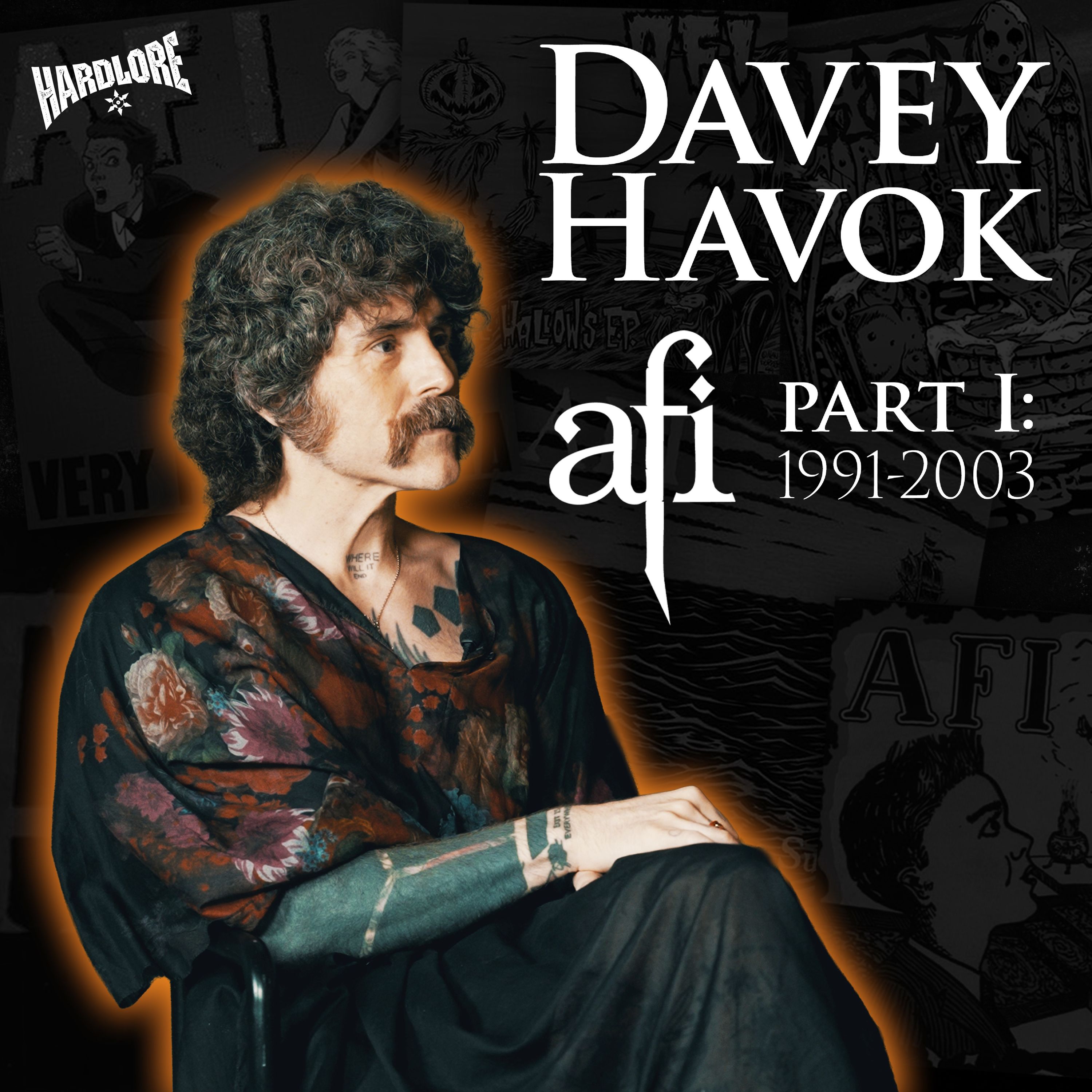
HardLore
Davey Havok Part 1: 1991 - 2003 (A HardLore Special)
02:15:18
HardLore is joined by AFI vocalist Davey Havok in person at Brain Dead Studios for a landmark episode, weeks before the release of their new album "Silver Bleeds the Black Sun" on Run For Cover Records. Part 1 of this 4+ hour conversation begins with Davey's origin to punk/hardcore music, and by association, straight edge and veganism. We thoroughly dive into AFI's chronology, beginning in 1991 when he started the band with drummer Adam Carson in high school, to all the twists and turns before finally adding long time bass player Hunter Burgan, and the guitar player that would ultimately define the AFI sound: Jade Puget.
Loading summary
Transcript1,432 lines
- [00:00]
Davey Havok
All these records that we're talking about right now. No one ever talked to me about these records. There was no press until St. Nisaro. Black Sails in the Sunset.
- [00:08]
Host 1
Jade's in the band now. This changes everything. This is like the AFI sound is reborn here.
- [00:15]
Davey Havok
The AFI sound is born.
- [00:17]
Host 1
How collaborative is this? Turning Point?
- [00:19]
Davey Havok
Hugely collaborative. Adam and I had known Jade for years and I knew what a phenomenal songwriter he is. He had his acoustic guitar and he came with an idea. Do you remember what it was? Oh, yeah.
- [00:34]
Host 1
Malleus.
- [00:35]
Davey Havok
Yeah, it was Malleus. And he played. It was just the chorus and he had. We all began to burn. He had that lyric too. So I didn't write that word.
- [00:44]
Host 2
Oh, wow.
- [00:45]
Davey Havok
That was his. He doesn't get credit for that lyric.
- [00:47]
Host 1
But he didn't go, aha. And that's why you get the credit. Hello, welcome. It's hard Lore time. How you doing, Beau?
- [01:16]
Host 2
I'm doing so good. Who do we have today?
- [01:19]
Host 1
Couldn't be a better day. This is a big one, folks. We are joined monumentally by, to put it frankly, one of our favorite vocalists in history and the history of music across all genres here. This is beautiful. This is a we. This is a bucket list episode. We've been talking about it for years now. Landmark. We've called it the. This is the season finale. We'll call it. Yeah, there will be one next week. But this end of the season. Also technically my second cousin once removed in law. Yes, AFI vocalist Davy Havoc.
- [01:55]
Davey Havok
Hello, gentlemen.
- [01:56]
Host 2
How about that?
- [01:56]
Davey Havok
Thank you for the illustrious introduction. And thank you for having me.
- [01:59]
Host 1
At least we can do.
- [02:00]
Davey Havok
My friends, as I told you off camera, speak very highly of you and your podcast. Thank God. Which I never watched.
- [02:07]
Host 1
That's. That's good.
- [02:09]
Host 2
That is good.
- [02:09]
Davey Havok
So I. I don't plan on it.
- [02:11]
Host 1
That's good.
- [02:12]
Host 2
So you guys are family?
- [02:13]
Host 1
We are.
- [02:14]
Host 2
I've been a Despair faction member since 2002.
- [02:16]
Davey Havok
Come on. So I'm on, you know. Well, thank you very much.
- [02:21]
Host 1
I didn't join the extended family until 2022, but it's great to be 2022.
- [02:28]
Davey Havok
We've been related since 22. Okay.
- [02:30]
Host 1
Pretty cool.
- [02:31]
Davey Havok
Post quarantine. I think it's pretty cool.
- [02:33]
Host 1
I feel fortunate to have that we're related.
- [02:35]
Davey Havok
On my mother's side of the family, I believe.
- [02:38]
Host 1
I think it's the. Your father.
- [02:40]
Davey Havok
No, it's not. Okay. Do you know the last names? Can you.
- [02:44]
Host 1
Pissaro.
- [02:45]
Davey Havok
Oh. What?
- [02:46]
Host 1
I think so.
- [02:47]
Host 2
Is that that other side? Well, we can.
- [02:49]
Host 1
Yeah, we can.
- [02:50]
Davey Havok
That's okay. Okay.
- [02:51]
Host 1
Okay.
- [02:52]
Davey Havok
Oh, well, then we'll talk about this off camera. Yeah.
- [02:54]
Host 2
Isn't that interesting?
- [02:55]
Host 1
It's wild. I know the exact.
- [02:57]
Davey Havok
Oh, I thought we were wrestlers. No, no, but it's Wilkes Barre. Right?
- [03:01]
Host 1
Rochester.
- [03:02]
Davey Havok
Oh, it's Rochester, yes. What?
- [03:05]
Host 1
Yes, I can break it down. I won't break it all the way down, but my brother's wife, Kyla.
- [03:10]
Davey Havok
Right.
- [03:11]
Host 1
Is your second cousin. Making me. Second cousin once removed.
- [03:15]
Davey Havok
Right.
- [03:16]
Host 1
Making me your second cousin once removed. In law.
- [03:18]
Host 2
In law.
- [03:19]
Host 1
Oh, yeah.
- [03:21]
Davey Havok
Oh, that's interesting. Yeah. Okay, Well, I also have bloodline somewhere here in Los Angeles.
- [03:29]
Host 1
Okay.
- [03:30]
Davey Havok
I'm certain of a cousin from the mother side and the Wilkes Bear side.
- [03:36]
Host 1
Really?
- [03:36]
Davey Havok
And I had decided when I heard Tail of the brothers marrying, I thought it was a different woman.
- [03:46]
Host 1
So there's more out there.
- [03:47]
Davey Havok
There's others here if you're watching. They're like, this sucks.
- [03:51]
Host 1
Our family. This is so boring. Oh, this is fascinating.
- [03:54]
Davey Havok
How could they care about this?
- [03:56]
Host 1
No, this is outstanding. But let's go back in time a little bit.
- [03:58]
Host 2
We have to go back in time.
- [03:59]
Davey Havok
Let's go back in time.
- [04:01]
Host 1
Further than that. We're gonna go to. Can you tell me about finding hardcore and punk in the Bay Area?
- [04:05]
Davey Havok
I can't believe none of you referenced. Neither of you referenced the flux capacitor. Do you do that? Do you say, let's go back in time and then. I mean, do we hear the flux capacitor? Okay, I'm sorry, what did you ask?
- [04:13]
Host 2
When this baby hits 88 miles per.
- [04:15]
Host 1
Hour, we don't need roads, etc. Could you tell me about finding Pumpkin Hardcore?
- [04:20]
Davey Havok
Yes. In the Bay.
- [04:21]
Host 2
Well, how do you pronounce. Let me try. Yukia.
- [04:26]
Davey Havok
Okay, California. So these are. You've asked several questions. Let's go within one question.
- [04:31]
Host 2
We do this professionally, by the way.
- [04:33]
Davey Havok
I'll start with the first question that you added to and then kind of blurred the question because the reality is I found here. Okay, buckle in, boys. I'm ready. So I was always fascinated with. With punk rock. Really? What began that fascination was being a very, very young man. Very young. Very Young in the 80s and seeing the mall punks. So I was enamored of the style, the aesthetic. Looking at those kids hanging out in the mall, which is where the punks hung in their leather jackets. Of course, I disavowed leather and animal cruelty years ago. These days I prefer apple leather pleather of some sort. But the punks and the death rockers fascinated me. And I. And I. And I was enamored of them. And I Thought they looked so cool, beautiful and interesting. But I didn't really know anything about the music though at the time. Punk had broken. You know, we are talking the early 80s, so we're now working within the second wave of punk rock. And the Sex Pistols done their thing. So it becomes so popular that it was part of the zeitgeist of the 80s enough that someone as young as I was in the 80s was confronted with all sorts of images on television as well. And you had the new wave happening, which is a delicate word at the time, less delicate now, but ostensibly that came from punk at times and didn't. But you had Adam Ant, Grace Jones, Devoiry in the Honda ads. You had punk videos being played on Night Flight. I discovered it when I lived in Sacramento. And that was the malls. Those were the malls I was going to. Bird Cage Walk and Sunrise Mall.
- [06:41]
Host 1
Good mall.
- [06:42]
Davey Havok
They. I mean, for. For someone my age, absolutely. Yeah, they were good malls. There was. They had midnight showings of. Of Rocky Horror Picture show and the Wall. It's where I saw Thrashen when it came out.
- [06:55]
Host 1
Oh, cool.
- [06:56]
Davey Havok
Okay. Which if you have not seen Thrashen, I really encourage you to see Thrashen. You know, do you know who. Do you remember who the girlfriend in Thrashen was? Who the actor was? Shannon Fenn. Are you familiar? Are you David lynch fans? Oh, of course, yes. Interesting. Audrey Horne is. Is the desired young lady by the two rivaling skate gangs in the movie. And of course you remember who the Good Guy lead character, who that actor was.
- [07:25]
Host 2
So I confused it with Glinting the Cube.
- [07:27]
Davey Havok
Okay. Different, different. Very different. Very different. Different era.
- [07:30]
Host 2
One was Tony Hawk for sure, but I don't remember.
- [07:33]
Davey Havok
No, the lead. Okay, so the lead character. They had pro skaters in probably both movies. I can't speak as much to claiming the Cube, but I think the Alba team was in a lot of the. Out of the team was in Thrashin, but Josh Brolin was the.
- [07:49]
Host 2
Oh, yes, yes, I do.
- [07:52]
Davey Havok
That's right. And actually my good friend Josh Richmond was also in, which is a whole different tale. I lived below my friend's garage up in the Hollywood Hills for many years during the period of burials. It kind of resulted in burials.
- [08:07]
Host 1
Is this the treehouse?
- [08:08]
Davey Havok
This is the Treehouse. Yeah, yeah, yeah. So it's. I've heard about the treehouse. Yeah, I lived in it. It's called the Treehouse. Not a treehouse. It's beneath the garage in the trees in the hills. Oh, okay, okay. But I digress. Back to your question. Back to your question. So I was enamored with the. With the imagery and I. And I wanted to explore the music, but I didn't really have access. I was so young. We're talking like 8 to 10 years old, right? Okay. Parental restrictions. Yeah, I speak about this frequently, but I remember going to Tower and seeing Sig Sig Sputnik cassettes. Okay. Are you familiar?
- [08:44]
Host 2
Not with that, no. I am very familiar with Tower.
- [08:46]
Davey Havok
Oh, okay. So Tower now almost entirely gone, although I believe there's one in Japan.
- [08:51]
Host 1
Japan, yeah. And it's all K pop and J pop.
- [08:53]
Davey Havok
Tower was from Sacramento. Started in Sacramento and that was the place to go to get cassettes. And I, as a young, young boy, again, 8, 10, 11 years old, I would go through the cassettes and I just look at them and imagine what the music could. Could sound like. And, you know, I was restricted by monetary limitations and parental limitations of what I. What I could and couldn't buy. I mean, I was 10. I didn't have a job. Still don't. And. But there was six. Six Sputnik and Fuzzbox, and 66 Sputnik was. I didn't know at the time, but to let you know, Tony James from Generation X. Oh, okay. Yeah. And so after. After Gen X, he started this art project, and it was very Warholian, so it was almost performance art. And it was. They were the future of music. Was. Was the headline. And they looked like a cross between death rockers and Batcave Club kids before Avocal Elettra.
- [10:08]
Host 1
And you're absorbing this at 8 to 10 years old.
- [10:10]
Davey Havok
Yeah, the imagery. Okay, yeah.
- [10:12]
Host 1
This is the future.
- [10:12]
Davey Havok
I couldn't. I never explained it to you that way at the time. And musically, when he looked at six Sputnik, I thought they would be something that sounded like Discharge. Again, I didn't know what Discharge was. That's essentially what my young brain was. But what they sounded like was minimal future techno rock and roll. Are you familiar with Suicide? So it was like Suicide, but more fun and dancy. Oh, Ferris Bueller's Day Off. Yeah, of course, that's what he's playing in the scene in the morning when he puts on the cassette and sneaks out to school. Kind of a minimal analog synth rock and roll.
- [10:53]
Host 1
Everybody walks away from that just knowing the oh yeah song.
- [10:57]
Davey Havok
Yeah, everybody knows Yellow, right? Yeah, six. Six in there as well. But that started me on the path and I did not start listening to it or really have access to punk rock and hardcore specifically until junior high. A little before junior high is when I really got exposed to it through Thrasher magazine. Yeah. My folks got me a subscription to Thrasher magazine in the mid-80s. First issue had Sam Hain on the COVID Had Glenn Danzig on the COVID with the skateboard. Yeah.
- [11:32]
Host 1
How do you get from there to vegan straight edge?
- [11:35]
Davey Havok
So Minor Threat. Okay.
- [11:38]
Host 1
That many such cases?
- [11:40]
Davey Havok
Yeah, like. Like many. Yeah, many of my generation, although. But not vegan straight edge.
- [11:50]
Host 1
Okay, well, we got half.
- [11:52]
Davey Havok
You know how much time we got?
- [11:54]
Host 2
We got as much time as you need.
- [11:55]
Host 1
Three, four hours.
- [11:56]
Davey Havok
That's what you think. So you go vegan.
- [11:58]
Host 1
Oh, a lot of life. Who knows, man?
- [12:02]
Davey Havok
Let's see. So the vegan straight edge. The vegan came after the straight edge. I heard Minor Threat for the first time, utterly changed my life because I was already of the mindset of what essentially is the fundamental premises of the straight edge movement, which was not understanding why anyone would do recreational drugs. It didn't make any sense to me in the community that we were in premise being that we were very forward thinking and distinguishing ourselves from pop culture.
- [12:37]
Host 2
And there's nothing more pop than vacuous a beer.
- [12:40]
Davey Havok
There's nothing more mainstream than participating in recreation. Well, there are things equally as mainstream. Participating in organized religion, participating in recreational drugs, participating in animal consumption. Gentlemen, they asked for it. And it didn't make any sense to me in the context of the culture and in the context of the ideals that the culture was representing. And when I found Minor Threat and I heard the lyrics, it changed me because I was feeling very alone within a community of isolated individuals. And then I found the tribe within the tribe. And then through that, and through being immersed in the East Bay scene, very specifically animal rights reached me. The vegan straight edge scene. So in the peak of that, of course, or not necessarily the peak, but it started really burgeoning in 93. Earth firestorm. Earth Earth Firestorm. Really? Firestorm really spread that message really well. And I really have Earth crisis to thank you in one regard for spreading that message. And I was resistant to being straight edge. I mean, I'm sorry, I was resistant to being vegan because it was so trendy.
- [13:54]
Host 1
Oh, that's interesting.
- [13:55]
Davey Havok
And actually the gentleman who speaks very highly of your podcast, RJ Lympeter from Timeless. From Timeless. Timeless, the first vegan coffee shop in the nation. He was the one who said to me, you know, it's the right thing to do. Stop being a fucking asshole. Stop, stop, stop doing. Not doing it. To be contrary, I found it unsavory because I felt a lot of People were using it as an identity, as a means to violence and didn't actually believe in it. And I didn't want to participate in posturing. And there was a lot of posturing surrounding vegan straight edge at the time.
- [14:32]
Host 1
Yeah. How many of those people from that time that you know of are still vegan?
- [14:36]
Host 2
Yeah, very few.
- [14:37]
Host 1
How many of them are still straight?
- [14:39]
Davey Havok
Very few.
- [14:39]
Host 1
Even less.
- [14:39]
Davey Havok
Right. Very few. Kind of an equal fall off, I would say. Like, there's very, very few. Most of them are the same people. But yeah. In the bay. In Bay. In the East Bay scene, there was literature everywhere. There was, you know, anti fascist literature, and there was animal rights literature and there was women's rights literature. And the community that we came out of and the club, 924 Gilman street, was very actively participating in all of those ethics and demanding it, really. Like any sort of behavior outside of that would get you banned from the club, whether as an individual or as a musical act, which was great. And so I discovered veganism through all of that and that scene, and I eventually made the right decision.
- [15:35]
Host 1
Were you vegan? Straight edge when somebody broke your nose? Moshing to Redemption 87?
- [15:39]
Davey Havok
Yes. No.
- [15:44]
Host 1
Oh.
- [15:44]
Davey Havok
See, but the person who broke my nose was vegan straight edge. See?
- [15:48]
Host 1
Pretty cool.
- [15:48]
Davey Havok
And he no longer is either, but he is a dear friend and I love you, Randy.
- [15:51]
Host 1
Good.
- [15:53]
Davey Havok
It's true. I love him. Very handsome. It's.
- [15:56]
Host 2
It's interesting.
- [15:57]
Davey Havok
Married, children, beautiful wife, Beautiful children.
- [16:01]
Host 1
Good nose.
- [16:01]
Davey Havok
Are you guys talking Good nose. Be. He's beautiful.
- [16:05]
Host 1
See, he. He moshed harder. That's what that means.
- [16:07]
Davey Havok
Yeah, I. I mean, he was purposely breaking somebody's nose, but he didn't realize it was mine. And he wouldn't have done it. No, I wasn't. So what. By the way, you misspoke.
- [16:20]
Host 1
Oh.
- [16:20]
Davey Havok
And it was not.
- [16:22]
Host 1
Somebody misspoke.
- [16:24]
Davey Havok
You thought it was the Redemption show.
- [16:25]
Host 1
Yeah.
- [16:28]
Davey Havok
I accidentally. In the same milieu, at the same venue. At the same venue and in the same Milieu, dancing to Redemption 87, when they supported the Beastie Boys, who played a hardcore set, they were called. They went. They were billed as Quasar. I broke. Are you reading my substack? Is that how you know this? This is interesting because you've direct.
- [16:56]
Host 1
This is a direct tail.
- [16:57]
Davey Havok
Okay. This is. So I accidentally blackened the bass player of AFI's eye.
- [17:03]
Host 1
Oh.
- [17:04]
Davey Havok
Which I felt very bad about acting the same way.
- [17:08]
Host 1
Hunter or.
- [17:09]
Host 2
Yeah. Was that at the time or a hunter?
- [17:11]
Davey Havok
This was 96. So there you go. So it was 96. Oh, yeah. Well, Yeah, I mean, violence. We were about to shoot, so. We were about to shoot he who Laughs Last.
- [17:22]
Host 1
Okay.
- [17:23]
Davey Havok
Two days later, we were about to shoot he who Lasts Last, so I spelled especially. I felt especially bad for accidentally blackening his eye by dancing, knowing that he'd have a shiner for the show. But I don't think it shows up on. On the video. I mean.
- [17:35]
Host 1
Well, we will see if it does. Here it is. Wasn't that great?
- [17:46]
Davey Havok
No, it was a Shelter show. Ah, really? That was broken at all. Right. Yeah. Which was probably Bhagavat era mantra.
- [17:53]
Host 1
Sure.
- [17:53]
Davey Havok
Right. That'll get a little bit. Same venue, though, in San Francisco. Oddly, not the East Bay.
- [17:57]
Host 1
Interesting.
- [17:58]
Davey Havok
The hardcore shows. The hardcore shows were spread all over the place. But when AFI was playing nearly every month, if not every month at Gilman street between like 93 and 95, hardcore was a bit ostracized. It was pariah. Interesting. Because of the violence, because of the masculinity and like, coming off of like. Also because of the. Because of all the obvious reasons, to be honest. Sure. And it only came back around and started. Gilman street only started having hardcore shows and hardcore matinees around, like 96, 97, 98 is when what. If I may pause for a moment, you gentlemen do a hardcore podcast? We keep using the word hardcore.
- [18:57]
Host 2
Yeah, yeah, we've. We've said many times.
- [19:01]
Davey Havok
Can we define it?
- [19:02]
Host 2
Yeah, it's.
- [19:02]
Davey Havok
Can you. Can. I would like the 30 something. I would like the mid-30s definition. Not to corner you of hardcore, because it's something I contemplate all the time, because, you know, we can go back to its beginnings, which is what most inspired me, and, you know, have all sorts of conversations about Los Angeles hardcore and what hardcore did to punk and what it didn't do to punk. And, you know, the controversy surrounded it over the years. But how do you guys. How do you guys define it?
- [19:33]
Host 2
I do think in today, I'm afraid that some of the strong messages that you were drawn to.
- [19:42]
Davey Havok
Yeah.
- [19:43]
Host 2
Are a little. Not so much at the forefront. And now it is more about a set of ethics and work ethics and.
- [19:51]
Davey Havok
DIY talking about ethics.
- [19:53]
Host 2
For sure.
- [19:53]
Host 1
You nailed it with the Minor Threat discussion. And we've said on record many times that at this point it is more a code of ethics than a specific way a band sounds.
- [20:02]
Davey Havok
Sound.
- [20:03]
Host 2
Oh, well, that's.
- [20:04]
Davey Havok
I mean, that's. That's wonderful. Yeah.
- [20:06]
Host 1
A derivation of punk on the out far, further on the outside of society and that we look at it as like the opposite of the Norm, always the norm.
- [20:16]
Davey Havok
Be. I hate to do this to you. The norm being what? Which part of the norm?
- [20:21]
Host 2
The norm.
- [20:21]
Davey Havok
I mean, are we oppositional just for the sake of opposition?
- [20:24]
Host 1
No, no, but natural opposition. We, we feel we, we grow up in a certain way, we look at a certain type of person, we speak to a certain type of person and think. I don'.
- [20:34]
Davey Havok
Like you.
- [20:35]
Host 1
I don't think I agree with you about what you're doing. Like, we look at you talk to the average person. When I talk, speak to a Christian person in 2025, I'm in disbelief.
- [20:45]
Davey Havok
Well, you, you bring up a very, very important word. Because when I think of the history of hardcore, I. One of the moments that I and punk rock that I find most unacceptable is the infusion specifically of Christianity into what is termed, quote unquote, hardcore.
- [21:05]
Host 1
Yeah, yeah. That is the end. It's the antithesis of what we are about.
- [21:09]
Davey Havok
Okay.
- [21:10]
Host 1
And that's okay, very much on record.
- [21:13]
Davey Havok
But do you feel that's also true? Do you feel that that perception speaks for the majority of people who identify as parkour kids?
- [21:21]
Host 2
You don't?
- [21:22]
Host 1
No, I don't. I think the average person would hear would be like, no innocent victim has some tracks, you know, And I may be like, that's fine. But I fundamentally disagree with what they have to say, therefore, why would I?
- [21:36]
Davey Havok
Well, I'm talking about the hardcore, like today for a modern hardcore. And I'm asking this people love, see, not because I have some sort of answer that I know I'm hoping to hear it. I'm just so distant from the world that I grew up in that I really like to understand the term in relation to the intention now as opposed to before. And I'm not villainizing or aggrandizing. Well, of course I'm villainizing Christianity. Anything in specific that I really know about. You know, if I want to be clear, it sounds like I'm trying to deconstruct something. I'm not. I think hardcore is very important and I love hardcore. But when I say that word, I just want to make sure that we know what we're talking about.
- [22:25]
Host 1
We're talking about the same thing.
- [22:26]
Davey Havok
Okay, good. Okay.
- [22:27]
Host 2
One of my favorite examples is a band that is as happy to play some big fest, some big stage, who will also do a last minute show in a basement and not really think twice about it. Not worry about, okay, but are we going to get paid to do that? And that really, truly is very common amongst our peers. That's cool. And amongst like. And that Is kind of the biggest thing to me is kind of the big business aspect, the DIY aspect. Like, what are you willing to do? Are you willing to help other bands and help the community, your scene or whatever? And that's. That's kind of what we've based it around.
- [23:01]
Host 1
This is all about.
- [23:01]
Host 2
That's what it's all about. It has nothing to do. And there's a reason. Reason why Turnstile and Nails and God's Hate could all play a show and likely have.
- [23:11]
Host 1
Sonically different. Ethically the same at the end of the day.
- [23:14]
Davey Havok
Yeah, well, I mean, sonically it's so different.
- [23:17]
Host 2
And that's what's so beautiful.
- [23:19]
Davey Havok
What is generally considered to be the origins of hardcore. You're going to hear something completely different than what you heard in 87 versus, you know, 80. 80 versus 87.
- [23:31]
Host 1
Negative approach to killing time, to earth crisis, to good. What turmoil. It's all the same thing, you know?
- [23:38]
Davey Havok
Yeah. Yeah, boy. Sorry. Sorry. Something. That's something that I don't have much opportunity to talk about with people who are well versed. Yeah.
- [23:50]
Host 2
I'm just. I'm happy that you care.
- [23:52]
Davey Havok
I do.
- [23:52]
Host 2
Like. And people are going to be happy that you're curious.
- [23:55]
Host 1
We've been asked that before and we have trouble summing it up every time. It's kind of like, you know, it when you.
- [24:01]
Davey Havok
If you. If you ask me that, it is difficult to summarize. And I didn't mean. I am remiss to corner you, but given the conversation I gave you this corner. Okay. Okay.
- [24:12]
Host 1
How'd you find your voice before afi?
- [24:14]
Davey Havok
Before afi.
- [24:15]
Host 1
And in afi, I. You sound classically trained. You know, like, I did musical theater before singing Same. So there was a little bit of like. I think I can do that.
- [24:27]
Davey Havok
Okay. Okay.
- [24:28]
Host 1
You said same.
- [24:29]
Davey Havok
I'm very comfortable. I've always been very comfortable performing since I was very, very young. My mom encouraged me to do Oliver Twist when I was maybe 10 years old in Sacramento. That was my first experience in musical theater and performing on a stage in front of a large group of people. It was also my very first experience of the show must go on. I was febrile. I was so sick.
- [24:53]
Host 1
Oh, no.
- [24:54]
Davey Havok
And still performed now. I was just one of Fagan's kids. I think you're all probably familiar with the show and what that means. I was in the greater cast. I wasn't one of the leads.
- [25:05]
Host 1
Any other musicals around that time that you did or in your youth?
- [25:09]
Davey Havok
Yeah, not. Not around that time. So at that time, I was living in Sacramento. And then in junior high, I was in. To answer your question, before that, you pronounced that town's name Ukiah.
- [25:20]
Host 2
Ukiah.
- [25:21]
Davey Havok
Kaya. First thing. It's good. I did a few musicals there in high school. I did some straight plays. I ended up. I was thinking about this the other night when Marky Ramon was playing a Green Day song that I am most familiar with from having done the show on Broadway, which it really. It really took me back. I can't believe it was that long ago, but that was one of the best moments of my life. And I think Billy for that greatly. He. I'm all over the place. But that was a dream come true. A dream that I never thought I would be able to access because I spent my life rocking, Rocking. You know, I did not have the chops to enter Broadway except through the green door.
- [26:06]
Host 1
I think you have chops.
- [26:08]
Davey Havok
Well, thank you. But Broadway. Would Broadway test a little harder. But thank you very much. So, Colin, I hurt myself to. To your. Back to your question. I was in choir. I was in secular choir in. In high school and musicals. But I extremely. I don't know if you know this, but I damaged my voice terribly in AFI, particularly in the late 90s and early 2000s. I had a question about that. I'd had surgery twice because I was singing incorrectly. And to this day, I am very, very careful and very, very mindful about how I sing and technique, and I'm still learning, and that was a traumatic experience. But thank you. Finding my voice. It's funny, I thought you meant my metaphorical voice. You met my literal voice. I still. I'm still working on it.
- [27:01]
Host 1
Oliver Twist.
- [27:02]
Davey Havok
I'm still.
- [27:02]
Host 1
Surgery to know.
- [27:03]
Davey Havok
Yeah. There's a long path.
- [27:06]
Host 2
There was a video that I Probably downloaded on LimeWire or Kazaa back in the day. We were doing an interview. Yeah, you're talking about the beast in your neck.
- [27:15]
Davey Havok
Oh, okay.
- [27:16]
Host 2
Do you know what I'm talking about?
- [27:17]
Davey Havok
Yeah, the monster.
- [27:17]
Host 2
The monster.
- [27:19]
Davey Havok
He wasn't in my. He wasn't on my vocal cords. Okay. He was in my neck. Okay. And now.
- [27:24]
Host 2
Unrelated.
- [27:25]
Davey Havok
And now he's in Adam's neck. Unrelated. Well, related, but unrelated. You know, to be honest, now that you say that, certainly that was in part caused by bad technique. Tensing. Right. As you know, we're not supposed to sing from the throat. And I. When I was young and my. My choir slash drama teacher in high school, because AFI started when I was in high school, would scold me for coming back from rehearsals or playing shows and being extremely Damaged. And he would tell me, you have to not do that. You have to learn to sing correctly and do what you're doing correctly. And I said, no, if I'm not hurting myself, it means I wasn't doing my job. You guys can't believe it.
- [28:12]
Host 1
People like it, man.
- [28:13]
Davey Havok
It's punk rock. No one liked it. No one liked it, boy. No one liked it back then.
- [28:17]
Host 2
The band, yourself in high school.
- [28:19]
Davey Havok
Yeah. We named the band when we formed. It was a pawn formation, okay. Sitting there in the tri at that high school two hours north of San Francisco. And it was me and Vic and Mark. And we might have named it. We'd have to ask Adam. We might have named it before we enlisted Adam to play drum.
- [28:45]
Host 2
I think that's right.
- [28:45]
Davey Havok
Okay. I think that's right, too. I think that's right, too. I think we went to Adam with a name and we wanted the band to be an acronym because what inspired that? Tsol. Di. Rkl.
- [29:03]
Host 1
Mdc.
- [29:03]
Davey Havok
Mdc. Dri. Yeah.
- [29:07]
Host 1
Did you ever think about changing the meaning of the acronym, much like mdc?
- [29:13]
Davey Havok
Yeah. I mean, we would fuck with it a lot. If you wrote to afi. If you look at, I think the first up through very proudly. I think maybe it's. Maybe it's switched again at shut your mouth. But you would write, send a self addressed stamped envelope for a free patch or sticker to asking for it.
- [29:39]
Host 1
Asking, Right.
- [29:40]
Davey Havok
Yeah. Anthems for Insubordinates. People would throw around Anthems for Insubordinates.
- [29:47]
Host 2
That's a good one.
- [29:47]
Davey Havok
Yeah. When I, you know. Oh, this is appropriate. When I first met Jimmy, Gestapo. I think Craig or Lou or Pete introduced me and they said, this is Davey from afi. He said, afi? What's that? Agnostic Front impersonators. I like you, kid. You got smiling eyes. Jimmy's probably watching.
- [30:10]
Host 2
Jimmy G. New York Hardcore Tattoo is watching for sure.
- [30:13]
Davey Havok
I don't know that I've ever told anyone that.
- [30:15]
Host 1
That's incredible.
- [30:15]
Host 2
That's a good story.
- [30:16]
Davey Havok
Breaking news.
- [30:17]
Host 1
Agnostic Front impersonator.
- [30:18]
Davey Havok
That was at the Ritz, I think.
- [30:20]
Host 1
Of course it was.
- [30:20]
Davey Havok
I think that was at the Ritz.
- [30:22]
Host 1
So let's talk early afi.
- [30:24]
Host 2
Yeah.
- [30:24]
Davey Havok
Okay.
- [30:24]
Host 1
Adam's in the band from the jump.
- [30:26]
Davey Havok
Yes.
- [30:27]
Host 2
So it's you two.
- [30:29]
Davey Havok
Yeah.
- [30:29]
Host 1
You've got this beautiful life where the writer dies. Is AFI your first band?
- [30:34]
Davey Havok
No, not technically.
- [30:36]
Host 1
Okay.
- [30:36]
Davey Havok
Are you sure you're not reading my substack?
- [30:38]
Host 1
I swear. Yeah.
- [30:39]
Davey Havok
This is wild. Because this is what you're asking me. Until I started this writing project that I do, which is cueing the past memories of the past. The more I work on it, the more it cues things.
- [30:53]
Host 2
Okay.
- [30:54]
Davey Havok
And I'd remembered something that I'd forgotten, which was having had a band that rehearsed two or three times in Catholic junior high school, that was the intention was for it to be a heavy metal band. Yeah, we rehearsed two or three times. The goal was to play the Catholic school talent show.
- [31:17]
Host 1
Okay. So Megadeth.
- [31:19]
Davey Havok
Home Sweet Home by Motley Crue. Oh, Megadeth. Megadeth. Megadeth was brand new at this point. Oh. In fact, our. Someone in the band had a Megadeth T shirt. Not I. But yeah, Megadeth was happening. But we weren't even close. Oh, no, no. It was. But, but, but we weren't weak.
- [31:41]
Host 2
I see.
- [31:41]
Davey Havok
I mean these, these gentlemen are probably very talented, but chop wise, they probably have chops now or who knows? Oh, I'm really. You're fucking shit up. You're. You're doing great.
- [31:51]
Host 2
Don't worry about it.
- [31:52]
Davey Havok
I was touching the mic. Who cares?
- [31:53]
Host 1
It'll sound funny. Okay, so let's talk early AFI, because you said you're playing Gilman or surrounding areas 93 to 95 once a month.
- [32:01]
Davey Havok
Yeah.
- [32:02]
Host 1
So that would be pretty answer that. You're really. You're forming your teeth locally.
- [32:07]
Davey Havok
Yeah. Okay. So we formed in 1991 in that town, which is two hours away from me too. You formed in 1991 as well? Yes, embryonically. We formed musically in 1991 and it was only. We were desperate to play Gilman street because that's where we would go to see shows every weekend. We would drive two hours back and forth from this town to Berkeley to go to 924 Gilman street and that's where we wanted to play again. I could talk on and on about this for hours. But it wasn't until I'd moved there in 1993 that we really started getting shows. And at that time I lived there and. Well, in 93 I lived there and Adam lived in Santa Cruz and Mark lived here. Not here, but in Pomona. Oh, wow. Yeah, he was at Harvey Mudd, but in 93. But we would renight. We would rehearse, they'd come. We'd come together and rehearse and. And play shows. So it was more. We were definitely playing in 93 quite a bit. But it was 94, 95 that everyone lived in the Bay. And that's when we were. We were playing a lot in our local scene, which was really a great time I was the flyer boy for Gilman Street. I hung the flyers which allowed me entry into all shows.
- [33:44]
Host 1
Have you been there lately?
- [33:45]
Davey Havok
No, I'd like to. I'd like to go there.
- [33:48]
Host 1
The ethics are the same, you know.
- [33:50]
Davey Havok
That's cool.
- [33:50]
Host 1
The vibe is beautiful.
- [33:51]
Davey Havok
That's cool. I know a lot has changed about it. I was going to point out that back then there were only shows Friday, Saturday and sometime Sunday.
- [33:58]
Host 2
Oh, really?
- [33:58]
Davey Havok
Yeah. And there was no toast, you know, from living eyes. He showed me that he has a piece of the wall or maybe a door. They removed a door and put in double doors. So on the side. So I know that that's different. I've never seen that.
- [34:17]
Host 1
Probably the office doors or something.
- [34:19]
Davey Havok
No, no, no. It's the doors that you would use to go to load in and out.
- [34:22]
Host 2
Oh, the side one.
- [34:23]
Davey Havok
And now it's a double door, I guess.
- [34:25]
Host 1
Oh, nice.
- [34:26]
Host 2
That's new to even us age.
- [34:28]
Davey Havok
Okay, okay.
- [34:29]
Host 2
Yeah, yeah, yeah. That's recent.
- [34:30]
Host 1
Good for them.
- [34:30]
Davey Havok
Okay.
- [34:31]
Host 2
We both play there a handful of times.
- [34:32]
Host 1
It's still the best.
- [34:34]
Davey Havok
Yeah. I'm so grateful for having come from that community for countless, countless reasons. And once I was literally part of the collective. That's when we started to grow the fan base pretty quickly.
- [34:55]
Host 1
The guy from Gilman, the flyer boy from Gilman's band. You gotta check him.
- [34:59]
Davey Havok
Yes, Davies. Davies band. We all knew each. You know, it sounds trite, but everyone knew each other. Of course, everyone would come to most all the shows. Certainly a lot of people didn't like us, as many do just like us now for various reasons. But there were more who did. Okay, that's good.
- [35:17]
Host 2
So answer, that was 95.
- [35:19]
Davey Havok
Answer, that was 95.
- [35:20]
Host 2
Co produced by Tim Armstrong.
- [35:22]
Davey Havok
Okay. Yes. That's a bit of an exaggeration on our part.
- [35:29]
Host 2
Sure.
- [35:30]
Davey Havok
Tim, you're psyched, you know. Oh yeah, of course. Yeah. It was kind of Tim to allow us to give him that. To give him that little rub like, yeah, Tim stopped by. Tim made the mistake of stopping by to Artevers once or twice. Now, if I'm remembering this incorrectly and Tim Armstrong says, no, I did all this work. Yes, I'm sorry. But I'm pretty sure he was kind enough like to say, can we give you a production credit? I forgot about that entirely. But I mean, what I did not forget about was Rancid's participation in helping us over and over again.
- [36:05]
Host 1
Yeah, they're singing on records.
- [36:07]
Davey Havok
They gave us our first. The first time we ever got on the Gilman street stage was at a rancid show that we were not booked on. Wow. And so hard lore.
- [36:18]
Host 2
That's what we call hard lore, so.
- [36:19]
Davey Havok
Yeah, that's. That's true. It's not even lore. It's hard truth.
- [36:25]
Host 2
Did your mom really not let you have a mohawk?
- [36:27]
Davey Havok
Yeah, definitely not. But that's about my brother.
- [36:31]
Host 2
Oh, cool.
- [36:32]
Davey Havok
Yeah. So this is the first person perspective of my little brother who's eight years younger. To the day.
- [36:38]
Host 1
I've met him before.
- [36:39]
Davey Havok
To the day. Yes, you have. Very kind, wonderful man.
- [36:42]
Host 1
Very kind.
- [36:42]
Davey Havok
Way better than me. To the day. To the day. That's fascinating.
- [36:45]
Host 1
That's beautiful.
- [36:46]
Davey Havok
To the day.
- [36:46]
Host 2
Was he listening to the Misfits every single day?
- [36:49]
Davey Havok
No, that was artistic liberty. I mean, he was. By proxy. He was. So that lyric.
- [36:54]
Host 1
Did you know that his brother is my second cousin once removed?
- [36:57]
Host 2
I think I've heard about that for the last week.
- [36:59]
Host 1
Pretty cool.
- [37:01]
Davey Havok
Since we're doing the dive into the profound lyrics of Mohawk as well as possibly others of the time. The lyric on that initially was. I think the opening line is, I. I may be 10 years old. Right. Initially it was eight, because when the song was written, he was eight.
- [37:22]
Host 2
Oh.
- [37:23]
Davey Havok
So by the time the song got tracked two years later. Yeah, I nudged it to 10 because I felt it was more accurate.
- [37:30]
Host 2
Thank God it's a single syllable. You know, eleven would have really ruined that.
- [37:34]
Davey Havok
He might have been eleven, who knows? And I was just like, we gotta use a single syllable. I don't think so. I think he was actually 10. And, you know, I was listening to the craps and the Misfits every single day, as I, you know, still am.
- [37:44]
Host 1
Beautiful.
- [37:45]
Host 2
Beautiful.
- [37:45]
Host 1
That's. It's a completely different sound, different attitude.
- [37:48]
Davey Havok
Yes. How do you.
- [37:50]
Host 1
Do you ever revisit it and what are your thoughts?
- [37:53]
Davey Havok
If so, no. And yes, I revisit it. I revisited something off of that record, certainly recently. Yes. I can't remember exactly which, but I can assure you I have, because we are about to go. AFI is about to go on tour. And when AFI tours, AFI selects our set list from a cache of this time, I think 72 songs. Last time was seven. 62 songs.
- [38:24]
Host 1
20. Shoot. 70, you said 72. 28 more. You're syndicated.
- [38:28]
Davey Havok
72. 28 more were syndicated.
- [38:30]
Host 1
Let's get it. Let's bump it up.
- [38:32]
Davey Havok
I mean, we might actually have more.
- [38:33]
Host 1
Than that at this point.
- [38:34]
Davey Havok
There's a couple that have gotten pushed.
- [38:36]
Host 1
In some great B sides.
- [38:38]
Davey Havok
There are some B sides. Yeah, there are some B sides.
- [38:40]
Host 1
We'll get that.
- [38:41]
Davey Havok
Great. But there are some B Sides, I'll.
- [38:43]
Host 1
Tell you about some great ones.
- [38:44]
Davey Havok
Yes. So sometimes when I have to, I do.
- [38:50]
Host 2
Yeah, okay, sure.
- [38:51]
Davey Havok
But just in general, I'm not one to listen to nostalgically. Yes. No. I'm just not one to listen to music that I make recreationally.
- [38:59]
Host 2
I get that.
- [39:00]
Davey Havok
However, if we're gonna jump to now, I have been effusive with my poor friends who have to hear me talk about this. My relationship to the new AFI record is starkly different in that regard. And I've been trying to parse exactly why and how I'm feeling about it and what it means to me. But part of it is the way that I listen to it is a. It's a different experience than I've ever had before.
- [39:29]
Host 1
How so?
- [39:30]
Davey Havok
Listen, it's hard to explain. I.
- [39:33]
Host 1
You just have. You have an actual natural desire to just put it on.
- [39:36]
Davey Havok
When I put it on, it feels. Oh, this sounds outrageous. There's a metaphysicality to it which. Which I. I relate to it in this way that is.
- [39:57]
Host 1
Is it, like, out of body?
- [39:58]
Davey Havok
Like, I made this external and internal. It's hard for me to say because lyrically, it is so very much who I am and my perspective. It is entirely that, I suppose that it speaks so profoundly well of how I relate or am unable to relate to these utterly surreal and dystopic times that it also takes it away from myself.
- [40:35]
Host 1
Interesting.
- [40:36]
Davey Havok
It's odd. It's hard for me to explain, but what that results in is a listening experience is very different for me and me enjoying listening to it every time I listen to it, to rehearse for rehearsals which are coming up.
- [40:50]
Host 1
And normally you record something by the time it's mastered, you're like, I can hear it again.
- [40:56]
Host 2
Hear that again. Yeah.
- [40:57]
Davey Havok
Well, Colin, you bring up a very practical point to my relationship with this album and the way the AFI records in modern times. I don't spend a lot of. I don't spend near the amount of times listening to the songs as traditionally.
- [41:13]
Host 1
Maybe Jade would have to.
- [41:14]
Davey Havok
Oh, definitely. Definitely. Exactly. Whereas in the past. You're right, definitely were in the 90s. I will have heard those songs so many times. And that even works into the early 2000s. You hear it over and over again. You never want to hear. So there is just a freshness in that regard because a lot of these.
- [41:29]
Host 1
That's gotta feel.
- [41:30]
Davey Havok
It's good. It does. When I like it, which is all the time.
- [41:36]
Host 1
Good, good. So after Answer that and Stay fashionable.
- [41:40]
Davey Havok
After Answer that and Stay Fashionable, this is when Nitro Records now we're see the dawn. Yeah, you can stop me because I mean, if we're just right now after incident and Stay fashionable and we're not kept going like. You can stop me if you can be interrupt. We don't want to talk about that anymore.
- [41:52]
Host 1
I want to start.
- [41:53]
Davey Havok
Okay, so after. After an sentence, stay fashionable. Yeah. Okay.
- [41:56]
Host 1
Nitro Records comes along, right?
- [41:58]
Davey Havok
Yep.
- [41:59]
Host 1
Very proud of you.
- [41:59]
Davey Havok
It's coming up next. Yeah, Hunter.
- [42:02]
Host 2
Hunter joins the name Huge.
- [42:05]
Davey Havok
Well, not right away he does.
- [42:07]
Host 2
He joined after that's Tracked.
- [42:08]
Davey Havok
Hunter joined in. Well, Hunter toured on Shut your mouth and open your Eyes, which is the second Nitro release in the third AFI record. Right. And it was after that tour that I. That Hunter joined the band.
- [42:25]
Host 2
I see. I have just wrong information.
- [42:27]
Host 1
Mine's right, so that's okay.
- [42:29]
Davey Havok
But. Yeah, go on.
- [42:30]
Host 1
Very proud of you. Tell me what. When I say those words to you, what comes to mind?
- [42:39]
Davey Havok
Well, it was our first Nitro release and the owner of that label very much insisted that we have a producer where as before, we did not technically have a producer, despite Tim's credit. However, if one were to point at someone who was producing, it would have been Andy Ernst, Andro E of Art of Ears fame, who recorded all the Lookout records. That's an exaggeration. But many of the Lookout records, many of the most well known and revered Lookout records, are recorded by Andy Ernst, which is why we went there and.
- [43:14]
Host 1
You worked with him until.
- [43:15]
Davey Havok
We worked with him a lot. Yeah, we even. Oh, Adam would better answer this question. It does start to blur a little bit. But I think we recorded some tracks with him on Crash Love. I think. I think. Really, I think.
- [43:30]
Host 1
I don't think.
- [43:31]
Davey Havok
I don't think. I don't think they made it, but I think it was our hope that they would have. But I think we tracked them a little bit on Crash Love and he was really vying for us. He was going to Larry Livermore, which are. We really wanted to be on Lookout Records because that was our scene. That was the community. But Larry wouldn't have us and we ended up signing to Nitro. Chris at Nitro Records liked AFI very. No, the record labels did not like afi. No one really wanted to. To sign afi.
- [44:02]
Host 1
So Nitro was like, I guess Chris, Chris.
- [44:05]
Davey Havok
Chris was the one who went to the owner and said, we have to sign this band. Wow. And he really believed in us. And we signed to Nitro, but the owner wanted us to have a producer. And so it was the first time we had. We worked with Someone who we weren't really familiar with. And we were sent to a different studio than the Art of Ears with a different engineer and a producer. Oddly, it was still in Hayward. Do you know where Hayward is? So it's bizarre. Yes, I do, actually, that just there we still recorded in Hayward, which is not near Berkeley or Oakland. I mean, yes, it's closer to Berkeley and Oakland than it is Los Angeles, but it's like way. It's way past the trains. The trains don't. It's past the end of the line. And so I remember that.
- [44:54]
Host 1
And so did the producer aspect paint a negative picture to the recording experience?
- [44:59]
Davey Havok
I mean, we weren't thrilled with how it sounded. Exactly. We liked the sound of the previous record more sonically. Our bass player at the time was insistent on putting all of those tracks, I can't tell you which they are, but all the tracks that appear on Very Proudia that had previously appeared on 7 inches, the rest of us didn't want to put on the record.
- [45:26]
Host 1
Yeah, and then you love doing that.
- [45:29]
Davey Havok
No, we don't.
- [45:31]
Host 1
You love recording these incredible songs and letting them exist on mts.
- [45:35]
Davey Havok
I love doing that.
- [45:37]
Host 2
Yeah, that.
- [45:37]
Davey Havok
I love that.
- [45:37]
Host 1
And that's like that. You are so physical media minded and as a physical media guy, I love that. But then you have all these people that don't know that synesthesia exists.
- [45:49]
Davey Havok
Ironically. That's fine. I don't ever want to sing that song. It's too high.
- [45:53]
Host 1
It is high.
- [45:53]
Davey Havok
Ironically, the same gentleman who was insistent on putting all those songs on that record on the CD that we had previously recorded in the new recorded versions, he too. I can't speak for how he feels now, but I would be shocked if he didn't really value, as he did then, the physical product and the exclusive music. And you can only go here to the 7 inch to get a song. And if you can't get it there, then you can't get it now. Obviously technology has really ruined everything with this.
- [46:23]
Host 1
But you're thinking like Smith's Minded, you know, you got where they have these unmovable.
- [46:28]
Davey Havok
That's exactly right. Okay. Exactly. I love to hear that. That's where you're coming from. And I can't shake that. Like, I really enjoy that. Like, actually there's a song that we recorded that is not on the upcoming afi and I keep fantasizing about how to get it.
- [46:47]
Host 2
Oh, cool.
- [46:48]
Host 1
And you're.
- [46:48]
Davey Havok
I mean, Jade and I have talked about it a while, but I'm not sure that we. I don't think Everyone's. I think not everyone is happy with song, so it probably won't ever happen. Yeah.
- [46:57]
Host 1
But it's nice to know that you have a fan base that you can stick a song 20 minutes after silence record, play it live, and they find.
- [47:05]
Davey Havok
It and they know. Yeah, I'd forgotten about that until recently. Recently when I had to review said song to make sure that I understood, to make sure that I know it, which I did.
- [47:16]
Host 1
Me, too.
- [47:16]
Davey Havok
I did. We both know it. Can you sing it?
- [47:18]
Host 1
I'll try.
- [47:19]
Davey Havok
All right. If you're there, it's yours.
- [47:21]
Host 2
You did a music video for he who Laughs Last? He who Laughs Last.
- [47:24]
Davey Havok
That's correct.
- [47:26]
Host 1
Black eyes and all.
- [47:27]
Host 2
I've wanted to ask you about this since I was a teenager.
- [47:30]
Davey Havok
Okay.
- [47:31]
Host 2
Why the Goodfellas quote?
- [47:33]
Davey Havok
Big fans.
- [47:34]
Host 2
Just.
- [47:34]
Davey Havok
Just because we love Goodfellas. We love those movies. The work ethic, you know, that's what was going on. The Reservoir Dogs. I mean, we were and are very inspired by cinema, by those films, by, you know, Tarantino, by Scorsese, by. I mean, if you look. Again, if you look at the current song, you hear. You hear David lynch references in it. The inspiration of different forms of art is something that we've always been lucky to have. We take from all different art forms and are moved to create. And so we decided to do the homage to Goodfellas.
- [48:24]
Host 2
And apart from. I'll talk about the. The narrative in it a little bit, but apart from that, there's live shots that feature stage diving and dancing and people X'd up. Did you. How intentional was it to put this aspect of our thing, you know, well, onto the music video? Or was that just natural? Was that a show? And that's just.
- [48:45]
Davey Havok
I mean, it was both. I mean, the intention was to create a live show and to capture the live show. And that's what the live show looked like at the time. However, this has been discussed before, but we'll discuss it again. Now. That video shoot was at the Berkeley Square, which was a great venue, which was where a lot of the hardcore shows were happening at the time when Gilman Street. They weren't happening as much there also. So Gilman street, you weren't allowed to play at Gilman street if you were on a major label.
- [49:21]
Host 1
Correct. So they dropped that a couple times, you know.
- [49:24]
Davey Havok
Well, now it's. Yeah, yeah, we can't even get into it and like, people. But. But at the time, that meant something. Although, ironically, even then, it was very difficult to define. Everyone was like, how do you define a major Level. Well, if you're owned and distributed by a major, then it's a major. And then someone says, okay. But the definition is in the word is in the definition. Like, what are we doing? What is a major? Yeah. Anyways, I digress. So bands would play the Square. A lot of small bands who happen to have major labor, distribution or were on a major label, you know, would. They would play the Square. I saw Crash Worship there and Thrill Kill called their Crash Worship used to play Gilman Street. But, like, the industrial acts would be there. Sure. Babyland would go both places. Anyway, they allowed us to do the video shoot there. And it was a free show. It was a free video shoot. But in 96, we weren't that big. We weren't big enough to really pack the Berkeley Square. Certainly not on a Tuesday afternoon.
- [50:29]
Host 1
Sure.
- [50:30]
Davey Havok
I think maybe it held like 700.
- [50:33]
Host 2
Oh, wow.
- [50:34]
Davey Havok
Yeah, I think. And. But we had free pizza, so there was like, free soda and free pizza as provided by the director. And. That's right. So all these people came who, like, I remember seeing crust punks and, you know, anarcho punks there who definitely hated us. And they would come and eat pizza and they laugh.
- [50:56]
Host 1
I believe RJ considered himself paid with pizza to be at this show.
- [51:01]
Davey Havok
Paid by pizza. Okay.
- [51:03]
Host 1
Via pizza.
- [51:03]
Davey Havok
Yeah. Fake fan. Fake fan. But you can see him. Yeah, you could see. You can see RJ and Jeremy, another person who speaks very highly of you guys. Jeremy Lux from Dispute, flying through the air. But what I want to be clear about is that those gentlemen were diving into a hundred people. Oh, wow. I'm very, very dangerous behavior. Very, very, very dangerous.
- [51:28]
Host 2
It looks awesome.
- [51:29]
Davey Havok
It does. And they did great. And I'm ever grateful for that.
- [51:32]
Host 2
Also, my first band with the. The drummer of Harm's Way is my best friend, my Adam.
- [51:38]
Davey Havok
Oh.
- [51:38]
Host 2
We started. We started bands in. In his garage.
- [51:42]
Davey Havok
Adam's in your van.
- [51:43]
Host 2
And my. The first name was File 13. Named after years.
- [51:47]
Davey Havok
Get out.
- [51:48]
Host 2
Yep.
- [51:48]
Davey Havok
That's.
- [51:49]
Host 1
What is that nice?
- [51:49]
Host 2
Isn't that nice?
- [51:50]
Host 1
And here we are.
- [51:51]
Davey Havok
Here we are. You know. Okay. I'm gonna need you to read something after this.
- [51:54]
Host 2
I certainly will.
- [51:55]
Davey Havok
I'm serious. After this, you're gonna subs with my phone, and you're gonna have to read something for, like, four minutes. Okay.
- [52:01]
Host 2
No problem.
- [52:02]
Davey Havok
Easy. Okay.
- [52:03]
Host 1
Jade is on backing vocals, so I'm very proud of you.
- [52:05]
Davey Havok
That's right.
- [52:05]
Host 1
He's just peripherally there the whole time.
- [52:08]
Davey Havok
I mean, I wouldn't call that peripherally. Well, I mean, he's. Everybody's not he's very involved in the gang vocals. In fact, Jade Puget will tell you that doing vocals on that record. I've heard him say this many times. Raised his voice. He said he damaged his voice so bad doing those high backing vocals. But afterwards he had a high. He had a bigger range.
- [52:25]
Host 1
That's a miracle.
- [52:26]
Davey Havok
I think so.
- [52:27]
Host 2
He had the. That's great.
- [52:28]
Davey Havok
So. And you're.
- [52:28]
Host 1
You're welcome.
- [52:29]
Davey Havok
I think so. So Jade Puget, as you probably know, was in a band called Loose Change. Okay. Which is the band on the flip side of the first day of 57 inch. Dork.
- [52:42]
Host 2
Dork. Yes.
- [52:43]
Davey Havok
So Adam and I had known Jane. Jade.
- [52:47]
Host 1
Jade.
- [52:51]
Davey Havok
Had known Jade 44. You know, way. Yeah. Since we were in high school.
- [52:57]
Host 1
Okay.
- [52:57]
Host 2
So the connection was always there.
- [52:59]
Davey Havok
Always.
- [52:59]
Host 1
And it never dawns on you to just have him included before. Be a five piece before not being a four piece.
- [53:07]
Davey Havok
No, no.
- [53:09]
Host 1
Couldn't disrupt the symmetry.
- [53:12]
Davey Havok
It never would have crossed our mind. Two guitars didn't. Wasn't at the time something that would make any sense for what the type of music.
- [53:19]
Host 1
I mean, to this day you feel that way so.
- [53:21]
Davey Havok
Well, to this day we definitely do not need another person. But I. I think. I mean, Jade Layers guitars. Modern. Modern. AFI music is far more.
- [53:31]
Host 1
But even he's.
- [53:33]
Davey Havok
He's all over the place still.
- [53:34]
Host 2
He would just get in the way.
- [53:36]
Davey Havok
I say this. I've said this multiple times, but it's always true. He is one of the most talented people I've ever met. It's. He's unbelievable.
- [53:43]
Host 1
He's one of the most talented people I've never met.
- [53:46]
Davey Havok
I call him like Martin Gore.
- [53:48]
Host 1
Exactly.
- [53:49]
Davey Havok
See, you know, you always know very similar.
- [53:52]
Host 1
Shut your mouth and open your eyes.
- [53:53]
Davey Havok
Okay. 1997.
- [53:54]
Host 2
This is now.
- [53:55]
Host 1
Hunter's in the band now.
- [53:56]
Davey Havok
Hunter. Well, after the tour, the record.
- [54:00]
Host 1
Okay.
- [54:00]
Davey Havok
Hunter tracked the record, but officially became a member after the tour.
- [54:05]
Host 1
Okay.
- [54:05]
Davey Havok
Okay. Hunter was in the Force.
- [54:08]
Host 1
So three out of four of the current AFI lineup are now.
- [54:13]
Davey Havok
Correct. Now we're here. Yeah.
- [54:14]
Host 1
So you get Hunter in. Are you feeling like this is my guy?
- [54:16]
Davey Havok
Yeah, very much so.
- [54:17]
Host 1
Okay.
- [54:18]
Davey Havok
Very much so. Hunter was so good. Is so good. Again, a talent. I mean, the musicianship of that man. He can play.
- [54:25]
Host 2
It's crazy.
- [54:26]
Davey Havok
He plays everything and he's. Play this. Yep.
- [54:31]
Host 1
And Adam's really good too. We wanted to clear.
- [54:33]
Davey Havok
Of course. Of course we're talking about new members.
- [54:35]
Host 1
Yeah.
- [54:40]
Davey Havok
Yeah. It was very clear when we were touring with Hunter. I mean, honestly, like how that went down was Hunter was in the Force. My really dear Friend Matt Wedgeley, who was Wedge Records, put out the Fly in the ointment 7 inch. We were really close friends and we knew him from the Circus tents. We used to cover this hardcore band from Grass Valley called the Circus Tents, made famous by Billy Joe Armstrong in the Gilman street days. Having their sticker on his guitar. Okay.
- [55:08]
Host 1
Probably. I saw him play that guitar.
- [55:11]
Davey Havok
You know the guitar, right?
- [55:12]
Host 1
I know the guitar.
- [55:12]
Davey Havok
It's that guitar.
- [55:13]
Host 1
He whips it out for one song on the stadium at all. The stadium?
- [55:17]
Davey Havok
Yeah. You could probably spy the circus tent sticker still, if you.
- [55:20]
Host 1
The Gilman one is like front and center.
- [55:22]
Davey Havok
Right. Have you ever heard the Circus tense?
- [55:24]
Host 2
No.
- [55:24]
Davey Havok
Try and find it.
- [55:25]
Host 1
Okay.
- [55:25]
Davey Havok
It's really great. Matt went on to do the Force, also a really fantastic hardcore band that had Hunter in it. Now, I actually. One of my. In a regard. One of my greatest regrets, the way that I handled the situation. Like, I don't have a lot of regrets in life, but one of my regrets in life was how I handled the Hunter situation. I told myself what I knew wasn't true. I told myself that the way that my friend disparaged his own band and said it was a fake band and didn't matter. I told myself that that was true. And I knew that wasn't true. So I didn't talk to Matt before we asked Hunter to join the band. Now I know Hunter is his own man, and that's a different conversation. Sure. But I knew I should have brought it up to my really close friend at the time. And. And. And so we asked Hunter to join the band and he said yes. And I was telling myself what I told Matt when he called me and broke up with me. Oh, rightfully so that Hunter said he could do both. And he's like, fuck you, man. You know, this is gonna break up the band. It. You broke up my band. And. And he forgave me. Okay, good. But that was a life.
- [56:34]
Host 1
That's not funny.
- [56:34]
Davey Havok
I've never done anything like that. I've never done anything like that before nor since. And I knew it was wrong.
- [56:39]
Host 1
You haven't needed to.
- [56:40]
Davey Havok
I knew I was wrong at the time.
- [56:41]
Host 1
Would you say you haven't needed to?
- [56:42]
Davey Havok
Maybe I have. And I chose not to.
- [56:44]
Host 1
Shit.
- [56:45]
Davey Havok
Yeah.
- [56:46]
Host 2
Is it true that while tracking. Shut your mouth and open your eyes. You bloodied your hands from.
- [56:51]
Davey Havok
Oh, all the time.
- [56:52]
Host 2
You do that all the time.
- [56:53]
Davey Havok
Yeah. That's really frequent. I historically keep my nails pretty long. They're not quite so long right now. But when I actually recently on One of my recent viewings of the Lost Boys here at Brand.
- [57:11]
Host 1
The beautiful Brand of Studios patio that we're on right now. Thank you so much for.
- [57:15]
Davey Havok
I recognized that it was the scene where David is reaching out to the. To. Was it Sam? It might have been one of the frog brothers, but they had just killed Marco. And they're running and he reaches out into the light and his hand catches on fire because it hits the sun. But you can see his beautiful long nails.
- [57:37]
Host 1
Is it Alex Winter in that scene?
- [57:39]
Davey Havok
Alex is dead.
- [57:40]
Host 1
Oh, Alex Winter.
- [57:42]
Davey Havok
Yeah.
- [57:42]
Host 1
Marco gets. Got in the kitchen or something?
- [57:44]
Davey Havok
No, Marco gets killed in the cave.
- [57:46]
Host 1
Oh, that's all.
- [57:47]
Davey Havok
We're in the cave. We're in their stinky sleeping place.
- [57:51]
Host 2
Their coffin.
- [57:52]
Davey Havok
This whole thing is a coffin. That's right. But you see Kiefer Sutherland's beautiful long nails there then in 1987. From then on, I did my best to have beautiful long nails. If you look back at certain periods of photos or something, you can see those are all my real nails. Wow.
- [58:07]
Host 2
Oh, wow.
- [58:08]
Davey Havok
Yeah.
- [58:08]
Host 1
That's all Kiefer.
- [58:10]
Davey Havok
Yeah.
- [58:10]
Host 1
Okay. Everything comes from somewhere, David.
- [58:14]
Davey Havok
I mean, I said Kiefer, but I mean, Kiefer probably didn't keep long nails. They were probably fake nails.
- [58:21]
Host 2
Wanted to ask you about that, about thick nails, in a sense, fashion. Your eye for an image and a look. You were always very distinct, I would say, from pretty early days within the van and on through today. Like, did you. How do I put this? Did you.
- [58:43]
Host 1
Intention.
- [58:43]
Davey Havok
Yeah.
- [58:44]
Host 2
What was your intention? Did you present yourself in a certain way to piss people off? Did you do it because you were just doing you.
- [58:51]
Davey Havok
When.
- [58:52]
Host 2
Yeah, let's say the first. We'll go with, like, the kind of devil lock look at first. So around this era and a little.
- [59:01]
Davey Havok
Before, probably give me. Give me a year because people use the word devil lock, and I'm not exactly sure which. Like what.
- [59:07]
Host 2
Give me a year. 95. 97.
- [59:09]
Davey Havok
Oh. Oh. So the Eddie Munster.
- [59:11]
Host 2
There we go.
- [59:12]
Davey Havok
And the. No, I wasn't trying to piss people off at all.
- [59:17]
Host 2
You're just doing.
- [59:18]
Davey Havok
No, I was just dressing the way that I. I really preferred to look, which the way I've looked has pissed people off. Since I was able to look the way I want to look, it always.
- [59:35]
Host 1
Might as well just to this day. Yeah.
- [59:37]
Davey Havok
Wow. Yeah. It's pretty cool. Yeah.
- [59:39]
Host 1
100%.
- [59:40]
Host 2
Yeah. Do you get a sense of enjoyment out of that?
- [59:42]
Davey Havok
It's fascinating.
- [59:42]
Host 2
It is fascinating.
- [59:44]
Host 1
They're calling this cult leader Davey.
- [59:46]
Davey Havok
Okay. Well, it's funny you should say that. Okay, here's. Here's something that the public doesn't know, but Jerry Cantrell. Yeah. All right. Familiar with.
- [59:55]
Host 2
Excuse me, sir. Cut that.
- [59:57]
Host 1
Steven lip.
- [59:58]
Host 2
Live in power, Jerry.
- [59:59]
Host 1
Yeah.
- [60:00]
Host 2
Stay in a.
- [60:00]
Davey Havok
Lane.
- [60:00]
Host 2
It was Lane's birthday, and I'm all confused.
- [60:02]
Davey Havok
Oh, okay.
- [60:03]
Host 2
We were just talking about it.
- [60:04]
Davey Havok
So, admittedly, I'm. I'm more familiar with Jerry Cantrell, the man than the legend.
- [60:11]
Host 2
Okay.
- [60:12]
Davey Havok
And I know very little about Lane. Okay. As much as the good singer. Yeah. That I knew.
- [60:18]
Host 2
You should check it out.
- [60:18]
Davey Havok
That. That I knew. That I knew. I hadn't seen Jerry in a while, a few years, and I was at his house for a function, and I walked in. Hit me.
- [60:32]
Host 1
Send it to me.
- [60:32]
Davey Havok
I walked in wearing this exact outfit.
- [60:35]
Host 2
This. This exact outfit.
- [60:37]
Davey Havok
Exact outfit.
- [60:38]
Host 1
Rapturous applause.
- [60:39]
Host 2
We get the Cantrell treatment.
- [60:40]
Davey Havok
Exact outfit, exact outfit. Brain dead shoes. Same accessories, same caftan.
- [60:48]
Host 1
What did Jerry say?
- [60:49]
Davey Havok
Jerry said, oh, man, Davey, it's great to see you, man. You're always changing it up. I love how you look. I mean, what is this? You look like 60s desert sex cult.
- [60:59]
Host 2
See, he knows.
- [60:59]
Davey Havok
And it sat with me, the 60s desert sex cult. Because I was considering at the point. At that point, losing the braids.
- [61:10]
Host 1
Ah.
- [61:11]
Davey Havok
And that language moved me. Yeah.
- [61:16]
Host 1
That would take the sex out.
- [61:17]
Davey Havok
You know, I was on. It would take. It would take the sex out. It would take the cult out. You got to keep down with your 60s desert all gone. Yeah, it takes it all out. Yeah. And it sat with me subconsciously. I'm not kidding. I'm not like, thank you, Jerry. And I was on cardio. And when you're in the flow state, you gentlemen know, whether it's music or cardio, things come in and out. And your cardio come in. At this point, let's just. Embarrassing. Let's not. I'm a walker.
- [61:49]
Host 1
Oh, me too.
- [61:49]
Davey Havok
I'm a fast walker.
- [61:50]
Host 1
The skinniest I ever was. I'm talking. I'd walk by, people would go, oh, my God. Who's that skinny man?
- [61:56]
Host 2
Who's that wisp?
- [61:57]
Host 1
Just walking.
- [61:58]
Davey Havok
Walking. Yeah.
- [61:59]
Host 1
18, 20 miles on an incline.
- [62:01]
Host 2
Not touching the thing is very hard.
- [62:02]
Davey Havok
That was very hard.
- [62:03]
Host 1
You can't touch the thing.
- [62:04]
Davey Havok
No, I don't touch. Yeah, you can't touch touching, because then you're not inclined. Are they there?
- [62:08]
Host 2
That's everyone.
- [62:10]
Davey Havok
Okay. Yeah, that's me, that's you, and that's you guys.
- [62:13]
Host 2
We're far one.
- [62:14]
Davey Havok
Not you guys, y'. All, but. Yeah, that's the royal y'. All. Y' all folk out there.
- [62:18]
Host 1
Y' all don't touch the incline.
- [62:19]
Davey Havok
But, yeah, I was on cardio. That language came back to me and caused an endorphin reaction, a positive endorphin reaction. And then I recognized that, and I thought, oh, this is where we're at. And this is where we're at.
- [62:35]
Host 2
We got something.
- [62:36]
Host 1
We really are.
- [62:39]
Davey Havok
But my looks are intentional. My looks are an amalgamation of artists that have inspired me and looks that have inspired me throughout my whole life. Or style that simply appears appeals to me in one way or another. And we could spend. You guys know Linus Garcia is interesting. He wrote this to me. He said you could have a conversation. He's a artist from. From D.C. who was in a band called Bar Fight. But he does. He does. He did a lot of the AFI artwork for great AFI T shirts. I think he did an album cover. But he did do a beautiful cover for Son of Sam.
- [63:22]
Host 1
We'll get there.
- [63:23]
Davey Havok
Okay. We'll talk about that when we get there. But, I mean, we could really have a long, long conversation about style and. Or fashion and the specific looks, and sometimes it's an act of aggression or rebellion almost. Fuck you.
- [63:40]
Host 1
This is from a norm.
- [63:41]
Davey Havok
You know, I will call it aggression more than rebellion.
- [63:44]
Host 2
Even better.
- [63:46]
Davey Havok
Yeah. Sometimes there are, like, actual statements being made in my mind. Yeah. One might be able to theorize on what those are or aren't, but that, again, would be a very long conversation. But fundamentally, I just really enjoy expressing myself visually. Yeah. And visuals mean a lot to me.
- [64:11]
Host 1
That got you into punk, you know.
- [64:12]
Davey Havok
Correct.
- [64:13]
Host 2
Right.
- [64:13]
Davey Havok
Like you said, it was the. It was the image of those teens that I found enthralling first, and then the music even more so. So that really. It really imparted a lot to me. I was.
- [64:28]
Host 2
Go on Speaking of Jade having a crazy high voice. He did the backing tracks on Single Second on this record.
- [64:35]
Davey Havok
Yes. I mean, Jade is on, like. Is he not on Answer that and Stay Fashionable. I think Jade might have sung backing vocals all the way through to join the band.
- [64:48]
Host 1
I've got it starting on. Very proud of you, but.
- [64:51]
Davey Havok
Right.
- [64:52]
Host 2
But I'm just. I'm just saying.
- [64:53]
Davey Havok
You're probably right. I mean, if it's. If you guys are looking at the track.
- [64:56]
Host 2
But I'm saying.
- [64:56]
Davey Havok
Yes.
- [64:57]
Host 2
He's singing the Memories All My Senses part. Which is.
- [65:00]
Davey Havok
Is that.
- [65:00]
Host 1
Is there. Is that him? Or is that Nick 13?
- [65:03]
Davey Havok
Oh, the memories part. Yeah, that's Nick.
- [65:05]
Host 1
Okay.
- [65:05]
Host 2
Oh, that is Nick.
- [65:06]
Davey Havok
That is Nick.
- [65:07]
Host 2
Look at that. So we looked it up because that was always one of those, like, oh, I think I looked it up and he told me and he said I was wrong and I wasn't.
- [65:16]
Host 1
Do you have any kind of relationship with Nick and Tiger army today?
- [65:18]
Davey Havok
Oh, man. I haven't spoken to Nick or seen him in a long time. But yeah, Nick would come in with Nick. Jade Fritsch, who is our tour manager still currently, was our merch guy, but was first on backing vocal duty before he was any of that.
- [65:38]
Host 2
Wow, that's a good pipeline merch to tour manager.
- [65:41]
Davey Havok
He would come in and do backing vocals. The backing vocals were so high that it demanded people who were rare vocalists. And Fritsch was the lead in the High School Musical. The first High School Musical I was in.
- [65:57]
Host 1
And your ensemble.
- [65:59]
Davey Havok
I was kind of a lesser character. It was Li' l Abner. Oh, well, do you know the play?
- [66:04]
Host 2
I know Lil Abner, so I can't.
- [66:06]
Davey Havok
So I always misname my character. But Fritz was Li' l Abner. I was the shiesty salesman that had an attractive young woman in a shower curtain that I would use to stun people.
- [66:20]
Host 2
Sure.
- [66:21]
Davey Havok
Her name was Stupifying Jones. I think she was my wife. I was something Jones. I was like Free Wheeling Jones or something.
- [66:27]
Host 1
Do you have a favorite musical?
- [66:28]
Davey Havok
Oh, yeah. I guess I don't really have favorites of things, but I forget that it's a musical. But decidedly Rocky Horror Picture Show.
- [66:40]
Host 2
Oh, yeah, for sure.
- [66:41]
Davey Havok
Yeah. It made me happy. Yours is.
- [66:44]
Host 1
Mine's a little shop.
- [66:45]
Host 2
Little Shop.
- [66:46]
Davey Havok
Yeah. Yeah.
- [66:46]
Host 1
Different.
- [66:47]
Davey Havok
Phenomenal. Yeah.
- [66:48]
Host 1
The songs. Suddenly Seymour. I can't think about it.
- [66:52]
Davey Havok
I know.
- [66:56]
Host 1
I'll say the whole thing.
- [66:57]
Host 2
I like Tommy. Tommy would be my own.
- [67:00]
Davey Havok
I mean, there's so many great. And we're living within the rock and roll musical right now. But I do like. I. I love a lot of. I love cabaret, you know. I want. I'm actually going to see and Juliet it this week. Beautiful. Yeah. I'm really. And I. And I think you saw Max Martin songs, right? Are you familiar with Max Martin? Yeah, yeah, yeah. Right. Is it Max Martin? I think so. Which.
- [67:21]
Host 1
He's not Andrew Lloyd Weber, so it's.
- [67:23]
Davey Havok
God damn it. Right. I think there. They do.
- [67:28]
Host 1
Yeah. Black Sails in the sunset.
- [67:30]
Host 2
Oh, hold on.
- [67:31]
Host 1
Oh, God, please.
- [67:32]
Host 2
The Fire Inside ep, which is very important to me.
- [67:35]
Davey Havok
I wanna. Okay. Thank you. I wonder if you're gonna bring up what I just strangely brought up today.
- [67:39]
Host 2
Oh, wow. Let's see. I have a couple things. A. I like, studied the layout of this.
- [67:45]
Davey Havok
Okay.
- [67:45]
Host 2
Because I was fascinated with it. You're in a.
- [67:50]
Host 1
Truck.
- [67:51]
Host 2
Your rides here.
- [67:52]
Davey Havok
Rebels.
- [67:52]
Host 2
You're in a. A straight edge Star wars shirt.
- [67:55]
Davey Havok
Okay. Yeah. Wow.
- [67:56]
Host 2
I think over a dress or a skirt of some kind, because something is.
- [68:02]
Davey Havok
Like something.
- [68:05]
Host 2
But you're. You're ex the fuck up.
- [68:07]
Davey Havok
Yeah.
- [68:08]
Host 2
In a Star wars straight Edge shirt. And it looks like it's like a floor show.
- [68:12]
Davey Havok
Like. Yes.
- [68:12]
Host 2
It's awesome.
- [68:13]
Davey Havok
I think you're correct. I think. I think all of those things are correct. Perfect.
- [68:16]
Host 1
Nailed it.
- [68:17]
Davey Havok
Got one. Yeah. Wow.
- [68:20]
Host 2
Yeah, I really.
- [68:21]
Davey Havok
Now that I'd never thought about that in years or haven't thought about that in years, but now that you say it was a floor show, I'm almost certain it was a floor show. Where it was, I don't know. There's no credit for that. Do you know who you told. Did you happen to remember who took the photos?
- [68:35]
Host 2
I did read her name. I did not write it down. I believe.
- [68:38]
Davey Havok
I wonder if it was bj. I wonder, do you know who BJ Pappas is?
- [68:42]
Host 1
Oh, of course. Legend.
- [68:43]
Davey Havok
Yeah, it might have been bj.
- [68:46]
Host 1
She took the iconic. The fisheye stick of it all photo.
- [68:51]
Davey Havok
Oh, yeah. What a wonderful woman.
- [68:53]
Host 1
Legend. True legend.
- [68:55]
Host 2
On this ep, you cover the Hanging Garden and you covered Demonomania. I want to use this as a segue to talk about the Misfits with you.
- [69:04]
Davey Havok
Okay.
- [69:05]
Host 2
But I also derail it, though.
- [69:06]
Davey Havok
Watch. Go ahead. Not on purpose, but because of.
- [69:09]
Host 2
I like that these are. This is like the ultimate foreshadowing.
- [69:15]
Davey Havok
Okay.
- [69:15]
Host 2
Especially for later afi, the Cure, and the Influence, I would say is pretty apparent.
- [69:20]
Davey Havok
Yeah.
- [69:21]
Host 2
And for the next stage after this, the Misfits influence is definitely there.
- [69:26]
Davey Havok
Okay.
- [69:26]
Host 2
I would like to believe.
- [69:27]
Davey Havok
Yes, of course.
- [69:28]
Host 2
I choose to believe.
- [69:29]
Davey Havok
Of course. Of course.
- [69:30]
Host 2
So were you. Were you just really feeling those songs at the time or were you sending.
- [69:35]
Davey Havok
A message to check it out?
- [69:36]
Host 2
Yeah.
- [69:37]
Davey Havok
The Misfits are one of the many bands that we would play at rehearsal. We would cover at rehearsal and sometimes cover live for years growing up. And when we started the band, we started by playing covers. We didn't start by writing originals, we started by playing covers. We had many Misfit songs in that list of covers that we would do. There some that we brought to stage were Misfits. Negative approach. I think the first show that we played, which was comprised almost entirely of covers, I think had descendants. Black Flag. No Misfits. I don't think they were.
- [70:24]
Host 1
Basically, it was the Floor Punch of.
- [70:27]
Host 2
Yeah, right.
- [70:28]
Davey Havok
Okay. So, yeah, we covered Floor Punch and so we all original afi. Love the Misfits. Originally, if I Love the Cure, there are a lot of bands that we loved that were so distant from anything that we could imagine performing that we never even attempted a cover. With the cure by 97, we were feeling a little bit more confident. Okay. And we said, let's cover a Cure song. I think I initially suggested let's Go to Bed, and we couldn't figure that out. And then maybe it was Mark that suggested Hanging Garden. And I mean, again, you can't. You can't miss.
- [71:13]
Host 1
Yeah.
- [71:13]
Davey Havok
Yeah. And so we decide on Hanging Garden and Neat, Neat, Neat by the Damned. Oh. So we went into the art of ears, and I often wonder if Andy has any sort of record of this sonic record of it. But we tried. The plan was to cover Neat, Neat, Neat. And we rehearsed it, and we had thought we were playing it well, but when we went to track it, all of those boys kept saying, this is not it, or, this is not sounding right. This is not. And singers like, what?
- [71:47]
Host 2
Yeah, sure.
- [71:47]
Davey Havok
Like, I don't know.
- [71:48]
Host 1
Yeah, just do it.
- [71:49]
Davey Havok
I didn't even get to. Oh, I. I don't know if I even got to sing it.
- [71:52]
Host 1
You could now.
- [71:54]
Davey Havok
I would love to, Andy. I would love to, But I don't. Most likely. I never tracked a vocal, especially because vocals were. Were last. So we aborted Neat, Neat, Neat during the process. But we wanted four songs on the ep, not three. And we're like, what are we gonna do?
- [72:15]
Host 1
We know this one.
- [72:15]
Davey Havok
Let's cover one of the. What's interesting is I don't think we were covering that at the time. Picked it, Mark. I pretty sure it was Mark who said, let's do Demonomania. I know it. And everyone's like, all right. And I'm like, demonomania.
- [72:35]
Host 1
Yeah.
- [72:35]
Host 2
Yeah. Deep cut on Earth AD But Wolf's Blood.
- [72:37]
Davey Havok
But we cut. Well, no, it's not even that. It's. It's like.
- [72:40]
Host 2
But.
- [72:40]
Davey Havok
But we. We're doing.
- [72:41]
Host 1
We're crushing these ones.
- [72:42]
Davey Havok
Yeah, but we play Children in Heat. We play teenagers.
- [72:51]
Host 2
Yeah.
- [72:51]
Davey Havok
And there it is. And what. What I was talking about today is that this EP is unavailable to stream. Yeah, I found that out today, which is annoying. So I wrote an email about that.
- [73:04]
Host 2
Oh, good. I have.
- [73:06]
Host 1
Yeah.
- [73:06]
Davey Havok
Did you get it? I wrote it to you. You didn't open it.
- [73:10]
Host 2
It must have gone to my spam.
- [73:11]
Davey Havok
Okay. So if you could do something about.
- [73:12]
Host 2
That, I'm going to look at you.
- [73:14]
Davey Havok
Like, add neat, neat, neat to the record.
- [73:16]
Host 1
Yeah, we'll finish it. We'll Get.
- [73:18]
Host 2
How about this Shot out of a Cannon. Top four Misfit songs. Mount Rushmore, your four favorite. I know.
- [73:25]
Davey Havok
Hybrid moments. Let's see.
- [73:32]
Host 1
That was instant.
- [73:34]
Davey Havok
Yeah.
- [73:34]
Host 2
Because that's.
- [73:35]
Davey Havok
Because that's easy. That hybrid moments.
- [73:39]
Host 1
It's hard to sing. Harder to sing than people think.
- [73:41]
Davey Havok
I find that one easy. I mean, you got that beautiful butter that's more in my wheelhouse than say no. The other ones are much higher.
- [73:54]
Host 1
Hybrid's the one where I'm like the whole thing.
- [73:56]
Davey Havok
If you're gonna scream, scream with. With me.
- [73:58]
Host 1
I'm not you.
- [73:59]
Davey Havok
I'll never end. This blackness never end. Is that.
- [74:02]
Host 2
Is it.
- [74:02]
Davey Havok
Is it higher than. If you're gonna scream, you scream with me. Will this blackness never end? But compared to like, like. So listen, I don't know. But. But we played with. We. We. AFI played with the Misfits. Yeah. With Glenn. Right. A couple years ago. And that's the first time I've ever seen him. I was the first time you know him. Glenn's up there and Adam and I are standing on the side stage and you know.
- [74:28]
Host 2
Yeah.
- [74:28]
Davey Havok
They play all their songs, which are all hits.
- [74:31]
Host 2
Every single one.
- [74:31]
Davey Havok
And Glenn's singing them and I'm singing along because I know every word, every song pretty much, I think. And that is very, very difficult to sing. It's crazy. And our guy missed nothing. Nothing. Didn't cheat. Wasn't. Wasn't dropping notes, wasn't dropping words.
- [74:54]
Host 1
All of the.
- [74:56]
Davey Havok
All that.
- [74:57]
Host 1
And like.
- [74:59]
Host 2
Yeah.
- [74:59]
Davey Havok
Hi. Hi. But I think the, like, I. I think the. The more, you know, I don't know necessarily Night of Living Dead or. Or Astro Zombies, but that maybe the, you know, the Walk Among Us world is high. Astro Zombies is great. I mean, we can do this. Like, it's unbelievable. His songwriting is. I think if there is unparalleled.
- [75:27]
Host 1
I got some theories. Selling soul. Etc. That thing's long gone.
- [75:31]
Davey Havok
Selling the soul. Yeah. Oh, you think the devil's devil's all in. There's definitely a devil.
- [75:35]
Host 1
I think they gave the devil was like, listen, I'm not going to give you anybody else the chops, so you're going to have to.
- [75:41]
Davey Havok
It's just you.
- [75:41]
Host 1
You and Bobby Steele are going to have. Have to make some stuff work for a while.
- [75:44]
Davey Havok
It's wild like to really contemplate the music that he created in the world that, that he created with that. That melody in those years and, And. And.
- [76:01]
Host 1
Record.
- [76:02]
Host 2
Yeah. Yeah. Right, right.
- [76:04]
Davey Havok
Yes. So. But we're not dealing with Blitz, who. Oh my God, this is amazing. Yeah. But you know, it's interesting. It kind of. It kind of parallels Bad Religion.
- [76:15]
Host 1
Yes.
- [76:15]
Davey Havok
In a way. On the West Coast. Who?
- [76:17]
Host 2
Interesting.
- [76:19]
Davey Havok
Yeah. We should talk about Bad Religion on the hardcore show because they do not get the credit that they deserve. You do it. Okay, good. Someone should, because Huge. That's another band that we could have probably pulled out. That makes a lot of sense.
- [76:31]
Host 1
So How Could Hell Be Any Worse? Was. Was big for you guys.
- [76:34]
Davey Havok
I mean, we listened to How Can Hell Be Any Worse over and over and over again. What a fucking record. And then, you know, of course, Suffer had just come out not long before we formed.
- [76:45]
Host 1
Oh, I guess no Control was.
- [76:46]
Davey Havok
Yeah, yeah. No Control was like. Right when we formed generator was 99.
- [76:50]
Host 1
Okay.
- [76:51]
Davey Havok
So. All right. Before. Wow. Yeah, we all went. We all went to see Bad Religion together.
- [76:54]
Host 1
Oh, against the Grain, too.
- [76:55]
Davey Havok
We went to see. We went to see. It was really fun. On the Generator tour, shortly after Generator came out, Epitaph had released that 8084. Have you seen this record or listened to it? So 8084 is, as you'd expect, songs from 1980 to 1984. All these B sides and unreleased songs.
- [77:18]
Host 1
Is it for the unknown on that?
- [77:20]
Davey Havok
No.
- [77:20]
Host 1
Okay.
- [77:20]
Davey Havok
It wasn't on the version that we saw. It was all that early harp, melodic, Harcourt core. And so when we saw the Generator tour, they were also promoting the 8084 record. It was crazy. Yeah. Wow. Yeah.
- [77:38]
Host 1
Generator is probably my favorite record.
- [77:40]
Davey Havok
It bangs.
- [77:41]
Host 1
I had a conversation with Brett recently where we were talking about Hardcore.
- [77:44]
Davey Havok
Which Brett? Oh, Brett.
- [77:48]
Host 1
Mr. Brett. And he said we were just talking about hardcore. And he said I was hardcore in 81.
- [77:54]
Davey Havok
Right.
- [77:54]
Host 1
And I said, you were hardcore in 92.
- [77:56]
Davey Havok
That's true, brother.
- [77:57]
Host 2
Damn.
- [77:58]
Davey Havok
That's true.
- [77:59]
Host 2
Pretty good.
- [77:59]
Davey Havok
But he meant.
- [78:00]
Host 1
He meant.
- [78:01]
Davey Havok
He meant I was the first wave.
- [78:03]
Host 1
Maybe he's. Valley. Did he come on the show Valley? He came to the. He went to the rancid Green Day show.
- [78:08]
Davey Havok
Oh, so you weren't publicly talking to him? Privately talking to him. So you're probably making it up.
- [78:13]
Host 2
Yeah, he does that.
- [78:14]
Host 1
Never happened.
- [78:15]
Host 2
He really does that.
- [78:16]
Host 1
I'll be lying.
- [78:16]
Davey Havok
As I said. Been making up everything I've been saying.
- [78:18]
Host 2
Take it away.
- [78:19]
Davey Havok
Black Sails in the sunset.
- [78:21]
Host 2
First there was an ep, but.
- [78:23]
Davey Havok
True.
- [78:25]
Host 2
You guys in the eps.
- [78:26]
Host 1
Jade's in the band now. This changes everything.
- [78:29]
Davey Havok
Yeah.
- [78:29]
Host 2
Mark leaves.
- [78:29]
Host 1
This is like the AFI sound is. Is reborn here.
- [78:33]
Davey Havok
Yeah.
- [78:34]
Host 1
What do you. What?
- [78:34]
Davey Havok
When I say the AFI sound is born. It's reborn and born. And. And it's born in that what the majority of people associate AFI with is born with.
- [78:45]
Host 1
And these four people are in the band.
- [78:47]
Davey Havok
Yeah.
- [78:47]
Host 1
Like, does it feel like, okay, finally I've got my. This is it.
- [78:51]
Davey Havok
Yeah. I mean, it felt wonderful. Creating the sound was, as you can see, unlike anything we had done before. And it really felt that we were able to achieve more artistically than we had ever been before, express ourselves in ways that we wanted to, that we'd never expressed before. There was so much tumult within the band in those past, in those years prior to Jade that could have pushed and pulled the band in different directions and directions that I didn't necessarily want to go in. It wasn't artistic differences that split that made the guys leave. That wasn't the reason. I would let those men tell you what they were, but they wouldn't cite that. If they did, it wasn't. It wouldn't be true.
- [79:34]
Host 1
But how collaborative is this Turning Point? Or is this Jade being like, guys, I've. Trust me, no.
- [79:40]
Davey Havok
Hugely collaborative.
- [79:41]
Host 2
We were talking about it today. He has a chord that starts the Jade chord, the line. It's like a bar chord, kind of some open strings and that.
- [79:49]
Host 1
It's kind of. It's the Halloween chord.
- [79:51]
Host 2
That to me, is the. The guitar sound of the band from then on.
- [79:58]
Davey Havok
So as I had mentioned, Adam and I had known Jade for years. And I knew what a phenomenal songwriter he is and what a phenomenal guitarist he is. And when it came time that we needed a guitarist, I said, can we try to get Jade? And at the time, he had already moved to Berkeley. He was going to UC Berkeley.
- [80:22]
Host 1
Was he living with you?
- [80:24]
Davey Havok
He was living in. In that tiny room below the stairs. So I would stay elsewhere while he was staying there. And so, you know, Adam and I spoke with Hunter and said, can. Can we try this guy, please? You gotta trust us on this. And he said, yeah, sure. So I remember asking Jade on the. On the balcony of that. That frat house cum squat that we. That we all lived in in Berkeley on channel. Yeah, no, we were both on the balcony.
- [80:56]
Host 1
That's beautiful.
- [80:56]
Davey Havok
We're probably both on the balcony because someone else was sleeping on the floor. Skin and Rob lived there for a while. Various people would live on the floor of that room. But, yeah, I remember the first time we wrote together Four Black Sails. It was. It was beneath the stairs. He was. Sat on my box spring that I slept on beneath the stairs. And I was sitting on the floor and he had his acoustic guitar and he came with an idea. Do you Remember what it was?
- [81:30]
Host 1
Malleus.
- [81:31]
Davey Havok
Yeah, it was Malleus. And he played. It was just the chorus. And he had. We All Began to burn. He had that lyric, too. So I didn't write that word.
- [81:42]
Host 2
Oh, wow.
- [81:43]
Davey Havok
That was his. He doesn't get credit for that lyric. He sang We All Began to burn and.
- [81:49]
Host 1
But he didn't go, aha. And that's why you get the credit.
- [81:55]
Davey Havok
He did not. But I. I took that lyric. Moving from that lyric, Ben said. And we fill that in and you know. And then from there. But we had. Had. It's okay. It's interesting. Silver release of Black sun, which we'll get to probably, which is AFI's current record. We had a pointed conversation about what we wanted that record to be musically or emotionally or musically okay. And thereby.
- [82:30]
Host 1
Yeah.
- [82:30]
Davey Havok
But not lyrically okay. I take no advice. I ask for no input. I'm sure much is needed.
- [82:43]
Host 1
Except for the chorus.
- [82:45]
Host 2
Except for the one.
- [82:46]
Davey Havok
Oh, well, to be fair. Yeah, we could get that. But we'll get to that, but. Oh, shit. Okay. I forgot what I was saying, but now I remembered. We had a very pointed conversation about the path we were going to take on the creation of the new AFI record. I think the only and other time that anything was expressly said about what we were going to do with AFI was when Jade Puget joined the band. He sat down and before we wrote. Maybe it was on that same day that he brought Malleus. But he said, hey, how would you feel about putting a little bit of melody back into the songs? I kind of missed that. And I said, cool.
- [83:33]
Host 1
So that's as melody back.
- [83:37]
Davey Havok
So if you listen to Shut your mouth.
- [83:39]
Host 2
It's much less, actually.
- [83:41]
Davey Havok
Less.
- [83:42]
Host 1
Okay. I thought you were talking about Silver Blades of Black, so.
- [83:46]
Davey Havok
But that's the distance. So the only other time. So Black Sails has something in common.
- [83:51]
Host 1
So this is Jade as a fan.
- [83:52]
Davey Havok
This is Jade as a fan. In fact, he might have even said that.
- [83:55]
Host 2
Fascinating.
- [83:55]
Davey Havok
He might have even said as a fan. But I needed no convincing, simply because I was so familiar with his ability and so familiar with his background that I just knew whatever that meant to him was going to be something good. You also have to understand that when Jade Puget was saying, let's add some melody back in, I know he means who smells and Make It Ray Gun and, you know, and Bad Religion and the Descendants and not something nefarious that was happening at the time in a world that some people use punk to describe. Sure. Gotcha. Gotcha.
- [84:31]
Host 1
We speak often about. I just want the musical evils in the world.
- [84:35]
Davey Havok
Yes.
- [84:36]
Host 2
This record, speaking of melody, has kind of your first real ballad with God called him Sick today.
- [84:42]
Davey Havok
Oh, right. It is. I mean, a ballad is. You know what I mean, technically a love song. Sure. Okay. But yes, sonically sonic ballad.
- [84:49]
Host 2
Yeah.
- [84:50]
Davey Havok
Yes. A slow, slow, pretty. Thank you. Sad. Thank you.
- [84:55]
Host 2
You know.
- [84:56]
Davey Havok
Thank you. Oh, it was my favorite song on the record. I couldn't believe it. Well, to be honest. Yes. That and, And Clove Smoke were to me, that's. Those were very. The most exciting songs on those records to me and to this day are probably still my favorite songs on that record. As I said, I don't go back and listen, so I haven't listened to Black Sails in a long time.
- [85:19]
Host 1
It's good. It's still good.
- [85:20]
Davey Havok
Thank you.
- [85:21]
Host 2
We listened to it today.
- [85:22]
Davey Havok
I emotionally. I know I like that record.
- [85:24]
Host 1
Okay.
- [85:25]
Host 2
You should.
- [85:26]
Davey Havok
And it's not something that, like, if that wasn't so utterly dangerous for me to sing and if I weren't so terrified of being unable to sing ever again, I wouldn't be adverse to playing those songs more. I don't dislike those songs. And don't get me wrong, I don't really need to go play fast screaming songs, but I'm not.
- [85:52]
Host 1
But you still like fast screaming songs.
- [85:56]
Davey Havok
I don't know. I know you just said that and I know that's countering just what I said, though. I still have a relationship with, with those songs. I don't know that. I, I guess I like. Yes, I like fast screaming songs. I guess if I have a, if I have a. To be clear, if I have an emotional relationship with them, then yes. So when, you know, I mentioned, I listen to Marky Ramon's radio show, which is a lot of fast, aggressive songs, all of which I'm always excited to hear because I have an emotional relationship with them.
- [86:28]
Host 1
And you're so physical, media minded still, even at this time, you just said God called him Sick Today is your favorite song on the record.
- [86:34]
Davey Havok
Yeah.
- [86:34]
Host 1
You have no hesitation putting it at the end.
- [86:37]
Davey Havok
Oh.
- [86:37]
Host 1
And like that's how, that's how music could work.
- [86:40]
Davey Havok
Right. Well, because we still to this day coming from. Coming from how we grew up.
- [86:47]
Host 1
He's hitting it.
- [86:48]
Host 2
He's hitting it.
- [86:49]
Davey Havok
He's hitting the notes. It's coming, Coming from how we grew up. We experienced records. Yeah, yeah.
- [86:54]
Host 1
Experience.
- [86:55]
Host 2
We talk about this all the time.
- [86:56]
Davey Havok
I, I am, I, I am hesitant to talk about it because I don't want to be the old man.
- [87:02]
Host 2
No, no. But just, just about the composition of a Record.
- [87:05]
Davey Havok
Right.
- [87:05]
Host 2
And how. How sad it is that first track is kind of your de facto single. Last track is kind of forgotten about.
- [87:10]
Host 1
You know, it's that you're supposed to put the. The thing that makes them want to start it over at the end.
- [87:16]
Davey Havok
Yeah.
- [87:17]
Host 1
Midnight Sun. You hid at the end.
- [87:18]
Davey Havok
We hid in the night, son. Yeah.
- [87:20]
Host 1
Because you could.
- [87:21]
Davey Havok
Because we could. Hidden tracks were fun. Yeah, we did it because it was fun, you know, and the records were an entire story, if not a literal story, if not a, you know, if not a step by step narrative. It was a body of music that worked together. And records are what made us want to make music. Records, single folks, full length records. We have favorite records and sometimes those records were actually compilations and we didn't know they were recorded. You know, actually, you know, I said that without really thinking of one in particular. But if you. Is it convenience or death? Do you know the Stead Kennedys compilation?
- [88:07]
Host 2
I didn't actually know that was a compilation.
- [88:09]
Davey Havok
Yeah, it's a compilation. Right, Colin? Am I wrong?
- [88:13]
Host 1
It's a collection of singles and I.
- [88:14]
Davey Havok
Found out a few years after. Yeah, it's singles collection or like the.
- [88:19]
Host 1
Minor Threat Demise, backlash, you know? You know all about that one.
- [88:23]
Davey Havok
Oh, man. I was like, well, I don't know what you're talking about and I'm embarrassed. No, no, but the Minor Threat singles collection. Yes, Singles collection.
- [88:31]
Host 1
I thought that Minor Threat record.
- [88:32]
Davey Havok
Yeah. Cassette. To be clear, in my. In my hands, it was a cassette I didn't have.
- [88:36]
Host 1
Bulldoze the final beat down.
- [88:38]
Host 2
Yeah.
- [88:38]
Host 1
You know, Black Sails is this beautiful new collaborative experience with Jade. How do you feel at the time, just listening back to the record the first time? It's a completely different experience from any afi.
- [88:52]
Davey Havok
Oh, I loved it.
- [88:53]
Host 1
Okay.
- [88:53]
Davey Havok
Yeah, we were so. We have a tendency historically to just release things we love. Like, it wasn't. I didn't feel. I was so attached to what we were creating. I'm always very, very attached. Very, very attached to the music we create. And thereby by the time it's done, it's something I'm just really happy with and so excited to have people be able to listen to and hopefully relate to in some way that record. People didn't know what to do with it.
- [89:26]
Host 1
People were black sales.
- [89:27]
Host 2
Oh, I could see that.
- [89:29]
Davey Havok
Oh, it was like.
- [89:33]
Host 1
But now it's the turning point.
- [89:35]
Davey Havok
It pretty. It relatively quickly turned into the favorite. Into the fan favorite record. But when it came, the record label owner was like, quote, unquote. I don't get it. Wow.
- [89:47]
Host 2
Wow.
- [89:49]
Davey Havok
Yeah. I don't get it.
- [89:50]
Host 1
All Hollows.
- [89:52]
Host 2
Moving on.
- [89:52]
Davey Havok
All Hollows. Well, the record label got All Hollows because he covered a song off of All Hollows.
- [89:59]
Host 1
Played it in a movie.
- [89:59]
Davey Havok
Yeah, put it in a movie.
- [90:01]
Host 2
AFI put out two EPs and an LP, all in 1999. The last one being the All Hollows EP.
- [90:06]
Davey Havok
Okay, those are. So Fire Inside was 99 too.
- [90:09]
Host 2
The Black Sails EP.
- [90:11]
Davey Havok
Oh, but that's cheating.
- [90:12]
Host 2
Yeah, I'm counting it. It's just crazy to. To.
- [90:15]
Davey Havok
There is a B side on it, right?
- [90:16]
Host 2
There's a B side on it.
- [90:17]
Davey Havok
Who knew?
- [90:18]
Host 2
I don't know.
- [90:19]
Davey Havok
Off the top of my head, I don't either, but.
- [90:22]
Host 1
Sounds like you do.
- [90:23]
Davey Havok
No, I don't.
- [90:24]
Host 2
Speaking more to the. The mindfulness of putting out physical media. Putting stuff out, having. Having something going. All Hollows. Feels like. I have this question. I hope it makes sense. Was it written as a standalone in its own right? Was it written as a follow up to Black Sails? Or was it written as a prologue to the Art of Drowning? Because I could see each one of.
- [90:47]
Host 1
Those things being artwork is very more in line with Art of Drowning.
- [90:51]
Host 2
Boy destroyed the world as could have.
- [90:53]
Davey Havok
You know, so it wasn't as strategic as that. Okay. It was just an exercise in fun.
- [91:03]
Host 1
Okay.
- [91:04]
Host 2
The secret four things.
- [91:06]
Davey Havok
Yeah. If I must choose one of the two, which I needn't, but I will. It would be a preface if anything, but only because it was just further along in what we perceive to be time and growth. And so at the time that I suggested. Hey, why don't. Why don't we try to write an EP and put it out for Halloween?
- [91:29]
Host 1
So put a thing out.
- [91:30]
Davey Havok
Put a fun thing for Halloween. Something which kind of regret. I mean, we were just having fun. Sure.
- [91:39]
Host 1
And now you're a Halloween band.
- [91:40]
Davey Havok
Now we're a Halloween band.
- [91:41]
Host 1
Forever. Certified autumn music forever Love Halloween.
- [91:45]
Davey Havok
Don't get me wrong. Wrong.
- [91:46]
Host 2
But.
- [91:47]
Davey Havok
But did not suspect that if we put. You got to remember.
- [91:52]
Host 1
Yeah.
- [91:53]
Davey Havok
Okay. So the label again, the villainous label.
- [91:57]
Host 1
Yeah.
- [91:58]
Davey Havok
Yeah. Didn't want to do it. Right. Because they're working in the world of producers and, you know, whatever. And we want to do behave like we have always behaved, which is punk. Punk, fun music, 7 inch. Do what you feel like. Right. Hey, we want to do this. What? Yeah. Will you put it out? You're our label. Well, yeah, we just want to. We just want to record four. Four songs and. And. Okay, but we're only gonna press a thousand on vinyl, and we're not gonna put it out on cd. So that gives you the tone of what was going on. But then.
- [92:42]
Host 1
And then he covers the song.
- [92:43]
Davey Havok
But then, yeah, Tony Hawk 3 comes along. So we. We write it and we put it out, and then the thousand blow out. And so then they repress. They repress. And then lo and behold. Hey, guys, we will press this on cd. Great. Cool.
- [92:56]
Host 2
Yeah, no shit.
- [92:57]
Davey Havok
We'll bring them on tour and sell them like we did every record on your label. Every single unit. But, yeah. So it was just an exercise in good times.
- [93:10]
Host 1
These songs are so good.
- [93:11]
Davey Havok
Seasonal good times. Thank you very much. That's, you know, Jade and I. So the idea was we wanted it to be done in time for Halloween.
- [93:19]
Host 1
Sure.
- [93:20]
Davey Havok
We wanted it to be generally seasonally themed and autumnal.
- [93:25]
Host 2
Sure.
- [93:25]
Davey Havok
We went to Alan Forbes, who had done the COVID for Black Sails and this sun Set perfectly, and said, alan. And he said, we got this. And he's. Here you go. There's the COVID Perfect. Great. And so we really only wrote. This was at a time when we weren't in the behavior that we are in the past decade or possibly even a bit more of writing far, far, far more songs than end up on a record. We just wrote those songs. We wrote. I think. Yeah, I think we wrote. I think we wrote Total Immortal first.
- [94:03]
Host 1
Okay.
- [94:05]
Davey Havok
No, we probably wrote Fall Children first. I mean. That's right. Yeah. We probably wrote Fall Children first. Jay just started that rift. And I mean, in my recollection, I.
- [94:13]
Host 1
Just start that riff every time I pick up guitar.
- [94:15]
Davey Havok
I mean, this is standard, you know, that killer riff. He played the riff. I sang that thing over it. And then I. As I recognized, recollect. And this is probably true because this is the way we write. And this is the. This was this instance on a lot of these songs on the new AFI record that will be out this October. Hey. Called All Hollows 2, the return of the pumpkin. All Hollows LP. All Hollows LP. There we go. Colin is right there. This is why you're in charge.
- [94:48]
Host 1
I got you.
- [94:51]
Davey Havok
Yeah, he just started playing the verse. Play the riff by saying the thing. And then he just started. You know, it's one note and one note again. A connection to the new record. A lot of monotone on this new record. More monotone. Yeah, more monotone than before. At least I think so. That was my intention.
- [95:13]
Host 1
Intention.
- [95:14]
Davey Havok
It was. Yeah. Intentional. Not intentional on. On Hollows just came out. But yes. What did I answer your question?
- [95:20]
Host 2
You did.
- [95:21]
Davey Havok
I don't know.
- [95:21]
Host 2
You did a music video for this for Total Immortal in your Practice space, which is what I wanted to confirm. You painted a room black and there's pumpkins on your abs.
- [95:29]
Davey Havok
Oh, that's our rehearsal room.
- [95:30]
Host 2
That is the rehearsal.
- [95:31]
Davey Havok
Which was always black.
- [95:31]
Host 2
Which was rumored. That was just confirmed.
- [95:33]
Davey Havok
Which was always black. Yeah. That was a rehearsal space in West Oakland.
- [95:36]
Host 2
You look East Oakland jacked in this video.
- [95:39]
Davey Havok
Were you. Probably was.
- [95:41]
Host 2
Did you get into weightlifting around this time?
- [95:42]
Davey Havok
I started. I started weightlifting in 97.
- [95:46]
Host 1
So you're two years in.
- [95:48]
Davey Havok
Two years. And, you know, it's kind of the prime. Yeah. So I'm getting in where it was where I had to actually kind of regulate myself. So I didn't really know what I looked like because I wasn't looking at myself. But when. During our 15 minutes when I was on magazine covers three years later, it was a. I think it was an alternative press magazine cover. But not on. But not on. Not on this record. On the big record. Yep. I saw myself and I went, oh, that's not what I want to look like. Yeah. Yeah. The hair was. The hair was wet and straight and long and you're just. And like four. Yeah. And that's. I was like. I didn't. I was like, oh, that's not it. And I think I toned it down a little bit.
- [96:33]
Host 1
Interesting.
- [96:34]
Davey Havok
Man, you should have seen me like nine years ago. I look good.
- [96:38]
Host 1
I saw you.
- [96:39]
Davey Havok
I think I probably saw. Okay. I look good. I didn't know my.
- [96:41]
Host 1
I think nine years ago we went to the haunted hay ride.
- [96:43]
Davey Havok
The King. We did okay. I look pretty good. Yeah. The king of the castle fame. The. Where I live below the treehouse. I live below it then. And it's just about to move. He sent me a photo of me on. On the deck from nine years ago. I, you know, I had my. I had my Errol Flynn mustache. But I don't think it was Dream Car era. It was before Dream Car because I've had that back and forth. But people only saw it on Dream Car anyways. Yeah, I looked really good. I'd like to be a little bit bigger than I am now. I'm working on it, but. But I might have been too big then. I don't know. I don't remember. But the video.
- [97:18]
Host 2
It's a never I remember.
- [97:19]
Host 1
It's just these bodies.
- [97:23]
Host 2
It's just a funny thing when you're kid. A kid. I was. I was 13, 14.
- [97:27]
Davey Havok
Whoa.
- [97:27]
Host 2
When I discovered this music.
- [97:29]
Davey Havok
Oh, this music. I thought we discovered the weight pile and. No, no. Discovered early on.
- [97:33]
Host 2
I was into the Misfits Danzy. Was a little guy. Got huge.
- [97:36]
Davey Havok
Yeah.
- [97:37]
Host 2
Now I find AFI who's practicing or has a music video with pumpkins. And here's this huge, scary guy.
- [97:42]
Davey Havok
Yeah.
- [97:43]
Host 2
So I was like, oh, well, the. And they. On this record, they cover Halloween.
- [97:46]
Host 1
Yeah.
- [97:46]
Davey Havok
Oh, yeah. So where I belong. Which was.
- [97:48]
Host 2
I found them.
- [97:49]
Davey Havok
Which was the choice because we were doing a Halloween EP and we had Naturally Susie, Misfits and Aqua.
- [97:59]
Host 1
And now that's. That's yours. Halloween's yours.
- [98:02]
Davey Havok
No, it's not.
- [98:03]
Host 1
Listen, you. You Johnny cashed him.
- [98:05]
Davey Havok
It's definitely, absolutely, absolutely not.
- [98:07]
Host 1
You did.
- [98:08]
Davey Havok
No, I'm telling you, Colin, I saw him do it the other night. Or. Well, it seems like three, four years ago.
- [98:14]
Host 1
You don't know you did it. It's yours.
- [98:17]
Davey Havok
Do I. Did I change it?
- [98:18]
Host 1
Yes, you added a little. There's a little extra harmony in the last chorus.
- [98:24]
Davey Havok
Really?
- [98:24]
Host 1
That's yours.
- [98:25]
Davey Havok
Oh, but no, I stole it from him.
- [98:27]
Host 1
Was it like a live thing or something?
- [98:29]
Davey Havok
I think I took it from the Samhan version or the solen version, if you will. Good version.
- [98:34]
Host 1
But yours is right.
- [98:36]
Davey Havok
This is the Halloween too. You're giving me too much credit. Thank you. I'll take credit somewhere else.
- [98:39]
Host 1
The. The edit where they just tape. Tape Halloween 1 back into the end. So awesome. It's definitely just the tape cut pasted onto the end.
- [98:49]
Davey Havok
It's cool.
- [98:50]
Host 1
Love it. Let's see here. I'm gonna lay out a little hypothetical scenario for you here. Stay with me. I got you.
- [98:57]
Davey Havok
I never left you.
- [98:59]
Host 1
It's good.
- [99:00]
Davey Havok
He's gonna leave me.
- [99:01]
Host 1
So you're going to see Nine Inch Nails and a perfect circle.
- [99:05]
Davey Havok
You talk to rj.
- [99:06]
Host 1
You're running a little late. You might miss a perfect circle.
- [99:09]
Davey Havok
See, that's already. We don't even know that you're incorrect.
- [99:13]
Host 1
So you are correct.
- [99:14]
Davey Havok
Technically, there's a thing. You're correctly, but we don't know. We're running late. We think we're super on time, super early.
- [99:21]
Host 2
I see.
- [99:21]
Davey Havok
Here, I'll help. You're going to perfect. You're going to see Perfect circle and Nine Inch Nails. You are unfamiliar with arena shows because you're busy going to shows every weekend at Gilman Street, 300 capacity.
- [99:37]
Host 1
Tell me what happened from here.
- [99:38]
Davey Havok
Okay. I want to hear you set it up.
- [99:40]
Host 1
You want to hear me set it up?
- [99:41]
Davey Havok
It sounds like I don't because I keep correcting you, but I'm going to.
- [99:43]
Host 1
You get there and you're like, oh, no. Yeah, we'll never get in time to see a perfect circle.
- [99:47]
Davey Havok
Yep.
- [99:48]
Host 1
But Your friend RJ notices a guy in the front. Near the front of the line.
- [99:53]
Davey Havok
Yeah.
- [99:53]
Host 1
Is wearing an AFI shirt.
- [99:55]
Host 2
No.
- [99:56]
Host 1
What would you do in that scenario?
- [99:59]
Davey Havok
Calling it that was fucked up, man. So you know the story, right, bud?
- [100:04]
Host 2
No, it's all new to me.
- [100:05]
Davey Havok
Okay, so check it out.
- [100:06]
Host 2
He keeps this from me.
- [100:07]
Davey Havok
So that's the case. And do you know the year?
- [100:13]
Host 1
No, I think it was 99.
- [100:14]
Davey Havok
Yeah, right. I think you're right. Cause it was the fragile. Right.
- [100:17]
Host 1
Yeah. So like.
- [100:18]
Host 2
Oh, it sounds right.
- [100:19]
Host 1
Your discography is deep.
- [100:23]
Davey Havok
Important to me about the year. Well, Perfect Circle existed.
- [100:26]
Host 1
Yes.
- [100:27]
Davey Havok
So we're talking 99, 2000. Actually, it might have been. Whatever. That's where we're talking. This is particularly important soon. Okay. What year? It's not. Okay. It is not 1996, which at that time was 10 years prior, not three years prior. Right. Because we're children.
- [100:47]
Host 1
Exactly.
- [100:48]
Davey Havok
We're not children, but we're young men. I don't know how old I am. Let's not kick books. I'm walking up with RJ and Shallon, Ly and Peter and we see the line to get into the show, aka the rock concert at the arena with 20,000 people. I couldn't tell you the last time any of us had gone to Avenue that big. So we don't know how it works. So we don't know that if you are told, which we were, that say Perfect Circle goes on at 8, that if you show up at 7:30, probably ain't happening, you're going to miss the entire show. We didn't know that. Yeah. You're not getting in. This was not our lifestyle. Okay. If you showed up to a show half an hour before the band went on, you have all sorts of time to get in, buy three pieces of licorice for 25 cents, go see the show.
- [101:45]
Host 1
So what can you possibly do in this scenario?
- [101:48]
Davey Havok
Well, one would think nothing, Colin. Yeah. Unless. Unless your friend RJ noticed that some young man at the front of the line who is going to get in to see a Perfect Circle and we are not. Because we have to go to the back of thousands and thousands of people. Which we confirmed. Is this the ticket holder line? Yes. Fuck yeah. Is wearing a the AFI I hate punk rock T shirt.
- [102:14]
Host 1
I have that shirt.
- [102:14]
Davey Havok
It's a good shirt. Do you have it? Oh, yeah.
- [102:16]
Host 1
With the little skull guy in the.
- [102:17]
Davey Havok
Front with the double eye. And I hate punk rock.
- [102:20]
Host 1
On the back.
- [102:20]
Davey Havok
On the back. Which was both sardonic and literal at the time due to what people perceive Punk rock to be in 1996, when we made that show, swearing that that shirt. NRJ looks at me and he looks at him and he says, hey, man, you know, it's me, you know, who's talking to you. A man, a man of ethics, a man who's on the right side of everything in. In including perception of fame.
- [102:55]
Host 2
Yeah, sure.
- [102:56]
Davey Havok
The use of fame, the use of celebrity. Sometimes it's got the deification of celebrity. Special privileges for people who do not deserve that.
- [103:05]
Host 2
Sex cult leaders.
- [103:06]
Davey Havok
And he says to. For sex cult leaders. And he says to me, you have to do it. And I said, do what? Yeah, he said, you have go ask the kid in the AFI shirt if we can cut. I'm like, no, absolutely not. He said, I'm making this okay for you. I'm telling you, you're allowed to do this for us. Do it for me. Do it for your friends. Get your friends. We're going to miss a perfect circle. And I think RJ and Shallon had not seen them yet. Maybe. I know. I.
- [103:46]
Host 1
So it would be that you were making them miss a perfect circle, really?
- [103:49]
Davey Havok
No, this was not a threat. No, this was. He was not cornering me. He was just beseeching me and trying to use reason. And again, to be clear, this is something he would never encourage. Never encourage such similar behavior in any other circumstance. And I said, okay. Fuck. All right. So I go up to the young man in the Fire Inside I hate punk rock T shirt. Now, mind you, as you've pointed out. As you gentlemen have pointed out, I have, over the years, pretty much always had a very distinctive look. Sure.
- [104:26]
Host 1
A few.
- [104:26]
Davey Havok
If someone is familiar with AFI per.
- [104:30]
Host 2
Se, you're gonna be the one they recognize.
- [104:33]
Davey Havok
And they would know who I am if they listened to afi. And yet. Hey, man. I say to the young man in the fireside T shirt, I'm sorry to do this to you. We're gonna miss a perfect circle. You know, I.
- [104:53]
Host 1
It's me.
- [104:54]
Davey Havok
Can I. Can we cut? And he goes, no. And I go, what do I do? Fuck, this is even worse. This fucking sucks. This is the fucking worst.
- [105:07]
Host 1
Fuck you.
- [105:08]
Davey Havok
And RJ's like, what? And I go. And RJ says, do you know who he is? He goes, kid goes, no. And I go. Now I'm like, what? Hold on, Wait. What? And RJ goes, he's the singer of that band. No, you're not.
- [105:34]
Host 2
Whoa.
- [105:35]
Davey Havok
Yeah.
- [105:35]
Host 2
No soul.
- [105:37]
Davey Havok
No, you're not. Whoa. So remember, this is 1999.
- [105:42]
Host 1
Yeah.
- [105:42]
Host 2
Yeah.
- [105:42]
Davey Havok
So this person is wearing an AFI shirt.
- [105:45]
Host 1
That's hard to get.
- [105:46]
Davey Havok
And it's in 1999.
- [105:49]
Host 1
Intentionally purchased.
- [105:50]
Davey Havok
The only place you're getting that is at an AFI show.
- [105:52]
Host 2
Right?
- [105:53]
Davey Havok
So ostensibly, he has seen an AFI show. Oh, yeah. Senior. Okay.
- [105:58]
Host 1
So how can you possibly.
- [105:59]
Davey Havok
I don't know. And that's where I'm at now.
- [106:01]
Host 1
Now I'm mad. Yeah.
- [106:02]
Davey Havok
And I go, what? Yes, I am. And he says, no, you're not. And I say, oh, my God. Oh, my God. Now I don't know what to do. Now I'm mad. Now I'm mad. And this is confusing. And you made me do this.
- [106:17]
Host 1
Nobody's ever talked.
- [106:19]
Davey Havok
But it's taken a terrible turn.
- [106:21]
Host 1
Yeah.
- [106:22]
Davey Havok
And I say, what do you mean? How do you know? How you. How do you what? And he goes, prove it. And I go, what? Meanwhile, girl in front of him goes, you guys can cut with us. And I go, thank you. I go, prove it how? He goes, sing me something. And I go, absolutely not. And RJ goes, sing him something. And I guess the girl hasn't said this yet. And. And I go, no way. I'm not singing for you. And he goes, can't cut. Then I'm like. He goes, you can cut if you sing me something and prove that you're him. Him, Capital H. Him who? Capital H. And RJ's like, sing him a fucking song. And I go, I'll recite the lyrics. If I recite the lyrics, that proves that I know all the lyrics of the song. Right? He goes, fine. I go, what song? Cruise Control. Couldn't do it now. Oh, yeah. Could not recite the lyrics of that now. But then I could recite the lyrics. Cruise Control. Which. It was at that point where the woman's. That. It was at that point the. Recite the lyrics, sing a song that the woman in front of them said you could cut with us. But I did recite the lyrics.
- [107:34]
Host 1
You didn't sing.
- [107:35]
Davey Havok
Did not sing.
- [107:36]
Host 2
You're not a monkey. You're not some dancing monkey.
- [107:38]
Davey Havok
I'm just not your monkey.
- [107:40]
Host 2
You're just trying to see a perfect circle.
- [107:41]
Davey Havok
I'm just trying to see a perfect circle. Which we did. And the sweet young woman in front let us cut. Prick didn't get to hear me saying. Not that he would have recognized it anyway.
- [107:53]
Host 1
Exactly. Poser.
- [107:55]
Davey Havok
So one must presume it was an issue.
- [107:59]
Host 1
It was a gift.
- [108:00]
Host 2
I. I think that's correct.
- [108:01]
Host 1
He's like, hey, man, I'm going to see nish nails.
- [108:02]
Davey Havok
You got a shirt on. You got a shirt with a skull on. It. Do you have a black shirt? Yeah. That kind of what happened. So it was somebody's black shirt. Thank you for sharing with good taste.
- [108:12]
Host 1
A tough moment and I'm. I appreciate you.
- [108:14]
Host 2
That's horrible.
- [108:15]
Davey Havok
No problem.
- [108:16]
Host 1
Giving it to us. The Art of Drowning.
- [108:18]
Host 2
Yeah. Moving on 2000.
- [108:20]
Davey Havok
Okay.
- [108:20]
Host 1
This is the, the, the beautiful continuation of the foundation you've laid with black sails. You're letting people know. This is. This is us.
- [108:29]
Davey Havok
Okay.
- [108:29]
Host 2
First chart.
- [108:31]
Davey Havok
First chart.
- [108:32]
Host 2
Chart.
- [108:33]
Davey Havok
Crazy.
- [108:33]
Host 2
That is crazy. Like for the time.
- [108:36]
Davey Havok
Crazy. Could not believe it. I was here in the studio on Cahuenga making the Son of Sam record when we got news. Which I don't know. Someone must have called me. Do we have email yet? I certainly couldn't get.
- [108:51]
Host 1
I didn't have 2001.
- [108:53]
Host 2
AOL was definitely around, but.
- [108:54]
Davey Havok
Okay, so I didn't. I certainly did not have a computer.
- [108:58]
Host 1
A courier broke the news.
- [108:59]
Davey Havok
How did I get someone. Yeah, yeah. Some sort of broken extra. Extra.
- [109:04]
Host 2
Yeah.
- [109:04]
Davey Havok
I must have gotten a phone call. Yeah. But yeah, we charted. What was it? Do you guys know?
- [109:09]
Host 2
174.
- [109:10]
Davey Havok
174.
- [109:11]
Host 2
It peaked at number nine on heat seekers.
- [109:14]
Davey Havok
It's crazy.
- [109:14]
Host 1
That was not. That was so hard to do.
- [109:17]
Davey Havok
Yeah.
- [109:17]
Host 2
Now it's much different.
- [109:18]
Host 1
You can heat seek.
- [109:19]
Davey Havok
Now it's easier. Even harder to do. Now it's even hard to do. But then it was. Yes, it was equally as hard, actually. It's polarized.
- [109:27]
Host 2
How did that feel?
- [109:28]
Davey Havok
Shocking.
- [109:29]
Host 2
Was it a sea change like in the camp? Were you guys like, oh, no.
- [109:33]
Davey Havok
I, I. It wasn't a sea change. But we were shocked. It was beyond anything we had ever considered.
- [109:40]
Host 2
Aha.
- [109:41]
Davey Havok
It was with the right week at the right time. We never thought would never considered such a thing. It was really cool. That's. We were. We were like, that's really cool. Okay.
- [109:54]
Host 1
Yeah. Can you talk about making Art of Drowning?
- [109:57]
Davey Havok
What.
- [109:57]
Host 1
What comes to mind? Emotions you feel.
- [110:00]
Davey Havok
So we went to.
- [110:04]
Host 1
This was not Andy Ernst. This is first record without him in a while. Is that true?
- [110:08]
Davey Havok
Well, we had done. We had done the second record without Andy Ernst. So we went back to Andy and then. Yeah. Why? I don't know why we decided.
- [110:21]
Host 1
Label insistence, I think probably they seemed to insist that's a whole thing.
- [110:28]
Davey Havok
So we recorded at. Oh, I'm blanking now. This is embarrassing. Where did we record Art of Drowning? This is a legendary studio, of course in Oakland. Not of course. I mean, we got to record. Fuck. I'm really embarrassed that I can't remember the name of the studio. But it's where Credence was recorded, all directly.
- [110:48]
Host 2
Oh, hell yeah.
- [110:49]
Davey Havok
And as well as Jawbreaker do you was recorded there. And Out Come the Wolves. It was some place that we had never thought we'd ever be able to afford to record. So in defense of the label, they fronted the money for us to go record there for probably two weeks. And I think, oh.
- [111:08]
Host 1
Brutal.
- [111:09]
Davey Havok
It's rough. We're going to hope this is.
- [111:10]
Host 1
Remember the hardcore conversation we had at the beginning?
- [111:12]
Davey Havok
That's a hard.
- [111:13]
Host 1
Our show. We're not that.
- [111:14]
Davey Havok
We're not that. I know.
- [111:16]
Host 1
We're reverse. Heyo.
- [111:17]
Davey Havok
That's. We should be reverse that. Yeah, that's right.
- [111:20]
Host 1
We're go.
- [111:20]
Davey Havok
We're.
- [111:20]
Host 2
Oh, we're go.
- [111:21]
Host 1
Oh, we're definitely.
- [111:22]
Davey Havok
Oh, hey. Oh, hey. Okay, we digress. Yeah, we recorded there, which was a big deal for us. It was. It was cool to be in that room recording. And I remember Lava Rock, it was very set in the 70s still, and. And it was the first time we had enough budget to go there, but again, we weren't there for very long. I don't remember much monumental about it. I think we were unhappy with the first mix. It sounded a little too much like Iron Maiden.
- [111:54]
Host 2
Oh, wow.
- [111:55]
Davey Havok
Our producer had a rock history, like, I think a big rock history, that Maximo rock. And that wasn't something we were really trying to do at the time. When you listen. When I listen back to that record, it's. It's a very interesting record to listen to. It's. We did not. At least, I did not. I don't think any of us really recognize at the time how odd the record was. And when it came out, people were making Motley Crue comparisons.
- [112:30]
Host 1
That's so bizarre.
- [112:31]
Davey Havok
Oh, but it wasn't. They weren't negative Motley Crue comparisons so much. It wasn't. It was like little bits of press. I think it was my voice. If you listen to my voice on that record, I go, oh, yeah. I do sound quite a bit like Vince Neil.
- [112:47]
Host 2
Vince is up there.
- [112:47]
Host 1
It's such, like, timely context, though, because you look back at that now compared to just, like the whole discography.
- [112:55]
Davey Havok
Right. It was just a natural progression.
- [112:57]
Host 1
Wonderful.
- [112:57]
Davey Havok
Where we were coming from.
- [112:58]
Host 2
So this record has some of our collective favorite songs.
- [113:01]
Davey Havok
Oh, yeah. Oh, thank you.
- [113:03]
Host 2
Nephilim Wester.
- [113:05]
Host 1
Wester Banger.
- [113:07]
Host 2
Sacrifice Theory. Love to talk to you about Sacrifice Theory.
- [113:11]
Davey Havok
Oh, I'm going to have to remember it. Okay.
- [113:12]
Host 2
It's.
- [113:15]
Davey Havok
Yeah, yeah, yeah, yeah, yeah. Okay.
- [113:17]
Host 2
Would love just to know if that was inspired by Queen Wasp.
- [113:22]
Davey Havok
Oh, yes, after. Absolutely.
- [113:23]
Host 2
Thank you for that.
- [113:24]
Davey Havok
Absolutely.
- [113:24]
Host 2
Things I've wondered for over 20 years on my part. Beautiful.
- [113:28]
Davey Havok
It's thievery. Beautiful.
- [113:30]
Host 1
That's what we do.
- [113:31]
Davey Havok
Thievery.
- [113:31]
Host 2
Also on this record is Days of the Phoenix.
- [113:34]
Davey Havok
Yes.
- [113:35]
Host 2
Every time I have seen AFI play in Chicago. Every single time. Yes, you will. Before you play this song. Yes, you will say this takes me back to the Fireside Bowl. Oh, I would just love to hear your thoughts on the Fireside Bowl. We just did an episode a day around Chewaco where we ended there.
- [113:50]
Davey Havok
You know, it's interesting.
- [113:51]
Host 2
Is that what I say every single.
- [113:53]
Davey Havok
Time I've seen you?
- [113:54]
Host 2
Okay, Riot Fest, the most recent time.
- [113:57]
Davey Havok
Okay. I say that before Days of the Phoenix, could I have played Days of the Phoenix at the Fireside Bowl? Didn't we stop playing the Fireside bowl before Days of the Phoenix?
- [114:05]
Host 2
I'm sure you did. I think it's because of what the song is out.
- [114:08]
Davey Havok
Okay, good. Because I'm calling bullshit on myself now.
- [114:10]
Host 2
No, no, no.
- [114:11]
Davey Havok
Yeah, well, you're misspeaking, sir. How could that. You didn't play the song. But yeah, the sentiment of the song does speak to that era. That era. Because the era that is being. To be honest, it really. The lyric in Days of the Phoenix, I'm referencing an era even long before we ever played the Fireside bowl. In an era where we were just quite, quite young. Before possibly even before AFI formed. You know, kids of the show. Yeah, but everyone was dancing.
- [114:44]
Host 2
Yeah, everyone was dancing.
- [114:45]
Davey Havok
That's correct. I meant that and I meant everyone was dancing. We'd already reached a point in our lives where very specific people that were coming to mind in the writing of that song. When I was saying everyone was dancing, what I was also saying was some people stopped dancing. People have stopped dancing, which no one has ever really. I've never said that before because no one's ever really talked to with me about the lyric. You also have to remember that all these records that we're talking about right now, no one ever talked to me about these records. Like, the only time that I ever talk about these records, or, you know, to misuse the word posthumously, but was is retrospectively or retroactively. There was no press. That's right, there was no press until Sing the Sorrow. There was an occasional fanzine which got slightly less infrequent as time went on. But not a lot of hard hitting journalism in those fanzines.
- [115:40]
Host 2
Yeah, a lot of.
- [115:41]
Davey Havok
What is your favorite? A lot of Coke or Pepsi? Neither. Lollipop. Do you have I do love it, though.
- [115:53]
Host 2
Any. Any thoughts about the Fireside? Anything that come to mind?
- [115:56]
Davey Havok
Yes. I feel like my scent of playing the Fireside is likely exaggerated in that I feel that we've played there probably a lot more than we have.
- [116:05]
Host 2
There's a lot of videos.
- [116:07]
Davey Havok
Yeah, there's a few. There's a few. It's funny, I was thinking of the Fireside bathroom the other day, which is a nightmare.
- [116:14]
Host 2
It smells as bad as ever.
- [116:15]
Host 1
It's all right now.
- [116:16]
Davey Havok
It might have been today. I'm sure it's been okay for years, but, like, it's.
- [116:20]
Host 2
It is identical.
- [116:21]
Davey Havok
We knew. Really? Yeah. Is there a light?
- [116:25]
Host 2
The stage is still there. There is a light.
- [116:26]
Davey Havok
They've upgraded something because, you know, I'm not going to do that. Why am I talking about this? There were great things about Fireside Bowl. My most. My other vivid memories of the Fireside bowl were at the Drive in playing the matinee. Who we were friends with and big fans of of the time. When we met at the Drive in, we fell apart. Marked out fell apart. We played a show in a cornfield somewhere in the middle of nowhere. In the middle of a cornfield, no exaggeration. And indoors. But in the middle of a cornfield and at the Drive In. This band called at the Drive in went on before us on the floor. We're all playing on the floor. The band before them sounded like snap cases. Every band passed the middle of America toward the east did right at the time. And then after driving and we. We talked to him afterward, we had to play after. We're like, this sucks. I cannot believe we have to play after you. They're like, oh, no. We're like, we're going to watch you guys. I'm like, can we trade every piece of our merch for every piece of your merch? They're like, sure. Like, oh, my God, you guys are getting ripped off.
- [117:33]
Host 1
And is this like.
- [117:34]
Davey Havok
Is this like, what, 96. Okay, okay, 96.
- [117:38]
Host 1
So they've yet to explode.
- [117:40]
Davey Havok
Oh, yeah. They just reached. They had just released the ep. They had one full length on Flip side and one ep. I think it might have been El Grand Orgo. That was all they had. So I remember being on tour after that and knowing that at the Drive in we're playing but not our show, which was very sad. Maybe it was a day off. We didn't have days off. But I saw at the Drive in there, which was great, too, you know, like, me and nine people watched @ the Drive in perform as one of the best bands of our generation, of our lifetime. And then the other most memorable thing was the really dangerous set that we played where I kept getting electrocuted. Oh, yeah.
- [118:24]
Host 1
Are you blonde in this set?
- [118:26]
Davey Havok
Couldn't tell you possibly.
- [118:28]
Host 1
There's a great video where you're blonde.
- [118:29]
Host 2
That one's awesome.
- [118:30]
Davey Havok
Yeah. I can't really place. It's certainly possible because I know when I was blonde and we definitely played there during those years.
- [118:39]
Host 2
Microphone was shocking you.
- [118:40]
Davey Havok
Yeah, the microphone kept shocking me pretty badly. And then during the set, both. Both Hunter and Mark put tuning pegs through either their own heads or each other's heads, which Hunter did later to me. Hunter did. Hunter didn't do it, but Hunter's toonie peg went through my head in Connecticut.
- [119:04]
Host 1
Through your head? Yeah.
- [119:06]
Davey Havok
That happens into my head. And you know the sound it makes. Yeah, yeah. Oh, bleeds. But yeah, they were covered in blood. Stage left and stage right covered in blood. Me kept getting electrocuted. I want to say that's the same show that Mark went through the wall because he would run up the wall, and he was a big man, and at one of those shows, he put his. His foot went through the wall. It wasn't like Kool Aid Man. A reference that all of you got.
- [119:36]
Host 1
Yeah.
- [119:37]
Davey Havok
Which is Kool Aid man still exists. He question someone show me that Internet trend. Did you see this? Which one? People are doing that. Kids are doing that.
- [119:45]
Host 1
Kool Aid Man.
- [119:45]
Davey Havok
Kids are running through walls. It's cool. And I don't know that they're. They are or aren't punks, but it's. It's not at a show. Just straight drywall.
- [119:57]
Host 2
Just.
- [119:57]
Davey Havok
It's on the Internet. Someone showed it to me. Kids mob up and run through walls.
- [120:02]
Host 1
Oh. So if you're out, keep doing what you're doing. You find a good fight.
- [120:05]
Davey Havok
Yeah.
- [120:05]
Host 1
We need you.
- [120:06]
Davey Havok
Yeah. That's.
- [120:06]
Host 1
Quit dancing. Quit learning the Renegade. Run through the walls. Rob a cvs.
- [120:12]
Davey Havok
What's the Renegade?
- [120:13]
Host 1
It's just.
- [120:13]
Davey Havok
I want to know. Davey, educate me. I don't know what the Renegade is. I know what. Picking up changes.
- [120:20]
Host 1
No, this is not.
- [120:21]
Host 2
It's not.
- [120:21]
Host 1
I want you to know what the Renegade is.
- [120:22]
Davey Havok
Okay.
- [120:23]
Host 2
It's like a TikTok.
- [120:23]
Davey Havok
We're moving on. Oh. Oh. I thought it was a new dance that I did.
- [120:26]
Host 1
Oh, no, no.
- [120:26]
Davey Havok
Oh, okay.
- [120:27]
Host 1
It's not a pit maneuver.
- [120:29]
Davey Havok
I believe it was RJ who?
- [120:31]
Host 1
Or.
- [120:31]
Davey Havok
Or maybe Randy who? I beautiful man who broke my nose. I think he liked it when he got his nose broken. I don't know, he keeps talking about. He showed me a video of a modern hardcore band that's. You guys would probably know, that's played Madison's sound. Oh. Down tempo and political. And I. The drummer sings. Oh, yeah, exactly.
- [121:02]
Host 2
Torture.
- [121:03]
Host 1
This is not the Renegade.
- [121:04]
Davey Havok
My kids are army crawling across the stage. Yeah. This did not happen. When I was a young man. The army crawl across the stage. On stage. That was not a thing.
- [121:15]
Host 1
Yeah, No, I don't like it.
- [121:16]
Davey Havok
Okay. I'm not mad at it, really. Well, listen, this form of dancing that we all participate in. Yeah, it's ridiculous.
- [121:26]
Host 2
It's the silliest looking thing.
- [121:27]
Davey Havok
It's absurd.
- [121:28]
Host 1
But it's the coolest.
- [121:30]
Davey Havok
Okay.
- [121:30]
Host 1
You know, the coolest. As ridiculous as it is now.
- [121:35]
Davey Havok
Yeah.
- [121:35]
Host 1
It's drawing so many people to hardcore.
- [121:37]
Davey Havok
Music because, I mean, it has.
- [121:38]
Host 1
And everybody's seeing it around the world.
- [121:40]
Davey Havok
Just being like, I sat in there. Okay, here's the thing. And. And I know you don't have the answer to this question, but I sat in there. Which is Braindead Studios, where our maker, Ian Makai was speaking, doing a talk with Kevin Seconds also, who of course founded a lot of what we're dealing with. I've actually seen some numbers that might point to Seven Seconds as being the first hardcore band and maybe not the Germs.
- [122:06]
Host 2
I've. I've heard that claim.
- [122:08]
Davey Havok
We could look at. We could look those numbers, but in there they were taking questions and I had a question, and I still have this question. And I pose this question to any old people who are watching who need to be older than me. I want to know in regards to the absurdist, hopefully tongue in cheek to an extent.
- [122:33]
Host 2
Yeah.
- [122:34]
Davey Havok
Extremely violent yet not dangerous form of dancing that we do if done in the right way and not the wrong way, which we will call kickboxing, where we call it moshing.
- [122:47]
Host 1
Yeah.
- [122:49]
Davey Havok
I want to know how and why and when. When, where, where did it start? Where geographically did it start? What year did it start? What kid was doing it? Why were they doing it? Was it clowning? Was it? Was it, was it. Hey, Johnny Mozzarella was a gymnast. He was a gymnast. Or, or you know, Joey Beefcake, He's. He was a kickboxer or he was a kung fu.
- [123:17]
Host 1
Like we've heard a few different.
- [123:20]
Davey Havok
You might have the answer. Talk to me.
- [123:23]
Host 1
So the person who many credit.
- [123:26]
Davey Havok
Stop it as. I'm so glad I brought this.
- [123:28]
Host 1
The first spin kicker, the first, like true karate masher was Saab from Marauder. Those are the two who are alleged the karate guys.
- [123:40]
Davey Havok
What year are we talking about?
- [123:41]
Host 1
90.
- [123:42]
Host 2
It would have been before burn.
- [123:44]
Davey Havok
It has to be in the 80s.
- [123:45]
Host 1
You think. You think they're doing the karate in the 80s?
- [123:48]
Davey Havok
I feel like someone must have been doing it in the late 80s for. Spread across the country so widely by the early 90s. Right.
- [123:58]
Host 1
We've also heard that.
- [123:59]
Davey Havok
Are we talking about on the dance floor?
- [124:01]
Host 1
Yes, on the.
- [124:02]
Host 2
On the dance floor.
- [124:02]
Davey Havok
We were in New York.
- [124:03]
Host 1
Yes. And we did an episode with Carl Buechner.
- [124:06]
Davey Havok
Yeah.
- [124:07]
Host 1
Who alleges that. They say that they see Marauder and they're like, this is. This is it. This is the coolest shit ever.
- [124:13]
Davey Havok
Okay.
- [124:13]
Host 1
And they take that moshing with them across the country.
- [124:16]
Davey Havok
Marauder does no.
- [124:17]
Host 1
Earth Crisis.
- [124:18]
Davey Havok
Earth Crisis.
- [124:19]
Host 1
They're so inspired by it that they take it.
- [124:22]
Davey Havok
Earth Crisis is saying that they.
- [124:24]
Host 1
They're.
- [124:25]
Host 2
They're on record of saying they see Saab do that.
- [124:28]
Davey Havok
Saab's doing it on the floor.
- [124:29]
Host 1
Yes.
- [124:30]
Davey Havok
Do we. Have we spoken to Saab?
- [124:31]
Host 1
No. He's sadly.
- [124:33]
Davey Havok
When did Sa pass? Forgive me.
- [124:35]
Host 1
Early 2000s.
- [124:36]
Davey Havok
Okay. And then Jorge, clearly, I am unfamiliar.
- [124:39]
Host 1
With Marauder from Marauder has said. Has also said that they started the karate stuff to protect themselves from the skinheads.
- [124:46]
Davey Havok
There we go.
- [124:47]
Host 1
Who were moshing hard as. So they were like, I gotta do.
- [124:49]
Davey Havok
Something crazy to keep them away.
- [124:51]
Host 2
Now that tracks.
- [124:52]
Davey Havok
I love. Like this.
- [124:53]
Host 2
Like Henry.
- [124:54]
Davey Havok
I love this.
- [124:54]
Host 2
Said that when he would. He went to California for a little bit. Learned kind of harder dancing back.
- [125:00]
Davey Havok
Yeah, sure, sure.
- [125:01]
Host 2
You see when everybody's still pogoing.
- [125:02]
Davey Havok
Certainly that was a different looking thing.
- [125:04]
Host 2
Totally.
- [125:04]
Davey Havok
That's not it.
- [125:05]
Host 2
But you can see the trajectory is what I'm saying.
- [125:08]
Davey Havok
Of course I see the trajectory.
- [125:09]
Host 2
You're just wanting to find this one peak victory.
- [125:12]
Davey Havok
But it's. It's violent. Yes. But it's. It is. It does not have a choreography. Sure. In fact, it splits very decidedly in that regard because I guess there's a little. There's. There's a little bit of flow in what was called the skank. Not to be confused with, you know, with dance hall skanking. Right. But was still kind of. Was taken from skanking.
- [125:39]
Host 1
Yeah.
- [125:39]
Davey Havok
And. And infused into slamming.
- [125:41]
Host 2
As popular as ever.
- [125:43]
Davey Havok
But the high kicks and the jump kicks. Wow. Thank you.
- [125:47]
Host 1
It's beautiful. That's a. Passionate of our.
- [125:49]
Davey Havok
That makes sense.
- [125:50]
Host 2
We talk about this.
- [125:51]
Davey Havok
That makes sense.
- [125:51]
Host 2
We ask a lot of the old heads, particularly when we were in New York, who did this.
- [125:55]
Davey Havok
Oh, fucking awesome. Okay. That's. That's great news. But 90s okay, interesting.
- [125:59]
Host 1
So Son of Sam comes along, Right? Do you. Does this come out of the Danzig Samhain shows that you did?
- [126:05]
Davey Havok
Yeah, absolutely.
- [126:06]
Host 1
So there. So, London, Steve and Todd are just enamored with you and. Wow.
- [126:11]
Davey Havok
I mean, I wouldn't go that far. That's very kind.
- [126:13]
Host 2
How could they not be?
- [126:14]
Davey Havok
That's. I like that. Keep going on.
- [126:16]
Host 1
So. So you make this record.
- [126:18]
Davey Havok
Do you need a place to stay tonight? I know you're from Chicago. I'll make you spaghetti.
- [126:23]
Host 1
I've been told directly that before the record was done, you had made the decision not to play any shows.
- [126:28]
Davey Havok
Possibly.
- [126:29]
Host 2
Interesting.
- [126:30]
Host 1
So this is just so, like, obviously, we know now that, like, this gets you a one click away on the Misfits Wikipedia page. And that's what's cooler than that, you know?
- [126:41]
Davey Havok
Well, Glenn is on the record. Exactly right. But I wasn't there when he recorded it. Yeah. So I wasn't in the studio.
- [126:48]
Host 2
Frustrated.
- [126:49]
Host 1
So many great songs on this.
- [126:51]
Davey Havok
How.
- [126:52]
Host 1
What was this experience like? Why did you make the decision to.
- [126:55]
Davey Havok
We were on tour with Sawyin and Danzig, which was a dream. And that was Black Sails era, I believe, which, by the way, was really, really fun. You know, everyone was really kind and, you know, we're out there touring with people who very much inspired us.
- [127:17]
Host 2
Was there any, like, Halloween?
- [127:18]
Davey Havok
Huh?
- [127:20]
Host 2
Anything like that?
- [127:20]
Host 1
Like, Nice Rift?
- [127:21]
Davey Havok
No.
- [127:22]
Host 2
Interesting.
- [127:23]
Davey Havok
No. So to. To be fair, I only encountered Glenn thrice, as I recall, on the tour. But every time, he was very kind to me. We talked about. I asked him about vocal health because that was something that was really important to me. And actually, I was yet to. I was yet to go into the hospital. That would be a couple years later. But I talked to him. That was my most memorable conversation with him, was about vocal health. I had met him, Frank Vicario from Snap Case. Oh, you didn't bring up that Frank was in afi. Wow.
- [127:55]
Host 2
Didn't know.
- [127:56]
Davey Havok
Oh, yeah. Wow. Technically. Technically, Frank was the bass player of afi. Wow. We could get back to that if you want. But Frank and I. Again, I digress. Back to Son of Sam. Yeah. Todd. I would hang out with Todd and London and Steve sometimes a little bit, and they'd be around, and we didn't want to intrude or anything, but I became acquainted with them, and I think it was Todd who said, hey, we're doing. We want to do a band that sounds like Sam Hain us. Do you want to sing? Well, I go, what? What? Glenn. Did you. Did you ask Glenn if he wants to say yeah, and. And they Said, yeah, Glenn doesn't want to do it. And I said, okay, well, I am absolutely honored, and I would love to do that. It wouldn't be called Sam Hain, right? And they said, no, I get. Okay, great. And I said, they're like. I said, but, well, we didn't get to Son of Sam yet. They're like. We think they call it Son of Sam, which, admittedly, I wasn't terribly fond of, but I'm, you know, 25 years old. These are the people who made me up. I'm not gonna confuse my opinion into the name of the band, but I do say I would love to do this. I need to be certain that I have. That I have Glenn's approval, that Glenn says that is okay for him to take. Take that on with. With, who is currently playing as Sam Hayne to make a Samhain record. And, yeah, Glenn. Glenn gave me the nod via them, and we made the record. I mean, I could talk more about that if you like, but I think it's very possible that I expressly said I wouldn't play any shows on it, because I knew. I definitely said, hey, I'll do this, but AFI is getting busier and busier and busier, and that's my bad.
- [130:05]
Host 1
Chart. We're about to be.
- [130:07]
Davey Havok
Chart. We hadn't charted yet. Okay, well, we charted once. So I agreed to do. I agreed to do the record. And then we charted while I was tracking it at those studios that are now a nightclub on Coanga. And we. We made the record. But then I. You know, Art of Drowning came out, and I knew that was going to be the trajectory, and I knew I would. The way that we toured back then was hard, long and hard, so I knew I wouldn't be around. So I wanted them to know I'm not going to be able to participate. So if you want to get someone who can actually go play shows, and they said, no, do it. And that was it. And I. We've never played together. We never played together.
- [130:48]
Host 1
Never have.
- [130:49]
Davey Havok
No.
- [130:49]
Host 1
Last year, I got an email from London and Steve, right. About restarting Son of Sam with my brother and I.
- [130:58]
Davey Havok
With. Oh, with you guys?
- [130:59]
Host 1
With us. Didn't end up happening. And if it was. If it ended up even moving forward a little, I did a demo of Michael. It's pretty good, but that's.
- [131:08]
Davey Havok
You did a demo of Michael?
- [131:09]
Host 1
Yeah. That's the only singable one.
- [131:11]
Davey Havok
That's the song.
- [131:12]
Host 1
The rest are so High.
- [131:13]
Davey Havok
That's the song. I probably can't sing those other songs.
- [131:15]
Host 1
Michael's insane.
- [131:16]
Davey Havok
It was just a studio thing.
- [131:17]
Host 1
But I would have asked for your blessing had it come to cool. Had it come to reality.
- [131:22]
Davey Havok
But that is cool.
- [131:23]
Host 1
Well, you have my cousins.
- [131:25]
Davey Havok
Yeah. We were same Sam.
- [131:26]
Host 1
And the first thing we said was, well, we should change the name because it's.
- [131:31]
Davey Havok
But they didn't want to do that. Right. So.
- [131:32]
Host 1
So we. It was the same. Like, I was. My express. At first thought was the same, oh, God, I can't. I can't replace her.
- [131:39]
Davey Havok
And that's madness. Wow.
- [131:40]
Host 2
That's funny.
- [131:41]
Davey Havok
See you flower.
- [131:41]
Host 1
And they were like, well, we've never gotten to. Because they hadn't. I think Steve had played in. In Son of Sam with a. An additional vocalist who did the next record.
- [131:51]
Davey Havok
Yeah, there was another record. Right.
- [131:52]
Host 1
London never played with.
- [131:53]
Davey Havok
Okay.
- [131:54]
Host 1
So they never got to be Son of Sam together.
- [131:57]
Davey Havok
That singer didn't want to do it. Whoever that was. Who knows?
- [132:03]
Host 1
But that's. That's some. One more piece of the puzzle that we share.
- [132:07]
Davey Havok
You know, one day we used to go. My friends and I used to stay across the street from Coachella. Every Coachella across the street. It's a very luxurious situation. Sounds nice. Very lucky to be across the street.
- [132:23]
Host 2
Yeah.
- [132:23]
Davey Havok
And so we would cross the street and there was this path that would lead directly into Coachella. And certain years it was blocked off. And certain years it was open to the people who lived in this community that I was allowed to sneak into and stay into. This is not. I'm not one of those people. I was a hanger on. And one year the path was open. But it was rumored that a very. A very difficult blockade occurs at the end of the path that would send you this way that you have to go to gen Pop to end up getting in the festival. Just a beating, right? A very unfortunate no pass, of course. But we weren't sure if it was true. And we got to that spot, and sure enough, there's two security guards sitting in one of those, you know, like atv.
- [133:15]
Host 2
Yeah.
- [133:16]
Davey Havok
Like cart. Cart things. And they're like, you gotta go that way. And I said, oh, we have. I don't know what we had. Whatever. Nothing that counted. And. And there was a woman and a man and the young woman and a young man. Not that young. And. And she's like, no, you kick rocks, you gotta go that way. I'm like, it's such a bummer because it's a long way and I'm wearing, like, inappropriate footwear.
- [133:43]
Host 1
Yeah.
- [133:43]
Davey Havok
Like, for walking you.
- [133:44]
Host 1
Many such case.
- [133:45]
Davey Havok
It was a strange day. Okay. And she's like, yeah, kick rocks, grandpa. You two, that way. The guy goes, are you Davey Havoc? And I'm like, yes, I am. Wow. Crazy. Because Coachella.
- [134:04]
Host 1
Yeah.
- [134:05]
Host 2
Yeah.
- [134:05]
Davey Havok
And. And Is not never the place where anyone's gonna recognize that. Yeah. And I go, yeah. And he goes, oh, we'll give you a ride. You'll come this way. And she goes, what? And he goes, do you know who this is? This guy's a singer. Son of Sam. Whoa.
- [134:23]
Host 2
See?
- [134:24]
Host 1
So that got you that, you know, so.
- [134:27]
Davey Havok
And my friend who was with me went, what is that? And I said, I'm not sure. Wow.
- [134:36]
Host 1
That's incredible. Shout out to that guy.
- [134:39]
Davey Havok
Fuck yeah.
- [134:40]
Host 1
Wow. Number one. Son of sandped.
- [134:42]
Davey Havok
He might be watching this. Thank you.
- [134:44]
Host 2
Spotify rap every year. It's him.
- [134:47]
Davey Havok
Thank you. Holy. And he's super mad because it finally got to the part that he was waiting for. And he's like. He didn't say anything about doing Son of Sam again. Oh, Colin's got you.
- [134:58]
Host 1
No, no, I think that ship is sailing. So shout out to London. What a. What a guy.
- [135:03]
Host 2
2003. 2003, 2000.
- [135:13]
Host 1
This episode is brought to you by Mad Vintage.