← Harold's Old Time Radio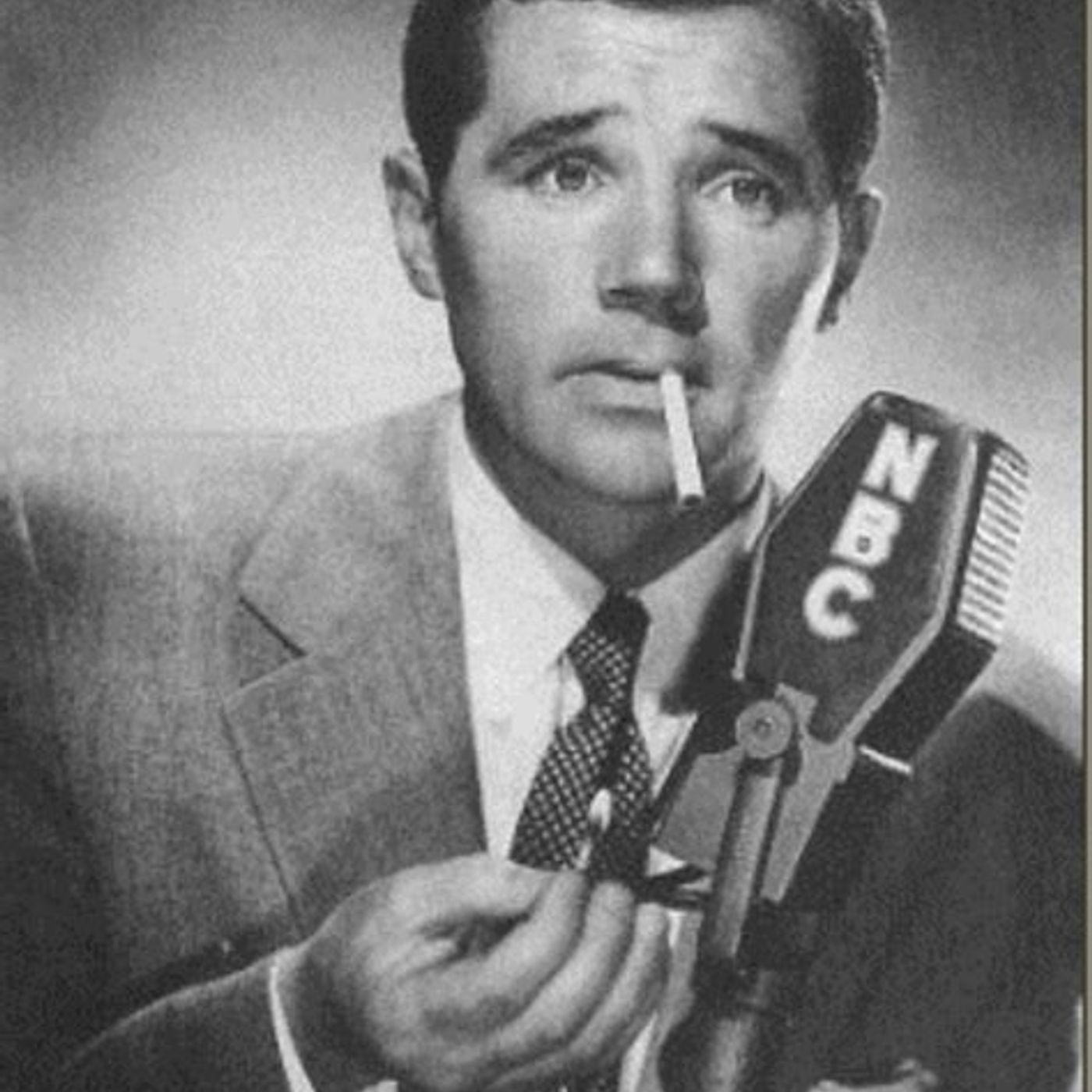
Harold's Old Time Radio
BBC Sam Spade - (The Original Private Eye)
00:28:20
BBC Sam Spade - (The Original Private Eye)
Loading summary
Transcript145 lines
- [00:00]
American Giant Advertiser
Finding a hoodie that lasts through the season can be tough. The American Giant Classic Full Zip hoodie is made to last a lifetime, so you can count on it year after year. The iconic Classic Full Zip hoodie is the jacket that started it all for American Giant. Custom heavyweight fleece and side panels for mobility make it the best hoodie ever. Every American Giant piece is made in America and designed to last, no exceptions. The result is durable clothing like the premium slub crew tee, no bs high rise pant and slim roughneck pant that become part of your life. Snag the hoodie that will bring you comfort for life. The American Giant Classic full zip. Save 20% off your first order at american-giant.com when you use code STAPLE20 at checkout.
- [00:52]
Radio Show Announcer
Dashiell Hammond, America's leading detective fiction writer and creator of Sam Spade, the Hard Boiled Private Eye and William Spear, radio's outstanding producer, director of mystery and crime drama join their talent to make your stand on end with the Adventures of Sam Spade presented by the makers of Wild Root cream oil for the hare. And now with Howard Duff starring as Spade, Wild Root brings to the air the greatest private detective of them all in the Adventures of Sam Spade.
- [01:27]
Narrator / Historian (Peter Stead)
Sam Spade, the original private eye private dick gumshoe Seamus, the archetypal hero of a new kind of detective fiction, the hard boiled school. The detective, a tough loner, a cynical professional, but behind the hard boiled exterior, a bruised romantic who against the odds clings to a code of honour and decency. His beat the city at night where society, both high and low, is sleazy and corrupt. The classic British detective of the golden age was the gentleman amateur, trained for nothing but ready for anything. He was well spoken, impeccably mannered and moved with ease through all levels of society. The American hard boiled detective was his polar opposite. What were the characteristics of this hard boiled school, cultural historian Peter Stead?
- [02:18]
Cultural Historian (Peter Stead)
Well, this is if you like, the American response to the British tradition. You know, in the 19th century the great detective had been invented in Britain and I think this caught a lot in Ian Rankine's argument snobbery in this. The British writers couldn't really believe that the great detective would actually be a policeman. It had to be an intellectual. So they invented the private detective because in America pulp fiction needed, I think, to democratize that tradition. So the great detective went down market and the hard boiled dick emerged out of America. It was a blue collar response to an existing tradition. So the police stories, the detective stories were set on the streets, reflecting the violence of the streets. And of course, reflecting the language of the streets, a new language is being created. So very much an American democratic response to an existing tradition.
- [03:03]
Narrator / Historian (Peter Stead)
One of the earliest and most influential exponents of hard boiled detective fiction was Dashiell Hammett. What were his qualities as a detective story writer?
- [03:12]
Cultural Historian (Peter Stead)
Well, Hammett came into existing tradition. It was a tradition very much associated, of course, with the Black Mask magazine which had emerged in the 1920s. Actually founded by Menkin as a literary magazine. But it became almost totally associated with these hardboiled writers. And, of course, Hamid developed this already existing tradition of the loan operator, the Continental Op. If you actually look, I think, at the qualities of his writing, two things I think stand out. These are the hallmarks of Hamid. First of all, his concern with motive. Very, very much concerned with why crime happened. His crimes are rooted in a particular causal pattern. We see this in his first novel many people admire greatly, Red Harvest, which is set in an industrial town, Personville. Poisonville, as it's pronounced described as an ugly town in an ugly notch between ugly hills with a sky that looks as if it came out of the stacks of the factories and the mines and so on. There. The great motive is industrial corporate greed. And what he does is pile up the detail, detail after detail in which that theme of greed is worked out. Individual greed, political corruption in the glass quay, greed for wealth in the Maltese Falcon.
- [04:18]
Angel / Female Character
You know, Sam, I never would have faced myself in this position if I hadn't trusted you completely.
- [04:22]
Sam Spade
Oh, that again. But, you know, that's so you don't have to trust me as long as you can persuade me to trust you.
- [04:27]
Angel / Female Character
But, Sam, darling.
- [04:29]
Sam Spade
Well, I think we better let it go at that until we see what happens after Gutman gets here.
- [04:33]
Angel / Female Character
The fat man here?
- [04:34]
Sam Spade
Certainly, why not? Anyway, that should be him. So it's too late to change our plans. I'll be right back. Oh, hello, Gutman. Good evening, sir. I see you brought company. Come on in. Now, look, Angel, Gutman brought a couple of friends along. Good evening, Mr. Shaughnessy.
- [04:56]
Angel / Female Character
Hello, Joe.
- [04:57]
Sam Spade
You look unusually charming this evening, my dear.
- [04:59]
Angel / Female Character
Thanks.
- [05:00]
Sam Spade
The gunsoul doesn't talk, Angel. Get away from me. Pun. Stand still and shut up. Listen, you're not gonna frisk me. Touch me and I'll make you use that gun. Ask your boss if he wants me shot up before we talk. Never mind, Wilma. Oh, you're certainly a most headstrong and unpredictable individual, Mr. Spade. Now, why did you send to me? You ready to make the first payment and take the falcon off my hands.
- [05:22]
Joe Cairo / Male Character
The falcon.
- [05:23]
Sam Spade
That's right, angel. I've got it. Well, sir, I have in this envelope $10,000. 10,000? Well, we were talking about more money than that. Yes, sir, we were, but there are more of us to be taken care of now. Well, that may be, but I've got the falcon. I shouldn't think. Think it would be necessary to remind you, Mr. Spade, that though you may have to falcon yet, we certainly have you. Yes, I'm trying not to let that worry me. But let the money wait. There's another thing to be taken care of first. We've got to have a fall guy. I beg your pardon? Police have got to have a victim, somebody they can stick for those three murders. Two.
- [05:58]
Joe Cairo / Male Character
Two?
- [05:58]
Sam Spade
Only two murderers, Mr. Spade. Thursby undoubtedly killed your pa. All right, all right, two. Then the point I have got to give the police a victim when the time comes. If I don't, I'll be it. Let's give him. Let's give him Wilmer here. Why, you. He actually did shoot Thursby and Jacoby, didn't he? Anyway, he's made to order for the part. Let's turn him over to them. By God, so you are a character.
- [06:22]
Joe Cairo / Male Character
That you are.
- [06:23]
Sam Spade
There's never any telling what you'll say or do next. Except that it's bound to be something astonishing. Well, it's our best bet. With him in their hands, the police will forget the rest of us. Your plan is not at all practical, sir. Let's not say anything more about it. All right. I have another suggestion. Let's give him Cairo. Well, by Godza, suppose we're giving you Mr. Spade or Mr. Shaughnessy. How about that, huh?
- [06:45]
Angel / Female Character
Sam, you wouldn't.
- [06:46]
Sam Spade
You people want the fork, and I've got it. A fall guy is part of the price I'm insisting on. You seem to forget you're not in a position to insist on anything. No. If you kill me, how are you going to get the Falcon? By gadza, you are a character. Well, what else can I do? I'm sorry, Wilma. Terribly sorry. I want you to know that I couldn't be any fonder of you if you were my own son. But. Well, if you lose a son, it's possible to get another. And there's only one Maltese Falcon.
- [07:18]
Narrator / Historian (Peter Stead)
Humphrey Bogart as Sam Spade in a 1943 radio version of the Maltese Falcon, featuring Mary Astor, Sydney Greenstreet and Peter Laurie, his co star from the 1940 film version. Sam Spade was perhaps the most enduring creation of Dashiell Hammett and a character who directly inspired Raymond Chandler's Philip Marlowe. Chandler was an enormous admirer of Hammett's style.
- [07:43]
Literary Critic / Historian
Hammett took murder out of the Venetian vase and dropped it into the alley. Hammett wrote for people with a sharp, aggressive attitude to life. They were not afraid of the sceney side of things. They lived there. Violence did not dismay them. It was right down their street. Hamlet gave murder back to the kind of people that committed for reasons not just to provide a corpse and with the means at hand, not hand wrought dueling pistols, curare and tropical fish. He put these people down on paper as they were, and he made them talk and think in the language they customarily use for these purposes. He had style, but his audience didn't know it because it was in a language not supposed to be capable of such refinements. He was spare, frugal, hard boiled, but he did over and over again what only the best writers can ever do at all. He wrote scenes that seemed never to have been written before.
- [08:46]
Narrator / Historian (Peter Stead)
The name Sam Spade was an inspired one. Samuel Dashiell Hammett gave his detective his own unused first name. He was always known as Dash. And a surname indicating that this was a man who called a Spade a spade and not a garden implement. Peter Stead.
- [09:03]
Cultural Historian (Peter Stead)
Sam Spade, of course, has his origins in this continental op tradition which the black mask writers had already created. Hammett himself wrote about fairly anonymous, you know, nondescript, overweight, hard drinking, violent continental ops. And then he moved on to Sam Spade. Now Spade has become by far the most famous American private detective. The name is always used when people think of the genre. But I think in fairness, in all honesty, Sam Spade is actually a transitional figure between the fairly anonymous continental opinion tradition on the one hand and Chandler's Marlowe on the other. He's sketched in really in Hamlet's work. Remember, he's only in one novel, Maltese Falcon and a couple of stories. We just have this kind of skimp description. And Hammett is writing in the third person for the first time. His previous stories were first person and he's trying to flesh out the character. But still I think we're in the transitional process. But the hallmark of Spade as a loan operator, a loner, that's very, very important. And Chandler always saw the significance of Hamlet's emphasis on that. But the key to Sam Spade is unlike the great detective in the English edition, his main concern is not to solve crimes, but rather just to survive and if you were to make the contrast with Chandler's Marlowe, I would say that Hamid, Sam Spade, is the kind of detective that Continental Ops would like to have been whereas Marlowe, of course, is the kind of private operator and private detective that intellectuals would like to have been. You know, the two kind of things come from different directions.
- [10:41]
Narrator / Historian (Peter Stead)
In Hammett's world, women are usually beautiful but treacherous and woe betide any man who lets himself fall for them.
- [10:49]
Cultural Historian (Peter Stead)
Hamid, of course, was a womanizer throughout his life. Many mistresses. So it was a major thing in his life. In the novels and indeed in the. In the radio programs, of course, all women are femme fatale, really. They're people who are using sex. And Sam Spade and the other detectives are very, very aware of this. Very tempted succumb on occasions but above all, aware of the way in which sex is being used. So there is a kind of moral judgment there, but the tremendous sexual feel to the novels. Women are always chiseling in. In Hammett and using their sexuality.
- [11:35]
Sam Spade
Good morning.
- [11:36]
Angel / Female Character
Come in, Mr. Spade. Mr. Spade, I have a terrible, terrible confession to make.
- [11:43]
Narrator / Historian (Peter Stead)
That.
- [11:44]
Angel / Female Character
That story I told you yesterday was all just a story.
- [11:49]
Sam Spade
Well, Mr. Shaughnessy, as I said, we. We didn't exactly believe your story. We believed your $200. Oh, yes. You see, you paid us too much to be telling the truth.
- [11:59]
Angel / Female Character
You knew that when you accepted the money.
- [12:00]
Sam Spade
I suspected of it. I was positive when Joel Cairo called on me.
- [12:05]
Angel / Female Character
Joe Cairo?
- [12:06]
Sam Spade
Yeah. Yeah. He seems interested in Floyd Thursby, too.
- [12:09]
Angel / Female Character
Mr. Spade, do they know about me?
- [12:11]
Sam Spade
No, I don't think they do. I've been able to stall them so far.
- [12:14]
Angel / Female Character
Must they know about me at all? Mr. Spade, couldn't you manage somehow to shield me from them?
- [12:19]
Sam Spade
Maybe, but I'll have to know what it's all about.
- [12:22]
Angel / Female Character
I can't tell you now.
- [12:24]
Sam Spade
Later.
- [12:24]
Angel / Female Character
I will when I can. You must trust me. Mr. Spade, I. I'm so alone and afraid. I've got nobody to help me if you won't help me. Be generous, Mr. Spade. You're strong. You're brave. You can spare me some of that strength and courage.
- [12:40]
Joe Cairo / Male Character
Surely.
- [12:44]
Sam Spade
Sister, you don't need much of anybody's help. You're good. Chiefly your eyes, I think, and that throb you get in your voice when you say things like, Be generous, Mr. Spade.
- [12:56]
Angel / Female Character
All right, I deserve that. But the lie was in the way I said it and not at all in what I said.
- [13:03]
Sam Spade
Ah, now you are dangerous. Have you given me any of your confidence? Any of the truths I Can't go ahead without more confidence in you than I have now.
- [13:11]
Angel / Female Character
Can't you trust me just a little while?
- [13:12]
Sam Spade
How much is a little? And what are you waiting for?
- [13:15]
Angel / Female Character
I must talk to Joel Cairo.
- [13:18]
Sam Spade
I didn't see him tonight. I know where to reach him.
- [13:20]
Angel / Female Character
Oh, he can't come here. I can't let him know where I am, I'm afraid.
- [13:23]
Sam Spade
We'll all meet at my place, then.
- [13:25]
Joe Cairo / Male Character
All right.
- [13:30]
Narrator / Historian (Peter Stead)
Perhaps the most famous interpreter of the role of Sam Spade was Humphrey Bogart, who played him in John Huston's 1940 film version for Warner Bros. And subsequently recreated the role on radio before a live audience in 1943 and 1946. Peter Stead.
- [13:46]
Cultural Historian (Peter Stead)
I think Bogart was perfect. Bogart is dour. He's cynical. He's straight laced. It's funny because people later associate Bogart with Chandler's Marlowe, but I would say that Bogart was better suited to Sam Spade than he was to Marlow. And other actors played Marlow. Well, Bogart was perfect, I think, as Sam Spade.
- [14:11]
Sam Spade
Now, look, Angel, Gutman and Cairo will talk when the cops nail them about us. We've only got minutes to get set for the police. Give me your whole story, fast.
- [14:19]
Angel / Female Character
Where shall I begin?
- [14:20]
Sam Spade
The day you first came to my office, why did you want Thursby shadows?
- [14:23]
Angel / Female Character
I suspected him of betraying me to Gutman and I wanted to find out.
- [14:26]
Sam Spade
That's why Gutman tried to make a deal with him. You had Thursby hooked and you knew it. You wanted to get him out of the way before Captain Jacoby arrived with a falcon, isn't that so? What was your scheme?
- [14:35]
Angel / Female Character
I thought if he saw someone following him, he might be frightened into going away.
- [14:39]
Sam Spade
Look, Archer hadn't many brains, but he wasn't clumsy enough to be spotted the first night. You must have told Thursby he was being followed.
- [14:45]
Angel / Female Character
I told him, yes. But please believe me, Sam. I wouldn't have told him if I thought Floyd would kill him.
- [14:52]
Sam Spade
If you thought he wouldn't kill Archie, you were right, Angel.
- [14:55]
Angel / Female Character
Didn't he?
- [14:56]
Sam Spade
Archer'd been a detective too long to be caught shadowing a man up a blind alley with his gun tucked away in his hip and his overcoat button. But he'd have gone up there with you, Angel. He was just dumb enough for that, Sam. And then you could have stood as close to him as you like, there in the dark, put a hole through him with a gun you'd gotten from Thursby that evening.
- [15:13]
Bernadine / Secretary
Don't.
- [15:13]
Angel / Female Character
Don't talk to me. Like that. Sam, you know I didn't.
- [15:16]
Sam Spade
Now, the police will be blowing in any minute.
- [15:17]
Joe Cairo / Male Character
Now.
- [15:18]
Sam Spade
Angel, talk.
- [15:19]
Angel / Female Character
Why do you accuse me of such a terrible.
- [15:20]
Sam Spade
Why did you shoot Archer? I thought Thursby would tackle him and one or the other would go down. If Thursby was killed, then you were rid of him. If it was Archer, then you could see that Thursby was point. Was that it?
- [15:30]
Cultural Historian (Peter Stead)
Something.
- [15:30]
Sam Spade
And when you find out this Thursby didn't mean to tackle Archer you borrowed the gun and did it yourself, right?
- [15:35]
Angel / Female Character
I guess so.
- [15:36]
Sam Spade
I know so. You didn't know Gutman was here looking for you until you learned Thursby was shot. Then you needed another protector, so you came back to me.
- [15:43]
Narrator / Historian (Peter Stead)
Yes.
- [15:44]
Angel / Female Character
But though, sweetheart, it wasn't only that. I would have come back to you. You sooner or later. From the very first instant I saw you, I knew it.
- [15:52]
Sam Spade
You.
- [15:52]
Joe Cairo / Male Character
Angel.
- [15:54]
Sam Spade
Well, if you get a good break, you'll be out of San Quentin in 20 years.
- [15:58]
Angel / Female Character
Sam, you're not.
- [16:01]
Sam Spade
Yes, Angel, I'm going to send you over. But if they hang you, I'll always remember you.
- [16:10]
Angel / Female Character
Don't, Sam. Don't say that, even in fun.
- [16:14]
Sam Spade
It's not fun. I happen to be in the detective business, and you killed my partner. It's bad business to let the killer get away with it. Bad for every detective in this country. You're taking the fall.
- [16:29]
Narrator / Historian (Peter Stead)
Sam Spade became the star of his own radio series in 1946. The Adventures of Sam Spade Detective ran first on CBS and then on NBC until 1951. Howard Duff starred as Sam and the show was produced and directed by William Speer, a master of radio production who'd created the spine tingling suspense series. Hammett wrote none of the scripts. Indeed, he'd written almost nothing since 1934 and had been living on the royalties from his books and characters who included not just Sam Spade, but also Nick and Nora Charles, the husband and wife detective team of MGM's popular Thin man film series. But the radio writers captured the Hammett style. Peter Stead.
- [17:11]
Cultural Historian (Peter Stead)
I love the radio series. Above all, I think they're very entertaining. They're very, very funny and they're very satisfying in every way. They are, of course, a development from Dashiell Hammett. They always used Hammett's name. But I think we must recognize the input of William Speer, the director, and his team of writers. They've taken the Sam Spade idea and developed it. Some of the hard boiled tradition, some of that sense of corruption and violence is. Is there. I thought in the. In the Dick Foley caper, in particular, the wonderful scenes in San Francisco Bay and in the drizzle and the fog and the water.
- [17:45]
Joe Cairo / Male Character
On the 6am Oakland Ferry boat fell his way blindly out of the slip. Claude Spicer was aboard and so was I. Should have been getting lighter, but it wasn't. The fog was thickening over the harbor and most of the passengers were inside drinking coffee. Spicer didn't go in. He climbed up to the boat deck and stood at the rail under the pilot'. I planted between two wet paint signs and waited. Not for long. I couldn't make out any features on the man who came up and joined them. They stood face to face, not more than a foot apart and talked in voices that couldn't get to me through the racket of the parkhorns in the harbor. What spoke loud enough for me to hear was a gun. They seemed to fall into each other's arms then collapsed in a heap on the deck. When I got to the spot, only the dead one was there. It was Spicer. The other man had disappeared around the corner of the deck house. A ray of light from the pilot's window swept over him and I saw gunmetal shine in his hand and then spin out over the rail as he threw it.
- [18:47]
Cultural Historian (Peter Stead)
What?
- [18:48]
Sam Spade
Oh, it's you, Sam. I was afraid you'd lost him.
- [18:51]
Joe Cairo / Male Character
What did you do it for, Dick? I had my reason, Sam. Now trust me.
- [18:54]
Sam Spade
I'll keep you in the clear.
- [18:55]
Joe Cairo / Male Character
How long? As long as I go on playing sucker for you.
- [18:58]
Sam Spade
What do you think I hired you for?
- [18:59]
Joe Cairo / Male Character
Maybe I was supposed to say you killed him in self defense. Maybe I was supposed to see him making passes at your wife if you need it.
- [19:05]
Sam Spade
But Sam, you've got.
- [19:06]
Joe Cairo / Male Character
I've worked for killers before. I've even worked for thieves. But not for a detective that knocks over a place.
- [19:10]
Radio Show Announcer
He's supposed to be protecting, Sam.
- [19:12]
Joe Cairo / Male Character
It's not a service for the cops, Dick. I'm turning you in when we get to Oakland.
- [19:16]
Sam Spade
No, you're not.
- [19:16]
Joe Cairo / Male Character
Sam. Dick, come back here. Go.
- [19:18]
Narrator / Historian (Peter Stead)
Me?
- [19:20]
Sam Spade
I'm going over the side. If you try to stop me, you're going with me.
- [19:27]
Joe Cairo / Male Character
He fought away from me, got one foot over the rail and kicked out at me with the other. It caught me on the point of the chin. I stumbled forward and grabbed out blind. I must have caught him by the belt just as he jumped. I remember something pulling me halfway over the rail and trying to get free of it. I did, but not soon enough. I was in mid air and the black Water came rushing up to meet me. I found myself mechanically keeping afloat somehow and trying to get out of my coat. I felt heavy and logged as if I'd swallowed gallons of water. The murk hung low and thick There was nothing else to be seen anyway I swallowed what felt like several more gallons before I got rid of the coat from out of the misty fog blanket from every direction in a dozen different keys from near and far, foghorn sounded. I stopped swimming and floated on my back trying to determine my whereabouts. After a while I picked out the moaning evenly spaced blasts of the Alcatraz siren but they came out of the fog without direction seemed to beat down on me from straight above. I was somewhere in San Francisco Bay and that was all I knew and I suspected the current was sweeping me out toward the Golden Gate and a light came up ahead of me Suddenly a boat passing a few yards away. I lifted my head and screamed. The boat silent, crying as warning drowned out My shouts went on fast and the fog closed in behind it Then I heard a new sound. Seagull. I swam towards it and it seemed to get lighter. Part of it was the dawn light beginning to cut through the fog blanket but there was also a strange looking man standing on the water and waving a green lantern back and forth. I yelled at him to wait for me and a seagull got off his hat and flew away. When I got closer I saw it was not a man but only a buoy channel type. I used all the I had left to drag myself up on the base of it and let it rock me to.
- [21:48]
Cultural Historian (Peter Stead)
They are capers. They're very, very amusing. Very, very funny. The initial wordplay between Sam Spade and his secretary Effie or the. Or the stand in Bernardine is wonderful. All the, all the kind of, you know, the jokes there, the double entendre's, the spoonerisms and so on are very, very funny and a reminder of the way in which America was inventing a new language.
- [22:10]
Bernadine / Secretary
Office of Samuel Spade Private Investments I mean Investigations Good morning Evening, Effie. Ms. Perrine is on a vacation. Perhaps I may be of assistance. No doubt I don't know to whom.
- [22:24]
Joe Cairo / Male Character
Am I speaking to?
- [22:25]
Bernadine / Secretary
I am sorry, I cannot devolve that information to an entire stranger. May I take a message?
- [22:31]
Joe Cairo / Male Character
Look, Miss, whoever you are, I don't want to discommode you but I am.
- [22:35]
Bernadine / Secretary
Sorry but I will have to ask you in no certain terms to resist from this line you are handing me I am not the type secretary.
- [22:42]
Joe Cairo / Male Character
Forget it. I'll just call Ms. Perrine long distance and dictate my report over the phone.
- [22:47]
Bernadine / Secretary
Oh, my son of ngarder. However we gouge of me, Mr. Spade. Oh, I'm Bernadine Ettie's relief. I mean yours.
- [22:56]
Joe Cairo / Male Character
I could use some.
- [22:57]
Bernadine / Secretary
Oh, shall I send Alfred some medicine?
- [23:00]
Cultural Historian (Peter Stead)
This is one of the great things. This is why, you know, we like Groucho Marx. This is why we like so many of those films. In the 30s they were coming to terms with the English language and creating a new language of the American streets. And I think the radio program, you know, captures that superbly, as of course there were so many of the American B films of that time. And these programs, I think on the whole can be compared with the B film tradition. Spades, you know, one liners, which owe far more to the writers than they do to Dashiell Hamet, I think, are very, very funny. At one point Sam Spade describes to Effie what had been a brilliant quadruple play who uses the baseball term, and she says, I know nothing about baseball. He says, don't worry, the football season starts next week. So they have a life of their own. And above all they're given a life, I think, by superb production values. Above all, the voices, the voices, you know, the voices in American radio are wonderful. From Dick Joy, you know, the announcer, the voices in the adverts are very, very impressive. All the characters are well played. But above all, you know, there's Howard Duff's superb, urbane, wistfully cynical voice. He's absolutely perfect. I think this is really, really high class radio.
- [24:05]
Narrator / Historian (Peter Stead)
But the show came to a sad end. A victim of the McCarthyite anti communist witch hunt in 40s and 50s America.
- [24:12]
Cultural Historian (Peter Stead)
Yes, this is, you know, this sad aspect of American anxiety. As the Cold War set in, America had won the war. America had solved the problems of depression. But instead of embracing its freedom, America wallowed in guilt. And that pursuit of communists in America and the fellow travelers in America, which we associate with the McCarthy idea really starts in about 1947 and goes on for five or six years and affected almost every aspect of American life, American politics and American culture. Once Truman introduced his kind of loyalty pledge and his loyalty test in 1947, there was carte blanche really for the Inquisition, as it's been called, to be taken to every aspect of American life. Hamlet was a Marxist, almost certainly a member of the Communist Party. Hamlet himself was to go to jail in 1951 for refusing to give names to a US district court. He was himself grilled by McCarthy himself in 1953 so Hammett was quite a central figure in that whole period of the American inquisition. And inevitably, the radio program suffered.
- [25:22]
Narrator / Historian (Peter Stead)
The magazine Hollywood Life published one of many virulent anti hamit articles.
- [25:27]
Anti-Hammett Commentator
Hammett is one of the most dangerous, influential communists in America. Communism has been his first love for many years. And he has aided the Moscow methods with thousands of dollars and most of his spare time. Hammett is said to be responsible for selling the Red Banner to dozens of men and women, including actor Howard Duff, alias Sam Spade. Duff is also a member of one or more red fronts and a definite red sympathizer. Truthfully, Dashiell Hammett should be indicted for participating in subversive activities. And aiding in matters which seek and conspire to overthrow the United states government.
- [26:09]
Narrator / Historian (Peter Stead)
In 1949, Wildroot Hare Oil, the sponsor of the Sam Spade radio show. Insisted that Hammett's name be removed from the show's credits. They then decided to pull the plug on the show altogether. This decision prompted 250,000 letters from fans urging its reprieve. The show was continued, but without Howard Duff, who was replaced by Stephen Dunn. An anti communist message was injected into the scripts as Sam rounded up communist spies and fifth columnists and warned audiences against them.
- [26:39]
Bernadine / Secretary
Oh, Sam, a spy story.
- [26:42]
Sam Spade
Yes, it was s everything.
- [26:44]
Bernadine / Secretary
A chase and being thrown in the water and mysterious people and a cold.
- [26:48]
Sam Spade
Message that'll kept you awake.
- [26:50]
Joe Cairo / Male Character
Angel.
- [26:50]
Bernadine / Secretary
Sam, what is it like not to want to be in America? Not to want to live the way we do in America?
- [26:57]
Sam Spade
I can't imagine, sweetheart.
- [26:59]
Bernadine / Secretary
I can't either. Sam, about Dr. Ames.
- [27:03]
Joe Cairo / Male Character
Yeah?
- [27:03]
Bernadine / Secretary
Do you think that. I mean, the way you described him are. Do you think you made him sound too sympathetic?
- [27:08]
Sam Spade
Oh, I described him as he were, that's all.
- [27:10]
Bernadine / Secretary
But will anybody think that, well, you know, he was attractive?
- [27:13]
Sam Spade
Well, you missed the whole point, didn't you? Spies don't go around wearing monocles and talking with heavy accents and acting like spies. Not the good ones. It's the attractive, lovable, trustworthy strangers that are dangerous. Now, if you'd met Dr. Ames at a party somewhere, you'd be out with him at a nightclub right now, cooing over a drink and giving him the plans to the Brooklyn Navy Yard.
- [27:29]
Bernadine / Secretary
Sometimes I get mad, Sam. I don't even know where Brooklyn is.
- [27:32]
Sam Spade
Lucky for our side.
- [27:34]
Narrator / Historian (Peter Stead)
But the series did not long survive the departure of Howard Duff and ended in 1951. Howard Duff went on to become a successful film and television star. In the kind of tough guy roles in which he'd made his name on radio, Dashiell Hamlet was released from prison in December 1951. He wrote nothing more before his death in January 1961. But on hearing of his death, columnist John Crosby Dashiell Hammett, who died the other day, was that rare thing, a shaker of the earth, an authentic the Maltese Falcon was one of the best books of its kind ever written. It struck the publishing world and the reading world like a thunderclap. Nothing has been the same since.
- [28:24]
Radio Show Announcer
The Adventures of Sam Spade, Dashiell Hammett's famous private detective are produced and directed by William Spear. Sam Spade is played by Howard Dove. Lorene Tuttle is Effie. The Adventures of Sam Spade are written for radio by Bob Tallman and Gil Dowd. Musical direction by Luck Luskin, with score composed by Renee Garaghan. Join us again next Sunday when author Dashiell Hammett and producer William Speer join forces for another adventure with Sam Spade, brought to you by Wild Root Cream Oil. Again and again, the choice of men who put good grooming first.
- [28:58]
Narrator / Historian (Peter Stead)
The Radio Detectives was written and presented.
- [29:00]
Cultural Historian (Peter Stead)
By Professor Jeffrey Richards, readings were by.
- [29:02]
Narrator / Historian (Peter Stead)
Toby Longworth and the producer was Lizanstey.