← Harold's Old Time Radio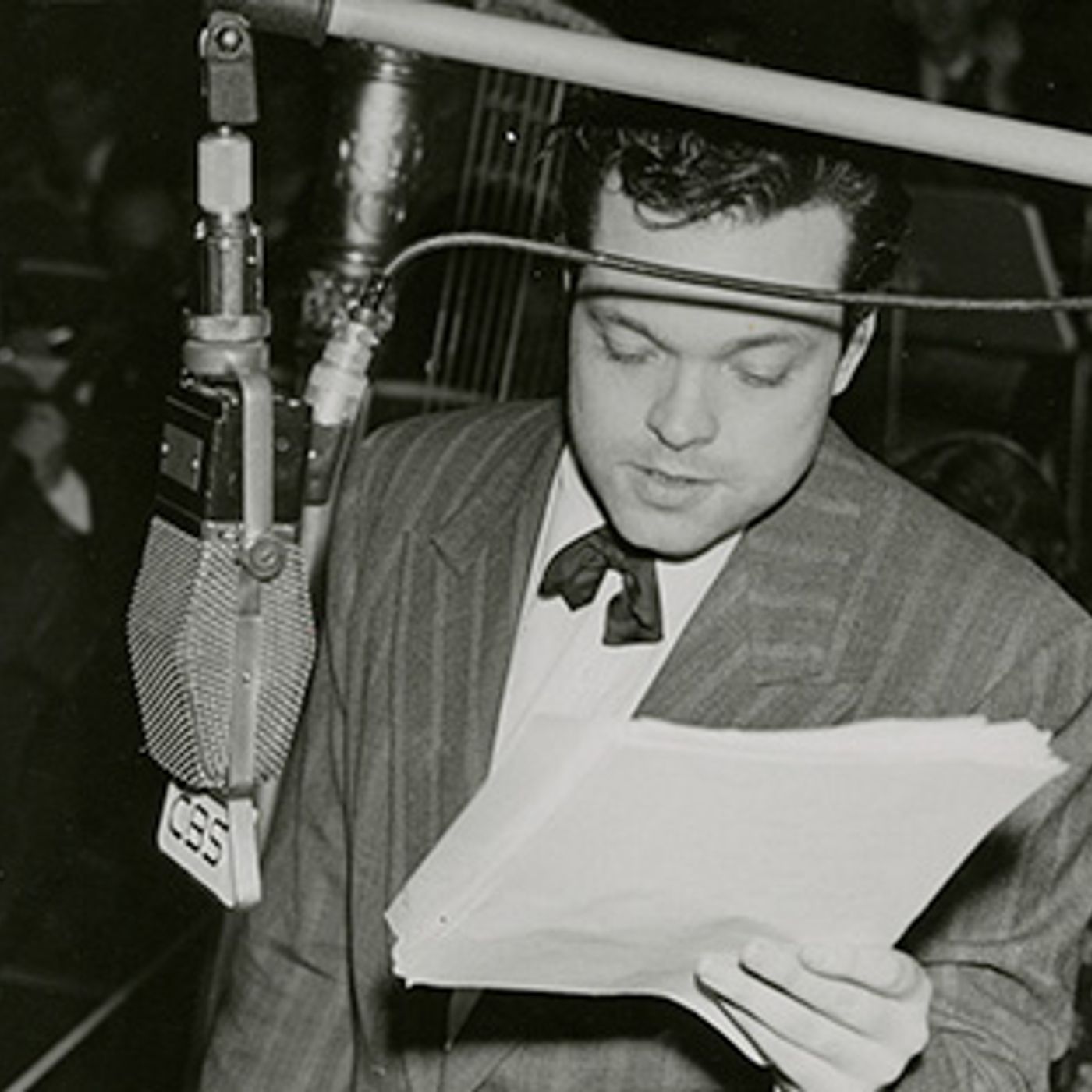
Harold's Old Time Radio
Your Radio Almanac - 1944-02-09 - #3 - guest Ann Sothern
00:29:37
Your Radio Almanac - 1944-02-09 - #3 - guest Ann Sothern
Loading summary
Transcript304 lines
- [00:01]
Anne Southern
Hey, this is Sarah. Look, I'm standing out front of a.m. p.m. Right now and, well, you're sweet and all, but I found something more fulfilling, even kind of cheesy. But I like it. Sure, you met some of my dietary needs, but they've just got it all. So farewell, oatmeal. So long, you strange soggy.
- [00:19]
Announcer
Break up with bland breakfast and taste AM PM's bacon, egg and cheese biscuit made with ktree eggs, smoked bacon and melty cheese on a buttery biscuit. AMPM Too much Good stuff.
- [00:31]
Orson Welles
This is Orson Welles just saying hello before the show starts. There's a full moon tonight. February 11th is the anniversary of the day Thomas Alva Edison was born. He invented the incandescent lamp only to discover years later that Spencer Tracy had beat him to it. Welcome to your radio Almanac, ladies and gentlemen.
- [00:53]
Jack Mather
At the sign of the flying red.
- [00:55]
Anne Southern
Horse.
- [00:59]
Jack Mather
Tonight and every night at the same time over these same stations, the makers of mobile gas and mobile oil bring you Orson Welles.
- [01:14]
Jack Mather speaking. Our guest tonight comes to us through the courtesy of Metro Goldwyn Mayer, producer of the great hit Madame Curie. Ladies and gentlemen, Anne Southern.
- [01:30]
Orson Welles
Hello, Ann. Hello, Anne.
- [01:33]
Anne Southern
Hello, Orson. You know, I don't mind telling you, I'm scared stiff.
- [01:36]
Orson Welles
Scared stiff?
- [01:37]
Announcer
Why?
- [01:37]
Anne Southern
Well, aren't you going to saw me in half.
- [01:39]
Orson Welles
Oh no. The OPA put a stop to that. They said I was wasting too many women. I'm not just a magician, Anne. I'm a romantic lover. You know, of course, I don't believe it, but they. They do say that compared to me, Sinatra is just a boy.
- [02:01]
Anne Southern
He may be a boy scout, but a lot of girl scouts belong to his troupe.
- [02:06]
Orson Welles
Well, don't get me wrong, Ann. I'm not envious. As a matter of fact, in my next Mercury Theater production, I've been thinking of doing Romeo and Juliet with Frank Sinatra as Romeo.
- [02:17]
Anne Southern
Really?
- [02:17]
Jack Mather
Yes.
- [02:18]
Orson Welles
Can't you just hear him singing on the balcony as Juliet climbs up to him?
- [02:28]
Anne Southern
Austin, I don't want to criticize an old Shakespeare authority like you, but Juliet stands on the balcony and Romeo climbs up to her.
- [02:36]
Orson Welles
I know, but Sinatra would never make it.
- [02:41]
Now look, Anne, we're doing a scene later and you'll find out how romantic I am.
- [02:44]
Anne Southern
Well, if we're going to do a scene together, I'd better give you a couple of pointers.
- [02:48]
Jack Mather
Pointers?
- [02:48]
Anne Southern
Yes. Now let me show you. Now put your arms around me.
- [02:52]
Orson Welles
My arms around you?
- [02:53]
Jack Mather
Like this?
- [02:53]
Anne Southern
Uh huh. Now standing. Say something romantic.
- [02:59]
Announcer
Oh, my darling.
- [03:01]
Orson Welles
What's funny about that?
- [03:08]
Oh, my darling.
- [03:10]
Announcer
I love you with an equatorial passion.
- [03:12]
Orson Welles
You ought to see me in Jane Eyre.
- [03:15]
Announcer
I love you with an equatorial passion that no thermometer can register.
- [03:19]
Orson Welles
Oh, my darling. Pardon me. Anne.
- [03:20]
Jack Mather
Hello.
- [03:22]
Orson Welles
Oh, hello, dear. What? We're only acting.
- [03:28]
Anne Southern
Of course.
- [03:29]
Orson Welles
I don't mean it honestly. She was only teaching me something. Oh, I know you can. But I. But. But.
- [03:40]
You know I do. I said you know. I said you know I do. I can't say it now. There are people listening.
- [03:50]
I say. I say there are people listening.
- [03:55]
Oh, please don't be angry. I'll call you later. Goodbye.
- [03:58]
Anne Southern
Who was that?
- [03:59]
Orson Welles
My laundryman.
- [04:02]
Anne Southern
Oh, yes. You've got to be awfully nice to them these days. Now, let's go on. You were saying?
- [04:07]
Orson Welles
Oh, yes, darling, I've been. I've.
- [04:10]
Anne Southern
Oh, yes, you were saying.
- [04:11]
Orson Welles
Thank you for giving it to me again. I'll try it once more. Darling, I've endeavored to conceal a passion whose inner. You should see me in Jane Eyre. I don't do this honestly. I have endeavored to conceal a passion whose inner fires have brought the very soul within me.
- [04:25]
Jack Mather
I'll take it.
- [04:26]
Anne Southern
I'll take it.
- [04:27]
Orson Welles
Oh, it says in the script that you will, uh.
- [04:29]
Anne Southern
Hello? Oh, it's okay. I'll tell him. Orson, your laundryman says he's going home to his mother.
- [04:38]
Orson Welles
She's always kidding that way.
- [04:40]
Anne Southern
I'll bet. Now, come on, Orson, make like Sinatra.
- [04:48]
Kiss me.
- [04:49]
Orson Welles
All right, I will. Dun dun dun dun dun dun dun.
- [04:52]
Anne Southern
Uh, Orson, who is this character?
- [04:54]
Orson Welles
This is Mr. Peabristle, the censor.
- [04:57]
Jack Mather
I'm sorry, Mr. Wells, but you can't kiss Anne Southern like that.
- [05:00]
Anne Southern
Why? You know a better way?
- [05:04]
Jack Mather
He's not allowed to kiss anybody that close to a microphone.
- [05:06]
Orson Welles
Why not?
- [05:07]
Anne Southern
Well, the voice is too romantic, Mr. Pre Bissell. What?
- [05:10]
Janice (Food Truck Owner)
Pre bristle.
- [05:11]
Anne Southern
Pee bristle. Whatever gave you the idea that his voice is romantic?
- [05:19]
Jack Mather
Well, now, just read this letter.
- [05:21]
Anne Southern
Dear sir, whenever Orson Welles speaks, I get goose pimples. Signed Bella.
- [05:25]
Jack Mather
Bella.
- [05:26]
Orson Welles
What's the address?
- [05:26]
Jack Mather
602 Beverly Drive.
- [05:28]
Anne Southern
Just as I thought. Bela Lugosi.
- [05:32]
Jack Mather
Well, I have additional proof. Let me show you. Would you three young ladies please step up on the stage? That's right. Right this way. All right, Mr. Wells, say something romantic.
- [05:41]
Orson Welles
You mean like this?
- [05:44]
Announcer
Darling, I love you.
- [05:48]
Anne Southern
Orson. Pick him up.
- [05:50]
Orson Welles
Are they kidding? You girls don't really think I'm romantic, do you?
- [05:55]
Thank you.
- [05:57]
Anne Southern
Why, he's another Mickey Rooney.
- [06:04]
Orson Welles
Look, girls, it's ridiculous. Anyway, anyone feeling this way about me, I. Aw, you.
- [06:10]
Anne Southern
You send us Welsey Pete's a killer Solid Jack.
- [06:15]
Jack Mather
You see? I wasn't lying. Now go on. Say something romantic.
- [06:18]
Orson Welles
Say something romantic. Like. Like I adore you.
- [06:26]
Anne Southern
Wellsy Picasso.
- [06:27]
Orson Welles
I can't understand it.
- [06:29]
Anne Southern
That's because you're a man.
- [06:31]
Orson Welles
Thanks.
- [06:34]
Anne Southern
How would you feel if you heard Hedy Lamarr say I love you.
- [06:41]
Orson Welles
And pick me up?
- [06:43]
Anne Southern
Oh, girls, can I join the club too? Just sing the theme song with this here.
- [06:50]
When we heard Frank Sinatra we all gave out with yells Gave out with yells but we're through with Sinatra now we swoon for Orse and Wells for Orson Wells Our lives were oh so useless like boats without the oars without the oars but now our life's worth living when he says obediently yo.
- [07:31]
All Warsaw well.
- [07:45]
Johnny Horace
Shoo, shoo, shoo baby Shoo, shoo, shoo baby Bye bye bye baby Hoppers off to the seven seas don't, don't cry, baby don't, don't sigh, baby Bye bye bye baby When I get back Live the life of bees Seems kind of tough now to say goodbye this way Papa's gonna get rough now so that he can be sweet to you another day don't cry, pretty baby don't you sigh, my little baby Shoo, shoo, shoo baby Papa's off to the 7 SE.
- [08:43]
Don't, don't cry, baby don't, don't sigh, baby Bye bye bye baby Papa's off to the seven seas.
- [09:04]
Jack Mather
That was Johnny Horace taking the vocal.
- [09:06]
GoFundMe Announcer
Everybody.
- [09:07]
Jack Mather
Did you like him?
- [09:14]
Tell me, folks, did you know this?
- [09:16]
Janice (Food Truck Owner)
Hello. I'm here during the lunch rush with Janice, who owns her own food truck.
- [09:19]
Anne Southern
Best cheese steaks in town.
- [09:21]
Janice (Food Truck Owner)
Janice traded up to Geico Commercial Auto Insurance for her food truck business. We're here where she needs us most.
- [09:26]
Anne Southern
They sure are.
- [09:27]
Janice (Food Truck Owner)
We make it so easy for her to save with customized coverage that grows with her business. Sorry, I just get so emotional talking about saving folks money.
- [09:36]
Anne Southern
Not this onion I'm chopping.
- [09:37]
Janice (Food Truck Owner)
It's just so beautiful.
- [09:39]
Jack Mather
Oh, yeah.
- [09:40]
Anne Southern
Nice.
- [09:40]
GoFundMe Announcer
The onion.
- [09:41]
Jack Mather
Get a commercial auto insurance quote today@geico.com.
- [09:43]
Announcer
And see how much you could save. It feels good to Geico.
- [09:46]
GoFundMe Announcer
Want to make a difference in your community, but not sure how. Go to GoFundMe.com right now and start a GoFundMe. Seriously? Your next fundraiser doesn't have to start in a school parking lot or a church basement. You can start a GoFundMe today in just minutes. Fundraise for yourself a friend or family member or an organization. All that matters is that you care about them. GoFundMe is the trusted place to fundraise for what you care about. With no pressure to hit your fundraising goal, but tons of tools to help you reach it, you can confidently start fundraising right now. Whether it's creative, local or critical, your cause matters and there's a reason why. GoFundMe is backed by millions and chosen by fundraisers everywhere. It works and it matters. GoFundMe helps you make a real difference. Start your GoFundMe today at GoFundMe.com that's GoFundMe.com G O F U N D M E dot com this is a commercial message brought to you by GoFundMe.
- [10:45]
Jack Mather
Gasoline for cars is made by blending light and heavy elements. The heavy are for mileage, the light for snappy starts and rapid getaway. Today, some of these lighter, quick starting elements have gone into gasoline for tanks and planes and ships. And I know that's okay by you. Fortunately, mileage is what matters most these days. And 1944 mobile gas will give you all the mileage that you got from peacetime mobile gas. We're proud to say that what's more, mobile gas can help you get better all round wartime driving if you'll just follow these simple tips. First, warm up a shivering motor for 30 seconds that does away with stalling. Second, don't tramp on your accelerator. Step down gently. This will save you gasoline. Third, keep your battery in good shape to turn your engine over quickly. And when you start up, start with mobile gas. It's packed with every wartime mile it's possible to give you folks. You'll get your coupons worth when you drive in at the sign of the flying red horse and get trustworthy mile worthy mobile gas.
- [11:56]
We bring you now a story of a boy and a girl. The boy, Joe, is employed as a welder at Pacific shipyards.
- [12:03]
Orson Welles
The girl, Betty, is played by Ann.
- [12:05]
Jack Mather
Sullivan, is employed as a welder at the same shipyard. As was to be expected, Joe and Betty met and after a whirlwind courtship, they were married. We find them now on the threshold of the little bungalow Joe has rented.
- [12:18]
Orson Welles
There it is, baby.
- [12:20]
Anne Southern
Oh, it's beautiful, Joe.
- [12:22]
Johnny Horace
Well, ups a daisy.
- [12:25]
Orson Welles
Here you go.
- [12:26]
Anne Southern
Well, don't drop me. It's bad luck.
- [12:28]
Orson Welles
This is the living room. There's the dinette and the kitchen and the bathroom. And there's another room in through there.
- [12:40]
Anne Southern
I hope it's got a nice gas range. I just love the cook.
- [12:46]
Jack Mather
Yeah.
- [12:48]
Anne Southern
Well, here we are.
- [12:52]
Orson Welles
Yeah.
- [12:55]
Nice in here, isn't it?
- [12:56]
Jack Mather
Who is this?
- [12:56]
Orson Welles
Arthur Lake.
- [12:59]
Anne Southern
Yes, it is nice.
- [13:01]
Orson Welles
Still love me?
- [13:03]
Anne Southern
Well, do you still love me?
- [13:05]
Orson Welles
You know I do.
- [13:06]
Anne Southern
Well, here we are.
- [13:08]
Orson Welles
Yes, we certainly are.
- [13:11]
Nice of them to give you the afternoon off so we could get married.
- [13:14]
Anne Southern
Yes. If they hadn't, we couldn't have.
- [13:15]
Orson Welles
Couldn't have what?
- [13:16]
Anne Southern
Got married.
- [13:17]
Orson Welles
That's true.
- [13:20]
Anne Southern
Well, here we are.
- [13:24]
Orson Welles
Yeah.
- [13:26]
Anne Southern
You can put me down now, dear.
- [13:28]
Orson Welles
Oh, sure, sure. I wonder what time it is.
- [13:31]
Anne Southern
Oh, it's early. About 8 o'.
- [13:32]
GoFundMe Announcer
Clock.
- [13:32]
Orson Welles
Will you excuse me, dear?
- [13:33]
Anne Southern
Yes, certainly.
- [13:34]
Orson Welles
I'll be back in a minute as soon as I unpack my bag.
- [13:36]
Anne Southern
Well, I'll unpack mine too.
- [13:46]
I think I'll wear this blue one. Oh, darling. Yes? Will you knock before you come in?
- [13:53]
Orson Welles
In a minute.
- [13:57]
It's me.
- [14:00]
Anne Southern
Andre.
- [14:02]
Orson Welles
Blue, my favorite color.
- [14:04]
Anne Southern
Joe, what kind of pajamas are those?
- [14:05]
Orson Welles
Those aren't pajamas, they're overalls.
- [14:08]
Anne Southern
Overall?
- [14:09]
Jack Mather
Yes.
- [14:09]
Orson Welles
Didn't I tell you? I'm on the night shift. See you in the morning, hon.
- [14:13]
Anne Southern
Let's go.
- [14:17]
Jack Mather
Oh, yes. Joe forgot to mention. He's on the night shift and Betty's on the day shift. They see each other 15 minutes a day. So let's take an average evening. Betty is just coming in the front door.
- [14:31]
Anne Southern
Darling. Darling. Darling.
- [14:38]
Oh, darn that Opal teen.
- [14:43]
I haven't got the heart to wake him up. Of course, if I dropped my lunchbox, he'd wake up by himself.
- [14:51]
No, it'd be mean just to drop a lunchbox.
- [14:57]
And yet if it was on the edge of this table and I was looking for something and accidentally pushed it with my elbow.
- [15:05]
Orson Welles
Okay, boys, launcher.
- [15:11]
Anne Southern
Darling. Darling. I didn't expect to find you work.
- [15:15]
Orson Welles
Turn the light on, will you, dear? I'm tired.
- [15:17]
Anne Southern
Oh, but this is practically our honeymoon. Can't you be romantic, even for a little while?
- [15:21]
Orson Welles
Romantic? Darling, I love you with an equatorial.
- [15:23]
Announcer
Passion and no thermometer can register.
- [15:25]
Orson Welles
Now leave me alone.
- [15:25]
Jack Mather
I'm sleepy.
- [15:27]
Anne Southern
I never should have married you. People told me you were no good.
- [15:32]
Jack Mather
What people?
- [15:33]
Anne Southern
Heather Hopper.
- [15:38]
Orson Welles
Let me sleep.
- [15:39]
Anne Southern
Oh, you're a beast, that's what you are. You only think of your own comfort.
- [15:43]
Orson Welles
Now, wait a minute here.
- [15:44]
Anne Southern
I've been welding for eight hours now. I want a little home life.
- [15:47]
Orson Welles
Baby, don't cry, darling. You mustn't cry. Honey, please don't cry. You know I love you. Oh, shut up.
- [16:00]
Anne Southern
I'm going home to Mother.
- [16:02]
Orson Welles
Oh, now, wait, honey. I didn't mean that. I lost my temper.
- [16:07]
Anne Southern
Then say it.
- [16:09]
Jack Mather
Say it.
- [16:09]
Orson Welles
Oh, say it. I don't want to say it, dear. It's silly.
- [16:14]
Anne Southern
No, say it say what you promised to say every time you lost your temper.
- [16:19]
Orson Welles
I'm sorry I lost my temper. And if I ever lose it again, I hope Shorty drops a hot rivet in my back pocket and. Oh, this is silly.
- [16:29]
Anne Southern
Go on, finish.
- [16:31]
Orson Welles
Oh, hot rivet in my back pocket. And if I ever say a harsh word to you again, I hope all my teeth fall out except one. And that one. I hope I have a toothache. There, I said it.
- [16:44]
Anne Southern
Oh, Joe. Joe, kiss me.
- [16:48]
Orson Welles
You bet I will. Hey, what time is it?
- [16:51]
Anne Southern
Oh, Joe, it's only 8:00'. Clock. Kiss me.
- [16:53]
Orson Welles
I've got five minutes to dress and I have one minute for coffee. That leaves me 15 seconds here.
- [16:58]
Jack Mather
How's that?
- [16:59]
Anne Southern
Same old trouble. Too little and too late.
- [17:06]
Jack Mather
Two weeks pass. It is morning. Joe is just returning from work.
- [17:10]
Orson Welles
Honey, up, up, up, up, up, up, up, up, up. Honey, the sun is shining. The birds are singing.
- [17:18]
Anne Southern
Tell them to shut up.
- [17:20]
Orson Welles
Well, I must say, this is a nice greeting. People work hard all day and when they come home they deserve a little relaxation.
- [17:28]
Anne Southern
I'm relaxing, dear.
- [17:31]
Orson Welles
Relaxing. You're sleeping.
- [17:32]
Anne Southern
No, I'm not. I'm wide awake.
- [17:34]
Orson Welles
You've got your eyes closed.
- [17:35]
Anne Southern
No, they're open, dear. I've just got the lids over them.
- [17:44]
Orson Welles
What kind of a home life is this? I thought marriage meant. Meant love and companionship and.
- [17:50]
Jack Mather
And.
- [17:56]
Anne Southern
I know just how you feel, dear, but now I'm sleepy.
- [18:00]
Orson Welles
Well, go ahead and sleep. If that's your idea of a happily married life, go ahead, sleep.
- [18:05]
Anne Southern
Ouch. You struck me. And while my back was turned.
- [18:13]
Orson Welles
Well, it didn't hurt you that much. You're well insulated.
- [18:16]
Anne Southern
Oh, and it's so me now.
- [18:18]
Orson Welles
Well, you started it. You were sleeping when I came in.
- [18:20]
Anne Southern
Well, you're always sleeping when I come in.
- [18:22]
Orson Welles
Yeah, but you overdo it. You look contented when you sleep.
- [18:25]
Anne Southern
Well, I can't help the way I look when I sleep. I don't get up to look at myself, to see how I look when I sleep.
- [18:30]
Orson Welles
This is no way to live. You working in the day and me working at night. How we're ever going to bring up a family. Assuming by some miracle we were to have one. Kids never see you all day, and at night they'd be asleep. I don't want him to call me Mama.
- [18:44]
Anne Southern
Well, what about me? I've got a husband. I see 15 minutes a day. I know the milkman better.
- [18:49]
Jack Mather
Oh, you do?
- [18:52]
Orson Welles
Well, let me tell you something.
- [18:54]
Anne Southern
Don't you listen to me?
- [18:55]
Orson Welles
I put up with a lot. I don't Mind just talking to me.
- [18:58]
Anne Southern
About a bisard sleep? And didn't he like you?
- [19:04]
Jack Mather
Case 24850, Mrs. Wilson. Go ahead please.
- [19:11]
Anne Southern
Mr. Anthony.
- [19:17]
Mr. Anthony, I've been married for three months now. My husband is.
- [19:21]
Announcer
Don't mention any names, please.
- [19:23]
Anne Southern
My.
- [19:25]
My husband works on the night shift and I work on the day shift. And the only time that.
- [19:29]
Jack Mather
Young lady, you must find more time.
- [19:32]
Announcer
To spend with your husband.
- [19:35]
Anne Southern
That's what I'm trying to do.
- [19:37]
Jack Mather
Then my advice to is to go home. Go home to your husband.
- [19:43]
Anne Southern
But my husband isn't home now. You see, he works.
- [19:46]
Announcer
Just where is your husband, Mrs. W?
- [19:49]
Anne Southern
He's working. He works on the night shift.
- [19:52]
Jack Mather
I see.
- [19:53]
Announcer
How long has your husband been telling you he works on the night shift?
- [20:02]
Anne Southern
Since the day we got married. We didn't even have a honeymoon.
- [20:06]
Announcer
Oh. Then my advice to you is to go home.
- [20:11]
Johnny Horace
Go home to your husband. Speak to him.
- [20:14]
Anne Southern
But that's impossible, Mr. Anthony. We only see each other a few minutes a day. You see, he works on the night shift and I.
- [20:19]
Jack Mather
Then my advice to you is to go home. Go home to your husband.
- [20:25]
Anne Southern
Yes?
- [20:29]
Hello, Mother. I was just going to call you. I've got the most wonderful news. I finally got them to change me to the night shift. Oh, there's Joe. Mother, I'll call you back, honey. Joe, I've got the most wonderful news.
- [20:42]
Orson Welles
Betty, I've only got a minute. Gotta get right back to the yards. Darling, I've been changed to the day shift.
- [20:59]
You know, a lot of many of Lionel Barrymore's admirers don't know that he's a composer of music. And he wrote us something special for this program. Really? Did not even supposed to be funny. And according to last week's promise, here it is. We think very highly of it. Carnival by Lionel Barrymore. Maestro Ludgluskin.
- [24:04]
Very, very fine, Ludd. You know, I think Mr. Barrymore really has a future, don't you? I'm sure. Lionel Barrymore listening in.
- [24:14]
Jack Mather
Hello.
- [24:18]
Orson Welles
Oh, I'm glad you liked it, Lionel.
- [24:24]
Oh, you couldn't have liked it that much. Oh, the trumpets.
- [24:29]
The third trumpet player. I'll tell him. Goodbye, Lud. Lionel says your third trumpet player was only using one lip.
- [24:44]
Jack Mather
Friends, we're driving to a different tune today. We don't go far, we can't go fast and lots of the time our cars are idle. Consequently, it's much harder for the battery to hold its strength. In fact, a brand new battery loses half its charge in just one month of idleness. Now don't let your battery run down. You know the well known moan of the motorist. Darn car is stuck. My battery's dead. Well, that won't happen if you'll pay a visit to a certain fellow. First, your friendly mobile gas dealer. Let him double check your battery and cables. Ask him to recharge that battery. Yep, your mobile gas dealer is your man. Have him check connections and the terminals to make certain they're not frayed or rusted. Top notch battery service. That's what you'll get to save yourself cuss words and start your car at all times. Prato. Drive in soon tomorrow. At the sign of the flying red horse.
- [25:45]
Orson Welles
Clothes, furniture, books, the household goods were packed in boxes and trunks. Family had taken rooms in the chenery house. The old cottage home was gone. Lease, the horse, buggy and cow were sold off at the hotel. He'd roped his trunks himself and had written a Lincoln the White House, Washington D.C. on cards he fastened on the trunks.
- [26:08]
He was going to the biggest home in the country, the hardest house in.
- [26:13]
Announcer
The country to live in.
- [26:15]
Orson Welles
The Atlantic seaboard was the front yard, the Rocky Mountains and the Pacific slope, the colossal backyard.
- [26:22]
Announcer
His body, the feet and mouth of.
- [26:24]
Orson Welles
Him would be in the White House, eating three meals a day and taking a bath every so often.
- [26:29]
Announcer
But the heart and mind of him would have to be far away, roaming.
- [26:35]
Orson Welles
The immense front yard and backyard where there were boys fighting girls scratching each.
- [26:40]
Announcer
Other'S faces, children sticking their tongues out.
- [26:43]
Orson Welles
Calling nasty names at each other.
- [26:47]
He was to be the father.
- [26:49]
Announcer
The Red Indians would actually call him the Great Father.
- [26:53]
Orson Welles
Negroes would call him Massa, and punctilious.
- [26:58]
Announcer
White men would use the address. Your Excellency.
- [27:02]
He would be the Supreme Councilor of the American People.
- [27:07]
Good God, what a job.
- [27:09]
Anne Southern
Tom.
- [27:11]
Announcer
Abraham Lincoln was born on February 12, a day before his 52nd birthday. He left his home in Illinois for Washington.
- [27:20]
A cold drizzle of rain was falling. Lincoln and his party were to leave Springfield on the 8 o' clock at the Great Western Railway station. Chilly gray mist hung on the circle of the prairie horizon. One by one came hundreds of old friends shaking hands, wishing him luck and good speed, all faces solemn.
- [27:40]
On the platform of the car he turned and saw his home. People.
- [27:45]
Then he said slowly, amid the soft gray drizzle from the sky.
- [27:53]
Friends.
- [27:55]
No one who's never been placed in a like position can understand my feelings at this hour, nor the oppressive sadness I feel at this parting.
- [28:05]
For more than a quarter of a century I've lived among you. And during all that time I've received nothing but kindness at your hands. Here I've lived from my youth till now. I'm an old man.
- [28:16]
Here the most sacred trusts of earth were assumed. Here. All my children were born. Here one of them lies buried.
- [28:24]
To you, dear friends, I owe all that I have, all that I am.
- [28:31]
All the strange checkered past seems to crowd now upon my mind.
- [28:40]
Today I leave you, I go to assume a task more difficult than that which devolved upon General Washington. Unless the great God who assisted him shall be with me and aid me, I must fail. But if the same omniscient mind and the same almighty arm that directed and protected him shall guide and support me, I shall not fail. I shall succeed.
- [29:01]
Let us all pray that God of our fathers may not forsake us. Now.
- [29:08]
With these few words, I must leave you. For how long, I know not.
- [29:14]
Friends, one and all I must now bid you an affectionate farewell.
- [29:21]
Bells rang, there was a grinding of wheels and the train moved and carried Lincoln away from Springfield. The tears were not yet dry on some faces when the train had faded into the gray to the east. Some of the crowd said afterwards that Lincoln, too was in tears.
- [29:40]
But tears ran down his face as he spoke that morning. And one of the crowd said there were no tears on Lincoln's face.
- [29:51]
He had a face with dry tears.
- [29:55]
Said this one.
- [29:57]
He was a man who often had.
- [30:00]
Dry tears.
- [30:27]
Jack Mather
The makers of mobile gas and mobile oil invite you to join us next week, same time, same station. Dr. Wells. Special guest is Robert Benchley. Right, Dr. Wells.
- [30:35]
Orson Welles
Right, Mr. Mather. Until then, ladies and gentlemen, all of.
- [30:38]
Announcer
Us in the Mercury Theater remain, as always, obediently yours.
- [31:05]
Jack Mather
Mr. Wells. Read from carl sandberg's prairie years, published by harcourt brace. Jack mather speaking. This is cbs, the columbia broadcasting system.
- [31:36]
Janice (Food Truck Owner)
Hello, I'm here during the lunch rush with Janice, who owns her own food truck.
- [31:40]
Anne Southern
Best cheesesteaks in town.
- [31:41]
Janice (Food Truck Owner)
Janice traded up to Geico Commercial Auto Insurance for her food truck business. We're here where she needs us most.
- [31:47]
Anne Southern
They sure are.
- [31:47]
Janice (Food Truck Owner)
We make it so easy for her to satisfy with customized coverage that grows with her business. Sorry, I just get so emotional talking about saving folks money.
- [31:56]
Anne Southern
Not this onion. I'm chubby.
- [31:58]
Janice (Food Truck Owner)
It's just so beautiful.
- [32:00]
Jack Mather
Oh, yeah.
- [32:00]
Anne Southern
Nice. The onion.
- [32:01]
Jack Mather
Get a commercial auto insurance quote today@geico.com.
- [32:03]
Announcer
And see how much you could save. It feels good. To Geico.