Loading summary
Transcript321 lines
- [00:00]
Hasan Minhaj
Harvey Weinstein is complaining about Rikers. That's right. The supervillain of the MeToo movement is upset because he got punched in the face by a fellow inmate. And Harvey is correct. Hitting is wrong. Even in prison. It is awful to be touched without consent. Anyways, I read about this story on Ground News, which is Today's sponsor and HMDK's favorite independent news platform. Ground News shows a breakdown of publications reporting on a story in which way they lean politically, whether it's right, left, or center. Now, it's not about eliminating bias. We all have biases. But Ground News helps you be a more conscientious consumer of the pageant of pain unfolding around us. Now, you may think, yeah, duh, CNN is slightly left. Fox is right. Why do I need this? Well, not everything is about America, folks. Ground News sources, articles from all over the world. For example, There are currently 97 articles talking about Weinstein and Rikers, and a lot of the publications are international. Now, I know the Globo in Brazil leans and Le Monde in France leans left, and I'm keeping that in mind when I read their coverage. So go to groundnews.com hasan to subscribe and get 40% off the unlimited access vantage plan, which breaks down to just five bucks a month with my discount. Stay aware and go to groundnews.com Hasan today, me and you are two ADHD babies.
- [01:17]
Riz Ahmed
This is so impressive. Can I tell you something? I don't know what the hell is.
- [01:21]
Hasan Minhaj
Are you up? Represents the community.
- [01:23]
Riz Ahmed
So, Daisy, I'm drinking water in a mug.
- [01:24]
Hasan Minhaj
You're drinking water in a mug?
- [01:25]
Riz Ahmed
Yeah.
- [01:27]
Hasan Minhaj
Riz, bro, can we lock in?
- [01:29]
Riz Ahmed
We are. Yeah.
- [01:30]
Hasan Minhaj
But we leave each other very long. Very long voice memos.
- [01:33]
Riz Ahmed
Yeah, it might take me a month to get to it.
- [01:37]
Hasan Minhaj
Hey, but it'll say 17 minutes, 34 seconds.
- [01:40]
Riz Ahmed
Actually, I think you starting a podcast makes a lot of sense. Just getting messages from you totally is. Like, oh, what's this week's episode?
- [01:46]
Hasan Minhaj
Yeah, I'll do that. With an ad read in it.
- [01:48]
Riz Ahmed
Yeah.
- [01:48]
Hasan Minhaj
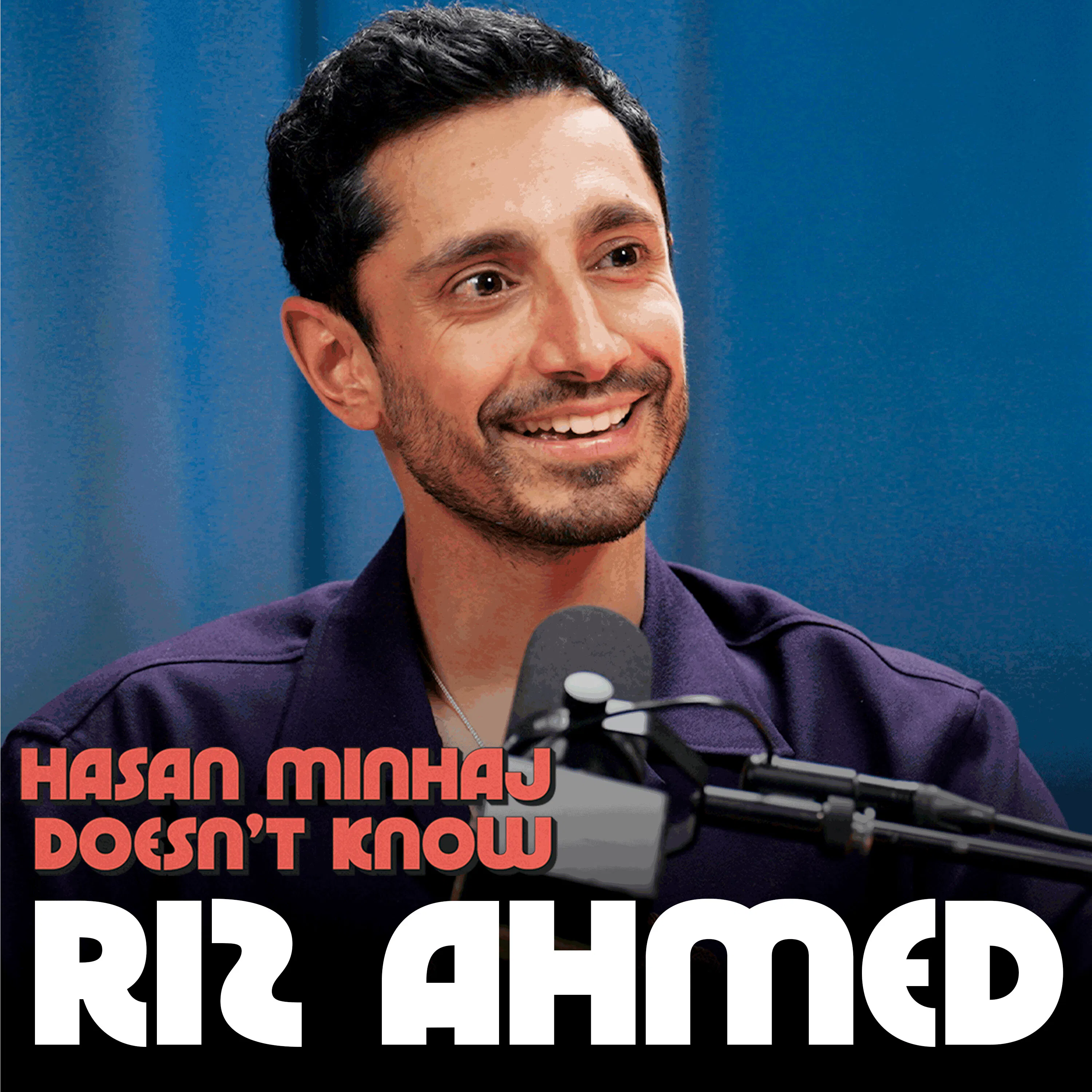
Checking how your family's doing. Brought to you by ZipRecruiter. Riz Ahmed is the most talented person I know. He is a legit polymath. He went to Oxford. He could have done anything. But he just happened to choose to be an Emmy winning actor and a critically acclaimed musician. Dude, he's even got a Star wars action figure of himself. My man is a choking hazard for children under three. And now he has created his first television series for Amazon called Bait. The show is awesome fun Fact, the co creator of Patriot act and this show, HMDK prashanthakaramanajam, was a writer and producer on Bait. Now, Prashant wasn't in Star wars, but he was in a college a cappella group called Chi Town. Prashant did this in college. I sat down with my buddy Riz to talk about representation.
- [02:34]
Riz Ahmed
Representation within a broken system means nothing. There's no point being in a room if the room just changes you.
- [02:41]
Hasan Minhaj
The difference between American MAGA and British maga.
- [02:43]
Riz Ahmed
The big difference is our racist people have less guns, which is great and
- [02:47]
Hasan Minhaj
why he used James Bond as a narrative device for this new show, Bait.
- [02:52]
Riz Ahmed
Jordan Peele said when he made get out, he said, being black in America is like being in a horror. My take is that being brown in the west is kind of like being in a spy thriller.
- [03:00]
Hasan Minhaj
But we are going to kick things off by taking a closer look at Riz's acting superpower. Quiet intensity. Riz, what do you think your greatest quality is?
- [03:25]
Riz Ahmed
My greatest quality is I hope. I hope is that I'm a good dad.
- [03:32]
Hasan Minhaj
No, your superpower is your quiet intensity. You know what I'm talking about.
- [03:40]
Riz Ahmed
You know what you're talking about.
- [03:41]
Hasan Minhaj
That's what I'm talking about. That's what I'm talking about. That's what they pay the big bucks for. Now, we're gonna play a game, okay? I am going to give you four emotional prompts, and you are going to respond to each of these prompts with the same line. I think these avocados have gone bad. Repeat the line back to me. Are you aware of the line broke? Yes. I got it.
- [04:06]
Riz Ahmed
I've got it.
- [04:06]
Hasan Minhaj
I've got it. I have to put you through four scenarios just so I know that you've memorized it.
- [04:10]
Riz Ahmed
I got it.
- [04:10]
Hasan Minhaj
I got it. Okay, let's go. You suspect your girlfriend has cheated on you, but you're not sure. As she comes into the kitchen, you turn to her and you say, I
- [04:18]
Riz Ahmed
think these avocados have gone bad. No, man, stop, bro.
- [04:23]
Hasan Minhaj
Don't. This is not gonna be.
- [04:25]
Riz Ahmed
What do we take?
- [04:25]
Hasan Minhaj
No, no, let me give you the other one.
- [04:26]
Riz Ahmed
Okay, good.
- [04:27]
Hasan Minhaj
Come on. This is not your audition for Bodhi where you put the tie on your head and all this did it.
- [04:30]
Riz Ahmed
I did so many takes of it.
- [04:31]
Hasan Minhaj
All right. Hey, hey.
- [04:32]
Riz Ahmed
Hello.
- [04:32]
Hasan Minhaj
You're a serial killer with your victim tied up, helpless in your basement.
- [04:37]
Riz Ahmed
Fucking hell.
- [04:38]
Hasan Minhaj
As you go over to your rack of torture instruments, you grab a drill, you hold it to their head, and you say,
- [04:49]
Riz Ahmed
I think These avocados have gone bad.
- [04:57]
Hasan Minhaj
You're a doctor.
- [04:58]
Riz Ahmed
Yeah.
- [04:58]
Hasan Minhaj
And you have to give your patient, who is also your father.
- [05:01]
Riz Ahmed
Oof. Love this scenario.
- [05:03]
Hasan Minhaj
The news that he has one week to live.
- [05:07]
Riz Ahmed
Oh, my God.
- [05:08]
Hasan Minhaj
You put your hand on his shoulder, you look at him and you say, humble.
- [05:18]
Riz Ahmed
I think these avocados of gompa. Yeah, right. That one's.
- [05:29]
Hasan Minhaj
Let's set the table. Because a lot of people don't know this. There is a big difference between South Asian diaspora in America.
- [05:35]
Riz Ahmed
Yeah.
- [05:36]
Hasan Minhaj
South Asian diaspora in the uk.
- [05:39]
Riz Ahmed
Yeah.
- [05:39]
Hasan Minhaj
First things first. How long have South Asians been in Britain? How long have you guys been in?
- [05:46]
Riz Ahmed
Hundreds of years. Hundreds of years. Yeah. So obviously Britain's relationship with South Asia goes way back, you know, because of colonialism and that whole thing. Yeah. So you had. I mean, actually Interesting, interesting. There's a take. You know, Wuthering Heights is out at the moment. Wuthering Heights, my hot take. One of the best Bollywood films I've seen.
- [06:04]
Hasan Minhaj
What's that?
- [06:04]
Riz Ahmed
Why, it's basically a Bollywood film, bro. There's like music, there's Nartak, there's like dancing. It's a love story. It's like, oh, it feels like a Dev Das kind of vibe. That's my take on it.
- [06:13]
Hasan Minhaj
Okay.
- [06:14]
Riz Ahmed
So I enjoyed it on that level. But you know, Heathcliff is described as like dark skinned and swarthy. Is swarthy Loki Offensive?
- [06:22]
Hasan Minhaj
I don't even know what that means.
- [06:23]
Riz Ahmed
Yeah, it's offensive. We're having people. But he's described in the book as like dark skinned and possibly of gypsy extraction and all this kind of stuff. And that's part of the whole taboo of what Catherine shouldn't be getting with him. A lot of like literary kind of, you know, academics and people and historians look at it and go like, he was an Indian sepoy. He was basically an Indian sailor or something. You know, there was that colonial connection and that's actually. And so you had people in the uk, Dalula caste, about hundreds of years. I think the first Indian member of Parliament was in the 1800s. So, yeah, it goes way back. You know, the founders of India and Pakistan, they themselves went to Oxford and Cambridge. Fact check me if that's wrong. And so I've been there for a minute. But I would say the big kind of migratory push was happening after World War II. You know, Britain was a decimated country and needed to rebuild itself. And so it invited people from its colonies, from the Caribbean, from South Asia to come and help and please rebuild the country. And There was this kind of narrative that, like, actually that's the homeland, like, as people who live under empire, like, Britain is the mothership. So there was this kind of really blended sense of identity, for better and worse, that, like, Britain is home, even though I've never been there. And so it was Post World War II, and you started having a very working class community coming in primarily to help work in factories, to help build the infrastructure, you know, to literally rebuild Britain, you know, and similarly from the Caribbean as well. And that continued. It was spiked again in the 70s. My family came there after the big kind of cyclones in Bangladesh, after the Indo Pact war, after dictatorship and the Cold War started taking root in South Asia. You have more and more people coming. So my family got there in the 1970s, from what I understand. Obviously you've had like Punjabi Mexican marriages, you know, people building railroads in California and stuff like that in America or for a long time. But the bigger migratory push was more 80s, 90s, that kind of thing.
- [08:23]
Hasan Minhaj
So we had Chinese Exclusionary Act. So a bunch of Asian people came then in 1882. They were like, get out. All y' all gotta go.
- [08:30]
Riz Ahmed
Yeah, yeah.
- [08:30]
Hasan Minhaj
Then 1964, I remember, like, I was there. Yeah, yeah, yeah. Civil Rights Act. 64, that's signed by Lyndon B. Johnson. A lot of the work of the civil rights movement then that brings over a bunch of highly educated.
- [08:43]
Riz Ahmed
And that's the big difference in races. Because I think the bar for migration, if you were South Asian in America was basically, you have to have like a master's or a PhD or something. So I remember coming here. I start coming here like 2012, shooting the pilot of the Night Of. I'm hanging out with people who's like, yeah, my mom is a professor. I was like, what? And just seeing this and the. The suburban kind of thing and the. And it was interesting to me. I think in the UK there's a lot more similarity. Of course they're different. I'm not flattening the experience at all. So different in so many ways. But being of Afro Caribbean descent and being of Indian or Pakistani or South Asian descent, there were a lot more similarities to that. So that kind of civil rights struggle, if you want to call it that, it took place arm in arm. It's a lot more adjacent, right? Whereas over here it's like, nah, yes, that is not the same.
- [09:37]
Hasan Minhaj
No, segregated.
- [09:38]
Riz Ahmed
And again, I'm not saying it's the same there, but very different. It's kind of the immigrant experience kind of happened in one kind of in A bigger rush post World War II over there.
- [09:48]
Hasan Minhaj
I want to do a compare and contrast. What does the Rishi Sunak moment mean politically, the Sadeq Khan moment mean politically in the UK for the South Asian diaspora? And then what does a Zoran Mamdani moment mean for the South Asian diaspora in the us? How do these compare and contrast? How are they similar? How are they different?
- [10:04]
Riz Ahmed
It's an interesting question. You know, look, I mean, I think that have there been brown politicians before in the UK that are prominent? They have. But a mayor of London, a prime minister, that is, of course, significant. I think what's more interesting than their brownness, and I think this is where the representation conversation kind of becomes a bit defunct, is that representation in and of itself means nothing. Right. It's what are you representing? Right. And I think what was so kind of groundbreaking and interesting and beautiful about Zoran's win is that is the kind of he did not step into politics in a way that was deracinated, in a way that maybe Rishi Sunak did. He did not step in in a way that was apologizing for his brownness in a way that was pandering to kind of anti brown or anti Muslim sentimen. That I think is really significant. I think that's also something significant with Sadiq Khan. But yes, I mean, by comparison, like, I guess you're right. We've had a Muslim man now for a very long time in the uk in London, which is, you know, our biggest city. I think what is also interesting to me is like, how both of these guys are, like, facing so much kind of racism, backlash, criticism, and in particular, this is really hilarious meme that's like Big on YouTube and on Instagram, which is. What's the meme? London's been taken over.
- [11:20]
Hasan Minhaj
Oh, yeah, right.
- [11:22]
Riz Ahmed
Here I am. I'm here with security. We're walking around London like you're on safari or something.
- [11:26]
Hasan Minhaj
Yeah.
- [11:27]
Riz Ahmed
Like, you got to turn up strapped. Like, bro, a policeman carry sticks, bro. Take them out with a slingshot, like. And so they've got this whole thing where. Where London's been taken over. Yeah. And like, yeah, Sharia law and it's dangerous. Sadiq Khan's London mate, he said Saliba. Actually, violent crime in London is an all time low. An all time low. But of course, that's not the interesting talking point. So in the same way that Zoran has become a lightning rod for Islamophobic narratives in the States, Sadiq Khan has in the uk. What's meaningful about Those and how that's really different to the Rishi Sunak moment is what are they representing? You know what I mean? Representation within a broken system means nothing unless you're going to try and change that system. You know, there's no point being in a room if the room just changes you. And I think that's what Rishi Sunak represented to me and a lot of people. Now having said that, there are a lot of very right wing leaning, you know, like Republican voting South Asians, that kind of thing.
- [12:23]
Hasan Minhaj
Oh, brown.
- [12:24]
Riz Ahmed
So I'm sure like for some, some conservative voting South Asians, that was a big moment for them. But actually to me it showed like how limiting it can be to talk about representation as an end in itself. Representation is only useful to have a seat at the table if you're going to change up what's on the table. And I think that's what Sadiq has done. That's what Zoran's promising to do.
- [12:43]
Hasan Minhaj
So. So we also have brown MAGA here. You guys clearly have brown MAGA there.
- [12:49]
Riz Ahmed
Well, actually, the change.
- [12:50]
Hasan Minhaj
But your MAGA dresses better than our Maga.
- [12:53]
Riz Ahmed
Think, bro.
- [12:54]
Hasan Minhaj
The MAGA here, they're wearing fucking Athleisure suits. It looks like they shrunk their suits and the goddamn drive.
- [12:59]
Riz Ahmed
How does all MAGA dress?
- [13:01]
Hasan Minhaj
Nigel Farage is a well dressed person. He's a bigot, but he's well dressed.
- [13:05]
Riz Ahmed
You think he's got feces, bro, you can fix.
- [13:07]
Hasan Minhaj
Let me just say this about Republican racism. You know, it used to be in a 44 regular well tailored suit with a perfect peak lapel. Now these goddamn losers are wearing these Lululemon athleisure. Untuck it.com Hate Me dress for the occasion. Yeah, these Cole Haan fucking. And by the way, I was sponsored by Cole Haan and I appreciate the money, but these Cole Haan like fucking. I'm at the airport. You can wear it to the airport and the golf course. Like bigotry needs to be refined. What? We used to be a country, right?
- [13:39]
Riz Ahmed
Yeah, yeah, yeah, I guess. I mean, yeah, that's one thing that people do say about.
- [13:42]
Hasan Minhaj
But. But your MAGA does dress Fascism.
- [13:45]
Riz Ahmed
Fascists traditionally used to dress very well, didn't they? Extremely well. They used to dress totally.
- [13:50]
Hasan Minhaj
That should be the new Met gallery OG Fascism. Just to be like, all right, here we have.
- [13:54]
Riz Ahmed
They turned up.
- [13:55]
Hasan Minhaj
No, their collars were on point. The tailoring was on point.
- [13:58]
Riz Ahmed
I have no part. I'm not co signing this, any of this. I'm not.
- [14:01]
Hasan Minhaj
Because he's Invited. I'm not.
- [14:04]
Riz Ahmed
Fascism fashion.
- [14:05]
Hasan Minhaj
It would be really funny though, if they're just like, I'm dressed as Mao. Chairman Mao. You know.
- [14:09]
Riz Ahmed
It's true. Yeah. He had a good look.
- [14:11]
Hasan Minhaj
Nehru collar. There's a lot of like.
- [14:13]
Riz Ahmed
Yeah, yeah, yeah, you're right.
- [14:14]
Hasan Minhaj
They were at least well dressed is what I'm saying. What is the difference between the right wing movement there and the right wing movement here? Is it also a proto fascist movement there? Is it. What are the similarities and differences?
- [14:24]
Riz Ahmed
There's a lot of similarities. And they're talking about replacement, the great replacement theory and all that. It's about anti migration. A lot of it's about the lightning rod of Islamophobia. A lot of it's taking place along the backdrop of, like, Western economic decline and rising inequality. I think that's a lot of the similarities. The big difference is our racist people have less guns.
- [14:45]
Hasan Minhaj
Okay.
- [14:45]
Riz Ahmed
Which is great. Which is really lucky. Which is really good.
- [14:50]
Hasan Minhaj
They're not strapped well.
- [14:51]
Riz Ahmed
Yeah. I mean, they get to spend that money on their outfits.
- [14:54]
Hasan Minhaj
Okay.
- [14:54]
Riz Ahmed
They made that decision. Yeah, yeah, exactly. So they look dangerously fashionable.
- [15:00]
Hasan Minhaj
Okay.
- [15:00]
Riz Ahmed
But they won't kill you as quickly.
- [15:03]
Hasan Minhaj
Gotcha.
- [15:04]
Riz Ahmed
So I think that's the big difference. I also kind of feel like there is a thing now with American. The American right wing, where it's just like cartoonishly brazen. Right. You know what I mean? It's just like the things you read, the tweets you read. It's like. It's like WWE wrestling or something. You know what I mean? Whereas I think there is still an attempt often to try and dress up British racism as, like, polite common sense.
- [15:33]
Hasan Minhaj
There's a decorum to it.
- [15:34]
Riz Ahmed
Yeah, exactly, exactly. So. And that's one thing that, that, you know, you could say for better or worse, is that, like, Americans are much more in your face about what they think, and the Brits kind of like, you know, kill you with a smile.
- [15:49]
Hasan Minhaj
Yeah.
- [15:49]
Riz Ahmed
So I think that's a slight cultural difference, but I think actually what we're seeing is like startlingly similar playbook and narratives taking root everywhere from, like India to the US the UK to Hungary to France. Yeah. You know what I mean? It's like the same couple of talking points like xenomophobia. It's like gender. Right. The gender war.
- [16:10]
Hasan Minhaj
And the country's changing immigration.
- [16:12]
Riz Ahmed
Yeah, exactly.
- [16:13]
Hasan Minhaj
The UK is a dead empire and the United States is a. I mean, it's an Instagram country. I told you this, that you live in an Instagram country. So there's like Instagram Countries where you bring your girlfriend, you pull up with bae, you take photos, you whisper in castles, and you keep it moving. It's an Instagram country. You know, France is an Instagram country. Hungary is an Instagram country.
- [16:34]
Riz Ahmed
Do you think, why isn't America an Instagram country? I mean, their interest, like, with the yellow taxis and they're like, I'm walking around today going, like, when is, like, Rachel and Ross gonna, like, pop out of the next corner?
- [16:46]
Hasan Minhaj
No, there's too many potholes. It just looks like too many potholes. It's too shitty here. Yeah.
- [16:50]
Riz Ahmed
Okay.
- [16:50]
Hasan Minhaj
It's not aesthetically pleasing, but we are. So you come from a dead empire. This is a dying empire.
- [16:55]
Riz Ahmed
Yeah.
- [16:56]
Hasan Minhaj
The United States. We're here. We're on our deathbed. We're coding. We're about to die of cardiac arrest. As someone who is living in the future and has lived through the future, what do we have to look forward to as we see the light?
- [17:08]
Riz Ahmed
Well, you have to look forward to is a lot of people claiming that they can bring the empire back to life by doing increasingly stupid stuff like Brexit. So, like, you know, the fantasy of empire doesn't leave just because the reality of it has left. You know, it's that that mythology is so intoxicating and powerful, you know, and honestly, the idea of, like, we once were great and we're gonna get back there again, it's kind of something that has haunted so many civilizations again and again, you know, like the periods of the Roman Empire, about trying to get back to where we were before or, you know, this kind of, like, revivalism, I think, is. Is like a big. Is a big part of the politics of denial, you know? So I kind of think that the reality of Empire, arguably, is dying. Arguably may already be dead. The more forceful you have to be to control your empire, the more shaky your control is over it, probably. Right? So I kind of think that actually that the narrative of Empire will remain and may actually become even more strident. And so the actions to try and shore that empire up, it's like, you know, smallest kid in the club. Like, it's the small guy outside the club at 3am 3am you've got to be worried about. Right? It's like that kind of overcompensatory thing. So I think we're gonna see more bombing of more countries, and I think we're gonna see more of this kind of, like, beating of the war drum, more posturing, more grandiose narratives. The more the reality is kind of sliding away from that, because it's like it's clutching desperately. Something that's slipping through your fingers. There's that to look forward to.
- [18:45]
Hasan Minhaj
So it's gonna get worse?
- [18:46]
Riz Ahmed
I think so. I think so. I think.
- [18:48]
Hasan Minhaj
Oh, man. The worst is yet to come.
- [18:49]
Riz Ahmed
Yeah.
- [18:51]
Hasan Minhaj
Hey, let's talk about the new show, Bait. Amazon. Let's get it. March 25th. Streaming now. You pitched me Bait at Swingers Diner in West Hollywood. You acted out the entire series.
- [19:01]
Riz Ahmed
I did, yeah.
- [19:03]
Hasan Minhaj
He basically did an interpretive monologue to me at Swingers.
- [19:07]
Riz Ahmed
It's true.
- [19:08]
Hasan Minhaj
Yeah.
- [19:09]
Riz Ahmed
Do you have talisman? You invited me to this Swingers Diner place, and you're like, man, the smoothies, the sundaes, the ice cream, the pancakes, they're amazing. And we sit down and they go like, hey, what are you having? And I'll go, oh, man, I'll have to like, I'm in America. Screw it. I'll have the pancakes with the ice cream and a sundae. And you go to. You and you're like, ice water, please. It's like, what the hell is that, bro? You set me up, man.
- [19:29]
Hasan Minhaj
Set you up? I did set you up. I did set you up. I was like, let's get wild.
- [19:35]
Riz Ahmed
Business.
- [19:35]
Nicole Kidman
Yeah.
- [19:36]
Hasan Minhaj
I let you take the first bite of sense, but I got an Oreo shake. Stop capping, bro. I got an Oreo shake to cap it off. No, whip. They know what it is. I go there all the time. It's my favorite kick it to go to. But anyways, you pitched it to me real quick. I'm not gonna have you do the full because it was incredible. You actually did the cold open of the pilot all the way to the end. I'm not gonna have you do that, but it was pretty amazing.
- [19:57]
Riz Ahmed
It saved people a couple of hours, wouldn't it? Yeah, just did it.
- [20:00]
Hasan Minhaj
Yeah. But what is the premise of Bait?
- [20:03]
Riz Ahmed
The premise of Bait is there's this kind of out of work British Pakistani actor who somehow gets through to auditions to be the next James Bond. And when word gets out that he might be the next Bond, people have some very strong opinions about it. So much so that his life starts to resemble the spy thriller he's auditioning for. So, you know, like Jordan Peele said when he made get out, he said, being black in America is like being in a horror. That's why I made it. My take is that being brown in the west is kind of like being in a spy thriller. Right. Against your will. And. And so I wanted to use that wheelhouse, use the world of Bond Use the world of, like, paranoid spy thrillers to actually do, like a comedy. It's about how life always feels like one big audition. I think that that's like something. Something that people can relate to even if they don't audition for a living. You know, we're constantly trying to project this version of ourselves. It's in control, successful, desirable. But behind that beautiful, you know, Instagram photo is like the panic attack and the loneliness and the anxiety. So it's about that gap between how we want to be seen and who we are.
- [21:05]
Hasan Minhaj
Right.
- [21:05]
Riz Ahmed
And I've told it in this playground of the world of Bond and it's out of work actor.
- [21:10]
Hasan Minhaj
Do you remember the original seed of the idea? Is it true that it came from Chris Morris?
- [21:17]
Riz Ahmed
That's such a funny thing you should say. It didn't come from Chris Morris. But here's the thing. So I had been kind of scribbling down ideas for about 10 years.
- [21:27]
Hasan Minhaj
Yeah.
- [21:28]
Riz Ahmed
And those ideas were all about, like I was saying, that gap between how life really is and how it's seen. Let me give you an example. When I. When it got announced I was in Star wars, right? People texting me like, bro, you've made it. You're blowing up. You're killing it. And what people don't realize is you're in a Hollywood movie. You still have to do your own laundry, right? Right. So what's happened is we've got a water leak, washing machine's broken, haven't got any clean clothes. So I head out to do my laundry in a massive laundry bag full of dirty clothes.
- [22:00]
Hasan Minhaj
You headed to the laundromat?
- [22:01]
Riz Ahmed
Pink swan. Shit. Pink swim shorts, bright green puffer jacket, flip flops. Only clothes I have. I tried to wash my sneakers as well. Stupid idea. On my way, I realized my brother's birthday. I haven't got him a cake. I head in to Tesco's, which is our local supermarket. I think, let me get him a birthday pizza. Pizza that he likes. I forget to beat the pizza properly on the self checkout. They think this is the world's worst shoplifter. They thought you shut up. Yeah. He's like, this guy's not well. You know, the way he's dressed and he's doing this whole thing and he's rushing around, I need a pizza. I need a birthday candle for a pizza. You know, it's a bizarre order. I'm trying to check out the candles of pizzas and they catch me and they're like, hey, you're shoplifting. And I'M like, no, I'm not. And I'm late. And also I've got to do my laundry and I've got water leak. I'm seeing.
- [22:47]
Hasan Minhaj
Right, right. You're in swim trunks in a puffer. And you're like, why would I shoplift?
- [22:49]
Riz Ahmed
Yeah, exactly.
- [22:50]
Hasan Minhaj
I totally have.
- [22:51]
Riz Ahmed
And then they basically the situation devolves to me kind of basically on my two hours sleep trying to deal with his leak, going, dude, I'm not shoplifting. I'm in Star War. And they're like, he's definitely crazy. You're banned. Yes. We're gonna call the police if you ever come back to Tesco's. That was the reality. Okay. The perception is like, I'm on a yacht with Han Solo.
- [23:11]
Hasan Minhaj
Right, Right. Yeah.
- [23:12]
Riz Ahmed
And I just started writing up these examples and so it grew out of that, but shaping it into this version of this story through the prism of James Bond. That happened when I connected with my co. Showrunner. Ben Carlin is incredible, super experienced writer on the. What's it called? The. The show. Jon Stewart Show, Colbert Report, bro.
- [23:32]
Hasan Minhaj
He's right here. Are you getting this wrong?
- [23:34]
Riz Ahmed
I don't know.
- [23:34]
Hasan Minhaj
What the hell are you this up? He's it up. Can I tell you something about American Emmys?
- [23:40]
Riz Ahmed
They are all. Jesus. They are all called the Tonight Show.
- [23:44]
Hasan Minhaj
Every single one of your shows.
- [23:46]
Riz Ahmed
Tonight with Jay Leno, tonight with James, Jimmy Fallon, brother. There's a lot of Tonight.
- [23:52]
Hasan Minhaj
Have a little bit of respect. It's the Tonight show and it's the Late Show.
- [23:55]
Riz Ahmed
There's a difference. Okay? The Late show, the Tonight Show.
- [23:57]
Hasan Minhaj
These are different parts of the.
- [23:58]
Riz Ahmed
Listen, bro, give the man his flowers. You're screwing this whole bit up.
- [24:01]
Hasan Minhaj
All right?
- [24:02]
Riz Ahmed
Okay.
- [24:03]
Hasan Minhaj
Do you want me to set this up properly? Look, you gave it an interview in GQ in 2018. You were in an iconic movie called Four Lions, which is huge in the diaspora. Basically, the premise of four lines. You should watch this movie. You probably haven't seen the movie, but if you're brown, you've seen the movie. Premise of four lines is a bunch of dudes try to join Al Qaeda, but they're too stupid to join Al Qaeda.
- [24:19]
Riz Ahmed
I see a lot of white people's favorite movie as well.
- [24:21]
Hasan Minhaj
Oh, really?
- [24:21]
Riz Ahmed
In the UK it's like, it's like a cult classic in the way that I don't know what you guys have, like Napoleon Dynamite or something. It's like a lot of people is like, it's my jam.
- [24:29]
Hasan Minhaj
Got it.
- [24:29]
Riz Ahmed
So it's. It's a.
- [24:30]
Hasan Minhaj
So it's a Sunday School classic here in America. Like if you went to Sunday school together, like Juicy Four Lions, like, it's a very subversive comedy. But Chris Morris, writer, director of Four Lions, tried to convince you to do it then. This was written about in a GQ interview. Now, brother, look, I don't always trust interviews, okay? But you tell me if this is true. He's still worried about starring in it until Morris put it like this. This is a step towards a brown James Bond. And suddenly Ahmed says he got it.
- [24:55]
Riz Ahmed
This is so impressive. Can I tell you something? I thought finally, if you're doing a podcast, you could finally leave the whole PowerPoint thing behind. Never.
- [25:05]
Hasan Minhaj
Never, bro. But even doing a podcast, no, never.
- [25:07]
Riz Ahmed
My guy's got a PowerPoint thing going on. It's what's happening. It's amazing. It's very impressive.
- [25:13]
Hasan Minhaj
Well, what's interesting is how this connects to Babe.
- [25:15]
Riz Ahmed
It is very interesting because really, what is James? And this is what Chris meant by this. This. I said, I don't want to play a terrorist. I don't be doing that kind of stuff. I want to be playing lead relatable roles that people can relate to. And he said, this is a step towards brown James Bond. And what he means by that is these characters, despite their misguided political views or the background will be characters you are rooting for. And. And so it was, it was. That was definitely maybe somewhere in my subconscious. And so like, it wasn't like four lies led to bait. But I guess the similarities are. This is that you're rooting for an unusual kind of character. And also the style of humor, the comedy, the fast paced kind of.
- [25:55]
Hasan Minhaj
Right.
- [25:56]
Riz Ahmed
Witty British kind of sweary kind of thing.
- [25:58]
Hasan Minhaj
But in that moment, did what he was. Did that seem tantalizing in the early aughts of like.
- [26:05]
Riz Ahmed
Right.
- [26:05]
Hasan Minhaj
Hey, man, if you do being James
- [26:06]
Riz Ahmed
Bond, you could, you could, you could
- [26:08]
Hasan Minhaj
be number one on the call sheet. This is your path to.
- [26:11]
Riz Ahmed
Right. Yes. No, I didn't ever think that I would actually be James Bond by doing four lines. Quite the opposite. But I did think that he had a point in that. If you want to play characters that are relatable and a wide section of the audience can root for and not be kind of othered in the stories. That doesn't mean you shouldn't lean into the specificity of who you are. You know, I'm trying to say there's two ways of trying to like, connect with audiences. One is like, I'm Bob. I'm playing a character Named Bob. I'm Dave. Let's not talk about my background or anything. Let's just. It's just gonna be random. It's gonna be like we're not even talking about it. The other part of it is like what Cool is doing, you know, what Cooler and Michael B are doing. We're lean into the specificity of our identity, our heritage, our culture. But it just slaps and it's like. And so people will relate to the specificity of it. So I think that's something that I took with me and I think Bait is that show that is both very, very specific. I mean we literally filmed it in the neighborhood I grew up in the park where I first held hands with a girl. And first time I got jumped, that literal park, that staircase is in the show. The first time I had a panic attack when I was about to go on stage to do a club. We restaged that exact scene in that exact venue in North London, kennewichtown Forum. And so much of it is leaning into the specificity and the feedback I've got is people just finding it very relatable on an emotional level.
- [27:34]
Hasan Minhaj
I loved it, bro.
- [27:35]
Riz Ahmed
So I had all these ingredients of these kind of crazy stories. But what made it coalesce together and, and tell a story through the prism of James Bond was when I connected with my co showrunner, Ben Carlin, his incredible experience, writer, showrunner, multi award winning Don. And he, when talking to him about my life and talking about some of those juxtapositions, talked about how my name had been mentioned in relation to James Bond a couple of times and potential casting and press and whatever.
- [28:00]
Hasan Minhaj
Right.
- [28:00]
Riz Ahmed
And he was like, that's it, that's the, that's, that's, that's the symbol of aspiration, success, manhood, desirability that this character needs to be chasing. Because we're telling a story about a character who wants to be seen in this way. Yeah, but he actually feels like this.
- [28:16]
Hasan Minhaj
Right.
- [28:17]
Riz Ahmed
It couldn't be more different. So James Bond is, is a really useful archetype to explore that journey of really, of self love and needing self love.
- [28:25]
Hasan Minhaj
So to me, the series really grapples with paradox. And I feel like your work is at its best when it does that. It's not giving these hard answers in the west, in America there's very much of like, what is the answer to this? How do we exactly stop this? How do we stop capitalism? How do we stop imperialism? And what you've done brilliantly on the show is you in each episode Unpack Different Paradoxes. Episode one. The rumor leaks that Shah's gonna be the next James Bond.
- [28:56]
Riz Ahmed
Or that he's auditioning.
- [28:56]
Hasan Minhaj
That he's auditioning to be the next James Bond. Shah's father says something. He drops a bar. That I think is the ultimate first paradox.
- [29:03]
Riz Ahmed
Call me if you need a body double. For sex scenes.
- [29:05]
Hasan Minhaj
For sex scenes. That's the first one, which is yo. Lot of brown horn dogs out there for older men that still think they got lead in the pencil. Love that, love that joke. Let's put that on the shelf. But the one that I really love that you dropped in the trailer that a lot of people I don't think are. Let's double click on this one is Yun Ki Mulkey. This is their country. Yeah. At all.
- [29:26]
Riz Ahmed
Don't provoke them.
- [29:27]
Hasan Minhaj
Don't provoke them. Don't. Don't bother them.
- [29:31]
Riz Ahmed
You know, I sometimes think maybe my dad was right with that because he did say that to me.
- [29:35]
Hasan Minhaj
Well, that's the first paradox, which is, do you dream big? Do you go for it? Or it's like, hey, look, if I do that.
- [29:42]
Riz Ahmed
Keep your head. Yeah, because our parents. Keep your head down. Keep your head down. Or they're going to throw us out. And our generation was like, they're going to throw us out. This is my country. I'm born here. And, you know, we're part of the fabric of this. Even before we even got to this country, we, you know, our blood and soil and toil built this place in, you know, in Empire. And like, there's an argument to say that, like, the prominence of our stories, the strident tone of our desire to have a seat at a table, the unapologetic nature of our culture and our self expression is part of what we are seeing, this big right wing backlash against. Right. That actually is. And you see that, I guess, you know, with the. When people are getting, you know, oh, look who they cast for the Little Mermaid. Look at the cast in Cinderella. You know, you see all this kind of stuff. People just like these archetypes, these cartoon characters are like, mean so much to them. They feel like they're symbols of their primacy. Right. And so there's an argument to say that, you know, our parents were right in a way is like trying to aim higher and trying to act like you belong there. And it's your table as well. Of course you can have a seat. That that ends up creating backlash and provoking them. Does that mean we shouldn't do it? No, of course it doesn't. Mean we shouldn't do it. It doesn't mean, like, you know.
- [31:08]
Hasan Minhaj
No, it's tricky, bro. So I was watching the Martian. This is.
- [31:10]
Riz Ahmed
Both those things are true. Yeah.
- [31:12]
Hasan Minhaj
Was watching the Martian, and my dad walked in, he got super mad, and he just basically said, why are you watching this? They're not sending brown people to the. First of all, I think he wasn't on the moon. I think he was on Mars. He's on another planet. But I take Najmi's point. He's like, what the fuck are you. Why are you thinking about this?
- [31:26]
Riz Ahmed
What did he want you to watch?
- [31:27]
Hasan Minhaj
What do our dad want us to watch? If our dads could, like, Na' Vi connect to the fucking news. They are. They have. They are. The news is fried their brain. The news in WhatsApp, bro, it's like this to their brain. Yeah. Na' Vi style. They just plugged right in.
- [31:42]
Riz Ahmed
Navi style. And as you watch Indian news, ztv. Indian news, ndtv. Yeah, that's it. Yeah. Is that so?
- [31:51]
Hasan Minhaj
It's an interesting thing. Meaning. But I got into this argument with him. It's simultaneously sad and real. He is right. Like, what the. They're not trying to. This. This kind of Chris Nolan interstellar narrative is not. Does not include Bengali immigrants in it. Respectfully. Right. This sort of like, hey, time is my greatest challenge. I'm going to bend time. That's the greatest. Like, bro, we have real challenges. What are you talking about? Like,
- [32:20]
Riz Ahmed
if stories didn't matter, then people wouldn't try and censor them. If stories didn't matter, then stories would not be banned or they would not be considered subversive. We would not give them the attention that we do. Yes. Part of why we give stories attention is part of, like, kind of distract people, entertain people, numb people. That's that. I'm gonna call that entertainment. I'm call that art, you know? But a lot of, kind of the reason why we do is because inbuilt to us is like, we have a reverence for story because it's how we make meaning out of our reality, you know, and the weighting that we give to different characters in stories. Or.
- [33:01]
Hasan Minhaj
So you believe Nicole Kidman, huh? You believe Nicole Kidman?
- [33:05]
Riz Ahmed
Mostly. Why? What you do, man?
- [33:06]
Hasan Minhaj
You know what I'm talking about. Play the cold Kidman.
- [33:12]
Nicole Kidman
We come to this place for magic. We come to AMC theaters to laugh, to cry, to care. Because we need that.
- [33:24]
Hasan Minhaj
Yeah.
- [33:24]
Nicole Kidman
All of us.
- [33:25]
Hasan Minhaj
Of course we do.
- [33:26]
Nicole Kidman
That indescribable feeling we get.
- [33:28]
Hasan Minhaj
Yep.
- [33:29]
Nicole Kidman
When the Lights begin to dim.
- [33:30]
Hasan Minhaj
AMC 16 or 25 here in Manhattan.
- [33:33]
Nicole Kidman
And we go somewhere.
- [33:34]
Hasan Minhaj
Here we go with nap.
- [33:36]
Nicole Kidman
Never been before. Not just entertained.
- [33:39]
Hasan Minhaj
Not just entertained.
- [33:40]
Nicole Kidman
Reborn together. Dazzling images.
- [33:44]
Riz Ahmed
Nicole took all my talking points. I got nothing for the rest of this podcast. Honestly. This is like my. This is the bit that I do.
- [33:51]
Nicole Kidman
Heartbreak feels good in a place like this. Our heroes feel like the best part of us. And stories feel perfect and powerful.
- [33:59]
Riz Ahmed
I've got a take on this. Yeah.
- [34:01]
Nicole Kidman
Because here.
- [34:02]
Hasan Minhaj
Don't interrupt her.
- [34:03]
Nicole Kidman
They are AMC theaters. We make movies better.
- [34:10]
Riz Ahmed
That's amazing.
- [34:10]
Hasan Minhaj
Wow.
- [34:11]
Riz Ahmed
Thank you, Nicole. She's got bars for days. So here's what I'd say. Stories do matter, but representation is not an end in itself. You know, there's like this. This. This kind of. There's this theory of media. I think it's like Herbert Marcuse or someone like that I'm probably misquoting. But this idea that, like, actually, in order to maintain control of a society, you need to have kind of tokenistic representation of marginalized groups right within it. To feel like they've got something and actually there's something they have is meaningless. It's like a Marxist kind of, like, critique of, like, liberal media. Right. Like, we're going to represent all these different points, give them a couple of these shreds. Exactly. The structures which you are creating in are still oppressive, they're still corrupting, they're still capitalistic, they're still unequal and all that kind of stuff. Now, that is partly true, but that's also not accounting for all the stories we're telling outside of those systems. You know, stories matter. Not just like when you go to see them at AMC theaters, they matter. The stories you tell your kid, they matter. The stories you've inherited, they matter in books, they matter in regional theater. The stories, I'd say, are bigger than just, like, corporate Hollywood, necessarily. Right. I'm not going to kind of tie the value of storytelling purity to that arena, but even within that arena, of course it's meaningful having, you know, sinners up there smashing it in that way. Of course it's meaningful having Black Panther in that kind of way. And that's because. And again, I say it's not an end in itself, but that's because of what it inspires. How it inspires people to see themselves differently and see other people differently. I do think that what stories do and what our role as storytellers is is to constantly expand the scope of who is considered human and what is considered human. I think stories matter. For all those reasons, right?
- [35:58]
Hasan Minhaj
Yes.
- [35:59]
Riz Ahmed
But what excites me more now, rather than having a seat at the table, is building my own table. Right. And that's what Bait is for me. That's what Hamlet is for me. That's what, you know, building my company is. I guess, like, I. I came into this kind of feeling like, you know, I want to stretch. I want to stretch culture.
- [36:17]
Hasan Minhaj
Yeah.
- [36:17]
Riz Ahmed
Really, that's what I think stories have the ability to do, Like I said, expand the scope of who and what is considered human. I want to stretch culture. And before, I thought that was mainly about, like, me just popping up as Bodhi Rooker in Venom and that kind of stuff, stepping into the archetypes that already exist. But actually, there's so many that we need to create, so many we need to invent. And I really loved this response that Dev Patel gave, actually, about the idea of playing James Bond after Monkey man came out, which is such a banger, so impressive, such an incredible film. And they said to him, like, so, Dev, after this, you want to do James Bond? And he said, you know, like, I don't want us all fighting over the same scraps. I want us to tell our own stories as well. I wanted to. I wanted to add new kind of things. New. I want to add, like, new archetypes to this kind of feast. You know what I mean? So, no, I don't want to be James. I want to be Monkey Man. I thought that was such a beautiful way of kind of getting out of this binary. Like, this representation matters, because representation is often about, like, being invited to take a seat at someone else's table. But actually, for me, the thing I'm more interested in now is, like I said, building my own table.
- [37:19]
Hasan Minhaj
I mean, one of the things you talk about in the second episode, Shaw's supposed to go to a very fancy British Museum event. He's with his cousin Zolfi, which literally,
- [37:31]
Riz Ahmed
they then created an actual one the year after we made the show.
- [37:34]
Hasan Minhaj
Oh, the year they. That replicated.
- [37:36]
Riz Ahmed
They made a British Museum, like a version of the British Met Gala directly after.
- [37:40]
Hasan Minhaj
Oh, shit.
- [37:40]
Riz Ahmed
We show ours.
- [37:42]
Hasan Minhaj
But there's a really powerful moment in it where there's a bunch of protesters outside of the event, Right. And it's kind of this really great avatar. It represents the community.
- [37:49]
Riz Ahmed
Like, Daisy, I'm drinking water in a mug.
- [37:51]
Hasan Minhaj
Drinking water in a mug.
- [37:52]
Riz Ahmed
Yeah. This is classic.
- [37:53]
Hasan Minhaj
Yeah, bro. Let me just get the brand in a chai mug.
- [37:55]
Riz Ahmed
Yeah.
- [37:56]
Hasan Minhaj
He tells the protesters. He walks by the protesters, and his cousin says, you Know, you got to be outside with the community. You got to be outside with your community, take a picture with them. And Shah says, we got to get in the room. Like, I can't be with my masjid friends. I gotta get in the room. Change happens in the room. And one of the things you've talked about is the power of getting in the room. You've been in every room that you could possibly think of. You worked with every director you could possibly think of. Your discography is crazy. Your filmography's nuts. One of the things you've talked about in interviews is sometimes you go into the room, but the room changes you. What does that mean?
- [38:32]
Riz Ahmed
I think that access to power, access to these rooms can be intoxicating in and of itself. And that's what I mean by representation not being an access and your position not being an end in itself. RISHI Sun. That being prime minister is meaningless. It's about, what are you doing when you're in that room? How are you trying to change it? How are you trying to bring other people through as well, rather than trying to be the only one? You know? So that's kind of what I mean by that. And I think often, like, you know, the desire to have access and to have that position and have that favor can be so intoxicating that you will muzzle yourself, you will censor yourself. You will leave behind your values and the version of yourself that you were before. And that's partly what the show is kind of exploring, is this idea of, like, how far do we travel from home in the hope of trying to represent home? How far do we lose? You know, Bassam is an amazing director. Director mogul Mowgli directed the first three episodes of Bait as well. He said, like, you know what I realized? Like, making stories about home and writing love letters through my movies to home is a lot easier than being there. Yeah. You know, and there is that, because
- [39:43]
Hasan Minhaj
then you got to be home with your parents, and you're like, bro, this is nuts. Actually, you have to be with your family. It's better to write fictional family, so. So than actually unpack real family.
- [39:52]
Riz Ahmed
But, you know, I mean, I guess there's. There's. There's this kind of like, representing is like a really. There's a nobility in that, but it's also a kind of, like, way of not being present.
- [40:05]
Hasan Minhaj
Yeah. You know, the other paradox that's really beautiful that you unpack in the. In the show is the desperation of celebrity. So in episode 102, he goes into this fancy schmancy event. Okay. And he's one of the only brown people there. There's another surprise cameo by another amazing brown actor. He's there, but you can feel Shah's desperation. He's gotta be. He's gotta say everything right, and he's got his perfect speech plan. But we've also felt the desperation of our community that's outside the building.
- [40:35]
Riz Ahmed
Why you going in there, man? Sold out. You should be out here with us.
- [40:41]
Hasan Minhaj
Hey, yo, yo, yo. He's wearing a photo with you. What's the problem, bro?
- [40:44]
Riz Ahmed
If I get a photo taken with him. Look, it's not. It's not the right image I'm going to for right now, all right? The real change happens in there. We got to get in there. I mean, what's your feeling on this whole, like, we know my. Where my characters, like, no, the change happens in there, happens in the room versus. You should be out here protesting with us. What's your taking that? Because the hilarious thing is we made the show, and then directly after we made the show, this actually happened. They had a British Museum version of the Met gala. Mia was performing, and lots of people forming, and it was, like, Indian themed.
- [41:12]
Hasan Minhaj
Whoa.
- [41:13]
Riz Ahmed
And of course, the British Museum houses lots of kind of colonial artifacts that were kind of looted and stuff. Some sold, some looted. And there were protesters there.
- [41:22]
Hasan Minhaj
Yeah.
- [41:22]
Riz Ahmed
And people, like, came up and, like, tried to bum rush the thing. So it was kind of crazy. Like, the mirroring of art and life and I guess, like, what's your take on that thing of, like, being in a room versus not? So we've both been to the Met gala. We were both there together.
- [41:34]
Hasan Minhaj
Yeah. My take on it is the whole thing of being a public figure or celebrity is actually just a tragedy because the thing that you're given, the gift, the tofa that you're given, is the opportunity to change your life. The tragedy is that you try to change the life lives of others, but sometimes you can't, and you see those limitations. So you see this thing that's really beautiful and life changing. And then you also can't get your dad to take his diabetes medication. Do you understand what I'm saying? So I can pay for my mom's knee surgery, but I cannot get.
- [42:08]
Riz Ahmed
Yeah.
- [42:08]
Hasan Minhaj
My dad to, you know, uptake his protein diet. But this dude will pound Krispy Kreme donuts. Yeah, he's coming to the premiere tonight.
- [42:15]
Riz Ahmed
I can't wait to see him, man.
- [42:17]
Hasan Minhaj
He's gonna have Coca Cola. He's going.
- [42:18]
Riz Ahmed
What you said goes to the Heart of the show.
- [42:20]
Hasan Minhaj
So it's a tragedy.
- [42:21]
Riz Ahmed
It's actually the mandate of social mobility. The mandate of the immigrant child is leave us behind, don't look back, but also take us with you. And it's like, yeah, it's a total paradox. And you're kind of stuck in a kind of no man's land. So I think that really goes to the heart of the show. Again, it's like, how far do you travel from home to try and represent change please or help home, you know, and can you ever go back, really? You know, what is that about? I think actually think that's something that people can relate to, not just if you're like brown or child of immigrants. You know, so many people like leaving their smaller cities and towns, moving to the big city.
- [43:00]
Hasan Minhaj
It's to change their life.
- [43:02]
Riz Ahmed
To change their life and. And to kind of try and, you know, help the lives of the people they've left behind. Right, yeah. But can you ever go back? Can you ever bring them with you? What is that? You know that the mandate we've been handed is a kind of a lonely one.
- [43:21]
Hasan Minhaj
So that you articulate beautifully in the show in the third episode. Bro, I don't even think this is a fictional show. This might be a documentary. I'm watching the show and this is harrowing. Full on Family, friends.
- [43:33]
Riz Ahmed
It's funny, it's a comedy.
- [43:34]
Hasan Minhaj
It's super funny.
- [43:34]
Riz Ahmed
It's a comedy. But I'm trying to like. Yeah, what I love about comedy is you can be more raw than you can in a drama. You can be more ugly, more honest, more messy than you can in a drama. Yeah, that's what I love about comedy.
- [43:44]
Hasan Minhaj
But at the end of episode three, he gets into it with both of his parents. His dad provokes him and says, nikola, ja Yasi, get out of here. And he said, why are you telling me, Nikolaja? Why are you telling me to leave? I left to go do something good. Why are you telling me to leave? I'm trying to do something. I'm not sitting here watching the fucking news and complaining. I'm out here trying to change the world so that people don't treat me like a worthless, stinking Paki.
- [44:09]
Riz Ahmed
That scene, that episode, a lot of different things going into it. First of all, my parents always watch those Indian dramas.
- [44:16]
Hasan Minhaj
Yes.
- [44:16]
Riz Ahmed
And Pakistani dramas.
- [44:17]
Hasan Minhaj
Yes.
- [44:18]
Riz Ahmed
And often those indio dramas. You have a massive family occasion. Everyone is in their finery, everyone is kind of there looking their best. And some, like, terrible bust up happens publicly.
- [44:28]
Hasan Minhaj
Yeah.
- [44:29]
Riz Ahmed
And someone gets slapped and there's crash zooms and there's all this kind of stuff. I actually wanted to, like, take from that and find what is a truthful version of that. That both winks at that genre, but it's actually about what is at the heart of that genre. What is it like, the real pain at the heart of it. I wanted to try and walk a line of both, like, with the whole show, both dealing with kind of like something kind of heightened and comedic and playful, but actually this gets to the. To the. To the root of that emotion. So that's one thing I wanted to do. Kind of like just conceptually is play with that thing. Like, what's the. Because when I watch those things, my parents, I'm like, this is amazing, but also, it didn't feel real to me.
- [45:08]
Hasan Minhaj
Right.
- [45:08]
Riz Ahmed
I want to want it to be just as crazy, but also real. That was one thing. Let's play with. The other thing that went into it is like, something about, look, the show partly is interrogating this idea of
- [45:21]
Nicole Kidman
the.
- [45:22]
Riz Ahmed
The arrogance and delusion of the representer. I'm doing this for you. I'm doing this to help you and change your lives. Why can't you be grateful? It's like, bro, you ain't changing nothing for me, right? You're sorting, you're getting paid, you're getting pats on the back, you're getting this down the other. Yeah, sure, maybe I caught a little contact high off of, like, having your action figure once or twice, but like, bro, your success is actually about allows them to ignore the rest of our reality. That's a narrative that a lot of
- [45:53]
Hasan Minhaj
people have, bro, I've been told this.
- [45:55]
Riz Ahmed
Yeah.
- [45:55]
Hasan Minhaj
They're like, oh, you think you having this Fancy Schmancy YouTube podcast. I'm benefiting from it.
- [46:01]
Riz Ahmed
Yeah.
- [46:02]
Hasan Minhaj
I'm like, yeah, you're cc'd on the email, but my mom's like, no, you bcc us, we're forgotten.
- [46:07]
Riz Ahmed
Yeah, yeah.
- [46:07]
Hasan Minhaj
Sands of time, you're left behind.
- [46:09]
Riz Ahmed
Right? There's just truth in that. I mean, that's not just true for people who are artists, but also, like, politicians. Right. The idea of, like, when you go to another place to represent a group of people in your constituency, you necessarily lose contact with them. Are you benefiting them or yourselves? Right. So it's that whole idea I wanted to kind of play with with that as well, because I felt both sides of that. I've sometimes felt like, man, like, this parent who thinks he's like, what do you think this is, Bro, you're not in the street. You're not in the streets. Like, I felt it from that side to some people, and I've also felt it from the other side. Like, man, I'm busting my ass to try and put my people on. Try and celebrate the culture and the people who come for you. Mostly own people. That's crazy, right? I've seen both sides of that. I don't have a view on it, really. I'm just not. It's trying to make my work and make it as honest and messy as possible, and that's how life is, and you work out as you go. But I was really interested in that question, you know, I was really interested in that. That paradox.
- [47:07]
Hasan Minhaj
Yeah.
- [47:09]
Riz Ahmed
Of that love, hate, you know?
- [47:11]
Hasan Minhaj
Yeah. And even the paradox of the platform. Shah represents the celebrity platform, the one who made it through the door. So he better use his platform to change the world. But you also see the limitations of him being the only one in the room, of how.
- [47:27]
Riz Ahmed
And also the people. And also the people who have not made it into the room often don't understand how tentative and. And conditional your place in the room is.
- [47:41]
Hasan Minhaj
Right.
- [47:42]
Riz Ahmed
So, bro, you walked on that red carpet, you could do what you want, man. It's like, bro, like, yeah, this ain't my house. You know what I mean? So this is interesting, kind of like, again, the gap between perception and reality that. Somebody once told me that the gap between your public and private self is the amount of shame that you carry. Right? I think that's true. I think that's true. That's kind of what this. That playground of shame is. Where the show is. Is kind of like, you know, telling its story.
- [48:15]
Hasan Minhaj
One of the interesting things that happens in the story, too, is Shah has an agent, and Man Shaw has to do the one thing every celebrity hates. Brother, I've done it. You got two choices. You either do the notepad app, apologies, you go Ingrid, or you do what I did, you go to camera. And during this holy month of Ramadan, may God, may Allah protect you from ever having to go to camera. But a recurring theme and paradox that you talk about in the show is the public Persona that we all have to take. And by the way, every citizen and netizen has to go to storm right now.
- [48:54]
Riz Ahmed
That's what I'm saying. This is not a show about being an actor or a celebrity. I couldn't care less if it was that show. It's actually about something that we all go through. We all have that public Persona. We all have that online avatar that instagram profile. And we. And it's totally at odds with our reality. Right, right. Which is why we feel so lonely now, because we're not actually kind of out there communicating, connecting with the versions of who we are, the version of who we want to be and how we want to be seen. So that that gap is like, is not exclusive to let celebrities and actors.
- [49:22]
Hasan Minhaj
We got to get out of here. So I'm going to do two things. One of the things that I loved, just so you know. All right. We got like five to seven minutes left. Talk about adding something to the culture. One of the things you've done in all your projects, but I loved about this project is you added qawali music to the genre, to the form. Everybody gets a chance, hopefully, fingers crossed as an artist to have your own show. You have. You end episode three with this very beautiful Qawally track, Sakia Ore.
- [49:50]
Riz Ahmed
It's one of my favorite, bro.
- [49:51]
Hasan Minhaj
It's beautiful. It moved me to tears. I had to watched it three times back. Like, it's a beautiful song. And then I added it to my Spotify playlist. So it's kind of crazy that I have Sakia Orpila and then I have T Pain, like back to back. It's a very strange thing saying similar things. But talk about. But talk about what that means to you. Why does that matter to do. To add something so specific and beautiful? You're the one that put me onto it.
- [50:12]
Riz Ahmed
Yeah. I mean, partly. It's just kind of honoring the reality and authenticity of the world. Right. Like, we wanted to create a world that musically was as specific as it was for me growing up in Wembley or whatever.
- [50:23]
Hasan Minhaj
Right.
- [50:24]
Riz Ahmed
And we actually ended up leaning into a very particular kind of South Asian music for most of the show, which is late 70s, early 80s Pakistani and Indian psychedelic funk that was used and disco.
- [50:37]
Hasan Minhaj
Yeah.
- [50:37]
Riz Ahmed
So this is like, you know, India and Pakistan, like the heart of the hippie trail coming in from Afghanistan and stuff. So you had some like, crazy acidy, kind of psychedelic, funky, crazy, really playful, unexpected, subversive music. And that's kind of laced in throughout the whole show. But there's this moment of kawali that I wanted. I mean, just on a really basic level. Like, it hits me emotionally. It just hits differently to me. Maybe because I grew up around it, maybe because, you know, it kind of goes back into my deep brain and my child brain, but also just because it is in the same way that, like fado, you know, that Portuguese tradition, it's. It's music that is Designed to just hit you emotionally with a level of, like, pain and poetry that is really hard to match. And. And the third reason. So, like, yeah, it's authenticity. It's like my own personal connection to it, but also because I actually do want to put people onto this music.
- [51:37]
Hasan Minhaj
Yeah. You know, you help me understand it beyond. No, but you unlocked the. The. Its connection to our culture and heritage. Not only. It's almost like our gospel movement music. Soul music. Yeah.
- [51:52]
Riz Ahmed
Let me speak a little bit. Yeah. So. So on our Sweatshop Boys album Kashmir, we sampled a lot of qawali, and we had interludes of qawali. And specifically, I wanted to use excerpts of recordings that sounded interestingly like rap music. So if you have a Kawali singer like Azizmia, he's going double time and. And rapping like he's, like, barring it out, like he's an emcee.
- [52:17]
Hasan Minhaj
Yeah.
- [52:18]
Riz Ahmed
And I kind of wanted to find a way to a lineage to trace my own artistry back to that wasn't purely appropriating from another tradition. I actually wanted to see how I could fuse and confuse it with, like, you know, UK dance music, American rap, and qawali and those kind of. That holy trinity is kind of what makes me up, you know, I mean, that's what I grew up listening to. And so I want to put people onto this music. And I think something is really beautiful about. It is. Again, it's about paradox. You know, Saqiya or Pila is a bartender. Pull me another. Yeah. And it's a song about God. And what is one of the most sacrilegious things you can do? Drink alcohol as a Muslim. And yet it's about finding God in this. Through intoxication, through losing your senses, and actually through losing your way. Yeah. You know, just being on your knees at the bar. Pull me another. And actually, that's where you find God. So I think it's. Yeah. Like you said, at this top, it's a music that, like, the best poetry, embraces paradox, which is what the show is trying to do.
- [53:19]
Hasan Minhaj
Riz Ahmed, ladies and gentlemen. Hurry right away.
- [53:24]
Riz Ahmed
No delay. Stop there. If your daddy Glad you have had such your last.
- [53:30]
Hasan Minhaj
Have you subscribed to Lemonada Premium yet? You can listen completely ad free and get access to exclusive bonus content you won't hear anywhere else. Like my discussion with Malala on how therapy changed her life. Or my convo with Mel Robbins on how her let them theory applies to parenting. Tap subscribe on Apple podcasts or head to lemonadapremium.com to sign up on any app that's lemonadapremium. Com.