Loading summary
Transcript121 lines
- [00:03]
Hasan Minhaj
I'm Nate Silver. And I'm Maria Konnikova. We're journalists who moonlight US High stakes poker players and on our podcast Risky Business, we bring an analytical lens, thinking about odds, incentives and outcomes to the choices shaping our democracy. Because every move in politics is a calculation and sometimes our leaders can make bad bets. You don't say, Nate. If you want to understand what our politicians are thinking and what's at stake with each decision they make, this show is for you. Listen to Risky Business wherever you get your podcasts. Lemonada.
- [00:47]
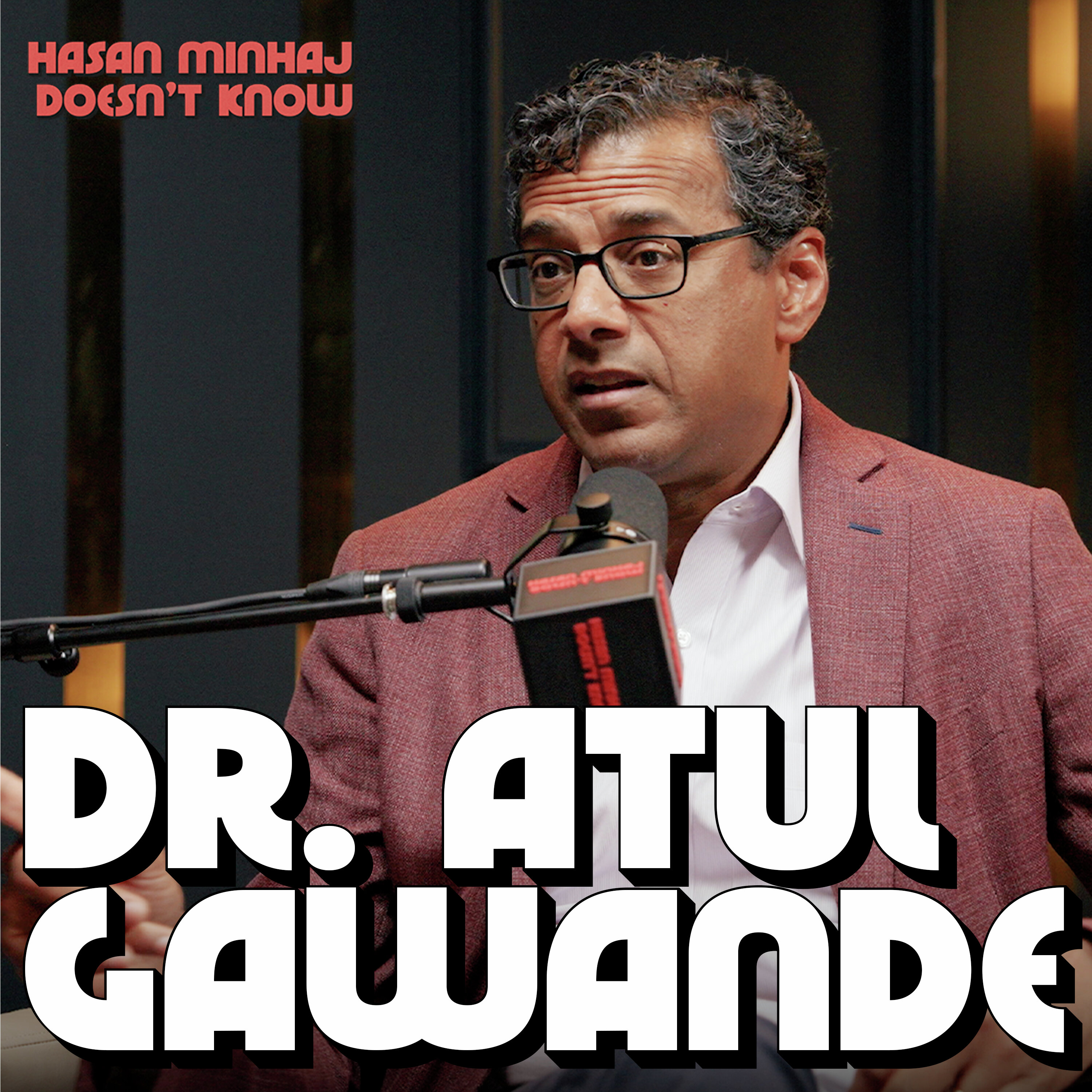
Dr. Atul Gawande
It'S the most consequential thing that the administration has done.
- [00:52]
Hasan Minhaj
You may not have heard of Dr. Atul Gawande, but you have likely heard of USAID, the agency that he helped lead for 44 years during the Biden administration.
- [01:02]
Dr. Atul Gawande
USAID is the U.S. agency for International Development. What it does is in the name USAID assistance to countries around the world, advancing health, survival, economies impact worldwide.
- [01:14]
Hasan Minhaj
Just a few weeks after he left that job, Doge and the Trump administration basically nuked the entire thing. Breaking overnight, workers at the U.S. agency for International Development, USAID in Washington were told to stay home.
- [01:27]
Dr. Atul Gawande
Nearly $60 billion in grants have been cut from USAID and the State Department.
- [01:32]
Hasan Minhaj
USAID has been instrumental in helping to alleviate poverty, disease and other crises in strategically important countries.
- [01:40]
Dr. Atul Gawande
It has been completely eliminated 86% of its programs have been terminated.
- [01:47]
Hasan Minhaj
We're cutting numbers that nobody's ever seen before, Doge, as we call it. So think of this interview as a postmortem of USAID now, however you feel about what the US Government does in other countries, and I have a lot of feelings about that, it is undeniable that the work USAID did did in fact save lives.
- [02:08]
Dr. Atul Gawande
Eradicating smallpox was one of the very first things it took on in the world and succeeded in doing by the end of the 1970s. John F. Kennedy said we need the playbook for the whole world. And USAID was that independent agency meant to focus on not what the needs are of the political mom next one or two years, but the next 20 years. 30 years.
- [02:31]
Hasan Minhaj
According to a recent Lancet study, USAID funded programs prevented more than 91 million deaths globally, including 30 million deaths among children. That same study predicts that the cuts to USAID will result in over 14 million preventable deaths by 2030.
- [02:51]
Dr. Atul Gawande
It's estimated now we're north of 300,000 lives lost in the time since then. Estimates reach the millions if programs aren't restored and the time it will take to restore them. If you were to do it is going to take years.
- [03:06]
Hasan Minhaj
So I sat down with Dr. Atul Gawande to talk about the destruction of USAID, the misinformation that helped fuel it, and how it's a template for a wider war on academia and science. Yes, this episode is dark but important. But holy shit, it gets very dark. Hey, it's me, Hasan. I am here to panhandle, not for money, for subscribers. Apparently 70% of you guys won't commit to me. You want to kick it and listen weekly, but you can't admit that we like each other. Just admit it. We're vibing now. If you're serious about this relationship, hit the follow or subscribe button wherever you watch or listen. And if you don't, well, okay, message received. But just so you know, I will be seeing other audiences. We're going to get right into it. Okay, There is a lot of chatter on social media right now about the dismantling of usaid. Let's make this a very quick explainer for our audience. What is USAID and when did it start?
- [04:15]
Dr. Atul Gawande
USAID is the U.S. agency for International Development. What it does is in the name US Aid. It is assistance to countries around the world in order to meet goals of advancing health, survival, economies and advancing the world. The premise of it is that we can have impact worldwide that gives us influence in low income parts of the world, especially where we don't want to be there with military and other forms of intervention.
- [04:53]
Hasan Minhaj
Okay, so when did this kind of core mission start, this mission to help and aid other countries?
- [05:01]
Dr. Atul Gawande
I see this as being about the Marshall Plan. The historic thing that happened at the end of World War II was the United States did not do what victor countries do, which is take over and colonize Germany and Japan. Instead, we said, we want to be at peace and so we're going to invest in bringing those economies back, partnering with those people that we were at war with, sending over substantial amounts of aid to rebuild their economies. And those became our biggest trading partners in the world and also a source of lasting peace. So where in the 1950s, the Marshall Plan was the playbook for peace in Europe, John F. Kennedy said, we need the playbook for the whole world. And USAID was that independent agency meant to focus on not what the needs are of the political moment the next one or two years, but the next 20 years, 30 years. Eradicating smallpox was one of the very first things it took on in the world and succeeded in doing by the end of the 1970s.
- [06:09]
Hasan Minhaj
Were you aware of USAID's work before you joined and started working in 2021.
- [06:16]
Dr. Atul Gawande
I was barely aware of the work in what turned out to be the best job in medicine that no one's ever heard of. So I was aware in a very tangential way. My parents are from India and my parents benefited from living in places where they had food aid during the famines in India. And it was US Partnership that ended up creating the green revolution, bringing productivity to farms in India that ended up allowing India not only to feed itself, but to become an agricultural exporter and a partner of the us. My grandmother, my father's mother died of malaria with him at the bedside because she was not able to get medicines that were available at that time. And that was what made him become a physician and ended up coming for training to the us So I had an allergy to the smallpox vaccine. It was why my parents couldn't leave the United States with me and ended up deciding to stay here. And then smallpox was eradicated, with a major part of that being led by usaid. And so now I actually got into the position of leading the agency that made it possible for me to do global health work in the first place. I couldn't leave. I didn't get to work abroad until after 1979, the eradication of smallpox.
- [07:52]
Hasan Minhaj
So you lead USAID between 2021 to 2025. What did you oversee in those four years?
- [08:00]
Dr. Atul Gawande
So I had 2,500 people, health care, healthcare officials, who were deployed in 65 countries around the world.
- [08:12]
Hasan Minhaj
So paint the picture. We're talking about physicians, nurses. Who are these healthcare officials?
- [08:18]
Dr. Atul Gawande
Yeah, there are physicians and nurses and then a lot of people who knew how to move money, how to, how to move people and resources. So one of the first tasks I had upon coming in was when Russia invaded Ukraine. There was a team on the ground in Ukraine. We did not put US military in place, but I had team members who were doing vital things like keeping the Ukraine health system going. 100% of the pharmacies closed within the first couple of weeks because the supply of medicines came from Russia. These were people who could, within a short time, re establish a supply chain that got medicines into the country and partnered with the government to reopen pharmacies. Hundreds of thousands of lives were at stake from that alone.
- [09:07]
Hasan Minhaj
Right. In total, how many lives has USAID saved, you think, in the time that you oversaw it, but probably even in its history?
- [09:18]
Dr. Atul Gawande
Well, there was a recent study that actually put the numbers together for the last 20 years. And this was from the totality of USAID. And the number saved was 92 million lives over the last 20 years during my time, I know working with these 2,500 people and a budget that's half the budget of my hospital system back home in Boston, we were saving lives by the millions and reaching hundreds of millions of people.
- [09:48]
Hasan Minhaj
Obviously, I'm very passionate about this. I care about the lives that it saved. But I'm biased. I'm, you know, I don't know if you can tell my Mac melanin skin tone here, how do you get the rest of Americans to actually care about this? Why is this important?
- [10:08]
Dr. Atul Gawande
There is multiple levels of reasons to care. Number one, among the people I had on the team were people who were responding to outbreaks abroad. And so purely in immediate self interest. The monitoring of bird flu in 49 countries, the stopping and emergency response to Ebola outbreaks happening in different countries around the world, that was happening because of our investments in those teams stopping those deadly diseases. Number two, we have global control of HIV and tuberculosis that can come to our shores, but also decimate entire countries and continents around the world. You can't be a prosperous country in an impoverished world decimated by disease. You can't put up our walls and borders around it. So that's the second reason. The third reason is because showing up in the world as someone ready to partner with others, use our expertise, our knowledge, our influence and our resources to solve big problems, like making sure that we are advancing agricultural economies so we reverse famine so that we're advancing democracy and we're advancing health and survival around the world. USAID has been a critical part of the reason why the life expectancy of the human species on the planet has doubled during the last century. That is an incredible set of accomplishments and incredibly important for our influence. We wouldn't have the level of influence we have now in Asia, in Africa and Latin America without it.
- [11:54]
Hasan Minhaj
Apparently, a nuclear power plant in Western Europe had to shut down because a massive swarm of jellyfish got into its cooling water. I found out about this story from Ground News, which is today's sponsor. Ground News shows a breakdown of publications reporting on a story. Which way they tend to lean politically, right, left or center. And it's not about eliminating bias. We've all got biases. It's just trying to make you aware of the potential biases of different publications so you can consider them as you analyze an event or an issue. For example, when I read the jellyfish story, I was able to scroll between some of the 88 reporting publications. I noticed that most of the left leaning publications were quick to attribute it to global warming. While some right leaning publications described it as a quote invasion. One even cautioned that jellyfish can also hitch rides on tanker ships. What are they planning? Use the link in description or go to groundnews.com Hasan H A S A N to get 40% off their vantage plan, the same one that we use here at HMDK that breaks down to just five bucks a month for unlimited access. Visit groundnews.comhasan and subscribe today. This episode of Hasan Minhaj Doesn't Know is brought to you by booking.com booking yeah, no matter how large, small or demanding your family is, booking.com will help you find the perfect place to stay. You'll have your pick of millions of vacation rentals and hotels across the United States of America. I am on record saying my parents are welcome to live with me eventually, but unfortunately they thought that meant joining us on vacations now. So my family is looking for options with an in law suite for mom and dad. Also on our list, a backyard. My kids love the space to play, but mostly we can't trust them with ice cream inside. Finally, it needs to be pet friendly. My daughter's bunny, Maximo wants to see the world and find himself. Yeah, I know it's a lot, but I'll compromise on the kitchen. Let's be real, your boy can barely operate a microwave. And if our particular family can find our perfect stay on booking.com anyone can find exactly what you're booking for booking.com booking yeah, book today on the site or in the app. Can we talk about one of the things that you touched on a little bit earlier, which was how much it costs to actually run USAID versus what you said, one of the medical systems that you work for in the United States of America? From what we chatted about earlier, USAID's global health budget is $8 billion last year. So that's smaller than many hospital Systems, correct?
- [14:44]
Dr. Atul Gawande
Yeah. USAID's health budget is $8 billion last year. Total is just over $30 billion total.
- [14:52]
Hasan Minhaj
And the total government budget is $6.75 trillion approximately.
- [14:56]
Dr. Atul Gawande
Yes, yes. It's hard to put your head around this right? The way I put my head around it. Like what I was managing was $24 per American. Got it from per American taxpayer. And with that our teams were reaching hundreds of millions of people. So we can talk about ways it could be more efficient and less wasteful, but it is arguably per dollar saving more lives than any other US Agency.
- [15:27]
Hasan Minhaj
What is the current status of USAID at this moment, while we're having this.
- [15:31]
Dr. Atul Gawande
Conversation, it has been completely eliminated as of July 1st. It's been shut down. 86% of its programs have been terminated. The staff have been terminated. All but about 15 people from the original 13,000 total staff. And what remains of the program has been put into the State Department, where they're scrambling to figure out, how the hell do I do this work after we've shut down all of the offices around the world.
- [16:06]
Hasan Minhaj
How did we get here and why did this happen?
- [16:11]
Dr. Atul Gawande
We got here because of Doge Elon Musk bringing a chainsaw and deciding that this is going to be the place to start. We got here because of Marco Rubio signing off and saying this is okay. And we got here because Donald Trump believed that organizations like this, and this isn't the only one that advances science, health and impact around the world through means of as an independent agency and as one that's bringing expertise, is not to be trusted. He does not see it as a way that America functions. He wants to have America win and the other parts of the world lose. And that's not how you make progress on health and survival or these other kinds of ways of advancing.
- [17:06]
Hasan Minhaj
Obviously, you can't be in the presidency head, but if you were to strongman his position, why is he so vehemently against this? Why did Doge take a chainsaw to this? Did they see on some level this agency to be rife with corruption? Did they see it as unnecessary? What could you imagine their core reasoning is?
- [17:26]
Dr. Atul Gawande
Well, that was the claim. It's a criminal enterprise, it's corrupt, it isn't actually doing anything. Those are the arguments, Yes. I think the answer was they had a. You had people like Elon Musk that had a blind belief that you could simply shut down entire parts of the government the way he did to Twitter, and then figure out what's broken and try to build it back without having to worry about the harm. It was an indifference to the damage and harm of a desire to cut government in order to have tax cuts for the wealthy. It was. You know, there's an ideological belief in shrinking the government. I'm not sure that's what Donald Trump is on about. You know, I can't even begin to predict where his mind goes, except that he lives in a world of conflict, chaos and destruction, and those are not stable conditions. And therefore, you are constantly living in a world of change and inability to build forward for the future.
- [18:38]
Hasan Minhaj
I want to do something with you real Quick, because I'll be honest, I did not know about this agency or this issue. Honestly, like as of 100 days ago, I didn't even know this existed. So I'm going to do something. Let's call this misinformation triage.
- [18:52]
Dr. Atul Gawande
Okay?
- [18:52]
Hasan Minhaj
I opened up my rectangle of sadness first thing in the morning and all these stories about USAID hit me and I couldn't tell left from right, up from down. So walk me through this, Dr. Gawande. Okay, this is misinformation triage book. Dr. Atul Gawande. Let's do the timeline. At the end of January 2025, Donald Trump said this about US aid. In that process, we identified and stopped $50 million being sent to Gaza to buy condoms for Hamas. 50 million. And you know what's happened to them? They've used them as a method of making bombs. How about that? Now, according to Elon Musk's Grok 4, which just dropped, this is the best grok there is. It's better than Grok 1, 2 or 3. $50 million of condoms would buy you roughly. Let's take a look. Two billion condoms. Now, as you know, there's roughly between 20,000 to 40,000 members of Hamas. Let's take the median, let's call it 30,000. Now divide 2 billion by 30,000 members of Hamas. That works out to about 67,000 condoms per individual member of Hamas. That's a lot of sexual intercourse, Dr. Gawande. Who's getting fucked here?
- [20:07]
Dr. Atul Gawande
I can't tell you how many hours and days I've spent dealing with this one case that's supposed to symbolize what, what USA did. First of all, it was a mistake. There's a province in Mozambique that does get family planning programs and HIV programs where condoms are really important to stopping the transmission of hiv. Not the Gaza Strip. This was about a place in Mozambique that has one of the highest rates of HIV in the world. Second, nowhere near $50 million in a year. It's less than 10 million for the entire global supply of condoms that USAID would deliver for health needs around the world. So I can say that till I'm blue in the face. It's such a vivid idea that people are blowing up condoms and floating bombs to Israel. It's insane. And it's stuck.
- [21:04]
Hasan Minhaj
That was January 2025. Then February 2nd, Elon Musk tweets, did you know that USAID is using your tax dollars funded bioweapon research, including COVID 19 that killed millions of people? Now look, you went to Harvard, I didn't. So I'm not great at reading comprehension. I went to UC Davis. Go Aggies. But according to this, what I'm reading is that USAID funded Covid.
- [21:31]
Dr. Atul Gawande
So this has been another area of incredible embellishment. There is a program that USAID ran under the first Trump administration that collected viruses around the world and analyzed them, okay, that has been turned into. And some of them were coronaviruses from bats. That has been turned into a conspiracy theory that USAID manufactured the coronavirus and turned it into a weapon that then was unleashed on the world. It has truth in that there was coronaviruses that were being studied in a laboratory in China. But it does not have truth in the notion that this then spins into two different variants that are flowing around the world.
- [22:27]
Hasan Minhaj
24 hours later, February 3rd, Elon Musk then tweets, we spent the weekend feeding USAID into the wood chipper. Could. Gone to some great parties, did that instead. Now, this is when I knew he was saying absolute bullshit. Because at this point, I don't know if Elon Musk is getting invited to any parties. What do the tech bros slash move fast and break things people not understand about usaid? Because I think going through this, there was a fundamental just divide.
- [22:59]
Dr. Atul Gawande
Well, first of all, look at the language that Elon Musk begins using that weekend. He starts referring to USAID as a ball of worms. He talks about people there as criminals. He starts talking about the idea that, that they are the purveyors of destruction in the world. It is an effort to demonize and turn into subhuman the people that are working there. So that's not a tech bro move. That's a move of. It's a fascist move, to be honest. Second, there is this move fast break things notion that leads them to be indifferent to and not even curious about the level of destruction. You know, at the time that that Gaza condom issue was being raised, the USAID teams were desperately trying to send them information and they gave clear information that this was wrong. This was absolutely incorrect. You've made a mistake. This is about Mozambique. The numbers are off. All of those things did not matter. These are purely weapons. And at this point, this is just an effort by Doge and Musk to eliminate an agency, learn the playbook for doing that, and then turn and pivot. They hoped they would be done in a weekend, as you heard, and move on to the Department of Education or move on to Social Security and other places that they had in their sights. I think they became very frustrated in the week to come that it didn't just fold like a deck of cards.
- [24:42]
Hasan Minhaj
I mean, you've had some weird and certainly bizarre and stressful days in your career. Certainly, as a physician, what were these months like for you to wake up, pull your phone out, and be like the president said, what Elon is doing, what. Take me through those days. What was happening?
- [25:00]
Dr. Atul Gawande
It was insane. So, number one, I was the appointee for leading global health in the Biden administration. So my job ended at noon on January 20th with the inauguration. And then day after day after that, within a matter of hours, you started seeing escalation of attacks on foreign assistance and then on USAID in specific. And each time, you know, the signal, first of all, within 48 hours, people in the agency that used to work for me did not feel they could just communicate normally. And everybody went to these signals to signal to incognito apps and so on. The signal messages you have, is this for real? That Friday, before that weekend of feeding to the wood chopper, there was a pause on all assistance going out the door. This was stopping 20 million people who have HIV from having access to their medicines. So this was terrifying. We were people who understood, you know, this is shutting down bird flu surveillance and an Ebola outbreak response team in Uganda. This was stopping thousands of trucks that were waiting to get into Gaza with food aid. This was stopping a HIV program that in midstream. It was not a pause. This was utter destruction unleashed in days.
- [26:36]
Hasan Minhaj
Isn't this illegal?
- [26:38]
Dr. Atul Gawande
It's absolutely illegal. It was, you know, this is a program that was created by Congress, mandated by Congress, an agency that was created to be independent and shut down in a matter ofin. A matter of days. So, you know, you're. I'm a physician. My colleagues and I, we are people who are simply focused on moving programs out, making them get the best outcome per dollar possible. And in almost overnight, you were wiping away care and services that people needed. You know, we were in. We were trying to just even calculate. I mean, this was thousands of lives that were going to be lost in a matter of days. It's estimated now we're north of 300,000 lives lost in the time since then.
- [27:30]
Hasan Minhaj
You know, the Supreme Court recently ruled that Donald Trump can do mass firings and can restructure these agencies. What was their reasoning?
- [27:40]
Dr. Atul Gawande
Well, they haven't made a final opinion on what they can do. What the Supreme Court ruled was that the injunctions preventing them from taking action while these cases made their way through the courts, those couldn't be Enforced. So they could proceed with the purges, they could proceed with the mass terminations of awards and contracts, even ones mandated by Congress, and then it will be litigated in the courts on a much slower timeline. You know, it's all moot. The cases have not actually addressed the question, was it legal and constitutional to dismantle the U.S. agency for International Development, a program mandated by Congress with very specific lines of funding to go to hiv, to go to family planning, to go to humanitarian assistance? And the agency is gone. And supposedly sometime in the months to come, there will be a decision, but it's all moot.
- [28:46]
Hasan Minhaj
It's moot because Marco Rubio's cut 80% of the agency and folded it into the State Department. Is that why you're saying it's moot? Like, meaning, hey, at this point, everybody's been fired, everybody's been gone. You've shut down, essentially. You know, the film term would be you shut down production. How are we going to get it back up and going when everyone is fired and gone and these programs have been shut down? Is that what you're saying?
- [29:07]
Dr. Atul Gawande
Exactly right.
- [29:07]
Hasan Minhaj
Okay.
- [29:08]
Dr. Atul Gawande
You had people in 100 offices around the world. Those are shut down. The organizations that they worked with, that had expertise, local organizations in different countries and large organizations around the world, they've terminated their staff. There's a bank account that has billions of dollars in it that now has shifted to the State Department. Who knows whether that will be spent appropriately. But there aren't the people there anymore to make this program work. 60 years of experience of an agency that's built up these capabilities. Now, if you turn that back on, it would take you years, if not decades, to rebuild.
- [29:48]
Hasan Minhaj
Wow. Yeah. I did not. That is something very heavy to even comprehend.
- [30:03]
Dr. Atul Gawande
It's the most consequential thing that the administration has done. Understand? Taco, you know, Trump always chickens out on tariffs. Yes, but there's been no chickening out. When they got. When they began to see the lives being lost along the way. These have advanced now to not just being how we're taking down programs that are keeping people alive abroad, whether it's HIV or malaria or others. This is advanced now to cuts in the National Institutes of Health, in our public health programs, through the cdc, for our programs here at home. Domestic HIV is now being cut in ways that are going to affect thousands of lives.
- [30:52]
Hasan Minhaj
Well, the president will chicken out when it comes to tariffs because that affects the stock market. What I think needs to happen is there is this fundamental disdain and indifference when it comes to the loss of. Let's just be real black and brown life around the world. Now my pitch to you, Dr. Gawande. I think black and brown people need to go public. We have to ipo. It's the only way the president will see value in our life. I'm not kidding. This is a dark joke, but it's the only way I can make sense of how deep and fucked up and insidious what's happening right now is. It's the only way I can make sense of it.
- [31:29]
Dr. Atul Gawande
What I am simply trying to do is bear witness to the destruction at this moment we have.
- [31:35]
Hasan Minhaj
So there is no U turn. Honestly, I mean, what you're saying is true that it would literally take decades.
- [31:40]
Dr. Atul Gawande
It would take us certainly years to rebuild these programs. And there's no going back to where we were. We've lost immense trust. You show up. You know, this administration is insisting they're going to restart some of these programs and get them going on the ground. But there's no trust that those programs won't be pulled again in three months or six months or a year.
- [32:01]
Hasan Minhaj
And how many lives have been lost?
- [32:03]
Dr. Atul Gawande
Well, so far, credible estimates are north of 300,000 lives have been lost already. Estimates reach the millions if programs aren't restored. And the time it will take to restore them, if you were to do it, is going to take years.
- [32:19]
Hasan Minhaj
Why aren't more people talking about this?
- [32:22]
Dr. Atul Gawande
It's so overwhelming that it's hard to see. The thing I'm trying to show is that this is all part of the takedown of our entire global health enterprise where the United States was the singular leader in the world for everything from the research and discovery that doubled the human lifespan to deploying it around the world and making sure every part of the world got access to the drugs and the knowledge that we have.
- [32:53]
Hasan Minhaj
So we're witnessing. And what you're trying to do is document what you are witnessing currently. So as we have this conversation, for those of you that are watching and listening to this, we are also simultaneously. And this is pretty meta.
- [33:05]
Dr. Atul Gawande
This is very meta.
- [33:06]
Hasan Minhaj
This is very meta. Spider man across the spider verse. But Dr. Gawande is also recording a documentary where he is witnessing and traveling around the world and seeing what these programs did and what is now happening because of the funds being cut off.
- [33:23]
Dr. Atul Gawande
And it's not just around the world, it's also here at home.
- [33:26]
Hasan Minhaj
So where have you gone and what have you seen here at home and abroad?
- [33:29]
Dr. Atul Gawande
Here at home. So I returned from my job at USAID to Harvard University, where I'm a professor for the last 30 have been a professor for the last 30 years and a surgeon. And in the research center where I work, we've seen a 20 year program in safer surgery that I led dismantled. This was a program that has cut the mortality rate of surgery by more than a third in the United States and around the world. We were working on now our highest risk population, who has two thirds of the surgery are elderly Americans. And we were in the midst of creating new protocols and standards that would make it so people have less dementia and cognitive impairments after surgery or really less delirium and cognitive issues after surgery would recover more safely, have fewer complications gone. HIV prevention programs and HIV vaccine research completely shut down. I can go on down the list. Cancer, Alzheimer's disease. This work, pediatric programs. This work has been decimated at universities around the world. Most heartbreaking to me is not only the loss of life, but young people who want to go into science. All of the training programs for young people have been slashed so that the numbers of people who want to become scientists are now also being shrunk.
- [35:10]
Hasan Minhaj
Help me make sense of this. Marco Rubio, who is the current head of the State Department, he recently wrote on the State Department's substack. He wrote what the Trump administration is currently doing in regards to usaid. Okay, the title of this post is called Making Foreign Aid great again. Now Dr. Gawande, you think USAID is going through a lot? Take a look at this hyperlink. The State Department is using a state department.substack.com State Department cannot afford the 799 GoDaddy hosting. Marco Rubio is on the same platform as Mehdi Hassan. This is an abomination, my friend. In this substack post. And by the way, I didn't have to subscribe. It was free to read. So I don't know where the State Department's getting its funding, but it's free to read. Let's take a look at that. He writes, we will not apologize for recognizing America's long standing commitment to life saving. Humanitarian aid and the promotion of economic development abroad must be in furtherance of an America first foreign policy. What's your response?
- [36:16]
Dr. Atul Gawande
That America first policy? He goes on to explain that we're not going to work with countries that don't do exactly what we want them to do. Okay, so Afghanistan would be an example of that. Afghanistan, we're enemies, but we have worked with Afghanistan so that we are now eradicating polio to the point that we're down to a few villages on the border of Afghanistan and Pakistan. And eliminating that program, eliminating that virus, we're within 30 square kilometers of being able to do it. That notion that we're going to pull out if they don't cut us a deal. You can't fight global problems if you don't also work with your enemies.
- [37:03]
Hasan Minhaj
So let me get this straight. There are a lot of America First MAGA heads that are basically saying, hey, if you're not our ally, why should we help you? And what you're saying is the world's problems aren't partisan or about being an ally or not an ally when it comes to health specifically. Am I understanding this correctly?
- [37:23]
Dr. Atul Gawande
That's right. When it comes to disasters affecting the people of the planet, that can be earthquakes. We went in and helped Syria and Turkey. It can be a devastating polio outbreak. And we want to stop it because it also benefits us as the United States, but also shows what we've been committed to all along, that all people are created equal and that we are standing for life, liberty, and the pursuit of happiness. And that ability has enabled us to make discoveries, advance health, advance survival, and advance economies.
- [38:01]
Hasan Minhaj
Are you able to see that because you're a physician and physicians have the Hippocratic Oath and you're able to see all of your patients, irrespective of their statehood or their documentation? Or do you come from a country that's an ally or not, and you just see their humanity? How do you reconcile this in the global game of chess that is global politics? Because that talking point that Marco Rubio's elucidating gets pretty popular of, hey, you're not on our side, so why should we help? We have a lot of problems here in the United States of America. How do you take your physician mentality and apply that to politics?
- [38:37]
Dr. Atul Gawande
I apply it because it's an American mentality. So as a physician, the Hippocratic Oath is that all lives are of equal worth and that we first, do no harm, but second, help people regardless of whether they're the CEO or an unemployed drug addict. Right. I grew up in rural Ohio. My parents that I described earlier were the local pediatrician and a local urologist and surgeon in the poorest county in Ohio. And that attitude that we're here for each other, that we see the world as bigger than just ourselves, and our immediate opportunity to win more money from you, that came from the community I grew up in in Ohio. Our Rotary Club were raising money for the polio eradication campaign around the world. They were raising money for water programs in our rural community and in rural communities, communities abroad. So as I and others have been bringing home the message of the amount of destruction that's happening here and the lives lost, Americans are recoiling. They're horrified. This is not who we are. They do not believe this is who we want to be. And it's not how we want to show up at home or in the world.
- [40:03]
Hasan Minhaj
We are witnessing the slow crumbling and the dissolving of institutions. Now, look, when it comes to destruction abroad and across the world, we've witnessed a lot of that. That's a kind of American thing, to be in needless wars and see a lot of needless lives be lost. But here domestically, we are also seeing the dissolving of institutions. And you've been talking about this recently. We've talked about the federal Department of Education getting gutted, the Voice of America, the National Endowment for the Arts, the CFPB, PBS, Dr. Gawande. If Elmo can get it, anybody can get it. They're going after Antique Roadshow. We're talking about Daniel Tiger Kratz, Creatures, Molly of Denali. This is atrocious. Why is this happening?
- [40:54]
Dr. Atul Gawande
Well, it's not because it's popular. It's a theory of an emperor's rule and that people will come along. But that is not what is happening. That's why I think the need to bear witness to the harm is so important. There is denial of reality, of damage to the economy, damage to your local radio stations and public television stations, damage to the entire university, health and science, research and science enterprise that has made us a leader in the world. And there's not a family that's not being touched, whether it's Medicaid cuts or people who no longer can go to graduate school to become scientists. That is coming home.
- [41:43]
Hasan Minhaj
What's the goal here, though? Because I've seen two core arguments here, that these institutions are rife with corruption and they are infected with the liberal agenda. Am I hearing and understanding that correctly?
- [42:03]
Dr. Atul Gawande
Donald Trump, I think I'm not a political analyst, but my simplistic view of the world is he wasn't lying when he said that he is here for retribution, that he wants retribution, and he's.
- [42:17]
Hasan Minhaj
Here to drain the swamp. But NOVA on PBS is the swamp.
- [42:22]
Dr. Atul Gawande
Well, so the institutions he's gone after are the ones that are not politically beholden to the loyalty of him or his leaders, whether it's science, research, independent work, advancing public health, or it's these agencies that are providing grants for arts or humanity programs. Most of those actually are going to rural programs or to keeping capabilities alive in parts of the world that serve the constituency that elected him. I see that in rural Ohio, where I grew up. Those are the places that are the most decimated. Harvard has a big endowment and can last and has lasted for 350 years. It can last through the tempest that we're facing here. But the local college where I grew up and their research programs, that will be very hard for them to come back.
- [43:39]
Hasan Minhaj
Tell me about the cuts that have hit Harvard, because that's where you teach. You also studied there. So what was Donald Trump's key ire with specifically Harvard and the research institution that is Harvard?
- [43:53]
Dr. Atul Gawande
The famous letter that came to Harvard in early April said specifically that it wanted Harvard to submit to government oversight of the selection process of students and the hiring of faculty and the curriculum that is taught. That is the destruction of independent university higher level education in the United States. It is an effort to control and squash thinking that they describe as woke up, but hits largely sciences, life sciences as well as the physical sciences. Over 90% of the funds that have been cut off is just in medicine and health alone.
- [44:44]
Hasan Minhaj
So when we talk about cutting edge research, right there is this movement that is very anti Ivy League. I've seen it on Twitter. I've seen it start to gain momentum even in the movement of what I call is tech mag of man. These old institutions, they don't do the cutting edge research. Cutting edge research happens in Silicon Valley. You don't need to go to Boston to learn about what's going to shape the future. Here in Millepitis, we have Facebook, Facebook Messenger, Facebook Marketplace, Uber Eats, DoorDash, Postmates, Deliveroo, Seamless, Grubhub. That's a half a dozen apps that I can use to order Chipotle and get it delivered to my office so Harvard can suck it. What do you say to those people that critique Harvard as a legacy institution that is not part of innovative research?
- [45:50]
Dr. Atul Gawande
It's almost impossible to credibly argue that it's contributing nothing. You can always make the argument that there is waste and fat and that you can make it more lean. And I would completely agree that there is wasted research and opportunities to improve matters. But none of this is about trying to improve the enterprise. This is about wholesale destruction. Now, the argument that these institutions have lost touch with America, I think is credible. I've seen it myself. There are ways in which we are not connected. It's the reason why I maintain my ties back Home to Ohio is that I was lucky enough to go to a school where half the kids didn't go to college, just like in America. And the world has become bifurcated between those who have a future based on a knowledge economy. And the nerds won for the last 30 years. But the other half of the country has made no advances at all. We aren't indifferent to that in places like Harvard. A lot of the research showing the deaths of despair, the problems that have happened, the opportunities for, for addressing poverty and other issues comes out of Harvard. But also this sense of people don't feel the connection and that anybody's speaking to them. So we got work to do.
- [47:23]
Hasan Minhaj
You've entered deep into, you know, as someone who teaches at Harvard, who went to Harvard, you understand the power of science and science research at these huge institutions. Right? And you've said 90% of that funding is for science research. Look, I feel a particular way about Harvard, but that's because I didn't get in. I also feel a particular way about.
- [47:46]
Dr. Atul Gawande
By the way, I didn't get in there either.
- [47:48]
Hasan Minhaj
Oh, you circled back.
- [47:50]
Dr. Atul Gawande
I got hired there.
- [47:51]
Hasan Minhaj
There you go. That's what I gotta do. Break it down for me because I have many people in my family that have gotten their PhDs. I've seen their 152 page theses. I think they're a little bloated, but break it down for me. What actually is happening in these research laboratories and why is it so important and how does it affect everybody's day to day life? Yeah, specific innovations.
- [48:19]
Dr. Atul Gawande
What these laboratories do is the discovery of fundamental things from the fact that we have genes in the first place and then, you know, can develop therapies for the first time. Gene therapies that are coming out of these institutions that can correct inborn problems that would kill children. That ability in laboratories to go to fundamental problems that may seem like, you know, why are we studying Gila monster saliva? Well, that ultimately led to Ozempic and a whole class of drugs that are now turning out to save large numbers of lives. That ability to choose, to follow curiosity, to follow areas of impact and to do it independently based on where the science goes. We absolutely need public oversight to make sure that it's honest, that it is ethical, that people aren't being harmed or damaged inappropriately. And absolutely need priorities to be set by the public over what areas of work is going to be most valued. But the idea that we take a sledgehammer to it all is ending the single largest source of our strength in the world and our prosperity for years and years to come.
- [49:50]
Hasan Minhaj
I kind of went down the rabbit hole on some of the previous speaking engagements that you've been having. Your 2025 Harvard Alumni Day speech. Okay. And one of the things that you talk about that was a theme in that speech was with the dissolving of institutions here in America. It's similar to the way you had to communicate and talk to some of your patients that were in the fourth quarter of their life. And you ask the fundamental question, what do you care about beyond survival? It was a pretty gnarly speech to listen to Dr. Gawande, because you're basically describing America and you're saying, grandpa's dying, so what you care about beyond him living for another couple weeks. What made you shape the speech that way?
- [50:52]
Dr. Atul Gawande
So I was a cancer surgeon.
- [50:55]
Hasan Minhaj
Yes.
- [50:55]
Dr. Atul Gawande
And my conversations with people as their jobs were being terminated at USAID and then colleagues at CDC and NIH and then law firms, partners, you know, friends of mine who are getting attacked. And then I'm back at the university. I'm leaning on, not my public health policy experience. I was leaning on my discussions with cancer patients. And it was asking people, what is your understanding of your prognosis? What are you willing to endure and not willing to endure for the sake of more time? What is the minimum quality of life that you would find acceptable and worth fighting for and what would not be worth fighting for? And that's the conversation I found I was having with people in a different kind of crisis. You know, this was what matters to you as a partner in a law firm. And they're coming to the conclusion that, you know, we were a firm who fought for the weakest. We were the firms that, you know, that our ability to stand by rule of law is our fundamental. And so we can't trade that away. And at Harvard, it was the non negotiable is our ability to pursue independent scholarship, teaching and research.
- [52:16]
Hasan Minhaj
And you also talked about the new world order, where it's now being siphoned into two camps. The powerful versus the powerless. Those who can crush and consolidate power over those who don't have that power. Yeah, you know, am I thinking about that? Correct?
- [52:36]
Dr. Atul Gawande
Yes. I hearken back to, you know, when Tacitus was trying to warn the emperors of Rome that rule through force and empty of ideals will be short lived, hated and unstable.
- [52:58]
Hasan Minhaj
But isn't that how you get into Harvard? I mean, to climb the ranks, get power, consolidate it and crush the underlings? You sound like an investment banker who graduated from Harvard.
- [53:15]
Dr. Atul Gawande
But it is exactly those people who think that that's the way you win in the world that works. And it fails every time. Ultimately, you find you are hated, your work is short lived, the assassins are out to get you, and no one is living with you. And what? You leave no legacy other than your destruction. That's not what appeals to Americans ultimately.
- [53:44]
Hasan Minhaj
I have to ask you this because it made no sense. If you go to YouTube and watch your 2025 Alumni Day speech, this is what you see. Why does it look like you were performing at the coronation for King Charles?
- [54:04]
Dr. Atul Gawande
Harvard is a funny place. Yeah.
- [54:07]
Hasan Minhaj
I mean, let's just zoom in on my man right over your right shoulder, this guy with the top hat. By the way, this was his event of the day. He's not a character at Disney World or at Epcot. He got dressed up. He wears the top hat. And what I really love is that.
- [54:24]
Dr. Atul Gawande
The top hat, he has it pushed down over his ears.
- [54:27]
Hasan Minhaj
Correct.
- [54:29]
Dr. Atul Gawande
There's actually a thing called the Happy Committee, and I think those are members of it who dress like. This is 75 years ago, maybe.
- [54:37]
Hasan Minhaj
And this is just a pitch. You can bring it back to Harvard. If you guys want to connect with the American public, please stop dressing like the aristocracy.
- [54:47]
Dr. Atul Gawande
I think it could end up looking like I tried to when I was in high school in Athens, Ohio, and had my year of bib overalls and Rocky Mountain boots. Just trying to be. Trying to fit right in. Trying to fit right in.
- [55:02]
Hasan Minhaj
So you are now working on a project to change minds. Tell me about that and I'll tell you why it won't work.
- [55:10]
Dr. Atul Gawande
Great. This is my book, which is on how minds change. And it is trying to unpack my experiences with behavior change as a clinician working with patients, as a person who tried to successfully reduce the mortality in surgery, but really struggled for a decade trying to get what we discovered into practice. And then going out and doing public health with the US Agency for International Development and trying to describe why we fail so often, but why we also ultimately succeed. Though it takes longer than we like to know.
- [55:57]
Hasan Minhaj
Can people really change 100%. Really?
- [56:01]
Dr. Atul Gawande
You see this? To give you a case in point, how did we get cigarettes out of New York bars, French cafes and Italian restaurants?
- [56:13]
Hasan Minhaj
Shame.
- [56:16]
Dr. Atul Gawande
It took more than four decades, but ultimately the facts about the damage and how much harm was being done combined with, let's show those people who were living their lives with a tracheostomy. And let's also have policies taxing the hell out of tobacco and making it so you aren't smoking people out of restaurants and other places. And that has been transformative. Actually started of all things, most decisively in New York with people here saying we can do this and then it spread. But it did not take two years.
- [56:57]
Hasan Minhaj
So you're saying the fight is long, it is arduous, it is not linear. But good things eventually happen.
- [57:04]
Dr. Atul Gawande
After four decades, it's not futile and sometimes a lot less.
- [57:08]
Hasan Minhaj
Okay, well, as a 39 year old, I'm hoping as I hit 40, things will start changing. Appreciate you, Dr. Gawande. Thank you for fighting the good fight.
- [57:16]
Dr. Atul Gawande
Thank you.
- [57:17]
Hasan Minhaj
That was great. That was lovely. Dr. Akul Gawande, ladies and gentlemen.
- [57:21]
Dr. Atul Gawande
Everyone.
- [57:32]
Hasan Minhaj
If you haven't subscribed to Lemonada Premium yet, now's the perfect time. Because guess what? You can listen completely ad free. Plus you'll unlock exclusive bonus content like Halle Berry on how to be a good partner during menopause or Mehdi Hassan on the dumbing down of media clips you won't hear anywhere else. Just tap that subscribe button on Apple Podcasts or head to lemonadapremium.com to subscribe on any other app that's lemonadapremium.com don't miss out.