Loading summary
Transcript219 lines
- [00:00]
Hasan Minhaj
Hear me out. Thanksgiving is the most elite American holiday. It's all about gathering together, acknowledging the blessings in our lives, and enjoying delicious food. The way I know Thanksgiving is actually the best is because the average person I know has at least three of them. And no, I'm not talking about you children of divorce. I am talking about friendsgivings. Yes, the early Thanksgiving potlucks you do with your friends, then you'll do one with your co workers and then I'm basically eating a Thanksgiving feast every week of November. No other holiday has that. You're not celebrating multiple Valentine's Days. Well, I mean, if you, if you are, that is more of a discussion for Maury Povich. Now for my 17 Thanksgiving dinners, I will be shopping at Whole Foods. They have unbeatable deals for the quality that they provide, like antibiotic free Turkey starting at 1.49 a pound. I love their grab and go options like the creamy mashed russet potatoes and the new holiday berry pie. But if you really want to enjoy your day off, Whole Foods will cater your entire Thanksgiving dinner. Just order online at shop.wfm.com before November 25th. Shop everything you need for Thanksgiving right now at Whole Foods Market. Today's POD is brought to you by the International Planned Parenthood Federation, the world's largest network for sexual and reproductive health rights and justice. The fight for universal sexual and reproductive health isn't just an American issue. It is a global issue, a human one, because everybody has a story. IPPF is sharing stories from women and health workers around the world who are fighting for sexual and reproductive dignity. Go to ippf.org everybody to read them today.
- [01:43]
Anthony Romero
Lemonade. The case that we use in Deray's case, right, in the BLM case, is a case called Brandenburg vs Ohio is a case on a Nazi, right? The same set of facts. A Nazi march, some crazy Nazi gets violent and they hold the Nazi organizer responsible for the violence.
- [02:07]
Hasan Minhaj
And essentially in that case, what you're saying is that that was a crazy Nazi who should not be conflated with the peaceful Nazi, which even though that's an insane sentence to say, it's the.
- [02:16]
Anthony Romero
Way we have to think about it, right?
- [02:17]
Hasan Minhaj
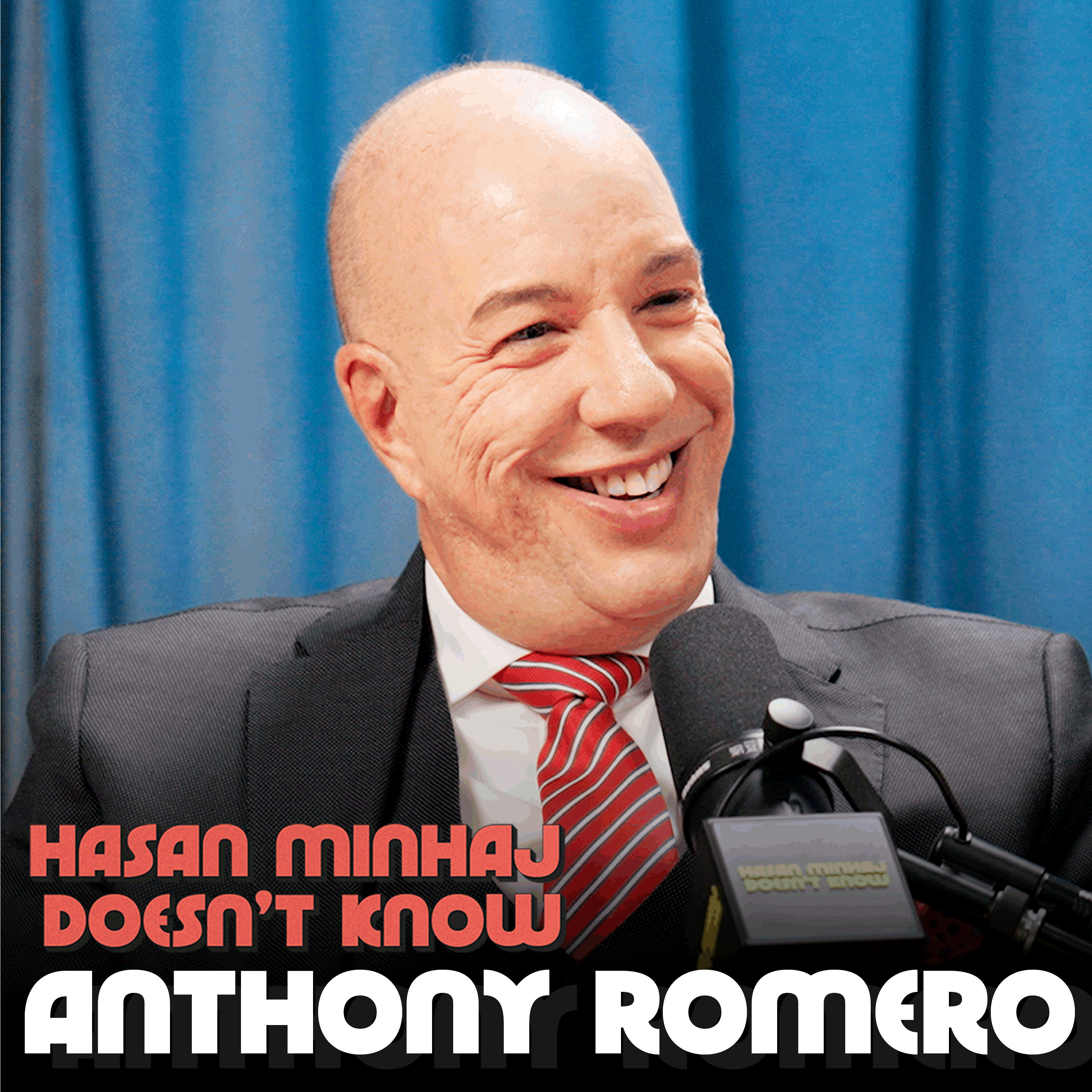
Anthony Romero became the Executive Director of the American Civil Liberties Union in September 2001. And ever since that moment, it seems like our civil liberties have been under. So either it was his fault or maybe something else happened that month, I don't know. But for the past century, ACLU has helped shape landmark Supreme Court cases like Korematsu versus United States in 1944, which challenged the internment of Japanese Americans during World War II. Loving v. Virginia in 1967, which legalized interracial marriage. Roe v. Wade in 1973, which legalized abortion for a while in other cases, supporting LGBTQ rights, voting rights, privacy rights, and criminal justice reform. But make no mistake, the ACLU is not an arm of the Democratic Party. It will go to the mat to defend the speech of people who say the N word and not just when they're singing Kanye at karaoke. So I sat down with Anthony to talk about why it's so important to defend free speech, even the free speech of people that you disagree with.
- [03:15]
Anthony Romero
If you allow them to do this against people you don't like, they're gonna use that power on individuals.
- [03:21]
Hasan Minhaj
You do like how he's feeling about the ACLU's chances at the Supreme Court.
- [03:24]
Anthony Romero
We're gonna win both of those.
- [03:26]
Hasan Minhaj
And I ask him a question I think every civil rights lawyer is asking themselves right now. Do I miss George W. Bush?
- [03:35]
Anthony Romero
Hurry. Right away. No delays.
- [03:43]
Hasan Minhaj
When I'm reading the news and it says the ACLU is fighting on behalf of right. Or it'll say, the ACLU is representing blank. What does that mean?
- [03:53]
Anthony Romero
Clients. We represent the people's interests, the rights of individuals who come to us if they encounter some injustice. So when people walk in the front door of our offices and say, hey, I've been treated poorly. I've been wronged. Can you help? And that's what we do. We tend to take the rights and liberties.
- [04:13]
Hasan Minhaj
And you will take on that case.
- [04:15]
Anthony Romero
We'll take on those cases.
- [04:16]
Hasan Minhaj
So it's essentially a civil liberties legal GoFundMe.
- [04:19]
Anthony Romero
It's a civil liberties organization. We're entirely nonprofit, so people don't pay anything, even if you're rich or poor. We do it for free. We don't charge any of our clients any money. And so we have. Like, for instance, a client walked into our front door in Oklahoma. She was a high school student. She was singing in the choir, and her school was requiring that she take a drug test in order to sing in the choir class. And she's like, wait a minute.
- [04:47]
Hasan Minhaj
This is a high school student.
- [04:48]
Anthony Romero
High school student. Okay, wait a minute. Why do I have to pee in the cup to sing in the choir? Now, you could understand a drug test. If you're playing football or you're playing soccer, playing lacrosse, you might get hurt. You don't want the kids who are kind of intoxicated, hurting themselves on the field. But for choir, you're going to Require a drug test. And she walked in the front door and said, hell no, I'm not doing that. We took that case all the way to the Supreme Court. Really? Yes.
- [05:12]
Hasan Minhaj
That someone should be able to.
- [05:14]
Anthony Romero
That the drug test was in an inappropriate search and seizure in her body as a student.
- [05:20]
Hasan Minhaj
When I hear the ACLU is taking this all the way to the Supreme Court, take me through how many different courts of appeal it has to go through.
- [05:28]
Anthony Romero
Well, it depends. So in most cases we file in federal court if it's going to go before the Supreme Court on a constitutional matter. So you're filing at the district court level.
- [05:37]
Hasan Minhaj
Yeah.
- [05:37]
Anthony Romero
And that's usually the trial court. That's where they're determining the facts, the basic laws that are applying. And then it goes up on appeal to the courts of appeal. And it could be either a three, three judge courts of appeals or could go en banc before it gets to the Supreme Court. So it could be four levels of litigation before three levels before you get to the fourth level at the Supreme Court.
- [05:59]
Hasan Minhaj
So obviously that's a long time.
- [06:02]
Anthony Romero
It can be years.
- [06:03]
Hasan Minhaj
You have to play the long game.
- [06:05]
Anthony Romero
We play the long game. We map it out.
- [06:07]
Hasan Minhaj
How, how did you think that way?
- [06:10]
Anthony Romero
Well, you just gotta play. You gotta play the long game because some of this you don't know how it's gonna play out. That's why having multiple cases is important. You don't know which case is ultimately gonna go before the court. So we have a birthright citizenship case. We'll talk about it. That's probably gonna be the one argued in the court this term. I think it's most likely 95%. And it was one of many cases that were filed. It was the first case we filed after Trump became president. Yeah. And there were multiple other lawsuits. We have a class action and we had an individual case. And part of it is that you want to make sure you put multiple irons in the fire because you're not sure how far it's going to go, which judge is going to rule quicker, where, where the appeal goes. And so you want to make sure that you have multiple cases that can ultimately end up setting it up for the Supreme Court.
- [06:57]
Hasan Minhaj
You've been at the forefront of so many civil liberties post 9 11. We had the Patriot Act, Guantanamo Bay, torture, NSA, mass surveillance, marriage equality. Marriage equality. These are civil liberties battles that spanned four different presidencies. Did you find, when you kind of zoom out and look at all of it, did you find massive differences between Democratic presidents versus Republican presidents or presidents? Are Going to president, AKA state power, will always protect itself.
- [07:28]
Anthony Romero
There are through lines that are consistent. I mean, none of the presidents liked being criticized. And so even Democratic or liberal or progressive presidents, when the ACLU was holding their feet to the fire on marriage equality, for instance, with Barack Obama, they didn't love our criticism. I remember some of the scrapes we got into when we were criticizing the Obama administration for their surveillance issues or for their using of drones to target even US Citizens for assassination without judicial order. Anwar Al Aulaqi was one of our cases. And so I think it's true that whenever you're in power, you don't like anyone holding your feet to the fire. Now, there are massive policy differences. And so, you know, the years of a Barack Obama were the best years. I didn't know it at the time, but, you know, comparatively to where we are now. And I think part of what we've got to do, we've got to hold the feet to the fire of Democrats and Republicans alike. If we ever become the Democratic wing or the civil liberties wing of the Democratic Party, we're dead. There is zero potency in a civil liberties agenda that doesn't try to span across a political spectrum.
- [08:36]
Hasan Minhaj
So you're saying this is not a partisan thing?
- [08:37]
Anthony Romero
This is not a partisan thing.
- [08:39]
Hasan Minhaj
Got it.
- [08:39]
Anthony Romero
And the Democrats can be just as bad on some of the shutting down of the Senate debate. I mean, there was one case we took several years ago, three years ago, I got a whole holy hell to pay for it. The NRA was my client. They had a case against Governor Cuomo, who was coming down on them because Governor Cuomo didn't like their position on gun ownership. We believe that you should be able to regulate firearms. So we don't align with the NRA on gun policy issues. But the governor of New York was saying, if you do business with the nra, I'm going to cut business ties with you. And the NRA had a case, and then they turned to us and said, will you take this First Amendment case? And we took it. We represented the NRA for free, zero charge. And we won that case.
- [09:22]
Hasan Minhaj
But, Anthony, you gotta go to dinner in D.C. and New York, and liberals.
- [09:26]
Anthony Romero
Do not like it.
- [09:27]
Hasan Minhaj
You gotta carry this.
- [09:28]
Anthony Romero
Yes.
- [09:29]
Hasan Minhaj
You're not gonna get a good table at a restaurant.
- [09:30]
Anthony Romero
I'm proud to eat takeout if necessary.
- [09:34]
Hasan Minhaj
But why?
- [09:34]
Anthony Romero
Because the principles matter. Because the NRA case that we won 90 with Sonia Sotomayor, the majority opinion is the linchpin case we now use to fight the Trump administration. When it's targeting Harvard, all the law firms. NRA Vulo is the presidential case that we signed for precedent in this litigation. And so if you don't do it in the context of when the Democrats are trying to shut down the legitimate rights of a First Amendment group that's right of center, then how can you stand up for the. When the Trump administration is targeting Indivisible or the ACLU or other groups, you've got to be consistent.
- [10:15]
Hasan Minhaj
In 2008, you said, let's pull this up real quick. The eight years of President Bush will go down in history as one of the darkest moments in America's commitment to human rights. You Ms. G.W.
- [10:26]
Anthony Romero
Yeah, I loved the Bush administration by.
- [10:28]
Hasan Minhaj
So naive, so naive here.
- [10:30]
Anthony Romero
You know, who knew how bad it could get? It was, it was remark. It was still. I mean, let's not over. Over state the case. I mean, the George Bush years, I mean, the idea of torture, of rendition, Guantanamo, a prison camp with no legal recourse, the kind of efforts to arrest American citizens and hold them as enemy combatants without charges, without access to lawyers, I mean, they were running the gauntlet. But we have an administration now that's gone way further. And so the darkest history, I think, in my tenure, I think for many years has been now when you see.
- [11:03]
Hasan Minhaj
Things like the ICC or the icj, are you a fan of those institutions as ways to hold power to account, irrespective of partisanship? Just for you as an attorney and someone you had as the aclu, Yeah.
- [11:14]
Anthony Romero
I think the International Criminal Court is an incredible kind of accomplishment. The idea that we can actually have rules and norms that apply across countries. Critically important. Now, the ACLU, we're largely, we're entirely focused on the U.S. yeah. So I don't really spend a lot of time thinking about the International Criminal Court. I don't, we don't bring cases with the ICC or even with the UN Bodies as much. We're focused on the US Side. But I think holding governments accountable across the globe and across the political spectrum is critically important. And I want to be clear that this is not a. I'm not making equivalency arguments. Barack Obama was a much better president than President Trump or President Bush. There were things that he disappointed us greatly on Guantanamo, the surveillance issues around Edward Snowden. Remember that all broke on his watch. Marriage equality, we got there, but it took them a little bit to search their soul. Took them a little bit too long. And I think what's important is that you have an organization like mine that remains Focused and vigilant throughout, we hold their feet to the fire regardless of who's president.
- [12:21]
Hasan Minhaj
And the ACLU has been very clear in its support for abortion rights, LGBTQ equality, immigrants rights, criminal law reform, free speech, voting rights, upholding the separation of church and state, the legality of gender affirming, treatments for transgender youth. And all of this is now being rolled back. Yeah, all of these rollbacks are technically legal according to the Supreme Court, which to me feels like nine people that dress like their teachers at Hogwarts, but everything there doing feels illegal.
- [12:54]
Anthony Romero
Yeah.
- [12:55]
Hasan Minhaj
What do I do with this emotion?
- [12:58]
Anthony Romero
I think you lean into it. So I'm not willing to write off the Supreme Court yet. I mean, I'm clear eyed. My heart's been broken a number of times by the Supreme Court. Obviously, the rollback of Roe vs. Wade and Dobbs was a major inflection point for me.
- [13:12]
Hasan Minhaj
Why aren't you willing to write off the Supreme Court?
- [13:14]
Anthony Romero
Because I still think that at some point they're going to have to worry about their own legacy and their own institution. Chief Justice Roberts, he's not going to kind of jeopardize his standing in history or Donald Trump, he's worried about his own obituary, his own standing in history, and the idea that the Supreme Court would allow the President to usurp the Supreme Court's role. And we all remember, I mean, those of us who are trained in the law and a lot of Americans who pay attention, like you all remember the cases that were really kind of the dark moments with the Supreme Court. Korematsu, Japanese American Internment, Dred Scott, Plessy versus Ferguson. Those are the moments that you shudder. You never want to be associated with any of those types of cases. Sure, yeah, yeah. So I think when some of these cases come up, our job is to remind the Chief justice to remind Gorsuch, Amy Coney Barrett, Brett Kavanaugh. I don't know if we would remind Alito or Thomas of anything because I think they might be lost to us. They're the only ones I might write off. But I think seven of them are in play for us. I mean, three for sure. Maybe the other four. Really? Oh, yeah. And I think we're like.
- [14:22]
Hasan Minhaj
And you think the Supreme Court justices, they're really playing for their future. And the Hot and Mifflin textbooks. You know, me being in civics class reading Plessy versus Ferguson, I was like, oh, separate but equal is unconstitutional. You don't want to be on the wrong side of that.
- [14:36]
Anthony Romero
You don't want to be on the wrong side of that. And I think they will realize that their own reputation and they also live in their own communities, their families, their kids, loved ones around them. I mean, these inflection points become really important kind of moments for them. I mean, they care, they care about what people think or say. They live in communities. This judge I was telling you about, this family separation judge.
- [14:57]
Hasan Minhaj
Sure.
- [14:57]
Anthony Romero
A Republican appointed judge in San Diego. It was only when the family separation case began to be a crescendo point, when the press was covering it and people were outraged that we were pulling kids away from their families in deportation proceedings. This judge got religion. You could see it. He would sit up differently on the bench. He paid much closer attention, became much more aggressive in questioning the government. The first Trump administration on family separation. So I think the public zeitgeist, the public gestalt around judges is critically important.
- [15:31]
Hasan Minhaj
What is the legal theory called unitary executive?
- [15:35]
Anthony Romero
That's a relatively recent development in the way we think about political science or political theory and the US it sounds.
- [15:43]
Hasan Minhaj
Like a HBO Prestige kind of one hour drama.
- [15:45]
Anthony Romero
It could be, it could be a great show. But.
- [15:48]
Hasan Minhaj
Yeah, tell us about this concept. But it sounds like it makes the President operate like a king.
- [15:53]
Anthony Romero
Yeah, well, it's, it's, it's completely anathema to the system of co. Equal branches of government or a system of checks and balances. It's the idea that the executive branch, because it has such a unique responsibility to legislate and to protect the country, that it should be unitary, kind of a step above than the legislative branch or the judicial branch. And so it's often invoked as a way to kind of say you shouldn't review our policies to the judiciary or that Congress should not venture into legislating on these issues. It's the idea that only the executive branch should have the authority and the kind of bandwidth to run the agenda.
- [16:37]
Hasan Minhaj
This fringe theory's now kind of become norm.
- [16:39]
Anthony Romero
Oh, no, this is the, this is their, this is their playbook.
- [16:42]
Hasan Minhaj
Firing government workers, shutting down usaid, sending the National Guard into cities, reappropriating funds totally. The Alien Enemies act, literally demolishing the White House.
- [16:51]
Anthony Romero
The Birthright Citizenship executive order. There's every aspect of the Trump administration is about taking the unitary executive, which I think George Bush really started in earnest, and putting it on steroids.
- [17:01]
Hasan Minhaj
The ACLU has now filed over 430 legal actions. That was during Trump 1.0.
- [17:07]
Anthony Romero
Right.
- [17:07]
Hasan Minhaj
And then filed over 100 with Trump 2.0. That's within just the first hundred days of Trump 2.0, by the way.
- [17:13]
Anthony Romero
So it's 200 legal actions. It's 110 lawsuits.
- [17:17]
Hasan Minhaj
Okay? So when I hear a number like that, it's almost like when I hear about the federal deficit on the news, right? Where it's like, the US federal deficit is at $800 trillion, and I'm like, well, just make it a gajillion at this point. What does it matter?
- [17:29]
Anthony Romero
Well, it does matter.
- [17:31]
Hasan Minhaj
Yeah. So tell me why it matters.
- [17:32]
Anthony Romero
It matters because we're at this clip. We will do double the number of cases that we did under the first Trump administration. So that gives you a sense. They came out with their agenda to shock and awe us. Right? That was their official tagline for their efforts, and they largely achieved that. I mean, they came out of the gate, guns a blazing. What they were met with also was shocking and awesome. Right. Because there were not just our legal cases, but other groups. And, Hasan, I want to be really clear here. We're not the only ones who are doing this important work. I mean, the ACLU is an essential worker, but we're part of an ecosystem which is critically important. Democracy Forward is another organization that does amazing work. Sky Perryman is a dynamo public citizen, Democracy Defenders Network. There's so many NGOs that have divided up the work. We're constantly in touch with each other on signal. I was pointing to my phone because it's my pocket, and we kind of constantly in touch with each other. Not my case. You take it. This client comes to us. No, go there. If donors want to say, I want to work on the doge issue, up, go to Democracy Forward. We are playing a game of dividing so that they don't conquer us, so that we can not all stand on second base.
- [18:46]
Hasan Minhaj
If we want to score, why does it matter? Why do you find it necessary to file this comically large number of lawsuits?
- [18:56]
Anthony Romero
Because you rob them of momentum. Because, you know, if they want to play this game, we'll play it with them.
- [19:01]
Hasan Minhaj
Okay, so the strategy is to what, stretch the series? Is it to defeat and win every case? What's the legal strategy?
- [19:08]
Anthony Romero
The legal strategy is to dilute their policies to defeat them. Ultimately, we'll win a bunch of them and to deflect, right? To play for time. Some of this we know that they might be able to achieve long term. But if you play for time, that can be a success. You know, so a lot of the litigation, not our litigation, but litigation done by groups like Democracy Forward, for instance, on the federal government employees who are being fired, you Know, ultimately, everyone kind of knew that the government, that the courts would allow the executive, the president, to fire government employees. But all that litigation bought them six, nine months of pay, of benefits.
- [19:47]
Hasan Minhaj
Right.
- [19:48]
Anthony Romero
Gave people a chance to put their lives together, to get their resumes together, to figure out what they're gonna do. Yeah. So sometimes even if you know you're gonna lose at the end of the game, playing for time is an effective strategy.
- [19:59]
Hasan Minhaj
Well, let's talk about two big wins. Let's talk about the Alien Enemies act, and let's talk about birthright citizenship.
- [20:05]
Anthony Romero
We're going to win both of those.
- [20:06]
Hasan Minhaj
But let's break this down. What is the Alien Enemies Act?
- [20:09]
Anthony Romero
It's a statute in 1798 that allows the government the ability to remove people from the country if they are a threat to the national interest. If we're at war with those countries, we've done it three times. The War of 1812, the First World War, and the Second World War, where we removed. Like for instance, on World War II, we removed German citizens who were on American soil saying, we're at war with the Nazis. We're going to deport you guys. And so now this president, President Trump, has invoked the Alien Enemies act in a war that has not been named, doesn't exist, is saying that he's at war with these Venezuelan drug cartels, huh? Is saying that he can remove people from the country without due process under these expansive powers he's assumed for himself. We're gonna win this one. We already are winning. We filed a bunch of these cases. We filed one case, and then it ended up having to become 13, 14 different cases.
- [21:11]
Hasan Minhaj
So why does the President not have a strong and compelling argument here?
- [21:14]
Anthony Romero
Because the statute is very clear. I mean, we're not at war. This is not a country. And even under the previous jurisprudence, under the World War II, German citizens were given due process. Here they're saying we don't have to give individuals due process. So if we gave the German citizens due process During World War II, we have to give. Even if the act were to apply, which we argue does not, they're still not complying with what happened before. I think we win this one hands down. In Texas, we have a case in the 5th Circuit, not a great place for us, usually a conservative jurisdiction. And we won with a Trump appointed, a Trump appointed judge, saying, yeah, you've got to grant them due process.
- [21:55]
Hasan Minhaj
Wouldn't it be a dream to always find what you're looking for immediately? Like nabbing a parking spot at the mall, finding a perfectly fitting pair of jeans or picking the perfect movie to watch that is both appropriate for your kids and doesn't make the adults question their life choices. You definitely save a lot of time. While you may never instantly find those things, if you're hiring, you can find qualified candidates right away time and time again with ZipRecruiter, and today you can try it for free at ZipRecruiter.com Hush Hunt ZipRecruiter's powerful matching technology can find top talent in a matter of minutes. Plus, with ZipRecruiter's advanced resume database, you can unlock top candidates contact info the moment their profile crosses your desk. Want to know right away how many qualified candidates are in your area? Look no further than ZipRecruiter. Four out of five employers who post on ZipRecruiter get a quality candidate within the first day, and right now you can try it for free at ZipRecruiter.com Hasan again, that is ZipRecruiter.com H A S A N ZipRecruiter the smartest way to hire can you name all of your financial accounts? I bet you can't. I certainly couldn't, and apparently neither can most people. If we don't know where all of our money is, how are we supposed to make the most of what we have? Feel organized and confident in your finances with Monarch, an all in one personal finance tool that brings you your entire financial life together in one clean interface on your laptop or your phone. And right now, just for our listeners, Monarch is offering 50% off your first year with code Hasan H A S a n@monarch.com Monarch has allowed me to learn a lot about my spending habits and made your boy realize I gotta start saving for retirement. Someday I will be canceled for robophobia and will be forced to stop comedy forever. Plus, Monarch money helps me and my wife to stay on the same page with our finances no matter how chaotic life gets. I always hear fights about money are the number one reason that relationships fall apart. Thanks to Monarch, Bina and I remain a united front against our kids and the irs. Don't let financial opportunity slip through the cracks. Use Code Hasan H a S a n@monarch.com in your browser for half off your first year. That's 50% off your first year@monarch.com with code H A S A N. This message comes from @&t. America's First Network is also its fastest and most Reliable based on RootMetrics United States Root Score Report 1H 2025 tested with best commercially available smartphones on three national mobile networks across all available network types. Your experiences may vary. Rootmetrics rankings are not an endorsement of AT&T. When you compare, there's no comparison. AT&T. What is birthright citizenship? And why do you feel so confident about that win as well?
- [24:44]
Anthony Romero
So this one is kind of foundational. This is the soul of America. This is how. This is how America fixed its original sin of chattel slavery. It's how we took the children of slaves and made them citizens. I mean, it's hollowed ground. It is foundational, the idea that in the 14th Amendment, we found a way to grant citizenship to the people who we considered to be property and 3/5 of a person. And it was also then codified subsequently in the statute. So when the President says, we're not going to grant you citizenship per se, if you're born here, we're going to look into the citizenship of your parents, it's really going at the heart of America. It's where the two great rivers of our country that comprise our character.
- [25:33]
Hasan Minhaj
And it's also one of the proudest moments of the unique American experiment, which is, how do you take people of disparate backgrounds.
- [25:41]
Anthony Romero
Exactly.
- [25:41]
Hasan Minhaj
Religious backgrounds, countries of origin, and make it one cohesive nation?
- [25:46]
Anthony Romero
It's how a nation of immigrants becomes a nation out of many, one. Right. That's how we become one. And so the idea that in the executive order, we were kind of. We were somewhat surprised. We had heard that they were gonna try to target this. It was in Project 2025. There were rumblings about this in Trump 1.0.
- [26:02]
Hasan Minhaj
And you feel confident you will win this?
- [26:05]
Anthony Romero
Oh, I will bet my bottom dollar.
- [26:07]
Hasan Minhaj
I mean, well, because it's literally on the dollar, it says, e pluribus unum. What do you think Donald Trump's core agenda with this is in? Why does he believe this needs to be eradicated?
- [26:18]
Anthony Romero
So I've had some conversations also, and people around the Trump administration to understand it, because it just seems like, why are you going after the holy book?
- [26:28]
Hasan Minhaj
Yeah, why this fight?
- [26:28]
Anthony Romero
Why the holy book? This holy book of what this country is all about. And they really see it as an existential threat that the reason that we have so many people coming to this country is because they are seeking birthright citizenship, and yet they don't see it for the power of what makes this country great. And that if you actually wiped away birthright citizenship, you create a vehicle for intergenerational stigma and discrimination in a way that we cannot accept. And so I was surprised. I also heard that. I heard the Thursday before inauguration that it was going to be one of his first executive orders. So I came back to the office and said, people, we gotta get this ready. Get me this lawsuit ready. And this was months in the planning, Hasan. I mean we were. This is not, you know, lawsuits are not like writing a letter to mom or dad. You've got to really develop them. So we had spent months thinking about where we wanted to file in the First Circuit because it's a good jurisdiction for us and not too much of a backlog like you find in California. You had to find cases and clients and you had to hone the theories. So we found an Indonesian immigrants rights group in New Hampshire. We had to find members of that group who were pregnant, whose kids would be born after the signing of the executive order who could possibly lose their birthright citizenship. So we had this already. And then when I got the information saying that no, they're gonna run this play on the first day, we were able to file it within two hours.
- [28:00]
Hasan Minhaj
Now that I understand that the cases that you have filed and the cases that you seem so sure you will win, when should I prepare for the Supreme Court to completely overturn that?
- [28:14]
Anthony Romero
I don't think it will happen this time around. I think the court understands what's at stake in both the Alien Enemies act litigation and in birthright citizenship. I think those we can plan on winning. I think where I'm much more worried. So I don't want to kind of paint too rosy a picture because I'm clear eyed and I want to be very balance in what I tell you and your, listen, your watchers and your viewers is there are places where I'm incredibly worried about how the government has fully unleashed the power of the federal government on immigrant communities. They've already deported half a million people. They've already pushed out 1.6 million people through their self deportation efforts. They are marching down across the country.
- [29:00]
Hasan Minhaj
An effort to and ICE has only ramped up. And then they've also created and started building almost like a, a splinter cell group of essentially prisons to put people into those detention Centers.
- [29:14]
Anthony Romero
They have $170 billion in the big beautiful bill to put the Department of Homeland Security on steroids, to build more prisons, to build more jails, to give bonuses to people and hiring bonuses to people who want to be immigration agents and, and border agents. So we are just watching the beginning of this, ramping up on this attack on immigrants. And that's what I'm most worried About. And there's not one lawsuit that's gonna stop that.
- [29:41]
Hasan Minhaj
I mean, that's the existential thing. You have this huge comet that is $170 billion.
- [29:49]
Anthony Romero
Totally.
- [29:50]
Hasan Minhaj
That money is going to be allocated and it's going to be spent on more of those vans.
- [29:55]
Anthony Romero
Totally.
- [29:56]
Hasan Minhaj
And more of those agents and more of the ski mask people getting pulled off the street. That money is going to be spent. And then the ACLU on the legal side is going to have to then be fighting through the analog channels. That is the legal system.
- [30:14]
Anthony Romero
Raid by raid, site by site. It's retail. This is what's challenging and birthright. One lawsuit will knock it out. That'll be our lawsuit. We'll knock it out this year. Watch. I'll be back in June.
- [30:24]
Hasan Minhaj
Great.
- [30:25]
Anthony Romero
We'll win. We'll see.
- [30:25]
Hasan Minhaj
We'll do the Martinelli's. We'll pop some Martinelli's and we'll have a little party.
- [30:28]
Anthony Romero
Yeah. But on the deportations and the raids, oh, my God. If we don't find a way to change the tide on this, to make it politically unacceptable to pull independents and good Republicans and the business sector to say, wait a minute, you're decimating our communities. You're deporting people that we ought not deport. Unless we change hearts and minds and change the political tide, we're going to really be in a tough spot because thousands of people already are being caught up in the dragnet.
- [31:01]
Hasan Minhaj
One of the things we were chatting about in the prep for the interview is you will read the dissenting opinions and sometimes you'll be like, oh, my God, this is a shocking move by Alito.
- [31:08]
Anthony Romero
Yeah.
- [31:09]
Hasan Minhaj
Or like, holy shit. Fun fact. Gorsuch is a fierce proponent of Native American rights.
- [31:13]
Anthony Romero
Did not know that Neil. He's also very good on gay and lesbian rights.
- [31:16]
Hasan Minhaj
Yeah. Did not know Neil really got down with both indigenous rights and gay rights.
- [31:21]
Anthony Romero
The game is to count to five. So you usually have three.
- [31:24]
Hasan Minhaj
Okay.
- [31:25]
Anthony Romero
And then you gotta get two more. Right. So then it's always about, which one of these folks can you pull away? Is it Gorsuch or Native American rights or LGBT rights? Is it Kavanaugh who's more of a centrist? Is it the chief justice who's worried about his reputation and his obituary and worry about the legitimacy of the court? So you gotta get to five.
- [31:44]
Hasan Minhaj
So how do we sway that?
- [31:45]
Anthony Romero
I mean, that's what we do. We spend.
- [31:47]
Hasan Minhaj
They do podcasts. I can get them on the podcast.
- [31:49]
Anthony Romero
We should try to get them on the podcast. They're kind of lively people. I know some of them personally. Really? Yeah, yeah, I spent a bunch of time with some of them.
- [31:55]
Hasan Minhaj
No, no. I've nerded out about this, by the way.
- [31:56]
Anthony Romero
Oh, no, they're great.
- [31:57]
Hasan Minhaj
There's Neil. Do you know Neil Katyal? He's also.
- [31:59]
Anthony Romero
He's a Supreme Court great guy.
- [32:01]
Hasan Minhaj
Case expert.
- [32:02]
Anthony Romero
He is. And he knows the court even better than anybody.
- [32:05]
Hasan Minhaj
Okay, so here's another nerding out question.
- [32:07]
Anthony Romero
Tell me.
- [32:08]
Hasan Minhaj
So when people on the Internet see these Supreme Court rulings, they're like, oh, my fucking God, Clarence Thomas, you fucking piece of shit. How could you do this? My sister, who I'm not trying to brag, went to Upenn Law, worked in Big Law, worked at Scadden Arps. Like, she's a real shooter. She was like, hussambai. Make no mistake, when you read these dissenting opinions, every Supreme Court justice is a brilliant writer. You are an attorney. You wax poetic in the PDFs. Do you agree with the sentiment?
- [32:42]
Anthony Romero
I think some of them are better than others. I'm not sure. I'm not sure.
- [32:45]
Hasan Minhaj
Whoa, wait, so your book reads review on. They're not all 10 out of 10.
- [32:49]
Anthony Romero
They're not all 10 out of 10.
- [32:50]
Hasan Minhaj
Really?
- [32:50]
Anthony Romero
Yeah, I mean, I read them. I read them all. I mean, I read most of the opinions, especially in our cases. And the dissents, especially in the ones we lose, are critically important because they also give you nuggets about how to think about where to go forward. I mean, it's like a treasure hunt. You're always thinking about how do you distinguish these cases from future cases, what would bring people along. You'll understand some of the dynamics.
- [33:15]
Hasan Minhaj
So you're saying the dissent gives you future precedent of, oh, if I were to turn Gorsuch on this, he's worried about this.
- [33:24]
Anthony Romero
Oh, you're trying to always understand how you turn people. And dissenting opinions, it's like oral arguments. When the justices are peppering the person with an argument, they're not always just asking the question of the individual lawyer. They're asking questions of each other. It's like pickleball. You know, they have to go through the lawyer to get the ball back to someone on the other side of the bench. And so it gives you insights into. Okay, well, this is interesting. So if Sonia Sotomayor is asking a question of us, that then is about a question that Gorsuch raised, she's helping us understand how to zero in on an issue that Gorsuch is interested in. So we're always mapping it out. That's why we're in the core. We're taking assiduous notes. We're trying to figure out what clues are there, what ways to follow up. That's part of the. That's part of the genius.
- [34:12]
Hasan Minhaj
So are you saying descending opinions are just really well written YouTube comments?
- [34:15]
Anthony Romero
No, they're beautiful. They're beautiful records of history. I mean, I think YouTube can be great, but I think these are the historical records of the government of our country.
- [34:23]
Hasan Minhaj
You heard it here, folks. Anthony Romero. There's levels to this shit, and YouTube comments are properly indexed. What is an amicus brief? I hear it all the time.
- [34:34]
Anthony Romero
Yeah, it's a friend of the court, literally.
- [34:36]
Hasan Minhaj
But I have no idea what it means.
- [34:37]
Anthony Romero
So it means that, you know, you're not a party in the litigation. So the parties are usually defendant or plaintiff or appellee and appellant. So you're not the party in the case, but you are an interested person that the outcome of the case has implications for you or your life or your organization, your corporation. And so you have interests that you want to express to the court on how it turns out. And so the friends of the court, the amicus briefs, provide a larger context about what's at play in the decision for judges. And sometimes the judges really rely upon the amicus briefs.
- [35:10]
Hasan Minhaj
And who writes the amicus brief?
- [35:11]
Anthony Romero
It depends. I mean, we write our rambic is briefs, and we write them ourselves in the house.
- [35:15]
Hasan Minhaj
Got it. So the ACLU will write.
- [35:16]
Anthony Romero
Oh, yeah.
- [35:17]
Hasan Minhaj
Okay. This is not fan fiction from just.
- [35:19]
Anthony Romero
No, no, no, no.
- [35:19]
Hasan Minhaj
We draft them that have very passionate opinions.
- [35:21]
Anthony Romero
Oh, no, we. We really kind of. We agonize over these briefs. You know, we want to make sure they sing. And.
- [35:28]
Hasan Minhaj
And are you quite impressed by the writing in. In the amicus briefs that you.
- [35:32]
Anthony Romero
Oh, we only hire the best writers. We can get the best ones.
- [35:34]
Hasan Minhaj
Really?
- [35:34]
Anthony Romero
So, yes. Okay, we have some writers who are just. And there are some briefs that sometimes are duds. I remember one years ago when someone was working on a brief with Jose Padilla. He was an enemy combatant, a US Citizen, was being held without charges or without access to lawyers. And they gave me a brief. I'm like, this one. Don't sing.
- [35:51]
Hasan Minhaj
Wow.
- [35:52]
Anthony Romero
You got to give me a case for the history books, Anthony.
- [35:54]
Hasan Minhaj
You were like, a record label executive.
- [35:56]
Anthony Romero
You got to give me one that talks about this disc inflection point.
- [36:00]
Hasan Minhaj
You're an amicus brief, Barry Gordy. You're like, I need this to be a hit, baby.
- [36:03]
Anthony Romero
Write this in a way that I want to be what has got to be memorable.
- [36:07]
Hasan Minhaj
Can we pivot to speech for a moment?
- [36:08]
Anthony Romero
Sure.
- [36:08]
Hasan Minhaj
Let's talk about free speech. Some of the most high profile cases that you have been involved with in the ACLU has been involved with deal with free speech. But one of the biggest fights that's happening right now involve foreign nationals being detained and possibly deported. But the cases aren't really about immigration, they're about free speech. Can you just give us and get our viewers and listeners up to speed with what is happening right now with Mahmoud Khalil?
- [36:34]
Anthony Romero
So the government arrested and is trying to deport Mahmoud Khalil, a legal permanent resident green card holder, married to an American citizen, with a US citizen child because they think that his views and his positions on Palestine are contrary to American interests. And so they're trying to just remove him from the country. It's the same way that we saw with Rameza Osterk or Mohsen Madawi and other folks that we have represented on these cases where they're being targeted for exclusion from our country because they're not US citizens because the government doesn't like what they say or what they think or their activism. And that's flat out un American.
- [37:13]
Hasan Minhaj
I mean, you have called this modern McCarthyism.
- [37:15]
Anthony Romero
It is a modern day McCarthy.
- [37:16]
Hasan Minhaj
And my understanding is that McCarthyism ended when in 1954 a government lawyer, Joseph.
- [37:22]
Anthony Romero
Welch, said, have you no sense?
- [37:24]
Hasan Minhaj
Have you no sense of decency, sir? Let's take a look.
- [37:27]
Anthony Romero
Let us not assassinate this lad further, Senator, you've done enough. Have you no sense of decency, sir? At long last, have you left no sense of decency?
- [37:42]
Hasan Minhaj
Now obviously this wouldn't go viral now because this wasn't cropped for vertical for some reason, the C SPAN camera op wasn't on him. This is bad content. This is garbage content. But that quote rings so true. Have you no sense of decency? They were making people stand up and basically have to say, I am not a Russian spy. I'm not an enemy of the state.
- [38:06]
Anthony Romero
And McCarthy died disgraced. He died alone, a miserable death in exile. From that high point of when he was writing government power to shut down dissident debate. And when his decency was called, it was kicked to the curb. And I think that's what we've got to play for long term is this moment when individuals are being targeted because they happen to disagree with the government. It's not just these activists, it's not just Mahmoud Khalil, it's not just Rameza Osterk. It's Harvard. Right. They're targeting Harvard because of their DEI practices or what they did or did not do on antisemitism. They're targeting the law firms because they had individuals who were populated at the law firms who were somehow adverse to the Trump administration.
- [38:55]
Hasan Minhaj
Well, how do you feel about all these institutions, whether it's television networks or Harvard or legal institutions basically paying out these settlements and just surrender like they're the French army?
- [39:09]
Anthony Romero
It's very depressing. And it's wrong. It's wrong. I mean, these institutions ought to stand up straight, especially the law firms. Lawyers have to understand, have you had.
- [39:18]
Hasan Minhaj
Any private convos, like, off the record with these guys to be like, come on, like, I understand this. It's about survival and self preservation, but this ends in three years. Why are you doing this?
- [39:28]
Anthony Romero
And they always have these kind of different mumbo jumbo about how they're thinking about the long term interests of their law firms or their institutions. They're talking about being between a rock and a hard place. They kind of react, reassure me that their heart and their values are still with us. Yeah. And talk is cheap. And I think ultimately, in the end of the day, they will rue the day that they capitulated. And let's talk about the media. I mean, the idea that some of these large media executives, ABC News, for instance, paying off a lawsuit because of the Stephanopoulos interview, a lawsuit they would have won if they had just run the gauntlet. But it's easier and it's more expedient for them to pay the President millions of dollars than to win in court.
- [40:17]
Hasan Minhaj
Isn't there any other historical context that shows that the extortionist always will always.
- [40:23]
Anthony Romero
Come back and pay a bigger price? Yeah, I mean, you can, Dr. Fausto. Right. It's the bargain with the devil.
- [40:31]
Hasan Minhaj
I famously gave my wife a vacuum for Christmas one year, and I will never live it down. Now hear me out. It was a really, really, really nice vacuum. And she talked constantly about wanting a new vacuum. So sue me for being an amazing listener. But I am proud to say that this year I will be redeeming myself by giving my family members aura frames. Aura frames are digital picture frames. They let you display as many photos as you like, and you can add or update them anytime in their app. And they are so high quality, they even look like prints, not a screen. So now my wife can enjoy all of the pictures that we have of the kids without having to choose just a couple to display. It's crazy to see how much older they look than this time last year. Plus I'm going to send an Aura frame to my parents so we can keep them updated with photographs even when we are not together. So don't wait. Win the holiday now with Aura Frames. For a limited time, visit auraframes.com and get $45 off Aura's best selling Carver Matte frames named number one by Wirecutter by using promo code Hassan at checkout. That's a U R A frames.com, promo code H A S A N. This exclusive Black Friday Cyber Monday deal is their best of the year, so order now before it ends. Support the show by mentioning us at checkout. Terms and conditions apply. This episode of HMDK is brought to you by Booking. As I'm sure you all know, your boy is basically a business mogul. And while I'm conquering media and autumnal beverages, it has come to my attention there is a major market I haven't tapped into yet. Vacation Rentals. If you are in the vacation rental space, booking.com is the place to be. Since 2010, they have helped over 1.8 billion travelers find vacation rentals. But here's the thing most vacation rental hosts don't even realize. They can just list their properties on booking.com and if you're not on the platform, your rental is basically invisible to millions of Booking.com travelers worldwide. After all, they can't book what they can't see right now. Thankfully, it's super easy to list your property. It can take as little as 15 minutes, and nearly half of hosts get their first booking within a week of registering. So if your vacation rental isn't listed on booking.com, it could be invisible to millions of travelers searching the platform. Don't miss out on consistent bookings and global reach. Head over to booking.com and start your listing today. Get seen, get booked on booking.com hear me out. Thanksgiving is the most elite American holiday. It's all about gathering together, acknowledging the blessings in our lives, and enjoying delicious food. The way I know Thanksgiving is actually the best is because the average person I know has at least three of them. And no, I'm not talking about you children of divorce. I am talking about friendsgivings. Yes, the early Thanksgiving potlucks you do with your friends, then you'll do one with your co workers and then I'm basically eating a Thanksgiving feast every week of November. No other holiday has that. You're not celebrating multiple Valentine's days. Well, I mean, if you are, that is more of a Discussion for Maury Povich. Now for my 17 Thanksgiving dinners, I will be shopping at Whole Foods. They have unbeatable deals for the quality that they provide, like antibiotic free turkey starting at $1.49 a pound. I love the grab and go options like the creamy mashed russet potatoes and the new holiday berry pie. But if you really want to enjoy your day off, Whole Foods will cater your entire Thanksgiving dinner. Just order online at shop.wfm.com before November 25th. Shop everything you need for Thanksgiving right now at Whole foods market. The ACLU is famous for defending some pretty awful characters in First Amendment cases. We're talking about the KKK in the 1920s, neo Nazis in the 60s and 70s, and the NRA, as you mentioned at the top of our interview, as recently as 2024. Why is it so important to defend someone's right to say something, even if you disagree with it? And why does that concept fry so many people's brains?
- [44:36]
Anthony Romero
I think because people refuse to think about the bigger principle that's involved. Because if you allow the government to censor the speech of someone you disagree with, you allow the government to usurp that power, that they can come back and use that power against your own speech. And so that's why I love, I mean, for instance, we have a case, we have a great client, a Black Lives matter protester, Deray McKesson, who was being held liable for violence that happened at one of the BLM protests, right? He organized a protest, someone got off the farm and violence was committed. And they charged his organizer with incitement at his protest. The case that we use in deray's case, right, in the BLM case, is a case called Brandenburg vs Ohio is a case on a Nazi, right? The same set of facts. A Nazi march, some crazy Nazi gets violent, and they hold the Nazi organizer responsible for the violence.
- [45:36]
Hasan Minhaj
And essentially in that case, what you're saying is that that was a crazy Nazi who should not be conflated with the peaceful Nazi, which even though that's an insane sentence to say, it's the.
- [45:44]
Anthony Romero
Way we have to think about it, right?
- [45:45]
Hasan Minhaj
It's the way you constructed that case.
- [45:47]
Anthony Romero
And incitement is not protected. Freedom of speech and freedom of association is protected. So the idea that we're using a Nazi case, Brandenburg versus Ohio, and in defending the rights of Deremic Academy, a BLM protester makes exactly my point, that if you allow them to do this against people you don't like, they're going to use that power on Individuals you do like, that's the Cuomo case with the NRA in New York. If Cuomo can target the NRA in New York, you don't think the governors of Florida and Texas are going to target the aclu? We cannot allow Democratic governors to target the lawful activities of, of right of center groups because then we are open hunting season in places where we are out of favor and where we're unpopular.
- [46:36]
Hasan Minhaj
I mean, a similar sentiment to that is also just take the, even the concept of hate speech, if that concept is put in the wrong person's hands. For example, Donald Trump may define hate speech as something very differently that you define hate speech as, or what I define hate speech as. And he could define it as you make a joke that he doesn't like about him.
- [46:57]
Anthony Romero
And they're doing that already. You saw Pam Bondi, the Attorney General, she got her knickers in a twist on the whole question around hate speech, that this was hate speech that we would not tolerate. Well, no, the Attorney general hate speech is also protected speech. And so for the highest law enforcement official in the country to not get it right, to have it so convoluted that you can actually try to regulate the speech you don't like, especially I think this context with critics of Charlie Kirk. And sure, Charlie Kirk was assassinated, he was murdered. That should not have happened. It was a tragedy for his family. It's bad for the American political experiment to have people killed because of their thoughts and ideas. But people also had the right to criticize Charlie Kirk's political positions. And for the Attorney General to then conflate that saying, that's hate speech that we're going to target and we're going to regulate. Oh my God. It's chilling. It's totally chilling.
- [47:55]
Hasan Minhaj
Can we talk about the Firewall for Freedom?
- [47:56]
Anthony Romero
Sure.
- [47:58]
Hasan Minhaj
Other than voting or donating to the aclu, how can ordinary people or even local governments help reinforce civil liberties?
- [48:05]
Anthony Romero
Now people can get engaged. This is not a time for spectators. I love the fact that they watch your show. That's why I'm here. I'm hoping they watch the show. Right. So after they watch the show, they got to.
- [48:15]
Hasan Minhaj
If you guys weren't watching the show, he wouldn't have come out. He's a very busy guy.
- [48:18]
Anthony Romero
I love otherwise. I got other stuff I gotta do. And I think part of what we're hoping to do is that once people get engaged, they will take action. Firewall for Freedom is an effort to get attorneys general, governors, mayors, city councils to do the right thing and stand up for the rights and liberties of their people, especially in blue states. So, like, for instance, until they build all these hospital, until they build all these prison beds and all these detention centers, they don't have room to hold all the immigrants they're hoping to pick up. They're going to have to use local jails and local prisons to do so. If we can make those local jails off limits to the federal immigration officials, they're not going to be able to pick people up, they're not going to be able to deport them. If you ensure that you sever these agreements between local law enforcement officials and immigration enforcement officials, that the police should not become the patsies for customs and border officials. Right. Not their job. Their job is to solve crime and to prevent crime. Their job is not to deport people who are in our country unlawfully. And so if you can make sure that local law enforcement officials and governors stand up straight, it's also a way that we can use this system of federalism. I mean, part of what is exciting about the American political experiment is that the unitary executive is very much checked by our federalist system. The governors are incredibly powerful. They're the ones who have the capacity to often determine the conditions, the rights, the liberties, the rules of the road in a lot of jurisdictions. And so we don't want to cede that power to the federal government.
- [49:58]
Hasan Minhaj
I have some extra time with you. Can I ask you a couple questions about the way you personally see the world?
- [50:03]
Anthony Romero
Sure, sure. Of course.
- [50:04]
Hasan Minhaj
It's not even on the question sheet, but I always wanted to ask.
- [50:05]
Anthony Romero
No, no, go for it, Go for it.
- [50:06]
Hasan Minhaj
So we had Ken Burns on the show. Ken Burns. I'm a Stan.
- [50:11]
Anthony Romero
Me too.
- [50:11]
Hasan Minhaj
I'll say it. I'm a Stan. I fuck with Ken Burns.
- [50:13]
Anthony Romero
Heavy.
- [50:14]
Hasan Minhaj
One of the things I love about Ken Burns is his historical analysis and context that he has put specifically about the American Revolution in 1776, his new documentary series that's coming out. I have found the Founding Fathers to be so interesting not only in who they were as historical figures, but who they were as, not as writers, thinkers and linguists.
- [50:39]
Anthony Romero
Yeah.
- [50:41]
Hasan Minhaj
Something that I have oftentimes grappled with as a child of immigrants, as an Indian American, as a Muslim American. I have struggled with sometimes reading their work and knowing that I was not thought of or even included in their vision of what the country could be. Anthony Romero, I think it's safe to say you are living your ancestors wildest dreams. You are the first Latino head of the aclu. You are the first gay head of the aclu, Is that correct?
- [51:09]
Anthony Romero
Yeah.
- [51:09]
Hasan Minhaj
How do you lead an organization that is not partisan? But how do you look at the law and how do you look at this country that may have not always seen you as a part of its fabric?
- [51:26]
Anthony Romero
I think part of what the genius of the founding fathers, all of the men, is that they wrote in such a way that provided enough give in the joints so that people like me could step into roles and that the society and the rules and the norms and the protections could envelope people that they didn't initially envision. I mean, for instance, they were surgical. And some rights are reserved to US Citizens, like the right to vote. Right. Or the right to be a president. You have to be born in the jurisdiction of the United States. So they were very clear that these rights are for citizens. In other places, they use the word persons. No person shall be denied life, liberty, or property without due process of law. No person. They didn't use citizen. That means they once imagined immigrants, people born elsewhere. And so they may not have fully had you or me in mind when they were writing some of this language, but the choice of words, the fact that they chose one word in one place and another word in another place, meant that they were kind of visionary enough to anticipate the fact that this would evolve and grow. And that's what I love. I mean, this organization, my organization, is about unleashing the great potential in every single person. Hasan, this is about you get to decide who you want to be, what type of show you want to have, what you want to say, who you invite as your guest, with whom you associate when you walk out that door, what God you worship of, any God at all. It is your decision to actualize your life in the wildest, most remarkable way that you envision. That is what we unlock in the civil liberties agenda. And that's why I believe that my organization resonates with everybody. It could be a Republican, you want to be an NRA advocate, you want to fight for gun rights. We will stand up for your right to advocate and to petition your government and to freely associate and to speak your mind, because that is what makes you you, and that is what makes this country a great country. And so I refuse to cede the flag. I refuse to be pessimistic. I refuse to think that an ideologue or a party should control our agenda. I mean, this is really about unleashing the very best in each of us.
- [53:47]
Hasan Minhaj
I mean. Well, you've answered the last question, which was hopeful or hopeless.
- [53:50]
Anthony Romero
Clearly very hope full well, there is no room for hopeless. That's hopeless. Hopeless, Right?
- [53:56]
Hasan Minhaj
You heard it here first, folks. So, ladies and gentlemen, that's Anthony Romero. Thank you so much for being a part of the podcast.
- [54:00]
Anthony Romero
Thank you very much. Appreciate you.
- [54:10]
Hasan Minhaj
If you haven't subscribed to Lemonada Premium yet, now's the perfect time. Because guess what? You can listen completely ad free. Plus you'll unlock exclusive bonus content like Halle Berry on how to be a good partner during menopause, or Mehdi Hassan on the dumbing down of media clips you won't hear anywhere else. Just tap that subscribe button on Apple Podcasts or head to lemonadapremium.com to subscribe on any other app. That's lemonadapremium.com don't miss out.