Loading summary
Transcript201 lines
- [00:00]
Host
ICE recently admitted to detaining immigrant children longer than the recommended limit. This past August to September, ice held about 400 children for over 20 days. Advocates reported conditions such as contaminated food, lack of medical care, and insufficient legal counsel I read about this nightmare on Ground News, which is today's sponsor. Ground News shows a breakdown of publications reporting on a story, including a factuality score in which way each publisher tends to lean politically. It is not about completely eliminating bias here, folks. It's about trying to make you aware of the potential biases of different publications so you can consider them as you analyze an event or the issue. I was at least glad to see that 98% of the 69 publications reporting on this story were rated high factuality because the last thing we need is more misinformation on this issue. Use the link in the description or go to groundnews.com hustle to get 40% off the ground News Vantage plan, the same one that we use right here on HMDK. My discount makes it just 5 bucks a month for unlimited access. Let's cut through the noise together@groundnews.com Huston it's the new year so of course it's time to get unspeakably hot and really, really healthy. My cheat code for wellness is going to Whole Foods looking for lean protein. I love grabbing the wild caught sockeye salmon at Whole Foods. All their proteins are always antibiotic and hormone free. Doing Dry January.
- [01:18]
Wyclef Jean
Cool.
- [01:19]
Host
Get on my level you fools. I am dry every month of the year and I love going to Whole Foods for something fun to sip on. They have so many options like kombucha or probiotic sodas. We can have a little fun and meet our health goals. Okay, we all know this. The best part of Whole Foods is that I can trust their pre made food. Whether it's the hot bar, the 365 ready to eat salad kits or ready to heat rice and beans to pair with my aforementioned lean proteins. Nothing is better for my wellness than having quick and easy options with trusted ingredients. Plus at Whole Foods they have big sales on supplements and vitamins. They have also got high quality protein powders and herbs. I don't know any other spot that does that. Shop all things wellness at Whole Foods Market.
- [01:58]
Wyclef Jean
Lemonade. I am the master of AI. AI is not the master of I. Let's get into it. I flipped the language. I could go from English to the Spanish like Mira amiga. Buenos dias senorita. Como esta uste familia estoyan doy Bieno, espero que como? We nerding out France. I speak French like como is Spanish. W? Clef. I flip it, I'm the one. I know what you thinking, Right? Me too. In my game of numbers, they could only be a few. I am the Trinity. Guess the riddle, kids. One man on two sticks. What's that? The crucifix. At least that's what they taught me in Sunday school. Forgive my foes. Fives pointed at Pinocchio's nose Skip the six, go to seven that's the number of completion Adam ate the apple so they cast them from the Garden of Eden Jealousy got him waving his nine King kills Abel He a tin man his heart pumps oil Two ones ain't enough to make it rain Microphone check, 1, 2 Rap lives in my vein I'm from the era dudes scrap what they hands Play Friday the 13th Get Cobra clutch or body slam but my nephews, they from Haiti, they don't use their hands M14s, M15s Guns and roses pointed at your sweet 16 I was born on October 17th that's the day they killed the leader Jean Jacques Desaline and my mama told me there's monsters under my beard the 18 think Malcolm X the 19th hour by enemies 2020 vision they said the good die young I am the master of AIAI is not the master of I. I just did that. You how I made it past 21 bars.
- [03:40]
Host
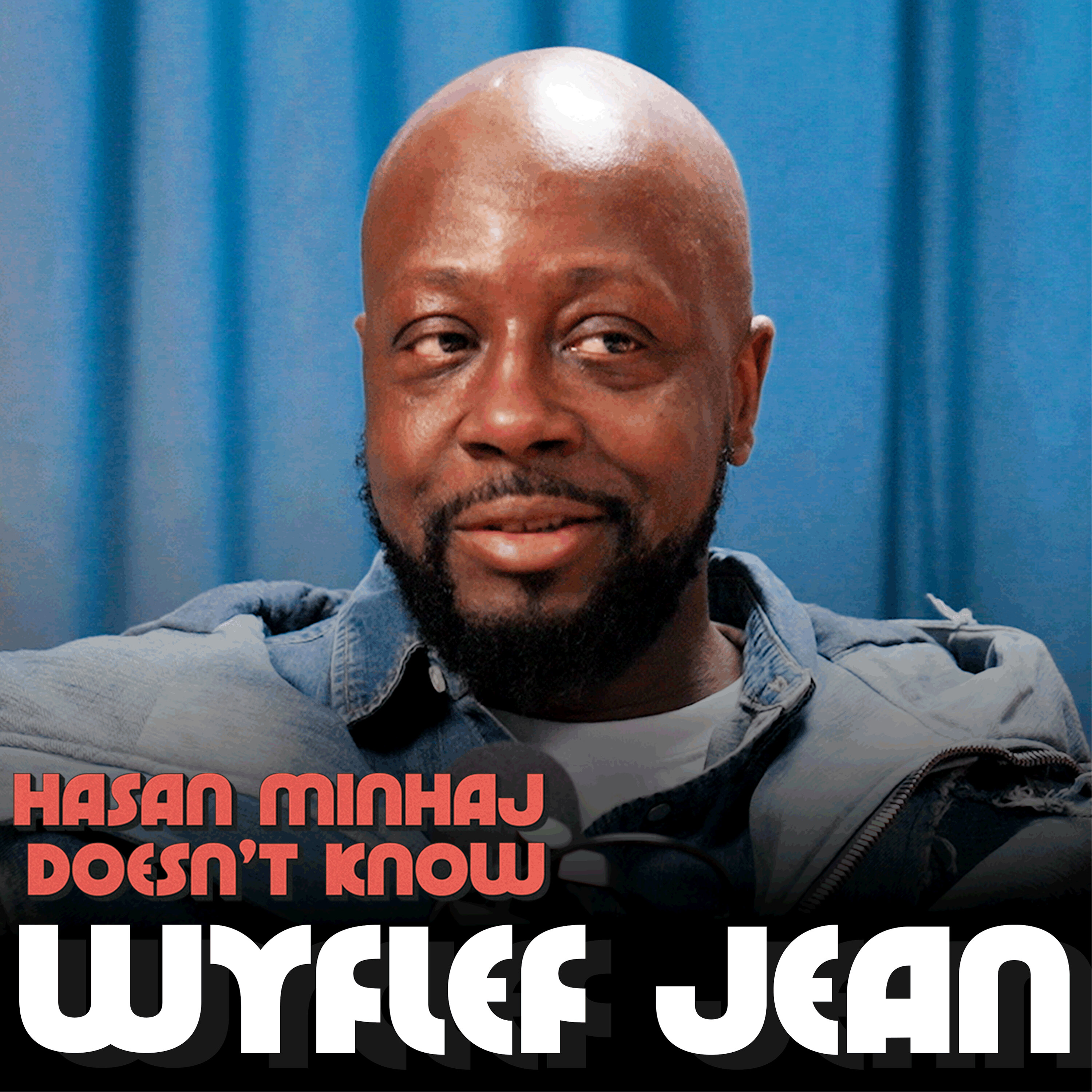
It's been 30 years since Wyclef Jean and the Fugees released the Score, one of the most influential albums in the history of hip hop. 30 years. I'm old. Back then, music was all about CDs, radio music videos and IRL word of mouth. But now, we are now living through one of the most disruptive eras in music history. Streaming and social media have given musicians access to fans all across the globe. But that reach has also significantly devalued their work work while also creating immense pressure to constantly create, making them, like all of us, slaves to Lord Algo. So I sat down with a music legend to talk about these changes in his unusually positive attitude towards artificial intelligence.
- [04:21]
Wyclef Jean
I'm for anyone that used the tool in a creative way and not in a lazy.
- [04:26]
Host
We also talked about three of the wildest moments of Haitian history.
- [04:29]
Wyclef Jean
We kicked Napoleon's ass that time he.
- [04:32]
Host
Ran for president of Haiti.
- [04:33]
Wyclef Jean
If I was president, I get elected on Friday. Assassinated on Saturday. Read on Sunday.
- [04:41]
Host
And his most famous lyric. I give you a hint, it's Shakira twice.
- [04:46]
Wyclef Jean
Shakira, Shakira.
- [04:55]
Host
One of your most famous bars is an ad lib that I've heard. And it's two words. Do you know the. Do you know what I'm talking about?
- [05:02]
Wyclef Jean
One time, Two time.
- [05:04]
Host
No.
- [05:04]
Wyclef Jean
Which one?
- [05:06]
Host
Someone's name. Twice.
- [05:08]
Wyclef Jean
Shakira. Shakira, yeah. Do you know the bad thing about when you have an ad lib and that becomes the hit? Do you know what happens?
- [05:16]
Host
What happens? I have no idea.
- [05:17]
Wyclef Jean
Your name becomes the ad lib. Like, literally, you feel me? Like you walking down the airport, it's like, shakira, Shakira. Yo, let me get. I have a burger. Shakira. Like, you know?
- [05:31]
Host
Yeah.
- [05:34]
Wyclef Jean
So shout out to Shakira, one of the most amazing humans that I know. All I could do is tell you the coolest thing for me is, like, being in the studio with Shakira and, you know, cut that Colombian energy and that Haitian energy. You know what I'm saying? And we cooking, you know, we cooking. We cooking, you know? And Shakira is like in. You know, I just remember something like, you know, the record's not a hit if my hips don't move. You feel me? When I heard that, I started cooking, baby.
- [06:11]
Host
I'm cooking.
- [06:11]
Wyclef Jean
Her hair's got to move. You know what I mean?
- [06:13]
Host
Okay.
- [06:15]
Wyclef Jean
Then she started talking about Columbia, the Kumba. Like, now we start incorporating. Cause I think, like, what made that amazing between me, her and Gerry Wonder, of course, was the collective of information of, like, the different worlds, right? To me, one of the illest lines is like, you know, it's the Colombians and Haitians. We ain't selling cocaine today. You know what I'm saying to you? Like, again, like you said, like, conveying, like, real message inside of a sexy joint.
- [06:46]
Host
Everybody that comes on this show treats AI like it's Terminator in Terminator 2 Judgment Day. They think it's going to be Arnold Schwarzenegger, the robots, lasers. It's going to come kill us. You've actually been pro. I. Tell me about that.
- [07:02]
Wyclef Jean
Well, I think so. Let's start with the term. I said, I am the master of AI AI is not the master of I, therefore I am I. That's always how I start my students. Now, I think that I probably have a cheat code that I could just explain to the average person. So when we are creating music, right? Yeah. What happens is you just listen to the music, but you. And you enjoying it and you vibing, of course. But you never say, how is the music being created? Like, what are they using? Right. Because ain't any of Your interests. Like, but what if I told you, like, one of the tools that I was using to do music? What if I told you there was a board called the Neve? You. What the hell is that, Cliff? I said, well, this is actually where the sound's coming up. Guess what? There's another cool part to the Neve. I don't even have to touch it. I can program it and tell it what to do. And then it'll be putting this button up. It'll know when to bring the vocal down. You'd be like, clef. I'm really interested in all that, man. I just, you know, I'm just enjoying the music.
- [08:07]
Host
I'm just vibing with the music.
- [08:09]
Wyclef Jean
So that part is important because if you can understand this part. And let's go even further. So whether if I'm playing the Atari, I'm playing Sega, I'm playing Fortnite, I'm playing Chess, I'm playing Pac Man. Have you ever noticed there's a time where when you're playing the machine, you start to figure out, how does this machine know what I'm doing? It's called machine learning. So what I want you, Everybody out there to understand is you. In the era where it's the most amazing era, there's nothing to fear but fear itself. Long before we were the pyramid was. There's no way that you can think that a machine can outsmart you or be better than you. What it is, is you have to think like this. Whether if you want it or not, gentrification is coming. As gentrification is coming. Are you going to be one of those ones that's casualty of war, sitting on the side talking about, I could have, I should have, I would have, or are you going to be like, oh, let me. My daughter, you 13, okay, you're gonna learn coding. Oh, and you're gonna learn this part. And I need you to invent an AI because as these houses are being built, you have to be owners of this new invention in order to be owners and creators. That means that you got to be part of the game. So the part that people fear is that the AI is going to take a lot of jobs away, right? We can't argue with that. Right? But as the AI takes the jobs away, there's still new jobs coming in, right? Where's the machine learning? Someone still got to train the machine, right? So we, as we went from the vinyls guys to the CDs, to remember how horrified record companies were in the beginning of streaming, right? To streaming Guys to this new era. Right. And here's another part. Can you imagine?
- [10:11]
Host
Were you scared during those eras? Remember what Napster, Limewire, Kazakh could never be scared.
- [10:16]
Wyclef Jean
Because I'm a creator. Are you a creator? If you're a real true creator, you should never be scared. The people that should be scared is the people that have been extorting the creators. Right. Think about that. Ready or not. How, how, how much did that video cost? 1.2 million Fuji video.
- [10:36]
Host
It's a lot of. I didn't know. You asking me? I was like, I don't know. You know, you actually.
- [10:39]
Wyclef Jean
Guess what though. What's up, generative AI today I can do the same video for $25,000. Right. And I only say that because the pros. Now let me tell you about the cons. Sure. The plagiarism, the idea of like somebody being able to take your put it back out and act like it's they remember now in the hood, if I and I always go back to the hood analogies, in the barbershop, we're talking about biting this. Biting, biting, biting. So in a barbershop do coming in, do not bring these DVDs man, that are bootleg. Do not bring that because you are going to go to jail. So at the end of the day, I do feel that law has to be implemented. And we, we don't have like, people don't feel like they held accountable. So it's like the wild, wild west right now. And policies got to be put in place and people have to be made examples of if you take in other people's shit because if you don't do that then it just becomes the normality. So when it comes to laws, encryption, I want to see more inventions of like what I call AI police that are literally can detect when, when people are stealing, when bad things are happening. Right. So again, policies have to be put in place. I think that's the, the areas we should be working on, man.
- [12:07]
Host
There's a lot. You're dump. You're putting a lot on me right now. But I want to. Let's break this down into steps. Okay. You're an artist with deep domain knowledge. I want to play you a clip. You're a consultant for Google DeepMind. Let's take a look at you talking about Google DeepMind and then we can talk about the music.
- [12:23]
Wyclef Jean
As a hip hop producer, we dug in the crates, we playing these vinyls and the part where there's no vocal, we pull it, we sample it and we create an entire song around that. So now I'm virtually digging in the crates. Right. Because it's spitting it back to me and I'm able to look for the Get Down. And now I cut the part that I want and I incorporate it inside of a song. So right now we digging in the infinite crate. It's endless.
- [12:51]
Host
What is sampling? Digging through the crates. What is sampling?
- [12:55]
Wyclef Jean
All right, so literally, I want everybody to understand that. Let's pick. Let's pick like a record that every generation would know. Okay. Yeah, I got one. Earth, Wind and Fire. September.
- [13:12]
Host
Yeah, yeah.
- [13:13]
Wyclef Jean
Do you remember? Yep. Right. You know, that's.
- [13:16]
Host
Of course.
- [13:17]
Wyclef Jean
Just do a little part. One, two, three.
- [13:19]
Host
Do you remember Stop of September?
- [13:23]
Wyclef Jean
Yeah, There you go. So now me, I would say, do you remember? Do you remember? Right, right. Yeah. So sampling literally is just. You're just taking a piece of a record. Yeah. We call it like the Get Down. And now you're literally gonna take from that piece and you're gonna create a whole nother song. So now you're going. Do you remember bass line? Look, man, I can't think, man. Like, Adiya. Do you do. Do you. Okay, so literally, in art, the biggest artists in the world are inspired by something on the wall.
- [14:19]
Host
Sure.
- [14:20]
Wyclef Jean
Right. Because they say there's. There's a term where it's like, it's flattery to. To actually take a piece of something.
- [14:29]
Host
Now, when. When sampling happened, there were two camps, right? There were people that are pro sampling, and then were there people that were against it?
- [14:35]
Wyclef Jean
Damn. Real people was like, what you doing messing up my music? Like that, you know? Yeah, yeah, yeah. And I think, like, still to today, I think one of the people that was anti sampling is one of my greatest heroes. Prince.
- [14:49]
Host
No way.
- [14:50]
Wyclef Jean
Yeah. No, for real. Prince song sample.
- [14:58]
Host
I don't know. No, I don't think I have.
- [15:00]
Wyclef Jean
No. Like, as a purist, like, it just didn't make sense. Like, why are you going to take up again? Right. There's two sides to the argument.
- [15:08]
Host
And Prince is like, you too, by the way. Music played every instrument, everything.
- [15:13]
Wyclef Jean
You get what I'm saying to you? And so what made you for it?
- [15:16]
Host
You were like, I'm cool with it. Because ready or not, you got a Delphonic song, you got an Enya sample. Like, you're. You're taking elements from.
- [15:23]
Wyclef Jean
I'm from a different generation. Okay. Right. I was literally right. So in my generation, I came up listening to like all these producers and all these, like, amazing records. Like, when I would hear LL Cool J is harder. Yeah. I don't you know what I'm saying, too? So I grew up like. And I was like, how are they creating this stuff? I mean, rza, What? How is this stuff? You know, Tribe Called Quest. So at the end of the day, I studied and I was like, oh, okay. I like this because it's a new art form. And every time something's going to be a new art form, you're going to get resisted for sure. But look where we at today from that art form.
- [16:08]
Host
You know what's so cool, though? The policy, what you're talking about earlier caught up to the art form. So with sampling, whether, you know, Kanye's doing through the wire, he's got to pay that fee to Chaka Khan, everybody. Yeah, you guys had to obviously pay Delfonics or any. There was a structure to say, all right, you're cc'd on the email. I'm a Venmo you the money. That's like. That's kind of a, you know, egalitarian way to explain how sampling works. How does it work with AI now, kind of in that video, it looks like it's getting trained on everybody's music and everybody's collective consciousness. How will it work with AI?
- [16:42]
Wyclef Jean
No such thing. It's not. That's pure creation. So let's talk about DJ Khaled. Wild Thoughts, that sample. Boom boom boom Boom. Yeah, of course. That's Maria. Maria. Right, right. So it still works the same way. You have to pay the copyright whiz kid, you know I'm saying? Or my man g Herbo, the 911. Right, yeah. That's still part of a copyright. Right. You can't. It's illegal to train an AI model on existence. Right. Because at the end of the day, the key is to bring in musicians. Right. So what you seeing that I'm creating? It's not from no AI. You know, I'm getting a plethora of information. This is all pure creation. So again, we need more creators, more musicians, more cats to hit the studio, more people recording live stuffs in these sessions. And now you turn around and saying, this is what you want the AI to do. Again, in the era that you in, licensing music is still law. If you sample a Wyclef song, you sample a Kanye song, you sample the Baby Lil Wayne or whatever, you gotta pay for that copyright. So ASCAP is a real thing. BMI is a very real thing.
- [18:04]
Host
Do you feel a certain way knowing that Google DeepMind is being trained on your own copywritten music?
- [18:11]
Wyclef Jean
No, because Google DeepMind is not being trained on my copyright music. My copyright music is not being trained on hips don't lie. It's not being trained on the fugees. Google DeepMind has hired a producer, right, Who's a creator, right? And if I am the master of AI, AI is not the master of I. Right now, I'm going to train the machine on a whole new set of tools that I feel that when my niece is coming, when my daughters are coming, they decide to dj, it's just going to make it easier for them to use that.
- [18:49]
Host
Did you see that video that Timberland uploaded? You saw that thing on Instagram?
- [18:53]
Wyclef Jean
Which video?
- [18:54]
Host
Timberland uploaded this video on Instagram where he was listening to a complete AI song. That was. The vocals were done by an AI artist. And then we're in the comments saying, yo, Timbaland, don't do this. You guys are all Jedi of the craft. What's the conversation that's happening amongst the Jedi about this, this whole thing? Because I really think it's a conversation around, do we need the humans? Do we need the artists anymore? What is this doing? Is this devaluing the artist?
- [19:23]
Wyclef Jean
You need the human. The human is the key to everything. Without the human, it would not happen, right? So you have someone who's doing the beat and saying, yo, I would rather use this human to sing that hook, right? And you have another producer that's like, I don't have the woman there. I'm trying to get to this voice right here, right? So, for example, right now I'm. I'm working on an artist, and I need to do a demo just for the idea.
- [19:55]
Host
Just temp. Just to lay down some temp.
- [19:57]
Wyclef Jean
Yep. Right? I'm gonna use the temp that I need. I'm gonna write it out for the vibe, right? But it's the same way if I was to write a temp on a keyboard or on the guitar, right? So again, I think that the conversation is up for debate. It's not right or it's not wrong. But if you're gonna ask me who's gonna win, the person that's gonna win is the person that understands I am the master of AI. AI is not the master of. I is. Are you being. Are you. Are you lazy? Right? Are you being lazy because, you know, you have all these tools and you. By stepping 10,000 steps, or are you using the tool in a creative way? So I'm. For anyone that use the tool in a creative way and not in a.
- [20:43]
Host
Lazy way, it sounds like you correct me if I'm wrong. I'm just hearing you, and I'm kind of thinking about it this way. It sounds like there was one wave of musician. And let's talk about you, Prince. We talk about older bands and musicians that would literally play multiple instruments. They would do the composition, the composing, and the singing, and they could practically play the instruments. That was almost one wave of musicians that still exists today.
- [21:12]
Wyclef Jean
Yeah.
- [21:12]
Host
Then there was this other thing that we talked about just previously. Sampling. You got Pete Rock, you got so many incredible DJs that use sample. Kanye west, obviously, Timberland, yourself, that would use sampling as a way to combine those things without having to play the live instrumentation. Do you think we're living through a third wave and that will be this kind of AI? I live hybrid.
- [21:38]
Wyclef Jean
Yeah, but you hit it on the dot. I lived in both ways.
- [21:41]
Host
Yeah.
- [21:41]
Wyclef Jean
Now, you ever say why Clef wrote My Loves, your love for Whitney Houston? Have you ever said who demoed it so Whitney could hear it? So me, if I was living in this era, I would have probably have an AI demo. What I already wrote to get it faster for Whitney if she needed it in four hours and I couldn't get someone to do it. You see what I'm saying? Right? But that's me, you know, using the AI in the right form. So I think that you hit it on the dot. We are at a hybrid era where the AI can meet you in the middle. And again, I'm going to stand by what I'm saying. If you're using the AI in the most creative way, you should not be threatened by it. If you're lazy, we ain't for that. Like, at the end of the day, if you were being lazy, you're gonna make the next generation lazy. But if you are being creative with it, then somebody is going to get on a whole nother math that you're not on.
- [22:45]
Host
You keep saying lazy. What do you mean? Who's being lazy?
- [22:48]
Wyclef Jean
Lazy means, like, you know, you just take the tools and you put them and you let the create a song for you. I ain't with that. Like, you need to write this song, create your best piece of art, and then ask the AI to contribute to what you want.
- [23:04]
Host
You're talking about a bunch of kids. This is the equivalent of a bunch of kids that are in college that are doing the ChatGPT essay. You're like, come on, bro. You straight up copying off of.
- [23:11]
Wyclef Jean
Yeah, I'm just saying, I need y' all to just keep being more creative. That's it.
- [23:15]
Host
What do you think streaming has done to music?
- [23:18]
Wyclef Jean
I feel that for the artist, you're in an era where it has to be. We have to. Now I have a term called a jig is up, right? Yeah, the jig is up.
- [23:35]
Host
I've heard this.
- [23:35]
Wyclef Jean
Yeah, yeah, the jig is up is like, okay, how rich are you trying to get, man? Right? Because the artist, man, who puts they time, they effort, they energy, they have a family too. Right? Right. They are not as savvy as we nerds might be. Right. And I put myself in the nerd category too. Right. Understanding intellectual property, understanding how data mining work. They ain't into that. They just want to put out their music, make some bread, feed their family and do what they do. So we have to reshuffle the cards. Right. I think every part of technology that comes is a great part as far as, like, the fact that my daughter can just go and she goes and stream whatever she wants, when she wants is an amazing way for her to.
- [24:34]
Host
Find every song that was ever created.
- [24:36]
Wyclef Jean
Every song. That part is great. The part that we have to fix is how do we make it fair for the creator? Right. How do we make it fair so that the. The. The people who are creating the music now are part of the actual business? Right. So in order to do that, we just have to come up with new models where it's directly, like, to consumer, to the artist. Like, directly, directly. Because now an artist future depends on building a brand. Right? Because once they built the brand now, because now you want to age the festivals, the merchandising, you know, the little apps that they create that's going to get them to a couple million. You know what I mean? And again, what I say with a thousand, right? So with our platform, the open wave platform, we tell people like, all you need is a thousand people. Don't Even if a thousand people is giving you a hundred, 100 bucks, think of it like that. That's 120,000 per year. Like, if you can figure that out, you got a business. So this is sort of like what we preaching without being anti. Any streaming without being anti. It's just that I feel like we need more.
- [25:57]
Host
So I often talk about politics with guests, but I have never had a guest from Haiti.
- [26:03]
Wyclef Jean
No, no.
- [26:05]
Host
Can we talk about Haitian politics?
- [26:08]
Wyclef Jean
If I was president, I get elected on Friday, assassinated on Saturday, buried on Sunday, they go back to work on Monday. If I was president. Go ahead.
- [26:21]
Host
You know you ran for president of Haiti in 2010.
- [26:24]
Wyclef Jean
I did.
- [26:26]
Host
How's that work? You didn't Live there at the time. How's that work?
- [26:30]
Wyclef Jean
How does it work here?
- [26:32]
Host
I mean, hey, man, that's a longer discussion.
- [26:36]
Wyclef Jean
Well, first of all, you just said something. How does it work when you don't live there?
- [26:40]
Host
Yeah.
- [26:41]
Wyclef Jean
So that literally means that. Let's start off by what are the constitute. What constitute you running for president of Haiti? Right. So the first part is, the reality of it is I did not need to live in that country for four years or five years to actually run. The reason why is because I have a Haitian passport, I have a green card, and I have a diplomatic passport at the time. So the. The job of an ambassador at large is not to stay in Haiti. It's to literally travel all over. So just so you know, this rhetoric of what was planted in the papers to say that I have to live there for five years was a narrative that they ran with, which is still running today.
- [27:32]
Host
What made you go like, I want to be president of Haiti. Something ha. What happened in your life that made you go like, I have to do this?
- [27:41]
Wyclef Jean
Well, when I look at history and I see, like, Tucson, Lovature, Jean Jacques Dessalines, who was killed on October 17, the day that I was born, when I spoke to you about the village where I come from, and then when I look at the odds of me in this era and in this time, what am I going to do with that, right at the end of the day, am I just going to sit back, shake my hips with Shakira, talk about all of this big music and all of this tech stuff when you have 80% of a population living on less than a dollar a day? And at the time, I took this engagement because I felt like I could do more than what I was doing. And it was a sacrifice. And I used to look back at history and see, like, Martin Luther King, like, different people, and I'd be like, oh, no, don't go there. What makes you go there? There's. There's a divinity, there's a divine order. This is real shit. And it checks you and it goes, what you gonna do now? Right. I've given you. I've given you all of this. Now what are you going to give back? So for me, at the time, I felt like I could have given back to my country.
- [29:15]
Host
Getting my protein in is like mentoring my employees. I'd like to in theory, but I'd rather take a nap. That's why I started using the high protein starter kit from Huel. It comes with five bottles of Black edition, ready to drink, plus the Black Edition Chocolate Powder Huel just launched in Target Nationwide so you can grab Ready to Drink bottles straight off the shelf at Target right now. If I have a gig or if I'm on the road, I on the Black Edition Ready to Drink bottles. Each one is a complete meal, 35 grams of protein, 27 essential vitamins and minerals, no artificial sweeteners and it actually tastes good. Then on days when I'm home or I just want something different, I use Huel's Black Edition powder. I usually make a smoothie with it. I like to add bananas and blueberries, but hey, I'm always looking for new recipes so drop them in the comments if you have any ideas. Get Huel's full high protein starter kit online with my code hassan20 for 20% off@huel.com hussan20 new customers only thank you to Hu for partnering and supporting hmdk. It's the new year so of course it's time to get unspeakably hot and really really healthy. My cheat code for wellness is going to Whole Foods looking for lean protein. I love grabbing the wild caught sockeye salmon at Whole Foods. All their proteins are always antibiotic and hormone free. Doing Dry January. Cool. Get on my level you fools. I am dry every month of the year and I love going to Whole Foods for something fun to sip on. They have so many options like Kombucha or probiotic sodas. We can have a little fun and meet our health goals. Okay, we all know this. The best part of Whole Foods is that I can trust made food. Whether it's the hot bar, the 365 ready to eat salad kits or ready to heat rice and beans to pair with my aforementioned lean proteins. Nothing is better for my wellness than having quick and easy options with trusted ingredients. Plus at Whole Foods they have big sales on supplements and vitamins. They have also got high quality protein powders and herbs. I don't know any other spot that does that. Shop all things Wellness at Whole Foods Market this episode of HMDK is brought to you by booking.com I love to travel, but I can't say that it's easy. My family has never been described as as low maintenance. We all have different ideas of relaxing. What is fun for my 70 year old parents is the opposite of what is fun for my younger cousins. Thankfully, booking.com offers a wide array of hotels and vacation rentals across the United States. So there is something for everyone, even those who are impossible to please. I'm talking about you dad. Whether you're booking for yourself or your picky parents or da boys group chat. You can find exactly what you are booking for. For example, my number one request at a hotel or a rental is a sauna. Now, I will settle for a steam room, but I gotta sweat out my demons. Speaking of, my kids appreciate a touch of whimsy. A cute window seat to read on. A water slide in the pool. A massive pile of construction dirt next door. They're not picky. Dare I say if we can find our Perfect stay on booking.com. anyone can find exactly what you are booking for@booking.com booking.
- [31:59]
Wyclef Jean
Yeah.
- [31:59]
Host
Book today on the site or in the app. Can we talk about Haitian history?
- [32:05]
Wyclef Jean
Go ahead, Go ahead.
- [32:06]
Host
Let's nerd out, bro.
- [32:07]
Wyclef Jean
Go ahead.
- [32:07]
Host
If you're down. If you're down, there's. There's three. There's three iconic moments from Haitian history that I'd love to get your take on because the. The people who listen to the show and watch the show, they nerd out about history, but very rarely do you get to go deep on Haitian history. So let's go through these three hit singles in Haitian history.
- [32:26]
Wyclef Jean
I like that. Three hit singles.
- [32:30]
Host
1791, Haitian Revolution. How did Haiti kick Napoleon's ass?
- [32:37]
Wyclef Jean
Yo, it's so crazy. I'm writing a whole rap about the revolution right now. Well, I think, like, there.
- [32:45]
Host
I mean, it's pretty fire. A slave army fought Napoleon and won. It's pretty incredible.
- [32:51]
Wyclef Jean
Yeah. So I think, like, there's a few we've seen, like these stories and mythology. Yeah, right. And in different ways through our different books, though.
- [33:05]
Host
Like, but I didn't learn this. I didn't learn this in America.
- [33:08]
Wyclef Jean
No. But.
- [33:09]
Host
But did you learn this in Haiti? Did you learn about this in Haiti?
- [33:12]
Wyclef Jean
Of course. You have to.
- [33:13]
Host
Okay?
- [33:13]
Wyclef Jean
You don't have no choice. Like, that's one thing about the Haitians. You see. One thing, you say whatever they pride level, like, you could. You could say what. You know, whatever they'd be like, but we kicked Napoleon's ass. You know what I mean? Spiritually, the. The level of them was like, when you watching that movie, like 300. You know what I'm saying? Like, that. That endurance. Bookman, right? So you have, like, several, like, cool, cool figures, like Bookman. Bookman. I want y' all to remember that when we dig deep into it, right? So Bookman was a different type of energy, right? Because at the end of the day, he was a rebel. And this is one thing people don't know about Bookman. Bookman's. From Jamaica.
- [33:58]
Host
Oh, interesting.
- [33:58]
Wyclef Jean
Yes. Came to Haiti at a very, very young age. So you can't talk about the Haitian revolution without talking about Bookman. And so there's something I want to clear up right now while you here and people are watching is this mystifying devil, voodoo, serpent in the rainbow type that they always inserting in the Haitian revolution, saying, oh, they applied voodoo. This is. You know, people aren't serious about that, though. Yeah, for real. Yes, yes, yes, yes. They. Oh, you've seen ministers say, oh, Haiti is going through what they doing because of the voodoo and the devil. Like, you could check it online. Something happened a long time ago in Haiti and people might not want to talk about it. They were under the heel of the French, you know, Napoleon III or whatever, and they got together and swore a pact to the devil. They said, we will serve you if you'll get us free from the French. It's a true story. And so the devil said, okay, it's a deal. And they kicked the French out. You know, the Haitians revolted and got themselves free. But ever since, they have been cursed by one thing after the other. Desperately poor. And I'm just saying, the reason why I'm saying that is because science is part of the real world. When you are attacking me with a cannon, and I don't have a cannon, but I understand the science of if I take these fish bones, put them together in a certain way, right. And swinging at you, right. Then automatically I take your eyes out or you smell something, you pass out. Right? This is called science. It's not called whatever, devilish black magic.
- [35:51]
Host
Or whatever you want.
- [35:52]
Wyclef Jean
Yeah, again, like, we could get into that. But again, I think that the spirituality, the science and the conviction of these folks is what made them take Napoleon out.
- [36:05]
Host
Is it wrong that when I read about this story, it makes me low key hate France? So just because. Just to give them context, a slave army fought Napoleon. Haiti wins France then forces Haiti to.
- [36:23]
Wyclef Jean
Pay billions of dollars to pay them.
- [36:25]
Host
Reparations, which is clef. This is. We're talking about French reparations. This is crazy. So they went from slavery to debt slavery.
- [36:37]
Wyclef Jean
That's right.
- [36:38]
Host
And then most of its wealth got Venmo'd over to France.
- [36:42]
Wyclef Jean
Yeah, well, it wouldn't make me low key hate the modern France. It made me low key hate the Napoleon France for sure. 100%.
- [36:52]
Host
All right, this one was crazy. This is another. This is another single from Haitians from Haiti's history. This single, number two that we're going to get into. This is the second piece of Haiti history. 1915, the United States of America. Marine Marines invade Haiti. In December 1914, U.S. marines, they walk into Haiti central bank and they just straight up stole 17 boxes of gold bars and they took them back to Wall street here in New York City. So that just casual jacking destabilizes the Haitian government. Then there's a military coup. Then a mob dragged the coup leader into the street and then killed him. And then President Woodrow Wilson uses this murder as a justification to go in and invade Haiti. Are Haitians taught about this in school.
- [37:47]
Wyclef Jean
In Haiti? It is part of what you talk about, right?
- [37:50]
Host
Because Americans are definitely not taught this in school.
- [37:53]
Wyclef Jean
No, of course not. How would you be taught that here? Right? Can you imagine? I'm in America. I come to America and. And I'm in black history. And you know, the first thing they tell me in black history, you know, they. They going. They telling me about Martin Luther King, we shall overcome. And you know, Malcolm X, you know what I'm saying? And I'm like, yeah, we. I know that Malcolm X and I know the Martin Luther King, but anybody heard of Tucson? Nope. Right. Those. Those are not things that are taught. So 1915, the Marines occupied Haiti. And I think that what teaches us is occupancy within the United States of not just Haiti, of a lot of places just do not work. Right? Because what happens is after you occupy and then you leave and then what? You know what I mean? So I think that in moving forward, it's important that the Haitian problem finds a Haitian solution.
- [38:54]
Host
The occupation lasted 19 years, by the way. A lot of people don't know that.
- [38:57]
Wyclef Jean
Yeah, I think that history is very important. And I think, like, we. We shouldn't shallow from it. And I think that when you look at Haiti, you can't just freak out and be like, yo, man, how did this happen to Haiti? So you look at this and then you say this, and then we go, well, is anybody watching, though? Like, the Louisiana Purchase would not have happened if the Haitians had not stepped in and helped the Americans fight. Right? And I could keep going and giving you different fun facts about this place. So Haiti is within the Americas, and we're in 2025 going into 2026. The Haitian problem needs a Haitian solution as we move forward, because we have seen through the course of history that no form of interventions have worked. Right?
- [39:50]
Host
Yo, why does the US and why do foreign governments love intervening? Let's just talk about America. I think America loves hosting an intervention.
- [39:59]
Wyclef Jean
So one of my uncles. His name is Raymond Joseph. Okay. And he was the ambassador to the US he has a book. It's called For Whom the Dog Spy. He was one of the dudes that helped get Baby Doc, like, kicked out of Haiti. Gangster. I was calling my gangster uncle. But what. What's ill, which he always told me, is there's always a trade for a trade.
- [40:25]
Host
Like, what do you mean by that?
- [40:26]
Wyclef Jean
Well, we in the US The US for them to. For them to intervene, for them to come in your space. Yeah, it's. It's. It's of natural interest. Like, they always have to be some form of a natural interest at times, right? So when you look at you say, oh, man, why do they invade here? What? They invade here. Like, you look a little deeper and you will see what are the natural resources right in the place that you. You know, that you come to help. Right? So what is going to be the trade for trade? So what I tell leaders is you can't be puppets, right? Because if someone's coming to do a trade for trade, you have to make sure that it is as good for your country as it's going to be for their country. So a lot of times, leaders back down. And from that, we've seen what, assassination at times, but at times we've seen the people have. Have. Have risen and saying, like, you know, we're not going for this. It has to be fair trade.
- [41:27]
Host
It's weird because sometimes I feel like the United States, they love to intervene. They love to host an intervention, almost like Alcoholics Anonymous, where they will tell another country. They're like, yo, your shit is fucked up. You got to get your shit together. But the other countries are like, but you gave me the booze. You're the bartender. You gave me the booze. You gave me the weapons. Who are you to claim the pretext that our shit's up? Yeah, it's messy.
- [41:50]
Wyclef Jean
Yeah, it's definitely messy. I've traveled the entire world, but let me ask you a question.
- [41:57]
Host
Sure.
- [41:59]
Wyclef Jean
You've been all over the world, you've done comedy, different places all over. And have you identified a place that the possibilities of success, whether someone come from India, Haiti, Jamaica, Crenshaw, Is there another place besides the United States that gives us this right? And I'm saying, where Snoop could come from, where he come from, I could come from where you could come from. Right? And I've traveled the world, and I'm saying, like, that sense of, like, even look at the mayor that we have today, right? That's Right through the voice of the people. Is there another place in. In that we have identified us like that? This is just me asking you that question.
- [42:53]
Host
The United States is one of the few places in the world that is defined by, I call them mavericks and immigrants that are mavericks. It's a very unique place. Other places that I've been to around the world, I've been to Egypt, India, South Africa. You can feel the history. The United States is very interesting in the sense of the way it's a magnet for people from around the world to come and imprint their maverick, like nature. You're a maverick.
- [43:29]
Wyclef Jean
Yeah. And I only said that because that's where I wanted to get to. So based on everything you saying, people taking my gold, moving it around and intervening in different parts of the world, we're going into 2026. So as the new mavericks, we see what happened in the past. So we need more of us to speak to understand that. And with this opportunity we have being here. Yeah.
- [43:56]
Host
And I will write a new story that's not repeating the new story.
- [43:59]
Wyclef Jean
Yeah. So how are we planning to write a new story? So I want to be part of that new story with you.
- [44:06]
Host
Can't tell you the last. This last one Haitian piece of history. This was while we were both alive. 2004. In 2004, the United States kidnapped Haiti's president and rendered him to Africa. This is a crazy story. In 2000. Am I pronouncing this right?
- [44:25]
Wyclef Jean
Jean Partand Jean Bertrand Aristide. I got you. Don't worry.
- [44:32]
Host
He was elected president. Then in 2003, he demanded France to pay Haiti 21 billion in reparations. In 2004, he gets forced onto a US jet and gets rendered to the Central African Republic and the US military invades Haiti again. Are those two things related? Like him asking for reparations and then him having to go on a plane and then getting sent to Africa?
- [44:54]
Wyclef Jean
Within my conspiracy theory. Sure.
- [44:57]
Host
Let's get, let's get.
- [44:58]
Wyclef Jean
Let's get WhatsApp about 100% like, you know what I'm saying? I think, you know, one president talking about reparation, you know, with the ambassador there and all of that. And the next thing you know, you know, that, that call, that call, you know, get them out of here. You know what I mean? I definitely think there's no coincidence of how that happened. You know what I mean? And then you saw, like once that happened, the whole country erupted into a whole nother energy which produced something else. Now, again, the narrative that people constantly want to Use is whether presidents did the right thing or they did the wrong thing with their people. Right now, this is always up for debate, but the part that's not is you cannot legally go into another, like, sovereign country and take the leader of a country and put them on a plane and be like, yo, I'm getting you out of here. The US carried out large scale strikes on Venezuela over overnight. It's President Nicolas Maduro and his wife Celia Flores have been captured and flown out of the country. Because once you start to do that, it's like a domino effect, right? Then other people feel like, well, if you're doing that, we could just go in here.
- [46:17]
Host
It reminded me of that scene in the Dark Knight. Like Batman straight up pulls that executive out of the meeting, out of a goddamn building, and then he's like, yo, you're on a jet, we're extraditing you out of here.
- [46:26]
Wyclef Jean
But you know that president is back in Haiti.
- [46:28]
Host
Oh, he's back?
- [46:29]
Wyclef Jean
Yeah, yeah, he's back. Okay. Like years later, you know, I don't know what deal was made, but he definitely got back years later.
- [46:38]
Host
Do you think France should pay reparations to Haiti?
- [46:40]
Wyclef Jean
I think that the new form of reparation in 2026 would be an exchange of purse. And what I mean by that is the new reparation that I would like to see is Haitians can leave Haiti, go study in other places and come back and serve their countries. So, yeah, so I think like, that form of reparation would be kind of amazing.
- [47:07]
Host
Back in June, the president ended the temporary protected status for about 500,000 Haitian refugees. And then you start seeing this insane the Haitians are eating the dogs narrative. Why do you think Trump was specifically targeting Haitians? Or why do you think Haitians were being targeted as part of this discourse that dehumanized them?
- [47:32]
Wyclef Jean
Well, the thing about me is I never get into the rhetoric of they eatin the cats, they eatin the dogs. Right? Because for me, in the book the Art of War by Sun Tzu, it's very important when you're, when we're focused on narrative to not be distracted. I think that there was an election coming up and within the scope of the election, at times there's distractions. That's just how politics work, is diversion. But I think that if you look at it like this, it's just the idea of the whole part of the election, the big narrative was the immigrants and the idea of the border control. Right?
- [48:23]
Host
So the border immigrants can't be trusted. What are they Doing.
- [48:25]
Wyclef Jean
Yeah. So this was going on. Yeah. So this was the biggest part of the. The whole thing, right. Kamala and. And Biden dropped the ball on this immigrant policy. Right. This immigration policy. Now, we both know that this immigration thing was there before Trump. Right? It was there. And so if. Now, if we. Because we. We gotta talk real now.
- [48:49]
Host
Yeah.
- [48:50]
Wyclef Jean
And if we're talking deportation, like, when we look at the Obama administration, right. We got to be real.
- [48:56]
Host
They went hard in the paint.
- [48:57]
Wyclef Jean
Yeah, they went harder. They went hard in the paint. Right? So. So my thing is, like, whether someone goes hard on the paint and they don't say verbally, and then another dude is like, yo, so at the end of the day, where do we meet? So I think, like, the way that we meet is in the space in the middle. And the space in the middle is, like, past all of this distraction and all of this noise, us as immigrants, which is these United States of America, which is all of us as we moving forward. How do we protect people in the sense of making people don't feel fear, making. Not alienating people and making people feel. Like that idea that we talk about when we talk about the American dream, making everybody feel that they're one. So in order to do that, I look past the rhetoric of, oh, this is happening, and that's happening. So the focus is what do we do to unite? Because in order to move forward, we have to find some form of unification. Unless we're going back to red and blue. Right. If we're not going to do that, then where is the space in the middle? So, for example, the meeting at the White House the other day.
- [50:16]
Host
Are you talking about the mum, Donnie Trump?
- [50:17]
Wyclef Jean
Yeah, yeah, just the other day. Right, right. Because, remember, before the meeting, it was Wu Tang Clan. Ain't nothing to fuck with. Like, read my Wu Tang Clan. Right?
- [50:27]
Host
Turn the volume up.
- [50:27]
Wyclef Jean
Turn it up. So, Donald Trump, since I know you're.
- [50:31]
Host
Watching, I have four words for you. Turn the volume up.
- [50:41]
Wyclef Jean
Right? Yes. And of course. And that's respected, right? And now. And I call. I call him the big homie in New York now, right? Big homie in New York gets to D.C. and again, right now he's representing all New Yorkers, Right? That. It's that thing that we talked about. So are we going to turn up the volume now or at the end of the day, how do we help New Yorkers as a team? Right? So I think, like, so this is sort of like, bro, it was a.
- [51:10]
Host
Surreal thing to see. It was a surreal thing to see.
- [51:12]
Wyclef Jean
But I'm just saying it's sort of like if you can ignore the noise, then you're able to penetrate. What's. What's the main mission, though, right? What do the average person care about? I know my mama's an immigrant. Health care, you know, your kids going to child care, Education.
- [51:30]
Host
Rent.
- [51:31]
Wyclef Jean
Right, rent. And then so at the end of the day, this is sort of like what I'm focused on, on how we move forward. And the last thing I'm going to say about the Haiti thing is the politicians in Haiti suck at the moment. You have, like, nine leaders that you just don't know what the hell's going on. So a lot of times before you blame somebody else, let's start off in 2025, going into 2026. How do the Haitians solve a Haitian problem?
- [52:05]
Host
One of the things that you, I think, will definitely have a great perspective on is NGOs. You're an immigrant, you're from Haiti. You've obviously made your way here in America. People have mixed feelings about NGOs. Some people think, look, this is the only way I can donate. Some people have been critical of NGOs of like, man, this van pulls up, they walk out, they give some dasani water bottles. They keep it moving. Quick little photo for the gram, and they're out. How do you look at NGOs? How should we look at NGOs?
- [52:36]
Wyclef Jean
I mean, this is a great question. I feel like I was part of a conspiracy, because at the end of the day, when I started, when I started yelling Haiti. And I felt like it was infiltrated, because at the end of the day, there was a time there was like, oh, cleft took $16 million in funds, right? Which I never did. And I denounced that. But the reason why I felt I was targeted is because of this very question that you're asking me today, right? The question is me as a Haitian, with all of the NGOs that are coming into my country and all of this billions and billions of dollars that are going, I don't see one university, I don't see one hospital. I don't see an education system, right? As we move forward, I'm going to stick to exactly what I said, is that NGOs is a band aid for third world countries and for third world islands, it's a band aid. And once the band aid comes out, the wound gets worse. So as we move towards the future, you have to look at these people in these rural areas. Not we don't. I was in the village. I don't need a hand down from you. I told you, when you're leaving, can you leave the seed? Can you leave the fertilizer? Can you leave the machinery? Little man is over here, he doing clippers, you know, invest in him. He might start a little barber shop. Take these 3,000 farmers that are making tomatoes. Don't just be like, oh, I'm gonna. Here's another, make some more tomatoes. Why don't you teach them how to trade, Teach them how. This is how the international law works, you know, for these tomatoes. If you wanted to get out of Haiti, this is how we have to get doing. So as we move towards the future, I do feel that There's a few NGOs that are doing amazing. So this is not towards the honey, but what I was preaching was that that non governmental organization, one of the things I stepped up and said, bro, was like, why do we wait for a natural disaster to already have the helicopters, to already have the boats, to already have all of that in place as, as people that when the disasters happen, there's billions of dollars. Where's all these billions of dollars going through? So in saying that, I conclude by saying that the new world that we're going into these NGOs and they have to start looking at how do you look at people and start to make them partners, right? Because the biggest thing you can give me is not food. The biggest thing that you can give me is intellectual property to economical freedom, right? Because if you give me the information, then you allow me and, and then you say, okay, well, now this loan that I'm going to give you is not a debt. It's because I'm trusting you as a businessman. And in saying all that, we're not saying like when disasters happen or people come in, don't apply NGOs, but I'm just saying an NGO is a band aid.
- [55:55]
Host
You're saying there's a. There's a bigger problem, There's a bigger underlying problem to solve.
- [55:58]
Wyclef Jean
The bigger underlying problem is, I remember when I was little and then the commercial come on and we in the village, and it's like, yo, don't you want to help this kid? He look hungry. He in the village. Yeah, yeah, I was in the village and I just told you I might have looked hungry, but I told you, leave the fertilizer and the seed. So the bigger problem is to start to look at these people on how do you give them intellectual property, economical freedom? Don't look at them as handouts. Treat them like partners. Treat them like they have minds. Treat them like they can actually help.
- [56:37]
Host
Build their countries, you know, February 2026, it'll be the 30th anniversary of the score. Where was music at at that time that you think resonated so deeply with people and I think changed popular culture and popular music as we know it?
- [56:56]
Wyclef Jean
I think, like, a lot of people trace back to the score, but I think the DNA of what produced that was actually more important. So you have a situation where there's an article that speaks about 25 years before Hamilton, there was a musical called the Twelfth Night Shakespeare, a hip hop musical. 25 years before Hamilton. Wyclepson, Lauryn Hill, MC Light. The reason why I'm bringing Shakespeare up and I'm bringing this.
- [57:33]
Host
Wait, y' all did Broadway?
- [57:34]
Wyclef Jean
We did Off Broadway. Wow.
- [57:36]
Host
Like, you guys did a real, like.
- [57:38]
Wyclef Jean
Yeah, it was. It was a play that was supposed to. I'm showing you. Wow. 25. We're not talking about the. The score here. We ain't talking about the Fujis. Right? So there's an article, and after this, I'm gonna share it with you, with your friends. So what happens is a lot of people see the end, but you don't see the beginning. So it's like, so understand coming from that mindset of understanding how to paint a canvas. Right? Entering the score for me as one of the composers is just. It was just like painting a Shakespearean play. Like, whatever's going on in the hood, we going to paint it real life, so. And a lot of people talk about the Fugees, but there's another group, it's called the Outsiders. Now, when we backtrack and y' all do a little history, you'll see that Eminem was with the Outsiders at a certain amount of time, right? So it was two crews from Jersey, it was the Fugees, and it was the Outsiders. And at times, we wouldn't trade. We would trade information. And this was like. So what was making this amazing? Yeah, it was like, for the first time, the Suburbs and the. The hood. I'm saying, like, where the fiends is at the crack alley, exchanging information and conversation.
- [59:00]
Host
Just airdropping each other.
- [59:02]
Wyclef Jean
Airdropping each other. Sparring.
- [59:04]
Host
Yeah.
- [59:04]
Wyclef Jean
Boom, boom, boom, boom. So that the. The. The lyrical massage that you hear in that score was like a conversation between both sides, you know what I'm saying to you? So that's like some of the stuff that people, like, might not know when you hear that. So where was we at in music? You down with opp? Yeah. You Know me hip hop. Oh, U N I T Y. You know what I'm saying? Yeah.
- [59:33]
Host
Early 90s.
- [59:34]
Wyclef Jean
There's like early 90s. So we trying to find ourselves before the score was blended on Reality. That's the Fuji's first album, Blended on Reality. So before y' all had this, what we doing right now? Yeah, the original. This is college radio.
- [59:50]
Host
Oh, right.
- [59:51]
Wyclef Jean
Yeah.
- [59:51]
Host
You go to the studio.
- [59:52]
Wyclef Jean
Yeah, that's right. You go to college because. Yeah, because if you're trying to get to the people, you got to go locally. So. So we went to. Now we're trying to find our sound, right? So can you imagine now, this is Early Days, right? Yeah. It's like, oh, who are you? Stretching Barbito. Of course. That's Big L, right? Going through Columbia. Who are you? That's Nas. I'm showing you. Early. Early Days, Right, Right. So. Oh, Fugees. We're gonna open up for Biggie Smalls and. And. And Puff, right? I remember, like, Biggie coming in the room, like, you know, y' all gonna be cheating. Y' all gonna start playing all these instruments on stage, you know, like, so all of this energy is brewing. So it was like. And then there was a term at the time, right, Called alternative. When they couldn't figure out who you were, right?
- [60:50]
Host
They couldn't.
- [60:50]
Wyclef Jean
It was like, box. Put you in a box, it'd be like, you alternative. Now, when you alternative, you ain't. It's like you're in a borderline of credibility to the streets or not, right? Yeah. So it was like, we was like, okay, we gonna settle the score. So this whole thing going into the score, like, we knew, like, because the whole. What was we trying to prove? At the end of the day, we was like, yo, we not gonna do music. We're gonna be a movement. Like, the music is always going to be the music. But if we become a movement, then we become, for the voice, voiceless, right? Refugees, like, so it doesn't matter if someone's in Somali. If they're in Haiti. Wherever they at, when they hit a score, they gonna relate to it.
- [61:31]
Host
Listen, bro, I nerded out with you about music. Obviously, your discography. You walked us through this new era of music we're gonna live through. We nerded out about Haitian politics. Is there anything else that you wanted to talk about?
- [61:45]
Wyclef Jean
I am the master of AI. AI is not the master of I. Let's get into it. I flipped the language, go from English to the Spanish. Like, mira, amiga, buenos dias, senorita. Como esta uste y su familia Estoy. We nerd. Now France. I speak French like como is Spanish W? Clef. I flip it, I'm the one. I know what you thinking, right? Me too. In my game of numbers, they could only be a few I am the Trinity, Thee Guess the riddle, kids. One man on two sticks? What's that? The crucifix. At least that's what they taught me in Sunday school. Forgive my foes. Fives pointed at Pinocchio's nose Skip the six, go to seven that's the number of completion Adam ate the apple so they cast them from the Garden of Eden Jealousy got him waving his nine king kills Abel he a ten man, his heart pumps oil two ones ain't enough to make it rain microphone check, 1, 2 rap lives in my vein I'm from the era Dudes scrap with their hands Play Friday the 13th Get Cobra clutch or a body slam but my nephews, they from Haiti, they don't use their hands M14s, M15s, guns and roses pointed at your sweet 16 I was born on October 17th that's the day they killed the leader Jean Jacques Desaline and my mama told me there's monsters under my beard the 18 think Malcolm X, the 19th hour by any means 2020 vision they said the good die young I am the master of AI AI is not the master of I. I just did that bar to show you how I made it past 21 bars. What we doing?
- [63:25]
Host
Oh, man.
- [63:26]
Wyclef Jean
Standing. Oh, bro.
- [63:27]
Host
Come on, man.
- [63:28]
Wyclef Jean
I can't compete.
- [63:38]
Host
If you haven't subscribed to Lemonada Premium yet, now's the perfect time, because guess what? But you can listen completely ad free. Plus, you'll unlock exclusive bonus content like Halle Berry on how to be a good partner during menopause or Mehdi Hassan on the dumbing down of media clips you won't hear anywhere else, Just tap that subscribe button on Apple Podcasts or head to lemonadapremium.com to subscribe on any other app. That's lemonadapremium.com. don't miss out.