← HBO's The Last of Us Podcast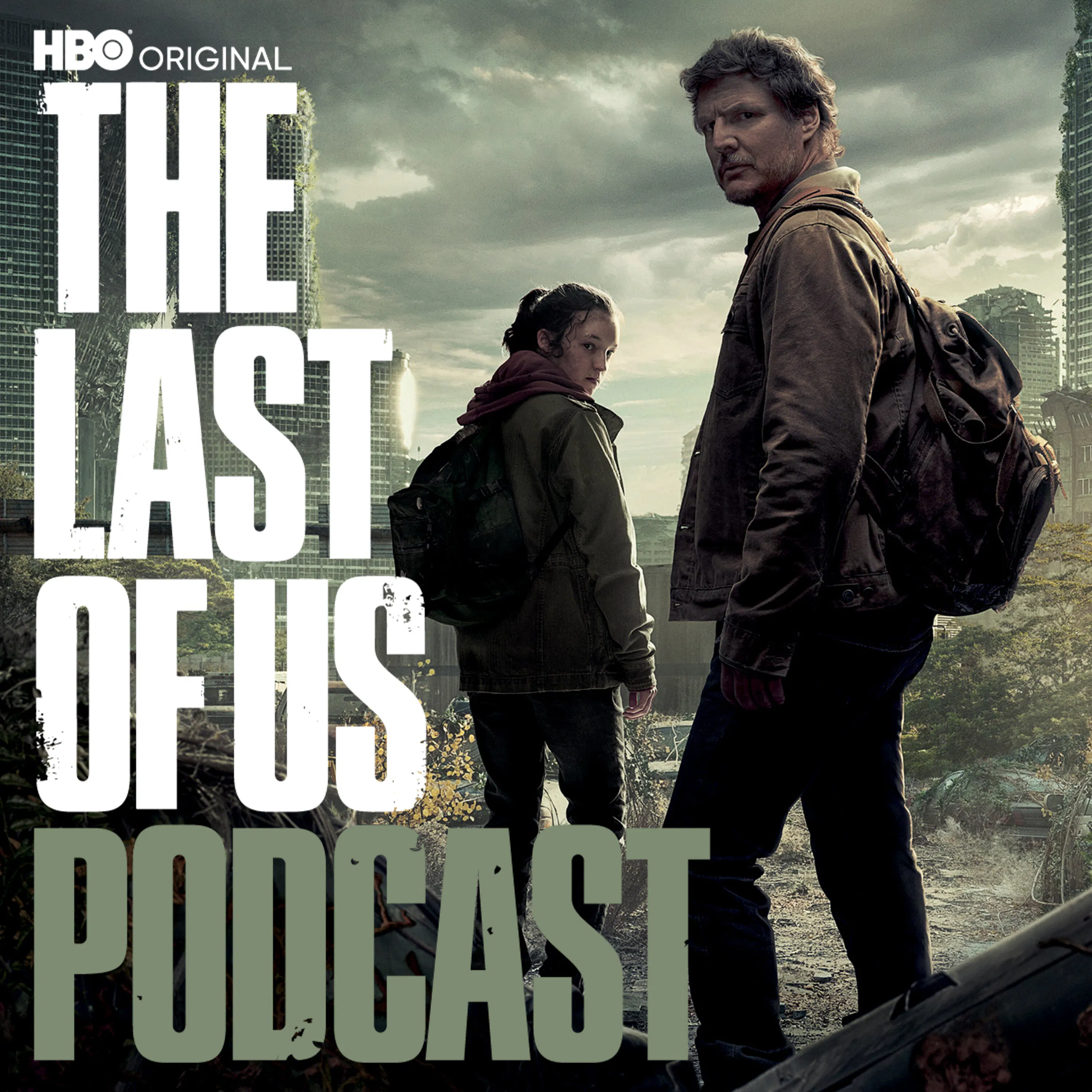
HBO's The Last of Us Podcast
Season 1, Episode 4 - “Please Hold To My Hand”
00:39:01
Host Troy Baker and Showrunners Craig Mazin and Neil Druckmann walk through Episode 4, exploring key developments in Ellie and Joel’s relationship. They discuss a major antagonist of the show and tease Joel’s dark past. HBO’s The Last of Us podcast is produced by HBO and Pineapple Street Studios.
Loading summary
Transcript198 lines
- [00:01]
Rocket Advertisement
At Rocket, we believe everyone deserves their shot at the American dream. So if you're feeling locked out of home ownership, we're here to give you back the keys. We're opening doors, breaking down walls, and doing everything we can to turn renters into owners. And we're not going to stop until we help everyone home. To find out more, visit rocket.com Rocket Own the Dream.
- [00:37]
Unknown Speaker
I know what it's like. First time that you hurt someone like that. If you. When. I'm not good at this.
- [00:56]
Yeah, you really aren't.
- [00:57]
I mean, it was my fault. You shouldn't have had to. And I'm sorry.
- [01:14]
Troy Baker
Welcome to the official podcast for HBO's the Last of Us. I'm your host, Troy Baker. Joining me now, Craig Mazin.
- [01:21]
Craig Mazin
Good to be back, Troy.
- [01:22]
Troy Baker
And Neil Druckmann.
- [01:23]
Neil Druckmann
Hello, Troy Baker.
- [01:24]
Troy Baker
Today we're gonna be discussing episode four, titled Please hold to My Hand.
- [01:29]
Craig Mazin
So that's a lyric from Alone and Forsaken.
- [01:33]
Troy Baker
I mean, that's a carryover from the game we get Alone and Forsaken played in the truck on the tape. Allie's got a gun. And what I loved is that we take a moment to show she's really adept at it. Like, she knows how to chamber a round. She knows how to do a mag relo. Like, she's really good at this.
- [01:54]
Neil Druckmann
She's so infatuated with it.
- [01:56]
Troy Baker
Yeah, yeah.
- [01:57]
Craig Mazin
She smells it.
- [01:58]
Troy Baker
What is her fascination with guns? What is that?
- [02:01]
Neil Druckmann
I think it's the power. I think it's just. Well, for one, again, she looks to the people that are survivors, the ones that are capable in this world, and they have the power to kill. The questions she asks Joel are often around. What was it like to kill? What was it like to shoot? What was it like to do these things? It's almost like she's preparing herself. And again, she doesn't want to be in a situation where Joel's gonna have to save her. She wants to hold her own, and she wants to demonstrate that she can hold her own.
- [02:32]
Troy Baker
This is not a device or a weapon of protection, but it's a weapon of attack. It's something that. It's an offensive weapon.
- [02:38]
Craig Mazin
Yeah. She's not obsessed with a gun or owning a gun because she's afraid for her life. She's obsessed with it because she wants to walk the path of power the way somebody like Joel does. When she sees Joel beating a man to death at the end of our first episode, what she is experiencing inside of herself, along with a kind of inevitable revulsion and fear and shock is aspiration, because that's what she wants to be able to do. I mean, this is a man that was coming at them with a very big gun. And Joel defeats him with violence. And Ellie, we don't yet understand how she became infected. We haven't heard that full story, but I think it's probably safe to say that it was violent. And perhaps if she had had a gun, if she had been more prepared or had more of a position of power, she could have prevented it from happening.
- [03:41]
Troy Baker
There's two cool things that are kind of nods to the game in this. First, there's the siphoning of the gas, which is something that in the Bill, as we're leaving him, throws us a siphon and says, you'd be surprised at how many cars out there still have gas. And now we also have the pun book.
- [03:58]
Unknown Speaker
No pun intended. Volume Two, by Will Livingston. Volume two. Look, you get it. Two, like T O O. Jesus. What did the mermaid wear to her math class? An algebra. Like an algae bra.
- [04:17]
Craig Mazin
I loved it. I mean, I remember in the game being shocked that the game was suddenly offering me this thing that had no benefit for the game at all. That's what I loved about it, that it was just gratuitous and yet lovely and human. It was sort of like saying, hey, you know what? You don't have to be eyes in the back of your head or getting ready to run or shoot at every moment. You can take the time to stop, look around, experience the beauty of the world that's created. But what I also love about it and why it was essential to include in the show is that it undercuts this thing that happens when adults write kids. They either write them too young or too old. And there's this stage of life. My friend Scott Frank had the best description of it ever. I was talking to him about my kids as they were going through that age, and he said, I call that time of life. Fuck you. Tuck me in. They are ready to go out on their own. They want a gun. They want to be in charge. They think they know everything. Also, they're still children. And I love how Ellie has this joy for something so juvenile and infantile and stupid. And she knows it's stupid, but she loves it. It's honest joy. And I always find myself connecting to characters when they show me what they love. And Pedro's reaction is amazing. But I think one of the things that Neil and I kind of, as we were talking about, including, became a place where we thought, you know, Given that it's not something that just emerges dynamically and goes away when you're pausing on the stick in the game. What can we do with this joke book that comments on their relationship as it changes?
- [06:16]
Troy Baker
Man. And there's so much about it, too, because in her backpack, she has a pun book and a weapon.
- [06:24]
Craig Mazin
Yes.
- [06:25]
Troy Baker
And it's so tight.
- [06:26]
Craig Mazin
Fuck you, tuck me in.
- [06:27]
Troy Baker
Fuck you, tuck me in. It's this cool opportunity that we show that these things are getting mixed up.
- [06:32]
Neil Druckmann
You could see their relationship. They're organically connecting with each other. Whereas before, it's like they have to be very thoughtful and try. They've been trying, and now they don't have to try anymore. Now it's happening.
- [06:46]
Craig Mazin
This is also the first moment where Joel talks. I mean, obviously Joel is speaking for the first three episodes, but he doesn't go on at length. And they are driving in the car, and she asks him about Tommy, since that's where he wants to go. And he talks for a really long time. And I just love that notion that Joel doesn't even realize that it's happening. It just is happening.
- [07:19]
Neil Druckmann
It's happening despite himself.
- [07:20]
Craig Mazin
Despite himself.
- [07:21]
Troy Baker
But also after the prompt, you know, it's a long story. This is where I shut it down. And she goes, is it longer than 25 hours?
- [07:28]
Craig Mazin
That's how much time we got. But what I thought was interesting about this was, A, he's talking a lot, which in and of itself is interesting. B, he is giving some context that creates threads that we will be able to pull on and expand on later. And also, at the very end of it, when Ellie is pushing him and saying, how do you know you're gonna find him? What if you don't? And he says, I will. How do you know? I'm persistent. And Ellie has this little smile on her face because she loves that. That's what she aspires to.
- [08:02]
Neil Druckmann
That's what she is.
- [08:03]
Craig Mazin
That's what she is. It's persistence is the thing that connects the two of them.
- [08:08]
Troy Baker
The thing that stuck out to me most. When he's discussing this whole thing about Tommy, and he kind of glosses over this. He says that there have been people that I attach to that I try to keep alive, and I don't do a good job of it.
- [08:22]
Craig Mazin
That's one side of the coin. And the other side of the coin is Joel has a certain narcissism that he must go save Tommy. There's almost a resentment. I gotta go save him again. In the first episode, Tommy calls him from jail. And he's like, ugh, I gotta go bail him out. Goddamn fucking idiot. There's this thing of, like, I've gotta go do my job and be the guy. But Joel loves being the guy, Right?
- [08:47]
Troy Baker
Who am I if I'm not the guy?
- [08:48]
Craig Mazin
Exactly. Exactly. It's part of his identity. Even as he's pretending to complain about it. This the way that in our last episode, Bill says to Frankie, you are my purpose. This is Joel's purpose. He has to have somebody to save.
- [09:02]
Troy Baker
There is another thing that he says to Ellie in this conversation. He's talking about family.
- [09:09]
Unknown Speaker
If you don't think there's hope for the world, why bother going on? I mean, you gotta try, right?
- [09:16]
You haven't seen the world, so you don't know. You keep going for family. That's about it.
- [09:25]
I'm not family.
- [09:27]
No, your cargo. But I made a promise to Tess and she was like family.
- [09:36]
Troy Baker
He says it dispassionately, but why? Why, why?
- [09:42]
Neil Druckmann
Sees what he wants to be true.
- [09:43]
Craig Mazin
Yeah.
- [09:45]
Troy Baker
For whose benefit is he saying it? For himself or for her?
- [09:47]
Craig Mazin
For his. I mean, what is the alternative to say, you are family? I actually am starting to care about you. You're filling a place in my heart that I thought I had closed off completely. And by filling it in my heart, you are opening me up to experience the greatest pain I've ever felt. A pain I swore to myself I would never feel again. Or he can say, yeah, no, no, you're not family. You're a job. I was given you by Marlene. I'm delivering you, and I'll drop you off with the fireflies.
- [10:15]
Neil Druckmann
He's not gonna say, I've already murdered for you.
- [10:17]
Craig Mazin
Yeah, exactly. And I think if he had said too much, Ellie would have been probably a bit shocked and put off. I like that she takes it in stride, too. This will happen again in later episodes. We are going to see how she also is not quite ready to be like you and me, buddy. It's us.
- [10:40]
Neil Druckmann
And he's one for people that know he's still holding quite a bit of secrets. They're both holding, like, secrets from each other. So as much as he's chatting, he's not chatting about everything. He's not talking about Sarah, for example.
- [10:52]
Unknown Speaker
Right, right.
- [10:53]
Craig Mazin
And there's a lot she's omitting.
- [10:55]
Neil Druckmann
Right.
- [10:55]
Craig Mazin
Which is, you know, that is something that I think we talked a lot about in terms of adaptation. Ellie was a bit of an open book in the game, and we thought it was important for Ellie to have A couple of secrets that she was holding back that were a bit darker and a bit creepier and a bit scarier.
- [11:16]
Unknown Speaker
Where are we?
- [11:18]
Kansas City.
- [11:22]
How far back do we have to go to get around this?
- [11:25]
Troy Baker
One glaring question for me would be, maybe it's me being a nerd and having familiarity with the game, but why Kansas City?
- [11:32]
Neil Druckmann
Craig hates Pittsburgh with a passion, which is why Pittsburgh is not in this toy.
- [11:38]
Craig Mazin
I'm so sorry, Joe Manganiello. No, I love Pittsburgh, but really what it came down to is the Pittsburgh ness of Pittsburgh wasn't necessarily important. And we had certain environments we knew we could shoot in because we were shooting in Alberta, largely around Calgary, a little bit in Edmonton, and it looked closer to Kansas City. It just literally, I think, came down to that. It was just harder to manufacture Pittsburgh in that place.
- [12:07]
Neil Druckmann
There's also something we talked about, distances and where we want them to be on the journey at a certain time of the year, because where the story's going. And we wanted that moment to be closer to the next beat, which we won't spoil. Where just like we're looking at the map in Pittsburgh, it was like, oh, that was much further away. So if this beat happened here, there'd be a lot more that happens between the next beat. So it's just one of those things that I refer to as like a superficial change.
- [12:36]
Craig Mazin
Yeah.
- [12:37]
Neil Druckmann
Because what city you're in is not important. What happens to the characters and the choices they make in that city, that's what's really important.
- [12:44]
Troy Baker
So to me, the thing that I liked about it being Kansas City is it made it believable that they would open up and they would talk to each other. It made it believable that they were more comfortable. Because what we are going to get into with this is we have this ambush that happens, which was almost one for one if you've played the game. It was great. Help. Please help me. Hey.
- [13:08]
Unknown Speaker
Please help.
- [13:12]
Put your seatbelt on.
- [13:14]
Are we gonna help him?
- [13:15]
No.
- [13:20]
Troy Baker
This attack happens from all these people. We realize that we are. We literally drove right into an ambush. And then we meet Brian, right?
- [13:32]
Unknown Speaker
No, no, no, no, no. It's okay. It's okay. It's over. We're not fighting anymore. I'm gonna go home. I'll tell everyone you're good.
- [13:40]
Craig Mazin
I don't know what to do.
- [13:42]
Unknown Speaker
My legs don't work. My mom isn't far. If you can get me to her, we can trade with you guys. We could be friends. I didn't know. Oh, Brian. Oh, Brian. What's your name.
- [14:00]
Troy Baker
We humanized the enemy.
- [14:02]
Craig Mazin
Yeah.
- [14:03]
Troy Baker
Where did this come. I mean, I. Good God.
- [14:06]
Craig Mazin
Well, in part, I think it was getting under the skin of people that you think are just bad with a capital B. And it was also a chance to ground violence, because in the gaming experience, violence very quickly becomes sort of just noise. You're killing a gazillion people, lots of monsters, and here not so much. And it was important, I think, for us, tonally, to make it clear that violence isn't clean and the people that you hurt are as human as you are. And Ellie, who had had this excited thing with this gun and who had shown violent impulses, is really struck to her core by what's happened here. And Neil has put his finger on the most important thing, which is that Joel is almost angry. But why would he be angry at her? He's angry at her because he's angry at himself because he didn't hear that guy coming, because he was losing, because he had just given this big monologue about what a savior he is. And once again, he would have died without her. Bingo.
- [15:21]
Neil Druckmann
It's interesting, both characters, we had a lot of conversations about what this moment means and what should their reaction be, and they should be comforting each other. They just survived this thing. And instead, Ellie is feeling fearful and shame, like that. She's about to cry. And I think it bothers her more that she's about to cry than what this Joel is about to do to this man. Often in this genre, like a character like Ellie would symbolize the innocence that still exists in this world. And in this moment, when the guy's begging for his own life, Ellie would be arguing on that guy's behalf, like, what if we left him alone? What if we saved him? And she does none of that. She understands what needs to happen, and she walks away and lets it happen. And her thought process is, I feel sad for him, so I must be weak, right?
- [16:11]
Troy Baker
Hmm.
- [16:12]
Craig Mazin
Right.
- [16:13]
Troy Baker
How did Joel. How did he kill Brian?
- [16:17]
Craig Mazin
He stabs him right in the chest.
- [16:19]
Troy Baker
I was expecting to hear a gunshot, and I didn't. And it was.
- [16:23]
Craig Mazin
It was something that I loved when I played the game for the first time, which was how scarce ammunition was. It made me scared. Also, it's loud. Why? Why draw attention to yourself? There's already been gunfire. Why? Why throw one more bullet on there? Someone's gonna come looking for this kid.
- [16:39]
Troy Baker
Another face that we get to meet, which was such a surprise, is Melanie Lynske.
- [16:47]
Craig Mazin
Yeah.
- [16:48]
Unknown Speaker
This is Henry's work. Understand? And he won't stop until we stop him. Find who did this, find every collaborator and kill them all.
- [17:02]
Troy Baker
How did that come to be? Like, this is a new character?
- [17:05]
Craig Mazin
Yes.
- [17:06]
Troy Baker
We're completely infusing a new character into our story. Where did this come from?
- [17:09]
Neil Druckmann
The show affords us the ability to leave Joel and Ellie and flesh out other characters in different ways. And the best thing I think you could do in the Last of Us is flesh out your antagonism to show that there's motivation behind what they're doing. They don't see themselves as villains or the bad guys. We're just at odds with each other because our goals somehow overlap what we want, which are different things. So to leave Joel and Ellie and focus on Kathleen and put a face to this resistance that has taken over the quarantine zone from Fedra, made them more interesting and made the fact that, like Joel and Ellie and this other group are barreling towards each other like you're kind of cringing, just wanting to avoid this conflict between these two groups.
- [17:59]
Craig Mazin
Humanity probably will not, in a post apocalyptic world, descend into a Mad Max style. We're just 80 people that love killing. It's not what happens. What happens Instead is we're 80 people who love each other because we're family, we're friends, we're neighbors. That love means we must protect ourselves and our stuff and stay alive at any cost. Which means anybody that gets in that way of that needs to be taken out. And Joel himself was once one of those people. That's how he knows that the guy saying, help me is not really hurt. It's they're being conned. It's a hustle, it's a setup.
- [18:44]
Troy Baker
It's one of my favorite lines from the game, which is when they're. And I love that it happened kind of in the same place, is how did you know about that ambush back there? This guy been on both sides, I've.
- [18:51]
Craig Mazin
Been on both sides. And she says, did you kill innocent people? And he gives her this look. It's weird. I can't describe it. It's guilty. It's confessional. But it's almost like, please don't make me answer it.
- [19:06]
Troy Baker
To me is, you don't wanna know the answer. You don't really wanna know the answer. And don't make me say it.
- [19:10]
Craig Mazin
Please don't make me say it. And she understands in that moment what the truth is. So we have this character Kathleen, who we understand is suffering. When we meet her, she's suffering even though she's the one with the Gun in her hand.
- [19:26]
Unknown Speaker
I wonder if this is the cell of where my brother was beaten to death.
- [19:31]
Craig Mazin
You were wronged.
- [19:35]
Unknown Speaker
And I'm sorry.
- [19:39]
Rocket Advertisement
But.
- [19:39]
Craig Mazin
This has gone too far. It has to stop.
- [19:45]
Unknown Speaker
It has to stop now. You mean now that you're in the cell but before people dying was okay, when you were safe and protected and ratting on your neighbors to Phedra?
- [19:57]
Craig Mazin
They put a gun to my head.
- [20:00]
Unknown Speaker
There. Have I satisfied the necessary conditions for you to talk?
- [20:06]
Craig Mazin
She's aiming it at this man's face. Not just any man. Her doctor.
- [20:09]
Troy Baker
The doctor who delivered her.
- [20:10]
Craig Mazin
The man who delivered her. So we have a character who must be a little bit like Madame Defarge from A Tale of Two Cities. Like this revolutionary who quietly becomes a terror and who does horrible things in service of that revolution, but also, at the same time, is somebody that we can empathize with and feel for because she has suffered. Now, that's a tough thing to pull off. The name that we kind of landed on pretty early was Melanie. And I've been friends with Melanie for many years. But, you know, you can be friends with people. Doesn't mean they're going to do your thing. So I sent her this, and I was like, look, I'm just going to describe this character, but I need you to know, please, if there's even 1% of you that is like, I don't want to do it, I'm okay with that. I don't. You know, it's an awful thing to think, like, we won't really be very good friends anymore if you say no. So I gave her every possible out I could give her, and she agreed to do it.
- [21:17]
Unknown Speaker
This podcast is sponsored by Rocket. The American dream of homeownership feels further and further out of reach. For many people, homeownership feels impossible, but Rocket is on a mission to help everyone get home. They've got a range of products and services designed to turn renters into owners. From lowering down payments to as little as 1% to helping turn your rent check into a forever home. Find out more@rocket.com Rocket Own the dream.
- [21:47]
Troy Baker
It feels like the character was created for her. There's something. I understand why she was put in charge. She doesn't look comfortable with a gun in her hand until she shoots it right, and then she has this Lieutenant.
- [22:03]
Craig Mazin
A familiar face to you.
- [22:05]
Troy Baker
Well, what's funny is not a familiar face as a friend, a familiar voice, but definitely not a familiar face, because, my God, he went all out. We're speaking, of course, of Jeffrey Pierce.
- [22:15]
Craig Mazin
Jeffrey Pierce, who voiced Tommy Joel's brother in the game, plays a very different character in our show. Jeffrey Pierce plays Perry, who is Kathleen's revolutionary right hand man.
- [22:29]
Troy Baker
There's some tension between the two of them because I felt from him, you're not doing a good job of leading us. We need to tell people that there's. Let me show you something that's happening down here. And we see this. The pavement is beginning to peel up. There's something happening. We don't know what it is.
- [22:46]
Craig Mazin
Something happening underground.
- [22:56]
Unknown Speaker
When do we tell the others?
- [23:00]
Not yet. Let's just handle what we have to handle. We can deal with this after Kathleen. After. Seal off the building for now. Okay.
- [23:15]
Yeah.
- [23:16]
Troy Baker
And there's this hesitation from Perry that's like, that's the wrong move. I know it's the wrong move, but I'll know my place and I'll stay in my lane.
- [23:23]
Craig Mazin
Yeah. He did such. I mean, Jeffrey. That's a tough character to play. And Jeffrey did a brilliant job because he believes in her, he follows her, but he is also far more moral than she is. And she. It's sort of. This is the thing. Sometimes the person who's leading needs to be the person who has the least reluctance. That's why they lead you to victory. He's not as interested in her pursuit of vengeance, which is a function of.
- [23:54]
Neil Druckmann
Her love, but he'll follow her despite it.
- [23:56]
Craig Mazin
He will follow her despite it, but he is. She's Bill and he's Frank. And we can do this all throughout the series.
- [24:04]
Neil Druckmann
But there's also something interesting with the two of them. Like parents that have certain knowledge and decide, when do we withhold information from our kids and when do we lie to them and when do we tell them the truth? Which is also a theme that will keep coming up in this show of this idea of trust. And I know better than you. And Right. So this moment where she's like, do not tell them because they're not ready to hear this right now. I will decide what they should know or not know. As a parent, I want to know.
- [24:33]
Troy Baker
Why does Perry follow Kathleen?
- [24:36]
Craig Mazin
No, it's important. You're asking the question because it means you are correctly confused.
- [24:42]
Troy Baker
Cool.
- [24:42]
Craig Mazin
Or at least you are correctly mystified. It was important for us for the audience to wonder why. Why is he following her? What is so compelling there? All I can tell you is keep watching the show.
- [24:56]
Neil Druckmann
Typically, you would not cast Melanie in this role because she does have, like. There's a sweetness to her that makes this role that Much more interesting.
- [25:05]
Craig Mazin
Yes. A maternal softness.
- [25:07]
Neil Druckmann
Yeah.
- [25:07]
Craig Mazin
Yeah. Because you get the feeling that this person's not designed to be angry. So if they are, what made them like that? And what are they capable of doing?
- [25:19]
Unknown Speaker
They're out of food. Henry won't let Sam starve. Double the guards around our provisions. He's fucking close. I can feel it.
- [25:28]
Yeah.
- [25:29]
Craig Mazin
There's somebody out there named Henry. We don't know who he is.
- [25:33]
Troy Baker
Right.
- [25:33]
Craig Mazin
We know that they're looking for him. We know that there's another. That Henry has a brother named Sam. We don't know why they're important. We just know that Kathleen is ready to throw the entire revolutionary army out there to find them and bring them to some sort of justice. While Joel and Ellie are hiding from all those trucks, they have a moment where Ellie asks him if he's doing okay.
- [25:57]
Unknown Speaker
Are you okay?
- [26:02]
I'm all right. Are you all right?
- [26:07]
Yeah.
- [26:09]
Craig Mazin
And that rattles him because that is a complete violation of who he feels he needs to be, which is the guy that nobody needs to worry if he's okay.
- [26:19]
Unknown Speaker
The thing is, I didn't hear that guy coming.
- [26:22]
Craig Mazin
He realizes, oh, my God. This child just basically killed somebody for the first time. And all I've been doing is being grouchy. And he tries to comfort her. He's not good at it.
- [26:38]
Neil Druckmann
He admits that the best he can.
- [26:39]
Craig Mazin
He does the best he can. And then she tells him, that wasn't my first time.
- [26:48]
Troy Baker
Yes.
- [26:49]
Craig Mazin
And so we are left wondering, what was the first time? But what's interesting is Joel, at this moment, decides, I'm not gonna push that. Instead, I'm gonna reward her with the gun because I trust now I am gonna show her that I trust. And he gives her the gun. And this is the most father daughter moment they've had.
- [27:16]
Unknown Speaker
Finger off the trigger. Now, who taught you that?
- [27:20]
Federal school.
- [27:21]
Figures your thumb over your thumb. Left hand squeezes down on the right. Got it? There you go. Look it.
- [27:41]
Craig Mazin
And then he wiggles it to show her that it can't get loose. And she laughs, which is a laugh that every parent who's taught a kid has seen. This laugh of discovery and joy. Like I've learned, even though Joel doesn't get it, we know there's no coming back. Once he gives her that gun and he shows her how to use it, he is on a permanent path to. Towards returning to fatherhood.
- [28:06]
Neil Druckmann
I think Joel, he's giving in. Like the world is reminding him again and again, you will fail. You cannot do this by yourself. And this is the first time he's giving into that. We're now more on equal footing than we were before. And I have to trust you on.
- [28:23]
Craig Mazin
This journey alongside me and bad parent or good parent? Parent. And the look on her face. I mean, she's crying. She's trying to not cry. She's failing. And then he gives her this gun, and she's immediately smiling. Not because she loves guns so much, although we know she does, but because she's never had. She's never known a parent.
- [28:46]
Troy Baker
She even questions if Marlene's her mom.
- [28:48]
Craig Mazin
I mean, it was pretty funny.
- [28:49]
Troy Baker
That's great.
- [28:50]
Craig Mazin
Do I look like your mom's mom?
- [28:51]
Neil Druckmann
What am I?
- [28:53]
Craig Mazin
You. Also, somewhere deep down, even if he doesn't have access to it in that moment, and seeing her face light up is an experience he would have never had with Sarah, ever. Because this is not Sarah. This is a very different person. And this is one of those places where you realize that sometimes the people that you create biologically are not as similar to you as other people you may meet on your path in life.
- [29:27]
Neil Druckmann
Well, Ellie, she's telling him, I've already killed someone.
- [29:31]
Craig Mazin
Right?
- [29:32]
Neil Druckmann
She's already lived a vastly different life than his daughter would ever know.
- [29:37]
Troy Baker
I've experienced this. I'm sure other people have as well, where there's a. Sometimes the grief and the sadness is all that you have that remains of the person that you were grieving or sad over. And when there is an opportunity to love again, there's an opportunity, an invitation to feel joy, connection, hope, something. There is this fear that you're swinging from one vine to the next.
- [30:05]
Craig Mazin
He doesn't realize it, but it's beginning to happen. And that's why I loved using the joke book at the beginning of this episode. Because it feels like nothing. It feels just like this frivolous bit of goofiness. And when we get to the end and they've created their little safe nest, and she delivers one final joke, and he laughs.
- [30:30]
Unknown Speaker
Joe.
- [30:33]
Did you know diarrhea is hereditary?
- [30:36]
What?
- [30:38]
Yeah, it runs in your jeans.
- [30:49]
Craig Mazin
Jesus.
- [30:54]
Unknown Speaker
That is so goddamn stupid.
- [30:56]
You laughed, motherfucker.
- [30:57]
Troy Baker
I didn't laugh.
- [30:58]
Craig Mazin
Yes, you did.
- [30:59]
Unknown Speaker
Jesus, I'm losing it.
- [31:00]
You're losing it big time.
- [31:07]
Craig Mazin
We haven't seen Joel even smile since the world ended, much less laugh.
- [31:14]
Troy Baker
And he can't contain it. It just comes out.
- [31:17]
Neil Druckmann
He doesn't even know.
- [31:18]
Craig Mazin
He doesn't even get it. People make characters too smart. And Pedro would get so annoyed at me because I would always say, like, you know, Joel's not that smart. And he would be like, can you please stop saying that? I'm like, well, you know. But Joel is not the most insightful man in the world. Let's face it. When it finally does hit him, it's going to hit him with an almost nuclear force, interestingly.
- [31:40]
Neil Druckmann
And again, this is all open to interpretation. That's what I love about, again, this adaptation and how nuanced and subtle these things are. But I believe Ellie knows. Ellie sees it. Ellie sees the change in him already in a way that he doesn't.
- [31:57]
Troy Baker
Yeah.
- [31:58]
Craig Mazin
I think that's right. I buy that. I think that's right. Because she is insightful.
- [32:01]
Neil Druckmann
Yeah. And she is in many ways smarter than him.
- [32:05]
Craig Mazin
She's never had a parent, never had a dad. And it's fulfilling her. Yeah, it's awesome. She loves it.
- [32:14]
Troy Baker
And it's immediately interrupted.
- [32:17]
Unknown Speaker
Joel.
- [32:19]
Neil Druckmann
Joel.
- [32:21]
Troy Baker
By Ellie waking up Joel. I love that he fell asleep again on his right ear, but he woke up on his left, meaning that the right ear. That he can't hear well out of. He can't. He didn't hear someone stepping on the glass. And we wake up and we have these two new characters that are facing us and we're staring at them down the barrel of a gun.
- [32:43]
Unknown Speaker
Yep.
- [32:44]
Troy Baker
We don't know who it is if you haven't played the game, but we have been hearing the names Henry and Sam floated about and I think that we might have just met Henry and Sam.
- [32:54]
Craig Mazin
There's a decent chance. I don't want to give away too much, but it does seem likely. Also, the casting announcements that were in variety and so forth would indicate to people that those guys were Henry and Sam.
- [33:10]
Troy Baker
Something that is unique to this is. Normally, if I've any adaptation, whether it be a book or whether it be a play or whether it be a game, I'm like, ah, got it. Now I know where they're going with this. The problem is you guys are bastards. And you have completely taught me to. Not good. Yeah. My expectation is like, I don't know what's gonna happen.
- [33:34]
Craig Mazin
You don't. And that's important because we know the game so well, and because we know that story so well, there was also a little bit of engineering to say, look, we don't want this to feel like an inevitable sort of slog for people that know the story of the game. We want them to be as on the edge of their seat as possible. And that means surprising them repeatedly. And we do, and we will continue to. If you've played the game a hundred times, I can assure you you are going to be startled a lot between now and the end of this series.
- [34:06]
Troy Baker
Well, thank you Craig for joining us.
- [34:08]
Craig Mazin
My pleasure.
- [34:09]
Troy Baker
And thank you, Neil for being with us as well.
- [34:11]
Neil Druckmann
Thank you.
- [34:15]
Troy Baker
We are almost halfway through this season, but if you've been looking online, you may have seen that viewers can expect a second season of this incredible show. And that is due entirely to all of you for tuning in every week and watching this incredible story. The Last of Us this has been the official the Last of Us podcast from hbo. Again, I'm Troy Baker, joined by Craig Mazin and Neil Druckmann. You can stream new episodes of the HBO original series the Last of Us Sundays on HBO Max. The podcast episodes are available after episodes of the Last of Us air on hbo. You can find this show wherever you listen to podcasts like and follow HBO's the Last of Us on Instagram, Twitter and Facebook. Until next week. Endure and survive.
- [35:02]
Unknown Speaker
This is the official companion podcast for HBO's the Last of Us, hosted by Troy Baker. Our producers are Elliot Adler, Bria Mariette and Noah Camuso. Darby Maloney is our editor. The show is mixed by Hannis Brown. Our executive producers are Gabrielle Lewis and Bari Finkel. Production music is courtesy of HBO and you can watch episodes of the Last of Us on HBO Max.
- [35:34]
Rocket Advertisement
At Rocket, we believe everyone deserves their shot at the American dream. So if you're feeling locked out of home ownership, we're here to give you back the keys. We're opening doors, breaking down walls, and doing everything we can to turn renters into owners. And we're not going to stop until we help everyone home. To find out more, visit rocket.com Rocket Own the Dream.