Loading summary
Transcript139 lines
- [00:00]
Progressive Insurance Ad
This episode is brought to you by Progressive Insurance. Fiscally responsible financial geniuses, monetary magicians. These are things people say about drivers who switch their car insurance to Progressive and save hundreds. Visit progressive.com to see if you can save Progressive Casualty Insurance Company and affiliates. Potential savings will vary. Not available in all states or situations.
- [00:29]
Jason Pfeiffer
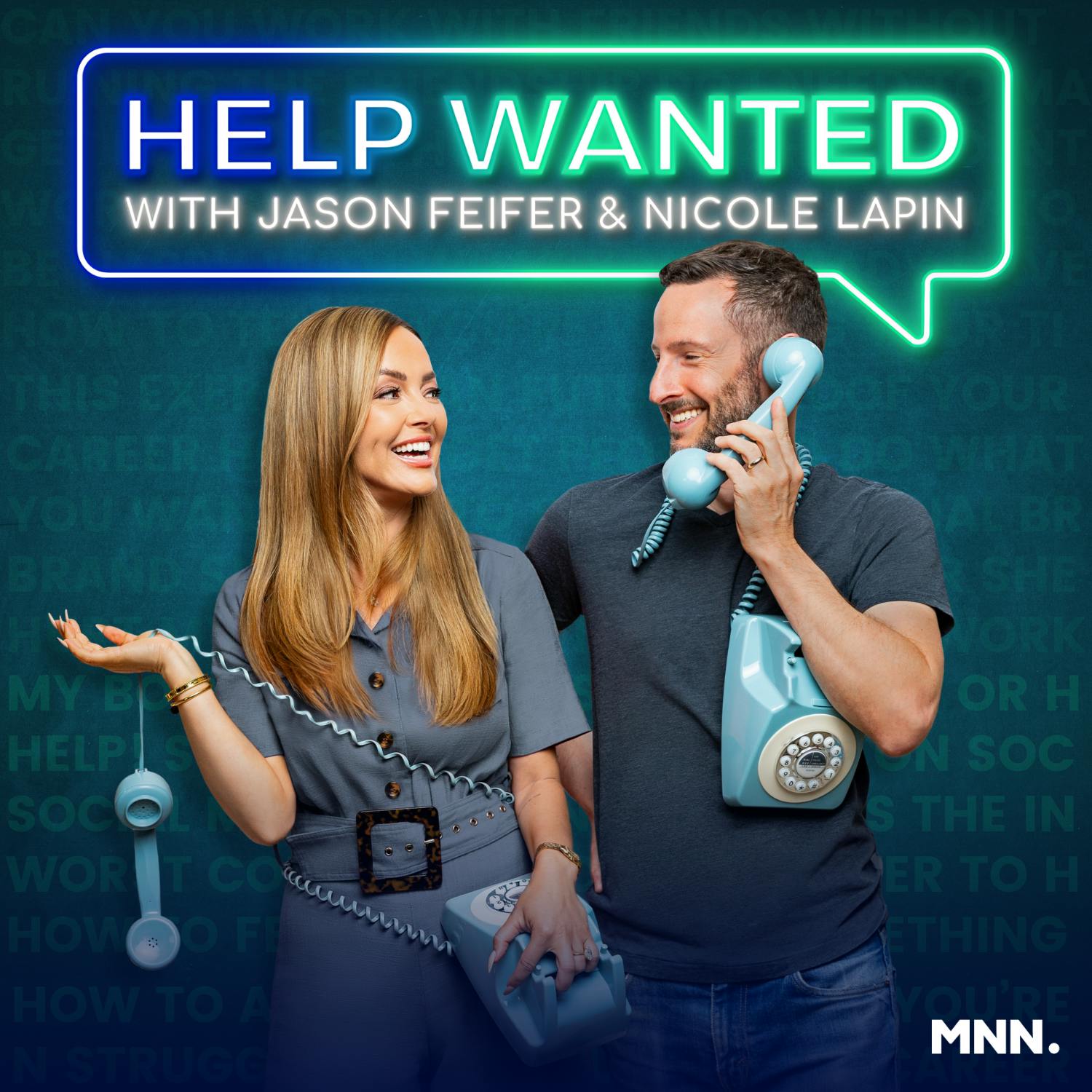
This is Help Wanted, the show that makes your work work for you. I'm Jason Pfeiffer, editor in chief of.
- [00:35]
Nicole Lapin
Entrepreneur magazine, and I'm money expert Nicole Lapin.
- [00:38]
Progressive Insurance Ad
On Tuesdays, Jason and I answer the.
- [00:39]
Nicole Lapin
Helpline and help callers solve their work problems.
- [00:42]
Jason Pfeiffer
And on Thursdays, I give you one way to improve your work and build a career or company you love.
- [00:48]
Nicole Lapin
And it starts now. So, Jason, did you like my course?
- [00:53]
Jason Pfeiffer
Oh, yeah, it was. I didn't take your course. I'm sorry.
- [00:56]
Nicole Lapin
No, you didn't.
- [00:57]
Jason Pfeiffer
No, you didn't.
- [00:58]
Nicole Lapin
And you know what? The truth is, not a lot of people did. I launched a couple of classes before it became more of a thing pre Pandemic. Spent a lot of time, a lot of money on them. The first one I launched was the Money School. And I have very high hopes and I thought people want to learn about money and I'm going to teach them about money. And I have all these books and so I'm just going to make it into a big old class and everybody is going to sign up. I just assumed Jason would. Everybody I knew would. Everybody that followed me would whatever the course was.
- [01:34]
Jason Pfeiffer
I'll just pay. I'll just give you the money now. No, it's fine.
- [01:38]
Nicole Lapin
I don't need your money, Jason. I just need your help, actually. So I'm calling the helpline today because I'm at a point where since I launched that course, courses became like such a thing where everybody and their mama was launching some class and it got even crazier over the Pandemic. And now actually I'm coming out with my fifth. It is 1, 2, 3, I guess when you don't know how many books you've written.
- [02:07]
Jason Pfeiffer
This is great. We have to keep that in. That's not getting lost in edit. Nicole has forgotten how many books she wrote.
- [02:14]
Nicole Lapin
I'm also eight months pregnant, so my brain is completely fried. But yes, we're on the fifth book called the Money School that's coming out next year. And I thought, should I refresh this class? I am in the hole for the first one.
- [02:30]
Jason Pfeiffer
How much did it cost you? Do you remember?
- [02:32]
Nicole Lapin
So it was at a time where I redid my website and hired like a fancy new York company to do it that did like Gabby Bernsteins and all these like those types of people.
- [02:44]
Jason Pfeiffer
Offense like people who you have to.
- [02:46]
Nicole Lapin
Put on an accent to even say their name exactly. Like fancy people in the author expert space, whatever that is. And I was like, oh, they launched courses. I'm going to try not to do the accent anymore. But they've done this. They know how to do it. They've done it really well, allegedly. According to the Internet. Who actually fucking knows? Honestly, who knows? And I think I paid like a hundred grand for courses and for website and all this like extra stuff.
- [03:15]
Jason Pfeiffer
Wow, that is a lot of money.
- [03:16]
Nicole Lapin
Because I did three classes. To be fair, it was like a baby Scorsese shoot. It was not me on my webcam.
- [03:23]
Jason Pfeiffer
You went. You really went for it. And I think that a lot of people will be surprised to know that your course didn't do well. Because number one, you know how to make money and you do things that succeed. But also number two is because it seems like everybody makes money on courses. People talk about courses as if they are just instant dollar signs. Just you make a course and you put it on the Internet and then everyone just starts throwing money at you. And the answer, of course, is that that's not actually how it works. So when you and I were talking about this a little while ago, I said it would be awesome to hear about what it really takes to build a great course so that, number one, you can build a great course. And so then maybe me and everyone who's listening can also build a great course. And wouldn't you know it, I happen to be an expert in residence at this community called Smart Passive Income. And I saw that Smart Passive Income was hosting a session where with a course building expert by a woman whose name I'm about to butcher, Abby Prendergast. Prendergast, Abby, you tell us when your wonderful accent, how you actually pronounce your name and a little bit about yourself. And I am so excited for you to set Nicole straight here and help us all make some money.
- [04:36]
Abby Prendergast
Cool. Okay. So my name is Abby Prendergast. I think you did a great job.
- [04:40]
Jason Pfeiffer
Oh, thank you.
- [04:40]
Abby Prendergast
I've definitely heard worse. So I'm the founder of Apt Content, a copywriting and funnel building business. I. I'm also the creator of Day One Evergreen, which is an evergreen funnel that is built to convert better every month.
- [04:56]
Jason Pfeiffer
Okay, Abby, I want to hear about all of that, but as I hear you talk, I just realized we need to back up for a second. Let's Just talk for a second about courses. Like what actually do they look like? What are they? Why does everyone think that they are the instant path to riches? And why are they not, not always the instant path to riches?
- [05:18]
Abby Prendergast
Okay, sure. So I specialize in the selling of the courses, but I have created them, I obviously see a lot of them because part of my process is obviously taking my clients courses before I sell them. So what is an online course? They can be live, they can be scheduled classes as part with a community aspect or they can be self paced, which is generally what I prefer to work on because that's where you can get that passive income. And I think that's become a real buzzword in the course niche. You create this self paced course and.
- [05:47]
Jason Pfeiffer
This can just to be clear, this could be like I want to learn Photoshop and some Photoshop expert has created a course and maybe that course is that I pay could be literally anywhere from $50 to $500 to $5,000. Of course, pricing seems to be all over the place and I will get possibly a. You said self paced. So it could be a series of videos that I watch and each video is like one lesson and comes with some exercise and then I move on to the next one. And that is one kind of course experience. Right. Just to make it really clear and simple.
- [06:19]
Abby Prendergast
Yeah, yeah, pretty much. It's the people that buy it want some kind of transformation what it is that you're promising. And then you put together videos or checklists, PDFs or that, any learning materials so that they can get that outcome.
- [06:34]
Jason Pfeiffer
Got it. Great. And why does everyone think that it makes them money?
- [06:37]
Nicole Lapin
Yeah, like why was there this big uptick when everybody wanted to teach people stuff?
- [06:44]
Jason Pfeiffer
It seemed like courses were all over the place. There was a gold rush for courses.
- [06:48]
Abby Prendergast
Yeah, I think it's just such a cool concept. It's a passive income dream and courses for many people have enabled them to achieve that. And I think that's probably where the hype comes from is you see people like Amy Porterfield, Laura Belgray, Marie Forleo, they're making six figures a month, seven figures, selling courses. I've worked for Amy Porterfold and I can go back, she is.
- [07:14]
Nicole Lapin
It really bothers me when you see these people that really tout how many figures they're making and it just feels like if you really are like if you're rich, you don't need to say you're rich. If you're powerful, you don't need to say you're powerful. If you're classy. You don't need to say you're classy.
- [07:31]
Abby Prendergast
Maybe you do, because Amy, she talks about how much she's making, but she's teaching people how to do that. You have a money class. I'd love to hear more about the details of what we teach, but if you're helping people make more money, they want to see that you can walk the talk and they want you to inspire them. And I think actually your story can do that. And sharing the figures gives them something tangible to aspire to.
- [07:54]
Jason Pfeiffer
I'm just going to play the judge and jury in this particular debate because I feel like Nicole is articulating how it would be nice for the world to operate. Abby is articulating how the world actually operates because people are genuinely responsive to someone who's like, I can teach you how to make money. And here's how much money I made as the validation for how I can teach you money. People keep constantly trying to tell me that I should start a YouTube channel. And the way in which they do that is send me all these videos of YouTube creators talking about how much money they made on YouTube. It is a weird thing that resonates.
- [08:24]
Nicole Lapin
Yeah. What's interesting is that, like, the meta aspect of it, where they talk about how much money they've made from courses, teaching other people how to make courses. And actually that's what I found to be the problem with mine. And I didn't really want to believe this because as you know, Jason, I really am, like, very self deprecating. And I don't know really why anyone listens to me generally. And I'm always surprised when they do. I have the option opposite. I think of an inflated ego. I really am surprised that people would want to be like me. I just thought that they wanted to learn the things that I know about money. And so the feedback that I got originally was, no, they want to be you. And I was like, wait, they want to be like a money expert person on the Internet? They're like, yes. And I was like, but to do that, you need to learn about money first. So shouldn't we teach people about money stuff? They're like, yeah, but really they just want to be you and sell that. I was floored.
- [09:27]
Jason Pfeiffer
Abby, is that true?
- [09:29]
Abby Prendergast
People buy better versions of themselves. When people buy clothes, it's because they want to be like a cool version of themselves. And people buy, like their fancy nappies, they want to feel like better parents and people buy courses, they want to feel like a better version of themselves. And it really helps if they can see you as that better version, as that inspiration. So I think there's an element of truth, I think with online courses, personal brand, so having you as the face, it really does help. The less the creator is present, I've noticed, the more difficult it is to actually sell. So, yeah, I really do think there is an element of truth in that, that people want to be able to look at you and say, yeah, I want what Nicole has. I want to be like Nicole.
- [10:12]
Jason Pfeiffer
All right, well, Nicole, now we're going to help you build a course about how to be Nicole. It's going to be very exciting. I'm going to take this course, and then this. This podcast will just be Nicole talking to Nicole. I want to hear Abby, like, diagnose the problem of the past course, and then let's get into, like, how you can build the better wellness. The first thing I want to know, Abby, is if Nicole should have listened to this masterclass dude and spent a hundred thousand dollars making a mini Scorsese version of her masterclass course first.
- [10:39]
Abby Prendergast
I would love to hear what else happened. I'd love to hear how you actually launched it. What did you do to sell this course?
- [10:48]
Nicole Lapin
So I came up with my own funnel. At the time, I had never built a funnel.
- [10:54]
Jason Pfeiffer
So I should define funnel.
- [10:55]
Nicole Lapin
You launched into explaining your business about this beautiful, glorious, evergreen funnel.
- [11:02]
Jason Pfeiffer
It's so funny, because when I was first getting into business, I, like, could not understand funnel because it was always, like, explained in this complicated way. So I'm going to take the stab at making it as simple as possible, which is when you've been out in the world and you became aware of a product and then you considered that product, you're like, let me look at a little more of this. Or I got this email about this, and now I see some other thing. And then you actually bought that product. You went through a funnel, and that funnel is basically making people aware of a thing, helping them to consider that thing, and then converting them to buy that thing. And there are a million ways that you can do that, and that's a funnel. So Abby had asked Nicole about what your funnel was like when you were launching your mini Scorsese. Extremely expensive course.
- [11:40]
Nicole Lapin
And to be fair, I made money. I just didn't make, like, all the money I thought I would make or had been sold to me that people allegedly make. I don't know. I don't know why I'm super skeptical about it, but I cannot believe maybe some of the people you work with Abby are legit doing it. You've seen the receipts. But I just don't believe, I don't buy how much hype is going into it. If they're really making a million dollars a month or whatever the fuck, why are they still doing. I don't know. I have a lot of questions. So what did I do? So the company that I was working with came up with this funnel of videos and this is maybe six or seven years ago at this point. So again, my brain is mush, but it was a series of videos that we sent to people with like mini classes, mini webinars, that type of thing. Getting them in the funnel and then sending them emails and follow ups and stuff like that. And it all felt just very salesy and gross to me. But it was a funnel, it was a legit funnel and we did a lot of press and marketing around it.
- [12:45]
Abby Prendergast
Do you remember what the promise of your course was?
- [12:49]
Nicole Lapin
To be financially free and not be stressed about money, get out of debt, not live paycheck to paycheck in a very simple step process.
- [13:00]
Abby Prendergast
Okay, gotcha.
- [13:02]
Nicole Lapin
I'm so jaded by it, you can't.
- [13:04]
Jason Pfeiffer
Even talk about it.
- [13:05]
Nicole Lapin
So annoyed by it.
- [13:06]
Jason Pfeiffer
Should I answer for you?
- [13:08]
Abby Prendergast
Please, I.
- [13:09]
Jason Pfeiffer
More than this I am sure. And I don't even know because I didn't see it, but I'm just going.
- [13:13]
Nicole Lapin
To assume we're starting over, Jason. That's the point. But I understand we have to go back to, to get.
- [13:18]
Jason Pfeiffer
We have to go back because we want to see what went wrong and then we're going to do it right. Stick around. Help Wanted. We'll be right back. Welcome back to Help Wanted. Let's get to it. So Nicole built a course and Nicole's whole thing is about helping people understand finances and then achieve financial freedom. Which means that they like, they understand the money that they have, they understand what to do with that money and they understand how to create a financially secure life for themselves. Her course was probably a kind of masterclass on how to understand your money. Don't be afraid of your money, understand like what to do with your money, understand how to invest your money and live with your money instead of chasing around your money and spending your money unwisely and whatever. Now I don't know what I'm talking about. Maybe the problem here is that was there not a specific enough sell or courses around, oriented around like one very specific promise or where's the original sin here?
- [14:20]
Abby Prendergast
I just want to know a couple more things before I diagnose what research did you do on your audience? How did you define your target audience and by that, the people you're selling to?
- [14:31]
Nicole Lapin
We had a lot of data from social and from other books. We did survey monkey study survey for the target audience that we had and we asked about pricing. They would have paid more, allegedly, in this testing, but we ended up putting it for lower because in my heart, I didn't want to charge people a bunch of money to get their financial shit together. That felt wrong to me. So I think it ended up being like $249. What?
- [15:03]
Abby Prendergast
No, that's, that's just, that's. That's low ticket. I was expecting like 2,000, 1,000.
- [15:10]
Nicole Lapin
Yeah. I don't know. Something about this world just feels like a little icky to me and it feels like I wouldn't be able to sleep well at night knowing that I charged somebody a crazy amount of money to get their money together. It just didn't feel right.
- [15:30]
Abby Prendergast
Yeah, I get it. I'm the same. Like people say to me, you should charge more for your course. And I'm like, do you know what, though? The people that I'm selling to, the course creators, they're super jaded and they've already spent so much money on courses and I just don't feel good about charging them another 2 grand. I'm like, we'll just keep it 500, but okay. So I'm starting to get a picture of what's been going on. So you did your research. You say you built your own funnel. Did you write the copy yourself?
- [15:55]
Nicole Lapin
No, I did not.
- [15:57]
Abby Prendergast
You hired someone?
- [15:59]
Nicole Lapin
Yes, we had copy editor. We upgraded to some Rolls Royce of email. It was Memberium and then another system that was really complicated and fancy for a lot of email sending out still.
- [16:14]
Jason Pfeiffer
I mean, when you make the mini Scorsese of courses, you got to spend for the roles, voice of email, whatever that was.
- [16:21]
Nicole Lapin
Yeah. So we had a series like a flow, some drip campaign action going on, some retargeting action going on, and then I guess I did a blitz around that and then it just fizzled. I couldn't come up with the right formula for how much to invest and what was the real output for it that felt sustainable. Throwing more money at it felt like it wasn't creating the ROI that we wanted.
- [16:52]
Abby Prendergast
Yeah, it sounds to me like you might have put your money in the wrong place by going for the Scorsese style. Course. People, if. If people believe or want the promise, they believe that they can get it. They believe that you can help them get It. I really don't think they care if you filmed it on your kitchen, on your mobile phone, if they're getting that outcome. So I think your first mistake was putting the money and the resources there instead of into understanding your audience and marketing it to them and testing.
- [17:26]
Jason Pfeiffer
Tell us more. What should Nicole do?
- [17:29]
Abby Prendergast
I think that the next thing which you touched on is the specificity. Like I said, I think where the market's very saturated, you don't want to just sell to anyone who's got money. Shit. You want to hone in and be like, okay, this is for moms that work full time. And then you want to interview them. You want to clearly define who you're selling to and then interview them and really dig in. Don't ask them about your course. Don't ask them about the pricing. Ask them about what's going on in their life that makes them worried about money. Keep asking why. Dig deeper, deeper, deeper until you get that raw emotional content. If you can put that in your marketing, your win fans for life. Because I think we're just constantly being sold to and there are so many courses out there that when you feel like that connection and you feel like, oh, my God, this person freaking gets me. That's when people are happy to not just get out their credit cards, but actually take the damn course, do the damn course, get the results. So I think that obviously we haven't gone into super detail. I haven't seen your funnel, but it sounds like maybe you could have gone more specific and gone deeper into that research instead of asking about things like pricing. Actually really gone into. Yeah. What's going on in their heads and mapped that onto your course. Yeah. How's. Is this. How's this landing?
- [18:50]
Nicole Lapin
Yeah, I think we came up with this icp, like, ideal customer profile, and her name was Ellen, and she was in her late 20s, and she had just started making money and she was getting, like, her first or second job. And, like, we really went through this profiling idea. I don't know if that profiling was right or wrong. Is it possible that if you come up with an ICP that's not converting that, you come up with a different ideal customer profile?
- [19:18]
Abby Prendergast
I mean, who is Ellen? She sounds like an AI avatar to me. Who is Ellen? What keeps her up at night? She had a magic wand, like, what she wished for.
- [19:27]
Nicole Lapin
Yeah. We went through, like, where she was and what she did and, like, all. Yes. So we did a pretty deep dive into it, and maybe that's where it broke down early on. Maybe that's not who we were supposed to be targeting.
- [19:41]
Abby Prendergast
It's possible. One of the challenges, I think, is that you're selling to people who don't have their money shit together. So it's like you're asking them to spend money when money is clearly a problem, a struggle for them. So I think, I think that's where one of your challenges is. I've had this before. I work with clients and they've said to me, yeah, like, our target audience is completely broken. And we've had to really dig into that and make sure we're clearly expressing the ROI of the course for them so that they can contextualize it. So, like, okay, I'm investing $250, but this is what it could do for me. Did you do any of the price anchoring, building in an roi?
- [20:21]
Nicole Lapin
We did a little bit. And I think for this, if we were to do a new iteration of it, it would be more of what we do with the shows and focusing on first time investors and people that are not in debt and have already gotten through that time in their lives and are now trying to like, level up and make their money work for them.
- [20:46]
Jason Pfeiffer
Yeah, that's a smart turn. I wonder if we should get into Abby's plan, such as you can throw one together for Nicole right now for how to do better. Maybe this is the Evergreen funnel time.
- [20:58]
Abby Prendergast
The Evergreen funnel time. Okay.
- [21:00]
Jason Pfeiffer
People should know that you did a little dance when you said that.
- [21:04]
Abby Prendergast
Yeah, I'm glad just you two saw it. All right, so the first thing you should do is take all the pressure off. All right? If you're launching, it doesn't have to be this huge, successful launch. All right? You're going to do multiple iterations, you're going to test. It's a process. You have to believe that it can work. Because right now you're jaded and you don't believe. You know, and how can you put that time and love and energy into it if you don't believe it can work? I can tell you that it does. I work. I mean, like my most recent client, they teach bookkeepers how to make more money. And they had an email list of less than 10,000. They doing like, home videos, the webinar, she's just there in her living room. And they did $600,000 and for that launch and then are now making $150,000 a month on Evergreen. Okay, that's not seven figures a month, but that's awesome. This is like mostly passive.
- [22:03]
Nicole Lapin
But how much are they spending on the marketing of it.
- [22:10]
Abby Prendergast
So I set up a day one evergreen funnel for one of their courses. Day one evergreen is my process and they have made 1.1 million this year and they've spent 100,000 on ads. So that's a 10x return on say.
- [22:23]
Jason Pfeiffer
Good roas as they say they launched.
- [22:26]
Abby Prendergast
I did my best to make it as stress free. Like I wrote the webinar. I did everything for them. They had to show up and record the webinar and then I turned it evergreen and they just sit back, they have someone that does their ads and they're making that 50, 70k a month without doing anything.
- [22:44]
Jason Pfeiffer
Do you see, Nicole, how it is compelling to hear somebody else's dollar figures? It makes you want to know how it's working.
- [22:52]
Nicole Lapin
No. And to be fair, like I do talk about my own dollar figures. I'm really honest about that. I just feel wary because I went through the process and I tried to follow all the instructions and all the like funnel best practices and I felt like it wasn't working. Like I felt like I was being sold something that maybe works. Maybe I'm too gullible. Maybe it works for the bookkeeping people and maybe for all the bookkeeping people. There's a hundred others that it doesn't work for. Maybe I'm jaded because I was part of the like hundred others that it didn't work for.
- [23:26]
Jason Pfeiffer
What I want to know, maybe it could have worked back then if you restarted it a couple times. Like Abby, what are you talking about when you're talking about like this, the evergreenness of this, where it's not about focusing on one launch, it's about you go, you like, are you, are you advising, like putting a product out, seeing how it works and then revising the product or just revising the marketing? Just like completely redoing how you take it to market over and over again.
- [23:51]
Abby Prendergast
Revising the marketing. So day one Evergreen. Basically what makes it unique because there are lots of evergreen webinar funnel experts out there. I'm sure Nicole's seen a lot of them. But I build a 10 point customer feedback loop into the funnel. So every time they take an action like signing up for the webinar, serving them, asking the question, what was going on in your life that brought you here today? That question was coined by Jonah We. I love it. It's a brilliant question. And people will then tell you what's going on in their life, their problems, what they want, etc. Who they are. And that's a great way to See if you're generating the right leads. If you have that question after people signed up your video series, Nicole, people might say, oh, I'm just like super in debt, I really need to get out of debt and make some money quickly. And then you could straightaway say, okay, we're bringing the wrong people into this funnel because this isn't really who the course is for. And then that would inspire you to tweak the messaging to bring in more of the right people. Then once you start bringing in those server responses, you're going to get voice of customers. So you're going to hear the specific language that they're using to describe their pains, frustrations, dreams, desired outcomes. And then you can use that specific language in your copy and it's going to resonate more because you're literally speaking in that language. They're going to feel you're going to create those oh my God, you get me mobile moments. So thank you. Page survey setting up. When they sign up for the webinar, when they enroll in your course, that's where you get this really rich feedback. Because if you ask them six months down the line why they're enrolled, they're going to be like, yeah, let me think, I think it was. And they're not going to know when they've literally just signed up. That's a beautiful seducible moment where they're going to give you that raw data and tell you, okay, this is exactly what was going on. So thank you. Page surveys and then testing. So rather than testing subject lines to just see, oh, can I increase my open rate by 5%? Actually using it to find out what messaging is resonating. So testing two different pain points against each other. Do this if you struggle with X, do this if you struggle with Y, which everyone gets more open rate. That gives you a clue. Okay, this is actually what people care about. And then you can build that into the rest of your funnel. So doing all of these things, you're constantly refining, tweaking, testing, experimenting and getting to know your audience on a deeper level. They're not Ellen or whatever her name is, who's this 25 year old woman who shops at H and M or whatever. Like you've got this very specific profile with very specific ways of expressing the pains, the desired outcomes in their language. And then you're using that to connect with them, create those oh my God, you get me moments and then ultimately increase your conversions over time rather than just putting it all in one launch. And that is my TED Talk that.
- [26:36]
Nicole Lapin
Was a great TED Talk. I think what might be helpful is stepping back and saying, okay, if I'm listening to this and I have any interest in launching a course, where do I start? What are the main steps? And like, outside of getting in the weeds of the profile and the testing and things like that, but what is the general roadmap of steps to follow and how to think about that?
- [26:58]
Abby Prendergast
All right, you have an idea, you.
- [27:00]
Jason Pfeiffer
Have a passion, if you want, if it fits. Help people grow on LinkedIn.
- [27:05]
Abby Prendergast
Okay.
- [27:06]
Jason Pfeiffer
Breaking breaking news is that I've stumbled my way into building a course myself. And that's the subject.
- [27:11]
Abby Prendergast
Okay, cool. So then you want to ask yourself, okay, why do they care about that? Why do they care about growing on LinkedIn? And as you're thinking about that, you have an audience. So I would just put out a message. You want to say, hey, who's interested in growing their LinkedIn? I'd love to just book a 20 minute call with you to hear more.
- [27:30]
Jason Pfeiffer
Let's say I didn't have an audience because not everybody does, then what do I do? I go hunt people down.
- [27:35]
Abby Prendergast
Yeah. So you think, okay, who am I helping growing LinkedIn? Is it business owners, entrepreneurs? If it's entrepreneurs, then go into LinkedIn groups or Facebook groups where entrepreneurs come out and ask the same question. Say like, hey, putting a course together on this. I'd love to just have a 20 minute chat. People are nice, people are like often just happy to help, happy to do the favor, give their time, have a coffee. If you're not getting any bites, you could say, oh, and in return I'll give you a copy of my course. But I would just ask a favor first. People like to help, so you talk to them and find out the, the problems that they're having with growing their LinkedIn. If you can build your content around that, it's going to be easier for people to follow. They're going to get better results. It's going to be easier to market it because you're not just trying to market around pain points, you've actually built your course to solve these pain points. So that's the first thing I would do.
- [28:26]
Jason Pfeiffer
And I will note. Sorry to interrupt your TED Talk, but I will note that what you just said there is the create version of what you said in market. Right. All of this is oriented around user first, not course first, like understanding the user, understanding who you're targeting and then building their answers, both now into the product in this TED Talk. But in the previous TED Talk, it was building it into the marketing.
- [28:53]
Abby Prendergast
Yeah, yeah. And it should be both. If you create a course that solves a problem, people are going to recommend it as well. If you create a course and it doesn't solve anything, it doesn't really do anything, then you're not going to get the testimonials, you're not going to get the referrals. So, yeah, create it with your audience in mind. You define your icp, your target audience, before you even get to the marketing, like literally in the creation phase, create it for them, the person that you want to help. And I think often that person is an earlier version of ourselves. Maybe it's Jason from, I don't know, however many years ago when you had a tiny following and you're really frustrated because you knew LinkedIn was important. So, yeah, that's where you want to start. And then you want to. As you're creating the course, you want to make sure you're mapping each module onto one of those problems, ideally trying to take them on a journey from A to Z where you're not leaving any gaps. As I said, I'm not. My specialization isn't in the course creation.
- [29:51]
Jason Pfeiffer
Yeah, you're the course marketing person. But you've done a very good job here of laying out. Because I think that most people think, oh, well, I know how to do a thing, so why don't I just write down everything that I know about how to do that thing and then either sell a giant guide or make a bunch of videos. And that's the course.
- [30:07]
Abby Prendergast
Yeah. And I think another thing on that, we say a giant guide. I think creators feel like, oh, if I have more videos, it's going to be more valuable. Or if it's. It's 30, 50 videos, I can sell it for more. But actually, the value of your course comes for the transformation that you're offering. So in people, they'll put on their sales page, they'll say, oh, it's got 60 modules. Thinking, people are going to look at that and think this, wow, this is so valuable. But actually, most of us look at that, thinking, holy shit, I do not have time.
- [30:34]
Jason Pfeiffer
I don't have time for 60 modules.
- [30:36]
Nicole Lapin
A lot of modules.
- [30:37]
Jason Pfeiffer
Way too many.
- [30:38]
Abby Prendergast
That is a video. As I should have said, modules would be a bit even madder.
- [30:42]
Jason Pfeiffer
Even videos. I don't want to watch 60 videos. Anything.
- [30:45]
Abby Prendergast
No. Unless it's Buffy the Vampire Slayer.
- [30:48]
Jason Pfeiffer
Yeah, I was going to say Game of Thrones.
- [30:51]
Abby Prendergast
So you've created your course, you put it together, you're thinking, is this any good Are people going to like this? Then you go back to the people you interviewed or other people that fit your ideal audience who say, hey, can you take this course? I'd love your feedback. And then you've got surveys, you're going to do interviews, you're going to ask them what they thought rather than, again, rather than purely asking about your course and being like, what do you think of module two? What do you think of module three? Make sure you're really making it about the customer, about the people taking it, and say, what problem did this solve for you? What do you wish could have been in there? Or how do you feel about. So rather than it just being purely about you, make it about them. And then you're going to use those beta tests to make the course even better and you're going to use it to begin your creating your marketing. So if everybody says it solved this problem for me and you're like, aha, okay, I didn't think that this was the main problem itself, but now I know to talk about that in my marketing.
- [31:49]
Jason Pfeiffer
What I really love about all of this is just the incredible rigor that is put into at every step of what you're suggesting here being really audience first. Because ultimately what is a course, it is not actually a packaging of information, it is actually a solving of problems. And so if you are not building in that deep connection to the audience in the process of doing it, as you're talking, I'm just thinking about how the reason I, the reason I got into making a LinkedIn course is because people ask me a lot about LinkedIn. And I, in this community that I run for consumer packaged goods founders, I decided to do an exercise teaching people how to grow their following on LinkedIn. And then I sat down, I was like, okay, well how do I actually know how to do this? And I would be like, oh, I gotta write this. But oh, well then now you need to understand that. Now you need to understand that. And before I knew it, I had a 5,000 word document. So now I have this 5,000 word document and now I'm looking at it and I'm like, geez, I now that I've done all this work, I guess I should turn it into a course. But the next step that I would think is just like, well, I guess I'll just make some videos talking about the things in the document. But my, and I understand marketing. My natural instinct here was not to stop and be like, let me go talk to a whole lot of people and understand and then let Me start to plot it out and then talk to those people again. Like I wasn't thinking of doing that. And that's to me the, the greatest value of this extended multi set TED talk that we've asked you to perform here, which is like just really pushing people to understand how important the consumer research is in the thing that they're doing. Because if you're not understanding the people that you're selling to, then you're not gonna be able to sell to them 100%.
- [33:27]
Abby Prendergast
It's like the difference between convincing your best friend to take a course that's gonna be really great for them. Like your friend that's really passionate about graphic design. You're like, take the course, do it and do the freelance thing versus just literally shouting at the people on the street going, buy this. It's $500 off. Buy it. So yeah, researching your audience and building that deep understanding is crucial for sales. And I think that's where a lot of creators for sure. And I think during the pandemic when the course industry really boomed, you didn't have to do all that stuff so much. You could get away with doing a live launch, doing a live webinar with some urgency. Enroll now or you're going to miss out on these bonuses. You're not going to get the discount. That worked. That did work. But now people have their guards up a bit more and you've got to say something special for them to listen. And buy from me.
- [34:19]
Nicole Lapin
And what kind of tools do you recommend having when you're launching? Do you need the Rolls Royce of email marketing like infusions after all of these other tools? What do you actually need in order.
- [34:33]
Abby Prendergast
To set this stuff up when you're starting? You don't need the bells and whistles. Add the bells and whistles when you've already made money and you can afford them and you can be lavish. Just get a basic email software like ConvertKit or I think they're called Kit now. Yeah. And send your emails on there. It still allows you to segment and a B test and all that stuff. That's 50 bucks a month. Or depending on your audience size. You don't necessarily need a fancy webinar software like Easy Webinar. You could just host a zoom meeting. I for my Evergreen Funnel, I just embed a video recorded on Canva on my landing page and it works. And other people are doing the same thing and it's working for them. One tool I do recommend is Deadline Funnel because as much I don't like urgency I don't like pressuring people but unfortunately it is so damn effective in marketing and every time I've tried to remove it conversions like they they've decreased. But you can do it in a way that doesn't feel icky salesy like a giving them a nice 7 day or 14 day window, plenty of time to think. But it's there's genuine urgency there so they can't just put it off till later. Deadline Funnel will allow you to create that count on timer and have it being authentic. This is mainly really with the Evergreen funnels. So when people sign up for your Evergreen webinar and by Evergreen I mean they can join at any time, it starts a personalized count on timer for them where they've got seven days or whatever you want to get your offer and then it goes. And the reason I recommend Deadline Funnel specifically is because they track cookies. I'm not an affiliate for Deadline Funnels by the way. I just think it's a really cool tool. They actually track cookies. So if people then miss out and then sign up for your webinar again, they're not just going to re get the offer. It truly is one time. So it's real urgency, but you don't need all of them. You just need a place to send emails, a place to host your sales page and embed your webinar and ideally some at all to create urgency. But all of that. My tech stack costs me I think $180 a month between like kit, Deadline.
- [36:39]
Nicole Lapin
Zoom, I'm assuming Canva. Is that what's in the stack?
- [36:42]
Abby Prendergast
Yeah. So my tech stack, well it's lead pages so people sign up for my webinar there. Then I embed the webinar just on a page on my website. I use SamCart as my checkout page and to host my course. So that's handy. And then the Deadline funnel and I use ActiveCampaign for email.
- [37:01]
Jason Pfeiffer
Well Nicole, how do you feel about launching another chorus after all of this?
- [37:06]
Nicole Lapin
I feel like such an asshole. I don't even need to ask am I the asshole. I have been the asshole on this call for sure. Because I feel so jaded and bruised by this process and if I'm gonna jump into it again, I need to get more inspired by it. And I really was like going into it, I was stoked. I was like, this is gonna be.
- [37:25]
Progressive Insurance Ad
The biggest lunch ever.
- [37:27]
Nicole Lapin
Everybody is gonna want this. This is so important. I knew all the answers to these questions cold. And then I just felt like I went through the ringer with it and I came out really bruised and beaten up, so. Yeah, I should just go listen to more inspirational TED Talks.
- [37:44]
Jason Pfeiffer
Yeah, got a couple right here. You could just hit it on replay.
- [37:48]
Abby Prendergast
Yeah, I totally feel you. Like, I. My heart really goes out to course graders because there's just so many people promising like this, you're gonna wake up.
- [37:59]
Nicole Lapin
Sun, moon, and the stars.
- [38:00]
Abby Prendergast
Yeah, sun, moon, and the stars. So I get that.
- [38:03]
Nicole Lapin
I just want to keep it real around it.
- [38:05]
Abby Prendergast
You're keep it real. Exactly.
- [38:07]
Nicole Lapin
Real and amazing. And there are a lot of amazing coaches and courses out there. And then there's like a lot that aren't and that prey on people and sell stuff and don't deliver. And that's too.
- [38:20]
Jason Pfeiffer
I'm hearing about jaded again.
- [38:22]
Nicole Lapin
But there's so many good people and we're so excited to find those people.
- [38:26]
Jason Pfeiffer
There we go.
- [38:27]
Abby Prendergast
Yeah, there are good people. But think. And this is for anyone listening as well. If you're launching it for the first time, reduce your expectations to zero. So do not invest $100,000. Don't get all the bells and whistles. Don't get the skills a video production. Just assume you're going to make not very much money. And anything you do make, if you even break even, that's incredible. It takes time to dial in your messaging. It takes time to figure out your audience. Takes time to get in front of those people and to learn what to say in your copy. Go. Yeah. For your first launch, lower your expectations and look at it as something that you're going to keep working on and then eventually get to that big launch and you'll save yourself a lot of pain, heartache, disappointment, and money, quite frankly.
- [39:14]
Jason Pfeiffer
And then you won't be Nicole.
- [39:16]
Nicole Lapin
Debbie.
- [39:16]
Abby Prendergast
Well, this is my new course. Creators say to me they want to hire me. I say, no, I'm too expensive. I would someone cheaper just come to me when you're ready to scale and then we'll do it.
- [39:26]
Jason Pfeiffer
Abby, printer guests, thank you so much. This has been fascinating. How will people reach you even though they don't want to hire you? And you will not let them hire you because you are too expensive.
- [39:37]
Abby Prendergast
They can buy my course, which is $500, which is why the course exists. So you can go to my website, which is www.aptcontent.co.uk where you can find my book and my webinar, which will walk you through day one evergreen message for LinkedIn. Reach out like, I love connecting with other entrepreneurs, with other course creators. So, yeah, come say hi on LinkedIn, Instagram, which is. Yeah, just look up Abby Prendergast. And I'm pretty sure there's only one of me.
- [40:04]
Jason Pfeiffer
Help Wanted is a production of Money News Network. Help Wanted is hosted by me, Jason.
- [40:09]
Nicole Lapin
Pfeiffer, and me, Nicole Lapin. Our executive producer is Morgan Lavoy. Do you want some help? Email our helpline@helpwantedoneynewsnetwork.com for the chance to have some of your questions answered on the show. And follow us on Instagram, MoneyNews and TikTokoneyNewsNetwork for exclusive content and to see our beautiful faces. Maybe a little dance?
- [40:29]
Jason Pfeiffer
Oh, I didn't sign up for that.
- [40:31]
Nicole Lapin
All right, well, talk to you soon.
- [40:49]
Jason Pfeiffer
Foreign.
- [40:55]
Progressive Insurance Ad
This episode is brought to you by Progressive Insurance. Do you ever find yourself playing the budgeting game? Well, with the name your price tool from Progressive, you can find options that fit your budget and potentially lower your bills. Try it@progressive.com, progressive Casualty Insurance Company and affiliates. Price and coverage match limited by state law. Not available in all states.