Loading summary
Transcript72 lines
- [00:00]
Chime Representative
Your financial goals feel like a big leap away, but really, it's just a bunch of baby steps that together make a big difference. When you open a time checking account, you're one step closer to a better financial future with no maintenance fees, fee free overdraft up to 200 bucks or getting paid up to two days early with direct deposit. Making progress has never been easier. And if you ever want to access your pay before payday, you can use my pay to get up to 500 bucks of your pay before payday with no mandatory fees or interest rates. Learn more@chime.com helpwanted. You know, I hate fees, especially overdraft fees. I remember when I was in my 20s and I overdrafted for the first time with an old bank. I didn't even know that I had overdraft protection turned on. And that protection would mean a $35 fee on my $5 latte. But chime allows you to overdraft up to 200 bucks with no fees because they get it. Make progress toward a better financial future with Chime. Open your account in two minutes at Chime.com helpwanted. That's Chime.com helpwanted Chime feels like progress. Banking services and debit card provided by the Bancorp Bank NA or Stride Bank NA members. FDIC Spot Me eligibility requirements and overdraft limits apply. Fees apply at out of network ATMs. MyPay eligibility requirements apply. Credit limits range from 20 to $500. A $2 fee applies to get funds instantly. Chime checking account required. Go to chime.com disclosures for.
- [01:25]
Jason Pfeiffer
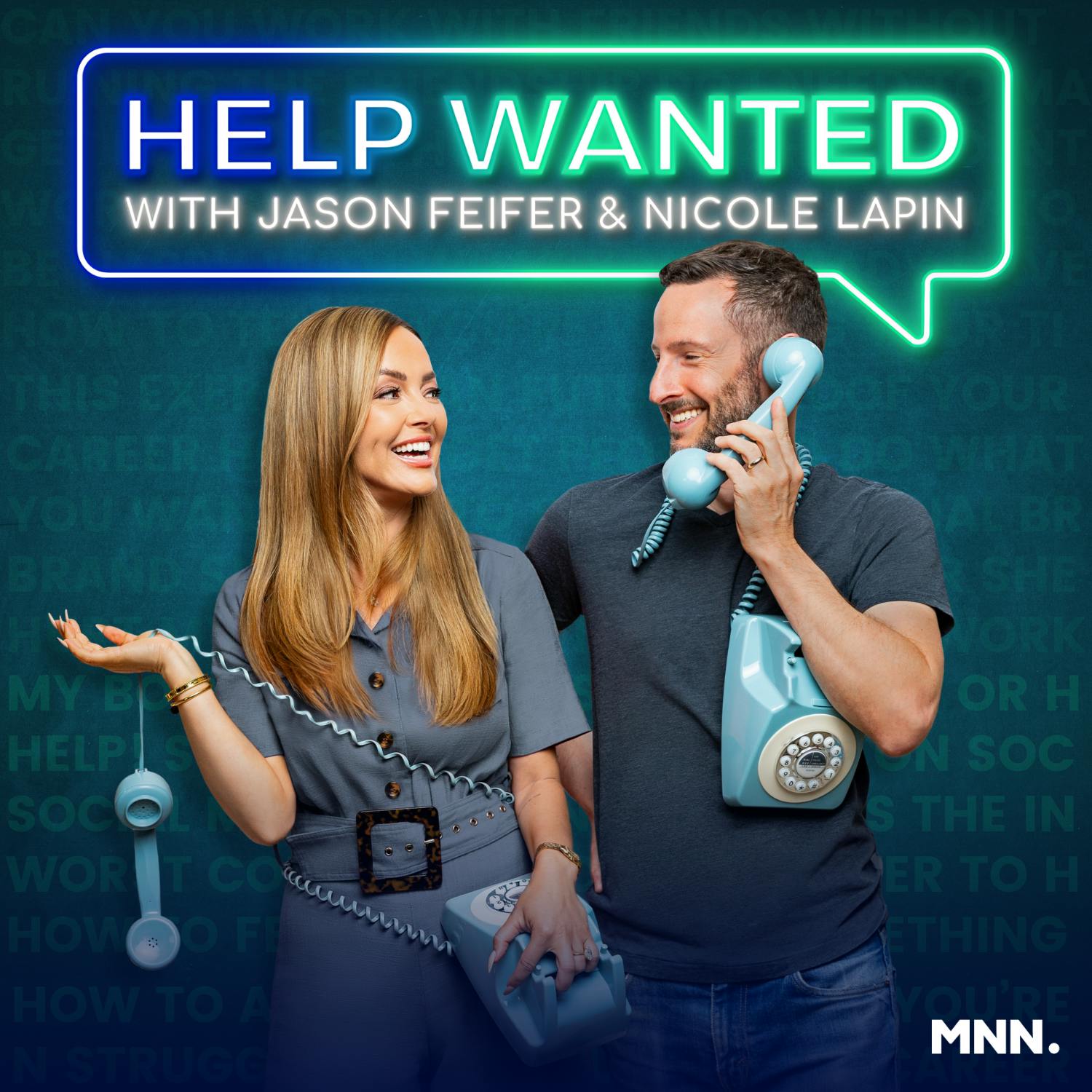
This is Help Wanted, the show that makes your work work for you. I'm Jason Pfeiffer, editor in chief of.
- [01:31]
Nicole Lapin
Entrepreneur magazine, and I'm money expert Nicole Lapin.
- [01:34]
Chime Representative
On Tuesdays, Jason and I answer the.
- [01:36]
Nicole Lapin
Helpline and help callers solve their work problems.
- [01:39]
Jason Pfeiffer
And on Thursdays, I give you one way to improve your work and build a career or company you love.
- [01:44]
Nicole Lapin
And it starts now. I don't know why this was the story that I felt like was we should talk about this. I was reading and, and I saw it and it's like kind of help wantedy. It's not on the nose, but I thought you would have feelings about this.
- [02:02]
Jason Pfeiffer
I did. I had feelings about it. And I wasn't sure how talky this was until I showed it to Jen, my wife, and she really had feelings about it. And then we got into it. So let, let's, let's set this up. All right? Maybe you listeners saw this on the Internet, there's a woman who just random woman who is boarding a flight and as she gets to her window seat, there is a toddler in the window seat. And I guess she asks the toddler to move and get out of her seat, but nicely. There's no aggressiveness, just like what you would normally do if you show up at your seat and there's like a kid in it, you're like, oh hey, that's my seat. And the toddler would not move. And we don't know exactly what happened, but by the time the video that went viral picks up, the woman is sitting in her seat and she's got her AirPods on and she's listening to music or something and the toddler is kind of freaking out. And the mom of the toddler, they all seem to be in the row, I think they all seem to be in the same row. So it's like window seat is this woman and then middle seat and aisle seat are occupied by toddler and mom. And the mom is just berating this woman for not having given up her seat for her child. And then the person in the row behind her is starts filming this and puts it on the Internet. And the Internet does the thing that the Internet does, which is explode in rage at the woman who wouldn't give up her seat for a random toddler who, who wanted to sit there. Have I summarized this correctly?
- [03:39]
Nicole Lapin
Well, and then it exploded by people videotaping her. It went I think on in your hometown. LinkedIn. Yeah, it was like all over the place.
- [03:49]
Jason Pfeiffer
It's all everywhere.
- [03:51]
Nicole Lapin
And she, it affected her employment, bank.
- [03:55]
Jason Pfeiffer
Or something and now she's not there.
- [03:57]
Nicole Lapin
Yeah, she was a Brazilian bank employee, 29 years old. And she came out and said that the viral video led to severe online shaming. It adversely affected her mental health, her career. She said, quote, professionally, my life has changed a lot. So much so that today I am no longer in the field I worked in before I was a banker. Not sure you know what happened with that departure from banking. Like was it because of this backlash? Was she compelled to leave the position? Did they let her go?
- [04:31]
Jason Pfeiffer
But it just a lot unknown here. Yeah. And, and just to be super clear before we dig into this, the. The 29 year old woman who did not give up her seat appears to have made no, like nothing she did was ill intended. She didn't yell at the toddler, she didn't abuse the toddler. And in the video that went viral, she's just sitting there getting berated by the mom, like, she doesn't. She doesn't say anything mean or rude. She kind of does nothing. She's just kind of sitting there, and then she realizes that she's being filmed, and so she spooked about that. But otherwise she does nothing. Okay, I have thoughts, but first. Yeah.
- [05:10]
Nicole Lapin
Like that I think there's two parts of this. Right. So, like, would you have done what she did first? Second, like, what do we think about this new culture that anyone pulls out a phone, videotapes something, puts it online, it affects your livelihood.
- [05:29]
Jason Pfeiffer
Yeah.
- [05:29]
Nicole Lapin
It affects your life forever because somebody's going to, you know, then search you, and this thing is going to come up.
- [05:34]
Jason Pfeiffer
Right. Okay, let's take those in order. Well, wait, before. Before we even take those in order. What. What did you see that you said, like, oh, we got to talk about this on the show? Like, what jumped out at you as the issues to discuss? Was it those? Like, would you do that? And.
- [05:50]
Nicole Lapin
Yeah, well, I think, you know, you are super outspoken about your dad life and you fly a lot. And I, you know, I. We've all been in this situation where somebody asks you to move to, like, sit next to their significant other or, you know, whatever. And is it an obligation to do that?
- [06:12]
Jason Pfeiffer
Oh, yeah. Yeah. Well, first of all, not directly answering the question, but just related thought, which you will now appreciate as you travel. Which is the greatest sound? Once you're a parent, the greatest sound you can hear on an airplane is a crying child who is not your child. When I hear a crying child who is not my child, I'm like that. I am. I don't feel I am sorry for that parent. I'm just so happy it's not me. So.
- [06:42]
Nicole Lapin
Yeah, because we were supposed to fly with my daughter, and now measles is a thing, so we're not. But honestly, I'm relieved.
- [06:51]
Jason Pfeiffer
Yeah. Yeah, it's. It's terrible. Well, fly now because the worst is one year to two and a half years old. That is the worst time to fly because that's when they're. They're the nonstop movement. They just want to be moving constantly, but they're totally incoherent. So they just want to, like, walk up and down the aisle. They just want to grab everything and it's. Oh, God, it's awful. After that, at least they could watch a video. But okay, back. Back to. Back to not ranting about parenthood. Okay. So first of all, I would have done exactly what that woman did. I would have arrived and I would be like, oh, hey, child, you are in my seat. Can I sit down? That's what I would have done. And I mean, I guess. So then what would have happened? What if the mom said, wait, I'm sorry. Speaking of children, Colin has walked in here. Colin, I'm in the middle of recording something. Can I get back to you later? Colin has a notebook and a handful of ink that surely does not bode well for a wall or a piece of furniture somewhere. Colin. What? What. What are you doing? How do you spell your name? How do I spell my name? J, J, A, S, O, N, J. Colin, do you have anything to say on microphone about being a force of interruption? Right now I'm interrupting because I'm official, because I officially passed the police force. Oh, okay, great.
- [08:14]
Nicole Lapin
The what?
- [08:15]
Jason Pfeiffer
He's saying that he interrupt. Okay, thank you. Okay, goodbye. He's saying that he interrupted because he officially joined the police force. Is that what you said? Yes. And I. And I finished the police academy. Oh, and he finished the police academy. Well, what I would have done to the child is what I just did with Colin, actually, which is that I would have engaged nicely, but I also would have driven towards the outcome I desire, which in this case was, leave me alone. I've got a podcast to record. And there would have been like, let me sit in the seat. Now, I suppose if the kid threw like a. Like a fit or the, you know, like. Or something and just really wanted to sit in the window seat, I don't. I don't really care where I sit. And so, you know, I might have turned to the mom and just be like, you want me to sit in the aisle seat? Like, whatever. It wouldn't have really mattered to me. But I certainly. And we don't know what the woman in this video did. We don't know, like, what. What kind of conflict there was before she sat down. But I think that there is absolutely nothing wrong with. With going about your adult life despite that a small child has asked for something. I think you are nice to the child, you engage with the child, but that doesn't mean that children get everything that they want. And there was no reason, as far as I'm concerned, for this woman to have given up her seat. My Jen, my wife and I both felt. We watched the video and we read the stories and we could not understand why the Internet was upset at the woman who took her seat. I am upset at the mom who is yelling at that woman. That is completely unreasonable. And I would never, ever expect that somebody would change seats for my child. It's my responsibility to teach my children that they don't get everything they want, including from strangers who they just plopped out in their seat and then are making demands of. That's outrageous. So I am pro woman sitting down in her seat. I am against that mom. That is my story. Tell me if I'm.
- [10:23]
Nicole Lapin
No, I think you're. You're right. I think this is a really bizarre thing that we've found ourselves in. And, you know, now the Internet gets outraged and, and comes after people and roasts these people. Because this has happened a few other times with like, transportation related issues. I probably would have just moved. But this story made me think, like, maybe I, I shouldn't. Maybe if there was a reason that I needed to curl up next to the window and sleep and that was, you know, helpful for my job or whatever, drawing that boundary, like, it makes her somebody with boundaries, and boundaries are not a public offense. So I don't think she did anything wrong. She didn't cuss the mom out. She didn't, you know, get upset. She didn't recline her seat into somebody's lap. Like, you know, she wasn't vengeful. She just sat there in the seat that she paid for.
- [11:20]
Jason Pfeiffer
And also. Yeah, but do you know what a recipe for total chaos is? A recipe for total chaos is making lots of changes. Because a toddler asked you to. If anyone has ever raised a toddler, what they know is that the thing a toddler wants one second is the opposite of what they want the next second, Right? Oh, my God. Colin, who just came in here, the number of times in his life that he has asked me for food and then I made the food and then I gave him the food, and then he didn't want the food. Too many to count. Drives me crazy. The amount of food that has been wasted because he said, can I have an omelet? And then I make an omelet and then he doesn't want an omelet. So if this is the standard that we're holding ourselves by, which is like we do whatever toddlers ask, we, we are, we are in for a ride. And that is not a good situation.
- [12:08]
Nicole Lapin
So I actually think this is different because she is a woman. And I'll explain. That's why I was really curious to hear what Jen had to say too, because I think that we've created this new social script where, you know, a woman is expected particularly to be endlessly accommodating, especially when it comes to kids. And so, you know, in this situation We've seen, like, God forbid she, you know, values her own space. We're gonna roast her online. But if you're a woman on a plane, like, apparently there's more of a sense that the second a baby cries near you, you need to become Mary Poppins. And this is not, you know, a one off situation. There was this train seat saga where a woman refused to give up her reserved train seat to a man who wanted to sit next to his girlfriend. And then the Internet roast because she wanted to stay in her own seat. You know, there was another mom who tried to shame a fellow passenger for not moving her luggage to make room for her baby gear. It turns out that the Internet, after the Internet dragged her. That selfish passenger actually had medical, like a medical device in that bag. And that's why. So, like, we don't even know all of the, you know, ins and outs of the story. To me, it seems like the pattern is clear. Like the public doesn't want boundaries. It wants, you know, characters in this where they can call you selfish or rude or unfriendly or like this child hating lady. Like these women who say no seem to make these perfect Internet villains.
- [13:45]
Jason Pfeiffer
Yeah.
- [13:46]
Nicole Lapin
And watching this pattern has been really messed up.
- [13:52]
Jason Pfeiffer
So great, great point that I would not have frankly considered, which was that there's a gender thing here. But, yeah, Jen felt exactly the same way as I am articulated. Like, she just couldn't understand. Like, the thing she kept saying was like, I don't understand why this is an issue. Like, I don't understand why this video went viral. I don't understand why anyone's mad at this woman. But I think you're, you're right. And the, you know, the problem with the whipping out your phone and filming this moment is captured in that issue that you just said with the woman with the bag that turned out to have medical equipment in it. Ryan Broderick, who writes this newsletter that I love called Garbage Day, made this really wonderful point once that the, the mistake that we all make when we see a little clip of something online is that we assume two things at the same time. Number one is that we have all the information that we need to make a judgment. And that number two is there's something else in this story that isn't being said that we can figure out. So. Right. So like, in this case, you see this little clip of this woman sitting there and we say, well, that's all I need to know. This woman was, was being disrespectful to this child and doesn't care about kids and moms. And also there's something else that I know about it, which is that this woman is selfish and is right.
- [15:28]
Nicole Lapin
And like this cat lady.
- [15:30]
Jason Pfeiffer
Right? Yeah. And, and we don't, you don't know anything. Like you, you know, you know what would be amazing, actually? Well, here's a, here's, here's a appropriately or not appropriately, I suppose, which is a anecdote that is related to a house fire that is not your house fire. But too soon. Maybe too soon, but I don't know, I'm going to go for it anyway. And then you tell me stick around. Help wanted. We'll be right back. Welcome back to Help wanted. Let's get to it. So about a year ago, have I told you this story? About a year ago.
- [16:10]
Nicole Lapin
Won't remember.
- [16:11]
Jason Pfeiffer
I, well, then neither will our listeners. I was at work in my office, my home office, and Jan, my wife, she's like, There's a fire. I'm calling 91 1. And I was like, there's a fire. And I ran upstairs where she's looking out the window. And so just picture it that we live on, we live on a Brooklyn street and we live in a it's like a standalone house. And if you look in the back of our house, you just see the house behind us, right? Like, it's just one of these tight urban cores. And so in the house behind us, on the street behind us, two houses down, so like three houses away from us is a house that is on fire. And, and so Jen spotted this super early and she called 911 and she's got 911 on the phone and she doesn't know the address of the house to, to tell them. So she's like run over to that house and find the address of the house. So I run over to the house and I find the address of the house and I call Jen point it doesn't matter because someone else had called 911 and the fire department is just showing up. And so, so I now to show my family, I film the very, very beginning of this, which is the fire. Firefighters, the very first firefighters are running to the house. Like, it is incredible to see these people, like they don't know what's going on. They just showed up. They're running into the house and like some of them get some of them like start with a hose and some of them are running into the house. And I filmed a minute and you know, I kind of pan up to see the smoke and, and then I Stand there for another minute. I watch them, and. And then I. And then Jen calls, and she's like, you should get into the back of our house with a hose in case the fire, like, comes towards us. I said, that's a good idea. So then I run home, and that's what I do. And so now I'm standing out there with a hose. And. And while I'm standing there and watching these, what ultimately happened was two fire. Two houses were. Were burned. I. I tweet that video, and I tweet the video, and I just say, you know, the fire near my home in Brooklyn, very scary. That's it. And people respond appropriately. And then there's one guy who does not. And that one guy says something to the effect of those firefighters are disorganized and. And, like, not up to the task, and this is why things burn or something. Something crazy like that. And, yeah, it was crazy, but, you know, that's the thing, is if you put something on the Internet, like, somebody will find a way to be upset by it. So, anyway, I saw that, and I was really angry at that tweet. And I know that people say dumb stuff, but, like, I am currently watching these houses burn, and I'm watching my neighborhood get full of more and more and more firefighters. And there were, like, it. I mean, it was an incredible response, right? Like, they swarmed the area and they saved the block. This fire would have spread across the whole block. My house would have been destroyed. And I thought, what would have happened if this guy who saw that video asked himself a simple question? And that simple question was, what don't I know about this situation? Because if he had asked, what don't I know about this situation? There were a lot of answers. I don't know how long this fire has been burning. I don't know if those were the first firefighters on the scene or if they've been there for an hour or two. I don't know anything about this neighborhood or what, how close other houses are. You know, like, there's so many things that you don't know, and as soon as you recognize all the things that you don't know, it becomes preposterous to say something like that. Because the thing was that those firefighters weren't disorganized as he was saying it. They were the first guys on the scene, and they were just sussing it out. They didn't know how dangerous the situation. They didn't know anything. And they were figuring it out to make an assessment that, like, this was the fire response, like, if that was it three hours later, it was like, you know, guys weren't sure what was going on. Well, that I guess, but like, that's not what you saw and you didn't know.
- [20:31]
Nicole Lapin
And you sit down, Chad, like, you.
- [20:34]
Jason Pfeiffer
Go to a fire. That's right. What's the last time you fought a fire? Right. So anyway, the point of this whole story is, is like we take these videos, these little completely out of context snippets of life where the only thing we know is, is what we see in the video absent whatever came before, absent whatever came after, absent whatever is happening out of frame. And when we make judgments on it based on what we think we know, because we are not asking ourselves, what do we not know in this situation? And if we would ask that, not just of these videos, but of any moment in which we are rushing to judgment, I think that we would all be a lot more understanding.
- [21:15]
Nicole Lapin
Amen. I think it might have been a little too soon for the fire story, but it's fine.
- [21:21]
Jason Pfeiffer
So what I had, it was also.
- [21:24]
Nicole Lapin
It'S amazing to me, like, how many fire analogies we use all the time. I just find myself like, wow. It's another, like, fire illusion sort like, get in the fire.
- [21:39]
Jason Pfeiffer
Right, right.
- [21:40]
Nicole Lapin
Whatever. Vigorous. Yes. What do we not know? So many things. Like, we don't know if this woman Jennifer, had some sort of, you know, health issue, where she had to sit by it. I don't know, like, it doesn't matter. There's a thousand things in these types of stories that we don't see from little snippets. And I can say now, as a mother, I would do the same thing that you would. Although, like, I don't. You know, I do think that there's an underlying perception that might be different. Like if you were in this video versus this younger woman.
- [22:17]
Jason Pfeiffer
Yeah.
- [22:18]
Nicole Lapin
I don't know if the Internet would be so, so, so upset.
- [22:21]
Jason Pfeiffer
Yeah. But I think there's a chance of that.
- [22:24]
Nicole Lapin
And then also, like the mom shame thing, like, the, the woman on woman stuff is a little bit weird because I'm just imagining if I were in this window seat and then I told her, like, get your kid under control, then that's like a whole other thing. You can't tell a mom to have.
- [22:40]
Jason Pfeiffer
A parent that you definitely cannot. Which she. Which she did not do. So there's, there's like one other element here, which is that the woman, the woman in the seat, the woman who lost her job and all sorts of crazy stuff, sued. She Sued the airline, and she sued the person who filmed the video, who I think was the mom, although it's a little unclear who filmed it.
- [23:04]
Nicole Lapin
Wasn't the bomb.
- [23:05]
Jason Pfeiffer
Oh, is it somebody else?
- [23:06]
Nicole Lapin
Yeah.
- [23:07]
Jason Pfeiffer
All right.
- [23:07]
Nicole Lapin
Well, whoever was, I think so. She wants. Yeah, she wants compensation to basically, like, set a precedent against public shaming and unauthorized exposure, she said.
- [23:17]
Jason Pfeiffer
And now there's a, like, there's a legal way of assessing this which comes down to this phrase called reasonable expectation of privacy, which is, you know, it's basically like, if you're in public, how much do you have a reasonable expectation of privacy? I don't know. Interesting question. An airplane is a public space, but it's sort of like a semi public whatever. To me, that's beside the point. It's more interesting to just ask from a kind of moral perspective, do we, I think we. We all agree we don't want people whipping out their phones, like, posting random clips of people on the Internet. Do we want the countersuits as well? Is this a solution to this problem? Does this just make this worse? How did you feel about that?
- [23:54]
Nicole Lapin
I think that the question is, like, what is the lost value of her career? Like, what are her damages of this public shaming? The only reason that I'm, I'm more against it than I would have normally been is that she's also apparently leveraged this unexpected online fame to get 2 million Instagram followers and has secured a few brand deals. I guess as an influencer, she's transitioning to, you know, coming out against this public shaming thing in a very public way. So I think that the interplay between personal privacy, public exposure, professional life in the digital space is a little bit. It feels a little off to me. It's kind of like the, you know, the, the Meghan Markle and Prince Harry wanted so much privacy, you know, on their multiple Netflix shows.
- [24:52]
Jason Pfeiffer
Right.
- [24:53]
Nicole Lapin
So I think that, like, decide what you are fighting for and what.
- [24:58]
Jason Pfeiffer
Yeah. Although in that case, I feel like she's. She's playing the hand that was dealt her. You know, like, she, she wasn't looking for this, presumably, and. And yet it happened. And, you know, if I, If I were her, I would look at the situation, I'd say, well, what do I, what do I have now? I have a lot of people yelling at me online, but I probably also have a lot of people who like me. And now I got a lot of Instagram followers. And I, I think there's a way to make money off of that. You know, I, I don't begrudge for that.
- [25:29]
Nicole Lapin
Right? Yeah.
- [25:29]
Jason Pfeiffer
You try to. Try to take the good with the bad. All right, finally, I will offer a rule, a proposed rule, a middle ground culturally and social media ishly. And you can tell me if this is a fine rule or not. The rule is this. If you see some crazy thing happening and you want to share it and you want to film it, then just do it in a way in which nobody's face is shown. Like that feels. Because, like. So I was on an airplane a couple weeks ago, and there was a dude with long black hair sitting directly sitting in the seat in front of me. And he kept, like. He kept, like, running his hands through his hair and then his hair. He wasn't aware of this clearly, but his hair would then be draped over the back of his seat. So it was like, in front of me, like in front of the screen that would be in front of me. So I had to look at his gross hair and. And like, I didn't like this. But the only. The only good that I could draw out of this because I certainly wasn't going to tap him on the shoulder and be like, excuse me, sir, your hair. I guess I could have done that, but I didn't. Instead, what I did was I took a photo of the hair in the seat and I posted it to Instagram. And I was like, well, this is disgusting. And, you know, I enjoyed the responses that I got. Now this would follow my rule because he is not identified at all. There's no way that any repercussion comes to this guy or all we see is his hair. And I feel like that's a fine middle ground. Like, capture the thing in the moment. Capture the thing that you're seeing. Just put nobody else in harm's way. What do you think?
- [27:02]
Nicole Lapin
I like it. Unless it's Fabio and then it's recognizable. But the one other thing that I wanted to. That. That struck me when I was reading this was from an employer standpoint. So if you are. If this woman is going to get another job and you Google her, that's going to be the majority of stuff?
- [27:24]
Jason Pfeiffer
Oh, yeah, that.
- [27:26]
Nicole Lapin
It's going to be the majority of stuff that comes up, you know, and I've seen some stories where people have had to change their names because of this type of thing. I was just thinking, like, from an employer standpoint, if Jennifer applies for a job at Eminence and I search Jennifer and I see this, I personally would probably dig beneath, because I know media things and how. How warped it can Be. But I'm just wondering, do you look past this? Like, I have a friend from media. She was in, she was a news anchor in I think Philadelphia. Like super highly paid. She got into a fight with a cop. It was like a whole, big page six news story. And I thought she was never going to work again. I thought like, because also, you know, a sort of public facing job, she ends up being an anchor in Los Angeles. I always wondered like what the news director or what the employer in that situation does if they look up the story. And the, the whole Google search is some crazy incident.
- [28:39]
Jason Pfeiffer
So I, I have some experience with this. Not a lot, but actually some. Number one, from the perspective of the person to whom this happens, I would say that at least for some amount of time, this now has to be part of the story that you tell up front. So if you're going to reach out for another job in your cover letter or your first interview or something, I think you just have to, you just have to acknowledge it. You know, like if you look me up, you are going to see this viral news story where I was sitting on an airplane and this kid asked me to change seats and I didn't understand that that was very important to him. And then somebody yelled at me and filmed it and it became a whole thing. And I just, I'm very happy to talk to you about it. What I want you to know is that not only am I not a monster, but I also learned something really interesting about that experience that I could bring to bear at your company, which is blah, blah, blah, blah, blah, where.
- [29:35]
Nicole Lapin
Like whatever happens to don't rule the world.
- [29:37]
Jason Pfeiffer
So yeah, or, or here's how to, here's how to stay cool under pressure. Like I, I understand how the Internet works now and I, whatever it is, like there's, there's always like every bad thing that happens to you is, is also an insight that you can use and tell your story in a different way. But I, I did at a previous job, I, we got an application by a guy who, I don't know if you remember this, but in the 10, 15 years ago when, when aggregation, like news sites started to aggregate heavily, which for people who don't know what that means, basically like news sites, all news sites, every publication, they would hire a team of very young journalists whose job was to just see what was what stories were trending online and then as fast as possible write their own versions of these stories. So, and the idea was just to like chase traffic and then a bunch of these reporters and A bunch of these young journalists then would have these extreme explosive situations where somebody would discover that they've been plagiarizing, and then it would ruin their careers. You know, this person is plagiarizing for the Washington Post. This person is plagiarizing for the Atlantic. And, you know, I saw those stories, and I always felt bad for these kids because they're being put in an impossible situation. They're basically asked to write, like, 10 stories a day. They have no resources. Nobody is overseeing them, and they're moving so fast. And frankly, their job is to not do original work. Their job is to be copying and pasting stories and then just, like, rewriting them. Why? For this? Because that, you know, sometimes they just, like, accidentally let some of the original language from the Associated Press story slip in when they wrote their Washington Post story. And should they have not done that? Yeah, but, like, also, they're given no resources, and what they're being asked to do is ridiculous and impossible. And so, anyway, one of those people who had a. It was like, a whole big thing. There were all sorts of stories, applied for a job at a magazine that I was working at, and we had a conversation about it internally. And I said, I think that this candidate looks very qualified, and I think that this thing that happened to them was unfair, and it's worth talking to them. And, you know, they were great, and we hired them, and they were great. We should be looking past these little moments where we don't know everything.
- [31:45]
Nicole Lapin
Okay, Jennifer Castro, do you want to come run crisis comms for us? I think that this is a great new role for her. Oh, how to navigate a crisis. If I had myself that way.
- [32:01]
Jason Pfeiffer
Jennifer Castro, listen up. You just got the greatest career tip. If I was running a crisis comms agency, I would totally hire that woman.
- [32:12]
Nicole Lapin
Yeah, you want someone who's been in the fire.
- [32:17]
Jason Pfeiffer
That. Too soon, Nicole. Too soon. Help Wanted is a production of Money News Network. Help Wanted is hosted by me, Jason.
- [32:30]
Nicole Lapin
Pfeiffer, and me, Nicole Lapin. Our executive producer is Morgan Lavoy. Do you want some help? Email our helpline@helpwantedoneynewsnetwork.com for the chance to have some of your questions answered on the show. And follow us on Instagramoneynews and TikTok, MoneyNewsNetwork for exclusive content and to see our beautiful faces. Maybe a little dance.
- [32:50]
Jason Pfeiffer
Oh, I didn't sign up for that.
- [32:52]
Nicole Lapin
All right, well, talk to you soon.
- [32:58]
Jason Pfeiffer
It.