Loading summary
Transcript17 lines
- [00:00]
Nicole Lapin
Since 1981, Justin has been producing world class Bordeaux style wines from Paso Robles on California's Central Coast. With a rich history of accolades, Justin produces exceptional wines and is proud to be America's number one luxury Cabernet. Whether you're a first time wine drinker or a wine aficionado, Justin has a wine for every celebration and occasion. Visit justinwine.com and enter Help20 for 20% off your order. Get celebration ready with Justin Wine.
- [00:26]
Jason Pfeiffer
Enjoy exceptional wine all season long with Justin. Whether it's for seasonal celebrations, festive dinner parties or gift exchanges, Justin Wine is sure to make your holidays memorable. Justin offers curated gift sets, library wines, magnums and even custom etched bottles. Personalize the gifts with a custom message icon OR logo. Visit justinwine.com and enter HELP20 for 20% off your order. Justin offers the perfect holiday gifts for clients, colleagues, friends or family. Be sure to check them out@just justinwine.com to receive 20% off your order for a limited time. I don't get angry often, but this pisses me off. ATMs that charge you money to get money, you know where you have to pay a fee to get your own money. I hate that I travel a lot. I also live in a neighborhood with a lot of these ATMs. I am constantly getting hit with fees until now because now there's Chime. When you bank with Chime, you are never far from a free ATM. That's because they have over 47,000 fee free ATMs in Target, CVS 7 11s all across the country. That's more than the top three national banks combined. And that's not all Chime does. Chime understands that every dollar counts. So when you set up a direct deposit through Chime, you get access to fee free features like free overdraft coverage, getting paid up to two days early with direct deposit and more. Work on your financial goals through Chime today. Open an account in 2 minutes@chime.com helpwanted that's chime.com help wanted Chime feels like.
- [02:12]
Nicole Lapin
Progress Chime is a financial technology company, not a bank. Banking services and debit card provided by the Bancor Bankna or Stride Bankna members. FDIC spot and eligibility requirements and overdraft limits apply. Timing depends on submission of payment file. Fees apply at out of network ATMs. Bank ranking and number of ATMs according to US News and World Report 2023 Chime checking account required you.
- [02:30]
Jason Pfeiffer
Let'S be honest, traditional phone systems weren't built for how businesses work. Today and when you miss a call, you're not just missing a conversation, you're losing business.
- [02:41]
Nicole Lapin
That's actually happened to me before. I missed a call from a partner I was working on and I've tried calling them back three times since and I can't reach them.
- [02:48]
Jason Pfeiffer
Ugh, that's awful. Quo Formerly Open Phone is the number one business phone system that streamlines customer communications. Quo works through an app on your phone or computer so you can run your business from anywhere.
- [03:01]
Nicole Lapin
Your team can share one number and collaborate on calls and texts, just like a shared inbox, keeping response times fast and customers happy. Quo makes your phone system smarter with built in AI, logging calls, creating summaries, and automating next steps. Its AI agent can even answer calls, qualify leads, and route customers to the right teammate so no customer is ever left hanging even after hours.
- [03:23]
Jason Pfeiffer
So useful whether you're a solo operator or leading a growth team. Quote Quo keeps you connected and helps you deliver standout customer experiences. Join over 90,000 businesses that are using Quo formerly OpenPhone. Get started free plus get 20% off your first six months at quo.com helpwanted.
- [03:46]
Nicole Lapin
That'S Q U O.com helpwanted and if you have an existing number with another service, Quo will port them over at no extra charge. Quo no missed calls, no missed customers.
- [04:05]
Jason Pfeiffer
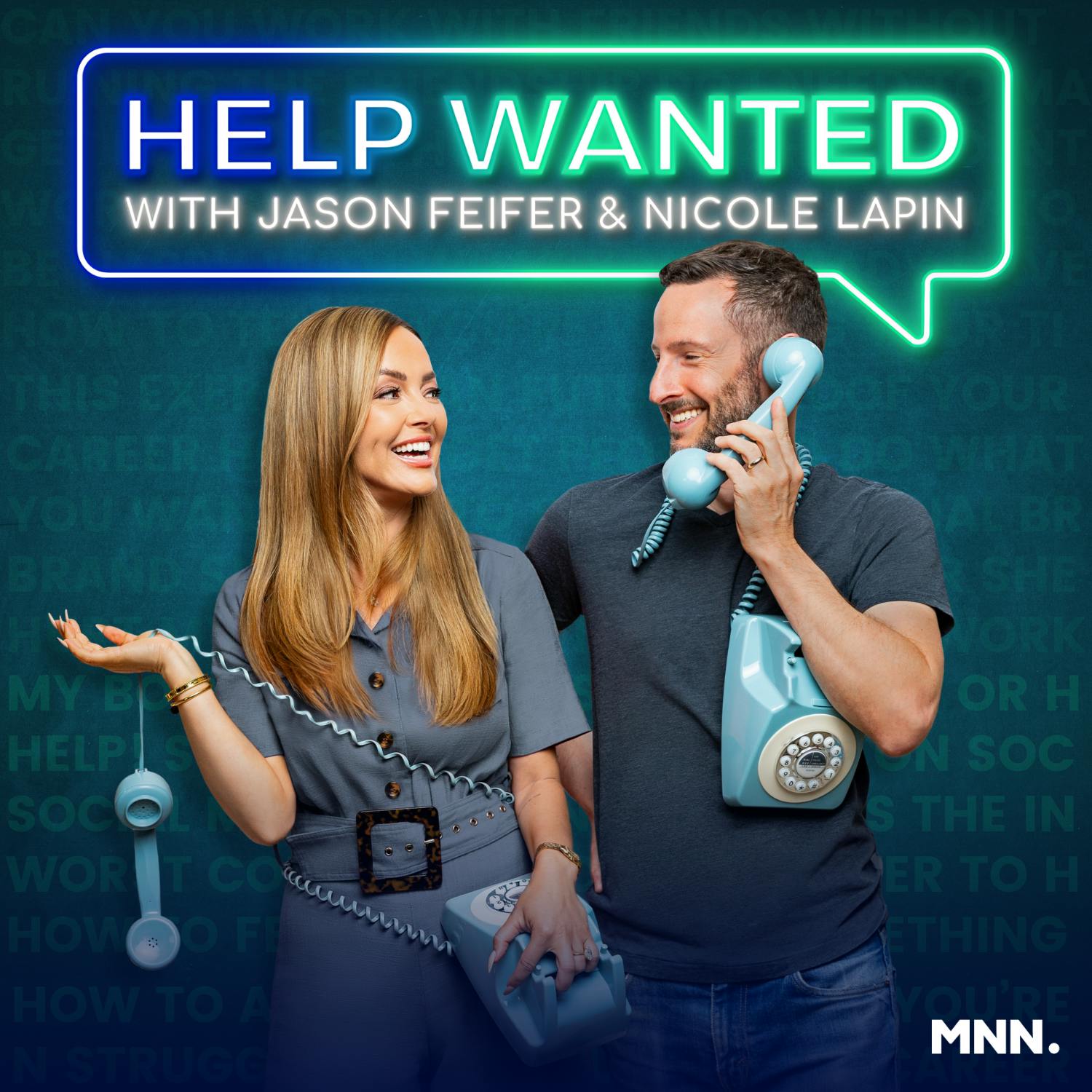
This is Help Wanted, the show that makes your work work for you. I'm Jason Pfeiffer, Editor in chief of.
- [04:11]
Nicole Lapin
Entrepreneur Magazine, and I'm money expert Nicole Lapin. On Tuesdays, Jason and I answer the helpline and help callers solve their work problems.
- [04:18]
Jason Pfeiffer
And on Thursdays, I give you one way to improve your work and build a career or company you love.
- [04:24]
Nicole Lapin
And it starts now.
- [04:28]
Jason Pfeiffer
I have become obsessed with a certain pattern. I now see this pattern everywhere. In business, in culture, in life. And after listening to this podcast episode, you are going to see it too. And big changes are going to start making more sense. Opportunities will reveal themselves. Dare I say you might even be able to predict the future. The pattern is this. Everything bundles, unbundles and rebundles. Today I'll show you how it works, why it matters, and how to use it to your advantage. But first, I'm going to tell you where I first noticed this pattern. On a rooftop with the founder of a $10 billion company. About a year ago, I interviewed Ivan Zhao. He's the co founder and CEO of Notion. For those who don't know, Notion is a workplace productivity tool where you can create anything to do lists, sales trackers, collaborative doc presentations and so on it's kind of like Google Docs, Excel, PowerPoint, a calendar, and more all rolled up into one. And this company is on fire. It has 100 million users and a $10 billion valuation. But Zhao told me that despite its complexities, his business is very simple. He said this to me. Notion is in the bundling business. He says he often thinks about the opening line of Romance of the Three Kingdoms, a historical novel about the rise and fall of Chinese empires. The empire long divided must unite. Long united must divide. Thus it has ever been. In other words, everything unbundles and rebundles forever. Opportunity comes by spotting when that shift is taking place. That is what Zhao did with Notion. He says he started by thinking about the history of workplace productivity tools. First there was a bundle everyone used Microsoft in the 1990s. It offered Word, Excel, and so on. Then an unbundle. When cloud computing began, people left. Microsoft's bundle. Businesses started cobbling together more customized apps for their own workflows like Trello, Google Docs, et cetera. And then the rebundle. Now people are overwhelmed by options. Zhao recognized this and built Notion to put everything back in one place. Simplicity is the selling point. In other words, thus it has ever been. Now let's look at another re Bundling. A few months after meeting Zhao, I was listening to a podcast episode. It was a podcast called Search Engine and the episode was called How Do We Survive the Media Apocalypse? In it, New York Times columnist Ezra Klein diagnosed why the newspaper industry fell apart. And he said it all has to do with bundles. Before the Internet, he said newspapers were bundles containing news, sports, recipes, movie listings and more. Consumers might have only want one part of that, but they had to buy and therefore fund the whole thing. Then the Internet unbundled those topics. People went elsewhere for their sports and recipes and so on. And that left newspapers to primarily sell the news, which is expensive to produce, hard to sell ads against, and not what most of its prior readers wanted anyway. The New York Times is a financially healthy company. How? Well, in part it's because they have rebuilt the bundle with games, food, sports, podcasts, and events. There's this chart that's flying around the Internet that shows how effective this has been. I wish you could see it, but let me just kind of have you imagine it. So it is charting between 2020 and 2023 how much time people spent in various New York Times owned apps. So that's news, games, cooking, and the athletic, which is their sports thing. And if you look at it across time, it is crazy between 2020 and 2023, what happens is that news consumption, or time on the news app, it stays, like, kind of largely steady, but it actually decreases a little bit over time. And then the games consumption, which is small in 2020, by 2023, it is literally dwarfing the news, which is to say, over that three years, people started consuming more and more and more games and spending more time with those games, such that now, assuming that Trends continued after 2023, which I'm sure they did, now people spend more time with the games than they do with the news by a significant amount. And so you could look back at the history of the New York Times and basically say the Times began as a bundle, and then the Internet unbundled it, and now they have rebundled it. Now, let's go a step further. I am the editor in chief of Entrepreneur magazine. A brand like Entrepreneur used to have traditional competitors like Inc. Fortune, Forbes, and so on. But today, those traditional brands are losing audience to creators, individual people who have huge audiences and influence. And as a result, marketing dollars are also shifting towards creators. Every brand must now have an influencer strategy. People often ask me, where do I think this is going next? And once I saw this through the lens of bundling and unbundling, I realized something. Oh, this is just the next version of the same thing. Here's how it works. Here is the bundle unbundle, rebundle version of media and the creator economy. So we start with the bundle. People used to trust a media brand, and that brand basically bundled individual voices. So you would subscribe to Time magazine, and Time had all the writers you knew. Then we unbundled. Now creators can reach their audiences directly, so they don't need established brands. Audiences love this because they can feel a direct personal connection to that creator. And now we have the rebundle. This is really my prediction for what's gonna happen next. As creators seek scale, they're gonna start media companies, and then they're gonna launch other creators, work under their own umbrella, and eventually the main creator is gonna get tired and step back and look, leave a brand name with its new bundle of creators. In other words, the creator economy will literally become the traditional media that it is currently challenging. You can see this playing out right now with Steven Bartlett, who became famous for his Diary of a CEO podcast. He has started a company that, in part, now launches other creators podcasts, and it just closed a funding round at a $425 million valuation. If he does this right, the name Bartlett could become the same as Forbes or Bloomberg. It's a name that represents a bundle of other writers and a bundle of other information. I shared a version of that exact thought on LinkedIn, and guess who replied? It was Steven Bartlett, who basically just left a heart and a fist bump emoji because, yeah, he's clearly thinking the same thing. And so now let's talk about why this cycle never stops. In the earliest days of Internet browsers, Netscape co founder Jim Barksdale was asked a Was he afraid that Microsoft would bundle a browser into Windows? His response became legendary. He said this gentlemen, there are only two ways I know to make bundling and unbundling. There's a reason that this pattern repeats endlessly. Both bundling and unbundling solve real problems, but they also create new problems. Bundles are convenient and efficient, but they force you to pay for things that you don't want. Unbundling gives you choice and specialization, but it creates complexity and decision fatigue. So we swing back and forth. When bundles become too bloated or expensive, we unbundle. And when unbundled options become too fragmented or overwhelming, we rebundle. And I would argue that this is not just contained to business. We bundle our lives. We bring groups of friends together, then realize we'd rather see them alone until another group opportunity comes along. Or our partners become our everything, our social life, our thought partners, our whatever. And then we realize that it's also healthy to find some of these things in others. We also bundle our identities. Our identity gets tied up in our job title, our achievements, and our social circle. I am my career, for example. But as we grow older, growth often means picking these things apart until we create a new bundle of identity. And we bundle our careers. We start by taking on everything. Sure, I'll do marketing ops and sales, for example, you might say, at a job. And then we focus deeply on one thing and become a specialist. And then we become leaders who must bring together multiple disciplines. Again, it'll always change. Always. Unbundling and rebundling. And here's what I love most about this Once you see the pattern, you can appreciate that nothing is permanent and that all changes follow the same logic. No direction is set forever. No path is straight and linear. New things are just new versions of old things. Are things changing? Go with it. Do you want to make a change? Go for it. Feeling left behind by a change? Watch closely, because opportunity will loop back around. We live in a cycle, and that cycle is ours to shape and ride. And by the way, longtime listeners will know that came from my newsletter. My newsletter is called One Thing each week, one way to be more successful, satisfied, and build a career or company you love. You can get that newsletter at onething Better Email. That is a web address. Plug it into a browser. One thingbetter Email. I also read them here a few weeks after they come out by email. Right on. Help Wanted. So you could stay tuned for Help Wanted, you should. But also if you want it in the email a little bit earlier, along with some other goodies that I always share, then one thing better.com is the place. And maybe one day, I don't know, we'll bundle One Thing Better and Help Wanted and then we'll unbundle it and then we'll rebundle it and it'll go on forever. Help Wanted is a production of Money News Network. Help Wanted is hosted by me, Jason.
- [14:37]
Nicole Lapin
Pfeiffer and me, Nicole Lapin. Our executive producer is Morgan Lavoie. You want some help? Email our helpline@helpwantedoneynewsnetwork.com for the chance to have some of your questions answered on the show and follow us on Instagram @moneynews and TikTok MoneyNews Network for excited exclusive content and to see our beautiful faces. Maybe a little dance?
- [14:57]
Jason Pfeiffer
Oh, I didn't sign up for that.
- [14:58]
Nicole Lapin
All right, well, talk to you soon.