Loading summary
Transcript121 lines
- [00:00]
Nicole Lapin
Do you ever feel like your money is working against you? I mean, I've been hit by overdraft fees that I didn't see coming, waited for days for paychecks to clear, and gotten blindsided by surprise charges when I just wanted to grab some quick cash from an atm. It is exhausting, especially when you're trying to get your money right. Chime understands that every dollar counts. That's why when you set up direct deposit through Chime, you get access to fee free features like free overdraft coverage, getting paid up to two days early with direct deposit, and more. Learn more@chime.com helpwanted. You know that I'm a big budgeting nerd, so Chime's tool for daily balance updates and real time transaction alerts have made it easier than ever to stick to my spending plan. Chime is just banking done right. You can open a Chime checking account with no monthly fees and no maintenance fees. Plus you get access to over 50,000 fee free ATMs. That is more than the top three national banks combined. Work on your financial goals through Chime today. Open an account in just two minutes at chime.com helpwanted that is chime.com helpwanted Chime feels like progress.
- [01:01]
Chime Representative
Chime is a financial technology company, not a bank. Banking services and debit card provided by the Bancorp or Stride Bank, NA members, FDIC Spotney eligibility requirements and overdraft limits apply. Timing depends on submission of payment file. Fees apply at out of network ATMs, bank ranking and number of ATMs, according to U.S. news and World Report, 2023 Chime checking account required Coming up with.
- [01:14]
Nicole Lapin
A great idea for a business is hard, but once you have that great idea, starting a business should be simple. Get more when you start your business with Northwest Registered Agent, your entire business Identity in just 10 clicks and 10 minutes. Northwest registered agent has been helping businesses launch and grow for nearly 30 years. If you want to build your business while keeping your personal information secure, NorthW is the partner you need. They'll form your business, create a custom website and set up your local presence wherever you need it. Get everything from formation paperwork to custom domains and trademark registration all in one easy to use account. Form your business for just 39 bucks plus state fees. Backed by real business experts with decades of experience. And if you want more, Northwest's Premium mail Forwarding gives you a physical business address separate from your private information.
- [02:03]
Morgan Lavoy
So don't wait.
- [02:03]
Nicole Lapin
Please protect your privacy, Build your brand and set up your business in just 10 clicks in 10 minutes. Visit northwestregisteredagent.com helpwanted and start building something amazing. Get more with Northwest registered agent@northwestregisteredagent.com helpwanted.
- [02:27]
Jason Pfeiffer
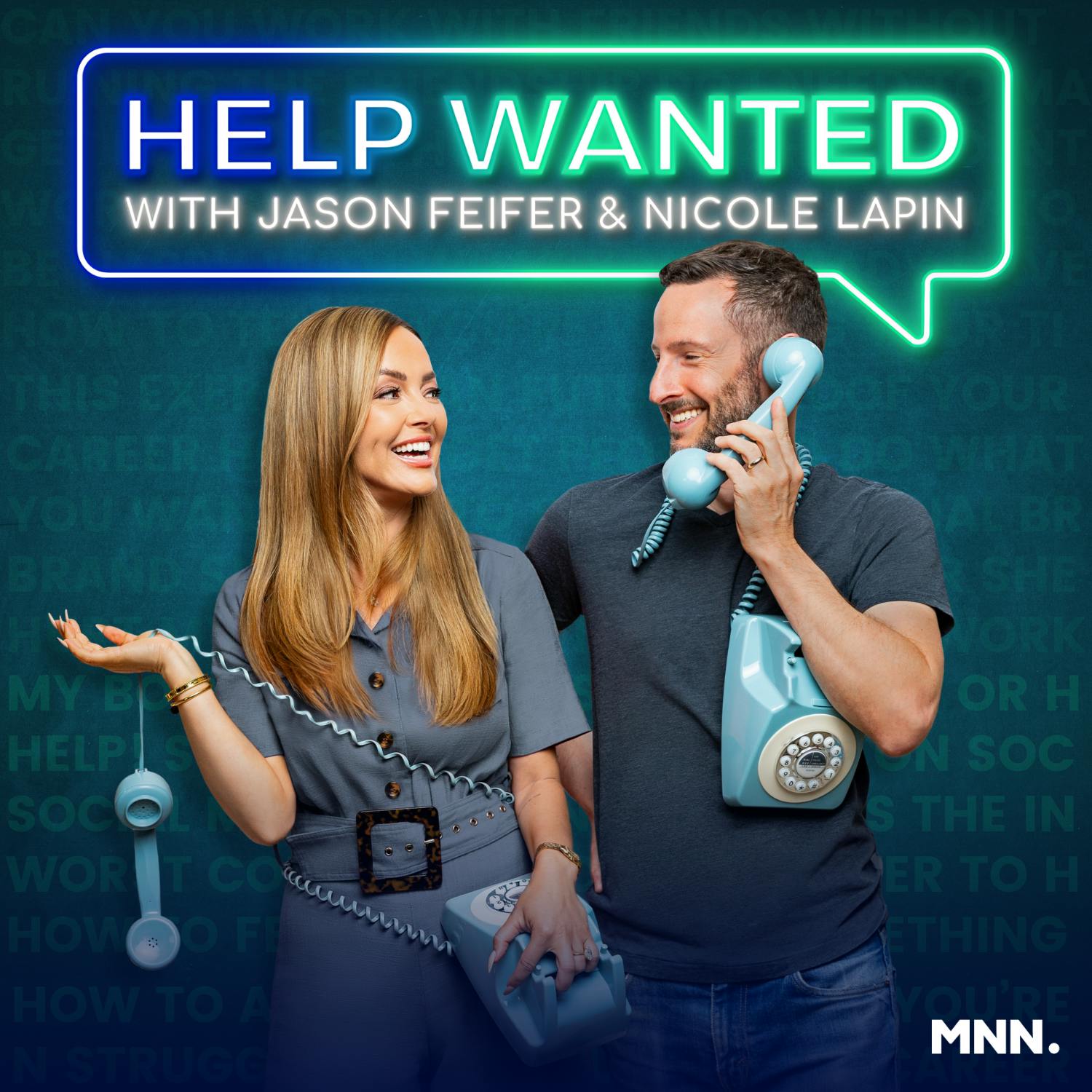
This is help Wanted, the show that tackles all the big work questions you cannot ask anyone else. I'm Jason Pfeiffer, editor in chief of.
- [02:35]
Morgan Lavoy
Entrepreneur magazine, and I'm New York Times.
- [02:37]
Nicole Lapin
Bestselling author and money expert Nicole Lapin.
- [02:39]
Jason Pfeiffer
The helpline is open.
- [02:43]
Morgan Lavoy
Okay, Jason, do you want me to tell you an embarrassing story about myself?
- [02:47]
Jason Pfeiffer
I mean, you don't have to ask. You could just jump right into it.
- [02:50]
Morgan Lavoy
It's a recent story. I still feel like my armpits are getting sweaty thinking about it. My. My palms mostly.
- [02:57]
Jason Pfeiffer
Okay, this is good. This is raw. I like. I like raw and embarrassing.
- [03:02]
Morgan Lavoy
So as we're building this network, I've been lucky enough to be asked to go on Good Morning America a few times.
- [03:10]
Jason Pfeiffer
And you're really good at it.
- [03:11]
Morgan Lavoy
Very kind of you to say. I have been doing this TV thing for a couple of decades now, and so, you know, I still get a little nervous. I'm not gonna lie. Like, on some big, big shows like that.
- [03:23]
Jason Pfeiffer
That makes me feel better, by the way, that you still do.
- [03:26]
Morgan Lavoy
Oh, really?
- [03:26]
Jason Pfeiffer
Yeah. Anyway, keep going, Keep going. I like this.
- [03:28]
Morgan Lavoy
Okay, so I went on Good Morning America to talk about the debt ceiling and did the segment. Like, there was a lot of facts, figures breaking down of the thing. It went fine. Like, the main part of the segment was fine when they thanked me for coming, which is, like, the most basic part of this.
- [03:52]
Jason Pfeiffer
Right? The outro at the very end of the segment where they're just like, thanks. Thanks for coming on the show. Nicole, thanks.
- [03:56]
Morgan Lavoy
Thanks for coming. I. I don't know how this has never happened to me before, but I said, what did I. What the fuck did I say? Morgan is here because she was also there. So she's. She witnessed this whole thing unfold where.
- [04:12]
Jason Pfeiffer
I said, like, Morgan, our executive producer, extraordinary.
- [04:16]
Morgan Lavoy
I said like, you, too are. Things are coming too. Like, thank you for coming by. What did I say?
- [04:23]
Not quite.
- [04:25]
I said something terrible, like, to. Analogous to. I said something like, akin to what you would say at the airport when somebody is like, have a good flight. And you're like, you, too. Like, they're not going on a flight. And it was mortifying for me. I was completely mortified.
- [04:42]
Nicole Lapin
What did I say, Morgan?
- [04:44]
Morgan Lavoy
So what you said was. And just to take a step back, because I think it makes a little bit more sense thinking about how the segment started as well. The two hosts, when the segment started was like, hi, friend. And Nicole, back to them was like, hi, friend. So she had already sort of set up this like call and response situation. And so what happened at the end was terrible was that one of the hosts said, it's always great to have you here. And Nicole said, you too?
- [05:19]
No, I think I was like, it's always great to have you here. Or that I like, I think I trailed off because I stopped myself and I. You're right.
- [05:28]
It could have just been a. It's. It's always great to have you.
- [05:31]
Yeah, something like that.
- [05:32]
It could have been that.
- [05:33]
We have video evidence of it. I'm like reluctant to go back and check the tape because it's so cringe worthy. It was not great.
- [05:41]
Jason Pfeiffer
Are we going to air this on, on the show?
- [05:44]
Morgan Lavoy
Should we?
- [05:44]
The interesting thing is we can air it on social media, but we couldn't air it on the podcast because you can't hear Nicole say that at all.
- [05:54]
You can. So I get off the segment. I see Morgan, she's like the mom, the cool mom, like on the side of the stage in Mean Girls with the camcorder, like, cheering me on, like recording the segment, like, so, like, great to see her shining, bright face, like, you crushed it. And I'm like, I'm the worst. I can't believe I did that. She was like legitimately confused, which made me a little bit more comforted, I guess. But then I was like, you weren't even listening. It was terrible. Everybody hates me. I'm going to like, how did I say something so horrible? I fudged everything up. And she's like, I don't even know what you're talking about. And I was like, you recorded it, right? Like, let's listen to it. And then we went back and listened to it and sure enough, she was like, oh.
- [06:45]
Jason Pfeiffer
But wait, just, just so that I can understand this scene here. Do you think that the anchors on Good Morning America heard you?
- [06:54]
Nicole Lapin
That is where the jury is out.
- [06:56]
Jason Pfeiffer
Okay, well then how about this? This I know is speculative, but do you think that if the anchors at GMA heard you, they would have cared or thought it was bad or thought it was funny?
- [07:10]
Morgan Lavoy
The mean girl inside my head thinks that they would have thought it was terrible and not funny and like, escorted me out of the building. Right. Like the worst case scenario.
- [07:21]
Jason Pfeiffer
Yeah.
- [07:21]
Morgan Lavoy
So like, we went back and we checked the tape and indeed I did say something dumb. Yeah. Not great.
- [07:28]
Nicole Lapin
Not ideal.
- [07:29]
Morgan Lavoy
And so I started panicking. Morgan Artfully, skillfully, as usual, talks me off a ledge, it's totally fine. I. She was like, I believed her. She, like, didn't hear it live, but, like, there was some evidence of like a trailing out, weird thing that I said. And so I immediately sprung into like, oh, my God. And by the way, the segment that we did was live to tape. So in television, like, it's either live live, where it's like, there's a little bit of a delay in case somebody swears but it's live, or it's, you know, taped, in which case, like, then it's edited and then air later, or it's live to tape, so it's like as if it was live. But if something crazy happens or if you go over for time, like, they can edit it out. For instance, like, they use the wrong cover art of Money Rehab. I saw that going into the segment. It kind of like threw me off. And I was like, fuck, we have to make sure that we get them to change that so stuff like that they could actually go back and change. And they did. So the big question was, do I go back? In addition to telling them they used the wrong cover art for the show, do I say, hey, also this terrible, weird, awkward, bananas thing that I said? Because also the music was coming out so I couldn't like, make fun of myself, which I may have done. Like, that would have felt right if there was like a little bit more time. Should I tell the producer, hey, can you also, like, cut this little part out at the end?
- [08:48]
Jason Pfeiffer
Ah, okay.
- [08:50]
Morgan Lavoy
And so the debate was, do I call attention to the thing that we don't know if anyone else heard?
- [08:57]
Jason Pfeiffer
And this I think I should just interject to tee up the episode that we're hearing. Because this is not just an episode of you telling me this story. This is an episode where we are going to interrogate this kind of question, which is what to do when you have messed up, when you are embarrassed, how do you handle it? When do you call it out? When do you just keep rolling? And here you had this question, which is you knew you made a mistake. Let us all be clear, it was a mistake. A pretty small mistake, all things considered, but one that you television professional, don't feel good that you made.
- [09:34]
Morgan Lavoy
No.
- [09:34]
Jason Pfeiffer
And there is an opportunity to do something about it, but one that just calls more attention to it. And also, maybe you're thinking you don't want to be difficult if there's not a reason to be difficult. And so what do you do when you have made a Mistake. And you know, other people might see you and think that person made a mistake.
- [09:57]
Morgan Lavoy
Or as Nicole at this said at the time. Here's some more color. Like, Nicole really was panicking after the segment and she like crushed this description on the debt ceiling and treasury yields and all of these things that are really complicated. And so that's like such a feat. And Nicole is so defeated in the dressing room and she goes, such a stupid head.
- [10:20]
Jason Pfeiffer
Wow, this is really just like the Care Bears version of a big screw up here. Right? Like, it's a small mistake and then you're calling yourself a stupid head.
- [10:29]
Morgan Lavoy
Yeah.
- [10:30]
Jason Pfeiffer
What did you do?
- [10:32]
Morgan Lavoy
Morgan initially said, don't say anything. Like don't call Morgan.
- [10:37]
Jason Pfeiffer
Is that the reason not to say anything is because you don't want to draw more attention to it? Like, what was your argument?
- [10:43]
Morgan Lavoy
Thank you for asking, because it wasn't. That was.
- [10:45]
Jason Pfeiffer
Okay, good misrepresentation. Let's clear it up.
- [10:47]
Morgan Lavoy
Oh, okay.
- [10:49]
Yeah. Nicole to me in the green room after the segment was like, should I talk to the producer Kevin about it and ask for them to cut it? And I said no because nobody noticed. It was such a little, teeny, tiny thing that the music was already playing over. I didn't notice. And I had my complete all eyeballs on it. And so I was like, the ask to fix this thing is way bigger than the actual thing itself. It was getting spun in your head out of control. It was this teeny, tiny little thing that nobody noticed. So don't ask them to edit it because it's nothing.
- [11:28]
And then what did I do?
- [11:30]
Nicole asked them to cut it out and they said no because nobody would notice.
- [11:35]
Jason Pfeiffer
They said no. Oh my God, Nicole.
- [11:38]
Morgan Lavoy
Oh, I'm such a stupid dad.
- [11:40]
Jason Pfeiffer
Did that make you feel worse than having had not asked in the first place?
- [11:44]
Morgan Lavoy
Yeah. Morgan was right as you.
- [11:46]
Jason Pfeiffer
And now that it's out, first of all, did angry hordes of people amass outside your home because you said thanks u2 or whatever it is that you said on Good Morning America? Did anybody notice or care?
- [12:00]
Morgan Lavoy
No. I mean, I always get hate stuff, especially after doing like more national shows, but no.
- [12:07]
Jason Pfeiffer
Okay, so how do you feel now that it's. It is out in the world? It happened. People saw it. Possibly, possibly A suburban mom in Des Moines, Iowa heard it and said, teehee.
- [12:24]
Morgan Lavoy
Yeah, it's been a couple weeks, I think. What is time? It's been at least a week and so obviously I've had some space from it. It still is something that makes me feel like a not smart Head, at least. But yeah, like, I don't really care now.
- [12:42]
Jason Pfeiffer
Okay.
- [12:42]
Morgan Lavoy
But it cut really deep at the time and I was in. It ruined my day, basically.
- [12:47]
Nicole Lapin
But also.
- [12:49]
Morgan Lavoy
Which it shouldn't have ruined my day. Like, I had, like, an awards thing and I should have, like, been able to move on. I was contemplating whether to make fun of myself and then draw more attention to it in a different way by putting it online and being like, haha, I'm such a. Money experts are just like us.
- [13:08]
Jason Pfeiffer
Yeah. Yeah.
- [13:09]
Morgan Lavoy
So I was confronted with that as another, like, choose your own adventure option.
- [13:14]
Jason Pfeiffer
Sure. So lean right into it. But you didn't do that.
- [13:17]
Morgan Lavoy
I didn't.
- [13:18]
Jason Pfeiffer
So then when we decided to talk about it on this episode, was there a part of you that said, no, let's just not do that? Let us ignore that this ever happened?
- [13:27]
Morgan Lavoy
No, this feels right. I feel. I feel good about it, all things considered. I. I should have listened to Morgan and I should have just not brought it up and not gone into, like, a panic spiral. But I'm okay that it came out, and I'm okay that I didn't call attention to it because that was, like, a big week for us. We had, you know, I leaned into the actual content of the debt ceiling stuff and breaking that down and like, the Webby Awards and all of that stuff. Like, I focused on the big things without, you know, poking more fun at myself.
- [13:58]
Jason Pfeiffer
Yeah.
- [13:58]
Morgan Lavoy
On it. So I skipped that too, which I'm fine with. But now I'm also fine, like, making fun of myself. As you guys know, I am down to do.
- [14:05]
Jason Pfeiffer
I think that the question at the heart of this is what to do when the mistake is made. And in this case, I think that it was very clear you weren't on the show. Jason, if you were able to step out of the panic attack, what should have happened? Because it wasn't that big of a deal. People have made incredibly large errors on television. This wasn't one of them. But I am going to counter this. Well, let's put this on the shelf for a second, and then I'm going to tell a edited version of a story that, Nicole, you will remember, because it involves me calling you in a panic after I said something, and that was that I was interviewed on this radio show, but it wasn't live. One of the options that you said, where they recorded it and they'd like to just air it as it was recorded and. But it wasn't live immediately. It was going to air, like, in a day or two, and the host had asked me a very sensitive business related question about Entrepreneur, the company. And I am not used to fielding those questions because people generally ask me about entrepreneurs and the stuff that I'm very comfortable talking about and I really don't speak to that side of the business. I can speak to like editorial decisions that we make. But they asked me a question about the business side. It was a sensitive question and I think that my answer was okay. But afterwards I just was in a panic about whether I said the right thing and what would happen if the owner of Entrepreneur heard it. Did I properly represent the brand? Did I say something irresponsible? And, and I did not know what to do. And I, I called you and the advice that you gave me was pretty similar to the advice that Morgan gave you, which is to say that it's fine. What you said sounds fine. I mean, I didn't have the recording at the time, but I like repeated back to you what I had said and you're like, I think that it's fine. And I just like you in that moment did not listen. And I reached out and I asked them to take it out.
- [16:11]
Morgan Lavoy
Oh, I didn't know that part.
- [16:12]
Jason Pfeiffer
Oh, oh, maybe I never gave you the follow up.
- [16:15]
Morgan Lavoy
I thought we had like come to terms with that.
- [16:18]
Nicole Lapin
Interesting.
- [16:19]
Jason Pfeiffer
We did. And then, and then I kept freaking out.
- [16:21]
Morgan Lavoy
Yeah, I get it. Clearly.
- [16:23]
Jason Pfeiffer
No, I get it. I felt good when I was on the phone with you and then I got off the phone and then I fell right back into the panic and I like slow walked into it in the most embarrassing way. At first I emailed the guy and I was like, hey, I'm just not sure if I answered that question properly. And he responded and said, oh, well, here's the audio of it so you could hear it. And then I responded and I was like, oh, could you maybe, I don't know, is there a way to trim it down or something like that? And he's like, no, I don't think so. And I said, is there a way to take it out? Like, I should have just said I should have made a decision. I didn't make a decision. I kind of kept wading into it. But anyway, he ultimately took it out. And I, as soon as he told me that he did that, my wave of panic just disappeared because it was gone, it was over. And I have to say that in my case, I am going to say I made the right decision. And here's the distinction that I'm going to propose to the both of you and you can decide Whether or not to accept it. Stick around. Help Wanted. We'll be right back. Welcome back to Help Wanted. Let's get to it. The distinction about whether or not to try to fix something when you messed up or to call more attention to it or to do something more drastic or whatever it is that these things represent. Because ultimately, what we're talking about here is the broader experience of messing up and then trying to figure out how to react to it is that I think that you have to realistically evaluate the stakes. And a good way to do that is to ask what is the realistic worst case scenario? And Nicole, in your case, I think that the realistic worst case scenario is that some people heard it and thought that it was funny. And I don't think that it's the kind of thing that anyone at Team GMA would listen to and say, well, we can't have Nicole Lappin back on to make that kind of embarrassment on the air. Like, it wasn't going to end. Impact anything substantive going forward. Whereas mine, the realistic, I think, worst case scenario was that the owner of Entrepreneur heard it and thought it was inappropriate. And then that impacted my role at Entrepreneur. And I think that it's worth thinking very realistically, what is the worst case scenario here? And then acting accordingly. What do you think?
- [18:50]
Morgan Lavoy
Yeah, but you can't be realistic during those times. Like, it's just like your realistic goal faculties are broken. They're just like, it's not. You're not in the realm of practical. I, you know, the death spiral was like, they're never going to invite me back. I have, you know, so much pressure on this company. Like, we're solidifying these relationships. Like, it's going to ruin the company. We're, like, never going to be able to get out there. Like, I have, you know, people that we have to support, like, lives and, you know, like, I fucked it all up. You know, there was no, like, reasoning during that time with me or like, frankly, I mean, maybe with you, because, you know, it was clear that there could be, like, a legal ramification. But for me, I was like, there. As much as Morgan tried to get me into, like, a realistic assessment of worst case scenario, I wasn't gonna get there. But now I, I can. That's what time does. It gives you some realism.
- [19:50]
Jason Pfeiffer
Yeah. One way to maybe gain some perspective on this is to let's take a little dive into counterfactual thinking. And so counterfactual thinking being the psychological term for comparing the experience that you had against an imagined experience. And then Ruminating really about how you generally, the way that it works is that you wish that you had the other experience instead. So. Right. So the counterfactual thinking will be the way in which you said something on TV versus the better way you could have said it, which is a kind of upward counterfactual thinking. We often don't do downward counterfactual thinking, which is to say that we compare what we did against a way in which it could have gone even worse. Right. I mean, it could. What could have happened is that they said, nicole, thanks for coming on the show. And you could have said, you all right? Like that that could have happened. It's unlikely, but it could have happened. And that would have been worse. Right. So what we're doing is we're comparing what we did against the perfect version that we can imagine. And that is really unfair to us because there is a world of possibilities out there and most of them are actually worse than, than the thing that we actually experienced. And this isn't me talking. This is. I had interviewed a couple psychologists about counterfactual thinking because I became interested in it. And they said that's a way to break that cycle, is to stop locking yourself into one way in which it could have otherwise happened the better way and to start imagining all the other scenarios so that you recognize what you did actually in a broader spectrum of what could have happened.
- [21:36]
Morgan Lavoy
Yeah, it's like this power of negative thinking versus power of positive thinking, which we hear a lot. I think of it too as like this stoicism idea that I've talked about on the show before of like imagining what the worst case scenario is too, and then figuring out, like, what would happen if that happened. Like really playing out your fears and saying, like, okay, well, let's say they said something then what would happen? Like, then maybe I would just like laugh it off and be like, you know, but didn't I, like, tell you about the debt ceiling? Like a boss? I don't know. Or would they have said they wouldn't invite me back then what would I do? Would I pitch them more things? Whatever. Like, long story short, it would be okay. Like, would somebody come and take the company away and like, do all of those things? No, but like the realistic worst case scenarios, like, if you keep going down that thread, the answer is always like, you will be okay. And then I find comfort in that.
- [22:37]
Jason Pfeiffer
Because there's always something tomorrow, right? Like, the world does not end because of a decision. Something's going to happen tomorrow. So there's Something to do, to fix, to adapt to, to adjust to, to create some other new opportunity. Something like a big part of the problem when we are afraid of the consequences of something that happened is that we just kind of imagine the story stopping. You said the thing on GMA and then they didn't invite you back, and that's the end curtain down, right? Like, that's how it happens. Like something.
- [23:08]
Morgan Lavoy
She was a nice woman.
- [23:11]
Jason Pfeiffer
Something's gonna happen tomorrow.
- [23:12]
Morgan Lavoy
That's true. I, you know, I think that these skills that are really beneficial in psychology can be really beneficial depending on the. The time and the place in business, right? Like, there is a time and a place where power of positive thinking for. Power of negative thinking for like, stoicism, for playing out the worst case scenario, but also playing out the best case scenario, right? Like, we always have this negativity bias, especially like when things like this happen and we just imagine, you know, the worst case scenario. But like, what about the best case scenario? What if they were like, oh, my God, that was so charming. Come on. Every day. Like, how real? Like, you're just like the realest, coolest, most normal, like, money expert is just like us. Like, that's what we're looking for in this show.
- [23:58]
Jason Pfeiffer
Yeah, that's totally right. It's a great point. And that reminds me of this thing that happened back in 2021, which was that, if you remember this, an HBO Max intern, which I guess is now just called Max, which is, can we all agree, the worst branding decision of all time. But back then, HBO Max, an HBO Max intern, accidentally sent a test email to, like, all the subscribers, which meant however many hundreds of thousands or millions of people, I don't know of people, all got this random email from HBO Max that just said, integration test email number one. And that was it. And so that was probably a very bad day for that intern. And HBO Max, whoever over there made this decision, made a really wonderful decision to just make light of it and tweeted out. We mistakenly sent out an empty test email to a portion of our HBO Max mailing list this evening. We apologize for the inconvenience. And as the jokes pile in, because of course, people started making jokes on Twitter. Yes, it was the intern. No, really. And we're helping them through it. Heart emoji. And do you remember what followed that?
- [25:05]
Morgan Lavoy
No.
- [25:06]
Jason Pfeiffer
So what followed that was this wonderful outpouring of people on Twitter all sharing the time where they screwed up as an intern. I will read some of them to you. Dear intern, When I was 25 I made a PDF assigning each employee to the Muppet they most reminded me of. I meant to send it to my work friend, but I accidentally sent it to the entire company. My supervisor, Beaker, wanted to fire me, but the owner is Bert Nurney intervened, which I think is lovely. Dear Intern, I was using my desktop calendar to make a monthly note of when I started my menstrual period. But after several months, I realized I was making that note on a calendar I shared with all of my colleagues, company wide. I was 37 years old. Okay, so these aren't just when they were interns. These are just mistakes people made. Dear Intern, as a young lawyer, I proofread a legal brief and filed it with the court. I caught a typo and blindly used the global find and replace function. Pro tip. Don't do that. My brief argued for the rights of the panties, not the parties. All 50 pages of it, and it keeps on going.
- [26:06]
Morgan Lavoy
So that's amazing.
- [26:08]
Jason Pfeiffer
And then that got its own wave of coverage. And the lesson there is that sometimes you mess up and it's a big deal, and sometimes you mess up and everyone else messed up too, and they all relate to it and it's all okay. And I think that a lot of what's going to come next and what direction that's going to go depends upon the actions that are taken immediately after.
- [26:40]
Morgan Lavoy
Yeah, but I guess there's also this idea of really leaning into what the mistake is can backfire. We've seen that a lot on social media. Like, we in the last decade just had this authenticity rise. And, like, I'm feeling some authenticity fatigue. So that's why I didn't think it was, like, particularly interesting for me, because I could have said, let's just pull this part of the clip out and, like, highlight it. Right. Like, the time I went into Barnes and Noble after Boss Bitch was written and I saw an X on my face on one of the books that I was signing, and I was, like, totally mortified. My initial instinct, and this is like, pre authenticity, like, blitz. I wanted to buy the book and hide it and make sure nobody saw it, but instead, like, I put it on social media and I was like, thank you to this person who did that or whatever. So I could have done, you know, something similar where I just, like, really tried to be vulnerable and authentic and.
- [27:37]
Nicole Lapin
All that stuff and, like, share your.
- [27:39]
Morgan Lavoy
Stories about when you said, like, a stupid thing back to, like, the person wishing you a good flight or whatever. But I just felt like it was too much, like, I Yeah, I think that there's. We're at a tipping point of some of that. So a lot of companies can also try to fix mistakes by just, like, being super, super honest. Right. And it has this great effect of, like, dear intern and this kind of nice moment, but maybe there's a time and a place where you don't need to highlight it, you don't need to hide it, but you also don't need to underline it.
- [28:08]
Jason Pfeiffer
Right. What we're not advocating for here is a world in which everybody's mistake becomes this thing that gets waved around. But I hadn't thought about this until you kind of put these two things side by side. But in a way, I guess the question that needs to be asked, I think you tell me the question that needs to be asked is, how do I make this right? And there are a lot of ways to do that. And sometimes, how do I make this right is I will wave this in the air and other people will appreciate it, and they will rally to me sometimes. How do I make this right is I will bury this six feet under the ground and nobody will ever hear about it again. And neither of those are right or wrong. They just are. And so I guess the thing to do is to ask that question and then follow it to whatever its most logical and comfortable conclusion is. What do you think about that?
- [29:07]
Morgan Lavoy
Well, what struck me about your two stories also side by side, it reminded me of this psychotherapist, Julia Samuels, who has this really interesting. The way that she implements her research around fight and flight is really interesting. But she makes the point that when we make a mistake and we feel this anxiety, we are just animals under fight or flight. And so we have to do something. Like, that's the way that we're programmed. We won't feel better until we do something. And so that seemed to be what both of you guys did. You were like, I feel like I made a mistake and I will not be able to feel better unless I do something. And I saw that with you, Nicole, you were like, I am a dummy. And you couldn't shake that until you talked to the GP VMA producer. But I think actually kind of more of the difference than the stakes. I see the big difference between the two of your stories is that, Jason, you got what you asked for, and Nicole, you didn't. And so you had to make yourself feel better. Nicole, yourself. And Jason, you had help with your problem. Nicole, you didn't.
- [30:12]
Nicole Lapin
You just.
- [30:12]
Morgan Lavoy
You were just out on your own, and you had to make yourself feel better. And so what I hear is that it doesn't matter if your mistake is big or small. Actually, you're not going to feel better unless you do something about it. And if it's a proper mistake that you need to fix, that will make you feel better. But even if it's a little mistake, you need to do something that'll make yourself feel better. And so maybe it's just asking the GMA producer to cut it out or maybe it's just sharing about it on social media, but just doing something that I think is commensurate with actually the mistake is the key.
- [30:44]
Do you remember what I did to self to soothe ultimately alcohol? Close. I had a big cookie.
- [30:49]
Jason Pfeiffer
That's a very well earned cookie.
- [30:51]
Morgan Lavoy
Absolutely. And that's commensurate with the crime. It was. It was a cookie mistake.
- [30:57]
Because I'm not a stupid head.
- [30:59]
Jason Pfeiffer
No, just a cookie head. Well, Nicole and Morgan, thanks for coming on the show.
- [31:04]
Morgan Lavoy
You too.
- [31:08]
Jason Pfeiffer
Help Wanted is a production of Money News Network. Help Wanted is hosted by me, Jason.
- [31:13]
Morgan Lavoy
Pfeiffer and me, Nicole Lapin. Our executive producer is Morgan Lavoy. Do you want some help? Email our helpline@helpwantedoneynewsnetwork.com for the chance to have some of your questions answered on the show. And follow us on Instagramoneynews and TikTokoneyNewsNetwork.
- [31:29]
Nicole Lapin
For exclusive content and to see our beautiful faces. Maybe a little dance?
- [31:34]
Jason Pfeiffer
Oh, I didn't sign up for that.
- [31:35]
Morgan Lavoy
All right, well, talk to you soon.
- [31:37]
Jason Pfeiffer
Sa.