Loading summary
Transcript68 lines
- [00:00]
Nicole Lapin
Jason, would you like to vent?
- [00:02]
Jason Pfeiffer
I don't get angry often but this pisses me off. ATMs that charge you money to get money. You know where you have to pay a fee to get your own money. I hate that.
- [00:12]
Nicole Lapin
Ugh. I hate that too.
- [00:14]
Jason Pfeiffer
I travel a lot. I also live in a neighborhood with a lot of these ATMs. I am constantly getting hit with fees until now because now there's chime.
- [00:24]
Sponsor Representative
Wait, Chime can help you avoid those fees. Tell me more.
- [00:28]
Jason Pfeiffer
When you bank with Chime, you are never far from a free ATM. That's because they have over 47,000 fee free ATMs in Target CVS 7 11s all across the country. That's more than the top three national banks combined. And that's not all Chime does. Chime understands that every dollar counts. So when you set up a direct deposit through Chime, you get access to fee free features like free overdraft coverage, getting paid up to two days early with direct deposit.
- [00:58]
Sponsor Representative
And Chime is not just smarter banking. It is the most rewarding way to bank join the millions who are already banking fee free today. It just takes a few minutes to sign up. Head to chime.comhelpwanted that is chime.com help wanted.
- [01:16]
Nicole Lapin
Chime is a financial technology company, not a bank. Banking services A secured Chime Visa credit card and MyPay line of credit provided by the Bancor Bank NA or Stride Bank NA. MyPay eligibility requirements apply and credit limit ranges $20 to $500. Optional services and products may have fees or charges. See chime.com feesinfo advertised annual percentage yield with Chime+status only. Otherwise 1.00 applies. No min balance required. Chime card on time Payment history may have a positive impact on your credit score. Results may vary. See chime.com for details and applicable terms.
- [01:36]
Jason Pfeiffer
I started my business as a sole proprietorship and at the time that made sense. I was just trying to get moving. But looking back I realized if I had known what I know now, I probably would have structured it as an S Corp at the start. Instead I had to switch later, which was a pain. And you know that is true of many things. There are small decisions that we would have approached differently if only we had known. But you don't have to learn from your mistakes like I did. You can do it right the first time. Under the guidance of today's sponsor, Northwest Registered Agent has been helping small business owners and entrepreneurs launch and grow businesses for nearly 30 years. They are the largest registered agent and LLC service in the US with over 1500 corporate guides who are real people who know your local laws and can help you and your business every step of the way. Northwest gives you access to thousands of free guides, tools and attorney drafted documents to help you run your business with confidence. No upsells, no selling your data. Northwest makes life easy for business owners. They don't just help you form your business, they give you all the free tools that you need after you form like operating agreements, meeting minutes and thousands of guides that explain all the ins and outs of running a business. Don't pay hundreds or thousands of dollars for what you can get from Northwest for free. Visit northwestregisteredagent.com helpwanted free and start using free resources to build something amazing. Get more with Northwest Registered Agent at. Again, here's the website northwestregisteredagent.com helpwanted free
- [03:24]
Sponsor Representative
we've had some big wins at my company this year. The kind of wins that mean it's time to expand. Bringing new people onto the team isn't something I take lightly. These people are going to help shape the content that goes out into the world with my brand and my name attached to it. So when I'm hiring, I need to make sure my job listing lands in front of the best possible people. Not just good, the best. Which means this is a job for Indeed Sponsored Jobs. Spend less time searching and more time actually interviewing candidates who check all your boxes. Less stress, less time, more results when you need the right person to cut through the chaos. This is a job for Indeed Sponsored Jobs and listeners of this show will get a $75 sponsored job credit to help get your job the premium status it deserves@ Indeed.com podcast just go to Indeed.com podc right now and support our show by saying you heard about Indeed on this podcast. Indeed.com podcast terms and conditions apply. This isn't your job. This is a job for Indeed Sponsored Jobs.
- [04:49]
Jason Pfeiffer
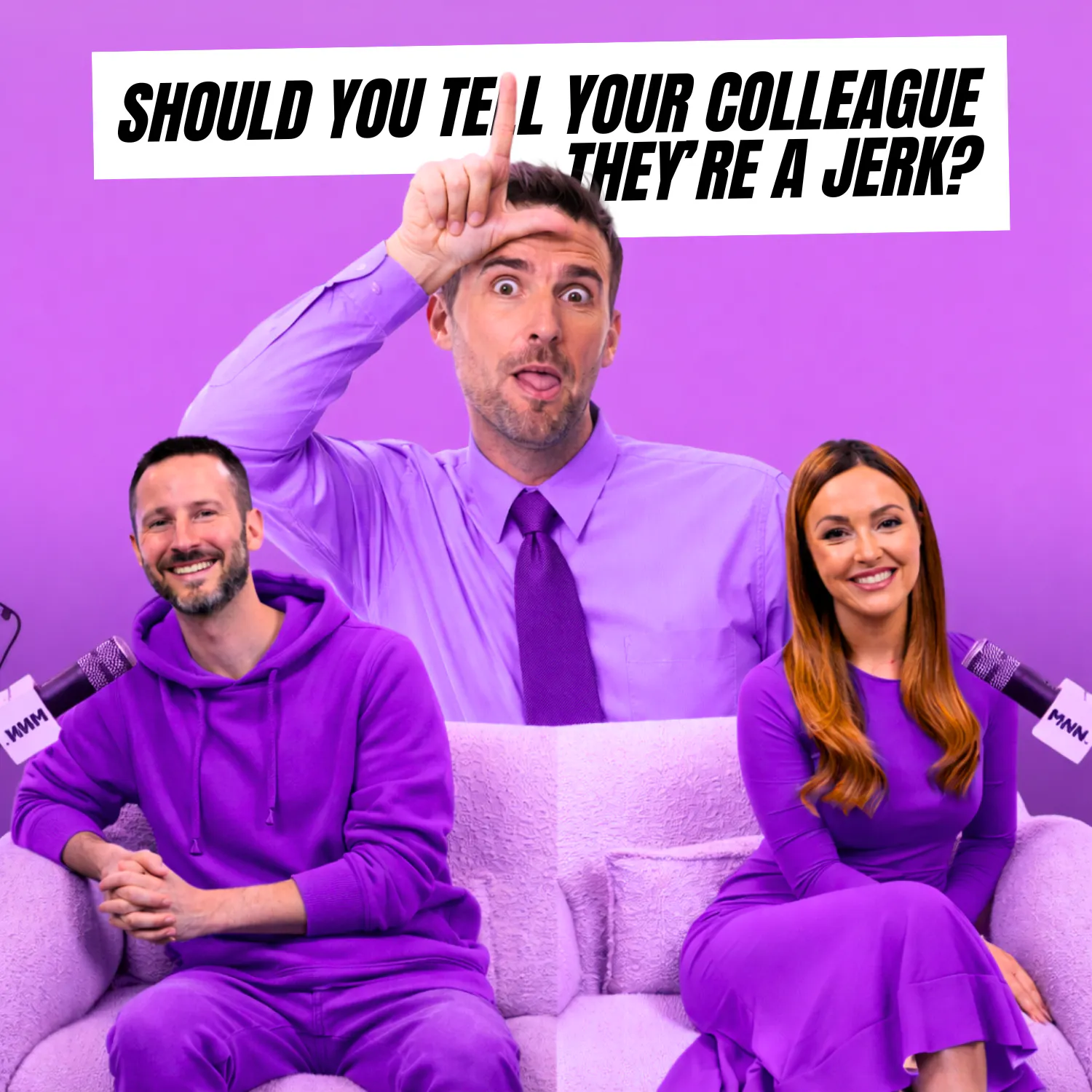
This is Help Wanted, the show that makes your work work for you. I'm Jason Pfeiffer, Editor in Chief of
- [04:56]
Nicole Lapin
Entrepreneur Magazine, and I'm money expert Nicole Lapin. On Tuesdays, Jason and I answer the helpline and help callers solve their work problems.
- [05:03]
Jason Pfeiffer
And on Thursdays, I give you one way to improve your work and build a career or company you love.
- [05:08]
Nicole Lapin
And it starts now.
- [05:11]
Jason Pfeiffer
Okay Nicole, I'm going to ask you the same question, but in two ways. The first is very simple and then the second one is this like long, complicated personal journey. You ready for it?
- [05:20]
Nicole Lapin
Which one am I getting oh, you're getting both. Oh, great. Okay.
- [05:24]
Jason Pfeiffer
This is what it means to be friends with me, is to just get it all. All right, the simple first is when somebody does you wrong in some way, professionally or personally. I think we'll start professionally. Do you tell them, hey, that was a jerk thing. That was not the way to do it.
- [05:41]
Nicole Lapin
Or when do you tell them? Because obviously you don't always tell them, right?
- [05:44]
Jason Pfeiffer
Or do you just keep it to yourself? Or how do you do it? That's the question. Okay, now I'll tell you the longer personal journey here. So there are a couple phases of jerkiness to this. Phase number one is this. There was a guy, expert guy. We'll just call him Steve. Steve is an expert guy. He's got a book, he's got a big following, whatever. And I had booked Steve to be a expert on this other podcast that I host for Entrepreneur magazine.
- [06:16]
Nicole Lapin
Not just La la, la, la la.
- [06:17]
Jason Pfeiffer
Yes, there's another one. No, we don't want to hear about that. But where this is going, you'll feel very good about, which is that this show that you and I have built has a substantially larger audience than the one that I have for Entre. The one that I have for Entrepreneur is just me interviewing experts here. There's more joy. It's you and me, and we're hanging out, and it's fun. So, okay, there's that other show, and I booked this guy to be a guest on that other show, and then I get a email from his assistant which says, I just took a look at both of your podcasts and saw that the Help Wanted podcast is much more popular and has a wider audience. Let me know if there's an opportunity to appear on that one as well, or perhaps use some of the content from Problem Solvers, which is my other show on that one. So. Okay, I found that to be quite objectionable, I have to say. It's like, oh, hey, thanks for being willing to promote my book. Actually, could you promote it somewhere else? That's better. I don't really like the thing that you've offered me. Are you kidding? This is the very definition of looking a gift horse in the mouth, which is not a phrase I understood until I looked it up. Apparently, you can tell the health of a horse by its teeth.
- [07:28]
Nicole Lapin
So you taught me this.
- [07:29]
Jason Pfeiffer
I did. Oh, well, teaching it to you again, I guess. So if you were given a gift of a horse and you looked in its mouth, you would basically be saying to the person who's giving you the gift I don't know that. Let me take a look at how good this gift is before I accept it.
- [07:41]
Nicole Lapin
I want a horse with nicer teeth.
- [07:43]
Jason Pfeiffer
Yeah.
- [07:43]
Nicole Lapin
I want a podcast with nicer numbers. Fuck you.
- [07:47]
Jason Pfeiffer
Right? Although I know I would have to say, in defense of people who do look gift horses in the mouth, it's expensive to raise a horse. Like, if you give me a unhealthy horse, that is a lot of money and effort I have to spend on the horse. Whereas this guy. No additional effort. Why don't you just come onto the other podcast? It's still a good podcast. It's got listeners. I'll promote your book. Don't be a dick. So, all right, so that's number one.
- [08:06]
Nicole Lapin
Well, he is not invited on this podcast anyway.
- [08:09]
Jason Pfeiffer
So all you get to be is a guy who we're calling Steve, and we are disparaging your name.
- [08:15]
Nicole Lapin
Well, he actually is on the podcast, just not in the way he expected.
- [08:18]
Jason Pfeiffer
That is true. So welcome to the podcast, Steve. All right, here's the next thing that happened. We did the interview. It went fine. He said interesting things, so much so, in fact, that I referenced a thing that he had told me, which I thought was quite smart in a couple other mediums. I made reference to it in my newsletter, and I linked to him. And then I thought, you know, I've given this guy additional value, and he is clearly not afraid to just ask for more. So maybe I should ask for more. Maybe I should say, hey, now that I've done more for you, I would love if you would mention me in your newsletter or something. So I did that, and here was the response. Steve says, absolutely. If you ever want to write a guest post for the newsletter, we can do that at any time. Usually these are focused on something related to leadership strategy, business trend or insight learning, et cetera. Let me know if you want to contribute something, and we can make that happen. So, all right. He's not going to promote me. He's going to ask me to do work, which is to, like, write a guest post for him, which means that he doesn't have to write his own newsletter, which sounds great for him, but, you know, he has a large audience, and I think, fine, let's do it. So I do that. Between you and me, Nicole, I kind of cheated. And what I did was I took an old newsletter of mine and I reworked it a little bit and I sent it to him. So it didn't have to be a whole new thing that I would have to spend hours writing. And he Says, thanks. And then like, a month goes by, he doesn't even tell me it's coming. And then the newsletter gets published. And would you believe he did not send this out to his whole audience? He actually made it a premium post, which means that only a small portion of what I wrote is available to his large audience, and then they have to pay him to read the rest of my work. And I saw this yesterday, and I was outraged.
- [10:03]
Nicole Lapin
Oh, no.
- [10:04]
Jason Pfeiffer
Because here you have asked me to do a thing, and then you have just used it fully to your own benefit. And I understand that I had basically asked for this to be to my benefit, but it was also to his benefit because it's one less newsletter he has to write. And also, that was just the terms of the agreement at the very beginning. I did a thing for you. Now you're doing a thing for me. But no, it was always for him. Every single time. The. I was always on the prize for that guy, and it was just what benefits Steve. And I feel used and annoyed that I spent the time doing this with him. And I had this instinct, and this instinct was to write him and say, hey, that was pretty obnoxious. I did this thing. You didn't tell me that it was going to be behind your paywall. And I feel like what I did was I just drove readers to you, whereas the point of this was to help each other. And that's not nice. Screw you, Steve. Peace out.
- [10:57]
Nicole Lapin
That's not nice. Steve O.
- [10:59]
Jason Pfeiffer
That's not nice. I feel like adults, even though that sounds like what a child would say, that's what we all want to do, is walk around just being like, that's not nice. So anyway, I didn't do that. What I instead did was I sent you and Morgan a voice memo asking what I should do. And that's what we're here to discuss. Now, I have not told Steve that he's a jerk face, but emotionally, I want to. Intellectually, I understand. Probably not the best thing to do. So again, to the question at hand, do you tell people that they did wrong?
- [11:28]
Nicole Lapin
They're poo poo head.
- [11:29]
Jason Pfeiffer
Yeah, they're poo poo heads.
- [11:31]
Nicole Lapin
Oh, wow. Well, Steve O. Is very, very good at getting things. So that was an inception move, right? You then asked him to mimic him asking you, and then sneak attack. He actually got more things from you. Oh, Jason. So you haven't done anything. We're at a crossroads now.
- [11:56]
Jason Pfeiffer
I've done nothing, and there's nothing if I want to do nothing. There's nothing to do because Steve didn't even tell me this was running. The only reason I knew it is because I saw myself get tagged on a LinkedIn post and I was like, oh, it's out. Oh, it's behind a paywall. So no, I haven't done anything.
- [12:11]
Nicole Lapin
Okay, so I see three paths for you moving forward.
- [12:16]
Jason Pfeiffer
Love this.
- [12:17]
Nicole Lapin
I see a path where you say nothing. I assume there's another voice memo about this in our future. So you vent into your telephone to us, but you do nothing to him, you say nothing to him. The second choice is you call him a boo boo head and tell him he's obnoxious and fuck you, whatever, boo boo boo. And the third choice I actually think is the most interesting choice, which is where you are a little fake nice. And you ask him very matter of factly, hey, when is my guest post going out to your full audience or something like that? Love to get the heads up so I can tell my team or whatever it is. If you're assuming that the person is going to do the thing. First of all, generally we don't know why someone did something. You could assume mal intent, you could assume that he's just a dick, narcissist, user, whatever. Or it could have been an error or it could be in a thousand other things. My therapist tells me all the time, if you want to know what someone's thinking, you must ask them. Because all this stuff in our head that we're making up about why they did the thing or what they feel, we actually don't know. I assume you're right on the intent,
- [13:36]
Jason Pfeiffer
but I don't know.
- [13:38]
Nicole Lapin
You don't entirely know. And also approaching it in a super matter of fact friendly way gets across that you had this expectation there was an exchange of value. The spirit of this exchange was that you would get exposure to this complete full audience. Do you know how many subscribers he has in the free list and the premium list?
- [14:04]
Jason Pfeiffer
I know that the free list is certainly north of a hundred thousand. I think more. I have no idea how many premium members he has. I have no idea how many people get to see the whole thing.
- [14:16]
Nicole Lapin
Okay, so you could say, hey, just checking in, your episode is out. Just saw that you posted this thing. Love to get a heads up on when you're gonna send it out as we chatted about to your full hundred thousand audience. Thanks for this added value of going to your premium subscribers. You know, love to know those numbers so I could tell my team, thanks so much for doing that bonus thing for me, but love to get the guest post that we had talked about on my editorial calendar. Thanks so much.
- [14:51]
Jason Pfeiffer
So in other words, what you're saying is treat what I have seen as just the beginning of the unfolding fulfillment of the deal that we talked about. You're going to do the right thing, Steve, and I know that you are. I was just checking in on when that's happening.
- [15:07]
Nicole Lapin
Exactly. Because ultimately, we know the answer. Oftentimes it's hardest to figure out what we want the ultimate goal to be. Right. But you know the goal. You're not going to be homies with Steve O. Steve O. Is not going to be in the circle of trust. He's not getting voice memos.
- [15:27]
Jason Pfeiffer
Nope. Not invited over for dinner.
- [15:29]
Nicole Lapin
Nope.
- [15:29]
Jason Pfeiffer
We're leaving Steve at home.
- [15:31]
Nicole Lapin
So we're solving for X. You already know the answer. We're not hanging out with Steve. There was a thing that happened. So 2 plus X equals 4. We are solving now for X. And we already know the answer and we're fine with it. And all of those roads will probably lead to that. And so which road potentially gets you more of a thing?
- [15:53]
Jason Pfeiffer
Right. Which means that you have to define what the thing is.
- [15:56]
Nicole Lapin
The thing was what your side of the value exchange was. Venting value. There's value to that. But you can do that in voice notes just as easily as you could do it to him and call him a poo poo head. Where do you get career value?
- [16:12]
Jason Pfeiffer
Yeah, yeah, yeah, yeah. Because this is useful. You said this when we were trading voice memos, but I'll just prompt you to say it again, which was that there have been many times earlier in your career where you just told somebody that they did wrong to you.
- [16:26]
Nicole Lapin
I always regretted it 100% of the time. And I just felt like I needed to tell my truth and I needed to stand up for myself. And I also come from Little Orphan Annie upbringings where I feel like I'm a stray cat, a feral cat that needs to just defend myself at all costs. And if someone did me wrong, I need to tell them and then claw their eyes out. But I always regretted it 100% of the time. It never helped me. Life is long, the world is small. Don't be an asshole is my motto. It does not get you anything, Jason, by telling fucking Steve O. And for the record, you sent me the link. I don't know who Steve O. Is. Steve O. Doesn't matter. We're not going to be friends with Steve O. So telling him off, whether you regret it or not, I don't know, but you don't need to do that.
- [17:15]
Jason Pfeiffer
Yeah, I agree with that. And that is why I held myself back from my initial reaction to write the thing. So if I'm really worked up sometimes I'll write the thing knowing that I'm not going to hit send, but just to write it. Just to have gone through the action. Stick around. Help Wanted will be right back. Welcome back to Help Wanted. Let's get to it. To me, the real question is, is there realistic additional value to be gained? I could maybe, maybe guilt him into sending this out to the whole list, but probably not because he's already sent it out as a premium preview. I doubt that he's going to then send it out to the same people as a free thing. That doesn't make sense. So he might feel guilty about it if I sort of make him feel bad enough about it. But what am I going to get out of that? I don't know. I don't know that he's got anything else in his ecosystem. I don't know that I want to continue an ongoing thing with him. I feel like your strategy is a really smart one. If there are additional things to be gained or if there's some other way in which this relationship can unfold. Option number three, which was to assume the best, check in on their progress towards the best, even though you know that they have already shown you how much they're really going to give you, which is not very much. I like that if there's additional things to gain, I don't see enough additional gain here. And it's reminding me of something that I A metaphor I like to use about my time is if we think of time as a resource, which is not something I came up with, but I think it's a great way to think about it. Like a time is your most valuable resource and therefore you should kind of spend it the way that you think about spending money. You don't spend money willy nilly. You shouldn't spend your time willy nilly. But if you're fortunate enough to have a little money to explore with, then you might take some of that money and make investments in other companies, for example. And you know that some of those investments are going to go bust. Most of those investments are going to go bust, but hopefully a couple of them give you a great return. A couple of it turns out that your friend made Google and gave him $5,000 and then a couple years later you are a billionaire. Like that could happen. So that's a great reason to Just invest a little bit of money. And I think that the same is true for time. What if I just think of 90% of my time as being devoted to my core needs, the things that require the vast majority of my resources, and then I take 10% of that time and I divide it up into investments, knowing that a whole bunch of them are going to be busts. And sometimes those busts are taking a meeting with somebody, and sometimes those busts are a meeting that goes nowhere. And maybe some of those investments is spending a little bit of time writing a guest newsletter for a guy who was already kind of a dick about coming onto my podcast, but who I thought maybe I could squeeze some additional value out of, and it turns out I couldn't. And all right, well, I lost the money, but I lost the resource. I lost the time, but I kind of knew going into it that that could have been a possibility. And I think that if you think about it like that, then whatever, there's not that much more to gain. And there's not even a reason to be upset, because you shouldn't be upset about losing something that you knew you could lose anyway.
- [20:42]
Nicole Lapin
Yeah, I like the analogy of the angel investing because it's been said that you need 100 startup angel investments to have potentially one Google. You're not just gonna make one investment, and the odds of it being Google are very low. I will say, though, you are in a very unique position that these investments are paying fruits in other ways because you talk about them. And so part of your job is talking about these experiences. And so you're getting value in unexpected ways. We're making a show about it. You might write about it in. You're the top LinkedIn, muckety muck or whatever. You know, you have a whole magazine, you have a whole. You have a lot of places that you need to feed. The content is your least favorite word beast. Right. And so collecting these stories and collecting these experiences is actually valuable to you.
- [21:38]
Jason Pfeiffer
That is a very good point. And that's not just exclusive to me. It's true. Like you just said, I have all of these arenas where even when bad things happen to me, I can make some use of it. I feel like I'm carving up every part of an animal. Yeah, somehow the fatty part of the liver is useful here. But that is unique to me and to you. But for people who don't have a newsletter and a podcast and daily compulsion to post on LinkedIn, you still have some version of this, which is to say there are still reasons to have experiences and have stories to tell. Because chasing down some leads on some clients that may go nowhere and that turn out to be a whole big waste of time will absolutely inform the way in which you approach clients next time. And also might give you great insights that you can use to help the next generation of people who do your work or that can inform you teaching your team. It's useful to have experiences, even when they're bad experiences, so long as you have some way to process. How can this thing be useful to me? And you're right, it's funny because I didn't think about that, but I guess I've just now built it into my. Wait, that's not even true. What am I saying? The first thing that I said to you when I said the voice memo yesterday about whether or not to do this was, maybe this is a good podcast episode. And then I went on and ranted for five minutes. But it's true. Like, in my head, I had programmed it. No matter what happens here, I can win because I can produce something out of it, which I think is the same as, you know, you go out on a bad date and it's like, you know what? No matter what happens here, either I have just met the person of my dreams or I just have a funny story to tell my friends. And, you know, sometimes a funny story to tell your friends is also worth a lot.
- [23:19]
Nicole Lapin
So valuable, I was gonna say, too. And there was this woman that put out a 52 part TikTok series or something about how her boyfriend or her husband cheated on her and this shitty thing happened. And then she got signed by a major agency and is going to turn into a whole other career because she put it out. So we all have broadcast platforms now to put things out in unexpected ways. And so at the very least, you have a cool story. Or you could become a guest on Help Wanted. We talk about these stories all the time. So unintended potential value there, you know, I stand by what I think in that path, three could just be the most interesting. It's a path that you haven't taken very often. We love a road less traveled around here. And I think it shows that you're not a pushover, which you're not, but you can do it in a respectful way. You can honor this spirit of a deal, which, by the way, contracts get violated a lot because they're the letter of the law. But the spirit of a deal, I think, is actually much more important. And that's where the relationship hinges. And so if you can say in a respectful way that honors you and honors the way you do business. Because I would point to you as someone who is so, so thoughtful about how you do business and how you cultivate relationships and create not only networking opportunities, but like a really strong network of people who will do a lot of shit for you if needed, when needed. Except for one person. But you know, there are a lot of people professionally who will play in traffic for you and you do the same for them. So I think it honors just your general vibe of upstanding business practices. And maybe it's not the guest post and maybe you sort of allude to this idea that this wasn't what you discussed. Hey, I saw this thing came out. Wish I would have had a heads up. Would have loved to help boost it. As we talked about. Was hoping this would go out to the entire list. Maybe that was an error or an admin error. Totally get those things happen. Would still love to get exposure to the whole audience. Maybe this is a situation where you can put out the link to our podcast. As your assistant noted, we don't have as many viewers as we would like,
- [25:45]
Jason Pfeiffer
so as that other show Help want it.
- [25:49]
Nicole Lapin
So any extra promotion would be really helpful. So I'm looking forward to being able to be exposed to your full audience or something where you're just saying like, I'm looking forward to this thing that we talked about in a different way.
- [26:02]
Jason Pfeiffer
I like it, I think it's really smart and I think that it can pay dividends without being overly confrontational. And I feel like the summary here is Rules Number one never just tell someone they're a poo poo head. Number two, always fun to tell your friends that someone was a poo poo head. And number three, sometimes treat the poo poo head like they're not a poo poo head and see what happens.
- [26:34]
Nicole Lapin
There's a way to wrap this up that involves poo poo or pee pee,
- [26:38]
Jason Pfeiffer
but I don't know, you could just say and that's the full poo poo platter. Oh my God. Help Wanted is a production of Money News Network. Help Wanted is hosted by me, Jason
- [26:53]
Nicole Lapin
Pfeiffer and me, Nicole Lapin. Our executive producer is Morgan Lavoy. Do you want some help? Email our helpline@helpwantedoneynewsnetwork.com for the chance to have some of your questions answered on the show and follow us on Instagram at Money News and tick tock at MoneyNews Network for except exclusive content and to see our beautiful faces. Maybe a little dance?
- [27:13]
Jason Pfeiffer
Oh, I didn't sign up for that.
- [27:15]
Nicole Lapin
All right, well, talk to you soon.