← Here's the Scoop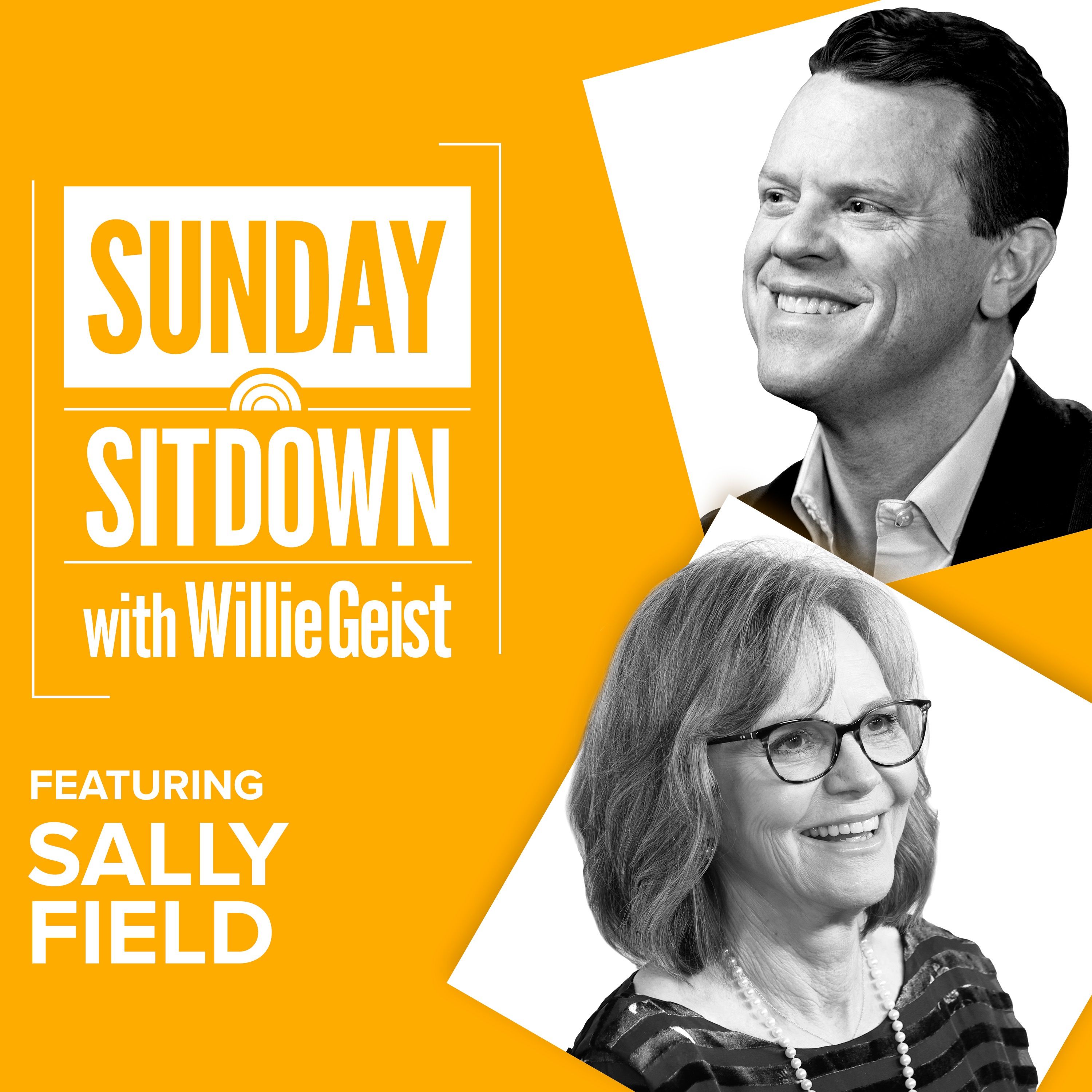
Here's the Scoop
Sally Field on Finding New Roles and her Legacy
00:37:21
Two-time Oscar winner Sally Field joins Willie Geist to discuss a career that kicked off when she was a teenager, starring in Gidget and then quickly moved on to The Flying Nun. From there her career shifted to more serious roles where she won an Emmy for Sybil and Oscars for Norma Rae and Place in the Heart. In her latest project, Remarkably Bright Creatures, which is based on a best-selling book by Shelby Van Pelt, Field speaks on the creative process bringing the book to life and acting alongside her co-star Lewis Pullman.
Loading summary
Transcript139 lines
- [00:00]
Yasmin Vesugin
Hey everybody, and welcome to here's the scoop from NBC News. I'm Yasmin Vesugin. We are off today, but we have got a special treat for you in our feed. My colleague Willie Geist interviewing two time Oscar winner Sally Field about her latest project, Remarkably Bright Creatures on a recent episode of the Sunday Sit down with Willie Geist. We'll be back tomorrow with whatever the day may bring. Until then, happy Memorial Day.
- [00:27]
Sally Field
Foreign.
- [00:33]
Willie Geist
Hey guys, Willie Geist here with another episode of the Sunday Sit down podcast. My thanks as always for clicking and listening along. I'm just so happy to bring you my conversation this week with the lovely, the talented, the wise, the experience, the extraordinary Sally Field, the two time Oscar winner for Norma Rae and Places in the Heart. And a additional Oscar nomination playing Mary Todd Lincoln, of course, in Lincoln. And so much in between there. We can talk about Forrest Gump, we can talk about Steel Magnolias, we can talk about Mrs. Doubtfire. It goes on and on. I'm sure I left out your favorite Sally Field movie. There's so much. And now she's on to a new film called Remarkably Bright Creatures. It's on Netflix, based on a runaway bestseller book by an author named Shelby Van Platt. If you haven't read the book, she talks you through the plot really well
- [01:26]
without giving away too much.
- [01:28]
She co stars in the movie with Lewis Pullman, an up and coming guy I'm sure you've heard of Bill Pullman's son. He's a young guy. She is a widow in this movie.
- [01:37]
They work at an aquarium.
- [01:38]
They're brought together. This might sound silly, but it's deep by an octopus. There's a reason the book was a bestseller and Sally Field loved the book. She read a couple chapters of it
- [01:49]
and was like, we need to make
- [01:50]
this into a movie. So we talk about that new Netflix project. But really this span of her unbelievable career that started with Gidget, Remember Gidget? ABC sitcom back in the 60s. It ran only for one season. She was 17 years old when she landed the role. Did it for one year, then she went on to the Flying Nun. And she talks a lot about how those were jobs and they got her into the business, but also they turned into a little bit of an albatross because nobody really took her seriously. She wanted to be a serious actor in big movies. So she had to kind of reset, go learn how to act. And boy, did she ever. She's also, I just have to say,
- [02:26]
a delightful human being.
- [02:28]
Just somebody so thoughtful and kind and has so much to say about the state of the world and the state of Hollywood and what it's been like to be a woman in Hollywood for all these decades. So sit back right now, relax, and enjoy spending some time with the one, the only, Sally Field on the Sunday Sit down podcast.
- [02:48]
Sally, so happy to see you.
- [02:50]
Sally Field
Very nice to see you.
- [02:51]
Willie Geist
Thank you for doing this.
- [02:52]
Sally Field
Thank you.
- [02:53]
Willie Geist
I think you and I could talk about our dogs for most of this interview.
- [02:56]
Sally Field
Yeah, we could dash and pop. I'm happy about it.
- [02:58]
Willie Geist
And I'd be totally fine with that. But we probably should talk about the connection we're making between our dogs and this extraordinary movie. Remarkably Bright Creatures, which is based on this wild bestseller, sold a couple million copies. I was telling you I saw the movie last night, but I had not read the book. My wife and daughter, huge fans of the book, began to explain the plot to me about an octopus bringing these two people together. And I said, what? And they said, just trust me. And you saw something in this as well when you first read the book, didn't you?
- [03:31]
Sally Field
Yes, and I was lucky enough to get the book in galleys from a young new production company, Night Owl, Brian Unglass, and Peter Craig. Peter Craig happens to be my son. So. So there was a tie into that. And I read about two chapters of this book. I went, yes, I wanna do this because it is narrated by an octopus about an old woman and a young man. And that doesn't come around a lot. And ultimately is about a lot of wonderful things. Healing, loss, family, home. And an homage to sea creatures, really, and to creatures. And the profound connection that human beings
- [04:20]
Willie Geist
have to creatures and the wisdom that the creatures have without us even knowing it all the time.
- [04:27]
Sally Field
Yes, yes. We were just saying we rely on that. This thing that they have that we don't have, that they hear things that we can't hear and they smell things that we can't hear. And sometimes they sense things, certain things that we don't. And human beings have always been like that, whether they were dogs or cats or horses or birds. We need them. And we better start paying attention, certainly to the ocean, certainly to the earth.
- [04:57]
Willie Geist
Well, this is a beautiful, as you said, homage to that, to the ocean, the creatures of the ocean. How do I joked about what is this story about with an octopus? For someone who maybe hasn't read the book but is gonna go on Netflix and wanna see you in this film. Without giving too much away, how do you describe the story?
- [05:14]
Sally Field
Oh, boy. How do you. How do you describe. Starts an old woman who has Grief in her life has recently lost her husband. But there is a deeper grief that she hides and holds. And it has kept her away from the world she doesn't want the world in. She doesn't wanna know anyone or talk to anyone. She just. And she starts to work at the aquarium, to clean at night because she likes nighttime when no one's around and she can be alone. And she talks to the creatures, whether they're the jellyfish or the seahorses, the wolf eels that she really doesn't like very much because they're strange looking and makes a really deep and important connection with the giant Pacific octopus, Marcellus. And he comes out and seems to listen to her, and that is the only place that she lets herself out. And into that mix comes a young man who also is troubled. You don't see it at first, but in his own way, as Marcellus says, that both of these people have a hole in their heart and they can't see that perhaps they could help each other. And for story reasons, he begins to work at the aquarium because she hurts her foot, but she can't leave because she's very protective of the whole environment. And slowly, slowly, I think Cameron, the Cameron Lewis Pullman is the actor who's absolutely. He is so, so, so talented. This young man has a huge career ahead of him. But this Cameron character slowly begins to chip away at Tova, my character. And at the same time, he doesn't see it, but in that she's chipping away at him and they begin to know each other. So it becomes a relationship between an old woman, a young man and an octopus. And there it is.
- [07:28]
Willie Geist
That was very well explained. I mean, in some ways, I was thinking Tova doesn't know that Marcellus is really listening, actually, and understanding. In some ways, it was almost like a confessional. Like that was, like you said, that was the one place you would open up. And it was to an octopus. And to me, it was a lot about something that everyone in the world unfortunately can relate to, which is grief. And then what after the grief, can you heal? Do you heal? How do you heal? Did you feel like that was one of the universal themes of the movie?
- [08:01]
Sally Field
Oh, without a doubt. It is about healing. It's about healing. But what does it take for a human being to heal from a deep space sorrow? And in this case, it is because all of the information about the grief is not verbalized. It is what shrinks will tell you. She can't verbalize what she's actually holding onto. That makes the grief fester and take over her existence. Just as Cameron can't really verbalize his aloneness, his isolation. And it manifests itself in him being a slob and loose ends and not be able to do anything and move on with his life and be a grown up. And when they can start to tell each other of what's underneath the grief, that's the beginning of healing. And Marcellus, who is, yes, he's an octopus in a tank, but he's also slightly magical. He is the narrator. Wonderfully done by Alfred Molina. His voice is really narrating the piece and allowing us to hear him of what he sees outside in the world. And he's not really fond of people.
- [09:31]
Willie Geist
No, he's not.
- [09:32]
Sally Field
He thinks human beings are really on
- [09:34]
Willie Geist
the lowest level of contempt for most human beings.
- [09:36]
Sally Field
Oh, God. Yeah. Oh, please.
- [09:40]
Willie Geist
It's funny. I was listening to that voice. I said, who is that? I know that. So I looked it up real quick and Alfred Malik is perfect there. You mentioned Lewis. He's fantastic, dazzling in this. Is it true that the two of you. I mean, obviously there's a script there. The two of you did sort of have an almost an ad lib rapport in a lot of those scenes.
- [10:02]
Sally Field
Yes. You can see it early on when Lewis came in to read for the character. He won't ever have to do that again. Not necessarily because of this, but all of the films he's subsequently done. I mean, he's better get him now, boys and girls. He ain't gonna have any time. And we automatically just became. We began to improvise and we just were these people, just bam, right out of the chute. And so when we're together in the aquarium or all the things they eventually do together, you can just see he and I are just riffing on it. It's improvising. There's lines in there and then they're off and then they're in there and then they're off. But that's the fun of a piece like this, so that it makes it feel that the characters are alive.
- [10:57]
Willie Geist
Do you feel, Sally, when there's a book that. This popular, this beloved, a responsibility to get it right for people like my wife and my daughter who love this book and, by the way, love the movie, I should say it to all the fans of this book. Does that feel like a little added pressure of this is an established piece that we need to get right on screen?
- [11:17]
Sally Field
No. No, I don't. And with all respect to Shelby, we spent such a long time adapting it and first of all, finding the right filmmaker and then within that, you know, just getting the adaptation right. And I was the pain in everybody's butt because I knew how important this book was. I would bring in reams. I mean, 35 page document. All right, guys, this is what we've left out. And I would show them paragraphs and sentences and in relationships that needed to be woven in there. It is a piece of lace in reality, and it has a bit of a mystery to it, so things can't fall through the cracks. So by the time we got to really shoot it, we had to. I felt we had to. Anything that needed to be left had to be left, because now it had to be in a film. So then the allegiance, I feel, has to be in making the film work.
- [12:19]
Willie Geist
So you felt like you had it. By the time we started shooting, I
- [12:22]
Sally Field
was pretty sure we had the book.
- [12:25]
Willie Geist
One of the things I also love about this, you can't say this much anymore, is I feel like you could watch it with your family. And everyone in your family, regardless of their age, will feel something different about it. Whether you have young kids and older parents, or you are the older parents, were you still worried about your kids? It feels like in that story, you hit so many different areas of, yes, grief, but also for me, mostly healing and thinking about those things.
- [12:52]
Sally Field
Healing family. It's about family to me and home and my home. And Marcellus longs for his home. But I think what I was most surprised about when we began to do the press on this, and we'd be sitting across, Lewis and I, sitting across from some very young man. Not that you're not a young man, but I'm talking young. I mean, these guys were like, who are you? You know, who let you in here? They're like in their 20s, I think, and they were like. They said, I loved this movie so much, I could cry right now. Really? Really. That was a surprise to me. These young. Because I think at the beginning, everyone was seeing it as a film mostly for women, mostly for older women. I kept going. I think it's a kind of universal tale about healing. And gosh, we're in a hard time. We're in a terribly dark, hard, hard time. And everybody is going to have to fight like holy hell to get out of it and stand up and scream and not sit down until it's done. And so to have this film that is about where we want to be, really home. We want to be home and we want to feel safely home and welcomed there. So it's a good movie for the right reasons.
- [14:29]
Willie Geist
I'm not young, but I was one of those men. Found myself choked up throughout the movie at one point. Am I about to cry about an octopus? I think I am. It worked. Do you, as an actress, Sally, go anywhere? I'm just curious about your process, given everything you've done in your career in terms of that grief, when you need to tap into that part of it. How do you access that? Do you think about something in your own life, or are you able to just play it?
- [14:57]
Sally Field
Well, I studied for a long time, and I studied who was arguably the best teacher that ever was. Even though there'll be other people say, well, what about this? I studied with Lee Strasberg for a long time. So I am Method. Everybody who says, you know, gives Method a bad name and talks down about it is because they have no idea what it is. They didn't study and they don't know it. And there are a lot of bad behavior going on around it. There is, but Method only means that you do know the text. You own all the pieces of the character, what her life was and what she did 60 seconds before she enters the room, and everything up to that. And then who that character is has to just become. And to pull all of that together. You find the places in yourself that are linked, are linked to that character, and they could be memories, it could be current. But usually memories work better because a memory holds on because it had weight. And in a film, you many times have to hold on to the emotional scenes a long time to shoot them. So you have to have a memory that will drive you for hour after hour and sometimes day after day, which is hard. And so there are tools and tricks and things to kick that, but it isn't fun. Let me just say this.
- [16:37]
Willie Geist
That's what I was going to say. It's painful to access something like that.
- [16:40]
Sally Field
Painful. It's painful and it costs you. If to do it right, it costs. And you always feel. I always feel that I leave a little chip of my soul behind. But every character that I've ever played that was complicated and really had a life that I had to understand and get in those shoes. Every one of those characters that I've had, lucky I've had the opportunity, been lucky enough to play. I come away changed. It's like what Dash did to me. I'm different from those characters because I lived in those shoes and said those words and lived in that space. And sometimes I look back on something I've done because not that I look back on the film, but because I'll have a flash of something and I think, whoa, whoa, what was that? When did that happen? When did I. Oh, no, that wasn't me. That was her. And so it lodges itself in my head as if it had happened to me. But that means I had done the work enough to imprint it in my own head as my own memory. Right.
- [18:02]
Willie Geist
In some ways, it did happen to you because it was an experience you had in your life that.
- [18:07]
Sally Field
Yeah.
- [18:08]
Willie Geist
Change your direction. Maybe even just a hair one way or another. Right.
- [18:11]
Sally Field
Yeah.
- [18:12]
Willie Geist
Hey, guys, thanks for listening to the Sunday Sit down podcast. Stick around to hear more from Sally Field right after the break.
- [18:20]
Commercial Voice
Did you know if your windows are bare, indoor temperatures can go up 20 degrees? Turn the temperature down with blinds.com and get up to 50% off custom window treatments like solar roller shades and more during the Memorial Day Mega Sale. Whether you want to DIY it or have a pro handle everything, we've got you free samples, real design experts and zero pressure. Just help when you need it. Shop up to 50% off site wide and huge savings on door busters. Right now during the Memorial Day mega sale@blinds.com rules and restrictions apply.
- [18:50]
Yasmin Vesugin
Still waiting in line. Again, that's time you'll never get back. Save time and money with stamps.com over 4 million businesses have stamps. Skipped the line with stamps.com join them to save up to 90% off carrier rates from your computer or phone right now. Print postage for certified mail, registered mail and packages in seconds. Then schedule a pickup right from your home or office for a limited time. Go to stamps.com and use code podcast for a free welcome gift. Taxes and fees apply when you need to send the perfect rose bouquet. Only one brand can say they've been the floral authority for 50 years. 1-800-Flowers. Why should you trust 1-800-Flowers? They hand select every stem to ensure top quality and with nationwide delivery, smiles and satisfaction are 100% guaranteed. And right now, when you order a dozen multicolored roses, we'll double it at no extra cost. Don't miss out on this limited time offer. Order today at 1-800-flowers.com sxm. That's 1-800-flowers. Com sxm.
- [19:52]
Willie Geist
Welcome back.
- [19:52]
Now more of my conversation with Sally Field.
- [19:56]
You began acting in middle school, if I have it correct, in Van Nuys, is that right?
- [20:02]
Sally Field
Yes.
- [20:03]
Willie Geist
Portola Middle School, is that you?
- [20:05]
Sally Field
I began actually in Birmingham, a high school. But Birmingham at one point was both a high school and a middle school.
- [20:10]
Willie Geist
Got It.
- [20:11]
Sally Field
And then they opened Portola, and I was Portola's first graduating class.
- [20:15]
Willie Geist
Oh, is that right?
- [20:16]
Sally Field
Oh, yeah.
- [20:17]
Willie Geist
Wow. It's an honor to be sitting across from you. A pioneer.
- [20:20]
Sally Field
What can I tell you?
- [20:22]
Willie Geist
But was it Romeo and Juliet in 8th grade or something like that? That was your first, or do you remember it?
- [20:27]
Sally Field
I remember. I remember I first scene I did. I was 12 years old, and it wasn't even. It wasn't even a classroom. It was. The chairs were pushed. I mean, it was a classroom, not a stage. The chairs were pushed aside. And it was a scene from. Oh, my God. It couldn't be Ms. Cast Moore from Born Yesterday. Oh, the brassy Brooklyn. And I was like, 12, and this was me. So it didn't. But it didn't matter because it was the first time that I had done this where I'd memorized this. I was in this scene, and I left my body. I was doing something, but I didn't tell myself to do it. And I was a little girl raised in the 50s, came to fruition in the 60s. But at that time, little girls in the 50s, you weren't supposed to do anything. You were supposed to sit and be good and nice. And if you ever got angry or loud, I mean, my grandmother would say, don't be ugly. That's what she would say. Which, okay, try not to be ugly. You know, so all the colors you had inside, you were not okay, except when you got on stage. And then I found I heard my voice for the first time, and I could be mean. I could be all sorts of things I wasn't allowed to be. And then I could walk up and go. I don't know what happened. I don't know what came over. That wasn't me. I didn't feel. I'm so sorry. Did I hurt your toe when I did that? You know, so it became my language with myself that I needed forever after in an outlet.
- [22:13]
Willie Geist
It sounds like the only place you could do that.
- [22:15]
Sally Field
The only place I could hear me.
- [22:17]
Willie Geist
So had you made up your mind by high school that this was gonna be a career or that it could even possibly be a career for you?
- [22:25]
Sally Field
I don't think at that time I was even thinking career, because I think I was only. Only had this objective in my mind. I needed to get to a stage. And it didn't matter whether it was just these chairs pushed aside or a stage. And it was just a driving need to learn how to do this, to be better, to get it, to hear more, to have a more in depth dialogue with myself.
- [22:55]
Willie Geist
And you fast tracked. I mean, by 17 years old, you're on an ABC sitcom, right? I mean, on Gidget. What was that whirlwind like for a teenager to be thrust onto a network television show in that way?
- [23:12]
Sally Field
It was in 1964. I had just graduated from high school and I was. My stepfather, who was a stuntman, had. Because I wasn't going to. No one said sat. How about taking an SAT and going to Yale? How about that? As if I could have gotten in. No, I couldn't. So I was, like, stranded. My friends. If what. Which ones I had. I don't know. The one I had was going off. So my stepfather said, well, there's a workshop here at. Located at Columbia Pictures, and they just use the soundstage at night. Just. They have some sort of something. So I said, okay. And I auditioned and got into that. And the first. It was stupid, by the way. I'll just say this. It was stupid. My high school teacher was. Ted Culp was much better. And I was standing out in the corner and Eddie Poy III from Screen Jim's Columbia Television Division asked if I wanted to come on an interview. And I was like, yeah, sure. And so my stepfather brought me on the interview the next day. And I interviewed and interviewed and interviewed, you know, came back and back and back and back all summer until I got it. And I was just unconscious about it because I was the queen of the drama department at Birmingham High School. So, hey, hey, this is what I do, folks. I never felt nervous. I just was hungry to know more. I never sat down. I would go to the crew and ask them what they were doing and why was that and what is this? And so I didn't. I don't think I ever felt one second of nerves.
- [24:57]
Willie Geist
I don't know if you believe in being born to do something, but it does feel like you just naturally fit into this job of yours from the beginning, since you discovered it anyway.
- [25:06]
Sally Field
I guess so. I can't imagine how, you know, I would have been a nurse or a. I don't know what I would have been.
- [25:16]
Willie Geist
Thank goodness for acting, I guess. Right?
- [25:18]
Sally Field
I'll say.
- [25:19]
Willie Geist
So you come out of Gidget and the Flying Nun, which runs for three seasons, and you've talked a great deal about this, about wanting to make that leap, but not that you were being turned away in auditions for movies, that you just couldn't get auditions for movies because they saw you in a certain way and you're on TV and sitcoms and those cute Roles and all that. How frustrating was that time for you when you knew you could do more?
- [25:44]
Sally Field
Well, luckily I had started to study my friend Madeline Sherwood, who played Mother Superior in the Flying Nun, which was just a horrible time for me. I hated doing the Flying Nun so much. Oh my God. Oh my God. Because I was 18, 19 years old who wanted to play a nun. And it was the 60s by then and everybody was, you know, eating granola and dropping out and marching and, you know, walking around naked. God forbid I didn't want to do that. But. So by then I was studying with Lee and I. I always said to myself that I could never blame it on them. I could never say they were doing this, that they wouldn't let me in, that the big bad industry was rotten and this. It had to always be about me. That if I wasn't where I wanted to be, then I wasn't good enough. And that when I was good enough, something would happen. So therefore I had. I had something to do. I wasn't powerless. Minute you say they wouldn't let me in on an audition I couldn't get on the list and you're mad at them, then you've got nothing you can do. But if it's because I have to find a way to get better. And I was doing things I wouldn't have thought to do. I was doing summer stock in Ohio and just doing. Studying wherever, you know, not just Lee, but other places. Studying singing, which I never could conquer. But still it helped me all of that. Until finally I had worked at the Actors Studio so much, I think, that I believe it was actually Jack Nicholson who came all the time then to the Actors Studio in Los Angeles, in Hollywood. Cause it was packed then. In those days I was still in the 60s. Had said, had told somebody that I was a well known actress and an undiscovered talent. And she said, good, I'll ask her on this audition. And I would hear, this was with Bob Rifleson on a film. And I could hear everybody in the other room saying, why did you let her in here? You're wasting my time. I've got lots of things to do. We don't want her in here. And I thought, okay. By then I had learned how to harness rage.
- [28:14]
Willie Geist
So Jack Nicholson. That's interesting. I hadn't heard that before. Yeah, you put in a word.
- [28:19]
Sally Field
Yeah, he did.
- [28:20]
Willie Geist
Sometimes you just have to get in the room. You know, you can do it, right? You have to get in the room. They weren't letting you in.
- [28:26]
Sally Field
They wouldn't Let me in before that. Yeah.
- [28:27]
Willie Geist
And it feels like when you did Sybil, I think in 76, you win the Emmy for that, that maybe opened the door to, oh, that's not Gidget or the Flying Nun anymore. She can really act. Did that open the door to movies for you?
- [28:42]
Sally Field
Yeah, it did. And it was the same casting lady who'd called me in, Diane Crittenton, called me in on that interview for Cybil, and no one wanted me in the room. Everybody was like, okay, well, fine. What time is lunch? You know, just like, again, I could go. And I knew I had to come in as one of the characters for cybil. She had 16 separate personalities. Like, which one was I gonna be? So I came in as Sybil, and I seemed very deranged. And they at first felt bad for me because I was like, you know, they thought, is she okay? Should we call somebody for her? And then we started to read so then I could do my work. But I had to come in as that because I knew they wouldn't hire me thinking I could act it. They had to hire me because they thought I was it. And that was the opening to eventually getting to Norma Rae, which was my first real film, even though I'd done some others in between there. Smokey and the Bandit and others Norma
- [29:47]
Willie Geist
Rae's, though almost a decade after the Flying Nun ends. In other words, it was a grind. I mean, it was.
- [29:53]
Sally Field
It was not easy.
- [29:54]
Willie Geist
You had to earn your spot.
- [29:56]
Sally Field
It was not easy.
- [29:57]
Willie Geist
And when you did, you won an Academy Award on Norma Rae, and then you won another Academy. Places in the Heart. Did that all feel like validation to you? A little bit of, like, I told you I could do this, guys, and now you're seeing it.
- [30:13]
Sally Field
No, no, because I couldn't. I wouldn't allow myself to feel that kind of. Aha. You know, it had to always just be. It's the work. Now onto the work. I did that work. I'm proud of myself. I did that work. The minute I let it be some feeling of I need to show them, it became about them.
- [30:38]
Willie Geist
Right.
- [30:38]
Sally Field
And not about this thing I want to do and want to get better at all the time. So I hope I still feel that way.
- [30:49]
Willie Geist
I think it's a win for just doing the work, being really good at the thing you do show again and again.
- [30:55]
Sally Field
It is everything just to be able to do the work. And I was, like, shocked that Norma Ray was a movie, because I was so. It was so important for me to work with Marty Ritt, the director who became My mentor and changed me as a person. And to stand in Norma's shoes at that time, time of my life, she gave me strength, you know, to feel. To be in her shoes. I could feel my own legs, and that was worth more than them because it allowed me to get stronger and to grow and to continue. Because this is a. This is a tough business any way you look at it, especially if you're female.
- [31:39]
Willie Geist
Have you seen Sally over the years that you've been in Hollywood that obviously it's changed. But how has it changed for a woman in Hollywood in 2026 different than it was when. Not just when you were starting out, even in the 80s or 90s or a few years ago. Is it markedly different for a woman in Hollywood today?
- [32:01]
Sally Field
Because I'm almost 80. My. And obviously it's older. It's harder when you're older to find. To find films. But I don't think it has changed all that much. I think that women do get to star in films, but are those films about really complicated, interesting characters? Not so much. Every once in a while there will be a couple a year and bravo, but not a lot. And, you know, the requirements are that they be very, very pretty and very, very fit into some look rather than being a character, whatever it is, a real person. And I don't know, if a younger actor, a woman were sitting here, she'd say, I beg to differ. I think that's my feeling.
- [33:06]
Willie Geist
Yeah. I mean, I think it's inarguable that there are fewer roles like that for women than there are for men. But from your view, has the number of those kind of films changed, gotten better? Has that at least, are there more projects out there that open actresses to more complex roles than there used to be?
- [33:27]
Sally Field
I don't really think so. I mean, there's a lot of comic book movies and, you know, there's, you know, limited series on networks are really the place now to get to do really interesting work. And there are probably more projects than for women. I'm racking my brain right now, kind of go, and which ones are they? I don't know. It might be that I'm not watching them. I don't know.
- [34:05]
Willie Geist
Stick around for more of my conversation with Sally Field right after a quick break.
- [34:11]
Commercial Voice
Hello, I'm Ozempic and I'm other GLP
- [34:14]
Willie Geist
ones kind of like him.
- [34:15]
Sally Field
Are you shaking a maraca?
- [34:17]
Commercial Voice
No, I'm shaking the pill version of Ozempic, which no one should ever do except in ads like this.
- [34:21]
Willie Geist
Nice disclaimer.
- [34:22]
Commercial Voice
Hey, thanks Ask your doctor about which FDA approved uses of the Ozempic pen or pill may be right for you. Call 1-833-OZEMPIC or visit ozempic.com to view the medication guide and learn more about ozempic semaglutide tablets 9 milligrams and ozempic semaglutid injection, 2 milligrams.
- [34:38]
Willie Geist
There's a pill version on Ozempic.
- [34:41]
Commercial Voice
Game day at my place is kind of a big deal. If I'm grilling, chilling and watching hoops, my outdoor patio setup better be ready to play. That's where Wayfair wins. From patio seating and umbrellas to grills and grilling accessories, Wayfair's got it all, and it shows up fast. I'm talking championship level fast and easy delivery. So level up your grill game and your outdoor chill game and head to Wayfair.com now to get your outdoor space ready for the season.
- [35:11]
Yasmin Vesugin
A text says, you're on my mind. A bouquet from 1-800-FLowers says, you're my everything. Heartfelt moments belong in the real world, not just your phone. For 50 years, 1-800-Flowers has helped millions of people make memories that'll last a lifetime with gifts they'll cherish forever. Their expertly curated arrangements and gift baskets shipped nationwide with a 100% satisfaction guarantee. Don't wait for the next big moment. Make it when you visit 1-800-flowers.com sxm today, that's 1-800-flowers. Com sxm.
- [35:44]
Willie Geist
Welcome back now to the rest of my conversation with Sally Field.
- [35:48]
In terms of memorable roles, you've become one of America's favorite moms for the series of Steel magnolias. Forrest Gump, Mrs. Doubtfire. Of course. Of those movies, which would you say you hear about the most? People come up to you and say, I loved you in X, Y, or Z. Is there a favorite?
- [36:12]
Sally Field
No, no, no, there isn't. It will be one of all of those, or even Smokey and the Bandit. Or it will be just today, you know, it'll be the Flying Nun. Really?
- [36:28]
Willie Geist
You got that today?
- [36:29]
Sally Field
Yeah. Like, are you okay?
- [36:32]
Willie Geist
You know, and you said, I hated that experience.
- [36:36]
Sally Field
I didn't. I just said, are you nuts?
- [36:40]
Willie Geist
Lincoln. I'm sure you hear about Lincoln, right?
- [36:42]
Sally Field
No, I don't hear about that so much.
- [36:44]
Willie Geist
Really?
- [36:45]
Sally Field
No. Huh.
- [36:46]
Willie Geist
Well, you're gonna hear about it from me.
- [36:47]
Sally Field
Okay, good.
- [36:48]
Willie Geist
You were great in that.
- [36:49]
Sally Field
Thank you.
- [36:51]
Willie Geist
You also hear, of course, and I will not belabor this, I promise, about your second Oscar speech, which is misquoted by everyone Misquoted. Always. Always the one you think is wrong. Are you surprised? Not just the way that took off then, but that it's just become a thing that people say in 2026 even, and it's fine.
- [37:14]
Sally Field
If that's what they want to do, It's fine. It was misquoted and it's just weird. Honestly, it's weird. It's just weird. There's a lot of other things going on, so it's weird.
- [37:33]
Willie Geist
It has stayed with us though, as a sort of self affirmation that people say incorrectly.
- [37:39]
Sally Field
Yeah. And so, okay, whatever you don't seem
- [37:43]
Willie Geist
to me, I mean, correct me if I'm wrong. Is somebody who thinks a lot about legacy. You got the lifetime achievement award from SAG a couple of years ago. You've won two Academy Awards and all these Emmys and you've been nominated for a Tony. You've done everything an actress can possibly do. Do you ever stop and look back and go, that's a pretty good run?
- [38:06]
Sally Field
Never. Mm.
- [38:06]
Willie Geist
Mm.
- [38:07]
Sally Field
No, I don't. I don't. Mm. Mm. And doing press for this right now, specifically, I get in these places where they want to do a whole retrospective on my career and I do that. I don't even think about it. I really think about what's next and will there be a next. As you get older and they're. Boy, they're hard to find. People don't think older women are interesting, I guess. But I get news for you. It's all those older women who raised you, you know, and then took care of your grand. The little. Their grandkids of your kids. So they onward, you know, we are the ones that, you know, did a lot.
- [38:55]
Willie Geist
Yeah, well, this movie to bring it back proves that there are interesting roles, are there not?
- [39:01]
Sally Field
Yeah.
- [39:02]
Willie Geist
And more ahead. Do you think about what else is ahead for you career wise or you just take them as they come?
- [39:06]
Sally Field
I just. I'm always looking for the next and there are a few possibilities there, but they're hard to find. You gotta really be patient and want to look. I want them to be about women doing real things and not just, you know, looking for a date or, you know, really, I really have a lot of other things to do. I'm not or, you know, that kind of thing.
- [39:37]
Willie Geist
So no Marvel superhero movies for you coming down the pike?
- [39:40]
Sally Field
Well, I didn't say that.
- [39:44]
Willie Geist
Sally, thank you so much. Such a pleasure to talk to you.
- [39:47]
Sally Field
Thank you. Thank you so much.
- [39:48]
Willie Geist
My big thanks again to Sally for a great conversation. I just couldn't love her anymore. You can stream Remarkably Bright Creatures on Netflix now, and my thanks to all of you for listening again this week. If you want to hear my conversations with our guests every week, be sure to click follow so you never miss an episode. And don't forget to tune in to Sunday Today every weekend on NBC to see these interviews with your own two eyes.
- [40:12]
I'm Willie Geist.
- [40:13]
We'll see you right back here next week on the Sunday Sit Down Podcast.
- [40:22]
Commercial Voice
Snoring, Gasping during sleep? Feeling fatigued? Ask your doctor about Zepbound Tirzepatide, the first and only FDA approved prescription medicine medicine for moderate to severe obstructive sleep apnea in adults with obesity. Zepbound is a prescription medicine used with a reduced calorie diet and increased physical activity to help adults with moderate to severe obstructive sleep apnea and obesity to improve their OSA. Zepbound is approved as a 2.5, 5, 7.5, 10, 12.5 or 15mg injection. Zepbound contains Tirzepatide and should not be used with other Tirzepatide containing products or any GLP1 receptor agonist. Medic it is not known if Zepbound is safe and effective for use in children. Don't share needles or pins or reuse needles. Don't take if allergic to it or if you or someone in your family had medullary thyroid cancer or if you've had multiple endocrine neoplasia Syndrome Type 2. Tell your doctor if you get a lump or swelling in your neck. Stop Zepbound and call your doctor if you have severe stomach pain or a serious allergic reaction. Severe side effects may include inflamed pancreas or gallbladder problems. Tell your doctor if you experience vision changes before scheduled procedures with anesthesia. If you're nursing pregnant, plan to be or taking birth control pills. Taking Zepbound with a sulfonylurea or insulin may cause low blood sugar. Side effects include nausea, diarrhea and vomiting, which can cause dehydration and worsen kidney problems. Talk to your doctor, call 1-800-545-5979 or visit zepbound.lilly.com.