← Here's the Scoop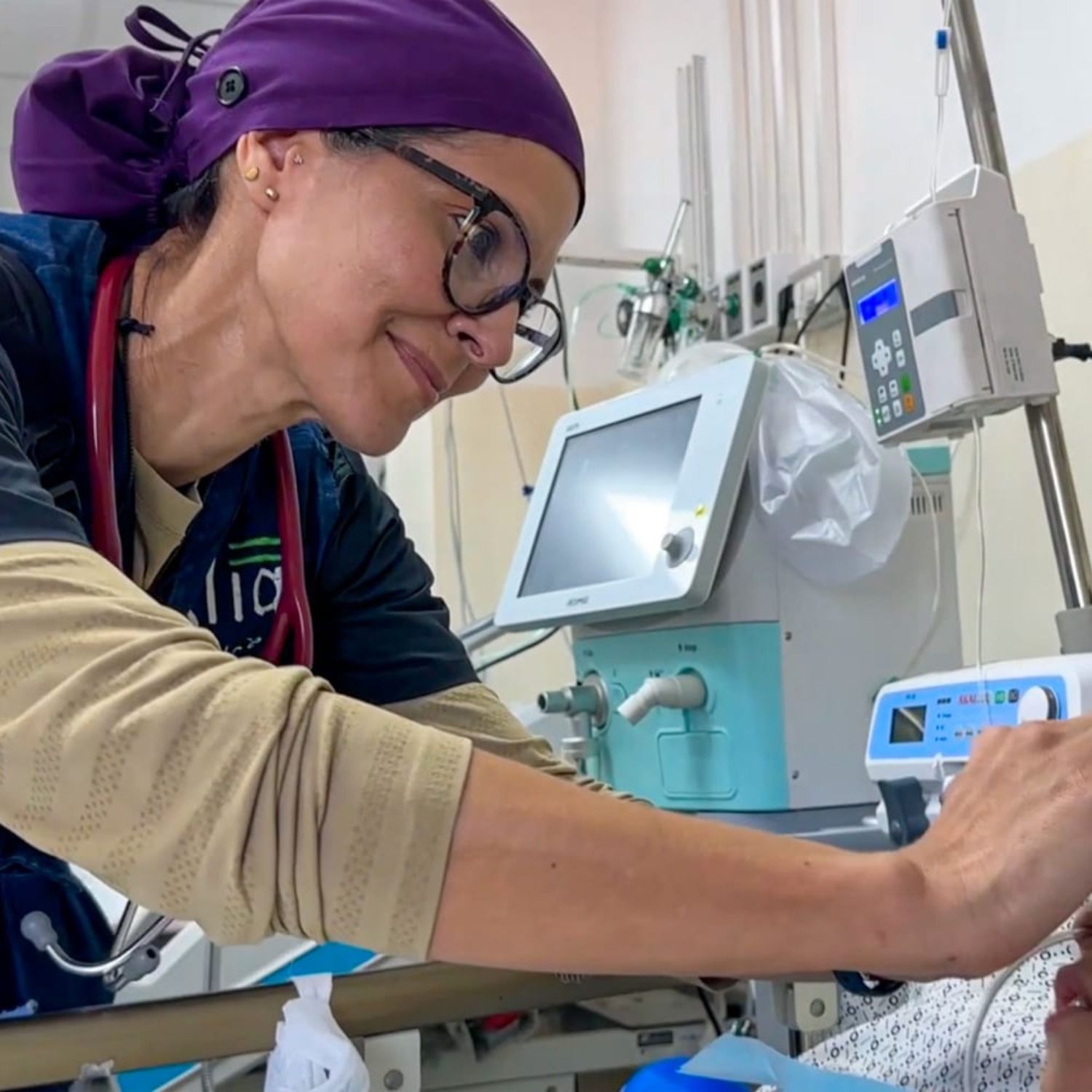
Loading summary
Transcript50 lines
- [00:01]
Andrea Mitchell
This week on MEET THE press. With tensions rising over the Epstein files.
- [00:05]
Kristen Welker
And the House starting recess early, Kristen Welker sits down with Speaker Mike Johnson, plus Senator Lindsey Graham, Congressman Ro Khanna and Congressman Thomas Massie this week on MEET THE press. Listen to the full episode now, wherever.
- [00:20]
Andrea Mitchell
You get your podcasts.
- [00:26]
Kristen Welker
Hi, everyone, and welcome to here's the scoop from NBC News. Hi, I'm Andrea Mitchell filling in for your regular host today. Today on the podcast, what we know about the New York City shooting suspect and why renaming the Kennedy center is so complicated. We're going to start, though, with the latest from Gaza. The world's leading body on hunger said today that the worst case scenario of famine is unfolding in the Gaza Strip. And the Gaza Health Ministry reports more than 60,000 people have been killed in the enclave since Israel launched its offensive after hamas attacked on October 7. World leaders are increasingly speaking out. The UK said today it would recognize Palestinian statehood unless Israel takes steps to end the, quote, appalling situation in Gaza. France said days ago it would push for Palestinian statehood when the UN General assembly meets in September. To better understand what this looks like on the ground, we're going to bring in Elijelis Burgos. She's an American, a volunteer nurse who's been working out of Nasser Hospital in Gaza since early July. And that's where we reached her. Ellie, thank you so much for joining us today.
- [01:34]
Elijelis Burgos
Thank you for having me.
- [01:36]
Kristen Welker
Is there a patient that just sticks in your mind, something that had a big impact on you? Yeah.
- [01:43]
Elijelis Burgos
The biggest impact when I first was in ICU and also in the emergency department is that every single patient is a trauma patient. What I see is gunshot wounds at the hands of Israeli snipers and explosive injuries also at the hands of Israeli airstrikes and bombing that happens. And so even if you work in a trauma center, you know, you may get a car accident here and there, you may get a shooting here and there. But you have also many medical people, patients who are there with heart failure or diabetic issues, other chronic disease issues here. I'm seeing otherwise young people who are just here with trauma. There's no nutrition, patients who we normally would be feeding through like an NG tube or something like that. And these patients, if they're lucky enough to survive the traumatic injuries, they're dying of starvation right in front of our eyes because we can't feed them. And if you can't feed people who are critically ill, the body can't heal. The stories are the same and it's almost like a different Variation of the same story, their injuries and then their lack of progression while they're in our care.
- [02:58]
Kristen Welker
Do you have I.V. fluids?
- [03:01]
Elijelis Burgos
Well, I can tell you for more than a week we did not have normal saline. We got a couple bottles and so we're being very calculated on. Okay, who's should we give this bottle to? Very simple things. We run out.
- [03:15]
Kristen Welker
So that's triage, that's rationing?
- [03:17]
Elijelis Burgos
Yes.
- [03:17]
Kristen Welker
Oh, 100% critical medical supplies.
- [03:20]
Elijelis Burgos
Absolutely, absolutely. Actually yesterday we had run out of gloves. So we're using somebody found gloves that are normally used for like food prep but they're not adequate, like latex or nitro medical gloves. And so the nurses were all gathering around. Okay, what do we do when we run out of gloves? How do we treat these wounds? There's so many wounds and you worry about you causing infection to the wound by not properly having sterile technique when you're addressing these wounds. And so something as simple as gloves is being rationed.
- [03:54]
Kristen Welker
What about anesthesia?
- [03:56]
Elijelis Burgos
Anesthesia? I can tell you I've sat in few or cases, same thing. There's not enough. They're performing surgeries and surgical procedures that we would never imagine doing on just like maybe a little bit of ketamine but not proper sedation. And they're undergoing major operations like this. And you're just in shock. Almost like we're actually doing this like, you know, and it's like well you do it or they die anyway. So get in there. And they're doing the surgery. Absolutely no anesthesia, not even local, like, like local lidocaine that you can inject to numb a specific area, even things like that. It's just non existent.
- [04:35]
Kristen Welker
And Israel is now after a lot of pressure. 108 agencies, 28 countries, the WHO couldn't get in to deliver the way they had in a number of sites. They were delivering the food in four sites from this Gaza humanitarian foundation. So people had to walk great distances from the north if they wanted to get it in the south, correct?
- [05:03]
Elijelis Burgos
Yes, correct. And what we're seeing as a pattern in the hospital is every time there's a so called distribution within 30 minutes to an hour we're getting mass casualties into the emergency department and they're all basically gunshot wounds.
- [05:21]
Kristen Welker
When you see people coming in with these wounds and with other diseases, chronic diseases, how does the starvation, the lack of nutrition impact their recovery or their survival?
- [05:34]
Elijelis Burgos
You're right. I mean it hinders any resemblance of recovery. And unless a human body is at this stage of starvation, even if they get some food Their body will have permanent damage. There is organ damage that happens if patience were to get access to food or even just in the general population who are not in the hospitals. And I anticipate that there's going to be permanent damage from the entire population here. The effects of long term starvation is difficult to recover from even once you have food available.
- [06:09]
Kristen Welker
In terms of the impact on you, what about the emotions of dealing with this? Every day.
- [06:19]
Elijelis Burgos
While I'm here, I just think about the people that I'm here with, regardless of what I am seeing and how heartbroken I am every day. I'm privileged because I have the opportunity to leave. The people of Gaza don't have that opportunity. They are trapped in this, what has been called by many an open air prison and they don't have a chance to leave. And so I'm honored to stand next to the people here doing so much with so little and coming to work every day while starving themselves, while collapsing on the floor and only taking a 15 minute break and then going back to take care of patients so they don't get a break. And I'm just seeing a glimpse of it in the short time that I'm here. But they've been living this now for 22 months.
- [07:08]
Kristen Welker
All right, well, Ellie, thanks for taking the time to talk to us today and wishing you improvements in the days ahead.
- [07:17]
Elijelis Burgos
Thank you so much. I appreciate your time.
- [07:20]
Kristen Welker
We're gonna take a quick break and when we come back, what we've learned about the deadly shooting in New York City and the suspect's motive. Stick with us.
- [07:33]
Tom Winter
This Supreme Court term isn't business as usual. It's a full blown battle over democracy. Justices are shattering precedent, grabbing power and even turning on their own. It's messy, it's high stakes and it's already reshaping how this country works. And our podcast, strict scrutiny breaks it all down legally, clearly, and with just the right amount of side eye. New episodes drop every Monday. Subscribe and listen wherever you get your podcasts and on YouTube.
- [07:58]
Andrea Mitchell
Have you ever wondered what it's like to be buried in an avalanche? Weird foreign feeling of despair or how it feels to crash a skydive.
- [08:07]
Elijelis Burgos
I remember feeling.
- [08:08]
Tom Winter
Feeling my body hit the ground.
- [08:10]
Andrea Mitchell
These are the stories you'll hear on the podcast called what was that Like? True stories told by the actual person who went through it. And you'll hear actual 911 calls.
- [08:20]
Elijelis Burgos
911 there's a man at my back door trying to get in search for.
- [08:24]
Andrea Mitchell
What was that like on any podcast app or@whatwosthatlike.com.
- [08:33]
Kristen Welker
Welcome back to here's the scoop. I got off the train in New York this morning from D.C. and right away the city felt different, on edge. And we know why. A shooting has rocked this city known for its resilience. The image is hard to shake. 27 year old Shane Temuro casually walking through Midtown Manhattan in broad daylight with an AR style rifle. Moments later, he opened fire, bringing Park Avenue to a standstill during rush hour. He killed four people, including an off duty NYPD officer. Authorities say Tamura died of a self inflicted gunshot wound. For the latest, I'm joined by NBC News national law enforcement and intelligence correspondent Tom Winter. Tom, you've been covering this horrific murder and the follow up. So tell me about the suspect. What do we know about him?
- [09:23]
Andrea Mitchell
Well, the individual, Shane Tamura, comes from Las Vegas, Nevada and apparently drove himself across the country. Seen in New Jersey yesterday on i80, presumably moving eastbound towards New York City. By the way, big question among law enforcement is whether or not traffic yesterday delayed him from getting into the city. Could this have been so much worse if he was able to get to that office building prior to 6:27 when this shooting, according to the NYPD, happened last night. Modified assault rifle is the primary weapon, the weapon he used to kill the civilians and of course a New York City police officer. So that's what we know about that. We also know it in the car they were able to find a revolver that was apparently registered to him as well as two cell phones. So they'll be digging through that. But on his person they find a note.
- [10:12]
Kristen Welker
Tell me about the note because does that give them any hint of motive?
- [10:16]
Andrea Mitchell
Yeah, I think it has helped them out in understanding why he thought he needed to do this. So in the note, which we'll just kind of generally describe, it's three pages. Two of the pages are kind of like in a day plan. There's two different types of inks that he's using. There's some general notes that he puts out there. There's an apology to somebody in there. There's a reference to a former NFL player. Then there's a third page that comes from a spiral notebook. And so that's what they find on his person. Basically what I think it tells them is that this person thought that they had cte, which of course is a documented brain injury that's impacted so many athletes. Certainly a lot of former professional, that he had CTE as a result of him playing football. Is there any documented information at this point that he actually had cte, the person who's responsible for the shooting. There's nothing out there yet that suggests that that may be true. And of course, whether he had CTE or not, there was no excuse or reason or motive, truly, to be able to go into an office building yesterday and kill innocent people.
- [11:25]
Kristen Welker
And right in the middle of midtown Manhattan. So what are investigators now looking at?
- [11:30]
Andrea Mitchell
Well, I think investigators are gonna be focusing on a couple of different things. One, it's the NYPD Detective Bureau. They're gonna do a timeline. We saw it in the case of Luigi Mangione, and I don't mention that out of the blue. You know, we're seven barely months from a high profile shooting involving an individual that may have had an issue with a corporation, because this person, Timur, referenced the NFL. That's where the NFL is located. So they're gonna continue to look into motive, the timeline, and then there'll be some questions, as there always is, about two things when these type of happen, because they said he has a documented history of mental health problems. So was there a point here where the guns should have been taken away, where the concealed carry permit should have been canceled? The second thing I think that they want to figure out here is did anybody help him with a gun? That's always something that they do in these shootings. They certainly don't want anybody else out there that could be helped by an individual in getting a gun to commit an act like this. So that's always part of an investigation, and that'll be done with the nypd, they have a task force that looks into that along with the atf. They'll team up on those things. And the NYPD and the Las Vegas Police Department have a great relationship when it comes to these type of high profile incidents. These are two organizations that have tremendously high profile venues and events and things in their cities. You talk about Las Vegas and New York City and you can bet that they're going to be working together.
- [12:52]
Kristen Welker
Well, and I know you're all over this, and thank you so much for all your coverage, Tom.
- [12:57]
Andrea Mitchell
Of course. Thanks, Adria.
- [12:59]
Kristen Welker
As Tom mentioned, investigators found a three page note in Temura's wallet where he questioned whether cte, a brain disease linked to repeated head trauma, played a role in what he called his mental illness. In the note, he called out the NFL for, quote, concealing the dangers to our brains to maximize profits. Mayor Eric Adams says Temura may have been targeting the league, which has offices in that building where he opened fire. Although Tamura played Football in both high school and college. No motive or diagnosis of CTE has been confirmed, but he did mention CTE and the NFL in his note, putting both back in the spotlight. So we brought in an expert, Dr. Vin Gupta, NBC News medical analyst, joining us now. Thank you so much for being with us, Dr. Gupta. Let's talk about CTE. First of all, what is CTE?
- [13:50]
Dr. Vin Gupta
Well, CTE is chronic traumatic encephalopathy, Andrea, and people usually associate it with contact sports like football, where, especially with former NFL players, those that have been hit in the head repeatedly. But this is a condition that essentially slowly deteriorates and destroys the brain, and it's strongly correlated with contact sports.
- [14:13]
Kristen Welker
And can it be diagnosed before someone passes without the autopsy?
- [14:19]
Andrea Mitchell
Yes.
- [14:19]
Dr. Vin Gupta
There are a set of symptoms, Andrea, that we've seen associated with cte. Mood disturbances, just inability to function. So your executive functioning cognitive abilities, especially at a younger age in the middle of life, tend to decline quite quickly in a former, say, NFL player. So there can be a signal or a sign that maybe something might be happening here, but we can't definitively diagnose it.
- [14:44]
Kristen Welker
Now, we don't know what's happened in this case, in this terrible case. But the suspect did leave a note and did reference NFL sports. He referenced Terry Long, the Pittsburgh Steelers player who died by suicide.
- [15:00]
Dr. Vin Gupta
What we do know about Terry Long's case is one, it was a tragic case of suicide, but the fact that he's referencing it comes from a contact sports history. Unclear if there is that link. But that for your audience, really critical to recognize that right now the only definitive diagnosis for CTE in somebody that, say, has a contact sports history is autopsy. It's different from Alzheimer's and other types of neurodegenerative diseases. It requires a tissue diagnosis on autopsy. But again, we're getting better at clinical symptoms that might herald cte. That might allow us to early support people that might have be at risk for, say, suicide and severe outcomes. So we're getting better at the clinical diagnosis, which hopefully means we're getting better at supporting especially former players that might be at risk.
- [15:50]
Kristen Welker
You're the parent of two boys. Do you have any advice to other parents?
- [15:55]
Dr. Vin Gupta
We take a firm stance on this in our household, which is no contact sports and where there's a risk of injury to the head. And I think that others have a different calculation. My wife's a pediatrician. We've just seen too many bad incidences. What I would say is have an open conversation with your medical provider, with your child's medical provider, their pediatrician about the risks associated with a contact sport like, say, youth football. That's tackle, there's flag football. That tends to be better. But know the risks and know how to prepare yourself and your child for maximal protection because it's ultimately on individual parents and their children to make sure that they're staying safe.
- [16:36]
Kristen Welker
Dr. Ven Gupta, thank you so very much. If you or someone you know is in crisis, call or text 988 to reach the Suicide and Crisis Lifeline or chat live@988lifeline.org you can also visit speakingofsuicide.com resources for additional support. Now let's get to some headlines. I know we're playing the same old song, but it's really hot outside. More than 150 million people are under heat alerts from the Southern Plains all the way to New England. Record highs are on deck for cities like New York, Philly, Boston and across Florida, where temps are flirting with triple digits. It's so hot, even your weather app is sweating. And if the heat doesn't get you, the air might. Air quality alerts are up from Rhode island to Delaware. The Northeast gets a break by Thursday, but the south, well, you're basically living inside an oven through the weekend. House Republicans have voted in committee to rename the opera house at the John F. Kennedy center for the Performing Arts in Washington after first lady Melania Trump, even though none of the venues at the nation's performing arts center can be named for people under a 1983 law. According to three former board members. The first lady serves as the honorary chair of the center by tradition. But after some artists criticized President Trump in his first term, the first couple never attended any performances there. Not so this time. The president has shown a huge interest in the center, firing the Biden appointees who were serving six year terms, along with the longtime director and the chairman, philanthropist David Rubenstein, who donated $111 million to the center. Instead, Trump made himself the chairman and made his special envoy, former Trump ambassador to Germany Rick Rennell, interim director. The renaming bill still has to be voted on by the full House and the Senate. For now, the Trumps have also redecorated portraits of them, and the second couple now hang in the entryway to the concert hall. And they've announced major changes in programming. To read more about this story, head over to nbcnews.com, it was reported out by yours truly. And this just in Connecticut just served up a hot new license plate and it features a slice of pizza front and center. Well, naturally, the Internet is having a full on meltdown. The plate boldly labels Connecticut as the pizza capital of the country, a title that's already sparking heated debate. New York and New Jersey may have some thoughts. And don't even try to loop Chicago into this conversation. The basic plate will set you back 65 bucks, but it comes with a side of good karma. Proceeds go to Connecticut Foodshare. That's an organization that works to reduce food insecurity throughout the state. And while we're always here for charity, the best pizza in the country. Well, Connecticut, we at here's the Scoop have one thing to say to you. Stop trying to make fetch happen. It's not going to happen. Well, that's it for today for all of us at here's the Scoop from NBC News. I'll be back here tomorrow. Signing off from 30 Rock, I'm Andrea Mitchell.
- [20:05]
Tom Winter
At this very moment, we are living through a series of cascading constitutional crises, rocketing up to the Supreme Court and shaking the foundations of American democracy. This is not a game of chicken where we back down from the Constitution. Like, that's not how this works. I'm Dahlia Lithwick, host of Amicus Slate's podcast about the courts, the law, and the Supreme Court. I've been writing about SCOTUS and the law for more than 20 years, and each week on Amicus we draw on that deep experience to navigate these incredibly uncertain times. Search Amicus that's Am I C U S to Listen.