← Here's the Scoop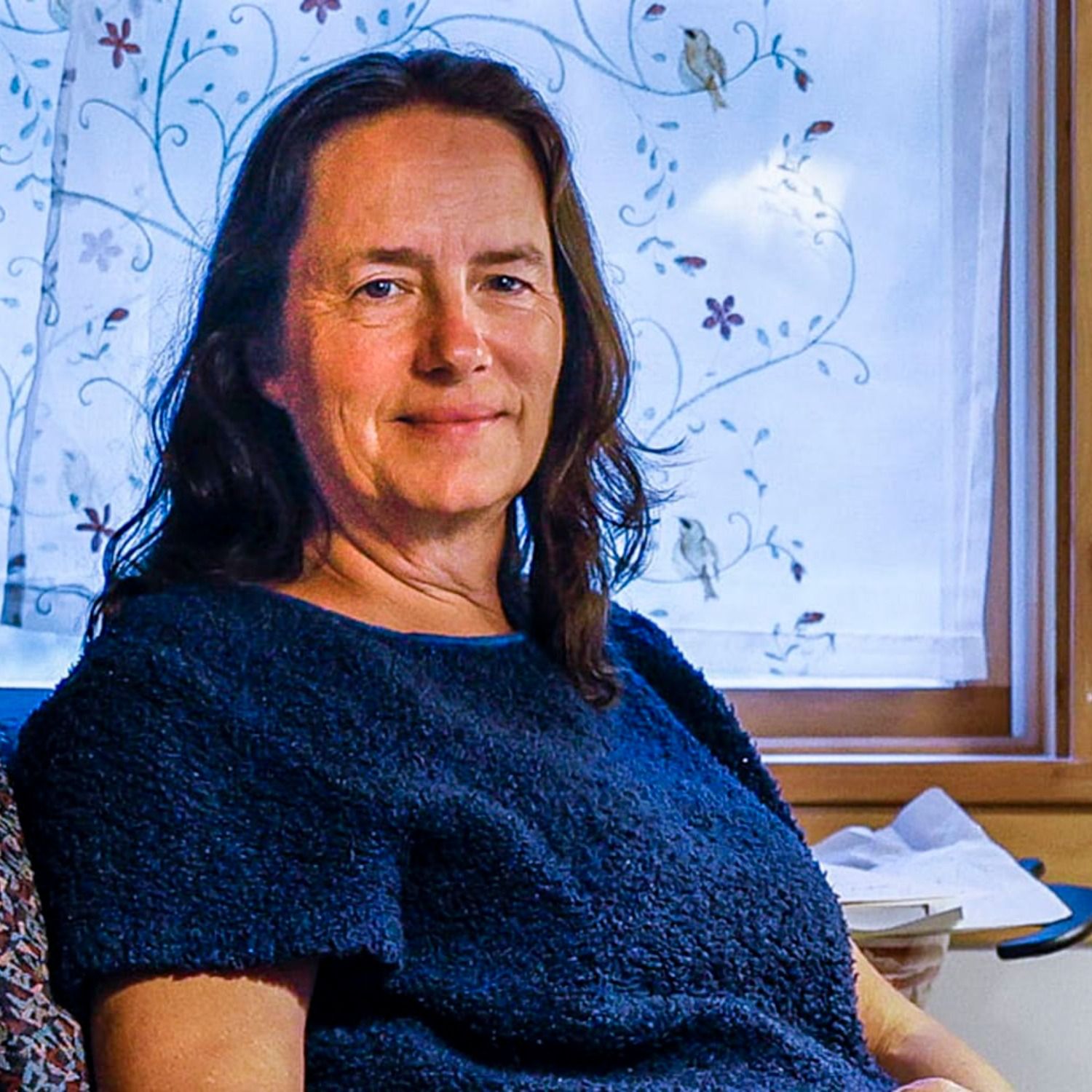
Here's the Scoop
Historian Heather Cox Richardson on American self-determination, division and optimism
00:25:45
Loading summary
Transcript69 lines
- [00:00]
Heather Cox Richardson
We hold these truths to be self evident, you know, that we have certain inalienable rights. The reason that that's important, and that is very important obviously is because what they are saying with that is they are identifying natural laws and these laws are always going to be there. And that's important not only for that moment, but also people ask me why I have faith in systems of democracy. And the answer to that is I believe those are natural laws, that human beings belief in self determination and that they will create structures to make that self determination possible.
- [00:42]
Yasmin Vesugin
Hey everybody and welcome to here's the scoop from NBC News. I'm Yasin Vesugin. We have done it everybody. We've made it 250 years of this great experiment here in the United States of America. If you think about it, right around this time on this date, our founding fathers were putting the final touches on the Declaration of Independence, inking those famous lines into history. We hold these truths to be self evident that all men are created equal. And that document has survived a revolution, a civil war and a Broadway adaptation. But what hopes and ideals have held up since our founders drafted that declaration? And what will keep this nation going for another 250? For this I wanna bring in Heather Cox Richardson. She is a history professor at Boston College and a bestselling author. She is best known for her substack Letters from an American where she's got over 3 million subscribers and another million on her YouTube channel as well. Who knew that so many people wanted to know about history?
- [01:47]
Heather Cox Richardson
Heather, you know, I think in this moment we're looking back as well as looking forward. But it certainly is wonderful for the historians and the crew because you know, people don't glaz over any longer when we walk into a room.
- [01:59]
Yasmin Vesugin
How unusual is it for democracy to have lasted 250 years?
- [02:06]
Heather Cox Richardson
Well remember that when the founders signed the Declaration of Independence, this was the launch of modern democracy. So the US stands alone in that, that it has lasted as long as it has. But of course we are still working out problems in American democracy. So I think every day that we succeed in doing that is another mark on, on chalking up the idea that this is a system of government that can work for the majority of people.
- [02:33]
Yasmin Vesugin
There's gonna be celebrations around the country on Saturday. Washington DC's got fireworks happening on the Mall. You have Los Angeles hosting America's Block Party. A concert hosted by Queen Latifah in New York City has a parade on the New York harbor ships and military flyovers as well. How have we historically celebrated these types of milestones here in the United States.
- [02:57]
Heather Cox Richardson
So that's really interesting how we're doing it this year, because generally in the past, there has been an emphasis on the entire country, on the federal government, on the idea that, you know, that we are building something as a whole country. And in this case this year, that celebration of the nation really has been taken over by a celebration of President Donald Trump at the federal level. So all of a sudden, you've got cities and. And towns and even individuals celebrating America in their own way, which is interesting for a historian, because that looks a lot more like our celebration in 1826 than it does, for example, 1976, when there was such an emphasis on the tall ships and on sort of this general national party.
- [03:47]
Yasmin Vesugin
You know, these types of events, they are kind of meant to unify, right? Unify the country, bring people together, especially when public sentiment is not great, which is right now. The last time that America marked a milestone birthday, it was the bicentennial back in 1976. Talk to us about the feeling that people had back then versus what we're seeing now.
- [04:10]
Heather Cox Richardson
Well, you know, first of all, you could make an argument that Americans have been divided in virtually every year of this country's existence. And the reason that matters, when you take a look at how we celebrate the signing of the Declaration of Independence, which is what we are celebrating, not the establishment of the Constitution, which is another cause for celebration. Some countries do celebrate their constitutions, and we probably should. But one of the things that I think you saw in 1976 was the reaffirmation that the country belongs to the American people. And there was this sense that, you know, we were democracy. The really interesting parallel for me, though, is 1876. When you think about this moment, 1876, you've got, obviously, this extraordinary ongoing conflict between the unreconstructed white Southerners in the American south and the majority of the country that's trying to make the 13th, 14th and 15th amendments real. And then right before you get the celebration of the Declaration in 1876, you get the Battle of the Little Bighorn and the Battle of the Little Bighorn, when Lakotas and their allies successfully repelled the 7th Cavalry, resulted in the killing of Custer's unit, right to a man, and he was known as the Boy General. People sort of saw him as sort of a symbol of America in many ways. So there is a sense like, wait a minute, what are we doing here? Are we really going to be able to maintain this country and Then you also have the rise of industrialization, and nobody knows what that's gonna mean because you're suddenly starting to see the depression of wages and people starting to work in factories and there's starting strikes and people worrying. And there, too, what you saw was an attempt to reaffirm what the nation meant. But it was obviously a nation that didn't quite know yet in that era what the future was going to look like.
- [06:08]
Yasmin Vesugin
What are the lessons that we can take from. If you feel the more parallel is 1876, the centennial. Right. What are some lessons we can take from that moment in time?
- [06:18]
Heather Cox Richardson
What we learned from that era was that everybody's voice matters, that we need to protect the rule of law, which did not happen immediately after, in that period. And the idea that everybody should have a stake in their government, should have a say in their government, which, after all, is guaranteed by the Declaration of Independence. And one of the things about these centennials that matter, these celebrations of the Declaration, with all the different names they have attached to them according to what number they are, what they really do, is they reaffirm those principles in the Declaration. And those are principles of a liberal democracy, a liberal meaning the sense that it protects the individual, but it guarantees that they are treated equally before the law, that they have a right to a say in their government, and that they have equal access to resources. And as people examine that and remember the extraordinary sacrifices it took to get us to that place, I think it helps to renew those principles in our society at large.
- [07:14]
Yasmin Vesugin
We have some new polling at NBC ahead of America 250, and the poll was sponsored by more perfect. And it found that 78% of adults say the American Dream is further out of reach as we look to recent history. Heather, what factors would you say have exacerbated some of these feelings as we approach this 250 anniversary?
- [07:37]
Heather Cox Richardson
So I would take a step back from that and say that what it represents is that this is a country where if you work hard, you can attain what it is that you care about. The trick there is that we have the guardrails up to enable people to realize the life that they want. And for many people, that means working their way to a place where they have food and they have shelter and they have education and they have the space to build what I would call wealth, family, friends, church, education and so on. And one of the things that has really hurt that in the modern era, I think, is, first of all, the abandonment by the government of policies that protect people's right to be treated equally before the law, but also that have tended to concentrate wealth among a very small group of people. And once you have the inability to provide for your family through a 40 hour a week job or through doing something that you really care about, you lose the sense that you in fact, are going to leave your people better off than they were. And that is central to the American dream. So if you think about why people feel it's out of reach now, I don't think you have to look much further than the legend legislation that we have started to put in place beginning in about 1981 to at least the beginning of the Biden administration that had concentrated more than $50 trillion from the bottom 90% to the top 1%.
- [09:05]
Yasmin Vesugin
Do you think, though, that we have been in this moment before, meaning people felt as if the American dream was unattainable at times in our history. And then kind of a more optimistic tone emerged after a certain point of time, 100%.
- [09:20]
Heather Cox Richardson
I mean, we call this the second Gilded Age for a reason. If you look at people from about 1888 till about, let's give it, 1905, what you see are people taking to the streets to say that they can no longer provide for their families, that they're working extraordinary hours on the steel mill floors, for example, and they're not making enough money to guarantee that their children aren't going to have to be in the streets. And from that, what you got was people from all different walks of life coming together around a whole new set of ideas and languages and art and literature and music coming together to think of new political ways to address that inequality. And from that, of course, we get the Progressive Era. And that was a complete reworking of our political system.
- [10:09]
Yasmin Vesugin
So if I'm hearing you correctly, essentially right now, through this time of uncertainty, it's basically finding a new path forward in achieving the American dream.
- [10:16]
Heather Cox Richardson
Yes. And one of the things that we have always had to do, and that is curiously marked in some ways by the 2676 dates we have been identifying, is the concepts of American democracy. Those principles that were articulated by the founders, however imperfectly they lived them, have always had to adapt to new circumstances. So in the 1830s and 1840s and 1850s, they've got to figure out how to adapt to westward migration, right? And then in 17, 1876, they have to figure out how to deal with industrialization. Then in 1926, they're gonna have to figure out how to deal with a global economy. And now, of course, we're having to deal with AI and with the breakdown of an old order. So this is something that obviously human beings can fix because we have to fix it. Cause I don't know about you, I gotta get up tomorrow morning and figure out how we're gonna live in this world and we need to fix it.
- [11:17]
Yasmin Vesugin
So we are going to take a very quick break and when we are back, how the Founders vision has held up two and a half centuries later. Stay with us and hey, I know you're about to text your family and friends to share those July 4th plans or find out what they're doing, but also send them a link to this episode. It's a great idea, right? We would love to support.
- [11:41]
Band Camp Podcast Host
Hey whatcha doing? Are you doomscrolling other people's vacations? Miami San Diego with Expedia Trip can earn rewards which you can use towards your next eligible stay. Soon people will doomscroll you. Expedia, the one place you go to go places terms apply.
- [11:57]
Kate Snow
Hi, it's Kate Snow, NBC News anchor and host of the NBC News podcast the Drink. And this month I'm having mojitos with comedian Eric Andre. Was I a little bit worried he might prank me? Absolutely. But he promised he'd behave. Mostly did. Here at the Drink, we are all about the journey, and Eric's journey to success is anything but typical. We talk about his childhood, his brief run in music, and the decade he spent hustling in New York City before his hit TV show changed everything. It's a conversation peppered with humor, but also a real look at the path behind his larger than life Persona. We hope you'll join us for the Drink. Listen and follow wherever you get your podcasts.
- [12:39]
Ed Conway
How does a banana trigger a CIA backed coup? Do AirPods herald the arrival of a new global order? What do LED Lights say about the future of humanity? I'm Ed Conway and in each episode of my new podcast, Stuff Matters, I take an object, crack it open and reveal the world shaping forces hidden inside. This is economics told through the things we think we understand. Search Stuff Matters on your podcast app to listen and follow.
- [13:12]
Yasmin Vesugin
And we are back with Here's a scoop from NBC News. I want to talk a little bit about the reason for the holiday. You mentioned the Declaration of Independence. We all know the line we hold these truths to be self evident that all men are created equal. What is your favorite line from the Declaration of Independence?
- [13:34]
Heather Cox Richardson
Heather so that's very famous. That we hold these truths to be self evident. You know that we have certain inalienable rights. The Reason that that's important, and that is very important, obviously, is because what they are saying with that is they are identifying natural laws and these laws are always going to be there. And that's important not only for that moment, but also people ask me why I have faith in systems of democracy. And the answer to that is I believe those are natural laws, that human beings have belief in self determination and that they will create structures to make that self determination possible. And there'll be. They can be stopped and they can be stopped for long periods of time. But ultimately we have this drive for self determination. So that's incredibly important. And then of course, the middle part of the document where they list everything that they believe the King has done to hamper their ability to live the lives that they would like to live, is really important not only because it identifies places where a government can overstep, but also because they are doing that to take their place as members of a world organization of nations. But for me, the heart of the Declaration is at the end of that because they have just laid out a series of principles and a series of accusations that if they fail, will be their death warrant. And at the very end of this document, this earth shattering at the time document, they actually say that they are therefore declaring their independence, which again, this is, that tends to be what we celebrate. But then they say, and for the support of this Declaration, with a firm reliance on the protection of divine providence, we mutually pledge to each other our lives, our fortunes and our sacred honor. And that, you know, that they are saying we're giving our lives to this cause and we're giving our money to this cause, but we are also giving to this cause the way people remember us forever. This is the ultimate in sacrifice for this cause because if it doesn't work, we become traitors and we become, you know, ruined for eternity. And the fact that at the end of this, it's almost like a prayer, but it's a prayer to each other, I just think is phenomenally powerful. And we should pay more attention to that last line, our lives, our fortunes, and our sacred honor, than we do.
- [16:18]
Yasmin Vesugin
What I think is so fascinating, Heather, about this is this is drawn up by a group of white men. And it was the foundation for what we were talking about, right, the American Dream. What parts of their vision do you think have held up 250 years later? And what parts of their vision do you think have fallen short?
- [16:36]
Heather Cox Richardson
Well, I would add they were largely wealthy white men as well. And that's, I think, what brings us back to those universal principles they laid out. These principles. I have argued elsewhere, based on the work of far greater historians than me, that part of the reason they felt able to make this argument was because they didn't consider indigenous people to have a say in a political system. They didn't consider black people to have a say in that system, and they sure didn't consider women to have a say in that system. So it's easy to say we are all created equal because the vast majority of you aren't part of this party. But those principles, those fundamental principles did one incredibly important thing, and that is they gave a language and an aspirational set of principles for everybody who was not included. So when I think about what American history really is about, it's the attempt of individuals who were not included in that vision to say, hey, that's a great idea. What about me and Benjamin Banneker, who was a black scientist, actually wrote to Thomas Jefferson and said, hey, nice job, fella. But, but what about the rest of us? Right in the very first days of it. And ever since then, the story of America has been that struggle over making sure that all Americans could be included in that concept of human self determination. It's kind of a common place in American history to say if you have rights, you stand on the Constitution. If you want rights, you stand on the Declaration.
- [18:10]
Yasmin Vesugin
We are going to take a very quick break. And when we are back, how America has overcome deeply divided moments before. And Heather Cox Richardson gives us her predictions on the future. Stay with us.
- [18:27]
Laura Jarrett
Who gets to be a citizen of the United States at birth? When it comes to sports and school, who gets to compete with the girls? And just how much power does the president actually have? These are the key questions before the Supreme Court this term. And as any good lawyer knows, whether you win or lose in the highest court depends on the facts, the evidence and how you frame your arguments. I'm Laura Jarrett, senior legal correspondent here at NBC News. Join me as I talk to legal experts and lawyers whose past legal victories are now the building blocks for the biggest cases being decided right now as major decisions are made. Listen to here's the scoop. Supreme Court Edition. Wherever you get your podcasts,
- [19:09]
Joy Bauer
July means you're halfway through the year, but there's still time to reach your 2026 wellness goals. With half off and annual subscription to the Start Today app. Hi, everyone. I'm Joy Bauer, the Today Show's nutrition expert. And as part of the START TODAY family, we offer easy to follow meal and fitness plans. And we support you with simple, realistic tools that keep you inspired. To reach your goals, go to today.comstart and download now because it's never too late to start Today.
- [19:38]
Chevrolet Commercial Voice
Subscription automatically renews each year at $65.99 plus taxes and fees until canceled. Offer ends July 31, 2020.
- [19:45]
Yasmin Vesugin
Price is subject to change.
- [19:46]
Chevrolet Commercial Voice
Visit today.comstart for full offer terms and details.
- [19:51]
Band Camp Podcast Co-host
Have you ever read the Handmaid's Tale before? We haven't. Haven't even watched the TV show
- [19:59]
Band Camp Podcast Host
Band Camp. Our top ranked comedy podcast is back for season 11 and we're reading the Handmaid's Tale out loud, cover to cover.
- [20:09]
Band Camp Podcast Co-host
Now, if you've never read it before, you're gonna discover it with us. And if you have read it before, well, you already know it's coming and this is gonn be your chance to laugh at us as we get horrified over and over and over.
- [20:21]
Band Camp Podcast Host
And because we haven't read it before, you're gonna hear us bumbling through it while we're trying to figure out why it was banned in the first place. New episodes every Tuesday and Thursday.
- [20:33]
Band Camp Podcast Co-host
Assuming that we actually make it through the reading, you can find us@bandcamppodcast.com and that's banned like books they don't want you to read.
- [20:51]
Yasmin Vesugin
And we are back with here's the scoop from NBC News. I want to talk a little about what's happening current day politics today. So when we are looking at the elections, we're heading into the midterms come November. The way in which folks are voting right now is on opposite sides, right? You have folks that are really leaning into the maga. Right. And you have folks that are really leaning into the progressive left. Is this also cyclical with our political history and seeing people kind of taking to their corners?
- [21:18]
Heather Cox Richardson
So first I'm gonna push back against the idea of the progressive left because as I have pointed out recently, what people are calling the progressive left is not actually left. You know, the left is the idea of getting rid of liberal democracy altogether and changing the private ownership of the means of production, that is, who owns factories, for example, into publicly owned institutions or publicly owned means of production.
- [21:45]
Yasmin Vesugin
Well, I mean, I think what I'm referring to when I say progressive left is the rise in popularity of folks like New York City Mayor Zohar, right. Identifying himself along with some of the other candidates that he has recently endorsed that actually have won in their primary calendars or primary elections is democratic socialism. Right?
- [22:02]
Heather Cox Richardson
Democratic socialism is not socialism. It's not changing the means of production into public Hands. What it says is, we would like a society that looks very much like America. America did until the 1980s, which is in the period between 1933 and 1981, when, in fact, we did have public ownership of utilities, for example. So those terms are a little bit problematic. But to your larger point, one of the things that we are seeing in this period, again, I sound like a broken record on this, is a mirror of the 1850s and the 1890s and the 1930s, in that we had a period in which the country became deeply divided and power and wealth really flowed. To a very small group of people that works for a while, you can whip up your base by talking about those people. And those people are immigrants or black people or women who want to work outside the home. They're always those others who threaten to bring socialism to America. There's actually a history behind that word here that has very little to do with international socialism, and that's why the confusion is there. But. But when people finally wake up and realize that the government is not, in fact, serving their needs and that there are new issues that they have to address, all political identities tend to go out the window. And you get this period of really choppy political water where people make new alliances across the political spectrum. And the great example of that, it's in all of the periods I identified. But the great example of that is the 1850s, when it became very clear that the elite Southern enslavers had taken over the Americans government and were using it to advance their interests against everybody who was not a member of their class. Lawmakers from Congress gathered together and they said, listen, we disagree about finance, we disagree about internal improvements, we disagree about immigration, but we can agree that we don't want to lose our democracy to a very small group of elite enslavers. And they begin to coalesce around a number of leaders, and they begin to articulate a new vision for the country. Finally, in 1859, rising Illinois lawyer Abraham Lincoln articulates a new vision of a government that will work for everybody. A government of the people, by the people, and for the people. So we're in these moments, one of these moments where it's all up in the air. How are we going to deal with AI? How are we going to deal with climate change? How are we going to deal with data centers? Those things are still not politically sorted. And we will, I expect, come out of this with two new approaches to the modern world.
- [24:48]
Yasmin Vesugin
But I do wonder, Heather, if there are moments of unity that we can Find. Because we've seen kind of. I think most recently, we've seen this unity around, for instance, the cheering of the New York Knicks here in New York City, the World cup countries coming from all over the world. Right. A really unification around sport, for instance. Right. Is there an ability to create more moments like that outside of our kind of divided political spectrum that we sit in right now?
- [25:13]
Heather Cox Richardson
Yes, I think so. And I think we are already doing it. I think that you've identified sport because they were times in which we were celebrating. Right. And that's always fun. You wanna be part of a happy party. But I think you're also seeing it in movements like the one coming out of Minneapolis and Chicago and Los Angeles and the places where people are pushing back against the kind of tyranny that the founders warned against. And they're doing it through conspiracy, reinforcing of community, and reinforcing of the idea that really what we are doing on this continent is trying to create a government that protects our communities, that protects the people in them.
- [25:50]
Yasmin Vesugin
Real quick, can we do a speed round of questions?
- [25:53]
Heather Cox Richardson
You can try.
- [25:54]
Yasmin Vesugin
How many years before we have a female president?
- [25:57]
Heather Cox Richardson
15.
- [25:58]
Yasmin Vesugin
How many years before we have a first openly LGBTQ president?
- [26:03]
Heather Cox Richardson
Openly is the key word.
- [26:04]
Yasmin Vesugin
Openly.
- [26:05]
Heather Cox Richardson
Openly. I'm gonna give you 12.
- [26:10]
Yasmin Vesugin
How many more years before we have more women than men in Congress?
- [26:15]
Heather Cox Richardson
You're killing me here. I'm gonna go. I'm gonna go. 20.
- [26:20]
Yasmin Vesugin
How many more years before we have a new constitution and. Or an amendment to a constitution?
- [26:26]
Heather Cox Richardson
I hope we never have a new constitution. An amendment. Seven. Maybe less than seven. I can't do math here. Hold on. Two?
- [26:35]
Ed Conway
Yeah.
- [26:35]
Heather Cox Richardson
Six or seven.
- [26:36]
Yasmin Vesugin
How many more years before a new Declaration of Independence?
- [26:39]
Heather Cox Richardson
Well, we have new declarations all the time. I mean, that's one of the reasons that we celebrate it, is because, as I say, anybody who wants rights uses the Declaration of Independence as a pattern. Google it. You'll see hundreds and hundreds of declarations of independence. I mean, of declarations of rights.
- [26:54]
Yasmin Vesugin
So I guess with that, then I would ask you, any predictions you have for 300?
- [27:01]
Heather Cox Richardson
Well, I'm not in the business of predicting the future. I predict the past. Right. I'm a historian. But if we are going to be true to our patterns in the United States of America, we are in a period of enormous political upheaval that we know can go one of two ways. We can become a dictatorship or we can reaffirm our democracy. And I actually think we will reaffirm our democracy. And one of the things that I'M really hoping for. I would love for Americans to figure out a way to stop this pattern of renewing democracy, ceasing to pay attention to it. People rise to power through turning their voters against an other. Wealth concentrates. We have a crisis and then we go through the pattern again. This is such an American pattern of saying, hey, everything's great. We don't actually need to regulate business anymore. We don't actually need to pay attention to voting rights anymore. And then we have a crisis and we go back and start again. I mean again. I suppose in a way it's good cause we are reborn repeatedly. But an awful lot of people suffer in those two middle phases and I would love to see the United States of America figure out a way to stop that pendulum swing.
- [28:17]
Yasmin Vesugin
Are you optimistic?
- [28:18]
Heather Cox Richardson
Absolutely.
- [28:19]
Yasmin Vesugin
Heather Cox Richardson, it has been such a pleasure. Thank you.
- [28:22]
Heather Cox Richardson
It's been a pleasure to be here
- [28:27]
Yasmin Vesugin
this Fourth of July. Join NBC News for all day coverage of America's 250. It all kicks off with a special edition of Today followed by exclusive coverage of the Sail 4th tall ship parade in New York, plus NBC Nightly News live from Washington D.C. and live coverage of all the celebrations at our nation's capital. Watch it all on NBC and streaming live on NBC News now. All right, that is going to do it for us at. Here's the Scoop from NBC News. I'm Yasmin Vesugin. We'll be back on Monday with whatever the weekend may bring and I certainly hope you enjoy your holiday weekend. If you like what you heard, subscribe wherever you get your podcasts and you can also subscribe to our daily newsletter, the Inside Scoop. It is a deeper dive on the main stories of the day that comes out every weeknight straight to your inbox. You can sign up for the Inside Scoop as Forever paid subscription@nbcnews.com we'll see you on Monday.
- [29:25]
Joy Bauer
Foreign.
- [29:33]
Chevrolet Commercial Voice
There's a reason Chevy trucks are known for their dependability. It's because they show up no matter the weather, push forward no matter the terrain, and deliver. That's why Chevrolet has earned more dependability awards for trucks than any other brand in 2025, according to J.D.
- [29:44]
Band Camp Podcast Co-host
power.
- [29:45]
Chevrolet Commercial Voice
Because in every Chevy truck, like every Chevy driver, dependability comes standard. Visit Chevy.com to learn more. More Chevrolet received the highest total number of awards among all trucks in the J.D. power 2025 U.S. vehicle Dependability Study words based on 2022 models. Newer models may be shown. Visit J.D. power.com awards for more details. Chevrolet Together, let's drive.