← Here's the Scoop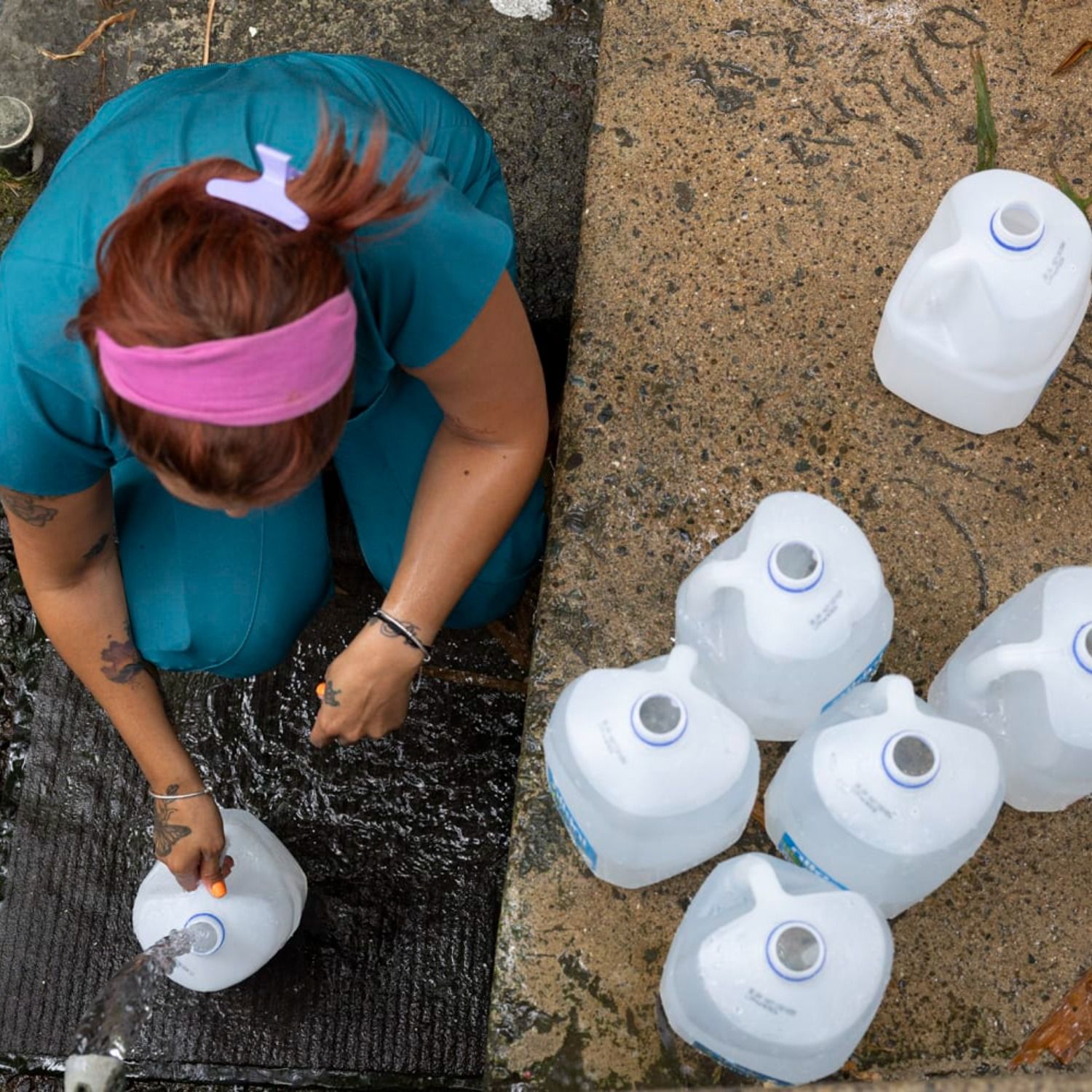
Here's the Scoop
How a Weapons Shortfall Is Frustrating Trump; Puerto Rico Begins Rationing Water
00:25:37
Loading summary
Transcript86 lines
- [00:01]
Joshua Robinson
He thinks maybe he can be. This is what Sepp Blatter, his predecessor, also thought, a Nobel Peace Prize winner someday, that football is this global uniting force and that he is basically the king of soccer or the pope of soccer.
- [00:19]
Yasmin Bissugin
Hi, everybody, and welcome to here's the scoop from NBC News. I'm Yasmin Bissugin. So you're probably wondering, who's the pope of soccer? Who's the king of soccer? So we are talking today about Gianni Infantino. He's the president of FIFA and wondering how it is he's had nine lives as the head of FIFA and all the controversy surrounding it. My guest on the show today believes, though, he is still the king of soccer in spite of it all. Also, we're taking a look at water rationing in puerto Rico. Around 200,000 customers or so are going to be affected by this. Around the San Juan and in the San Juan area, I spoke to an investigative journalist on the ground there and someone who's being affected. And imagine this. For 48 hours, they won't have running water in their homes. Talking about showering, using the restroom, drinking water, washing your clothes. We're going to get an in depth look on what Puerto Ricans are having to deal with at first, though. So it's been about a week since the president said he called off a, quote, unquote, major military operation in Iran. He said at the time that the perimeters of a deal had been reached, which would include reopening the Strait of Hormuz and an end to Iran's nuclear threat. But no deal as of this moment has come to fruition. And the US Is not a part of talks to reopen the city of Hormuz. Those are actually happening between Iran and Oman. And inside the Trump administration, tensions and tempers are rising. A reporting indicating that Trump is exasperated with his officials and aides about the war, frustrated by a shortfall in weapons, and even threatened to fire a top DoD official. So I want to bring in Courtney Kuby. She is our NBC News senior national security correspondent. Hi, Court.
- [02:04]
Courtney Kuby
Hi, Yaz.
- [02:05]
Yasmin Bissugin
So you and I often have these talks in which we meet on this podcast and we talk about is there a deal or is there no deal? And it's not a game show, it's real life. So where are we? Is there a deal? Is there no deal? What is the progress on this? Or is this just another negotiating tactic as we've seen in the past?
- [02:25]
Courtney Kuby
It's just at this point, it's just not clear. The president's been Talking about being very close to a deal for literally months. Now, there's one big sticking point, and that is the quote, unquote, control over the Strait of Hormuz, whatever that means, because that's not even really been defined for us. The way that the US Is talking about it is that there should be open commerce and open movement of any kind of ships in and out of the Strait of Hormuz, and there can't be any sort of a fee charged for it.
- [02:53]
Unidentified Speaker (possibly a commercial voiceover)
Right.
- [02:54]
Courtney Kuby
But now the way that these negotiations seem to be going is there actually would be some sort of a framework over the Strait of Hormuz that could be shared between Iran and Oman. And there's definitely room in there where Iran could charge some sort of a fee, whether it's for a permit, perhaps to transit the Strait, and it would be different amounts for different ships or different countries or whatever it is. That's still a very real possibility. But then you have US Officials saying that's simply unacceptable to the President. And, oh, by the way, they haven't even started addressing what the White House and the President continues to say is the primary point of all of this, and that is to ensure Iran never has a nuclear weapon without any kind of explanation for how that's even possible. To ensure.
- [03:39]
Yasmin Bissugin
And to be clear, as I mentioned earlier, the US has not been a part of the negotiations in reopening the Strait of Hormones. That has been between Iran and Oman, which was laid out in the memorandum of understanding with the United States. You've been reporting. Also in lockstep with these negotiations, there are some tensions inside of the Department of Defense about how to move forward with Iran. And with that, there is learning of a weapons shortfall, weapons shortage. And you had been reporting this for quite some time, and we had talked about this on the podcast weeks ago at this point, and it seems like that is now factoring into the steps in which the President is or is not taking in a path forward with Iran. You also learned of a crisis meeting that took place last week about this weapon shortfall.
- [04:32]
Courtney Kuby
So it's not a surprise that the shortfall and what we're talking about, we keep using the word munitions. And so, like, what that means for our listeners and our viewers is missiles is what we're really talking about here. Yeah, these are missiles that the US has been using. It's not a surprise the US Gave older versions of many of these systems, these missile systems, to Ukraine over the last several years. There's already been this sort of tension. We need to increase the production rate of these, the US Needs to refill their stockpiles, and the US Actually has been doing that. They started increasing the production rate under the Biden administration. They moved it up. At one point, the US was making something like 300 of some of these interceptor missiles a year. They're now they moved it up to about 600 because it takes several years to build up production. Now, for the last year, the Pentagon actually has been trying again to do this, but they're up to like 650. So it's a very slow process. And oh, by the way, this is something, something that's been a problem since March and April of 2025. So the Pentagon has been working on it. But as they're working on this, they also then had Operation Midnight hammer, where the US conducted strikes inside Iran. Iran responded with the 12 Day War, where the US was continually defending against incoming Iranian missiles and drones, largely trying to help defend Israel in many cases. And then the war here started. So they knew that they were going
- [05:52]
Yasmin Bissugin
to keeping up with demand.
- [05:55]
Courtney Kuby
Exactly. And they are working on it. Steve Feinberg, who's the Deputy Secretary of Defense, has been working on this for over a year. And I mean, I'm told that he has these multiple times per week meetings with defense contractors and with acquisitions people and people who deal with the defense industrial base to try to address this. But it's just not a quick problem. That's the real problem here. And that also gets to this tension right now that exists with President Trump, who's been so angry about this issue because while we've been reporting it for months, while think tanks, both conservative and liberal and bipartisan think tanks, have been talking about this for months, President Trump continues to hear from his most senior advisers, including the Secretary of Defense, Pete Hegseth, that they have all the weapons that they need and they have all the bombs that they need, and they can do whatever he asks them to do.
- [06:39]
Yasmin Bissugin
So the speculation has been that potentially the President could point the finger at his Secretary of Defense, Pete Hegseth, and say this is your fault. You haven't been on top of this. No one's been communicating to me about this shortfall in weapons. And so you're out. Right. But the president discounted that this morning in a phone call with NBC News in which he said he's very much still on board with Hegseth. Right. So what do you make of that?
- [07:07]
Courtney Kuby
We just don't know. I mean, President Trump is. He is saying publicly that there's plenty of weapons, there's plenty of munitions in the stockpile that he supports Secretary of Defense Pete Hegseth. But we do know that he was very directly questioning him at Camp David last Friday about this issue. We do know that no matter what President Trump knows or believes about the stockpiles, we know that this issue is factoring into his decision making about whether to restart combat or whether to conduct strikes against Iran. So there is some piece of this that he recognizes, and maybe it's the briefings that he's getting from his senior military advisors or whatever. And we also know that Secretary of Defense Pete Hagseth, when questioned directly about this, said, oh, well, it's Secretary Feinberg, his deputy is the one who's the lead of this. And that led to President Trump making an angry phone call to Steve Feinberg last Friday to ask about this. So it's just not really clear the public statements they are providing. They're saying, you know, we're fine. We can do everything that we need. The military, the munitions, the stockpiles are fine. But I mean, yes, a lot of these numbers are public. The number of these munitions that are produced every single year is a publicly available number. And so we can do the math. And we know, and we know, according to multiple sources we've spoken to, that there are real concerns about the stockpile of some of these munitions. No matter what the administration's saying publicly to say.
- [08:28]
Yasmin Bissugin
The president has said before that he's not letting someone go and then he lets them go. So that has happened in the past. It happened with Attorney General Pam Bondi and then Bondi was out. Right. I mean, it's happened with various people in his administration both this time and the previous. But is there a potential for someone to take the fall for this?
- [08:49]
Courtney Kuby
The one factor here is what we started talking about, and that is this ongoing negotiation and there no real state of finality with this conflict. Right. The US military still has more than 50,000 people there. There still is the very real possibility that this erupts back into a shooting war. I would be a little surprised if the president made that change while this is ongoing.
- [09:10]
Yasmin Bissugin
Courtney Kuby, as always, thank you.
- [09:14]
Courtney Kuby
Thanks.
- [09:17]
Yasmin Bissugin
Coming up, how Puerto Rico's crumbling infrastructure combined with a drought have led to a massive water shortage. So what are residents doing to get by? That is after a very quick break.
- [09:32]
Josh Mankiewicz
This week on MEET THE Press. With midterm elections just three months away, does either party have an advantage? Kristen Welker sits down with Senators Bernie Sanders and John Kennedy, plus a common ground conversation with governors Wes Moore and Kevin Stead this week on Meet THE Press. Listen to the full episode now. Wherever you get your podcasts, I hear
- [09:54]
Hannah Jewell
a lot from people that there are days where it's hard to read a single news story, forget actually being caught up. But I host a podcast that can fix that. It's called the Seven Stories every weekday by 7am Eastern. And here's the other thing. It's short, less than 10 minutes in fact. I'm Hannah Jewell. The Seven podcast will turn around your morning and get you caught up. Check it out and follow the seven wherever you listen to podcasts.
- [10:26]
Yasmin Bissugin
And we are back with here's the scoop from NBC News. So we've talked a lot about extreme weather right in Europe, across the country as well in Puerto Rico. Residents there over more than half of the island have been suffering from an ongoing drought. And starting today, the governor, Jennifer Gonzalez Colon, says they are cutting off water service around different parts of the capital, San Juan, for two days at a time, impacting over 180,000 customers in total. NBC News correspondent George Solis spoke with one San Juan resident about the intermittent water access.
- [11:01]
George Solis
I haven't had water for two days now and when it comes, the pressure is really low. So filling up the tank of the toilet takes some like some time taking a shower. Still, you want to save some water because you think about the others as well. And even when the water comes back, you have to think like, do I do my laundry or do I save water?
- [11:22]
Yasmin Bissugin
So this is a dilemma that so many residents in San Juan area are dealing with right now. They are saying that service was already an issue before this drought. So how are Puerto Ricans gonna get through this current crisis? For this, I wanna bring in Laura Perez Sanchez. She's an independent investigative reporter based in San Juan and also affected by this. Hi, Laura. Thanks for joining us.
- [11:44]
Laura Perez Sanchez
Thank you. Thank you.
- [11:46]
Yasmin Bissugin
I want to start with the water rationing plan. For 48 hours, residents in certain areas are going to have zero water coming in on their taps. They won't be able to do laundry. They won't be able to take a shower. They won't be able to wash things. Zero water, correct?
- [12:04]
Laura Perez Sanchez
Yes. And I think, yeah, that's what is planned. We'll see what happens because I think that there's an issue here with credibility from the water authority. So we are expecting trying to see bracing for what's gonna actually happen. The governor has already said that this is how we are starting. But those periods of time can be even longer because the drought is kind of severe and they're expecting it to last for a long time and long time means months. So we are also bracing for that.
- [12:36]
Yasmin Bissugin
You mentioned kind of a lack of credibility. And you're speaking to what you mentioned to me before we actually even got into this interview, which is a friend of yours who was supposed to be affected beginning today, whose water is still on as we're speaking, right?
- [12:49]
Laura Perez Sanchez
Yes. And there's a lot of people who are supposed to have water who doesn't have it. I think that that's also the issue that people are not willing to believe what they hear because they've been denouncing for months now that they are without water. And they are being kind of gaslighted in saying that there's not a big crisis. And I've talked to people in my reporting that have been suffering from this for more than a year, people who these in San Juan. In San Juan, who have been like for more than 80% of the year haven't had water service. So the thing is that the drought has come, like kind of like an excuse to explain a broader crisis with the infrastructure, water infrastructure and service.
- [13:34]
Yasmin Bissugin
So let's talk, Laura, about the broader crisis, right? Because yes, we're talking about the drought right now. But you mentioned this broader crisis. So back in June, there was a pipeline that was damaged which ended up causing water service issues as well for tens of thousands of people in the San Juan area. How did that affect people's access to water? Has that issue been fixed, that pipeline?
- [14:02]
Laura Perez Sanchez
It was fixed, that issue, that little issue, let's say. Because the thing is that that's a big pipeline that goes across half of the northern coast of Puerto Rico. And experts say we can expect more of this kind of problems coming in the future because there's a lack of maintenance and uptaking of the system. So when it happened in June, what actually would happen with that issue is that a lot of us who were not aware that there were a lot of people who already were suffering from water shortages realized because it affected us that, oh, there's an issue happening. I think that moment it opened our eyes to there's a very big crisis coming our way. And unfortunately, we've been living in crisis, in compounding crisis for more than a decade. And we know what that means. I would say that when the power system in Puerto Rico was ruined by the hurricane and we started suffering from so many blackouts as we have.
- [15:07]
Yasmin Bissugin
You're talking about Hurricane Maria.
- [15:08]
Laura Perez Sanchez
Hurricane Maria, yes. I think that we were not aware of what that would look like to live in a place with such decaying infrastructure. But now we know. So I feel that people are very frustrated, tired, also very sad. I find a lot of frustration. And I can say that I also feel it because we know what it means, what the future might bring in terms of relying on a decaying infrastructure that should, you know, bring us very essential services like water and power.
- [15:41]
Yasmin Bissugin
And on top of that, I mean, water is essential for every human being on this earth. It's also summer. Yes. You live in Puerto Rico, so Puerto Rico is hot all year round, but it's especially hot right now. How are you dealing with this? Because you're reporting on this, but you're also affected by this, you and your family?
- [16:02]
Laura Perez Sanchez
Yes, yes. In terms of how I'm dealing with it, I just learned that my neighborhood is going to be part of the rationing. I didn't know that until last night, even though I've been reporting on this, because there was some miscommunication about the areas that were going to be affected. And for example, I'm very worried about my family. My mom, my aunt, and my grandma. My grandma is still alive. She's 97. And I'm very worried because first of all, of course, like you said, they need water, we all need water to live. But also moving water buckets, you don't think about it, but it's heavy.
- [16:36]
Yasmin Bissugin
Heavy.
- [16:37]
Laura Perez Sanchez
It's heavy, and it's heavy on the body. And I was thinking about this, that the last time we had a big water Crisis was in 2015. They were 11 years younger than today, and I didn't give a thought about how they could cope with it in terms of their bodies. But now I'm thinking I need to take care of myself, but I also need to get to their homes and help them put the water buckets on a higher surface, whatever they need.
- [17:01]
Yasmin Bissugin
For people that don't know what it's like to live in a water shortage, you're talking about these water buckets. Because the second your water is on, residents start filling up buckets and buckets of water so that when the water gets turned off again, they actually have something to turn to.
- [17:16]
Laura Perez Sanchez
Yes, exactly. So one thing that happened was that the day after they announced the rationing, a lot of people like my mom were without service because we guessed that it was because people were filling their buckets and their storage bins, whatever they can get their hands on, bottles, everything, a bathtub, people, their washing machines. And then that's what you use with the bucket to flush your toilet. And then you have to know, have a sense of which one is good for drinking and for cooking and which one is not. If you collect it after, after it's been taken away and then when they bring it back, you're sometimes not, you're a little worried that it might be dirty. So these are the things that you juggle. And actually talking about hurricanes, several of the people that I talked to that have been suffering shortages for the past year told me, not even after Hurricane Maria, I lost my water service and now I don't have water.
- [18:15]
Yasmin Bissugin
Wow. It seems a lot of uncertainty right now, not only for you, but so many of the residents there in Puerto Rico.
- [18:22]
Laura Perez Sanchez
Yes. And I feel like not knowing what's gonna come is tricky. But in this case, there's uncertainty, but also the certainty of this is not gonna be great. We know it's not gonna be great.
- [18:36]
Yasmin Bissugin
Laura Perez Sanchez, thank you.
- [18:39]
Laura Perez Sanchez
Thank you.
- [18:42]
Yasmin Bissugin
All right, coming up, a soccer controversy that almost led to the ouster of the head of FIFA, the international soccer organization. How did FIFA's president, though Gianni Infantino, manage to stay in control? That's next. And hey, so a quick request from me to you. If you like our show, you want to support us, share this episode with a friend, send a text, your text, your message. You'll be saying hi to your friend, but it'll also help us grow our audience and keep bringing you the news. I'll see you on the other side.
- [19:18]
Josh Mankiewicz
I'm Josh Mankiewicz, and I hope you'll join us for season five of Dateline Missing in America. In each episode of dateline's award winning series, we will focus on one missing persons case and hear from the families, the friends and the investigators, all desperate to find them. Maybe you could help solve a mystery. Search DATELINE Missing in America to listen on Apple Podcasts completely free or subscribe to DATELINE Premium to unlock new episodes early.
- [19:48]
Kate Snow
Hi, I'm Kate Snow, NBC News anchor and host of the NBC News podcast the Drink. This month, I'm sitting down with the hilarious, hilarious Leslie Jones. We chat about her remarkable journey from her childhood to family hardships to the unexpected, almost accidental road that led her to comedy. From her unforgettable years at Saturday Night Live to her new show, Roast My Rental, about vacation rentals gone terribly wrong. It is a funny, candid conversation and I hope you'll give it a listen. Join us for the drink. Listen and follow now wherever you get your podcasts.
- [20:24]
Courtney Kuby
I really love the Start Today app.
- [20:26]
Unidentified Speaker (possibly a commercial voiceover)
They care about how I feel.
- [20:28]
Courtney Kuby
It's the staff on the app. It's the connections you make.
- [20:32]
Josh Mankiewicz
Without good mental and physical health, you have nothing.
- [20:37]
Laura Perez Sanchez
It tells me how to cook to keep myself healthy.
- [20:41]
Unidentified Speaker (possibly a commercial voiceover)
I look at my app and I'm like, wow, I didn't know I did 7,000 steps today.
- [20:44]
Josh Mankiewicz
Start Today meets you where you are. Download the Start Today wellness app now on your Apple or Android device. Terms Apply C app for details.
- [20:58]
Yasmin Bissugin
And we are back with here's the scoop from NBC News. So this time last week, we had talked about the news rock in the soccer world. FIFA President Gianni Infantino was planning to sell a very big stake in the World cup to private equity investors to raise money for the organization. That did not go over well, and that is putting it mildly, by the way. And then just a few short hours after we published, facing a boycott and an open revolt from inside of the world of soccer, Infantino announced he was scrapping those plans. And then he had to fight to not lose his power. But a week later, that threat of a red card per se seems to have been lifted and Infantino appears to still be the, quote, unquote, king of soccer. That is at least according to an exclusive Wall Street Journal story by sports editor Joshua Robinson. And Joshua is joining us now. Hi, Joshua.
- [21:49]
Joshua Robinson
Hi. Thanks for having me.
- [21:50]
Yasmin Bissugin
It's great to have you. So I kind of walked through the timeline of this whole thing, right? Just a couple of weeks ago, Johnny Infantino, he was riding high, right? The World cup was this huge success. Everything was kind of riding along smoothly. And then he presents this plan, selling off part of FIFA to private equity. Many freak out about that. Take us through the last few weeks.
- [22:13]
Joshua Robinson
You did a great job of it because there have been so many twists in this story since, you know, the day Infantino handed over the World cup to Spain. This plan, FIFA forward enterprise is what they called it. First of all, to spin off FIFA's commercial operations and then sell a portion of that to private equity was roundly lambasted. But that was really only the straw that broke the camel's back. FIFA people inside FIFA people around the 211 member associations that make up this organization have been quietly turning on Infantino for about a year. And this goes back to things like Infantino inventing the FIFA Peace Prize so that he could give it to President Trump. This goes back to Infantino showing up late for his own FIFA Congress, which is like the FIFA General assembly because he was traveling in the Middle east with Trump. He has siloed everything. He makes unilateral Decisions.
- [23:10]
George Solis
And.
- [23:10]
Joshua Robinson
And there is a kind of feeling of chaos inside FIFA because a lot of the time the left hand doesn't know what the right hand is doing. And the right hand is Jenny and Fantina.
- [23:19]
Yasmin Bissugin
When he scraps this plan of selling off part of FIFA to this private equity, there are still those that say, we still want him out. Right?
- [23:27]
Joshua Robinson
Yeah.
- [23:28]
Yasmin Bissugin
Who are those people?
- [23:29]
Joshua Robinson
I think for a lot of the soccer world, led in part by UEFA, which is European soccer's governing body, they've been at loggerheads with FIFA for years
- [23:37]
Yasmin Bissugin
who were the first to protest this plan that Infantino had presented.
- [23:41]
Joshua Robinson
They were the first to protest and threatened to boycott the World Cup. And by the way, even with all the reversals we've had in the past week, they doubled down on their boycott.
- [23:49]
Yasmin Bissugin
So then this week he convened an emergency meeting for the senior staff in Morocco. Right?
- [23:54]
Joshua Robinson
Yes.
- [23:54]
Yasmin Bissugin
Where you say the revolt was squashed.
- [23:58]
Joshua Robinson
Yes.
- [23:59]
Yasmin Bissugin
What happened?
- [24:00]
Joshua Robinson
Well, this is a bit of Gianni Infantino magic, because in that room, and there were a few people, a few members of the senior staff who refused to go. And that includes people like Arson Wenger, the director of Global Football Development. But somehow in that room, over a meeting that lasted roughly seven hours, he convinced the senior staff to fall into line. He promised to apologize, he promised to consult them more. He promised radical transparency in a way that has not existed, and I think convinced everyone in that room that not turning over the entire organization right now was the best thing for it.
- [24:39]
Yasmin Bissugin
You know, some of the criticism that you talked about had a lot to do with President Trump. How much has that been a stain on Infantino's reputation in that he has waded in a way so far into not just politics, but American politics that at times seems very divisive right now.
- [24:59]
Joshua Robinson
Yeah, I think it's been front and center for a lot of people back in Zurich at FIFA hq. You know, FIFA is a decidedly apolitical organization, except when Infantino seems to be around Trump. They've had several head to head meetings alone in the Oval Office. And when the Fuller and Balogun incident happened, that's the red card to the US player that had him suspended for the next game, but was then delayed and allowed him to play. That started with a call directly from President Trump to Infantino asking him to review the call. And that for a lot of people was the red line. It's become pretty clear over the past decade, since Infantino became FIFA president, that he really enjoys proximity to power. He sees himself as a global statesman and that he belongs in those rooms that he thinks maybe he can be. This is what Sepp Blatter, his predecessor, also thought, a Nobel Peace Prize winner someday, that football is this global uniting force and that he is basically the king of soccer or the Pope of soccer. I mean, he is one of these people who considers himself to operate in those fears.
- [26:10]
Yasmin Bissugin
So is that a part of his continued success in remaining a top FIFA?
- [26:15]
Joshua Robinson
It's definitely part of it, but there's another mechanism at play here. You have to understand that FIFA is a democracy and run by the 211 members. That's every country that plays soccer in the world. More members than the un, by the way. And every one of those countries gets the same vote. And FIFA's main purpose, its main lever of power, is distributing the $15 billion, for instance, that it made from this past World cup to all of these member associations, nominally to develop soccer. They apply for the money, they get it, and they build stadiums and they build pitches and they train coaches.
- [26:51]
Yasmin Bissugin
It's huge for a lot of these small countries.
- [26:53]
Joshua Robinson
Exactly. And by the way, with the FFE project, he was promising up to $40 million to every single member of soccer.
- [27:01]
Yasmin Bissugin
The FFE project is the private equity project.
- [27:03]
Joshua Robinson
Yes.
- [27:03]
Yasmin Bissugin
Yeah.
- [27:04]
Joshua Robinson
That is a great way to keep voters in line.
- [27:07]
Yasmin Bissugin
So is Gianni Infantino still the king of soccer in your mind?
- [27:11]
Joshua Robinson
He is, but the king faces an election next March, and no one is running against him yet. But I think there are a lot of movements, especially on the UEFA side, to potentially find a suitable candidate that can run against him.
- [27:25]
Yasmin Bissugin
Joshua Robinson. Thank you.
- [27:27]
Joshua Robinson
Thank you.
- [27:29]
Yasmin Bissugin
All right, that is gonna do it for us. Here's the Scoop from NBC News. I'm Yasmin Vesugin. We'll be back on Monday with whatever the weekend may bring. And if you like what you heard, subscribe. Revocate your podcast and you can also subscribe to our daily newsletter, the Inside Scoop. It is a deeper dive on the main stories of the day that comes out every weeknight straight to your unbox. You can sign up for the Inside Scoop as part of our paid subscription@nbcnews.com we'll see you Monday.
- [28:05]
Unidentified Speaker (possibly a commercial voiceover)
Your phone is your lifeline. Calling your kid to say goodnight, waiting on a job callback, or just sending a meme to your best friend when it's been that kind of day, wherever life takes you, the TextNow app keeps you connected for free. Get a real phone number, unlimited talk and text and 5G data for your favorite app apps, all for $0 a month, no fixed contracts. No hidden fees, no panic when bills pile up. Just phone service that's there when it matters most. TextNow, we've got your back. Download TextNow in your app Store today. Wireless plants require the purchase of a sim card. Visit textnow.com for terms and conditions.