Podcast
Heresy
Hosted by Dimitar Stanimiroff · EN
Thinkers. Builders. Rebels. Big ideas from the edge of tech and beyond.
Hosted by Dimitar Stanimiroff, Heresy started with a simple goal: learn from the sharpest minds in SaaS GTM. It’s grown into a show that follows curiosity across domains—tech, startups, investing, science, and philosophy.
Past guests include Jason Lemkin (SaaStr), Aaron Ross (Predictable Revenue), Philip Su (ex-Meta, OpenAI) and execs from Uber, Box, Twilio, and Stack Overflow.
New episodes drop regularly.
11episodes
Episodes
Newest firstAll episodes
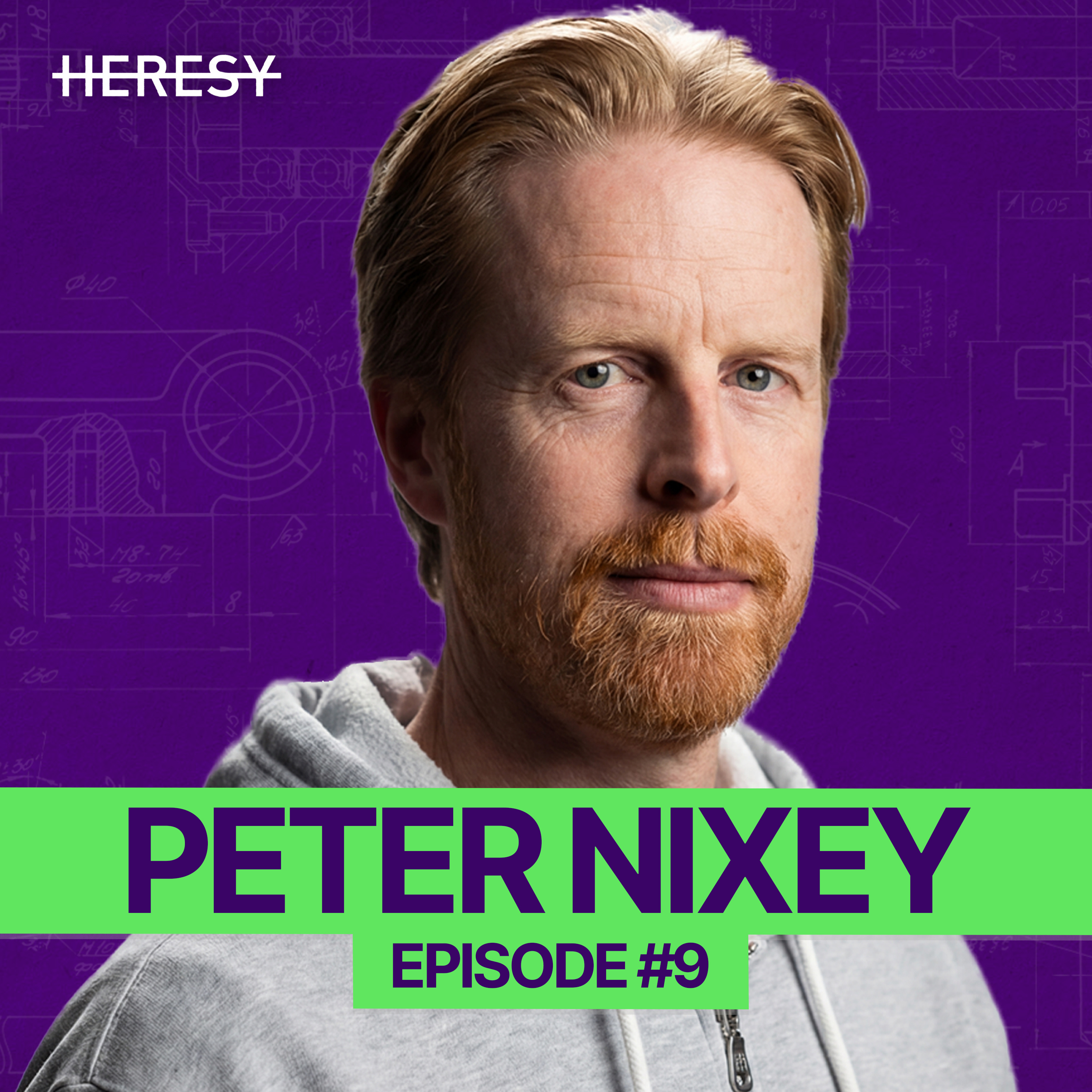
The Moment AI Became Smarter Than The People Building It | Peter Nixey
Apr 201:08:54Tap to summarizeMost developers saw AI as a tool. Peter Nixey saw it as a warning sign.Three years ago, Peter wrote a post predicting the death of Stack Overflow - before anyone was talking about it. He was right. But his more recent writing hit closer to home: the moment he realized he was no longer directing the AI, he was slowing it down.Peter is a senior developer and advisor who has spent years working at the intersection of startups and software. He helped launch Fyxer, one of the UK's fastest growing AI assistant companies, at a time when OpenAI didn't even have a public API. Today he is building some of the most advanced AI development pipelines in the industry — and quietly questioning where humans fit into all of it.In this conversation, we explore:Why Peter predicted the death of Stack Overflow three years before the traffic data confirmed itHow AI moved from assistant to bottleneck — and why Peter realized he was the problemThe two factory system he built to remove himself from his own workflowWhy most developers are using AI completely wrongThe difference between building what you want and building what people needWhy the next bottleneck in software has nothing to do with codeHow to manage your mind when the future is genuinely impossible to predictFollow Peter Nixey:LinkedIn: / peternixey Follow Heresy Podcast:Instagram: / heresy.pod LinkedIn: / the-heresy-podcast Spotify: https://open.spotify.com/show/1PKWqUf...Apple Podcast: https://podcasts.apple.com/gb/podcast...Follow Dimitar Stanimiroff:LinkedIn: / stanimiroff 00:00 Introduction01:35 The Stack Overflow prediction05:30 How AI changed the way Peter writes code09:49 Who owns knowledge in the AI era14:29 What made Fyxer work21:05 Why most founders don't want strategy23:25 The moment Peter felt his own value decline29:08 How Peter rebuilt his entire development process33:25 The chaos monkey step37:31 What is still left for humans44:21 AI, COVID and nuclear weapons1:06:01 The phase shift nobody is talking about1:07:18 Optimistic or pessimistic1:08:23 Outro
Transcribe →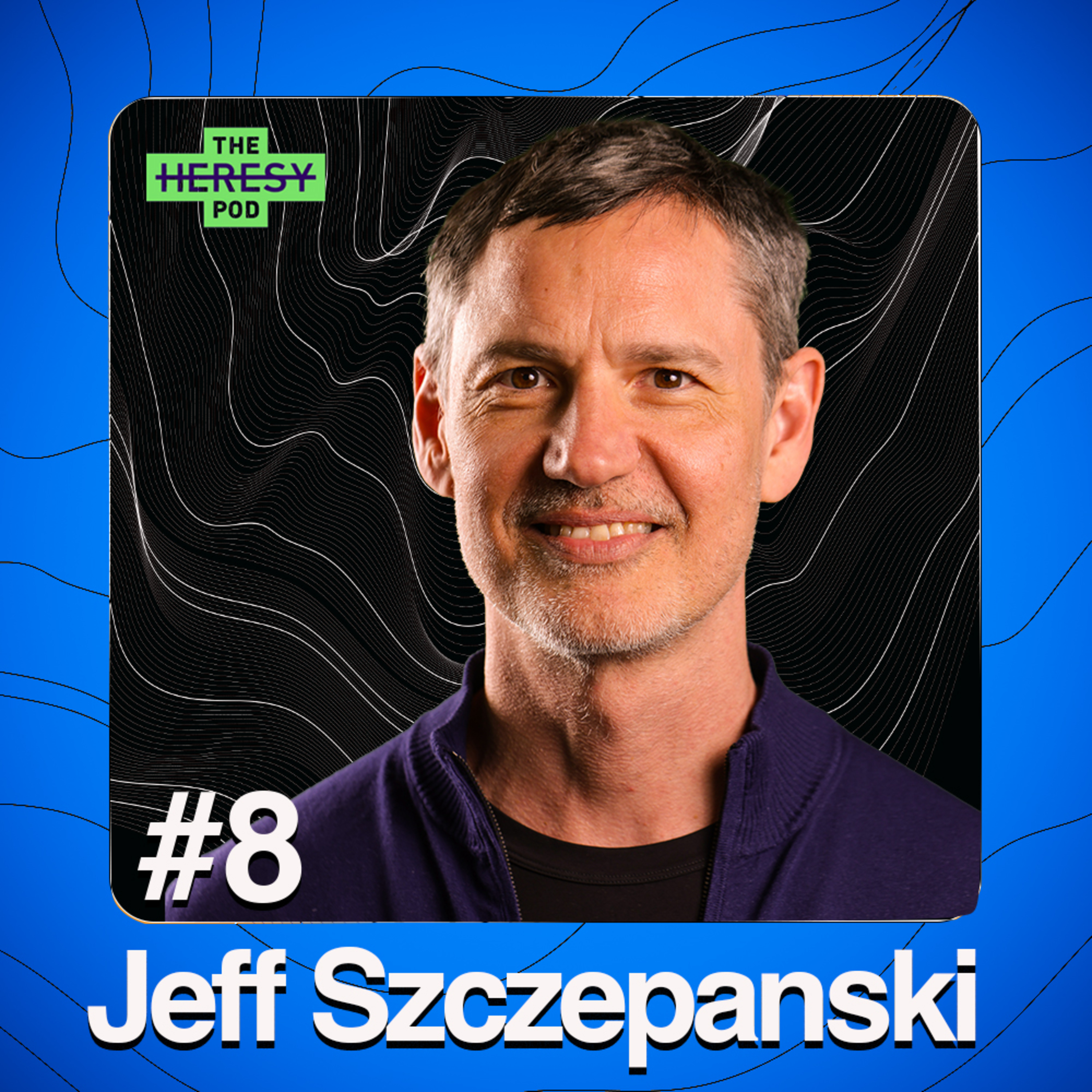
The Rise and Fall of Stack Overflow — and What AI Changes Next | Jeff Szczepanski
Feb 1201:18:39Tap to summarizeStack Overflow went from a scrappy side project to the backbone of modern software development — and sold for $1.8B along the way. Today, many are questioning its future.So what really happened?In this episode, I sit down with former Stack Overflow COO Jeff Szczepanski to unpack how the company scaled from community to global platform, why it pivoted into enterprise SaaS, what drove the Prosus acquisition — and why traffic is now falling in the age of AI.We also explore the bigger picture:Are LLMs replacing developer communities? Is programming still a viable long-term career? Are we in another tech bubble? And who wins — and loses — in the AI era.A candid insider conversation on one of the most influential platforms in tech, and what its story tells us about what comes next.👇 Timestamps & Resources below 👇00:00 Trailer & Introduction01:36 How Stack Overflow Became an “Overnight” Success06:30 The Founders’ Edge: Why Spolsky & Atwood Won10:15 Turning a Developer Community into a $1B Business17:19 “Facebook or Yammer?” — The Pivot to Enterprise SaaS22:45 The Birth of Stack Overflow for Teams28:40 How to Build a World-Class Online Community37:12 Why Monetising “Fly-By” Users Doesn’t Work43:56 Why Prosus Bought Stack Overflow ($1.8B Deal Explained)52:35 Is Stack Overflow Dead? Did AI Kill It?1:00:26 Can LLMs Survive Without Human-Generated Code?1:04:10 Is Programming Still a Viable Career in the Age of AI Agents?1:07:09 Are We in Another Dot-Com Bubble?1:13:29 Winners and Losers of the AI Race🔔 Don’t forget to subscribe for more unfiltered convos on technology, business, and defying the status quo.
Transcribe →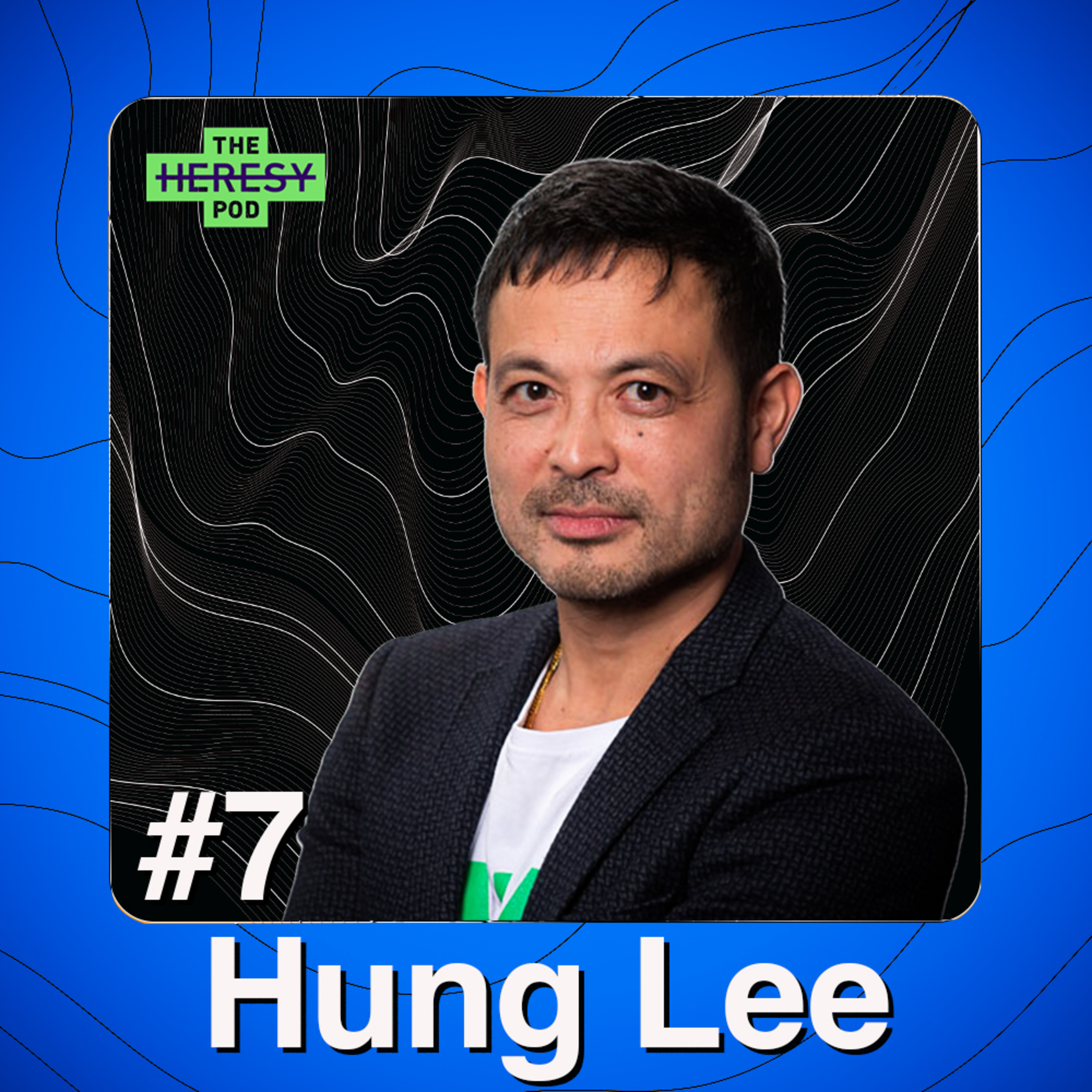
The Geopolitics of AI: China vs the U.S., Taiwan, Greenland & Global Power
Jan 2001:27:14Tap to summarizeAI is no longer just a technology story — it’s a geopolitical one.In this episode, I’m joined by Hung Lee, creator of Recruiting Brainfood, to unpack how AI is reshaping global power.We explore why Greenland has suddenly become strategically critical, why Taiwan and TSMC sit at the heart of the U.S.–China rivalry, how China’s AI strategy differs fundamentally from America’s, and why energy policy, EVs, and rare earths may matter more than algorithms themselves.We also examine why Russia is falling behind, why Europe is struggling economically, and whether representative democracy creates long-term disadvantages in an era of technological competition.This is a wide-ranging conversation about power, incentives, systems, and the future world order.CHAPTERS00:00 — Introduction01:18 — Venezuela, Maduro & the ew global order06:30 — Greenland, rare earths & strategic leverage17:00 — Taiwan, TSMC & the semiconductor choke point32:50 — Tariffs, trade & industrial policy failures37:30 — China vs U.S.: two very different AI strategies56:50 — Energy, EVs & AI infrastructure01:06:30 — Russia, Europe & structural decline01:24:30 — Final reflections===Follow Us On:YouTube: https://www.youtube.com/@HeresyPodcastInstagram: https://www.instagram.com/heresy.pod
Transcribe →
The GTM Reckoning: AI, Job Security, and Why Leaders Are Falling Behind
Dec 1800:59:46Tap to summarize2023 broke the old rules of go-to-market. AI isn’t just changing the tools — it’s rewriting the entire playbook, and most GTM leaders are already behind.In this episode, I sit down with Sam Jacobs, founder of Pavilion, to unpack the seismic shifts shaking SaaS leadership:Why growth has never been harder — even at top-tier tech companiesThe coming retention crisis for AI-native businessesHow Pavilion grew from a small dinner club into the SaaS industry’s barometerWhy showing up, doing things that don’t scale, and telling a story are now non-negotiableThe uncomfortable truth about job security and running outdated GTM playbooksIf you’re a founder, operator, or executive trying to navigate the future of GTM, this conversation is for you.Listen, take notes, and figure out how to stay ahead before it’s too late.👇 Timestamps & Resources below 👇00:00 Trailer – The GTM Reckoning: AI, Power Shifts, and What’s Breaking in SaaS00:54 Why AI-Native Companies Aren’t Playing the Efficiency Game – A Tale of Two Worlds05:18 Why Growth Is So Hard Right Now & Why There’s No Job Security for GTM Execs — Even at Elite Tech Companies09:30 Drivers vs. Passengers – Why So Many GTM Leaders Are Running Outdated, Dumb Playbooks13:30 The Pavilion Origin Story – From a Small Dinner Club to the SaaS Industry’s Unofficial Barometer21:08 “The Road to Hell Is Paved With Good Intentions” – Why You Can’t Build an Exclusive Community and Be Fully Inclusive at the Same Time27:00 The Power of Doing Things That Don’t Scale – Why Showing Up Daily and Being Face-to-Face With the Market Still Wins39:00 The Coming Retention Apocalypse for AI-Native Companies & Why Harry Stebbings’ Incentives Aren’t Aligned With Yours44:32 Are ChatGPT Prompts Actually Well-Intentioned? Or Are They Engineered for Addiction and Product Dependency?47:00 What AI Adoption Really Means for GTM Leaders & How the Role of Executives Is About to Change53:00 Why Storytelling and a Strong Point of View Matter More Than Ever In a World Where Everyone Has the Same Tools🔔 Don’t forget to subscribe for more unfiltered convos on technology, arts, and defying the status quo.Follow Sam:🔗 LinkedIn: / samfjacobs 🎧 Topline Podcast: • E120: What does the future of tech look li... 🎙 The Heresy Podcast – conversations with builders, thinkers & rebels 🔔 Subscribe: / @heresypodcast 📱The Heresy Pod on Instagram: / heresy.pod 🔗 Follow Dimitar: https://www.linkedin.com/in/stanimiroff/
Transcribe →
Lewis Parker: The Untold Story
Dec 401:35:31Tap to summarizeIn this episode, Dimitar sits down with Lewis Parker, one of the most influential figures in UK Hip-Hop and a pioneer of sample-based, cinematic production. Lewis opens up about his early journey into Hip-Hop, the golden era of sample digging, and how he developed his unmistakable sound long before producing for hip-hop legends like Wu-Tang's Ghostface Killah.We explore the rise of UK rap in the 90s, the challenges artists faced with major labels, and why so much of that era’s music ended up left-field and underground. Lewis also talks about the impact of Star Wars, Jedi philosophy, and The Force on his creative process, as well as his move from London to Queens, NYC.The conversation goes deep into craft, culture, and the future:– How Lewis approaches beats, drums, and storytelling– Working with Lord Finesse, Jehst, and other legends– Surviving the music industry as an independent artist– The role of AI in music, creativity, and short-form content– The evolution of Grime, Drill, and the essence of Hip-Hop todayThis is one of the most honest and insightful conversations about Hip-Hop, creativity, and staying true to your art. A must-listen for fans of UK Hip-Hop, producers, beatmakers, and anyone who cares about the culture.
Transcribe →
Guy Rubin (Founder & CEO, Ebsta) — Bootstrapping, Exiting, and the Great SaaS Consolidation
Oct 2601:20:34Tap to summarizeIn this episode, I sit down with Guy Rubin, Founder & CEO of Ebsta — the global leader in Revenue Intelligence, recently acquired by Fullcast.Guy shares unfiltered insights from a decade of building, scaling, and exiting a SaaS company that transformed how revenue teams operate.We cover:🚀 Raising Venture Capital vs Bootstrapping — the good, the bad, and the ugly💰 Exits — why selling to the highest bidder isn’t always the best outcome📉 GTM SaaS Consolidation — who’s winning, who’s losing, and why🤖 AI in Sales — how top Go-To-Market teams are using AI to pull ahead🎯 Elite AEs — what separates the best from the rest, and why the gap is wideningWhether you’re a founder, sales leader, Account Executive or SaaS operator, this episode is packed with hard-won lessons from someone who’s lived it all — from bootstrapping to acquisition.👇 Timestamps & Resources below 👇00:00 Episode Highlights & Intro00:02 Why "build it and they will come" never works and why founders should focus on solving "11/10 problems" (not 7/10)00:06 Founder Archetypes 00:08 Why Timing Beats Execution: Ebsta's Inception Story00:11 Doing Product Led Growth before Product Led Growth was a thing00:13 Why Guy chose NOT to raise VC and instead bootstrap the business 00:17 Going head to head with companies that have raised BILLIONs00:22 Delivering value to the C-suite: Pictures Work Better Than Words00:25 VC or Bootstrap: What's Right For You00:28 The great SaaS Consolidation: who’s winning, who’s losing, and why00:38 Advice to founders looking to sell their business 00:40 Why US SaaS companies continue to beat European ones00:45 The Rise Of The 10x Sales Professional 00:52 Why the best path to revenue growth is focusing on Existing Business 00:56 Why are we seeing a return to Full-Cycle Sales 01:02 Leveraging AI to Increase Sales Efficiency 01:10 All Eyes On Ideal Customer Persona (ICP)...and Finance01:16 The future of GTM: Will AI Agents Kill CRM 🔔 Don’t forget to subscribe for more unfiltered conversations on technology, business, and defying the status quo.Follow Guy:🔗 LinkedIn: / rubinguy 🤖💰 Ebsta – Revenue Inteligence: https://www.ebsta.com/📊 2025 GTM Sales Benchmarks – https://benchmarks.ebsta.com/2025-gtm... 🎙 The Heresy Podcast – conversations with builders, thinkers & rebels 🔔 Subscribe: / @heresypodcast 🔗 Follow Dimitar: / stanimiroff
Transcribe →Ali Mitchell on Why Europe Struggles to Build $10B Startups — and How to Fix It
Oct 901:04:07Tap to summarizeAli Mitchell has backed more than half a dozen unicorns — but his story starts with failure.Before co-founding Huddle and later leading EQT Ventures, one of Europe’s most successful VC funds, Ali was a founder who learned firsthand how hard it is to build and scale. In this episode, we unpack what those early failures taught him about resilience, product-market fit, and what separates great founders from good ones.We also dive into:Why Europe still struggles to produce $10B startupsWhat the best founders get right about distribution and go-to-marketHow to raise VC capital the right way (and what most get wrong)Why Ali still believes in founder intuition — even in the age of AIA conversation about hard lessons, second acts, and the patterns behind six unicorns.🎙️ Heresy is a podcast about people who defy conventional wisdom — founders, investors, and thinkers reshaping how technology gets built and scaled.👇 Timestamps & Resources below 👇00:00 – Trailer01:01 – Ali’s Early Journey and Entrepreneurial Roots05:32 – Building and Scaling Huddle14:27 – Go-to-Market Lessons and Missteps22:18 – Why Europe Struggles with Commercialization27:56 – From Founder to Investor: Lessons from EQT Ventures36:14 – The Cultural Contrast: US vs. Europe43:40 – What the US Gets Right: Selling, Storytelling, and Scale48:54 – The Tuck Shop Story: Teaching Entrepreneurship Early50:06 – Returning to Europe: Family, Values, and Purpose51:56 – From EQT to Odyssey: A New Mission for European Tech54:51 – Flow and the New Era of Engineering Automation56:00 – Odyssey’s Investment Focus: AI + Automation in the Real World57:30 – Lessons for Founders: Ambition, Focus, and Resilience59:41 – What Most People Get Wrong About Venture Capital01:02:31 – Final Advice for First-Time Founders01:03:41 – Closing Thoughts🔔 Don’t forget to subscribe for more unfiltered conversations on technology, business, and defying the status quo.Follow Ali:🔗 LinkedIn: / alimitchell 💰 Odyssey Ventures: https://www.odyssey.ventures/🎙 The Heresy Podcast – conversations with builders, thinkers & rebels 🔔 Subscribe: / @heresypodcast 🔗 Follow Dimitar: / stanimiroff #Ali Mitchell #EQT Ventures #startups #venture capital #founders #SaaS #Europe #tech #VC #Heresy Podcast #DimitarStanimiroff #growth #failure #unicorns #scaling #productmarketfit #fundraising
Transcribe →Philip Su on Building at Meta & OpenAI — and How to Thrive in the Age of AI
Aug 401:22:59Tap to summarizePhilip Su is an engineer and leader who helped build Microsoft, Facebook, and OpenAI from the inside. In this episode, he shares hard-earned lessons on thriving in the AI era — and staying human through it all.We cover:How AI is reshaping software careers (and what to do about it)Why “good enough” is no longer safeThe dangerous gap between exponential tech and human systemsBurnout, identity, and what working in an Amazon warehouse taught himThe rise of agentic tools, LLMs, and what CS students need to know nowWhether you’re an engineer, founder, or future-oriented thinker, this conversation will challenge your assumptions — and help you find a better path forward.
Transcribe →How Max Altschuler Built Sales Hacker, Scaled Outreach, and Is Rethinking Venture Capital
Aug 401:08:52Tap to summarizeMax Altschuler (Sales Hacker, Outreach, GTMfund) joins us in London to talk about building category-defining companies, investing in breakout startups, and rethinking how venture capital works.We go deep on:Lessons from scaling Outreach with Manny MedinaThe birth of Sales Hacker and the GTMfund storyHow AI is reshaping go-to-market motionsWhy GTM is the last true moat in SaaSThe tension between being a founder vs fund managerHow Max picks winners—and his take on “The Death of VC”This is a must-listen for operators, founders, and anyone navigating the future of SaaS, sales, and startup investing.
Transcribe →
E19: The Final Countdown (The End of Heresy.io — and What Came Next)
Feb 10, 202001:29:04Tap to summarizeThis episode originally aired as the final Heresy podcast, recorded shortly after the winding down of Heresy.io — our sales software startup.After a last-minute acquisition fell through, we had no choice but to begin closing the company. In this episode, I sit down with my co-founder Svilen and our first hire Jack Otis Barker (frontend engineer) to reflect on the journey:The highs and lows of startup lifeThe things we got right (and wrong)What we’d do differently if we had the chanceWhy we still wouldn’t trade the experience for anythingWe’ve since relaunched the Heresy podcast with a broader focus on scaling, selling, and building in tech — but we’re keeping this episode up as a time capsule of sorts.💥 It’s raw, it’s real, and it was never meant to be the end.
Transcribe →