← HerMoney with Jean Chatzky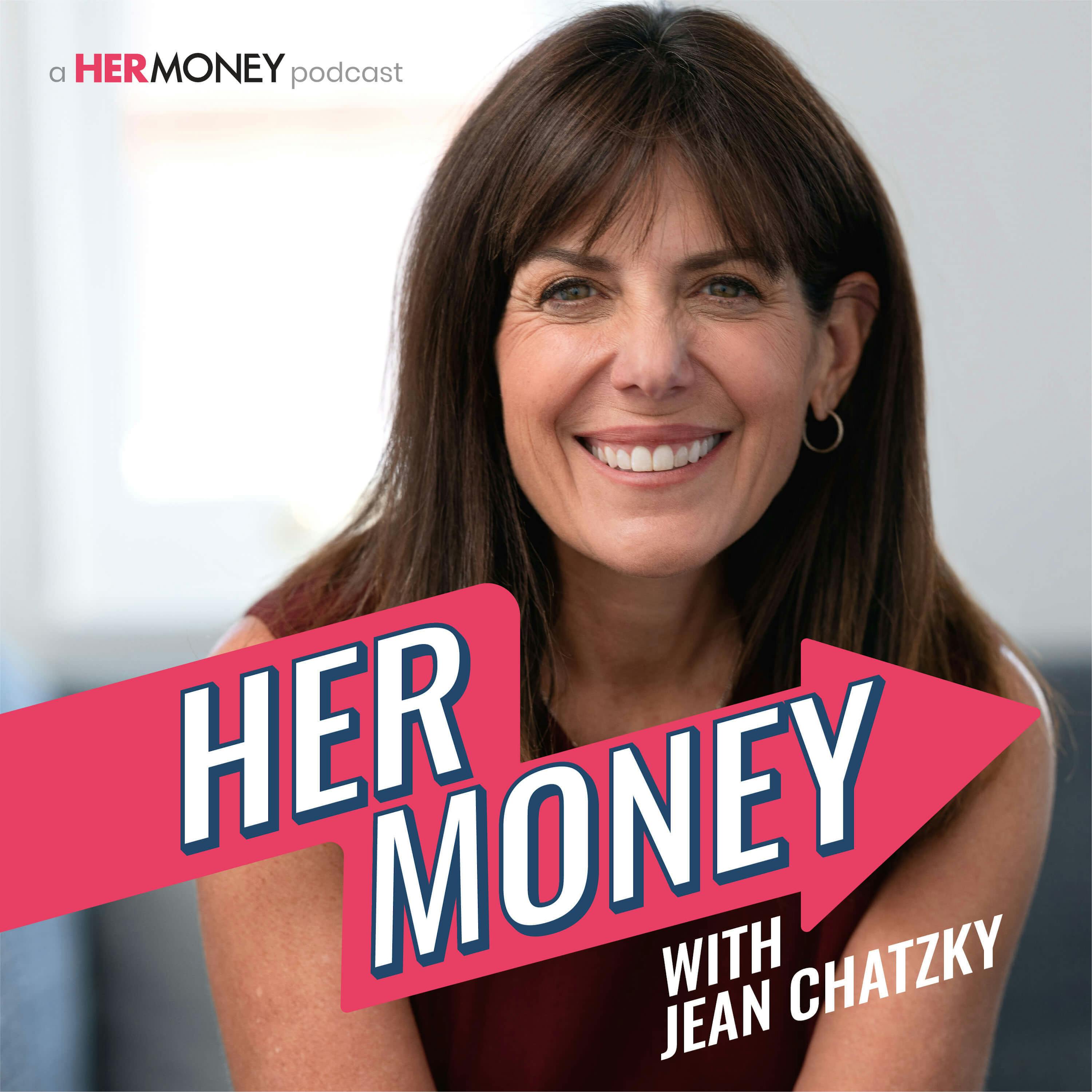
HerMoney with Jean Chatzky
Ep 478: Recession Watch: What the Moody’s Downgrade Really Means for Your Money
00:38:28
And how to prepare for what’s next.
Loading summary
Transcript40 lines
- [00:02]
Katie Klingensmith
In 2025, there are a lot of ups and downs. And what's most important is that you have a mix in your portfolio that can help you basically not have the same extremes and can help you from really jumping out because individuals don't tend to have the best judgment. I mean, remember, the market is all of the individuals together and none of us are necessarily going to get exactly the right timing for when to sell and when to buy again. So it's an important moment for us to kind of keep our eyes on our own balls and make sure that our portfolios are fully invested and appropriately aligned to what we're trying to do.
- [00:44]
Jean Chatsky
Hey everyone, thanks so much for joining us today on HerMoney. I'm Jean Chatsky. And maybe you'll remember that back in March we dropped this episode with Katherine Edwards asking the million dollar question, are we headed in into a recession? And here we are few months later asking, well, we're asking the exact same thing. But lately the chatter has just gotten louder. A few weeks ago, credit rating giant Moody's downgraded U.S. debt. Suddenly we're all wondering, what does this mean for me? Because after all, isn't that the thing? What does this mean for my money? And because it wouldn't be an economic conversation in 2025 without a little flavor, we've got wacky recession indicators popping up, too. Apparently when Lady Gaga drops a new album or we see a surge in lipstick sales, even banana prices, believe it or not, might mean something. So what's noise and what do you actually need to pay attention to? Katie Klingensmith has answers. She is the chief investment strategist at Edelman Financial Engines, where she leverages her experience as an economist to bring insight to clients. I had the pleasure of meeting Katie at an Edelman event recently, and I knew instantly we were going to have to get her on the show. She is here to help us decode the big headlines and give us a game plan for for what to do with our money. Right now, we're going to take a quick break. If retirement's on your radar, or even if it still feels far off in the distance, you need to know where your money's going today. Because here's the truth. You cannot plan for the future if you don't have a clear picture of the present. Enter Monarch Money. It's the personal finance platform that's more than just a budgeting app. It's a full command center for managing money with confidence, with all of your accounts, checking, credit, investment retirement, HSAs, even crypto connected in one place, users get a clear real time picture of their financial lives. Monarch is the tool real people use and actually like, including my producer Haley. Get control of your overall finances with Monarch Money. Use code hermoney@monimalmoney.com in your browser for half off your first year. That's 50% off your first year at monarchmoney.com with code hermoney. Here is something I've learned. Making good financial choices does not mean having to give up the things you love like delicious home cooked meals. Think you have to spend big bucks or big hours in the kitchen to make that happen? Think again. With every plate you get flavorful satisfying dinners like crispy Buffalo Ranch chicken or chicken cheesy Mexican street corn hash and they are ready in 30 minutes or less. Every plate is one of my go tos for busy weeks when I don't want to overspend or fall into the what's for dinner spiral. What are you waiting for? Dig into these flavor packed meals your household will love. New customers can enjoy this special offer of only $1.99ameal. Go to everyplate.com podcast and use the code HERMONEY199 to get started. This is applied as a discount on your first box. Limited time only. We are back. We're talking with Katie Klingensmith of Edelman Financial Engines. Hey Katie, thanks for doing this.
- [04:38]
Katie Klingensmith
Oh it's so fun to be here. Jean, great to see you.
- [04:41]
Jean Chatsky
Before we dive into these economic tumbleweeds, can you tell us a little bit about you and your background and how you ended up in this place where in plain English you help people understand the economy.
- [04:56]
Katie Klingensmith
I love that. Sure. So I started out, gosh, it's been a while now, but early in my career really thinking that I wanted to be academic and I, I love, I love to learn, I love to study. I really and I think also just growing up with a blue collar background and then going to very and academic institutions, I found that I could do that, that I was good in the classroom and it was, it was fun for me. So now I got started on this career early on very much being an, you know, an analyst. I initially studied history and economics and thought that I would go into a university and be a professor. But what I learned about myself pretty early on was what I really like to do is learn things and then explain them. I'm much more interested in history and economics and political science and sociology and all of that. But then thinking about how that actually plays out for people, how it plays out for me how you see it in the day to day. So through a series of earlier stops in my career where I really was more of an analyst, I was constantly being pulled into these roles where I was doing, talking. Okay, well, you know, I like to teach, but I actually like to teach in a very practical way. I like to think about how this evolving world matters to people. And I also am particularly happy to be in this conversation with you today because I think that there's been a particular space for female voices, perhaps because there's been so little space taken by them historically, and so many people, well, with money are women. And as you know and explore here, that's becoming all the more pronounced. So I think that in particular, being able to reach a broader range of people with these messages around what it all means has been a happy play to my strengths. So I just joined Edelman Financial Engines a few months ago, and I've spent two of decades, the last two decades, at two different big investment organizations in different roles, but always in some ways, being this bridge between the really analytical folks understanding what's going on in the economy, understanding what that means for investments, and I being part of that for my training and interest and hopefully skills, but then being tapped to explain what that meant to clients in the public.
- [07:04]
Jean Chatsky
I love that. And it's something that we just need right now. Let's start with this Moody's downgrade, which made a lot of headlines in part because people said, yeah, been there, done that, but in part because people said this is meaningful. So where do you sit? What does this actually mean to consumers and investors?
- [07:24]
Katie Klingensmith
Well, I mean, as a trained economist, I always have to start with on the one hand, and then on the other, in the end, I see nothing. On the one hand, it means very little because there are three big rating agencies and the other two downgraded the US A long time ago. There wasn't a new piece of information that caused Moody's to make this move, this downgrade. So it doesn't really matter. And just as a reminder, the rating agencies, there are different ones in different spaces, but there are three big ones for big debt issuers like the US Government when they borrow money. And there's Moody's, there's S and P Global, there's Fitch. What the reading agencies do is that they look at the US Government, other governments and entities, companies, and say, when they ask to borrow money, how likely are they to return that money? How likely? If you, as a borrower, lend the money, are you going to get your money back. The US Government has always been seen as the gold standard, to use an economics term, but the entity most likely to pay back. I don't really think that's changed, Gene. But Moody's adding their warning that the US Government was no longer considered perfect. It sought new information. But on that other hand, it does matter because now all three rating agencies are telling us the US Government isn't perfect. There really are these long term concerns around how much debt the US Government has already taken on and that there could actually be a little hint of risk of how predictable the US Government, how reliable the US Government might be paying it back over the long term.
- [08:55]
Jean Chatsky
When we talk about the US Debt or the deficit, we've got this big beautiful bill that came out of the White House, that passed the House, that as we tape this, is now being talked about in the Senate. It'll be shaped, it'll go back and forth. And one of the things that this will do if it goes forward in its current form is give the United States a bigger debt load, is increase the amount of the deficit. Now, that is not something that is just happening under this administration. This is something that's been happening for years. You have to go all the way back to President Clinton to get to a point at which we had a big balanced budget. But I know there are some economists who believe it doesn't matter, the deficit, and there are some economists who believe it really does matter. Can you tell us where you sit and if it does matter, how does it matter?
- [10:00]
Katie Klingensmith
Sure. So, as you say, Dean, we don't know what's going to be in this budget and tax bill yet. There's so much negotiating. I know our tax experts within Edelman Financial Engines are telling us just don't count on anything yet. So we'll see. But one thing I would note within your question, we've actually been running the size of deficits that's projected from the current House bill. We've been running that magnitude of overspending the last two years. And I note that because, I mean, we all have our political views right now, but this is actually something that's been happening across different constellations of who's running Washington. It's so much easier to spend money. I mean, if you're looking for a deal with somebody, why not just spend a little more than make cuts? Historically, we've run deficits for a long time, but mostly we run big deficits when the economy is doing poorly. It's this idea called Keynesian economics. It's Simple. It basically is that when things are going badly in the economy for whatever reason, maybe it's Covid, maybe it's some other shock or recession or interest rates, what have you, the government's going to spend extra money, including maybe money they have to borrow to basically just stimulate the economy, make the economy move, give people more money to spend, maybe hire more people to do projects. And then when the economy's humming along, the government's not going to spend as much money and they'll theoretically be able to save some money. And what we've seen change over the last few years is that the US Government is spending way more than they bring in, even when times are good. All right, so does this matter? I am in the camp that it doesn't matter. At the margin, the US Government gets to spend more money than the rest of us, but it does matter. After it hits a certain point and we don't know what that point is. It doesn't matter in the sense that the US Government is seen as so credit worthy that people structurally want U.S. treasuries as a place to just save their money, basically, and so are willing to lend the US Government money because they really don't have to worry about getting it back. It's like kind of almost like having cash, but they can make a little bit more. And people is not just US people, it's global people, global governments everywhere. So the US Government, because it has that special role of issuing the reserve currency and the reserve asset, that place where people park money, basically more people are willing to park money, lend the US Government money than they are to invest or to lend money to anybody else. So the US Gets to run deficits without a big consequence. But when the US Runs too big of a debt, shall we say, accumulated amount of deficits, then we start and we have begun to ask questions around how expensive that's going to be. And is there an infinite amount of folks out there, all different kinds of folks, who are willing to park their money with the US Government? Or when do they start getting worried that there's so much that they might actually not get the same money back.
- [12:49]
Jean Chatsky
At the end when we opened the show, Katie, I was sort of listing some recession indicators. Lipstick bananas. What do all these things have to do with a recession?
- [13:04]
Katie Klingensmith
Remember, recession is a very technical definition of the economy shrinking, but that doesn't get to how we experience the economy. So I think all of those indicators, some are very serious and some are fun, but actually could be good predictors. They both can speak to how we experience an economy that's doing worse. And some of them can give us insights into the much more quantitative, serious definitions. There is this classic economics example of when people are feeling poorer. I mean, if they are poor, but they're also worried, they buy, we call them inferior goods, maybe they buy a lower brand of lipstick. Or the classic economics example is that they stop buying meat and they buy more potatoes. So when things are bad, people buy more potatoes, at least theoretically. Maybe when things are bad, people go to Sephora less and Walgreens more to buy their lipstick. So there are actually parts of the economy that gain because things are going poorly. But I again, I think in the end, there are different ways to think about our own behavior when we're feeling confident and when we're feeling worried. And you could see how that rolls up into the whole economy. And there's also just the recognition that recession or tough times, economically, whatever the definition, mean different things depending on where you sit in the economy. You might be worried about your job but still have it. So your life doesn't actually change that much. Besides your wellness, your anticipation where other people, your neighbors, friends, might have lost their job and their spending is obviously going to change a lot.
- [14:33]
Jean Chatsky
The price of bananas, if it goes up, it's supposed to signal greater trouble for the economy. That one I just don't get.
- [14:41]
Katie Klingensmith
Oh, it's so funny. I mean, it's just an item that we buy really routinely. So it's interesting to think about, like how these different examples can speak to larger patterns. But let me tell you, Jane, bananas are really interesting right now because no place in the U.S. can you buy bananas. And right now there's all of this discussion about tariff prices, right? Which tariffs are just a tax on anything you buy from another country, but we have to buy bananas from another country. Nowhere in the US can you grow bananas. So suddenly there is this funniness around, not just bananas, plenty of things, but bananas is a perfect example because we don't have any choice where we buy them from. And suddenly the price of bananas might go way up, even relative to other fruits, because we're paying this import tax on imported items. So there's all sorts of things to unpack in that behavior.
- [15:30]
Jean Chatsky
So as I said at the top of the show, there is a lot of talk about recession. I know recessions come and go. I know there have been a lot of recessions. If you go all the way back to the Great Depression, the economy grows and then the economy stops growing for a little while. Do you Think that we are there headed into a recession, maybe even in a recession. And what are consumers and investors supposed to do with that information?
- [16:01]
Katie Klingensmith
Absolutely. Okay, so. So it's interesting to think about what a recession even is. I think really recession is much more about how we feel about the economy and how we experience it. So it's a little circular. What does a recession mean for you? Well, recession means for you how you feel it. But from an economist's perspective, what a recession means is two consecutive quarters of contracting gdp. That doesn't mean a lot to people personally, but what that means in plain English is that the overall size of the whole US Economy for everybody shrinks for two quarters in a row. And we already saw it shrink this first quarter of the year. We don't know yet for the second quarter. So we could actually be relatively close to what's called a technical recession. That doesn't necessarily mean that your life is awful. Recessions can take very different forms. So I think that the question is, will we really see the economy turn down and when will that be painful? To me, what's much more important about people's lives and how they feel is employment and inflation. So employment really hasn't gone down much. It's still pretty steady. There's very little unemployment in the US Now. If you're unemployed, you feel it very acutely. But from an aggregate perspective, there's still a very high level of employment. And even though there have been fewer jobs created the last few months, and we have that big data coming out soon, we do still see the overall job health in reasonably good shape. Inflation, too. There's so much worry right now about inflation picking up, and that matters. It makes people anxious. But so far, prices haven't gone up that much. So I would say right now, recession anxiety high. But actual recession in terms of us not having jobs or having to pay more for the same things, that hasn't gotten much worse lately. But it really is a source of worry for a lot of Americans.
- [17:57]
Jean Chatsky
So if you have a job and you're proceeding along a pace, is now an okay time to make a big purchase like a house or a car? Is it a particularly bad time to do that? Are there things where we should be, where we should be taking precautionary measures so that if the economy turns down, we individually are not as impacted?
- [18:28]
Katie Klingensmith
Sure. I mean, I have to put it in a plug for my employer here. I think the whole purpose of wealth Planning and Edelman Financial Engines is to try to answer that question, both from an economics or a portfolio perspective, but always make it personal. And not just because that's nice, but because it matters who you are and what your life situation is. I would say that right now there's more uncertainty than we often experience. That's a word that's getting used a lot and it's annoying. It sounds like, oh, we don't know. But I actually think it's a very particular word right now. What it means right now is that there have been these big changes in the way the world is working. We've got big changes with trade policy, potential big changes to tax policy, big changes to the way countries are working together, questions around manufacturing and unemployment or where people and how people are employed and what they're employed. So. So it's really hard for us, I think, as economists, but also as households, to know what the world's going to look like in six months. I think from a personal perspective, when that's the case, it's always, at least to me, emotionally helpful, but also rational to be a little bit more conservative. If you just don't know for sure, you never know for sure. But if you feel less confident that your job will be there for you, paying you bigger bonuses, giving you that opportunity for promotion in six months, then you might want to be a little bit more conservative about maybe having some extra cash or maybe not committing to that big spend. From an investment and economics perspective, I would say that the last six months have been a reminder that things can go way up and way down, or it was the reverse order, way down and way up. It's a hard ride. So you have to make sure that you're really ready for that and that you really have all of the investments and the savings for yourself so that you can weather those kinds of ups and downs. But in terms of making big purchases, I think that perhaps you're also asking about interest rates. And when interest rates go up in the long term, like what we were talking about with the US Government, then that can influence when we want to make choices.
- [20:39]
Jean Chatsky
When it comes to some of those big decisions, the, the house, the car, we borrow money to do those things. Right? And that means interest rates are a bit big factor in sort of trying to time those decisions. If we can time them, where do you think we are in the interest rate cycle?
- [21:00]
Katie Klingensmith
So many things impact interest rates. And let's just loop back to what we were talking about with the US Government potentially having to pay higher rates for borrowing money. We're not the U.S. government, right. We have to pay more, but Really a lot of our interest rates for the things that you just said, if it's student loans, if it's credit cards, if it's a car, if it's a house, they're based on what the US Government pays and what the Fed does. There's a lot of things that influence it. But let me link it to that. Moody's downgrade or worry about the US Government for a second. That's mostly about how much the government has to pay when they borrow money. For a long time, nobody's really worried about the US Government being able to pay their debt back next year. And those 30 year rates, they're not really rates that most of us feel every day, you know, in a household, except for mortgages. So mortgages are their own thing. They're not exactly what the U.S. government pays. But mortgages, 30 year mortgages tend to more or less reflect what the government has to pay, plus some on a 10 year basis. So they're pretty linked. So when interest rates are going up for the US Government because everyone's a little teeny bit worried, not a crisis, but a little worried, it means that we might have to pay more when we borrow money to buy a house. And that hurts. It affects how much house we can buy. It certainly is something that's going to play out across a lot of U.S. households. I would just say that other things drive shorter term interest rates. So if you are thinking about a credit card or if you're thinking about borrowing money for three years to buy a car, there are other influences and the rates are different. That tends to be a little bit more about what's going on with inflation right now and what's going on with growth right now. So interest rates are still a little bit high right now. And we're hearing noises from the Federal Reserve that they might cut rates later this year or next year because they want to help the economy. They want rates to be a little lower to keep us from going into a recession or a worse recession. And that would bring those shorter term interest rates down, which could make for some cheaper rates, lower rates for some near term purchases. Again, like borrowing money to buy a car or something where you're just borrowing money for a year or two or three.
- [23:11]
Jean Chatsky
We're gonna take a quick break. When we come back, we're going to talk about other things in your life, other financial moves that you may want to make just to prepare yourself for what's coming down the road. Back in a sec. The human body is pretty amazing. It can heal rebuild and adapt in ways that even science and is still catching up to. Trust me on this. I ran the marathon last year. But let's get real. As we age, those natural processes, they slow down. That's where Ancient Nutrition's Multi Collagen Advanced Lean comes in. This is not just any collagen supplement. It's powered by clinically studied ingredients that are shown to support fat, fat loss, build lean muscle, reduce joint discomfort, and bonus, improve the look and growth of skin, hair and nails. And right now, Ancient Nutrition is offering 25% off your first order when you go to ancientnutrition.comhermoney that's ancientnutrition.comhermoney for 25% off your first order ancientnutrition.comhermoney One of the smartest apps to have on your phone in 2025, it's upside. It's an app that gives users the power to earn real money that you can spend however you want on everyday purchases. Whether filling up the tank, shopping for groceries, or grabbing dinner, Upside makes it simple. Just open the app, claim a nearby offer, pay as usual with a card, and snap a photo of the receipt. The cash back adds up fast. Users are earning hundreds of dollars a year. And here is the best part. It stacks with your credit card reward. So it's kind of like double dipping on savings, which of course we love. Download the free Upside app and use the promo code Hermoney to get an extra 25 cents back for every gallon on your first tank of gas. That's an extra 25 cents for every gallon on your first tank of gas. Using promo code Hermoney. We are back. We're talking with Katie Klingensmith of Edelman Financial Engines about the economy and about things that we actually can control in this uncontrollable world. So one of the things that I follow is the personal savings rates that is tracked by the Federal Reserve in St. Louis. And interestingly, over the past month or so, it's popped from about 4.3% to 4.9%, which sounds like nothing, but is kind of significant when you look at how the personal savings rate moves. Why are we saving more, do you think? And is this a good thing?
- [26:17]
Katie Klingensmith
Savings rates are so interesting. You would think that people would save more when they were happy and had extra money. But in fact, and this is, I'm guessing, why you think it's interesting, Jane. In fact, people tend to save more when they're nervous. Obviously you can't save when you're not making Money. So it's a particular moment of time. And there was all sorts of interesting analysis about why the savings rate went way up during COVID That was more because we couldn't spend money, we couldn't go out and do the things that we wanted to do. So we stockpiled it because there wasn't as much fun to be had. But generally the savings rate, when it goes up, it does reflect that there's real anxiety about the economic outlook going forward. You think there's a chance you might lose your job, you think you might have to pay more for your kids tuition or for your grocery bill or whatever it is. So this rising savings rate is a little bit of a somber indicator, at least about our mood.
- [27:09]
Jean Chatsky
When people get nervous. One of the things that I worry about and that I know you worry about, is that they're going to do something rash when it comes to their investments. You know, if we look at the historical trends in the market, markets go up over time. They may go up in a very choppy way. But the big mistake that we hear about people making after every single downturn in the market is that they sold out and they didn't get back in. What are you talking to people about now in this time of uncertainty when it comes to dealing with their investments?
- [27:48]
Katie Klingensmith
It's a lot easier to talk about maintaining investments across a whole bunch of different asset classes right now than it was last year. And that's always our advice at Edelman Financial Engines, that you don't just chase one thing and that you don't actively buy and sell depending on the news flow, kind of resist your feelings of fear and greed. It was much more difficult at the end of 2024 because while we were telling our clients, stay the course, keep a mix of investments, think about your long term plans. A lot of our clients, a lot of people everywhere, like, well, why don't I just have the returns? Why isn't my portfolio looking like the, basically the US market, especially the big companies in the US when we have this spectacular appreciation, this rise in big tech companies in the US and you know, it was hard to tell people, all right, well, you want to have this balanced portfolio and you don't want to go in and like buy the things that are doing well. After the last, I mean really the first half of 2025, it's easier to remember the long term history that we just see huge value quantitatively and emotionally in staying the course. If you had gone into 2025 and suddenly used this word, uncertainty, and thought about all the fears and wor. There's plenty for us to talk about. Recession, risks, tariffs, inflation, and like, oh my gosh, I want to get rid of equities. I want my portfolio to have more cash. I want to be safer. And, you know, you went ahead and sold, then you would have lost what was then a market recovery, because S&P 500 went almost to what we call a bear market, which is a 20% drop. Just barely missed it. It was all the way back. So it's really an important moment to remember that over the long course of history, it looks a lot like what's happened in 2025. There are a lot of ups and downs. And what's most important is that you have a mix in your portfolio that can help you basically not have the same extremes and can help you from really jumping out, because individuals don't tend to have the best judgment. I mean, remember, the market is all of the individuals together, and none of us are necessarily going to get exactly the right timing for when to sell and when to buy again. So it's an important moment for us to kind of keep our eyes on our own balls and to make sure that our portfolios are fully invested and appropriately aligned to what we're trying to do with them.
- [30:16]
Jean Chatsky
Over the past couple of months, we've seen a lot of talk about sectors that we haven't talked about necessarily in a while. And I'm thinking specifically about international stocks in Europe. Europe has done well specifically about gold. We have seen a big move in gold and also in crypto. We've seen crypto come back really strong. Do you believe? And maybe we can take them one by one? Because I know international stocks are a lot different than gold and crypto. Do you believe there is room for these in the portfolio of most diversified investors?
- [30:54]
Katie Klingensmith
So we feel strongly that, well, diversified portfolio should have global, should have equities, it should have bonds. It should have a lot of different types of equities and bonds. Let me start, Gene, with thinking about what's happened with the global equities. We have long had these in our portfolio, and they've been lackluster at best. Now, part of that is because the US has done so well. Technology has been a big theme. So the big tech companies in the United States have driven our economy, have driven our stock markets, have driven the price of the US Dollar. So really, having more investments in the US it doesn't. It's not just because we're Americans, but anywhere having more investments in the US has been Good for us. And we here at Edelman Financial Engines who argue for this diversified portfolio said, remember the things that are losers today could be winners tomorrow. Well, it sure has been an example of that in the international space where as you said, European equities and global equities in general, especially for the developed countries, have done much better than the U.S. partly that's because their economies look a little bit less uncertain than the US right now. Not as big of policy changes. And partly for a myriad of reasons, some of which we've already talked about, the US dollar has lost some of its value. It's been really expensive the last few years. So if we have, if we own parts of companies equities in other countries and we own them in those countries currencies, then we're basically saying we're not only holding US Dollars. And when those other currencies do a little better, that also helps. So it's definitely been a year when the international equities that weren't so great for a while have shown up and really, really outperformed and helped balance the portfolio. When most people's portfolios, when it's been buffeted a lot by all these big headlines.
- [32:40]
Jean Chatsky
As far as gold and crypto, we.
- [32:43]
Katie Klingensmith
Find gold and crypto to be a more complicated question in portfolios. I'll start with gold. It has long been a question that investors have asked and I'll tell you that it for a long time has been in portfolios, I mean a really long time. Long before we had electricity, we've had gold in portfolios. What we struggle with is gold does not earn an interest rate where when you own cash or you own bonds or even you own equities, you have the potential for them to pay you interest or dividends and to really appreciate over time. And gold doesn't do that. So we have found that gold overall over longer periods of time is not competitive with owning again, even owning cash or short term investments. So there are moments when it makes a lot of sense to have gold in a portfolio, but that really requires capturing the timing of those moments. Exactly right. And as I was mentioning earlier, we believe and we see in the historical data that we're better off by not trying to time. And because gold doesn't convince us longer term, we would rather have other assets in our portfolio that tend to be pretty safe, that don't tend to go up and down as much and pay us that interest rate. So that's, that's mostly an analysis of what's happened in the past and knowing that gold doesn't pay an interest rate. Crypto, on the other hand, obviously a huge emerging topic. It's something that we've explored a lot. We find it still to be so volatile, like it just goes up and down so much on information that's hard for not just us individually, but for the whole world of analysts to understand that we find it difficult to place in regular portfolios. So it's not an argument against it. And there are plenty of people who have very strong and very thoughtful observations around how it will take a bigger place, not just in portfolios, but in the world. But for us, when we're designing portfolios for regular people, we don't advise putting it as a standard allocation because it can just go up and down so much that it's challenging for us to really align it to the financial planning to the goals that we're thinking about in individuals lives.
- [34:55]
Jean Chatsky
Katie, as you are looking out toward the second half of the year and as we wrap this conversation, what else is on your mind?
- [35:04]
Katie Klingensmith
I think the second half of this year is going to be as busy as the first half of this year. I sure hope we don't get the same kinds of swings in financial markets and equities that we have, but I think there's a lot for us to really keep track of right now. Exactly. The topics that you're asking Gene, what's going to happen with economic growth? When are we going to feel that? If we're just saying, oh, I mean, did you feel that the economy contracted the first quarter? I maybe if you had a bad January, February, March, but on average or in aggregate, it doesn't really seem like people felt it that much. So will we start to feel some of the worry that's present? Because if we're looking at lipstick or potatoes or whatever indicators, including some very serious ones like consumers and businesses expectations or the savings rate, as you noted, Jean, I think there's a lot of anxiety and the anxiety is around not knowing what will happen soon. So many questions around tariffs, around regulation, around taxes, around budgets, around interest rates. And that makes it hard for us individually to make big choices and risks. And it makes it hard for companies to make big choices and risks to build that new plant to hire a bunch of people. So I think that the second half of this year is still going to involve processing a lot of information and that could make for continued ups and downs in markets and potentially continued anxiety. Even if things aren't that bad. I will say the US Economy is kind of amazing in that even when we get slammed by all sorts of bad news, we tend to be especially and unusually resilient, even relative to other economies. It's partly because we spend money very reliably, which I don't know if we should be proud of that or not, but it does help the economy. It's partly because we're a flexible, innovative place. So I don't think my message is all sour. It's just to say that geopolitically, politically, macroeconomically, we're working through a lot of changes right now. And that's going to take us focusing on what we can control, focusing on our own planning and feeling like we're set up for different outcomes and recognizing that on the investment side, we could really get some ups and downs. And we want to make sure that we can continue to live our lives and meet our obligations and also sleep at night. So make sure that we're planning accordingly.
- [37:21]
Jean Chatsky
Sounds like the message is buckle up. Katie Klingon Smith, Chief Investment Strategist from Edelman Financial Engines, thanks so much for doing this today.
- [37:30]
Katie Klingensmith
Oh, thank you, Jean. It's been a pleasure.
- [37:32]
Jean Chatsky
If you love this episode, please give us a five star review. On Apple Podcasts. We always value your feedback and if you want to keep the financial conversations going going, join me for a deeper dive. HerMoney has two incredible programs. Finance Fix, which is designed to give you the ultimate money makeover, and Investing Fix, which is our investing club for women that meets bi weekly on Zoom. With both programs, we are leveling the playing fields for women's financial confidence and power. I would love to see you there. Her Money is produced by Hayley Pascalides. Our music is provided by Video Helper and our show comes to you through Megaphone. Thanks for joining us and we'll talk soon.
- [38:22]
Speaker C
There are some departments that if you go into them, you have to have really thick skin and HR is one of them.
- [38:33]
Katie Klingensmith
Here we go again.
- [38:34]
Speaker D
I know, here we go again, right? But ear Licking had to attend a mandatory Bible study because that supervisor was a minister and it was approved by hr.
- [38:48]
Speaker C
Her picture was also on there and her nickname was Doomy Decimal.
- [38:53]
Speaker D
Oh my God. I also had a college librarian. Her nickname was Big Tits McGee. Have you ever worked the full day with your kids hidden under your desk?
- [39:05]
Speaker C
No. No.
- [39:07]
Speaker D
Allow yourself. Give yourself the privilege to be human. That's what it is. Just feel it so that you can go through it and come out the other side.
- [39:17]
Speaker C
Mic drop.