← Hidden Brain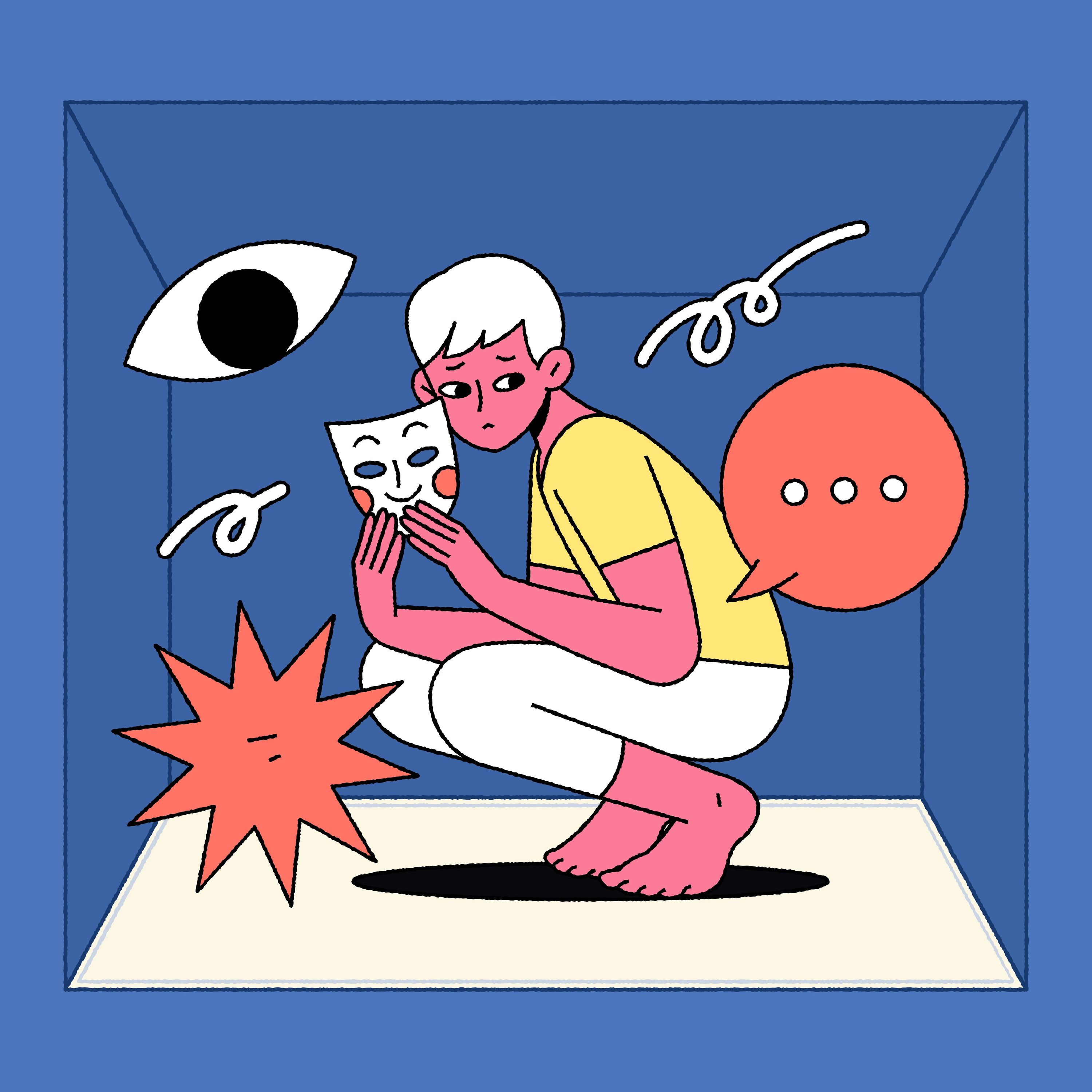
Hidden Brain
Keeping Secrets
00:50:15
We all carry secrets, from harmless omissions to life-changing truths. But secrecy isn’t neutral: hiding takes mental work and can harm our health and relationships. In this week’s show, and in our episode next week, psychologist Leslie John explores the costs of concealment—and how opening up can give us more mental space and deepen our connections.
Loading summary
Transcript81 lines
- [00:02]
A
This is Hidden Brain. I'm Shankar Vedantam. You're sitting in a school bus next to your best friend. She tells you about the time she stole an eraser from the teacher's desk. You wonder whether you should tell her about the time you stole a plush toy from a store. As the bus rolls along, you go back and forth in your mind, then decide against it. A few years later, you're at your high school prom. At the end of the evening you share a kiss with your prom date who turns out to have bad breath. This is not someone you are interested in long term. Do you share the information or withhold it. Or consider a much more serious situation later in life? You're in a long term relationship and you realize that for some years now you have been questioning your own sexual orientation. Your partner would be crushed to hear about it. Things are generally going well in your relationship and you don't have immediate plans to act on your secret feelings. Is it best to keep them to yourself? At every stage of life we find ourselves confronted with dilemmas like this. There is a part of us that wants to share to have the world see us as we truly are. And there is a part of us that sees how people are brought down by scandal and gossip. And a cautious voice inside us says be smart. Keep your mouth shut. In today's show and our episode next week and also in a special episode of Hidden Brain plus, we explore the psychological costs and benefits of self concealment and self disclosure. Keeping Secrets this week on Hidden Brain. Support for Hidden Brain comes from Whole Foods Market. Whole Foods Market is the place to plan the perfect indulgent and romantic evening at home. Skip the trip to the flower shop and explore the Whole Foods Market floral department. Start your evening in the kitchen or with surf and turf made with quality no antibiotics ever. Steaks plus seafood that must be sustainable while caught or responsibly farmed. Taste the love all month at Whole Foods Market. Support for Hidden Brain comes from ADT Every Second Counts in an emergency, ADT delivers home security you can trust backed by 247 monitoring, the most company operated monitoring centers in the industry and technology that verifies your alarms to send help faster compared to unverified alarms. ADT pros can install your customized home security system the right way so you feel secure from the start. When Every Second counts count on ADT, visit ADT.com or call 1-800-ADT ASAP. Support for Hidden Brain comes from homes.com homes.com knows that when it comes to home shopping it's never just about the house or condo. It's about the home. And what makes a home is more than just the house or property. It's the location and neighborhood. If you have kids, it's also schools, nearby, parks and transportation options. That's why homes.com goes above and beyond to bring home shoppers the in depth information they need to find the right home. Each listing features comprehensive information about the neighborhood, complete with a video guide. They also have details about local schools with test scores, state rankings and student to teacher ratio. They even have an agent directory with the sales history of each agent. So when it comes to finding a home, not just a house, this is everything you need to know all in1place.homes.com. we've done your homework. In the course of a day, countless thoughts and feelings enter our minds. We share some of these thoughts and feelings with others, but we keep most of them to ourselves. When is it smart to share? When is it smart to hide? Is there scientific evidence that can guide us on what we should do? At Harvard University, psychologist Leslie John has spent many years studying these questions. Leslie John, welcome to Hidden Brain.
- [04:44]
B
Thank you so much for having me, Shankar.
- [04:47]
A
Leslie, one of your favorite TV programs is the British comedy series Mr. Bean. There's one particular episode that you enjoy, and for people who are unfamiliar with the show, who is Mr. Bean and what is he doing in this scene?
- [05:01]
B
I love Mr. Bean. Mr. Bean is a comic mime, I would say. And his sweet spot is he finds these very relatable human situations, these quandaries we get ourselves in. And then he comes up with absurd, almost childlike solutions. So it's a really, really endearing and hilarious show and also brings me back to my childhood. Cause my father and I are the jokers of the. And we're huge Mr. Bean fans. So in this particular little sketch, Mr. Bean goes to a fancy schmancy restaurant and orders steak tartare. Doesn't realize that that's essentially raw meat. And so the waiter comes out with his meal with great flair, opens up the silver cloche that's on top of the plate, and to Mr. Bean's horror, like his face says it all. He's completely, agh, what have I done? But yet the waiter, you know, the waiter, of course, asks, how's it doing?
- [06:10]
A
Is everything all right, sir?
- [06:12]
B
And Mr. Bean does this like his smiley, oh, yes, everything is great. Oh, yes. And then the waiter leaves. And then what Mr. Bean proceeds to do is grab little dollops of the steak of the raw meat and put it wherever he can to get rid of it. Because you have to follow through with the lie, right? You have to show progress on eating it. So, yeah, so he like puts a little bit in the vase and then he leans back and he puts a little bit in the, the woman's purse behind him. He, he hollows out. He hollows out a dinner roll and shoves it in. And then, then he even takes a dollop, sticks it directly on the table and sticks the plate to it like cement. So good.
- [07:10]
A
I understand that you had your own Mr. Bean moment some years ago. Can you set the scene for me and tell me what happened?
- [07:16]
B
Yeah. So I was a baby academic and I was invited out to give a talk at Berkeley. So totally swoon worthy place. And two superstar scholars invited me out. They're married, and they invited me out to their house for dinner after the day. And so here I am, this googly eyed junior academic walking through the Berkeley hills, walking to their house. I get there and they open the door and they say, oh, we are so excited you're here. We went to the market today and we're making steak tartare. It's our favorite. It's so special. And we only want to do the most special things for you. They laid it on thick. And yeah, so I was like, oh my gosh, I want to be Mr. Bean right now. I want to do what he does. But obviously I couldn't. So I pretended I was too ashamed, embarrassed, trying to make a good impression, trying to pretend I like highfalutin things. And I ate it. I got through it. In fact, I've never told them this, so maybe they'll hear this and we'll have a good laugh over it. But yeah, that was my Mr. Bean moment.
- [08:34]
A
So concealment can sometimes have bigger consequences. Leslie, you tell the story of two women, you know, you call them Jennifer and Donna. When the story starts, Jennifer is preparing for an important event in her life. Paint a picture of the scene for me, Leslie.
- [08:51]
B
Yeah, so Jennifer was about 28 years old and she was on the cusp of a major life milestone. The next month, she was slated to marry her betrothed, her fiance, Philip. The only thing was that she was starting to get these kind of nagging thoughts, these nagging doubts, and she didn't know. Are these just like normal wedding jitters? Is that a thing? Or is this something I should pay more attention to? So she was really close with her mother, Donna, and she decided to give her mom a call. And so the phone, as the phone rings, Jennifer is transported back to her childhood home where her parents still lived. And, you know, she's thinking about the living room where she and her brothers would do WWF wrestling matches. And then she thinks about the den where she envisions her mom to be at that time, sitting cozied up in the. In the den with its faux wood paneling walls and all. And then suddenly.
- [09:59]
A
Hello.
- [09:59]
B
And Jennifer says, hi, mom, it's me. Donna immediately senses something's up and says, what's up, my chick? And then Jennifer said to her mother, well, you know, I just. I don't know about these feelings I'm having. And when I think about it, I really love Philip, but I love him like my best friend. And I don't know that I have, like, passionate love for him. And I don't know, is that a problem? Because I. I really love him in a best friend kind of way. And Donna listened. And then Jennifer said, mom, how did you know that you wanted to marry dad? Because Jennifer always looked up to their marriage so much. They just seemed like they were amazing parents, and they just seemed so happy. And that's all that Jennifer wanted, was a really stable, loving, wonderful relationship. And her mom said, huh, it's funny, Jen, that you should ask, because a month before I married your father, I was actually having similar doubts. And, oh, I am so glad I went ahead with Maryam. Cause look how happy we are. Look at how great our marriage is. We work. And she said, like, Jen, I know you. You're like me. You struggle to make decisions. You ruminate. You question everything. But sometimes you just. If it feels right, you gotta go with it. And so Jennifer took a lot of comfort in that phone call. And. And what she thought was, yeah, I already have. My love with Philip is already the mature kind. You know, passionate love fades. What's really special and important is the mature kind, the kind that my mother has always had with my father. And so a month later, Jennifer and Philip were married. Five very complicated years later, they were divorced.
- [12:06]
A
So sometime after her divorce, Jennifer's brother sends her an email that changes everything. What's in this email, Leslie?
- [12:16]
B
Yeah, it was an email chain that originated between Donna and her husband. So it was a private. Between the two of them. And they ended up. What they started talking about was a very private, sensitive thing. But where they ended up in the email chain was talking about finances. And they brought Jennifer's brother. At this point, they added the brother to the email chain because the brother took care of their finances. And so then the brother forwards this to Jennifer. So Jennifer's sitting down in her bachelorette pad. She's got her lovely coffee in the morning, she's sitting down, she opens her inbox and she gets this email from her brother. Hey Jen, check this out. Seems like they forgot what was at the beginning of the chain. And so of course Jennifer quickly scrolls, scrolls down, down, down and wow. What she found out she can never unknow. And it's the kind of thing that is extremely shocking for someone to learn about their parents. What the initial exchange revealed was that Donna and her husband had an unusual relationship. It worked for them. It was an open relationship of sorts. And they were discussing that in the chain in a very amicable way. Like it was clear that it was a mutual, it was a mutual agreement and it was one that really worked for them and they even celebrated it, you could tell in this email chain. So I mean Jennifer was a very open minded person and she thought wow, that's shocking. But you do you and if that works for you, great. But the more dominant feeling that Jennifer had, her whole body filled with anger and rage, like you know, when you feel it super viscerally, that is how Jennifer felt. Because immediately she goes back in time in her mind to that fateful call that was, you know, seven or so years ago between her mother, Donna and herself. The pre wedding jitters call and how Jennifer had felt so assuaged. And Jennifer felt that Donna's words really, really did affect that decision. And the reason Jennifer was filled with rage because she said to herself, wait mom, you only told me half the truth. You didn't tell me that the way your kind of escape valve, the way you handle this fact that you have people that you, shall I say, enjoy your flirtations with maybe more than her father was by having this release valve, this mutual agreement. And this would have been extremely pertinent for Jennifer to have known. Because Jennifer was quite certain at that time that if she had known the full picture of what her parents relationship was, she would not have married Philip. Because she knew that although that worked for them, she knew it wouldn't work for her and that's not what she wanted. And so she really felt like kind of betrayed by her mother. And she felt like it would have been better if her mother had said nothing, if her mother hadn't even picked up the phone than to share only half the story.
- [15:35]
A
Yeah, because Jennifer in some ways got comfort from what her mother was saying. But her mother in some ways was not sharing that the terms of her relationship with her Husband involved seeing other people. And there was, as you say, a release valve in this marriage.
- [15:51]
B
Exactly.
- [15:57]
A
Did Jennifer ever confront Donna about what she had said previously?
- [16:02]
B
Yes, she did. So years later, Jennifer, her anger faded because everything turned out beautifully for her. She married the man of her dream. She married her Prince Charming, who she was attracted to in all ways. They had two beautiful children, like she was just living a slice of paradise. She was so happy, which made it easier for the old wounds to kind of heal. But they were replaced by curiosity and wanting to learn more. How did this start? Why did it start? Is it ever complicated? So one day, grandma Donna was visiting and Jennifer's husband was out of town. So Jennifer's like, this is like she had a good workout during the day. She's like, I can do this. Let's do it. And after dinner, pours two large, large glasses of scotch. There is such a thing as liquid courage. Sits down with her mom and says, do you remember that phone call we had before my first marriage? And Donna said, like a wave of warmth, like motherly warmth, smile came across her face. And she said, yeah, I do. And I've often wondered whether I said the right thing.
- [17:20]
A
Hmm.
- [17:21]
B
And that was just the perfect segue in. And then what proceeded was probably the most meaningful conversation Jennifer had had, definitely with her mother, potentially with anyone ever. And so that just, just really, really ended up. It deepened their relationship.
- [17:46]
A
All of us make choices in nearly every moment of our lives about what to share with others and what to keep private. These decisions have consequences for our health, our well being, and our relationships. When we come back, the psychology of self concealment. You're listening to Hidden Brain. I'm Shankar Vedantam. Support for Hidden brain comes from TurboTax. Remember when doing your taxes meant handing over a pile of papers and then just wondering. Now with TurboTax Full Service, it's so much easier. They have local experts near you who do your taxes, getting you every deduction while you go about your day. And they keep you updated in the app so you're never left wondering. Through February 28th, hand off your taxes to an expert in person or online for $150 all in. If a TurboTax expert didn't file for you last year, visit TurboTax.com local to book an appointment.
- [18:58]
C
Busy work weeks can leave you feeling drained. Prolon's five day fasting mimicking diet rejuvenates you at the cellular level, lets you enjoy real food, and does not require an injection. Developed at USC's Longevity Institute, Prolon supports biological age reduction, metabolism, skin health and fat loss when combined with proper exercise and nutrition. Get 15% off plus a $40 bonus gift when you subscribe at prolonlife.com PandoraPromo.
- [19:27]
A
This is hidden Brain. I'm Shankar Vedantam. Leslie John is a psychologist at Harvard Business School. She studies self concealment and self disclosure. Leslie, most of us are keenly aware of the dangers of oversharing. We've all heard stories about someone who posted a photo of themselves at a drunken frat party and then they got turned down for a job years later. Talk for a moment about this. Our default position is often, when in doubt, say nothing.
- [19:54]
B
Yes. You can think of even those sayings from wartime, loose lips sink ships.
- [20:00]
A
Right.
- [20:00]
B
It feels like the default, the strong default we have is to stay silent if there's any doubt. And to your point, I mean, the public discourse is kind of obsessed with TMI moments.
- [20:14]
A
Right.
- [20:14]
B
Of outing people. That's tmi, that's oversharing. And it is true, of course, we can share too much at the wrong time with the wrong people. It can bite us in all these ways. But in what I found in our, our research is that we don't pay attention, we don't pay enough attention to the other side of the coin, which is what I call tli, too little information. And that there are very real harms to not opening up, to staying silent. And so I, I'm hoping that we can start adjudicating these decisions of whether to share or not in a more balanced, even handed way where we consider both TMI and tli.
- [20:55]
A
Let's look at some of the ways in which concealment can hurt us. You've talked about some shocking research into how much information people hide from their own doctors.
- [21:05]
B
Oh yeah. So there's some fascinating research by some scholars in the medical area where they have asked, interviewed patients essentially whether they've hid some really pertinent health information from their doctor. Right. The very person who has taken an oath to protect them. And it's 80% of people admit to not being forthcoming, to hiding something from their physicians. And it's super relatable. Right. But it's also bananas on another hand. Right. Because this person could help you. But it's understandable because health stuff is often so sensitive.
- [21:50]
A
Yeah. And you know, someone is, you know, trying to quit smoking, for example, and their doctor has been urging them to quit smoking for a number of years, but they've in fact been sneaking a couple of cigarettes or they're trying to drink A little less, but they haven't been successful. It's hard to come clean and tell your doctor. This is what's actually going on in my life.
- [22:08]
B
It really is. I had this really funny moment in college where I. I went to the clinic to get it. I wanted an STD test, and I get to the clinic, and I was so impressed because when you get there, they let you write down what your issue is, so you never have to say the words out loud. So I wrote it down on the sheet of paper, I handed it in, but then when it was my turn. This is like a Larry David episode. When it was my turn, the nurse said, leslie, John, STD testing nightmare.
- [22:57]
A
You tell the story of a physician named John Cullen, who was literally about to cut open a patient to take out their appendix, but then realized that the patient may in fact not have appendicitis after all.
- [23:13]
B
Yeah, this is the, like a super grand poobah. As in the American Academy of Family Physicians President, Dr. John Cullen. Maybe that's what made it a little bit harder, actually, because he was so high status. At any rate, he was literally about to cut open a patient to take out their appendix. But he had this kind of sixth sense that something, you know, you do enough reps of these things and you get a sixth sense, and something wasn't right. And apparently symptoms of drug abuse, specifically methamphetamines, they can actually resemble those of appendicitis. And so before he cut her open, Dr. Culler gave it one final chance. He said, I quote, we're about to cut you open here. Are you sure you don't want to tell me anything else?
- [24:01]
A
Wow.
- [24:01]
B
Finally, the patient fessed up and the surgery was.
- [24:07]
A
I mean, it's kind of incredible, isn't it? People are willing to have themselves cut open instead of revealing something that they think is shameful.
- [24:14]
B
Yeah. Yeah.
- [24:20]
A
You also tell another hospital story, this one involving a patient who was bleeding uncontrollably during surgery.
- [24:28]
B
Yes. This one's even more shocking because it was a life threatening situation. So before the surgery, the surgeon asks the patient, you know, are you taking any medications? And the patient says, no. And then the surgeon comes out to the waiting room just before he's about to operate and says to the mom, are you sure she's not taking anything? Again, the surgeon had kind of a sixth sense. And then the mother said, nope, nothing. Finally, the surgeon asked again and is imploring her to be honest. Please, please, this is your. Your daughter's life. And finally, and it wasn't Even the daughter that revealed this, it was her mother that finally revealed that the, the child, the daughter, the grown daughter was taking weight loss supplements, but of course was too ashamed to say so, and I guess that interferes with bleeding or something. And that literally saved her life. The surgeon raised, ran back in, it was that serious. So it's really, it's very real. The shame we feel around opening up, the apprehension, the, the worry that someone's going to judge us is a, is a very, very real concern. Because look at the lengths people go to to avoid.
- [25:52]
A
Besides complicating our medical care when we don't share things with our doctors. I understand there's research showing that secrecy negatively affects our immune functioning.
- [26:02]
B
Yes. When you keep a secret, one of the tricky things is that your mind is very active. Keeping a secret is not an inner activity. It's not a neutral thing. Yet we often think that that's a neutral thing. Right? We think that not sharing is neutral, but, but in fact it can be an incredibly active process. So when you keep a secret, think about keeping a secret, you have to constantly monitor, right. When you're in a conversation where it could be relevant, you gotta monitor your brain. And that's stressful. And so that literally can increase your cortisol, your stress hormones. It can affect you in this way. And it also, there've been lots of studies showing that when you are keeping a secret, you score lower on IQ tests because it literally preoccupies your brain. It takes away brain space.
- [27:10]
A
You talk about. One of the costs of self concealment is that it can keep us from forming relationships or deepening relationships. You tell the story of a, perhaps a trivial encounter in an elevator when you were a young scholar on the job market. Tell me that story, Leslie.
- [27:27]
B
Yeah, so one of the things, the principles that's really important in new relationships, new friendships, new acquaintanceships, new romances, is mutual self disclosure. It's like a ping pong pattern of reciprocity where you say something the other person reciprocates with something just as deep. You don't start super deep. You start maybe on a more shallow, but then you go back and forth, ping pong back and forth. And you get increasingly more vulnerable with each other. This comes back to even Arthur Aaron studies, right, the 36 questions where you get people to ask, ask and answer questions to each other. And that makes them like each other and forge friendships. And so this encounter, this was what I call a reciprocity fail. When one person puts out an olive branch, they put themselves out there, and then they're shut down. So what happened to me? I was trying to get an academic job. I was on that academic job market. I'm in my, like, Banana Republic black suit, which, fun fact after the fact, I realized I still had the stitching and the double vent in the back, the stitch. I had unstitched it. So rookie. So endearing. So in this. This rookie academic job market, what you do is there's a. It's at a big hotel, and all the different universities that are recruiting, they rent out different suites. And so every hour on the hour, there's this jamboree of rookie candidates moving from room to room to pitch themselves. So I found myself in the elevator. I get into the elevator, and there's one, clearly a job candidate in there. The elevator doors close. So we're literally in a steel vault. And I say, I let my guard down. I just say, oh, I'm so exhausted. My whole body just was like, exuded exhaustion. And then what did the fellow job candidate do? He straightened right up and he said, oh, this is such an exciting and fun opportunity to get senior faculty to weigh in on all of my research. It's so amazing. And then I, like, gave him the snake eye with my whole body. I just was like. In my mind, what I thought is, like, really, we're literally in a steel vault, and you can't. We can't just be real, like, have a real moment of kind of shared feeling that would make us both feel more relaxed. And, you know, it's interesting, this idea that a reciprocity, the sting of a reciprocity failure lingers because we see each other regularly at conferences. He's very accomplished, and I'm sure he's a really nice guy, but I've never felt the urge to, like, go chat him up. And I think. I think I would attribute it to that.
- [30:25]
A
In other words, you basically, you know, you put yourself out there. He declined. And the point that you're making is not just that you didn't have an exchange in that elevator for 30 seconds, but in some ways, it's had ramifications. You know, it's echoed, if you will, down the years where you actually haven't tried to make a connection with it.
- [30:41]
B
Exactly. And so imagine if we play the other route of. Imagine if he had reciprocated and been like, I know, I just had this crazy interview. Can you believe it? This person's. And said that, or blah, blah, blah, like a moment, a moment like that. Imagine we could have been lifelong friends.
- [31:03]
A
So many of us, I think, intuit that self concealment has costs, Leslie. And many of us, I think, intuit what those costs are. But one reason we hide is that we believe that we alone harbor shameful secrets. Talk about this idea that when it comes to the things that we hold secret, we somehow imagine that we are the only ones holding those secrets.
- [31:24]
B
Yeah. So I think a big reason is that secrets are not visible. We don't see all of the secrets that people are holding. It makes us feel like we're the only ones that hold secrets, which makes them even more kind of clandestine. Right. And they take an even bigger toll on this. It's interesting. Michael Slepien over at Columbia has done and Malia Mason. They've done some really great work on a questionnaire to find out what people's common secrets are. And it turns out that there are lots of things that people tend to keep secret. It's a very normal thing.
- [32:04]
A
I'm wondering if social media in some ways compounds this because now we not only don't hear people's secrets, but we're constantly being presented this view of other people's lives that's always glamorous and excited and people having a great time at fancy restaurants. And now we feel, well, clearly the fact that I'm eating a reheated dinner from three days ago, it must show that I'm the only one who has this dirty secret. Everyone else is having a grand old time.
- [32:30]
B
Right? Exactly. Social media is so toxic for that reason. It's exactly as you said. People present a curated portrait of themselves. And logically we know this, but we cannot, we have a hard time correcting for it. The visceral feeling. You see someone who looks gorgeous with their perfect children and their perfect life and you think, oh my God. Meanwhile my children are screaming. And so it makes you feel badly about yourself. These, these kinds of comparisons.
- [33:07]
A
When we come back, Leslie comes up with a survey asking people if they have ever cheated on their taxes, watched pornography or called in sick when they wanted to spend a day at the beach. You're listening to Hidden Brain. I'm Shankar Vedantam.
- [33:34]
C
If you, your parent or spouse served.
- [33:36]
B
In the military, you could join our family. Our members saved an average of $70 a month on auto insurance when they switched. Tap the banner or visit usaa.com join today to check your eligibility restrictions apply.
- [33:49]
C
Busy work weeks can leave you feeling drained. Prolon's five day fasting mimicking diet rejuvenates you at the cellular level, lets you enjoy real food and does not require an injection. Developed at USC's Longevity Institute, Prolon supports biological age reduction, metabolism, skin health and fat loss when combined with proper exercise and nutrition. Get 15% off plus a $40 bonus gift when you subscribe at prolonlife.com PandoraPromo.
- [34:18]
A
This is hidden Brain. I'm Shankar Vedantam. Can you think of a secret you haven't shared with anyone? How does keeping the secret make you feel? What do you think would happen if you shared the secret with others? If you're willing to share your personal story with the Hidden Brain audience, please find a very quiet room and record a voice memo on your phone. Two or three minutes is plenty. Email the file to us@feedbackiddenbrain.org Use the subject line Secrets Again, that's feedbackiddenbrain.org. Psychologist Leslie John is the author of the Underrated Power of Oversharing. Leslie, as you dived into the world of embarrassing disclosures, you and an advisor once came up with survey questions. This turned out to be a very challenging exercise. How so?
- [35:15]
B
I think I might hold the world record for the most awkward doctoral advisor advisee conversation. So when I was a doctoral student, you know, I've been interested in this topic of revealing privacy self disclosure secrets for a very long time now. And so when I was a doctoral student, I worked with my advisor to devise a series of surveys where we asked people sensitive questions and we varied different things to learn different things. And so we needed to come up with really sensitive things to ask people. And so we sat in his office. It's one of these, like flashbulb memories for me. You know, you remember exactly what you were wearing and where you were seated. Yeah. So he just starts with a bang. He says, what about bestiality? Oh man. And so yeah, I was like, the person that I'm most trying to impress said that. And so I was like, what do I do? Do I go for something super sensitive like that in my. The things that I bring to the table. Brainstorming. I felt like everything I said then was like, maybe he's gonna think I'm a prude. Or then if I said something really bad, like, have you ever neglected to tell a partner about an STD you had? Then he'd think I was reckless. And just even the thought of that, that I am worrying about my advisor, like, it just, oh gosh, it was so cringy. But we got through it, we powered through and we came up with a great list. And I've since been using those questions and variations on those themes for kind of my career so far.
- [37:03]
A
So the survey took the form of questions that start with have you ever. I'm wondering if you can read out a list of these questions, Leslie. And I want listeners to ask themselves if they have ever done any of these things. Okay?
- [37:17]
B
So, yeah, the questions, be warned, they're doozies if you have children around. Have you ever had sex with the current husband, wife, or partner of a friend? Have you ever had a fantasy of doing something terrible, torturing to someone? Have you ever stolen anything worth more than $100? Have you ever looked at pornographic material? Have you ever made a false insurance claim? Have you ever cheated on your tax return? Have you ever claimed to have education that you didn't actually have while in a relationship? Have you ever flirted with somebody other than your parents? Have you ever taken credit for someone else's work? Have you ever let a friend drive after you thought he or she had had too much? Have you ever lied about your income disruption? Have you ever called in sick when you were pretended not to see a beggar to avoid? Have you ever gone on a date only to make somebody else jealous? Have you ever drunk so much that you got a hangover? Have you ever littered in a public space? Have you ever failed to do chores in a shared house or apartment? And have you ever failed to tip a waiter? In a country in which tipping is customary, These are the questions. And these I've more or less said them in a decreasing order of sensitivity.
- [38:30]
A
I'm sure people must clam up if someone asks them this question in a research setting.
- [38:35]
B
That's what I would think, too. But again and again, like across all of the research I've done, the one thing that really surprises me is how forthcoming people often are. It almost seems like people really want to reveal. And in fact, there's been subsequent research showing that we do have this kind of internal drive to reveal. And it's fascinating because there's even. Some of these things are even illegal. Now, the way we asked matters, right? So if we had asked face to face in an interrogation room, I don't know that people would be forthcoming. But the way we asked these, we asked it on a pseudo anonymous online survey. So it was done in the comfort of your home. You don't have someone staring there, watching you, judging you.
- [39:23]
A
In one set of studies, Leslie has examined whether people think less of those who have revealed unsavory things about themselves. Obviously, the answer is yes, right?
- [39:33]
B
Not necessarily, which is pretty shocking. So what we did in this study was we asked people. Let's say we asked, who would you rather hire? And candidate A. One of the questions they had been asked on this intake survey was, have you ever been reprimanded at work? Yes. No. Choose not to answer. We, of course, constructed these profiles ourselves. So candidate A to the question, have you ever been reprimanded at work? Says, yes, just goes out and says the worst thing. Candidate B, on the other hand, clicked the choose not to answer box. So here, here we have a choice. The participants had a choice. Would you prefer someone who admits something bad that they've been reprimanded at work to someone who simply but very conspicuously refrains from answering, says, I'm not telling you, I'm opting out, I'm concealing, essentially. And it turns out that again and again, people prefer the revealer. They prefer the person who admits to the thing, even if it's a bad thing, or relative to someone who opts out of answering, who very saliently says, I'm not doing this.
- [40:52]
A
In fact, you find something along the same lines when it comes to romantic relationships as well.
- [40:57]
B
Yes, that. So we did this. The first time we got these results, we thought, this, is this a false positive? This is nutty noodle, as my late grandmother would say. But so we did it again with other questions, other samples, other scenarios. And one of the ones we tried was in the realm of dating, where what we did was, we asked people, which of these two people would you prefer to date? Person A or person B? And one of the questions was, have you ever filed a false insurance claim? And person A ostensibly has said frequently. So they're saying the worst possible thing. The other person, person B has clicked choose not to answer. And again and again, people, they'd rather date someone. Now, neither of these is fine specimens. My father used to always say that. That's a fine specimen. Yeah. Neither of them are someone you want to take home to your parents. But if push came to shove, right, if you're in this tight bind, which would you choose? Cause that's the deeply revealing of human nature behind it. And again and again, we prefer the revealer.
- [42:11]
A
And what do you think this is telling us? Why is it that we are so averse to the hider, even when the only option is a revealer who tells us that they have done something wrong?
- [42:21]
B
Yeah, it's a great question. And we did many, many studies to try to understand why this was happening and why it was not happening. In the end, what we discovered was that the preference for a revealer is driven by a global character judgment. The person who conceals is not to be trusted. So much so that we'd rather date someone, we'd rather employ someone, we'd rather even sit next to the subway beside someone who comes clean, even if it's not the greatest thing to say.
- [43:00]
A
So researchers have found that several cognitive biases shape our desire to conceal. One of them is called the impact bias. What is the impact bias, Lesley?
- [43:09]
B
Yeah, so the impact bias is how we tend to overestimate the longevity of emotional events. So, hmm, we think that when we break up with someone or if someone breaks up with us, we think we're gonna be down in the dumps for a very, very long time. Slash, eternity. When reality, when that happens, like, we're often surprised to see, like, yeah, it sucks, but we're better sooner than we think. Similarly, we think the highs last longer than they do. Like, you know, we get a raise, we think we'll be like feeling amazing for a really long time, but that we quickly adapt and it quickly subsides. So the impact bias refers to how we overestimate the duration and intensity of emotional events.
- [44:02]
A
The impact bias ends up shaping what we regret and also the difference between short term regrets and long term regrets. In one study, the psychologist Thomas Gilovich and and Victoria Medveck explored this difference.
- [44:18]
B
It's really fascinating because what they found was that in the short run, we tend to regret the things we did that resulted in bad outcomes, so called sins of commission. So in disclosure language, it's, you say something, maybe you're a little tipsy, you say something, you feel like you go a little bit too far at a dinner party. The next morning you have a massive disclosure hangover where you're that gut wrenching, oh, why did I do that? And you just want to hide, and that sucks. And so we regret that a lot. So in the short run, right after, we regret the things we do, the regrettable things that we did, but in the long run, the pattern flips such that what we end up regretting much more over the course of our lives, the things that we didn't do, the sins of omission, the things that we didn't do that we should have done. Those are the things that leave us thinking, what if, what if I had told my college crush that I was into him? Like, what if? Why didn't I do that? What would be the harm? And what are the missed opportunities? Meanwhile, we don't ruminate at all over the long Haul about. Okay, maybe I. Maybe I was rebuffed by this person, but at least I found out, you know, you get kind of closure and you don't continue perseverating.
- [45:43]
A
There was a book by the hospice care nurse Bronnie Ware titled the Top 5 Regrets of the Dying. What were these regrets, Leslie?
- [45:51]
B
Yes. So Bronnie Ware, my hero. She has spent as a palliative care nurse. She spent time, a lot of time with people at the very end of their lives. So she gets to know them a lot. And she wrote a book where she collated her observations on what people tended to regret. So on their dying beds, what did they say they regret? And here are the top five regrets. I wish I'd had the courage to live a life true to myself, not the life others expected of me. Number two, I wish I hadn't worked so hard. Number three, I wish I'd had the courage to express my feelings. Ding, ding, ding, ding, ding. Number four, I wish I had stayed in touch with my friends. Number five, I wish I had let myself be happier. And so you can see, four out of five of them are regret over things we didn't do that we wish we had done. And one of them especially is that is one related to not sharing more of ourselves, not expressing our feelings.
- [47:00]
A
You say that you yourself were inspired to engage in more self disclosure by Bronnie Ware's book. Tell me about a recent incident with your mother where in some ways you were made aware, if you will, of all the things that you hadn't told her.
- [47:14]
B
Oh, geez. Yeah, this was a scary episode. It was Christmas day, and my husband and I had just finished spending a lot of the day cooking in the kitchen, thanks to grandparents who took care of our little boys. And. And we are putting the turkey on the table, and my mom looks gaunt. She says, I'm really not feeling well. Something's just come over me. I gotta go lie down. So she went to go lie down. We serve the stuff. And then I go upstairs to find her, and I find her in the bathroom, clearly having vomited, and looking at me with this glazed look of, like, unclear who I was. And so I grabbed her and I held her in my arms like a baby. And as soon as I did that, her eyes rolled back in her head and she went limp. And I thought that she had died in my arms. And I just. I sprang up and I bolted out the door. I said, Call 911. My husband's calling 911. I bolt out the door to our neighbor. Who's a nurse, and. And I bang, bang. I'm banging on their windows. And she comes and she. Right away, she runs in, and then we get to the bathroom where my mom was, and my mom looks at us like, what's all the fuss about?
- [48:37]
A
What are you doing?
- [48:38]
B
I was fine. She was fine. It turned out that she. We think it was food poisoning. And apparently when you vomit so violently, it can disrupt what's called your vagus nerve, which, like, overstimulates it. And the way you need to kind of reset your brain by passing out, that's my layperson version of it. But, oh, my gosh, that was so terrifying. But it really. It really reminded. Like, my mother at the time was 74, super spry. She's still super spry. It really reminded me that. I know it's cliche to say, but it's so true that you never know when your time is coming. And so with disclosure, what that means is that, like, don't hold back. Don't hold back, telling someone all the ways you love them. And so I ended up writing this love list, this list of things to my mom about all the ways I love her and all the big things and all the little things. And, yeah, it was really important to me.
- [50:01]
A
Did you read the letter to her, or did you give her the letter?
- [50:05]
B
I put it in her stocking, and it had all kinds of things in it, like, big things. For example. I'm so grateful. And I love the way she and my father, they always. I mean, we are very lucky in that we had. You know, we weren't wealthy, but we definitely were comfortable. And so we were in a privileged position to be able to pursue our interests. And my parents really, really encouraged that. They said, always pursue what you're interested in. And I feel that I got to this amazing place called Harvard doing what I love doing, because fundamentally, you know, I worked hard, but I pursued my interests and I got a lot of luck and all those other things. But the kind of life. The important life lessons, I'm so grateful for. And then the small stuff, too, like, oh, I love how she. This. Oh, my gosh, she. So I love gummy candies and what my. But I'm very particular on the colors. I like the green ones, if they're lime, not apple, and I love the red ones. And so when she comes to visit us, she gives me a bag of jujubes, gummy bears with curated, just the colors I like. She picks out the ones I don't and eats the dregs and then she gives her daughter like, oh yeah, it's amazing.
- [51:31]
A
In our episode next week we continue our exploration of the power of self disclosure. Look for the episode titled Coming Clean. We also look at when and where the scientific evidence suggests it may be best to withhold information and to play your cards close to the chest. That's in our Hidden Brain plus episode titled when to Hide the Truth. If you're a subscriber, that episode should be available in your podcast feed right now. If you're not yet a subscriber, Please go to support.hiddenbrain.org if you're using an Apple device, go to Apple Co HiddenBrain. Again, that's support.hiddenbrain.org and apple.co HiddenBrain. Leslie John is a psychologist at Harvard University. She's the author of Revealing the Underrated Power of Oversharing. Leslie, thank you so much for joining me today on Hidden Brain.
- [52:27]
B
It's been a delight. Thank you.
- [52:40]
A
Can you think of a time when you came clean to someone else? Do you remember what happened and how it felt? If you are willing to share your personal story with the Hidden Brain audience, please find a very quiet room and record a voice memo on your phone. Two or three minutes is plenty. Email the file to us@feedbackiddenbrain.org Use the subject line Secrets. Again, that's feedbackiddenbrain.org. Hidden Brain is produced by Hidden Brain Media. Our audio production team includes Annie Murphy, Paul, Kristin Wong, Laura Kwerel, Ryan Katz, Autumn Barnes, Andrew Chadwick, and Nick Woodbury. Tara Boyle is our Executive producer. I'm Hidden Brain's Executive editor. If you like this episode, please tell your friends about it in person or on social media. I'm Shankar Vedantam. See you soon, Sam.