Podcast
Higher Ed Storytelling University
Hosted by John Azoni · EN
A podcast dedicated to helping higher ed marketers tell better stories and enroll more students.
Hosted by video producer and storytelling coach, John Azoni, these episodes provide quick-win practical advice you can put to use in your marketing right away.
13episodes
Episodes
Newest firstAll episodes
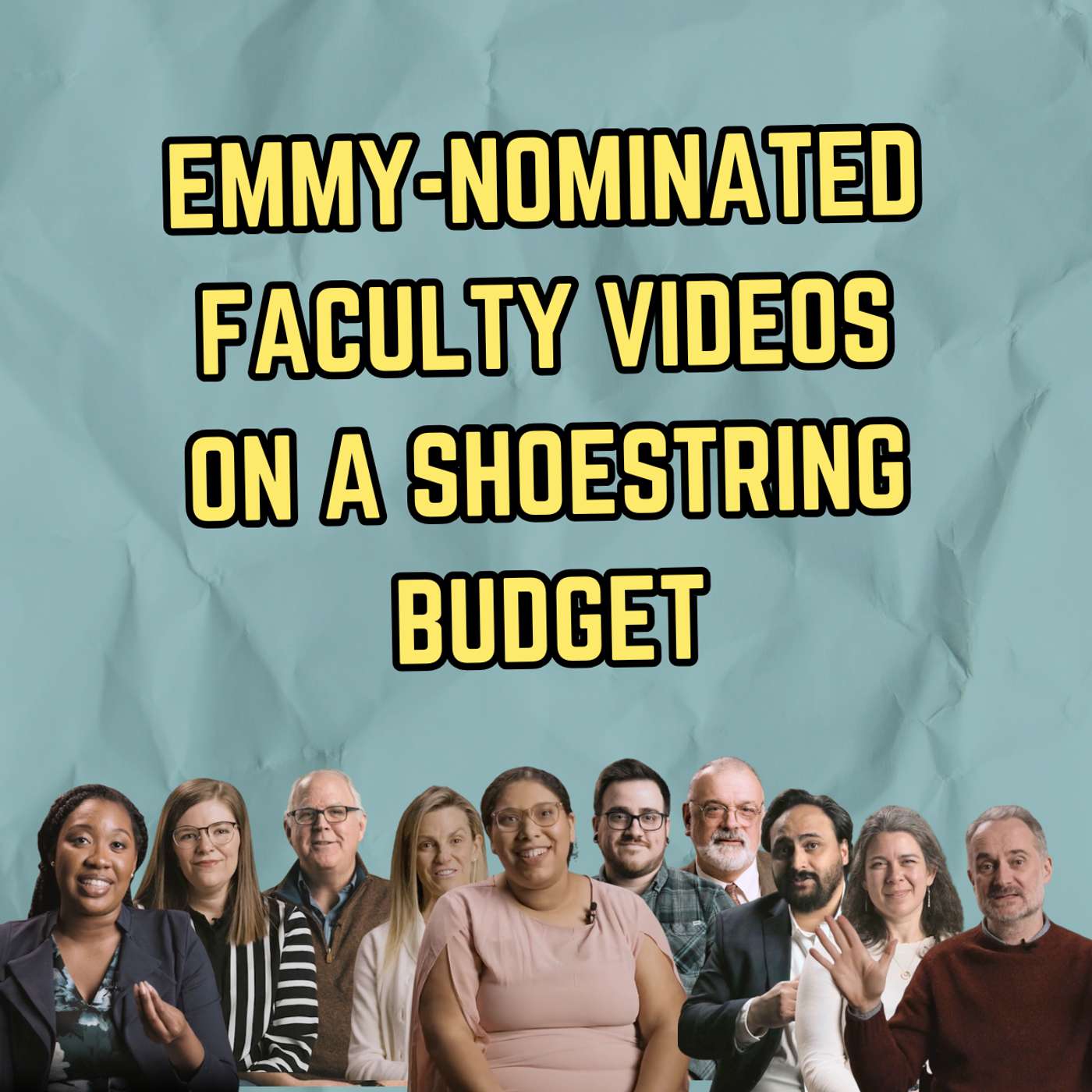
#114 - Emmy-Nominated Faculty Videos: How Sewanee Amplified The Academic Experience w/ Bobby Silk
1w ago00:59:50Tap to summarizeMy guest today is Bobby Silk, communication and content strategist in the marketing and communications office at Sewanee: The University of the South. Bobby joined the show to walk through Inquiring Minds, a faculty spotlight video series that went on to earn a regional Emmy nomination — produced on a shoestring, unbudgeted line item of roughly $1,250–$1,500 per video.Bobby and his small, wear-a-lot-of-hats team (one videographer running two cameras and sound, one editor doing double duty as that same videographer, and an outside animator) pulled off ten faculty videos in three shoot days over winter break, all in a single repurposed campus ballroom basement — accidental purple curtains and all. The conversation covers how they picked faculty, how they framed the ask so it didn't feel like homework, why one location saved the whole budget, and the surprisingly long tail of places these videos have ended up living — from admissions campaigns to a required first-year course.In this episode:Why the series went straight-to-camera and personality-forward instead of traditional documentary style, and how that decision got madeHow to pitch faculty participation so it doesn't sound like "give us your conference presentation"The case for one location, one setup, and why that's what actually makes budget video workHow an animator can solve the "we don't have footage of this" problem for historical or abstract topicsWhy "views" is the wrong first metric, and what Bobby looks at insteadThe unplanned afterlife of this series: newsletters, bio pages, anti-melt campaigns, and a required first-year seminarWhy chasing a $50,000 budget isn't the same as chasing quality — and what Sewanee proved by doing the oppositeResources mentioned:Inquiring Minds video series: https://new.sewanee.edu/inquiring-minds/"How a Diva Made History" (Cecilia Cerja on Josephine Baker): https://new.sewanee.edu/inquiring-minds/how-a-diva-made-history/"The Mathematics of Aviation" (Catherine Cavagnaro): https://new.sewanee.edu/inquiring-minds/mathematics-aviation/Rafa documentary (Netflix) — mentioned as Bobby's off-topic "nerding out" pick, no direct link available; searchable on NetflixWistia's "One, Ten, One Hundred" Soapbox launch documentary Leigh Burmesch (Animator): https://leighburmesch.com/Stephen Garrett (Videographer): https://slgarrett.com/aboutConnect with Bobby:Email: rjsilk@sewanee.eduLinkedin: https://www.linkedin.com/in/robert-silk-0a730235/ Connect with John:LinkedIn: https://www.linkedin.com/in/johnazoniEmail: john@unveild.tvWebsite: https://unveild.tvNewsletter: https://unveild.tv/newsletter
Transcribe →
#113 - The Most Important (and Hardest) Part of Storytelling: Finding the Stories to Begin With w/ John Azoni
3w ago00:28:46Tap to summarizeIn this solo episode, John tackles a problem he thinks is way more foundational than filming or editing: casting. Before you can tell a great story, you need someone willing to raise their hand and tell it — and John argues that's the part most higher ed teams are actually failing at.Drawing on conversations with clients and his own experience running Unveild's story-sourcing process, John breaks down why the standard approach — a mass email asking people to "tell your story" — usually falls flat, and walks through what he's currently experimenting with instead: smaller asks, better timing, and specific prompts that help people recognize they actually have something to say.Key Takeaways:The hardest part of great storytelling usually isn't the production — it's finding people with real stories who are willing to participate in the first place.Mass emails asking people to "tell your story" tend to underperform because the ask is too vague, too impersonal, and easy to ignore.Many students and alumni self-disqualify because they assume their experience isn't dramatic enough — but the most compelling stories often live in small, specific, unpolished moments rather than big "hero" outcomes.Faculty and staff referrals are valuable, but without training on what makes a story compelling, they tend to surface the same safe, polished profiles over and over.Lowering the barrier for a first ask — a 30-second voice memo, a one-sentence response — works better than pitching someone straight into a full production, and lets you screen for communication skill and enthusiasm along the way.Specific prompts ("tell us about a time a professor changed how you think") help people self-identify far more effectively than open-ended asks like "share your story."Timing matters: asking during emotionally heightened moments — graduation, capstones, final critiques, the end of a clinical rotation — captures better material than following up weeks later.Story sourcing needs to become an ongoing campus habit rather than a scramble that starts only when a campaign kicks off.Resources Mentioned:NPR's The Moth – referenced for its low-friction voicemail-style story submission formatArmchair Expert with Dax Shepard and Monica Padman – specifically the "Armchair Anonymous" segment, cited as an example of how specific prompts generate better story submissionsGlengarry Glen Ross – referenced in passing for the "always be closing" line, which John riffs on as "always be casting"Connect With John:LinkedIn: https://www.linkedin.com/in/johnazoniEmail: john@unveild.tvWebsite: https://unveild.tvNewsletter: https://unveild.tv/newsletter
Transcribe →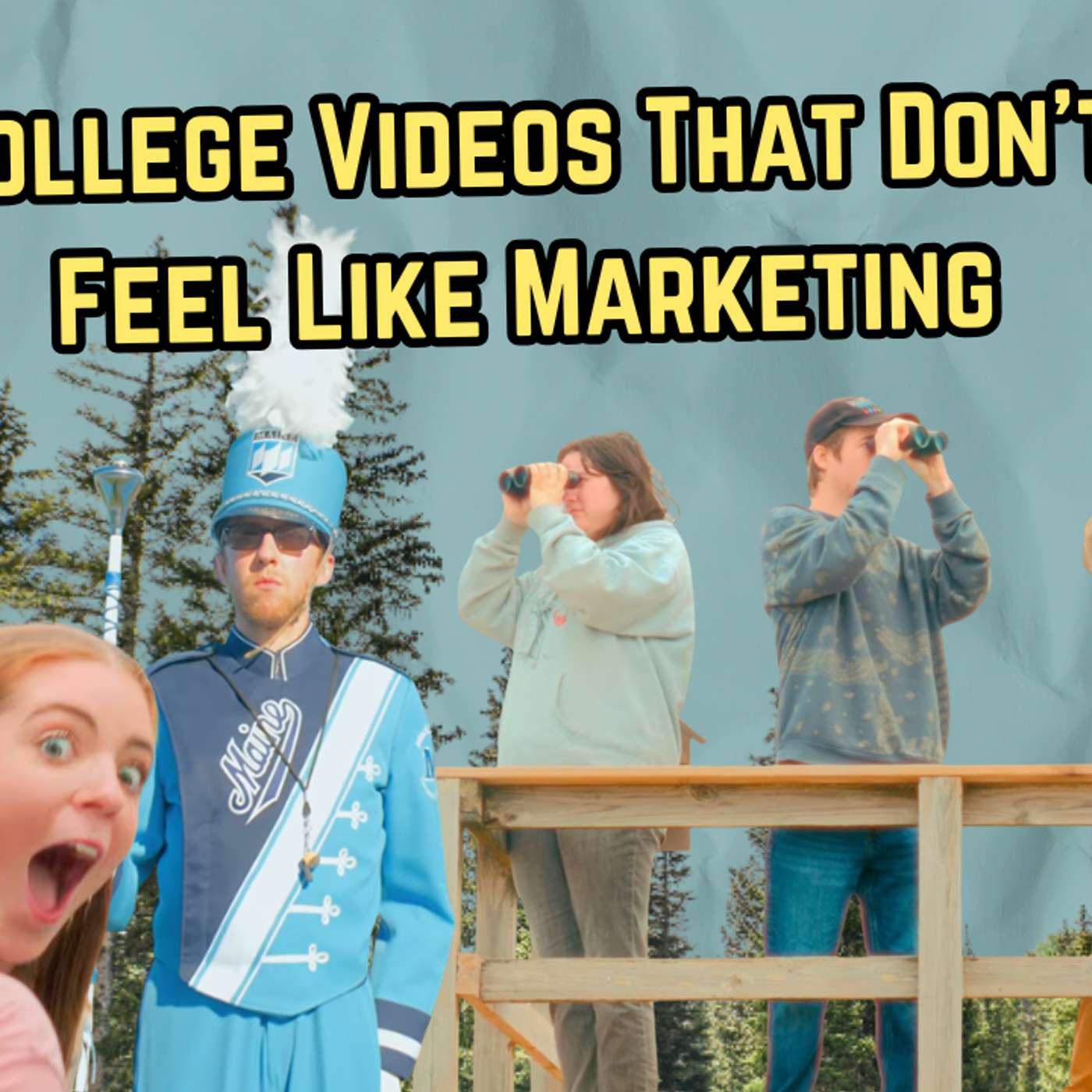
#112 - Program Videos That Don’t Feel Like Marketing - UMaine’s “Life in the Pines” Series w/ Brenn Borror and Patrick Wine
Jul 800:50:45Tap to summarizeMy guests today are Brenn Borror, who leads content strategy at the University of Maine, and Patrick Wine, founder of Story Stroll, the filmmaker behind UMaine's "Life in the Pines" series. We get into how an unscripted, vlog-style student story series came together — and why it's stuck around for three seasons.Brenn and Patrick walk through how "Life in the Pines" started as a cold-call pitch for a generic campus tour video that they reshaped into something more specific to UMaine, why they insisted on one person, one camera, and no crew for every shoot, and how a rigged-up "snorri cam" — basically a tripod strapped under a student's arms — lets students walk and narrate their own story without feeling guided by the marketing team. We also dig into the unglamorous side of the metrics: why a nearly 40,000-subscriber YouTube channel mostly built on a viral lobster-cooking video and an old extension-office library isn't the same audience watching these student stories, and why that's actually fine.In this episode:Why UMaine passed on a polished, teleprompter-style tour video pitch and built something rougher and more specific insteadHow the "snorri cam" walk-and-talk format gets genuine, unguided footage out of studentsThe one-person, one-camera rule and why it matters for getting students to relax on cameraWhy calling it "seasons" and "episodes" instead of a playlist changed how people watched itHow a pre-interview process surfaces the small, specific details (like a chocolate bar traded for a bicycle) that make a story worth followingWhy low YouTube view counts don't mean the series isn't working, and what they're actually using it for in the funnelHow casting evolved from proactive outreach to an open call, and why they now ask for a 60-second video submissionWhy retention, not just recruitment, is a real benefit of this kind of contentResources mentioned:Life in the Pines (full series hub): https://umaine.edu/pines/Life in the Pines, full episode: https://www.youtube.com/watch?v=Ue-xo4MsoTsLife in the Pines, teaser trailer: https://www.youtube.com/watch?v=m1hKbuFXtw8Life in the Pines, Season 2 full episode: https://www.youtube.com/watch?v=l2axURGS18IThe University of Maine's YouTube channel: https://www.youtube.com/user/TheUniversityofMaineStory Stroll Studios (Patrick's production company): storystrollstudios.comConnect with Brenn:LinkedIn: https://www.linkedin.com/in/brennborror/Connect with Patrick:Story Stroll Studios: storystrollstudios.comEmail: patrick@storystrollstudios.comLinkedin: https://www.linkedin.com/in/patrickmwine/Connect with John:LinkedIn: https://www.linkedin.com/in/johnazoniWebsite: https://unveild.tvNewsletter: https://unveild.tv/newsletter
Transcribe →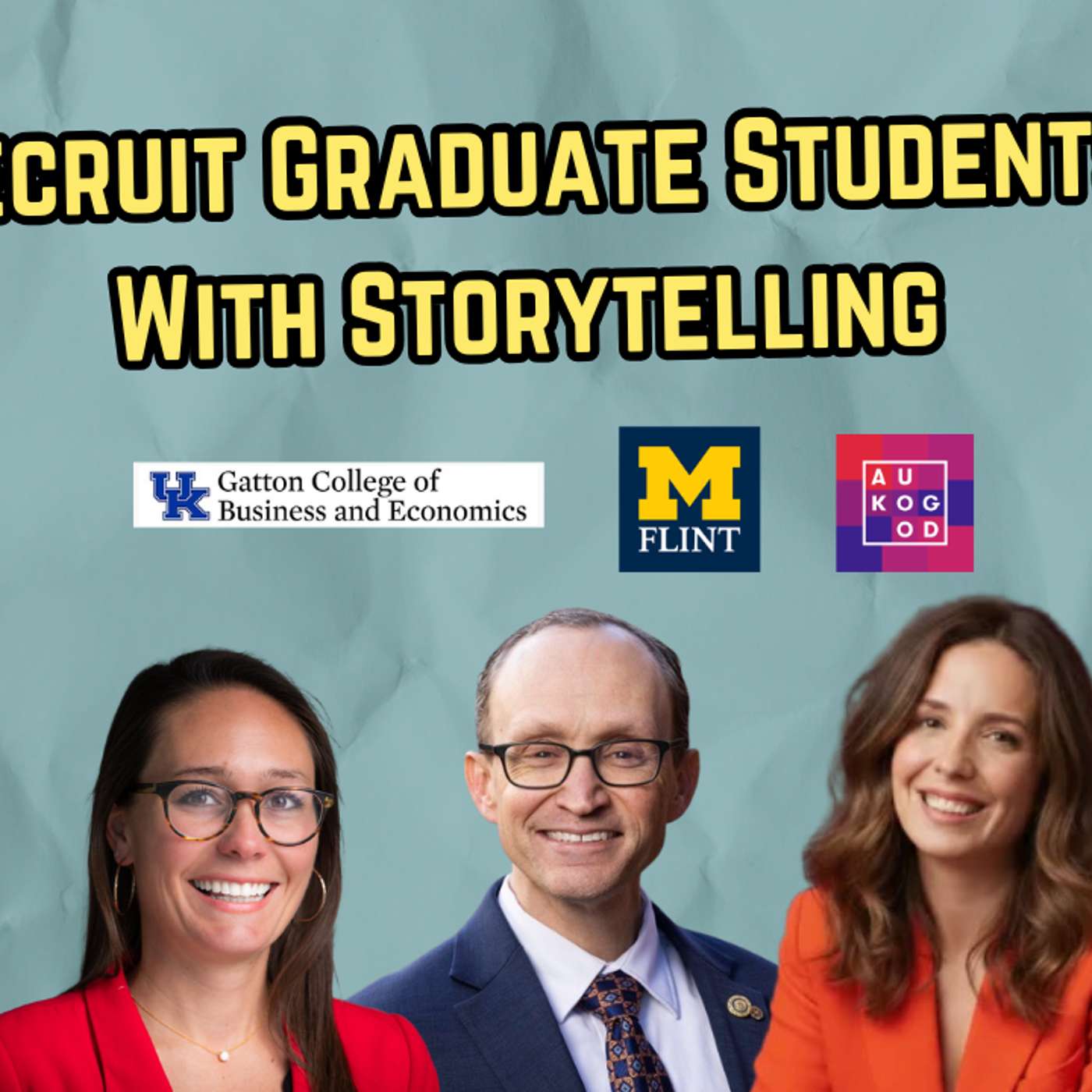
#111 - How To Recruit Graduate Students Using Storytelling (ft. Kogod School of Business, U of Michigan Flint, and Gatton College)
Jun 2400:59:52Tap to summarizeGrad school enrollment is hard right now. International pipelines are drying up, domestic demand is soft in a lot of markets, and prospective students have more options — and more skepticism — than ever. So how do you cut through?This compilation episode features three marketers from three very different graduate programs who are each doing something smart with storytelling and content creation to ultimately impact enrollment. Katya Popova at American University's Kogod School of Business went all-in on a bold AI identity and turned it into a PR machine. Chris Lewis at University of Michigan Flint built a podcast from scratch — solo — and is using it to meet prospective grad students exactly where they are. And Laura Beth O'Brien at Gatton College of Business and Economics at University of Kentucky figured out that "this degree opens doors" isn't enough — you have to show people how it actually fits into their real, busy, complicated lives.In this episode:Why Kogod claiming to be "the first AI-first business school" wasn't just a positioning move — it became their entire enrollment engineHow AI search engines have become their own audience segment, and why earned media is the way to feed themThe podcast strategy that's building a grad enrollment pipeline at UM Flint — and why even a small audience is worth the effortWhy Gatton stopped leading with aspirational alumni outcomes and started leading with "this will actually fit in your life"How to track storytelling content through the enrollment funnel (including a QR code attribution trick)The content ecosystem argument: why no single piece of content closes the deal — and what "the whirlpool" actually looks likeKey Takeaways:Staking a bold, specific institutional claim ("AI-first") gives your PR, content, and enrollment teams something to rally around — and gives media something worth covering.AI search engines are an audience. Treat them like one. Run monthly reports on what ChatGPT, Gemini, and Perplexity say about your school and adjust accordingly.Earned media feeds AI findability. Third-party validation (not your own website copy) is what LLMs trust. Put money behind your earned media hits, not just original content.Podcast transcripts are an underrated SEO and GEO asset — they're long, keyword-rich, and naturally repetitive in a way written content can't be.A LinkedIn newsletter for your podcast is a low-lift distribution channel that self-selects a genuinely interested audience. A thousand subscribers who opted in beats ten thousand passive email recipients.Grad school decision cycles are long (18+ months). Your storytelling has to be present at multiple touchpoints — not optimized for the last click."This degree will open doors" is table stakes. The story that actually converts is: "You can do this without blowing up your life."Every story you collect about student or alumni success is also a coaching resource for your own admissions team — Chris Lewis uses podcast episodes to help staff better articulate program value.Connect with the Guests:Katya Popova, CMO, Kogod School of Business at American University — LinkedInChris Lewis, Director of Graduate Programs, University of Michigan Flint — LinkedIn | drcleis@umich.edu | Victors in Grad School podcastLaura Beth O'Brien, Director of Marketing Communications, Gatton College of Business and Economics, University of Kentucky — LinkedinResources Mentioned:Kogod School of Business at American University: https://www.american.edu/kogod/Victors in Grad School podcast (University of Michigan Flint): (search on your podcast platform)Gatton College of Business and Economics alumni video series: https://www.youtube.com/@UKGattonCollegeHubSpot Inbound Conference: https://www.hubspot.com/inboundPoets & Quants (named Kogod "most consequential AI transformation in business education"): https://poetsandquants.comAxios (featured Kogod student AI research): https://www.axios.comConnect With John:LinkedIn: https://www.linkedin.com/in/johnazoniWebsite: https://unveild.tvNewsletter: https://unveild.tv/newsletter
Transcribe →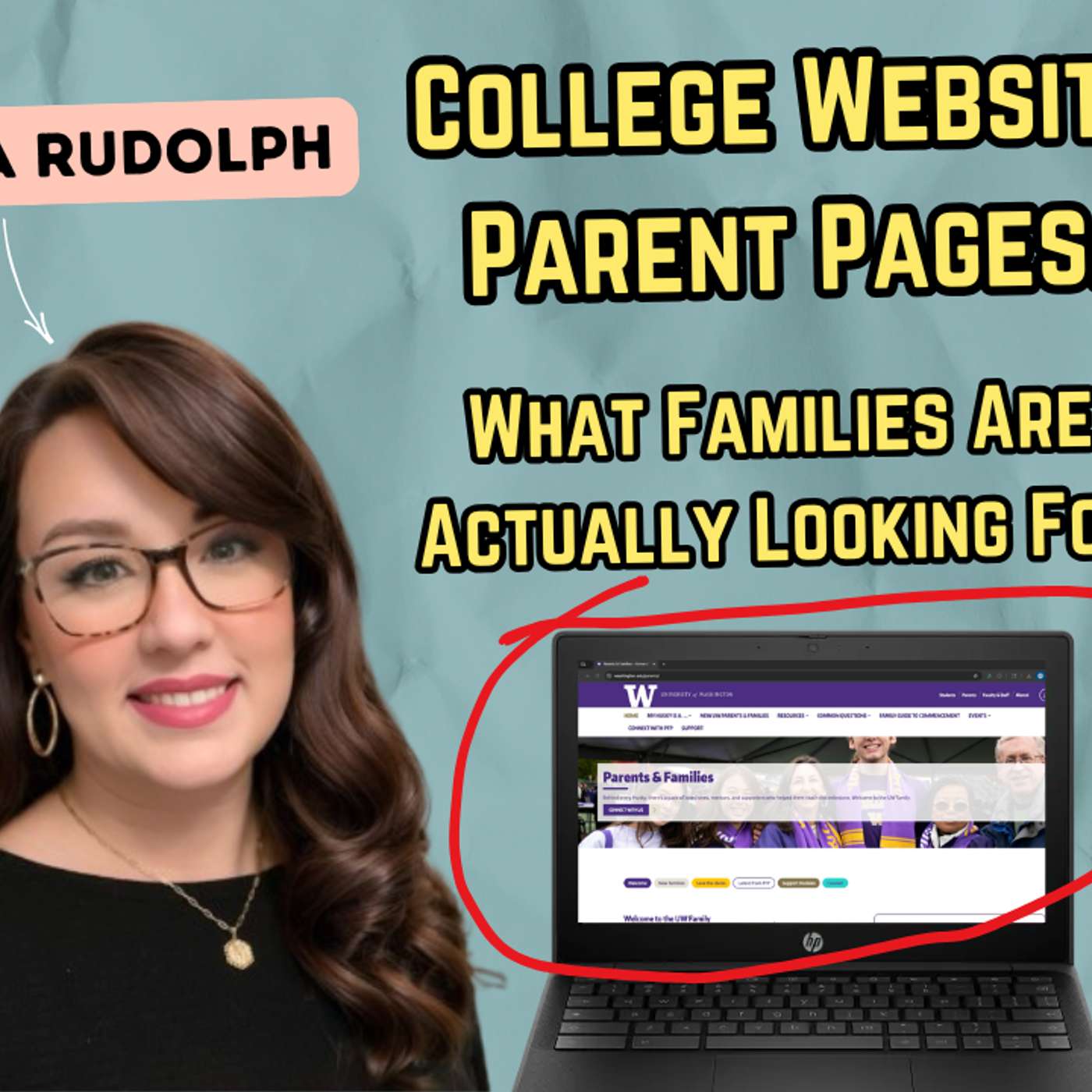
#110 - What College Parents Actually Need From Your Website, and What Higher Ed Is Getting Wrong w/ Laura Rudolph
Jun 1000:53:53Tap to summarizeMost college parent pages were built by someone who ran out of time and dumped every link they didn't know what to do with into a pile. Laura Rudolph has spent a decade trying to fix that.Laura is the founder of Square One Consulting, where she helps colleges communicate more clearly and — as she puts it — speak more human. She started her career as a journalist with a crime beat, fell into enrollment marketing, and eventually realized that the audience nobody was talking to — parents — was the one she was most drawn to write for. Turns out, skeptical Gen X parents who want honesty and hate marketing fluff are basically the ideal audience for a former investigative journalist.In this episode, Laura breaks down why most parent pages fail, what good actually looks like, and the three pieces of content she'd build first if she were starting from scratch. We also walk through real examples from University of Washington, UT Austin, Hamilton, and Wake Forest — and Laura shares a free AI-powered tool she just launched that lets you drop in a URL or paste a parent email and get an honest assessment of whether it's actually working.In this episode:Why most parent pages are "informationally present but emotionally absent" — and what that costs youThe filing cabinet problem: why organizing your site around your org chart is failing families who don't know what a bursar doesThe three content pieces Laura would build first: a "Start Here" guide, a "What Families Worry About" hub, and a "How to Support Without Taking Over" sectionWhy telling parents why you want their contact info resulted in a dramatic increase in opt-ins at Laura's former institutionWhat University of Washington, UT Austin, Hamilton, and Wake Forest are doing right — and what makes each of them a model worth studyingThe parent-to-parent trust play most schools are completely ignoringWhy there's a middle ground between helicopter parenting and institutional silence — and how your content can actually help create itThe free tool: Laura's AI-powered Parent & Family Communication Analyst is live at squareoneky.com. Drop in a URL or paste an email and get a scored, tiered review of how well your communication is actually working for a parent audience. It's free.Good parent page examples mentioned:University of Washington: https://www.washington.edu/parents/University of Texas at Austin: https://parents.utexas.edu/Hamilton College: https://www.hamilton.edu/parentsWake Forest University: https://parents.wfu.edu/Providence College (honorable mention for parent blog): https://parents.providence.edu/Connect with Laura:Website: squareoneky.comLinkedIn: linkedin.com/in/laurakrudolphConnect with John:LinkedIn: linkedin.com/in/johnazoniWebsite: unveild.tvNewsletter: unveild.tv/newsletter
Transcribe →
#109 - "May 1st Is Halftime, Not the Finish Line": A Yield and Melt Survival Guide w/ Rita Winthrop
May 2700:42:29Tap to summarizeIf your school just came off a yield season that didn't go the way you hoped — or if you're staring down summer melt and wondering what to actually do about it — this episode is for you.Rita Winthrop is a marketing consultant with 15 years in higher ed and edtech who helps institutions and brands build content that actually moves people. She runs Rita Winthrop Consulting out of Newport, Rhode Island, specializing in enrollment email campaigns, LinkedIn ghostwriting for higher ed executives, and content strategy that doesn't just fill a calendar. She also has a lot of feelings about yield season — which is exactly why I wanted to get her on the show.Rita has a rare background: she was both an admissions counselor and the person writing the MarCom for her team at the same time. That dual perspective shapes everything she talks about in this episode — why the disconnect between admissions and MarCom is so damaging, what actually moves students from accepted to enrolled, and why May 1st is halftime, not the finish line.In this episode:Why the personalized experience students get with their admissions counselor so often evaporates the moment they deposit — and what a good handoff actually looks likeWhat bad yield communication strategy looks like in practice: too much volume, too many CTAs, and content that forgets it's talking to a 17-year-old making the biggest financial decision of their lifeWhy parent communications deserve their own dedicated strategy with its own tone, cadence, and content — and why most schools treat parents as an afterthoughtWhat you can still do right now if you didn't make your class — including how to re-engage fence sitters without looking desperateWhy silence is the biggest driver of summer melt, and what a smart anti-melt campaign looks like from May through AugustTransfer students as an underutilized population — why they should be a year-round conversation, not a backup planWhat EdTech vendors consistently get wrong about the people they're selling to (and why cold emailing admissions counselors in April will get you yelled at)Resources mentioned:Mailed It! by Day Kibilds and Ashley Budd:https://emailbook.co/ Connect with Rita:LinkedIn:https://www.linkedin.com/in/rita-winthrop/Website: https://ritawinthrop.comConnect with John:LinkedIn: https://www.linkedin.com/in/johnazoniWebsite: https://unveild.tvNewsletter: https://unveild.tv/newsletter
Transcribe →
#108 - AI Findability: How to Structure Your College’s Website to Answer Questions (Without The FAQ Dump Page)
May 600:50:43Tap to summarizeIf you've been feeling the pressure to overhaul your entire web presence for AI search, this episode is your permission slip to take a breath.Georgy Cohen is a content strategist who has spent her career in and around higher ed — in-house at universities, at agencies, and as an independent consultant. She joined the show to talk about one of the most practical and overlooked problems in higher ed marketing: how to actually structure your website so it answers the questions prospective students are asking — without relying on the sprawling, ungovernable FAQ page that becomes a dumping ground the moment you create it.Georgy brings a content strategy and information architecture lens to a conversation that usually stays at the surface level of SEO and branding. The result is a genuinely useful framework for thinking about your web content on two levels at once — what the human sees and what the bots are crawling — and why attending to both doesn't have to mean starting from scratch.In this episode:Why FAQ pages are well-intentioned but create more problems than they solve — and what to do insteadThe difference between the "viewable web" and the "semantic web," and why higher ed is mostly only thinking about one of themWhy clear communication fundamentals will get you most of the way to AI findability — and why panicking won'tHow to bridge the gap between subject matter experts (faculty, financial aid staff) and the content strategists who know how to structure informationWhy higher ed's reluctance to have a point of view is hurting both their brand and their findabilityThe role user research should be playing — and why it's underusedTwo short books Georgy recommends for anyone who wants to build a foundational understanding of content strategy and information architectureResources mentioned:Everyday Information Architecture by Lisa Maria Marquis: The Elements of Content Strategy by Erin KissaneAbout Schema Markup: https://schema.org/docs/schemas.htmlhttps://www.google.com/webmasters/markup-helper/u/0/https://search.google.com/test/rich-resultshttps://www.seerinteractive.com/insights/higher-education-schema-how-your-school-can-win-googleConnect with Georgy:LinkedIn: Georgy Cohen: https://www.linkedin.com/in/georgy/georgycohen.com
Transcribe →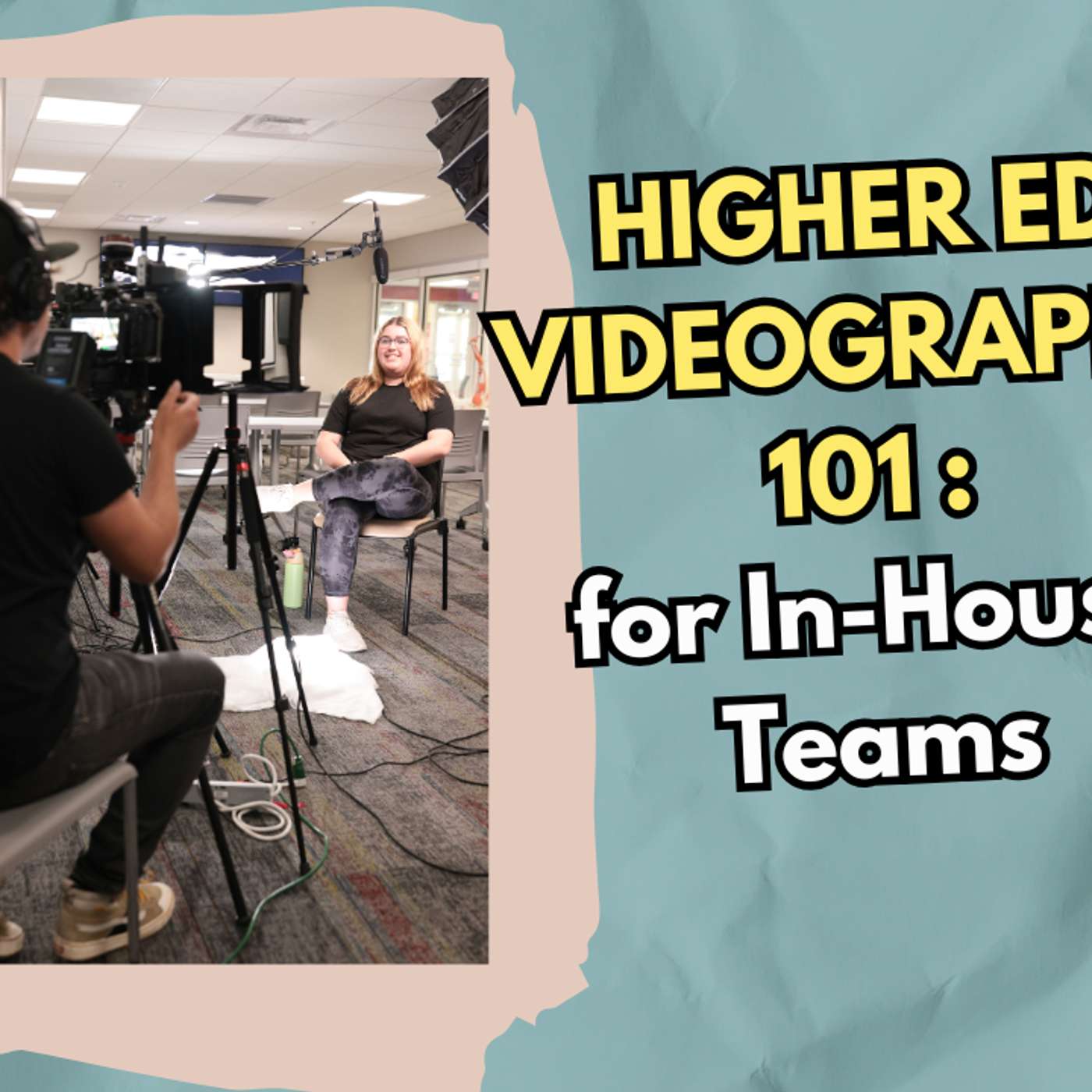
#107 - Higher Ed Videography 101 for In-House Teams: A Crash Course in Elevating Your Videos
Apr 2200:39:43Tap to summarizeIn this solo episode, John breaks down the fundamental camera settings and workflow decisions that can immediately elevate your video quality—whether you're brand new to video or looking to refine your technical foundation as an in-house higher ed videographer.Key takeaways:The four critical camera settings: frame rate (shoot 24fps for cinematic look), aperture (lowest f-stop for background blur), shutter speed (set to 2x your frame rate), and ISO (keep as low as possible to avoid grain)Why shooting in 4K but editing in 1080p gives you flexibility without unnecessary file sizesThe case for auto white balance in run-and-gun scenarios to avoid color correction nightmaresWhy shooting in LOG color profiles often creates more problems than it solves for in-house teamsHow to avoid the two biggest stabilization mistakes: micro-jitter from handheld shooting and overusing gimbal shotsAudio quality matters more than video quality—record directly into your camera and hide those lav micsThink about workflow and asset management, not just the single video you're making right nowConnect with John:Email: john@unveild.tvLinkedIn: https://www.linkedin.com/in/johnazoniWebsite: https://unveild.tvNewsletter: https://unveild.tv/newsletter
Transcribe →
#106 - CRUSH Yield Season With a Simple Google Doc w/ John Azoni
Mar 2500:24:01Tap to summarizeIn this solo episode, John addresses a critical gap in how colleges use video content during yield season. Most institutions have great video content scattered across platforms, but admissions counselors often don't have easy access to share it in one-on-one conversations with prospective students—exactly when it could make the biggest impact.Key takeaways:Video shouldn't just be a broadcast tool measured by views—it's a powerful one-to-one communication assetFive strategic views from an admissions counselor to fence-sitting students may be more valuable than 5,000 algorithm-driven viewsMarketing, social media, and admissions teams often operate in silos, missing opportunities to leverage existing contentA simple Google Doc library organized by student questions can bridge this gap in an afternoonDon't just rely on the algorithm to deliver your content—be the algorithm by hand-delivering the right video at the right momentMeasure success not just through broadcast metrics, but through counselor feedback on whether videos helped close enrollment gapsResources mentioned:Free Google Doc template: https://unveild.tv/strategytoolboxConnect with John:LinkedIn: https://www.linkedin.com/in/johnazoniEmail: john@unveild.tvWebsite: https://unveild.tvNewsletter: https://unveild.tv/newsletter
Transcribe →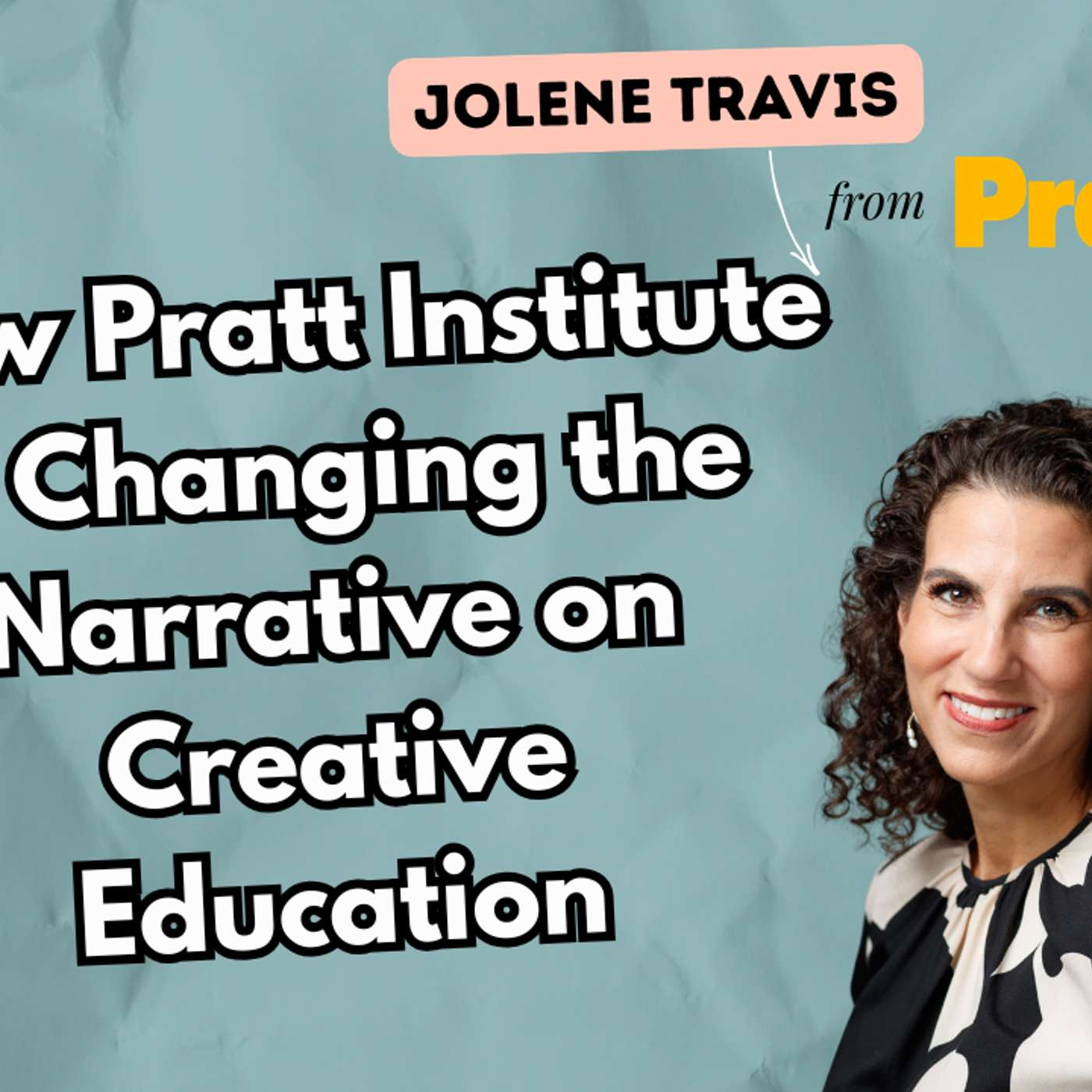
#105 - How Pratt Institute is Helping Change the Narrative on Creative Education w/ Jolene Travis
Mar 1100:48:10Tap to summarizeMy guest today is Jolene Travis, Assistant Vice President for Communications and Marketing at Pratt Institute. In this episode, Jolene shares how Pratt built a comprehensive campaign to combat negative headlines about creative arts education and shift public perception.Jolene discusses the "Power of a Creative Education" framework that emerged from a single question from her president: "What are we going to do about these headlines?" She walks through the internal process of building messaging that all stakeholders could see themselves in, the importance of listening to faculty pushback, and how strategic media relations generated nine top-tier placements including The New York Times, NBC Nightly News, and WNYC—all amplifying a counter-narrative that painting and drawing programs have waiting lists while critics claim art school is dead.Key Takeaways:GEO (Generative Engine Optimization) is critical for higher ed—95% of AI citations come from earned media, not your website.A creative education teaches critical questioning and problem-solving, not just technical skills—it prepares graduates to pivot across industries.Internal alignment on messaging is non-negotiable—if faculty and staff don't see themselves in your framework, it won't work externally.Success in creative fields isn't always a Google salary—art residencies, grants, and having a "bar gig that supports your creative work" are valid markers of success.The most compelling messages often come from proximity to leadership—Jolene captured "there's a waiting list for painting and drawing" from staffing her president at an event.A single data point (applications up in fine arts) became the foundation for 9 major media placements when paired with proper media prep and relationship building.Partner with peer institutions rather than compete—a chorus is stronger than a single voice when shifting narratives.NBC produced a full campus segment without ever visiting campus because Pratt had organized B-roll in their digital asset management system.Zoom waiting room videos are an overlooked touchpoint—Pratt's 30-second video plays in 60,000 meetings annually, creating brand impressions before conversations even start.Start your campaign by listening, not by pushing out your message—understand what the other side is saying first.Holiday breaks are ideal times to think through big strategic challenges.Connect With Jolene:LinkedIn: https://www.linkedin.com/in/jolenetravis/Resources Mentioned:Pratt Institute websiteBynder (Digital Asset Management system)Muck Rack GEO reportThe New York Times: "Pratt School of Art applications up" coverageWNYC/Gothamist: Trend piece on NYC art school applicationsNBC Nightly News segment on AI and creativityBlog post on Zoom waiting room videos: https://unveild.tv/blogConnect With John:LinkedIn: https://www.linkedin.com/in/johnazoniWebsite: https://unveild.tvNewsletter: https://unveild.tv/newsletter
Transcribe →