← Highest Self Podcast®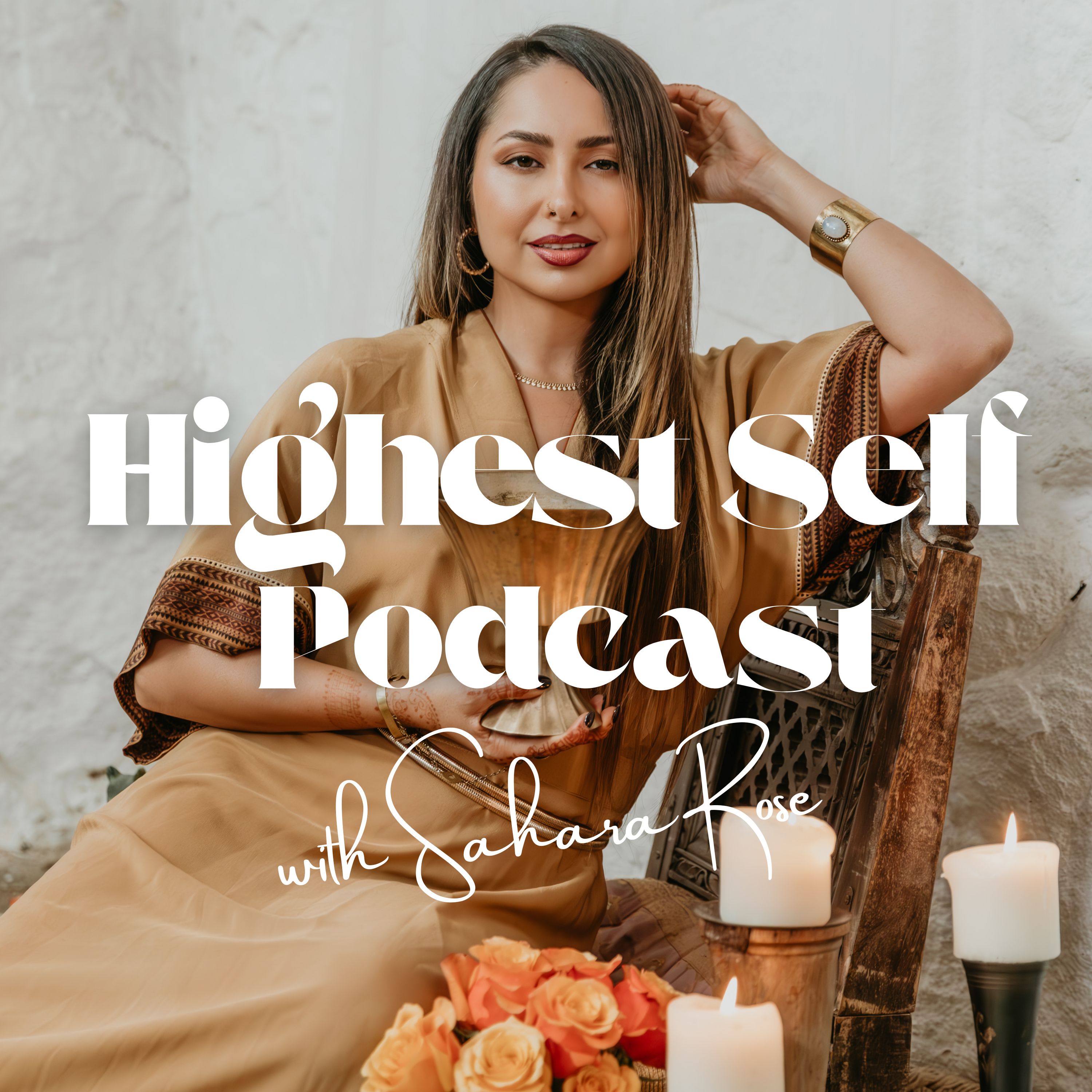
Highest Self Podcast®
647: She Left Everything And Became A Monk In India- Here's What She Has To Share With Us with Sadhvi Saraswati
01:19:37
Loading summary
Transcript77 lines
- [00:00]
A
Feminine and embodiment and tantra. Where does it actually come from?
- [00:04]
B
There's kind of every possible way of connecting with the divine under the umbrella of Sanatan Dar, an eternal that has to do with us recognizing and realizing that who we are is not the body. A path that takes us out of suffering into truth.
- [00:24]
A
I've heard so many women, and I had this one thought, I'm too masculine.
- [00:27]
B
So many of us are boxed into what it means to be feminine. And it's like, well, sometimes she looks like Lakshmi and sometimes she's like Saraswati, and sometimes she is Makal.
- [00:43]
A
Personal question that I have, and I know so many listeners of the podcast do move to the Himalayas or stay on Hinge. Which one do we do?
- [00:51]
B
I think first of all, it's really important. Spiritually powerful, embodied partnership of masculine and feminine is absolutely possible.
- [01:21]
A
Welcome back to the High Self podcast. My name is Sahara Rose, and on this podcast I love to talk about spirituality, but make it modern, fun, grounded and relatable so it can actually serve your needs. So this summer I was teaching at Mindvalley in Amsterdam when I came across this very eloquent and grounded teacher named Sadhvi Saraswati, who I have seen in the spiritual circle before but had never gotten a chance to sit in the lecture of. And I just loved her angelic frequency. She's so light and pure and knowledgeable. And she has an incredible story of being raised in the United States and moving to India and now being the co founder of the Ganga Aarti, which is the largest daily spiritual puja ritual that's on the Ganga, which is the Genghis river, the holy, sacred river that you see people taking the dips in in India. So I was just amazed by her empowerment. She. She speaks around the world about. About women's rights and spirituality to the UN and major governmental and is really led by the heart. So I'm so excited to have her here on the podcast today. We speak a lot about, first of all, understanding spirituality, the different forms of it, the form of it that many of us resonate with but we don't really know about. If you're into yoga, Ayurveda, past lives, soul ages, dharma, your soul's purpose, karma, like all of these themes that we speak a lot about in spirituality and definitely here on this podcast, it all actually comes from this term called Sanatan Dharma, which is the practice of truth, which is the ancient Hindu teachings that are not a religious thing, but it's actually a way of seeing and experiencing Life. So we speak a lot about that. I've never seen it really been broken down on a podcast before. And I felt like it was really important to, because a lot of us are kind of like tiptoeing around, like, you know, what is okay to say, what is cultural appropriation? And we really break down that topic as well. And then I ask her my personal questions. I'm like, it can sometimes just feel like as a spiritual woman, it's so hard to date and feeling mad and communication and non negotiables and standards and all of the things. So we have a satsang at the end where I ask some of the questions that you guys have. I know so many of you guys have gone through your own dark nights of the soul through love, whether it was divorces, breakups, just, you know, separations that rocked your world and are really desiring this higher level of love that you know is possible. But then you're looking out in the world around you and you're like, but where is it? And so I ask some of our questions collectively to her. And before we get into this episode, be sure to hit subscribe. That allows you to stay in the loop for future conversations. This podcast is also on YouTube, so you could be watching us in person, Spotify video, and the Apple Store. So be sure to subscribe to stay up to date with future conversations. And let's get into this one. So without further ado, let's welcome Sadhvi Saraswati here on the Highest Self podcast. Well, welcome, Sadviji to the Highest Self podcast. I am so honored to have you here today.
- [04:38]
B
Thank you so much. And it's such a joy to be with you and finally have the opportunity to come together in this.
- [04:47]
A
Yes, it feels like a surreal dream when you see someone in one capacity. So we met in Amsterdam at Mindvalley several months ago and have been in contact. And I'm in divine timing coming to Rishikesh, to the Ganga Aarti. And now we're here in Los Angeles, which is where you started your journey. So can you share a little bit about how you went from Hollywood to the Himalayas?
- [05:08]
B
Yes, yes. And it, it's quite a literal Hollywood to the Himalayas. I grew up here quite literally in Hollywood and had what those of us in the west, although now more and more in the east as well, are told. You need to be happy. You know, we're given this happiness equation. If you want to be happy, you need the right education, a good education. You need to live in the right area of town, go to the right school, know the right people, own the right things. You know, we're given this, this equation, the money and the opportunity and the privilege and etc, etc, and then you will be happy. And I had all of those things. And yet there was such an emptiness inside. But I wasn't aware of the emptiness as emptiness. At that point of my life. I was not spiritual, I was not religious. I was not even one of those who say, well, I'm not religious, but I'm spiritual. I was an academic. I went to Stanford University. I graduated from Stanford. I was in the midst of getting a PhD in pediatric neuropsychology. And so I had all of this on the outside. If you had looked at me, you would have said, oh, this girl's got it all. And yet on the inside, there was a lot of suffering. And one stream of suffering was just that general emptiness of, hey, guess what? These things don't actually bring happiness. So if you think that's where your happiness is going to come from sooner or later, typically sooner, you find yourself quite empty and wondering, does happiness even exist? And if so, where does it come from? But then I also had another stream, which was a stream of personal trauma in the midst of all of the beautiful blessings and opportunity and prosperity and privilege. I also had been severely abused in early childhood, severely sexually abused and then abandoned. And in my adolescence, I was deathly bulimic, in and out of hospitals and eating disorder centers and regular hospitals, and got to a point where by my mid-20s, when I went to India, finally at 25, where I felt like I was managing things that, okay, there was the stream of emptiness, there was this stream of suffering and trauma. And yet I got to a point where it seemed like, all right, we got things under control. I'm in the midst of this PhD program, doing well. I was married and managing a relationship and my emotions and my schoolwork and social circle and the whole thing, I felt like it was, yeah, we now have this under control. What no one had ever told me, though, was managing your life is obviously much better than not managing your life, but it's not the highest goal. The highest goal is freedom. And no one ever said to me, you know, you can actually be free of this. What I was taught was, you can learn to manage it. But freedom. I didn't know anybody who ever talked about freedom or a higher self, or a true self, a divine self. The idea that I was not the story of the abuse, the abandonment, the addiction, the depression, the eating disorder, or the story of the prosperity or the privilege. The idea that I wasn't those stories never occurred to me. I was so identified as the stories that in some cases it led to incredible suffering. In other cases it just led to false identification. But the idea that there was something else never, ever, ever occurred to me. And I'm not even sure that I would have believed someone if they had said it, but I didn't know anyone who said it. And at 25, I find myself on an airplane to India. I was in the midst of this PhD program, so it was definitely meant to be a short trip, a one semester off trip. And I was going because my husband wanted to go. I didn't know anything about India. I was not on any kind of a conscious spiritual journey, but he wanted to go. And I was a very strict vegetarian and I had done a lot of traveling. I loved to travel. And what I had learned as I traveled in different parts of the world was that if I could just find an Indian restaurant, I could actually get real vegetarian food. Like not rice that was cooked in chicken broth, not a salad that had eggs or fish on it, not things that had chicken broth as the base of a vegetable soup, but real vegetarian food. And so I agreed to go, not knowing anything about the country, not knowing anything really about the culture at all, not even being drawn to it on any conscious level, but because I liked the food and to make my husband happy. But on the airplane, I had a moment that transformed my life. And it was a moment in which I took a vow to keep my heart open. And that was just it. I said, I don't know why I'm going, but I'm going to keep my heart open to find out why I'm going. Because the reasons of getting good vegetarian food and to keep my husband happy, neither of them really hit very deeply inside of me because I was not an obedient wife like that. And I was living in the San Francisco Bay area where I got good Indian vegetarian food on my corner. So it made no sense. So I took this vow that I would keep my heart open. And that vow ended up leading me to Rishikesh, to the banks of Ganga, to the extraordinary spiritual transformation, awakening, connection, truth, ripping off of the veil moment that happened literally within 30 minutes of getting to Rishikesh. We opened up a guidebook in Delhi. It was 1996, so there was no Google. There was obviously no AI, but not even Google. We had a 500 page Lonely Planet guidebook. And I said, rishikesh get to Rishikesh. And I said, I'm going down to the river. I didn't know the river was holy. I didn't know Ganga was the mother Goddess. I just knew river. I'm nature person. I'm going to sit on the banks of the river, I get down to Ganga and as I look out over this sacred mother goddess river, I was gifted with this experience of being in the presence of the divine. And as I said, I was not a religious person. This was not an experience that I anticipated or even was intelligent enough to have prayed for. If I knew it was possible, I would have prayed for it. But I didn't know it was possible. And suddenly everything I looked at, whatever I saw was pervaded by the divine. It began as I looked out over the river Ganga. But then as I moved my head, it didn't matter what I was looking at, it all was, was divinity. And it was, you know, a telephone pole, a tree, a marble step, a child, it didn't matter. And then I turned that vision inward and suddenly I realized, oh my God, I am not tainted. I'm not wrong, I'm not dark, I'm not impure. There is not something lacking in me as I had always felt. Oh my God, I am inseparable from this presence of divinity. There's no place this divine ends and I begin. There's no place I end in the universe begins. And it knocked me to the ground in ecstatic tears, tears of coming home. And that was it. So, you know, obviously there was almost 30 years since then, so there was a lot more, but that was really the main turning point. But I want to just highlight that vow on the airplane because it was that that enabled everything else to take place and it enabled me to be open to that moment even as the hardcore scientist and non religious person that I was. It enabled me to be open over the next week or two weeks to a voice I heard that literally said, you must stay here, to an experience of having my feet literally glued to the ground, the astram, and not being able to walk out. It enabled me to be open to finally forgiving and letting go of the trauma of the pain, of the anger, of the identification as the one who had been wronged, to finally forgive and let go. Everything that happened after that moment happened because I had taken this vow to be open, to be willing, to be trusting and to really, you know, I call it trust fall into the universe. And I had no idea what I was trust falling into. But thank God, some higher Part of me made me take a vow. Otherwise the me of 25 never would have believed in or accepted or allowed all of that which unfolded. And that has actually given me over the last 30 years just the most extraordinary, extraordinary blessed life.
- [17:24]
A
If you're listening to this podcast, thinking, damn, I wish I had my own. This message is for you. Hi, I'm your highest self telling you to start that damn podcast because you are sending 20 minute voice notes to your friends going through wellness, spirituality, relationships, healing, the state of the world and people get to hear it and receive it because it can help a whole lot of people. But I know, I know, Sahara. I don't know how to get a podcast off the ground. I don't know the tech. I don't know how you get it on your Instagram and these reels and they're edited and then it's on YouTube and it's on Spotify. Like what is your whole workflow practice? How many hours a week does it take? Plus, I have so many different interests, I don't even know what my podcast would be about. If I'm speaking your brain right now, then I got you, girl. So I recently started my 10 person podcast mentorship. It is the most intimate container I have ever coached and I am obsessed with it because I am personal in the weeds with you. Talking about the name of your podcast, what the image for it will be, giving you time and some suggestions for your photo shoot. The description of your podcast, whether it will be solo casts or interviews, giving you time and space every week so you can practice interviewing, practice solo casting, giving feedback. Not just me, but all 10 of us in the container on our Slack channel of oh, try this, try that. Everything you need. Literally my exact workflows that I'm going to be screen sharing with you of how I go from recording my podcast to my team executing and editing and getting it out there and everything that you need and what I would do if I were starting today. I started my podcast nine years ago, so I know a thing or two. I have been consistent. I've never stopped podcasting because it's been very, very easy for me. Very, very fun for me and hands down, the best decision I've ever made. I have made a lot of money, my best friends, incredible contacts. I mean, I get to interview people who I wish I could have a conversation conversation with from Richard Rudd, the founder of Gene Keys, Sudhguru, Deepak Chopra, Don Miguel Ruiz. But most importantly, I found my own voice, my ability to speak in this way without saying ums and likes. Through podcasting, I have found my people, my soul tribe, and the list goes on. I really feel starting a podcast is the best decision I've ever made. And now starting this podcast mentorship is the second because I get to share this gift with other people in this really beautiful and intimate way. And I know that it will change the traditional trajectory of your life should you choose it. So doors are open now for my March cohort. It is only 10 people. First come, first serve. If you're listening to this later, I will still have another cohort in the future. So you can head over to the same website. You can find the link in the Show Notes has all the description of what goes on every single week, how it's laid out. It's all live on Zoom two hours a week. And I am so excited to see you there. So head over to the Show Notes to get started and I can't wait to meet you and support you with your podcast. Such a beautiful story. And I think we can all resonate with feeling spiritually called somewhere that maybe came forth in a unique way of I just want the food or I was invited on a trip or I don't even know why I'm going here. And then the intention of it unfolds when you surrender into opening your heart. Why do you feel you had that experience in Rishikesh? Do you feel it was the vibration of the place, the Ganga? Just the fact that you were more heart opened? Why do you feel it needed to happen there?
- [20:50]
B
So I believe very much in what we call Dharma or purpose or divine plan or karmic journey. I mean, it doesn't matter exactly how you define it or articulate it, but I deeply, deeply believe that we all have a. A path and unfolding and that what the universe gives us is exactly that which is most conducive for our own blossoming and our unfolding. So I know that my Dharma is to be in Rishikesh. It's very clear to me now. When I look at my life, I look at the beautiful ways that I've been blessed to be able to serve and to offer to others from this wisdom and lessons that I've been given that that's where I was meant to be. So I think I had to be given the. The experience there in order for me to stay there. Otherwise, I mean, I was already registered for the next semester of my PhD program as I ment I was married. I mean, there was no way that I was going to leave this and Move there if I hadn't had such an undeniable experience. But I think there's another important piece there. When you say, was it just that I was open to it or something there? You know, Rishikesh is a spiritual energy vortex portal, sacred spot on this planet. There is a reason that when the goddess Ganga came in the beautiful stories from the heavenly realms onto earth, that she fell right there. She could have come down anywhere, but she fell right there. So the presence of this sacred river, of course, has increased the power there. But it was already powerful enough that it drew her to come onto earth at that spot. The Himalayas, or the Himalayas, as we say in India, are sacred mountains. I mean, there is a reason that the sages and the Rishis and the yogis and the mystics gathered there. Mountains in general are sacred, I think, but the Himalayas are super special. You know, in the Bhagavad Gita, Krishna says of the mountains, I am the Himalayas, of the rivers, I am the Ganga. So when you've got a scripture in which this being as the divine on earth is saying, of the mountains, I am the Himalayas, of the rivers, I am Ganga, there's a power that's there. And there's a reason that whether it's yoga, whether it's meditation, whether it's Ayurveda, we can turn to the Himalayas and the sages and the yogis who were there and say, oh, here's where it was channeled. Oh, here's where a Rishi sat and channeled this truth. Oh, here's where a yogi sat and channeled this practice. So I don't think it was random at all. I think that there was such a, and there still is such a powerful energy there that if you are open to happens. I mean, I've seen it happen now to innumerable people when they come.
- [24:58]
A
That's what I love about travel. Each place carries unique frequency that only when you step onto that land you can receive the transmission of. And that's the thing that no AI or video or anything can replace. And even stepping into certain temples, you know, like I went to this very powerful South Indian Kali temple and I began channeling Kali and my thoughts shifted. My consc. Just the trains and how I saw the world, it shifted. And I was like, why am I thinking in this very non dual way now? And it was like, oh, it's because I went to that Kali temple and I was just seeing it and it really is. And I shared with you, you know, right now there are all these protests happening in Iran, and this person invited me to this Krishna temple that I had been meaning to go to, but it just wasn't a priority right now. And I went. And then all of a sudden, that bhakti is coming through me. And it's was a reminder of how I meant to share with that sweetness, with. With that joy, and not to get lost in the righteous anger that's very prevalent right now. So I do feel we get these little, you know, like coins in our. In our packet from all these different sacred.
- [26:08]
B
Well, remember, by the way, that Krishna is such a beautiful embodiment of the warrior energy. He drove Arjun's chariot in the battle of Kurukshatra. He was a king with an army. And yet, whether standing on a battlefield, driving the chariot, delivering the Bhagavad Gita, or playing his flute in the beautiful lands of Vrindavan, Gover, then Gokul, all of that, the sweetness was there. He lost it nowhere. He didn't lose the sweetness. He didn't lose the song. And it's such a beautiful teaching because it reminds us that spirituality and love and devotion and sweetness does not make you a doormat. Does not. It is not proclaiming to the world, walk all over me. I'll be your punching bag. No problem. It's not weak. It's not passive. It's strong, but it's strong and sweet, strong and loving. It's a fierce love or a love that certainly can be fierce. And I think at times like this, it's such a really important reminder that it's not that we have a choice between being spiritual or being strong
- [27:51]
A
or
- [27:53]
B
standing up for what we know is right. Standing up for Dharma or having faith in God that Krishna is really the embodiment of. Yes, and.
- [28:06]
A
And what I love about Sanatana Dharma, and if you can also explain what that is, is that there is a story deity for everything. You know, like whatever you're needing. It's like, oh, it's. It's Lakshmi's energy or Radha's devotion or Saraswati's creativity. And to me, I feel so met wherever I am. Because I've noticed in different, like Abrahamic religions, it's very one way. This is the one path, and you don't question it. This is the book. And what I love about Sanatana Dharma is like, it's ever moving and changing. And you're very involved. You are in the temple. You're not just sitting there listening to some guy give a lecture. You're singing now you're receiving flowers. Now you're getting candies. Now you're gluing a circle around here. Now everyone's doing a dance. You've joined the dance and it's like you're. You're in it, you know? So can you explain? Someone hasn't heard what is Sanatan Dharma?
- [29:01]
B
Sure. First of all, Sanatan Dharma is the Sanskrit for and the traditional way of what today is understood as Hinduism. So just to give that to people right off the bat, it's the way that we refer to the Hindu religion. But it's actually, it's really important because it's not just a semantic difference, it's a deep difference. Religions tend to be dogmas. We believe in dharma, which again is purpose, right path, right way, highest truth, highest way. Dogma is a box. Dogma is, here's a list of the 10 do's and 10 don'ts. Or here's what makes you a good person or a good person of this religion. Dharma is, as you say, it's moving, it's flowing. Because for something to be eternal, it has to move and flow. Anything that is stagnant, it festers. In India, where we have malaria and dengue fever and all sorts of diseases by mosquitoes, what you learn is if that water is stagnant, that's where you get diseases. If the water is flowing, that's where things are clean. And so you would never drink water that was stagnant. The stagnant water breeds disease ridden mosquitoes. And the same thing is true in life. If we are stagnant in our beliefs, if we say, okay, this is exactly how it was spoken at this time, and in its rigid, unbending stuckness in time, in place, in situation, it has to be true today in the specifics of time, place, situation, it can't possibly be eternal. Sanatan means eternal. For something to be eternal, it has to flow. If you take the Bhagavad Gita, for example, it's a song, Gitamin song. It's a song that was sung in the form of this dialogue from Krishna to Arjuna, standing on a battlefield in Kurukshetra thousands and thousands and thousands of years ago. But the truth of which he speaks is still true today. Time and place is different. Culturally, things are different. But the truth is neither time bound, nor space bound, nor culture bound. It is the truth of the soul. All of that which is eternally true has to be that which can embrace all time and also all space. So when we say eternal it doesn't just mean, oh, that which was true thousands of years ago is true today. But it means, oh, that which was true in Kurukshetra in North India is also true in la, and it's true in New York, and it's true in London, and it's true in Paris, and it's true in Tokyo, and it's true whoever you are. Otherwise, it's not actual truth. So Sanatan Dharma is an eternal way of life, an eternal purpose, an eternal path that has to do with us recognizing and realizing that who we are is not the body. We have a body. It's beautiful. It's wonderful. It's a temple. We should celebrate it, honor it, but not identify as it that who we really are is soul. And this is what I have been calling the Hollywood to the Himalayan mindset shift since my memoir, Hollywood to the Himalayas, came out, which is the story of my journey. I've realized in sharing it with people that because so many people in the beginning would say, well, I'm not from Hollywood, or, well, I can't go and live in the Himalayas. And the mindset shift is actually the one that's the most important. And it is a mindset shift from dogma to dharma. And it doesn't matter where you live, and it doesn't matter what your religion is. It doesn't matter what your culture is, your language is, your ethnicity is. None of it matters. What matters is that you shift from what I call the Hollywood way of thinking, which says you are your body, its size, its shape, its color, its history, what's happened to it, what it's done, how much somebody's prepared to pay it to do what it does. And in that mindset, we suffer. We suffer because we're never successful enough. We're never beautiful enough. We're never popular enough or happy enough. We're constantly in competition. We're constantly feeling lack. And so we're constantly trying to kind of gobble up the world. Our shopping therapy or eating therapy or alcohol drinking therapy or whatever we're doing to try to numb that feeling inside not only ends up causing more suffering for us, but ends up harming the planet, harming others in our competition, in our jealousy, in our trying to gobble up the resources, because I feel empty, so I need to feel full. The mindset shift says, from the Hollywood way to the Himalayan way or Himalayan way that says you're not a body. You have a body, but you are soul, you are spirit, you are consciousness, you are divinity, you are Truth, you are infinity. And in that shift is where suffering ends. Because then who to be jealous of, who to be in competition with? There is no other. It's all self. And then suddenly there's no need to gobble anything up, because I'm whole, I'm full, I'm complete. And that shift is really what I've seen is the. The shift from suffering to an end of suffering. So Sanatana Dharma is a path that takes us out of suffering into truth. Not a religious truth, not a truth that requires you to even believe that Krishna is an embodiment of God. Doesn't matter. There's lots of people who subscribe to Sanatan Dharma who worship the divine in different ways or who don't even worship the divine in form, but who worship a nameless, formless, supreme reality. There's kind of every possible way of connecting with the divine under the umbrella of Sanatanda.
- [36:54]
A
I love that. Thank you so much for the explanation. And for someone who's listening and they say, you know, I'm really drawn to your guys's vibe and your outfits. You guys seem to have figured something out. But, like, I'm so scared I am. Cultural appropriating. What advice do you have to share on this?
- [37:11]
B
Oh, that's such a good question. And the whole cultural appropriation thing is so important on so many levels, and it's also a huge tragedy on another level, because Sanatan Dharm has actually always said, this is for everyone. Take it. Make it your own. Adopt it. You must have seen in India and even across the world, but especially in India, so many people of so many religions who come in. And sure, some of them, a tiny number of them, may actually decide that they want to adopt a Hindu way of living, but the vast, overwhelming majority of them stay identified with the religion of their birth, of their family, of their background. But they adopt a way of thinking that actually ends up simply bringing them back home to their true self. Which, whether that's in a Christian family or a Jewish family or the family of any other religion in the world that they may be part of, it doesn't matter, because what it's giving them is an understanding of who they are as they navigate their path on planet Earth. And the Dharma is not something that cannot coexist with other religions. And so nobody should feel in any way, unless you're going to turn it into a commercial venture, that they cannot adopt Sanatan Dharam for fear of cultural appropriation. The only piece that I would really recommend and emphasize is make sure you get it in the depth of it. The thing that becomes problematic is when we get a tiny piece of it, we pull it out of context. We then wrap it up in our Western kind of rationalization. Like, I cannot tell you the number of people who have tried to kind of pass off promiscuity as tantra, for example. And there's a lot of these types of things where you take an idea, take a teaching that is so deep, that is so rich, that is so complex, and pull just a very, very superficial, simplistic idea of it, not necessarily on purpose. Maybe that's all that you've learned. Maybe that's all you've heard. Maybe you got it from someone who didn't really understand the depth of it. Maybe you only read, you know, the first paragraph of the first chapter of the book and then put the book down. And then people feel like they're experts in it, and they give themselves these spiritual stamps on what's exactly the same way that they've always been living. But now I've got this spiritual Hindu yogic, sanatan dharam stamp of approval on it. So I would really obviously caution against that because it's not only is it not helpful to the Dharma because it's giving incorrect perceptions of that, but it's also not helpful to you because the role of Dharma is not to just help you justify ways of living that may or may not be in your highest benefit, but the role is to actually help you anchor and ground and connect in your highest, deepest truth, and then to live accordingly. But if you're using it to just justify and explain and rationalize the way you've been living, it's of no benefit at all.
- [41:35]
A
Are you calling in your spiritual soul fam, those besties who get you on a ride or die level people, people who you can gather with under the full moon and talk about your intuition and what you're manifesting and help rise each other up rather than tear each other down. If you are done with the sister, wound with gossiping, with all of the ways that women have been taught to see each other as competition, but rather you're ready to gather in sacred circle to share what you're calling in, to dance, to sing, to breathe, to dive deep into the ancient and sacred ways, then rose gold goddesses is for you. Every single month, we gather in a sacred zoom circle where we hold space, we tune into the astrology of the month, and we do practices like rituals, ceremonies, dance, movement, and so much more. So if you're ready to connect your intuition, your embodiment, and do so with connection, community, with Soul Fam, who get you on a deeper level, then I invite you to join Rose Gold Goddesses. You can find all the information below to join us for our next circle. And I can't wait to meet you inside. Exactly. And I feel with this cultural appropriation conversation, it actually makes people only feel safe in the predominant culture because white is right. So if you are following the mainstream Christian Abercrombie and Fitch, you know, commercial way of living, you're not offending anyone. But it's sort of like what was created to uphold these cultures is making people afraid of tapping into them because they're so afraid of being on the wrong side that they're not. They abandon yoga, they abandon learning about goddesses and going into this beautiful mystery school that will take you on the journey you're meant to go to. I mean, I've been on this journey for more than 10 years. You 30 years. And it's lifetimes. It's lifetimes. And I feel so many of we deeply resonate with Indian culture. I know from the time I was a child, I saw Bollywood, I was like, what is this? You know, and yoga and Ayurveda and the next thing. And so many of us, we have these past life remembrances and we're drawn in something in it, it holds true. I mean, just a specific frequency of peace, of upholding the feminine of shakti being the cornerstone. The way that the feminine, the yoni, is seen as the most sacred thing. I've not seen that in other religions and, and cultures. And that to me is what kept bringing me back. And that's why I wanted you to share about it because I feel so many of us, we have conversations about the feminine and embodiment and tantra and these different things. Well, where does it actually come from? And this is actually the way exactly to not appropriate to learn its roots.
- [44:28]
B
Absolutely. And just to doubly, triply emphasize for people, dive into it, take it on. And it doesn't mean that you have to take on all of it. It doesn't mean you have to become a vedantic expert. It doesn't mean you have to become a Krishna buck. You can pull in whatever parts of it touch you and help you touch the deepest parts of you. And so if it's worship of the Shakti, beautiful. My God, we live on the banks of a river, worshiped as the mother Goddess. We celebrate more than 20 days a year, are dedicated Kind of exclusively to the worship of the Mother Goddess all the other days as well. When we pray, we always pray to the Goddess. But we have two holidays of nine days each called Navaratri, which are dedicated literally only to the worship of the different forms of the divine feminine. And then we have several other holidays that are, you know, Diwali is Mahalakshmi. And so it is a dharma of the power and the presence of shakti with Shiva, what we call Purush and Prakriti. But if you see, for example, the way that the divine is spoken of, it's always Shakti first. So we say Radha Krishna, Sita Ram, Lakshmi Narayan, it's always first Shakti. And even in the prayers, there's a beautiful prayer that we chant very, very frequently. It's one of the core pillar prayers that says tvameva, Mata Tvameva, you are the mother, you are the father, you are the friend, you. And it goes into this beautiful, beautiful prayer to the divine. But first, you are the mother, Chapitva, you are the mother, you are the father. So it's always first mother, first Shakti, first the feminine. And it's exquisite and extraordinary and so deep and so palpable. And the presence of love for the Goddess in all of her forms, from Mahalakshmi to Mahakali. As you spoke to Mas Saraswati, I come from the Saraswati lineage. And all of these aspects of the
- [47:23]
A
Goddess, looking at her, the whole didn't even put. She's my main as well.
- [47:28]
B
So yes, all of the aspects which I think, by the way, is so powerful for all of us, but especially for women in general, where so many of us are boxed into what it means to be feminine. And it's like, well, sometimes she looks like Lakshmi and sometimes she's like Saraswati and sometimes she's Brahmacharini and sometimes she's Skanmata and sometimes she's all these different forms. And hey, sometimes she is makali, sometimes she's mad to work at. You know, she's. Sometimes she's part of it, the all of these different incarnations of the same Goddess. And it reminds us of the inherently divine fullness of the scope of the divine feminine.
- [48:23]
A
And it's so important where we have simplified divine feminine, soft, receptive, masculine action oriented, assertive. Because then we make ourselves wrong. I've heard so many women and I had this one thought, I'm too masculine. I want to do too much, I'm working too much. I'm too ambitious. It's my masculine. I Have to tame the masculine in me. It's like, hello, dude. Like, hello. Like all, like all of these energies come from strength. And what is a woman who's birthing it is the strongest thing. Like, it is literally the mother is the most powerless. And we've made it in this patriarchal world of like, the man is the protector. I would say there's nothing more protective than a mother.
- [49:06]
B
Yeah.
- [49:07]
A
That is ultimate protection. That's why we add ma to the end of all.
- [49:10]
B
Try to, try to walk between a mother bear and her cubs and you will have immediate darshan of the power of the mother.
- [49:23]
A
Exactly. But in a lot of our, you know, Abrahamic, and they've been adapted as well to simplify the feminine. Mother Mary, she's a virgin. She's so pure. She's not even of this earth. So then the part of you that's human is shameful and wrong and sinful. And when you feel inherently wrong, you're going to be looking at something else. Father up there in this hierarchy. And so it sets you up in this hierarchical thinking that you'll never win and you just have to repent and repent and hope maybe one day you'll be good enough to get out of here. We chose to be here.
- [50:00]
B
Yes, we did. And we chose and we chose these bodies. And this has been for me, a really interesting part of the path because as a culture and a religion, a dharma that worships the divine mother and the feminine. Nonetheless, culturally and especially in the religious, spiritual culture, there are not very many female spiritual leaders, especially in the monastic tradition, the sannyas tradition. And it's been such an interesting journey for me because there's definitely, tragically, a cultural and societal sense around the male being that which people want, you know, one of the tragedies. And it's getting much, much less, thankfully, as time goes by, it's really by God's grace, getting less and less. But nonetheless, there's still a tragedy around, you know, female feticide or infanticide of girls. And the idea that if one has boys, you are luckier. And a lot of it is just cultural because the boy stays home. When he gets married, the wife comes and lives at home. So you started with one kid, now you've got the daughter in law as well. So you've got an extra set of hands around the house, you've got extra help. Whereas the daughter, traditionally, when she gets married, goes off and lives in the husband's house. So when you're dealing with and the
- [51:50]
A
dowry involved, which exactly Exactly.
- [51:53]
B
Even. Although thankfully, issues of dowry are getting less and less common, it's, you know, been made illegal. Nonetheless, there's still the sense where when a boy gets married, the bride comes and lives in the groom's home and becomes an asset to his house, whereas when a girl gets married, she goes off and becomes an asset to someone else's house. So when you're poor or have limited financial resources, from a purely practical, not actually gender based, from a gender standpoint, but from a purely economic standpoint, the boy is seen as more valuable because down the line, a, he's going to stay with you, help out, work in the field, go into business, bring money home, but then he's also going to bring home this wife who's going to help out. So a lot of it's cultural, but the point being that for me and for other women in the world of religion in India, it's a really interesting situation because it's definitely a man's world and it's definitely a world where the men are seen as higher than, better than pure than all while they're worshiping Ma Durga, Makali, Malakshmi, Radha, part of it, the. Etc. But it's been a really powerful journey to embrace the culture, the Dharma, the tradition, and simultaneously continue to celebrate
- [53:50]
A
the
- [53:50]
B
female body that I'm in and to hold both of those truths simultaneous.
- [53:59]
A
Yeah, I mean, a whole separate conversation of like, how did India become patriarchal when it's goddess worshiping? But we'll say that for the next one. A personal question that I have, and I know so many listeners of the podcast do, are. So I made a funny Instagram reel. It was like kind of a joke, but not a joke. And it was me creating these sand mandalas with these beautiful llamas, Tibetan llamas. And it says when he texts to try to get back with you, but you've already decided you're becoming a Buddhist monk and you like, legit did that. But no. And so I feel a lot of us were like, in this in between of wanting true love. And you know, that like Adam's family, Morticia and Gomez, like, just like, oh, it's just so romantic and the family and that. And it's so real, whether it's our conditioning, whether it's our feminine heart, that Radha energy, you know, sometimes before I sleep, I think of Krishna and Radha frolicking in a flower field. And it's like that made in part of myself that's like, still wants the love story. And then this other part of ourselves that Looks at the world, looks at the state of relationships, looks at how many. How prevalent divorce rates are. And, you know, being a single mother and how unsupported women are in our society. And, like, wonders, is this a fantasy? Looks at the state of the world, the male loneliness epidemic. Like, the lack of kind of so many women being met in emotional intelligence and feeling like you have to sacrifice so much of yourself to have that love story, that it's not even a love story. And again, there are those rare stories you hear, but it feels like a rare story. What wisdom do you have when we can kind of see both pathways, like move to the Himalayas or stay on hinge? Which one do we do?
- [55:46]
B
I think that if your real dharma is to be a monastic renunciant, you would know that the path of spiritual renunciation is not something that you take because you're running away from something. It's a path that you take because you're running towards it. Never, ever, ever run away from this to that. If being a spiritual renunciant in the Himalayas or any other mountains or wherever it may be is your purpose, you would know that and you would run to it. Even if you were in a family, even if you were in a relationship, you would feel torn because you were called by that dharma. You know, I mean, that was what happened to me. I was in this marriage, but had this experience in India where I knew this is where I'm meant to be. And of course, originally I thought my husband would stay back with me. He didn't want to. The marriage.
- [56:57]
A
What a trip to India.
- [57:01]
B
That's another Men never booking trips in New York.
- [57:03]
A
Exactly.
- [57:03]
B
Exactly. So I think, first of all, it's really important. Never, ever run away from, run toward. Second thing is the idea of a beautiful, spiritually powerful, embodied partnership of masculine and feminine is absolutely possible. Absolutely. But here's the thing you've got to figure out. What are your non negotiables? One of the dilemmas that I see a lot these days is in the conversations around manifestation. And I'm certainly a deep believer in the power of manifestation. I know it works, and yet it is not a magic wand that arranges the molecules of the universe in a way other than what is possible just because you want them like that. And one of the dilemmas and challenges that I'm seeing is in this conversation around manifestation. A lot of women, particularly men as well, but not nearly as much as women, and especially your generation, have a list of what they're looking for that is so long and so specific. But they've been so empowered. I would put empowered actually in those like fake quotes because I actually think it's disempowering than empowering to believe that not only do you deserve a partner with all of of those, but if you just meditate in the right way, you're going to manifest him.
- [59:03]
A
And then he's saying, you're saying Shiva's not coming to ask me out tomorrow. What?
- [59:08]
B
He's totally coming. But he might not actually be booming.
- [59:12]
A
He's not going to have a man bun.
- [59:13]
B
He might, he might not actually be blue. He might not actually have a man bun and he might not actually have a snake around his neck.
- [59:22]
A
Then I can't. No snake. I'm out. I'm out.
- [59:25]
B
Well, that may be a non negotiable for you. I mean this would be, this is where you've got to decide. Okay. Instead of my list of 25 things, can I say here's what's most important to me? What are they? What are the non negotiables? What are the parts that to you feel like this is something that is. That basically would be better than being alone? That is where everything is. A compromise. Do you have to compromise? Yes. Do you have to sacrifice? Yes. But do you have to in an ashram as well? Yes. Do you have to living in a cave? Yes. Every package deal of life. Polygamous, celibate, the entire spectrum has aspects of sacrifice. It has aspects of compromise, parenting, non parenting sacrifice, compromise. They're packaged deals that we choose from. And there's no right answer other than what is right for each of us. But what I would really strongly encourage, women, especially of, especially your generation, but otherwise every one of every generation is to use the power of manifestation rather than manifesting this person who checks all your boxes to manifest a mindset in you that is open to the possibility of self expansion. That could include someone who ticks the main boxes, but maybe not some of the others. Rather than this idea that somehow I am meant to have and will eventually manifest somebody who ticks every single box and just figure out what are your core non negotiables and then what are the other things that sure, if you had a magic wand, it would be nice, you know, if he also could cook and if he also could do this and if he also could do that, you know, but hey, you could live without it. What are the core things though, that, that divine feminine in you, both the feminine principle as well as in your human story?
- [62:01]
A
Absolutely.
- [62:01]
B
What do you need and Figure that out and then stay open to the fact that it may come in a package totally different than you think it's going to come in it.
- [62:10]
A
I'm noticing in my own life and a lot of my friends who are dating on this journey of love, they'll open their hearts and they'll. They'll meet people, but often it's. And most of them are, Are straight. So it's the man who eventually bows out and decides he's not ready. It's not time. Whether it's his avoidant tendencies or something else. And I'm seeing this pattern again and again. And this, like, collective disappointment.
- [62:41]
B
Yeah.
- [62:41]
A
And this. I tried and, like, I opened and I was okay. And I would have dealt with, you know, his things, and it still.
- [62:50]
B
He wasn't ready.
- [62:51]
A
Yeah.
- [62:51]
B
You know, one of the disservices that mothers sometimes unknowingly and with, I'm sure, very good intentions do not only to their sons, but to the future potential partners of their sons is they compromise so much and sacrifice so much. Setting up an idea in the mind of young men that, well, my mom didn't need that from my dad or my mom was prepared to do X, Y and Z. So a lot of them, and by no means all of them, because of course there are amazing, amazing, totally open, totally strong, totally ready men out there.
- [63:50]
A
And we'll put a list in the show notes, please. No,
- [63:56]
B
I think a lot of them have had mothers who have not necessarily embodied, especially in India, especially in India, who have not necessarily embodied that strength of independence. And so they're looking for a woman to be like their mom. That's a bit of a disservice to the women they're meeting today. And so what you may be finding is men pulling back because there is a degree of strength or presence or power that is uncomfortable or unfamiliar or just men who, based on their own upbringings, their own sanskaras, their own personal spiritual paths or lack of spiritual paths, are not yet that comfortable with the real embodiment of that goddess energy. I think what we see in a microcosm of the individual men that you and many of your community are dating is what we're also seeing in the macrocosm of a masculine energy, sadly, not only in men, but also in some women making decisions that. That's decimating the planet. Because that same feminine principle is Mother Earth, is Mother Nature, is the power of creation. As we see the Earth as an object to be used, to be abused, to be discarded, rather than a presence to be revered. It's a symbol of the very out of balance way that we interact with the feminine in general. And so we see it in this individual level of these men. And then we see it in a collective level of governments, of corporations, of how we're dealing with the earth, of how we're dealing with women's bodies. So we're definitely at a time in which there is not the open armed acceptance and reverence of that full creative divine power of shakti, whether as a tree or a river or a woman. And it's harming our planet, it's harming the women on this planet, and it's going to keep harming us until we open up our hearts to it.
- [66:45]
A
Absolutely. What I have experienced as both the blessing and the curse of being an awakened woman is that she magnetizes people and they're allured by the quiet confidence that you carry when you're truly embodied in your sacred feminine. And then when you start to go in, it's like, oh, you actually stand up for yourself in this way. Like the rose has thorns, you know, like she knows herself. She's not going to just kind of be at your beck and call if you, you message her days later and be the same little peppy person. She has standards. And that's often when they retreat. And then it can feel for women this curse of I've elevated myself to this place, I'm on top of the mountain and who's going to meet me? But it's trusting. In that story of Parvati and Shiva, she went into mountain by herself. She went on her own path of achieving her own self actualization without chasing Shiva's energy like everyone else was. And it was from her reaching her highest level dharmic state that he felt her presence. And they united and they created the universe. And it's that trust in however long it takes. But I'm not going to abandon myself and get back into the box for perceived love.
- [68:04]
B
Absolutely.
- [68:05]
A
Because that is not love.
- [68:06]
B
Absolutely. I think another important part though, on just a purely practical pragmatic relationship level
- [68:13]
A
for
- [68:16]
B
your community, your generation is the really critical awareness that a romantic partner, spouse or just partner doesn't have to fulfill every aspect of your life. And it may be more and more important for your generation than it has been for our parents or grandparents generation to ensure that they have a community of friends who actually fulfill and support and see all of those other aspects of them and not to necessarily require that the male partner embodies all of that or reflects all of that or can contain all of that or honors all of that. That and to be able to say, okay, well I want to be in a relationship. This particular guy checks my non negotiables. Not ideal. I would prefer this or I would prefer that or you know, whatever. But it's worth it to me for the joy of being in love or being in a relationship. If it is worth it, it. And yet I'm going to continue even in the relationship to put lots of time and energy into my other relationships, into my other work, into my spiritual practice, into my creative work, into my seva, my service to fill all of those parts of me and reflect those parts of me and see those parts of me that are not filled or seen or reflected in that particular relationship. Absolutely. And I think that's okay too. I don't think that we need one person to be everything for us and
- [70:17]
A
that's the fantasy that we get to move past. Yes, we're going to have that one person that we're going to wake up together and meditate and then do this and travel the world. And he's also the provider and he's also this and that. And no one has that. You know, even the people we see on social media that pretend they do, you don't. And so it is that the non negotiables. What I see a lot of women struggle with is for them spiritual death is a non negotiable. And it can feel that there aren't as many men because that spiritual depth will, will trickle into how you love one another. You know, whether it is from this role playing way of I'm husband, your wife, this is what we do even sexually of you know, sex is two minutes, you close your eyes and then you go on with the next thing versus like the true like love making that I feel so many of us women like our deepest desire in life is to experience that. So do you feel that there are men who maybe are naturally spiritual but they don't know it through nature in other ways? Like what can we look for?
- [71:21]
B
Absolutely. And I think it's important also to realize that spirituality is going to manifest differently in different people, people and that we should not go into this with a very close minded or boxed view of what counts as spirituality. But to be open to what spirituality may look like in another person. It could look like a connection to nature. It could look like service of the poor through a charity. It could look like care of his own mother or father who are old or dying or sick. It could look like so many things. It doesn't have to look like sitting at a temple, lighting a lamp, praying to a particular image of the divine. It doesn't have to look like chanting a certain mantra. But we should take the challenge of opening our minds to what else could spirituality look like? And how could spirituality be embodied by this person in a way that's different to the way that I embody it. And maybe my spirituality manifests by me getting up in the morning and I meditate and I light an oil lamp and I chant some mantras. And maybe his spirituality is manifested in a totally different way. Maybe he takes the dog out for a walk and communes with the trees in nature and, you know, takes extra treats to feed to birds along the way or whatever it may be. But for us to recognize that that's just a spiritual.
- [73:04]
A
And it reminds me of what you started in your story of when you truly awaken, you see the divine in everything.
- [73:09]
B
Yes.
- [73:09]
A
And so that husband of yours, that isn't spiritual enough, you're like, wow, he does give the ducks extra treats. Wow. He is always there when I need him. These things are the embodied devotion. And I feel often on a more feminine path. We're ritualistic, you know, we like the flowers, we like the altars, we like to do the things. And men tend to not be that same way, but it doesn't mean they're, you know, sometimes they'll do a vision board with us or whatever the thing is, but it's. It's not their thing. But, you know, chopping wood, carrying water like that is often the practice.
- [73:43]
B
And it's why women traditionally have. Have tended the home, been the one taking care of the altar, the temple, not because it was lower, not because, you know, this was just the woman's thing, but because it does come in general more naturally to them. I think you're right.
- [74:05]
A
I love this. Well, thank you so much for sharing so many layers of incredible, beautiful wisdom from, you know, looking at this greater part perspective and this way of life that I feel some people have seen but never really understood to just how we can embody it more and more. So where can people connect with you? Read your books and also come visit you in Rishikesh?
- [74:26]
B
Yes. By the way, I will tell you that in one quick moment, I wanted just to say one other last point about the spiritual partner for your community. Because I feel so deeply for all of you in this, this time of yearning and kind of an unmet yearning. To me, the important non negotiable aspect and the greatest indication of a deeply spiritual man is how well they hold space for honor and celebrate you. It doesn't mean that they meditate with you. It doesn't mean that they chant with you. It doesn't mean that they even necessarily really understand, understand what it is that calls you to tend to this altar or to this temple. But if he is seeing you and the Goddess in you and celebrating the Goddess in you and able to honor that, hold space for it, create space for it, see it, celebrate it, it, that to me is the most important thing because that's the spirituality embodied you. Obviously you don't want someone who's going to put that down, but I am much more concerned about how does he see you celebrate you, honor you, hold the space for you to blossom in this way. Much more important than does he chant mantras? Does he know the names of the different goddesses? Does he even get up and meditate? If he's honoring and celebrating the goddess in you, and that's the only goddess in his life, so be it.
- [76:29]
A
Yeah, such a beautiful. And that's ultimately all that matters. So where can listeners connect with you
- [76:35]
B
further and visit you? Connect with me online. It's easy. It's at Sadviji. S A D H V I J I It's my website, so website is sadviji.org, instagram, YouTube, alladviji. They can read my memoir, Hollywood to the Himalayas, a journey of healing and transformation. And my new book called Come Home to Simple Answers for Life's Essential Questions. Hollywood to the Himalayas is the full journey. The memoir, it's all 100% true, but I've been told really lovingly that it reads like a novel, which makes me really happy because that's how you want a memoir to read. Come Home to Yourself is a book of teachings. It's questions and answers. It's the live satsang that we do each evening in Rishikesh. So it's literally questions that have been taken from there on every aspect of our life. So connect online, get books and come home to Rishikesh. You can find us. It's Parmarthnikathon. The ashram's website is Parmarth.org or just connect through my website or my social media and our team will direct you there. Oh, I also have a podcast that's pretty new called Ask Saadviji and it is also the audios of all of the questions and answers from Satsang and guided meditations. So every week they've got one meditation and then one question and answer topic I love it.
- [78:29]
A
We'll, we'll have all those links below. Thank you so much for sharing today. It was such an honor.
- [78:34]
B
It's been such a joy to be with you. And thank you so much for being such a, a beautiful light for not only women, but particularly women who are really finding their way as divine, divine goddess beings walking a, a human path in our karmic journeys. And you're, you're shining the light for so many of them and it's really, it's so beautiful to see.
- [79:05]
A
Thank you so much, J. Matadi.
- [79:07]
B
J. Matadi.
- [79:09]
A
Well, thank you guys so much for listening, for tuning in. Be sure to subscribe so you can stay in the flow for future episodes and I'll see you in the next one. Trust your intuition, Trust your inner wisdom Stone. Trust your inner guidance Close your eyes and listen. Let go. So trust your intuition Trust your inner wisdom Trust your inner guidance Close your eyes and listen.