Loading summary
Transcript80 lines
- [00:01]
Progressive Insurance Narrator
This episode is brought to you by Progressive Insurance. Most of you listening right now are probably multitasking. Yep, while you're listening to me talk, you're probably also driving, cleaning, exercising, maybe even grocery shopping. But if you're not currently operating some kind of moving vehicle, there's something else you could be doing right now that's easy and could save you money right from your phone. Getting an Auto Quote from Progressive Insurance Drivers who save by switching to Progressive save nearly $750 on average. Plus auto customers qualify for an average of 7 discounts. There are discounts for having multiple vehicles on your policy, being a homeowner and more. And just like your favorite podcast, Progressive will be with you 24 7, 365 days a year so you're protected no matter what. So multitask right now. Quote your car insurance@progressive.com to to join over 28 million drivers who trust Progressive, Progressive Casualty Insurance Company and affiliates. National average 12 month savings of $744 by new customers surveyed who saved with Progressive between June 2022 and May 2023. Potential savings will vary. Discounts not available in all states and.
- [01:12]
Dr. Lizzie Rogers
Situations.
- [01:16]
Home Depot Advertiser
Ready to relax in your dream bath retreat without the stress of figuring out every detail yourself at the Home Depot, your bath remodel shop Fully designed rooms and curated bath collections to go from inspiration to transformation fast. Use digital tools to visualize flooring in your space and find everything you need from tubs to toilets and all the tile in between to bring your vision to life. The Home Depot Dream Baths built here.
- [01:46]
Blinds.com Advertiser
Oh, such a clutch off season pickup. Dave I was worried we'd bring back the same team. I meant those Blackout motorized shades. Blinds.com made it crazy affordable to replace our old blinds. Hard to inst. No, it's easy. I installed these and then got some for my mom. She talked to a design consultant for free and scheduled a professional measure and install hall of Fame son. They're the number one online retailer of custom window coverings in the world. Blinds.com is the goat.
- [02:10]
Blinds.com & Shopify Advertiser
Visit blinds.com now for up to 45%.
- [02:12]
Blinds.com Advertiser
Off site, wide and free.
- [02:14]
Blinds.com & Shopify Advertiser
Professional installation rules and restrictions apply.
- [02:16]
VRBO Advertiser
VRBO Last minute deals make chasing fresh mountain powder incredibly easy. With thousands of homes close to the slopes, you can easily get epic pow freshies, first tracks and more. No need for months of planning. In fact, you can't even plan. Pow Pow is on its own schedule. Thankfully somewhere in the world it's always snowing. All you have to do is use the last minute filter on the app to book a last minute deal on a slope side private rental home. Book now@vervo.com.
- [02:52]
History Extra Podcast Host
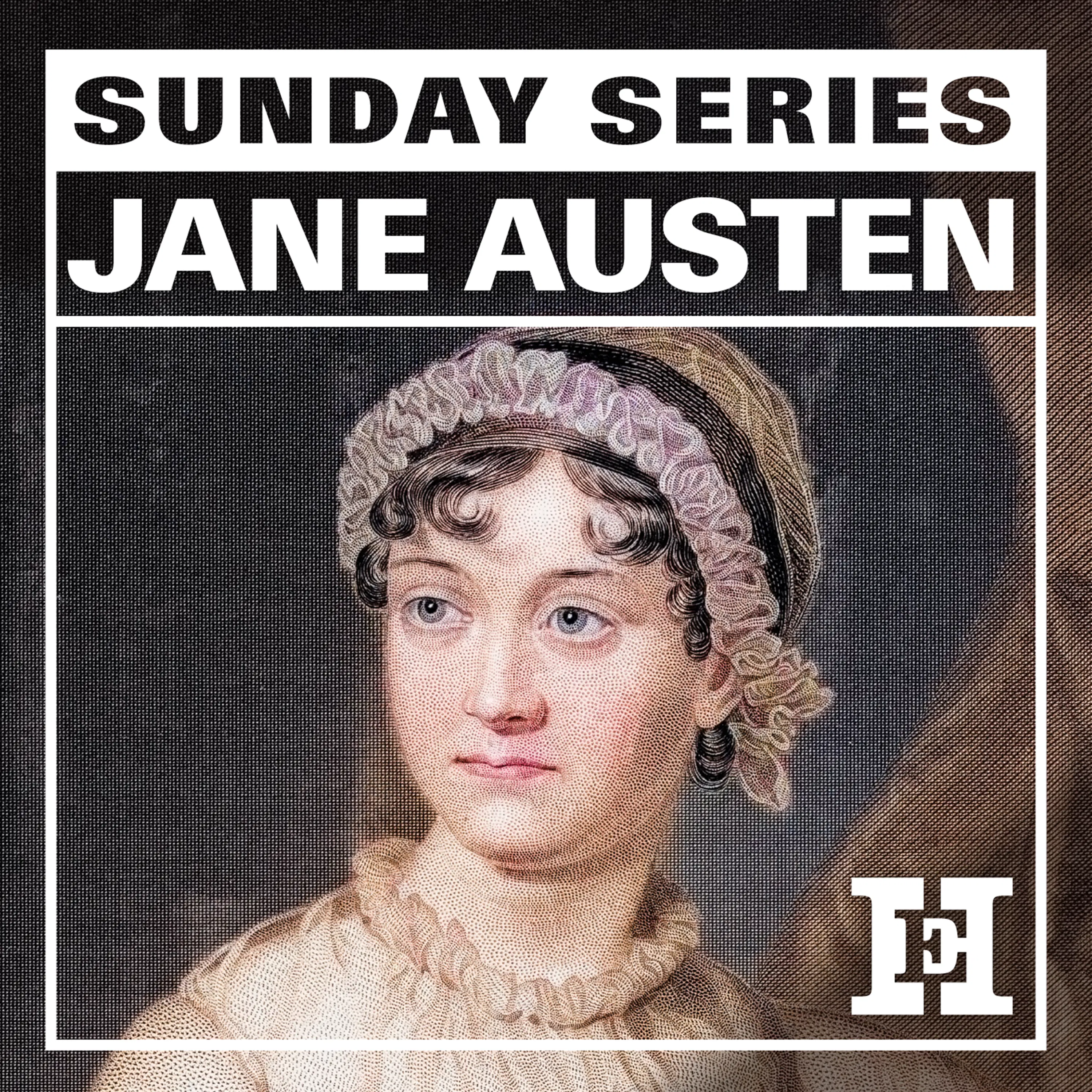
Welcome to the History Extra Podcast. Today marks the fourth and final instalment of our Sunday series on Jane Austen in which Lauren Good is joined by Dr. Lizzie Rogers to explore the author's life and cultural afterlife. And if you've enjoyed this four part series, join us next week when we'll be exploring the final days of Pompeii. But for now, it's over to Lauren and Lizzie.
- [03:13]
Lauren Good
What led to Jane Austen's death and what does her writing from later life tell us about her changing ideas? I'm Lauren Good and in this and final episode of our four part series on the influential novelist's life and writings, I'm joined by Dr. Lizzie Rogers as we chart the end of Austen's life from her worsening illness to how her grave remembers her, as well as the astonishing legacy of her writing and their continued adaptations today.
- [03:47]
Lizzie we start this episode in 1816. Up to this point we've seen Jane experience a lot of literary success, but.
- [03:55]
She'S sadly, because.
- [03:57]
At this point she's 40 years old. Do we know what she was suffering from?
- [04:02]
Dr. Lizzie Rogers
So various things have been suggested. We don't know for definite what she was suffering from and various historians, medical professionals have had a look at it. The kind of most common things that people suggest are Addison's disease or lupus, but we simply don't know. We just know that it's something that really kind of we fall and stay with her other brother's kind of relatives and staying with them as they're having children and things like that. But, but it's a lot of movement without a specific home to go back to. Whereas when she was doing this when she was at Steventon, she had a specific home to go back to.
- [04:33]
Lauren Good
This does bear a striking resemblance to the plot of Sense and Sensibility. We might assume that the book was inspired by these experiences, but we know that she has been working on a manuscript, Eleanor and Marianne earlier on. Do we know if this manuscript changed according to this new inspiration that Jane was experiencing?
- [04:52]
Dr. Lizzie Rogers
So with Eleanor and Marianne she actually does the bulk of editing of it to change it from a novel written in letters into the prose novel that we know today. She actually does that still in the 18th century and when it's getting it ready for actual publication towards when she's living at Chawton, she only updates, as far as we know, a few small bits to things like a lot changes in 10 years in terms of things like the price of the postal service, like the type of carriage that would be fashionable. So it's funny that that ends up kind of having parallels with her own existence, because she didn't really change it too much to lean into that, as far as we know, after she experienced it herself.
- [05:33]
Lauren Good
So she's almost living out the plot of a novel she's already written.
- [05:36]
Dr. Lizzie Rogers
I know. It is a little bit scary, isn't it? It is scary.
- [05:39]
Lauren Good
Wow. But much like Eleanor and Marianne's situation again, Jane's brother Edward offers them Chawton House to live. What was this house like?
- [05:50]
Dr. Lizzie Rogers
So the cottage at Chawton had kind of been as part of this estate for a little while, had been purchased by the Knight family for their bailiff to live in originally, had previously been a coaching inn. Now, this was one of the many. I say many, one of the few estates that Edward had as part of his night inheritance, the main one being Godmisham park in Kent. But this was a comfortable cottage. It was straight onto the road, so they did a little bit of work to kind of move some of the windows and kind of make it a little bit more comfortable. But it would have represented kind of a co. It wasn't too far from Steventon. It was quite close to, of course, when the Knight family were in residence at Chawton House. If you've ever visited today, or know it's a small walk down a lane, it would have been absolutely lovely as kind of a hub for the Austens to be in. And it brings her back to Hampshire, which she really, really loved.
- [06:39]
Lauren Good
How old is Jane when they do move into chawton?
- [06:42]
Dr. Lizzie Rogers
So she's 33 at this point, and.
- [06:45]
Lauren Good
We know that we will delve more into it. But she does write an awful lot at Chawton. What would her life have looked like?
- [06:53]
Dr. Lizzie Rogers
So Chawton, I think life would have looked very much like the domestic life of women. This was a household of women. So Jane's there, Cassandra's there, their mother Mrs. Austen there, but also their friend, Martha Lloyd, really, really good friend, who actually ends up later on marrying Frank after he's widowed when she's in her 60s, which I think is lovely. But also what Martha's really important for is she actually gives us some insight into what daily life was like at Chawton. So she leaves behind a household recipe book, which is in their collection, and it's got recipes like Corrie for wine, even for making ink, which of course must have been very important for Jane, doing all that writing there. But it would have, I think, been a life of kind of contentment, security, like these women kind of together and kind of having a space where they could all rely on. You know, Edward gives them this cottage to live in in perpetuity, and actually they end up all of them kind of living in it, apart from when Martha marries Frank. They all end up living in it until they die, apart from kind of periods spent visiting other people.
- [07:56]
Lauren Good
Is it safe to say that in this bustling house of women, Jane enjoyed this period of her life at Chawton?
- [08:01]
Dr. Lizzie Rogers
It definitely seems to have brought contentment. I know we've mentioned the word stability a lot, but I think for her being in her 30s, having kind of experienced all this upheaval, I don't think we can kind of rate that highly enough what that bought for her. Even when she was kind of traveling to stay with different family members, she had this place to come back to, and it was somewhere that was. Which she hadn't had in a long time.
- [08:25]
Lauren Good
It seems to suggest that she's contented because she does experience so much writing success at Chawton. I mean, it is incredible. I think we could safely describe these as the golden years of her career. We see Sense and Sensibility published first in 1811 by Thomas Egerton, with her brother Henry acting as the literary agent, again supporting her. What sort of success did Sense and Sensibility have in its earliest form?
- [08:51]
Dr. Lizzie Rogers
So Sense and Sensibility comes out in 1811. She's been at Chawton for two years at this point, and the first edition is sold out by the summer of 1813, and it was published on commission, so she had to upfront some of the costs, but she did make around £140 from it.
- [09:05]
Lauren Good
How much would £140 have been?
- [09:08]
Dr. Lizzie Rogers
So if we think about it kind of in terms of comparable money wages, because it doesn't sound all that much when you think that Mr. Darcy has £10,000 a year. But actually, for Jane, that would have been significant. I mentioned in an earlier podcast, a housemaid could be expected to earn around 10 to 12 pounds a year, which sounds pitiable to us now, but with inflation and kind of the value of money. Her father earned about 600 pounds a year, and he had to support a whole family. So actually makes her very comfortable. In her letter, she mentions kind of going shopping jokingly, but that she actually has this kind of freedom and comfort a little bit. And, I mean, the pride in that being her own money must have been immense.
- [09:47]
Lauren Good
Do you think she would have supported the household.
- [09:49]
Dr. Lizzie Rogers
With that money, it definitely would have gone into the household as well. And it's also worth mentioning that actually Cassandra had some of her own money. So when her fiance died, he went away to the West Indies. And before he left, even though they weren't married yet, he was like, oh, I'll kind of put you in my will. Which must have been kind of a really not foreseeing that it would actually be necessary. So she ended up having this small annuity from him as well. So she bought some money into the household too. But that would have been a situation. Significant injection.
- [10:20]
Lauren Good
We should step away from James Rider for just a moment because Cassandra is coming up an awful lot in this series. We mentioned in the very first episode that these two sisters are so close and they don't really leave each other's side, do they, throughout their lives?
- [10:33]
Dr. Lizzie Rogers
No. And it's interesting that the letters that are left behind, most of them are to Cassandra. They were constantly updating each other. They kind of run on with stories and thoughts and gossip. And it really does seem like they were kind of the. They're each other's true soulmates, you know, they were there for everything. And Cassandra outlives Jane by almost three decades. It must have been very lonely once she was gone to have had her as that kind of support that, you know, they were about two years apart in age, so really not all that much, two to three years. And so she didn't really remember a time without Jane. They really kind of were supportive of each other. Cassandra gave us our only known portrait from Life of Jane at Watercon and National Portrait Gallery. I don't think it can really be overstated how close they were as friends and sisters. And I think that really translates into her novels. You find a lot of sisterly, close female friendships and even an exploration of when sisterly relationships aren't great. You know, that kind of sense of female friendship and sisterhood is really integral to most of the novels. I think it's really, really lovely to kind of see them together, you know, as these two unmarried sisters who end up kind of supporting each other.
- [11:46]
Lauren Good
We did mention that Henry, by this point, is acting as her literary agent. She is very close to him, too. Perhaps not in the way that she is with Cassandra, but there is a close relationship there. Do we know why he has become her literary agent at that point? What sort of career would he have had outside of this?
- [12:04]
Dr. Lizzie Rogers
So Henry spent time in the Oxford militia in the 1790s, and then in the early years of the 19th century, he co founds a bank called Austin, Maund and Tilson, which is quite successful for a long time. Unfortunately, it does go bust in 1816 and he then gets ordained in the church. So he then takes a leap into the role that his father had. His oldest brother James also was in the church. So Henry kind of jumps about a bit in terms of careers. He also marries their cousin Eliza, who we mentioned in the first podcast, who kind of was born in India, she spent time in France. Really vivacious, exciting character. They marry when Henry's 27. Eliza's 37. She's already a widow with a son. And they never have any of their own children, but by all accounts were incredibly happy. Lived in London together. And part of that kind of sense of him being in London, close to all these publishers, having kind of legal contacts and being with the bank gave him a lot of leeway to act as her literary agent.
- [13:00]
Lauren Good
And her literary success does continue. In 1813, we see first Impressions is published as Pride and Prejudice by the same publisher. Was this initially a success?
- [13:11]
Dr. Lizzie Rogers
So this was successful and actually Thomas Edgerton bought the copyright for this novel rather than having her pay up front to do it, which meant she made a little bit less money on it. But he did reasonably well out of it. And yet this. I mean, it's funny to us thinking now that this is the novel she's probably always best remembered for. It's funny thinking about that January 1813 coming out. She writes in her letters that the night before, she calls it her own darling child, her author's copy, she receives it and they read aloud for the first half of the first volume. It would have been in three volumes at Chawton. They read it aloud and then it kind of makes its entrance upon the world and it sells pretty well.
- [13:50]
Lauren Good
So again, £110 is a significant amount of money for Jane. We are seeing her become more financially successful as well.
- [13:59]
Dr. Lizzie Rogers
Yes. Yeah, she is starting to bring kind of more money in. But it's worth remembering her writing earnings never go over £1,000 in her lifetime. I don't think they even get close to that. If you did the maths on adding them all up. It's really interesting. And again, it sounds so funny to us now because, you know, spending power's different and inflation. But even so, that would have been a lot of money for her, even though she didn't make too much of it in her lifetime. But she was very comfortable through what she made.
- [14:28]
Lauren Good
So I guess if we contextualise that her dad is on £600 a year as a reverend, so that's not even two years wages.
- [14:37]
Dr. Lizzie Rogers
It's kind of crazy to think about it in that context. And especially when you think about her characters, when she talks about these eligible young men. You know, Mr. Bingley's got 5,000 a year, Mr. Darcy's got 10,000. Mr. Rushworth in Mansfield park has 12,000. You know, it's. So it's very different.
- [14:51]
Lauren Good
And mentioning Mansfield park, this is published in 1814, again by Thomas Egerton. Am I right in saying that this was her most profitable work up to this point?
- [15:02]
Dr. Lizzie Rogers
She makes about £350 from this, so, yeah, very much her most profitable work at this point.
- [15:06]
Lauren Good
Yeah, she's doing. She is doing very well.
- [15:09]
Dr. Lizzie Rogers
She is. And, you know, she's getting a bit of a following. And each novel is kind of published. The first one's by a lady. Pride and Prejudice comes out as by the author of Sense Sensibility. Mansfield park is by the author of Pride and Prejudice. So people are starting to kind of pull those novels together and know her style, kind of know what she's writing about, even if they don't know her.
- [15:31]
Lauren Good
That's interesting. So she's remaining anonymous, but she is allowing her readers to follow her work as it comes out.
- [15:38]
Dr. Lizzie Rogers
Yeah, very much so. And it's worth mentioning, even though publicly she was anonymous, it was very much an open secret in family circles who she was who was writing these novels. Henry, as the proud brother, was basically telling everybody that it was his sister who was writing them.
- [15:52]
Lauren Good
I love this idea of the whispers. Yes. So this is a pretty continuous success. But it's interesting, when looking at her life as a whole, that actually Austen has been working on these novels for a very long time. I think it would be easy to assume that she's just writing one, then moving on to the other. But we have seen, for example, with Sense Sensibility, she's been working on Eleanor and Marianne right back until, I guess, was her early 20s.
- [16:21]
Dr. Lizzie Rogers
So, yeah, so when she's about to hit 20, that's when she first begins Eleanor and Marianne. So, you know, 1795 to 1811, that's 16 years difference from beginning to publication. What I always think of it like is that for aspiring writers who have spent a long time in slush piles and getting their novels off the ground, Jane Austen didn't hit it first time. I think that's the thing. Like, these novels took a while, they took refinement, but once she really hits her stride, she's writing quickly. You know, she. I mean, she writes. She wrote very quickly, these first drafts anyway, but she's kind of hitting on all these ideas and bringing them in. She's editing the previous ones. You know, she must have been pretty industrious at Chawton, you know, working at her writing table.
- [17:07]
Lauren Good
She is very industrious because we see Emma published two years after Pride and Prejudice. Was this a success?
- [17:15]
Dr. Lizzie Rogers
Emma was successful. In fact, Emma got a lot of public reviews. Walter Scott wrote about it, although he wrote anonymously. Thomas More, the Irish poet, he wrote about it, too. It wasn't always, like, glowing, glowing reviews. Those two were. Some people suggested, which I think is really interesting, that it didn't have much of a plot, even though they really liked it. Which is funny, because my favorite review I've ever read of a Jane Austen novel, I think it was Pride and Prejudice, was somebody wrote. I think it's like an Amazon review or something that's quite famous. Somebody wrote, this is just people going to each other's houses. They're not wrong. This is the thing. But it's one of those. She does daily life and really subtle plot lines. Like, I would never say that nothing happens in a Jane Austen novel. Actually, a lot happens, but you don't kind of. You're so ensconced in it that you kind of go along for the ride with it, and it feels like real people acting it out. It's so interesting, I think, that then some people read it and they're like, well, not much happens. But actually, if you look at Emma, a lot happens. You know, she's kind of matchmaking all these people. We start, and she's matched her governess to a local landowner. We begin with their wedding, and then she kind of makes friends with this kind of impoverished girl at the local girls school, Harriet Smith. She tries to, like, steer her in a direction. We see this burgeoning relationship with Mr. Knightley. There's actually quite a lot going on that feels very gentle. And I think she writes in a way that feels so real because of that as well.
- [18:43]
Lauren Good
If you look at literary fiction today, there's so many books that aren't very plot driven.
- [18:48]
Dr. Lizzie Rogers
Yes, they're all character driven and personality driven. And I think there are many things I could say that I love about Jane Austen. But one of the things. Things I really love about her is her ability to flesh out a character. And it doesn't feel too contrived. She deals so well in personality types, but without making them seem like caricatures or, you know, really forced. She writes really really good characters and they really drive the story and the plot. You almost can envision her thinking of these people and they play out in front of her because she's developed them so.
- [19:21]
History Extra Podcast Host
This History Extra podcast is brought to you by Rocket Money. Throughout history, experts have offered various solutions for ensuring your financial wellbeing. In the medieval era, for instance, carefully managing an unlikely resource eels could ensure that you had an effective, if unusual, way of paying your debts. For steely eyed Victorian industrialist Andrew Carnegie, ruthless efficiency was key to balancing the books. But it's not always easy, as my own attempts to keep track of my finances suggest. But help is at hand. Rocket Money is a personal finance app that helps find and cancel your unwanted subscriptions, monitors your spending, and helps lower your bills so you can grow your savings. Rocket Money automatically categorizes what you're spending across your accounts, letting you choose the categories and tags you need to successfully manage your finances and track patterns in your outgoings. It also consolidates checking, savings, loans and investments into a single helpful dashboard offering a crystal clear view of your financial picture. Let Rocket Money help you reach your financial goals faster. Join@RocketMoney.com HistoryExtra that's RocketMoney.com HistoryExtra RocketMoney.com HistoryExtra.
- [20:32]
Blinds.com & Shopify Advertiser
You didn't start a business just to keep the lights on. You're here to sell more today than yesterday. You're here to win. Lucky for you, Shopify built the best converting checkout on the planet, like the just one tapping ridiculously fast acting sky high sales stacking champion at checkouts. That's the good stuff right there. So if your business is in it to win it, win with Shopify. Start your free trial today@shopify.com win the.
- [21:03]
Rocket Money Advertiser
Number one resolution for people last year was to save more money, but nearly half gave up by February. Don't let that be you. Download Rocket Money to reach your financial goals this year. Track your spending, cut waste and automate savings in one simple app. Rocket Money shows you all your expenses and categorizes them so you know exactly where your money's going and where you're over spending. From there, the app cuts waste by canceling your unused subscriptions and lowering your bills. No customer service needed. With that money freed up, the app will automatically set some cash aside for your goals. Whether it's an emergency fund, paying off debt or saving for vacation, Rocket Money's got you covered. Users love the app with over 186,000 five star ratings and on average users can save up to $740 a year. When using all the app's premium features, make saving money a priority. This year, go to rocketmoney.com cancel to get started, that's rocketmoney.com cancel rocketmoney.com cancel.
- [22:04]
Lauren Good
Now, the content of this book isn't the only interesting thing about it. There is a dedication to the Prince Regent. Before we explore this story, could you please explain the context of this? Who was the Prince Regent at this time?
- [22:17]
Dr. Lizzie Rogers
So the Prince Regent, I mean, really fascinating figure in British history. It's the only time we've had a Regency and a Regency is when somebody rules in place of the crown. So in this case, George III, who'd been on the throne since the 1760s, he suffered from mental illness and occasionally it left him incapacitated to rule. In the 1780s, they'd had kind of a Regency crisis to the point where they thought his son George, the Prince of Wales, would potentially have to step in. But then he recovered. Unfortunately, when it gets to the early years of the 19th century, he again has a snap of illness and it becomes pretty clear he's not going to recover this time. So the beginning of 1811, his eldest son, George, who is the heir to the throne, is sworn in as the Prince Regent and his job is to rule, but in his father's place, as his father's representative. So he is not the King, he is very much acting on his behalf. And actually Queen Charlotte, his mother, George III's wife, It was her job to kind of look after the body of the King, so to speak. So she also had a role. But the Prince, Reg, he was an interesting figure, very divisive figure, who loved culture, loved the arts, didn't necessarily love ruling people, which his father very much had done. So they were quite a contrast in personalities. But he was so into the theatre, arts, literature, architecture. I mean, you only have to look at Brighton Pavilion, you know, things like that. But he read a lot of works and supposedly was a really, really big fan of Jane Austen's work.
- [23:45]
Lauren Good
Now, he was a fan of Jane Austen, but we're not sure if that was reciprocated. Yes. Before we touch on the exact wording of this dedication, there is a really interesting correspondence between Jane and the Prince Regent's librarian, isn't there?
- [23:59]
Dr. Lizzie Rogers
Yes, there is. So to kind of jump back a little bit as to how this dedication comes about, in 1815, Jane is staying in London with her brother Henry. Now, Henry becomes quite ill and he's attended by a physician called Dr. Bailey. Now, Henry, being Henry and proud of his sister, tells Dr. Bailey, oh, this is my sister, Jane Austen. She's the author of these novels, you know. And Dr. Bailey says, you do realize the Prince Regent is a huge fan of the author of these novels, and supposedly he kept a copy in each of his residences, supposedly. And Henry's like, oh, my gosh, that's incredible. So Dr. Baillie goes back and he tells the Prince Regent, and the Prince Regent speaks to his librarian, a gentleman called James Stanier Clark, and he says, you know, arrange for this Ms. Austen to come to Carlton House, which was his residence on the Mall. Come to Carlton House and see the library. He didn't meet her himself, but she comes in November of that year to go visit the library. And their letters are quite funny. He writes to her around the time she comes and says, you late works, madam, and in particular Mansfield park, reflect the highest honour on your genius and your principles. In every new work, your mind seems to increase its energy and powers of discrimination. The Regent has written and admired all your publications. I mean, you can't really get a higher fan than that. But what's interesting is she does this visit. She goes around Carlton House, she sees the library, and in between, she dedicates Emma to him, which is kind of strongly suggested to her that she should, because of this, you know, this great honor that's been bestowed on her. But James Stanier Clarke writes her some more letters. So the following year. So in March 1816, he writes her a letter saying basically suggesting things that he thinks she should turn to for her next novel. Now, us kind of knowing Jane Austen quite well at this point, especially throughout this podcast, we kind of know that she probably wouldn't like that. And he writes her this letter that says, perhaps you may choose to dedicate your volumes to Prince Leopold. Any historical romance illustrative of the history of the August house of Coburg would just now be very interesting. Now, we know that Jane Austen does not do big, sweeping historical romance epics. It's very much kind of of Walter Scott's area, and she really likes Walter Scott's writing, but it's not her. And so she writes back very quickly, it's a couple of days later, saying that romance founded on the house of Saxe Coburg might be much more to the purpose of profit or popularity than such as all these little references to little kind of things going on, that it's a very real background to her work as well. And she's not trying to write a great novel of war and strife, but they are references that we miss now. And I think readers miss kind of in the Victorian times, going into the 20th century that, you know, occasionally dismiss her work as being too light. I mean, I find her very comforting to read, but I think that's because I love her so much. It's like going back to a favourite friend. But also, the more I read of her and the more I research and the more I understand about the period, the more I see in there that I think is different and that is quite telling about the period she lived in.
- [27:07]
Lauren Good
A word that keeps on coming up in my mind is subtlety. She's very subtle about her wit, she's very subtle about her references to the wider context of the world. But it is there. And I suppose that's why it's sometimes missed.
- [27:19]
Dr. Lizzie Rogers
I think so. I think. Cause she's not so overt. I mean, there's been a long standing question about Mansfield park and its relationship to slavery. She's not super overt with kind of what her opinions are. We know that she really loved the work of William Cowper, who was an abolitionist poet. Mansfield park presumably takes Mansfield from Lord Mansfield, who ruled in a very significant case that kind of paves some of the way for legal changes towards abolishing slavery. We think this is the thing, it's all these little references. And actually within the first couple of pages of Mansfield park, it said the wealth comes from an estate in Antigua. Everybody would have known that that meant an estate where people were enslaved. Whether it's kind of. We're trying to understand what her exact stance and opinion is. Some of her brothers we know did work or kind of supported the abolition movement. And there's been some great more recent research on that by Deveney Lucer. And it's kind of piecing those things together because they are so subtle to the point where we actually struggle to decode them.
- [28:22]
Lauren Good
It would be interesting to see if she had lived longer where her work went, if it did start to. To play into more of her views, I suppose.
- [28:31]
Dr. Lizzie Rogers
Exactly. Perhaps it was kind of something to do with growing confidence, you know, writing, kind of putting more of her own views and looking out more widely on what she thought about these various things. We only very briefly get introduced to Ms. Lamb. We're told that she's a great heiress.
- [28:47]
Lauren Good
Now moving slightly more to her legacy. You did start to expand on this a bit earlier, but I'd love to talk about a bit more. We're now seeing Pride and Prejudice being adapted again. Jane Austen's always in the media. What do you think is at the core of her work that does make it so adaptable.
- [29:05]
Dr. Lizzie Rogers
So, I mean, I think partly it is so popular. There's definitely a business argument for adapting Jane Austen, but I don't want to sound too mercenary in saying that because I love her so much and I love her work. I think there's so many elements to her work that are universal, and that doesn't necessarily mean all of them are. It might sound strange to think that we can sit here and think, oh, yeah, I see myself in a character that's 200 years old, that's her family estate is entailed away on the male line, and she. She doesn't know where she's gonna go, so she's got to get married. That might seem like a very, very different situation, but some of those things about, like, family dynamics, about kind of trying to find your place in the world, about friendships and, you know, kind of relationship uncertainty. I think she writes with such a great eye to character and personality and those dynamics that they really do translate well to different audiences, different places around the world. They speak to different societies and different people. I think that's why she. I mean, she's having her moment this year. She's got her 250th birthday, so, of course, people are capitalizing on that popularity. But I think it also makes us look at her again with fresh eyes and realize how much we kind of not necessarily see ourselves in the characters, but how much we can identify with what they're going through, even if it's not the same situation that we've experienced.
- [30:24]
Lauren Good
What do you think the future looks like for Jane's work?
- [30:27]
Dr. Lizzie Rogers
I mean, I can't see it ever not being popular. But then, you know, she has kind of gone up and down in popularity as most writers, artists, musicians kind of experience resurgence. It's been pretty magical seeing her 250th year and seeing kind of the enthusiasm about her work. I would like to think, as a kind of lifelong Jane Austen fan, that that's gonna always continue and we'll appreciate and learn new things about her as we continue to look at her. What I really, really hope is that we will get more adaptations of some of her lesser adapted work and more engagement with things like Mansfield Park, Northanger Abbey, just because I think there are so many interesting things that can be done with those, especially in today's world, where we're so much more attuned to wider histories and other voices. I just think they could be really injected into those now.
- [31:17]
Lauren Good
Lizzie, I can't record a podcast series with you about Jane Austen and not us. What is your favourite novel by Jane?
- [31:24]
Dr. Lizzie Rogers
I feel like it might be a slightly predictable answer, but it is Pride and Prejudice. It will always be Pride and Prejudice. I just. I love everything about it. That isn't to say I think it's completely perfect, but I do. Everything about it just. It feels like coming home when you read it. Although I will say my favourite thing that Jane Austen's ever written is actually the letter from Captain Wentworth to Anne Elliot in Persuasion. But I recently was dipping in and out. Cause I feel like I do dip in and out. Now. I don't give them the full reread, which I should do, but I dipped into the end of Pride and Prejudice and I do find every time I read, like, a new line sticks out to me. And maybe that's what happens with. When you know a work really well, that you keep going and something resonates with you differently each time. But Pride and Prejudice always does that for me. I just. It's almost like it's a surprise every time that Elizabeth Bennet and Mr. Darcy end up together. Even though I dread to think how many times I've read it or watched it.
- [32:16]
Lauren Good
Do you have a favorite adaptation of her novels? Is it Pride and Prejudice?
- [32:21]
Dr. Lizzie Rogers
It's Pride and prejudice. It's the 1995 BBC Pride and Prejudice with Colin Firth and Jennifer Eale, that.
- [32:29]
Lauren Good
Said, coming out of the water.
- [32:30]
Dr. Lizzie Rogers
Yeah, yeah, yeah, obviously. No, I mean, my first. That is very much my first Jane Austen memory is watching that adaptation. And I really enjoy the 2005 film. I think it's great. But I think what that adaptation does, it is able. Because it got several episodes, you know, it's. It's able to almost sometimes adapt verbatim things from the novel. And just the choices they made were just so clever. And it just came at a really great time. Just everything about it again, I rewatch and rewatch that every time. But then if I had to give an honorable mention to another adaptation. I love Bride and Prejudice. You know, the Bollywood version by Garinda Chadha? I just think that's such a great movie. I love that movie.
- [33:12]
Lauren Good
Finally, Lizzie, what do you think, Jane, if she could see us today, if she could think of everything going on with the films and the adaptations and the new bound books, what do you think she'd make of it all?
- [33:25]
Dr. Lizzie Rogers
I think she'd laugh. I really think she'd find it so amusing. But I would like to think that she would not only be gratified and proud, but she'd know that that was where her work was going. It's so difficult when you get somebody who's like an incredible artistic, literary talent and they don't see in their own lifetime what their work becomes. Because Jane Austen, now we talk about her as if she is a person, but she's also a phenomenon. You talk about Jane Austen, you don't necessarily think about the person. It's like a whole conjured up in your mind. It would be a kind of crazy thing if you were a living person for that to happen to you. I guess it's kind of like the phenomenon of, like, Taylor Swift or something, I don't know. But I like to think she would find it really amusing. But she'd give herself a giant pat on the back and know that she knew she was talented enough for it to happen.
- [34:18]
Lauren Good
That was Dr. Lizzie Rogers speaking to me. Lauren Good.
- [34:22]
Lizzie.
- [34:22]
He is an historian of the 18th and early 19th centuries. If you want to go beyond the podcast and find out more about Jane Austen, her works, and the Regency period she wrote in, I've compiled some essential reading, listening and viewing from the History Extra and BBC History Magazine archive to deepen your understanding. You can find a link to that in the description of this episode.