← HistoryExtra podcast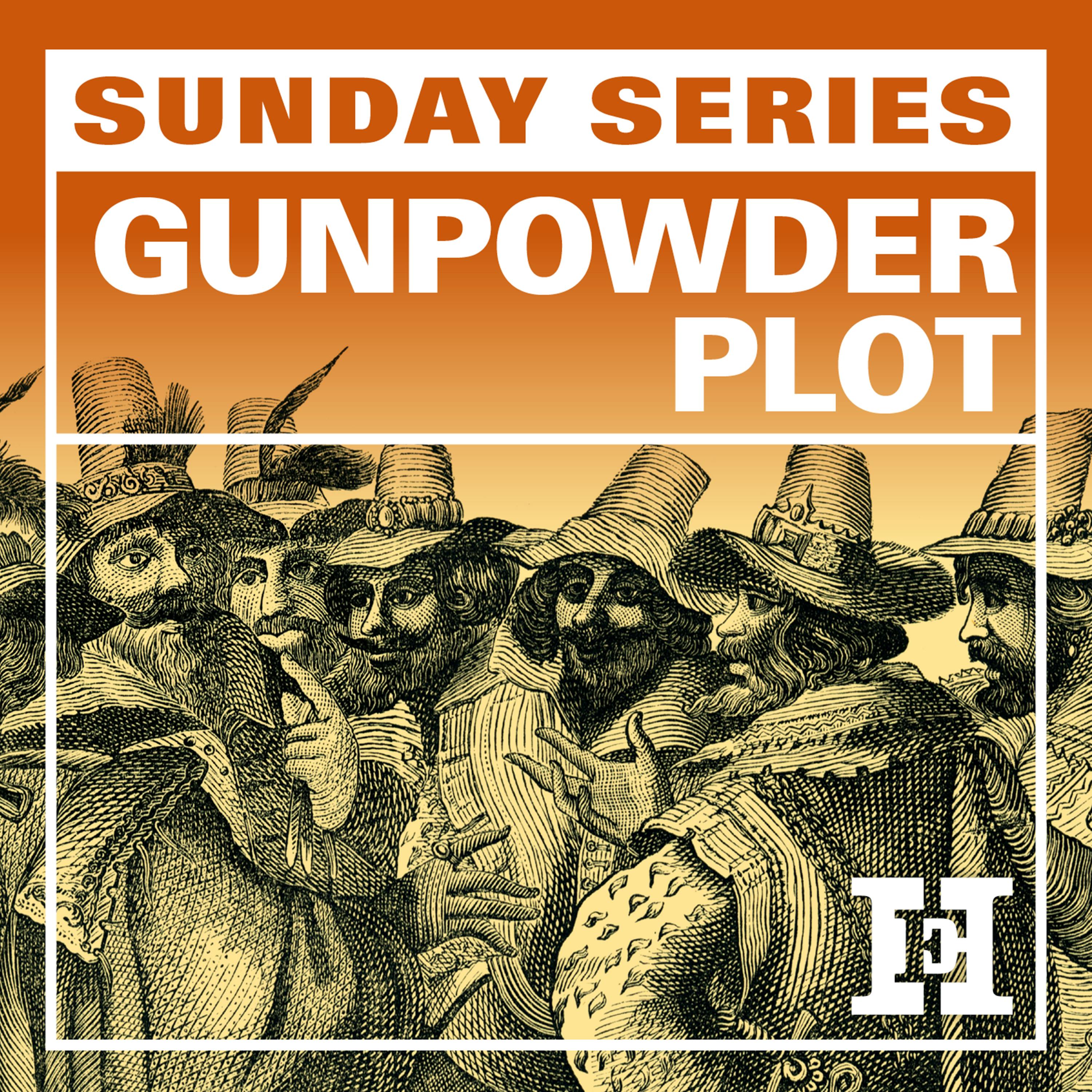
HistoryExtra podcast
Remember, remember: The legacy of the Gunpowder Plot
00:37:16
Historian John Cooper discusses the cultural legacy of the Gunpowder Plot – from Bonfire Night to V for Vendetta
Loading summary
Transcript41 lines
- [00:00]
Commercial Announcer
It's that time of year again. Everyone knows that the holidays can become overwhelming quickly, so the sooner you get things done, the better for both shoppers and businesses. The best time to score great deals during the holidays is Black Friday Cyber Monday weekend. Shopify is the commerce platform behind millions of businesses around the world, from household names to entrepreneurs who are participating in their first Black Friday Cyber Monday this year. This Black Friday join thousands of new entrepreneurs hearing for the first time with Shopify Celebrity. Sign up for your free trial today@shopify.com promo. That's shopify.com promo go to shopify.com promo and make this Black Friday one to remember. With Black Friday Savings at the Home Depot, you can get up to 40% off plus up to an extra thousand dollars off select appliances like lg, America's most reliable line of appliances. Check out the newest LG refrigerator with new mini Craft ice storage straight from the dispenser. Shop Black Friday savings on select LG appliances plus get free delivery now at the Home Depot. Free delivery on appliance purchases of $396 or more. Offer about 115 through 123 US only. See store online for details. This episode is brought to you by White Claw Surge. Nice choice hitting up this podcast. No surprises. You're all about diving into tastes everyone in the room can enjoy. Just like White Claw Surge, it's for celebrating those moments when connections have been made and the night's just begun. With bold flavors and 8% alcohol by volume. Unleash the night. Unleash White Claw Surge. Please drink responsibly. Hard seltzer with flavors 8% alcohol by volume. White Claw Seltzer Works Chicago, Illinois.
- [01:45]
Historian John Cooper
When did making plans get this complicated? It's time to streamline with WhatsApp, the secure messaging app that brings the whole group together. Use polls to settle dinner plans, send event invites and pin messages so no one forgets mom's 60th and never miss a meme or milestone.
- [02:03]
Sponsor/Advertiser Voice
All protected with end to end encryption.
- [02:06]
Historian John Cooper
It's time for WhatsApp message privately with everyone. Learn more@WhatsApp.com welcome to the History Extra Podcast. Fascinating historical conversations from the makers of BBC History magazine.
- [02:25]
Podcast Host Danny Bird
Remember, remember the 5th of November gunpowder, treason and Plot. If you grew up in the uk, there's a good chance you've probably recited that verse at least once in your life. Because although the Gunpowder plot failed, its memory ignited a tradition that has lasted for more than 400 years. I'm Danny Bird and in this four part history extra series on the Gunpowder Plot. I'm joined by historian Professor John Cooper from the University of York. In this final episode, we trace the afterlife of the Gunpowder Plot. How it was commemorated with sermons, bonfires and fireworks. And how Guy Fawkes was transformed from failed conspirator into an enduring figure of folklore. And how his image, centuries later, has become a global icon of resistance to authority. In January 1606, just two months after the failed Gunpowder Plot, Parliament passed an act of Thanksgiving to be observed every 5th of November. What did this act call for? And how did it lay the foundations for an annual day of national commemoration?
- [03:30]
Historian John Cooper
This is a really interesting example of the government and Parliament taking advantage of a pretty terrifying situation and set of circumstances in order to turn it to the benefit of. Of royal government. And it's a very sort of sectarian, Protestant inflected definition of that government as well. So what the Gunpowder Plot seems to do is to slot into a growing series of sort of divine revelations of plots and conspiracies against Protestant monarchy that have been uncovered and discovered and thwarted at the last minute, of course, by figures like Francis Walsingham and Robert Cecil, but essentially by the providence of God. And that's the sort of rhetoric that's underpinning the act of Parliament calling for this act of Thanksgiving. And what this act does, it's one of a whole series of statutes since the Reformation, essentially telling parish churches what to do under certain circumstances. And it creates an additional service that's added to the Book of Common Prayer, and it's a service of Thanksgiving, a service in celebration of the deliverance, this word is used, of the monarchy and the Crown from harm and the deliverance of England itself. But this also comes with either the encouragement or in some cases, the actual requirement to stage public festivities of other kinds. It's not just that you were expected to, as a loyal member of society, expected to go to church from now on, once a year to celebrate the confounding of the Gunpowder Plot. But it's also sort of expected that you will participate in powder treason celebrations of, you know, attending bonfires and burning of effigies of Guy Fawkes and so celebrating essentially the continuing establishment of the English stage. You know, this is quite strongly politicized. Interestingly, from quite an early stage, that sort of establishment interpretation of what that Day of Thanksgiving becomes subverted by other definitions of what that day is.
- [05:46]
Podcast Host Danny Bird
Do we know much about how the public at this time responded to the order to essentially commemorate the 5th of November?
- [05:55]
Historian John Cooper
Historians working on this sort of whole notion of bonfires and bells and celebration have noted that in later medieval England, in pre reformation England, there were lots of points in the calendar saints days where you could celebrate, where essentially you could have a party, you could feast, you could set off fireworks, you could light fires, and there was a time of misrule, basically when the authorities wouldn't take too much notice if some unruly things happened in your community. The Reformation, first of Henry VIII and then of Elizabeth, it really shuts down that kind of parish religion, those sorts of festivities, and it gets replaced in Elizabeth's reign by a celebration, an annual celebration of the Queen's accession on 17 November, where people hold those bonfires and so on. So there is already, long before the Gunpowder Plot is discovered, there's already a kind of 30 year old culture of urban and civic and local parish. Celebration of what? Celebration of the monarchy, maybe. Celebration of Englishness, possibly Celebration of ties of local community. Absolutely. I think the thing is that hasn't really transferred to the reign of James. And James is irritated by that, that after James comes to the English throne, people continue to celebrate Elizabeth's accession day. But once the powder treason has been discovered and once this act of thanksgiving is passed by Parliament, that changes. And so then we have this kind of officially mandated day of celebration essentially when people can come together and give thanks for something. Now, whether all of those people are actually perpetually giving thanks for the providential saving of King James from being blown up, or whether they're giving thanks for other things or simply enjoying themselves is a very interesting question. And certainly the connection between the real history and the kind of imagined history or the forgetting gets more and more interesting the further from 1605 you travel through history.
- [07:58]
Podcast Host Danny Bird
And as we discussed in episode three, John, the 1600s were a highly disruptive century for Britain and Ireland. Do we have any information about whether the commemoration of 5 November was celebrated during the decade that Britain was under republican rule?
- [08:13]
Historian John Cooper
Yeah, so we're talking about the period after the execution of King Charles I in 1649. What we know about royalist culture in that time, so under republican rule, is that it goes underground in some of the same sorts of ways that Catholic culture has gone underground following the Henrician and Elizabethan Reformations. People continue to remember and to mark royal events during that decade of the 1650s, but they do it in secret. So what you don't see is anything like the sort of same level of public celebration. How could you? Because of course the act of thanksgiving is mandating a kind of a celebration of the survival of monarchy. And once the monarchy has been abolished in 1649, there's no way that the republican or the Cromwellian protectorate regime are going to allow public celebrations of the deliverance of monarchy. It's the last thing that would want to happen. But we do know that people remembered this date. It's marked in almanacs, it's marked in calendars that kind of. That circulate in discreet underground royalist circles. But then, of course, after the death of Cromwell and after the restoration of the monarchy and Charles II in 1660, all of this comes back. All of this sort of royalist culture of bonfires and bells and celebrations comes back, but with additional features added to do with the history of the previous, you know, 15 or 20 years, including, of course, the marking of the day of the execution or martyrdom, depending on how you see it, of King Charles I, which is the 30th of January. So you get the 30th of January and the 5th of November and then a whole series of other dates being celebrated as part of a sort of rather Protestant book, but also definitely royalist culture.
- [10:12]
Podcast Host Danny Bird
And over time, the solemn religious aspects of 5 November's commemoration shifted into more festive traditions, as you've just sketched out, including bonfires and fireworks. How did this transformation happen and what did lighting fires and setting off fireworks come to symbolise for these communities, do you think?
- [10:29]
Historian John Cooper
By the time you get into the later 17th century, the sort of immediacy of the events of the Gunpowder Plot has receded, I think, and when people are celebrating, they're celebrating for subtly different reasons. So Guy Fawkes and his fellow conspirators have ceased to be genuine historical figures and have become sort of bogeymen, have become just sort of types of Catholic conspiratorial tyranny and the danger that England might fall into. So the sort of publicly endorsed celebrations continue in that line and just they become more and more sort of aggressively and offensively anti Catholic, I think. But at the other end of society, so away from those official celebrations and away from church services, and church services continue to be held for Powder Treason Day all the way into the 19th century, the celebration of Bonfire Day, Powder Treason Day, begins to acquire some other meanings and it becomes less to do with, I think, the celebration of the deliverance of James and more to do with resistance to tyrannical power and sometimes resistance to authority itself. And this is where the local authorities get very alarmed, I think. So there is a risk. And you see this particularly in the 18th and earlier half of the 19th centuries, that this bonfire night, as we might call it, becoming a time of riot, crowd action, misrule. That a government that's increasingly focused on local authorities, increasingly focused on policing and preserving the public peace, preserving public order, are really quite alarmed about. And we see echoes of that kind of not just anti authoritarian, but anti authority understanding of what gunpowder means to this day in places like Lewes in Sussex that still, of course, maintain this extraordinary tradition of bonfire celebration. But it's very much a celebration that's anti authority. And these are people who just don't want to be pushed around by anybody.
- [12:38]
Podcast Host Danny Bird
Just to pursue that anti Catholic legacy a little bit further. Because you've mentioned that effigies of Guy Fawkes and the Pope were burned on these bonfires. How much of that was fermented by the ground up, essentially? Was that a popular exercise or was that something that was sort of state sanctioned?
- [12:57]
Historian John Cooper
Well, certainly the anti Catholicism is state sanctioned to the degree that the state has promulgated an official form of religion that mandates people to celebrate this act of thanksgiving. And let's also remember that Catholics are formally excluded from public life until the Catholic Emancipation act, or at least effectively excluded because they have to take an oath of supremacy to the monarch as supreme governor of the Church, which they're not prepared to do because they would think of the Pope as being the head of the Church. And so Catholics continue to be excluded from public life in that way. I mean, I think it's when people are burning images of Guy Fawkes, when they're burning images of the Pope, what are they actually doing? Does this represent sort of genuinely, viscerally poisonous, anti Catholic sectarian feeling? Or has it become almost like a kind of folk belief, a kind of folk religion? Certainly by the 18th and early 19th century, when Pope burnings take place. Now, some communities definitely that anti Catholicism really survives. In others, I think that the burning of Guy Fawkes and the burning of an effigy of the Pope, it's almost become absorbed within a kind of festive parish culture that isn't perhaps as anti Catholic and sectarian as it might appear to us to be.
- [14:30]
Sponsor/Advertiser Voice
There's a great chance that you may have already heard of Hellofresh. They're the number one meal kit in America, making home cooking easier with chef crafted recipes and fresh ingredients delivered straight to your door. But this fall, they're serving up even more to love. This isn't the hellofresh you remember. It's bigger, healthier and tastier. HelloFresh has doubled its menu. You can now choose from 100 options each week including new seasonal dishes and recipes from around the world. Plus you can feel great with an even healthier menu. There are over 15 high protein recipes each week and new veggie packed recipes that have two or more veggies per dish. I find I really only rotate between like the same two or three veggies so having a bigger selection of options really helps me mix it up a little bit. HelloFresh now also has three times the seafood options and you can get steak and seafood recipes delivered every week for no extra cost. The best way to cook just got better. Go to hellofresh.com historyextratenfm now to get 10 free meals plus a free breakfast for life one per box with active subscription free meals applied as discount on first box. New subscribers only varies by plan. That's hellofresh.com historyextra10fm to get 10 free meals plus free breakfast for life you chose to hit play on this podcast today. Smart Choice Progressive loves to help people make smart choices. That's why they offer a tool called Auto Quote Explorer that allows you to compare your progressive car insurance quote with rates from other companies so you save time on the research and can enjoy savings when you choose the best rate for you. Give it a try after this episode@progressive.com Progressive Casualty Insurance Company and affiliates not available in all states or situations. Prices vary based on how you buy. At New Balance, we believe if you run, you're a runner, however you choose to do it. Because when you're not worried about doing things the right way, you're free to discover your way. And that's what running is all about. Run your way@newbalance.com Running.
- [16:53]
Podcast Host Danny Bird
Across the Atlantic, English colonists in North America also marked the 5th of November. They called it Pope's Day, often with street processions and fights between rival gangs. How did the commemoration of the Gunpowder Plot take on a new life in the colonies? And what role do you think it played in shaping early American identity?
- [17:10]
Historian John Cooper
Yeah, it's a really interesting question, isn't it? Because why would American colonists want to celebrate the discovery of the gunpowder treason? We know a certain amount about this for the early and middle part of the 18th century, actually, where we know that some of the great cities of what was then the British Empire, New York and Boston in particular, we've got records of them celebrating what, as you say, it's not called Bonfire Night or Guy Fawkes Night. It is called Pope's Day. EFFIGIES of the Pope are paraded in crowd action. Effigies, sometimes of Guy Fawkes as well. These effigies are burned on bonfires. What's going on there? Well, at some level, this is anti Catholic feeling, I think. I think particularly where this takes place in New England. New England is strongly Protestant, strongly Puritan in its culture. So it wouldn't be that surprising that those traditions, those anti Catholic traditions have survived. I think to a degree that is very difficult in a post revolutionary, post American Revolution world. To a degree that's very difficult for us to understand. It represents a kind of yearning for connection with Old England, actually. I mean, by one reading of American history, all Americans just wanted to be American and nothing else. At the point at which they. They landed in Plymouth Colony. I just don't believe that. And I think that there's ample evidence for very strong political, religious, but particularly cultural and family connections between America and Britain right the way through to the point of revolution and beyond it. So if we're seeing culture in what was then British North America, continuing with those practices of parish religion from Old England, that's not surprising. What is really interesting is what happens in Boston in the 1760s. And there, in the way that you might get in some English cities of the same time, you get rival gangs creating Pope figures and parading them and burning them on rival bonfires. But then they start fighting with each other and heads get broken and people get punched, and it's the North End and the south end of Boston that we know are doing this. And all of this just looks like sort of unruly crowd action until you get into the mid-1760s. And then there's a very specific political context around the Stamp act, which is when Parliament, the English Parliament, British Parliament, tries to impose, famously, you know, parliamentary taxation on America without representation of America in the British Parliament. And the Americans don't like that. And there are some interesting instances of how that Pope's day crowd action then pivots and starts becoming anti British action, anti British Establishment action. This is some way. This is 1760s, still some way short of the Revolution, but it's a very interesting example of that sort of longevity of gunpowder treason in a totally different set of political and geographical circumstances.
- [20:15]
Podcast Host Danny Bird
And in the 19th century, William Harrison Ainsworth's novel Guy Fawke retold the story of the Gunpowder Plot in a more sympathetic light, casting the conspirators as tragic figures. What do you think this tells us about the Victorian attitudes to this period in history?
- [20:30]
Historian John Cooper
That's A very good question. I think the Victorians, in their approach to history, they're doing a number of things simultaneously. The practice and study of history becomes much more professionalised. So Victorian scholars are wanting to get beyond the rhetoric, get behind the propaganda and the hype around the Gunpowder Plot and get back to the original stories, get back to the original evidence, the confessions, the state paper evidence. And questions start being asked about, well, this evidence was extracted under torture. This would not stand up in court these days. Also, the restoration of the Catholic hierarchy in England in the middle of the 19th century, you know, creates a new set of contexts in which Britain starts to, and particularly England starts to reassess its Catholic past and tries to, at least in some parts of society, tries to sort of tries to get away from that sense of Catholics as being incorrigibly and viscerally conspiratorial and opposed to the established state and, you know, wanting to provoke conspiracy wherever they see it. So I think there's a questioning in historical circles around that. But the Victorians were also great romanticizers of history. You know, I mean, think of, I don't know, novels of Walter Scott or the famous and very influential biographies of English queens by the Strickland sisters. You know, the Victorian period is a period that's very hungry for history and it's particularly hungry actually for the history of the 16th and the 17th century. And a lot of this gets romanticized and this isn't only in literary form, it's also in artistic forms. So we start seeing much more sympathetic artistic depictions of the Gunpowder Plotters that also, I don't know, capture some of their, what their derring do, their glamour, you know, the bravery and the chivalry of these people rather than. And sort of stepping aside from them as being a threat to the Protestant establishment. So I think all of that is going on in the Victorian period and.
- [22:38]
Podcast Host Danny Bird
In the 20th century. The writer Alan Moore reimagined Guy Fawkes in his graphic novel Viva Vendetta, which was subsequently turned into a movie with the protagonist's mask later becoming a global protest symbol, a stylised version of Guy Fawkes face. What do you think this modern reinvention of a 17th century failed conspirator into a powerful emblem of rebellion and resistance to authority tells us about the plot and posterity's fascination with, you know, I'm.
- [23:07]
Historian John Cooper
Not sure it tells us anything very much about the plot itself. I think it tells us a lot about people's fascination with outcasts and radicals and Rebels. So the idea of a Guy Fawkes mask and the donning of a Guy Fawkes mask as being in any way connecting you with the politics of 1605 and, you know, the Catholic and Protestant politics of religion of that time is just preposterous. I think Guy Fawkes is a very recognisable figure. We've got a strong sense of what his portrait looks like, or at least what we think his portrait looks like, because of all of the engravings that are produced at the time. And he's a very distinctive figure. I mean, you know, you can probably imagine as you're listening to this, you know, the character with the extravagant moustache and the beard and the floppy hat and that sort of. There's something devilish, isn't there? But also there's a kind of twinkle in the eye of this kind of version of Guy Fawkes. This is Guy Fawkes, the lovable rebel. And it's not that difficult to see how history, over the years, it just. It becomes. The power of history becomes changed and mutated in all sorts of ways. And people think about Guy Fawkes in as much as they do think about him. They might think of him as a sort of a heroic, romantic, rebel or freedom fighter type figure, rather than somebody who was prepared to, you know, murder the King and all the royal family and everybody else in the city of Westminster in an enormous conflagration in 1605.
- [24:47]
Podcast Host Danny Bird
For centuries, the Gunpowder Plot was remembered as a Catholic conspiracy against the Protestant state. But some historians argue that Robert Cecil and James VI and first manipulated it or exaggerated its significance to consolidate their power. How far was the plot a genuine threat and how was it shaped into propaganda?
- [25:04]
Historian John Cooper
The extent to which the plot is a genuine threat or is shaped by propaganda, It's a spectrum, and it depends where you sit on that spectrum. So there are historians, respectable historians, who will argue that the gunpowder treason of 1605 was the culmination of a whole series of Elizabethan plots and conspiracies that weren't real. They were fabricated by the establishment, they were fabricated by the state, they were fabricated by Francis Walsingham and Robert Cecil and the Earl of Essex and other intelligence leaders in order to keep themselves in power and in order to maintain funding in their secret services. I don't believe that. I believe that the Gunpowder Plot was real. And I think that there's lots of evidence that it was real, not only in the British state papers, the National Archives, we've got lots of. Lots of evidence of confessions and interrogations and other kinds of evidence that more or less tally that the plot was real. And Guy Fawkes never denied, actually, and Thomas Winter never denied that the plot was real. That's not the issue. I think what is absolutely clear, though, is that once this plot is discovered, it is turned into a propaganda victory. It is weaponized by the state and it's weaponised through a variety of media. It's weaponized in sermons, it's weaponised, as we've heard, in religious services and the official liturgy of the Church of England. It's weaponized in parliamentary rhetoric and it's, you know, weaponized in arguments around the Privy Council table, I think. And so, yes, it is propagandised and broadcast and distorted and remade and manufactured without a shadow of doubt. But that doesn't mean that there isn't a very real kernel of truth in the fact that there was actually a gunpowder treason plot and it really did try and kill the King and blow up the Houses of Parliament.
- [27:07]
Podcast Host Danny Bird
Do you think that appetite for conspiracy theory speaks more to modern sentiments than it does to the actual reality? Or was that notion of it all always having been a conspiracy there from the start?
- [27:19]
Historian John Cooper
Elements of this being a conspiracy right from the start? Yeah, I mean, that began at the time. So there were discussions in the English Catholic community at the time, because Catholics, they can't quite believe that people from their community have gone this far, I think. And a lot of loyal Catholics are appalled and horrified, not only because of what this might imply for their lives, that there's gonna be a further repression, but also that Catesby and his men had just gone way too far, that, you know, you might resist, but under no circumstances should you rise up and tear down the entire fabric of society and kill the monarch. That's way too far. So the sense that they didn't really do that, the sense that this might all have been a contrived plot brought into existence by Robert Cecil that is there at the time. And there is. If you look back into the Elizabethan period, there is some evidence Francis Walsingham did that with one of the major anti Elizabeth plots, the Babington plot. In a sense, he takes the outline of a plot and then kind of allows it to grow in order to see who it will implicate. So you can see why that sort of sense of conspiracy story might be there back in the 17th century. Yeah, I mean, I think in terms of. Of modern perceptions of this, modern approaches to conspiracy theory, there was a strong strand for many years in Catholic historiography that reassessed all of the plots and conspiracies of this period. And at its extreme, and this was highly scholarly work at its extreme, did make a clear argument that Catholics, all Catholics, were essentially loyal to the English or the British state. Wherever we see evidence of apparent conspiracy and plot and sedition involving Catholics, that that is essentially manufactured by the English intelligence services. Now again, I don't believe that. I think that there is ample evidence that certain radical Catholics were involved in plots, but that those plots were also in some cases allowed to grow in order to see who they would implicate. And I think there's a possibility of that with the gunpowder treason. As to what's going on between late October and 5 November 1605, what's going on after the government comes to hear about the plot and then the plot being discovered, there's a gap of several days there. What's going on there? Why does James take some time to hear about this? So I think, you know, if you are minded to think in conspiratorial terms, there is a very interesting story there. But obviously our own modern society, I mean, now more than ever, is obsessed with conspiracy stories. And in the world of widespread belief in conspiracy and a widespread collapse in the belief in political, the ethics of political authority and widespread belief in fake news, there is a much more receptive context to people saying, well, of course this was just a conspiracy. It's just like now when there are political conspiracies on a grand scale. So actually, I think because of our culture right now, we're almost now more open to, I think, an erroneous argument that the Gunpowder Plot was just an enormous fabrication of the government.
- [30:43]
Podcast Host Danny Bird
Beyond bonfires and fireworks, how has the Gunpowder Plot become part of the state ritual of the British state?
- [30:50]
Historian John Cooper
Well, the state opening of Parliament before the state opening of Parliament, the cellars of the palace of Westminster are still searched, still ceremonially searched by yeoman warders. I mean, this is less these days. And anti terrorist measure. No doubt all sorts of other anti terrorist measures are undertaken when there's a state opening of Parliament. But it's part of that wonderful to some people, slightly archaic and absurd to other people, absolute fabric of the British state. Sort of pomp and circumstance of life in the 21st century United Kingdom. You know, the fact that you have men in a sort of simulacrum of 17th century costume searching the cellars for another Guy Fawkes. I mean, it's the same part of parliamentary ritual as Black Rod Hammering on the door of the House of Commons and so on. You know, it's one of the rituals, it's one of the myths, if you like, but functioning myths, important myths that enable us all to have continued faith in the fabric of parliamentary democracy, I suppose. And it just so happens that the practice of that parliamentary democracy in the UK is still surprisingly dressed up in a lot of this pomp and circumstance, that if you look at the Welsh Senate or if you look at the Scottish Parliament, just doesn't happen. Or for that matter, the Doyle in Ireland, you know, this sort of level of ceremony and so on does not happen. But Parliament still meets in a royal palace. I mean, absurdly, it's a different royal palace from the palace that Guy Fawkes tried to blow up. So the cellars that they're searching, if they're searching the cellars, they're different cellars from the cellar in which Guy Fawkes at so quite where they go and what they think they're doing is an interesting question, but it's just. Yeah, I don't object to it.
- [32:39]
Podcast Host Danny Bird
Finally, John, perhaps from a personal point of view, how do you think the commemoration of 5th November has evolved from an anti Catholic ritual into a more secular tradition in your lifetime, but also more generally across history? And what does this transformation reveal about Britain's shifting national memory and its relationship to treason and survival, and the ways that nations adapt and preserve collective identity over time?
- [33:01]
Historian John Cooper
I think it's a long time since Guy Fawkes, since Bonfire Night has been openly and visibly anti Catholic. I think it's something that Catholics in some cases continue to be uneasy about. You can see why that might be the case in the comparatively few communities where Bonfire Night is still celebrated with burning torches and a banner saying no Popery. You know, you might be forgiven for thinking that that looks like anti Catholic sentiment. I mean, at one of the places where this takes place, in Lewes in Sussex, I think it was a very important moment in Lewes when the local Catholic priest was prepared to get involved in the Bonfire Night celebrations. And that was a sort of acceptance that even though there was a big figure of the Pope that was burned and fireworks were thrown at, or a cardinal, that this wasn't genuinely anti Catholic feeling. When the late Ian Paisley, a Northern Ireland politician, turned up in Lewes thinking that this was a genuine example of English anti Catholicism and started to distribute leaflets, Lewes people took note of that. And next year they burned an image of Ian Paisley on their bonfire. So in a sense they were sort of consciously rejecting the sectarian nature of Bonfire. But I think there's something. Speaking personally, something interesting about it has happened in my lifetime. I don't think people really refer to the 5th of November so much as being Guy Fawkes Night. I think Bonfire Night and Guy Fawkes have got a bit decoupled. And I think that where communities do hold bonfires on 5 November, the idea of constructing a guy and a penny for the Guy and burning a guy, which is always a bit odd because of course, Guy Fawkes was hanged and not burned, you know, there's a bit of a misremembering of history going on there. I just don't think that that happens very much anymore. When I was growing up, it was still common for families to celebrate Guy Fawkes Night or Bonfire Night as a family celebration. So if you had a garden big enough, you held a bonfire in the garden and you. I mean, you know, my mother and I made a guy each November 4th and we burned it on the fire in the garden on Bonfire Night. And if you didn't have a garden, you went to a neighbour who did have a garden and, you know, you'd have cinder toffee and you'd set off fireworks. That sort of culture of individual household celebrations of Bonfire Night, even when I was growing up, it was beginning to be replaced by big urban civic bonfires, as it just became more difficult to hold bonfires in your garden and fireworks became very expensive and the setting off of fireworks was banned by local orders and so on. So all of those changes began to happen. These days, you know, if you've ever tried to organize a November 5th bonfire night, as people in my Yorkshire village have faced, it's increasingly difficult because just getting the insurance to be able to do this, the public liability insurance can run into hundreds or even thousands of pounds and people simply cannot afford. Communities cannot afford to hold public bonfires. So that's an issue. I think the other thing that began to knock Guy Fawkes Night on the head, as I can remember, it was the rise of Halloween. Halloween was unknown when I was a small child. Halloween became, in the later 1980s, 1990s, a major thing, an American import, and now it's a huge marketing opportunity. And so when people set off fireworks and light fires, is it for Halloween, is it for bonfire? And certainly in the uk, less so in the us, There's a weird sort of forgetting and a kind of plasticity and a hybridity to whether we're doing Halloween or whether we're doing Bonfire Night or quite what it is that we're doing. But we're going to light a fire and set off some fireworks and have a good time.
- [37:11]
Podcast Host Danny Bird
And that brings us to the end of this episode and this series. My thanks to Professor John Cooper and to you for joining us. Professor Cooper is Reader in Modern History at the University of York and author of the Lost Chapel of Westminster. He was also a historical Advisor on the 2017 BBC drama series Gunpowder. If you enjoyed this series and want to know more about the Gunpowder plot, head over to the History Extra app. To go beyond the podcast, I've selected several articles from the BBC History Magazine and the History Extra archives that will help you to broaden your knowledge of what you've learned today with features from historians including Lucy Worsley, Justin Pollard, Claire Jackson and more. You can find a link to download the app and access that content in the description of this episode.
- [38:08]
Historian John Cooper
Here we have the Limu Emu in its natural habitat, helping people customize their car insurance and save hundreds with Liberty Mutual. Fascinating. It's accompanied by his natural ally, Doug Limu.
- [38:24]
Commercial Announcer
Is that guy with the binoculars watching us. Cut the camera.
- [38:26]
Historian John Cooper
They see us.
- [38:27]
Commercial Announcer
Only pay for what you need@libertymutual.com Liberty.
- [38:30]
Historian John Cooper
Liberty Liberty Liberty Savings Fairy underwritten by Liberty Mutual Insurance Company Affiliates excludes Massachusetts.
- [38:36]
Sponsor/Advertiser Voice
This holiday discover meaningful gifts for everyone on your list at K. Not sure where to start? Our jewelry experts are here to help you find or create the perfect gift in store or online. Book your appointment today and unwrap love this season only at Kay Hey Ryan.
- [38:51]
Commercial Announcer
Reynolds here for Mint Mobile now. I don't know if you've heard, but.
- [38:53]
Historian John Cooper
Mint's Premium Wireless is $15 a month. But I'd like to offer one other perk. We have no stores. That means no small talk. Crazy weather we're having. No it's not.
- [39:07]
Commercial Announcer
It's just weather.
- [39:08]
Historian John Cooper
It is an introvert store dream. Give it a try@minmobile.com switch upfront payment.
- [39:14]
Sponsor/Advertiser Voice
Of 45 for 3 month plan, 15 per month equivalent required new customer offer first 3 months only, then full price plan options available, taxes and fees extra. Cmnobile.com.