
Podcast
History of Philosophy Audio Archive
Hosted by William Engels · EN
Curated lectures, interviews, and talks with philosophers, social scientists, and historians together in one place. Each week, we explore brand new research in history, economics, psychology, political science, philosophy, indigenous studies, and human rights while presenting the work of canonical scholars in a way that is accessible to newcomers while retaining interest for students and specialists. If you are an author in nonfiction or a scholar in the humanities/social sciences and are interested in being interviewed for the show please email me at williamengels@substack.com or @Bluesky.
45episodes
Episodes
Newest firstAll episodes
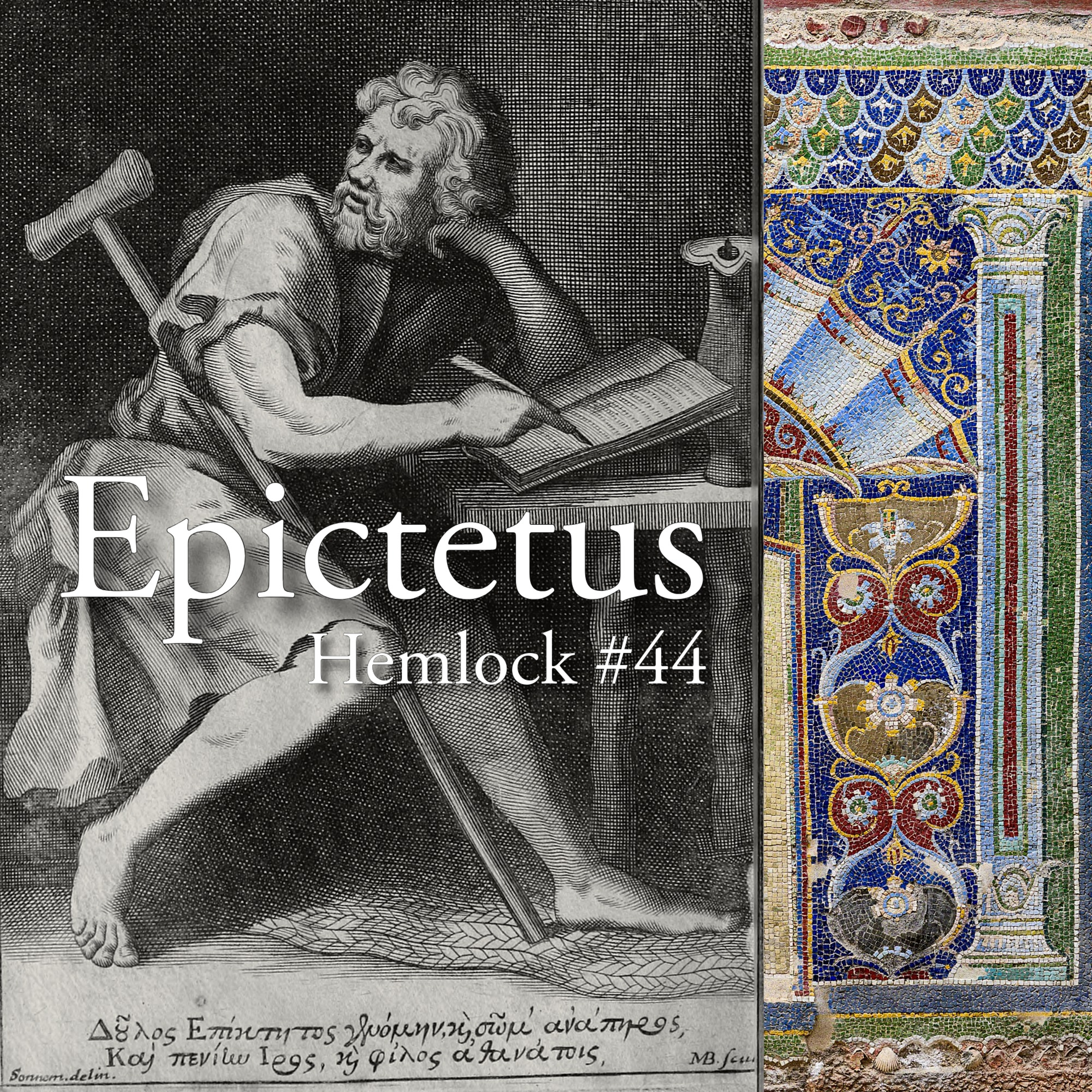
Hemlock #44: Epictetus and the Stoics with Greg Sadler
Mar 102:01:43Tap to summarizeI read Epictetus Discourses and Enchiridion with Professor Gregory Sadler https://gregorybsadler.substack.com/ - although we both started off by dunking a bit on Bertrand Russell.Full show notes with books/links for free on Patreon
Transcribe →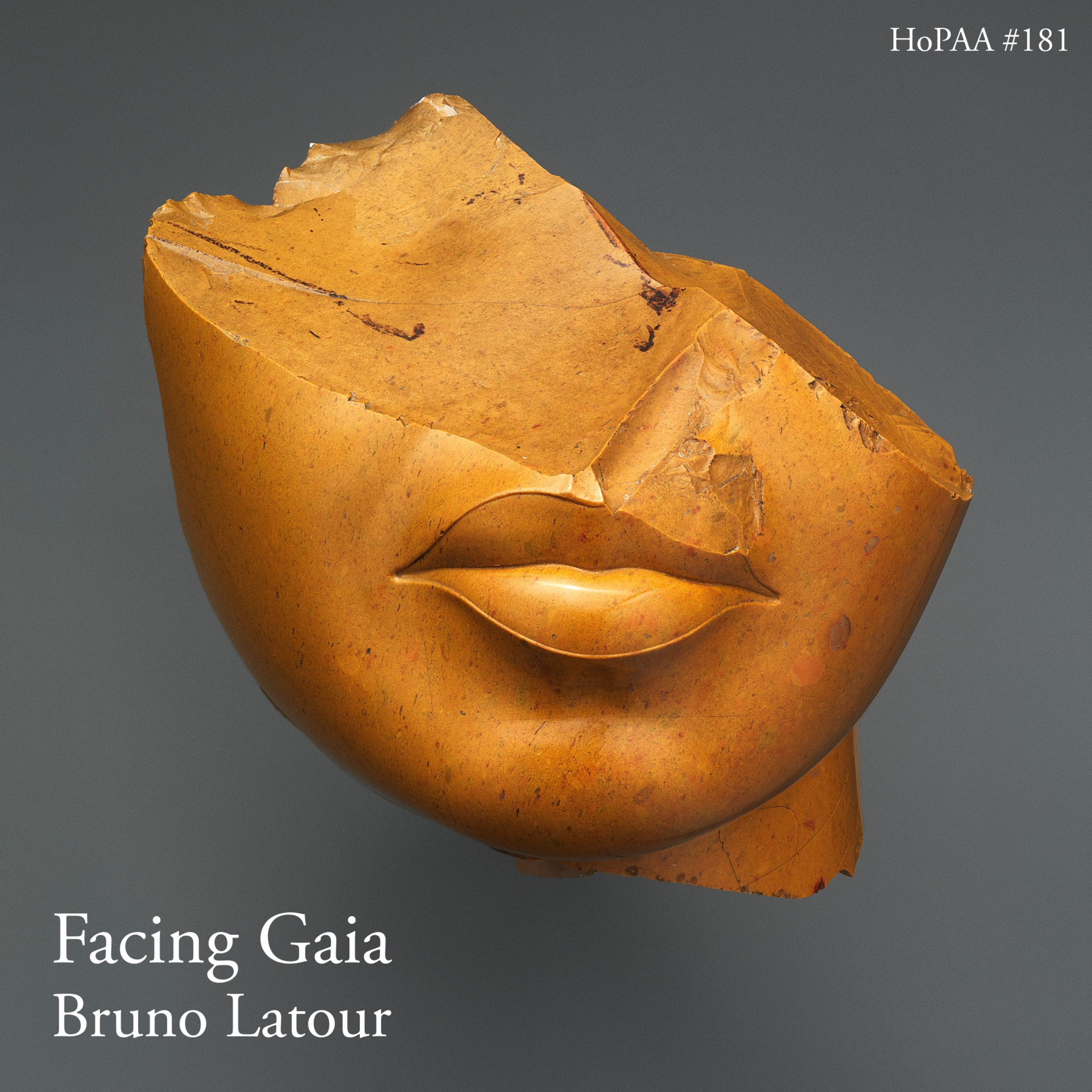
#181 Facing Gaia: Lectures on the Political Theology of Nature by Bruno Latour, Gifford Lecture Series 2013
Feb 2605:05:53Tap to summarizeRIP Bruno Latour (1947-2022)Follow Will’s writing on his Substack page, Hemlock:https://williamengels.substack.comSupport the entire show on Patreon and get early access:https://patreon.com/c/hemlockpatreonIn 2013, philosopher Bruno Latour delivered his lecture series “Facing Gaia: Six Lectures on the Political Theology of Nature” at the St. Cecilia Hall inside the University of Edinburgh. These are the six lectures:Lecture 1: Once Out of NatureLecture 2: The New Climatic RegimeLecture 3: The Puzzling Face of a Secular GaiaLecture 4: Anthropocene and the Destruction of the GlobeLecture 5: War of the WorldsLecture 6: Inside the "Parliaments of Nature"For further context, you can read the full discussion guide (144 pages) here. Here's a quick intro taken from the discussion guide (which was dedicated to Continental philosopher Peter Sloterdijk):Summary of the lectures: Those six lectures in ‘natural religion’ explore what it could mean to live at the epoch of the Anthropocene when what was until now a mere décor for human history is becoming the principal actor. They confront head on the controversial figure of Gaia, that is, the Earth understood not as system but as what has a history, what mobilizes everything in the same geostory. Gaia is not Nature, nor is it a deity. In order to face a secular Gaia, we need to extract ourselves from the amalgam of Religion and Nature. It is a new form of political power that has to be explored through a renewed attempt at political theology composed of those three concepts: demos, theos and nomos. It is only once the multiplicity of people in conflicts for the new geopolitics of the Anthropocene is recognized, that the ‘planetary boundaries’ might be recognized as political delineations and the question of peace addressed. Neither Nature nor Gods bring unity and peace. ‘The people of Gaia’, the Earthbound might be the ‘artisans of peace’.The lectures are organized by groups of two, the two first ones deal with the question of Natural Religion per se and show that the notion is confusing because on the one hand 'nature' and 'religion' share too many attributes and, on the other, the two notions fail to register the originality of scientific practice and the specificity of the religious regime of enunciation.Once the pleonasm of Natural Religion is pushed aside, it becomes possible to take up, in the next two lectures, the question,first of Gaia as it has been conceived by James Lovelock and of the Anthropocene, as it has been explored by geologists and climate scientists. It is thus possible to differentiate the figure of the Earth and of the agencies that populate it from the notion of nature and of the globe thus bringing to the fore the geostory to which they all belong.In the last two lectures, after the notion of Natural Religion has been put aside, and after the complete originality of Gaia and geostory have been foregrounded, it becomes possible to reopen the political question at the heart of what will be life at the Anthropocene. Once the key question of war has been introduced, the search for a peace along the delineations allowed by politically relevant 'planetary boundaries' to which Earthbound (the new word for Humans) accept to be bound become again possible.Credits:Art Credit: Egyptian Fragment of Queen's Face, Amarna Period, Ancient Egypt, Metropolitan Museum of New York. Carved in yellow jasper. Creative Commons.Source Material, University of Edinburgh, 2013. Fair Use.Ending Song: Anastasia Huppmann performs Beethoven, Piano Sonata No.30 in E major. Creative Commons.Interlude Song: Beethoven Piano Sonata No. 4 in E-flat major, performed by Burhan Erdemir. Creative Commons.Intro Song: Schubert, Impromptu No.3 in G-flat major, performed by Max John. Creative Commons.
Transcribe →
Hemlock #43 - Enframing the Future with Emma Stamm, Nuclear Weapons, AI, Martin Heidegger's Question Concerning Technology, Walter Benjamin, Fascism, Fantasy, and Simple Folk Tales
Feb 2301:58:45Tap to summarize"Fascism is the desire for a simple folk tale" - Thomas Mann, I think.Substack's and LEPHT HAND's own Emma Stamm https://substack.com/@elftheory rejoins Will for a follow-up conversation on nuclear weapons technology, Martin Heidegger's Question Concerning Technology (1954), artificial intelligence, psychedelics research, and why becoming idiots might save us in the end.Follow William Engels' writing on Substack:williamengels.substack.comFollow Will's entire creative output on Patreon.com:patreon.com/c/hemlockpatreonReferences:Walter Benjamin, Sixth Thesis on the Concept of HistoryJudith Herman (Trauma and Recovery)Castle Bravo Thermonuclear Bomb TestAtoms for Peace (1954)William Lovitt edition of Heidegger's essays, including Question Concerning Technology
Transcribe →
#180: Michael Parenti Tribute: The Darker Truths of Empire (November 2005)
Feb 2001:11:36Tap to summarizeRIP Michael Parenti (1933-2026). A brave, undimmed (sometimes controversial, of course) critic of that great juggernaut of death: the American Empire.HoPAA #180Watch the full video here from the College of DuPage here:https://youtu.be/OOF56wYTl1wREAD TRANSCRIPT AND POST MEMES ON PATREON:https://www.patreon.com/posts/151201440
Transcribe →
#179 Martin Heidegger's "The Question Concerning Technology" (1954) Presented by Gregory Sadler, Enframing, Standing-Reserve, Aletheia, Aristotle's Four Causes, and the Destining of Revealing
Feb 702:24:30Tap to summarizeReading Martin Heidegger is tough. Here to introduce us to some core concepts in The Question Concerning Technology (1954) is Greg Sadler, whose YouTube channel https://www.youtube.com/@GregoryBSadler "That Philosophy Guy" has just racked up over 170K subscribers and whose podcast Sadler's Lectures (Spotify Link) is updated almost every day, including an ongoing discussion of Jeremy Bentham.This 2-part lecture, which you can watch on YouTube here covers Heidegger's discussion of Aristotelian causality, including the so-called 'Four Causes' as well as Heidegger's discussion of unveiling and bringing-forth (aletheia, Greek), enframing (Gestell) and standing-reserve. Rest of the shownotes on the Patreon post.
Transcribe →
Acid Communism: Philosopher Emma Stamm on Mark Fisher's Unfinished Manuscript, Capitalist Realism, the Slow Cancellation of the Future, Joe Rogan, Critical Theory, AI, and Life in Para-Academia
Jan 501:50:14Tap to summarizeHemlock #42 - Support the History of Philosophy Audio Archive on Patreon, and follow William Engels's writing on Substack.I am joined on this episode by independent writer and philosopher Emma Stamm to discuss the late, great, Mark Fisher. Emma is a member of the theory collective LEPHT HAND, and she has a new online course enrolling soon/now on Mark Fisher's "Acid Communism." You can also follow Emma's writing (Elf Theory) on Substack.SHOW NOTES:Books and Articles Referenced:Books by Mark Fisher:Acid Communism (Unfinished Introduction, 2016)Capitalist Realism: Is There No Alternative? (2009)The Weird and the Eerie (2016)Postcapitalist Desire: The Final Lectures (2020)Ghosts of My Life: Writings on Depression, Hauntology, and Lost Futures (2014)K-Punk: Politics (Anthology, 2020)More Everything Forever: AI Overlords, Space Empires, and Silicon Valley's Crusade to Control the Fate of Humanity (2025) by Adam BeckerTrauma and Recovery: The Aftermath of Violence - From Domestic Abuse to Political Terror (1992) by Judith HermanPostscript on the Societies of Control (1990) by Gilles DeleuzeWorks by philosopher Byung-Chul Han:The Agony of Eros (2017)Psychopolitics: Neoliberalism and New Technologies of Power (2014)The Burnout Society (2010)Gaia Wakes: Earth's Emergent Consciousness in an Age of Environmental Devastation (2025) by Topher McDougalBook that Emma and I did NOT like about 'longtermism' and Effective Altruism: What We Owe the Future (2022) by William MacAskillOther Events, People, References:Haight-Ashbury Human Be-In (January 1967)Jacob Chansley the " QAnon Shaman"Timothy Leary and Eldridge Cleaver do LSD in Algeria (1970)
Transcribe →
Capitalism's Invisible Army (CIA) - Bill Yarborough on MKUltra, Operation CHAOS, Nixon & the Plumbers, the 40 Committee, Operation Gladio, Paperclip Nazis, Stranger Things, and Healing from Torture
Jan 501:37:36Tap to summarizeFor Hemlock #41 on the History of Philosophy Audio Archive I am joined by MKUltra survivor Bill Yarborough to discuss government secrecy, Cold War hijinks, the refinement of torture techniques over the years, and the history of domestic covert operations in the United States.This episode contains descriptions of torture and child abuse, so please be forewarned.Bill has recently published a book (a work of fiction inspired by real experiences) about MKUltra. We dug in deep on the Cold War, the nuclear arms race, the Third Reich, movies about Nixon, Johnson, and Kennedy, and the origin of US torture programs in Latin America and elsewhere.NOTESBooks Referenced on the Show:Poisoner in Chief: Sidney Gottlieb and the CIA Search for Mind Control by Stephen Kinzer. (Highly Recommended / Excellent Author)The Search for the Manchurian Candidate: The CIA & Mind Control by John D. MarksThe Shock Doctrine: The Rise of Disaster Capitalism by Naomi Klein (also highly recommended. Klein is a marvelous journalist and writer).The Crying of Lot 49 (1966) by Thomas Pynchon (see the bit about "Dr. Hilarius" from Wikipedia:Dr. Hilarius – Oedipa's psychiatrist, who tries to prescribe LSD to Oedipa as well as to other housewives. Toward the end of the book, he goes crazy and admits to being a former Nazi medical intern at Buchenwald concentration camp, where he worked in a program on experimentally-induced insanity, which he supposed was a more "humane" way of dealing with Jewish prisoners than killing.JFK and the Unspeakable: Why He Died & Why It Matters by James W. Douglass (2008). Very good Kennedy assassination book. Includes an interesting discussion of Thomas Merton's (possible) assassination as well, along with rich connections to liberation theology.Movies Referenced on the Show:Secret Honor (Robert Altman, 1984)Thirteen Days (Roger Donaldson, 2000)Nixon: Director's Cut (Oliver Stone, 1995)Historical Events and Other References:Lead article in the Canadian Press about MKUltra lawsuitsOperation Paperclip (OSS/CIA Operation to bring Nazis to US)Hemi-Sync (Project Stargate developed guided meditation album for out-of-body experiences, one friend called it 'DIY MKUltra')Operation Sea-Spray (Domestic US Navy biological warfare experiment in SF)Operation Sunrise (OSS/Allen Dulles attempt to negotiate separate peace with Heinrich Himmler, AKA the Berne incident)Otto Ambros (Nazi concentration camp chemist, developer of Sarin gas and thalidomide)Otto Skorzeny (Waffen SS officer, rescued Benito Mussolini from prison, GLADIO operative)Unit 731 (Japanese Imperial Army biological warfare unit)Mike Mansfield (Senator, called for CIA oversight committee)Project Plowshare (theoretical nuclear terraforming of landscapes)Operation Gladio (stay-behind paramilitary network in Europe of far-right gangsters and mercenaries)40 Committee (Assassination program established under Eisenhower and headed by VP Nixon, responsible for planning Castro's assassination)Operation Midnight Climax (subproject of MKUltra, sex and interrogation)E. Howard Hunt (CIA agent, White House "plumber" under Nixon, prolific author)Happy nightmare reading...
Transcribe →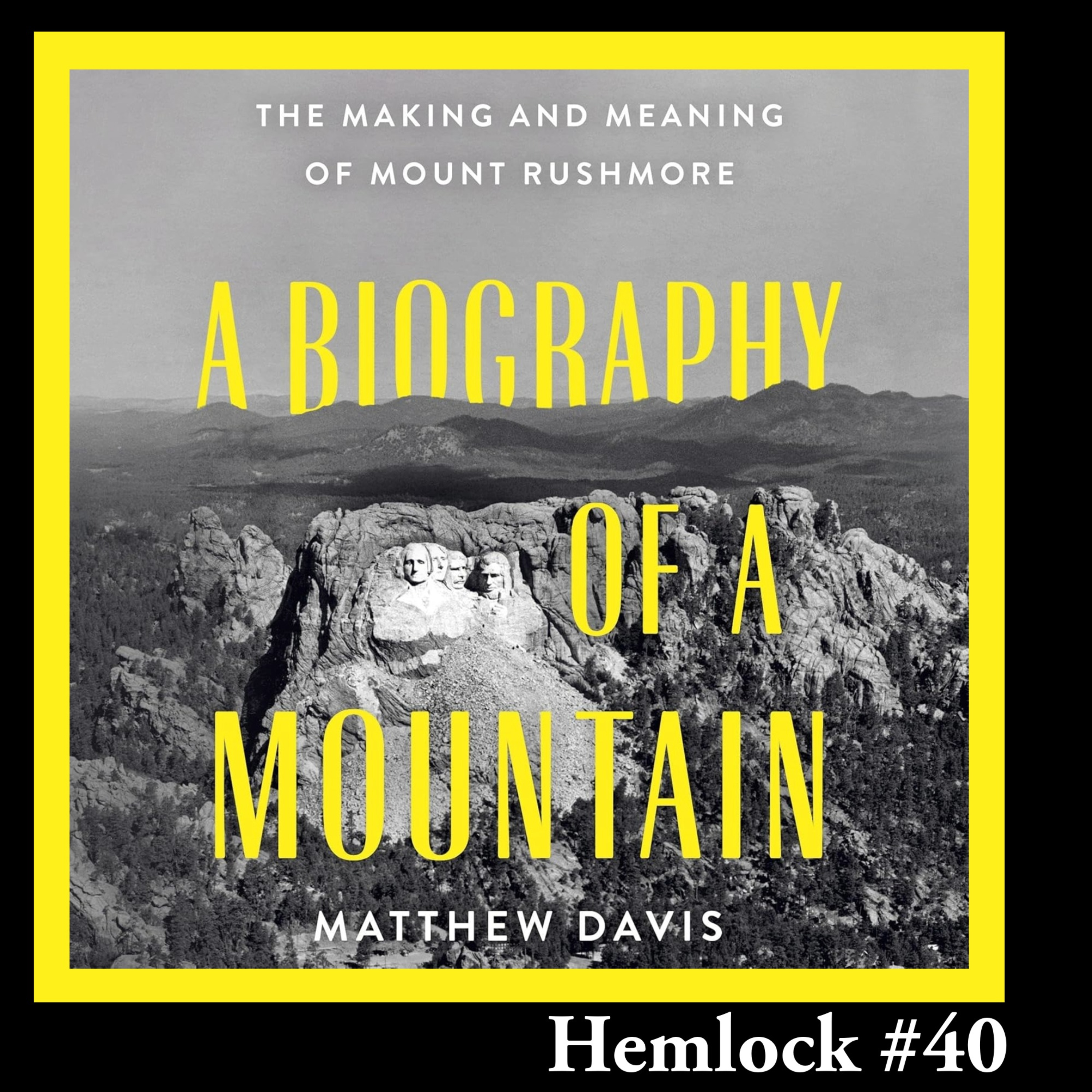
Carved In Stone: Matthew Davis on Mount Rushmore, Wounded Knee & Medals of Honor, Deadwood, the Lakota, Stone Mountain and the Klan, American Aesthetics, Custer, Whitman, Jackson, and the Black Hills
Jan 401:15:40Tap to summarizeSupport the Archive on Patreon! Follow William Engels's writing on Substack. Who do the Black Hills really belong to? Was George Armstrong Custer a hero, an idiot, or a fanatic? Who carved Mount Rushmore, and what was it supposed to represent (the "apotheosis of Western Civilization?") What happened at Wounded Knee (in 1890, and 1973) - and why does Secretary of War (sic) Pete Hegseth (sick) want to make sure that those Medals of Honor are preserved?My guest on Hemlock #40 was Matthew Davis, author of A Biography of a Mountain: The Making and Meaning of Mount Rushmore available now in bookstores. You can read more about Matthew on his website, https://www.matthewdaviswriter.com/NOTESBooks:The Heartbeat of Wounded Knee by David TreuerAmerican Holocaust: The Conquest of the New World by David E. StannardDeath Sonnet for Custer by Walt Whitman (later titled "From Far Dakota's Canons" in Leaves of Grass:FROM far Dakota's cañons,Lands of the wild ravine, the dusky Sioux, the lonesome stretch, thesilence,Haply to-day a mournful wail, haply a trumpet-note for heroes.The battle-bulletin,The Indian ambuscade, the craft, the fatal environment,The cavalry companies fighting to the last in sternest heroism,In the midst of their little circle, with their slaughter'd horsesfor breastworks,The fall of Custer and all his officers and men.Continues yet the old, old legend of our race,The loftiest of life upheld by death, 10The ancient banner perfectly maintain'd,O lesson opportune, O how I welcome thee!As sitting in dark days,Lone, sulky, through the time's thick murk looking in vain for light,for hope,From unsuspected parts a fierce and momentary proof,(The sun there at the centre though conceal'd,Electric life forever at the centre,)Breaks forth a lightning flash.Thou of the tawny flowing hair in battle,I erewhile saw, with erect head, pressing ever in front, bearing abright sword in thy hand, 20Now ending well in death the splendid fever of thy deeds,(I bring no dirge for it or thee, I bring a glad triumphal sonnet,)Desperate and glorious, aye in defeat most desperate, most glorious,After thy many battles in which never yielding up a gun or a colorLeaving behind thee a memory sweet to soldiers,Thou yieldest up thyself.
Transcribe →
#178a David Foster Wallace: The Complete Audio Archive of Interviews, Speeches, and Public Appearances (Winter Solstice Special - Part 1 of 2)
Dec 2206:34:13Tap to summarizeSupport this work on PatreonRead the full write-up on this archive on William Engels's Substack, Hemlock.Part 1 of 2:We all have our little solipsistic delusions, ghastly intuitions of utter singularity: that we are the only one in the house who ever fills the ice-cube tray, who unloads the clean dishwasher, who occasionally pees in the shower, whose eyelid twitches on first dates; that only we take casualness terribly seriously; that only we fashion supplication into courtesy; that only we hear the whiny pathos in a dog's yawn, the timeless sigh in the opening of the hermetically-sealed jar, the splattered laugh in the frying egg, the minor-D lament in the vacuum's scream; that only we feel the panic at sunset the rookie kindergartner feels at his mother's retreat. That only we love the only-we. That only we need the only-we. Solipsism binds us together, J.D. knows. That we feel lonely in a crowd; stop not to dwell on what's brought the crowd into being. That we are, always, faces in a crowd."-Westward The Course Of Empire Takes Its Way", Girl With Curious HairIn an act of desperate folly, I have collated (by my count, which could be wrong) twenty-nine different recordings of DFW, (29!) - and placed them in as strict a chronological order as the otherwise-degraded catalogues of 90s and 00s public radio metadata will allow. There are various (much older) DFW audio archive projects - which I have used to make this - but they are half the size/accuracy/detail of THIS behemoth. May its 14 hour bulk guide you through the 14-hour night of the Winter Solstice. Depending on latitude.If you listen to this, you are empowered to say with a straight face that you have heard every interview that David Foster Wallace ever gave. This is my holiday gift to all of you, and my sign-off for the year, as I head home for Christmas.Enjoy.Music Credits: Creative Commons: Chopin, Raindrop Prelude Op 28 No 15, CC-0 performed by Rousseau (YouTube)
Transcribe →
Hemlock #29 - Welcome to the First Crusade Feat. American Prestige and We're Not So Different: Magic Spears, Starving Franks, Holy Massacres, Historical Himbos, and Why Only the First Crusade Worked
Aug 1201:21:16Tap to summarizeCheck out the premium podcast Welcome to the Crusades: The First Crusade and unlock all ten episodes now. Click here for the full first episode.I am joined by Eleanor Janega and Luke Waters of the We're Not So Different Podcast (Patreon Page) and the fellas over at American Prestige podcast (Website) Derek Davidson and Daniel Bessner.My Patreon, fwiw~References, Citations, People, Assorted Wikipedia & Amazon Pages:Albert of Aix (Reputable Christian Chronicle of First Crusade)The Rhineland Massacres (Jewish Pogrom at Start of First Crusade)A Chronicle of the Above, Namely the Solomon bar Simson ChronicleThe First Crusade with the Chronicle of Fulcher of Chartres by Edward PetersThe First Crusade and the Idea of Crusading by Jonathan Riley-SmithThe First Crusade by Steven RuncimanShipping, Trade, and Crusade in the Medieval MediterraneanBest Contemporary Arab Source/Perspective: The Crusades Through Arab Eyes by Amin MaaloufDerek's mention of the first Complete History of the World by Ali ibn al-AthirArab chronicle by El-IsfahaniPersian chronicler under Mongol/Il-Khanate rule Hamadani
Transcribe →