Loading summary
Transcript132 lines
- [00:00]
Tara Tan
I mean, it's definitely going to be.
- [00:02]
Rina Moto
More junk generally, like we need more noise in our life.
- [00:05]
Tara Tan
Exponential growth, yeah.
- [00:12]
Rina Moto
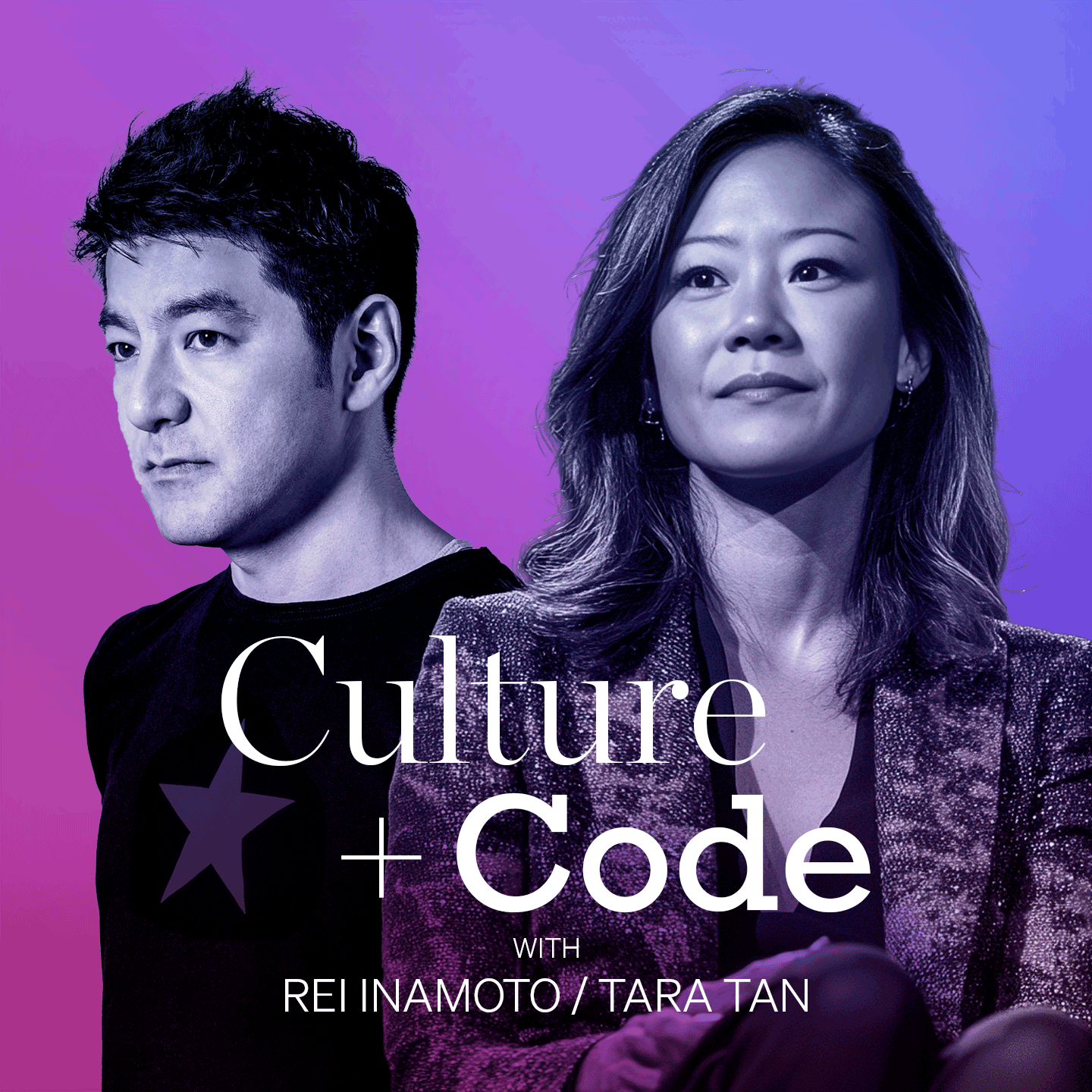
Welcome to Culture and Code, a podcast about the biggest shifts in culture and tech. I'm Rina Moto, the founding partner of Iancor, a global innovation firm based in New York, Tokyo and Singapore.
- [00:23]
Tara Tan
And I'm Tara Tan, managing partner of Strange Ventures, an early stage fund investing in the future of computing.
- [00:30]
Rina Moto
We are recording this on Monday, October 6th. And today there was an announcement from OpenAI. It's the, I think the second or the third annual Dev Day, what they call. And the topic that we decided to cover is not related to that specifically, maybe related to that in general, but the topic is Agentic Commerce. And you've written a couple of newsletters in the past few weeks just because I, I feel like, you know, anything agentic has been in the news quite a bit. OpenAI has been dominating the AI news circuit quite a bit. Any, you know, almost again, maybe timely just because of the OpenAI dev day. But why don't you start off with what you've written in your recent newsletter? And so let's start with that.
- [01:16]
Tara Tan
Yeah, I mean, I think there's been a couple of things that rolled up to today's announcement, but in general, I think the biggest breakthrough is OpenAI is trying to move towards ChatGPT as OS as an operating system. And so that means you can embed apps within the chat interface. So being able to pull up a booking.com recommendation, some recommendations from sellers on Etsy. I think over a million sellers on Shopify and Etsy are already available through ChatGPT.
- [01:47]
Rina Moto
Right, right.
- [01:48]
Tara Tan
And that was the Agentic Commerce article that I wrote where you can basically check out through ChatGPT now.
- [01:54]
Unidentified Guest
Yeah, yeah.
- [01:56]
Rina Moto
I guess just an important detail, but perhaps just for the sake of our listeners, is that OpenAI and Stripe, fairly recently, the past couple of weeks or so, announced a partnership where Stripe is integrated into ChatGPT so that any vendor or any company that uses ChatGPT can use OpenAI's or ChatGPT's interface to ask for, hey, I'm looking for X, Y and Z, say on Etsy. And any seller that uses, uses Etsy and ChatGPT, they would have that automatically integrated now. Is that correct?
- [02:30]
Tara Tan
Yes, it's a combination of both. Was released today through the Agent SDK as well as the Stripe integration.
- [02:38]
Rina Moto
What are some of the newer things that you may have caught today that are related to this commerce engine or Commerce interface or perhaps other topics that are related to this?
- [02:48]
Tara Tan
Yeah, I mean I think there were a couple of things. I would say the agent kit is one which is kind of a drag and drop interface for building agents.
- [02:55]
Rina Moto
Yeah.
- [02:56]
Tara Tan
The apps SDK is pretty massive. So really about building apps for the GPT store, I think they're relaunching it in some ways with bigger energy and a store to us API. So that means being able to turn use video generation within a workflow which I think are pretty key.
- [03:14]
Unidentified Guest
Yeah.
- [03:15]
Rina Moto
And I work with a fair amount of retail brands whether it's say Uniqlo or Asics or other retail brands that sell, you know, things online obviously. And for the past 15, if not 20 years all of those brands needed some kind of destination or like you know, uniqlo.com or asics.com or whatever.com to house their e commerce. But to your earlier point about OpenAI trying to make Chat GPT the interface to whatever is online. And if somebody says on ChatGPT, the best running shoe under $200 with these features just in the the Chat GPT input window and if let's say a pair of Asics shoes gets fed into that, it sort of completely bypasses the need for the user to go to the Asics website to buy that product.
- [04:19]
Tara Tan
Yeah, in some ways I mean it's really a discovery funnel. So I would see it, I wouldn't see it as a one to one replacement of the website, I would see it as a discovery funnel.
- [04:29]
Rina Moto
Yeah.
- [04:29]
Tara Tan
So a little bit like how you would have, you know, Google Ads or TikTok ads or something. It's a new funnel funnel or a new channel is the way I would view it.
- [04:39]
Unidentified Guest
Yeah.
- [04:39]
Rina Moto
Do merchants have to pay OpenAI to use this commerce capability?
- [04:46]
Tara Tan
I don't know yet. There's no charges as per se. I mean right now stripe takes their cut. Right. So it takes a, I can't remember, 2.9% fee of every purchase. So kind of like their visa, MasterCard.
- [04:59]
Unidentified Guest
Right, right, right, right.
- [05:00]
Tara Tan
Yeah, so that's what they take.
- [05:03]
Rina Moto
Yeah, so do credit card companies who should be scared with this move, I.
- [05:08]
Tara Tan
Think it's going to rejig. So I would say, surprisingly, I would say, you know, stuff like growth advertising or advertising companies would have to rethink same on that. So you know, instead of running just a ton of Google Ads, social media ads, it's going to change because there's a new sort of discovery channel here through my chatgpt. Yeah, I think that there's a lot of structural database stuff to work out. So if you are in retail, you would have to have all your skus be filled up with like the right metadata so it's discoverable by machine.
- [05:46]
Unidentified Guest
Yeah, yeah.
- [05:47]
Tara Tan
All that's a back end stuff, but it's really important. So how ChatGPT now surfaces, it would be they try to match based on the users have it, what they're looking for and what they can find off their metadata. So I think there's a lot of backend stuff that needs to happen for retail to kind of get in order. And then I would say who should be scared? I do think, you know, Visa and MasterCard or the traditional payment Rails companies are aware of this. Right. The race towards stablecoins, which are a sort of form of cryptocurrency that's pegged to the US dollar but moves a lot quicker, has been on the rise for the last what, 10 years?
- [06:24]
Rina Moto
Yeah.
- [06:24]
Tara Tan
So I think everyone's moving into space. But obviously Stripe sounds like they have ambitions to really be that AI native payment layer.
- [06:34]
Unidentified Guest
Yeah, yeah.
- [06:36]
Rina Moto
Other than OpenAI and Stripe, who wins in this new rejigged world, this whole.
- [06:46]
Tara Tan
Reject world, I would say, you know, Google Ads are probably taking a hit. Well, kind of work through it.
- [06:54]
Unidentified Guest
Yeah.
- [06:54]
Tara Tan
Google Ads will take a hit. Right. If people are spending ad dollars not just in Google, which has been the dominant form, then you know, I would say that there, there, there might be a hit there. Who wins? I mean it's up to, it's hard to say without it in practice. Right. So for example, our Chat GPT recommendations recommended fairly or is it recommended by auction, which is the same for Google Ads. When you search for Google, they'll recommend it. Right. It's all auction based.
- [07:27]
Unidentified Guest
Yeah, yeah, yeah, yeah, yeah.
- [07:28]
Rina Moto
Who pays more for it?
- [07:29]
Tara Tan
Who pays more for it?
- [07:30]
Unidentified Guest
Right.
- [07:30]
Tara Tan
Who pays? Like the eyeballs. Same thing. Right. So it's like ad space, premium ad space. So again, so it's still early to see, you know, if these spaces are these recommendations are auctioned off or truly fair or personalized. I think that's one because in the latter case, if it's truly personalized then I would argue that the consumer wins. But if it's auctioned off, then I would say less. Less.
- [07:55]
Unidentified Guest
Right, right, right, right.
- [07:56]
Rina Moto
It's no longer objective recommendation or products, but it's highly influenced. Monetized. Monetized version of recommendations. Yeah.
- [08:07]
Tara Tan
So it's hardly to stay there. Who are the winners? I would say companies that can probably get ahead, you know, in terms of being discovered on GPT. I think those are interesting. Are interesting. Right.
- [08:23]
Rina Moto
I think the optimist side of me says that a move like this has removed a lot of layers between a consumer and a product and could remove a lot of frictions between the two, you know, the end user and the end object or end product or end service. So the optimist side and drastically simplifying the funnel, you know, going from, hey, do I want this, I want this, or I need this, you know, that funnel, the pessimist side of this. And if OpenAI Stripe or any other intermediaries in this case, if any of them tries to monetize it in a way that's to their advantage as opposed to the user's advantage, such as, like ranked results based on what the merchants or the advertisers pay, then it benefits the platforms, not necessarily the seller. The other thing that I wonder if this could create is more junk messages and if this agent is being proactive about recommending products because they think, the agent thinks that I would want this based on my calendar or based on my whatever. Just like the same way that, yeah.
- [09:50]
Tara Tan
That'S exactly what I wrote in my newsletter, which is like, yeah, this could create the world's most persistent sales assistant. Because proactively, based on what context they know about you, they can proactively sell us.
- [10:02]
Rina Moto
Yeah, I mean, that's what email has become in some ways. In many ways, in the, like, I need, I have, you know, I'm not the only one to have multiple email accounts, to have kind of like a burner email account just to, you know, sign up for commerce services. And it ends up being the bucket for Star Mail. And then I have other email accounts to use either for work or for personal communication, other things. But for commerce specifically, I have a burner email account just to filter, to deposit that. I Wonder if this ChatGPT interface with a commerce payment functionality embedded could create something like that.
- [10:41]
Tara Tan
I mean, it's definitely going to be more junk, generally, like, we need more.
- [10:45]
Rina Moto
Noise, you know, exponential growth.
- [10:47]
Tara Tan
Yeah, it's like, you know, instead of the Moore's Law, it's junk law. It's like, yeah, it's definitely going to grow. I do think, like, I have a contrarian thought, which I do think on the retail side, random and brand mindshare is actually going to be even more important. Going to be even more important.
- [11:04]
Rina Moto
Right.
- [11:05]
Tara Tan
If, you know, you're not discovering something through sort of a search engine, I would say, you know, brand has to be top of mind. And the brand story is often not told through one channel. It's still Told through multiple channels. Right?
- [11:19]
Rina Moto
Yeah.
- [11:20]
Tara Tan
And I would say that's going to be more important than ever.
- [11:22]
Unidentified Guest
Yeah.
- [11:23]
Rina Moto
This somewhat speaking of brand goes back to the conversation that we had last week about OpenAI and anthropic doing fairly major advertising campaign pushes to create awareness and to create a perception of a brand. And I thought it was somewhat ironic in that both of these companies are LLM AI, two of the most advanced companies in the world, yet they are relying on a very traditional means of communication, at least in the modern era, which is TV based or video based at, you know, 30 second spot or 60 second spot. I thought it was somewhat ironic and we may have talked about this a little bit last week, but that these companies are using traditional media to create a brand even though they are the most advanced AI companies in the world today.
- [12:19]
Tara Tan
I think that's strategic. I mean, they've already covered anyone who is tech minded or you know, sort of leans technical or are interested in tech. Like they have already enough mindshare. So.
- [12:35]
Rina Moto
In the tech space.
- [12:36]
Tara Tan
In the tech space, yeah. So, you know, going traditional sort of audiences is definitely a strategic move.
- [12:43]
Unidentified Guest
Yeah.
- [12:43]
Tara Tan
Is to bring on board the slower adopters, I would say, which is by.
- [12:48]
Rina Moto
Far the majority of the the market or you know, in the general mass market.
- [12:55]
Tara Tan
I mean, what ChatGPT is at now like 700 million users.
- [12:58]
Rina Moto
Yeah, seven to 800.
- [12:59]
Tara Tan
Yeah, yeah. So it's growing fast.
- [13:02]
Unidentified Guest
Yeah, yeah.
- [13:03]
Tara Tan
I wouldn't say, you know, I wouldn't say that it's. Yeah, but yeah, I think, you know, moving it along the adoption curve is probably key.
- [13:11]
Unidentified Guest
Yeah.
- [13:12]
Rina Moto
What? When? When. I mean, agent. Agentic commerce as a term is a relatively recent term, but this kind of conversation based commerce has been around or at least has been talked about for quite some time. One of the classic examples of this AI or smart shopping experience is oh, you know, I have this travel coming up or you know, I'm looking for a flight option. Right. And you ask an agent for a recommendation and that's been talked about 10, if not 15 years and I haven't seen it materialize in a way that's ever been talked about. I think this phase is probably the closest that comes to that becoming realized where you don't have to go through, you know, 17 different steps to buy an airplane ticket. But you know, with just one or two questions or two prompts, I should say that you have the best route, best price, best seat, hopefully.
- [14:16]
Tara Tan
Yeah, yeah, yeah. And there are a lot of factors. Right. So airlines have not given up their database.
- [14:25]
Rina Moto
Yeah.
- [14:26]
Tara Tan
Real Time sort of database for, for seats and all of that. So yeah, you know, I think you would be able to get the first instance which is like what tickets can you get? But the upgrades and all of that. Yeah, I think they will have to come.
- [14:38]
Unidentified Guest
Yeah.
- [14:39]
Rina Moto
I mean to this day I do use like you know, kayaks and expedias the world. I do use things like ChatGPT and I, I personally tend to, tend to use perplexity to do this kind of research. I would do the research outside of the airline websites or channels but, but I do tend to skew towards the airlines that I have mileage or membership with and I end up buying most of the time through them directly. And yeah, I'm kind of curious like this type of. I don't find myself switching to ChatGPT or you know, conversational interface yet to complete the transaction. I do see myself in using a mix of chatgpt. I don't use cloud as much as I use it for writing. I don't use it for research as much. I use perplexity. Google has. I find myself using Google more often than I expected, to be honest. You know, when chatgpt and perplexity became a thing, I did find myself using Google less and less. But then relatively quickly they integrated the AI answer feature so that, you know, I can see at least a summary of the answers and links in a relatively easy manner. And yeah, so Google has been getting a lot of the noise, negative noise, just because like OpenAI tends to get a lot of the positive noise and dominates the news space. But I mean, given the scale and size of Google, I wouldn't be surprised if Google introduced a similar feature relatively soon.
- [16:25]
Tara Tan
Yeah, they already have it all set up. They have the sort of the protocols. They do have sort of the Asian, I can't remember what it's called, Asian Payment Protocol out there. It's definitely on its way.
- [16:38]
Unidentified Guest
Yeah, yeah.
- [16:39]
Rina Moto
What's the best case scenario, do you think, of this type of move for consumers or users in general?
- [16:48]
Tara Tan
You mean on the consumer front? Yeah, front. I mean just better experience, you know, easier. Right. Being able to do search with context versus keywords is a big change.
- [17:00]
Unidentified Guest
Yeah.
- [17:01]
Tara Tan
So that means like you can put in, oh, I want a trip to Borneo to see orangutans I don't like, but I don't want to, you know, I want to keep my drive beyond, you know, below one hour or something, whatever. You can put all these parameters in, whereas when you did it by traditional search, which was keyword based, you wouldn't have to be able to find it.
- [17:24]
Unidentified Guest
Right, right, right, right, right.
- [17:26]
Tara Tan
So I think the reasoning layer is great for consumers. Yeah, it's a better experience than traditional search.
- [17:35]
Unidentified Guest
Yeah.
- [17:36]
Rina Moto
Except if these platforms start to try to monetize too much and try to incorporate ads or ranking, that's actually going to be ads.
- [17:46]
Tara Tan
It's already announced.
- [17:47]
Rina Moto
Oh, it's already announced.
- [17:49]
Tara Tan
Yeah, it's going to be it. So I mean it's all there. It's just the fine balance. Right. So like where does the balance tip? Yeah, yeah, is where it is. But yes, there will be ads for sure. Yeah, I think that's definitely, definitely in there.
- [18:02]
Unidentified Guest
Yeah.
- [18:02]
Tara Tan
These are not non profits as we know.
- [18:06]
Rina Moto
Well, one of them started that way but it doesn't look that way.
- [18:11]
Tara Tan
So you know, yeah, ads are already going to be in there. I think it's obviously the balance. But yeah. I'm curious from, you know, from your point of view, if you were a brand, what would you do?
- [18:24]
Rina Moto
If I were a brand, what would I do? I think the easy temptation is to think about how do I sell more stuff. And that's sort of an obvious temptation. Right. Every brand needs to sell more stuff to people. I would think about what would be most useful and what would be most helpful to the end user. That's how I would approach it. Because I think if you are in the mindset of trying to sell more stuff, then the interest is less about the customer, it's more about you. You know, you're trying to grow your business, you're trying to sell more stuff. Instead I would think hard about what would this capability, how would it help the end user and to remove friction and how can it be more valuable to them Even if it's, if it means selling less stuff, which I think is very difficult, a lot of brands to, to think about. Again, just because selling more stuff is from a business perspective is what they need to do. But can it be better and how can it be better for my customer even if it means selling less stuff to them? Because ultimately if I as a brand do something that's truly meaningful and truly valuable for the end user, long term, I think it will benefit the brand.
- [19:55]
Tara Tan
Do you actually see this trend within retail companies?
- [19:58]
Rina Moto
No, I don't. I see some brands like Patagonia is a good example of a company or brand who doesn't overtly try to sell you more stuff. They've done, they've done initiatives and campaigns to explicitly tell customers, hey, don't buy a new jacket from us or hey, we're closing that day on Black Friday. You know, Black Friday is supposed to be the biggest commerce day in the US but they've made a choice to close that day because they want their sales staff to take that day off, to go outside and to, to take a walk, to go hiking, to go mountain climbing. So Patagonia is, and you know, it's not a publicly listed company, so they have the benefit to be able to have more control of their own destiny. So I think they're one of the few exceptions I do. And I realize I'm making a very biased comment, but because it's a, it's a client of ours. Uniqlo is a company that sells a lot of stuff. But they, I don't feel like their stories understood well in the, the Western world or maybe even Japan as well. But they're not a fast fashion company. They're seen as a fast fashion company in the same way that H and M or Zara might be. But the irony with a company like Uniqlo is that their stuff is equally inexpensive like Zara's and H&M's. But Uniqlo stuff lasts 10 times, if not 20 times longer. You know, I have a, a fleece from them 15 years ago that I still use. And you know, and because it's basic, it's a basic item, it's not on trend or it's out of trend. So they less, they sell less stuff in that way than H M, Zara or even more recently Chin, you know, but again, having worked with him for such a long time and having heard from the founder, Mr. And I of Uniqlo, the way he talks about, he's so obsessed with doing the right thing for the customer. You know, what's good, what's valuable. How can we make their life easier and better before you sell them more stuff? So I think some company, and I think there's a growth path by doing what's right and what's truly meaningful for the, for the customers. It's not necessarily the road, a popular road to take, especially for growth oriented companies. But my hope with something like Agent E Commerce is, yeah, it's an E. You know, it's perhaps an easier way to sell more stuff. But I would, if, to answer your question, if I were a brand, what I would do is really think about what are the valuable things that we can bring to the customers before you try to think about, you know, selling a shirt that they don't really need.
- [23:06]
Tara Tan
I think that's a, I don't know, I Feel like that's a quite a highly principled stance.
- [23:10]
Rina Moto
Yes, I agree with that.
- [23:12]
Tara Tan
Not many brands are built around it. I mean, it kind of reminds me a little bit of another Japanese brand called Muji. Right, Muji, Yeah. Of course. They were designed around taking a deeper look at everyday things. Right. Even a pencil or a pencil sharpener as something special that's obviously well designed and well thought out. So that was like, you know, a little bit of the. The cornerstone of their brand. But it's quite rare. I feel like it's quite rare that sort of thoughtfulness or really craftsmanship around mass design. Yeah, it's quite rare.
- [23:46]
Unidentified Guest
Yeah.
- [23:47]
Rina Moto
So, yeah, I totally realized that this type of very principled approach may not be popular. Having said that, I mean, Uniqlo is now the number three apparel brand in the world, and they are in like. Yeah. Oh, yeah, yeah. So it surpassed Gap a long time ago. Long time ago. You know, Inditex, which owns Zara, is the number one apparel retail. And Zara, from a volume perspective, is number one. And H and M. H M and Uniqlo are close, you know, second and third. But I agree that it's. It may not be a popular path, but that doesn't mean that there isn't growth because it's an approach that's obviously worked in Japan really well, and it's. It's starting to work in Europe, in the US at least, you know, it's. It's gotten enough scale to be. To be a global company that they are now.
- [24:42]
Unidentified Guest
Yeah, yeah.
- [24:43]
Rina Moto
So it's not. It's probably not an easy path, and it's a path that's probably. Well, actually not probably. Definitely slower than what Wall street will like. You know, it's not like every quarter you're growing 20, 50 kind of thing. But again, having worked with Uniclo for a long time and having spoken to Missy and I directly a number of times, of course, you know, he wants growth quickly, but at the same time, I'm surprised and amazed by how patient he is in terms of how his company achieved success and some of the initiatives that I've been part of directly. If it was a regular company, it would have been killed a long time ago because it didn't produce results quickly enough. But it was because of somebody like me, cni. Well, at least the philosophy that the company has that he wasn't killed. And then five years later, it produced results that nobody expected that he would.
- [25:39]
Unidentified Guest
Yeah.
- [25:40]
Rina Moto
So I think there's a lot of art that goes into it. More. More Art than science. And I think it takes a visionary like, you know, Misa and I will lead it like that to. To be able to take the ship in that direction and keep at it before it sinks.
- [25:56]
Tara Tan
Yeah.
- [25:57]
Unidentified Guest
Yeah.
- [25:57]
Tara Tan
Well, let's see who sails through these turbulent waters in the next couple of years of Agent E Commerce.
- [26:04]
Unidentified Guest
Yeah. Yeah.
- [26:05]
Rina Moto
It would be. I mean, you know, there'd be a lot of winners, and it would be a lot of losers. I think, in general, it was an obvious step to move forward for OpenAI or. I mean, something like this has been talked about for quite a while, so I wasn't surprised with this type of announcement a few weeks ago. It was bound to happen. Yeah. I just hope that it doesn't produce more junk.
- [26:29]
Tara Tan
I mean, I think it's definitely going.
- [26:32]
Rina Moto
To produce more junk.
- [26:33]
Tara Tan
I know, but it does remind me of that transition. Right. Between brick and mortar and E Commerce.
- [26:40]
Unidentified Guest
Right.
- [26:41]
Tara Tan
It's like, can you move into Agent E Commerce? And I think that's a big question. Right. A lot of brands don't want to be left behind.
- [26:48]
Unidentified Guest
Yeah, yeah, yeah.
- [26:50]
Rina Moto
So, well, just to close off, what are your final thoughts for this conversation?
- [26:55]
Tara Tan
I'm excited. I'm excited by, you know, what there is to build. I'm excited, actually, and filled with a lot of builder energy. I feel like OpenAI's announcement today kind of really laid the ground for a lot of building to do, so I think that's really great.
- [27:11]
Unidentified Guest
Yeah.
- [27:12]
Rina Moto
I'm also equally excited. I have a certain amount of skepticism, like I said, but in general, I think this is an inevitable direction anyway. I think this opens up a lot of opportunities that we've talked about here and. Or before. I'm excited for things that we haven't thought of. Yeah. And what are the ideas that would make me go, oh, I hadn't thought of that. Or what are the ideas that I could be part of that would make me think, oh, you know what? This is something that I haven't seen before.
- [27:44]
Tara Tan
I mean, my favorite moment in the demo today, I don't know if you saw this, was the demo with Mattel.
- [27:51]
Rina Moto
I see it. Yeah.
- [27:52]
Tara Tan
So they took a pencil sketch of a new Hot Wheels toy and turned it into an animated video with Sora.
- [28:00]
Unidentified Guest
Oh, wow.
- [28:01]
Tara Tan
It was so cool. Like, honestly, it was pretty epic.
- [28:04]
Rina Moto
Okay.
- [28:04]
Tara Tan
So you could see the car going around. It was like one of those, you know, with lots of tunnels and hills.
- [28:08]
Rina Moto
Right, right.
- [28:09]
Tara Tan
It was pretty epic.
- [28:10]
Rina Moto
So, yeah, I'll. I'll make sure to check it out.
- [28:13]
Tara Tan
Yeah, make sure to check it out.
- [28:14]
Rina Moto
Okay.
- [28:15]
Tara Tan
See you soon.