Loading summary
Transcript100 lines
- [00:00]
A
Interested. With this renewed interest in browsers as a gateway to a lot of things, the basic premise or the basic paradigm of a browser hasn't changed in the past 30 years. You know, since I was in high school.
- [00:20]
B
Right.
- [00:21]
A
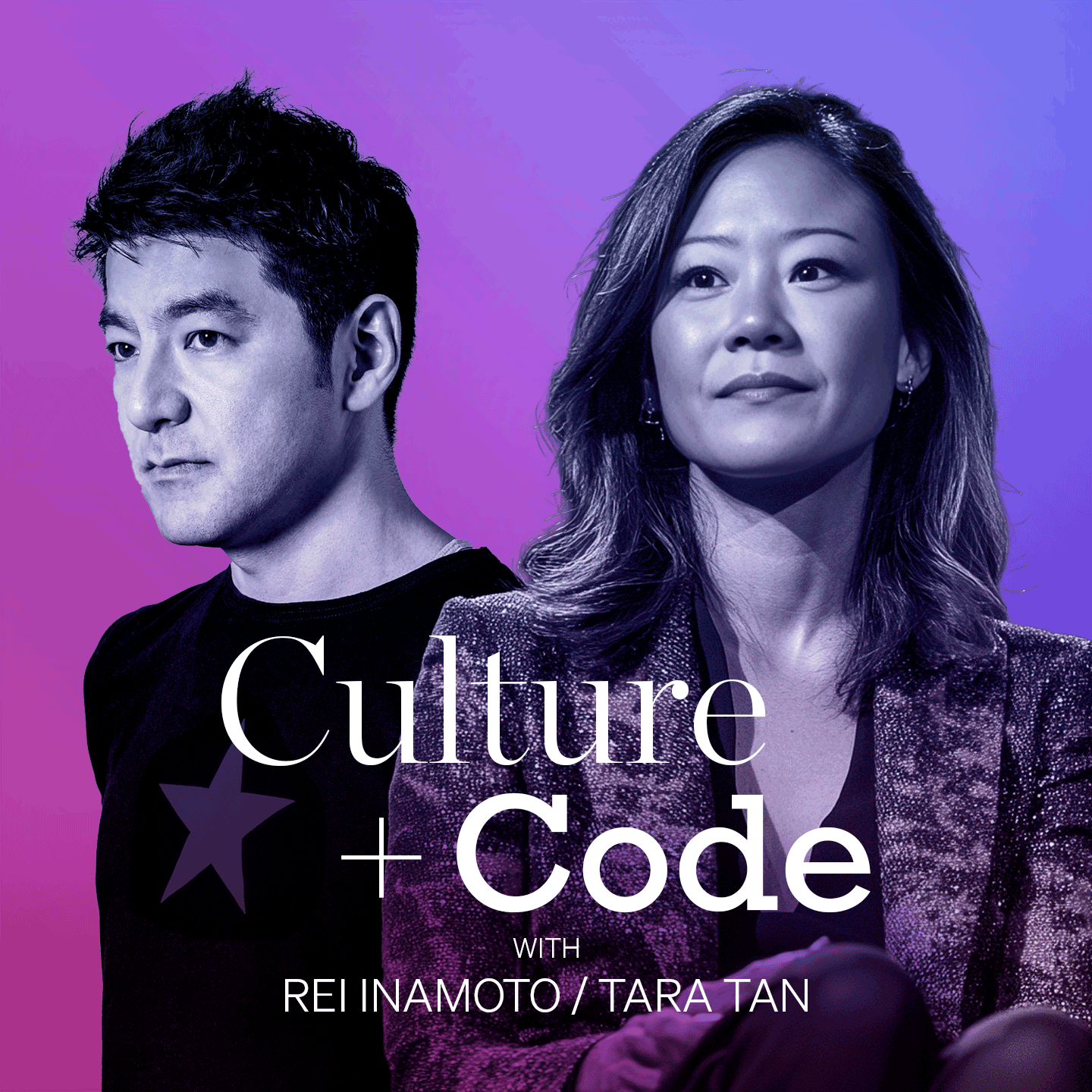
The basic idea of browser has not changed. Welcome to Culture and Code, a podcast about the biggest shifts in Powertron tech. I'm Ray Nomoto, a creative entrepreneur and founding partner of iamco, a global innovation firm based in New York, Tokyo and Singapore.
- [00:45]
B
And I'm Tara Tan, managing partner of Strange Ventures, an early stage fund investing in the future of computing.
- [00:52]
A
Cool. So the topic that we decided to talk about today is browsers. And the reason why we thought this could be a timely topic and potentially a good topic of interest for the audience is that in the recent month there is this renewed enthusiasm and I would even say a battle or war between different companies by releasing new browsers all of a sudden. You know, I'm old enough to have been around for two decades plus in this industry, and I have seen the very first browser war, which started with, like Netscape 25 years ago. Yeah. And then that moved to things like Safari and Microsoft Browser Explorer and then more recently, Google Chrome. That has been, I guess, the dominant browser in the past six months, if I understand this correctly. There have been new browsers from companies like OpenAI, which released Atlas a couple weeks ago. There's a new browser from Perplexity, which is called Comet. There's a company called the Browser Company that used to make arc, which I used to be a fairly avid user. It seems like they are phasing that out. And then they brought this new browser called dia. So in the recent month, there have been this renewed war for the browser space and potentially the battle to control the interface. And I think you wrote a newsletter last week or fairly recently about OpenAI's browser, Atlas. So why don't you start off by sharing what you're observing in that space?
- [02:34]
B
Happy to. And interesting. So dia, or the browser company, has now been bought by Atlassian. No longer fully independent. I believe they will still be building the DIA browser. DIA browser under Atlassian, but that's where it is. I mean, browsers are interesting because they're really the key interface to the future of the AI ecosystem. So, you know, you access AI models right now primarily through chat or a coding agent, also a chat interface, but to access the ecosystem. So an ecosystem of products. The browser is still, you know, it could be one of the main gateways into that sort of ecosystem. So what OpenAI did with Atlas was interesting because in the last month, I think in their last dev day, they share two major updates. One is allowing existing businesses like your Shopify, your Etsy and your so on to be accessed through the chat window in OpenAI. Right. So now you can shop for products on Etsy through OpenAI.
- [03:36]
A
On that note, just to interject a bit, so what that means is that you open a browser window, you don't have to type anything. There's the OpenAI, the ChatGPT interface right in the window itself.
- [03:50]
B
Right.
- [03:50]
A
Without typing like.
- [03:52]
B
Yeah. So before we even get into that, I think within your ChatGPT interface today.
- [03:57]
C
Yeah.
- [03:57]
B
All right, Open a little window. It's not even a browser, so a little context window within ChatGPT itself.
- [04:04]
C
Yeah.
- [04:05]
A
And then the other thing that you mentioned is that you're able to, let's say, search for products on Etsy. So you don't even have to go to Etsy to. To look for products, but then within that window it serves up all this product or that product.
- [04:17]
B
That's right, that's right. I think they're trying out a lot of different methods. One is they're actually bringing the shopping experience within ChatGPT, and then Atlas, which is their latest browser, brings the chat experience to a more traditional browser. What's interesting about the browser Atlas is that it is AI first. So instead of, you know, right now, if you use Chrome, there's traditional search and an AI mode. Yeah, they go straight into AI mode. So you can start, you know, searching for things, you can ask for recommendations, you can ask the agent, ideally to string together different information. So for example, something like, you know, I'm headed to Bali in seven weeks. Can you look for the best tickets? And it will trawl through for me. I tried out a search, can you find me the best hiking pants? And it did a search through, I think, thousands of reviews and surfaced the top three. This is when you have a reasoning layer on top of a search layer is what I think makes a browser AI native or not. Similar with Perplexity's browser comment DIA, OpenAI's Atlas and a bunch of others are trying to buy into it. But I think it really is the gateway to an AI native experience.
- [05:27]
C
Yeah.
- [05:28]
A
Just to step back a bit, and in terms of both of our respective browser habits, what do you use? A, the browser and B, search or some kind of query. How do you find yourself using these tools differently?
- [05:44]
B
For what sense? In what sense?
- [05:45]
A
So I'll share my usage pattern. Right. So I come into my Office, I open up my laptop, or even at home, my go to browser as of this moment is Chrome, right? So I have these app icons across the side of the screen and then there are a few icons or I should say a few apps that open automatically when I start up my machine. And one of them is the Chrome browser. And I, long time ago, long time, I used to use Safari, right. And switch to Chrome. I would say last year I was a fan of arc, which is a browser from the browser company. And there were certain aspects of that browser that I really liked, but there were certain other aspects that I found kind of cumbersome. And I liked it enough to keep trying it. I think I used it for about three months or so. But the little things that I didn't get used to, I think it was just like small things like the organization of tabs and things like that that I just didn't get used to. So I gave up and I came back to Chrome. Now I'm in sort of the phase where I'm starting to experiment, particularly with commentary from Perplexity, which has Perplexity's, you know, search and research interface as the default. Yeah, I haven't heavily invested my time into Atlas from OpenAI just yet. And part of the reason why I thought this would be an interesting conversation for us to have and potentially for the audience is like, how people's behavior might change down the line based on, say, what we might be observing. So I'll stop there. So my current choice is Chrome, but I'm starting to expand. I'm starting to flow with other browsers, starting with a comment from Publicity.
- [07:38]
B
Got it, got it. I mean, I would say that there's a couple of things, you know, obviously we talked about it being the gateway to the AI ecosystem. The second thing is, you know, I think what OpenAI is doing and the way they announce their several sort of product launches or directions makes me think that, you know, what's interesting is that they're actually building a personal model or memory bank on you every time you browse your preferences and all of that. The ChatGPT, the OpenAI browser Atlas stores memories on you, right? So, like your habits, your preferences and all of that. And that would spread out across your ecosystem. So your model should get smarter on you. Yeah, it's a little bit scary from a security perspective. And some people are like, a little bit like, oh, what? You know, this is a lot of power for a company to have, but really I think that's the end goal, to have a Personal model on each user.
- [08:31]
A
Yeah. Well, in terms of observing my own behavior, a few months ago, I noticed myself using Google Search or just even the search bar within Chrome less and less. Because I thought what I would get either from ChatGPT, depending on the type of inquiry that I wanted to make, I would go to either chatgpt or Perplexity. If I'm just researching, I find myself going to Perplexity more. If I needed to write something and I need to get like, feedback and so forth, I go to, to ChatGPT. I personally, I use ChatGPT less on search and research, I use Perplexity more. And in terms of generating, I use ChatGPT more. But I'm also finding as of the past couple of months or so, because Google started to incorporate AI into results at the top of the search result, that I find that summary for a lot of the searches adequate enough that if, you know, if I'm searching for something really generic and I don't need to deep dive into it, what Google Chrome gives in terms of the search results and an AI summary to be good enough for probably the majority of generic searches that I do. So what I'm getting at is that I was going away from Chrome and the Google search in general, and then now I'm coming back to it a bit more than I expected.
- [10:06]
B
I mean, Google's AI mode does whatever these chat browsers do.
- [10:10]
A
Yeah.
- [10:11]
B
So the only, I guess, challenge that Google has to. And they have dominance. Right. Chrome is, I don't know, what, 60, 70%.
- [10:19]
C
Yeah.
- [10:20]
B
Like they have dominance. This is billions of people using this browser.
- [10:23]
A
Yeah.
- [10:23]
B
Right now they just have to thread a fine line or try to find line because, you know, a lot of their income comes from search ads.
- [10:30]
C
Yeah, yeah.
- [10:31]
B
And AI mode kind of moves away from that or it's a different model. But if you go into AI mode, I find that it's a much more natural experience. So for me, you mean the AI.
- [10:39]
A
Mode within Google Search, right?
- [10:41]
B
Yeah, exactly. So, like, I find it just a much more natural experience. If you're talking about, you know, sort of human computer interfaces, a much more natural experience because I don't have to like, try to match search engine keywords. I can then start asking. I use it a lot for cooking, for example. And like, okay, if I only have or if I want to cut this ratio by half, can I use this? Oh, and can I sub this with that? Instead of trying to find the exact words, I ask, I ask it in AI mode. And it's just so Much easier. So it does a lot of the calculations for me in the, you know, sort of within the chat itself versus me having to look for something that someone else has written about before.
- [11:20]
C
Yeah, yeah.
- [11:20]
B
So I do think that the reasoning layer on top of search is a superpower. Yeah, it makes a ton of sense that that's the evolution of search and browser itself.
- [11:30]
C
Yeah, yeah.
- [11:31]
A
What about, what about Atlas from OpenAI? Do you find yourself using it more now or. I mean, you know, it's been only a few weeks, so maybe too soon.
- [11:40]
B
But honestly, my honest take is that I think it's not bad. I think it does a lot of what an AI native browser should do. The agent mode is not good enough for it to be a moment where I leapfrog forever and never turn back.
- [11:58]
A
What does the agent mode do?
- [11:59]
B
Agent mode is the promise that the browser is able to act on your behalf. So for example, you can say, I want to go to a great reviewed restaurant on Friday night for two at 7pm yeah, book me a table.
- [12:17]
C
Yeah.
- [12:18]
B
In essence, it should be able to go all the way through where great reviews and books it. Right now it's still like, it almost gets you to it. I think it brings up a recipe page or something where you can make a reservation, but you still have to do it yourself. So for me that's less interesting. That's almost like halfway there. But it's not a full enough experience where I'm like, this is exponentially better than Chrome. If I were to be very honest. I think it's interesting. Promise.
- [12:46]
C
Yeah.
- [12:46]
B
You know, I can't do stuff like I was trying to test it. So for me it'll be interesting to be like, can I set up a price alert? Let me know when flight prices drop below $700. Yeah, I can't do that kind of alerts right now. So it's not. It's quite linear. The agent mode is still quite linear. So you can get it to do little things but. But not really it to be fully a automated assistant. So if that is the case, it's not enough of an exponential leap for me because if agent works, then I think that that's a leap.
- [13:19]
A
Do you have any tasks that you have been able to use an agent to automate something that you had to do manually, that you now rely on an agent to do it on a regular automated basis?
- [13:36]
B
Yeah, so I use some of these Orchestrator tools to do like news alerts, for example.
- [13:41]
A
Sure, sure.
- [13:42]
B
So I do that.
- [13:43]
A
So that's something that you were doing Manually.
- [13:45]
B
Yeah, so you know, like just like looking at Feedly or whatever and getting all the information like I do, you know, I can do manual fetch, sort of automated fetching of information. I created a tool or a quick prototype where I would do like a meeting brief. So like before I meet anybody, it would kind of give me a. Give me a search.
- [14:05]
A
Right, right, right.
- [14:06]
B
That's a fun little prototype I was building. So I would say like it's there, you know, so I think there are things like that. I was actually halfway building a presentation making tool was not bad, which is quite interesting as well for me, the experience itself. So turning a doc into a presentation or a pitch deck.
- [14:23]
C
Yeah, yeah.
- [14:25]
B
So stuff like that, you know, I think it is there, which I think is cool. But yeah, I would say not through agent mode itself. So I tested out OpenAI's agent mode, like all of them. I feel like they're like halfway. You still need a lot of these workflow tools at this present moment.
- [14:41]
A
Right, right, right.
- [14:42]
B
To make it useful. Yeah.
- [14:43]
A
So it's not good enough to replace your current way of working or tools that you use to completely switch to.
- [14:51]
B
Yeah, it's not fully generalized. So like I built these workflows through a workflow tool, you know, like not a Zapier, like a Lindy or a Zapier or Manus, something like that. But for it to be a generalized agent mode kind of tool where you can ask it anything, you don't have to hook up anything. It goes from start to finish. I don't think the tools are there yet. I think the promise is there and I think it will get there probably within 12 to 18 months. But right now it's not there yet.
- [15:18]
A
Yeah, this might be jumping the conversation a bit too far into the future, but back in the previous century Microsoft managed to dominate, at least in the context of business, the tools that people are using to get things done. And I think Google has been effective starting with the search. And that was the initial entry point into the consumer market. And from there they've been able to create other productivity tools like the Calendar, like Google Doc, Google Slides and other numerous tools to create an ecosystem. So like for instance, you know, for work and then for my personal, like I use Gmail, I use Google Calendar, I use Google Doc and Google Google Slides, not so much just because I don't like the quality of the output I can generate from Google Slides, but like I use multiple Google tools to Google Contacts is another tool that I use to manage my contacts and so forth. Apple, I think personally I rely more the hardware and less on the software ecosystem integration because they just haven't been up to par in terms of either the capacity and the quality of the things that they provide. Google Drive is another thing that I use for both work and more on the personal side. For work I tend to mix different tools, but for personal productivity ecosystem guru has been fairly effective in dominating, at least from my personal perspective, dominating multiple tools to own a good portion of my life. Do you see say OpenAI or you know, other companies able to get to that level of dominance in terms of creating an ecosystem? Because in order for a company to create an ecosystem, it's more than just one tool. Right. Like to be able to provide multiple tools and then control an aspect of the user behavior so that they get something out of it.
- [17:17]
B
I mean, they all started from somewhere. Right. And although OpenAI is, you know, there's a daunting sort of hill in front of them. They have about 800 million users.
- [17:27]
A
Yeah.
- [17:28]
B
In the last two years, which is impressive myself. Very, very impressive. So, you know, I would say even though, say Google has billions of users, at least on the consumer side, you know, OpenAI has built a really great brand, a consumer brand especially.
- [17:44]
C
Yeah, yeah.
- [17:45]
B
I would say they're much more of a consumer play than enterprise.
- [17:48]
A
OpenAI, I think I know where you're coming from about what makes you say that.
- [17:52]
B
I mean, I think everything. So their revenues are showing that actually their consumer adoption eclipses their enterprise adoption.
- [17:59]
C
Yeah, yeah, yeah, yeah.
- [18:01]
B
And I would say that they have much more of a, they've done a lot more sort of work around consumer growth marketing. You know, whether it's Sora or their social app or anything like that. Even the ChatGPT has done a lot in consumer adoption.
- [18:14]
A
Yeah.
- [18:15]
B
So I think that their, their angle is much more consumer, whereas anthropic, I feel like it's much more enterprise professional facing. And then Gemini or Google can do both. I think right now with Nano Banana, which is their new image generating tool, there was much more consumer. But obviously they have a lot of distribution through Google Workspace.
- [18:37]
A
Existing networks that they have.
- [18:38]
B
Yeah, that's like 3, 3 to 4 billion users. So.
- [18:41]
C
Yeah, yeah, yeah, yeah.
- [18:44]
A
Going back to the browser conversation, have you tried any other recent browsers that you've been impressed by? Not really.
- [18:52]
B
There are a couple of newer ones. You know, I think, you know, arc, I like the experience a lot. You know, I think it's a shame that they're sunsetting it. ARC was, was great. I'VE seen some like, you know, newer projects as a startup called Dita that I spoke with. It's quite interesting. They have like kind of a new experience around working with docs and tools. I think it's an open design space really and I don't think it's fully cracked. What will be certain though? I think if anything takes off, the bigger companies will immediately try to acquire or dupe it. But I do think this is an experience problem and not a tech problem really.
- [19:34]
A
From the expense of the browsers, you mean?
- [19:37]
B
Yeah, the search, you know, sort of experience. And obviously that just isn't just interface, it goes down to infrastructure. Right. Like Google's simplicity of search was because of the backend they built.
- [19:49]
C
Yeah, yeah.
- [19:50]
B
So that was the experience that sort of came through and made it know, very, very magical and gave them their first sort of exponential leap into search. So I would say, you know, I think that the experience itself is still not amazing yet. I feel like there's still opportunity to play.
- [20:08]
C
Yeah.
- [20:08]
A
Personally I'm a fan of Perplexity and what they're doing. It's slightly different from OpenAI and other companies and I don't know if you've tried, if you played around with Comet, which is their browser.
- [20:22]
B
I have.
- [20:22]
A
You have, Yeah. I, I was actually really mesmerized by the, the onboarding screens and then like that experience.
- [20:29]
B
Yes, yes, yes, yes.
- [20:30]
A
Yeah, they made it very space age, so to speak. And you know, they, they played up the, that Comet metaphor. So it was like entering as if you are, it was as if you are entering a new universe. That kind of impression for me. And I'm probably more biased towards that sort of thing than perhaps other regular users. But you, you could tell that they put a lot of emphasis and effort into making that onboarding experience as moody and as cinematic as possible. Yeah, yeah, very imaginative. And I hadn't seen such an elaborate but tastefully done onboarding expense of a, of an app in the recent path.
- [21:19]
B
But my question is, did you, did you then turn it into a daily habit?
- [21:23]
A
Not yet. Not yet. Like I find myself like just out of habit, you know, I just use, I open Chrome by default partially because like I mentioned, I have it as a default app on my browser, on my laptop and like I have to remember to, oh, you know what, I have to open Perplexity or Comment to, to start the day, so to speak. But I think I'm getting there. I'm getting there. Like if I find enough benefits, I have not gotten there with, with alas with OpenAI and also like I think I have a mental barrier of letting one company own everything. Even though I feel like a lot of my life is tied up with, with Google and a lot of the data I'm giving to, to Google.
- [22:10]
C
Yeah.
- [22:11]
A
So for, for the time being, I'm still using Chrome as my main entry point to the web with sort of dabbling my toes in using Perplexity's tool to see if it brings any new benefit or new value to my productivity. And if it does, then, you know, it sort of justifies to switch to Perplexity. But purely from like a search and research perspective, I think where OpenAI has an edge is that it's not only helping you search things, but it's helping you generate things, you know, so that I think has the edge. Yeah.
- [22:50]
B
Yeah. So conclusion is that it's still not sticky enough. Experience.
- [22:54]
A
Not, yeah, it's still not sticky enough. But like I'm, you know, I, I don't consider myself an early adopter by any means. I, I think you're much more of an early, early adopter than, than I am. But I still like to experiment with this just new tools to see how they could improve my work and life. And so far Perplexity has shown signs of that. OpenAI in other ways, but not so much that it replaces my browser just yet.
- [23:19]
B
And for the businesses and retailers that I encore works with, everyone's waiting to see the platform shift because that determines a lot of the back end and front end experiences that these businesses have, especially if they have a large online presence. You know, I think it shifts it a lot.
- [23:38]
C
Yeah, yeah.
- [23:39]
A
So just, just to conclude, what's your, what's your takeaway?
- [23:42]
B
My takeaway is AI. Native browsers hold a lot of promise. Still not sticky enough. But everyone is waiting to see where the platform shift happens because that has huge repercussions on how they structure the, you know, sort of digital backend and front end for their businesses. I think it has pretty big repercussions.
- [24:02]
A
So yeah, what I'm interested with this new renewed interest in browsers as a gateway to a lot of things. The basic premise or the basic paradigm of a browser hasn't changed in the past 30 years. You know, since I was in high school, the basic idea of browser has not changed. And what I'm kind of curious about is I think OpenAI and ChatGPT was an inflection point in introducing a new paradigm in terms of interacting with a machine or interacting with the network. I wonder if browser can create a better paradigm than this browser paradigm that we've. We've lived with for the past 30 years. And at this point, I'm not quite seeing it. I think it's still the same paradigm, but, you know, you never know. And what the future holds.
- [25:03]
B
Yeah, sounds great.
- [25:04]
C
Yeah, sounds good.
- [25:05]
A
Awesome. All right. Have a good Halloween week.
- [25:07]
B
Bye.
- [25:08]
C
Bye.