
Podcast
Holistic Wealth With Keisha Blair
Hosted by Keisha Blair · EN
The Holistic Wealth Podcast with Keisha Blair – is hosted by Keisha Blair, award-winning, bestselling author of HOLISTIC WEALTH: 32 Life Lessons To Help You Find Purpose, Prosperity and Happiness and Founder of the Institute on Holistic Wealth. This weekly podcast features celebrities, influencers, CEO's, and everyday experts. The show will also showcase various experts on the key pillars of holistic wealth such as financial wellness, physical health, emotional wellness, and spiritual health.
Get full show notes and more information here: https://www.instituteonholisticwealth.com
13episodes
Episodes
Newest firstAll episodes
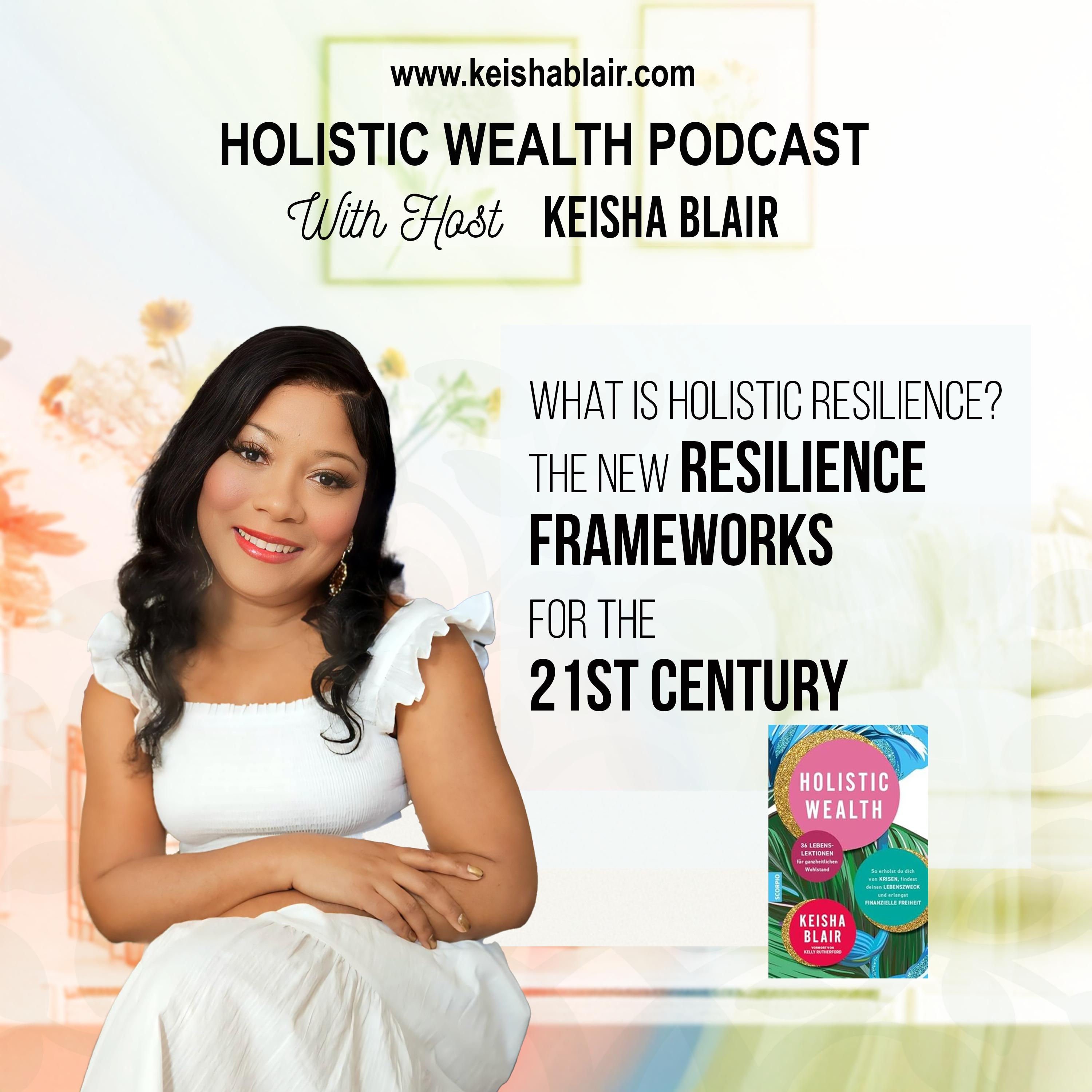
What is Holistic Resilience? The New Resilience Frameworks for the 21st Century
Sep 100:17:53Tap to summarizeWhen we talk about resilience, too often the conversation stops at “mental grit” or “pushing through.” But the truth is this: resilience isn’t about grinding harder. It’s about recovery. But in the 21st century, marked by global pandemics, mass caregiving crises, economic instability and high inflation, and unprecedented trauma, this outdated definition no longer serves us. Holistic Resilience reframes resilience as not just surviving adversity but rebuilding from the inside out—biologically, emotionally, financially, socially, and spiritually. It integrates nervous system recovery with identity reinvention, creating a blueprint for sustainable thriving after disruption. It’s about rewiring the nervous system after disruption. And for those who have been through trauma, who spend months or years in a state of hypervigilance, this recovery is both urgent and lifesaving. In this episode of the Holistic Wealth podcast, our topic is "What is Holistic Resilience? The New Resilience Frameworks for the 21st Century". Resources Used in This Episode:Holistic Wealth (Expanded and Updated): 36 Life Lessons to Help You Recover from Disruption, Find Your Life Purpose, and Achieve Financial FreedomWhy We Need a New Framework for ResilienceThe numbers speak for themselves:70% of adults worldwide will experience at least one traumatic event in their lifetime. That’s 5.6 billion people alive today (WHO, 2023).Roughly 1 in 13 people globally will develop PTSD at some point.Long-term caregiving reduces life expectancy by an average of 9 years due to stress-induced telomere shortening (UCSF study).Trauma survivors are 2-3x more likely to develop chronic illness, depression, or financial instability.A landmark ACEs (Adverse Childhood Experiences) study found that people with 4 or more ACEs are 12x more likely to attempt suicide and 3x more likely to develop heart disease.
Transcribe →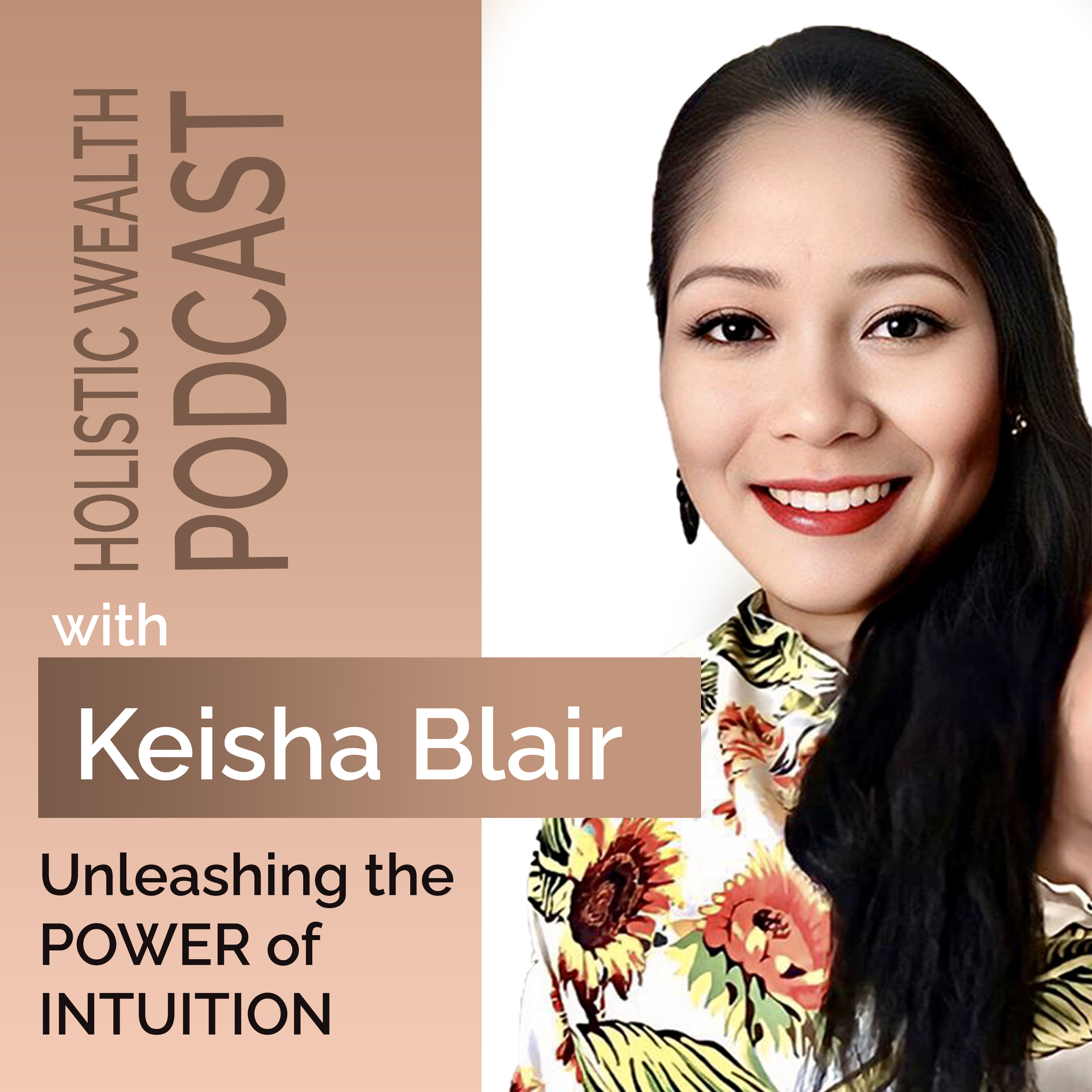
Unleashing the POWER of INTUITION
May 15, 2023Tap to summarizeIntuition is a powerful and often overlooked tool that can guide us in decision-making, problem-solving, entrepreneurship and creative endeavours. It manifests in various forms, including gut feelings, instincts, and insightful thoughts. These different forms of intuition complement each other and provide unique insights that can benefit us in different situations. Examples and personal anecdotes demonstrate the power of intuition in real-life scenarios. From a business owner trusting her gut feeling to avoid a disastrous partnership to an artist finding creative inspiration through intuitive insights, intuition has proven to be a valuable resource. Several practical strategies and techniques can be employed to nurture and strengthen intuition. These include mindfulness practices like meditation and deep breathing, intuitive journaling, engaging in creative pursuits, paying attention to physical sensations, and respecting initial intuitive reactions. Creating a quiet space for reflection and drawing from past experiences also contribute to the development of intuition. Mindfulness, self-awareness, and inner reflection are essential in connecting with our intuition. Mindfulness practices help us clear our minds and recognize intuitive signals, while self-awareness allows us to distinguish between genuine intuition and external influences. Inner reflection fosters self-discovery and aligns us with our true selves, enhancing our intuitive abilities. Exercise and activities can help individuals tap into their intuition. These include focusing on breath during meditation, intuitive journaling, body scan meditation, contemplating symbols, mindful walks, and engaging in artistic expression. It's essential to approach these exercises with an open mindset and trust the unique insights that arise. Intuition plays a significant role in decision-making and problem-solving. It enables faster decision-making, provides a holistic perspective, integrates tacit knowledge, stimulates creative problem-solving, aligns with emotions and values, and aids in risk assessment. It should be balanced with rational thinking to create a robust decision-making process. Regarding creativity and innovation, intuition enhances idea generation, encourages unconventional thinking, helps recognize opportunities, facilitates problem-solving, enhances the creative process, embraces risk and uncertainty, and promotes empathy and user-centric innovation. By trusting our intuitive impulses, we can tap into our creative potential and drive innovation in various areas of life. Something to note, intuition is a powerful inner guidance system that, when tapped into and trusted, can lead to better decision-making, personal growth, and creative expression. By recognizing the different forms of intuition, nurturing and strengthening our connection to it, and applying it in various aspects of life, we can unlock its potential and live a more fulfilling and authentic existence. Resources Mentioned In This Episode: Holistic Wealth Expanded and Updated: 36 Life Lessons To Help You Recover From Disruption, Find Your Life Purpose and Achieve Financial Freedom. By Keisha Blair Holistic Wealth Personal Workbook by Keisha Blair What You’ll Learn in This Episode: • Forms of Intuition • Power of Intuition • Cultivating Intuition • The difference between Active vs Dormant Intuition• Mindfulness, Self-Awareness, and Inner Reflection • Role of Intuition in Decision-Making and Problem-Solving • Enhancing Creativity and Innovation • Trusting Intuition
Transcribe →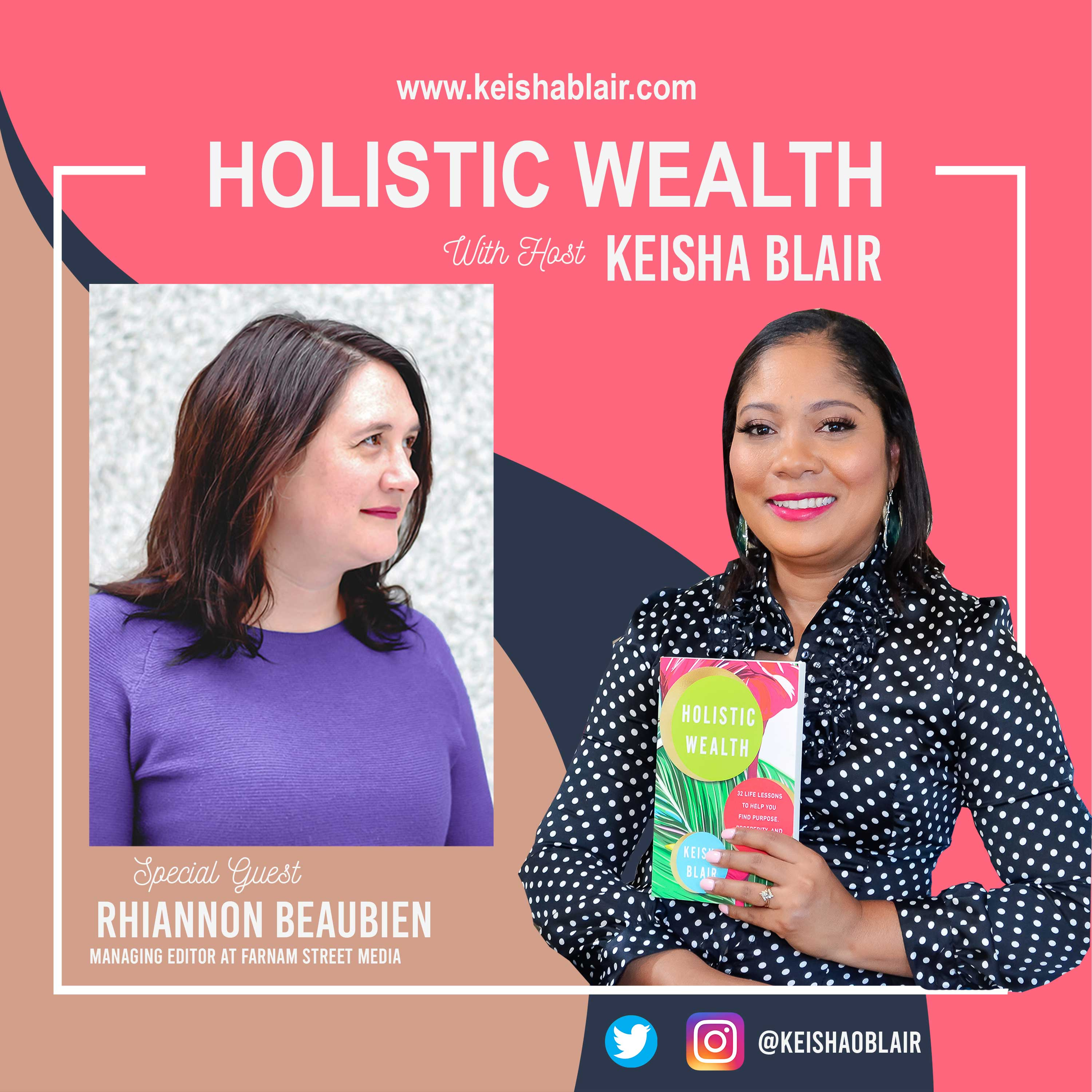
Rhiannon Beaubien, Managing Editor at Farnam Street Media shares Her Journey – as well as Tips for Self-Publishing & Having A Strong Author Platform.
Feb 25, 2021Tap to summarizeIn this exciting episode of the Holistic Wealth podcast, our very special guest is someone I admire deeply, Rhiannon Beaubien, Managing Editor at Farnam Street Media, one of the fastest-growing websites in North America. Rhiannon shares tips on self-publishing and having a strong platform. Rhiannon also shares tips for launching a digital product and shares some of the exciting product and course launches coming shortly at Farnam Street Media. Rhiannon is the lead writer/project manager of The Great Mental Models book series. Rhiannon also develops a lot of the Farnam Street course content and presents mental models to anyone who is interested. Rhiannon is also the Author of Alone Among Spies. Farnam Street Media was founded by Shane Parrish and is dedicated to helping readers master the best of what other people have already figured out. They curate, examine and explore the timeless ideas and mental models that history’s brightest minds have used to live lives of purpose. Farnam Street has drawn the attention of some of the biggest names in finance. Dan Loeb, one of the more prominent hedge fund executives on Wall Street, is a big fan as well as Ray Dalio of Bridgewater, the world’s largest hedge fund. The name of the website is a tribute to the billionaire investor: Berkshire Hathaway’s address in Omaha is 3555 Farnam Street.
Transcribe →