← Home Cooking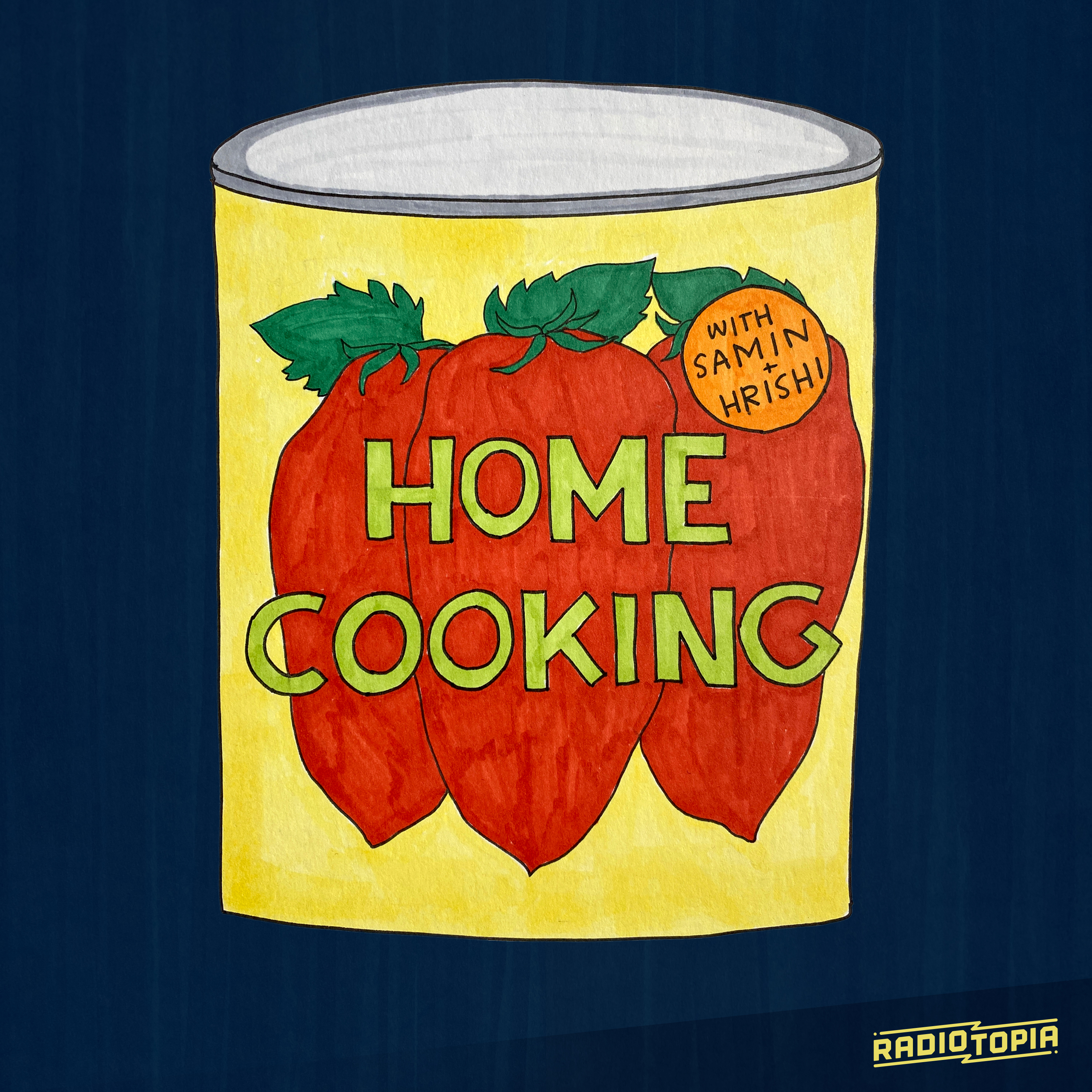
Home Cooking
Frankly, We Have a Lot to Ketchup On (with Latif Nasser)
00:58:01
There's a sweet potato posting videos on the internet. He's a YouTuber.
Loading summary
Transcript427 lines
- [00:01]
A
Hey, it's Christopher Kimball from Milk Street Radio. Sounds like I'm bragging. And I am. We're the number one most downloaded food podcast in America. You know, Milk Street Radio travels the world in search of the very best food stories. You'll hear about smuggling eels on the black market, the secret intelligence of plants, and insider tips to eating in Paris. And every week, listeners call in with their toughest culinary mysteries. Discover a world of food stories by searching your podcast app for Mill Street Radio.
- [00:31]
B
I'm Samin Nosrat.
- [00:32]
C
And I'm Hrishikeshirway.
- [00:35]
B
And we're home cooking. You needed the notes. Well, I'm glad I have. I had to double check.
- [00:44]
C
This is episode 18 of our four part series. One of the things they say about having a successful podcast is that you should have a regular publishing cadence so people know you know when to expect an episode. I feel like our theory is. Or what about the opposite?
- [01:01]
B
Yeah.
- [01:07]
C
What have you been up to for.
- [01:08]
B
The last two years? The last three, four, seven years? Yeah.
- [01:11]
C
Have you had anything good to eat in two years?
- [01:14]
B
I. It's funny because this morning I was like, what's were she going to ask me what was the last good thing I ate? Or what was something good I ate? And literally the last thing I ate before this recording was a Costco hot dog. And let me tell you, it was delicious. Really good.
- [01:32]
C
Did you go to Costco specifically to get a hot dog?
- [01:35]
B
No. But on the way out the door, as we were going to Costco, we decided that we would eat a Costco hot dog. And I got very excited because I don't do it very often.
- [01:43]
C
Okay. It was a premeditated hot dog. It wasn't like a spur of the moment, I'm hungry. I'm in Costco. What am I going to eat?
- [01:49]
B
Never. No, no. It's a very special occasion for me to eat. I probably eat Costco hot dogs less often than we record this show.
- [01:56]
C
Okay, so you've had fewer than 18 Costco hot dogs in your life?
- [02:00]
B
Way fewer.
- [02:01]
C
Well, that's true for me too, in that I've had zero.
- [02:03]
B
Well, there you go. So dumb. I don't eat a lot of hot dogs in my life.
- [02:09]
C
Tell me how you like your hot dogs.
- [02:10]
B
Oh, no, I can't.
- [02:12]
C
What?
- [02:13]
B
Because there's a right way to eat a hot dog and that's not how I eat mine.
- [02:17]
C
You eat your starting with a big knife from the middle.
- [02:26]
B
Although, Although, although, although. You know what? Separate from my hot dog that I ate today, I do love A party food called pigs in a blanket.
- [02:35]
C
Oh, sure. And those are just tiny hot dogs.
- [02:38]
B
Well, you can either use small wieners, mini wieners, or you can.
- [02:44]
C
Okay.
- [02:45]
B
Or you can take a regular size hot dog and cut it into small pieces. But the appropriate size, I think, is a one bite size, because then you just eat the Mac. You get the maximum amount of puff pastry.
- [02:56]
C
I want to go back to the hot dog, though.
- [02:57]
B
It's a good party food. All I'm saying, it's good party food. I'm giving you a transition to the holiday episode to entertaining theme.
- [03:04]
C
No, no, no. I need to.
- [03:05]
B
And you insist on going back to Costco.
- [03:08]
C
Yes, I'm Indian, and so it's in my genetic code to insist on going back to Costco.
- [03:13]
B
Just like I was there with my friend. I was there with my friend who'd never been there before, and every time she was like, oh, my God, this is a good price. Oh, my God, this is a good price. I was like, wow, you're really channeling your interim.
- [03:27]
C
No, I need to get to the bottom of why your hot dog eating is so controversial.
- [03:33]
B
Okay, here's the deal. I grew up in San Diego. My parents are from Iran. When my grandmother, who would come visit us in California, she had, like, a list of things that she wanted to do, she would want to do on her trip. And among the things was going to Costco and eating a hot dog. So I guess it's in my blood.
- [03:51]
C
You still haven't answered the question.
- [03:53]
B
I put ketchup and mustard on it.
- [03:55]
C
What's wrong with that?
- [03:56]
B
Because Chicago people who believe they're the queens and kings of hot dogs are, like, categorically against ketchup. Also, if I were at home where I have a homemade jardiniera, like a Chicago style.
- [04:09]
C
Yeah.
- [04:10]
B
I would put that on my hot dog. But I was not at home. I was at Costco.
- [04:14]
C
Wow. I mean, yeah. I mean, ketchup, mustard, relish, those are the three things that I can imagine you put on. Yeah.
- [04:21]
B
No, no, no, no, no, no, no, no. But you don't understand. There's like, we are going to get hate mail from the ketchup.
- [04:25]
C
Oh, okay.
- [04:26]
B
I guarantee you that's wild.
- [04:29]
C
I guess I have a lot to catch up on.
- [04:31]
B
No.
- [04:33]
C
So what's the correct way to eat a hot dog then? According to the hot dog snobs, I.
- [04:37]
B
Think Chicago people are like, mustard, only mustard. And gianniera is. Okay.
- [04:40]
C
I have to say that I feel like being snobby about a hot dog feels antithetical. To the nature of a hot dog.
- [04:47]
B
I don't know if it's snobbery as much as it is staying true to the way the hot dog should be eaten culturally in your town. That being said, in San Francisco, I live in the Bay Area. Here on the streets of San Francisco, one can regularly find vendors cooking onions like an oniony hot dog. Yeah, that's a San Francisco thing. And there's an entire Wikipedia entry on regional hot dog variation.
- [05:11]
C
Okay, we'll link to it in the show notes.
- [05:13]
B
Yes. Because it's honestly really interesting. You're right. It does seem antithetical to judge how other people eat a hot dog and more. It's nice to just be prideful about your own local way.
- [05:22]
C
Yeah. I just think of a hot dog as being the quick solution for sad dads everywhere who need to feed a kid, and it's like, yes. What's the guy gonna do? He's gonna just boil a hot dog.
- [05:33]
B
And I will say boiling is the best way. And a trick I learned from a real Chicagoan was to place a little wire rack on top of the pot in which I'm boiling my hot dog and place the scored bun face down on the wire rack so it steams and it gets all fluffy and warm. Huh. While the hot dog boils.
- [05:54]
C
There you go.
- [05:55]
B
So, Rishi, what was the best thing you ate in the last 18 to 24 months?
- [05:58]
C
Well, now I feel like I have to respond with the thing that I ate right before we started recording. It was a sandwich that I make kind of often as a snack, which is a sandwich with peanut butter. Avocado.
- [06:13]
B
What?
- [06:14]
C
It gets weirder than that.
- [06:15]
B
And I was worried that people would be upset about my ketchup. This is disgusting.
- [06:20]
C
No, no, it sounds so gross, but it's actually good. So, okay, step one. I crisp up some kale in the frying pan, and while that's going, I toast some bread. And then, yeah, avocado, peanut butter. I started doing this with almond butter, but then I realized peanut butter would be just as good and a lot cheaper than almond butter.
- [06:39]
B
Tough times over at Kasa, Rishi.
- [06:41]
C
Exactly. So peanut butter, avocado, crispy kale. Sprinkle a little salt on the avocado, and then put some ketchup hot sauce.
- [06:50]
B
Well, honestly, truly, the only thing I just don't understand is the peanut butter. I understand your obsession with protein, so I'm guessing that's where that. Yeah, but I'm, like, truly, like, discombobulated of an avocado and peanut butter. Combo. The rest of it, I'm like, avocado, kale, hot sauce. Cool.
- [07:06]
C
Yeah. You wouldn't think that it would work, but it does.
- [07:09]
B
Were you stoned when you decided to make this for the first time?
- [07:12]
C
No, no, I. I originally saw it on a YouTube video.
- [07:16]
B
Oh, my God. There's an entire Reddit.
- [07:20]
C
Well, this is my little energy sandwich snack.
- [07:24]
B
Okay.
- [07:25]
C
And knowing that I was going to come record with you, I knew I was going to need a lot of energy, so I had one.
- [07:29]
B
And you need your energy. It's true. Yeah, it's true. Yeah.
- [07:32]
C
So that's the kale peanut butter avocado sandwich.
- [07:35]
B
It's okay.
- [07:36]
C
Recommended.
- [07:37]
B
If this goes viral, I quit. To each their own.
- [07:41]
C
Yeah. Someday I'll make you one of these.
- [07:43]
B
And I won't eat it.
- [07:45]
C
Okay, moving on. We missed the deadline on our Thanksgiving episode, but frankly, we've talked about Thanksgiving a whole lot.
- [07:52]
B
Did you just say frankly?
- [07:54]
C
Oh, my gosh. Are you making more hot dog buns? What's happening? Up is down. Black is white. Samin is eating hot dogs from the middle.
- [08:04]
B
True. It's true. It's really. I. I just. I can't believe he said frankly.
- [08:14]
C
This episode is gonna come out in December, and I thought that maybe we could talk a little bit about things that people might be doing around the holidays. It's not our Thanksgiving episode that we've done many times now, but I think that people are still gonna be at home and thinking about food in a sort of more intense way. You know, a lot of people will be hosting. And. Yeah, even though it's not Thanksgiving, there's still a lot of food pressure.
- [08:38]
B
I sort of anticipate the crush of the holidays. The end of the year, all of the gathering and entertaining and cooking and cookie exchanging and stuff, you sort of start to see that coming earlier and earlier each year. At least I do.
- [08:51]
C
So I was looking in our inbox for some questions that we might have gotten, and I found a question that was originally intended as a Thanksgiving question, but I think it's still appropriate for other holidays as well. And hosting kind of in general. In fact, maybe it's more appropriate. Cause it's not a turkey question that. This is a question from Deb.
- [09:10]
D
When my parents were first married, my mom decided to roast a duck for their first Thanksgiving together. The thing is, my mom had never roasted a duck before, had never cooked duck in any way. The story goes that when she went to take the duck out of the oven, so much fat had rendered out of it that simply the momentum of turning away from the oven with the duck provided enough force. The duck slid out of the roasting pan, kind of flew across the kitchen and landed on the floor. Kind of scarred my mom a little bit, and she never cooked duck again. Because I was raised with this story, I've never tried to cook duck, and I love duck. It's one of my favorite things to eat. My whole family loves duck, so I thought it would be really fun for the holidays if I could make duck for my parents. And this is where I need your help. Something that will help me get over this duck roasting phobia, put that to rest once and for all, and learn how to properly cook duck.
- [10:13]
B
Oh, my God, I love this. I've heard so many duck horror stories. The reason why duck is tricky is because ducks have a thick layer of fat to help keep them warm, because they typically live in cold weather climates and also spend a lot of time in cold water. So in order to get crisp skin and also not have, like, a huge, rubbery piece of fat in every bite of duck, you need to render that fat out either before you really set out to cooking it or prepare the duck in such a way so that the fat can render out. So when you're roasting a whole duck, the best way that I know is to prick it all over, prick the skin, and you don't want to prick so deep that you're going all the way down into the meat, into the flesh, but you want to prick the skin with ideally, like, quilting needle.
- [11:01]
C
Is this from restaurant experience?
- [11:03]
B
Yes, and in restaurants, we have these, like, metal prickers that are specifically for pricking, like, sausages. It's almost like three needles stuck to a little, I don't know, cork. You could actually do that. You could take three needles, jam them into a cork, backside in so that the sharp side is facing down, and then use that little tool that you just built to prick your duck all over. You really want to be quite thorough and especially concentrating on the breasts, which are the fattiest. The more holes the batter. You don't want to go so deep that you're pricking the meat, though, because you're not trying to create, like, a holy meat.
- [11:35]
C
What are you trying to create?
- [11:37]
B
You're trying to create a pathway for the fat to come out of the skin when it starts rendering. And so that doesn't all just, like, get trapped in there.
- [11:45]
C
Yeah.
- [11:46]
B
And that's going to lead to crisp skin. Oh. Another way that people do it is they, instead of doing the Pricking with the needles is you could also just use a very sharp knife to score the skin in a crosshatch pattern over the breast and over the thighs. But I think the needles, the pricking is a little more effective. And also what would be a really great tool is if you have a metal roasting dish, metal roasting pan, the one that you're going to maybe cook your turkey in or your duck in, you would set that up on your stove top, put a little bit of water, maybe an inch of water in there, and set up some sort of a steaming setup.
- [12:19]
C
Maybe the rack that you use when you're doing your hot dogs.
- [12:22]
B
Exactly. And then cover this thing so you create an enclosed environment for steam to get become entrapped in. So if you happen to have a lid that fits over the duck and the roasting pan, use that. If it's a second roasting pan that you can flip over, use that. Or you could also seal the whole thing with foil and simmer the duck breast side down for 15 or 20 minutes, and that'll really work out a whole bunch of the fat. Then flip over the bird breast side up, steam it another 15 or 20 minutes. By then, so much of the fat will have dripped out into the water that once. Now you're ready to clean out your roasting pan. Move forward with if you want to do. You know, people do all sorts of things. What do they put inside of a bird cavity? You put some herbs, an onion, a lemon.
- [13:04]
C
Oh, my God. That's not the end of the cooking. All of that steaming and flipping you still.
- [13:09]
B
That's just the steaming. That's the rendering of the fat. Then you want to roast it.
- [13:14]
C
Listen, this is a lot of work.
- [13:17]
B
It is a lot of work, but it's how you get a crisp skin duck. Okay, well, you're not making it. She's making it. I know.
- [13:24]
C
Deb, have you ever considered going to Costco? Getting.
- [13:27]
B
Honestly, Deb, you could just go to Costco and buy six hot dogs, call it a day. Yeah, no, it's really not that hard. And frankly, like, it cuts down the roasting time and it. Yeah, it saves a lot of problems there. Truly. I've heard so many horror stories.
- [13:40]
C
Are those true stories or are those canards?
- [13:43]
B
How many weeks have you been waiting to launch that on me?
- [13:48]
C
Oh, to launch it on you. And then say samin duck.
- [13:53]
B
Oh, my God.
- [13:55]
C
Okay, so back to step 100 of the duck recipe.
- [13:59]
B
I've given you all the hows, so let me just recap.
- [14:02]
C
Okay.
- [14:03]
B
Prick your Bird. Steam your bird. Steam the other side of your bird.
- [14:06]
C
Yep.
- [14:06]
B
Roast your bird.
- [14:07]
C
That's reasonable.
- [14:08]
B
A massive amount of the fat is gone. There will still be fat, but it won't be, like, a dangerous or scary amount.
- [14:16]
C
Yeah.
- [14:16]
B
And to me, duck fat is like liquid gold. So even that fat that has dripped down into the water is worth saving. So you could either chill that water and scrape the fat off and save it, or you could simmer away the water and keep the fat. But duck fat is an amazing tool and ingredient, especially for cooking potatoes.
- [14:37]
C
Right.
- [14:37]
B
And by steaming it, you're sort of par cooking it. So there you've shortened the cooking time, and the rest of it's a lot like roasting a chicken or a turkey.
- [14:46]
C
So Deb's phobia is not unfounded. But you think there's easy ways around it.
- [14:51]
B
I think there's duck in her future, man.
- [14:53]
C
All right, good luck. Debate.
- [14:54]
B
I hope it works out.
- [14:55]
C
Deb, you ready for another question?
- [14:57]
B
Born ready.
- [14:58]
E
This is Annabelle. So my question's about sweet potatoes. I love sweet potatoes, and when I say I love sweet potatoes, I mean I eat two or three a week. I eat them for any meal. And I do different toppings. I do, like, a PB and J1 with peanut butter and my homemade chia jam, or I do an avocado chickpea mash.
- [15:19]
B
But do you ever do avocado and peanut butter?
- [15:22]
C
Exactly.
- [15:23]
E
And I wanted to hear you guys opinions about different ways I could fill my sweet potato. I have two constraints. I'm in college, and I'm vegan, so I feel like there's a lot to work with there. But I'm excited to hear what you guys have to say.
- [15:38]
B
Annabelle, thanks for your question. It's so you're. You're very sweet.
- [15:42]
C
Like a potato, like a potato.
- [15:44]
B
If you've never tried a Japanese sweet potato.
- [15:47]
C
Oh, Japanese sweet potatoes. Slap.
- [15:50]
B
They are so good. They're also sometimes called satsuma, imo. They tend to have, like, a purplish skin and a white flesh. They have a much less fibrous texture than the orange ones. I'm guessing that you're either, like, maybe roasting your sweet potatoes whole, it sounds like, or maybe steaming them whole and sort of eating them like a baked potato with filling. They really lend themselves quite well to that. Plus, what I like about them is they tend to be a little bit smaller. So I don't know, sometimes I'll eat, like, two little roasted whole ones or three little roasted whole ones, and they cook up a little Bit more quickly. I feel like Japanese sweet potatoes are all the rage in LA where you live, Rishi.
- [16:27]
C
They are?
- [16:28]
B
Yeah. They're on every restaurant menu.
- [16:30]
C
Yes, exactly. They're on the menu at every restaurant. But I don't know that I've ever seen them in the grocery store. Are they hard to find?
- [16:37]
B
Oh, yeah. There's one farm. I think it's like wiser family farms, where all of the restaurants get these delicious Japanese sweet potatoes. They have them, you know, at my health food store, so they're not impossible to find. But I think that will already level up your game. Trying some Japanese sweet potatoes. They just. They're creamier, I think they're starchier. They're just. It's a whole nother level of deliciousness. Step two, it already sounds like you're pretty good on your topping game. I mean, a lot of people are doing stuff with peanut butter on this episode that I just never thought I'd hear about, so. But, like, you know, inspired by you. I think for me, one of my favorite ways to eat sweet potatoes is steamed with, like, a tahini butter. I learned that from Carla Lally Music. It was a recipe in her book. And I wrote a whole column about these steamed sweet potatoes that were so nice. And I, in my life have historically been anti steaming vegetables because I'd rather boil them. But she wrote so convincingly about steaming them because it makes them fluff up until any of that fibrousness sort of disappears. And it is a great, great way to cook them. And she. She makes a tahini butter, maybe with a little bit of sesame oil. And I feel like when I make it, I add some soy sauce and maybe even a little secret miso. So if you can't have butter, maybe you could have vegan butter. Or I think you could also just try combining tahini butter like soy, ginger, toasted sesame oil, and make a delicious sort of creamy filling like that. And that's like one sort of direction I might take my sweet potato in.
- [18:09]
C
I have one possible idea.
- [18:12]
B
Yeah.
- [18:12]
C
When you mentioned Japanese sweet potatoes, a Japanese sweet potato that I've really enjoyed was one that was served with a chimichurri sauce.
- [18:21]
B
Yes. I think a green herby sauce is a great way because if you think about it, the sweet potato itself is starchy and sweet, and if you've salted it, salty. But it really is gonna need, like some acid, some freshness to counteract that. And also a little bit, I think they can always use a little more like moistening agent. So the olive oil in a salsa verde is a nice touch too. I think so, yeah. A chimichurri, a salsa verde, or any green sauce would be good. I don't know. Do you have a green sauce you like to make, Kharishi?
- [18:48]
C
I mean, I've never made a chimichurri sauce, but I do love it. And now I feel like I want to.
- [18:54]
B
It's really not hard. And honestly, like, I now have, in my old advanced age, taken to. I make everything in a machine. I mean, I learned to make all these things by hand, but now I just. I think the immersion blender is a great tool in the kitchen. And so I often will just throw like herbs. I have around some either lime juice, lemon juice or rice vinegar, olive oil, salt. I always like something spicy in there. So whether it's like a little bit of Calabrian chili paste or a chili flake or a fresh jalapeno or something, it's nice to have a little crunch. So you could top said sweet potato with crispy fried shallots or some sort of toasted nut. Like a little bit of pistachio would be nice. Yeah. Even just like toasted sesame seeds for a little crunch.
- [19:40]
C
We eat a lot of sweet potatoes here in the Heraway house.
- [19:42]
B
Oh, tell me more.
- [19:43]
C
Basically, once a week we eat sweet potatoes with our veggie burgers. That's our sort of traditional Friday night meal. Really simple, just roast the sweet potatoes as little fries. But the thing that I was really craving one day was ranch sauce. But it's a vegan house, so I had to make ranch sauce out of what we had here in the house because I haven't really seen vegan ranch dressing in the store. But I made some out of vegan sour cream and Vegenaise and dill, a little garlic and lemon and salt. And I think that's the best way to eat sweet potato fry.
- [20:23]
B
Yeah, I mean, that sounds very delicious. I have spent a lot of time in the last five years working on my book, making a lot of, incidentally, vegan dressings and sauces, some of which you've had. And one of them actually was meant to be a tahini ranch, the one that you and Lindsay like so much.
- [20:38]
C
Yeah.
- [20:39]
B
If you didn't want to use like Vegenaise and vegan sour cream, you could just start with a tahini base. Oh. And then. Yeah. And then all the herbs. It's a mix of fresh and dry dill. Some scallions are nice in there. And then, yeah, you get a kind of A green herby sauce that would be really good on top of a sweet potato. But I think a roast sweet potato dinner is a really satisfying and filling and fun thing because to me, it's like any meal where there is an opportunity for condiments and toppings is a win. Annabelle, I hope this gives you some ideas.
- [21:05]
C
We are rooting for you.
- [21:07]
B
Oh, no, no, no. It's not a root, it's a tuber.
- [21:11]
C
Oh, we are tubering for you.
- [21:15]
F
Hi, Rishi and Samin. My name is Ashley and I'm from Canberra, Australia. So my partner is a very enthusiastic tomato grower. And last year we ended up with a heap of tomatoes at the end of the season, so he wanted to bottle them. He lovingly crushed and bottled these tomatoes, but the end result is way too salty. And so now we have about 10 jars of just over salted tomato sauce that I can't use for anything. I can't put it into a pasta sauce or stew because the final result is just way over salted. Is there anything that I can do to make this pasta sauce or tomato sauce less salty? Or is there anything that I can use it for or mix it with that would make something edible?
- [22:02]
C
Oh, Samin, much like yourself, these tomato sauces are too salty.
- [22:08]
B
I just have trauma response when somebody tells me they're canning tomatoes.
- [22:13]
C
Really?
- [22:13]
B
Because it's the most labor intensive. Oh, my gosh. There's so many steps. It's one of those things where when you've done it and dirtied your entire kitchen and there's somehow tomatoes splatter on the ceiling. Finding tomato seeds in your ears for the next three weeks, like pure chaos. I will never can tomatoes again. Anyone doing it out there? I see you, and I understand the instinct to find a way to use it because it is so precious and so much like time and labor, especially not even including the time and labor it took to grow those tomatoes.
- [22:46]
C
Oh, yeah. And the heartbreak of discovering after all of that work that the thing is inedible.
- [22:51]
B
Yeah. So I think the only way to use them involves dilution. I'm thinking of recipes where I add crushed tomatoes to a huge pot of soup where it's just a supporting flavor in a larger soup or stew and then let the salt come from the tomato. But the other thing that I would recommend is maybe a little bit heartbreaking, but it still would involve you getting to use up your tomatoes, which is when something calls for two cans of tomatoes, use half a can or half a jar of your own, and then one and a Half cans that you've procured elsewhere. So that way you're still using yours up. It doesn't go in the garbage, but you're sort of cutting it with something that's maybe a low sodium or no sodium tomato. Maybe buy no sodium tomatoes for that use.
- [23:38]
C
I feel like that's legit advice. I really like that advice.
- [23:42]
B
Trust me. I have done so much over salting in my life.
- [23:45]
C
Hard to imagine the first draft of the book was just salt, salt, salt, heat.
- [23:49]
B
So sometimes the answer is you have to throw the stuff out. This to me doesn't sound like that. This to me sounds like a sort of a careful usage in, in a much more diluted way.
- [23:59]
C
Yeah, let the store bought stuff come to your rescue.
- [24:01]
B
By now you might have another glut of tomatoes from the next year. So you could use your next year's tomatoes when you're cooking in the summer. Like if you're going to make a ratatouille or something, add some of your salty sauce and some fresh tomatoes from the garden.
- [24:14]
C
Nice. Well, there's another salt question that we have. I found this question really charming, but here I'm going to play it for you.
- [24:21]
G
Hi, Samin and Rishi. My name is Risha and I'm in Normal, Illinois. I often see it mentioned that, you know, we're supposed to salt our vegetables. So like you salt your cucumbers with some kosher salt and you let the excess water drip out. Or before you make a slaw, you salt your cabbage and then you maybe squeeze out the water. My question is, do you then rinse? I never see this in the recipe. Like to then rinse off the cucumbers or the slaw and I guess that would just reintroduce a whole bunch of water. But at the same seems like a lot of salt to just sit on the cucumber. And I am using the like red box kosher salt. So and I know it's not that salty, but it still seems a little salty. Maybe I'm just, I got to get my head around it maybe. And maybe I'm just not like putting that ingredient, the cucumber or the slaw, with enough stuff that's not as salty so that the saltiness of the cucumber is like really delightful. But maybe you could tell me like if, if we're meant to leave the salt as is and not rinse it off, say the cucumbers, how much salt should I be putting on, say an English cucumber that's cut up in my colander? That would be so helpful.
- [25:32]
C
I found this one kind of charming because I kind of related to it. Like, there are steps sometimes in recipes, and you're like, okay, I'm doing the thing, but do I understand why I'm doing it? Or, like, what the principle is?
- [25:43]
B
All the time, it makes sense. I thought this was a really nice question, so thanks, Risha, for calling. What can be confusing is something, say, like, cabbage for sl. Often it'll say, add some salt, let it sit, the water will come out, and then continue with the recipe. Because if you don't do that, when you go and dress your slaw after 30 minutes, it'll just be sitting in a puddle of water. And you don't want that. You want a nice, crunchy slaw.
- [26:05]
C
Yeah.
- [26:06]
B
And the reason we do that, on things like cabbage or cucumbers or, like, in the summertime, people will often recommend that you do it on eggplant. Let the water come out and then pat it off and then continue. It's because these are types of produce that have big watery cells. They have a lot water content. And so the salting encourages osmosis to start occurring, and then water starts coming out. And what that means is then what's left behind is more flavorful. So certainly with tomatoes, that's true with zucchini and eggplant. They're so watery that their water content can prevent browning if you're trying to grill or roast them. So salting can actually encourage some of the cell walls to start breaking down so that they will cook more efficiently and just be less watery. In the olden times, before the current sor available eggplant varieties that are, you know, widely grown, eggplant did used to be quite bitter. And salting the eggplant would draw some of the bitterness out. But now that bitterness has sort of been bred out of modern eggplant. So I think some people learned to salt eggplant from their Italian grandmother, say, and. And just, like, didn't necessarily know why, or they were told it's about bitterness, but it's not really for bitterness. It's just often a helpful thing. All that being said, if you're going to cook something that you've salted, if your goal is browning, then you need to wipe off the water that accumulates on the surface, because the browning reactions, which are caramelization and the Maillard reaction, don't start until Temperature's well past 212, which is where water will evaporate and steam away. So if you don't do that carefully, you'll sort of end up with, like, a zucchini soup, and it won't actually brown. So I kind of decide if I'm going to salt things like zucchini and eggplant based on how much time I have to prepare. So if my goal is browning, but I don't have, like a whole 45 minutes to let it sit and all the water to come out and dry it off, then actually, I just don't salt the zucchini. I start sauteing it or roasting it, and once I'm done cooking it, then I salt it, which is breaking my own rules, because I believe in salting everything early. But also, you have to do it within context of what you're after.
- [28:17]
C
I think the question that Risha is asking, Right. Is when you're getting rid of the water, when you're, like, wiping off the water, is the salt coming with it?
- [28:24]
B
Some of it does, but I think what I heard in her question was that you're probably using too much salt to begin with. And even if you're doing exactly the amount that the recipe tells you, maybe for your palate at your house, that's too much, because ideally you just use the amount you're going to use in the end for flavor. For flavor. And all you're doing in the meantime is waiting to allow that liquid to come out so that you can then discard that liquid and then carry on with your recipe. So in something as every day as salting your cucumber or your cabbage, it's not some precise chemical reaction number. You don't need, like, there's not a formula that you need numbers for to create a ratio of perfect salting to your thing. Just put the amount that makes it taste right and then carry on. There shouldn't have to be rinsing. There shouldn't have to be much wiping, honestly, with cucumbers. And if I'm doing something like making a smashed cucumber salad, I might just let them sit for a little while in the salt and then tip off the excess water and carry on. When you're making cabbage for sauerkraut, you do use an extraordinary amount of salt, and that is way saltier, because your ultimate goal is to create a brine and lead to fermentation. But when you're just doing it for a salad or a quick preparation, just use the amount that you are going to put in it to make it taste good.
- [29:42]
C
Because you only need a little bit of salt to cause that osmosis to happen.
- [29:46]
B
Yeah, the entire practice of salting to get water out is much more about time than it is about amount of salt, if that makes sense.
- [29:52]
C
Makes perfect sense.
- [29:53]
B
Like I would say, time is the more important factor than the amount. So just use what tastes right to you. Put some salt on your cucumber and eat a piece. And then when it's salty enough, stop.
- [30:03]
C
Great.
- [30:04]
B
Done. Rishi's gonna cut out all my interesting information about eggplant. I can already tell you.
- [30:09]
C
No. Not only are we back with a new season of episodes, we've also got brand new home cooking merch. We finally put our tomato can home cooking logo on a shirt. You can get it as a T shirt or a sweatshirt or a tank top or even a onesie for little baby home cooks. Plus there's a tote bag with the drawing of the round salt can thing that has Samin and myself and our dogs Fava, Bean and Watson on it. It is the pinnacle of tote bags and there is a pun in there if you think about how pinnacle is spelled. There's also a special shirt in honor of our special recurring guest, the man with hot takes and a surprisingly high pitched giggle. My dad, known to Samin and all my close friends as Sumesh Uncle. He has his own shirt that says Team Sumesh uncle featuring three little jars of saffron and he undoubtedly has very strong opinions about their color and flavor. And of course, there's also still the OG sweatshirt with the drawing of the can of sardines and the inexplicable Shrimp Jenga Forever shirt. And all of this stuff was illustrated by our wonderful Mamie Rheingold. And all of it is available at Homecooking Show Merch. Again, it's Homecooking Show Merch.
- [31:33]
B
If you're a fan of home cooking and the way it's all put together. But like me, you wish it had a little less Rishi in it. Let me recommend Rishi's other podcast, the brilliant and magical Song Exploder. Rishi is the host, but he cuts himself entirely out of the interviews he does with amazing musicians like Janelle Monae, Robin, Fleetwood Mac, U2, and more. So you just hear them talking about the creative process behind the making of one of their songs. I was actually a fan of Song Exploder way before Rishi and I became friends. Two of my favorite episodes are the ones with Solange and Sylvan Esso. The show is so carefully and thoughtfully made and it's just really inspiring for anyone who creates things. Find it wherever you listen to Podcasts.
- [32:19]
C
Do you want more veggie questions?
- [32:21]
B
Always.
- [32:22]
C
Okay.
- [32:23]
H
Hi, Samin and Rishi. This is Elizabeth. My question is about frozen vegetables. So I think Samin had mentioned that you recommend corn, broccoli, and peas, among other things. And I have that stuff now stocked in my freezer. My question is, how do you use frozen vegetables best so that they still have the right flavor? So, for example, not sure. Microwaving broccoli and then using lemon and soy sauce really tastes the same as if it was fresh. So I'm wondering. Yeah, what's the best way to use frozen vegetables? Thank you so much.
- [33:03]
B
Oh, this is a great question. Someone that I had sort of convinced to keep frozen vegetables in her fridge had tried to use her frozen broccoli. And she was like, yeah, it just wasn't very good. And I was like, what did you do to it? She's like, well, I just made it the way I always make broccoli. I roasted it. And I was like, oh, yeah, no, no, you can't roast frozen vegetables. Until I heard that from somebody, I realized, oh, it's not necessarily super clear.
- [33:30]
C
You can't just thaw it back to room temperature and then treat it like a regular vegetable.
- [33:34]
B
Honestly, this is not unrelated to the last question in that frozen vegetables are usually par. Cooked. So often I think that means, like, boiled for a second or steamed for a moment and then frozen. So they're not raw when they're frozen. If you freeze a raw vegetable, the water in the cells will explode later when it goes in the freezer, so you have to sort of par cook it. But they're still very al dente and they can use some cooking. When you take them out of the freezer, however, all sorts of things are happening to their watery cells both in that cooking process, the, like, flash freezing process, then all of the time that it spends in your freezer. And. And those things are not necessarily wonderful or delicious. What's happening in there is, like, it's a lot of cell breakdown, so it can lead to mushy vegetables. And because what happens when things sit in the freezer, we all experience this. Sometimes you open a bag of peas you've had in the freezer, and there's all of this freezer burn, like all of this icicles, you know, just like snow in the bag, and you're like, wait a minute, I didn't put water. Where did that come from? Where did the snow come from? The snow came from inside because the freezer's pulling moisture out of whatever's in it and slowly dehydrating it, which is also why things have even a shelf life in a freezer. Right. You don't want to keep stuff in there more than three or six months. I mean, depends on what it is. But it will eventually just like shrivel up and dry out and never be any good. So I kind of try to make a practice of using stuff in the freezer, like just rotating through it pretty regularly.
- [35:04]
C
This explains so many lost bags of frozen corn for me.
- [35:08]
B
And say I'm going to freeze something I prepared. I would choose always to freeze something in liquid like a soup or a braise, rather than just like a roasted piece of meat or a roasted vegetable, because that's just going to continue to get more leathery through the freezing and then rewarming process. So in order to prevent leatheriness, you have to always think about the water content and the way you're storing things, ideally in liquid. Just simmer it and bring it back to a simmer and it comes to a happy place. Okay. Coming back to our vegetables, you also want to apply this idea of moisture loss, encouraging as much moisture in the vegetable as possible and also cooking it for as short of a time as possible in how you decide to use your frozen vegetables, which for me, almost always I just boil my broccoli, corn, peas in salted water, or I often use frozen peas to make pea soup, like a delicious pea and mint soup. So that's in liquid. Or if I was going to add, I don't know, frozen peas and frozen corn and frozen carrots or something to a pot pie filling. Right. It's being simmered in some sort of a filling. So roasting's not going to work because of all of the breakdown. So I would say steaming and boiling are your two best friends.
- [36:20]
C
Why does microwaving, which she mentions in her question, why does that not work?
- [36:25]
B
I think microwaving could work, but I think one would want to make sure again that your peas or broccoli is in a nice salted environment. And honestly, I mean, this is not a paid advertisement, but there is a company called Any Day that makes sort of a new version of a microwave container.
- [36:44]
C
Oh, yeah, I actually used one of these for okra the other day.
- [36:48]
B
Yes, exactly. But you're only gonna extract the maximum flavor if you salt it correctly and cook it correctly. And so if you wanna steam it in your microwave, then use, let's say, a microwave specific container, make sure there's some salt involved and don't overcook it.
- [37:03]
C
The OKRA that I was cooking in the microwave came from a recipe that was in Khushboo's book, Amrikant.
- [37:09]
B
Oh, yeah, you were telling me about it. I feel like I was watching you make this okra.
- [37:12]
C
I think we might have built some time. I feel like we FaceTime doing this, but I highly recommend that book. And that recipe was great.
- [37:20]
B
And what's the book called again? It.
- [37:21]
C
It's called Amrikan.
- [37:22]
B
Yes. Which I love.
- [37:23]
C
And it's great. And her mom swore by microwaving okra.
- [37:28]
B
All you Indians and you're microwaving?
- [37:30]
C
Yes.
- [37:32]
B
I love it. I mean, truly. That was because. What I'm referring to here, peeps, is that Rishi has a family recipe for a dish called sabudana. And it was so delicious. It's almost like a tapioca pilaf.
- [37:46]
C
I mean, we've talked about it in this show.
- [37:48]
B
Yeah. And so I begged for the family recipe and it involved the microwave, which I was like, like shocked by. But your mom insisted. No, no, that's how, that's how to make it.
- [37:56]
C
Yeah, yeah. Thanks, Elizabeth.
- [37:58]
B
Yeah, that was a great question. I'm really into our veggie questions.
- [38:01]
C
These questions have really ended up not being holiday themed by any stretch.
- [38:05]
B
Whatever, man. People hopefully are eating some veggies during the holidays. Yeah.
- [38:08]
C
This is a PSA eat your frozen peas essay. I have this dream for this Christmas, which is to make something that I have never made, never attempt to make anything even close to this. The difficulty level might be way too high for someone like me, but tell me more. When I was in England this fall, I had for the first time a cardamom bun.
- [38:34]
B
Oh yes.
- [38:35]
C
It was so good. I ate it three times. I was there for three days and I ate a cardamom bun every day.
- [38:41]
B
Three times. Uh huh.
- [38:42]
C
The other day I was in a coffee shop here in LA and they had a cardamom bun. And I was like, oh my gosh, they've got it here. I had it. It wasn't nearly as good. And I was like, oh, how do I recreate the incredible cardamom bun that I had from London from a place called Buns from Home? That to me was just like the perfect amount of sweetness. Not too crazy sweet. The cardamom was really, really intense and there was a moistness to the bun. It pulled apart in this really beautiful way. And I thought, is there a way?
- [39:15]
B
There is a way. I need to know more.
- [39:17]
C
Well, I think you might expect a cardamom bun to be kind of dry. But this is almost like mall Cinnabon levels. Moistness.
- [39:25]
B
Yes.
- [39:25]
C
But without the icing and, you know, more of a normal size.
- [39:29]
B
I know exactly what to do. I know exactly how to get this.
- [39:32]
C
Can I. Let me send you a picture.
- [39:34]
B
Yeah, let's look at a picture. Oh, yeah. That is a laminated dough. You're not going to get that. However, I still know how to get you something real good. It won't be exactly the same, but it will have that very soft, delicious texture. I'm so excited about this conversation. I'm so excited.
- [39:48]
C
Me too. Because one Christmas Eve in 2007, I spent the night at my friend's house and I woke up to the scent of cinnamon buns being made. And turns out that Missy would make cinnamon buns every Christmas morning. That was like part of their tradition.
- [40:07]
B
Oh, I love that.
- [40:08]
C
And it was so incredible. And so I was thinking, could I do a cardamom bun for our, you know, Indo US Christmas? Because that's what I loved about the cardamom bun was it felt like this hybrid of flavors and packaging where it was like this western, you know, Scandinavian sort of thing, but it had this really Indian flavor. It was so good. So, yeah, this is my dream.
- [40:30]
B
I think I can help you make your dream come true. Let me also add into this conversation. In Scandinavia, definitely in Sweden, there is a dessert traditionally made on December 13, which is the saints day. Santa Lucia or Santa Lucia, I think, if you're Swedish, it's a Swedish dessert called lusakater, which are saffron buns. And there is often a ton of cardamom sugar involved. But this is all to say, I think many cultures have like a cardamom related dessert.
- [40:59]
C
Yeah.
- [41:00]
B
Especially at the holidays. So I think it's very appropriate and wonderful. So I'm gonna tell you something. I sense that you're probably gonna get a little bit freaked out, but I think you can do it.
- [41:09]
C
O.
- [41:09]
B
Okay. So have you ever had Japanese milk bread? Or do you know what it is.
- [41:13]
C
I have in sandwiches that we've eaten together? Right.
- [41:17]
B
Yes. Super soft white bread.
- [41:19]
C
Yes.
- [41:20]
B
Yes. At Combi Rip.
- [41:21]
C
Yes.
- [41:21]
B
The best sandwich.
- [41:22]
C
The best sandwich.
- [41:23]
B
Yes. Super, super soft.
- [41:26]
C
So fluffy. Like the perfectly steamed hot dog bun.
- [41:29]
B
Exactly. Just like a perfectly steamed hot dog bun. And so sometimes it's called Japanese milk bread, sometimes it's called Hokkaido milk bread. But the idea behind milk breads is that in addition to the normal sort of bread making process of combining flour and water and yeast, et cetera, you take a portion of your flour and you Cook the flour with milk into a very thick paste. Like, if you've ever made a bechamel sauce, this is not unlike that, but it's much thicker. It's very, very thick paste.
- [42:00]
C
Yeah.
- [42:00]
B
And then you let that paste cool, and then you use that paste as the base of the bread dough, and then you add the rest of the stuff. But what that small portion of cooked grain does is it goes through a sciency thing. I think it's called gelatinization. That cooked grain has a remarkable capacity to hold onto moisture way, way, way, way, way higher than a non cooked flour. It's so amazing. So one of my favorite things to make at the holidays is Claire Saffitz has this recipe for sour cre milk bread dinner rolls. They're so soft.
- [42:36]
C
That sounds so good.
- [42:37]
B
Or. Yeah. There's Eric Kim, who, like, contributes to New York Times Cooking, has a great recipe for, like, a maple syrup milk bread. So I think we find you a great milk bread cinnamon roll dough. You make that and you use cardamom sugar instead. But, like, when we're talking about cardamom here, just to be clear, we're talking about green cardamom, which is the cardamom that comes in small green pods.
- [42:58]
C
Yeah.
- [42:59]
B
I do think to get what you're after, Rishi, you want to grind it yourself because it's so much more powerful. It's so much more cardamom. Yeah. You would combine sugar and ground cardamom. I would put a portion of brown sugar in there in addition to white sugar. Because it's extra moist.
- [43:13]
C
Yeah.
- [43:13]
B
It's much wetter. And that's sort of what we think of when we think of the ooey gooey in a cinnamon roll.
- [43:19]
C
Yeah, yeah, definitely.
- [43:20]
B
Like brown sugar.
- [43:21]
C
Yeah.
- [43:21]
B
This is a fun project for me to go down little cardamom bun rabbit hole and a milk bread bun rabbit hole. So maybe what I'll do is I'll find you, like, a good cardamom bun recipe and a good milk bread bun recipe.
- [43:32]
C
Yeah.
- [43:32]
B
And what you'll have to do is do the cardamom steps from one and the dough steps from one.
- [43:38]
C
Wow. Okay. All right.
- [43:39]
B
Do that.
- [43:40]
C
Yeah. It's gonna take a lot of practice.
- [43:41]
B
I think, but you're out here writing, like 400 podcasts, scoring a movie, writing an album, and you can't combine two steps from two recipes.
- [43:52]
C
I can see from some initial research that there is such thing as vegan milk bread out there.
- [43:57]
B
Yeah. I think you absolutely could make a vegan version of this using vegan butter. And an oat milk or something like that. Yeah.
- [44:04]
C
All right, I will report back in two years when we meet again.
- [44:08]
B
Sounds good.
- [44:08]
C
For this podcast, for our final segment of the episode, we're actually going to play something from another show. Well, kind of. Samin, you were a guest on Radiolab recently.
- [44:22]
B
What's Radiolab?
- [44:23]
C
Oh, Radiolab is a science podcast from wnyc and they did an episode called A Little Pompeian Fish Sauce Goes a Long Way. All you really need to know is that it was a story about a scientist who was searching for survivors in the wake of the Pompeian disaster. And a key part of his search was this thousands year old fish sauce, which is called Garum.
- [44:47]
B
And so when they called to see if I wanted to participate, I was like, I'm not doing anything, I'm busy. I have to finish this book. And then literally one of them uttered the word Pompeii and I was like, I'm in.
- [45:00]
C
So Samin, as a Pompeii enthusiast, ended up having this long conversation with Latif Nasser, who is our friend and one of the co hosts of Radiolab, and they ended up using a part of it for their episode. But there's so much stuff that the two of you talked about that I thought was interesting and funny and kind of felt like a home cooking episode in a way that we thought it.
- [45:22]
B
Was just me and a brown guy. Me and a brown guy didn't know anything about food.
- [45:25]
C
We're fungible. Yeah.
- [45:26]
B
Ye.
- [45:28]
C
So. So we thought we could play that conversation here.
- [45:33]
B
I don't know if you know this, but I took four years of Latin, one year of ancient Greek. I am such a Pompeii nerd. I'm such a Pompeii nerd. Not a Pompeii nerd specifically, but like, the word Pompeii just like tickles my soul. Oh, yeah, Truly. When the producer, when Pat called me and he was like, oh, Pompeii, I was like, I'm in.
- [45:50]
A
Okay, great, great.
- [45:51]
B
And so then like, oh, and g. Another word that sings straight.
- [45:56]
A
So you knew that word garum already?
- [45:58]
B
I'm a cook.
- [45:59]
A
So wait, have you.
- [46:00]
H
Do you.
- [46:00]
A
What's your experience with Garum?
- [46:02]
B
Well, I mean, I'm pretty sure I first heard about Garum when I was in middle school. Latin.
- [46:06]
A
Okay.
- [46:07]
B
And I was like, what is this disgusting thing? Why would I ever want to have anything to do with it? It was just like rotten anchovy juice.
- [46:14]
A
Okay.
- [46:16]
B
You know, my family's from Iran.
- [46:18]
A
Yeah.
- [46:19]
B
I grew up in San Diego, eating a lot of Mexican food, the occasional pizza, the occasional trip to a Chinese restaurant. I can't say an anchovy ever entered our home.
- [46:29]
A
Maybe by accident on a misdelivered pizza or something.
- [46:31]
B
Maybe on a misdelivered pizza, which my mom would send back and be really mad about. I did not really encounter anchovies until I became a cook. And then at some point, I learned about what the modern garum is, which is colatura. It's called colatura, and it's basically made the same way.
- [46:46]
A
And it's an Italian sauce.
- [46:47]
B
And it's an Italian. I have a bottle of it. I just bought some right before Pat called me. Actually. Actually, it's the same color and texture as fish sauce.
- [46:53]
A
Okay. Oh, like an Asian fish sauce.
- [46:55]
B
Yeah, yeah. As, like, a red boat. And then I also grabbed this for you, which I always call white people fish sauce.
- [47:01]
A
Oh, Worcestershire sauce is fish sauce.
- [47:03]
B
Yeah. Distilled white vinegar, molasses, sugar, water, salt, onions, anchovies, garlic, Anchovies. Secret.
- [47:10]
A
Interesting.
- [47:11]
B
And I think just like, as with my experience with fish sauce or anchovies, I think with colatura, like, when employed in the right way, it makes everything better. And you actually sometimes don't even know that there's something fishy going on. It's the original msg. You know, anchovies have so many glutamates. The nice thing about it being a liquid is that it's just like a little something extra that if you use it just with a light enough touch, it's just a little bit of salt and umami. And you can't always put your finger on it that it's anchovies movies. So, like, I don't necessarily always want to be, like, eating something fishy right now. It's. But I'm. Sometimes I'm like, oh, I need a little bit of extra. Like, just. I want. I want it to dance on my tongue. So then I'm like, oh, let me add a secret amount of fish sauce into that thing. Just a secret, secret amount. And so, like, sometimes when I make, like, a tomato sauce, like, and that maybe the tomatoes weren't the most flavorful and the most ripe or something.
- [48:09]
A
Yeah, yeah.
- [48:09]
B
I'll just add a secret, truly, like. Like a secret few drops of fish sauce.
- [48:13]
A
Yeah.
- [48:14]
B
Or colatura to boost that umami, that savoriness, like, the way it's gonna burst on my taste buds and, like, explode and be like, oh, my God, it's so good. So it's like a way a nice Way to, like, really focus the, like the umami to just this, like, few drops of liquid rather than also getting whatever else I was gonna have to add mushrooms.
- [48:36]
A
You know, what do you, in your mind picture happening to a taste bud? Like, what's the image in your head of, like, how fish sauce or garum or.
- [48:46]
B
Well, do you want me to, like, put it in science terms or, like, visual.
- [48:50]
A
No visual. Like what just happens in your mind?
- [48:52]
B
Yeah, in my mind, what happens is. Okay, okay, okay, okay, okay, okay. You know when you eat pop rocks and they pop, the joy of the pop rock is the popping.
- [49:04]
A
Yeah.
- [49:05]
B
I think the joy of, like, a very concentrated source of umami is that same sort of dancing on the tongue. Like, the food dances on your tongue in this way where it dances with flavor. You can think about it by thinking of the difference of eating a tomato in February and then a tomato you just got at the farmer's market or you plucked off your own plant in your garden that you put a little salt on and the flavor explodes on your mouth.
- [49:33]
A
Yeah.
- [49:34]
B
Here's another. This is not to like, like, be an ad for Heinz ketchup, but I do think Heinz ketchup is like a truly perfect. Yeah, it has salt, sweet, sour, and truly the perfect roundness of umami on the tongue. And sometimes if I'm served another brand of ketchup, I'm like, this is not Heinz, like, I immediately know, you know? And so it's that difference of, like, what, hein? How Heinz, like, will sing on your tongue. And then other ketchups are just like, that's some tomatoey stuff.
- [50:02]
A
Right, right, right. Okay, so my proposal to you is. Do you want to make this sauce with me?
- [50:08]
B
Yeah, of course. I mean, I have been dying. I like any sort of weird project, and especially if it's like, how were they doing it in ye olden times? Yeah, I already did a little homework to try and figure out. Okay, great. How it was.
- [50:20]
A
Tell me how. So how do you make. Okay, yeah, so.
- [50:22]
B
Because we got this recipe that I'm looking at that I just sent you is from Geoponica.
- [50:25]
A
Oh, geoponica. Yeah. Okay. What is. What is geoponica? What does that even mean?
- [50:28]
B
It's a Greek 20 book collection of agricultural lore compiled during the 10th century in Constantinople for the Byzantine emperor Constantine. Blah, blah, blah.
- [50:36]
A
Wow. And you knew that right off the top of your head. That's very important.
- [50:39]
B
I'm reading it off of Wikipedia. I know the Greek word. As soon as you said it, I googled it. The Greek Word signifies agricultural pursuits in its widest sense.
- [50:48]
A
Okay, so look in the geoponica and tell me.
- [50:50]
B
Oh, yeah, so this recipe, I just sent you the link in the chat.
- [50:52]
A
Okay, okay, okay, great, great, great.
- [50:54]
B
This one is like a combo of macro and anchovies and salt. And it does look, when I did read about this, it like. Because I was like, oh, is colatura is what I buy at the fancy food store now for 18 or whatever, the same as what garum was. And I don't think it is like, I think garum as they have it here, it's like scroll down till you see it. It looks like a cup of like.
- [51:16]
A
Oh, wow, that looks like. It looks like balsamic vinegar reduction.
- [51:21]
B
Yeah, it does look like a balsamic vinaigrette or like a melted chocolate milkshake or something.
- [51:26]
A
Melted chocolate milkshake or it just looks like mud.
- [51:30]
B
I mean, we're trying to follow an ancient recipe. So yeah, we're making mud.
- [51:33]
A
Okay.
- [51:33]
B
We're making fish mud.
- [51:34]
A
Fermented fish mud.
- [51:35]
B
Yeah. And like you let it sit in the sun.
- [51:37]
A
Okay, what are. Just start from the beginning. What are the ingredients here?
- [51:40]
B
Well, in this one it says 3.5kg of small fish, anchovies, sardines and mackerels.
- [51:47]
A
3.5Kg, that's a lot.
- [51:49]
B
Yeah, I mean, we can just use the same ratio to one kilo of salt. So basically we salt the fish in a jar. Some of them we could cut up to help speed up the process. You put a ton of salt on there and then you leave this whole jar in the sun to rot. Once they are all macerated in the heat, extract garum from them.
- [52:08]
A
So how long do we have to put them in the heat?
- [52:10]
B
I don't see it here in this specific recipe, but other places where I looked, they said they leave it for a year.
- [52:15]
A
A year? Wow.
- [52:16]
B
That's like a lot of stinky fish in your yard in the sun. Yeah, I think the sun this. You can move it into the shade after. So like these, this person says here, he suggests keeping the garam in the sun, but it depends on the temperature. We prepared it in August and the temperature was too high to do it without spoiling ours.
- [52:35]
A
Wait, but I thought the point was to spoil it.
- [52:37]
B
I think you want to preserve. I don't understand.
- [52:39]
A
Okay, okay, we got the mackerels. Arrange them in alternating layers. After three to four days, stir while the contents of the vase repeat three to four times per day for two or three months. This is a lot of commitment here. Yeah.
- [52:51]
B
Well, it's like the. Hello. Do you want a life without flavor?
- [52:54]
A
Okay, all right, fine.
- [52:55]
B
Also, my. I really like this line. Fish guts are not optional. They are fundamental for the proteolysis. Proteolysis process that will make the fish liquefy and change its flavor into a more complex aroma.
- [53:07]
A
Okay.
- [53:08]
B
Yeah. That's why I want to do it at your house.
- [53:10]
A
Okay, great. That's great. That's great. My kids are going to go nuts. They hate the smell of fish.
- [53:16]
B
Well, that's why I was like, your kids are gonna be so stoked to go outside and stir the stinky fish jar.
- [53:20]
A
Oh, that's true. Okay, I'm gonna need you to sell them on that.
- [53:24]
B
Okay, I could do that.
- [53:25]
A
My kids hate the smell of fish. They do not eat fish.
- [53:28]
B
Well, this could go either way. Maybe.
- [53:30]
A
This really could go either way. Let's see what happens.
- [53:32]
B
Maybe I will forever scarf them and they'll.
- [53:34]
A
It's possible you will turn them off to the ocean for good.
- [53:39]
B
We're moving to Iowa and we're only eating corn for us.
- [53:41]
A
That's right.
- [53:43]
C
Yeah.
- [53:45]
B
I. We have to try it.
- [53:47]
A
Yeah.
- [53:47]
B
Yeah.
- [53:47]
A
Oh, I'm excited, but, like, the part I'm not excited about is having to stir.
- [53:52]
B
I also think you don't have to, like, you can just honestly leave this on your kitchen counter, but then my.
- [53:57]
A
Whole house is gonna smell like rotten fish. I don't think it is me, and I'm worried now.
- [54:03]
B
Well, we'll figure it out.
- [54:05]
A
Okay, by we'll figure it out, you mean, like, you figure it out.
- [54:09]
B
I mean, I'm gonna figure out and then fly 400 miles away, right?
- [54:12]
A
That's right. Oh, no, I'll take it to Rishi's house.
- [54:20]
B
Oh, yeah, they'll love that there.
- [54:21]
A
They'll totally love it.
- [54:25]
C
Please don't bring that to my house. But thank you so much to Latif and everyone at Radiolab for bringing us this segment. If you want to listen to the episode, it's called A Little Pompeian Fish Sauce Goes a Long Way. And we'll link to it in our show notes. Or. Or you can look for it wherever you get your podcasts. Samin, are you doing any hosting over the holidays? Do you have any things you're dreaming up that you might be serving in December?
- [54:50]
B
Oh, well, last year I tried to do a cookie exchange. No one would do it, so I was like, fine, I'll make all the cookies and you guys come over and eat them.
- [54:56]
C
And my invitation got lost in the mail. I Think.
- [54:59]
B
Yeah. It's still in the way.
- [55:00]
C
Yeah.
- [55:00]
B
Yeah. Don't worry. The thing was, was none of the cookies were that good.
- [55:04]
C
Oh, no.
- [55:05]
B
Yeah. Like, I kind of overdid it. Like, I was like, well, I'm gonna make these, and I'm gonna make these, and I'm gonna make these and these and these. And none were very good. It was. It was a little sad.
- [55:14]
C
Yeah.
- [55:14]
B
Honestly, you know what I think is a very good holiday dessert? Rice Krispie treats you can't beat. It makes everyone happy. It's super simple. But then there's endless variations. A new thing I've learned in the last year in my Rice Krispie treat, making a trick I Learned from the kingarthur.com website, King Arthur baking.
- [55:31]
C
Yeah.
- [55:32]
B
Is in their brown butter Rice Krispie treats. Those geniuses, they add. Ugh, it's so smart. I'm so excited to tell you about this. When they're making the brown butter. And you can do this also for your brown butter chocolate chip cookies, if you will. You know, Rishi, Mr. Cookie.
- [55:47]
C
Yes, yes, yes.
- [55:48]
B
Browning butter is putting it in a pan over heat until it not only melts, but starts turning brown. Right. The milk solids in there start turning brown. And it has a whole other level of delicious browning, carameliness, nuttiness that it adds, and really complexity that it adds to the dish. But in order to get even more of that, Those geniuses@KingArthurBaking.com figured out if you want more brown butter flavor without having to use more butter, because sometimes your dish doesn't need more fat. Cause that'll throw other ratios off.
- [56:22]
C
Yeah.
- [56:22]
B
The way to increase the milk solids is to add dry milk powder, which is just milk solids, into your pan when you're browning your butter. So then you get, like, a triple amount of brown butter flavor in a normal amount of brown butter amount that you can then add to your Rice Krispie treat or other baked good and get XXL brown butter flavor.
- [56:47]
C
I also think that this suggests a similarity between the Rice Krispies treat and the sweet potato, because I think both of them have endless capacity as a vehicle for other flavors.
- [57:01]
B
Agreed. Because Rice Krispies and marshmallows are both pretty plain.
- [57:06]
C
You can mix in fruity pebbles. You could mix in cardamom.
- [57:08]
B
I mean, or avocado and peanut butter.
- [57:10]
C
That's versatility.
- [57:12]
B
Honestly, you could absolutely put peanut butter in a Rice Krispies treat.
- [57:15]
C
Oh, I'm. I feel like I've seen people do that. Yeah, I've seen. I've seen that in bake. Sales.
- [57:19]
B
Eric Kim, the aforementioned cook, he has a delicious black sesame Rice Krispie treat where I think he puts even a few teaspoons of toasted sesame oil in there.
- [57:27]
C
Oh, wow.
- [57:27]
B
And then it's like little dots of black. Are we going to have an entire link list of Rice Krispie treats?
- [57:33]
C
Yes. Although here's my point of order that I have to bring up. Oh, it's Rice Krispies treats.
- [57:40]
B
I know, because the cereal is Rice Krispies.
- [57:43]
C
Yeah.
- [57:44]
B
Rice Krispies. Yeah.
- [57:45]
C
I was gonna also mention. I didn't want to interrupt you while you were doing it, but as we talked about, your job as a food writer is so often to come up with all kinds of synonyms and new words and ways to describe flavors and foods and textures and things like that.
- [58:04]
B
Are you about to criticize whatever terrible language I used in this podcast to describe something?
- [58:08]
C
No, the opposite. I was gonna compliment your choice of, but, you know, usually that's in the surface of trying to describe something in a delicious way, you know, in an appetizing way. But I was impressed noticing that you picked the most unappetizing word and very evocative by using the word leathery.
- [58:27]
B
Oh, yeah.
- [58:27]
C
Kudos for being able to describe things not just appetizingly, but disgustingly unappetizingly as well, when. When needed.
- [58:34]
B
Wow. A compliment I did not expect. Oh, speaking of leathery foods, Rishi, what are you going to eat if I finish my book?
- [58:41]
C
Oh, everything from the book, but you have to make it for me.
- [58:45]
B
No, I don't like that game. That doesn't actually encourage me to do anything. I want to see you eat something that you're not going to like or that's going to be hard.
- [58:53]
C
No, but I'm supportive. You want to punish me? Your success will be my punishment.
- [59:01]
B
Yes, that's the whole point.
- [59:02]
C
Okay, okay. So what's the. What's the appropriate punishment? What's the thing that I have to eat?
- [59:07]
B
Yeah. And what's my thing for when you finish your album?
- [59:11]
C
I don't want to punish you. I want to celebrate with you. This is the difference between you and me.
- [59:15]
B
Yeah. This is the difference between us. The dark core of my soul.
- [59:19]
C
Oh, is that what I have to eat?
- [59:21]
B
Yeah. It's pretty leathery.
- [59:24]
C
Yeah.
- [59:28]
B
And that's it for this episode.
- [59:30]
C
Thanks so much for listening. We made this episode episode with the help of Zach McNeese and Mary Dolan and Mamie Reingold makes our artwork.
- [59:38]
B
We're a proud member of Radiotopia, a collective of independent podcasts. You can learn more about all the Radiotopia shows at Radiotopia fm and our.
- [59:48]
C
Website is homecooking show where you can find all of the recipes and transcripts for all of our episodes.
- [59:54]
B
You can follow Rishi on Instagram at rishiheeereway or subscribe to his newsletter except except Cookies where there was recently a very good essay about the Toll house cookie@rishikesh.substack.com and you can find Samin on.
- [60:07]
C
Instagram at Chow Samin, stay healthy, eat.
- [60:10]
B
Well and take care of each other.
- [60:12]
C
Thank you again for listening. Thanks for coming back for this very chaotic podcast.
- [60:21]
B
All the holiday chaos just in time. So thanks for listening. I'm Samin.
- [60:26]
C
And I'm Rishi and we'll be home cooking. Happy Holidays.
- [60:31]
B
That's my jingle bell. Radiotopia from PRX.