Podcast
Home is a Changeling Podcast
Hosted by Ashleigh Ellsworth-Keller · EN
When home isn't easily defined as one thing or another but possibly everything at once.
ashleighellskells.substack.com
ashleighellskells.substack.com
15episodes
Episodes
Newest firstAll episodes
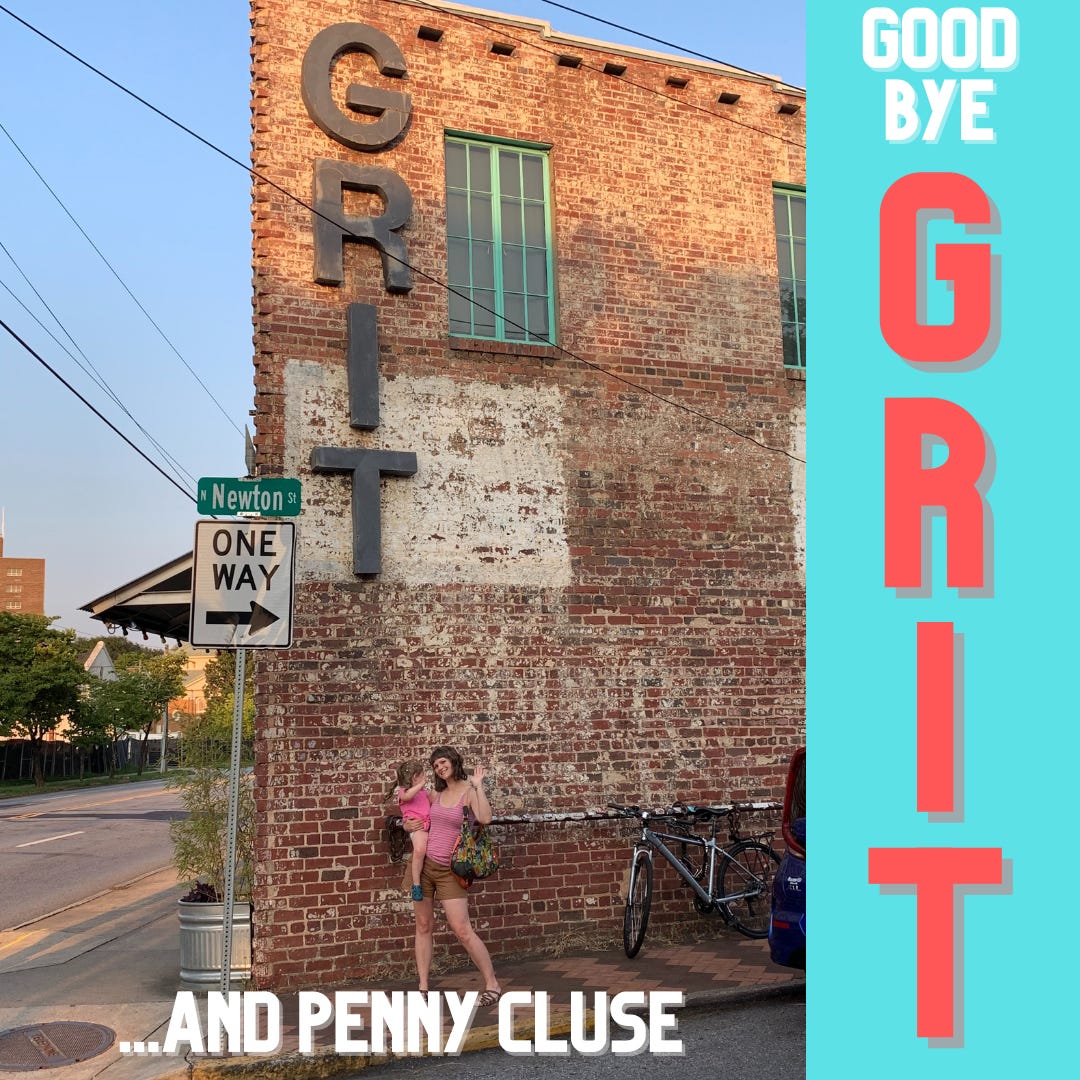
Goodbye, The Grit and Penny Cluse
4w ago00:15:52Tap to summarizeThis essay was originally published in December 2022. Listen to the whole thing or scroll to the bottom for a really great update about Penny Cluse!I’m resharing my earliest pieces for those who subscribed recently, and I’ve recorded a voiceover for you to listen to it through your podcast app if you’d like. To do so, click the audio voiceover (“listen to post”) above. Read this if you need instructions on how to listen to episodes on your podcast app.If you’re reading this in your inbox, you can find a shareable, web-friendly version at ashleighellskells.substack.com, where all my other essays and podcasts live. You can request to follow me on Facebook here and Instagram here, and I’m happy to hear from you at aellsworthkeller@gmail.com.Earlier this fall, two of my favorites eateries, The Grit in Athens, Georgia, and Penny Cluse in Burlington, Vermont both announced that they would be closing their doors for good—the former in October, and the latter sometime in December. Together, they had been in business a combined sixty years. Located in two of my former hometowns, I was planning to write about them anyway. But I didn’t know, though, that I would be writing in memoriam, and that with their loss, a little bit of home—my home—dies with them.Important links:Penny Cluse website Penny Cluse InstagramThe Grit InstagramFlagpole (GA) article: Over 30 Years of Serving Up CommunityGarden and Gun article: When The Grit is GoneSeven Days (VT) article: Notable Devotees Give Thanks for Penny CluseAvid Bookshop (you can buy The Grit cookbook and other merch here)Reflection questions: * Back to my opening question: What is a restaurant that has felt, in some way, like “home” to you, and why? What was it about the food, the people, the ambiance? * Have you eaten at The Grit or Penny Cluse? What did you order? What memories do you have of your time at either of these places? * Do you have a story of a restaurant you once called home that is now gone? Do you try to keep it alive in some way?The Grit was located in present day Clarke County, Georgia, on the land of the Tsalaguwetiyi (Cherokee, East), S’atsoyaha (Yuchi), and Mvskoke (Muscogee/Creek) nations.Penny Cluse was located in present day Chittenden County, Vermont, on the land of the Wabanaki and N’dakina (Abenaki) nations.Image: My birthday dinner, August 2019. Photo by David Ellsworth-Keller. This is a public episode. If you'd like to discuss this with other subscribers or get access to bonus episodes, visit ashleighellskells.substack.com/subscribe
Transcribe →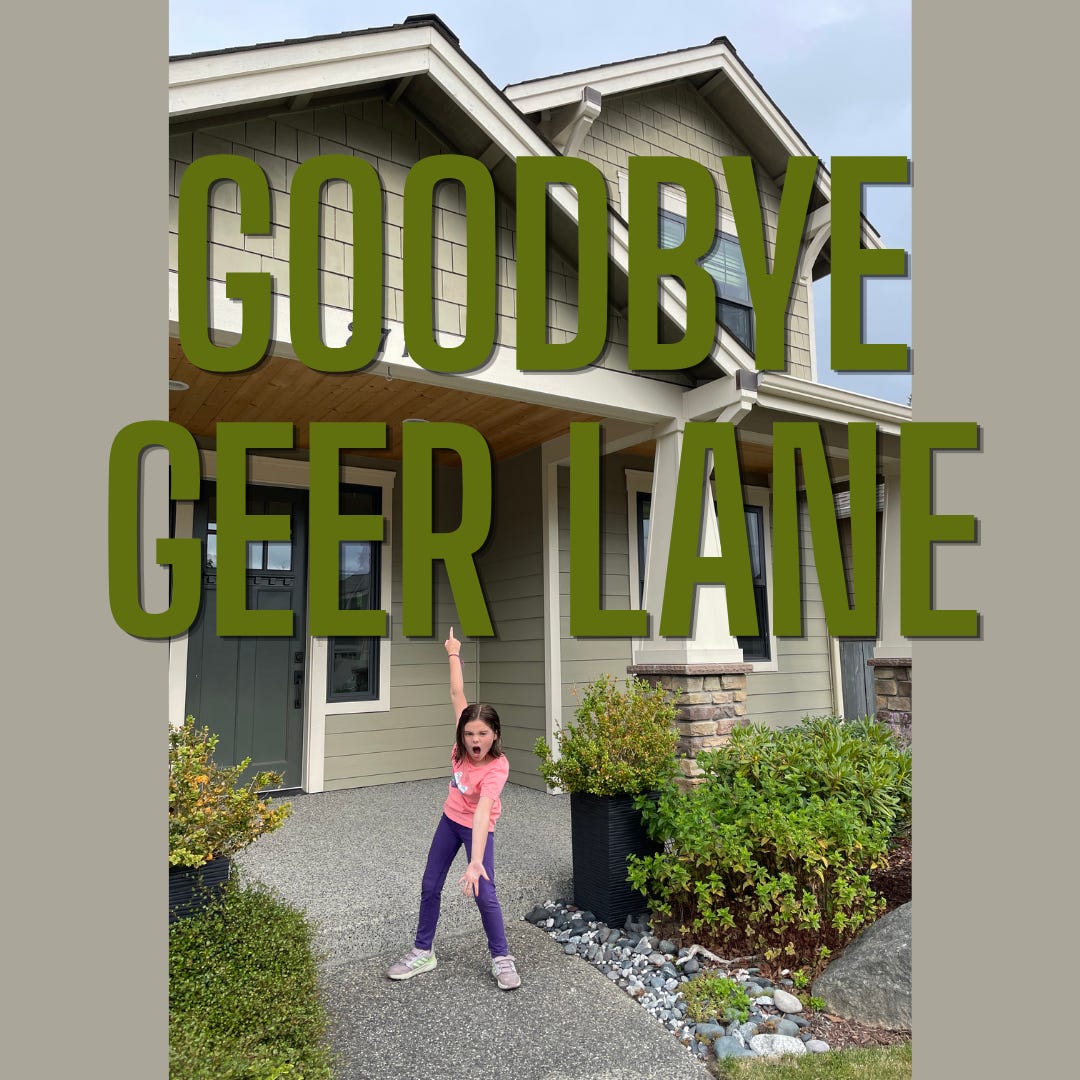
Goodbye, Geer Lane
Jun 1800:21:08Tap to summarizeJust a reminder: first listen to or read the essays Welcome Home and Be Here Now for some context to this one!If you’d rather listen to this essay in a browser or as a podcast, click the audio voiceover (“listen to post”) above. Read this if you need instructions on how to listen to episodes on your podcast app.If you’re reading this in your inbox, you can find a shareable, web-friendly version at ashleighellskells.substack.com, where all my other essays and podcasts live. You can request to follow me on Facebook here and Instagram here, and I’m happy to hear from you at aellsworthkeller@gmail.com.Can a house be a member of your family?From June 2021 to July 2025, both of our families also tried not to take for granted our proximity to one another, even though my brother was sent on a few different deployments so it felt like he was only present for half that time. To be able to be together for holidays and sleepovers and summer camps and day trips to the park and the library was a godsend for all of us, especially for three little cousins, who were 4, 4, and 1.5 years old at the start, and got to grow up alongside each other for essentially half of their young lives.So when they moved away last summer, back to South Carolina, their absence has left a big hole in our lives, one that we are still processing as we begin our seventh year as Washingtonians.And that house on Geer Lane, where all kinds of memories were made? More on that in a bit.Geer Lane, located on Fidalgo Island, sits on the lands of the Samish peoples, as well as the nations of Cayuse, Umatilla, Walla Walla, Semiahmoo, S’Klallam, Hul’qumi’num Treaty Group, Upper Skagit, and Sauk Suiattle, who inhabited these lands before white people settled here, and who still live here today.Image: The first visit back to an empty house, displeased. July 2025.Thanks for reading Home is a Changeling! This post is public so feel free to share it. This is a public episode. If you'd like to discuss this with other subscribers or get access to bonus episodes, visit ashleighellskells.substack.com/subscribe
Transcribe →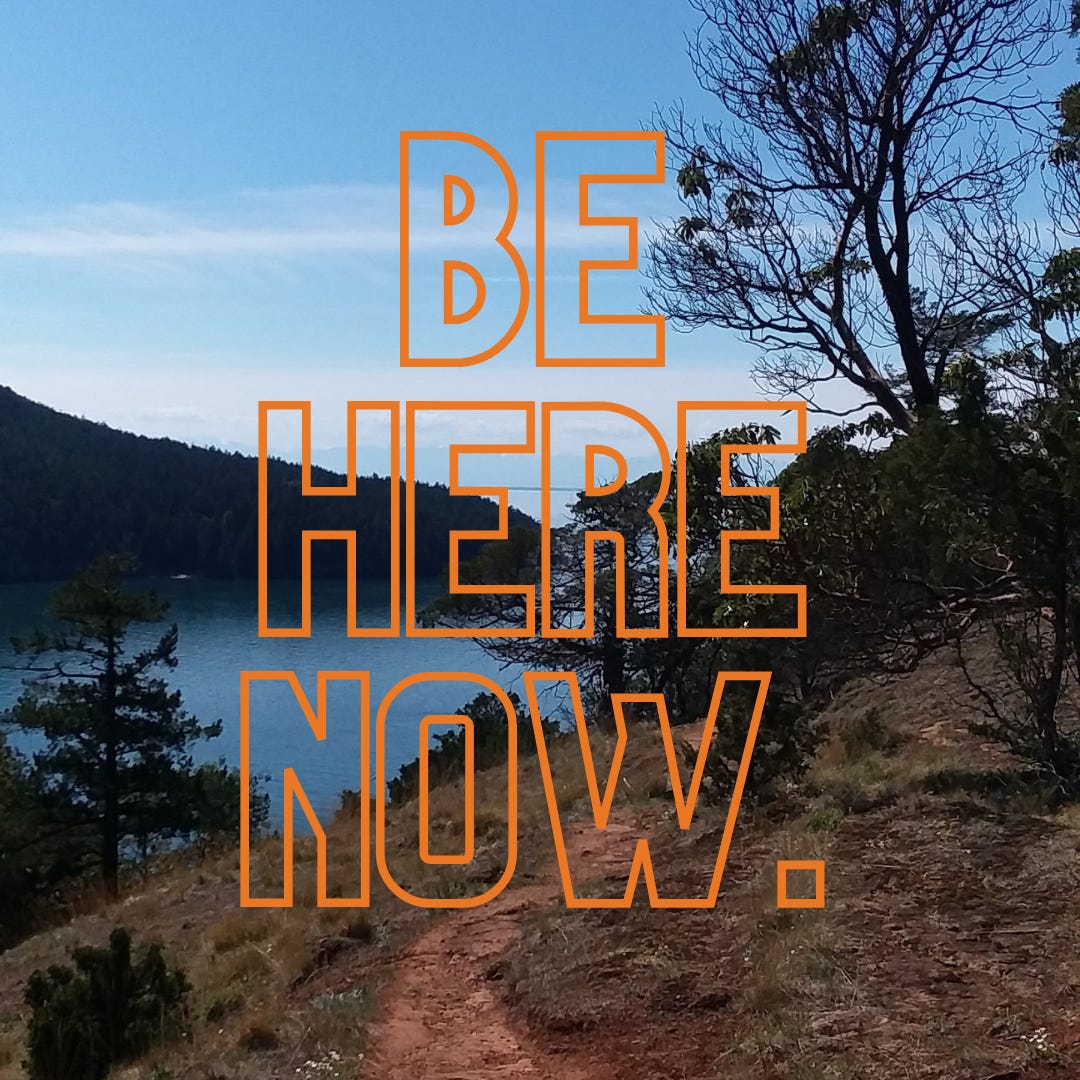
Be Here Now
May 2900:18:03Tap to summarizeThis essay was originally published in January 2022. Make sure you read Welcome Home to understand how we got here!I’m resharing my earliest pieces for those who subscribed recently, and I’ve recorded a voiceover for you to listen to it through your podcast app if you’d like. To do so, click the audio voiceover (“listen to post”) above. Read this if you need instructions on how to listen to episodes on your podcast app.If you’re reading this in your inbox, you can find a shareable, web-friendly version at ashleighellskells.substack.com, where all my other essays and podcasts live. You can request to follow me on Facebook here and Instagram here, and I’m happy to hear from you at aellsworthkeller@gmail.com.Reflection questions/Food for thought:* In what ways has your experience of “home” shifted since the pandemic began? In what ways has it remained the same?* Are you living in a place you never expected to call home? How does this feel?* Do you have strong feelings about trees? Is there a specific tree or species of tree you feel connected to, and why?Everywhere I’ve lived, I try to learn as much as I can about the place: the people, the land, the geography, the history, the culture. Here, I’ve taken the opportunity to read books, take a class, and listen to podcasts, all centered around the Pacific Northwestern forests and their (rather recent) history. Before then, many debts are owed to those who came before, particularly the Salish, Coast Salish, Skagit, and S’Klallam peoples, who lived here before white people settled here, and who still live here today.*Eight months as of the original publication date. I now live in Bellingham, about an hour north, and have been in Washington for 6 years.Image: Trail and madrone trees, looking southwest from Washington Park, Anacortes, Washington, Fidalgo Island. On the left is Burrows Island, in the far back is the Olympic Peninsula, and in between is the Salish Sea/Pacific Ocean. Get full access to Home is a Changeling at ashleighellskells.substack.com/subscribe
Transcribe →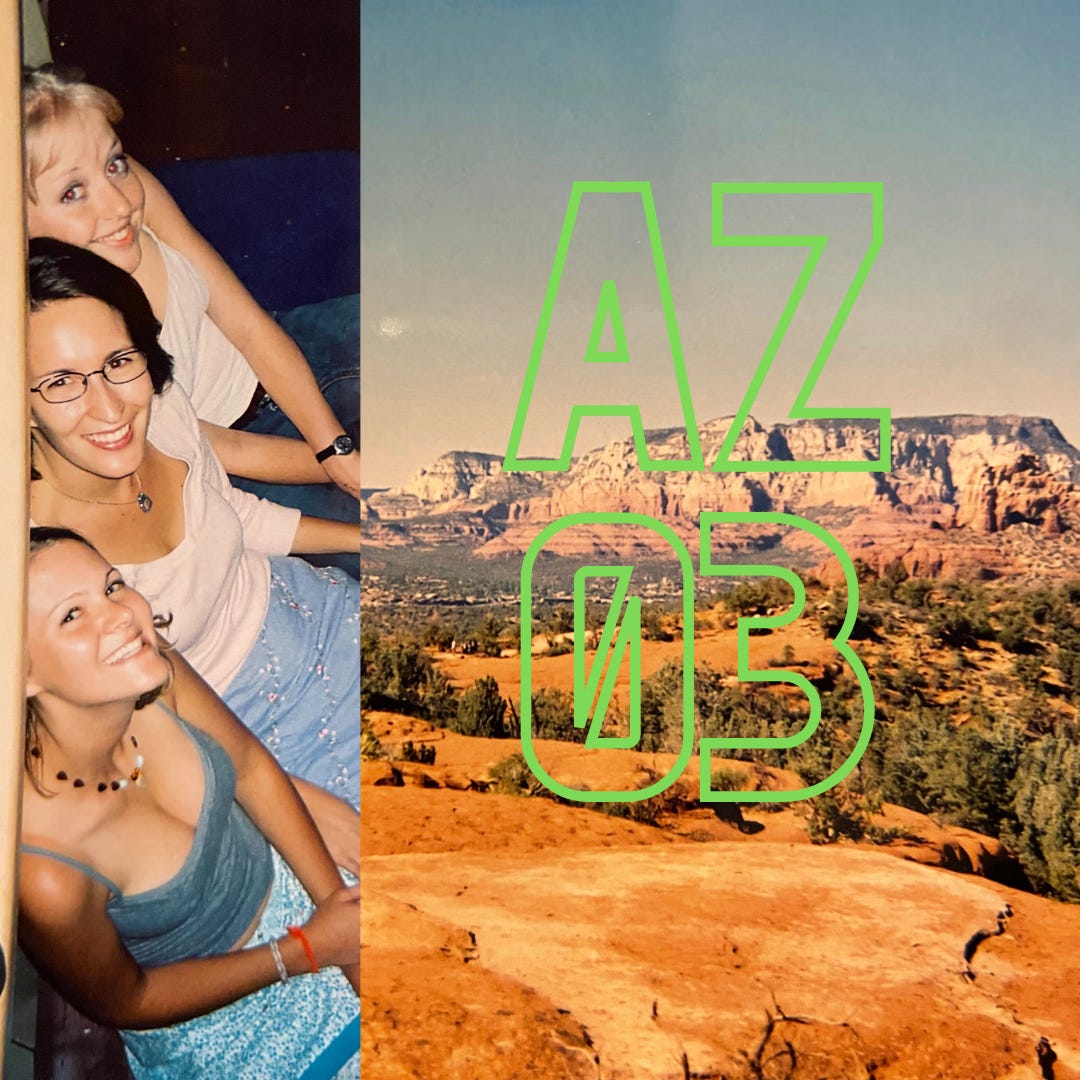
AZ 03
Apr 2400:25:07Tap to summarizeOn August 1, 2003, I landed in Flagstaff, Arizona. Thus began an identity-shaping chapter in my life, one whose lessons still resonate almost two decades later.Reflection Questions:* Where did you live in your early twenties? If it was close and familiar or far and unfamiliar, why did you make that choice (if you had one)?* Was there ever a time in your life when you took a big leap and doubted yourself? What did you do next and why?* Are you still friends with the people you met in your early twenties? What kind of relationship do you have with them now?Image: Roomies! (Me, Rachel, Emily). Spliced with somewhere in Sedona. This is a public episode. If you'd like to discuss this with other subscribers or get access to bonus episodes, visit ashleighellskells.substack.com/subscribe
Transcribe →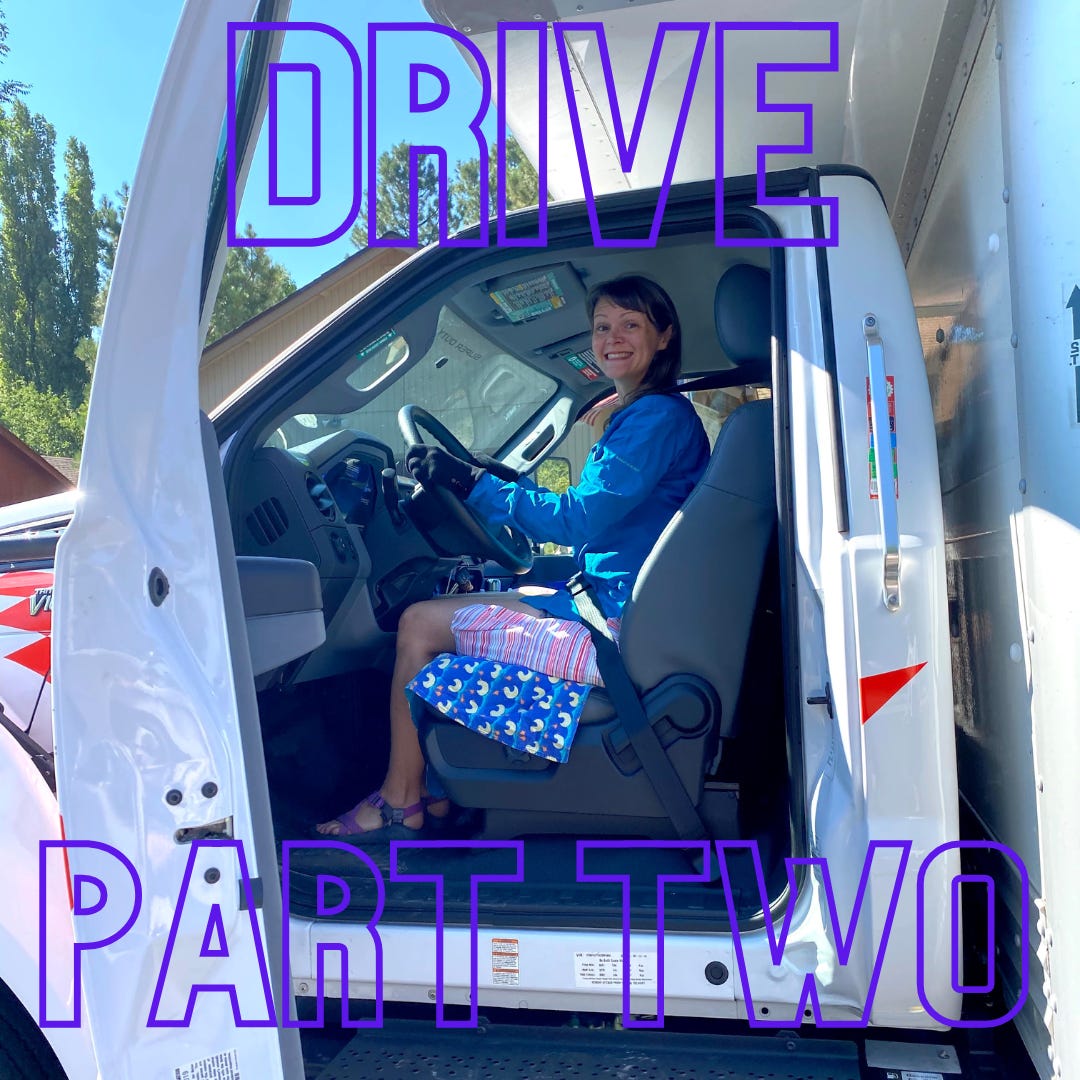
Drive, Part Two
Mar 1300:23:18Tap to summarizeThis essay was originally published in September 2022. Make sure you read Part One first!I’m resharing my earliest pieces for those who subscribed recently, and I’ve recorded a voiceover for you to listen to it through your podcast app if you’d like. To do so, click the audio voiceover (“listen to post”) above. Read this if you need instructions on how to listen to episodes on your podcast app.If you’re reading this in your inbox, you can find a shareable, web-friendly version at ashleighellskells.substack.com, where all my other essays and podcasts live. You can request to follow me on Facebook here and Instagram here, and I’m happy to hear from you at aellsworthkeller@gmail.com.When we landed at Grandma and Grandpa’s house in Flagstaff, we’d been traveling almost nonstop for four days, driving just under 2,000 miles.Reflection questions:* Hypothetical question: if someone offered you a million dollars to quit your job for a year and work as a tractor-trailer operator, would you do it?* What are the scariest roads you’ve ever driven on and why?* How has a long road trip changed your sense of self? (No matter how short or how long, the road changes us. Leave a comment)!Image: My setup in the truck. This is a public episode. If you'd like to discuss this with other subscribers or get access to bonus episodes, visit ashleighellskells.substack.com/subscribe
Transcribe →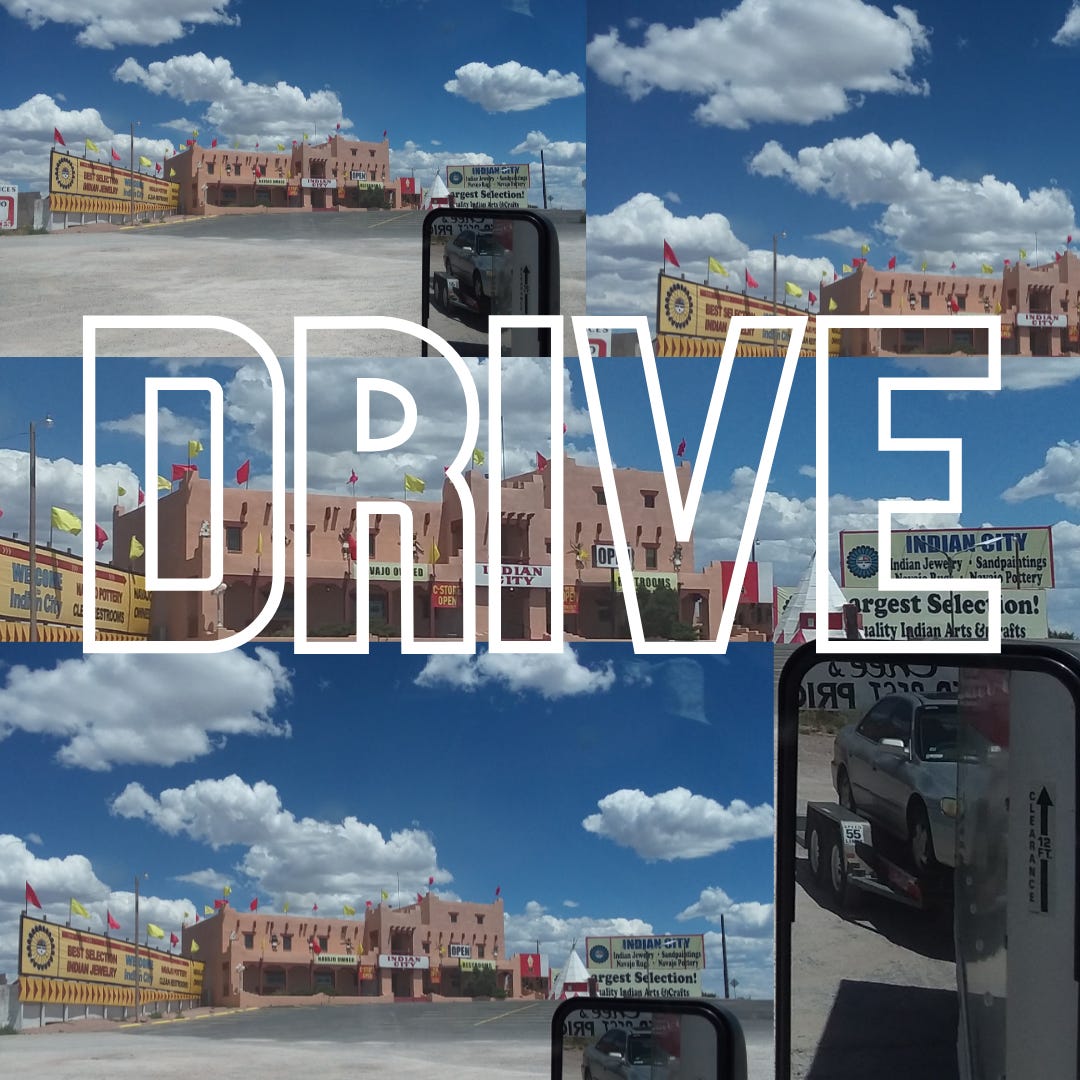
Drive, Part One
Feb 1300:28:12Tap to summarizeThis essay was originally published in August 2022. I’m resharing my earliest pieces for those who subscribed recently, and I’ve recorded a voiceover for you to listen to it through your podcast app if you’d like. To do so, click the audio voiceover (“listen to post”) above. Read this if you need instructions on how to listen to episodes on your podcast app.If you’re reading this in your inbox, you can find a shareable, web-friendly version at ashleighellskells.substack.com, where all my other essays and podcasts live. You can request to follow me on Facebook here and Instagram here, and I’m happy to hear from you at aellsworthkeller@gmail.com.It’s not too far of a stretch in a newsletter on the topic of “home” to write about moving from one home to another. Image: The Truck, the car, the sky, the clouds, somewhere off I-40 on the Navajo reservation in Arizona.Thanks for reading Home is a Changeling! Subscribe for free to receive new posts and support my work. This is a public episode. If you'd like to discuss this with other subscribers or get access to bonus episodes, visit ashleighellskells.substack.com/subscribe
Transcribe →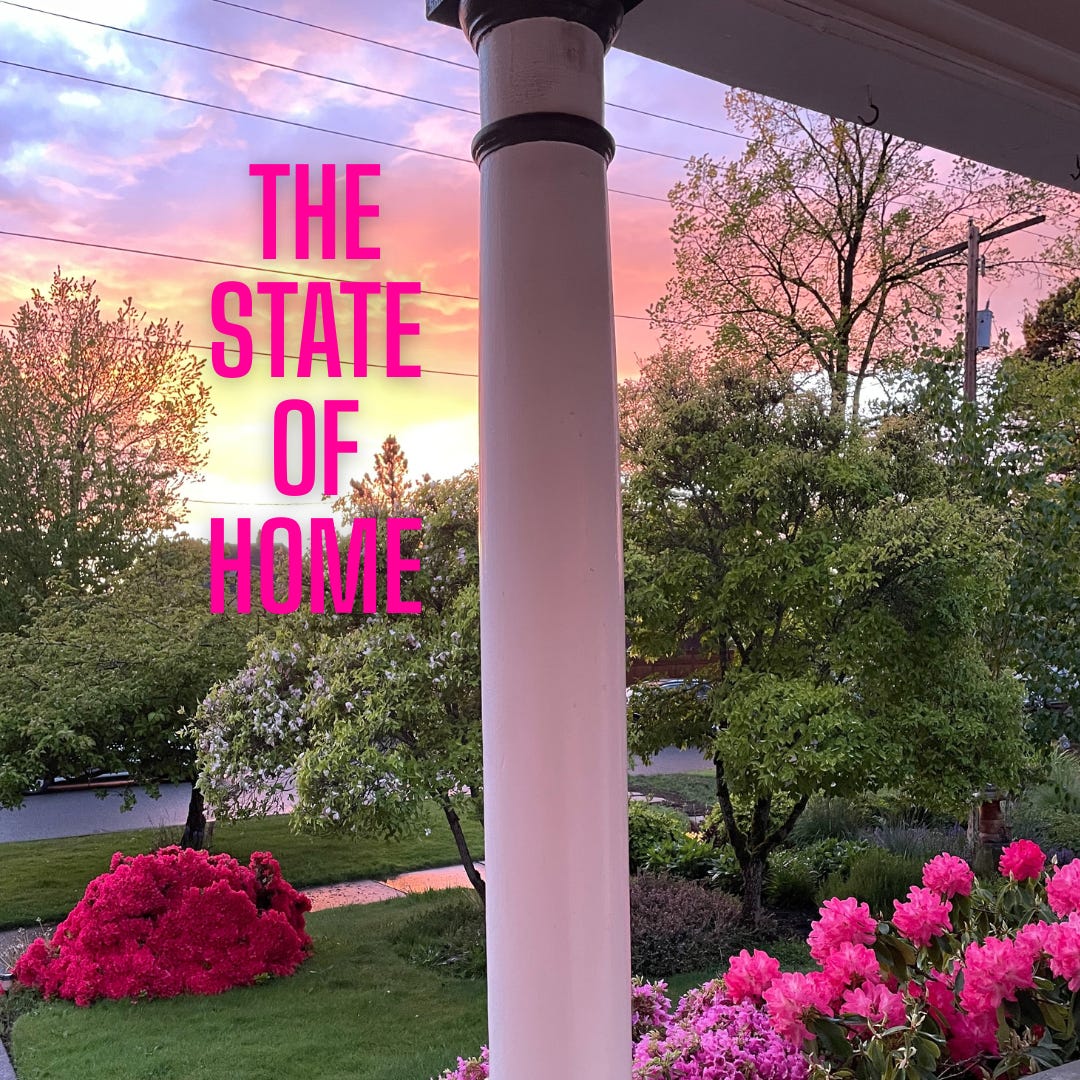
The State of Home
Jan 500:19:06Tap to summarizeFor the January 2025 The State of Home: Year Three, click here. And if you’re a subscriber who joined this year, don’t forget to check out my introductory essay, Welcome Home, here. Otherwise, there’s no particular order in which these need to be read (or listened to), so go for it!If you’d rather listen to this essay in a browser or as a podcast, click the audio voiceover (“listen to post”) above. Read this if you need instructions on how to listen to episodes on your podcast app.If you’re reading this in your inbox, you can find a shareable, web-friendly version at ashleighellskells.substack.com, where all my other essays and podcasts live. You can request to follow me on Facebook here and Instagram here, and I’m happy to hear from you at aellsworthkeller@gmail.com.What is home to a monster, to anyone? There exists for each of us a geographical fulcrum, a place so saturated with memory, that within its precinct the past is always present.—Justin Cronin, The City of Mirrors (Book 3 in The Passage Trilogy)Happy New Year. My wish for 2026 is the same as it was for 2025: Times are weird and awful, but life is still beautiful. Find the things that make you happy and do them. Your joy will absolutely make the world better.Image: Front door view, stunning sunset, May 2025. No filter necessary. This is a public episode. If you'd like to discuss this with other subscribers or get access to bonus episodes, visit ashleighellskells.substack.com/subscribe
Transcribe →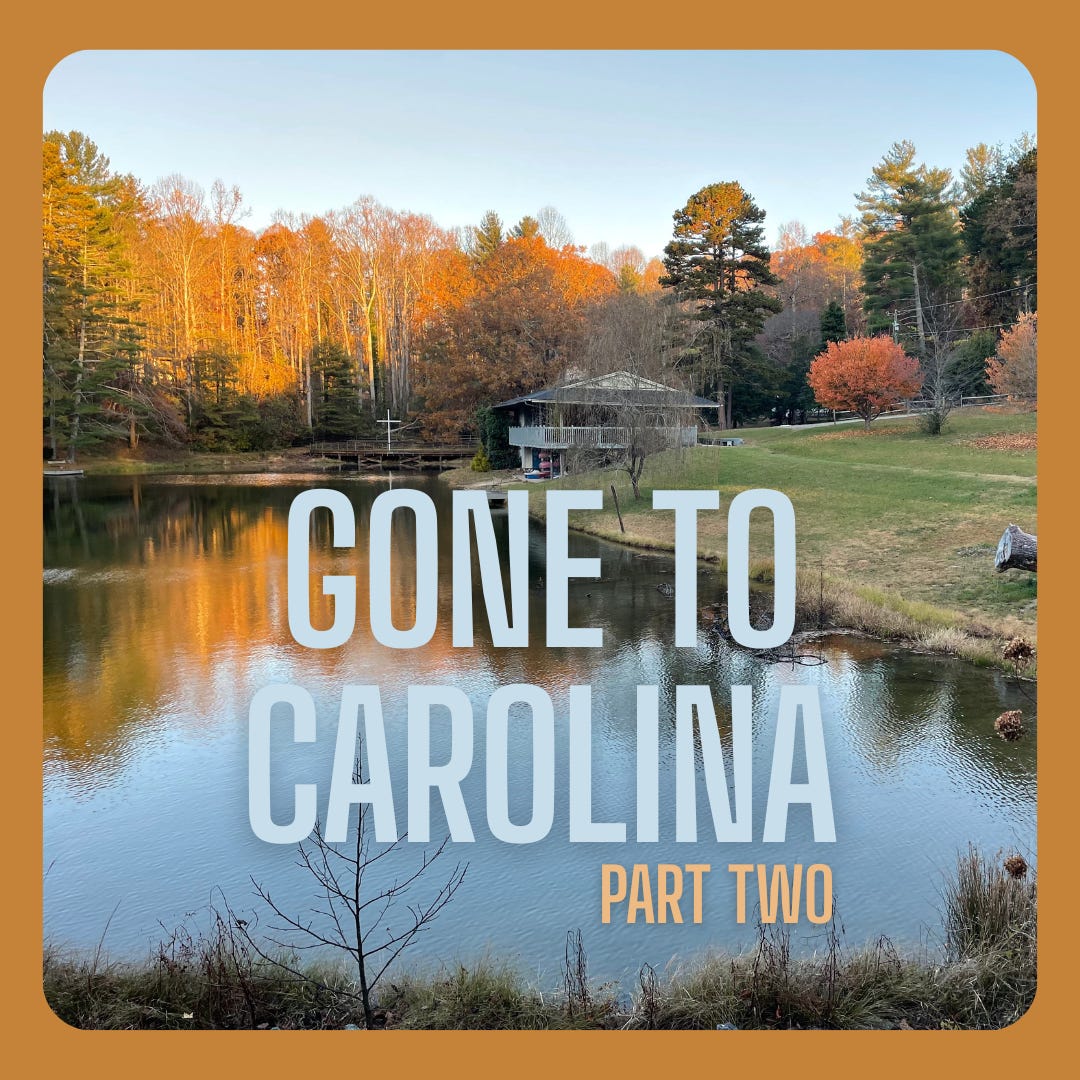
Gone to Carolina, Part Two
Dec 2900:28:27Tap to summarizeFor some context, check out Gone to Carolina in my Mind from November 2024.If you’d rather listen to this essay in a browser or as a podcast, click the audio voiceover (“listen to post”) above. Read this if you need instructions on how to listen to episodes on your podcast app.If you’re reading this in your inbox, you can find a shareable, web-friendly version at ashleighellskells.substack.com, where all my other essays and podcasts live. You can request to follow me on Facebook here and Instagram here, and I’m happy to hear from you at aellsworthkeller@gmail.com.Subscribers: If your inbox clips this message, you can simply click on the web address above and read it that way.For all the years I spent as a camper and summer staffer and year-round staff member at camps, I’ve hardly written much about them, outside of my own personal journals or reflections. Anyone who loves camp knows: experiencing one week of camp is like living through an entire year. Capturing any of it feels nearly impossible.Reflection Questions* Have you ever gone back to a home that’s changed? What memories did you have to unpack? Was the change better, worse, or neutral?* Is place meaningless aside from the people who make it meaningful? Or does magic actually happen in some places more than others?Image: Sunrise over Lake Lewthorne and Lakeside Lodge, Lutheridge, November 2025. This is a public episode. If you'd like to discuss this with other subscribers or get access to bonus episodes, visit ashleighellskells.substack.com/subscribe
Transcribe →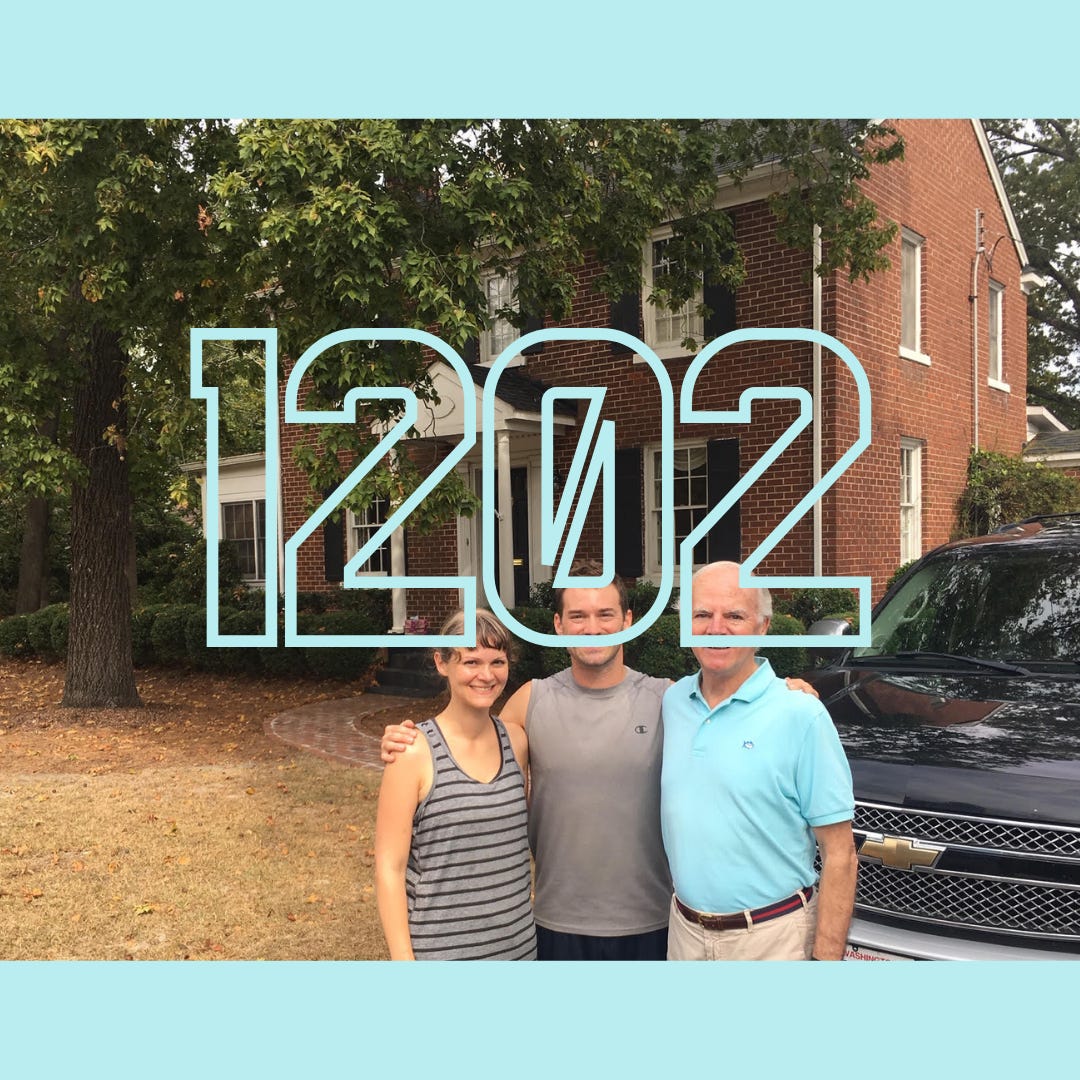
1202 Belt Line Boulevard
Nov 2800:32:50Tap to summarizeThis essay was originally published in May 2022.I’m resharing my earliest pieces for those who subscribed recently, and I’ve recorded a voiceover for you to listen to it through your podcast app if you’d like. To do so, click the audio voiceover (“listen to post”) above. Read this if you need instructions on how to listen to episodes on your podcast app.If you’re reading this in your inbox, you can find a shareable, web-friendly version at ashleighellskells.substack.com, where all my other essays and podcasts live. You can request to follow me on Facebook here and Instagram here, and I’m happy to hear from you at aellsworthkeller@gmail.com.The hickory tree in the front yard was dying. Little stairsteps of fungus had sprung up, pulsing out of the roots and pushing through the pine straw at the base of the tree. The shelf mushrooms clustered all along the north side, spiraling around the trunk like a spine. Within a year of first noticing it, the invaders had already multiplied.It was a large, mature tree (my guess is it was at least 80 years old, though may have been far older), giving shade to the whole front side of the house, including my corner room upstairs. Each year, we collected the hickory nuts, shelled, and ate them. We’d do a sort of harvest exchange with my grandmother (while her teeth could still tolerate nuts); we’d give her the nuts from our yard and she would share the bounty of scuppernongs (muscadine grapes) from the vine in hers. This beautiful, bountiful hickory, standing tall in all the images of our home, had been a part of our lives for the entire time we’d lived there. Now both of these truths were coming to an end.The death of this tree is not a metaphor for a household in decay, the seemingly healthy chlorophyllic canopy cloaking the rottenness festering inside. You won’t find a whole lot of dark secrets here; there was plenty of delight and joy and love in our home. Even with the expected misstep every once in a while (we’re all human), it was about as rosy a family life as one might hope for. So, in this case, a tree is just a tree.But it means something now that it’s gone. Because we’re gone, too.If I’m writing a newsletter about home, I should probably go back to the start.Image: The last photo of my family in front of the house, Fall 2019.Thanks for reading Home is a Changeling! Subscribe for free to receive new posts and support my work. This is a public episode. If you'd like to discuss this with other subscribers or get access to bonus episodes, visit ashleighellskells.substack.com/subscribe
Transcribe →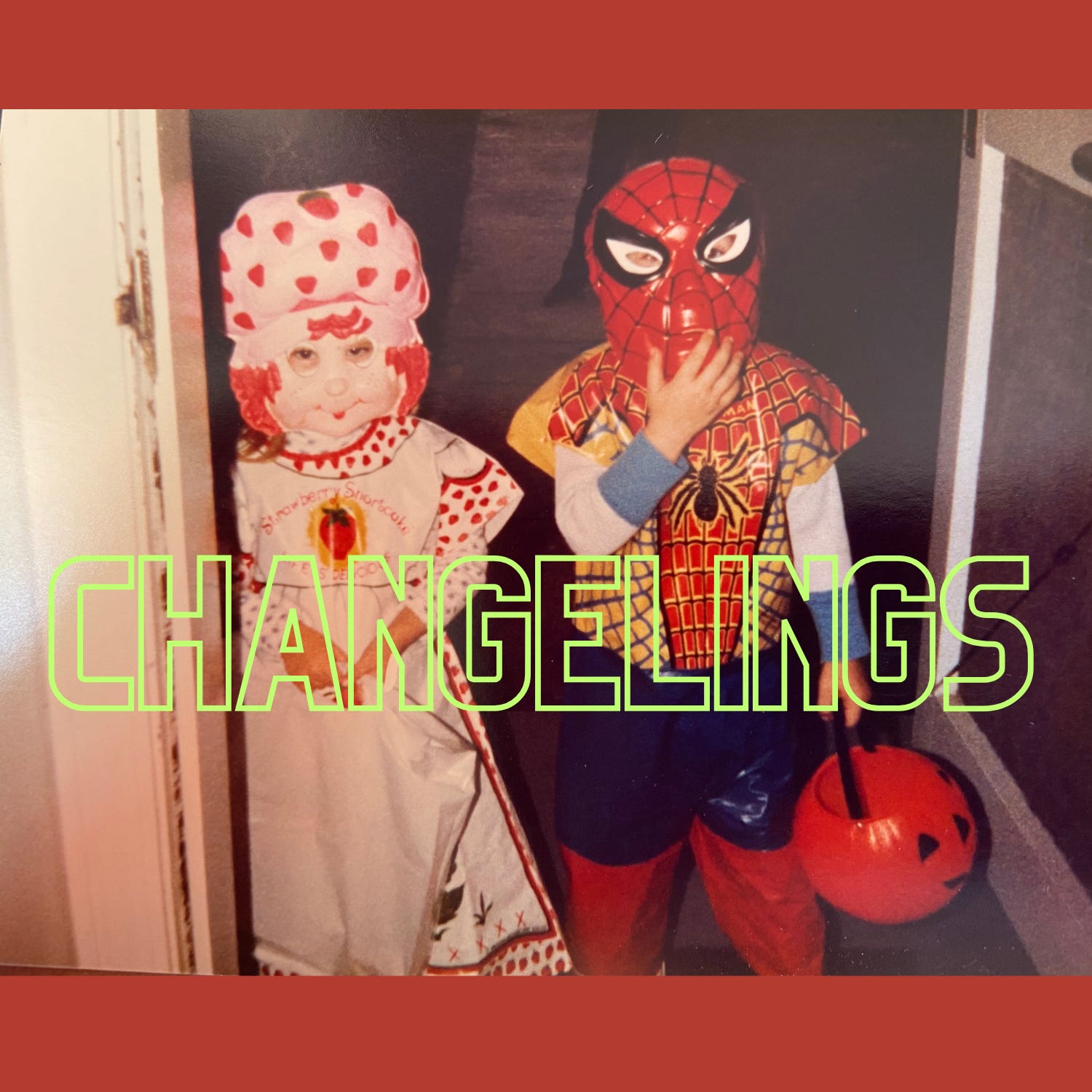
Changelings
Oct 2900:22:31Tap to summarizeIf you’d rather listen to this essay in a browser or as a podcast, click the audio voiceover (“listen to post”) above. Read this if you need instructions on how to listen to episodes on your podcast app.If you’re reading this in your inbox, you can find a shareable, web-friendly version at ashleighellskells.substack.com, where all my other essays and podcasts live. You can request to follow me on Facebook here and Instagram here, and I’m happy to hear from you at aellsworthkeller@gmail.com.It’s October, and fall has finally arrived in the Pacific Northwest. Like a lot of places I’ve lived, September is a late summer month, a bridge month, and it’s lovely, but by the end of it I’m ready for a chill in the air, apple cinnamon things, and that unsettled feeling that comes from the knowledge that hauntings are gonna happen for one month only and I better be ready.Reflection Questions:* What’s your favorite scary movie?* Has anything strange or supernatural happened to you or someone you know? What did you think of it?* Are you afraid of clowns? (You must submit a three-page essay, single-spaced, with at least four arguments proving your point, and you will be graded on grammar, humor, and believability).Image: me and my cousin Ryan, Trick-or-Treating, c. 1985. Photo by Grandmother. This is a public episode. If you'd like to discuss this with other subscribers or get access to bonus episodes, visit ashleighellskells.substack.com/subscribe
Transcribe →