
Podcast
Honestly with Bari Weiss
Hosted by Bari Weiss · EN
The most interesting conversations in American life happen in private. This show brings them out of the closet. Stories no one else is telling and conversations with the most fascinating people in the country, every week from *The Free Press*, hosted by former *New York Times* and *Wall Street Journal* reporter Bari Weiss.
www.thefp.com
www.thefp.com
26episodes
Episodes
Newest firstAll episodes
A Note from Bari on Honestly
Jan 2200:04:44Summary readyHonestly is taking a pause. We’ll be back soon. This is a public episode. If you'd like to discuss this with other subscribers or get access to bonus episodes, visit www.thefp.com/subscribe
Summary
CBS News Presents: A Town Hall with Erika Kirk
Dec 1400:05:22Tap to summarizeThis is a free preview of a paid episode. To hear more, visit www.thefp.comLast week, Bari sat down with Erika Kirk for an hour-long town hall in front of a live audience on CBS.It was an extremely powerful conversation. Erika and Bari spoke about a lot—rising political violence in this very divided country; the way some people justified or excused Charlie’s murder; what Erika thinks about some of the controversial things Charlie said in his lifetime; her response to Candace Owens and the conspiracy theories Owens and others are peddling; the growing antisemitism on the right; and her decision to forgive Charlie’s killer.They also talked about the posthumous release of Charlie’s last book, Stop, in the Name of God: Why Honoring the Sabbath Will Transform Your Life.This town hall was the first of many conversations and debates Bari will be bringing to CBS News about the things that matter most. Which, of course, are often the hardest to talk about. We really hope you will tune in. In case you missed this first one with Erika Kirk, we’re thrilled to share the conversation here on Honestly. And we can’t wait for you to catch the next one on CBS News.The Free Press earns a commission from any purchases made through all book links in this article.
Transcribe →
Should We Legalize Assisted Suicide?
Dec 900:02:43Tap to summarizeThis is a free preview of a paid episode. To hear more, visit www.thefp.comOne of the most complex medical, ethical, moral, and religious questions of our era is that of physician-assisted suicide—also known as Medical Aid in Dying, or MAID.Eleven U.S. states and Washington, D.C. have legalized some form of MAID for terminally ill patients. And New York might join them.Over the summer, a Medical Aid in Dying Act passed New York’s state legislature. It is now sitting on Governor Kathy Hochul’s desk as she decides whether to sign it into law.Under the proposed New York bill, terminally ill adults with a prognosis of six months or less to live would be able to access a prescribed, self-administered life-ending medication.Supporters argue that this is a compassionate option—one that can relieve people of immense pain and suffering, allowing patients to choose when and where they die, and to do so surrounded by loved ones.Opponents see this as a violation of physicians’ fundamental oath to do no harm. They also worry that while access may begin narrowly, it could expand over time to include people seeking death for reasons other than terminal illness—such as mental suffering or simply a desire to stop living. Cases like this have already occurred in Belgium, the Netherlands, Canada, and Switzerland.Rafaela Siewert sat down with two experts who see this topic very differently for a heated debate.David Hoffman is a healthcare attorney, clinical ethicist, and professor of bioethics at Columbia University. He argues that hypothetical future abuses of MAID shouldn’t outweigh the needs of terminal patients who need this option now.Dr. Lydia Dugdale is a physician, medical ethicist, and professor of medicine at Columbia University. In her view, legalizing this practice of physician-assisted suicide risks undermining the responsibilities of governments, medical systems, and families to care for the mentally ill, the poor, and the physically disabled. And she fears that the potential for excessively expanded access over time is too great.We are among the many Americans who do not know what the right answer is. We see both sides—which is why grappling with the nuances of this subject is so important.This is a debate you won’t want to miss.On how MAID works in theory vs. how it works in practice:Lydia Dugdale: So you have to be 18 years of age. You have to be able to consent. You have to have a terminal diagnosis understood as six months or less to live. You have to be able to self-ingest.David Hoffman: Some of the criteria vary from state to state with subtle nuance. For example, Oregon initially had a residency requirement that you had to be a resident of Oregon. Why? Because they feared—at the time I can understand why they would—that people would travel from around the world to Oregon, get their prescription for a lethal medication, go to the beach, watch the sunset, take the medication, and bodies would litter the shoreline. Well, that never happened. So Oregon eliminated its residency requirement. . .LD: As did Vermont.
Transcribe →
Would America Be Safer Without the Second Amendment?
Nov 2400:05:33Tap to summarizeThis is a free preview of a paid episode. To hear more, visit www.thefp.comThere are more civilian-owned firearms in the United States than in any other nation on earth. To many, gun ownership is the ultimate expression of our freedom and of the promise that power ultimately resides with the people, not the state. But they are also part of the reason that we have more gun deaths than anywhere else in the developed world.The debate on guns in America stems from a single sentence from our Bill of Rights, written in 1791: “A well regulated militia, being necessary to the security of a free state, the right of the people to keep and bear arms, shall not be infringed.”That sentence—the Second Amendment of our Constitution, and the question of whether America would be safer without it—was the focus of our final live debate of 2025, held before a packed house at Chicago’s Studebaker Theater. On stage were two formidable debaters: attorney and law professor Alan Dershowitz, and Dana Loesch, radio host, author, and former spokesperson for the National Rifle Association.“If I were grading the framers for how they drafted the Second Amendment,” Dershowitz quipped, “they get a C+ with grade inflation.”
Transcribe →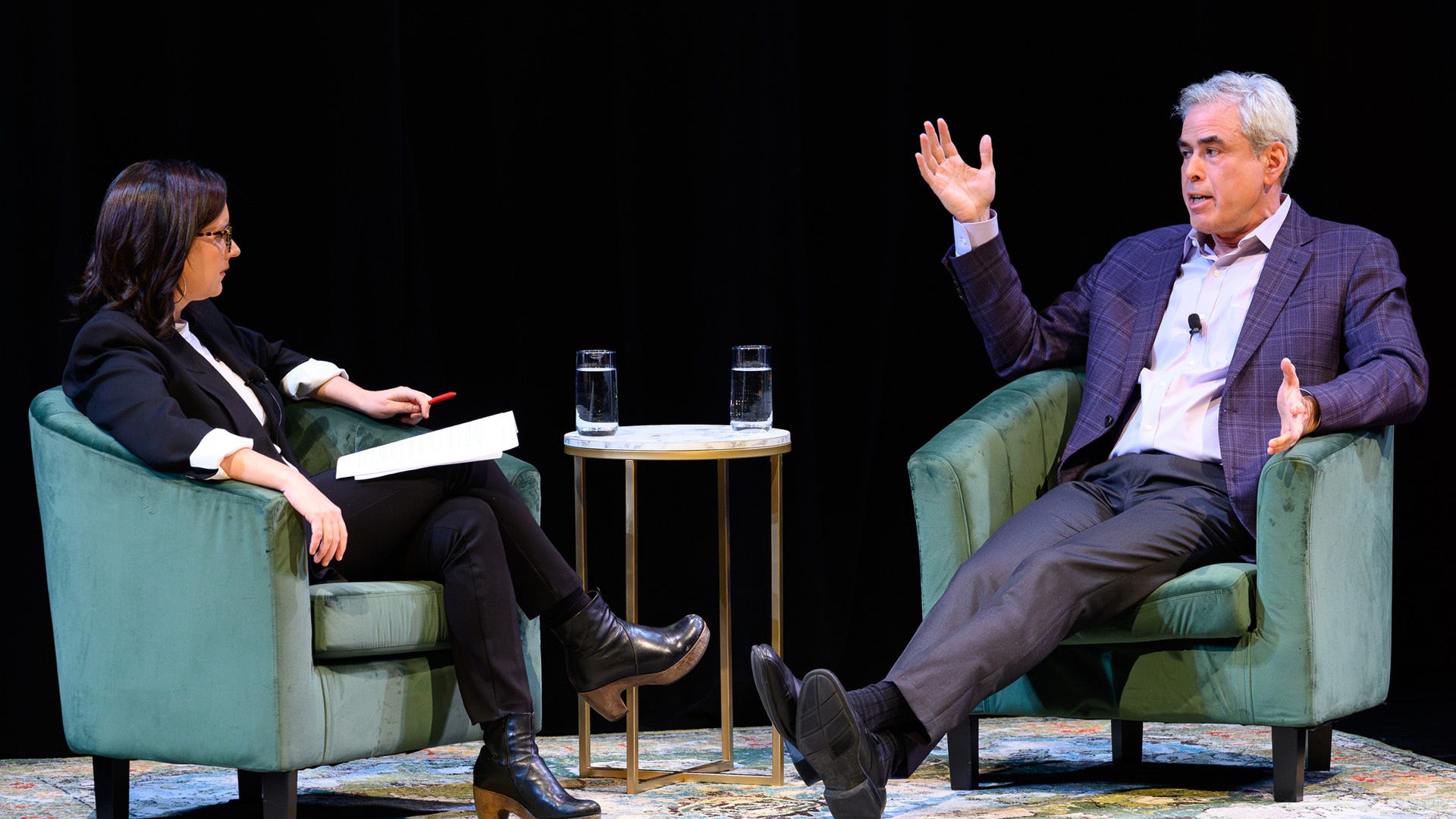
Kids Don’t Need Phones with Jonathan Haidt
Nov 1800:04:49Tap to summarizeThis is a free preview of a paid episode. To hear more, visit www.thefp.comYou probably know Jonathan Haidt as the guy trying to save your kids from smartphones and social media apps. Likely you’ve read The Anxious Generation, which has been translated into 44 languages and sold nearly 2 million copies. One might say that Jon is Elvis for 21st-century moms who don’t understand Discord.But when Haidt gets written about decades from now, it will be for much more than this book and the powerful movement that came from it. I think he will be regarded as one of the most important writers of this epoch.Because he has the remarkable ability to understand—and explain—our social condition. He holds up a mirror to us.He did it with his book The Righteous Mind, which explained why people are so passionately divided over politics and religion. He did it again with The Coddling of the American Mind, co-written with Greg Lukianoff, which explored why young people—especially on college campuses—can become totally intolerant of opposing views. And in his latest book, The Anxious Generation, he asked the obvious question: Why are teens suddenly so unhappy? Why are they losing attention, self-confidence, and the ability to socialize? Perhaps it has something to do with the mesmerizing device in their hands.In a world gone mad, Haidt has turned common sense into a radical mission. I sat down with him in front of a live audience in New York City to talk about how we got to this point—and where we go from here.On the fatal dangers of social media:Bari Weiss: There are two major calls to action in your book and in the movement around it: One is banning phones in schools; the second is making sure kids aren’t on social media before the age of 16. I want to allow you to talk about two stories that I think bring the necessity of those two policies to life. I’ve heard you speak to a mom named Kirsten, whose daughter developed a pretty serious eating disorder after she was bombarded with content on her TikTok’s “For You” page. Can you tell me a little bit about her and her daughter, and why that story is so emblematic to you?
Transcribe →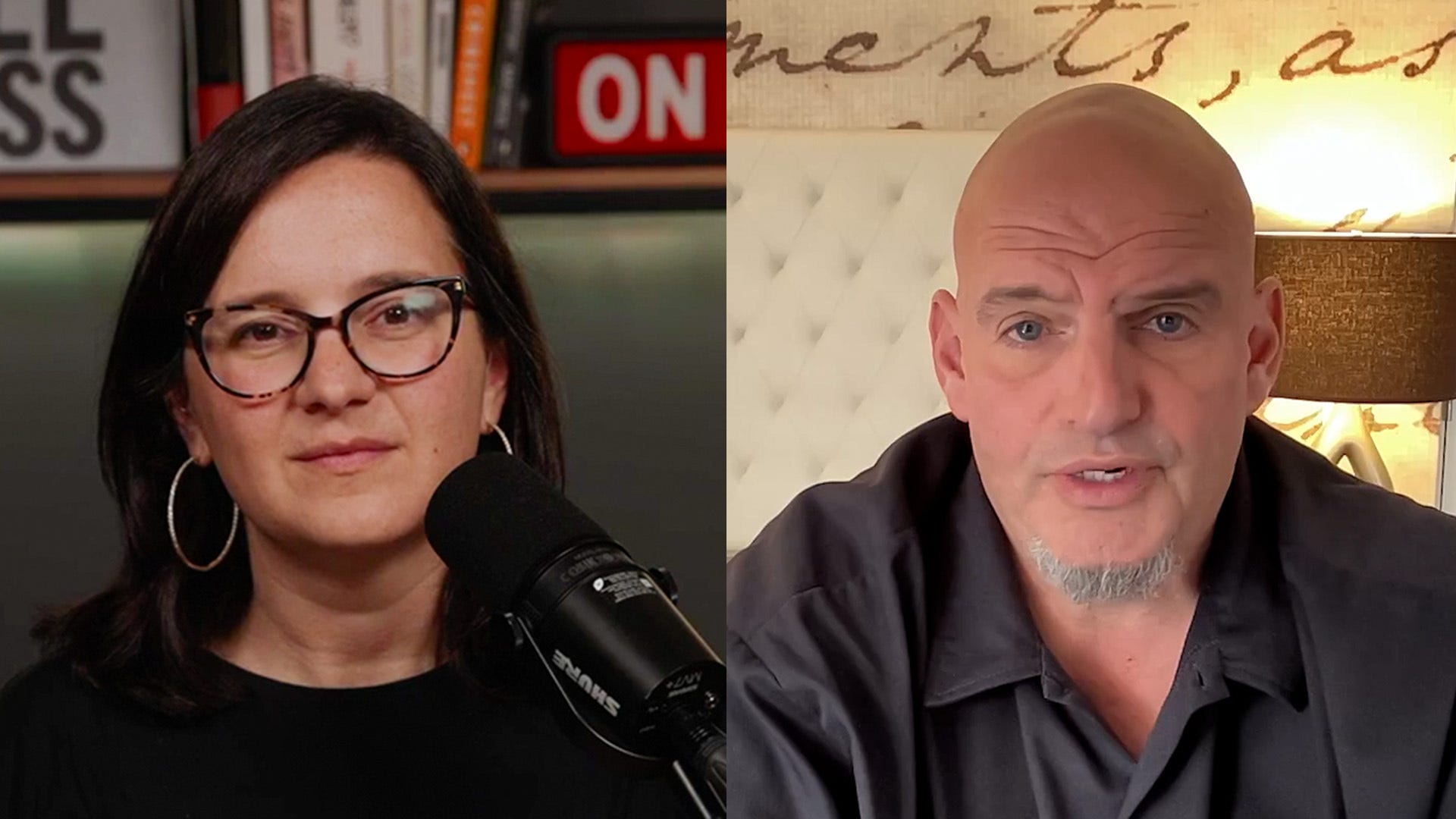
Democratic Dissident John Fetterman
Nov 1100:04:14Tap to summarizeThis is a free preview of a paid episode. To hear more, visit www.thefp.comWho owns the future of the Democratic Party?That’s the question on everyone’s mind since last Tuesday night—when the richest city in America elected 34-year-old democratic socialist Zohran Mamdani as its mayor.You can see Mamdani’s win as a one-off—a charismatic contender facing a rival mired in controversy. But the other way to see it is as emblematic …
Transcribe →
How We Lost Ourselves to Technology—and How We Can Come Back
Nov 400:01:05Tap to summarizeThis is a free preview of a paid episode. To hear more, visit www.thefp.comDo you feel uneasy? Do you feel a level of ambient anxiety? Do you feel despair, despite the fact that we live in the most luxurious time and place in human history? And did my producer offer to give me a Klonopin today? That one I won’t answer.The point is, you are not crazy. If you feel these things, you are simply attuned to reality—and it’s not a problem that’s solvable with less screen time or with meditation, red light, or sea moss.My brilliant guest, Paul Kingsnorth, argues that the reason you feel this way is not this or that social media app or algorithm or culture war issue. That these are all superficial expressions of a thousand-year battle with what he calls “the Machine.” What exactly that means, he’ll explain tonight.To personally fight the Machine, Paul has moved his family out of urban England to live off the land in rural Ireland, where his family grows their own food, draws water from a well, and homeschools their children. To learn more about his life, you’ll have to go back and listen to the Honestly episode I did with him in 2024.In his new book, Against the Machine, Paul makes the argument that what this moment requires is something of a rebellion. He says the West is not dying, but already dead. And this book is an attempt to understand how we got to this profound feeling of disquiet—and how we might return to true peace. It’s being billed as a “spiritual manual for dissidents in the technological age.”Click below to listen to our conversation, or scroll down for our favorite moments.On finding meaning in the technological age:Bari Weiss: How can we live a life of meaning? How can we maintain our humanity in the age that we happen to be living in right now—short of becoming monastic?Paul Kingsnorth: We’re living in this time, and this is the time we’re made to live in. So you better get through it, and you better just deal with it, girlfriend, as I believe they say in these parts. There’s no five-point plan to save the world, because it doesn’t work like that, but there are a number of ways you can think about how to live your life. We all live completely different lives. There’s no manifesto for everybody. But the first thing to do is to start asking yourself what this story is.
Transcribe →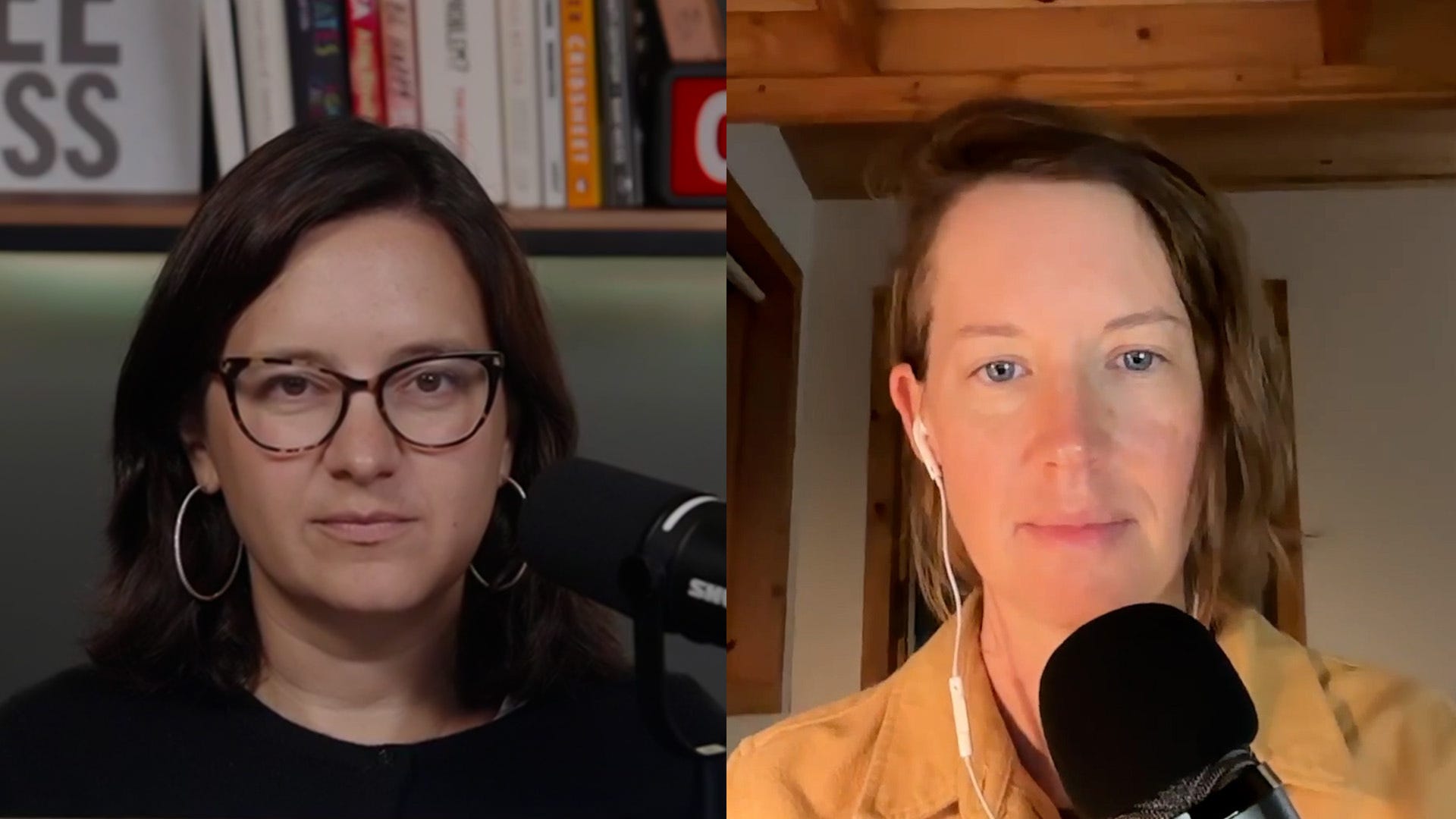
How Katie Herzog Drank Her Way to Sobriety
Oct 2100:03:55Tap to summarizeThis is a free preview of a paid episode. To hear more, visit www.thefp.comIf you’re listening to this, you probably know someone who has struggled with alcohol addiction, or maybe you’re an alcoholic yourself. It’s one of the most universal human experiences. In 2023, 10 percent of the U.S. population met the criteria for alcoholism. That’s 30 million people.And throughout the past hundred or so years, there’s basically been one solution: total sobriety, talk therapy, and Alcoholics Anonymous. And yes, there are countless people ready and eager to say, “AA saved my life.” I know and love many of those people.But as Katie Herzog writes: “The dominance of AA obscures the fact that other options exist too.” Okay, so what are these other options? One of them is a drug called naltrexone that can let alcoholics keep drinking—yes, you heard me right. Katie describes it as a chemical safety net that makes you want to drink less.And in order for the drug to work, you actually have to drink—at least at the beginning. The goal with this method is not necessarily abstinence. It’s reformed, moderate, responsible drinking.Is this all starting to sound like snake oil—or worse, even dangerous? We understand. Over 175,000 Americans die each year from excessive drinking. It causes heart disease, cancer, domestic violence, and suicide. It costs the U.S. economy nearly $250 billion in healthcare expenses. There’s loss of productivity, criminal justice fees, vehicle wrecks—I could go on. And living with alcoholism, or being close to someone who struggles with addiction, can be devastating.So when someone comes along and says, “Your alcoholic loved one can actually drink with naltrexone,” the knee-jerk reaction is to say: “Hell no.”But Katie Herzog, in her new book Drink Your Way Sober, argues that AA—and our traditional thinking—has not worked, and will not work, for everyone. And she makes the case that we should be more open to alternative forms of treatment like naltrexone.You’ll know Katie from her hit podcast Blocked and Reported, which she co-hosts with Free Press contributor Jesse Singal—though she likes to say she is “the only host of the only podcast.”And today, I ask her how she got sober using naltrexone—and a program called the Sinclair Method—how the drug actually works, why it’s been shunned by the medical community, and whether she thinks society will buy into it.Click below to listen to our conversation, or scroll down for our favorite moments.On “booze noise” and defining addiction:Katie Herzog: For me, the defining feature of my addiction was mental obsession, so I had a compulsion to drink. I had an overwhelming mental obsession. And there’s a term that I actually heard your sister Suzy say, when talking about Ozempic—she used the term food noise. That’s what it was like: It was booze noise. And the booze noise never, ever stopped, for 20 years. In the back of my mind was always this question: When can I drink? That was the defining feature of it. It wasn’t how it got in the way of my life, my job, my relationships. The closest thing I can compare it to is new love, when you’ve got this intense crush on another person and that’s the only thing you can think about—it feels crazy and obsessive.
Transcribe →
How One Man Overcame His Autism
Sep 3000:03:06Tap to summarizeThis is a free preview of a paid episode. To hear more, visit www.thefp.comLeland Vittert is one of America’s most recognizable television correspondents. You’ll know his face from years of frontline reporting in places like Egypt, Libya, Israel, and Ukraine.You may have followed his tumultuous exit from Fox News in 2021, after clashing with the network over its coverage of Donald Trump—and then his redemption arc, becoming th…
Transcribe →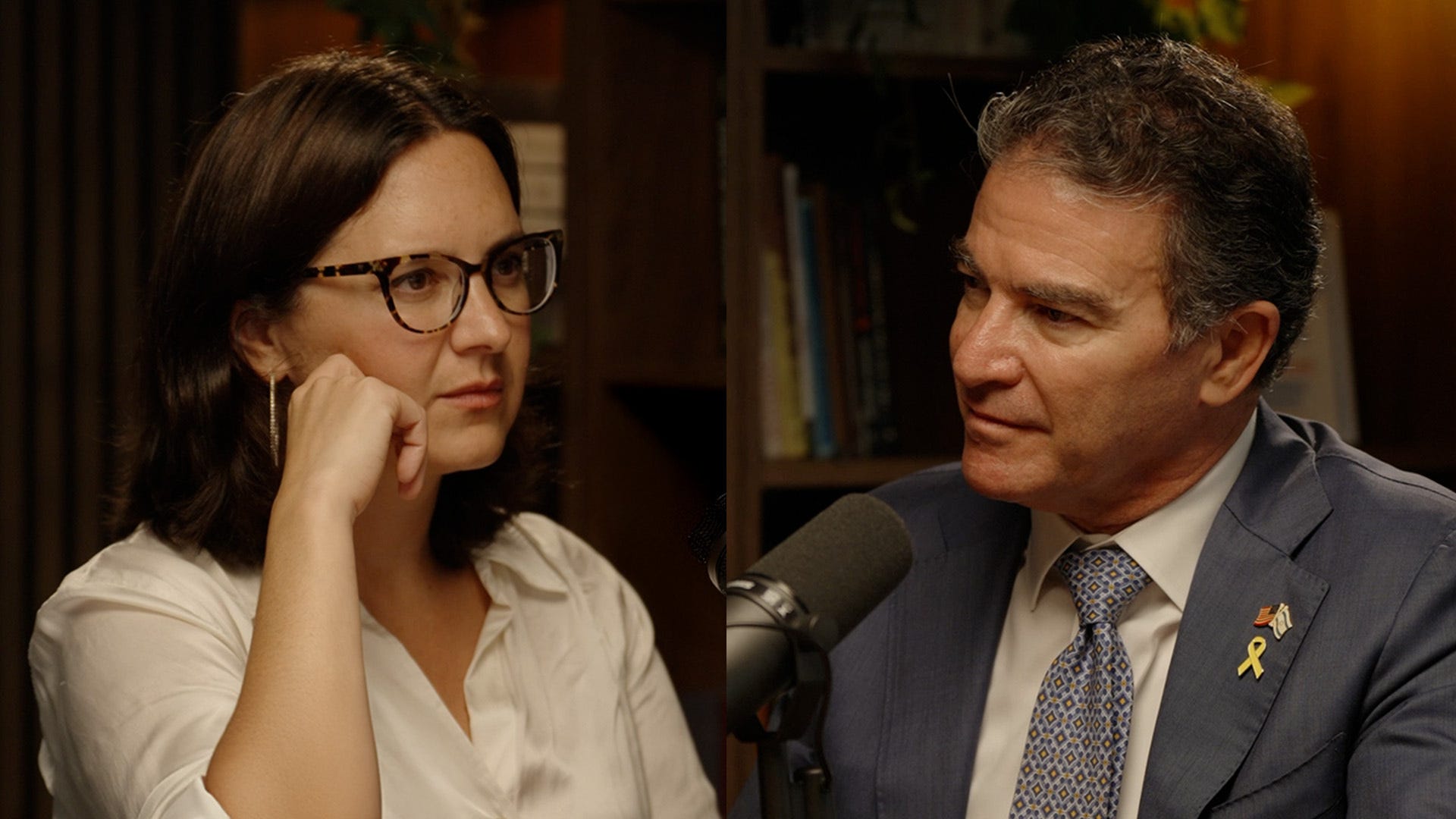
Inside the Mossad
Sep 2300:03:51Tap to summarizeThis is a free preview of a paid episode. To hear more, visit www.thefp.comIf you’re anything like me, you’re a sucker for a good spy show: Homeland, Tehran, Fauda, The Bureau. I am fascinated by the life of spies—the secret meetings in Beirut cafés, the wigs and false identities, the double and triple lives, always one step away from exposure, risking everything for their country.Most of the time, those TV characters are pure…
Transcribe →