
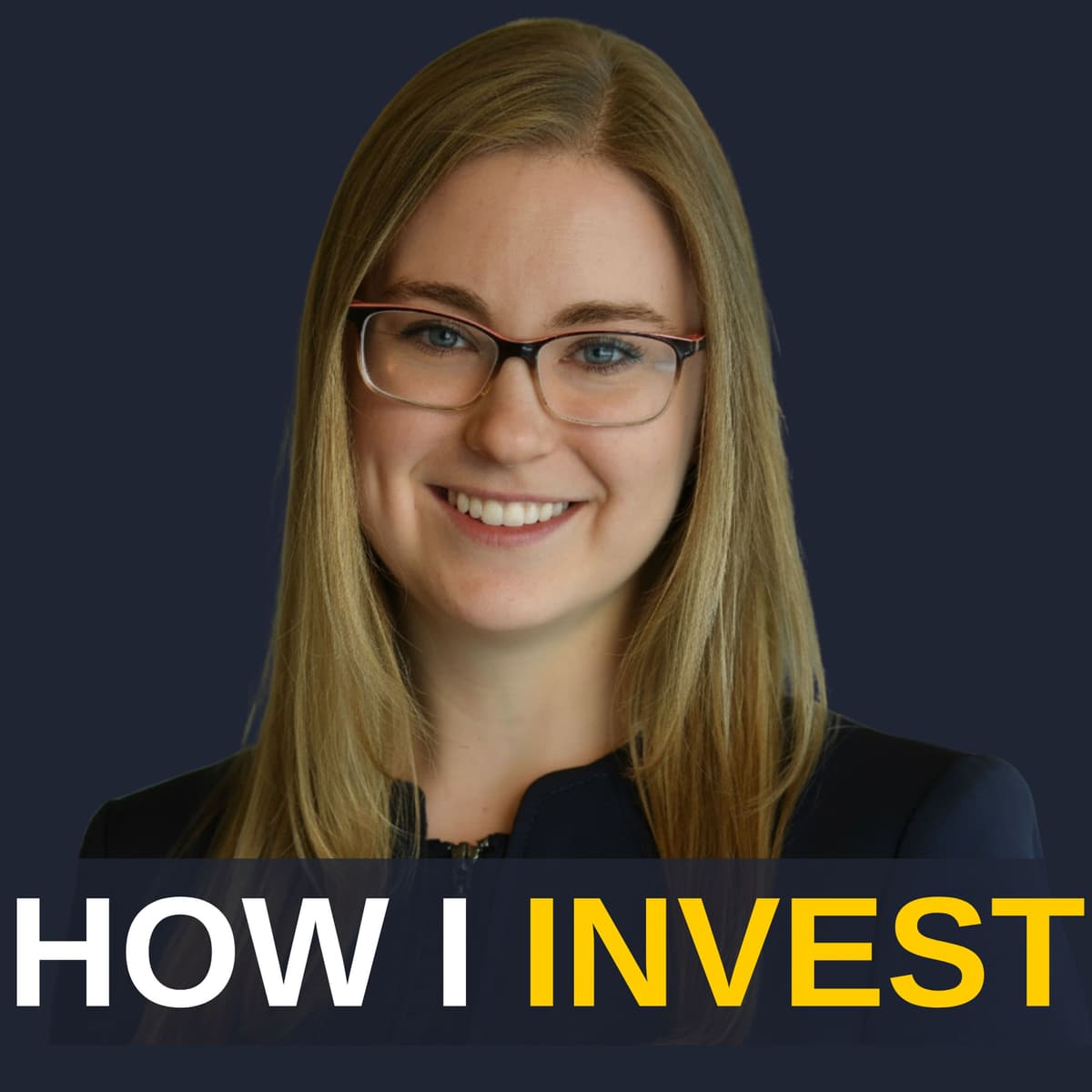

Podcast Summary: How I Invest with David Weisburd
Episode 257: What I Learned Advising the World’s Top CIOs at Goldman Sachs
Guest: Julia (former Global Head of Portfolio Strategy, Goldman Sachs; now at Print Cap)
Date: December 8, 2025
Episode Overview
In this episode, host David Weisburd interviews Julia, former global head of the Portfolio Strategy team at Goldman Sachs. Julia reflects on her unique trajectory advising many of the world's leading CIOs—from sovereign wealth funds to ultra-high-net-worth families—and shares practical wisdom on what truly makes great investors and portfolios. The conversation covers the evolution of risk management, the psychology of asset allocation, the pitfalls of over-diversification, how family offices can leverage their strengths, and the increasing role of behavioral coaching and AI in investment decision-making.
Key Discussion Points & Insights
Julia’s Path and Portfolio Construction Philosophy
- From Intern to Global Head: Julia started as the founding intern on the Portfolio Strategy team at Goldman Sachs and rose to global head, advising CIOs worldwide.
“I grew up in the doctrine of risk management... Now I build portfolios a bit more concentrated and high octane... If we don't have good conversations about risk with the owners, we can end up accidentally building portfolios that don't take enough risk.” (00:16) - Classical vs. Evolving Training: Trained in modern portfolio theory (MPT), Julia now favors a balance between classical risk management and more concentrated, idiosyncratic exposures.
The CIO Mindset: Beyond Quantitative Analysis
- Emotional & Qualitative Judgment:
“The CIOs who were doing the best job were actually holding the emotional and qualitative considerations high, right alongside the technical and the quantitative... as investors get more senior, the gut becomes more involved.” (01:47) - Decision-Making Is More 'Vibes' Than Numbers:
“There’s certainly a lot of theater about showing the numbers... but at the end of the day, people were making big decisions, based mostly on vibes.” (03:16)
Diversification, Idiosyncratic Risk, and Wealth Creation
- Over-Diversification Holds You Back:
“Nobody got rich by being diversified. Rather, you got to that position by taking a well-calculated risk and banging away at it for decades.” (04:05) - Threading the Needle as a CIO:
CIOs seek just enough idiosyncratic risk to generate alpha, avoiding mere benchmark hugging, yet managing the risk of “being very, very wrong.”
Institutional vs. Family Office Dynamics
- Constraints and Flexibility:
Institutions face rigid mandates, often forcing suboptimal trades, while families’ flexibility allows them to step into secondary markets and illiquid deals.
“The providers of liquidity always get paid.” (06:47) - Leaning Into Alpha:
Julia designs portfolios that intentionally avoid full diversification to leverage the investor's unique edge, using options-based hedging to manage drawdowns.
“All the alpha comes from picking winners and avoiding losers…what we don’t own is just as important.” (07:15)
Risk Management: Bringing It Home
- Options vs. Fixed Income for Hedging:
Julia prefers options-based hedging over fixed income to both increase return potential and offer better drawdown protection.
“You could accomplish a similar level of drawdown protection using options based hedging... free up a lot of that capital towards being invested for return in equities.” (08:47) - Coaching Clients for Volatility:
“Our industry is underserved on risk. It’s dead easy to explain to somebody why higher returns are better, but much harder to explain risk mitigation.” (24:05) - Risk Communication – “Value at Risk”:
Julia uses value at risk, not standard deviation, to help investors internalize potential losses.
“In 99% of one year periods, we'd expect to be doing better than a 19% loss.” (25:26)
Behavioral Biases and Investment Committees
- Global Behavioral Biases:
Home country bias is a persistent drag—e.g., UK portfolios typically 10x overweight local equities (13:08–14:46), often at cost to U.S. equity exposure. - Combatting Groupthink:
Techniques include blind fund comparisons and rotating devil’s advocate roles in investment committees.
“It gets all of the counterpoints out there on the table for discussion.” (15:59) - Optimizing IC Size:
“Five is pretty perfect. Definitely need an odd number.” (17:01)
Finding Investment Meaning & Motivation
- High-Conviction, Fewer Relationships:
Julia recommends being a bigger partner to fewer asset managers, leveraging fee savings and alignment. - Taxes Are Undervalued:
“Why aren't more people focused on taxes?... We should be doing analysis on a post-tax basis.” (18:33) - GP Stakes for “Fee Psychology” & Alignment:
“There’s something just so psychologically satisfying about receiving fees instead of always just paying fees.” (19:54)
Family Office Investing & Organizational Strategy
- Managing Deal Flow & Avoiding Inbound Bias:
“If you're only investing in stuff that is sent to you, that's a bias... I'm focused on outbound, fighting my way into deals that are competitive.” (31:24) - Operating Business Awareness in Portfolio Construction:
Example: a public equity family having only direct private equity investments in their office (32:29).
Differentiated Perception of Risk
- Risk Means Different Things:
Some see private equity as risky, others as safe due to control and cash flow.
“Risk really means different stuff to different people, and trying to shove standard deviation as the main metric just doesn't work very well.” (33:35) - Outsource What You’re Not Best At:
Motivating talent by letting them specialize, outsourcing other investment verticals.
Preparing for Drawdowns & Building Self-Awareness
- Envisioning Losses/Simulating Crises:
“I'm so focused on getting people to envision drawdowns…how would it feel to be down this much?” (27:03) - Crypto: A Risk Tolerance Bootcamp:
“You can get a full career's worth of market drama experience in crypto in a very short amount of time.” (28:38)
Technology & AI in Wealth Management
- AI as Bias Detector:
Julia uses LLMs (digital Julia) to check investment memos for bias (39:48). “I'm trying to build up a digital Julia where I'm actually writing down what I'm doing, why I'm doing it, so that I can train a model to be my shadow, if you will.” - Needs for Better AI Tools:
Highlights lack of personal CRM for family offices and desire for natural language intelligence (41:25).
Storytelling, Thematic Equities & Behavioral Traps
- The Seduction of Narrative:
“I would have warned my past self about the seductive power of storytelling... most of investment decision making comes down to great storytelling.” (41:48) - Thematic Investing as Double-Edged Sword:
E.g., thematic equity products became popular for “resonant” stories but led to overexposure to growth and subsequent underperformance when rates rose (43:23).
Timely Quotes & Notable Moments
- On Diversification:
“Nobody got rich by being diversified... you did some one thing so well that the rest of it didn't matter as much.” (04:05) - On Behavioral Failures:
“Investors are terrible market timers. We all get excited and pile in near the highs and then we get scared and sell low.” (11:29) - On Private Equity Perception:
“I think of private equity as having the least risk of anything in my portfolio.” (33:35) - On Tax Awareness:
“Most investment advertisement ... is all, you know, not considering taxes. We should be doing analysis on a post-tax basis.” (18:33) - On the Power of Story:
“Most of investment decision making comes down to great storytelling...this is why we have to do things like those blind manager comparisons to kind of suck the seductive nature ... out.” (41:48) - On AI Bias Correction:
“I’m feeding investment memos into a LLM to look for bias because it can detect, have I been objective, have I been fair?” (39:48)
Timestamps for Key Segments
- Julia’s Background & Philosophy: 00:16 – 04:05
- Qualitative/Emotional Side of Investing: 01:47 – 03:42
- Wealth Creation & Idiosyncratic Risk: 04:05 – 07:15
- Risk Management Tools & Hedging: 08:47 – 09:49
- Behavioral Biases (Home Country, Groupthink): 13:08 – 16:59
- How to Run Effective Investment Committees: 15:59 – 17:09
- GP Stakes & Manager Alignment: 19:54 – 23:21
- Coaching Clients for Volatility: 24:05 – 25:26
- Risk Communication, Value at Risk: 25:26 – 27:03
- Drawdown Simulation & Crypto Bootcamp: 27:03 – 29:12
- Family Office Deal Sourcing & Role: 31:24 – 33:35
- Private Equity, Control, and Cash Flow: 33:35 – 35:19
- Organizational Strategy—Outsourcing: 35:19 – 36:51
- AI in Wealth Management: 39:48 – 41:25
- On Storytelling Bias: 41:48 – 44:05
Final Takeaways
- Top investors blend numbers with intuition: As CIOs mature, qualitative factors and gut feel become as important as the quantitative.
- Embrace idiosyncratic risk: Alpha is earned by selective, concentrated bets—diversification is for wealth preservation, not creation.
- Communication & behavioral coaching are key: Helping clients envision drawdowns and simulate stress improves long-term outcomes.
- Tax efficiency, alignment, and fee-awareness add real value: GP stakes and post-tax analysis are underleveraged.
- AI has promise: Both as a personal assistant and a bias detector, but better tools are needed for family office use.
- Beware the seductive narrative: Stories drive both good and bad decisions; blind comparisons and devil’s advocate roles help keep portfolios rational.
A masterful discussion blending technical acumen, behavioral wisdom, and hard-won lessons from the top echelons of institutional investing.