
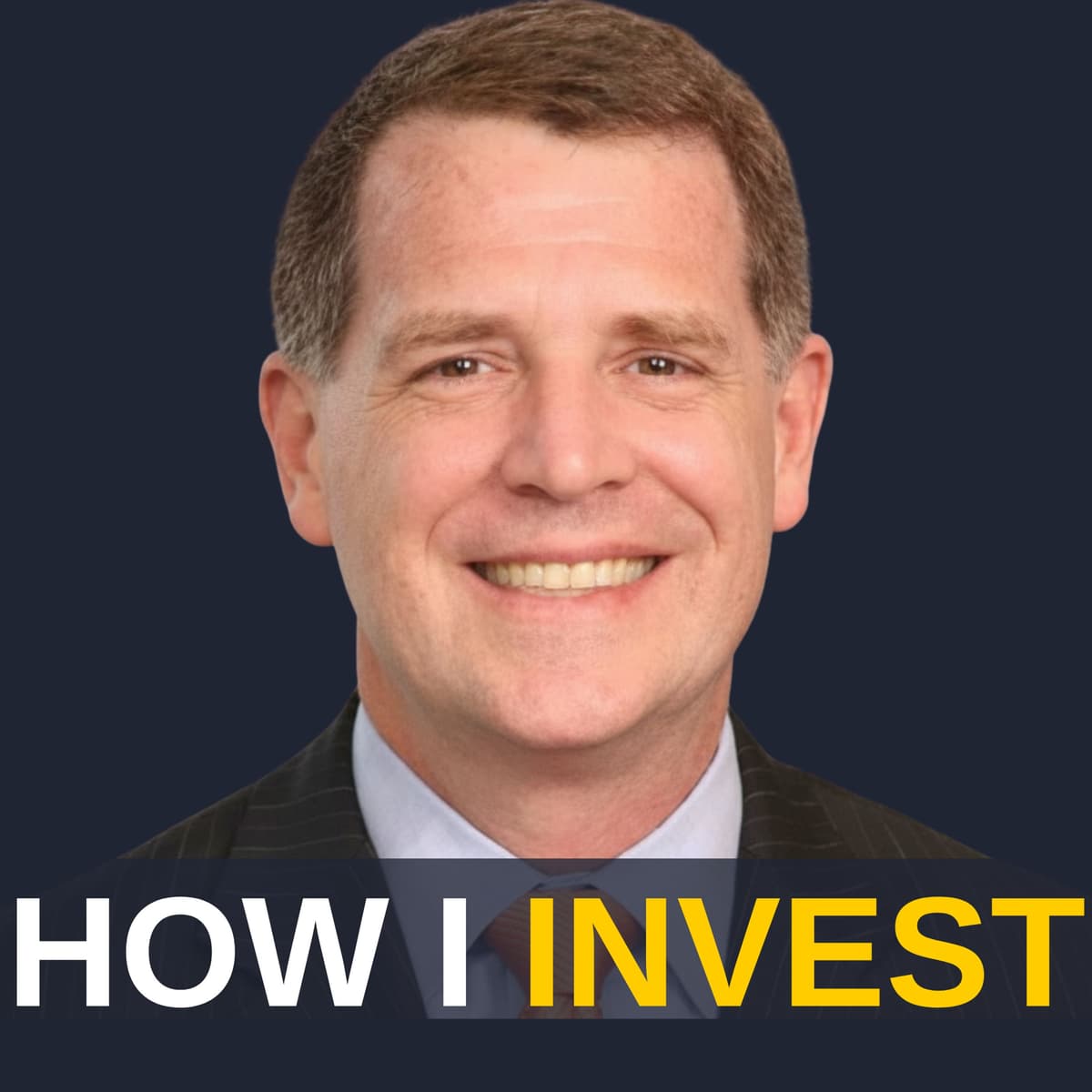

Podcast Summary
Podcast: How I Invest with David Weisburd
Episode 266: J.P. Morgan CIO: Mistakes Top Investors Make
Date: December 19, 2025
Guest: Hamilton (CIO & US Equity Derivatives Head, J.P. Morgan)
Host: David Weisburd
Episode Overview
In this episode, David Weisburd sits down with Hamilton, the Chief Investment Officer of J.P. Morgan’s US Core Equity Platform and Head of US Equity Derivatives, to explore common mistakes top investors make, the nuanced role of options in institutional portfolios, and how behavioral biases shape even the most sophisticated asset allocators. Hamilton draws on his 35+ years of market experience to offer frameworks, lessons from market crises, and actionable advice for investors of all levels, with a particular focus on how to manage risk and stay invested through volatility.
Key Discussion Points & Insights
1. Understanding the Role of Options in Institutional Investing
- Definition and Practical Uses of Options
- Options are used for more than just leverage; they allow investors to tailor exposure and express more precise market views.
- They provide the flexibility to hedge and generate income, historically used by farmers for crop risk and now by institutions for portfolios.
- Quote:
"Options are magical... they give you the ability to express a more precise vision or expectation around a stock." — Hamilton (00:36)
- Institutional Use Cases: Hedging vs. Income
- 40% of assets in Hamilton’s strategies are used for downside protection; 60% focus on income, sacrificing some upside for certainty.
- Hedging enables investors to “stay invested” during volatility by buffering losses.
- Quote:
"Hedging in many cases [is] a way to not only get invested, but more stay invested." — Hamilton (01:42)
- Trade-offs in Options Strategies
- There’s always a cost; you’re compensated for giving up upside or paying for protection.
- Quote:
"There's no free lunch, David. There is a trade off between those two things." — Hamilton (03:44)
2. Options as Tools for Rational Decision-making
- Using Options for Pre-commitment and Discipline
- Selling calls or buying puts allows investors to “program” actions for extreme market moves, reducing emotional errors during volatility.
- Quote:
"It creates good discipline... doing a portion I think is best practice." — Hamilton (07:05)
- Behavioral Pitfalls: Mimetic Theory and Herding
- Human tendency to follow the crowd leads to buying high and selling low cycles.
- Pre-committing prevents emotional decisions in the heat of market moves.
- Quote:
"Acting rationally almost goes against our very evolutionary wiring." — David (07:58)
3. The Importance of Staying Invested & Managing Risk Tolerance
- The Biggest Mistake: Exiting the Market During Stress
- Exiting after gains (e.g., selling after a rally) leads to missed compounding and market recoveries.
- Over any 10-year period since the 1930s, equities have historically risen; key is not timing, but time in market.
- Quote:
"The best thing that any of us can do as investors is not only get invested, but most, most, most importantly is stay invested." — Hamilton (12:48-13:55)
- Behavioral Evidence: Missing the Best Days Hurts Returns
- Missing the 10 best days (often soon after worst days) can halve long-term equity returns.
- Quote:
"Over the last 20 years, a fully invested equity portfolio is up ten and a half percent. If you miss the ten best days... about five and a half [percent]." — Hamilton (14:44)
- Institutional Investors Not Immune
- Even elite allocators succumb to committee-driven panic and poor timing, not just retail investors.
- Quote:
"If only one or God forbid two people on that committee are panicking, you are going to have a contagion." — David (18:08)
4. Portfolio Construction: Risk Not Return First
- Risk Tolerance as Starting Point
- Advises against starting with asset allocation (60/40, etc.); start with acceptable risk, then fill with asset classes.
- Quote:
"Portfolios are, you start with how much risk can we take as a pension, endowment, foundation, individual, and then how do I fill that bucket of assets?" — Hamilton (18:56)
- Modern Portfolio Theory and Volatility
- Volatility is a feature, not a bug; higher expected return assets naturally exhibit higher ups and downs.
- Optimal Approach:
- Use options-based hedged equity to reduce risk, supplement traditional stock/bond mixes (e.g., 10-20% in options strategies).
- Rebalance when allocations drift, don’t heroically time the market.
5. Market Crises Lessons & Behavioral Biases
- March 2020 & Liberation Day: Reflection on Human Behavior
- Even pros often failed to act on purported “buy the dip” convictions.
- Best practice is to rebalance, not “be heroic.”
- Quote:
"You don't have to be heroic, you just have to be disciplined, saying, when I get out of balance, I want to maintain my risk profile." — Hamilton (34:39)
- Rebalancing: The Simple but Overlooked Genius
- Regularly restoring target allocation would have beaten most market timers.
- Quote:
"If people did that, they would do extremely well. They would not only get the market, they would actually surpass the market..." — David (35:17)
6. Timeless Career and Investing Advice
- Key Lessons From Decades in the Market
- Patience: Progress takes longer than expected.
- Proactive Career Management: Make ambitions known to mentors/managers.
- Team Environment: Seek out the company of smart peers for growth.
- Resilience: Personal loss in Lehman bankruptcy deepened risk management appreciation.
- Diversification over Concentration, no matter the strength of conviction.
- Quote:
"It actually has crafted how I think about investing... even though I believe [in AI] in my heart, my brain, my core, it doesn't mean that's going to be my only investment for my investors." — Hamilton (39:20)
7. Compounding: The True Secret to Wealth
- Anecdotes on the Power of Staying Invested
- Family story: $1,500 in Mobil stock compounded over decades to $160k via dividend reinvestment.
- Cash may seem safe in the short run but loses out massively to equities over the long term due to compounding.
- Quote:
"The power of compounding is so powerful... $200k in cash for decades becomes $800k, but via equities, $3.2 million." — Hamilton (41:07-43:30) - Primary sins are not investing or panic selling.
- 99% of Buffett’s wealth came after age 56—compounding needs time.
Selected Timestamps & Quotes
- 00:36 – "Options are magical..." — Hamilton
- 01:42 – "Hedging... is a way to stay invested." — Hamilton
- 07:58 – "Acting rationally... goes against our evolutionary wiring." — David
- 12:48 – "Best thing... is stay invested." — Hamilton
- 14:44 – "Missing the 10 best days..." — Hamilton
- 18:08 – "Committee can lead to contagion..." — David
- 34:39 – "You just have to be disciplined..." — Hamilton
- 41:07 – "Compounding... is magical." — Hamilton
Notable & Memorable Moments
- Hamilton’s Grandmother’s Investing Influence (41:07):
Hamilton attributes his passion for markets to his grandmother, who gifted him stocks instead of toys, bringing home the lesson of compounding and long-term perspective. - Lehman Brothers 2008 Loss (36:35-39:08):
Reflecting on losing his savings, Hamilton explains the need for risk management that endures through unpredictable shocks. - Behavioral Biases in the Best Investors (33:43):
David points out that even “the pros” failed to adhere to their plan during market crises, highlighting the need for systems over willpower.
Tone & Style
- Conversational, wisdom-laden, and pragmatic. Both host and guest frequently cite historical events and personal anecdotes, blending humility with technical know-how and behavioral awareness.
Concluding Insights
- Staying invested through volatility and building in disciplined portfolio mechanics is dramatically more powerful than market timing or even smart asset selection.
- Options and hedged strategies, used properly, support investors in mitigating behavioral errors and matching risk tolerance, helping maintain long-term compounding.
- Timeless advice: patience, diversification, systematic risk management, and the humility to understand one’s behavioral limits are cornerstones to successful wealth building.
End of Summary