
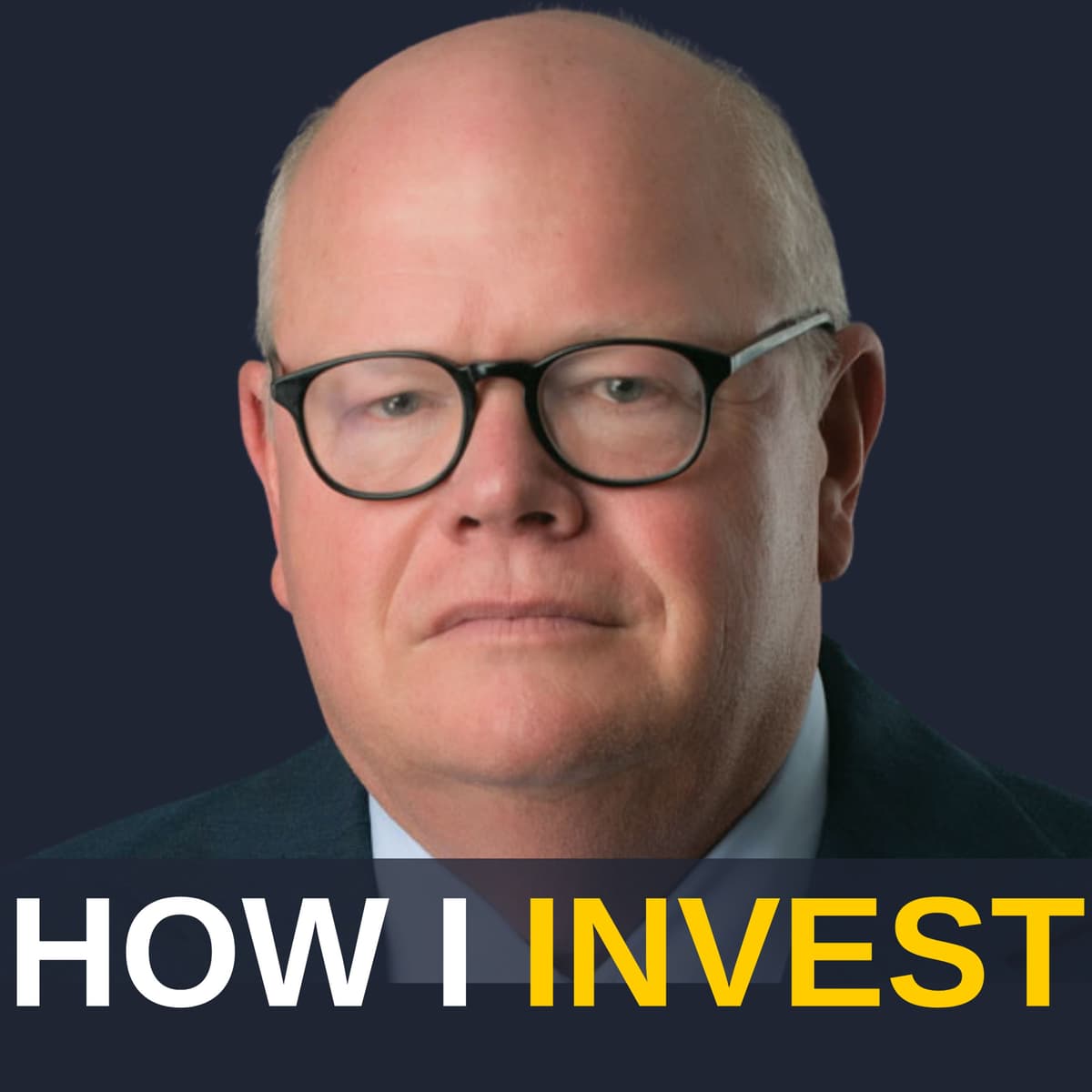

Podcast Summary: How I Invest with David Weisburd
Episode 276: Lessons from Allocating $70B as CIO at the University of Texas
Guest: Brett (Former CIO, UTIMCO, Texas Permanent, Texas Teachers Retirement System, ex-CEO Bridgewater)
Air Date: January 6, 2026
Episode Overview
This episode features Brett, one of the most experienced and influential institutional investment leaders in the United States. With a track record that spans managing the $70B University of Texas endowment (UTIMCO), as well as Texas Teachers, Texas Permanent, and a time as CEO of Bridgewater, Brett shares hard-won lessons on power, negotiation, organizational engagement, innovation, and simplicity in portfolio management. The discussion dives deep into what changes as an allocator commands tens of billions of dollars, how true innovation happens in finance, and the critical importance of “full engagement” in individuals and teams.
Major Discussion Points & Insights
What Changes When You're Managing $70B (Negotiation, Power, and Influence)
-
Negotiation Becomes Easier with Scale ([00:30])
- With a large pool of capital, negotiating terms becomes straightforward. Size means influence and options.
- Quote: “People come to me and say, 'Tell us how you negotiate so well.' I'll say, well, first of all, get a hundred billion dollars on your back and then see how it works out.” — Brett [00:35]
-
Strategic Partnerships and Demanding More ([01:12])
- As a large allocator, you can ask for more reporting, transparency, and custom services that smaller clients can't.
- Example: Brett recounts pushing custodial banks for daily position reporting—something they insisted was impossible until repeatedly challenged.
-
“Four Minute Mile” Mentality ([02:27])
- Once proven something is possible, others follow—people’s beliefs and practices change when precedent is set.
- Quote: “People just think they can't do something, but once you actually show them... it's not that they didn't want to do it, sometimes they just don't think that they can do it.” — Host [02:30]
Building Extraordinary Teams (The Engagement Principle)
-
Distribution of Engagement in Organizations ([03:39])
- Out of 100 people in an organization:
- 30% are “fully engaged” (reliable top performers)
- 50% are “partially engaged” (sometimes dialed-in, sometimes not)
- 20% are “lost causes” or “terrorists” (actively disengaged)
- Quote: “A fully engaged person will outperform a partially engaged person, even if their talent is less... it's guaranteed.” — Brett [05:30]
- Out of 100 people in an organization:
-
Nature of Engagement ([07:30], [08:18])
- Engagement is more about “effort gene” than raw talent—curiosity, perseverance, and commitment.
- It's difficult to shift partially engaged people to being fully engaged; most engagement is intrinsic.
- Quote: “If you're the type of person who just is not naturally fully engaged, you don't really have the effort gene.” — Brett [07:58]
-
Self-Perception, Reality, and “Empowerment” ([09:39], [11:00])
- Most people think they're above average—80%+ overestimate their contributions.
- Real empowerment isn’t just about demand—it’s earned by consistently delivering for your ‘customer’ (internal or external), empathizing, developing, and keeping agreements.
- Brett's formula: “Customer + Empathy + Development + Agreement = Empowerment.” [11:59]
Innovation in Large Institutional Portfolios
-
Two Types of Creativity ([13:11])
-
- Pure creation: World-changing ideas from whole cloth (rare—e.g., Michelangelo).
-
- Iterative innovation: Building by combining or adapting existing concepts—much more common and practical in finance.
- Quote: “There's two types of creativity. There's one type... completely from scratch and that thing changes the world. That's, I'm not that kind of creative... [My approach is] looking at the world around you and just adding the next thing to it.” — Brett [13:20], [15:16]
-
-
Examples in Portfolio Management ([13:40])
- Pushing traditional value investment houses to launch growth products, creating entirely new market opportunities for them.
-
Skepticism Toward Financial Fads ([16:35])
- Brett expresses skepticism about strategies like tax loss harvesting as long-term innovations, viewing them as potentially just fads or gimmicks.
Simplicity Vs. Complexity in Investment Management
-
The “Complexity Syndrome” ([17:04])
- Over-educated people often bias toward complexity, believing it’s superior—but simplicity is both harder and more robust.
- Quote: “Simplicity is actually the highest form of reliability, not complexity.” — Brett [17:10]
-
Illustrative Example ([17:44])
- Race cars can go faster with complexity, but they’re less reliable—simple “vehicles” reach their destination with less risk and maintenance.
-
Implication for Portfolios ([18:00])
- Whenever possible, meet target returns with liquid, simple products (like index funds)—eschew unnecessary complexity, illiquidity, leverage, and costs.
Notable Quotes & Moments with Timestamps
-
Negotiation with Scale:
“First of all, get a hundred billion dollars on your back and then see how it works out.” — Brett [00:35] -
Changing What’s Possible:
“People just think they can't do something, but once you actually show them that... sometimes they just don't think that they can do it.” — Host [02:30] -
On Engagement & Success:
“A fully engaged person will outperform a partially engaged person, even if their talent is less... it's guaranteed.” — Brett [05:30] -
Effort Over Talent:
“If you're the type of person who just is not naturally fully engaged, you don't really have the effort gene.” — Brett [07:58] -
Overestimating Contributions:
“At least 80% put themselves in the upper group... Of course, just mathematically, half of them are below average.” — Brett [10:22] -
Empowerment Formula:
“Customer + Empathy + Development + Agreement = Empowerment.” — Brett [11:59] -
Creativity Types:
“Most creativity is looking at what world around you and just adding the next thing to it.” — Brett [15:16] -
Learning from Simplicity:
“Simplicity is actually the highest form of reliability, not complexity.” — Brett [17:10]
Key Timestamps for Important Segments
- [00:30] — Negotiation power with large capital
- [02:27] — Breaking the “four minute mile” mentality
- [03:39] — The 30/50/20 engagement model for organizations
- [11:59] — Brett’s formula for empowerment
- [13:11] — Two types of creativity in finance
- [15:16] — Creativity through combination vs. invention
- [16:35] — On financial fads vs. sustainable innovations
- [17:04] — Dangers of “complexity syndrome”
- [17:44] — Race car analogy: simplicity vs. complexity
Takeaways
- Commanding significant capital fundamentally changes your leverage with managers and partners.
- Most true edge in teams and organizations comes from the rare, fully engaged individuals who combine talent and relentless effort.
- Real innovation in institutional finance is less about inventing from nothing, more about iterating boldly on what already exists—and knowing when to demand change from partners.
- Simplicity, not complexity, should be the goal. Over-engineering increases fragility in portfolios as in machines.
- Self-awareness, humility, and relentless honesty about one’s contribution and engagement separate the good from the great—at both the individual and organizational level.
This episode is a masterclass in institutional investing mindsets: power, negotiation, team building, and pragmatic creativity, delivered with refreshing candor and hard-earned wisdom.