
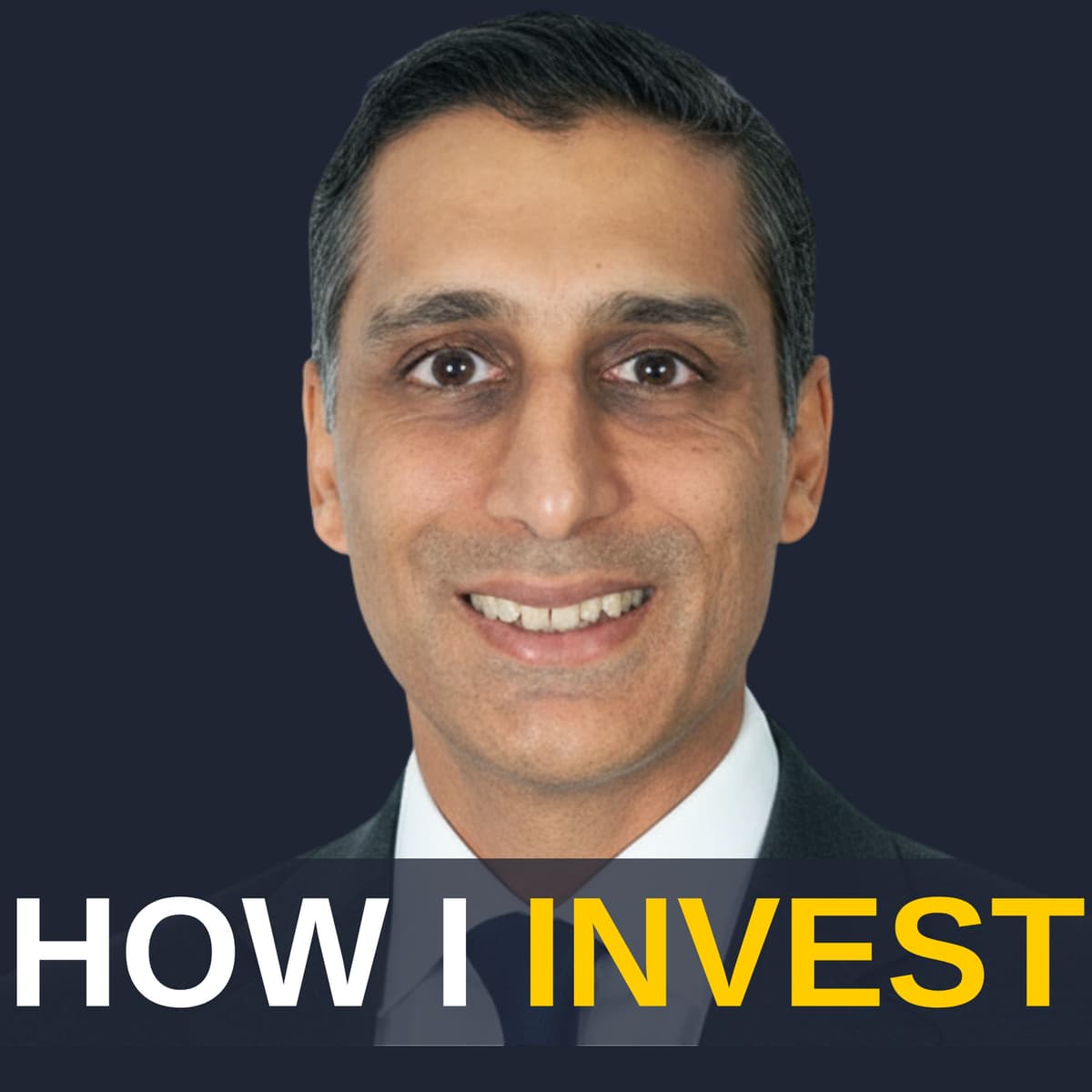

How I Invest with David Weisburd
Episode E277: Why the Best GPs Refuse to Raise More Capital
Guest: Deepak (Co-Founder, Wavecrest Growth Partners)
Date: January 7, 2026
Episode Overview
This episode explores why top-performing General Partners (GPs) in private equity and growth equity steadfastly resist the temptation to raise larger funds, despite abundant investor demand and the allure of higher management fees. David Weisburd interviews Deepak, co-founder of Wavecrest Growth Partners, on his disciplined fund strategy, the value of staying in the lower middle market, relationship dynamics with founders, what motivates top GPs, and the cultural foundations necessary for long-term success.
The episode is a deep dive into growth equity fund management philosophy, sourcing philosophies, culture-building, partnership with founder-led companies, and lessons learned along the way.
Key Discussion Points & Insights
1. The Discipline Behind Fund Size
-
Sticking to Strategy Over Chasing AUM
- Wavecrest closed their third fund at $450 million in only four months and faced strong investor demand to raise more.
- Deepak explains the intentional limitation:
“We really believe in a consistent approach... Our end of the market in growth equity…is kind of the sweet spot, is where the superior risk adjusted returns are.”
(00:17-01:20) - They avoid larger funds to maintain focused check sizes ($25-30M per investment), direct-sourced deal flow, and concentrated portfolios (10-12 positions/fund).
- Raising more would force them into a much more competitive market:
“There’s a break point...where above $50M equity check, the market gets somewhere between 5 and 10x more competitive. We just don’t want to be past that break point.”
(03:12-03:39)
-
Integrity and Investor Trust
- Wavecrest strictly adhered to its stated $400M target and $450M cap, even when they could have doubled.
- Deepak:
“Our word is our bond. So we wanted to stay at 450.”
(02:41) - Commitment to “do what you say, say what you do” culture.
2. Second-Order Effects of Fund Size
- Marketing and Talent
- Crossing $1 billion AUM is valuable for branding, attracting talent, and marketing to entrepreneurs.
(05:11)
- Crossing $1 billion AUM is valuable for branding, attracting talent, and marketing to entrepreneurs.
- Operational Value-Add
- Larger funds allow for a dedicated growth operations team (soon expanding to five people), working closely with portfolio companies post-investment.
- The approach is “a very collaborative partner with these bootstrap, founder-led companies.”
(05:11-06:12)
3. The 'Treasure Hunter' Ethos in Sourcing
- Growth Equity’s Sweet Spot
- Deepak positions growth equity as a hybrid of venture (younger, fast-growing companies, high risk) and buyout (mature, profitable, less alpha).
- Their ideal: profitable, founder-led companies growing 20-100% per year, often in overlooked geographies or verticals.
-
Sourcing Off the Beaten Path
"We are looking for, in some ways, the diamonds in the rough or the diamonds that are kind of underneath the leaf and they're not in your typical tech cities ... they've kind of taken what I'd say is the road less traveled."
(06:18-08:45)- Wavecrest’s companies span Syracuse, Montreal, San Antonio, Bethesda, Amsterdam, etc.
4. Motivation and Passion for Growth Equity
- Distinct Source of Fulfillment
- Deepak describes the intrinsic motivation:
"Wavecrest started as a passion project... we really love helping build growth software companies, growth B2B tech companies."
(09:51) - Helping founders achieve their dreams after years of sweat equity is a primary motivation, not just financial return.
- Deepak describes the intrinsic motivation:
- No-Asshole Rule
- A foundational cultural value for both internal hires and with founders:
"The passion for us was to build a culture that we were excited and proud about... and part of that culture is the no asshole policy."
(14:07) - Creating both a fun and high-performing team environment increases overall success and “expected value.” (15:05)
- A foundational cultural value for both internal hires and with founders:
5. Investing in Founders Who Don’t 'Need' Capital
- Why Great Founders Take Outside Capital
- Most companies Wavecrest invests in are founder-controlled, profitable, and growing fast.
- Reasons founders accept capital:
- Desire for a partner with know-how scaling companies from $10M to $50M+
- Personal diversification
- Early investors’ liquidity
- M&A opportunities
- Offensive sales and marketing moves
-
Long-Term Relationship Building
“Our investment style...is to build long-term relationships with lots of entrepreneurs that we really like... such that typically we've known them for 6 to 12 months on average before we invest.”
(19:53-19:39)
6. Pattern Recognition and Value Creation
-
'Earned Secrets' of Growth Equity
"We've seen the movie 30 or 35 times. So hopefully there's some pattern recognition..."
(19:53)- Deep library of best practices (“Wavecrest growth levers”, ~25 frameworks) for sales, marketing, org design, etc.
- Deepak:
“The goal is to provide that knowledge base in a transferable way to the next set of entrepreneurs...They’re not one size fits all.”
(22:41-24:02) - Practical, tailored interventions: whiteboarding with founders, solving growth puzzles, facilitating exits.
(24:07-24:40)
7. Winning Deals: Brand, Portfolio, and EQ
- Reputation and Reference
- Referrals and portfolio credibility account for “probably 50 or 60 points” out of 100 when winning deals.
-
“Reputation and integrity are critical as an investor. As the old adage says, you can take decades to build it up and 10 minutes to destroy it.”
(28:24) - Invite founders to reference check with current and previous portfolio companies—including challenged situations.
- EQ and the simulated boardroom chemistry can matter as much as track record.
(28:24-29:54)
8. Personality and Team Assessment
- Three Tests for Talent and CEOs
- CCAT (math, logic, spatial reasoning)
- EPP (competitiveness, stress, goal orientation)
- A Myers-Briggs variant (motivations and management style)
- These assessments help ensure both cognitive and cultural alignment, even facilitating mutual evaluation with portfolio CEOs. (31:05-33:20)
9. Lessons in Launching a Firm: Bootstrapping and Adversity
- The Challenge of Raising an Inaugural PE Fund
- Noted difficulty in raising “blind pool” capital versus building a product startup—no business exists until you raise from multiple investors at once.
- What Would He Change?
- Having a single anchor investor would have given a smoother path.
- GPs coming from the same prior firm is seen by LPs as lower risk (but not always an actual advantage).
- Antifragility and Adversity
- Bootstrapping the fund in retrospect is a strength, teaching humility, resilience, and empathy for bootstrap founders.
“It provides us the alignment and humility that a lot of our entrepreneurs have had to face.”
(35:31) - “The only thing I know is that there will be a bump.” (38:31)
Discusses the inevitability of setbacks in all companies, how they reveal founder quality and firm resilience.
- Bootstrapping the fund in retrospect is a strength, teaching humility, resilience, and empathy for bootstrap founders.
Notable Quotes & Memorable Moments
-
On Fund Size:
“If either your check size grows or you end up in a different strategy ... that would have been disingenuous with the strategy.”
— Deepak (01:20, 01:28) -
On Breaking Points:
“There’s a break point ... where above $50 million equity check, the market gets somewhere between 5 and 10x more competitive. We just don’t want to be past that break point.”
— Deepak (03:12) -
On Passion:
“We love helping founders who kind of put their blood, sweat and tears into something to take it to the next level...we’re the coach, we’re the capital partner...It’s really about what makes it fun is seeing their success.”
— Deepak (09:51) -
On Culture:
“We think you could have it both ways. They’re high degree of talent and performance and folks who are kind and collaborative and helpful ... we think we can be as successful, you know, without having shark elbows.”
— Deepak (15:05) -
On Why Founders Accept Capital:
“You realize that I don’t know everything and that this is the largest company I’ve ever run. And I don’t know what it looks like at 20 million, I don’t know what it looks like at 50 million. Why don’t I have a partner who’s seen what it looks like at those sizes?”
— Deepak (15:55-16:29) -
On Pattern Recognition:
“We've seen the movie 30 or 35 times. So hopefully there's some pattern recognition, hopefully there's some framework, hopefully there's some ... value we can add.”
— Deepak (19:53) -
On Adversity and Growth:
“It makes us grateful and, and, and helps us to appreciate given that the road we tread ... it’s one of those things that helps define who we are.”
— Deepak (35:31) -
On Inevitability of Setbacks:
“The only thing I know is that there will be a bump.”
— Deepak (38:31)
Timestamps for Key Segments
- Fund Size Discipline: 00:17–04:30
- Second-Order Effects/Marketing/Talent: 05:11–06:12
- Philosophy of 'Treasure Hunting': 06:18–08:45
- Motivation and Passion for Growth Equity: 09:51–12:41
- No-Asshole Policy/Culture: 14:07–15:46
- Why Founders Take Capital: 15:55–19:39
- Pattern Recognition/Growth Levers: 19:53–24:02
- Winning Deals (References, EQ): 28:17–29:54
- Personality Testing in Hiring/CEO Assessment: 31:05–33:20
- Bootstrapping Firm, Adversity Lessons: 33:20–38:31
Summary Takeaway
This episode is a masterclass in growth equity and disciplined private equity fund management. Deepak’s decision to cap fund size is rooted in strategic discipline, risk-return focus, and preserving both culture and integrity. Wavecrest’s approach is about sustained partnership with founders, direct sourcing outside typical 'hot' markets, and building trust through years-long relationships, practical operational support, and cultural alignment. The firm prizes humility and learning from adversity as much as financial returns—offering a nuanced, deeply human view of top GP thinking.