
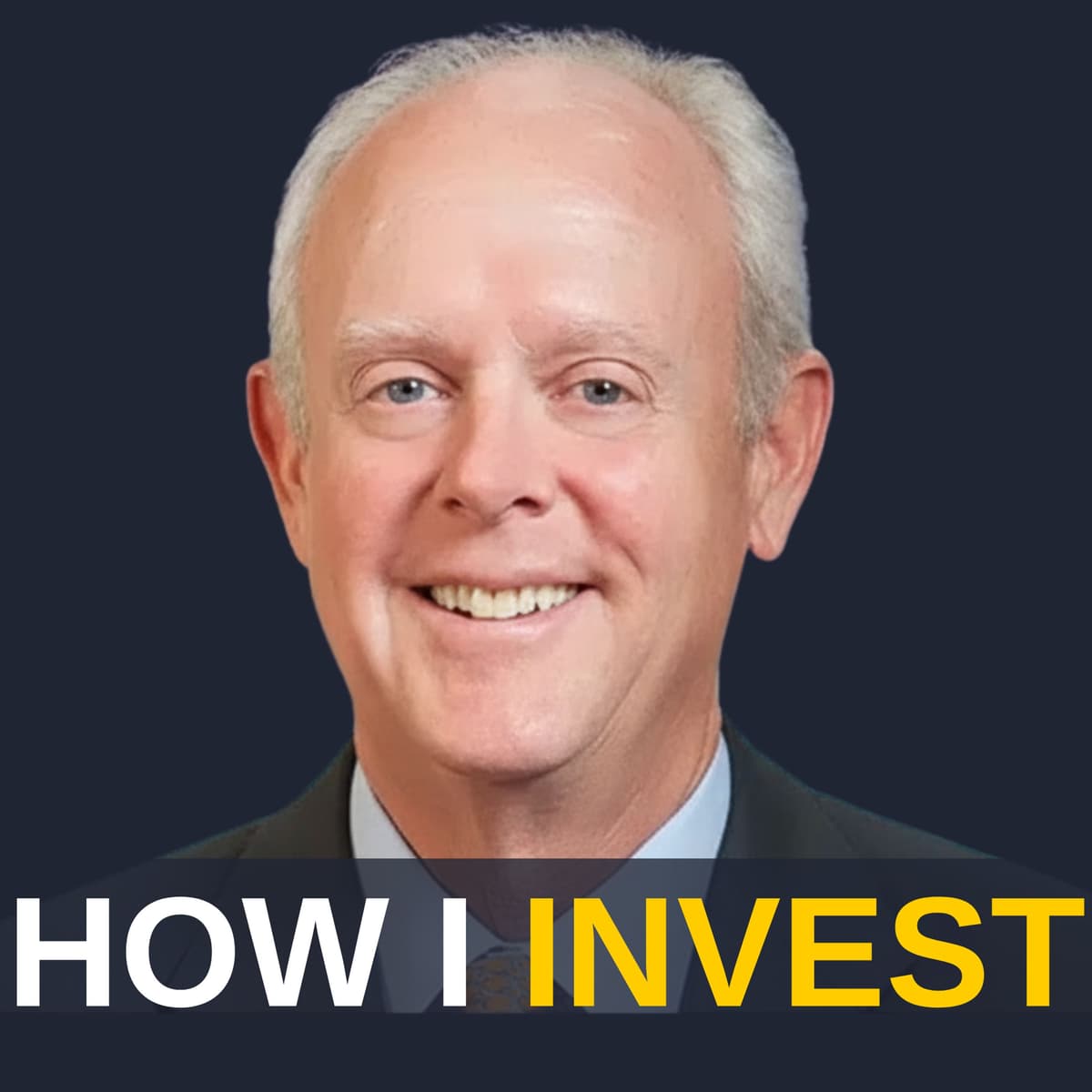

Podcast Summary: How I Invest with David Weisburd – E302: Legendary CIO Larry Kochard On Where Alpha is Today
Date: February 11, 2026
Host: David Weisburd
Guest: Larry Kochard, legendary CIO (ex-McKenna, University of Virginia, Georgetown)
Episode Overview
This episode features Larry Kochard, one of the most respected figures in institutional investing, with CIO tenures at McKenna, University of Virginia (UVA), and Georgetown. Through candid storytelling and hard-earned insight, Larry discusses what it means to build sustainable endowment programs, where true alpha can be found in today’s market, the role of institutional “edge,” and why the foundation of enduring investment success is always people.
Key Topics & Insights
1. Building an Endowment Program From Scratch
- Surveying Success: Upon beginning at Georgetown, Larry interviewed legendary CIOs like David Swensen and Alice Handy.
- Swensen’s core lesson: The investment committee must have deep buy-in for long-term sustainability. (01:06)
- Handy’s guidance: Be deeply embedded in the institution, not isolated from the community. This engagement with leadership, academics, alumni, and students helps endure short-term market turmoil. (01:47)
- Core Principle: “Making sure you’re not isolated from the community...will make it easier to ride the ups and downs of the market over the long-term.” – Larry (01:59)
2. The Value of Rootedness and Sustainable Investment Process
- Fundamental vs. Tactical: Larry champions long-term, fundamental investing with alignment from stakeholders.
- Behavioral Biases: “There’s a long literature of behavioral finance that talks about why people fail in their own portfolios. But then you layer in the notion that you’re investing on behalf of an institution…which could make you even more prone to behavioral mistakes.” – Larry (03:38)
- Sustainability: Achieved through diversity of thought, open debate, institutional discipline, and avoiding knee-jerk reactions to market moves. (04:08)
3. Managing Through the Global Financial Crisis (GFC)
- Georgetown came through the GFC with strong liquidity, having avoided overcommitting to private, illiquid assets.
- Risk Management: Go into downturns with a plan, but remember, as Mike Tyson said, “Everyone got punched in the face.” (05:35)
- Best Practice: Maintain disciplined pacing of private commitments to avoid overextension and ensure the ability to capitalize on market dislocations. Don’t stop committing entirely, even during crises. (07:12)
4. Crisis Opportunties and Liquidity
- Downturns create rare opportunities to access otherwise closed top funds.
- “You had a lot more flexibility into getting access to previously hard to access funds, whether it’s venture, buyout, hedge funds. So that is just a golden opportunity…” – Larry (09:38)
- Avoid Forced Selling: Don’t get stuck redeeming or selling top fund positions on the secondary market; building relationships beforehand is key. (10:41)
5. The Psychological Game Plan
- Preparation is Psychological: “Having a game plan that kind of forces that sense of discipline ahead of time is really important.” (11:46)
- Discipline vs. Momentum: Acting quickly, but rigorously, avoids behavioral traps (14:17).
6. Sources of Alpha Today
- Alpha is Scarce: “Alpha is hard. Investment firms are very good at selling themselves. A lot of performance is due to luck and not skill…You have to find inefficiencies that can be exploited and skilled managers who are good at exploiting them.” – Larry (15:10)
- Where Alpha Might Exist:
- Private equity: Not for the illiquidity premium, but in managers who can actively create value.
- Emerging markets: Inefficient, but beware the drag from bad beta.
- Credit & Shorting: Still inefficient, but hard to execute.
- Growth/Tech: Look for fundamental, not momentum managers.
- Supply/Demand & Manager Selection: Discount IQ and storytelling; focus on why an asset class is neglected or crowded.
7. The Problem with Asset Class Size and Scaling
-
“Size is the Enemy of Returns:” As managers grow, they risk losing their edge. Small, nimble firms have structural advantages. (21:52)
-
“Success often breeds this sense that they can continue to scale, and oftentimes the scaling…there are significant diseconomies.” – Larry (20:18)
-
Mosaic Approach: No single rule for manager size, but red flags beyond size alone (mission drift, multiple product launches, bad alignment) can spell trouble. (23:19)
8. Underwriting People and Edge
- Most Important Principle: “People matter…we’re in the business of underwriting people.” (30:22)
- Underwrite both manager edge and your institution’s edge (networks, board, alumni, market access).
- Be humble about what you don’t know – focus on where you have edge and outsource/passively manage the rest until conviction is built.
9. Building and Expanding the Portfolio
- Start with Strengths: Leverage relationships unique to your institution, but don’t get overexposed. Use passive exposure as a stopgap for asset classes where you haven’t yet developed conviction. (36:11)
- Pattern Recognition: “It takes many reps to develop a sense of pattern recognition…longer than most people appreciate.” (38:11)
10. Going Slow and Managing Stakeholders
- Patience: Few decisions, made slowly, with a smaller team, produces better long-term outcomes. (39:23)
- Messaging: Clearly communicate why you go slow to stakeholders, to avoid FOMO or pressure for activity for its own sake. (41:16)
- Keep Engagement: Co-investing with managers keeps teams sharp and lowers fees. (44:09)
11. Real Assets & Inflation Risk
- Larry advocates less dedicated allocation to private real assets (e.g. real estate, infrastructure) except opportunistically after distress; stick with equities for real asset exposure over the long term.
- “Private real assets almost, not all the time, but the vast majority of the time underperform private equity, buyout, growth equity, and venture.” (44:41)
- Liquidity is Vital: Only with ample liquidity can you “swing for the fat pitch” when it arrives. (48:54)
12. Institutional Leverage
- Cautious on Leverage: Endowments already have embedded leverage (e.g. buyout funds), so borrowing further is risky. Use derivatives or future overlays judiciously. (50:26)
13. Endowment Model vs. TPA
- Endowment Model: Long-term focus, liquidity awareness, contrarian edge via institutional relationships.
- Total Portfolio Approach (TPA): Trend toward holistic risk & liquidity management across asset classes, more benchmark awareness, greater use of secondaries and co-investment, elevated attention to illiquidity risk. (51:50)
- Best Practices: Strip away labels and integrate the best ideas from both approaches. (56:34)
14. Career Advice & Final Reflections
- People Above All: “It’s all about the people…Mistakes that have been made over the years is not thoroughly assessing quality of people…constantly re-underwrite that.” (56:58)
- Relationship-building, collaboration, and understanding what makes individuals unique are keys to long-term investment success.
Notable Quotes & Memorable Moments
-
On Sustainability:
“Having diversity of thought on the team. Having a team that’s very comfortable pushing back, having a team that’s very comfortable changing their mind.” – Larry (04:08) -
On Opportunity in Crisis:
“You want to make sure you have the liquidity flexibility to be able to take advantage of that during those types of downturns.” – Larry (09:38) -
On Manager Due Diligence:
“It takes many reps to develop a sense of pattern recognition to really understand who’s good and who’s not. And it takes years.” – Larry (38:11) -
On the Edge of an Institution:
“Trying to make sure you focus on where you have your own edge...the institution’s network, and where you have areas where you think you have no edge.” – Larry (32:49) -
On the Central Importance of People:
“When I grew up, I was a math science guy…as I’ve gotten older, what I feel like is most valuable is the relationship side…the people, understanding people, what makes them tick…what makes them special, why are they one in a million, why are they potentially a unicorn.” – Larry (56:58) -
On Portfolio Patience:
“Warren Buffett always talks about this notion of waiting for the fat pitch…there is an advantage of being slow in terms of the number of decisions you make in a period of time.” – Larry (39:23) -
On Real Assets and Inflation:
“Over a long period of time, equities are a real asset. To the extent that companies have pricing power, they can pass along cost increases…so over a long period of time I have a bias to more just equities as opposed to real assets in the portfolio.” – Larry (44:41) -
On the Future of Endowment Investing:
“I think there’s going to be greater appreciation of illiquidity…co-investing around the periphery. I think there are more institutions that are doing that.” – Larry (54:36)
Key Timestamps
- 01:06 – Lessons from Swensen and Handy on endowment building
- 03:02 – Importance of long-termism and psychological sustainability
- 05:35 – Investment committee dynamics during GFC
- 09:38 – Liquidity creates rare access during market dislocation
- 15:10 – Sources of alpha and the challenge of finding truly skilled managers
- 20:18 – On fund size, scaling, and diseconomies
- 23:19 – Framework for manager evaluation beyond simple size thresholds
- 30:22 – Larry’s six core investment principles (with “people” as #1)
- 36:11 – Building a program from strengths and using passive exposure
- 38:11 – Pattern recognition and slow decision-making in manager selection
- 44:41 – Rethinking the role of private real assets for inflation protection
- 51:50 – Endowment model vs. TPA; trends in risk and liquidity management
- 56:58 – Career advice: people, collaboration, ongoing assessment
Final Takeaways
- Sustainable investment programs are built on genuine institutional alignment, humility about what you don’t know, and relentless focus on people.
- Alpha remains painfully scarce; persistently exceptional performance arises when skill exploits true inefficiency, combined with patience, structure, and behavioral discipline.
- Legacy advantages—community embeddedness, alumni networks, and deep relationships—are underappreciated edges in institutional investing.
- In the end, selecting, cultivating, and collaborating with extraordinary people stands above all else as the enduring “alpha” for both CIOs and their organizations.