
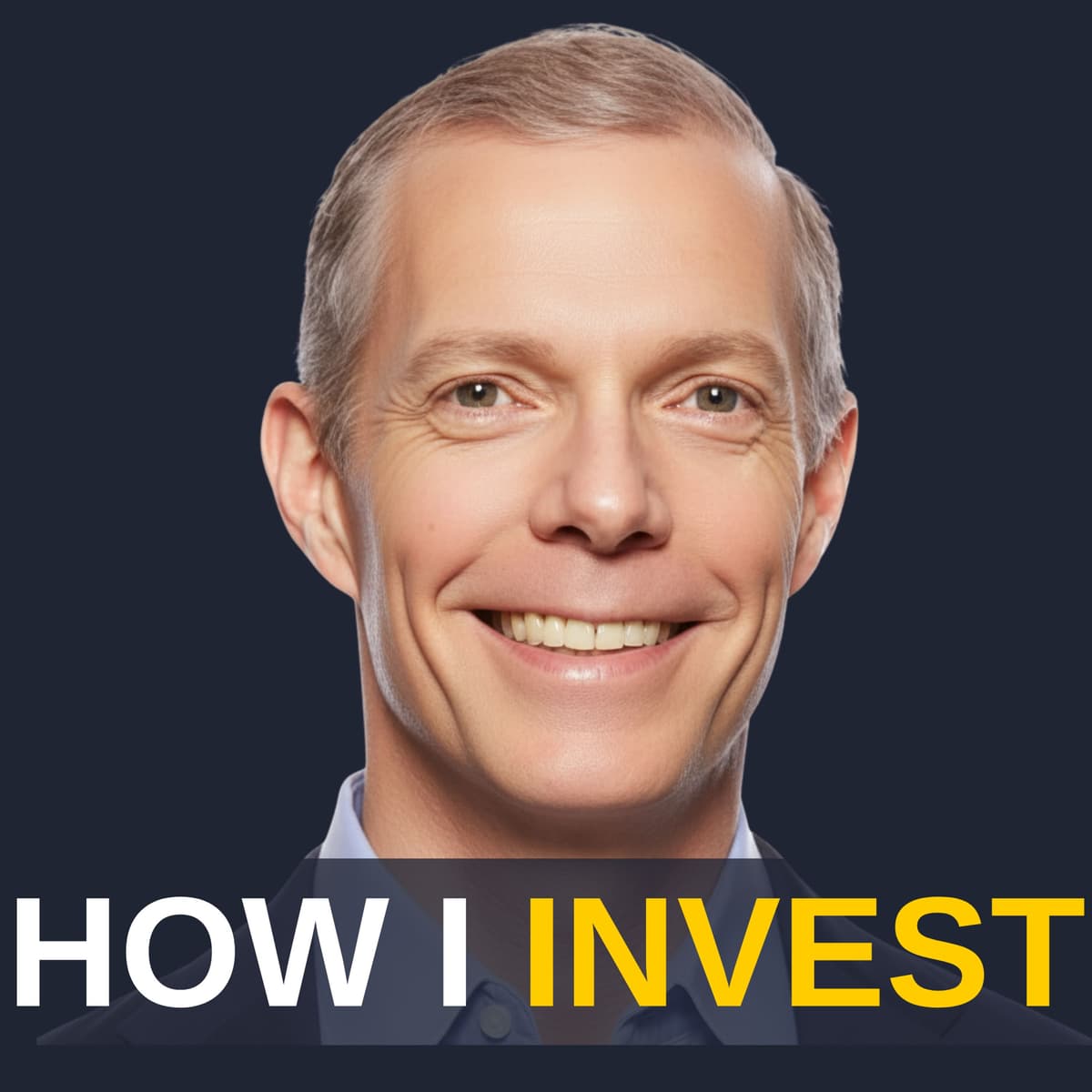

Podcast Summary: "Why Size Is the Enemy of Venture Returns"
Podcast: How I Invest with David Weisburd
Episode: E307
Guest: Glenn Solomon, Notable Capital
Date: February 18, 2026
Overview
In this episode, David Weisburd interviews Glenn Solomon, Managing Partner at Notable Capital (formerly the US team at GGV Capital), about why fund size can be detrimental to venture returns. They cover the nuances of early-stage investing, capital deployment in a competitive venture market, their approach to supporting founders, and the AI paradigm shift with insights from their investments in Anthropic and other companies.
Key Discussion Points & Insights
1. Competing Against the Giants & Fund Differentiation
[00:00–01:34]
- Notable Capital was spun out of GGV due to geopolitics and rebranded in March 2024.
- Glenn shares: "There’s actually $350 billion that went into venture rounds in 2025, but $250 billion of that was for rounds over $100M in size. The other $100 billion is invested in rounds under $100M—where we focus."
- Notable Capital zeroes in on early-stage rounds (Seed, Series A, B), aiming for smaller ownerships in companies with years until exit.
- They differentiate by focusing solely on early-stage, unlike mega-funds pouring into late-stage, “IPO-scale” rounds.
2. Market Cycles & Time Diversification
[01:34–02:43]
- Despite the hot IPO and M&A market in 2026, Notable deploys each fund over 2.5–3 years for time diversification.
- "The companies that we're investing in now, if they're successful, are going to exit many years from now." — Glenn Solomon [01:48]
- Emphasizes that true company-building and returns materialize over 5–10+ years.
3. Advantages & Disadvantages of a Mid-Sized Fund
[02:43–04:05]
- Notable’s first fund size ($650M) positions them between giants and boutique funds.
- Seen by LPs as a “smaller, focused fund,” with an expectation of higher returns than platforms: “We’re over 2x MOIC after two years. Our gross IRRs are nearing 200% right now.” — Glenn Solomon [03:27]
- Glenn is realistic: doesn't expect to maintain initial IRR, but views early results as "a harbinger... of a great portfolio that we're building." [03:53]
4. Delivering Value to Founders
[05:40–06:32]
- A personalized approach: “We want each founder to feel like they're our only founder and we can actually do that with 8–10 new investments per year.” — Glenn Solomon [05:56]
- Contrasts this with larger funds' scaling challenges and detachment.
- Glenn challenges LPs to diligence mega-funds by asking founders whether they ever actually interact with name partners.
Memorable Quote
- “If I was an LP, I'd call some of the founders and say, have you ever met the name partners?” — Glenn Solomon [06:22]
5. Notable’s “Team” Model & Referenceability
[06:32–08:31]
- Notable operates as a cohesive team: Founders regularly interact with 5–8 people across investment and platform.
- “We’re striving to be 100% referenceable... it's not just me. If I’m involved... there’ll be 1–2 investment team, 4–5 platform team actively helping.” — Glenn Solomon [07:08]
- Cites specific examples: Fortune 500 intros for a cybersecurity company; recommending key hires for an AI company.
6. “Size Is the Enemy of Return” & Alignment with LPs
[08:31–09:40]
- “You said on one of your recent podcasts, David, like size is the enemy of return. We want to be super aligned with our LPs… Our GP commit is much larger than is standard.” — Glenn Solomon [08:41]
- Clear intention to stay top quartile/decile, not swinging for volatile, one-off home runs.
- “Every dollar we put to work has a lot of octane behind it.” — Glenn Solomon [09:25]
7. AI, Anthropic & Paradigm Shifts in Tech
[09:40–12:59]
- Investing in Anthropic: Key thesis was their sharp focus on enterprise AI (‘the lab most focused on serving needs of the enterprise’).
- On AI’s growth: “When we invested, [Anthropic] was under a billion in run rate… now they’ve eclipsed 14 billion.” — Glenn Solomon [10:16]
- The “convergence” of LLMs: All major labs (OpenAI, Anthropic, Google, Grok) competing fiercely for labor markets, not just software:
- “Labor is, you know, orders of magnitude larger than software… we are headed to a world where Anthropic and others take more and more labor budget.” — Glenn Solomon [11:58]
8. How Large Are These AI Opportunities?
[12:59–14:27]
- Coding, finance, legal, and other labor-centric industries represent massive markets.
- “Just software alone—the dollars spent on tens of millions of developers is a multi-trillion dollar market.” — Glenn Solomon [13:04]
- Market cap of $10–30 trillion for AI-powered businesses is “not hyperbole,” but will take time.
9. Is the “Software Apocalypse” Real?
[15:01–17:37]
- Glenn sees overreaction cycles: “The pendulum swings too far one way and the other.”
- Legacy software value isn’t just code (“the bits”), but distribution, unique data, and know-how:
- “While Claude and other AIs... make it less expensive to recreate the bits, the bits are only part of the story.” — Glenn Solomon [17:13]
10. Software vs. Services Value Chain
[17:37–19:01]
- Incumbents will adapt AI as in prior tech cycles (e.g., cloud), just as startups attack from below.
11. Investing in a (Post-)AGI World
[19:01–20:02]
- AGI as a “state of mind”:
- “I don’t think there’s a moment... when the world would, you know, it’s not as binary as a zero or a one. It’s a phase...” — Glenn Solomon [19:28]
- The “opportunity decades” of model performance compounding across domains.
12. Human Cognition, Innovation & the Value of Range
[20:02–22:38]
- People rarely foresee more than a step ahead in technological revolutions.
- Glenn recommends the book Range, suggesting innovation derives from interdisciplinary thinkers:
- “It tends to come from folks who have range… who actually have knowledge and understanding of things in many disciplines and are able to borrow… and apply it to another...” [21:01]
- Points to Anthropic's unplanned success with Claude for code and its expansion to new domains.
13. Where Will AI Alpha Come From?
[22:38–24:54]
- Massive opportunity for founders building tools for developers, security, finance, and consumer/business apps “above the infrastructure” layer.
- Highlights Whisper Flow, an AI-powered voice-to-digital communications platform, as a “net new” killer app:
- “Without even knowing it was man-machine interface... it’s like the most powerful man-machine interface technology I’ve seen." — Glenn Solomon [24:24]
14. On Killer Apps & Mainstream Adoption
[24:54–26:13]
- “It’s abundantly clear that AI has jumped... the bit has flipped... and ChatGPT blew [Instagram/TikTok] away in terms of how quickly it got to that number of users.” — Glenn Solomon [25:40]
- The world is now actively seeking the next breakout AI applications.
15. Timeless Investing Advice & Avoiding “Shiny Objects”
[26:13–28:22]
- Solomon’s advice to his younger self: “Staying focused, investing in your strengths, figuring out your core advantages and honing those key.” — Glenn Solomon [26:36]
- Investing when you have conviction, leveraging your expertise and networks, and resisting herd mentality:
- “We're not investing in areas that we don’t have deep expertise in... we're talking to 75 chief security officers and asking them [real questions].” [27:42]
- “Your expertise in your networks within a specific sector is the alpha and when you go into another sector, you're just betting on beta.” — David Weisburd [28:22]
Notable Quotes with Timestamps
-
“There’s actually $350 billion that went into venture rounds in 2025, but $250 billion of that was for rounds over $100M in size.” — Glenn Solomon [00:21]
-
“Our gross IRRs are nearing 200% right now. I don't expect us to be able to maintain that level of performance over time, but I do think it’s a harbinger… of a great portfolio that we’re building.” — Glenn Solomon [03:28]
-
“We want each founder to feel like they’re our only founder and we can actually do that with 8–10 new investments per year.” — Glenn Solomon [05:56]
-
“If I was an LP, I'd call some of the founders and say, have you ever met the name partners?” — Glenn Solomon [06:22]
-
“Every dollar we put to work has a lot of octane behind it.” — Glenn Solomon [09:25]
-
“History repeats. This is not our first rodeo… computing paradigm shifts are good for business, for VCs, they create a lot of disruption.” — Glenn Solomon [09:54]
-
“Labor is… orders of magnitude larger than software in terms of market size.” — Glenn Solomon [11:58]
-
“The pendulum swings too far one way and the other… assuming that all software companies are going to zero is the fever in the market right now—is also the pendulum swing too far the other way.” — Glenn Solomon [15:21]
-
“AGI is more a state of mind… it's not as binary as a zero or a one.” — Glenn Solomon [19:26]
-
“It tends to come from folks who have range… knowledge and understanding of things that are occurring in many disciplines.” — Glenn Solomon [21:01]
-
“We're not investing in areas that we don’t have deep expertise in… we're talking to 75 chief security officers…” — Glenn Solomon [27:42]
Conclusion
This episode provides a masterclass in venture strategy, with Glenn Solomon advocating for focused, specialized investing—emphasizing that fund size can dilute returns, especially in early-stage venture. He shares rigorous, founder-centric practices, thoughts on AI’s disruption (both in the labor and software markets), lessons on innovation, and timeless investing wisdom about staying inside one’s circle of competence.
Episode Structure & Useful Timestamps
- Competing with Giants & Fund Focus: [00:00–01:34]
- Market Cycles & Exits: [01:34–02:43]
- Fund Size: Pros & Cons: [02:43–04:05]
- Founder Support & Differentiation: [05:40–08:31]
- Alignment & Returns Philosophy: [08:31–09:40]
- AI Investment Thesis/Anthropic: [09:40–12:59]
- Market Sizing & Disruption: [12:59–14:27]
- Software Value Layer: [15:01–19:01]
- Innovation & Cognitive Bias: [20:02–22:38]
- AI Killer Apps & Opportunities: [22:38–26:13]
- Advice & Circle of Competence: [26:13–28:32]
This summary offers valuable insights for both venture investors and founders—especially those curious how mid-sized specialist funds thrive, how to evaluate AI opportunities, and how to maintain edge in a rapidly changing market.