
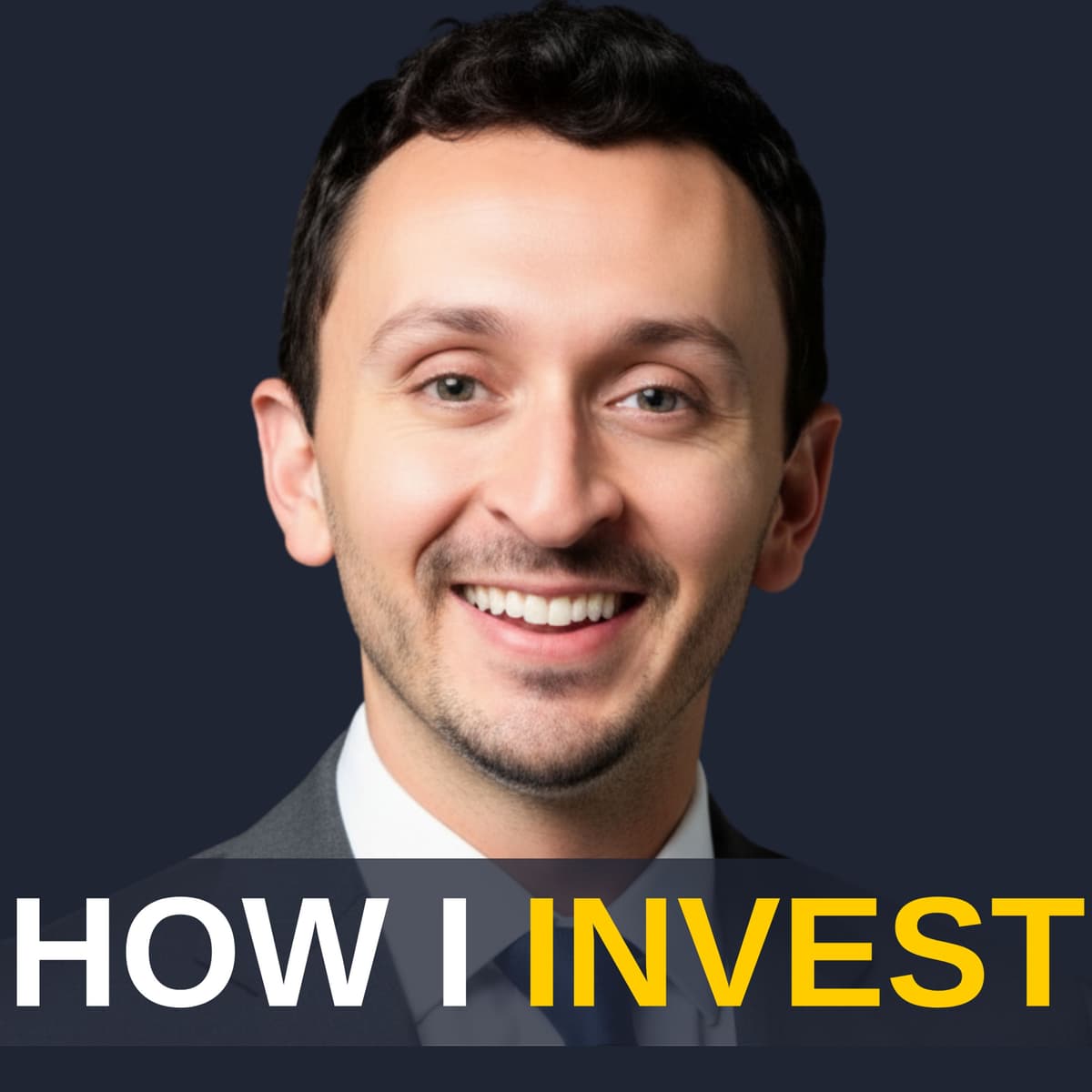

Podcast Summary: How I Invest with David Weisburd
Episode E309: Why Most VC Firms Will Die by 2030
Date: February 20, 2026
Guest: Camille (Perceptive Ventures, former Meta AI engineer/founder)
Main Theme & Purpose
In this episode, David Weisburd speaks with Camille, former top AI engineer at Meta and now managing partner at Perceptive Ventures, a leading agentic AI seed fund. The conversation explores why the venture landscape is on the verge of an extinction event, the dramatic shifts agentic AI is bringing to all industries, and how forward-thinking VCs must adapt—or die—by 2030. Key topics include Camille's origin story, unique investment frameworks, the inevitability of radical disruption by AI, and the make-or-break qualities of both founders and investment firms.
Key Discussion Points & Insights
1. From Meta Engineer/Founder to VC
- Camille's dual experience as a startup CEO and big tech operator directly informs her approach as an investor, blending founder-level agility with an understanding of how incumbents think and move.
“Having been a founder, I know how fast one can move and how nimble one can be. But having also been a big tech operator, I understand which large spaces big tech finds attractive and wants to move into.” —Camille [00:15]
- She is keenly aware not to invest in domains likely to be overrun by ‘Neo incumbents’ like OpenAI and Anthropic.
2. Big Tech's Influence and White Space for Startups
- Even $10B business lines can be irrelevant for multitrillion-dollar companies but are meaningful wins for VCs.
“There are $10 billion businesses that these large companies don't really have an interest in entering... But a $10 billion startup is a very interesting outcome for a venture investor like myself.” —Camille [00:51]
- Incumbents’ true moat is distribution, making it dangerous for startups to compete head-to-head in interest areas.
3. Agentic AI: The Only Future
- Camille frames AI as not merely a set of tools, but as end-to-end decision engines replacing whole human workflows.
“AI is really centrally concerned with replacing human decision making... prediction, judgment, and action... It creates a completely agentic system.” —Camille [01:42]
- Example: Waymo as a paradigm for agentic AI—prediction (traffic), judgment (decisions), action (driving).
4. Disruption: Short Term vs Long Term
- AI will absolutely disrupt and destroy many industries, but create new jobs in manual and physical spaces.
“I think it will disrupt and destroy a lot of industries, for sure. I think it's also going to create a lot of new opportunities....” —Camille [02:49]
- Regulation slows disruption in protected sectors (legal, healthcare), but even these will eventually yield.
5. Building a Thesis-Driven Fund
- Perceptive Ventures invests by working backward from long-term visions of agentic futures in various verticals (healthcare, legal, construction).
- They look for founders who also see that future, not just those optimizing for the next fundraise:
“A lot of founders are optimizing for the next three to five years... I don't care how you get to a Series A, I'm concerned about how you're going to build $100 billion company.” —Camille [06:44]
6. Navigating a Hyper-Competitive and Risky Landscape
- Top-tier investors de-risk by alignment:
“...tier one investors...are very forward thinking. They are investing in very disruptive innovation...So there is an element of just being de-risked because we're aligned...” —Camille [07:45]
- In AI, B2B companies can reach revenue quickly, aiding de-risking at Series A. Some visionary investments remain pre-revenue (e.g., OpenAI in 2017).
7. How Agentic AI Will Reshape All Asset Classes
- Every asset class, from private equity to commodities, will be touched by AI.
“Every asset class is being touched by this... Assessing different industries... can be automated. So it's, it's really going to touch absolutely everything even when we think it's not.” —Camille [10:53]
- The Yale endowment model could itself become automatable.
8. Why Most VC Firms Will Die by 2030
- A massive culling is ongoing due to over-fundraising and lack of real firm-building experience.
- Distinguishing between running a “fund” vs. a “firm”:
“A firm is a brand...to be a successful venture manager, you have to be consistently marketing that brand to founders and LPs...The only reason your firm exists is because you have been able to bring LPs into your capital base and stewarded that capital well...” —Camille [13:32]
- Many managers dislike the “grind” of marketing and fundraising, but it’s essential for survival.
9. Winning Over Top LPs & Internal Edge
- Dual-network building (founders and LPs) is crucial; Camille leveraged prior company-building relationships and word of mouth.
- Perceptive employs AI to model psychographic founder archetypes (drawing on traits from Bill Gates, Steve Jobs, etc.), aiming for a systematic edge beyond gut instinct:
“Gut instinct is just data...that I think can be actually modeled...” —Camille [16:15]
10. Founder Psychology: Ruthless Energy Management & Psychopathy
- The founders most likely to build generational companies are “ruthless” and frequently unlikable—this is not a bug, but a feature:
“Some of the best founders in the world are not necessarily always the best people... There is an element of ruthlessness that’s required in building generational companies.” —Camille [20:27]
- VCs must subordinate ego and focus on outcomes:
“...you have to own that and let this ego of the VC push that aside.” —Camille [22:58]
- The best founders efficiently manage their energy, switching from ruthlessness to charm as needed.
“...they can be both. Now when I look at our top companies...the unicorn founders we backed, they all have that ability...” —Camille [24:16]
- Sometimes, psychopathy is a requirement for outsized success:
"We like to judge, even using the word psychopathic...But what if that's simply what it takes to build transformational global companies? It's some level of psychopathy." —Camille [25:19]
11. Platform Shifts: Audio Is the Next Interface
- The next platform shift is toward audio-based interfaces (“audio first” devices), breaking from text-driven GUI paradigms:
“...the phone is going to be the first one that breaks because it's an even more inefficient interface...audio is faster and preferable...so the input is becoming more and more audio based. That's going to be the platform shift that matters the most.” —Camille [26:09]
12. Career & Talent Lessons
- Early big tech employment is invaluable for benchmarking talent and learning scalable systems:
“If I was going back and talking to the younger version of myself, I would have said go learn there, go learn from them and then go out and build a company...” —Camille [27:43]
- The difference between top engineers and founders is not raw intelligence, but risk tolerance and psychographic profile, including “trauma” and desire not to be liked.
Notable Quotes & Memorable Moments
- On Agentic AI:
“Artificial intelligence is really centrally concerned with replacing human decision making... prediction, judgment and action.” —Camille [01:42]
- On Industry Transformations:
“Every asset class is being touched by this... So it's, it's really going to touch absolutely everything even when we think it's not.” —Camille [10:53]
- On Founder Profile:
“Some of the best founders in the world are not necessarily always the best people to work for or to work with. There is an element of ruthlessness that's required...” —Camille [20:27]
- On Building a Firm:
“A firm is a brand... you have to be consistently marketing that brand to founders and to LPs constantly.” —Camille [13:32]
- On Platform Shifts:
“Audio is faster and preferable... that's going to be the platform shift that matters the most.” —Camille [26:09]
- On Gut Instinct and Pattern Recognition:
“Gut instinct is just data... that I think can be actually modeled.” —Camille [16:15]
Timestamps for Important Segments
- [00:15] Camille’s professional background and Meta experience
- [01:42] Explanation of agentic AI and why it matters
- [02:49] Impacts of agentic AI on labor and industries
- [06:44] Building a thesis and aligning founder vision
- [10:53] How AI is disrupting all asset classes and the future of asset allocation
- [13:32] Key distinctions between running a fund vs. running a firm
- [16:15] Using AI psychographic models to choose founders
- [18:28] Mistakes from smart VCs: loving founders but hating their current business
- [20:27] Accepting ruthless, “disagreeable” founders as necessary for massive outcomes
- [22:13] Acknowledging and managing the ego as an investor
- [24:16] On founders toggling between ruthlessness and charm
- [26:09] The next great compute platform shift: audio-first interfaces
- [27:43] Career advice: learn at big tech before company-building
Tone & Style
The conversation was candid, no-nonsense, and future-facing, blending technical rigor with hard-won founder wisdom. Camille, in particular, was direct about both opportunities and hard truths ("most VCs will die," “some of the best founders are ruthless pricks—and that’s necessary”).
In Summary
This sharp and future-obsessed episode is essential listening for anyone considering the durability of venture capital as it stands. Camille's unvarnished take: Only the firms—and founders—willing to embrace, anticipate, and ruthlessly execute around the impending agentic AI era will survive the next decade's shakeout. All others? “They just won’t make it.”