
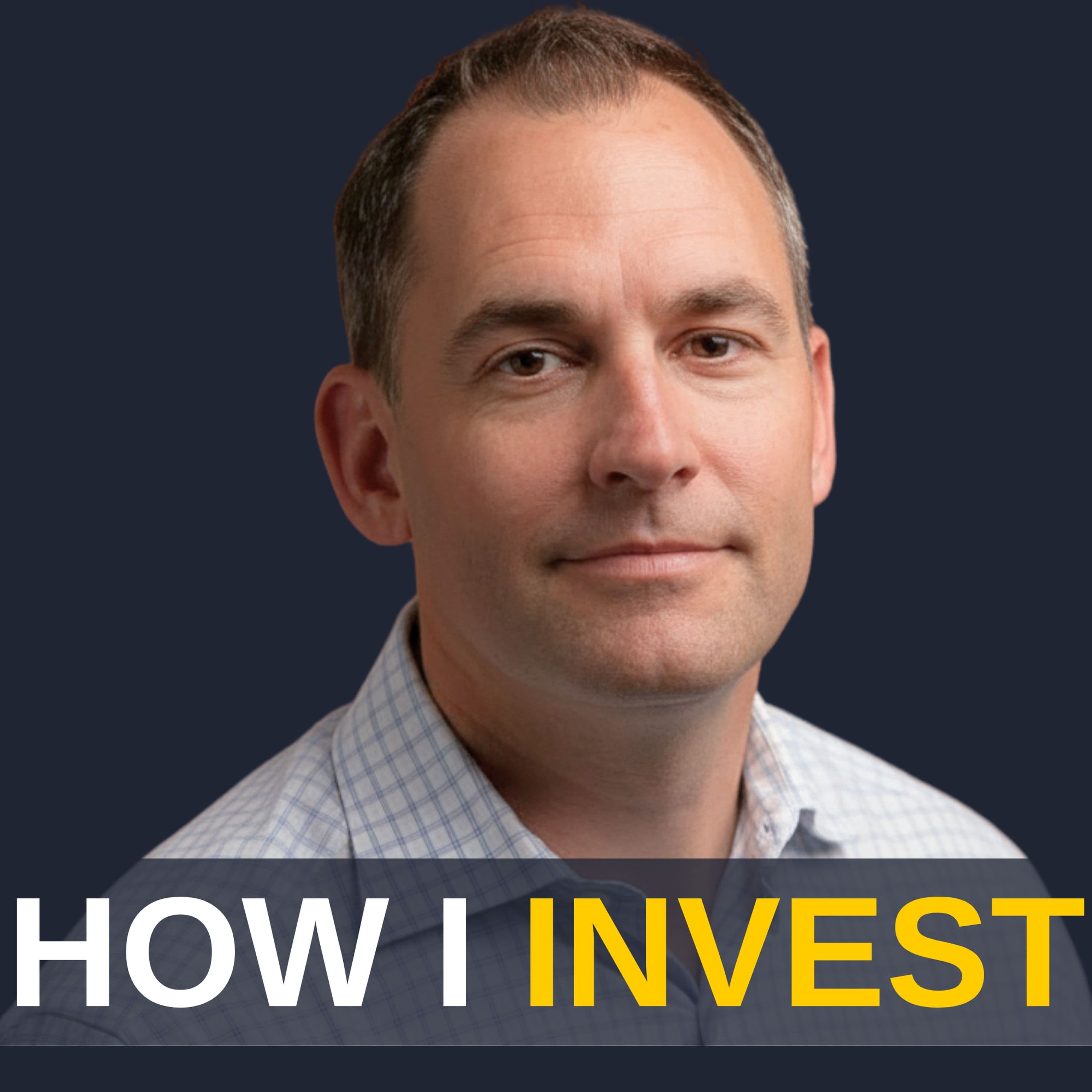
Podcast Summary: How I Invest with David Weisburd
Episode E320: Why Institutional Capital Avoids the Best Returns
Date: March 9, 2026
Guest: Jeff (Founder & Managing Partner, Cloverlay)
Episode Overview
This episode centers on why institutional capital often misses the best returns and how Cloverlay, a $2 billion uncorrelated private assets manager, focuses on unique, overlooked investment opportunities. Jeff, the founder, explains how his firm finds and diligences esoteric assets, builds deep, network-driven relationships, and maintains an anti-mercenary, team-focused culture. The discussion is a masterclass in uncovering alpha in overlooked places, organizational design for unique deal flow, and long-term thinking for both investments and teams.
Key Discussion Points & Insights
1. Identifying Market Gaps: “Going Where the Money Isn’t”
-
Jeff’s Investment Philosophy
- At Morgan Stanley, the guiding principle was to invest where dispersion of returns is greatest, typically in less trafficked, esoteric corners of private markets. (00:11)
- "Go where the money isn't, to go where the dispersion of returns is greatest. That's where selection...can lead to outsized returns, which is a very different profile than most traditional definitions of private equity." — Jeff (00:17)
- Returns in traditional PE are “banded”; ventures have outliers, but “the esoteric asset wilderness” features enormous dispersion—and opportunity.
- At Morgan Stanley, the guiding principle was to invest where dispersion of returns is greatest, typically in less trafficked, esoteric corners of private markets. (00:11)
-
Launching Cloverlay
- Leveraged uncorrelated asset strategy success at Morgan Stanley into founding Cloverlay.
- Chose to remain based in Philadelphia, right across from Morgan Stanley’s private business. (01:23)
2. Sourcing & Diligencing One-Off Opportunities
- Team Design and Internal Training (02:47)
- Partners (Jeff & Kendra Corbett) bring long tenures (27 and 20 years).
- All core members trained internally—no mid-level hiring from outside, given the unique skill set required.
- Deal Flow Mechanics
- Sourcing is “more art than science”—no industry conferences or conventional banker-driven deal flow. (03:51)
- Built networks in “small ecosystems”; initial contact with operators/leaders in each new segment.
- Diligence relies on building, tracking, and maintaining a CRM of references, always closing the loop.
- "Whoever from the investment team spoke with that reference has a discrete, time-certain follow-up...we go back and say, what are you spending time on?" — Jeff (05:03)
3. Building and Maintaining Relationships in Niche Markets
-
Relationship-Driven, Not Transactional (08:13)
- Emphasize partnership even when passing on deals. Long-term value comes from honest feedback and helpfulness.
- "If you've conducted yourself with a spirit of partnership, that relationship isn't dead." — Jeff (08:20)
- “Kill calls” after each pass; always offer clear feedback and, if possible, introductions to other investors.
- Maintain a reputation for transparency and respect, which fuels inbound deal flow. (09:37)
- Emphasize partnership even when passing on deals. Long-term value comes from honest feedback and helpfulness.
-
Selective Networking and Proactive Search (10:55)
- Combination of reactive and proactive network building—always looking for new nodes that fit their mandates.
- Desk-driven theses; e.g., Brazilian “precatorios” (claims on government receivables).
- Look for opportunity in the lower end of markets where institutional capital isn’t prevalent.
- "Our job was to do it eight years ago, nine years ago, ten years ago. So that's informed by network." — Jeff (13:24)
4. Gaining Reputation within Industries
-
Speed of Network Effects (14:20)
- In very niche sectors, mapping the network is often quick (“11 people to call and you've covered the entire children's brand category for the last 45 years.”).
- Larger spaces (e.g., music publishing) are more competitive and not as suitable now due to capital influx.
-
Case Examples
- Owns 100% of Care Bears IP—“everyone else is major studios.”
- Special mission aircraft, industrial outdoor storage, and data center-adjacent assets are highlighted as off-the-beaten-path sectors explored at the right moments.
5. Framing Cloverlay’s Value in Institutional Portfolios
-
Role as ‘Uncorrelated Ballast’ (18:04)
- Positioned as an “uncorrelated private assets” fund, unlinked to market or credit cycles, allowing investors to take more risk elsewhere.
- "When your core has a beta that approaches zero, that gives you more flexibility in your higher beta areas of interest." — Jeff (18:23)
- Should have “no exposure” to the assets acquired by Cloverlay—distinctive and non-overlapping with the rest of the portfolio.
- Positioned as an “uncorrelated private assets” fund, unlinked to market or credit cycles, allowing investors to take more risk elsewhere.
-
Why Pensions Love It (23:42)
- Lack of correlation, access to assets they cannot staff for or digest, completion role in portfolio construction.
- Deep partnership: Jeff often participates directly in investor workflow and shares network.
-
Investor Constraints & Customization
- Always checks with LPs about constraints (e.g., cannabis, longevity assets), ensuring alignment before investing.
6. Sourcing Alpha: Dispersion, Operators, and Shot Selection
-
High Dispersion = High Potential for Alpha (27:05)
- Success arises by “applying unfair talent” to inefficient markets with wide outcome ranges.
- Operator selection is more important than the asset alone.
- Boring assets are opportunities for structural alpha.
- "Our hope is that our combination of operator and asset profile ends up leading to unusual results within an otherwise boring, ignored segment.” — Jeff (29:04)
-
Example: Industrial Outdoor Storage (iOS) (31:34)
- Aggregation and repositioning of undervalued assets to create institutional portfolios—a “boring” but high-performing segment.
7. Organizational Values, Team-Building, and Time Management
-
Team Culture
- Zero unwanted turnover in 11 years; team operates like a family (18 employees, 29 children). (41:47)
- Everyone in Philadelphia for work-life balance; clear ambition boundaries (“no need to run $20B”).
- Success measured by organization health, not just by growth.
-
Ego, Expansion, and Focus (44:02)
- Anti-mercenary: Growth only if it fits the core expertise—refuses to launch new strategies without bandwidth.
- "We really know how to do one thing, and so let's do that as well as we can...expansion will come with compelling returns and an interesting position in the market." — Jeff (44:03)
- Team’s performance > individual incentives; open culture, no silos.
- Anti-mercenary: Growth only if it fits the core expertise—refuses to launch new strategies without bandwidth.
-
Time Management (33:15)
- Jeff splits time evenly between team, investment funnel, fundraising, and outward networking.
- Emphasizes trade-offs, hiring large enough for all functional areas, and constant information flows.
8. Career & Mentorship Lessons
-
Mentorship (35:47)
- Seek multiple mentors, pulling strengths from each.
- Maintain relationships with peer network—those relationships compound in reputation and access over decades.
- "You should be in constant contact with the other senior associates...15 years later, some will be really important to your career." — Jeff (36:42)
-
Skills and Team Composition (38:11)
- Better to be “A minus” in several key skills than “A plus” in one and “B minus” in others—diversity and balance drive organization sustainability.
- Teams should be thoughtfully composed of complementary skills and aligned values.
-
Culture & Values: Mutual Respect and Realistic Growth (41:14)
- Cloverlay’s anti-mercenary culture: aligned on values, family-like dynamics, intentional about growth in size and ambition.
9. Balanced Leadership & Mentor Stories
- Mentors’ Balanced Lives (46:16)
- The best investors were the same on and off the job—balanced through hobbies, family, and interests outside work (e.g., kiteboarding, skiing).
Notable Quotes & Memorable Moments
- "Go where the money isn't, to go where the dispersion of returns is greatest." — Jeff, on identifying overlooked markets (00:17)
- "Whoever from the investment team spoke with that reference has a discrete, time-certain follow-up." — Jeff, on relationship management (05:03)
- "It's not a binary process." — Interviewer, on ongoing value even in declined deals (09:29)
- "Our job was to do it eight years ago, nine years ago… the world changes." — Jeff, on timing and evolution in asset classes (13:24)
- "The return profile should land somewhere between your spiciest private credit and your buyout funds should outperform us, but our predictable uncorrelated returns will show up no matter what the S&P is doing." — Jeff, on product positioning (18:13)
- "Performance. That's what it's about." — Jeff, summarizing core focus over asset growth (45:10)
- "Zero unwanted turnover on the team. No one has ever quit. I love that." — Jeff, on culture and retention (41:47)
Timestamps for Key Segments
| Segment Description | Timestamp | |-------------------------------------------------------------|---------------| | “Go where the money isn’t”—investment philosophy | 00:11 | | Building and training a specialized team | 02:47 | | Sourcing “one-off” deals and building a reference flywheel | 03:51–06:35 | | Relationship vs transactional approach | 08:13 | | Selective, proactive network building | 10:55 | | Industry-specific network dynamics and Care Bears IP | 14:20 | | How clients use Cloverlay in their portfolios | 18:04 | | Role of dispersion and operator selection in alpha | 27:05–29:26 | | Example: Industrial Outdoor Storage strategy | 31:34–33:09 | | Time management as a founder | 33:15 | | Mentor lessons and team/skill composition | 35:47–41:14 | | Team culture and intentional size limitations | 41:47–44:02 | | Balanced, anti-promotion mentors | 45:10–46:28 |
Episode Tone & Style
Jeff’s tone is thoughtful, relationship-focused, and self-aware, balancing ambition with humility. The conversation feels conversational, practical, and is full of real examples and practical advice for both investors and builders. Weisburd skillfully draws out gems on team-building, organizational design, and long-term relationship management.
Conclusion
A standout episode for anyone interested in rare asset investing, organizational culture in investing teams, or building differentiated, sustainable investment strategies. Jeff demystifies how outsized returns live in ignored corners and why culture, patience, and relationships are worth as much as capital.