
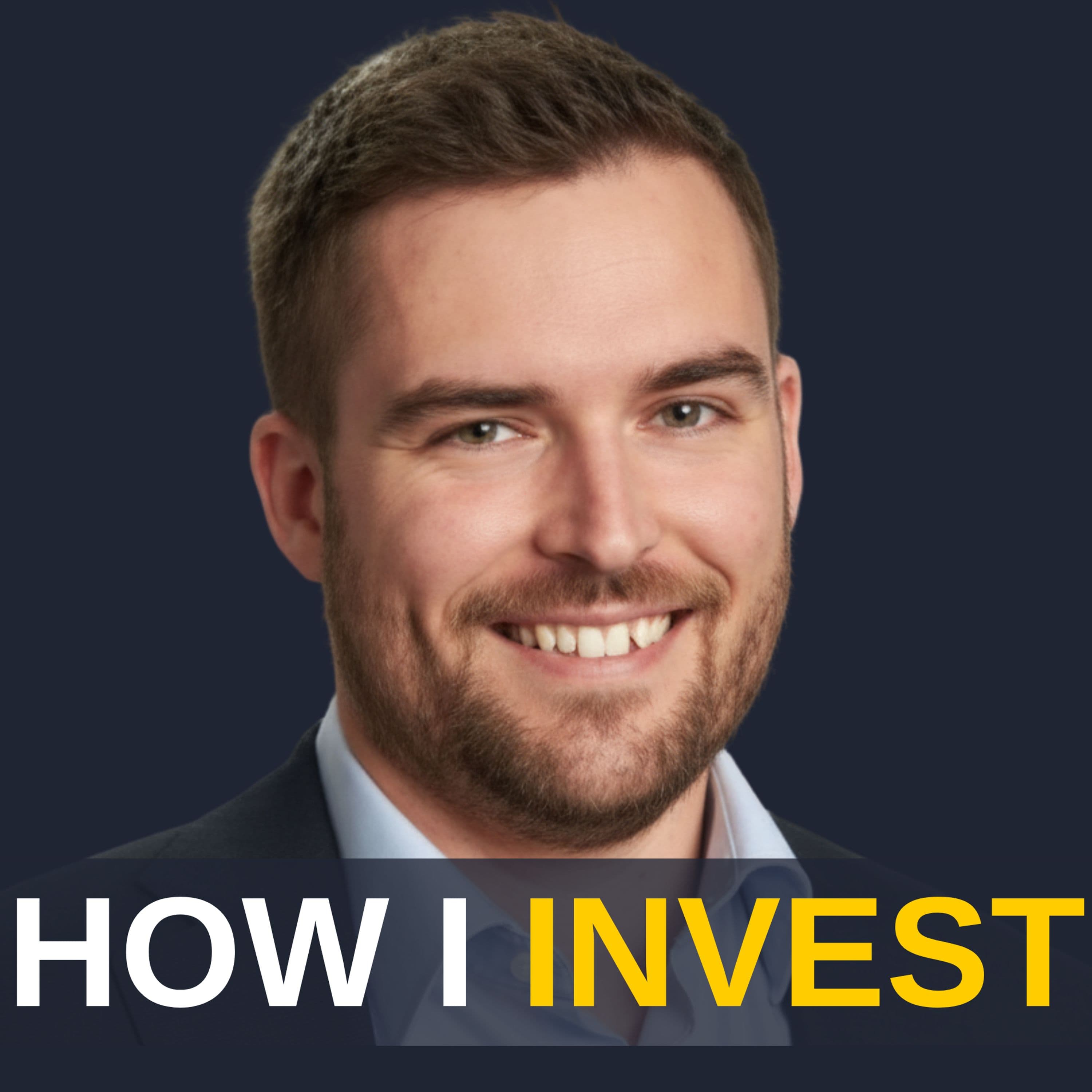
Podcast Summary: How I Invest with David Weisburd
Episode E324: How The University of Cambridge Built Their Privates Portfolio
Date: March 13, 2026
Guest: Sam (Head of Private Equity, University of Cambridge)
Episode Overview
This episode explores how the University of Cambridge built its private equity and venture capital portfolio from the ground up, led by Sam, who joined the endowment six years ago. The discussion delves into investment philosophy, alignment of incentives, manager selection, approaches to risk, transparency, and the unique advantages of a storied endowment. Sam shares candid lessons on manager relationships, navigating cyclical challenges, and the critical role of network and trust in institutional investing.
Key Discussion Points and Insights
1. Building Cambridge’s Privates Portfolio from Scratch
-
Mission-Driven Investing:
- Cambridge’s endowment is tasked with preserving and growing capital not just for decades, but centuries ([00:51]).
- Target return: Inflation +5% (relatively high, requiring meaningful risk and return assets like private equity).
- Focused primarily on buyout and venture capital strategies.
-
Why Private Equity?
- Buyout managers influence operations strategically and are less pressured by short-term results than public markets, leading to higher potential returns ([01:24]).
- In venture, the goal is “to deliver outsized success if you’re partnered with the right firms who are investing in the right companies” ([02:01]).
- Importance of long-term relationships: “A private fund can last for 15 years or more…do you want to be in business with these people for that amount of time?” ([02:10])
-
Alignment and Manager Selection:
- Cambridge’s relatively modest endowment size (£4.5B) provides agility and focus on “best risk-adjusted returns rather than on deploying capital” and allows the team to be selective about manager alignment ([03:07]).
2. Assessing Alignment and Incentives
-
Distinguishing True Investors from Asset Gatherers:
- Presentation of the “principal-agent problem” — motives behind return-focused managers versus those focused on asset gathering ([03:52]).
- Key trait in standout managers: “An inert competitiveness. They want to win and they view winning as generating the best returns compared to their peers…” ([03:59]).
-
The Role of Ego and Purpose:
- Some managers’ sense of purpose is derived from assets under management, others from investment returns and smart strategies ([06:01]).
- Sam: “That’s completely right.” ([06:24])
3. Venture Capital: Scale vs. Focused Funds
- Brand and Capacity:
- The episode contrasts giants like Andreessen (large funds) with smaller, tactical, capacity-constrained managers ([06:46]).
- Sam: “There are many ways to win…it comes down to people…how many exceptional people do you have?” ([06:52])
- Brand effects: Successful VC firms continue to attract the best founders.
- Cambridge’s advantage: The ability to commit smaller, but meaningful, amounts to capacity-constrained managers, and act as a conduit between academia and venture firms ([08:31]).
4. Navigating the “DPI Crisis” and Market Cycles
-
Liquidity Challenges:
- Distribution-to-paid-in (DPI) rates have dropped sharply, raising questions about deployment timing ([10:10]).
- Sam: “It’s great if everyone is saying not to invest…fewer limited partners competing for those best general partners…should be a great thing.” ([10:55])
- Always maintain liquidity discipline—never get overexposed.
-
NAV Marks and Valuation Credibility:
- Rigorous review of manager reports and comparisons across similar assets held by different managers to spot marking inconsistencies ([12:06]).
- Cautious preference for managers with prudent, conservative valuations ([12:48]).
- “If you are conservative on those valuations and then you surprise on the upside...” Trust is built and preserved ([14:06]).
5. Organizational Incentives and Team Longevity
-
“Incentives All the Way Down”:
- Long-term focus is easier at institutions with multi-decade team stability. Rapid turnover undermines trust and incentives ([20:14]).
- Cambridge enjoys a privileged time horizon, both institutionally and within the team: “We’re building something for the next 10, 20, 30 years…” ([20:54]).
-
Portfolio Concentration and Manager Trust:
- Cambridge runs a concentrated portfolio of ~30 relationships from a field of thousands ([22:20]).
- Alignment and trust are prerequisites: “If we find a manager...something erroneous in their reporting or their valuations, it’s very hard to start a relationship when you don’t have that trust.” ([23:09])
6. Handling Mistakes and Building Trust
- When Admitting Failure Becomes a Strength:
- Example: A European software manager attempted expansion, failed, but was transparent with Cambridge, incorporated learnings, and succeeded on a later attempt ([24:27]).
- Openness and willingness to self-correct strengthens the GP/LP bond.
7. The Value of Simplicity and Focus
-
Scaling Strategies and Resource Allocation:
- Simplicity and focus yield the best, sustainable returns. Adding complexity or new strategies requires exceptional, non-replicable edge ([27:09]).
- “There’s a huge value to simplicity…when you wake up in the morning, what’s the first thing you think about?” ([27:09])
-
High-Level Productivity:
- True “deep work” hours per year are limited—where and with whom you focus your time is critical ([28:13]).
8. Sourcing Alpha in Venture Capital
-
Changing Power Dynamics:
- The storied “Sand Hill Road monopoly” is over; top founders now have their pick of investors ([30:19]).
- “Alpha really lies with those venture capital firms that have a differentiated proposition or a reason why an exceptional founder would want to pick with them…” ([30:19])
-
Structural Alpha and Persistence:
- Science (historical fund numbers) vs. Art (judging if excellence will persist): “It’s a people business…and it comes down to our assessment of those people. What are their skillsets, what are their motivations?” ([32:25])
- Referenced study: 52% of top quartile funds persist, 48% revert to mean ([33:24])
9. Timeless Career Advice
- Network as Compounding Advantage:
- “Network is incredibly important…I don’t think you can ever invest early enough in your network and build that up over time.” ([34:02])
- Over time, referrals and relationships become the main deal pipeline.
Notable Quotes & Memorable Moments
-
On Endowment Mission:
“It is to preserve or increase the real value of the endowment for not just decades, but centuries to come. We have a distribution rate of 4% and...a target return for the whole endowment of inflation plus 5%.”
— Sam ([00:51]) -
On Alignment:
“Are the key decision makers...motivated to deliver outlier returns rather than necessarily build a large business focused on asset management...?”
— Sam ([03:07]) -
On Alpha in Venture:
“The alpha really lies with those venture capital firms that have a differentiated proposition or a reason why an exceptional founder would want to pick them and work with them…”
— Sam ([30:19]) -
On Simplicity:
“There’s a huge value to simplicity...you only have a certain number of hours...use that to deliver the best returns you can.”
— Sam ([27:09]) -
On Trust and Markups:
“If you are conservative on those valuations and then you surprise on the upside. We do take a lot of note when...you start seeing markups in that portfolio...ahead of the next subsequent fundraise.”
— Sam ([14:06]) -
On Network:
“I don’t think you can ever invest early enough in your network and build that up over time. And over time it becomes a compounding benefit…”
— Sam ([34:02])
Important Timestamps
- [00:51] – Cambridge’s endowment mission, risk appetite, and asset allocation rationale
- [03:07] – Assessing manager alignment and incentives
- [06:52] – VC fund sizes, brand, capacity constraint vs. scale advantage
- [08:31] – Cambridge’s specific advantages in venture capital
- [10:55] – On being contrarian in DPI crisis and liquidity management
- [12:06] – NAV marks, valuation scrutiny, and conservative manager preference
- [14:06] – Trust, incentive distortions, and valuation manipulation risks
- [20:14] – Incentives and organizational time horizon
- [24:27] – Example of transparency and trust: manager’s failed expansion
- [27:09] – Value of simplicity and limiting new strategy drift
- [30:19] – Alpha in venture in a hyper-competitive founder-driven market
- [32:25] – Science and art of persistence in top quartile funds
- [34:02] – Career advice: compounding value of building a network
Concluding Thoughts
This episode offers an in-depth look at how the University of Cambridge approaches building a world-class privates portfolio, emphasizing mission alignment, simplicity, patient capital, and the nuanced evaluation of both managers and opportunities. It’s a masterclass in long-term, conviction-driven institutional investing, balancing historical rigor with adaptability in a shifting market.