
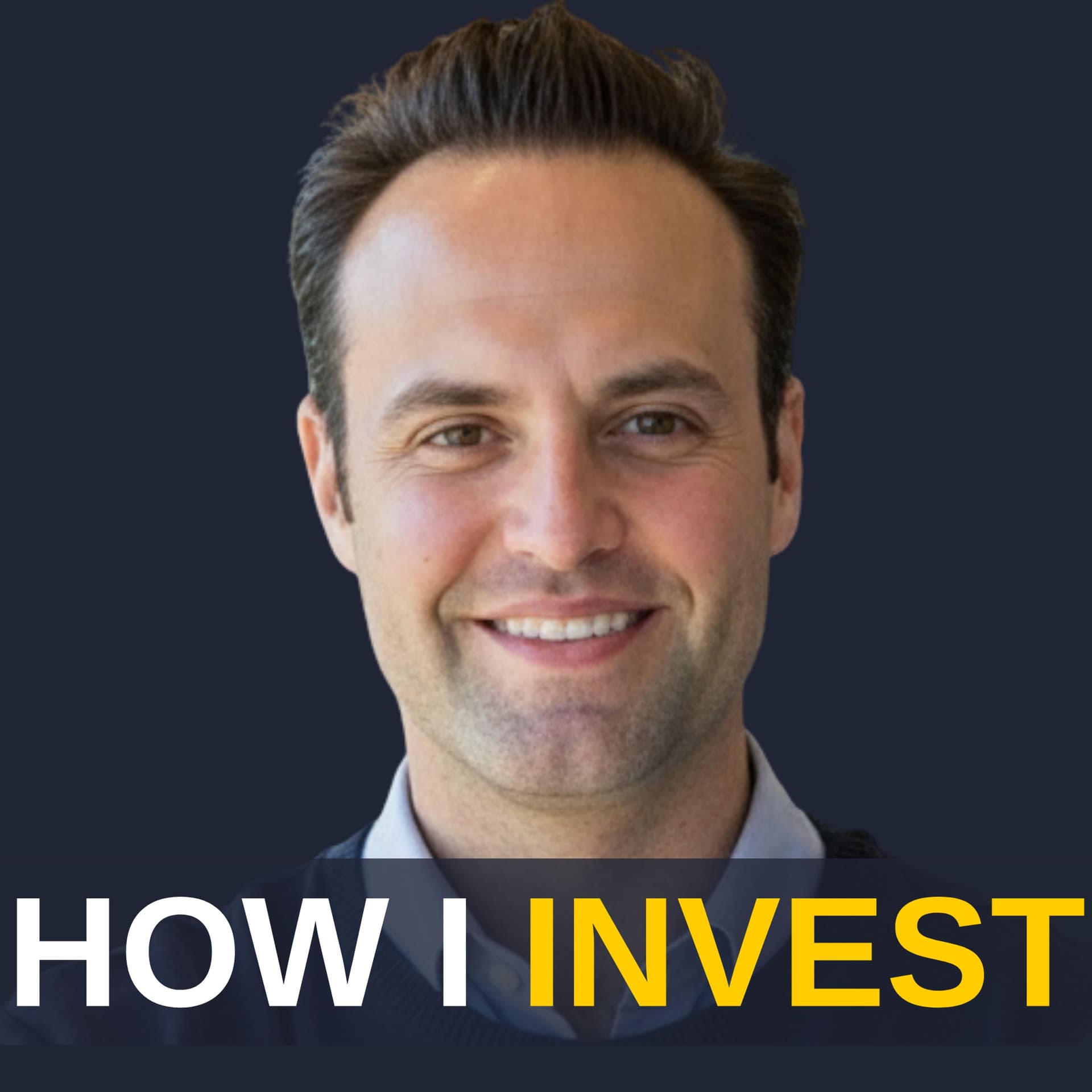
Podcast Summary: How I Invest with David Weisburd
Episode E332: Why Family Offices Must Go Risk-On or Go Broke
Release Date: March 24, 2026
Host: David Weisburd
Guest: Nate (Family office principal and founder of Barrel Ventures)
Episode Overview
This episode dives into the evolution of family office investing, focusing on Nate’s journey from a century-old family food business to building a hands-on, alpha-generating investment strategy. The discussion covers costly early mistakes, insourcing vs. outsourcing, leveraging industry expertise, the misunderstood opportunity in food and beverage, venture capital vs. private equity, and passing down values to future generations. A consistent theme: For family offices, playing defense is not enough—"go risk-on or go broke."
Key Discussion Points & Insights
Lessons from a Century in the Food Business
- Operational Brutality & Alignment:
- The food industry is “operationally brutal” with thin margins and powerful retailers ([00:08]).
- Lesson: Avoid misaligned incentives; long-term businesses are built on alignment, both in industry and in life.
- Quote:
- “Misaligned incentives are not the way to build enduring businesses in this industry or in life, for that matter.” (Nate, 00:20)
Evolution of the Family Office: From Outsourcing to Insourcing
-
Costly Early Mistakes:
- Outsourced everything at first; realized they paid fees for services they were as good at, if not better ([00:33]).
- Transitioned to insourcing their core strengths, outsourcing the rest.
- Quote:
- “It makes no sense to pay fees on fees of things that we are as good, if not better at than people are going to be paying them to.” (Nate, 01:11)
-
What They Insourced vs. Outsourced:
- Insourced: Operating businesses in food and beverage (their “wheelhouse”).
- Outsourced: Areas where they have less edge (e.g., public equities, tax loss harvesting).
- "We sort of view ourselves as we're the buyer of choice for a lot of these businesses that we're looking at." (Nate, 01:58)
Building a Modern Family Office Portfolio
- Play to Strengths First, Defend with the Rest:
- Elite family offices maximize their “alpha” where they have expertise, then hedge defensively against that exposure ([02:26]).
- "Goal number one is don’t lose money. ...Our area of expertise... is food and beverage. Where we're going to take risk is in the area that we have the edge." (Nate, 03:01)
The Olipop Story & Barrel Ventures
-
Seed Investment Process:
- Early meeting with founders before first dollar in sales. Started with small checks, doubled and tripled down as conviction grew ([05:30]).
- “The more you see team operate and grow a business, you get more comfortable with them and then we sort of double down and triple down…” (Nate, 05:53)
- Result: Olipop became a multi-billion-dollar operation.
-
Launching Barrel Ventures:
- Spun out VC fund to focus deeper on food and beverage vertical; core value comes from operator expertise and network ([06:31]).
- LPs in the fund are industry insiders—from ingredient companies to top farming families.
Leveraging LPs for Edge and Diligence
-
LPs as Operating Partners & Advisors:
- LPs help source, diligence, open customer channels, and mentor portfolio companies ([07:44]).
- “These will be the first customers of our portfolio companies. These will be advisors to our portfolio companies. ...It's worked really substantially to the tunes of millions of dollars in sales, millions of dollars in ARR.” (Nate, 08:17)
-
Top-of-the-Funnel Advantage:
- Uses LP opinions in diligence before committing to investments. If LPs are excited, that signals strong customer interest ([08:56]).
Why Food is Underrated (Yet Rich in Opportunity)
-
Key Points:
- Ubiquity: The only industry humans interact with three times a day.
- Antiques: Often “unsexy,” low margin, slow to change. But disruption is coming via tech, AI, and shifting preferences ([09:28]).
- Fortunes to be made as new brands unseat incumbents (Olipop example, $2B+ exits with Poppy).
- Quote:
- "In a world where AI is going to eat and kill everything, I think [food] is the best place to be investing." (Nate, 09:37)
-
Venture Returns in Food:
- Multiple billion-dollar beverage exits. Smaller funding rounds mean capital efficiency and high multiple returns ([10:48]).
- “Returns can be like the returns of a multi, multi billion dollar software or AI exit. But because they only raised one or two rounds of capital, a six or $700 million exit, which is a home run, can have the same sort of return profile.” (Nate, 11:18)
Pattern Recognition: Seeing Thousands of Deals
-
Experience Matters:
- Exposure to 1,000+ deals a year is essential for learning to spot founder traits and product-market fit ([15:38]).
- “When you see a thousand, two thousand deals a year, you start to recognize who's full of shit, what are the traits that actually matter, who's going to really deliver and find product market fit.” (Nate, 15:44)
-
Recognizing Product-Market Fit:
- True signals: Customers “want it” and spread word virally ([16:42]).
- Example: On a plane, a stranger tried their new product and immediately saw the benefit for his trucking company ([16:47-17:44]).
Founder Types: Functional Lunatics
- Defining Great Founders:
- “There's a term I used earlier this year, functional lunatic. I want people who are functional lunatics, like people who are going to will this business to be successful.” (Nate, 18:05)
- It’s not the absence of fear, it’s the compulsion to change the status quo ([19:04]).
The Generational Math of Family Offices: Go Risk-On or Fade Away
- Wealth Dissipation Over Time:
- As families expand across generations, slices get smaller. Even 6–7% compounding isn’t enough with rising consumption ([19:41]).
- "If you don't … transition from risk off to risk on, as the amount of people eating gets larger and the slices of the pie get smaller, you're not going to have any money left." (Nate, 20:49)
- "It’s a math equation.” (Nate, 21:13)
Cultivating Values for the Next Generation
-
Avoiding “Affluenza”:
- Upbringing: “Money's not going to fuck us up. ...It’s as much a responsibility and a privilege as it is a good thing to have.” (Nate, 21:40)
- Teaching: "Just because you can doesn't mean you should." (Nate, 22:16)
- Giving back and involvement are important, but understanding the family story is the prerequisite ([23:01]).
-
Passing on Values to Kids:
- Even small acts (sharing birthday gifts, volunteering) add up over time ([23:36]).
- “Those little lessons … subconsciously… they remember them.” (Nate, 24:06)
The Power of Networks and Giving
-
Your Network is Your Superpower:
- Initially resisted leveraging family connections, later realized that connecting people was his biggest strength ([24:39]).
- “I'm one degree of separation and I just like connecting people generally even if there's no benefit for me. … Lean into that network and cultivate it.” (Nate, 25:09)
-
On Giving:
- “There’s two types of people in this world. There's givers and there are takers. Right. And I fully believe myself to be a giver.” (Nate, 26:12)
- Importance of “double opt-in” on introductions to avoid burnout ([26:44]).
Final Message / Call to Action
- Look at Food
- “As I said earlier, in a world that people are so afraid that AI is going to kill us all … what better industry to be invested in than something that literally can't be disrupted by AI?” (Nate, 27:34)
Notable Quotes & Memorable Moments (with Timestamps)
- “Misaligned incentives are not the way to build enduring businesses in this industry or in life, for that matter.” – Nate ([00:20])
- “It makes no sense to pay fees on fees of things that we are as good, if not better at than people are going to be paying them to.” – Nate ([01:11])
- “We sort of view ourselves as we're the buyer of choice for a lot of these businesses that we're looking at.” – Nate ([01:58])
- "Goal number one is don’t lose money. ...Our area of expertise... is food and beverage. Where we're going to take risk is in the area that we have the edge." – Nate ([03:01])
- “The more you see team operate and grow a business, you get more comfortable with them and then we sort of double down and triple down…” – Nate ([05:53])
- “These will be the first customers of our portfolio companies. These will be advisors to our portfolio companies.” – Nate ([08:17])
- "In a world where AI is going to eat and kill everything, I think [food] is the best place to be investing." – Nate ([09:37])
- "I want people who are functional lunatics, like people who are going to will this business to be successful." – Nate ([18:05])
- "If you don't … transition from risk off to risk on, as the amount of people eating gets larger and the slices of the pie get smaller, you're not going to have any money left." – Nate ([20:49])
- “It’s a math equation.” – Nate ([21:13])
- "Just because you can doesn't mean you should." – Nate ([22:16])
- “Lean into that network and cultivate it because that is your superpower that most people don’t.” – Nate ([25:19])
- “There’s two types of people in this world. There's givers and there are takers.” – Nate ([26:12])
Timestamps for Key Segments
- How Food Industry Background Shaped Investing Philosophy – [00:08]
- Family Office Mistakes & Evolution – [00:33] to [01:28]
- Insourcing/Outsourcing Strategy – [01:28] to [03:01]
- Portfolio Construction & Alpha/Beta Balancing – [02:26] to [03:36]
- The Olipop Investment Journey – [05:23] to [06:24]
- Launching Barrel Ventures – [06:24] to [07:33]
- LPs as Value-Adds and Diligence Partners – [07:33] to [09:17]
- Why Food is a Venture Capital Opportunity – [09:17] to [11:35]
- Pattern Recognition & Product-Market Fit – [15:32] to [17:57]
- Defining Great Founders – [18:05] to [19:24]
- The Generational Math of Family Offices – [19:24] to [21:13]
- Instilling Values and The Power of Giving – [21:21] to [24:29]
- Advice to Younger Self: Network as Superpower – [24:30] to [25:29]
- Philosophy on Networking and Giving – [26:12] to [27:14]
- Final Thoughts: Watch Food in the Age of AI – [27:34]
Summary Takeaways
- Family offices must leverage their operational strengths and play offense in their area of expertise; generic portfolios cannot sustain wealth past several generations.
- The food and beverage industry, while long thought of as “boring,” is ripe for outsized venture returns due to shifts in tech, health trends, and consumer behavior.
- Pattern recognition, high-conviction founders (“functional lunatics”), and deep sector networks are the key differentiators for generating alpha.
- Philanthropy and value-based upbringing, not just wealth, are essential for long-term family office health.
- Networking and giving (with discernment) are powerful lifelong leverage points for investors and entrepreneurs.
This episode is essential listening for anyone stewarding generational wealth, considering sector-focused investment, or building a hands-on, value-adding venture strategy in "unsexy" but enduring industries.