
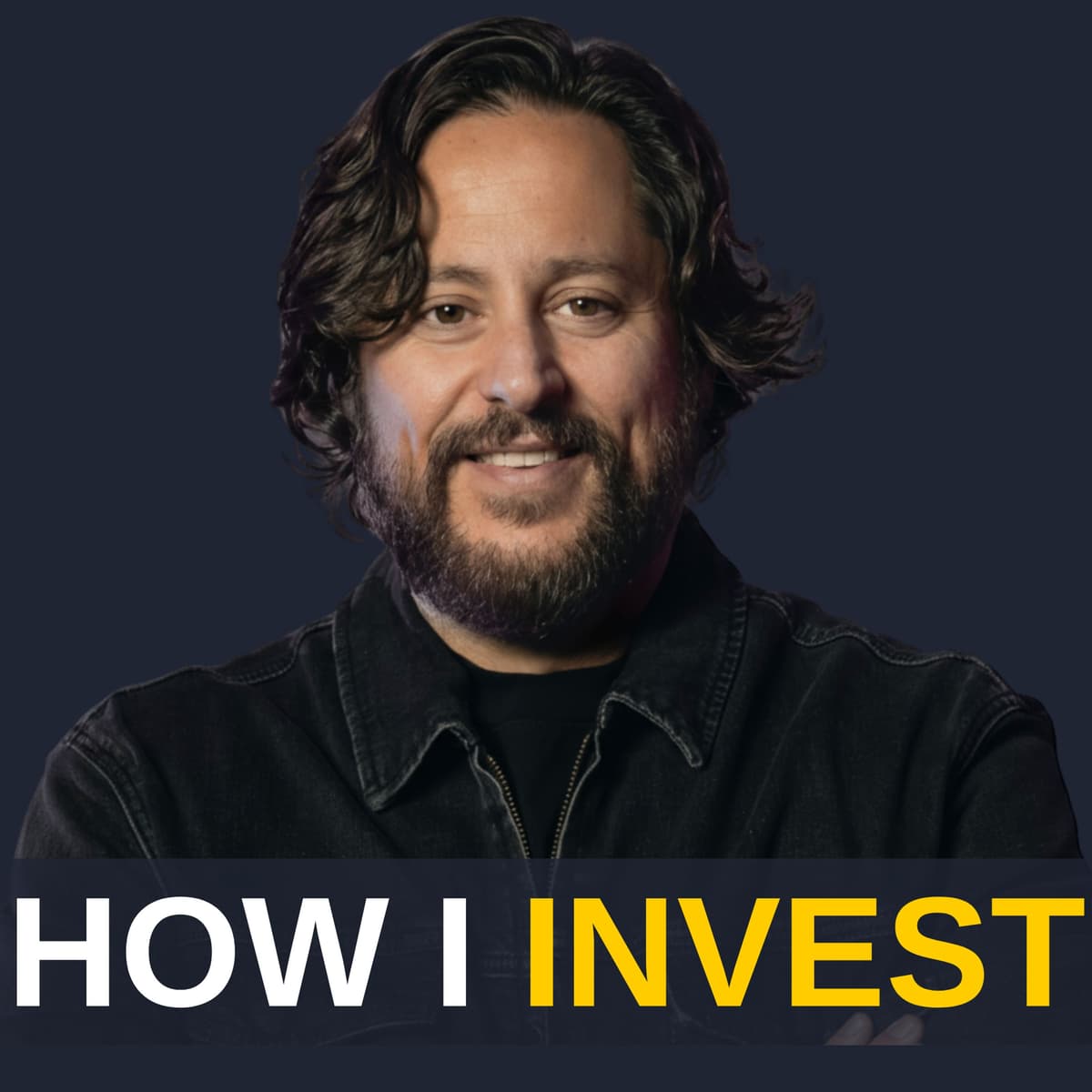

Podcast Summary: How I Invest with David Weisburd
Episode: EP272 – How a $10B Company Turned De-Extinction into a Platform
Date: December 30, 2025
Guest: [Colossal Biosciences CEO, “A”]
Host: David Weisburd ("B")
Overview
This episode dives deep into the evolution of Colossal Biosciences, a company now valued at over $10B, whose mission is to turn de-extinction and species preservation into a scalable tech and business platform. The discussion covers Colossal's journey from headline-grabbing moonshots like the woolly mammoth to spinning out breakthrough biotech, the company’s unique culture and playbook for building startups, and the alignment of narrative and business strategy in an era when science meets pop culture.
Key Discussion Points & Insights
1. Why De-Extinction—and Why the Mammoth?
- The mammoth was chosen for its "cultural icon" status—a near-mythic animal that evokes public fascination.
- [00:14] A: “Most people don’t know this, but we were actually building the pyramids while mammoths still existed on this earth. And so the idea that we could… bring back this icon and have this massive feat of science and inspire the next generation while also building technologies to help elephants is something that's pretty exciting.”
2. Colossal’s Technology Platform and Traction
- Early success with dire wolves and trait engineering in “woolly mice” validated the end-to-end system for de-extinction.
- Company vision is not limited to individual de-extinction projects; the long-term goal is to build a repeatable, scalable platform that can restore multiple extinct species.
- [01:03] A: "We haven’t even really started compared to where we think we’re going… over time we’ll have a whole portfolio of animals."
3. Business Model Evolution & Spinouts
- Started with the hypothesis that valuable technologies would emerge along the de-extinction path.
- Current focus: spinning out tech startups developed within Colossal (3 so far, two announced, both $100M+ valuations).
- Technology applications span genome editing, computational/AI biology, cloning, and more—serving human health, agriculture, and conservation.
- Governments now approach Colossal for:
- Biobanking
- Genetic rescue of endangered species
- Rewilding/extinct species for benefits like carbon credits and ecotourism
- [01:57] A: “All of those different technologies have different applications to human healthcare, to animal, to plants, all over the board.”
4. Extended Impact: Pharma and Human Health
- Example: Form Bio—a Colossal spinout uses AI-driven “drug resurrection.” The same platform that revives extinct species can diagnose why failed drugs didn’t work and potentially resurrect them for new trials.
- Early moves toward artificial wombs—the "Lego blocks" in development even have major market value today.
- [03:40] A: “Almost like de-extinction for drugs… we've had a lot of success very quickly in that model.”
5. Founder’s Motivations, Mindset, and the ‘Right’ to Attempt De-Extinction
- Entrepreneurial DNA, willingness to attempt audacious projects after software startup success, and pandemic-induced introspection led to Colossal’s creation.
- Confidence from previous wins—more preparedness for context-switching and the operational complexity of working with governments, indigenous communities, and scientists.
- [05:29] A: “Colossal…we also spend so much time with governments, we spend so much time in the field... That time and effort [with previous startups] was needed to really be prepared for everything.”
6. Organizational Culture & Operating Model
- Fast-paced, highly committed culture—emphasizes leading by example, infectious mission obsession, and cross-disciplinary recruitment.
- Everyone on the team lives the brand and mission (Colossal swag in the lab, weekend work as norm).
- [06:21] A: “If I’m the first one in, the last one out, I think that tries to lead by example. I never ask anyone to do something I wouldn't do.”
▸ “Barrels” vs. “Bullets” Framework
(Keith Rabois’ concept: “barrels” = mini-startup CEOs able to create and own projects)
- Colossal treats every species as a unique “product” with a dedicated lead, functioning like a mini CEO with autonomy and budget responsibility.
- Regular cross-functional and C-suite check-ins; written memos before meetings are mandatory.
- [08:31] A: “We almost treat every single species like a product… our species leads are almost mini CEOs… they run their own budgets, do their own reporting, make their own decisions.”
7. Key Lessons from Past Ventures
- Mistake at Hypergiant: not aligning investors with the hardware transition.
- Colossal: extreme care in choosing only aligned, tech-savvy investors who shared the vision and risk profile.
- Willingly walked away from even “famous” investor money if they didn’t “get it.”
- [10:46] A: “I didn’t spend time selling them on it… This deal is just not for everybody.”
8. First Principles and the Engineering-Not-Discovery Approach
- Focused on proven tech: “The biggest thing that we did was we broke down the science into engineering challenges… These were not science problems.”
- Goal: Deliver repeatable biological products, like the way software ships code—not just a think tank but a true biotech platform.
- [12:42] A: “We took an engineering perspective and not a scientific discovery perspective.”
9. Pop Culture as Viral Growth Engine
- Colossal leverages memes, extinct animal icons (mammoth, direwolf, Tasmanian tiger), and pop culture integration to make science entertaining and accessible.
- Strategic branding: “Harvard meets old school MTV.”
- Example: The Hemsworth brothers (Australian actors) proactively reached out about Tasmanian tiger project.
- [14:32] A: “We wanted to build a brand that was very pop culture focused… We believe science is for everyone.”
▸ Flywheel of Attention and Science Literacy
- Half a trillion (!) media impressions in just four years, much of it mainstream and not specifically targeted at kids but picked up by kids in schools and passed up the generational ladder.
- [19:37] A: “They are aware of the movement, even if they aren’t necessarily… knowing the name Colossal… I think we have captivated the world.”
10. Simple Vision, Complex Execution
- Like SpaceX’s “colonize Mars,” Colossal’s viral animal projects are surface-simple and memeable, empowering wide audience understanding while building immense technical complexity underneath.
- [18:53] B: “They’re balancing this extreme level of complexity in their business with this extreme, I guess, simplification of their vision.”
11. Next Decade for Colossal
- Expect: completion of flagship species (mammoth, thylacine, moa, dodo), some rewilded, some in managed care.
- Massive advances in artificial womb technology.
- De-extinction will seem less sci-fi and more about time and scale; artificial wombs still feel “a little science fiction.”
- [22:56] A: “In the next decade... all of our flagship species done… some successfully rewilded, which is exciting.”
12. Ultimate Vision and “Why It Matters”
- The ecological imperative: restoring keystone species prevents ecosystem collapse, adds ecological redundancy, and acts as an “insurance policy” against biodiversity loss.
- Metaphor: de-extinction toolkit as equivalent to SpaceX giving humanity backup options.
- [24:25] A: “There has been lots of modeling…restoring these species, they all have different unique values they add to the ecosystem… I would rather have a de-extinction toolkit and not need it, than need a de-extinction toolkit and not have it.”
13. Capital Markets & Future Monetization
- Intense public (retail) investor interest; could become the “SpaceX/Tesla” of de-extinction.
- Multiple monetization avenues: spun-out tech, conservation, storytelling/content, and eco-assets (credits, tourism).
- Company has remained capital efficient despite ambitious goals.
- [26:04] A: “We get asked all the time if we’re going to go public…mass retail appeal. People want to bet on Colossal because they’re excited about it.”
14. Mental Resilience, Leadership, and Surviving Hard Times
- Mission conviction over trying to persuade skeptics.
- Philosophy: Accept “no,” focus on education not sales/persuasion—removes the pressure and helps endure setbacks.
- Entrepreneurship requires “massively dysfunctional individuals with high degrees of pain tolerance.”
- Constant support from other founders is critical.
- [28:11] A: “A lot of success in entrepreneurship is not magic, it's just work… In my most darkest times, I've always been mission convicted."
Notable Quotes & Timestamps
- “Most people don’t know this, but we were actually building the pyramids while mammoths still existed…”
—A [00:14] - “We haven’t even really started compared to where we think we’re going.”
—A [01:03] - “Almost like de-extinction for drugs… we've had a lot of success very quickly in that model.”
—A [03:40] - “Colossal…was like the merger of Harvard meets old school MTV.”
—A [14:32] - “They are aware of the movement, even if they aren’t necessarily… knowing the name Colossal… I think we have captivated the world.”
—A [19:37] - "I would rather have a de-extinction toolkit and not need it, than need a de-extinction toolkit and not have it."
—A [24:25] - “A lot of success in entrepreneurship is not magic, it's just work… mission convicted.”
—A [28:11]
Important Segments & Timestamps
- Origin of Colossal and De-Extinction Vision: [00:12]–[01:53]
- Business Model and Technological Spinouts: [01:53]–[03:27]
- Impact Beyond Conservation (Pharma, Art. Womb): [03:27]–[04:31]
- Organizational Playbook & Leadership: [06:10]–[09:29]
- Brand Strategy and Media Flywheel: [12:42]–[19:37]
- Vision for the Next Decade: [22:54]–[24:00]
- Capital Markets & Monetization: [25:59]–[26:04]
- Resilience & Founder Mindset: [27:40]–[30:53]
Tone & Takeaways
The conversation is optimistic, ambitious, and occasionally irreverent—mirroring Colossal’s “Harvard meets MTV” operating style. The guest emphasizes practicality, speed, pop culture savvy, and uncompromising commitment to mission over conventional scientific elitism or investor appeasement. The future, according to Colossal, is one where engineering meets ecological necessity, and bringing back extinct creatures is just the beginning of a much larger—and profitable—movement in synthetic biology.