← How I Invest with David Weisburd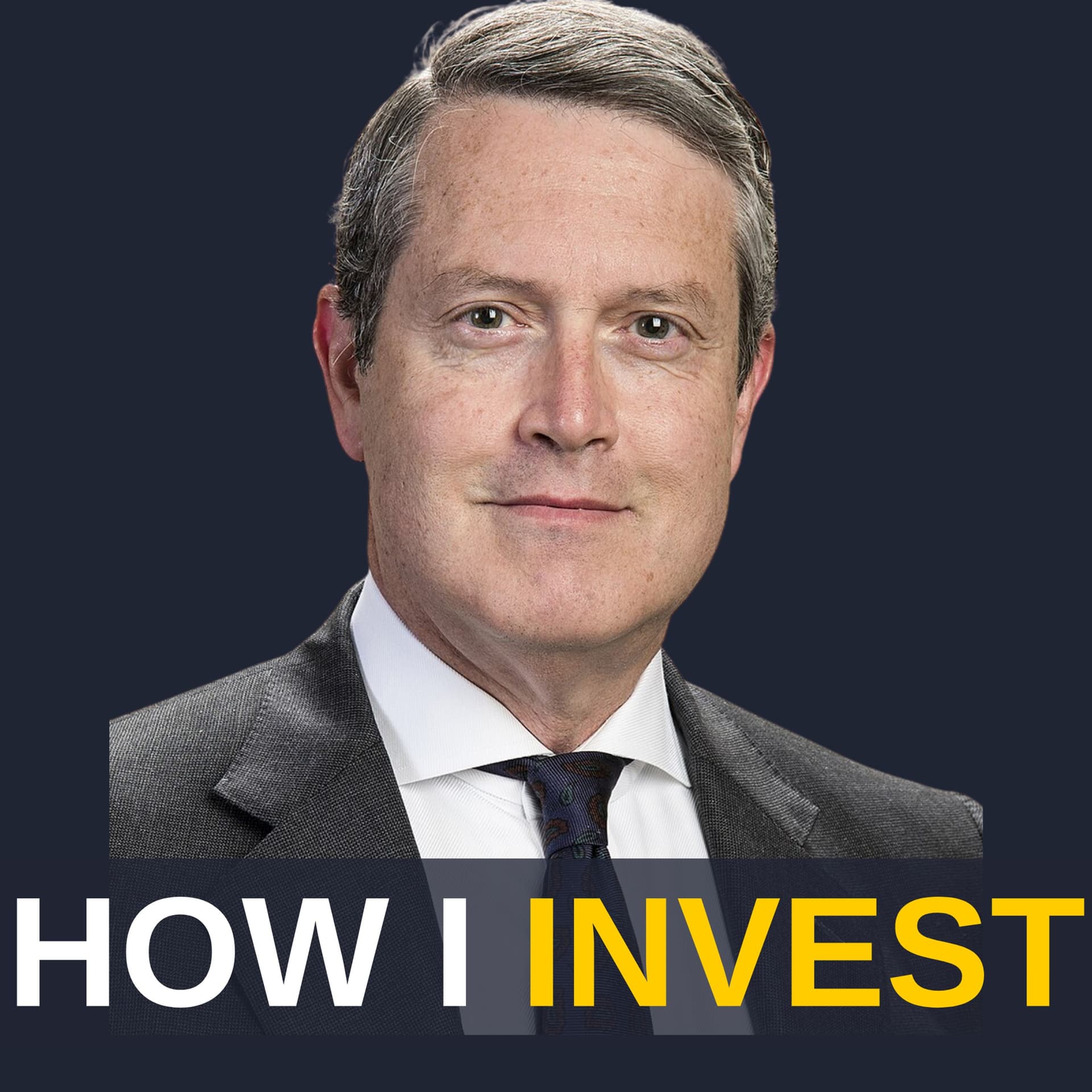
How I Invest with David Weisburd
E191: Randal Quarles: From Fed Vice Chair to Private Equity Trailblazer
00:53:04
Loading summary
Transcript59 lines
- [00:00]
A
Randall, I've been very excited to chat. Welcome to the how to Invest podcast.
- [00:04]
B
Thanks for having me. Glad to be here.
- [00:06]
A
Tell me about why private equity funds are a better fit for pension funds or endowments versus family offices.
- [00:14]
B
If you're even a pretty large family office, you don't own everything that Carlisle and Blackstone and KKR and Apollo own. And so when something is sold after a few years, you do pay taxes. You have to think about how to redeploy that return because it hasn't been automatically moved into an their pocket. It's disruptive for the business as well. That's not so much a family office the issue, but it is has become from the point of view of the portfolio company, you know, something of a negative of private equity investment. That if you are still expecting a lot of growth in your company, it becomes, you know, disruptive to have accepted private equity capital that's going to roll out in a few years to another private equity holder that's going to roll out in a few years. So from a family office standpoint where you have, you know, you're willing to take a longer perspective with respect to hold periods, you have an incentive to do so because of tax effect. You have an incentive to do so because it's more complicated for you to redeploy returned invested capital. All of those argue not so much that private equity is wrong for family offices really. In fact, I think the opposite. The private equity asset is important, but that there needs to be a different.
- [01:30]
A
Delivery mechanism on taxes. I think people over index on the tax paid and under index on when you pay it or how often you pay it. If I put in $10 million and now I have to recycle it in two years, I'm essentially redeploying. If I'm in a high tax state, even at long term capital gains, I'm redeploying $0.67 on the dollar. So now I have, I'm redeploying $0.67 versus if it continues to compound, I'm essentially redeploying 10 million. I'm just holding it in essentially tax deferred. I know that's not the way that most people use it, but if you think about compounding, you're essentially deferring the tax until liquidity. And that could really add up.
- [02:10]
B
No, it absolutely, it absolutely does. And you know, the private equity industry as a whole, and particularly the larger firms, because they have the capacity and the scale to have different funds that are doing different things, they've tried to address that but still as a whole, the template for the industry as it has evolved, it really evolved in response to the incentives that were created from what had been the principal source of investment, which were pension funds, sovereign wealth funds, large institutional investors that had a different set of incentives from family offices.
- [02:44]
A
Said another way there was product market fit. It just wasn't with family offices. It was with a different type of customer set. And now you have these family offices that have continued to grow. Some of them are larger even than some pension funds and some endowments. If I was a single family office, I had a billion, five, ten billion dollars. If I could get similar to private equity style Investment, you know, 10, 20.
- [03:06]
B
Years ago at a 5 or $10 billion family office, you have the, you know, you have the ability to invest in any of the large pension fund, I mean any of the large private equity fund funds and get that exposure. Increasingly there are generally smaller funds from smaller firms or some specialty funds that are being offered by the larger firms, promise longer hold periods and you know, intend to deliver on them that are more sensitive to tax structuring. One of the things we've tried to do in our own investing, for example, we have focused on at sinosure, we focused on investing in cash flowing businesses, which gives us an opportunity to allow the investment to continue to compound. If it's going to compound at our desired rates of return, we can allow it to compound for a long time. But if it's cash flowing, it also gives us, because that's a, it's a challenge for the private equity provider to say, if I'm going to, you know, I have to pay my people and if I'm going to provide them competitive compensation. And you have the other model where things are turning over and carry is crystallizing faster in order to pay the professionals. It's like, well, what do I say to my professionals? If we're going to try, you know, if we're going to try to structure these investments to hold them longer. And obviously that's easier if you have a cash flowing investment because you can have a structure that allows you to take a portion of your carry out of current cash flow, but allow the value of the investment to be continuing to compound over a longer period of time. And that's usually in everybody's interest.
- [04:38]
A
One of the things that I've learned over the last month or so is that some pension funds are starting to invest in private equity through Evergreen Structures, which kind of really blew my mind because I saw Evergreen structures as this product for family offices that Wanted to kind of delay their taxable income or their taxable gains and also wanted to have access to more liquidity. But the reason that pension funds are doing it is because in their traditional private equity investments, they're only deploying, on average, 67% of that capital is called at any given time, meaning that 33% drag that is sitting in Treasuries. So that obviously dramatically hurts their return. So they're actually investing into these evergreen structures as an entity that has mostly taxable investors. How do you look at structures like evergreen funds?
- [05:27]
B
We pay a lot of attention to structure of our investments to. For tax efficiency. We don't have any evergreen. Well, actually, we do have an evergreen private credit fund, but evergreen funds have not been a theme of ours, although we are certainly open to. To them. We have tended to address that, though, through the structure of individual investments to ensure that we're maximizing tax efficiency for our investors.
- [05:52]
A
Tell me about Sinistar Group and what is sinostar Group?
- [05:56]
B
We're a diversified boutique investment firm. We're anchored by a family, the Eccles family. We're not a family office per se. We like to think of ourselves as kind of the early years of a Lazard or Rothschilds or Lehman Brothers, you know, an investment firm with many clients and many different investing strategies. But that has been anchored, and we intend to continue to be anchored by the Eccles family. The genesis really was, you know, the Eccles family built its position over the 19th and 20th centuries with a number of investments in private companies in the Intermountain west, some of which grew to be quite large. By the end of the 20th century, all of those investments in private companies had been sold to large public companies. And that created a set of investment challenges for the family. You know, we now had a lot of liquid securities. They'd all been private companies before. We had a number of foundations, private foundations from the previous generation, the family that were now funded with assets that would benefit from active management. We had a lot of family members with taxable family members, individuals that had individual wealth advisory needs. We wanted our liquid positions to be managed, you know, a little bit more. More sophisticated fashion, you know, than typical passive investment. And I was a partner at the Carlyle Group at the time, had been for a while. And we were at the same time investing in a lot of investment advisory, asset management firms. We'd formed that thesis before it became the flavor of the month. There are a lot of private equity firms that invest in investment management now. There weren't a lot. 15, 20 years ago. And I thought that I'd kill two birds with one stone. I'd find some great investments for Carlyle, and I'd find some great firms that would help us solve these new problems that we had. I found some very good investments for Carlyle in that thesis, which really had been formed by a young colleague who was working for me at Carlisle, named Keith Taylor, whom I brought with me to Cynosure. It's proved to be a great investment thesis. It was good for us at Carlisle, been great for us at Cynosure. But I didn't find any firms that actually I was happy being a client of for our particular needs. And so we concluded that if we wanted those problems solved, we would have to build it ourselves. We'd have to build a private investing capacity that addressed some of these issues that we had talked about, about the structure of the private equity industry for families. We know a lot of foundation and endowment, comprehensive portfolio management is pretty kind of plain vanilla. And CYA not really aimed at maximizing the impact of a foundation over time by growing and by really growing its assets. You know, a lot of individual wealth. Advice, again, is expensive and poor, you know, and hedge funds are all over the map. And we thought that if we could build something that solved our issues in each of those areas, it would solve a lot of other people's issues as well. And that would be a commercializable business as opposed to just a family office. And that would have a couple of benefits, of which the principal one is that you'd be creating equity value that would allow you. It would be part of what you could use to recruit, really, the very top investment professionals into helping you grow this business. We looked at it a little bit like the Phipps family starting Bessemer Trust, except that we were, you know, we had kind of a different set of specific investment challenges that we were trying to solve. But just as they grew what had been their family office into, you know, a diversified business with, you know, most of the clients outside the family. That was our objective and what we've been growing over the course of the last 12 years. So that's why sometimes people think of us, you know, or put us in the bucket of, are you a family officer? And the answer is no. We're an investment firm that's anchored by a family. The bulk of the capital that we manage now is not the families. We have clients from Alaska to Australia, all around the world. But the genesis of the business is solving these specific issues for other families. And the thesis that we started out with appears to have been borne out. There are a lot of other people who say yes, that's what we've been looking for.
- [10:21]
A
When you look at what drives returns for either taxable or non taxable investors, all the research points to one thing which is portfolio construction. Not even manager selection, but which assets are you in? But implicit in that is somebody is making that portfolio construction decision. And in order to recruit those type of high caliber people making those decisions, you had to give them more than just a typical single family office construction. One of the things that a lot of people don't say in the industry is that family offices don't always have the highest caliber of talent because they're typically picked off by higher paying opportunities like endowments. But you solved around that by expanding the platform and being able to give people equity. That joined Cynosure.
- [11:09]
B
That was the thought. I don't want to diss family office folks at all because we work with some single, some large single family offices that have fabulous people. But a lot of that comes with scale. And you can be and have what is a pretty large family office and still have trouble with the scale that's required to compete in the investment industry with, you know, with what you have to here. We do think that thesis has been borne out of creating a business that has equity value, that does business well beyond the family. Even though we continue to anchor it and run it that, you know, that has, you know, we're very, very proud of our team and that's been a big part of it.
- [11:51]
A
I will say, by the way, it has nothing to do with the structure, it has to do with the practices. In other words, there's nothing that keeps a single family office. You mentioned scale. Maybe a smaller family office, but a larger family office. There's nothing that keeps them from compensating their talent in the same way that a Blackstone or a Carlyle might do. It's just an industry practice and we have seen people buck that trend obviously with Gates, with the Gates family office, with Michael Dell, with MSD Capital. So you do see some very sophisticated patriots, pritzkers as well. It's not to scold all family offices more to be. It's more about. It just happens to be kind of this bug in the industry. So you alluded to the Cynosure structure. So tell me about how Cynosure is structured. Exactly.
- [12:38]
B
So we're structured with a holding company that has, you know, at the moment 6, 2 are relatively new, but 6 kind of operating business lines that we run the economics through a set of six subsidiaries. One is private assets, private equity, private credit, our private equity. I think we would call again to address some of the issues that we were talking about at the very outset of the podcast. I call it more growth equity for unloved businesses. So one of the things we wanted to do as a family in organizing our own private investing, now that we had all of these liquid securities kind of concentrated in a handful of public companies, needed to redeploy and wanted to reploy it in private assets, kind of using 21st century financial technology as was being built up in the private equity industry, but along the principles that we'd operated on in the 19th and 20th centuries was, you know, the Eccles family had invested often as minority investors in a range of companies that in our part of the world here in the Intermountain west were thought of as Eccles companies in sugar beets and lumber and banking and construction and mining, railroads, hotels. But very frequently we were not majority investors. We're very active investors. But we would back management teams, provide them with, you know, with the expertise that was gained from, from our involvement in a range of these industries and, and hold those investments for a long period of time. We're willing to hold them for a long period of time similar to growth capital practices now. But most growth capital in the country, as you know, as your listeners know, is focused on tech health care. If you have a, you know, if you have a tech company that's growing rapidly, there's a lot of growth capital that will be available for you. If you have an industrial company that's small, growing rapidly, there are, you know, 100 middle market LBO companies, private equity companies that will buy your company, but there are just relatively few that will make a growth investment in your company. Say, look, we're willing to provide you growth capital. We're even willing to take a minority position if that's what makes sense here. You know, you'll grow it over the next several years. We're backing you as the manager. We don't, we're not coming in intending to replace you. We're not. We want you to roll as much as possible of your position into the company and to do that for, you know, among the things we've invested in or H Vac distributors and porta Potty companies, which have been fabulous investments, but, but for which there's just not a lot of growth capital, I don't fully understand why that is. It is much harder to do that, to come in as a, you know, to be willing to come in as a minority investor. We spend a lot of time with potential portfolio companies because it's like a, you know, it's a, it's a partnership. It's not like a partnership. It is a partnership together. We all have to be comfortable with each other. We protect ourselves obviously with minority investor protections when we do take a minority position which isn't always but frequent and. But we've never really had to deploy them. We have never had to deploy them because we spend a lot of time up front. So that's how we've organized our private equity investing. We have a subsidiary that does essentially an outsourced chief investment officer for foundations and endowments. We started off with the family foundations. We now have, you know, university endowments, other family foundations. There are their ranking in the NASDAQ sort of comprehensive return rankings is at the, you know, is at the very, very tippy top. You know, much more than the 10th percentile net about 15%, not quite 15% over the course of the last five years. Whereas you know, Stanford and Harvard, to take examples of extremely well managed endowments, are at 8 or 9. So we've been very pleased with how that has done brought. We have a subsidiary that does ultra high net worth wealth advice and ria. It's a team we brought on from Silicon Valley Bank a lot of tech entrepreneurs as well as the family anchor. And then we're seeding a quantitative long short hedge fund for the sort of more sophisticated management of our liquid positions that I also talked about earlier. We have just partnered with David Cheketts who's a storied person in the sports world who to have a sports investing private equity capacity that's off to a great start. And we're partnering with a real estate group to develop a real estate investing capacity as well.
- [17:34]
A
If I made you guess as to why there's a dearth of growth equity versus private equity buyout for five to $150 million companies. Why would you say that is?
- [17:47]
B
It's mostly what I said before. It is harder to do to provide growth equity. Not every one of our investment. We do have majority positions in some of our private equity companies that are growing very rapidly. But on average we take a minority position and we're generally very happy with that because it means that the founder and the management of the company are keeping a big stake. They believe in the Runway that's left for their company enough that they're leaving a lot on the table. Most frequently the founders aren't taking any money off the table when we invest in them. So occasionally we'll buy out a kind of a senior founder who's aged out, but then often the younger management will invest even more in the company at the time that we come in. But if you're investing in that way, and particularly if you're a minority investor, that's harder. If there are steps that the company needs to take, we need to make a case. We can protect ourselves against catastrophe. We can require certain events to happen under the minority protections that we negotiate. But we don't control the company. You know, we can't decide, look, we didn't anticipate this. Things have just taken an entirely different turn. And so we're going to take an entirely different turn. And we can, because we control it. That is an uncomfortable position for a lot of private equity firms. It was something that, you know, when I was at Carlyle, we made an effort to do this kind of investing in a new fund that was being created. It was very hard to do in financial services. The financial services fund that I helped run at Carlyle was, you know, a lot of financial services investing for regulatory reasons. You take a minority position. It was just very uncomfortable. It's very uncomfortable for private equity investors. For smaller private equity firms, it's just hard. Why do the hard thing when there are plenty of opportunities to do the easy thing? Our answer is because over what's now a longish period of time, closing in on 15 years, our returns have been, you know, at the top end of the scale. Scale. But that comes as a result of a lot of work.
- [19:53]
A
I interview the CIO of calstr, Scott Chan, and one of the things, they have this kind of $350 billion pool of capital that they have to deploy, which I don't envy them, sounds very sexy, but it's a very difficult job. But they have to look within each asset class, supply and demand dynamics, because they are literally moving the market. I would actually argue that everybody, whether they're aware of not or not, is subject to the supply and demand dynamics and should be looking at from that perspective. Because if something's definitely a good idea and everybody sees the same things and everyone sees it, has the same set of skills, it will be commoditized away, whether you're the one commoditizing it or not. The industry has a steady state. And I think people fail to see that they're an actor within an ecosystem with supply and demand dynamics across every asset class.
- [20:40]
B
I completely agree with that. I think you Know, I think some of the structural obstacles there are to more competition in what it is that we do is that it is, you know, it's more of a challenge for running your business. You know, not the investing side of the business, but the management of the investing business. We talked a little bit about the challenge of paying people if you've got longer hold periods. And so how do you, you know, how do you crystallize, carry, how do you create compensation structures that, that allow for that while allowing you to achieve your investing objective? You know, there is an increasing demand, as you know, growth companies outside of these hot areas like tech and health care become aware that it's a possibility to get growth equity. There's increasing demand for it. But as one scales a firm that's based on this thesis, you can't start increasing the profitability of your firm by increasing AUM per Investment professional beyond a certain point, because now that's a different business. Now you're, you know, you're, you're at companies that are at such a scale, but again, unless it's tech or health care, certain types of industries, you're unlikely to be hitting the growth rates that we want for the returns that we've been able to achieve. So what that essentially means is that you need a bigger team to deploy a large amount of capital. There's definitely increasing demand out there for this type of investment. So one can deploy a larger and larger amount of capital, but you can't do that by increasing AUM per Investment professional. So that's just, just more expensive. We think that on balance, in part because we're anchored by our family, we can kind of COVID the costs of investing in that structure and that as the firm grows, you know, eventually the higher returns that will be generated from that investment strategy will support being able to pay a larger team in a way that is equally profitable to the typical private equity model. But that takes a while to get there. And it takes kind of a source of strength like that while you're building the firm in that direction. And again, it's just a dive of a higher degree of difficulty that is, you know, that is daunting for folks who would think of making that the strategy of their firm.
- [23:02]
A
Your chairman of Cynosure and you went from Carlyle to helping manage the firm. You're part of leadership. You've built these kind of six subsidiaries during your time there. Has that come from like leadership sitting in a room and coming up with great ideas? Has it come from recruiting the best people that went out and had those ideas, did it come from customers talking to leadership? Tell me about the product development. How do you see your role as leadership? Do you see your role as thinking about the strategy of the firm or just being very good at recruiting?
- [23:38]
B
The answer is all of the above, actually. So you know, our private equity strategy, we came to building the firm with that. It was this is how the family operated for 150 years. The world we're operating in uses slightly different terminology, has slightly different technology. But those principles we think will be the same. We'll implement them. We implement them through private equity fund strategy. And so that was kind of built from the ground up. That was part of what we came with. Similarly with the OCIO business. But I would say that the OCIO team has developed the asset allocation framework and very particularly the detailed and very mathematical liquidity analysis that is necessary to support a heavily alternative asset focused portfolio construction that has allowed those returns to be very high. As a family said, we want a structure that is, you know, we're comfortable with a large amount of illiquidity in these foundation portfolios, but they have distribution needs and so forth. And the team has been very critical in developing, you know, in developing that framework. It was always part of the strategy to have the ultra high net worth wealth advisory team, but that was a little bit opportunistic. Silicon Valley bank was falling apart and we had a connection with some folks there and they said, and we said, look, this has been something that we believe the firm has as part of the fundamental reason of being of the firm. So come with us. And they brought an existing business. The sports investing was brought to us by David Checketts, our partner in that enterprise. He's somebody that the family had a relationship with for 40 years, going back to the early days of the Utah Jazz here in Salt Lake. But he said, look, I've seen, I have this capacity, I've got this idea, I want to do it with some folks who really know private equity investing. But he brought that to us. So it's. The sources have varied all of it, whatever the strategy, all of it depends on execution. And so you know, the really excellent investing teams that we have across the firm in the private equity investing, private credit investing. Again, my colleague Keith Taylor, who came with me from Carlisle, is the chief investment officer of that and co head of that group has been critical in the results that we have obtained there in executing on that strategy that we had. And if you were to ask me to get to the end of your question, what's the single most consequential thing that you've done. I say this to the team and to our investors all the time. I'm proud of the strategy of the firm. I'm proud that it is sort of operating in the way that I had thought that it would operate. And even some of the people who were joining with us in this process, my close partners is Bud Scruggs, co founder of the firm, you know, who's about my age and was very willing to join with me in starting this, but didn't really believe it would grow to what it is growing to become. So I'm very proud that that strategy has worked as planned, but it's utterly impossible without the really stellar execution of all of the investment professionals. And so I'd say the single most consequential thing that I have done is recruit those investment professionals.
- [27:05]
A
You've recruited the professionals. You basically created almost the skeleton of the house and then the team has come in and both, obviously you can't have a house without a skeleton. Both have been instrumental. The reason I'm I've been thinking philosophically in another domain and tech, there's the best way that I could define this is two different frames of thinking. One is the kind of the Elon Musk way, which he conceptualized I want to go to Mars, I want to start Space X, I want to start the Tesla. And the other one, most recently and probably in the most first principles way, is the way Mark Zuckerberg is building Meta's AI. He's just coming out and hiring the very top AI researchers and amalgamating all this talent, having them figure it out. For lack of a better term, both models could work. But. But it's just an interesting paradox.
- [27:51]
B
Back in the Calvin Coolidge administration, when I was a young lawyer, the first review I got as a first year associate was from a partner who said something that has stayed with me for the rest of my career, which is there are many different ways to be good at what you do. I think his reason in saying that in my review was you're not the typical first year associate, but you're good at what you do. But I've always believed that. Again, I'm very happy with how things are developing at Cynosure, but there are a lot of different ways to be good at what you do. There would be a lot of different ways to do what we're doing that would also be successful.
- [28:25]
A
Tell me about the story about how David Rubenstein recruited you to Carlisle in 2007.
- [28:31]
B
I was undersecretary of the treasury kind of in late 2000, had announced that I would be, you know, that I was leaving the Treasury. I've been there for six years. You know, for. Some of your listeners may not know, that's actually a long time to serve in one of those Senate confirmed posts. And I'd had a few different ones, but a year and a half is sort of the average. And for a variety of reasons, there had been different challenges and different opportunities, but I'd stayed for six years. It was time to be leaving. So I announced that I would be leaving. I'd formed the view, however, that I wouldn't really talk to anyone about what I would be doing next until I left. And I got a call from a government relations guy there in Washington, represented Carlisle and others, who said, david Rubenstein would like to talk to you. And I said, well, I'm not really talking to anybody until I formally leave the treasury, which will be in a few months. And a couple of weeks passed and he called again and said, you know, David Rubenstein would really like to talk to you. And I said, yeah, I'll be delighted to do that, but, you know, once I leave the treasury, that will be in a while. Finally, a week later, he called and said, you know, I don't think you understand. If David Rubenstein wants to talk to you, you really need to talk to David Rubenste. So, you know, so I said, okay, and spoke to him. And, you know, David likes to collect people. He'd formed a thesis that he needed a financial services fund among Carlisle's offerings. That was my area of sort of expertise, had been my area of expertise as a lawyer and in my public policy positions and that, you know, and he was also recruiting one of my former leaders, law partners, for that team. And it all seemed very sensible that we would work together. And, you know, so. So that's how it. It came about.
- [30:25]
A
This was 2007, I think Carlyle was roughly at 100 billion, so not a small amount, but still much smaller than today. What struck you about David Rubenstein when you first met him in person?
- [30:38]
B
What struck me was his candor. He was very straightforward in the discussion. He was candid about what he thought were the pros and cons of the various things that I might do leaving the Treasury. What were the pros and cons of coming to do what he was suggesting at Carlisle? He didn't either oversell or undersell that it was. It all, you know, resonated with me. And that style resonated with. With me directly. And over the years, you know, I think that really has been a hallmark of all of my interaction with David over the years, is that he's very candid and intelligent, and that can be quite persuasive and disarming.
- [31:19]
A
And what did he say about the leadership at Carlisle and their vision? This was in 2007, late 2006, that.
- [31:26]
B
We'Re actually having these discussions. He's, you know, Carlyle had, you know, settled into its current framework. At the time, it was the largest private equity firm. Blackstone was a larger firm, but its private equity operation was smaller than Carlyle's, you know, and everyone had their role. Again, that was part of David's candor. He said Bill Conway, of the three co founders, Bill Conway, you know, is the chief investment officer. He's really responsible for the superlative investment track record that, you know, that we put together. Dan Daniello, the other co founder, you know, is responsible for institutionalizing the firm and the infrastructure that has allowed us to achieve what we would achieve. And David was the strategist who, as well as the face of the firm because he was willing to do that. And Bill really didn't want to do that at all. That was instructive to me as well. It was instructive to me in thinking about when the time came, you know, close to a decade later, of starting cynosure, you know, putting together a team that had those different capacities. But he was, again, just very straightforward and candid in who did what, why they did what, what their. What people's strengths and weaknesses were, which, again, was very compelling.
- [32:48]
A
Today, it seems obvious, but Carlyle really revolutionized this Model T model in private equity. Tell me about that.
- [32:56]
B
In the early days of the private equity industry, you know, the advice from law firms to, you know, the early private equity firms, funds was you can operate one fund at a time because the conflicts of interest that would be inherent in how to allocate investment opportunities. If you're operating more than one fund, which will inevitably have different, different investors, even if they have the same investors, they will have different, you know, different percentages in particular funds. And so they're operating at the same time. There would be just no way to square that circle. And that's how the industry operated. David had the insight in the middle of the 90s of, well, why does that have to be the case? If I describe the investing mandate of another fund in a way that is quite different than the investing mandate of this fund. So I've got a US Buyout fund, You know, that that was, was and always has been the flagship of Carlyle's investing fund. You know, and most of the large private equity firms investing Apollo has now evolved into something different. But the, if I have a Japan fund that's investing in Japan, it's like, well, there, there aren't going to be conflicts between those two. I'll just be very clear in what that if I have, in my case, a financial services fund that I'm going to create, it's like these will be financial services opportunities that reserved for it. I can have a Europe fund. The segmentation of the investor base allowed the firm to raise significantly more capital because people would say, okay, I like that strategy. I can devote capital to that. I can devote capital to this. I have a range of choices. It actually allows me to do diversify my private asset exposure in a way that allows me to deploy more capital into it. It allows you to recruit, you know, a broader range of investment teams. So you're now seeing, you know, a greater scope of investment opportunity. And that really supercharged the growth of Carlyle. It was in slightly different legal or technical fashions, but conceptually adopted by the rest the of of the industry. That was kind of, as I say, that was kind of the Henry Ford moment for Carlile, I believe.
- [35:19]
A
David Rubenstein started his career as a lawyer, so he had that kind of lawyer know how to understand that something wasn't right. Why couldn't you do this? It didn't defy legal frameworks or the laws of physics. So he kind of came up with a de novo solution around it that became industry practice.
- [35:36]
B
Precisely. Precisely.
- [35:39]
A
We'll get right back to interview, but first we're looking for the next great guest. If you or someone you know is a capital allocator and would make for a great guest, please reach out to me directly@davidispertcapital.com you had a very interesting experience, probably not at the time, but in retrospect, of deploying a financial services fund in the Great Recession, what was that like and what were some of your lessons learned?
- [36:03]
B
And when David was recruiting for the financial services fund, it was not in the expectation that, that we would be a financial crisis, which did create a lot of investing opportunity, although a lot of investing challenges. It was really, was that financial services as a percentage of overall economic activity, particularly in the United States, but globally, had grown very significantly over the previous 20 years. And if you were again on his theory, his strategy of having different funds cover the waterfront, leaving out financial services it was an increasingly large omission, even though it required a very specialized team because of the highly regulated nature of the area. So that was the original thesis. It evolved pretty quickly once you had the great financial crisis. There had been in the aftermath of the savings and loan crisis in the late 80s, a lot of capital that came from sources that weren't traditional investors and depository institutions, but that served to recapitalize both that sector and the small banking sector in general, the large bank sector. In the aftermath of that time, there was a lot of capital need for the industry. And then as soon as that recapitalization was done, monetary policy, you kind of followed a path that steepened the yield curve significantly in the early, you know, throughout the 90s, which is a very profitable environment for depository institutions. So those were some world historical investments that were made. And so we moved to. We moved to the thesis of we should have the same opportunities. And we made some excellent investments on that thesis, recapitalizing troubled institutions. But monetary policy did not follow the 1990s path of a sort of promptly and significantly steepening yield curve. So these were excellent investments, but they weren't world historical investments, you know, and there are a lot of rakes that you can step on or a lot of landmines that you can step on when they're being planted everywhere during a financial crisis, as there were. We managed to avoid all of those, but it wasn't always easy.
- [38:14]
A
It was a lesson. And sometimes doing nothing can be very good, and sometimes it's rewarded in the long term.
- [38:21]
B
I would say one of the main things that I've learned in my transition from lawyer and public policy wonk to investor has been the importance of recognizing that given the complexity of the issues, you know, of the ecosystems in which you're operating, you're going to be wrong a lot. As a lawyer, you're paid to be right and you're interpreting, you know, a system of codes and precedents that allows you to, to be right. It's, you know, it's complicated and it's challenging, but you can be right. And where there are, whereas there are, where there is uncertainty, you can flag it and say, I can't express a view because that's uncertain in investing. The system you're operating in is so much more complex even than the, you know, our increasingly complex legal system, that you're just going to be wrong a lot. And a lot of what separates a good investor from a great investor is the willingness to acknowledge that to be very uncompromising in a self assessment as to why you were wrong as opposed to justifying, justifying why you were wrong and protecting your downside, recognizing that however compelling your thesis might have been, you could be wrong and therefore not riding your losers for too long, ensuring that you structured investments. We pay a lot of attention to structure at cynosure to protect against the downside. Because you can give up a lot if you make too many mistakes, no matter how many winners you picked.
- [40:06]
A
There's this evolutionary predisposition to update beliefs. So if you don't actually write down your thesis, your brain automatically updates beliefs to believe that you did believe that from the beginning. And the problem with that, of course is you don't learn your lesson. Exactly. And I have seen a lot of top firms actually institutionalize that and make people put in investment memos, take stances on certain things so that both the individual and the institution can learn from their mistakes.
- [40:36]
B
Yes, absolutely. Because unlike when you're writing a legal opinion and you can take a caveat where something is unclear, if you're investing, you have to make a decision. Even deciding not to invest is a decision. You have to take an action. You can't just bracket it. And you have to accept that a lot of those decisions are going to be wrong no matter how smart you are. I've been fortunate in my life that my decisions have been right more often than they've been wrong, but they've been wrong a lot. So you have to acknowledge that and you have to be uncompromising in understanding why.
- [41:09]
A
One of the practices that I like to do in my personal portfolio is instead of putting my money in a checking account or Treasury, I put AN S&P 500 as a default. And the reason for that is it forces me to only go after really good opportunities. I know a lot of asset allocators will scold me and say I'm over concentrated, but having kind of that opportunity cost of your capital be higher leads to more scarcity in capital, leads to kind of making higher quality. It's like forces you into better decisions making.
- [41:37]
B
I like that approach.
- [41:38]
A
Yeah. Two stints in government, both at treasury as well as the Federal Reserve. How does that influence how you invest today?
- [41:46]
B
The time I spent at the Federal Reserve has given me a lot of insight into the likely evolution of monetary policy. Particularly over the course of the last few years. That's been important in understanding how the investing environment is, you know, is likely to evolve. In the category of things I've called right and things I. I've called Wrong. However, you know, I've called the evolution of monetary policy. Right. You know, I've been almost spot on for three years. The conclusion I drew from that is that at some point when the equity markets realize that their expectations for the path of monetary policy are excessively optimistic, there will be sort of a reset of prices. And that has never happened. So why that is, I still don't fully understand why that is. But, you know, but that has certainly. That's a sort of very technical and granular place.
- [42:40]
A
And that's due to the federal deficit.
- [42:43]
B
Due principally to interest rates staying higher for longer, getting to a higher point than people are expecting. Staying at a higher point. You know, the markets have been predicting sort of a significant decline in interest rates for the last three years. You know, it's happened even as the decline began. It's happened much more slowly than the markets were expecting. Yet the market doesn't seem to have revised its overall valuation of the equity universe in light of those expectations yet. The challenge of senior policy positions in the government is one of the most professionally demanding that there is out there. I think it's one of the reasons why most people who have, as you know, in the Bush 41 administration, I was in the Treasury. In the Bush 43 administration, I was in the treasury. And the Trump administration, I went into the Fed. Most people who have served in those sorts of senior kind of Senate confirmed policy positions, if asked to do it again, we'll do it again. Even though it's extremely expensive to do, it's a huge pain in the neck. Because the professional challenge is, you know, the interest of the issues that you're dealing with. And the professional challenge is so great because you're dealing with a whole range of issues. At the Fed, I had to deal with, you know, the structure of the financial system, not just in the United States. I was chair of something called the Financial Stability Board, which is a global body under the G20 that coordinated the global response to the COVID event. Kind of preventing the financial system around the world from collapsing when, you know, what it seemed for, you know, a month or two as if economic activity would be significantly constrained for an indefinite period of time. Time. We had to deal with sort of changing the regulatory structure before we hit the COVID event, kind of the steady state regulatory structure, a lot of political activity there. You were criticized constantly by people from the left and right for the choices that you had to make. Had to spend a lot of time thinking about how do we get this legislation that's necessary Passed through the Hill, working with the leadership on the Hill. It's a fascinating thing to do professionally. It's very demanding. And you, then you take with that, that experience to, to everything you do after that, you know, just sort of the, the people skills that are necessary, the analytical skills that are necessary, the organizational management skills that are necessary. And there's almost nowhere else that has similarly complex challenges.
- [45:19]
A
If you could go back to 1984, when you graduated law school, you just graduated Yale and you could kind of give one or two principles to that, Randall, that was graduating, whether business or investing, what would those principles be that would, you know, improve your odds or improve your ability to be successful over the next 40 years?
- [45:40]
B
It's less of an issue now, I think, for young people than it was when, when I was graduating from law school, which is closing in on half a century ago when I was graduating from law school. Particularly if you, you know, came out of, you know, you came out of law, you went into law school because you've been at the top of your college. You got into your college because you were at the top of your high school. You kind of followed you, you started at a law firm and there was a path towards partner. There was kind of, there was always a next brass ring, you know, to grab that was laid out for you. And you were the sort of person that could really just was easily trapped by chasing the next brass ring. And for me it was a big change in the late 80s, maybe it was 1990 that, you know, I was a sixth year associate and I, and the treasury, the Bush 41 treasury, was starting a project in looking at changing the fundamental structure of the financial system. And they'd recruited an academic from Harvard, they'd recruited a young investment banker named Jerome Powell from Wall Street. They had somebody from the Hill and they were looking for about a 6th year associate from New York who was expert in these issues to come down and join that for a couple of years now as a six year associate. I was, you know, the next year I was going to become a partner. And that was the, you know, if I was going to become a partner, that was the path in those days. I think it's gotten a little longer and a little, there are more varied routes then. But then it was kind of, and you know, I chose to go down and join that team and people thought that it was close to insane that at the, during the year that you would be selected to be a partner and grab that next and ultimate brass ring that you would jump off of that track and go down to Washington and do something that was quite different. That turned out to be very eye opening for me. I met a whole different. I was in a whole different environment. I met a whole different range of people. It turns out that down there, you know, in Washington, in the treasury, the goals that I had thought were, you know, were absolutely the top goals that any human being could form for himself were hardly known to them. They had a whole lot of different objectives and talents and, and that was very eye opening. And so, you know, then there were the eight years of the Clinton administration. I went back to Davis Polk, I was a partner. And when the new treasury was formed in the Bush 43 administration and they asked me to come back and join it, you know, I left. And it had been probably 40 years since anyone who was actually a partner at one of the large New York law firms had gone to Washington for, you know, for one of these Senate confirmed positions. They came out of the Washington law firms. And so all of that's, you know, more background than you probably needed to. The advice that I would give to that young law school graduate would be to have. But all of those were difficult and unusual decisions that were. I was, I had a lot of trepidation around it because it was not normal at the time and. But it was very, it's been very expanding for my career. It's been very expanding for, you know, my professional success. I would never have, you know, I wouldn't have gone to Carlisle, I wouldn't have started cynosure, I wouldn't have solved the issues we have for our family if I hadn't made those choices, to be willing to pull myself off what I thought was the track and to say, you know, I'm not going to grab that next brass ring. There is more, you know, there's more in the world than this one thing that I've been aiming at. And I think if I had known that earlier, you know, I would have been better off for it.
- [49:39]
A
What would you like our listeners to know about you, about Sinosure or anything else you'd like to share?
- [49:44]
B
I do encourage young people who are thinking about their careers to be willing to do a lot of different things. I have, over the course of my career done a lot of different things. You might say I haven't been able to hold a job because everything I've done, I've done for a few years at a time. But it has been, you know, it's been very professionally satisfying and it really is possible for most people if they simply allow themselves to see that it's possible.
- [50:13]
A
Do you think that move from law to Federal Reserve to private equity and registration, was that a risky move that paid out or was that just perceived risky mood move based on kind of your peers at the time?
- [50:27]
B
It's the latter. I mean there's obviously risk when you, you know, when you undertake something that you haven't necessarily undert for and you might turn out to be quite unsuited for it. But. But I think it's mostly that it was perceived as risky because people often just don't have the strength of imagination to say of course I can do this. Key lessons I think I learned from David Rubenstein, who became a good friend during my time at Carlyle. You know, was a senior official in the White House in the Carter administration. He was a lawyer in town, he was representing some private equity investors and his view was I'm as smart as these people, I can certainly do this. And a lot of people aren't willing to have that degree of imagination of I can do this. And that was, I would say one of the big lessons I learned from David was to not sell yourself short, to have the imagination to say this is what could be and then you can work to make it happen.
- [51:27]
A
There's a famous saying, don't meet your idols. I like to say don't meet your idols, but meet your peers. So see how normal your competition is. It could be especially your aspirational peers. It could be very encouraging. Well, my partner Curtis, who's from Utah, he said that the Echols family saved the jazz in the 80s. So I'm inviting myself to Jazz game and would love to continue the conversation there.
- [51:51]
B
Super. Yes, I look forward to that. We are very proud of the role that my father in law played in the. In that in keeping the Jazz here and when it looked as though the Rockies were going to take them away and no one was going to provide the funds to, to keep the team in Salt Lake. And he was willing to do that at some personal risk. And the result has been terrific for Salt Lake. As I said, Dave Checketts was the general manager of the Jazz at that time and was instrumental in bringing Larry Miller, who became the owner of the Jazz with the Eccles family financing and then turned it into a great franchise and turned his business. It's one of the great business stories in America. But at the time he came for the funding, owned two used gar lots and was seeking to borrow much more than his net worth in order to buy a failing basketball team, so that took a certain amount of imagination and vision to provide the funding to do that. Very happy that we did.
- [52:47]
A
Amazing story and I look forward to sitting down soon.
- [52:51]
B
Super great.
- [52:52]
A
Thanks Randall.
- [52:52]
B
Thank you. Thanks so much.
- [52:54]
A
Thanks for listening to my conversation. If you enjoyed this episode, please share with a friend. This helps us grow. Also provides the very best feedback when we review the episode's analytics. Thank you for your support.