← How I Invest with David Weisburd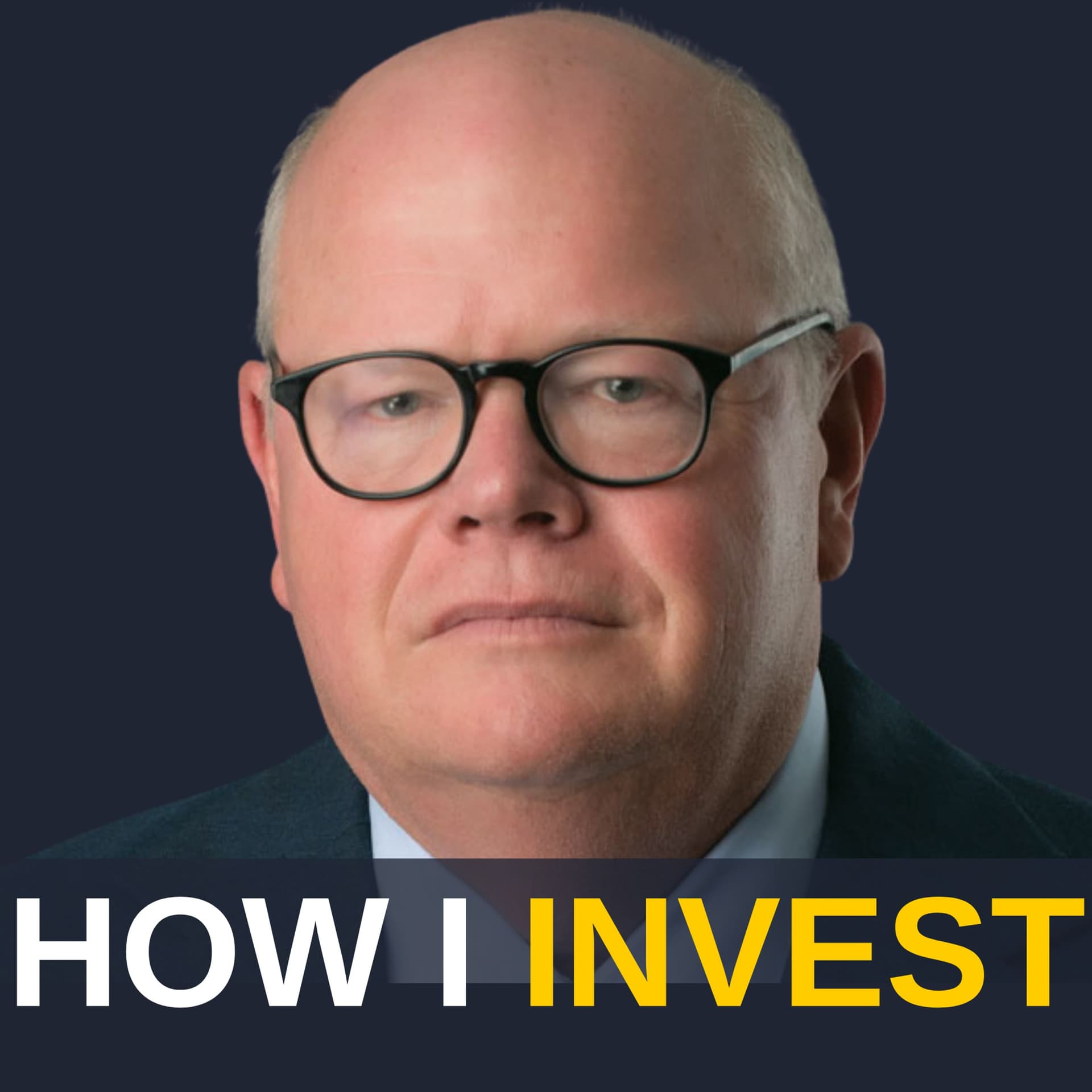
How I Invest with David Weisburd
E276: Lessons from Allocating $70B as CIO at the University of Texas
00:17:57
Loading summary
Transcript35 lines
- [00:00]
A
You have one of the most prolific backgrounds of any guest on the podcast from your time as the CIO of utimco, the University of Texas Endowment, which is the second largest endowment, to your time as CIO of Texas Permanent and Texas Teachers Retirement System, and even a brief stint as CEO of Bridgewater Associates, which is the largest hedge fund on the market. So let's start at utimco. What gets easier when you have a pool of capital like $70 billion.
- [00:31]
B
The what, what gets easier is negotiations. Let's just get a big number on your back. Negotiation is a lot easier. People come to me and it's Brit, you know, tell us how you negotiate so well. I'll say, well, first of all, get a hundred billion dollars on your back and then see how it works out. So your ability to, to dictate terms or modified terms or to get organizations to do things that they probably wouldn't do for smaller operations is one you mentioned.
- [01:04]
A
With funds you're able to negotiate better terms. Does that just come down to fees and co invest? Are there other strategic benefits?
- [01:13]
B
So how much do you know about strategic partnerships? Just using as an example.
- [01:18]
A
Tell me more.
- [01:20]
B
In the very beginning it was to deliver numbers, delivery, you know, returns daily, run these big funds. I want to know, I want to know my positions daily. Well, we can't do that because it's in a, an accounting kind of structure at custodial, custodial banks. I said, wait a minute, don't you report daily for the mutual funds? And I remember we were going around, I asked, there were a bunch of firms and I asked the first one, can you do it? And he said no. Second one, can you do it? He said no. That's the third one. Can you do it? He said no. The fourth guy said, I can't believe it. We've been doing this, you know, for three or four years and I'm going to give these people the benefit of the doubt. They weren't lying. They really thought they couldn't do it. But when they go back and they tell their people, and I was sitting in there telling one of our top clients that we couldn't do something. And then the guy next to me said, they do it all the time. You guys told me we couldn't do it. That made us look bad. The so pretty soon we have better numbers that are more accurate. Getting them earlier than other people. That'd be one example.
- [02:28]
A
One of the most underrated things is this four minute mile. Roger Bannister broke the four minute mile. People thought it was literally impossible for many years. And then after he broke it, I think eight people broke it within like two months. I think that applies to all aspects. People just think they can't do something, but once you actually show them that they somehow magically do it, and it's not that they didn't want to do it, sometimes they just don't think that they can do it.
- [02:52]
B
Yes, absolutely. Everybody said this is impossible. And then they buy into it. Then one guy doesn't buy into it, breaks it and said, well, I got to re, I got to reset my entire framework. And part of the job of the, of the CEO or the boss is to inject that mindset into as many people as possible. Most people unfortunately think that what they can do is very contained. You know, they, they can't do anything other than this, and that's all that's possible. And then somebody says, well, but if you show them that somebody else is doing or show them how they can do it and then you have to have people who want to do better. You know, they want, they want to do better, they want the extra responsibility, they want to improve. And surprisingly that's not a, that's not a large percentage of people.
- [03:39]
A
How would you define that?
- [03:40]
B
Here's some managerial science for you. If you have a hundred people in your organization, in your church, in your quadratics club, in your investment group and whatever it is, you have a hundred people, your prior should be that 30, 30 of them are fully engaged. 30 of them, they come to work every day, they give their all from sun up to sundown. They do it whether the project is exciting or not exciting. They're the real professionals. And that's, they're fully engaged at 30%. 50% of the people are partially engaged. Sometimes they're engaged, sometimes they're not engaged. Now some over that are people who like, they're not really interested in having a big career. You know, they're kind of like, I need a certain amount of money. I like this company. I want to come in at 5, I want to leave at 8, I want to get $10. And that's totally rational, nothing wrong with it. But then you have some really highly capable people who for whatever reason is, they just can't, they cannot stay engaged long enough to complete projects. One of my, one of my, one of my bucket list things is to teach at every Ivy League school. So I've, I've got most of them. But for, what are you missing? I'm missing Stanford, the kind of west coast crowd, the and so I get to get a chance to speak at Princeton. And I just learned this concept about fully engaged. And so I. It wasn't, wasn't a big class from 15 people or so. And I said, look, I'm really honored to be here. I'm going to invent something to you. In my early 50s, like, I. I would have never gotten into this school. You know, the requirement, the intellectual requirement to get into prison are beyond what I could have, what I could have satisfied. But. And it's just not false humility, it's just a fact. I don't really care. I've been, I've done fine just pointing that out, so. Because I have a question for him, which I want you to use your higher intellect to answer. And the question is this. I've run eight companies, and I've had a lot of people from Princeton work for me a lot. And I love it. They're fantastic. But I've never worked for somebody from Princeton. So how do you explain that? How do you explain that I could never sit next to you in school, but you're. I'm going to be your boss. And a big part of that answer is, I'm fully engaged and you're not. And a fully engaged person will outperform a partially engaged person, even if their talent is less than the partially engaged person is guaranteed. So I get asked all the time, what can I do to be more successful?
- [06:38]
A
Let's be honest. Subscriptions add up fast. Streaming services, apps, memberships you forgot you even signed up for. And canceling them is usually a pain. That's where Experian subscription cancellation comes in. Experian can take the pain out of canceling subscriptions by handling it for you. You just keep the ones you want and put money back in your pocket. Over 200 subscriptions are cancelable. You can also save money by letting Spirion negotiate the rates on your bills. They'll keep an eye out for new deals and saving opportunities and negotiate directly with your provider on your behalf. And the best part, you keep 100% of your savings. Get started with Experian app today. Results will vary. Not all bills or subscriptions are eligible. Savings not guaranteed. Paid memberships with a connected payment account required. See experian.com for details.
- [07:31]
B
And I said, you're going to be in if you're. Are you fully engaged? Because if you're fully engaged, you will be in top third. And then there's stuff you do after that.
- [07:40]
A
So you mapped to 30 fully engaged people. 50, kind of on the fence. 20, presumably just lost causes.
- [07:48]
B
Well, they're terrorists. They're working against the organization.
- [07:51]
A
So within those 50, how many of those could be managed or motivated into full engagement in your experience?
- [07:59]
B
Not many. The, you know, if you're. If you're type of person who. Who just is not naturally fully engaged, you don't really have the. The kind of. The effort gene.
- [08:19]
A
And it's not a talent gene. It's an effort gene.
- [08:21]
B
Yeah, you know, you. You make the effort, you stay with it long enough and, you know, you care about something enough that you're curious about something, enough that you just stay there till it's done. I mean, I'll give some examples. The, you know, I've had some really, really smart. Lots of really smart PhDs, you know, working with me, and I'm just a bachelor, you know, and I'll go over and if, let's say it's you and I'm, you know, I'll work with you to kind of get some models up and running and, you know, we'll work together and then I'll say, look, you know, this is going. This seems like it's going well. I've got other folks that I need to tend to. And, you know, so you're good, right? Kind of like you're up, but if I come back a week later, you're back down again. I just think people have to ask themselves honest questions about am I. Am I fully engaged? And the. We have one genius. Every single person is a genius at one thing. What do you think that is? Everyone in the world is a genius at this. What do you think it is?
- [09:37]
A
Staying alive?
- [09:39]
B
No, because a lot of us don't. We have a effort of trying to stay alive. We're. We all have a genius in trying to. That we can rationalize that we're okay, you know, that we're not the bad guy, you know, that we're doing, you know, that we have somehow, you know, produce as much or more than other people. When my class is, you know, about two thirds of the way through, I'll. I'll throw a question out there to them and bunch among many, the question is, do you think you've contributed more than half? More than half of the class has, or less than half the class has? I deliberately don't put an average. So what do you think happens?
- [10:20]
A
80, 90% say more than half?
- [10:22]
B
Yes. At least 80% put themselves in the upper group. And several people will write in average because they can't say below average. They just can't do it. But you know that obviously just math is half of them below average, and half of them are above average. So people have to be realistic with themselves and ask themselves, you know, am I, am I really fully engaged? And it's. And what people do is, well, I did this one thing. And, you know, you might have done 10 things, but I did this one thing. And then they'll say, well, the one thing I did was more important than 10 things you did, because they get to grade themselves. There's this new idea of empowerment. And I would say that every boss in the world is half decent, wants to empower everybody he can. Everybody she can't. But that people don't say, well, what do you have to do to be empowered? It's not just you want to be empowered. It's kind of. That's. That's good that you want to be empowered. But, you know, what do you need to do to deserve to be empowered? And it's not, it's not your. Your. It's not your impression of yourself. So I'll give you a little formula. Customer plus empathy plus development plus agreement equals empowerment. I don't care that much about how you think you're doing, although I do care. I care more about how your customer thinks you're doing. You know, that's the most important thing. How does your customer think you're doing? I think I'm doing great. Well, if your customer thinks you're not doing great and the customers, the one we're trying to take care of, you're not going doing great. The. So you got to think about the customer. Empathy means that people will say, well, I want to collaborate with the customer. Well, you got to earn that. If you start showing empathy with what they want to get accomplished and you can get behind what they're doing and then add to it, you know, you're. You're going to partner up with your customer, and people say, well, I don't have a customer. I'm. I'm all internal. Yes, you do. There's a thing called next operations. Customer. Whoever you give that report to is your customer. The. Then we offer great development. And did you take the development or did you not take the development? And the most important thing among many for a professional person is they. They keep their word. You make agreements, and you keep your agreements. If you don't, you, you can't and you shouldn't advance if you're somebody who doesn't keep your agreements.
- [12:59]
A
Preparing for this interview, I learned that you've innovated on over 3 trillion in financial projects with a T. Tell me about your process for creating new financial instruments.
- [13:11]
B
I remember a story I was watching that they had the guy who created the Apple watch and they had the world's most famous architect. And so they were there because they want to talk about creativity. And that's the world's most famous architect looked like he was probably in his early 80s, looked very good shape and he looked very cool. But as you know, he was older and somebody asked him a question like that and he said, I haven't recreated anything new. I've just built on top of what other people prepared before me. There's two types of creativity. There's one type that's, there's something that's never been thought of. It's, you know, nobody's. And somebody just creates something completely out of their own mind, completely from scratch and that thing changes the world. That's, I'm not that kind of creative. The, you know, I look around and say I have all these things and here I don't have this. And so therefore I need to do it. We have one, one firm that when we engage them, they have, you know, we, we had in our, what we needed was somebody had a growth and a value portfolio. And I called it, you know, we needed, we need a plan with, you know, with two wings. And this firm at the time, this long time ago said, well, we don't do growth, you know, we only do value. And we weren't trying to be mean about it. It's just kind of like we, you know, we're not here to buy a one, one, one wing plane. We need you to put a growth portfolio up. And so eventually they relented. They put a growth portfolio up. And now that growth strategy is huge. And can you imagine if they didn't have a growth portfolio?
- [15:02]
A
I wonder as you talk about these two different models of innovation, whether there's even some, something as making something from scratch. I wonder if it's just people that are not aware of where they're getting ideas and whether all innovation really comes from the second tier, which is putting things together in a new way.
- [15:17]
B
It's largely putting together things in a new way. But there's, it's not zero. You know, Michelangelo would be a type of person that he didn't start from anything. Remember he even said, I don't, when he was car, when he was doing his sculptures, he would even say, I don't even know what the guy's going to look like until I find him in the marble. You know, if you were to try to find something that Michelangelo did ahead of time, like a little sketch or a plaster of Paris, that thing would be worth millions of dollars because there's nothing. But yes, you're right. It's most creativity is looking at what world around you and just adding the next thing to it.
- [15:54]
A
One idea that immediately came to mind, I'm sure, you know, tax loss harvesting right now is one of the hottest trends. Trend if not the hottest trend, trend in taxable and high net worth. And now people are actually doing this in other areas. So right now it's long short public equities. David Kabler's family office is now actually doing in real estate. Yesterday somebody pitched me doing this around crypto because there's more volatility. So I wonder if that's the kind of innovation that you've done in your career which is taking something and iterating one or two steps on it, seeing what the market naturally is buying and tweaking in a way that really resonates maybe to a new market or to larger town.
- [16:35]
B
Yeah, I try to, I try to differentiate between a fad or you know, a gimmick that's you know, really attractive but in the beginning, but it's really not that. So I'm. I don't know anything about Texas harvesting, but I'm skeptical that it's going to be a great idea on a long term basis.
- [17:00]
A
Tell me about the complexity syndrome.
- [17:05]
B
It turns out that there's a thing called complexity syndrome. And complexity syndrome is if you're highly educated then you want to believe complexity is better than simplicity. What's the purpose of all this education if, if you know banking things more complicated isn't better than keeping things simple. But I think all practical people know that simplicity is actually the highest form of reliability, not complexity. You make something more complex, maybe it's more powerful at times, but it's less reliable.
- [17:39]
A
What's an example of that? What's something that's over complicated that's simplified?
- [17:44]
B
A race car. The, you know that race car is going to go faster and do all those kind of things, but it's also going to be in the shop, you know a lot more. The baseline is can I get to my target return with the simplest things possible? Can I do it with liquid assets? Can I do it just with index funds? Our products are meant to be next generation products, but not in a supersonic kind of way. Just kind of like we're not going to be. It's going to be more simple. It's going to not require a lot of illiquidity, it's not going to be highly levered, and it's not going to cost as much.
- [18:25]
A
Brett, this is an absolute masterclass. We have to do a second recording soon. Thanks so much for jumping on podcast.
- [18:30]
B
My pleasure. Thank you very much. Take care.
- [18:33]
A
That's it for today's episode of How I Invest. If this conversation gave you new insights or ideas, do me a quick favor. Share with one person in your network who'd find it valuable or leave a short review wherever you listen. This helps more investors discover the show and keeps us bringing you these conversations week after week.