← How I Invest with David Weisburd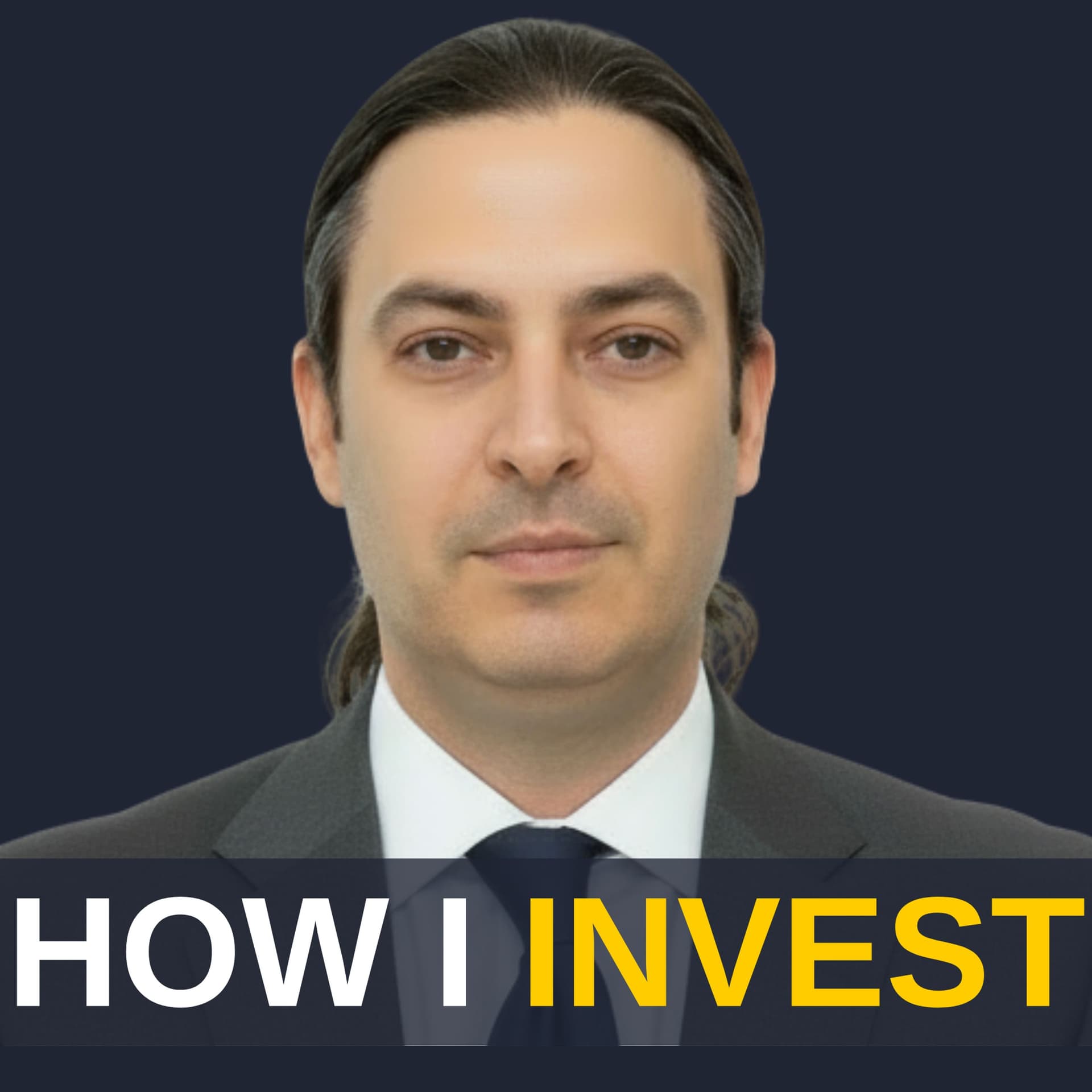
Loading summary
Transcript32 lines
- [00:00]
Podcast Host
You said that probability theory was your first love.
- [00:04]
Interviewer
What made you love probabilities from an early age?
- [00:08]
Ari (Guest Investor/Activist Investor)
Sports statistics. I would say number one, like to simulate baseball seasons when I was really little on the Apple Iie computer on a very early video game that didn't, you know, was pretty much mostly statistics and not, not actually like interacting in the game as like a batter or pitcher, but just hitting SB if you're trying to steal a base. But I would simulate baseball seasons between, you know, you could have the 1927 Yankees play the 1955 Giants and have Willie Mays play against Babe Ruth. And so I always like just love that concept and trying to think about advanced statistics at a young age and just games of strategy, played a lot of cards, try to figure out how to win things good. Risk adjusted, asymmetric calculated bets effectively.
- [00:56]
Interviewer
And you ran a blackjack team when you were at Stanford.
- [01:00]
Podcast Host
What did you learn about that and.
- [01:01]
Interviewer
How does that relate to how you do public investing today?
- [01:04]
Ari (Guest Investor/Activist Investor)
I took a course my freshman year at Stanford, this would have been 1997, called Math and sports. That was my favorite class I ever took. Professor Tom Cover at Stanford taught this freshman seminar. Small group of 15 like minded folks just thinking about this same kind of, you know, game theory, probability theory in both sports, which was the name of the class, but also a deck of cards. And Professor Cover had his own blackjack team in the 70s. And just great stories, fascinating statistics professor and a couple of us from the class, my friend Brad Griffith, who founded gametime, which is ticketing, online ticketing platform. And I just took a real liking to it. We were already friends, lived in the same freshman dorm and constantly were quizzing each other on the blackjack statistics. And so we just got excited about how we could optimize that game. And in cards there's a known quantity, known set of, there's four suits and 13 cards in each suit and all the rules that we all know. And so it's much more of a fixed probability. In the stock market they call it, you know, stock is more of a random walk, so it's a whole different distribution. There's no history doesn't repeat itself exactly. But like the Mark Twain quote, history doesn't repeat itself, but it rhymes. There's you know, a lot of historical analysis to help figure out what the, what the future might hold to make educated risk adjusted. There's some principles from the things I learned in card counting, specifically something called the Kelly Criterion, which is like a theoretical proof of for a known set of odds. Again with cards having a known set of odds, it tells you how much to risk on any given wager such that you're maximizing your profit while also not putting your balance sheet at a big, it's called risk of ruin.
- [03:00]
Interviewer
Most famously, Long Term Capital Management had what they believe this risk free arbitrage and they hadn't thought about all the second order effects of it and ultimately blew up. The f. The fund blew up because of Russia and the divergence in pricing. How do you go about looking at your risk and assessing where your trade might go wrong?
- [03:23]
Ari (Guest Investor/Activist Investor)
That is a really good point and a really, you know, something that we all think about. If you're a smart investor, you can't believe that it's going to like what I said with certainty. There are still events, idiosyncratic things that could happen. One that I can think of for example and this is more of a micro level versus long term capitals models, multiple second order events happened. I believe that with plus some leverage, leverage is always an important factor. But for example, in the volatility space, VXX is the largest etf. It owns a combination of front and second month futures on volatility almost in its, the entirety of its history. You could create and redeem it which as I was saying before, keeps, keeps the ETFs in line. So VXX, if you just look on a Bloomberg machine at any given time typically isn't below 10 basis point discount or above a 10 basis point premium. And you know, they charge a fee to create and redeem it. And so it's not, it's not, there's, there's another cost but it, that's what keeps it in line. So if you could buy that at a 50 basis point discount and redeem it that day, you'd make 50 basis points in that day. And that would be obviously credible if you spread it to something that was trading at nav. Now this, in this example I'm talking about a sort of idiosyncratic risk where the underwriters of vxx, this happened a few years ago, had not, not properly registered new share issuances with the sec. No one could effectively know that. I guess unless you're a super smart lawyer and could figure out that they, they hadn't registered something correctly. And so what happened was you were, they could not issue new, new new shares, you couldn't create redeem and there was effectively like a, like a squeeze, a short squeeze on it where it traded at a 20% premium for an extended period of time until they resolved their SEC issues and so that mechanism went away. So you, so if you have this rule that you can create redeem and that's going to keep it at nav, well what else could go wrong? That was an example of something that was kind of out of left field. There's however many thousands of ETFs out there that, that do it right with the SEC and VXX underwriters eventually got it back in line and now it trades in line. But could that happen again? Something like that in the case of long term capital, yeah. Could there be, you know, sovereign risk or whatever you're trading that, that things come out of left field. You think you're trading something that is the same as some other thing. But the underwriter of one of those things had fraud and they were, they were buying something else. We've, you know, you've seen that in different cases throughout history. There's the MF Global which wasn't perfect arb there but that you thought you were buying something that was something else and someone was going rogue with the investment that you made. And you got to be really careful about that.
- [05:59]
Interviewer
And the catch all solution for that risk management is position sizing. So even if it's, even if it blows up and even if you have 10%, maybe you lose 2, 3% so you don't have to know how it'll blow up to size it correctly and to keep your entire portfolio from getting ruined.
- [06:20]
Podcast Host
One of the hardest things of investing is seeing what's shifting before everyone else does. For decades, only the largest hedge funds could afford extensive channel research programs to spot inflection points before earnings and to stay ahead of consensus. Meanwhile, smaller funds have been forced to cobble together ad hoc channel intelligence or, or rely on stale reports from sell side shops. But channel checks are no longer a luxury. They're becoming table stakes for the industry. The challenges have always been scale, speed and consistency. That's where AlphaSense comes in. AlphaSense is redefining channel research. Instead of static point in time reports AlphaSense, channel checks delivers a continuously refreshed view of demand, pricing and competitive dynamics. Powered by interviews with real operators, suppliers, distributors and channel partners across the value chain. Thousands of consistent channel conversations every month deliver clean, comparable signals, helping investors spot inflection points weeks before they show up in earnings or consensus estimates. The best part, these proprietary channel checks integrate directly into AlphaSense's research platform, trusted by 75% of the world's top hedge funds. With access to over 500 million premium sources from company Filings and brokerage research to news trade journals and more than 240,000 expert call transcripts. That context turns raw signal into conviction. The first to see wins the rest follow check it out for yourself@alpha-sense.com HowInvest.
- [07:45]
Ari (Guest Investor/Activist Investor)
Yes, so you have to. Yeah, you have to cap the size of the exposure you have to any one individual thing.
- [07:52]
Interviewer
The only risk to the overall portfolio is if you're making the same trade over and over that has the same underlying catalyst that drags it down.
- [07:59]
Podcast Host
Yes.
- [07:59]
Ari (Guest Investor/Activist Investor)
If they all or multiple of your spreads or trades or investments, whatever you want to call it, have some similar idiosyncratic risk that hits them all at the same time or multiple of them, then you know, if you lose 2% on multiple different 10% trades, obviously it adds up to more than 2%.
- [08:18]
Interviewer
Last time we chatted you said that 5,000 to 10,000 small cap companies are inefficiently priced. Tell me about that and what are the opportunities there?
- [08:30]
Ari (Guest Investor/Activist Investor)
So I don't know how many small cap stocks exactly there are. I know there's thousands and it depends if you look globally or in the US they tend to be less efficiently priced than large cap stocks because there's informational inefficiency there. In the large cap stock world you see a lot more analyst coverage. So many more people have read Apple's filings. However many multiples versus some little niche company in a industry you didn't even know existed or didn't weren't thinking about that. That's a hundred or five hundred million dollars market cap versus a trillion dollar market cap. And over time we've seen that kind of spread diverge. We've had, we've seen, we've had a decade for example, where large cap, decade and a half where large cap has just crushed small cap. That there, there are different reasons for that. There's been much more of a regulatory burden on small cap companies where a public company typically needs to spend five plus million dollars to be public. It's obviously more for the larger companies, but as a percentage of their size and their profit and cash flow for the small companies it hurts a lot more. And so the Sarbanes, Oxley and other costs make it just difficult. And there are companies that we own that do 20 million of free cash flow a year. Well, if they were private they would do 25 million because they didn't have to spend that $5 million to do that. And I can tell you from being on the board of a public company which was Del Taco a small cap stock. We probably spent a third of our board meetings just talking about things that had nothing to do with other than regulatory Sarbanes, Oxley and compliance costs that just add up to much more meaningful amount for a small company as a percentage than a large company. And with index funds just going larger and larger, there's been a huge increase in assets going from active to passive. Honestly throughout my life in the public markets for 25 years, of course there was the S&P 500 but the whole time and the Russell 2000 that I've been in business. But the, the increase in just number of passive funds is now I believe over half of the market. And, and with that there is, most of it is in the major. The, the, if we look today, for example, the S&P 500 versus the S&P 600 which is their small cap index has what is known to be 17 times the amount of dollar assets in the S&P 500. It's actually way more than that. If you factor in all the private funds and indexing or even like quasi index funds, they might say they're somewhat active, but they, but they're index huggers. We call instead of having a 7% position in Nvidia, they've got a 6% position or something that still makes them look a lot like the S&P 500 or the NASDAQ 100 or whatever. And, and the small cap companies just get much less efficiently priced. So you know, you, you roll up your sleeves and you, and you look at some niche industry, some niche business that you think is asymmetric, well, you're going to get much better access to management. You're going to be able to talk to the CEO and CFO of the company versus trying to do that with Apple. Good luck. You got to be a, you know, $300 billion mutual fund company or something to get that, you know, and how.
- [11:32]
Interviewer
Do you marry those strategies of meeting management and get, trying to get a better read on management versus kind of these arbitrage opportunities that are basically in the spreadsheets or in the trade versus kind of this, this EQ level insight?
- [11:47]
Ari (Guest Investor/Activist Investor)
My first love, my favorite are the more arbitrage trades. If, if you, if you could give me only trades that make five basis points a day instead of again the one basis point that the, that the government's offering you. You know, I, I, it's hard to make that, that adds up to let's say 18% a year return that it's hard to get some, an 18% year return. Compounded in picking stocks, there's more risk. And so I would take that all day long. But finding those things that pay you five bips a day with, with low risk is, is few and far between. A lot of what we manage is just our own capital to take positions where we, we take an activist approach and where we will buy 5 to 15% of a company, it depends on their bylaws. If they have a poison pill. You want to look at the shareholder profile, but based on all sorts of different inputs and analysis. If the company is really under the radar, you believe it's trading at a big discount to its private market value. And that's not just your instinct, but because you've talked to a bunch of different industry players and investment bankers. There's, there's a bunch of private equity firms for example, that would love to buy a bunch of these small cap companies. And if, if all these companies were for sale, I think talk to enough of them that they would drop everything and just focus on those opportunities rather than trading assets to each other in the private market, you know, doing their typical game of cutting costs and then trying to sell at the whatever. The adjusted EBITDA looks like the highest. But there's a lot of these niche little companies that these private equity firms would like to own. They are not willing typically to take positions in public companies. Certainly not willing to be activist. We're always, we call ourselves friendly activists. But if there's, if you have boards and management teams that are not acting in shareholders best interests because for whatever reason there's there a bunch of the board members of retirees that like saying they're on a public board, they like the compensation from it, but they don't own any stock. They are not aligned with you, the shareholder that owns 9% of the company. And so you know, we will, we will try to get board seats. We've gotten board seats on a number of different companies and ultimately if they're too small to be public, too niche, too hard to understand, they're never, they're going to have to grow many multiples to become relevant and can kind of get on someone's radar, they shouldn't be public.
- [13:55]
Interviewer
And if they're, is that what you're typically doing? You're taking these public companies and you're selling them private markets.
- [14:01]
Ari (Guest Investor/Activist Investor)
That, that is the goal in a lot of our activism. But you know, a lot of the management teams and boards don't like that. So we're open to all sorts of different alternatives. A lot of them will want to divest something at a premium to the multiple that they're trading for a division or often we see a lot of them try to make acquisitions to grow into a bigger thing that comes with his own risk. You take, let you leverage up to do that. And it's a lot of what my partner and I like to call like empire builders, where the board is like, hey, let's do a roll up in the public markets.
- [14:29]
Podcast Host
When you want more, you start your business with Northwest Registered Agent. They give you access to thousands of free guides, tools and legal forms to help you launch and protect your business all in one place. With Northwest, you're not just forming an llc. You're building your complete business identity from what customers see to what they don't see. Like operating agreements, meeting minutes and compliance paperwork. You get more privacy, more guidance and more free resources to grow the right way. Northwest has been helping founders and entrepreneurs for nearly 30 years. They're the largest registered agent LLC service in the US with over 1500 corporate guides. Real people who know your local laws and can help you estimate every step of the way. What I love is how fast you could build your business identity. With their free resources, you could get access to thousands of forms step by step guides and even lawyer drafted operating agreements and bylaws without even creating an account. Northwest makes life easy for business owners. They don't just help you from your company, they give you the tools you need after you form it. And with Northwest, privacy is automatic. They never sell your data because privacy by default is their pledge. Don't wait. Protect your privacy, build your brand and get your complete business identity in just 10 clicks and 10 minutes. Get more with Northwest registered agent at www.northwestregisteredagent.com. invest free.
- [15:44]
Ari (Guest Investor/Activist Investor)
Well, if you're a niche little $100 million public company, for example, I can say this because we're on file. We've filed a 13D on a company called Quip Home Medical that does. They're about a, about a hundred million dollar market cap. They trade for four times ebitda. They're a provider of home health services, specifically in the niche that is the respiratory space. So think CPAP machines for things for sleep, apnea, oxygen, most of it is respiratory related in home sales and rental and servicing around that. Well, they've made some acquisitions but the stock, the stock price is ultimately the scorecard is the stock price. And so you know, in the short term it could be a voting machine, in the long term it could be a weighing machine. But if it's been, if you're 5 or 10 year, 15 year IRR as a public company is really subpar. You have more vulnerability. There's an annual meeting and an election and those companies, ultimately shareholders have certain rights. You got to look at the bylaws of the companies. We've never, we haven't. We've typically settled with companies and gotten board members that way. And when you have board members you have more influence. When I was on the board at Del Taco because we were trading at a big discount to private market value, we got a number of different inbound bids typically from private equity, some from large known quantities and some from funds that we never heard of that you kind of get to see how well funded are they. Are they for real? Well first there's that arb of just if you take away public company costs and also you're not focused on the next quarter, which public companies are too focused on versus the next five years or whatever. I saw it firsthand. Their LBO math suggested that they were going to be able to pay a big premium to, to public market value, take it private and still make a good irr. Now that's them levering up typically and taking a lot of risk. In the case of Del Taco, we sold it to Jack in the box. The best buyer typically is a strategic because they're synergies versus private equity. We sold to Jack private Jack in the boxes is its own public company. We sold to them in 2022. They just, I believe the enterprise value on the deal was 6 or 700 billion. They just, they just sold it for the low one hundreds. There's been a whole, a bunch of things negatively affecting the restaurant industry and fast food and GLP1s and things I could go on and on about but. And that was the risk that they took.
- [17:54]
Interviewer
How long does it take you to build a case to go activist? How many conversations talk to me about that process?
- [18:01]
Ari (Guest Investor/Activist Investor)
It depends on the company. You know we've just having been in the small cap markets for my whole career, the more, more actually the, the more arbitrage like things have been more for the last 15 years. But the full 25 years I've been in the public markets it's been, I've always been picking stocks. So if there, if you have some historical knowledge of the companies, we're finding companies through screens but a lot of it's just from having knowledge of founding it. However we found it before could talk to other fund managers or whatever you're trying to do as comprehensive of analysis as you can. Now, there's limitations in that. There's quarterly public filings. You don't always get full access. You don't want inside information. Of course, based on all those inputs and some instinct, you think that the LBO model for that particular company suggests that if you take away the $5 million of public company costs and you make certain assumptions and the LBO model is only as good as its assumptions, that's the private equity, that's the scorecard for them for private equity. It's like. And such an important metric for the LBO model is what are you going to sell it for five years? And you see so many models that just show consistent growth and then they sell it for a big multiple five years out. Well, there's plenty of uncertainty in that and a lot that can go wrong. Certainly you could exceed it, but the average model is probably too aggressive. And if you're trying to auction off a company, the highest bidder could have the most aggressive model or the cheapest cost of funding or the most synergies. We want to know everything we can. And so we are not by no means experts on respiratory, home health services and equipment. We've learned as much as we can. Importantly, in that case, just continue with that example. There is a public bid. It's been in a public press release from another investor that owns 9% of the company, that's the largest shareholder. I think the Stock closed at $2.52 today but has traded way lower than that recently. They have a non contingent bid at $3.10 a share. So they want to buy the company. They've said at $3.10 their best bid is $3.10 a share, not contingent on diligence or financing. Of course, things could change. That came out in a press release. Could they back off of that? Sure. There is risk. Could they increase it? Well, we think it's worth more than $3.10 a share because we think the cash flow forward, cash flow, particularly when with responsible leadership, suggests that it's worth more than that. But it's going to take a board to decide that. They want to run a process and so we're not sure. I mean, they had a lawsuit, an active lawsuit against that buyer and we think that's incredibly wasteful. There's no known way that they're going to have to be forced to sell. Ultimately, there's an annual meeting and shareholders get to vote. Just like, you know, a Democratic election. We get to vote our 8 or 9% of stock for the directors that we want and then you know, hopefully those directors will do what's right for shareholders. And if, if the best risk adjusted return is to run a sale process and sell to the highest bidder, that's what they ought to do. But there's different ways to go at it and it's not always what we think. In the case of this quiptome medical, though very small niche public company, they've got some complicated accounting that makes it harder for other people to roll up their sleeves and fully understand it. And so we think the risk adjusted return is really good. But a lot of these companies are down and out. They weren't always micro cap and they went there and there's, in this industry, there's reimbursement risk insurance, government reimbursement. So you gotta just factor in all the different things and say this is among the best risk adjusted return I can find and I'm going to take a x percent position.
- [21:31]
Interviewer
What's one piece of timeless advice that you wish you could go back and give yourself that would have significantly increased the chance of success in your career and, or decrease some of the risks?
- [21:44]
Ari (Guest Investor/Activist Investor)
One really interesting thing is we've seen so much technological advancement in the last couple decades such that growth has outperformed value. And there have been other periods historically that's been the case, but growth has outperformed value by a wide margin in the last 20 years. And so if you read Intelligent Investor, Benjamin Graham or you look at a lot of data, there's some really good data from Eugene Fama and Kenneth French, professors Chicago and Dartmouth, they would show and my, my mentor, a guy by the name of David Heller, you know, had, we were very empirically focused, looking a lot of historical data, very, his philosophy was very deep value focused. And so if you go back to almost any decade in the history of the markets before that, the smaller, deeper value companies outperformed. So if you just bought an index of those companies that were among a certain peer group of small companies trading at the biggest discounts to book value and then the FAMA French indices adjust every year, you would have outperformed. So if you're trying to find just sort of edge in a bucket of companies to buy, history would tell you to do that. Well, in the last 20 years we've seen such incredible technological advancement and you know, industries like retail I mentioned before, we've, we've made a bad investment in big lots, for example, you know, to be mindful of, more mindful of technical technological change trying to understand what that means for some of these value companies to avoid value traps. So and if there's easier said than done. But, but I've we've pivoted from very much deep value stock picking to more of a. There's a Joel Greenblatt style of, of of value investing where it's. It's those companies trading at the biggest discounts but also that generate the highest return on invested capital. And so you know, we've gotten into different companies whether they were previously super profitable and became unprofitable like big lots or other or just a slowly competed way the dinosaurs the I've never invested in this company but Deluxe Corporation prints some huge market share of handwritten checks for people's bank accounts. Well, can't remember the last time. I probably still write a check here or there if my assistant helps me with. But um, you know, it's it. There's a world with technology where we've made such technological advancements that the Amazons of the world have made it very difficult for almost every category of retail. You can click a button from your home and so you know, to just buy deep value companies based on where they trade to book value is, is an important lesson that I've learned.
- [24:17]
Interviewer
Ari, this has been absolute masterclass. Thanks so much for jumping on the podcast and looking forward to continuing this conversation live.
- [24:23]
Ari (Guest Investor/Activist Investor)
Thank you. Yeah, likewise.
- [24:24]
Podcast Host
Thank you.
- [24:25]
Ari (Guest Investor/Activist Investor)
Appreciate it very much.
- [24:26]
Podcast Host
That's it for today's episode of How I Invest. If this conversation gave you new insights or ideas, do me a quick favor. Share with one person in your network who'd find it valuable or leave a short review wherever you listen. This helps more investors discover the show and keeps us bringing you these conversations week after week. Thank you for your continued support.