Loading summary
Transcript106 lines
- [00:02]
A
Welcome to how to Decorate from Ballard Designs, a weekly podcast all about the trials and triumphs of decorating and redecorating your home. I'm Caroline, I'm on the marketing team.
- [00:11]
B
And I'm Taryn and I'm a product designer.
- [00:13]
C
I'm Liz. I head of the creative team. We're your hosts.
- [00:16]
A
Join the expert team at Ballard Designs for tips, tricks and tales from interior designers, stylists and other talents in the design world.
- [00:23]
B
Plus, we'll answer your decorating dilemmas at the end of each episode.
- [00:26]
C
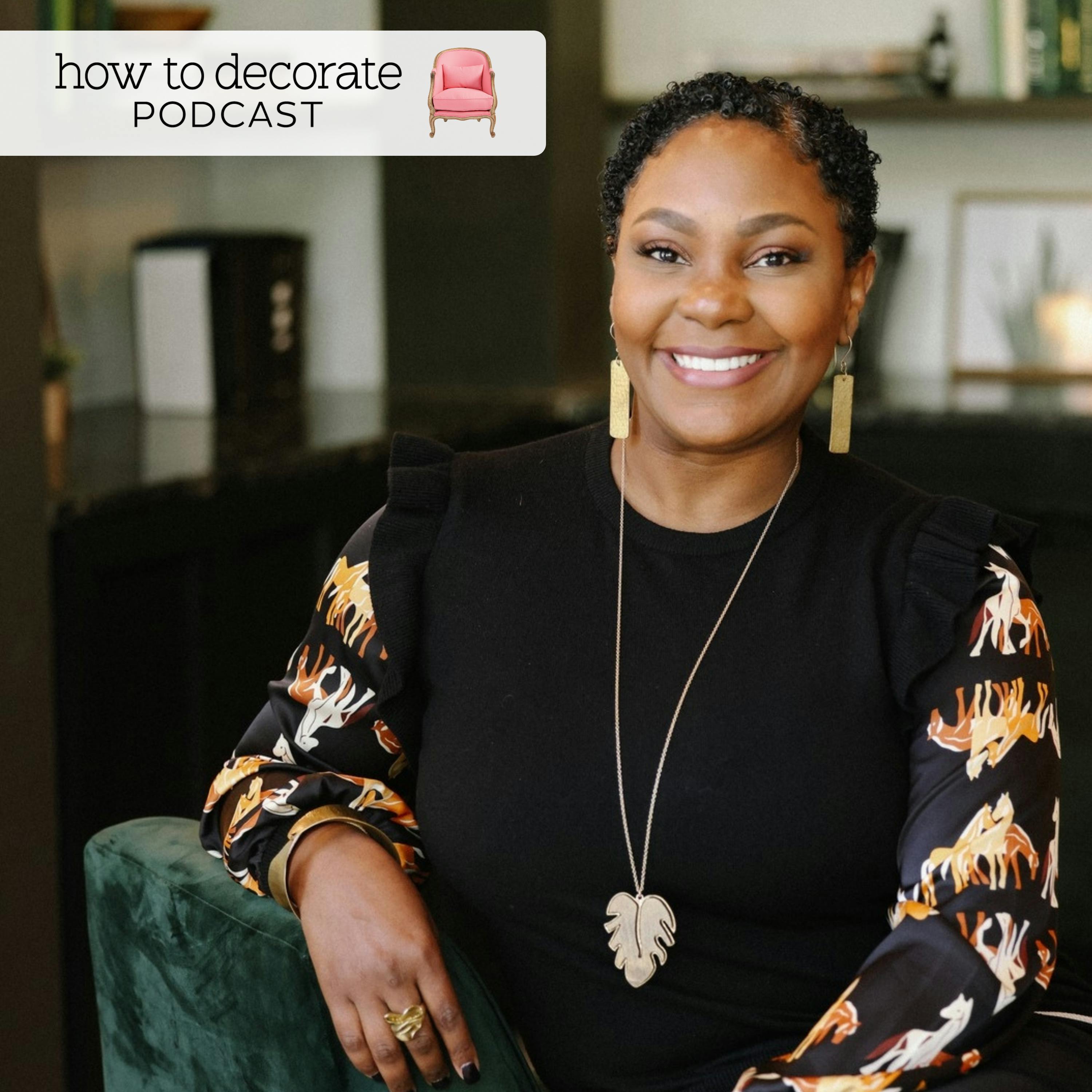
We love answering your questions, so don't forget to email us@podcastallardesigns.net now on with the show. This week we're excited to welcome Ariane Belizere of Ariane Belizeare Interiors. Based in Baton Rouge, Louisiana. She brings over 10 years of experience blending innovative tech forward design with Southern hospitality to create effortlessly sophisticated spaces. Ariane is also known for being a featured designer on Extreme Makeover Home Edition, which you can watch on Hulu. Her work, which includes custom builds, luxury kitchens and multifamily developments, has been featured in Architectural Digest, Forbes, and House Beautiful. Ariane combines strategic ROI focused design with trend setting style. And today we're going to focus on her insights on creating impactful and stylish spaces that blend beauty with that strategy. Ariane, welcome.
- [01:25]
A
Thank you. So I am so excited to be here. Thank you for having me. And I feel like we're gonna have a lot of fun, I think.
- [01:32]
C
So let's get started on you. How did you get interested in design and what was your path that led you to today?
- [01:40]
A
Yeah, my road to design was very meandering. I like to say that my origin story as a superhero designer is like a lot of our heroes, that they are accidental heroes. Right. And I feel like I'm kind of the same. My upbringing, I didn't know anyone who did design. I didn't know that was a thing. I didn't even know I was creative. I wouldn't have called myself a creative. I was a firstborn girl. So my job was to follow the rules, make the parents proud, and be a good example for brother and sister. So I grew up wanting to be Claire Huxtable. I wanted to be a lawyer for the longest part of my life. Then I went to college. It was like maybe law is too narrow. Maybe thought broadly my perspective and do communications. I'll have more options on the job front. The first part of my career, I worked in marketing, public relations and event planning and really loved that work and then took a pause to kind of re establish my family in a new location because of my husband's job. And that break really gave me a moment to just play. And in that play is where I started creating a home. I started picking paint colors and working with people to pick fabrics and furniture. And I didn't know how to do it, but I loved the process of collaborating with people and making a home for my family. And I had a pretty good eye. So as I was meeting new moms and families in a new location, they would ask me to help them. I did not understand that not everyone could see it. I was like, you really thought that was the right shade of yellow for that felt. That felt like the right thing in there. And only after multiple conversations and people going, no, no, I really need your help, did I realize that it might be a gift and a talent to be able to see homes in the way that I could. So I dove into learning as much as I could. I loved taking courses, reading, learning, and going to conferences because of my marketing background. I was also blogging about my experiences and doing YouTube videos about my experiences, using all of my skill sets together to talk about this new passion I had fallen in love with. My passion and confidence not only allowed me to work on more and more projects, but also brands wanted to collaborate with me and take me all over the world to see more things. That's where the magic of design really locked in for me, where I could understand influences. I didn't grow up with a design knowledge. I just thought that rooms were pretty. I didn't understand the function was the most important. And I also didn't understand the references to some of the design styles we love in Ballard. You know, you have such a beautiful, traditionally rooted design design style and many of your products. It's understanding the reference point of those things that makes design come to life for me. My origin story went from not knowing anything to learning and sharing what I learned, and then working with people and projects, going from residential projects to commercial. And now I just feel like it's full circle because all of my transferable skills work together. Design works together. I'm on television, so that works with my marketing background. And it all just feels very natural and authentic to how I like to live in the world of design.
- [04:38]
C
Well, I think that totally comes through, especially in your YouTube videos, which I really love digging into. They're so accessible and so informative. I started learning all new things.
- [04:50]
A
I love that there was a part of my business where it was the sweet spot, where I had enough Time to be consistent with YouTube and enough work to build my credibility. But then in tip, I got really credible and had lots of work and I didn't have time to do YouTube anymore. But then, you know, years later, I get this wonderful opportunity to be on television with this amazing iconic show. The best part is not the ability to say I'm on tv. It's the fact that I'm no longer the camera person, the grip, the producer. Because everything you see on YouTube is me making the music and I'm doing the edits. I love to do it. It was kind of a creative outlet for me. But it's a lot of work and it's one of the reasons I haven't been able to be as consistent as I was. But I'm glad that you found value in the work. It takes a lot of work to.
- [05:33]
C
Do those YouTube videos, they stand up. They're great.
- [05:36]
A
Thank you.
- [05:37]
B
They are. For anyone who is looking for some tips and tricks. You have so many different topics and how to's. I think it's a perfect educational tool to have at anyone's fingertips for sure.
- [05:48]
C
Okay, can we dip into Extreme makeover?
- [05:51]
A
Yeah. I only can look back and see how everything happens for a reason. That is always divine timing. So, you know, we just talked about my origin story of communication being my background and then finding a way to communicate about what I love. It's a perfect mix. Right? And then doing the work that I do, I kind of diverted my attention from content creation because I started running a business, which that's not easy. That's a whole different part of the brain. You're using more than design because it's not creative. It's definitely being more strategic and analytical. It's even why I talk about what I do. I talk about ROI and very strategic in how I talk about the creative side of it. I was doing more professional work and building a firm and business and not doing as much content creation yet. I had this entire backlog of work that I had done and I had no idea what the purpose of that was. I thought it was just me sharing tips and tricks on YouTube. So little do I know that is an entire audition reel. That is it. That is an entire body of work. There's a body of work out there. There is me working really diligently on building a stand up interior design firm that will be internationally known. That was what I was aspiring to do. In the midst of that, I invested in rebranding my business. So my logo, my website and the brand specialist I Worked with, did a great job. We stayed in touch. A year later, she gets a call from a friend who says, hey, I have a friend who's a casting director for a show. I can't tell you what the show is, but they're looking for fresh faces of interior design. They want someone who is good at design but also really personable and good on camera. There are a lot of good designers who are comfortable on camera. A lot of people are comfortable on camera and that good designers. And we just can't find the right link. We're looking for people to audition. And she's like, I think I might have someone you should call. She calls me and says, hey, I don't know what this is, but they're looking to do a zoom call. Would you at least hit call? So I'm like, yes, I'll take the zoom call. So I get on the zoom call not knowing what the show is. I think they're just feeling like, can we do something with you? So I do what I'm doing with you guys, and I'm myself. They're like, you've never done tv. And again, I have compartmentalized everything. I don't realize the practice of YouTube, the practice of how I show up, the practice of my talking about the passion of that I have designed was not tv, but it was camera work. And so they're like, minds have talent. I'm like, I'm just doing the work. We want you to come and do a chem test. So. So it goes from they're filling me out to we need to sign some paperwork. Because once you sign the paperwork, you're in an NDA and now we can tell you what the show is. Blah, blah, blah. I get through all of that. I don't have an agent. Y' all may have a lawyer who's actually marked a contract. I'm like, can you read this? And within a few weeks, I have an agent, a lawyer, who's read a contract. And I now know that I'm about to show up for a camera success for Extreme Makeover Home edition with plea and gentlemen of the home edit team. Like, had I known, I probably would have chickened out. But because I didn't know what I was walking into, I was like, okay, well, I'm here. This is going to be the best cocktail party story ever. So again, trying to keep the pressure low, trying to showcase myself, I do this Zoom 8 hour audition, 8 hour speed round audition, which is like the coolest thing I've ever done by the End of it, I couldn't even talk or walk. I was that tired and I went up. I can say I did it, but there's no way they're going to pick this girl from Louisiana, who's never been on tv, to have a role in this iconic ABC prime contract. There's no way. So, yeah, I put it to bed, kept doing the work, get a phone call like you're in. And at the time, it was just going to be a one show special. It wasn't like I committed in a full season. It was like, it's going to be one show. So I was like, my cocktail party. Sorry. Amazing. Now just with Sam's on one episode. And so we did the one episode. It was magic. ABC loved it and they gave us a full season. And that's how I can now tell, you know, years later, my grandchildren, great grandchildren, how I wound up on TV doing one of the most incredible experiences I've ever had in my life. It was hard work, but I got so much joy and fulfillment from doing it. I would not trade one minute of that experience.
- [10:03]
C
Doing one episode seems like that would be insane enough. Because for, for our listeners, if you haven't, if you're not familiar with the show, you award a home to a very deserving family.
- [10:19]
A
Yes.
- [10:20]
C
And you build the house that basically only the foundation is there. So the entire home is built from the ground up.
- [10:30]
A
That's right.
- [10:30]
C
To being able to walk into the home and you have it fully designed.
- [10:35]
A
That's right.
- [10:35]
C
So in five days.
- [10:36]
A
In five days. Surreal. Had I not been there myself, I would also be like, you're lying, girl. Anyway, you know, we do the march, we surprise the family, which is my favorite. I love the surprise. So surprising a family with this dream always made me emotional. Seeing the family, I always fell in love with them and wanted to put them in my little pocket and take it home with me. That afternoon after meeting them, we go to the job site. It is the most incredible thing to see. There is a mix of magic, but also intense planning and logistics. That is what makes that possible. It is only possible with a unique set of circumstances. So it takes about a million people and just an intense level of planning and logistics. And so one of the things I wish people knew is that while on our iteration of the show, there are four faces along with the family, that's the center. And what I love is it's not a design show. The house is the vehicle for the transformation. That's the role I get to play. It's the Visual of what's happening on the inside of them. We can see their difference in the way they express their emotions and their body language. But the house is absolutely. That I see night and day. Right. So it's not a design showing that I'm showing you. Here's how to paint a wall. But it is always reinforced power of design and how transformative it is. But the four of us who are the core cast. Clea, Joanna as the host, and also that organizing arm, which is one of my favorite part of this new iteration. Wendell, with his incredible build skills. Poor guy. He's always out there in the heat working, but the most fun person I've ever worked with. And then me. We are really the avatars and faces for hundreds of people that have worked untold numbers of hours in the heat. Not sleeping, barely eating. And they are literal angels on earth. Never complaint, never tired. I have never seen people work harder in my life. And so one of the things that I wish people could see is all of those faces. Everybody it took to make it happen, because they do it with joy. They don't even want the recognition. They're like, this is what I came to do, and I just want to help these families. I feel like those are people that I am so grateful to have met and worked with. They are what makes the show magic. They really are.
- [12:42]
C
Okay, I have one more real question about the whole. About the extreme makeover.
- [12:47]
A
Yeah.
- [12:47]
C
Because there's always some point in the design where you're like, okay, Wendell, I need to change things. I need to change this. We're taking the laundry room out of this room. I need a bookcase. I need whatever it is. Are those real? I mean, because you have so much planning to do.
- [13:04]
A
So when I say they're real, we really do have a solid plan. We really do have special products that they're baked in. You really are. When we meet with the family, testing to make sure our assumptions and our little elves that have been in the background, that they got it right. So when they're doing the walkthrough with, we're asking a lot of questions to test some of the ideas we already have. Because obviously, we would need to have materials nearby. We'd have to have things kind of, you know, loosely played out. But there are always cases. On every episode, there's something that we learned, and we're like, we're planning for that, or, oh, actually, she hates that color. Right. So that is a part of what you see. When I have to talk about on camera. Does that make sense?
- [13:37]
C
Totally.
- [13:37]
A
We had a team meeting. We talked all the hundreds of people behind the scenes who have to make the change. And then Wendell and I are the storytelling vehicle to show you that change and how we thought through why it needs to happen. The other really big important part is in this iteration of extreme look, if you knew how much time and effort it took. You don't see it all on camera, but they really do go through every single thing with the family because they're not going to throw away something that wasn't given permission. And then once they figure out what they have left, sometimes mom doesn't want to give away all her clothes or mom is 60 pairs of shoes and not the 20ft she needs. That information also comes to. And you don't see that on camera, like in real time, but there is a call. Hey, guys, we really do need more of this. More of that. Can we address Wendell and I will reenact that on camera. So there's no gap in the storyline and sometimes it is a teachable moment. Right. So it's like, Wendell, I think I should put bookcases around this bed because we don't have the clouds. And so you get that design focus that people want. And it also offers continuity with the story. So the moon is the way it goes.
- [14:30]
C
It makes me realize too that it's one thing to have a plan B for one project, but you have to have a plan B, C, D and E for an entire home.
- [14:39]
A
Absolutely. Absolutely. For entire home in multiple cities. And it's like, it's like a road sport, like a band tour. Like, you know, we're going city to city. So each city has a different family. We build a small town to do all the work on site. I mean, it is an incredible operation. One day they should do some type of document for you to show how it happens, but only after they're shared. The show will never be done again. Because I was like, how we keep it a secret. We really surprise families. They don't know we're coming. And there's a special way that we do that that can't be revealed until we make sure that the show's never come back again.
- [15:08]
C
Yeah, it's crazy because there's a yard full of people and it's.
- [15:12]
A
It is amazing still, even in 2025, it is still the best kept secret enterprise. Even though the entire city in town knows.
- [15:20]
C
Amazing.
- [15:20]
B
Well, one of my questions was when do you get involved with each home? Because you are part of it and obviously you're not walking up to the foundation and being like, oh, here's what we're doing. So what part do they bring you in?
- [15:35]
A
Yeah. So the great thing is it's incredibly expensive and difficult show to pull off. It's a long run up to the show. So the first round is calling for applications, vetting the families, choosing the right family that truly is in need. You know, there's so much. I'm so glad I'm not on that committee. I have no control for anyone who's dming me as an entire process. But once the families have been identified and we know we can move forward with them. We had a build partner, Taylor Morrison, which we paired the family with a lot in their communities, which helped us because they were also going to build the houses. So the great thing is we never started from ground zero with our houses this season because we would always start with a Taylor Morrison plan and modify from there. That's one thing that kind of helps clear the path. And so we basically look at all the floor plans and match the appropriate floor plan to the family's needs. You've got a family of five. Obviously this floor plan isn't going to work as it's two bedrooms, but this one will. If we also modify the area over the garage and give them a room. We'll modify a floor plan with the help of Taylor Morrison's team as well as our executive producers on the design side to clear the path for the initial intent of the design. They're clearing that path and allowing us to set up design teams that you see, that's going to be the boots on the ground. So that for me, I'm really just at that creative head level, just like I'm my fur. This is our intention. This is what we're doing for our team. The team will show me. Here is our look, kids who are thinking and it's always tying that to the scope of what the families wanted. As a designer on camera, I am actually helping to make sure that I am the only one who knows. Oh, actually you can't use that because in episode three and Leslie use that color because didn't she Sarah color? So I get to really have zoomed out, high level creative director approach. My job with the show is to be the vehicle on camera. So I can't be on the site taking the sofa. Right. It has to be curated and given to me so that I can approve it, understand it and then communicate it on camera when the moment changes. Because I understand the through line, I'm able to work with the team on site to make those adjustments and changes, whatever's going to make sense for the family for when we have material wise on hand. It's so collaborative, so refreshing. In some ways, it does kind of mirror what happens in the real world. It's just that I also wear the hat of having to be on camera to talk through what those things are.
- [17:53]
C
Amazing. I love getting all of this behind the scenes.
- [17:56]
A
Thank you so much. It's the best. It's the best suit.
- [17:59]
C
Now, we did promise our listeners that we were going to talk about ROI in design because your spaces are so beautiful. They're clean, they're stylish and so functional and so livable. So talk about what we should be thinking about with our return on investment in our home.
- [18:19]
A
Yeah. I started using that language when I did the rebranding because I knew that many of my clients were coming to me as leaders in some capacity. They either mean businesses or they're leaders in the community. They don't have a lot of time. They value having someone else work with them to do it right the first time. And I understood that because a lot of times we talk about what we do from a creative lens. What does this look like? If I started speaking in business terms, it would differentiate me, but also attract the people I wanted to work with who weren't trying to do my job. They're trying to go make me. They just want to make sure the money they invest in their home and with me is going to have a good return. So that's where the ROI language came in. It's not just from what happens in the design, but it's also the mindset that I want my clients to have and that I would offer each of your viewers should have, whether it's buying a lamp from Ballard or investing in a really good sofa, or doing a refresh with your kitchen. Everything that you're doing, you want it to have a good return on investment. You don't want to have an impulse buy. You want to really be thoughtful and intentional behind it. So ROI for me starts with intentionality and who you partner with. Intentionality and what the end goal of success looks like, and then letting me and my team help you get there with our process. From a design perspective, ROI is about what we bring in and what it means to us. If you are investing in a sofa and it's got a great frame that if we don't like the fabric and fiber changes, we can recover that and still use the same sofa, that is a great investment that gave Us a great return. We got, we wanted today. We have a little room for tomorrow. That's the way I like to talk about every element in the house. To your listeners. I would say think about your foundational elements. Make sure you're getting something that feels timeless to you. It doesn't matter what other people are saying. Is it always going to be timeless to you? And then kind of like we do with our handbags, cost per wear. Have you heard that like with expensive shoes or handbags, we say cost per wear. You divide the amount of money you spend on the handbag by somebody. Because you've been aware of this. Yeah, girl math. It's girl math. Same with your sofa. Don't just buy it because it's on sale. You want to think about, okay, what does it have to do for me? Who's going to sit on it? How comfortable should it be? Do I have pets? Am I going to worry about people spilling things on it? And make sure you invest in the right piece. Do your girl math to justify the cost if you have to. But those are the ways we think about every element so that we don't make decisions that are short sighted. I don't want someone to feel like they're doing something in a room that's going to meet their needs today, maybe tomorrow, but then they're going to have to reinvest again in another six months or a year because they were so short sighted in how they did it.
- [21:00]
C
Yeah, that makes so much sense. And you know, I joke about girl math, but it really is.
- [21:05]
A
But take it again.
- [21:07]
C
You want things that are going to last and make you feel good for, for years to come.
- [21:13]
A
Good. The growing math and the investment also helps with our expectation of the type of experience that we want. Could you buy a home element from another big box store that has a smaller price point? You could, but will you get the experience of walking into a Ballard store? Will you get the experience of looking through the beautifully curved curated catalogs? The catalogs themselves. And if you get our inspiration, they are things that you're like, oh, that room and the whole way that looks. But that is an investment. Right. And so you might spend a little bit more for a piece from Ballard, but you're going to also get the experience of all the inspiration, all the curation, all the direction that was brought to you by that manager. Those are little things that anyone can take into the process as they're designing their home.
- [21:50]
C
So, Arianne, what is the top thing that you see in our homes that we need to be doing today. Is it revamping a room? Is it function? Is it our kitchens? Is it our bathrooms?
- [22:05]
A
I don't think there's anything prescriptive. Everyone should go, oh, look at their kitchen. I do think that there seems to be this sense of us being in a time where people are really trying to be grounded by themselves and find what they love. I think that's what luxury is, to be honest with you. It's not the dollar amount you spend, but it's your confidence and ability to have what you like, no matter what other people think. I started reading this book earlier this year called the Artist's Way. I was like, I need to be more creative. Where's my creativity? So I started reading the Artist's Way. And there are all these exercises you do. Like you journal and you take yourself on an artist date. And one of the artist dates that I did was to clean up my closet and remove anything that did not feel like it was something my most authentic self would wear. Took me a weekend to do it. Lots of clothes went to donation, but I was left with things that I absolutely loved because I love them, not because I thought, you should have this in your closet or make me all wear again. I haven't worn it in three years. Maybe one day I would say it is your space. You get to make the rules, choose a room, look at that room, and from top to bottom, make sure that everything in that room, from the paint color to the drape to the rug, it's something you and your authentic self love and would want. If you don't love it, make a list and make a plan of how you're going to swap it out. There's no timeline, right. Subconscious mind is going to be scanning for, I need a new rug. And so you're going to be shocked. Even ad for a rug you've seen on Instagram. But that awareness of what is no longer serving you and what you need to bring it in to be a reflection of yourself, that's what I would tell you you should do. It has no price to fact. It's not overwhelming. It could be as big, as small as you want it to be. But I think that is going to do so much for your psyche and your ability to make your home your sanctuary and the best reflection of who you are to your.
- [23:53]
C
That's amazing. I actually just did a fall purge of my own closet and so I'm in the mode keep now and I love that idea of bringing it into every room in your house and really Examining the things that you do have.
- [24:07]
A
Yes. And make space for things that you will find, discover that you love. I see behind you this beautiful curated wall with art pieces that you probably have collected over time. And they just go in one spell swoop and get like eight pieces. You've probably collected them, will continue to collect them. But if you went and just bought things to say you had to build them on the wall, you wouldn't have the space to discover things you actually love. And I'm encouraging people to do is be okay with negative space for a little bit so the right things come into your home and help you tell the story of who you are.
- [24:32]
B
No, I definitely agree with the collected. I want to know what you most have to convince people is their roi. What is the one item you feel like you're always like, no, listen, in.
- [24:44]
A
Some cases it's the small accent pieces, which we all know is what makes a room. Like is that last 10%. You know, they spent so much. Like, do we need something that cost xyz? Those are the things that I think sometimes are a bit difficult to sell. Especially you try to sell it too early. If you sell it as a part of the full vision, it's a little bit easier for us. What we do is we will look. We want to do the full installation. We want to fully outfit and show you all the decor and then just give you a little receipt. And if you want to keep it, you can keep it. If not, we can return it. It's really hard to say I approve of a little figurine that's this big, no matter what the price is, when you can't see it in the context of the whole. So I think that's one that I will sometimes get a little pushback on. Wallpaper has had a resurgence. I love wallpaper. Sometimes you'll get a client who's like, I just remember those days where we got to the point where we were ripping it out and they're really afraid of it being a trend versus it being a really powerful element that could help bring color and texture to a space. So those are the two things that I would say I don't. It's not that I lose those battles. Most times I win. But I do find that I have to do a lot more coaching and cope saving on those two elements.
- [25:48]
C
Wallpaper is still on fire, and I feel like it has been for a good five, six years that it's been coming back with a vengeance. And there's just so much good stuff out there.
- [26:00]
A
I Agree. All right.
- [26:03]
B
I guess my last question would be, we talked about more decorative. What about kind of functional? I mean, something as boring as the windows, where it's like, you should definitely put some money here.
- [26:17]
A
Windows are much more expensive to outfit than people realize. Often there are layers that you need. So I absolutely agree that window treatments is an element that I tell people they should do. Sometimes I get pushback. They're like, do I need to invest in that? And do I need to invest that much? The layers of how you treat a window have everything to do with your function. If you need light control, if you want it automated, then there's that first layer of whatever's going to go over window to actually start to help give that light filtering property or that light control property. And then over that, you're going to lay your drapery or your balance or whatever is going to be the decorative element for the room, which really, I think, helps pull a room together and make it feel finished. It's kind of like if you were walking around and you had all of your dumb. Look at my makeup and I just didn't do my eyebrows. I just. They're there. Barely. Ladies and gentle, Dumber man. It would be the same. It's just something that falls flat when you don't intentionally treat a window. So absolutely. Window treatments are something that you have to prepare the budget for. You have to address it. Otherwise you're going to always be like, why does that feel like it's in your days because you didn't address your windows?
- [27:25]
B
I didn't know I'd get it right. I just.
- [27:26]
A
You did great. Guess so.
- [27:31]
C
I always think of our ROI on our home really being about function as well. What are some ways that we can walk around our house and really figure out the function of our home and where we spruce up a zone or a functional area?
- [27:47]
A
Great question. First step is exactly what you said. Walk consciously around your house. So many of us pass through our house. We wake up in the morning. We have about an hour and a half to two hours in our house before we jet out for the day. We come home, do dinner, maybe work out, super shower, fall into bed. We are not consciously moving through our spaces most days. So the first step is to just say, this is going to be a time where I'm intentionally taking in what works and doesn't work in my room. I'm going to walk into the living room. I'm going to see if I hit my toe on a chair and notice I've hit it every time. I've walked in. It's just never going to change unless I move that chair. You know, is the TV facing the tele. I mean the self facing the television thing. Or you know, is it an awkward angle where when I'm trying to sit to watch, I feel like I have to turn my body in a really weird way? Right? Space planning doesn't cost anything, especially with rooms and furniture now. Kitchen, baths different. But in a room where you just have furniture. Being aware of the effectiveness of the space plan is a great return on investment. Sometimes we think it's the same thing and not how the thing is placed right. Or think about how many calories you consume. The quality of calorie is important and also how many calories throughout the day you're consuming. If you are aware that your room isn't working and you think, I just need to eat some junk, which means I'm just going to buy things to fill the room. That actually didn't solve the problem. What you really needed to do is think about the way the room feels in a space plan and start by working with what you already have. Sometimes that's the right calorie. If you then work out the space plan, it feels good and you still have gaps. Now you know the right calories to bring in. Now you know the right things to feed your room to make sure that it feels like it's full and is, you know, going to give you that satiable in feeling that you want in the space. Look at your space with intention. Think about the space plan and whether it's effective for the functions you want to do in that room. I don't know, watch tv. What's the most comfortable placement? Is there a glare from the window? Work with what you have first. Sometimes even just moving a chair from one corner to the next and putting it in a new light, it gets a whole new. It's like, oh, you are sexy. Like, I just need to see you in a different light. Work what you have first and then if you still have gaps, then bring in the right things to fill out the other room.
- [30:01]
C
There is so much power in moving a lamp.
- [30:04]
A
It is amazing. Yes, it's new life.
- [30:08]
C
I moved the lamp to a far corner of my bedroom and all of a sudden my room looks bigger.
- [30:14]
A
Right. It draws me in.
- [30:16]
C
It's magic.
- [30:17]
A
And you save money.
- [30:18]
B
You save money.
- [30:19]
C
Didn't cost me anything.
- [30:20]
B
Do you ever notice, like if you have a bunch of lamps in the space and all of a sudden something seems off, you know, where you like they Come on it. And you're like, why is this, this isn't right. Yeah, you're just like, something's not right. And then you're like, oh, that light's off or whatever.
- [30:33]
A
Yeah, the lighting is, yeah, the, where the lighting is. Even changing the bulb, changing the temp. There's so much. But we can go so deep with lamps, right? Changing the temperature, putting it on a dimmer. Like, I mean, so much you can do with just lighting. So between space planning, lighting, and then a few accessories, there's so much you could do with the space. It's not like you have to feel like you have to start from scratch and buy everything new. You really can mix and match and work with what you've got.
- [31:03]
C
Going through your space intentionally is sometimes a little hard. One thing that I did recently is I had some girlfriends come over. I watched them walk around the house and I monitored like who sits where and what were the prized places that people like to sit. And that's great. And it's, it's kind of opened my eyes to like, okay, well maybe I need to move some chairs around.
- [31:28]
A
That's really smart. I love that idea. Just observing, using the power of observation. Sometimes just seeing it from someone else's perspective matters. I think about when I always feel you guys do this, but when I'm hosting family in my house, my house feels different. I don't know, is that being like. I feel like I experience it one way every other day. And then when they come over, whether it's their energy or how we move things around and make space for them or the areas. So the house we're now using, my house feels like a different place when they're there and I'm seeing it. And then when they leave, it feels bigger. It's like. And there's that point and like, it's just so cool. I love that idea of getting some girlfriends to come over and letting them be, you know, how do you observe how a space works?
- [32:14]
B
The other thing I did want to ask because being on TV is so cool and everything and it is such an eye opening experience. But I have followed the home edit for so long now. I want to know how working with them at that level kind of actually changed your perspective, like on organizing.
- [32:33]
A
Well, first of all, I have to say Clea and Joanna are more Lee than you see on social. And they're very like they're an open book. I was shocked at how much I liked them, truly shocked, because they are like Bessie, like they love being together. I'VE never seen people like being together. Yeah. That much. I don't think there's anybody in my life that has.
- [32:56]
B
Your best friend would probably be good.
- [32:58]
A
But yeah, they're pretty good. But they love being together. So part of me thought, what. And because of their success, that they would kind of feel like, you know, they're this other league. And then also they're so used to being together. I was like, you know, they'll be like, okay, we'll get. We'll catch all later. They fully folded the window in my end. Adopted us. Bear hug to this day. Great friends as. And I respect them as business women so much. They are so hardworking and they've accomplished so much. So I have to give them credit for that just because they're good humans. What I learned from them is the way that I learned that my superpower of seeing a space in a room for all this potential wasn't normal. They are wired to think they can see things the way that they have presented to the world. They figured out that not everyone thinks. And so the magic of the home edit is that they made it very easy and relatable, like figured out a system that anyone could intuitively figure out the rainbow anyone can figure out. And so I love that they could have stayed here and be like, this is not pay us for it. But they were always, always focused on how can we bring it to everyone and let them do a little bit of this magic in their day. Because we know the power of a decluttered space and how it works. It reflects a decluttered mind. So what I've taken from them is acknowledging your superpower, leaning into it and using it for good from as many people as you can. But secondarily, I have always been really, really focused on how to bring a room in a space together and not worried about what's behind. In fact, I used to tell my clients, I don't really care if you're slow. I'll get through lots of doors, lots of doors. Just lots of Right. As long as it's not in the open and no problem. I'm now aware that's not the best way for them to experience their spaces. And there are things I could be aware of in construction to help support the right containers and systems within those closed doors to give them something like what Clea and Joanna will bring to the table. So that's kind of how I keep them in my back pocket and take them with me throughout the day, a day on my projects.
- [35:07]
C
And so is your home Rainbow coordinated as well.
- [35:09]
A
It's not. It's not rainbow coordinated. It is coordinated. It is organized. I haven't gone through and totally shuffled my organization system. I appreciate I always should have them over to do that, but. No.
- [35:26]
C
No, but that's so true. Like how they brought it to the masses. Everyone knows the rainbow, so it's right organization.
- [35:35]
A
Like an adult can figure out and follow the system. It's so brilliant.
- [35:40]
C
Well, I would love to use your superpower in our decorating dilemma today. All right. Do you have it pulled up?
- [35:47]
A
I do. Let's see. Do I need to? Yeah, if you want to share.
- [35:51]
B
I can share through here if I share the right screen.
- [35:54]
A
Let's see.
- [35:56]
C
And then, Taryn, do you want to read the decorating dilemma or would you like me to?
- [36:00]
A
You can go ahead.
- [36:03]
B
Can you see my screen?
- [36:05]
A
It's coming up now. There it is.
- [36:07]
C
Yes. Okay.
- [36:08]
B
You go ahead and read and I'll.
- [36:09]
A
Okay.
- [36:10]
C
So our decorating dilemma today is from Kate. Hello, Ballard. Ladies. My decorating dilemma is about the drapery in our family TV room. We inherited these curtain panels with short little rods that do not extend the length of the sliding glass doors. I would like to install a new rod and panels. What height should the rod be hung? Do you have any advice about the style and fabric? Most of the curtain rods in the house are dark stained wood. So I'm leaning towards keeping the dark rod for consistency, but may not keep the same diameter for the fabric. I'm not afraid of color and pattern. However, with the dark furniture and sofa in this space, I like the idea of a light colored curtain. The painted surfboard on the wall can be removed. We'll have to show photos. So there are sliding panels taking up the full length of the wall right to the patio. Yeah. And then drapery rods that are hung on very high ceilings, but they really only look like they're maybe about three, three and a half feet length hung on either side. And then there's a painted surfboard.
- [37:21]
A
Right. I will tell you my initial thoughts looking at these photos and hearing the reader's question. First, let's address the surfboard in the room. The surfboard front and center hung over these patio doors is what this homeowner or previous homeowner sees as the prize. It's kind of like if you went to someone's house and they hunted. That would be the moose head. Right. Diane is sitting front and center as the focal point of this room. Over and above even the television and the piece of art on the wall. The question That I have is, is that stain. I think she mentioned it could go great. It has to go if we're going to have something different with the drapery. So once that surfboard comes down, now we can go from inoperable drapery, which is just kind of one stack on a three flood rod on each side with no connection point, to a full length rod. That gives us the opportunity to actually use drapery panels open and close if she chooses. I also know it'll give her an opportunity for more fabric, which will give her a more luxurious look. So let's take down the surfboard, let's take down the existing panels, let's take down the hardware, let's start fresh and work with what the rod should look like and where we should hang it. If most of the finishes in this room are dark wood, then I would definitely tell her she can continue to go with the dark wood stain if that traditional transitional style works with the style she wants to decorate with. She had a question about the diameter of the rod based on how the drapery is constructed and the weight of the fabric. So I wouldn't say you can go slimmer on a diameter if it's not going to be able to hold the weight and support the fabric, and also how you want to be able to move that fabric. So if we're going to operable drapery that we can open and close if we're pulling it, certainly we want to make sure that there's some girth on those rods all the way. If we are doing something like a tract system that might be automated. Again, we want to make sure that the weight is supported. So how we want to be able to move the drapery is going to impact the diameter and the style of what that rod looks like. But I do think that keeping it in a dark finish makes a lot of sense. And so then where we hang it, I like to let my drapery hug the ceiling as close as it can. It's going to elongate the room and not make it feel cut off. Typically, you need about 2 or 3, maybe even 4 inches, depending on how your rod is constructed. With the brackets from the top of the ceiling to where that rod is going to start to give you the space to move the rings on that drapery. But optically, it's still going to look like that drapery rod is going to almost touch the ceiling. So the closer we can get that rod to the ceiling, the longer and taller that room is going to look. And I think that's going to Be where I would recommend the placement be. So then the final question is what did the drapery panels look like? And I think that goes to the question of what the room ultimately is going to look like if we're going to keep these really neutral walls, keep the existing furniture. I think if you go to the picture, the first picture, scroll down a little bit so I can see. It looks like there's a gray sofa. Let's see the other picture. There's a gray sofa, a blue rug. There it is. There's a cream color rocker. The ottoman is where we have opportunity. Because it looks like that ottoman has a large scale print that has multiple colors on it. And I'm really drawn to this terracotta or kind of red leaning color that intertwined. I think that could be a moment to pop onto the wall, Especially if the walls are going to stay neutral. I think just bringing that vibrancy, that color is going to make the space more interesting. And because that ottoman has a large scale print on it, you could do a small scale print on the drapery panels if you don't want to go solid. So you could do a stripe, you could do dots, you could do small motif. But I think that would be how I recommend you tackle pairing the right fabric and drapery construction to the right hardware for that rig.
- [41:06]
C
Fantastic. So with hanging the drapery rod so high, she's probably going to be in a situation where she might have to have some custom drapery panels made, which.
- [41:15]
A
The great thing is, even stock drapery dealers or readymades have come a long way in their lengths. I mean, it used to be pretty sad. 84 inches, nobody needs that. Nobody needs an 84 inch panel. Nobody. Okay, 84, 96. Then we would get a 108. And here's the thing you have to like, not all rooms are perfect. So 108 might be too long or just too short. So I would look at the length of this room, measure it, and see if your readymades don't come close enough. If they don't come close enough, this is a must that you get custom construction because you want to make sure they look like they were made for the room and it is worth the investment. That's the roi. It was worth it for it to look like it was made for the room and for it to function the way that you want it to. It also is going to give you the opportunity to figure out how much lighting control you need. So I'm assuming they've always kept these open. It looks like There's a beautiful view onto the patio and the pool. They might always want that look, except for at night when people can see into their house. So if you could do something that has, like, a nice linen, maybe it's lightweight. It doesn't have a whole bunch of lining. You know, it's just a little bit of light control. Or you could have a custom construction that gives you blackout. And then air lining other elements give you much more control over how much light and privacy you have in that room.
- [42:30]
C
Or even a double rod and the inside rod.
- [42:34]
A
That's right. Absolutely.
- [42:36]
C
Oh, my gosh. So many great options. Kate, I hope you have a great time picking out some fabrics for your new drapery panels. And please send us pictures. Ariane, thank you so much for being here. This was really great. Can you let all of our listeners know where they can find you and follow you?
- [42:56]
A
Yes. This was so much fun. Thank you for having me. You can find me on Instagram at Ariane Belaziere Interiors, or you can go to my website, arianebellazear.com I would love to hear from you.
- [43:07]
C
That's great. Well, thank you so much for being here. This was really fun.
- [43:10]
A
And that's our show.
- [43:11]
C
You can find all of the show.
- [43:12]
A
Notes on our blog howtodecorate.com podcast to.
- [43:16]
B
Send in a decorating dilemma, email your questions to podcastallarddesigns.net so we can find.
- [43:21]
A
Help you with your space. And of course, be sure to follow us on social media at Ballard Signs.
- [43:25]
C
Don't forget to subscribe wherever you get your podcast so you never miss an episode. And please leave us a review. We'd love to hear your feedback.
- [43:32]
A
Until next time, happy decorating.