← How To Fail With Elizabeth Day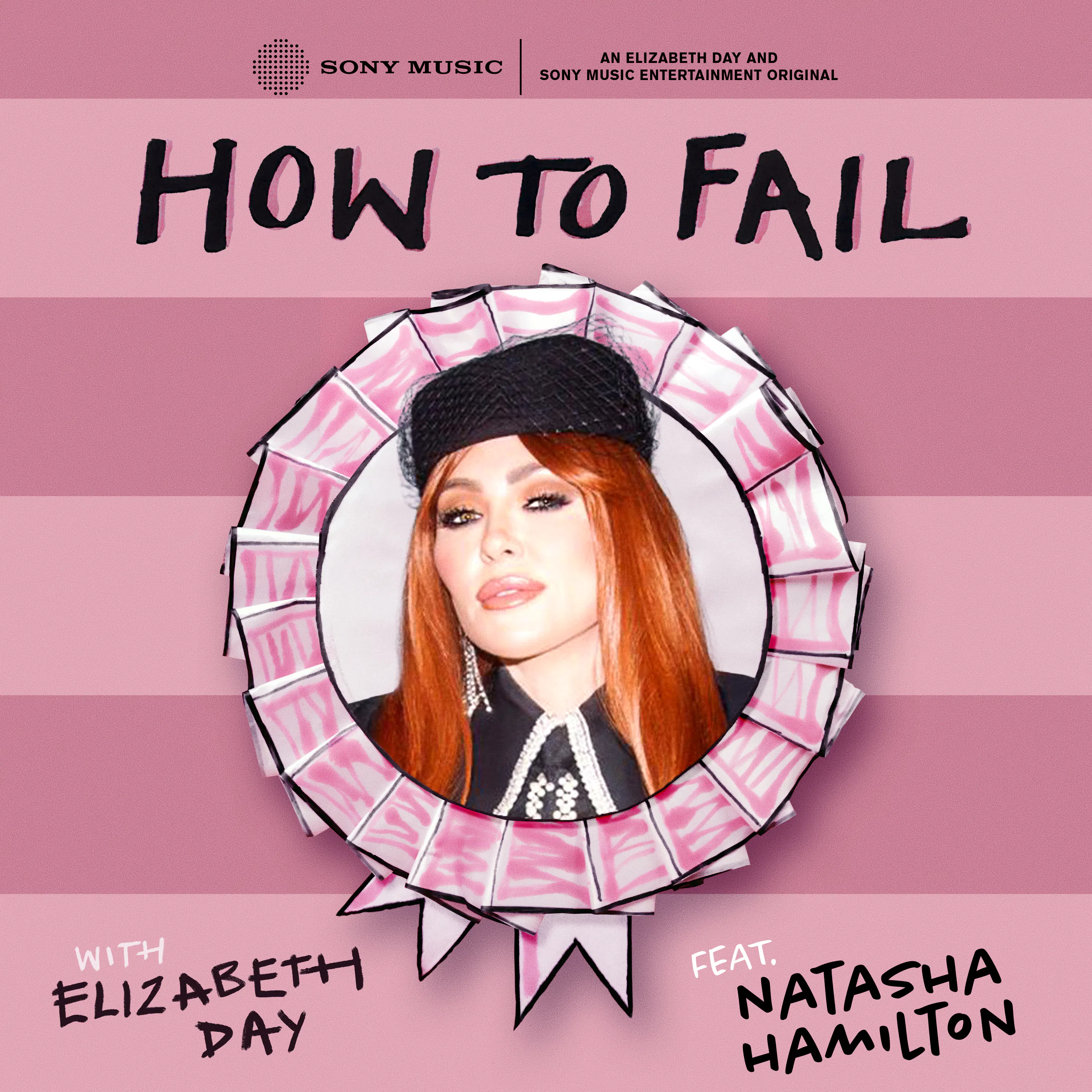
How To Fail With Elizabeth Day
Atomic Kitten’s Natasha Hamilton - ‘We were young and working-class. We were dismissed.’
01:00:24
Loading summary
Transcript159 lines
- [00:00]
Natasha Hamilton
You know I've got an 11 year old daughter, a 15 year old son. You just think how dare people be that mean. When I went through my divorce I didn't even have the login details to my online banking. It took me seven years to financially recover after my divorce. Sometimes I do look back and think, God, in a previous life I must have been a pain in the ass.
- [00:28]
Elizabeth Day
Welcome to how to Fail, the podcast that believes all failure is an opportunity opportunity to grow. Just a heads up that this episode contains descriptions of depression and self harm. Before we get into this conversation, please do subscribe and follow so that you never miss a single episode of how to Fail. Hello, this is Elizabeth Day from the how to Fail podcast. I wanted to share something I'm genuinely excited about. One of my favorite UK wellness brands, Ancient and Brave, has just launched in the us. I've used two of their products in my daily routine and they've made a tangible difference. The first is True Creatine plus. With added taurine, vitamin D and magnesium, it supports physical performance, energy and cognitive function. It's easy to take at home or on the go whether I'm working out or not. I also use their clinically studied True Collagen, a pure, potent and powerful staple that supports skin elasticity and hydration as well as whole body health. It's EU sourced, so free from growth hormones or antibiotics, plus it's neutral in taste and dissolves effortlessly into coffee or smoothies or a cup of tea. I would say that as a Brit, wouldn't I? Ancient and Brave are proud members of 1% for the planet, meaning that 1% of their sales go to environmental causes wellness that feels good and does good too. Go to ancientandbrave.com planet and use the code howtofail. That's howtofail. No spaces all one word for $10 off any purchase.
- [02:09]
Natasha Hamilton
So good, so good, so good.
- [02:11]
Advertisement Voice
Spring styles are at Nordstrom Rack stores now and they're up to 60% off. Stock up and save on Rag and Bone, Madewell, Vince, All Saints and more of your favorites.
- [02:21]
Natasha Hamilton
How did I not know Rack has Adidas?
- [02:22]
Advertisement Voice
Why do we rack for the hottest deals? Just so many good brands. Join the NordicLub to unlock exclusive discounts. Shop new arrivals first and more. Plus buy online and pick up at your favorite Rack store for free. Great brands, great prices.
- [02:36]
Elizabeth Day
That's why you wreck Natasha Hamilton was 16 when she signed a record deal that would change her life forever. Until that point, she'd grown up in Liverpool attending local schools where she was bullied for her mixed race heritage and red hair, she found refuge in singing and performing from the age of 12 and then in 1999, she was recruited to join the girl band Atomic Kitten alongside Liz McClernand and Kerry Katona, who was later replaced by Jenny Frost. The group went on to sell over 10 million records and achieve three UK number one singles, including Whole Again and the Tide Is High. After five years and the birth of her first son, Hamilton quit the band until they were reformed in 2012. Hamilton, now a 43 year old mother of five, has since 2024 been concentrating on her solo projects, including setting up her own record label, Morpho, which focuses on nurturing and empowering young talent, rather than, as she puts it, moulding them into a product. She's also been releasing new music. Her latest single, Numb, has just been released and is a total bop. But there is a darkness underneath the electro pop be, which speaks perhaps of Hamilton finally having found her own voice Some 25 years after Hole again reached the top of the charts. Hamilton says, it's the most honest work I've ever made. There's a rawness to it, but also a clarity and strength that comes from everything I've lived through. Natasha Hamilton, welcome to How To Fail.
- [04:26]
Natasha Hamilton
Wow, what an intro. What a woman.
- [04:30]
Elizabeth Day
It's so lovely to be sitting opposite you. First of all, thank you for the music. Thank you for those years that you gave us with Atomic Kitten and for what you're now delivering like it is so needed in our culture.
- [04:42]
Natasha Hamilton
Oh, thank you. You know, you say that I get goosebumps because it never ever fails to resonate how much that music means to other people.
- [04:54]
Elizabeth Day
I refuse to believe that hole again is 25 years old. How dare it be that old?
- [05:01]
Natasha Hamilton
It's crazy. It's like it happened in the blink of an eye. But also, I've lived many lives in that 25 years.
- [05:09]
Elizabeth Day
So talk to me about your 40s. So we are both in our 40s now. How are you finding it as a decade?
- [05:16]
Natasha Hamilton
Great. I wasn't looking forward to it. I don't know, I feel like that the turn of being 40 felt quite dramatic and uncomfortable. Actually, I wasn't looking forward to it at all. I don't know why. Why? I mean, I was leaving behind a lot of sadness, really, but also a lot of greatness because I just started living in a really comfortable part of my life and I don't know, maybe a new decade. I was like, oh, please stay, stay. Like, I hope everything stays well, but with age Comes just a lot of clarity about the life you want to live, the person you want to be about not really caring about the noise that can surround you. Especially in the industry that I'm in. I spent a lot of years, like, doubting, you know, is this the right direction? Am I good enough? What will people think? And actually turning force. He was a great marker for me because it was like, none of that matters. Yeah. Like this is the decade to be unapologetically me. Yeah. And enjoy life, enjoy my career, enjoy my creativity and what life can be if you live without fear.
- [06:38]
Elizabeth Day
That is so powerful. Tell me about your new single, Numb, because is there an element that you felt numb through some of your fame, your previous fame, and you've sort of woken up in your 40s? Would that be accurate? None.
- [06:54]
Natasha Hamilton
Wasn't deliberate. So I ended up in a writing camp in Spain through Chance. I was at my husband's charity event. I met a singer songwriter called Kyle. He was like, look, I've got this writing camp. I think you're great. I've listened to your music for years. Why don't you come out? So I just took a chance. I booked a flight to Alicante for three or four nights. I went to a writing camp where I didn't really know anybody. And it felt quite liberating. And from fear of making another wrong move or bringing another wrong person into my life, I'd cut myself off from feeling. And it wasn't until I was in this room listening to music like this song has to be called Numb. This moment now, everything that happens beyond this is my rebirth. And it really empowered me.
- [07:55]
Elizabeth Day
Is part of the reason that you set up Morpho because you didn't want younger, creative artists to go through some of what you went through with Atomic Kitten?
- [08:05]
Natasha Hamilton
Yeah. I think everyone around us at the time was doing the best that they could do in this machine that was just gaining traction. And Atomic it and was becoming bigger than what we ever thought it could have been. And I still speak to my old management like they're still part of my life, you know, in a small part. And my old record label boss is almost like a mentor to me now. And I appreciate the position that they were in. Whereas we wear a product and everyone's got a job and we have to move forward, but on the flip side of that, they were part of the life that we were living where we needed support that we didn't get. And I don't know whose shoulders that was to fall on. I think between management, record Label and parents. Everyone was trying to do the best with the tools that they had. But if there was practices in place that they'd learned or experienced from other bands pre Atomic Hitting, because, let's be honest, we weren't the only band who were young and who struggled. I think there could have been things put in place that would have helped a lot. So with Morpho Records, that's what I'm doing. I'm setting up a label where first and foremost, it's duty of care. It's really what does that person want out of their mentorship? So for me, it's giving back before we take.
- [09:36]
Elizabeth Day
Let's get onto your first failure, because as you put it, it's the end of Atomic Kitten. And I'd like to go back to the start of Atomic Kitten, because I couldn't believe that you were 16 when you joined, until I did the research for this interview. So young, but you seem to have such a good head on your shoulders. When I look back at the footage, how did you feel, age 16 being part of this band?
- [10:04]
Natasha Hamilton
Truthfully, I was ready. I'd been singing since, oh, forever. You know, the first school play at the age age of four when we had to be a flower. You know, there's lots of kids scratching the head and picking at the feet, and I was the beautiful flower, right. Really ott in the middle of the room and teacher saying, oh, Mrs. Hamilton, I think your daughter's got something special. So it was just always in me to perform and to want to sing. But I think as I got older, as you mentioned, the bullying started and being left out and being punched in the back, playing. Playing games in the school playground and being laughed at because I was in the school choir or I was playing the recorder. And it was like my. My special gift was brought a lot of negativity into my life. But the flip side of that was when I. And when I was on stage, people would be quiet. It was time away from all of that negative noise. I grew up in the inner city of Liverpool and it was brilliant. Like, I love my. I still call it my home. Like, I was. I grew up in a home full of love. My parents were amazing. But to step outside of that front door, it was brutal at times and it was harsh. And I had people picking on me and chasing me and fighting me and, you know, pulling my hair, jumping on my back and beating me up.
- [11:44]
Elizabeth Day
I'm so sorry.
- [11:46]
Natasha Hamilton
You know, this is kind of what it's like to live in an inner city. Also being A ginger kid wearing braces, having a mixed race father in a predominantly white area. All of these layers of oh my God. She's the perfect target for us to bully her. So when I joined the Starlight show group at 12, which was a group of kids going around pubs, clubs, theaters, anywhere, anything, anywhere with a stage or a space that we could make a stage that took me away from the streets every week, who went? And I was busy. I used to love coming home on a Friday and getting my outfit ready and my dad used to taught me how to iron, like with a, you know, a pillowcase and damp it down so you don't burn anything. And it was this pride that I had for all these items because we didn't have a lot of money but my mum would save up every last penny to get me like beautiful dresses to wear on stage. So from 12 to leaving school at 15, I'd done thousands of shows and I went from being a 12 year old little kid with this young voice to a 15 year old with this powerhouse vocal where people inst of drinking the pint and smoking the fag and chatting, you know, from three years previous, they'd put the drink down and turn around, watch and clap at the end. So I knew I was like, I've got something here that could get me out, could get me on a cruise ship traveling the world. Wow. How amazing would that be? So by the time the Atomic hit and audition happened, I'd done so many auditions, my mum had driven me all around the country, bless her, and she saw the audition. I was at college and I came home, she said, I've got you an audition for a girl band with attitudes. And I was like, okay, I can work with that.
- [13:45]
Elizabeth Day
When you joined the band, I know you became firm friends afterwards, but Kerry Katona, you didn't get on.
- [13:52]
Natasha Hamilton
We clashed.
- [13:53]
Elizabeth Day
You clashed. Was that intimidating or because of everything you'd been through to get there? Did you feel this inner confidence that it was all going to be okay?
- [14:02]
Natasha Hamilton
I wouldn't say intimidating, but I was definitely upset because coming into Atomic Kitten, having Andy McCloskey and Stuart Kershaw back, it OMD being in the rehearsal space there, the studios that they owned listening to the songs. For me, I knew like at that age, I was like, this is the one, this is the ticket out. So to clash almost instantly with Kerry and I was just being myself. I was trying to suggest dance moves and I just wanted to come as a team player. But I think that was seen as being too bossy or you Know, I hadn't quite earned my place to be suggesting what the girls should do, but when you grow up, you know, in the situations that I had, you have to kind of have a confidence and maybe a bit of bravado. And I'd done it for years. It wasn't my first rodeo. I. Yeah, I think I just overstepped the mark a little bit. And Kerry didn't like it. And she did go back to the studio and say, I don't like her and if she stays, I'm leaving. And they told me that they were like, what happened at the flat? And I was like, what you mean? And they're like, Kerry's Carrie said she doesn't want to work with you. And I just burst out crying. I was like, I really don't know. I was just trying to be helpful. Anyway, they just said, well, you stay, you best get on. And it was difficult because Kerry and Liz lived in a flat together for like, I think 18 months before I even turned up. So they had a really close bond. And, yeah, they had to let me in and I had to earn my way in. And it took a little while. It was a bit frosty to begin with, but I was a tough cookie at that point, so I was gonna try and make it work every way I could.
- [16:02]
Elizabeth Day
And you did make it work as a band.
- [16:05]
Natasha Hamilton
Yeah.
- [16:05]
Elizabeth Day
And I am obsessed with talking to women who were in the public eye who made it through that time.
- [16:16]
Natasha Hamilton
Oh, my God.
- [16:16]
Elizabeth Day
Like late 90s, early Y2K media attention. Which is part of the reason I was so excited that you were coming on. Because I, as someone who was not in the public eye whatsoever, found that period of time difficult enough to handle in terms of how I felt about myself, how I felt about my body. And I cannot imagine what it was like for someone like you who was famous. What do you remember of the tabloid attention when you did get famous?
- [16:49]
Natasha Hamilton
I remember starting the band and liking myself. I liked the way I looked. I liked the fact that I was flat chested and, you know, and I was quite boyish, sporty, I think. Then when people start to highlight what is wrong with you, it's a really confusing place to be in because you're not really sure why people are saying these things. And all of a sudden you go, oh, well, maybe that does need to change. Or you feel it is an attack on who you are. And I think I was down the line. Like, part of me, the naivety of it all was, I don't really give a shit. But the longer it went on, it does chip away and you do start to care. And it was always very apparent that, you know, Kerry was the beautiful, the bombshell, you know, things like that. And there's always a language used around how Kerry looked, which was not really ever used for me and Liz, I don't suppose, you know, and you kind of, you get used to that and then you do start to think, oh, maybe I'm not that, that pretty.
- [18:07]
Elizabeth Day
You are so beautiful and you were then. And I just need to state that as a pattern.
- [18:12]
Natasha Hamilton
For the record, I, I was a beautiful young girl growing up in the public eye, but I think it does. I knew I'd get upset.
- [18:23]
Elizabeth Day
Oh, Natasha, I, I can't even imagine. And I really, it's important to show these feelings like it really is.
- [18:32]
Natasha Hamilton
I'm upset, but I'm angry. Yeah. You know, I've got an 11 year old daughter, a 15 year old son, and you just think, how dare people be that mean and disgusted about kids.
- [18:51]
Elizabeth Day
Yeah.
- [18:51]
Natasha Hamilton
But it, it was what it was. We were fodder. Fodder for the tabloids, fodder for the magazines. I don't know why it's still so raw.
- [19:03]
Elizabeth Day
No, I'm so sorry you went through that.
- [19:10]
Natasha Hamilton
I'm actually like, I'm fine. I think there's a lot of pain that gets boxed up and occasionally when you open it, it's, oh, it pinches. Because there were times when I cry in bed and there were times when I was just in a hotel room on my own with no parents and no friends and feeling really vulnerable, scared, not good enough. But then you have to open that door the next day and be like, hey, I'm Natasha from Atomic Inn. Yes, I feel pain. Not just for myself, for all the young people back then who you had to be dragged through the media like that. It was tough times and I'm probably more sensitive to it now because I'm a woman and like, it's, it's, it's unfair. Back then I think I had to really toughen myself up to it. I had to just be tough and you have to tap out a little bit and it's that numbness feeling you're not feeling. You're going through the motions, you're doing things that half the time you don't want to do or you're in a public space and in the back of your head you're thinking, oh my God, everyone's looking at me and how thin I am, or they're judging me or like I don't look Nice. And it's just a level of scrutiny on top of the pressure of being famous. That is difficult. It is difficult.
- [20:54]
Elizabeth Day
Thank you so much for opening up about that.
- [20:57]
Natasha Hamilton
I don't know why I get so emotional over that. Please.
- [20:59]
Elizabeth Day
Like, I, I, I totally understand why you get so emotional. And if it helps. Any woman I've ever spoken to who's had a similar experience to yours has done the same. And I think potentially it's because you were so busy and working and booked at the time, and it was a different era in terms of mental health that you were never given the opportunity to process.
- [21:25]
Natasha Hamilton
No.
- [21:27]
Elizabeth Day
And it also strikes me, Natasha, that so much of what you've done in the last couple of years is about parenting and healing a thing and healing and parenting your own children, parenting young artists, but also parenting yourself as you were then. And there's something so beautiful and powerful about that. You've turned your pain into that kind of purpose.
- [21:51]
Natasha Hamilton
Yeah. It was just so lonely and so isolating. And if there was someone I could pick the phone up to and say, okay, this is what happened today. And as you say, process it in real time instead of putting a lid on it and pushing it down deep for decades. And sometimes you just say it, but you're not reliving it. And I think it's in situations like this where my whole, my whole being is reliving it. It's. Whoa. Like, that really was upsetting. And I just think, God, like, if that was one of my own, my mum and dad must have got a lot of grey hairs from basically sitting at home, having to watch from afar what their teenage daughter was doing and going through via the media.
- [22:44]
Elizabeth Day
Could you talk to your bandmates? I'm sure you could, but was it difficult because they were teenagers too?
- [22:51]
Natasha Hamilton
It was spoken about, but probably more like in a sense of cheeky folks.
- [22:58]
Elizabeth Day
Yes.
- [22:59]
Natasha Hamilton
You know, a bit more bravado to it. But were we confined and into our deepest, darkest secrets with each other? No, not really. But, you know, we're talking 25, 26, whatever years ago, that wasn't the thing that we did. We didn't really know that we could do that. I think the least we spoke about it and the more we buried it, the easier it was just to crack on and get through another day.
- [23:31]
Elizabeth Day
You know those times late at night when you're scrolling and you see something online that you've been looking for and you just need to buy it right there and then you click on the link, you add it to cart before hitting checkout? But then that sinking feeling as you realize you don't have your card anywhere near and don't want to get out of bed. But that's when you see it. That purple pay button that has all of your information saved, making checking out as simple as a quick tap of your screen. Shopify is the commerce platform behind millions of businesses around the world and has so many benefits. You can set up your own design studio, use Shopify's AI tools that write product descriptions and even enhance your product photography.
- [24:16]
Natasha Hamilton
You can get the word out like
- [24:18]
Elizabeth Day
you have a marketing team behind you. Easily create email and social media campaigns wherever your customers are scrolling or strolling. See fewer carts go abandoned and more sales go. Sign up for your pound one per month trial today at shopify.co.uk fail go to shopify.co.uk SL fail makeup has always mattered to me, but honestly, I cannot be dealing with that heavy, full glam 47 step routine. I want stuff that's quick, easy and doesn't require me to suddenly become a professional makeup artist. Which is why I am obsessed with Jones Road Beauty's Miracle Balm. It's genuinely a total game changer. It's basically your all in one do everything pot. You can use it as a highlighter, bronzer, blush, lip tint. It's the ultimate low effort multitasker. And as someone with quite sensitive skin, I love that. The formulas are full of skin loving ingredients so it nourishes rather than cakes. And it's not just the miracle Balm. Their just enough tinted moisturiser feels like nothing on your skin in the best possible way. Plus they've just launched their eyeshadow stick which is already glued to my makeup bag. Effortless, polished, dermatologist tested just yes. Modern day makeup that's clean, strategic and multifunctional for effortless routines. For a limited time our listeners are getting a free Shimmer face oil on their first purchase when they use Code Fail at checkout. Just head to Jonesroadbeauty.com and use code Fail at checkout. After you purchase they'll ask you where you heard about them. Please support our show and tell them that we sent you. I'm James Buckley. And I'm Joe Thomas. Joe had to look at the script for our names and on our weekly show Joe and James Fact up we bring each other a fact that we think is fascinating. Our only rule.
- [26:18]
Natasha Hamilton
Go on.
- [26:18]
Elizabeth Day
The more interesting it is, the more true it is. We dive into the weird and wonderful. Like whether you could survive on nothing but beans or If Shrek deserves a Nobel Prize for discovering the fourth dimension, you might learn something new. Probably something useless, but definitely something interesting. Listen or watch Joe and James Fat up every Tuesday, wherever you get your podcasts. Given everything that you went through. And then Kerry left the band and was replaced by Jenny Frost. And then you got Whole Again to number one. What did that feel like?
- [26:50]
Natasha Hamilton
Unbelievable. Did we think in a million years that Whole Again would go to number one? After re releasing the album, bearing in mind we released it the first time round, it flopped. I think it went to 39 in the charts and left the following week. Then a member left and we had to scramble around quite ferociously to find someone and get Jen. And that's why a lot of the all the TV performances of Hooligan with Jenny alive, because all we had was Kerry on the track, which I loved. I was like, yeah, we get to see you live. We knew it was gonna do well, but when I say gonna do well. We were hopeful for top 10, but we were going up against U2 at the time. Like, they just absolutely annihilated everyone. So to get that phone call, I'll never forget, I was in the Regent Plaza Hotel in Maida Vale. That's what it was called then. I lived there for like two years and my manager was like, it didn't do as we expected. I mean, I was like, oh, like in bed, in my PJs. We're bloody number one. And I'm like, like jumping on the bed, fell on the floor. Then I put the phone down and next door was Liz. And then I can hear Liz screaming. And we had an interconnecting door. So we opened the doors and we just threw ourselves. And we were like, what? Honestly, that whole week is a blur. It is an absolute blur of promo every day. It was sales. Up, up, up, up, up. We annihilated you two.
- [28:37]
Elizabeth Day
And I loved the T shirt you wore at the time, which was you two just another Irish boy band.
- [28:42]
Natasha Hamilton
So cheeky.
- [28:43]
Elizabeth Day
It was so funny.
- [28:44]
Natasha Hamilton
So cheeky.
- [28:45]
Elizabeth Day
Have you ever met Bono or any.
- [28:47]
Natasha Hamilton
So we'd had a few impromptu meets and drinks with Bono actually leading up to that. Hence why I thought, oh, he'll be able to take it. And that was at the Enemy Awards. But then Jenny called him over and said, oh, you need to look at Natasha's T shirt. And I had a jacket on. And I was like. And he was like, show me a T shirt. Terrible. Sorry.
- [29:11]
Elizabeth Day
I'm so sorry.
- [29:13]
Natasha Hamilton
To anyone who's Irish. And I showed them the T shirt. And he went fair play. And when he collected his award that day, he said something like, we've had our arses kicked by pop. Well done, girls.
- [29:29]
Elizabeth Day
There's so much that is sort of dismissive in the narrative around girl bands because it's young women. There was an additional dismissal, I think, with Atomic Kitten, because you were working class. How much did you feel that at the time?
- [29:44]
Natasha Hamilton
I think our naivety and our youth and not really knowing a lot about politics and how people were treated differently, especially if they were northern and had a Scouse accent. We were fearless. I'm glad we didn't really know much about that or pay much attention to it, but looking back and hearing other people's stories, like management and label and the stories they've told me, I'm like, oh, we weren't really. Yeah, we weren't. We weren't aware in that moment because we just wanted to be successful and I'm glad it was kept away from us. But when you think that Atomic Kitten in the Midweeks were outselling U2 2 to 1 yet no one would play our song on radio, we were so dismissed. And it was only when it hit number one on Sunday that they had to play it, because obviously it's in the chart. And every week thereafter, our sales went up. So on week two of number one, we increased sales every week for four weeks. The only person to do that previous to us was Michael Jackson.
- [31:02]
Elizabeth Day
But that's so interesting that you weren't being played on the radio. So it was literally like your live appearances, your performances were driving the sales. Yeah, that's very impressive.
- [31:12]
Natasha Hamilton
Yeah. Like, I can remember doing certain radio shows with male presenters, and we'd be like, we don't really want to do it because we're basically sitting docks with a man who's more eloquent and intelligent than what we were at our age, just taking the piss. And I. You know, that infuriates me now because I'm like, why? Why did we have to do that? But it was. Well, you have to. There were certain panel shows that, you know, I was asked to do, and I'd be crying to management saying, I don't want to do that, because it is just a load of men gonna take the piss out of me, and why would I want that? And I was being asked to do that show when I was actually diagnosed with postnatal depression. But, you know, it's. It's the biggest show on tv. Oh, well, I don't want to do it. Yes.
- [32:06]
Elizabeth Day
Which Panel show
- [32:09]
Natasha Hamilton
Buzzcocks.
- [32:10]
Elizabeth Day
Right?
- [32:11]
Natasha Hamilton
Yeah. So it's that humor where, yeah, they take the piss, but when you've got postnatal depression and you're vulnerable, that's not gonna go down very well.
- [32:23]
Elizabeth Day
You poor thing. That is so much. You mentioned the postnatal depression. So you gave birth to your first baby boy and the doctor said you need six to 12 months off, and they gave you six weeks.
- [32:39]
Natasha Hamilton
Have I got that right? Two weeks.
- [32:41]
Elizabeth Day
Two weeks. It wasn't. It was two weeks and then you were back on stage.
- [32:45]
Natasha Hamilton
Yeah. Yeah. It was really tough because even when I had two weeks off, I was not lay at home chilling, watching this morning. Like, it. I was. My nervous system was completely shot and I couldn't relax, I couldn't sleep, I couldn't focus. And I had this immense pressure of, when are you coming back to work? When is. You know, if you're leaving, just tell us you're leaving. And it was just a constant. I don't know if. I suppose at the time it felt like a threat. And in the end, instead of being threatened, I just made the decision myself to leave after. Yeah.
- [33:33]
Elizabeth Day
And is that the end of Atomic Kitten that you are quoting as a failure? Because there are various ends of Atomic Kiss in the band, so.
- [33:43]
Natasha Hamilton
No, I think when you've had such huge success at such a young age and you walk away from that at the. At the peak, like we. Another 12 months probably would have made us financially stable for a very long time. Coming off the back of this huge success and then having a whole year off, I've had my biggest. I've earned the most money I've earned ever, but I've just sat at home trying to heal for a year, and all of a sudden I've got a tax bill and I'm having to go back because I'm on my own with the kids and I'm the breadwinner. So I need to get back to work. And I think it wasn't. I wasn't going back out of passion and love. It was fear and. Oh, my God, like, how can I ever do that again? How will I ever beat that? How can I fit back into a world that I didn't love anymore, But I needed to because I had a family to support. So the fear of failing and not being able or not wanting to really do that again, it was such a confusing time in my life.
- [34:58]
Elizabeth Day
Do you think you've recovered from that time? Even now? Do you think you've recovered from the end of Atomic Kitten?
- [35:06]
Natasha Hamilton
Yeah, I've made. I've definitely made peace with it. Like at the end of Atomic Kitten, Me, Jen and Liz, I don't think we spoke the odd text message, but we didn't speak. Or we weren't sisters the way we had been for a good while. It was heartbreaking. They were my girls, they were my sisters. But my decision to leave also ended their career and they had to go off and do different things that maybe they weren't ready to do. I'm not sure, maybe they were, maybe they weren't. But there was definitely a time where there was that feeling of animosity and it didn't end well and people didn't like me, I didn't like them. It was just. It was hard to go from this tight knit bubble to just being at home with my kids, not really even understanding how the real world worked.
- [36:11]
Elizabeth Day
And you were still only 19 when you had your first baby?
- [36:14]
Natasha Hamilton
2020. Yeah.
- [36:17]
Elizabeth Day
How are things now? Have you healed enough to have a friendship with your former bandmate?
- [36:23]
Natasha Hamilton
Yeah. God, yeah. Yay. Yeah. We've moved on. As they say, time is the greatest healer. And it's been a long time and we've reformed and we've done other bits and bobs together, which has been beautiful. But my career really did come to an abrupt halt and that was something I'd worked hard for. Like, that's all I ever wanted to do. Out of everyone, all the girls in the band, I'm the only one that wanted to be a pop star. Everyone else kind of fell into it. So to end on such a dramatic and negative point, it was heartbreaking. It really was, because I wanted to do that. I wanted to be a pop star until I didn't really didn't want to be a pop star. I hated it. And to fall out of love with the one thing you always wanted to do, that's a bit of a head.
- [37:24]
Elizabeth Day
You know what, it's very tough because it leaves you without an identity.
- [37:28]
Natasha Hamilton
Absolutely.
- [37:31]
Elizabeth Day
That identity crisis leads us onto your second failure, which. Thank you. I want to preface this by saying thank you so much for talking about it because I don't think you've spoken about it before and we're moving on a few years. And it's after you had your daughter Ella at the age of 31. Would you mind telling us what happened?
- [37:54]
Natasha Hamilton
Yeah. So I had Ella very quite soon into my relationship with her father, off the back of a painful divorce. So I'm not in a great place. But I've met someone who I get on really well. With. But I had a lot of health issues and was in and out of hospital with ruptured cysts previous to falling pregnant with Ella. So I'd had a lot of investigations going on. I'd been told by the doctors, not gonna be able to have kids no more. In my head, I don't need to go and get this coil put back in, because even though I had one, I did have one, and I was trying to get it put in in a private clinic. Never quite got there in time. In my mind, I'm like, oh, well, that's probably why I've had kids young, giving it out to the universe. I'm blessed. I've got three. And then, yeah, I fell pregnant with Ella and it was massive shock. I fell out with my family over it, like, they were. They weren't happy. And I'm very close to my family, so that was quite isolating.
- [39:13]
Elizabeth Day
Because they were worried about you.
- [39:15]
Natasha Hamilton
Yeah, of course. Like, you know, I'm having a baby and I've. I've come through a lot of hardship and a lot of mental health issues off the back of going through a divorce. So there's my support system gone for a little while. We did make amends in the end. And then, obviously, I'm having a child with someone I don't really know. And we were good friends. But it was quite telling early on that things weren't great. But in my mind, I'd made the decision and, like, I'm gonna do this with or without you kind of. Kind of thing. I don't need your permission to continue with this. I will carry on. But, you know, Rich was there and we made the best out of the situation that we could. I think there was just a lot happening. My whole pregnancy was horrendous. I was ill, like, violently ill for weeks and weeks and weeks. Stressed, anxious, depressed. And then after I had Ella, I. Yeah, I started having dark thoughts. So I was cooking tea in the kitchen one day and had a sharp knife and a flash came through my mind of me cutting my wrists. And it was quite joyous. I wasn't in pain. I was quite enjoying it. And it scared the hell out of me. It was a moment of, what the hell was that? And I was very. I was taken back by it. It was a lot. And I shouted, rich. And he came in and I told him and I was shaken from head to toe. And he helped get me to the hospital because at this point, I was just having a complete meltdown. And, yeah, I was told I was having Like a mental breakdown. I was under the care of the hospital for quite a few weeks. I was treated at home. They did offer to have me at hospital and have Ella with me. They had wards where women who were struggling post birth they could stay and be treated with the baby there. But I was able to go home and have that treatment with Richard, my parents there every day. I was sedated for a couple of days just to sleep. Because leading up to that, what happened, that imagery. I hadn't slept, I'd say, for weeks. I used to get up in the morning, sit in the shower and cry because I was so exhausted from my mind. Yeah, just so tired. Tired of life, tired of my brain, tired of not being able to sleep. God, when I came out of that, I can remember just feeling again, numb. A complete numbness on a level that I'd never felt before, but also a. It was such a relief because everything I was feeling, I'd said I didn't hide anything. I was scared that my children would be taken away from me because I was some kind of crazy lady who couldn't be trusted with the kids. But honestly, the mental health team at Chester Hospital were incredible, so supportive. But that for me was the first time I'd said enough is enough. Like this is rock bottom for me and I just need to take one day at a time to figure out how to function again. And I was given 18 weeks of intensive CBT therapy that at first I just thought, this is a load of nonsense. I don't know why I thought that just maybe from how I'd grown up, the environment, so you know, this is a load of woo woo or whatever. But I committed to it and it changed my life. It was really difficult at first because no one's telling you what you should think and how you should be and what the next step is. And that was the hardest thing for me. I was so use for someone telling me what to do. Managed. I've been managed. I'd had a manager from the age of 16. I was constantly told who to be, what to do, how to look, how to act. I'd never been given the reins of my own life before.
- [44:04]
Elizabeth Day
I'm so emotional hearing you talk about this. I can feel how terrifying it must have been.
- [44:11]
Natasha Hamilton
It was horrible because I was so scared to make the wrong decision. But there is. What I've realized is there is no wrong decisions. All you can do is try. If it works, it works. If it doesn't, it doesn't. And being able to let go of the reins and say, I don't know all the answers and I don't know where life is going to lead me, but I have faith that everything's going to be okay. Yeah, I think a lot of things that happen in life make you lose faith.
- [44:46]
Elizabeth Day
Yes.
- [44:48]
Natasha Hamilton
But it's something I'm really trying to hold on to at the moment. Like, 18 weeks later, I cried my eyes out leaving that therapy room. The. The woman who'd looked after me was like, that's it. And I said, can I stay in touch with you? And she said, no.
- [45:04]
Elizabeth Day
Oh, my goodness.
- [45:05]
Natasha Hamilton
Ship were not loud.
- [45:07]
Elizabeth Day
That's sort of extraordinary, given what you just said about being managed. Like, here was someone who gave you back your agency. What do you think is the most important thing you learned about yourself during those 18 weeks?
- [45:20]
Natasha Hamilton
Like, I am capable of making my own decisions. And when you think you're 31 years old and you haven't realized that yet or had to. I just had to go through so much to have the realization of I. I am capable. And at the time, my sister, my younger sister had just signed up to go to beauty college. She was on a new path. And I thought, I think I'd like to do that. I know a lot about beauty. I've had every beauty treatment under the sun, and I'm quite like, I am. I love. Like, at school, I was a bit. Bit geeky. I was like a science girl. Like, I love science. I was really good at it. And I loved the fact that going back to college, I'd have to learn the anatomy of the body and learn the science behind what we were doing and take exams. So all of a sudden I was like, I'm gonna do something for me. Like, I'm going to focus on something else. I don't want to just be living in this. Me, me, me. What else can I do to grow as a woman? So I signed up for a local beauty college course and I was terrified. I got my mum to drive me there. I got my mum to get out the car and walk into the college.
- [46:37]
Elizabeth Day
Oh, like your first day at school, literally, Yeah.
- [46:40]
Natasha Hamilton
I was like, can you just walk in and have a look and, like, tell me if it. Like, what, what's it like? She was like, oh, my God, Natasha. And I was like, please. I was, you know, I was quite raw and vulnerable, but I also knew that. That I had to just be me and go. Go out there and do these things to grow. That led to me going to London and studying at the International Institute of Anti Aging and becoming a skin specialist and opening my own clinic. And honestly, it's incredible what can happen when you back yourself.
- [47:18]
Elizabeth Day
I'm in awe of you. I'm so admiring of you going through that process and ending up where you are. How old is Ella now?
- [47:28]
Natasha Hamilton
12. She's 11 now.
- [47:29]
Elizabeth Day
11. And what's your relationship like with Ella?
- [47:33]
Natasha Hamilton
Incredible. I mean, apparently I'm not as cool as what she used to think happens to us all sometimes.
- [47:42]
Advertisement Voice
I'm cool,
- [47:44]
Natasha Hamilton
but super close. I just shot my next video on Friday and she's in it. She's not in it for the sake of being in it. There's a part of the lyrics of the song that refer to the celestial beings that I've created or that we create as women. And she has a role in the video. And oh my God, that girl, the confidence. She is everything I wanted to be as a young girl and more. She is so articulate and confident in herself and in here. Don't get me wrong, she's been through it. She's a young girl navigating life at school and also having two famous parents, which is very difficult.
- [48:37]
Elizabeth Day
So her father is Richie Neville from five.
- [48:39]
Natasha Hamilton
Yeah, yeah. So instantly she's different to everyone else and she has come up against a few things at school which we just try and navigate with as much love as we can. And you know, I tell her when I was a little girl I got bullied and I was picked on. And you've got to some young kids maybe listening to what other people are saying and they don't really understand and it's your. It's up to you to tell them you're just the same.
- [49:12]
Advertisement Voice
Eczema is unpredictable, but you can flare less with epglis, a once monthly treatment for moderate to severe eczema. After an initial four month or longer dosing phase, about four in 10 people taking Eblis achieved itch relief and clear or almost clear skin at 16 weeks. And most of those people maintain skin that's still more clear at one year with monthly dosing.
- [49:32]
Hemglus Lebricizumab LBKZ, a 250mg per 2ml injection, is a prescription medicine used to treat adults and children 12 years of age and older who weigh at least 88 pounds or 40 kilograms with moderate to severe eczema, also called atopic dermatitis, that is not well controlled with prescription therapies used on the skin or topicals or who cannot use topical therapies. EBGLIS can be used with or without topical corticosteroids. Don't use if you're allergic to Ebglis. Allergic reactions can occur that can be severe. Eye problems can occur. Tell your doctor if you have new or worsening eye problems. You should not receive a live vaccine when treated with Eglis. Before starting Ebglis, tell your doctor if you have a parasitic infection.
- [50:06]
Ask your doctor about eglis and visit egliss.lilly.com or call 1-800-lilyrx or 1-800-545-5979. Score more with the College branded Venmo Debit Card and earn up to 5% cash back with Venmo Stash Got paid back with the Venmo Debit card you can instantly access your balance and and spend on what you want, like game day, snacks, gear, tickets and more. The more you do, the more cash back you can earn. Plus there's no monthly fee or minimum balance. Sign up now@venmo.com collegecard the Venmo Mastercard is issued by the Bancorp Bank NA Select Schools available Venmo Stash terms and exclusions apply at venmo me termsterms max $100 cash back per month this episode is brought to you by Redfin. You're listening to a podcast, which means you're probably multitasking, maybe even scrolling home listings on Redfin, saving homes without expecting to get them. But Redfin isn't just built for endless browsing. It's built to help you find and own a home with agents who close twice as many deals. When you find the one, you've got a real shot at getting it. Get started@redfin.com own the dream so many
- [51:12]
Elizabeth Day
women will feel so seen by what you have just shared. Those women who are currently feeling terrified, isolated, alone, who are freaked out by their own thoughts, who are so fearful of putting their relationship with their baby at risk, they will take so much comfort from the fact that you have this wonderful relationship with Ella.
- [51:35]
Natasha Hamilton
Yeah, all of I think from that moment on, all of my relationships got a lot better. I mean the kids were only I mean Ella was a baby, but the kids were young. But like my older boys, they obviously saw Mum Mommy struggling. I never tried to hide anything. I've always been very transparent and open. You know, they don't need to know every at the time they didn't know need to know everything. But I what I would say is talk to someone. The worst thing that you can do is keep it all inside. And going back to my postnatal depression with Josh, I hid that for so long for the fear of people saying, oh, you're so ungrateful. You've got. You're a pop star in one of the biggest bands in the country, and you've got this money and you've got that. What have you got to be sad for? And what other people think of you is, quite frankly, none of your business. It doesn't matter. But you can't keep all of them feelings locked in to yourself because it only gets worse and worse. So if you can find the courage, just a little bit of courage, to reach out to a family member, a friend, an older child, if they're older and just. Just confined.
- [52:57]
Elizabeth Day
So well put.
- [52:58]
Natasha Hamilton
Yeah.
- [52:59]
Elizabeth Day
Your third and final failure is life after divorce. So you've mentioned it there in terms of the impact it had on your personal relationships, but this was a very specific experience to do with business, wasn't it?
- [53:18]
Natasha Hamilton
Yeah.
- [53:19]
Elizabeth Day
Again, I'm so thrilled you're gonna talk about it, because I cannot tell you the amount of people who I know who will relate to this. Okay, so. And also the other person who spoke about this was Mel B. Okay, so you're in great company. So you went through a divorce and what happened financially afterwards?
- [53:39]
Natasha Hamilton
Well, I mean, I was very much the face of the business, and my husband, ex husband, he was the finance. And not just that, not just for business, but for my own personal business. I mean, now I go, wow. But I. When I went through my divorce, I didn't even have the login details to my online banking. Wow. Now where I am in my life now, I'm like, what? What?
- [54:08]
Elizabeth Day
And this is when you're in your late 20s, is that right?
- [54:11]
Natasha Hamilton
Yeah, yeah, yeah.
- [54:12]
Elizabeth Day
And I. I imagine as well, you're used to other people being in control of the money.
- [54:18]
Natasha Hamilton
That, to me, that made sense. Yeah, that was. That was totally normal for me. And I'm not saying I was in a relationship where he was like, I'm having these. These are not for you. I was happy just to go. You can deal with that while I'm in my box over here. We built multiple businesses together. Coffee shops, restaurants, bars, businesses I could sell in the future and help support me and the family pension, whatever that may be. And it, you know, it meant a lot to me. It was like, this is the first time I'm doing these businesses off my own back with my husband. After atomic hitting, I feel like I'm succeeding. This is great. And then the divorce happens and everything gets frozen, and all of a sudden I'm thinking, well, where are my assets? Where are they? Because there was lots of them, and now there's literally nothing. Look, I can't tell you what all of this was in a monetary value, but it was many years of my life. I'm talking five, maybe years of working really hard. Every day we're getting press coverage, and celebrities are hanging out in the club, and it's all. It's great. It's like all of this is going to one day be my rainy day pot for me and the kids. And, yeah, going through divorce. All of that just fell down all around me. And I didn't have the access to what all these things were because I didn't have a bank account. I've never seen a book on any of the accounts. It was like, where are all these things? Where does it exist?
- [56:06]
Elizabeth Day
Yeah.
- [56:07]
Natasha Hamilton
I don't know. I can remember sitting at my island in the house. I just, like, a lot of bills had bounced, and I'm getting, like, these calls, and I'm like, I don't know what's going on. And, like, all my accounts had been frozen. And I just remember phone in the bank, crying, saying, I have absolutely no idea what I'm supposed to do. I can't even log into my online banking. I don't know how to do it. I'm going through a divorce, and I need someone to help me. It was the worst free. Like, I just felt like, this free fall of chaos and anxiety. It was wild.
- [56:53]
Elizabeth Day
That's horrendous. What happened? Did you just. I mean, I don't want to be intrusive, but, like, did your ex husband take it all?
- [57:02]
Natasha Hamilton
I don't know what happened. To this day, I went through a divorce with a clean break after. It just got to a point where I thought, I can't put any more money into investigating what the hell has happened here, because I'm a single parent with a family to support.
- [57:21]
Elizabeth Day
So you have to start again.
- [57:23]
Natasha Hamilton
Yeah. It took me seven years to financially recover after my divorce.
- [57:27]
Elizabeth Day
Good grief.
- [57:29]
Natasha Hamilton
Yeah.
- [57:30]
Elizabeth Day
I'm astonished and horrified and so again, in awe of what a survivor you are.
- [57:41]
Natasha Hamilton
Mm. I just. Sometimes I do look back and think, God, in a previous life, I must have been a pain in the ass, because, you know, maybe one of these things isolated happens to someone in their lifetime, but it's like this chain of events that. It was like this steam train coming at me through my life.
- [58:02]
Elizabeth Day
How did you build up your finances again? Was this through the skin clinic?
- [58:08]
Natasha Hamilton
Working hard? Yeah. Taking every job. I always say I'M jack of all trades, master of none. I never stop working. I've learned how to pivot and that's always fueled from being a mum looking after her kids like there's no time. I've always found weirdly and I've, I've, I've made. In recent years, I've made this stop when my back is up against the wall, I can make happen. And I got to a point I thought, actually I just want to make happen without my back being up against the wall. Yes. But I think, God, if I can get through that, I can launch a record label.
- [58:47]
Elizabeth Day
Definitely. You've survived 100% of your worst days, your toughest challenges. You're still that kid in the streets in Liverpool getting punched in the back and carrying on and performing your way through it. There's that resilience, that core of steel that is so impressive and it's strength because of what you've been. Because of all of the challenge.
- [59:10]
Natasha Hamilton
Yeah.
- [59:11]
Elizabeth Day
Like the vulnerability you've shown is the strength.
- [59:14]
Natasha Hamilton
Yeah, I do see that. I don't know, maybe this is me trying to make myself feel better about it, but I feel like I've just experienced so much that I can give my kids a lot of insight and knowledge into life that I wasn't able to have growing up these days.
- [59:36]
Elizabeth Day
So you're married again?
- [59:37]
Natasha Hamilton
Yeah, like that very much was. Then I met my husband 10 years ago this year. So we're on our 10th year anniversary. I was 33. I actually went like. So bearing in mind six months or eight months before I met my now husband, I was under the care of a mental health team in a really dark place. And then I met him and we courted, we old school courted because one, he lived in London. Two, I didn't trust myself. I was like, I can't rush into this. Cause I've rushed into everything and look what's happened. And. And he helped me heal a lot because he, you know, he always says the woman he met when he met me, he was like, you're amazing. But I was also carrying a lot of hair, some pain. He was just fun. I could get away from life and just hang out and just, just be tash. And you know, he was a. He was, he had his own thing going on. He was successful, you know, he didn't need me for anything. He didn't have to manipulate or be jealous in any way. He was just like, I like you, you're cool. But I think I was so raw and honest. Within a month of knowing Me, like I told him my whole life story. Cause I just thought, oh, this is me and I can't be arsed getting six months in and going, oh, I've got something to tell you. The first night we met, I told him like I had four kids and I was living with my ex. And he was like, what do you mean? And I said, well, I'm try, I'm looking for a house, but until, until I get it, I'm living cohabiting with my ex. And he was just like, okay, that's
- [61:28]
Elizabeth Day
someone who's secure in himself.
- [61:30]
Natasha Hamilton
Yeah, he said, he's always said there's never a dull moment with Natasha.
- [61:36]
Elizabeth Day
You have five kids, what's the age range?
- [61:39]
Natasha Hamilton
So Josh is 23, 24 this year. Then I've got Harry who's 21, Alfie, 15, Ella, 11, and Kitty who's two.
- [61:50]
Elizabeth Day
That is an astonishing achievement. Is it challenging parenting each different age group simultaneously?
- [62:00]
Natasha Hamilton
At the moment, I question myself more with my eldest because he's a man, man. And sometimes, you know, men go to their dad, they go to that male for support. So sometimes I feel like, oh, what can I offer to make to help right now? Because he doesn't really like to confine in me, but he's got a beautiful partner. Yeah, they're just this beautiful couple, quite old fashioned. They remind me of the Notebook. It's like that old holes that wholesome love. Like they're just super cute. I'm really close with her, so now I kind of find out what's. I'm like, hey, how are you? How's Josh? Which is quite nice actually.
- [62:45]
Elizabeth Day
Yes.
- [62:46]
Natasha Hamilton
Because he's in the army, he's doing his thing. He's very career focused. Being a mum of a soldier's a whole nother.
- [62:54]
Elizabeth Day
Yes, that must be really emotional in so many ways.
- [62:57]
Natasha Hamilton
That's another thing. Yeah.
- [62:58]
Elizabeth Day
Yes, well, your eldest is a soldier and in so many ways you fought so many battles throughout your life and, and you've come out triumphant on the other side. Natasha Hamilton, I cannot tell you how grateful I am for your openness and for trusting me. And I would love to end on one very, very important question.
- [63:20]
Natasha Hamilton
Yeah.
- [63:21]
Elizabeth Day
Do you have the login details to your own bank account? Because I don't want to be back here in three years time.
- [63:28]
Natasha Hamilton
Yes, I can confirm I have access to my online banking. Thank you, you.
- [63:33]
Elizabeth Day
I'm thrilled to hear it. Listen, thank you so, so much for coming on how to Fail.
- [63:38]
Natasha Hamilton
Thank you for having me.
- [63:45]
Advertisement Voice
Monster Energy. Everybody knows White Monster zero Ultra. That's the og. It kicked off this whole zero sugar energy drink thing, but Ultra is a whole lineup now. You've got Strawberry Dreams, Blue Hawaiian Sunrise in Vice, Guava, and they all bring the Monster Energy Punch. So if you've been living in the White can branch out. Ultra's got a flavor for every vibe, and every single one is Zero Sugar. Tap the banner to learn more, please
- [64:14]
Elizabeth Day
do follow how to fail to get new episodes as they land on Apple Podcasts, Spotify, Amazon Music, or wherever you get your podcasts. Please tell all your friends this is an Elizabeth Day in Sony Music Entertainment Original Podcast. Thank you so much for listening.