← How To Fail With Elizabeth Day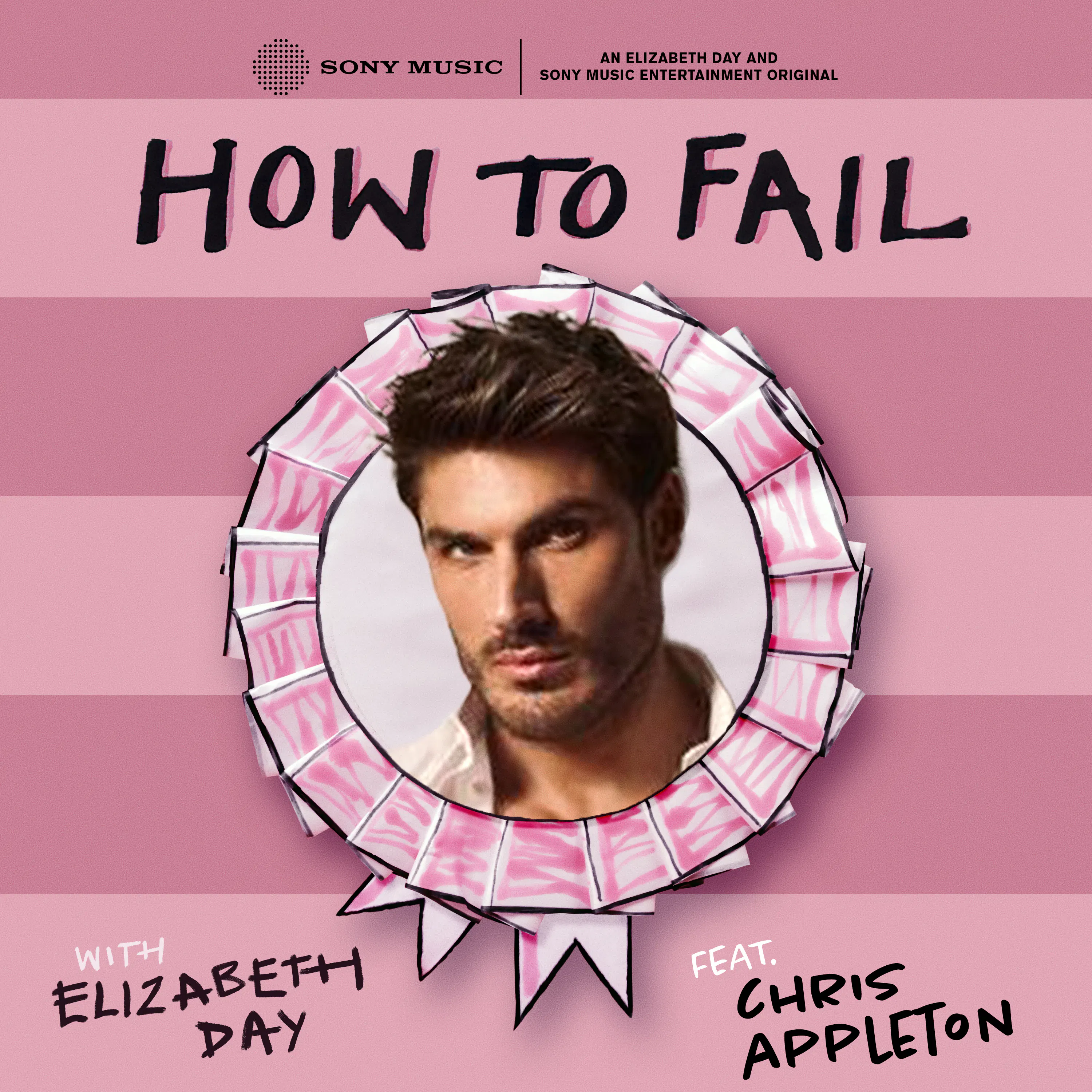
Loading summary
Transcript120 lines
- [00:00]
Chris Appleton
I did hair so people automatically assumed I was gay. I was only 12 or 13 when I got a job in the hair salon. The ultimate shame, which kind of led me to maybe my darkest time in my life and how shame really held me back was when I came out. And I came out at the age of 26. Failure happens to everyone, but I think you have a choice in what you do with failure and I think you can just be beaten down and give up, or you can pick yourself up and dust yourself off and try again.
- [00:30]
Elizabeth Day
Welcome to how to Fail, the podcast that focuses on failure rather than success because we believe that's where you find your true self. Now I just wanted to give you a heads up that this episode with Chris Appleton includes discussion of suicide. So please do take care while listening. Don't forget to subscribe and follow so that you never miss a single episode of how to Fail. Hello, this is Elizabeth Day from the how to Fail podcast. I wanted to share something I'm genuinely excited about. One of my favorite UK wellness brands, Ancient and Brave, has just launched in the us. I've used two of their products in my daily routine and they've made a tangible difference. The first is True Creatine Plus. With added taurine, vitamin D and magnesium, it supports physical performance, energy and cognitive function. It's easy to take at home or on the go, whether I'm working out or not. I also use their clinically studied True Collagen, a pure, potent and powerful staple that supports skin elasticity and hydration as well as whole body health. It's EU sourced, so free from growth hormones or antibiotics. Plus it's neutral in taste and dissolves effortlessly into coffee or smoothies or a cup of tea. I would say that as a Brit, wouldn't I? Ancient and Brave are proud members of 1% for the planet, meaning that 1% of their sales go to environmental causes wellness that feels good and does good too. Go to ancientandbrave.com planet and use the code howtofail. That's howtofail. No spaces all one word for $10 off any purchase.
- [02:14]
Chris Appleton
You know you need fiber for a healthy gut, but do you actually know how to get it? Quaker's been serving up fiber since 1877 with over 100 great tasting good source of fiber options to choose from. Whether you like old fashioned oats, instant oatmeal granola or oatmeal squares, Quaker makes it delicious.
- [02:33]
Elizabeth Day
Mmm.
- [02:34]
Chris Appleton
So good. Get your fiber with Quaker. Shop Quaker's good source of fiber products at a store near You.
- [02:42]
Elizabeth Day
My guest today is a man Kim Kardashian credits with changing her life. He is Chris Appleton, one of the most sought after hairstylists in the world and responsible for iconic style statements such as Kardashian's wet look at the met gala in 2019 and JLo's Super bowl blow dry that miraculously stayed bouncy throughout her performance. But for anyone assuming that Appleton's work is one of superficial frippery, his life tells a different story. He grew up the middle of five children in Leicester and struggled with undiagnosed dyslexia at school. Hair became a refuge and the place where he could explore his creativity. By 13, he was working in a local salon and being badly bullied by his classmates for being gay, something Appleton didn't yet understand about himself. At 16, he left school to work full time and began a serious relationship with his colleague Kate. By 19, he he was a father. In 2016, prompted by an email from Jennifer Lopez's team he initially thought was a scam, he moved to Los Angeles. It was a move that would usher in a new age of success and self acceptance. Now Appleton has a slew of devoted clients, including Kris Jenner and Martha Stewart, as well as millions of Instagram followers and a regular slot offering advice on the Drew Barrymore Show. His memoir, your Roots Don't Define youe, is a New York Times best bestseller. And yet, for all his achievements, the kid inside has never left him. I think imposter syndrome, to an extent is healthy, Appleton says. I now have techniques to turn down that hater voice in my head from a 10 to a 2. But it does keep me turning up to jobs prepared. I treat every job like it's the first time I've done it. Chris Appleton, welcome to how to Fame.
- [04:46]
Chris Appleton
Thank you for having me. What an introduction. Can you come Everywhere?
- [04:48]
Elizabeth Day
I can 100% come with you and be your hype girl.
- [04:52]
Chris Appleton
Yeah. I was like, oh, this guy sounds cool. It's me.
- [04:56]
Elizabeth Day
It is you. And I really appreciate what you say about imposter syndrome there. I hugely relate to it. And I think imposter syndrome gets a bad reputation.
- [05:08]
Chris Appleton
Yeah, it does.
- [05:09]
Elizabeth Day
But sometimes you're right that it keeps you driven.
- [05:13]
Chris Appleton
Yeah, it does for me, anyway.
- [05:14]
Elizabeth Day
Yeah.
- [05:15]
Chris Appleton
I mean, I think it has to be a healthy balance, which I think I've learned over, over time, you know, because I think sometimes imposter syndrome, when it gets to the point where it paralyzes you, you know, it's unhealthy. But I think, you know, Every job I do, I still have it, and I think it just motivates me to turn up, being my best, want to do my best. I. I hope I never get to the point where I'm like, whatever, like, I know what I'm doing. You know, I was with the. With my trainer the other day, and I had. It was the Golden Globes, and I had Jennifer Lopez to do, and I said, I'm not nervous. I was, like, apprehensive. And he said, why are you nervous? Chris Appleton? He's like, it's not your first rodeo. And I was like, I don't know. I guess I just. You're only as good as your last job. Sometimes, you know, I feel, like, the pressure to make sure that, you know, everyone always looks and feels their best. So, yeah, for me, it's motivation. I think it just. I've learned techniques to be able to make it healthy.
- [06:07]
Elizabeth Day
Yes. And I think sometimes, having done the work and done the 10,000 hours.
- [06:12]
Chris Appleton
Yeah.
- [06:12]
Elizabeth Day
Even if you're nervous, you can fall back on knowing you have expertise.
- [06:16]
Chris Appleton
Yeah, absolutely.
- [06:17]
Elizabeth Day
So were you happy with JLo's Golden Globes?
- [06:19]
Chris Appleton
Yeah, she was great. It was so nice to see her again. It'd been a minute since we'd caught up, so it was nice. But, yeah, this just, you know, especially red carpets. There's so much pressure. We live in a world now where the Internet is an interesting place. And for me, it changed my life in. In a great way, and it helped me be visible. But, you know, that visibility is also open to conversation. And, you know, sometimes it's good, sometimes it's bad. But I think, you know, you. You know what you're signing yourself up for. I guess I definitely do. So I think I have a healthy relationship with, you know, social media. But, you know, when a celebrity goes out there, you are aware that everyone's gonna have an opinion on it, you know?
- [07:00]
Elizabeth Day
Yes.
- [07:01]
Chris Appleton
There's only so much control you have on a red carpet with the lighting or, you know, the weather conditions or whatever's going on.
- [07:08]
Elizabeth Day
We're going to get more into the function of hair and what it tells you and how it projects, who you want to be, and a sense of confidence. But I wonder if I could ask you a question, which is if hair could talk, what would it tell us about celebrity culture?
- [07:27]
Chris Appleton
I think probably that, you know, as much as anything, hair is just a huge part of your identity. It tells who you are. If I say to you Marilyn Monroe, you know, you think of the platinum blonde bombshell hair, you know, People still reference it now. And if you think of, I don't know, Chapel with her redhead, you know, curly hair, again, it's kind of signature. Or Lady Gaga with her. You know, she's always doing something different with her, and it's extreme. But if you think of Taylor Swift, you think of that. You know, she's got the bangs and the beachy wave, or, you know, the Kardashians with their rich, brimming brunette. I think hair is just such a big part of people's identity. And in celebrity culture, obviously, that identity changes a lot. And we're used to sort of seeing people, you know, looking different, and we're like, wow, you know, I didn't know bangs could look so good, and then the next day they're gone. So I think maybe it's just the power of reinvention, and celebrities are maybe, you know, aware of that image and how it can change things up and create a different look. You know, if I'm working with JLo, it's like, okay, who are you going to be today? It's like, is it. Is it like actress JLo? Is she in a movie that she's sort of promoting? Or as, you know, musician JLo, which is very different, or, you know, red carpet, which, again, is very different. They're all kind of very different kind of vibes and identities. But your storytelling, you know, these looks you do usually trickle down into, you know, everyday looks that people want to create themselves, which I love. I love people being able to come out their comfort zone and try new things. And, you know, a great haircut can change everything.
- [08:59]
Elizabeth Day
I've never wanted to go blonde so much as when you did Kim Kardashian.
- [09:03]
Chris Appleton
Really. I know everyone did that.
- [09:04]
Elizabeth Day
Yeah, it was incredible. Talking of storytelling, your book, your roots don't define you. First of all, what an exceptional title.
- [09:12]
Chris Appleton
Oh, yeah, I'm very proud of it.
- [09:14]
Elizabeth Day
When did you come up with the title?
- [09:16]
Chris Appleton
Well, it changed. We had a book previously that was, I guess, a bit more like my own. Social media is a little more surface level. Maybe what people knew about me, it was a little bit more, I guess, you know, glamorous and Hollywood and polished, but I really just felt like it wasn't a true reflection of who I am and where I'm at in my life. I actually had a cancer scare. My mum had esophagus cancer, which was really scary during COVID and she survived it, and I had a lot of problems with my esophagus. And basically, after multiple tests and not being told by the doctor that it was okay. You know, I was waiting for them to say, oh, you're fine. It's just acid. And I never got that reassurance. So eventually I had to have, like, an operation where I had to be put to sleep, and I sort of laid there, and I just thought to myself, if I kind of said what I needed to say, or have I, you know, created an edited version of myself, which is probably something I've done my whole life. And I guess I wasn't prepared to lose my voice before I'd really owned it. So that's when the book changed and I scrapped the original idea. And your Roots Don't Define youe came to life because obviously, you know, the initial stepping stone for me was hair. But the bigger story really was the roots really usually do define people. You know, where you come from, how you were brought up. And people carry this throughout their whole lives. And I first recognized that in hair and in hairstyling and in changing people's image. But really, it goes so much deeper.
- [10:41]
Elizabeth Day
It's also a book that contains some fabulous acknowledgments.
- [10:45]
Chris Appleton
Yeah.
- [10:45]
Elizabeth Day
So you acknowledge Kris Jenner, Kim Kardashian, Drew Barrymore, J. Lo, but you also acknowledge Dash, your dog, and it's really beautiful. I don't think I've ever read an acknowledgement to a dog.
- [10:57]
Chris Appleton
I think I want to get a tattoo of Dash. I just thought about it. Right now I've got a tattoo of my kids on my. I don't. I'm not a tattoo kind of person, but I have my kids on my wrist and their date of birth. Just because it's kind of like your lifeline.
- [11:08]
Elizabeth Day
Yeah.
- [11:09]
Chris Appleton
You know, I kind of had that when I was 30. But Dash is just such a part of the family. I never grew up with dogs. We didn't have that. I'm one of five kids, so there was too many kids going on, and we were very poor as kids, so it was kind of like survival. You know, last thing we needed was a dog. But having a dog as an adult, he's just become like the family stone. I don't know. Like, he's just. He's always there. He's such a happy little boy. And some of my favorite times to be sort of, I guess, relaxing times or times to switch off is just taking him to the park and watching him, you know, play. And. Yeah, Dash is. He's a husky. He's such a good boy. He's very well trained. We actually brought him over at Christmas. He Came on the flight with me and because, like I say, he's part of the family, I never knew a dog could become such a. I was like, if I just become very la, because in LA everyone has a dog. So I said thank you to Dash, just because he's actually been with me through my loneliest times in life and some of my most broken times.
- [12:06]
Elizabeth Day
Let's get onto your failures. And I want to preface this by saying I really appreciate you opening up about times in your life that I'm sure are challenging to speak about still, because they were traumatic and difficult.
- [12:19]
Chris Appleton
Yeah.
- [12:20]
Elizabeth Day
So I just wanted to say that before we venture.
- [12:23]
Chris Appleton
You're welcome. Yeah.
- [12:24]
Elizabeth Day
Yeah.
- [12:24]
Chris Appleton
I mean, I just think. I guess I've got to a point in my career where it's very kind for me to say, oh, you're successful now, or you've done this or you've done that. And, you know, I guess if I think about it, I have done some great things, but there's been more of my life that I've been, you know, unsuccessful. And I've had more no's than I've had yeses. I've had more fails than I've had wins. But I guess once you get some momentum and you do have some wins, people all of a sudden think you have it all together and life's great and you just kind of walked into America and you just became known. Everyone, you know, it's really not like that.
- [12:55]
Elizabeth Day
Your first failure is letting shame make decisions.
- [12:59]
Chris Appleton
Yep.
- [12:59]
Elizabeth Day
Can you take us back to the first time you remember feeling shame or you were made to feel shame?
- [13:04]
Chris Appleton
Probably when I was bullied at school for doing hair, I did hair, so people automatically assumed I was gay. I was only 12 or 13 when I got a job in the hair salon, but it was before I really considered what gay was or what my sexuality was. I was just having a good time at school and I was kind of a happy kid. But being bullied, it was very relentless. You know, I was beaten up and it wasn't just like a bit of name calling. It was pretty intense, more than my kids should go through. So I think probably I felt ashamed of, like, you know, should I be. Doing hair is not a guy's thing to do. Like, and they say I'm gay and that seems bad and I don't want to be that. So I think shame was shown to me quite young, unfortunately. And I think I've probably experienced and felt shame
- [13:54]
Elizabeth Day
before.
- [13:54]
Chris Appleton
I felt love in a way. I don't know. I don't Know, it's such a sensitive age where your development developing from a kid into an adult. And then that just didn't really feel safe, you know, that time didn't feel safe. The ultimate shame, which kind of led me to maybe my darkest time in my life, and how shame really held me back was when I came out. And I came out at the age of 26 and turning 27. And when I did come out, everyone just assumed that I knew, always knew, you know, like you always knew. You kept it a secret. And I really didn't. From a very young age, I kind of was told I was stupid because I was dyslexic, and I was told I was gay because I did hair. And they were both things I didn't want to be. Seemed really bad and very negative and not a positive thing. And I was like, I don't want to be that. I don't want to be, you know, either of those things. And I just got really headstrong on proving everyone wrong. I really thought, I'm going to show everyone I'm not even these things. And so I didn't look left or right. And your brain is very powerful when you set your mind to things, you know, you can really. It was in a conscious decision. The only conscious decision I made was to prove people wrong, you know, and it was before I'd even sort of explored what that meant. And. And the sad part is I really abandoned myself, I think, at that age, and became a version of myself, which I thought society wanted me to be or what was normal. But, you know, eventually that caught up with me. And when I came out, I think the. The sense of loss I felt about. I don't know what the hell was happening, I just couldn't seem to control it. I thought, how have I been through my whole life being straight and having it together and thinking this was my life to. All of a sudden now it felt like it was a disease. I felt like I caught something and I couldn't get rid of it. It was just like. It felt so consuming, like cancer. And also had a lot of people asking me questions which I didn't know the answers to. So fast forward to the night I told my kids that I was gay, which was just because we had to. Me and Kate, the mother of my kids, you know, had sort of tried to do the best to protect them, but people love to talk. When there's a secret, people want to know about it. And then that night, telling them that was just the worst night of my life because I felt like everything I'd experienced as a kid really was then just passed on to them. And yeah, that's the night I tried to kill myself. And I think I didn't necessarily want to die as when it's killer version. I just wanted to kill whatever it was in me that I couldn't control anymore. And it felt so. I felt so much shame that I wanted to kill it. And, you know, that meant, I guess, taking my life. And it felt like it would be better for them to have a dad that was dead than gay because it just. There was so much shame around it. There was so much shame and fear. It was too much for me to understand. The night that I tried to do that, I drove for miles and miles and I drove an hour and a bit away. I just was trying to get away. I felt like a disease and I need to get away from my family, get away from the people I loved because I was like, infectious. That's how it felt. Yeah, I felt just complete shame. That was me coming home to myself. And I guess I realized then I'd made a career out of people looking in the mirror, making people see themselves become a better version of themselves. I just never really allowed myself to look in the mirror. I think I was just too afraid when I did look because mine and Kate's relationship sort of ended around the age of 26, 27. At the same time, I kind of thought, well, maybe I'm just experimenting. Maybe I'm going through this breakup and I'm just trying. You know, sometimes when you go for a breakup, you go through, you know, we have the, you know, the breakup haircut where everyone cuts the hair off. I thought I'm just being a bit crazy, a bit wild and. But once I'd opened the door of, you know, being gay and like, sexuality, I couldn't close it. And I just. It just felt out of control. My life felt out of control.
- [17:52]
Elizabeth Day
I'm so sorry you went through that and had to carry so much pain. And thank you for sharing it.
- [18:01]
Chris Appleton
I'm sure I've took years off my life from what I did and how I treated myself and how poorly I felt, felt about myself my whole life. I'm sure. You know, I. I do think that carrying shame and fear and anxiety, I do think it wears so heavy on your body. You know, the worry and the, you know, I think it's. It's not good for you. They're not my proudest moments, but I think the. Where I'm at in my life now Is I've done so much work on myself. It may seem like I'm speaking about these things quite lightly. I. I just know they're part of my story and I'm not ashamed of them anymore. I don't feel ashamed of my life. And I think for a long time I tried to delete my past, you know, even moving to America. I said it was for my career. I think part of it was just running away. I just wanted to get away from, you know, this person myself. And I think one day when I realized that, you know, I had abandoned myself and the real healing was coming back to myself and kind of showing myself the love that I showed others or got into relationships with because I was hoping they would heal it and they would give me the love that I felt like I needed and, or that I did need and crave. But I think realizing that I can give that love to myself, you know, self love is very peaceful. And it just means that you don't get into relationships, you shouldn't. It just means you don't get yourself in situations that are not healthy. You have boundaries, you know, and I think for a long time I didn't realize I could do that. It's interesting trying to go into a relationship now. I think I know too much sometimes. I've done so much work on myself and I've had so many different. I've had a big life of highs and lows. So I think it's made me very self aware. So I've been single for the last two and a half years. Because once you know yourself and once you've done the work, it takes someone very special to come into your life. Because I really guard it now and really protect it and protect myself and value myself like I would my kids, you know, like my kids, I would never let them just be with anyone or you know, as a dad, you know, if someone does something to your kid in the playground, you want to go in there and find that little kid and you know, tell them, you know, you're so protective. We're not always like that about ourselves. We kind of let people walk over us or you know, let's family members treat us poorly. It's just the way they are. You know, we kind of accept these things that we shouldn't. And I think in doing the work and knowing my value, sometimes it makes your world a smaller place, but it makes it a more peaceful place. Although I don't want to go back to those times, they made me who I am today. And I'm finally in a place in my life where I'm proud of who I am, you know, regardless of all the noise and the, you know, the different elements of my life that people feel like they have access to from, you know, being a public figure. Although I just do hair. I mean, let's keep it real. It's not as though I'm, you know, saving lives, but, you know, you're associated with the people that people know. You know, some of the most famous women in the world and people, you know, associate with them, with you. And for the first time in my life, some of the darkest secrets that I thought no one would ever know about, I'm okay to talk about because hopefully that'll help someone else.
- [21:13]
Elizabeth Day
Exactly. And I love that for you and I love how you've expressed it. And as Brene Brown says, the antidote to shame is sharing and forging that connection. Because the thing that shame thrives on is feeling like you're uniquely the only one going through something because it's so alienating carrying that burden.
- [21:30]
Chris Appleton
Totally.
- [21:31]
Elizabeth Day
And I also really appreciate what you say there about love, because the idea that love is not a failure simply because it ends or evolves.
- [21:39]
Chris Appleton
Yeah.
- [21:39]
Elizabeth Day
I think that you and Kate seem to be such good examples of that.
- [21:43]
Chris Appleton
Yeah.
- [21:44]
Elizabeth Day
So Kate is your former long term partner, mother of your children, and she's also the person who saved your life that night, isn't she?
- [21:51]
Chris Appleton
Yeah, she saved my life many times. I mean, that's the only time I've ever tried to end it like that. But, you know, I think she's. She's got me out of many situations where I just didn't see myself. And for many years, Kate saw me when I didn't see myself. And during that time, which was incredibly painful for her, and she was going through her own pain. For someone to be able to see you even though they're in pain and help lift you out of that was just incredibly selfless. And I think it's an unconditional love I have for Kate and the bond of having the kids together and being parents to them and trying to give them their best life experience, even though it wasn't necessarily normal. I think we have a great, you know, foundation and we have two beautiful kids I'm very proud of. And, you know, at Christmas, we spent Christmas together. I came back to the UK and it was New Year's Eve and the fireworks were going off and I put my arm around. I said, you know, I did it, you know, because I actually brought House in the uk which was a big thing. And everyone was very surprised when I said I wanted to buy a house in the uk because for such a long time I couldn't even come back to England. I think once I left and found myself in, in the us, I wasn't Chris that was gay. I wasn't Chris that had kids. It wasn't Chris that was had kids. Evan was gay and. But used to be with Kate. And he always knew none of that noise was there. I was just Chris. You know, I was a little older, so it's not as though people would judge you for being gay. It was like, kind of like, okay, you know, so you are. I was accepted. So to come back to a place where I didn't feel accepted, felt paralyzed. And I would have panic attacks in the car when I'd come back for job the uk. I remember leaving Heathrow Airport and I would have panic attacks. I just. I felt like I couldn't be. That felt literally. It was like post traumatic stress. That's how I didn't know what was happening at the time. I didn't quite understand what the hell was happening to me, but I just felt like I needed to get the hell out of there. So to actually come back to the UK and buy a house, you know, that's me not letting my roots define me and me retelling the story and starting my life here. Because, you know, I do have my roots here and I want my kids to be able to have their roots here. And, you know, that's why I said, oh, you know, I did it. And she said, I always knew you would. And I said I didn't. And she said, I know, but I always knew. And she always just saw something in me that I didn't.
- [24:19]
Elizabeth Day
And your kids now, Kissy Blue and Billy, how old are they?
- [24:22]
Chris Appleton
21 and 23. They're not kids anymore.
- [24:24]
Elizabeth Day
That is wild looking at you. You look 21 and it looks like you have such a beautiful relationship. And I just want to pay tribute to that because for anyone listen or watching this, who's going through a divorce or going through some crisis of identity, I think you, Kate, Kitty, Kitty Blue and Billy, like, really show the way forward.
- [24:44]
Chris Appleton
Oh, well, thank you. I mean, we just. Mine and Kate's priority above what was going on with us was always just them and making sure they were okay. And they were, you know, our focus of just having two great kids. And I think, you know, even at Christmas when I did come back, so although I had that nice moment with Kate, there was something that happened with my family, where someone said something, a family member, and I was just taken back to being 12 years old again. It was just I was really triggered. And I think a lot of people can relate to going home at Christmas. And, you know, a lot of people have moved on, evolve. Some people don't, and it's fine, but it's just, like, I felt very triggered. I need to get out of here. Like, it's just I don't belong here. But my daughter Kitty actually had an interaction with the same person, and she said to me when we got back, she's like, dad, you know, I love you, and, you know, I just want you to respect this boundary I've got where I've never had the best relationship with this person. And for me, I just want to draw the line there and, like, respect that. I just don't, you know, I will be polite, but I don't want a relationship with them. That's just my boundary. And it's not as though it was a rash decision it's been making in the years, but for someone at 21 to feel like they can say, like, you know, I can love someone from afar, but if something isn't healthy for me, I can put a boundary in place that I don't want to be around it. I was so inspired, and I was like, wow, I think we did a good job, you know, and I. Because I wanted to get on a plane and go home, and I was like, oh, yeah, I'm gonna do what she does. That's right. Yeah, she's keeping me young and reminding me. But, you know, like, hopefully we've, you know, we've done a good job. We're both very proud of them.
- [26:23]
Elizabeth Day
This episode is brought to you by Redfin. You're listening to a podcast, which means you're probably multitasking, maybe even scrolling home listings on Redfin, saving homes without expecting to get them. But Redfin isn't just built for endless browsing. It's built to help you find and own a home with agents who close twice as many deals. When you find the one, you've got a real shot at getting it. Get started@redfin.com own the dream.
- [26:51]
Chris Appleton
Protein is now at Starbucks, and it's never tasted so good. You can add protein cold foam to your favorite drink or try one of our new protein lattes or matcha. Try it today at Starbucks. Are you stuck staring at your W2? Are tax refund worries holding you back? You probably have FOMO. The fear of messing up the fix using TurboTax on Intuit credit Karma, they find every credit and deduction to help you get every refund dollar you deserve or your money back. It's time to overcome your fear of messing up and get your taxes done right. Start filing today in the Credit Karma app.
- [27:37]
Elizabeth Day
Your second failure is believing success would heal old wounds.
- [27:42]
Chris Appleton
Yeah, it just doesn't.
- [27:44]
Elizabeth Day
Yeah. So how do you live with that?
- [27:46]
Chris Appleton
I thought, when I have enough money or when I have enough success, when I make it in America, when I work with this celebrity, when I have this much money, when I can buy this car, when I can buy this house. And then I got it. And then I thought, oh, I still feel the same. You can externally, like, excite yourself and, you know, feel like you've had a win. But if you're not aligned internally, you still have that sad feeling and you still have that lonely feeling, or you still don't want to be on your own, or you still get yourself into relationships because it's better than being alone. You really just have to do the work. And I think that was, for me, something I really wanted to consciously take. Change. I have a great therapist called John. He's an amazing guy. And I remember one day saying to him, I keep getting myself into this situation, and I really got to change it. I got to stop what I'm doing, being attracted to things I'm attracted to. And he took me back. Actually, it was like the inner child work. I don't know anyone listening. It. The inner child work is basically where you go back to a younger version of yourself, and it's just about connecting, really. That's what I took from it. I mean, I'm sure there's more of a technical way of framing it, but it's about connecting to you, who you are. And if you think about how you would talk to a little child, if they were going through a hard time or they felt alone or sad, you know, you'd hardly call them stupid or ignore them. You would comfort them, and I would. I would comfort them, say, hey, you know, great worry about what the kids are saying to you at school, and you're going to be great, you know, and you get that kid a lift. But I. Coming back to myself, you know, there's the technique where you basically see yourself as a kid and you talk to yourself. And I. I kind of realized my therapist said, well, how does that little kid feel in this memory? And I thought he just kind of feels sad and alone and not seen. And he's like, well, what would you say to him. And I was like, oh my God. I would tell him that one day, like how he feels different now will be his superpower. And like, you're an amazing and like you're going to be okay. And it's really weird. It kind of just. I just couldn't stop crying. I just realized how mean I'd been to myself my whole life and also how I'd abandoned myself. I just left that little kid that felt alone and a bit different and not quite sure. And I just never let him explore. I never let him grow up. I just became a version of myself that society told me to be or what I thought was the correct thing to do. And a lot of people do that without realizing it. I didn't realize I'd done it. That's why I felt so confused when I came out and stuff. I didn't realize I'd abandoned myself. I didn't realize that I'd left myself. And it was until I connected back to that little kid. That was just the beginning though. That was the beginning of doing the work and healing.
- [30:26]
Elizabeth Day
And I wonder as well at the time that you were becoming ever more successful and known for your talent. Part of the reason was because you were surrounded by incredibly successful people. Was that hard in a way that you're comparing yourself to this extraordinary metric of your client base?
- [30:48]
Chris Appleton
Not really. I've always been like a sponge. I'm just like, call me SpongeBob SquarePants. I've always just watched in awe and absorbed, like what makes them, them, what makes them successful? How do they take their losses? How do they come back? How do they bounce back? Because life happens to all of us. No matter who you are, if you're famous or not. Envy can be really dark rooted thing and cause people to become very sad versions of themselves. You know, I see comments sometimes on social media. Like I spoke about this a few times I saw someone write a comment on. It wasn't even my page, it was someone's page. And they said, I hope you get cancer. And I was like, oh my God, this is a really sad person, a really sad individual. But I think there's obviously some sort of jealousy or envy or something this person feels. And I of course talk about in the book trying to change, you know, jealousy with. Whether it be on, you know, social media. And you think, well, why is this person always got a great relationship? Or why is this person got beautiful skin? Or this person seems to have it all, you know, instead of kind of going to a negative place more Try. And what I've always tried to do is use them as like a mentor of like, well, okay, well, there's obviously something I like about what they've got or what they have or what they're doing and try and say, well, how did they do it? And kind of research into what their wins were, what their failures were. And when you look at that stop, you really realize it's not an easy journey. So I think it normalizes it and make it humanizes it. And I think it also makes it a healthier place to be, to be able to sort of like, look at what they've got and how they got it and work towards something rather than just sit there on your sofa and be like, I could never. Because you can, you know, I mean, I come from a small town, well, you know, it's medium sized town in Leicester in England. And I became, you know, known in Hollywood, you know, against the odds, you know, and if you work long enough and hard enough and you're focused enough, then it. Change is possible, you know, and it's not overnight. And none of my success was overnight. It's all been just little, little moments of leapfrogging to the next thing. And then one day you get to a place where you're like, oh, I guess I did good. I guess I did the things I, you know, wanted to do.
- [33:05]
Elizabeth Day
You're so right. And this podcast is all about sort of navigating those setbacks in order eventually to know yourself, which for me is the truest version of success. I wonder if I could ask you this because I'm a huge Kardashians fan and I think in so many ways Kim Kardashian and Kris Jenner have shaped modern culture and the history of America in the last 50 years. And I'm sure you're often asked about them and about their successes, but I would love to know what they have taught you about failure.
- [33:34]
Chris Appleton
Just that failure happens to everyone. But I think you have a choice and what you do with failure. And I think you can just be beaten down and give up or you can pick yourself up and dust yourself off and try again. You know, you might have to try in different way. I think it's just about failing isn't, you know, the end. It can be the beginning of something new and something exciting. And it's about not giving up, which is giving up sometimes is the easy thing to do. I don't know, I think probably just, just, just that, you know, they're, they're very inspirational to see what they've created and the empires that they've given. But everyone goes through life. No one gets, you know, get out of jail card free and, you know, just cruises and life's great. It's always. But sometimes the bigger your life is, the bigger the problems, you know.
- [34:30]
Elizabeth Day
Have you ever drunk a Chris Jenna martini?
- [34:34]
Chris Appleton
No, I. I haven't. I've never had a drink with Chris. Had a shot with Kim, with several shots with Kim. Never Chris. Chris is an early glam girl, and I've only recently started doing Chris. It was only like when Kim went to do her robbery trial in Paris that I did Chris and I own her. I've known Kim for 10 years. I known Chris, who was around, has never did hair. And Kim said, okay, you do my mum while we're in Paris? I said, yep. And everyone said to me, oh, she's, you know, she likes early glam. And I thought, oh, God. So then the call time was like five, and they were like, she'll be on time. Don't be late. So I got there at 4:45. I thought, oh, I'm so early. This is great. And I walked in the room, he's sitting in the chair, ready? She's like, all right. Like, I'm late and okay. So she said, just blow it out. And I'm like, let's blow it out. Like, I think, wait 10 years. Yeah, just blow it out. And she just had that new face and the facelift and she looked fantastic. And I thought, she got this new face. We change her hair and do something different. She also had the same hair. You know, the short hair is great and it's iconic. Why don't you do something different? And we did like, just. It was just a bit longer in like a bob and like, it was kind of slicked down. And she did like a wet look. And she was like, wow. You know, and she really enjoyed something different. And it had such a response as well, because people seem to say Kris Jenner looks, you know, it. Everyone, the Internet kind of went crazy about how good Kris Jenner looked. She actually got emotional. We did an event together and she said, you know, it's funny because I've just had this short hair my whole life. And Chris saw me and did something different and saw me different. And that was just so refreshing for someone to see you, you know, and do something different. You know, we all are not seen sometimes. And I think that's the power of the hairstylist. And they say, you know, your hairstylist is like a Therapist. When you sit in the chair, I think, you know, the power of change is, you know, even when you. Kris Jenner is powerful, it touches you. And I think that's the beauty of my job and what I get to do. It's not just hair. It's part of people's identity and how they carry themselves throughout the world. And, you know, I knew that when I did cancer patients and women lost their hair. And I used to do these wigs and try and make them look more natural. And these women would say to me, they'd rather lose their breasts than their hair and did these wigs and, you know, they felt like they could fight cancer and go through their day and, you know, not look ill and, you know, take on the world. Because when they lost their hair, they lost their identity and they just couldn't see what was, you know, that was the most extreme version. But, you know, identity is very powerful.
- [37:06]
Elizabeth Day
Definitely. And I have a friend going through precisely that at the moment. And you're so right. As Fleabag says, hair is everything.
- [37:14]
Chris Appleton
It really is. Fleabag.
- [37:15]
Elizabeth Day
Fleabag is this show written by Phoebe Waller Bridge. It's a comedy show and there's a scene in it where her sister goes for a haircut and she's convinced into an asymmetric bomb.
- [37:26]
Chris Appleton
Oh, God.
- [37:27]
Elizabeth Day
And she emerges from called Bob. Yeah. So it was. She looks like a pencil. And. And there's this love giving them stuff.
- [37:34]
Chris Appleton
Did you, I think as a hairdresser, like to do something artsy?
- [37:39]
Elizabeth Day
It's very.
- [37:40]
Chris Appleton
Sometimes people got an asymmetrical bob. Not intentionally. That's the worst. When you get an unintentional. And then you go in. They're like a hairdresser. They'll be like, well, what it is? Your head is wonky. It's not the hair. You know, hairdressers love talking shit.
- [37:52]
Elizabeth Day
Savage.
- [37:54]
Chris Appleton
Yeah, like, you get the perfect color. I love my color. Same as last time. And then you go in the back and you realize you didn't write it down. So you guess the color and then it comes out different. Is it. It's a bit different. This color looks different this time they've changed the formula. Changed the color formula. Yeah, they just didn't write it down. Yeah, sometimes they're just making it up on the spot.
- [38:19]
Elizabeth Day
Oh, hilarious.
- [38:23]
Chris Appleton
Now at the Home Depot, receive 12 months special financing and free basic installation on carpet projects with lifeproof. Lifeproof. With pet proof technology. Home decorators collection and traffic Master carpets bring a new look to your floors or give them a durable surface that stands up to life's tough messes. Get 12 months special financing on installed carpet projects right now at the Home Depot offer valid March 12 through March 29, 2020. Exclusions and additional charges may apply for licenses, see homedepot.com licensenumbers so good, so good, so good. Spring styles are at Nordstrom Rack stores
- [38:58]
Elizabeth Day
now and they're up to 60% off. Stock up and save on Rag and Bone, Madewell, Vince, All Saints and more of your favorites.
- [39:05]
Chris Appleton
How did I not know Rack has Adidas?
- [39:07]
Elizabeth Day
Why do we rack for the hottest deal? Just so many good brands. Join the Nordy Club to unlock exclusive discounts. Shop new arrivals first and more. Plus, buy online and pick up at
- [39:17]
Chris Appleton
your favorite Rack store for free.
- [39:18]
Elizabeth Day
Great brands, great prices.
- [39:20]
Chris Appleton
That's why you rack.
- [39:24]
Elizabeth Day
Get in the game with the college branded Venmo debit card. Rack your team with every tap and earn up to 5% cash back with Venmo Stash, a new rewards program from Venmo. No monthly fee, no minimum balance, just school pride and spending power. Get in the game and sign up for the Venmo debit card@venmo.com collegecard the Venmo MasterCard is issued by the Bancorp Bank. NA Select Schools available. Venmo Stash terms and exclusions apply at Venmo me stash terms max $100 cash back per month. Your final failure is comparison, which you've touched on.
- [39:57]
Chris Appleton
Yeah.
- [39:57]
Elizabeth Day
And again, these are so highly relatable. So that idea of measuring yourself by other people's timelines and as you put it to me, comparing your chapter two to someone else's chapter 12.
- [40:07]
Chris Appleton
Yeah.
- [40:09]
Elizabeth Day
Do you think any of that stemmed from being one of five children and right in the middle?
- [40:15]
Chris Appleton
I think it's just natural to be to feel less than and to see people, other people look like they have more. And social media made it just so much worse for people. I think people social media is for the power of full sight of it, which I, you know, has been very beneficial to my life. There is the element where you're flicking and constantly being, you know, subjected to information. We're consuming so much. It's so easy to go envious and feel smaller because there's so much noise now, you know, but imagine taking your phone away and no one having phones and having the Internet and having tick tock and having Instagram. Probably would be a quieter life and probably wouldn't have as much anxiety because you're not as sort of stimulated by all this information that's going on all the Time. So when seeing images of like perfect bodies or perfect hairstyles or perfect faces, on how you can look better if you just have this procedure or if you take this medication or, you know, I always still get triggered by things. I'll still see things that I'm triggered by or feel smaller than or less where it's a body type or whether it's a, you know, someone that seems to have the perfect partner and. But then I can kind of come back to myself and just, I know who I am and I know the work I've done on myself and I'm all right with that. I'm comfortable to look in the mirror. I feel proud of who I am. Like an ex alcoholic. You know, they may, there's done the 12 step program. They may see a drink and think, oh, that looks pretty good. That wine looks. That wine looks nice. But once you've done the work, you're also then very much like, I know what that leads to. That one is going to turn to 2 and then to 10. And I'm just not going to go there. It's just not for me. You know, she doesn't mean you're not like triggered and, you know, you're fixed, but you just learn that you're doing that thing you do where you're comparing yourself and it's a rabbit hole and you can come back to yourself, you know.
- [42:10]
Elizabeth Day
And I have to say that, as you say, there's so much noise and there's also some amazing stuff on social media and your hair videos for color.
- [42:19]
Chris Appleton
Wow. Yeah.
- [42:20]
Elizabeth Day
Changed my life. They're so good and they're so effective because I went and bought those products. So you do a great job. I think there's something about the way that you share your knowledge.
- [42:29]
Chris Appleton
I think for me it's just really important when people, when you do work with celebrities and people are inspired by the looks, they want to know how to get them. So just breaking it down, really, and keeping it real. I'm like, all right, well, you don't look like Jello, but this is how. You don't look like him. But this is. And I think people, oh, actually it's quite simple. Whereas, you know, I think the old idea of celebrity was so smoke and mirrors and no one knew Hollywood secrets, whereas now social media shows you it. You know, you want to look like Kim. This is how, you know, you want to go blonde. This is how we did it. Whereas before it was like, that was just for the rich and famous.
- [43:03]
Elizabeth Day
Also love that you're doing Martha Stewart now.
- [43:05]
Chris Appleton
Yeah. She's so funny. I love. I didn't realize how. I didn't realize Martha was in her 80s. I thought she was like 60 something. And everyone kept saying to me, I did her hair. Oh my God, she's so amazing. Oh, look at. She's. I want to be like that when I'm her age. And I thought, how old is she? I went to my time, I was so shocked. She looks great.
- [43:19]
Elizabeth Day
She looks amazing.
- [43:20]
Chris Appleton
Yeah. And she's so fun. She's really supportive. And thankfully my book became a New York Times bestseller. And you know, she, she helped me with that. She did a podcast and we did fun little tiktoks and stuff and she's just really fun person to work with.
- [43:34]
Elizabeth Day
So. Chris Appleton, this has been so great. Thank you so much for coming on her show. Thank you. Final question.
- [43:39]
Chris Appleton
Yeah.
- [43:40]
Elizabeth Day
If you had to define yourself as a hairstyle, what would it be?
- [43:46]
Chris Appleton
Oh, I think it would be like a bombshell blowout, jello, Super Bowl. It's like bouncy, fun, like sexy. You want to flip it and toss it and like, I don't know, has life and ambition and, you know, my motto is to die with memories, not dreams. You know, I think something. I have always just felt passionate that we're very lucky to be here and life is really short and to just try and live my best life, learn from my mistakes and my failures and I've had many of them, some very public. Never make the same mistake twice. I think I try and learn. It's okay to make mistakes, but I think I love learning from them and understanding why we make those decisions and why we headed in that direction in the first place and how we can re navigate. I like this roadmap idea. This is good. Going somewhere.
- [44:40]
Elizabeth Day
It's your next book.
- [44:42]
Chris Appleton
Yeah. I don't know if I'd do another book.
- [44:43]
Elizabeth Day
I'll go on.
- [44:44]
Chris Appleton
It's so much work.
- [44:45]
Elizabeth Day
I know.
- [44:45]
Chris Appleton
I've loved it. I've really, really, really enjoyed it and I've really loved connecting with people about it. It's to bring it to life. You really, really have to. I mean, I think I probably do. I can't even. I can't tell you how many podcasts I've done, how much sort of talking about it is. And I've loved the experience, but it's, it's. It's part of you really put out there, you know, it really is something you give over to the world because it's not just like a glossy book. It's really real. And I think it's something I'm really proud of. Things that I thought that I dealt with. When you're talking about them back to back and back to back, over and over again, you wear it, you know, you carry it. It's like Adele when she says, you know, she sings these sad songs, you know, they came from a time in her life, although she's healed and moved on. And you got over it, but singing it and those words and those feelings, you know, just. And I hope I never lose that because it shows, you know, your connection to those emotions. That's good, you know, I don't ever want to become numb to any of it.
- [45:41]
Elizabeth Day
I'm so grateful to you for coming on this podcast and speaking in such a beautiful and profound way. In the book, you talk about how hairstyles can be divided into three categories. The muse, the trendsetter, the icon. Chris Appleton. I think you're all three. Muse, trendsetter, icon. Thank you so much for coming on Hair.
- [46:00]
Chris Appleton
Thank you. Fab Having me. Monster Energy. Everybody knows White Monster, Zero Ultra. That's the og it kicked off this whole zero sugar energy drink thing, but Ultra is a whole lineup now. You've got Strawberry Dreams, Blue Hawaiian Sunrise, and Vice Guava. And they all bring the Monster Energy punch. So if you've been living in the White can branch out. Ultra's got a flavor for every vibe, and every single one is Zero Sugar Sugar Tap the banner. To learn more,
- [46:35]
Elizabeth Day
please do follow how to fail to get new episodes as they land on Apple Podcasts, Spotify, Amazon Music, or wherever you get your podcasts. Please tell all your friends this is an Elizabeth Day and Sony Music Entertainment original podcast. Thank you so much for listening.